
Analysis
Inflation-Protected Bonds: Why Investors Are Avoiding TIPS


The trading floor of the New York Federal Reserve contains few hiding places when macroeconomic variables diverge from consensus models. On March 12, 2026, the publication of the latest US consumer price index data sent a familiar shudder through fixed-income desks as core inflation printed at an annualized 3.4%, outstripping projections for the third consecutive month. For global asset allocators, the signal appeared clear: structural forces, from supply chain restructuring to structural fiscal deficits, are entrenching price pressures. Yet, the anticipated stampede into defensive assets never materialized. Instead, institutional capital actively drifted away from the primary vehicles designed to mitigate this exact risk, revealing a profound structural disconnect within modern capital markets.
The macro environment explains the deep anxiety among allocators, who recognize that old playbooks are failing. According to recent data from the Bureau of Labor Statistics inflation reports, price volatility has become structural rather than cyclical, driven by shifts in global trade architecture and green energy transitions. Ordinarily, this backdrop would trigger a historic capital reallocation into sovereign inflation-linked portfolios to preserve purchasing power. Data compiled from recent Federal Reserve economic databases indicates that secondary market trading volumes for inflation-linked instruments have dropped 18% over the past 12 months. This paradox leaves retail wealth managers and institutional pension funds exposed to the corrosive effects of currency depreciation, raising an uncomfortable question: why are the market’s premier inflation shields being left on the rack?
The Valuation Paradox of Inflation-Protected Bonds
The core development anchoring this market anomaly lies in the fundamental mechanics of inflation-protected bonds, known formally in the US as Treasury Inflation-Protected Securities (TIPS). These instruments are designed to preserve purchasing power by adjusting their principal value upward in direct lockstep with changes in the Consumer Price Index for All Urban Consumers. When inflation climbs, the bond’s principal increases, which subsequently increases the coupon payment since the fixed rate is applied to a larger principal base.
[CPI Increases] ──> [Principal Value Adjusts Upward] ──> [Higher Nominal Coupon Payment]
Yet, despite structural anxieties regarding long-term price stability, net capital inflows into these funds have inverted. Analysis published via Bloomberg market analysis portals details how recent Treasury auctions for 10-year inflation-linked notes saw the lowest bid-to-cover ratio since the pandemic, dropping to a mere 2.15. This tepid demand stems from a stark reality: the market has already priced in an aggressive long-term inflation premium, rendering the entry point for new buyers exceptionally penal.
       10-Year Nominal Treasury Yield (4.50%)
                     │
                     ├─> Breakeven Inflation Rate (2.35%)
                     │
                     └─> Real Yield / TIPS Yield (2.15%)
To understand why capital is fleeing these securities, one must dissect the relationship between nominal yields, real yields, and the breakeven inflation rate. The breakeven rate represents the difference between the nominal yield on a standard Treasury and the real yield on an inflation-linked bond of the same maturity. If a nominal 10-year Treasury yields 4.50% and a 10-year inflation-protected bond yields 2.15%, the breakeven rate is exactly 2.35%.
For an investor, this means inflation-linked bonds will only outperform nominal Treasuries if the actual, realized inflation rate averages more than 2.35% over the next decade. If inflation averages 2.20%, the investor who bought the standard nominal bond wins.
Many institutional desks believe that while inflation will remain sticky, the current breakeven rates already reflect this reality, leaving no money on the table for new buyers. The market has transformed from an absolute hedge into a highly localized relative-value bet on whether the Federal Reserve will miss its long-term inflation target.
“The true risk in fixed income today isn’t just that inflation prints hot,” notes a senior rates strategist at a major primary dealer in New York. “The risk is that you pay such a high premium for inflation protection that the cure becomes more expensive than the disease.”
Anatomy of Duration Risk and the Pricing Mirage
Movements across the fixed-income landscape require a deep structural interpretation, particularly regarding how interest rate cycles distort the defensive characteristics of Treasury Inflation-Protected Securities. A common misconception among retail market participants is that because a bond protects against inflation, its market price is immune to monetary policy tightening. The reality is far more punishing.
Why do TIPS lose value when interest rates rise?
Treasury Inflation-Protected Securities carry duration risk, meaning their market prices fall when nominal interest rates rise. If the Federal Reserve raises interest rates aggressively to combat inflation, the discount rate applied to the bond’s future cash flows increases, causing the bond’s current market value to decline, which can easily outweigh the positive principal adjustments from inflation.
This structural vulnerability was vividly illustrated during the monetary tightening cycle, where investors who purchased long-duration inflation-linked vehicles suffered double-digit capital losses. While the principal value of their bonds did adjust upward alongside consumer prices, the concurrent surge in nominal interest rates caused the underlying bond prices to crater. This historical reality has left a scar on institutional balance sheets.
Data tracked by Reuters financial markets desk confirms that long-duration inflation funds experienced drawdowns exceeding 14% during peak tightening windows, completely undermining their status as a low-volatility portfolio anchor.
Federal Reserve Hikes Rates ──> Discount Rate Escalates ──> Bond Prices Decline (Duration Drag)
                                                                       │
                                 Consumer Price Index Rises ──> Principal Adjusts Upward (CPI Lift)
                                                                       │
                         [Net Portfolio Outcome: Duration Drag > CPI Lift = Net Capital Loss]
Furthermore, the structural liquidity of the fixed-income ecosystem creates another headwind. The market for nominal US Treasuries is the deepest and most liquid financial market in the world, facilitating seamless high-frequency execution with minimal transaction costs.
In contrast, the market for inflation-protected bonds is significantly smaller, accounting for less than 10% of total outstanding US sovereign debt. This smaller footprint creates a liquidity premium. During periods of broader market stress or rapid deleveraging, bid-ask spreads on inflation-linked debt can widen rapidly, making it expensive for large macro funds to alter their positions without moving the market against themselves.
The structural headwinds facing these instruments can be categorized across four distinct dimensions:
- Duration Sensitivity: Long maturities leave portfolios highly vulnerable to capital depreciation when the discount rate rises.
- The Phantom Tax Burden: Investors are liable for income tax on the principal adjustments of their bonds in the year they occur, even though they do not receive that cash until the bond reaches maturity.
- Liquidity Disparity: Higher transaction costs and wider bid-ask spreads during market drawdowns relative to nominal sovereign debt.
- Opportunity Costs: Elevated yields on cash and short-term commercial paper provide a compelling alternative for capital preservation without the lock-up period.
Portfolio Implications and Asset Allocation Shifts
The secular shift away from sovereign inflation-linked portfolios is triggering deep second-order effects across global wealth management and corporate balance sheets. For decades, traditional portfolio models relied on a predictable negative correlation between equities and fixed-income assets to balance risk.
When equities fell on growth fears, bonds rallied; when inflation rose, inflation-protected allocations stabilized the fixed-income portion of the book. Still, the current macroeconomic regime has altered this relationship, forcing institutional allocators to alter their approach to risk management.
What follows, however, is a clear rotation of capital into alternative, tangible expressions of inflation defense. Institutional mandates are increasingly bypassing the sovereign debt market entirely, choosing instead to express their inflation anxieties through direct allocations to private credit, physical infrastructure assets, and global commodities.
These asset classes offer direct revenue pass-through mechanisms—such as inflation-indexed commercial real estate leases or utility pricing models—that hedge against rising costs without exposing the investor to the severe duration risk inherent in a 10-year or 30-year sovereign bond.
This trend is reshaping the structural demand for government debt. If institutional investors structurally reduce their allocations to inflation-protected sovereign debt, the US Treasury will be forced to offer higher real yields at future auctions to attract capital. This development would inevitably increase the government’s debt-servicing costs, complicating fiscal policy and putting upward pressure on long-term borrowing costs across the entire consumer economy, from residential mortgages to corporate credit lines.
The Contrarian Case for Real Yields
To maintain journalistic rigor, it is essential to evaluate the counter-position held by a vocal minority of fixed-income purists. While the broader market has cooled on these vehicles, select long-horizon pools of capital—most notably large sovereign wealth funds and ultra-conservative European family offices—are quietly executing substantial accumulation strategies. Their thesis bypasses short-term price volatility, focusing instead on the historic absolute value of current real yields.
The rationale behind this contrarian stance rests on a simple historical comparison: for the better part of the decade following the global financial crisis, real yields on sovereign inflation-linked debt hovered firmly in negative territory, occasionally dropping below minus 1.0%. During that era, investors were effectively paying the government to protect their capital from inflation.
Today, with real yields on 10-year inflation-linked securities holding steady above 2.0%, investors can secure a guaranteed return that beats inflation over a 10-year horizon, backed by the full faith and credit of the sovereign issuer.
For an institution with multi-decade liabilities that must be met in real terms—such as a defined-benefit pension fund or an endowment supporting university research—a guaranteed real return above 2.0% is a highly compelling proposition. These allocators do not trade their portfolios on a weekly or quarterly basis; they intend to hold the securities to maturity.
By removing intermediate market price fluctuations from their calculation, they insulate their portfolios from duration risk while guaranteeing that their capital will outpace consumer price increases, regardless of how high inflation climbs or how disorderly the Federal Reserve’s policy path becomes.
Rethinking Fixed Income in a Higher-Value Regime
The structural disconnect in the inflation-protected bond market reveals a deeper evolution in how modern investors perceive risk. The traditional assumption that an asset’s nominal label dictates its real-world performance has been thoroughly dismantled by the realities of duration volatility and pre-priced inflation premiums. Investors are not ignoring the threat of rising prices; rather, they have recognized that the classical tools used to combat inflation often carry structural vulnerabilities that can worsen portfolio losses during periods of aggressive monetary tightening.
The market has entered a period where structural inflation coexists with elevated interest rates, a combination that fundamentally penalizes passive fixed-income strategies. Moving forward, the boundary line between effective capital preservation and structural wealth erosion will depend on an allocator’s ability to distinguish between absolute protection and relative value.
The era of relying on simple sovereign indexing to protect purchasing power has drawn to a close, leaving market participants with a clear lesson: when defending capital against structural inflation, the price paid for the shield determines whether you survive the battle.
Discover more from The Economy
Subscribe to get the latest posts sent to your email.



Treasury Secretary Scott Bessent has doubled the size of Treasury debt buybacks — to at least $4 billion per operation starting September 9, 2026 — in an effort to push down long-term yields that hit a roughly 19-year high, with 30-year mortgage rates tracking near 6.75% as a result.
What Bessent Just Did
On August 19, 2026, the U.S. Treasury Department announced it would “at least double” the size of its buybacks of 10- to 30-year government debt, starting September 9, in an effort to relieve pressure on longer-dated yields, according to Treasury’s own announcement as reported by CNBC. The prior ceiling was $2 billion per operation; Bessent has said the new figure could run above $4 billion per issue, depending on market conditions.
Why Now: A Bond Market Under Real Stress
The move followed a punishing stretch for long-dated Treasurys. National debt crossed $40 trillion for the first time this month, and the 30-year yield touched its highest level in roughly 19 years — a period predating the 2008 financial crisis. Since the outbreak of the Iran war earlier in 2026, the 10-year yield has climbed nearly 70 basis points, pushing 30-year mortgage rates to around 6.75%, according to market analysts.
Bessent, appearing on CNBC, was candid about the intent: the intervention is partly about signaling that the administration believes current yields don’t reflect underlying fundamentals, and that the Treasury has a “big toolkit” to deploy if needed.
Did It Work? A Mixed and Fading Result
The initial announcement briefly worked. The 10-year note fell to 4.647% and the 30-year fell to 5.196% the day of the announcement, based on CNBC’s market coverage. But the relief didn’t hold — by the next session, yields had erased those declines and moved higher than before Treasury’s intervention, with the 30-year touching as high as 5.27%. Some fixed-income strategists were blunt about the limits of the tool: one Evercore ISI strategist dismissed the plan as a weak version of the Fed’s old “Operation Twist,” warning it risks backfiring if markets read it as panic rather than confidence.
There’s also a funding mechanics wrinkle worth understanding: Treasury doesn’t print money the way the Fed can. To fund the buybacks, it likely has to issue more short-term bills — effectively swapping long-dated debt for short-dated debt, which reshapes the yield curve rather than reducing total debt outstanding, per reporting on the funding mechanism.
Key Yield Levels to Track
| Instrument | Level (week of Aug. 17–21, 2026) | Relevance |
|---|---|---|
| 30-year Treasury | ~5.20%–5.27% | Long-end mortgage pricing benchmark |
| 10-year Treasury | ~4.65%–4.70% | Primary mortgage-rate benchmark |
| 2-year Treasury | ~4.18% | Tracks Fed policy expectations |
| 30-year fixed mortgage | ~6.75% | Direct consumer borrowing cost |
| National debt | $40 trillion+ | Structural backdrop for yield pressure |
What This Means If You’re Shopping a Mortgage or Refinance
The 10-year Treasury yield is the benchmark lenders price fixed mortgages off of, so Bessent’s intervention matters directly to anyone house-hunting or considering a refinance. The takeaway isn’t that rates are about to collapse — analysts broadly agree buybacks can smooth volatility but don’t resolve the deficit and inflation pressures driving yields higher. If you’re already carrying a mortgage originated when 30-year rates were meaningfully higher, it’s worth periodically re-running the math on refinancing, factoring in closing costs against the monthly savings at today’s roughly 6.75% benchmark. If you’re borrowing for the first time, locking a rate during a Treasury-driven dip (like the brief one on August 19) versus waiting is a real trade-off worth discussing with a mortgage broker who can show live rate locks rather than yesterday’s headline number.
Strategic Outlook
- Don’t expect a durable rate collapse from buybacks alone — the relief has already partly reversed within 24 hours in past instances.
- Watch the 10-year, not the Fed funds rate, for mortgage-pricing signals.
- If refinancing, compare quotes across multiple lenders now rather than waiting for a “perfect” rate environment that may not arrive.
- Bond investors should note that Treasury’s buyback-funded-by-bill-issuance approach could keep short-term rates elevated even as it dampens long-end volatility.
This is not financial advice. Treasury market dynamics are complex and rapidly shifting; consult a licensed financial advisor or mortgage professional before making borrowing or investment decisions.
Discover more from The Economy
Subscribe to get the latest posts sent to your email.
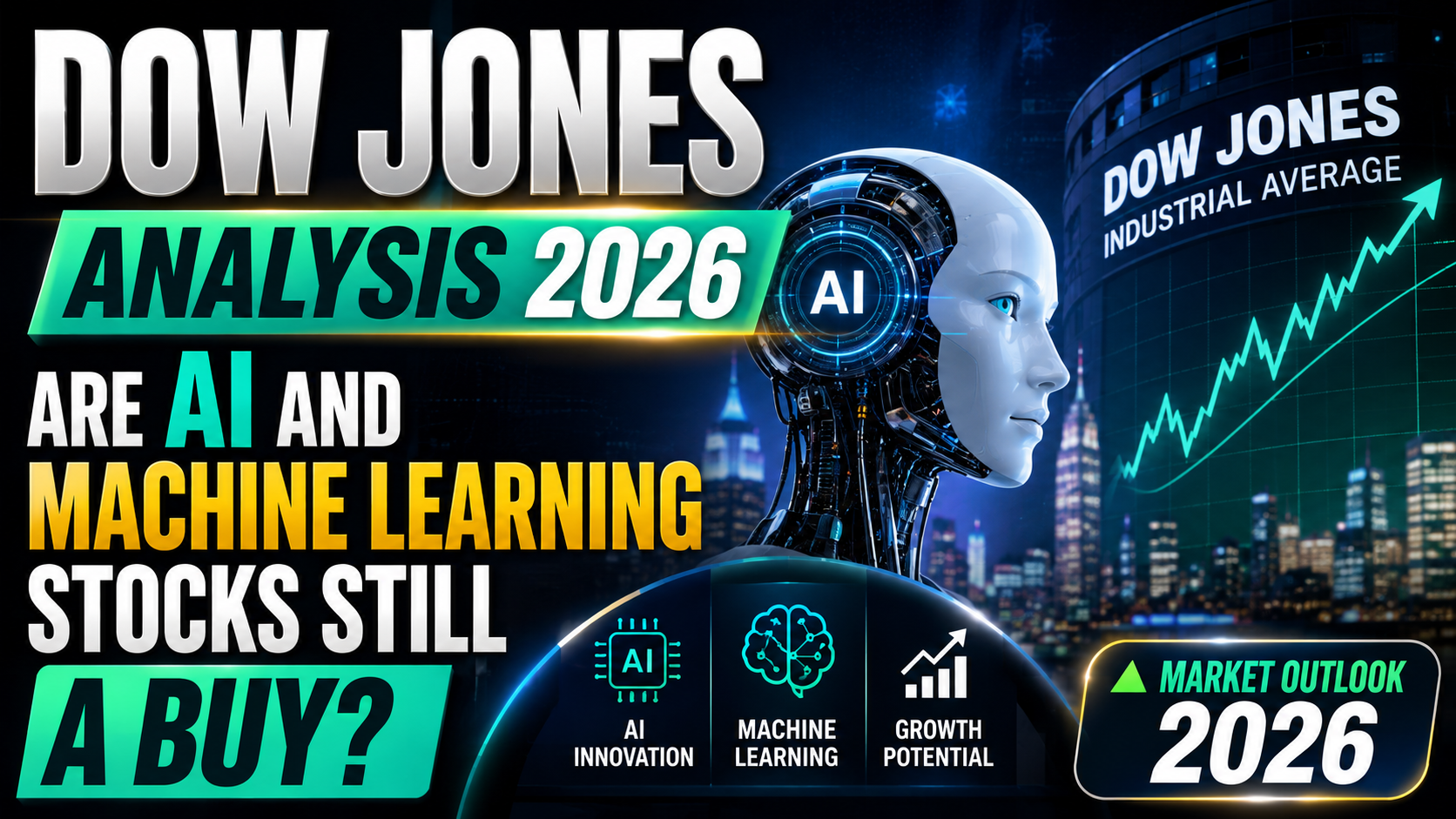
After years of explosive gains, AI and machine learning stocks have entered a more complicated phase — still central to the Dow Jones Industrial Average’s overall performance, but facing sharper questions about valuation, earnings durability, and whether the easy gains have already been captured. For investors trying to decide whether to keep adding to AI positions, trim exposure, or rotate into other sectors, 2026 requires a more nuanced read than the straightforward “buy the dip” narrative that worked reliably in prior years.
This analysis breaks down where AI and machine learning stocks currently stand within the broader Dow Jones and market context, what’s driving continued institutional investment despite valuation concerns, and how to think about position sizing if you’re building or maintaining exposure to this sector in your portfolio. Whether you’re a long-term investor or actively trading around AI-sector volatility, understanding the current landscape matters more than chasing last year’s returns.
Where AI Stocks Stand in the Dow Jones Right Now
AI-adjacent companies — spanning semiconductor manufacturers, cloud infrastructure providers, and enterprise software firms embedding AI capabilities — continue to represent an outsized share of overall market cap growth relative to their weighting in the index. This concentration has been a persistent feature of the market for several years now, and it means Dow Jones performance remains more tied to AI-sector sentiment than the historical diversification of the index would suggest.
What’s changed in 2026 is the market’s patience with growth-at-any-valuation stories. Earnings calls that once got a pass on questions about AI monetization timelines are now facing sharper analyst scrutiny, and companies unable to demonstrate a clear path from AI investment to revenue growth have seen more punishing reactions to earnings misses than in prior years.
The Bull Case for AI and ML Stocks in 2026
Despite valuation concerns, several structural tailwinds continue supporting the bull case for AI-sector investment. Enterprise AI adoption is still in relatively early innings for many industries — healthcare, logistics, and financial services in particular are still ramping infrastructure spending rather than winding it down. Capital expenditure guidance from major cloud and semiconductor companies has largely remained robust, suggesting the largest players still see multi-year runway for AI infrastructure investment rather than a near-term plateau.
Key Bullish Factors
- Continued enterprise adoption – Many industries remain in early-to-mid stages of AI integration, suggesting sustained demand
- Infrastructure capex guidance – Major cloud providers have maintained or increased AI infrastructure spending forecasts
- Margin expansion in software – AI-embedded enterprise software companies are showing improved margins as adoption scales
- International expansion – AI infrastructure investment is accelerating outside the US, broadening the addressable market
- Ongoing chip demand – Semiconductor demand tied to AI training and inference workloads remains structurally elevated
The Bear Case: Why Some Investors Are Cautious
The counterargument centers on valuation multiples that, even after some 2025-2026 volatility, remain elevated relative to historical norms for the broader market. Concerns persist about circular investment relationships between major AI infrastructure players, where the same handful of companies are simultaneously customers and investors in one another’s growth — a dynamic some analysts argue inflates reported demand signals. There’s also a legitimate question about how quickly AI capital expenditure will translate into durable free cash flow versus remaining a perpetually reinvested growth story.
Key Bearish Factors
- Elevated valuations – Price-to-earnings and price-to-sales multiples remain historically high for many AI-adjacent names
- Circular investment concerns – Interlocking investment relationships among major AI infrastructure players raise demand-durability questions
- Interest rate sensitivity – Growth stock valuations remain more sensitive to rate policy shifts than value-oriented sectors
- Monetization timeline uncertainty – Gap between AI infrastructure spend and proven enterprise ROI remains a persistent analyst concern
- Increased regulatory scrutiny – Antitrust and AI-specific regulatory attention has increased globally, adding a layer of policy risk
Sector Comparison: AI/ML Stocks vs. Broader Dow Jones Composition
| Factor | AI/ML Sector Stocks | Broader Dow Jones Average |
|---|---|---|
| Average valuation multiple | Elevated relative to historical norms | Closer to long-term historical average |
| Earnings growth expectations | High, but under increasing scrutiny | Moderate, more stable |
| Volatility | Higher | Lower |
| Capital expenditure trend | Aggressive, ongoing | Mixed by sector |
| Regulatory exposure | Increasing | Sector-dependent |
| Institutional sentiment | Cautiously bullish with rotation risk | Stable |
How to Think About Position Sizing in 2026
Given the more nuanced risk/reward picture, a disciplined approach matters more than it has in prior AI-sector bull runs. Consider these principles when managing exposure:
- Avoid overconcentration in a small handful of mega-cap AI names, even if they’ve driven most of your recent returns
- Diversify across the AI value chain — infrastructure, chips, and application-layer software carry different risk profiles
- Pay closer attention to free cash flow trends, not just revenue growth, as monetization scrutiny increases
- Consider dollar-cost averaging into positions rather than making large single entries given elevated volatility
- Reassess position sizing relative to your overall portfolio risk tolerance, not just recent sector momentum
Watching for Rotation Signals
Beyond the bull and bear fundamentals, it’s worth paying attention to sector rotation signals that often precede broader market sentiment shifts around AI valuations. Institutional fund flow data, options market positioning, and relative performance between AI-heavy growth indices and value-oriented sectors can all offer early signals of shifting sentiment before it fully shows up in individual stock prices. Historically, sharp AI-sector pullbacks have often been triggered less by fundamental deterioration and more by a specific catalyst — a disappointing earnings guidance from a bellwether company, a macro rate shock, or a high-profile regulatory action — that causes previously patient investors to reassess valuation assumptions all at once. Staying attentive to these catalysts, rather than assuming steady-state conditions will persist indefinitely, is part of maintaining a disciplined approach to sector exposure in a still-evolving investment theme.
Frequently Asked Questions
Should I sell my AI stocks if I think the sector is overvalued?
That depends entirely on your investment horizon and risk tolerance rather than a one-size-fits-all answer. Long-term investors with a diversified portfolio may choose to simply trim overconcentrated positions rather than exit entirely, while investors more sensitive to near-term volatility might reduce exposure more aggressively. This isn’t personalized financial advice, and consulting a financial advisor about your specific situation is worth considering before making significant portfolio changes.
How can I tell if an AI company’s revenue growth is sustainable versus inflated by circular investment deals?
Look closely at the customer concentration disclosed in earnings reports and investor filings — if a large share of a company’s reported revenue comes from a small number of other AI infrastructure companies rather than a broad, diversified customer base, that’s worth factoring into your assessment of demand durability.
Are AI stocks more volatile than the broader Dow Jones average?
Generally yes, particularly for higher-growth, less-established names within the sector. More established, cash-flow-positive AI-adjacent companies within the Dow Jones tend to show somewhat lower volatility than smaller, growth-stage AI-focused companies outside the index.
Is it too late to start investing in AI stocks in 2026?
Many analysts view the sector as being in a more mature, selective phase rather than an early-stage opportunity, which changes the risk/reward calculus compared to earlier years but doesn’t necessarily mean the opportunity has fully passed. Position sizing, diversification, and a longer time horizon matter more now than simply timing an entry point.
Final Thoughts
AI and machine learning stocks remain a legitimate long-term investment theme in 2026, but the easy, broad-based gains of previous years have given way to a market that’s demanding more evidence of durable monetization before rewarding further multiple expansion. This doesn’t necessarily mean it’s time to exit the sector — but it does mean position sizing, diversification within the AI value chain, and closer attention to fundamentals matter more now than they did in the earlier stages of the AI investment cycle.
Are you still adding to your AI stock positions in 2026, or have you started rotating into other sectors given the valuation concerns? Share your investment approach in the comments.
Discover more from The Economy
Subscribe to get the latest posts sent to your email.

Subscription fatigue is real, and with both Amazon Prime and Walmart+ now priced close together, the question isn’t just “which has faster shipping” anymore — it’s which membership delivers more actual financial value once you account for every perk, discount, and hidden cost. Both programs have expanded well beyond free shipping into fuel discounts, streaming bundles, prescription savings, and cashback-style perks, making a direct comparison more complicated — and more important — than it used to be.
This breakdown compares Amazon Prime and Walmart+ specifically through a financial lens: what each membership actually costs after accounting for real usage, which perks translate into measurable savings, and which one makes more sense depending on your shopping habits. If you’re deciding between the two, or wondering whether you need both, this is the comparison that matters.
Base Membership Cost and What You’re Actually Paying For
Both memberships sit in a similar annual price range, but the value proposition diverges quickly once you look past shipping. Amazon Prime bundles in Prime Video, Prime Music, Prime Reading, and periodic exclusive shopping events like Prime Day, positioning itself as much as an entertainment subscription as a shopping perk. Walmart+ leans harder into everyday savings — fuel discounts at Walmart and Murphy USA/Sam’s Club stations, member prescription pricing, and early access to deals — positioning itself more explicitly as a cost-of-living savings tool than an entertainment bundle.
This distinction matters more than it might first appear: if you don’t watch Prime Video or use Amazon’s other entertainment perks, you’re effectively paying for value you never redeem, which changes the real cost-per-benefit calculation significantly in Walmart+’s favor for budget-focused shoppers.
Where Amazon Prime Wins Financially
Prime’s biggest financial edge comes from its sheer breadth — free shipping across a massive product catalog, frequent lightning deals, Prime Day and Black Friday exclusive pricing, and a genuinely valuable entertainment bundle that would cost more if purchased separately as standalone streaming subscriptions. For households that already shop heavily on Amazon and use its content ecosystem, the membership often pays for itself several times over.
Prime’s Strongest Financial Perks
- Prime Video and Music bundled in – Comparable standalone streaming subscriptions would cost more separately
- Prime Day and exclusive member deals – Some of the steepest discounts of the year are member-exclusive
- Same-day and next-day shipping on huge product selection – Reduces impulse in-store spending and time cost
- Amazon Fresh/Whole Foods discounts – Additional grocery savings layered on top of the core membership
- Prime Reading and Kindle deals – Added value for frequent readers, though a smaller factor for most households
Where Walmart+ Wins Financially
Walmart+’s value proposition is more directly tied to recurring, practical household spending — fuel savings that compound with regular driving, member pricing on prescriptions that can meaningfully offset healthcare costs, and free delivery from Walmart stores that competes directly with grocery delivery services that otherwise charge separately. For budget-conscious households prioritizing everyday cost reduction over entertainment bundling, Walmart+ often delivers a higher effective return relative to its membership cost.
Walmart+’s Strongest Financial Perks
- Fuel discounts at partner gas stations – Per-gallon savings that compound significantly for frequent drivers
- Free grocery delivery from Walmart stores – Comparable third-party grocery delivery often charges separate membership and delivery fees
- Member prescription pricing – Meaningful savings for households managing regular prescription costs
- Early access to deals and Walmart+ Week – Comparable to Prime Day but with a stronger everyday-essentials focus
- Included Walmart+ Assist option – Discounted membership rate for qualifying government assistance program participants
Side-by-Side Financial Comparison
| Perk Category | Amazon Prime | Walmart+ |
|---|---|---|
| Free shipping/delivery | Yes, vast catalog | Yes, Walmart stores + select delivery |
| Entertainment bundle | Extensive (Video, Music, Reading) | None |
| Fuel discounts | No | Yes |
| Prescription savings | Limited | Yes, member pricing |
| Grocery delivery | Amazon Fresh/Whole Foods | Walmart stores |
| Best for | Entertainment + broad shopping households | Everyday essentials + driving households |
| Approximate annual cost | Comparable to Walmart+ | Comparable to Prime |
How to Decide Which One Actually Saves You Money
- Calculate your realistic entertainment usage – If you’d otherwise pay for Prime Video separately, that alone can justify Prime’s cost
- Estimate your annual fuel spending – Frequent drivers often see Walmart+’s fuel discount outweigh Prime’s shipping perks
- Factor in prescription costs – Households with regular prescriptions may find Walmart+’s savings compound significantly over a year
- Consider where you already shop most – Membership perks only generate savings if they match your existing spending habits, not your aspirational ones
- Don’t rule out having both temporarily – Many households run both during peak sales events (Prime Day and Walmart+ Week) and cancel one afterward
Tracking Your Actual Usage Before Renewal
The most reliable way to determine which membership is worth keeping is to actually track your usage over a full billing cycle rather than relying on assumptions about your habits. Keep a simple running log for a month of every delivery, streaming session, fuel fill-up, or discount you used through each membership, then estimate what those same purchases or services would have cost without the membership. This exercise routinely reveals that households overestimate how much they use certain perks — streaming content they rarely watch, or delivery services they use less than they think — while underestimating others, like fuel savings that compound quietly over dozens of fill-ups a year. Doing this once before your next renewal date gives you an actual data-driven answer rather than a guess based on how valuable the membership felt when you first signed up.
Frequently Asked Questions
Can I get a free trial for either membership before committing?
Both programs have historically offered free trial periods, though exact lengths and availability change periodically and aren’t guaranteed to be offered indefinitely. Checking each program’s current sign-up page for an active trial offer before committing to a full annual membership is worth the two minutes it takes.
Is it worth paying for both memberships at once?
For some households, yes — particularly around major sales events like Prime Day and Walmart+ Week, when the potential savings from each platform’s exclusive deals can outweigh the cost of a short-term membership. Many people sign up for one during its peak sales event, capture the savings, then cancel before the next billing cycle if ongoing dual membership doesn’t otherwise pencil out.
Do student or family discounts apply to either membership?
Both programs have offered discounted rates for qualifying groups at various points, including student pricing and family or multi-account sharing options. Terms and eligibility change, so checking current program pages rather than relying on outdated information is important before assuming a discount applies to your situation.
Which membership is better if I mostly shop online rather than in physical stores? Amazon Prime generally has the edge for pure online shopping breadth given its larger third-party marketplace and product catalog, while Walmart+ perks are more closely tied to in-store and Walmart-specific online purchases. If your shopping is heavily concentrated on Amazon already, Prime’s broader catalog advantage becomes more relevant to your specific savings calculation.
Final Thoughts
There’s no universal winner between Amazon Prime and Walmart+ — the better financial choice depends entirely on whether your household spending leans toward broad online shopping and entertainment, or everyday essentials like fuel, groceries, and prescriptions. Run the actual numbers based on your last few months of spending in each category before committing to a full year of either membership, and don’t assume last year’s decision is still the right one as both programs continue adding and adjusting perks.
Which membership has actually saved you more money this year — Prime or Walmart+? Or are you running both? Share your real numbers in the comments.
Discover more from The Economy
Subscribe to get the latest posts sent to your email.

Bessent’s Debt Buybacks Explained: Impact on Your Mortgage

SEC Crypto Regulations 2026: What They Mean for Your Bitcoin Wallet

USPS vs FedEx Tracking 2026: How to Cut E-commerce Shipping Costs

Dow Jones Analysis 2026: Are AI and Machine Learning Stocks Still a Buy?

Amazon Prime vs Walmart+: Which Membership Saves You More in 2026?

Canva vs Adobe: Best Design Software for E-commerce Brands in 2026

Capital One vs Wells Fargo: Best Credit Card for Buying Crypto in 2026

The 2026 Guide to Staking ADA and BNB: How to Earn Passive Crypto Income on the Best Platforms

BigLaw Backlash 2026: Why Top US Firms Are Being Slammed for “Crazy” 1L Hiring

SpaceX Falcon 9 Upper Stage Crashes Into Moon, Creating New Crater Near Einstein

7-Eleven, GameStop, and Grocery Outlet Slash Hundreds of Stores in 2026 Restructuring Wave

Toyota Recalls 508,000 Camrys Over Blank Dashboard Screens That Disable Turn Signals

State Farm Mails Record $5 Billion Dividend to Auto Policyholders: How to Claim Your Check

Indonesia’s Rupiah and FDI Confidence Gap Widens Despite Headline Growth

China Politburo July 2026: Stimulus Signals Explained

Russia Fuel Shortages 2026: Inside a Cracking War Economy

Top 15 Financial Stocks for Investment in PSX

Pakistan Passed Its Third IMF Review

SpaceX Stock Lockup Expiration Explained: Why $123B in Shares Could Hit the Market

Andy Burnham, UK Gilts and Mortgages: July 2026 Explainer

Pakistan IMF Program 2026: Inside the Push Toward an Interest-Free Economy

Russia Oil Revenue 2026: How Sanctions on Rosneft and Lukoil Are Draining the War Chest

Pakistan’s 2026 Monsoon Floods Threaten Fragile Economic Recovery as Inflation Nears 9%

Russia Oil Revenue 2026: The Iran War Windfall and What a Hormuz Deal Means for Moscow

Russia’s Budget Deficit Blew Past Its Full-Year Target in Three Months

Canada US Trade War 2026: Inside Carney’s Push to Cut Ties With Trump’s Tariffs

China Economy 2026: How AI Exports and a Property Crash Are Splitting Growth in Two

Oil Prices Fall as Strait of Hormuz Reopens: 2026 Update
-

 Markets & Finance8 months ago
Top 15 Stocks for Investment in 2026 in PSX: Your Complete Guide to Pakistan’s Best Investment Opportunities
-

 Analysis6 months ago
Johor’s Investment Boom: The Hidden Costs Behind Malaysia’s Most Ambitious Economic Surge
-

 Analysis6 months ago
Top 10 Stocks for Investment in PSX for Quick Returns in 2026
-

 Analysis7 months ago
Brazil’s Rare Earth Race: US, EU, and China Compete for Critical Minerals as Tensions Rise
-

 Banks7 months ago
Best Investments in Pakistan 2026: Top 10 Low-Price Shares and Long-Term Picks for the PSX
-

 Investment7 months ago
Top 10 Mutual Fund Managers in Pakistan for Investment in 2026: A Comprehensive Guide for Optimal Returns
-

 Global Economy8 months ago
15 Most Lucrative Sectors for Investment in Pakistan: A 2025 Data-Driven Analysis
-

 Global Economy8 months ago
Pakistan’s Export Goldmine: 10 Game-Changing Markets Where Pakistani Businesses Are Winning Big in 2025