
Analysis
IMF Cuts Global Growth Forecast Amid Hormuz Blockade: How the Iran War Is Reshaping the World Economy

Imagine a supertanker—two football fields of steel carrying enough crude oil to power a mid-sized European nation for a day—sitting motionless in the Gulf of Oman, engines idling, crew watching the horizon. It isn’t waiting for a berth. It’s waiting for a war to end. Since Iran sealed the Strait of Hormuz in the weeks following joint US-Israeli strikes on February 28, that tanker has become the defining image of the global economy in 2026: enormous potential energy, going nowhere.
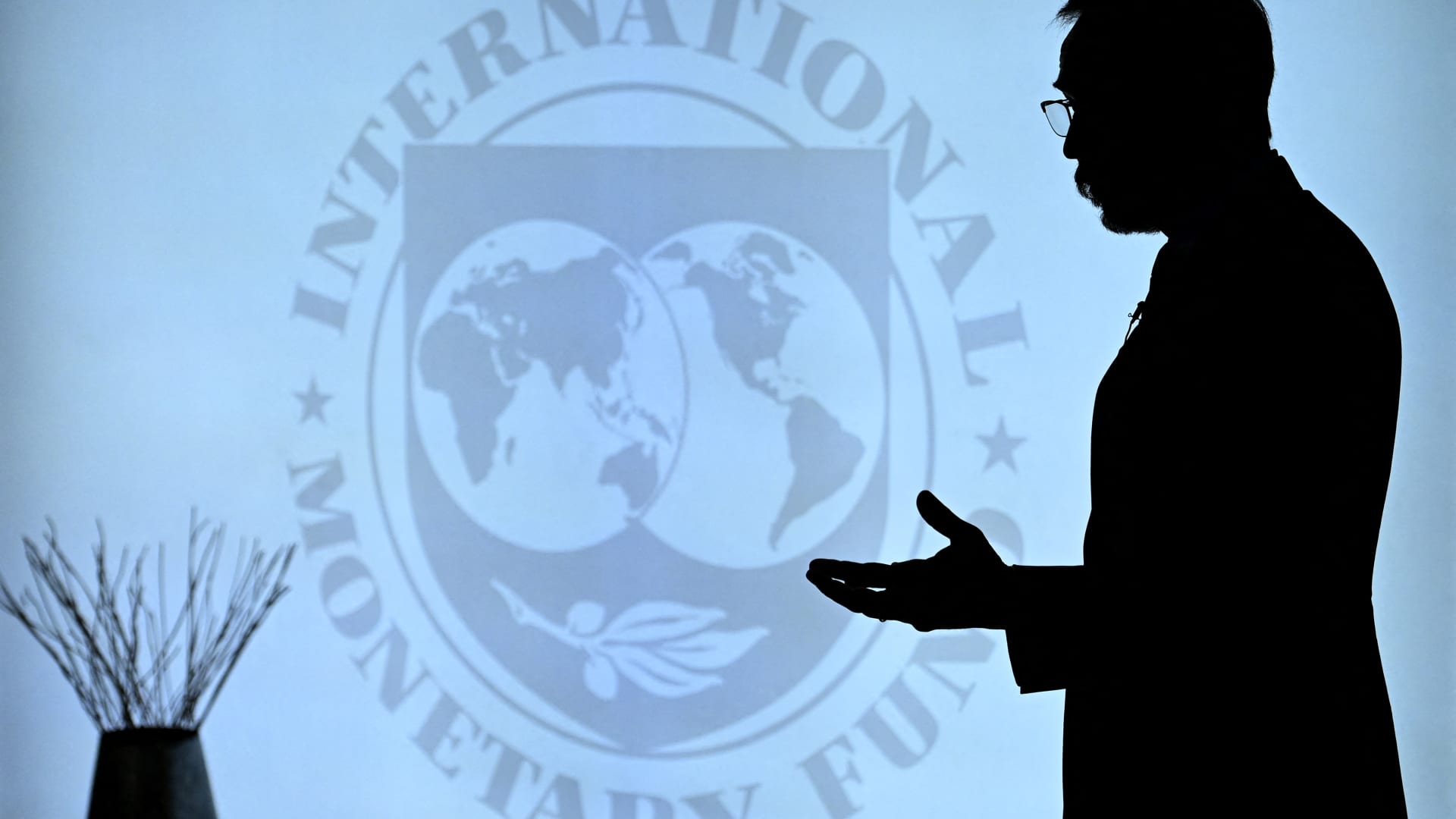
On Tuesday, the International Monetary Fund delivered the invoice for that paralysis. Its April 2026 World Economic Outlook downgraded global growth to 3.1% for this year—down from the 3.3% projected in January and a full three-tenths below the pre-war baseline of 3.4%. Global inflation, meanwhile, has been revised upward to 4.4%, a 0.6-percentage-point jump driven almost entirely by surging oil, gas, and fertilizer prices. Last year, the world economy grew at 3.4%. In twelve months, a single chokepoint has shaved off more than a quarter of that momentum.
This isn’t just another forecast revision. It is a stark reminder that energy security remains the Achilles’ heel of globalization in a multipolar world—and that the architecture of interdependence we built over the last half-century can be unmade with astonishing speed by a naval mine and a political decision.
The Hormuz Equation: How One Strait Holds the World Hostage
The Strait of Hormuz is, in the coldest accounting terms, the most important 33 kilometers of water on earth. Roughly 20% of global oil supply and a significant share of liquefied natural gas pass through it daily—energy destined for Europe, Asia, and the industrial heartlands of emerging markets. When Iran closed it following the US-Israeli strikes, it did not merely spike oil prices. It introduced structural uncertainty into every supply chain, every inflation model, and every central bank projection on the planet.
Oil prices, which had been softening toward $75–80 per barrel in late 2025 on slowing Chinese demand, lurched back above $100. Shipping insurance premiums for Gulf routes became, in some cases, a line item larger than the cargo itself. The fertilizer markets—already nervous after the Russia-Ukraine war’s disruption of nitrogen and potash exports—seized again, with implications for food prices from Sub-Saharan Africa to South Asia that will not show up in consumer price indices for months.
“The current hostilities in the Middle East pose immediate policy trade-offs,” IMF Chief Economist Pierre-Olivier Gourinchas told reporters at Tuesday’s press briefing. “Between fighting inflation and preserving growth… It will be highly uneven across countries, hitting countries in the conflict region, commodity-importing low-income countries, and emerging market economies hardest.”
That phrase—highly uneven—is doing a great deal of work. It is the diplomatic language of catastrophe unevenly distributed.
The Three Scenarios: From Bad to Generational Scarring
The IMF did not offer a single forecast so much as a branching tree of possibilities, each more sobering than the last. Understanding the three scenarios is essential to grasping both the stakes and the policy options:
- Reference Scenario (Base Case): A relatively short conflict, energy prices rising ~19% on average, global growth landing at 3.1% for 2026. Painful, but manageable for diversified economies with fiscal room.
- Adverse Scenario (Prolonged Conflict): War extends through most of 2026, supply disruptions deepen, growth falls to 2.5%—territory that begins to feel recessionary for vulnerable economies, and that would push several emerging markets into outright contraction.
- Severe Scenario (Spillover into 2027): The conflict drags into next year, infrastructure damage proves harder to repair than anticipated, and the global economy grows at just 2% with inflation breaching 6%. This is the scenario central bankers have nightmares about: stagflation with a geopolitical engine that monetary policy cannot address.
The severe scenario would represent, in real terms, the worst global economic performance since the pandemic recession of 2020—with the crucial distinction that the pandemic offered a clear, if agonizing, endpoint. A war that has already drawn in the United States, Israel, and Iran has no obvious off-ramp written into its logic.
Winners, Losers, and the Geography of Pain
The IMF’s regional breakdowns are where the human cost of the Hormuz blockade becomes visceral.
Iran is the obvious epicenter: its 2026 growth forecast has been slashed by 7.2 percentage points, to a projected contraction of -6.1%. Sanctions, military expenditure, infrastructure damage, and the collapse of oil export revenue have compounded into an economic catastrophe that will outlast any ceasefire. Iran’s middle class, already hollowed out by a decade of sanctions, faces a humanitarian dimension that the IMF’s GDP figures can only approximate.
Saudi Arabia, despite being an energy exporter nominally benefiting from higher prices, has seen its forecast cut from 4.5% to 3.1%—a counterintuitive result explained by regional instability suppressing investment, disrupted supply-chain logistics, and the specter of conflict spreading. Riyadh’s Vision 2030 diversification agenda is being run against a backdrop of regional war for the second time in a decade.
The Middle East and North Africa region as a whole has been downgraded by 2.8 percentage points to 1.1% growth. The Middle East and Central Asia bloc fares only marginally better, cut 2 points to 1.9%. These are not rounding errors. For countries like Jordan, Lebanon, and Tunisia—already operating near fiscal limits with limited buffers—this is the difference between managing and not managing.
The real hidden crisis, however, may lie elsewhere entirely. Sub-Saharan Africa and South Asia—commodity-importing, high-debt, low-buffer economies—face a double blow: higher energy and food import bills alongside tightening global financial conditions as capital flows to safer havens. The countries least responsible for the geopolitical decisions that caused this crisis will bear some of its heaviest costs. That moral arithmetic deserves more attention than it typically receives in the columns of Western financial publications, including this one.
On the other side of the ledger, the United States, Canada, Norway, and to some extent Australia emerge as relative beneficiaries—energy exporters with diversified economies capable of absorbing the shock while their LNG and crude revenues swell. American LNG export terminals are reportedly operating at maximum capacity. The war that is compressing growth in Karachi and Nairobi is generating windfall revenues in Houston and Calgary.
The Central Bank Trap: Inflation or Growth? Yes.
For monetary policymakers, the Hormuz blockade has recreated the defining dilemma of the 1970s oil shocks with updated instrumentation but identical cruelty.
The Federal Reserve, the European Central Bank, and the Bank of England spent 2022–2024 fighting the inflation generated by pandemic-era stimulus and the Russia-Ukraine energy shock. They largely succeeded. Interest rates were gradually normalized; inflation was returning toward target. Then February 28 arrived.
Now they face a textbook supply-shock stagflation scenario: inflation rising not because demand is excessive but because supply is being physically constrained by a military blockade. Raising rates to fight this inflation would further compress growth in already-struggling economies and trigger debt distress in emerging markets carrying dollar-denominated obligations. Not raising rates risks inflation becoming entrenched in wage negotiations and long-term inflation expectations—the dread “de-anchoring” that haunted the 1970s for a decade.
The IMF’s guidance—notably cautious—is that central banks should “look through” temporary supply-shock inflation while remaining alert to second-round effects. In practice, this is easier to prescribe than to execute. Political pressure to “do something” about petrol prices is intense in every democracy facing elections, and central bankers, whatever their formal independence, operate in political ecosystems.
The EU’s REPowerEU emergency reserve deployment offers one partial model: using strategic reserves to dampen immediate price spikes while diplomatic and military tracks are pursued in parallel. The US Strategic Petroleum Reserve has already been tapped again. But these are fingers in a very large dike.
Echoes of 1973: Why This Time Is Different—and Possibly Worse
The 1973 OPEC oil embargo is the obvious historical parallel, and it is instructive in ways both reassuring and alarming. The embargo lasted five months and triggered a recession, runaway inflation, and a decade of economic turbulence that reshaped Western economic policy. It also, eventually, accelerated investment in energy efficiency and alternative sources—precisely the kind of structural adaptation that a crisis, paradoxically, can enable.
What is different today? Three things, at minimum.
First, the global economy is more financially integrated. In 1973, capital flows were relatively controlled, exchange rates were just beginning to float, and emerging market debt markets were nascent. Today, a sovereign debt crisis in a commodity-importing emerging market triggered by oil prices can cascade through global bond markets within hours.
Second, food and energy shocks are simultaneous. The Russia-Ukraine war never truly ended its pressure on fertilizer and grain markets; the Hormuz blockade has now piled an energy shock on top of a lingering food shock, creating a compound crisis for import-dependent nations.
Third, the geopolitical polarization is deeper. In 1973, the United States could—and did—broker a diplomatic resolution with Arab states while maintaining back-channel communications. Today’s fracture between US-Israeli and Iran-Russia-China alignments makes equivalent diplomacy substantially harder. The Foreign Affairs analysis of multipolar energy geopolitics published earlier this year described this as “the end of energy globalization’s holiday from history.”
The reassuring difference: the energy transition has already begun. Solar and wind generation have become genuinely competitive, and Europe in particular has demonstrated—through the Russia shock—that it can accelerate deployment under duress. AI-optimized grid management is reducing waste in ways that 1970s engineers could not have imagined. The crisis will not find the world as naked as it was fifty years ago.
What Comes Next: Policy Prescriptions for an Unequal Shock
The IMF’s scenarios present a range of outcomes, but they are not destiny. Policy choices made in the next 90 days will determine whether the world navigates the reference scenario or slides toward the adverse. Here is where the levers are:
For advanced economies: Strategic reserve deployment must be coordinated across the IEA framework, not pursued unilaterally in ways that create arbitrage and don’t reduce global prices. Fiscal policy should be targeted—energy subsidies for vulnerable households rather than across-the-board price caps that benefit the wealthy and distort investment signals.
For emerging markets: The IMF’s own Resilience and Sustainability Trust must be operationalized rapidly for the most exposed economies—those facing simultaneous debt pressure, energy import bills, and food security stress. A debt standstill framework for the most vulnerable should be on the G20 agenda before the Pretoria summit in June.
For the energy transition: Every scenario in the IMF’s framework suggests that long-term energy security requires diversification away from the chokepoint vulnerabilities that Hormuz represents. This crisis is—as every crisis contains within it—an argument for accelerating domestic renewable capacity, particularly in emerging markets where energy poverty and energy insecurity are twin burdens.
For diplomacy: The economic cost of prolonging this conflict is now calculable: each month of blockade, in the adverse scenario, costs the world approximately $200 billion in foregone output. That number should be sitting on every foreign minister’s desk as an argument for ceasefire negotiations that, however difficult, are cheaper than the alternative.
The Tanker, Still Waiting
The supertanker off Oman is a metaphor, but it is also a fact. The world’s energy arteries have been constricted, and the pain is flowing outward—from Tehran to Tunis, from Dhaka to Dakar—with the ruthless indifference that economic gravity always displays toward political borders.
The IMF’s downgrade to 3.1% growth is not, in itself, a crisis. The global economy has weathered worse. What makes this moment qualitatively different is the compound uncertainty: a war without a visible endpoint, a stagflation trap without a clean monetary solution, and a geopolitical alignment that makes the multilateral coordination the crisis demands harder than at almost any point since the Cold War.
The question is not whether the world economy will survive the Hormuz blockade. It will. The question is which version of the world emerges on the other side: one that has absorbed the lesson about energy security and accelerated the transition to resilience; or one that has lurched from crisis to crisis, letting the moment pass, leaving the supertanker to idle through the next inevitable disruption.
History, as always, is watching the policy responses.
Sources referenced:
- IMF World Economic Outlook, April 2026
- IMF Press Briefing – Pierre-Olivier Gourinchas, April 2026
- Reuters – Middle East conflict coverage
- U.S. EIA – Strait of Hormuz Fact Sheet
- Financial Times – Saudi Vision 2030 under pressure
- The Wall Street Journal – Hormuz blockade economic impact
- World Bank – Global Economic Prospects
- Foreign Affairs – Energy security in a multipolar world
- Financial Times – EU REPowerEU emergency deployment
- IMF Resilience and Sustainability Trust
Discover more from The Economy
Subscribe to get the latest posts sent to your email.



Key Takeaways
- Rolex’s secondary market rose approximately 7.9% year-over-year as of 2026 (per WatchCharts data) — trailing Patek Philippe (+16.2%) and Tudor (+11.4%) but still outperforming Audemars Piguet (+3.4%).
- Rolex raised U.S. retail prices 4–9% in January 2026 (steel models ~5.6%, gold models ~8.7%), narrowing the historical gap between retail and pre-owned pricing.
- Not every model appreciates: steel sports references (Submariner, GMT-Master II, Daytona) have held value far better than two-tone or widely available dress references like the standard Datejust.
- The Lady-Datejust posted the sharpest 2026 gain among tracked collections — up 22.73%, from roughly $9,269 to $11,376 — driven by demand for smaller, “everyday luxury” watches.
- Gold’s rise past $2,400/oz has directly lifted the investment case for Rolex’s precious-metal references (Day-Date, Sky-Dweller, Yacht-Master).
The Model-by-Model Picture
| Category | 2026 Trend |
|---|---|
| Lady-Datejust | +22.73% (strongest performer among tracked collections) |
| Steel sports models (Submariner, GMT-Master II) | Held value well; corrected from 2022 peak but stabilized above retail |
| Daytona | Corrected from highs above $50,000 to the mid-$30,000s; still among the most sought-after references |
| Two-tone/widely available Datejust | Flat to negative — “holds value” is an overstatement for this category |
| Gold references (Day-Date, Sky-Dweller) | Lifted by gold’s rise above $2,400/oz |
Why the “Rolex Always Appreciates” Myth Is Fading
The pandemic-era boom pushed some references — the Daytona above all — to speculative highs disconnected from historical norms. Since the March 2022 peak, steel sports models have compressed meaningfully, and dealers who bought inventory near the top have in some cases faced 20–40% markdowns on liquidation. The lesson for 2026 buyers: Rolex as a category is not a monolith. Value retention depends heavily on specific reference, condition, and whether the piece comes with box and papers (“full set”).
What’s Actually Driving 2026 Strength
- Retail price increases raise the floor. When a new Submariner retails at $10,050 (up from $9,500), a pre-owned example at $11,000–$12,000 suddenly represents a smaller premium — narrowing the gap without secondary prices actually moving.
- Supply discipline remains Rolex’s core lever. The brand has never confirmed production numbers, and secondary-market premiums remain entirely a function of Rolex’s own manufacturing decisions — a risk factor as much as a support.
- Certified Pre-Owned rollout. Rolex’s now fully rolled-out CPO program has changed how buyers transact in the used market, adding a layer of brand-verified legitimacy that supports pricing.
The Case for Rolex as a Portfolio Diversifier
Financial advisors increasingly frame luxury watches not as a replacement for equities or bonds, but as a tangible, historically low-correlation diversifier — one that carries its own risks (illiquidity, condition-dependent pricing, no yield) but has demonstrated multi-decade resilience for specific references.
Is Rolex a good investment in 2026?
It depends heavily on the specific reference. Steel sports models like the Submariner and Daytona have held or grown in value; two-tone and widely available dress models generally have not. Overall, Rolex’s secondary market rose about 7.9% year-over-year in 2026, trailing Patek Philippe but ahead of Audemars Piguet.
Discover more from The Economy
Subscribe to get the latest posts sent to your email.

Navigating Mortgage and Loan Refinancing in a High-Yield Environment
Global public debt crossing critical thresholds has kept central bank policies volatile, resulting in fluctuating US Treasury yields throughout 2026. For homeowners and commercial property holders burdened by previous high-interest borrowing cycles, finding optimal refinance windows has become a high-stakes financial puzzle. Stalled disinflation and stubborn employment numbers mean rate cuts are incremental, requiring borrowers to act with precision.
Timing your mortgage or commercial loan refinance in this environment requires a deep understanding of yield curve movements and lender risk appetites.
Decoding 2026 Refinance Dynamics
The 10-Year Treasury Yield Benchmark
Mortgage rates continue to track closely with the 10-year US Treasury yield. When macroeconomic anxiety spikes debt issuance, yields rise, tightening consumer borrowing capacity. Savvy borrowers monitor weekly Treasury auctions to lock in rates during brief dip windows.
Hybrid ARMs and Alternative Structures
With fixed rates remaining elevated, 7/1 and 10/1 adjustable-rate mortgages (ARMs) have surged in popularity. These products offer lower initial monthly payments, giving borrowers breathing room until central bank easing cycles fully materialize.
| Loan Product | Current Rate Range | Best For | Key Risk Factor |
| 30-Year Fixed Mortgage | 6.2% – 6.8% | Long-term predictability | Higher initial monthly outlay |
| 7/1 Hybrid ARM | 5.5% – 5.9% | Short-term ownership / flipping | Rate reset risk after year 7 |
| Commercial Refinance | 7.0% – 8.2% | Corporate asset restructuring | Strict DSCR lender covenants |
Actionable Steps for Successful Refinancing
To maximize your chances of securing favorable refinance terms in a volatile market, follow a disciplined preparation strategy.
Boost Your Credit Score Immediately: Lenders in 2026 are applying stringent credit tiering; a 20-point increase can drop your APR by a crucial quarter-point.
Shop Regional Credit Unions: Smaller financial institutions often offer portfolio loans with more flexible underwriting than major national banks.
Calculate the Break-Even Point: Ensure your total closing costs are recouped through monthly savings within 24 months of closing.
“Market Strategist View: Refinancing in 2026 is an exercise in opportunistic timing. Borrowers must maintain immaculate financial profiles ready to strike the moment Treasury yields dip.”
Mastering the complexities of today’s debt environment ensures you can successfully lower your debt service costs and protect your long-term financial stability.
Discover more from The Economy
Subscribe to get the latest posts sent to your email.

The days of pulling generic auto insurance quotes based purely on your zip code and age are officially over. In 2026, insurance comparison engines are powered entirely by generative AI and real-time telematics. These platforms digest thousands of live data points—ranging from your driving smoothness via connected vehicle sensors to real-time traffic congestion patterns—to generate hyper-personalized premiums instantly.
For consumers, this evolution represents both a massive opportunity for savings and a hidden trap for penalty pricing. Understanding how AI algorithms evaluate risk is essential for anyone looking to lower their monthly auto insurance premiums.
How AI Comparison Engines Evaluate Your Risk Profile
Behavioral Telematics and Connected Cars
Modern cars stream performance data directly to insurance aggregators. Generative AI models analyze braking sharpness, acceleration curves, cornering G-forces, and phone distraction metrics. Drivers who maintain smooth, defensive habits are rewarded with dynamic rate cuts of up to 40% compared to traditional rating tiers.
Predictive Traffic and Weather Modeling
AI tools now cross-reference your daily commute route with predictive weather and accident probability models. If your standard parking location or driving corridor has a statistically higher incidence of uninsured motorist claims, your quotes will reflect that hyper-local risk assessment.
| Comparison Factor | Traditional Rating Model | 2026 Generative AI Model | Impact on Premium |
| Mileage & Usage | Annual estimated odometer reading | GPS tracking & live trip duration | High (up to 35% savings) |
| Driving Behavior | MVR driving record & accidents | Real-time braking, speed, & G-force | Critical (determines tier) |
| Vehicle Tech | Make, model, and safety rating | ADAS calibration & repair cost data | Moderate |
Strategies to Lower Your AI-Driven Insurance Quote
To outsmart the algorithm and secure the lowest possible premium in 2026, drivers must proactively manage their digital footprint on insurance platforms.
Opt-In for Telematics Trial Periods: Many insurers offer immediate 15% discounts just for installing their driving app; let it track safe habits for 30 days to lock in permanent savings.
Scrub Unverified Public Records: Ensure your motor vehicle report is free of clerical errors that AI risk models misinterpret as reckless behavior.
Compare AI Aggregators: Use platforms that integrate multi-carrier API feeds rather than single-brand comparison sites to find the best risk-adjusted rate.
“Industry Note: AI-driven pricing rewards transparency and precision. Drivers who actively manage their telematics data consistently out-save those relying on legacy quote calculators.”
Embracing AI comparison tools allows savvy policyholders to customize coverage limits precisely to their driving habits, eliminating wasted premium spend while ensuring robust protection.
Discover more from The Economy
Subscribe to get the latest posts sent to your email.

Neocloud Economics in 2026: GPU Debt, Utilization and Power

What Is a Neocloud? How AI GPU Clouds Work and Compare

Lula Re-elected in 2026: What Changes for the Dollar, Brazilian Stocks, and Interest Rates?

Lula Wins Brazil’s 2026 Election: Five Economic Tests for 2027

SSI November 2026 Payment: Why Benefits Arrive October 30

Russia Sanctions Waiver: What Asian Oil Buyers Gain

Asia Markets Weekly: How Oil, US Yields and the Fed Reach Tokyo, Kuala Lumpur and Karachi

Gold Near $4,000: Buy, Hold or Wait? A Pakistan Tola Price Guide

US 10-Year Treasury Yield Near 5%: The Hidden Cost for Pakistani Investors

Fed Meeting on October 28: Hike or Hold—and Why Pakistan Investors Should Care

Can Pakistan Turn US–Iran Mediation Into an Economic Dividend?

Oil Above $100: How Higher Crude Prices Reach Pakistan’s Rupee, Petrol and Imports

SBP Interest Rate at 11.5%: What Will Decide Pakistan’s Next Policy Move?

The Global South: Debt, Climate Finance and Investment in 2026

Crude Oil & Petroleum Market Analysis: OPEC+ Decisions and Price Forecasts

Top US Convenience Store Chains: Store Counts, EV Charging, and Sales Trends

Algorithmic Dogfights: Why the U.S. and China Must Establish Rules of Engagement for Autonomous Air Power

Who Is Shivon Zilis? The Neuralink Executive at the Center of the Musk–OpenAI Trial

Social Security Extra $90 Deposit: Who Qualifies for the October 2026 Medicare Rebate?

Global Economic Outlook 2026: 7 Forces Reshaping Markets, Trade and Business

Corporate America Faces a New Debt Test as US Borrowing Costs Surge

Gold Price Outlook 2026: The Forces Behind the Forecasts—and What Could Reverse Them

Gold Falls 3.7% as Yields Surge: Is Gold Still a Safe Haven in 2026?

Stock Market Crash in 2026? Warning Signs, Scenarios and a Calm Investor Checklist

MAS Allocates S$1.45 Billion to Five Asset Managers in Third EQDP Batch: Total Deployment Reaches S$5.4 Billion

Stock Market Today: Dow, S&P 500, and Nasdaq Retreat as Treasury Yields

Anthropic Bans Sustained Abuse of Claude AI Under New Usage Policy Effective November 12, 2026

Geopolitics and Your Portfolio: How International Affairs Move Global Markets
-

 Markets & Finance10 months ago
Top 15 Stocks for Investment in 2026 in PSX: Your Complete Guide to Pakistan’s Best Investment Opportunities
-

 Analysis8 months ago
Johor’s Investment Boom: The Hidden Costs Behind Malaysia’s Most Ambitious Economic Surge
-

 Analysis8 months ago
Top 10 Stocks for Investment in PSX for Quick Returns in 2026
-

 Banks9 months ago
Best Investments in Pakistan 2026: Top 10 Low-Price Shares and Long-Term Picks for the PSX
-

 Analysis9 months ago
Brazil’s Rare Earth Race: US, EU, and China Compete for Critical Minerals as Tensions Rise
-

 Investment10 months ago
Top 10 Mutual Fund Managers in Pakistan for Investment in 2026: A Comprehensive Guide for Optimal Returns
-

 Global Economy10 months ago
15 Most Lucrative Sectors for Investment in Pakistan: A 2025 Data-Driven Analysis
-

 Global Economy10 months ago
Pakistan’s Export Goldmine: 10 Game-Changing Markets Where Pakistani Businesses Are Winning Big in 2025