
Analysis
Trump’s Gamble on the Strait: The US Blockade of Iran’s Ports Is History’s Most Consequential Naval Move in a Generation

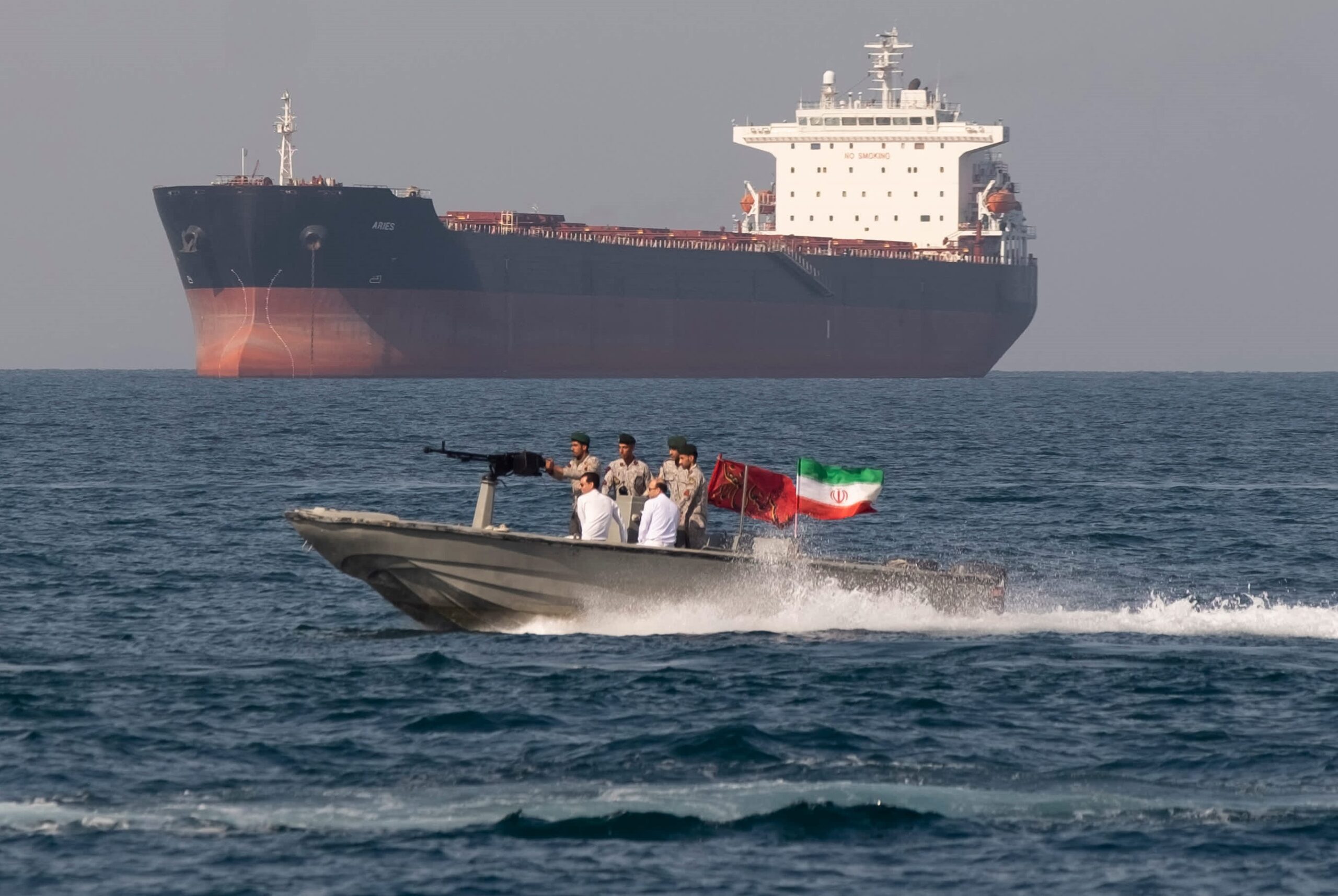
As the world’s most critical oil chokepoint becomes a two-front battleground, Washington has placed a $100-a-barrel bet that squeezing Tehran’s last revenue lifeline will force a deal — or risk igniting the worst energy catastrophe since the 1970s.
At 10 a.m. Eastern Time on Monday, April 13, 2026, the United States Navy did something no American president had ordered since the Cold War: it declared a wartime blockade of a sovereign nation’s ports. The target was Iran. The battlefield was the 34-kilometre chokepoint through which roughly one-fifth of the world’s oil has historically flowed. And the stakes, for energy markets, global diplomacy, and the fragile ceasefire still clinging to life on paper, could scarcely be higher.
This is not posturing. This is history, unfolding in real time.
What the US Navy Is Actually Doing Right Now
The terminology matters. President Trump initially threatened to shut down the Strait of Hormuz entirely — to stop “any and all ships trying to enter, or leave.” CENTCOM’s actual operational order was narrower but no less significant: the blockade applies to “all maritime traffic entering and exiting Iranian ports and coastal areas,” encompassing the entirety of Iran’s coastline along the Arabian Gulf, Gulf of Oman, and the Arabian Sea east of the strait. Ships transiting to and from non-Iranian ports retain the right of passage.
In practice, this means the US Navy — fielding at least 15 warships in the region, including the USS Abraham Lincoln carrier strike group, the USS Tripoli amphibious group, and 11 guided-missile destroyers — is positioned to intercept, divert, or capture any vessel that has paid Tehran’s notorious “Hormuz toll.” Trump had already instructed the Navy “to seek and interdict every vessel in international waters that has paid a toll to Iran.” Iran, for its part, has been charging ships up to $2 million per transit — what the president called “WORLD EXTORTION.” Annualized across roughly 100 ships a day, that is a potential windfall of $73 billion — more than the entire US Navy’s annual shipbuilding budget.
The blockade took effect, and by Tuesday morning, at least 31 vessels had passed through the strait in the prior 24 hours — though most were empty, and several were sanctioned Chinese-linked tankers testing enforcement boundaries. The US Navy’s mine-clearance operation, which CENTCOM says involves destroyers USS Frank E. Peterson and USS Michael Murphy sweeping IRGC-laid mines, is also underway. Trump announced on April 11 that American forces had begun “clearing” the strait.
The machinery of naval warfare is now fully engaged.
The Oil Lifeline at Stake — and the Global Ripple Effects
To understand why this matters far beyond the Persian Gulf, consider what the Strait of Hormuz represents in raw economic terms. Before February 28, 2026, when the US and Israel launched their surprise air campaign against Iran and killed Supreme Leader Ali Khamenei, the strait carried approximately 20 million barrels of oil per day — roughly 20% of all global seaborne crude — and 20% of the world’s liquefied natural gas. Since Iran closed it in retaliation, shipments through the strait have fallen by more than 90%, trapping an estimated 230 loaded oil tankers inside the Gulf.
Brent crude, which traded at roughly $70 per barrel before the war, surged 7% to $102 on Monday alone — a 40% rise since hostilities began. WTI climbed above $104. Analysts at the Quincy Institute warned that a sustained blockade of Iran’s remaining oil exports — which had averaged around 1.85 million barrels per day through March, up slightly from pre-war levels as Tehran exploited the price spike — could drive Brent to $150 per barrel. Fatih Birol, head of the International Energy Agency, has already described the ongoing disruption as “the worst energy shock the world has ever seen — more severe than the oil crises of the 1970s and the Ukraine war combined.”
The IEA now projects global oil demand will fall by 80,000 barrels per day in 2026, with Middle East and Asia-Pacific economies absorbing the steepest consumption drops. The IMF, in a joint statement with the World Bank and IEA, warned that “even after a resumption of regular shipping flows through the Strait, it will take time for global supplies of key commodities to move back towards their pre-conflict levels — and fuel and fertilizer prices may remain high for a prolonged period.” The IMF is now projecting global growth at 3.1% in 2026.
For American consumers, the pain is already visible at the pump. The average price of a US gallon of gasoline has risen past $4.12, up from under $3 before the war began. Iran’s parliamentary speaker, Mohammad Bagher Ghalibaf, taunted Americans on Monday, predicting the “so-called blockade” would soon make them “nostalgic for $4–$5 gas.”
He may not be wrong in the short term. But that is precisely the wager Trump appears willing to make.
Geopolitical Blowback and the Ceasefire Tipping Point
The April 7 ceasefire — brokered with the involvement of Pakistan as mediator — was always fragile. Iran agreed in principle to reopen the strait; in practice, it began conditioning and restricting passage, charging its $2 million “toll booth” fee and allowing only favored vessels through. The ceasefire’s collapse accelerated when Israel resumed large-scale airstrikes across Lebanon on April 8, targeting Hezbollah leadership. Tehran accused Washington of violating the truce. Islamabad, which had declared the ceasefire covered all regional fronts including Lebanon, urged both sides to return to the table.
The Islamabad Talks of April 11–12 lasted 21 hours. Vice President Vance spent those hours in Pakistan, negotiating through the night. The sticking points were existential: Washington demanded Iran surrender its stockpile of highly enriched uranium and halt all nuclear-weapons-related activity. Tehran refused to accept joint management of the Strait of Hormuz. Iran insisted the ceasefire must cover Lebanon. The talks ended without agreement. Vance departed. Trump declared the blockade.
Iran’s IRGC has since warned that any military vessel approaching the strait constitutes a ceasefire violation warranting a “severe response.” Iran’s acting defense minister placed its armed forces on “maximum combat alert.” Iranian Foreign Minister Abbas Araghchi warned Saudi Arabia and Qatar directly of “dangerous consequences.” Tehran has described the blockade as “piracy” and an act of war under international law.
Russia’s Kremlin spokesman Dmitry Peskov warned the blockade “will continue to negatively impact international markets.” France and the United Kingdom announced a joint summit to convene a “peaceful multinational mission” to restore freedom of navigation — a diplomatic pivot that implicitly signals European discomfort with both Iran’s toll regime and Washington’s escalatory response. The UK is reportedly leading planning efforts for a coalition of more than 40 nations. That coalition exists not to support the US blockade, but to chart a third path.
The ceasefire, due to expire on April 21, is now barely alive.
Historical Parallels and Strategic Calculus
History offers imperfect but instructive precedents. The most commonly cited is the US naval blockade of Cuba in October 1962 — euphemistically called a “quarantine” — which stopped Soviet arms deliveries and forced Khrushchev to blink. The lesson drawn by hawks in Washington is simple: economic and naval pressure, applied sharply enough, compels adversaries to negotiate.
But there is a second, less flattering parallel: the 1980s Tanker War, when Iranian and Iraqi forces attacked each other’s oil shipping in the Gulf, eventually drawing the US into Operation Earnest Will — the largest naval convoy operation since World War II — to escort Kuwaiti tankers under American flags. That operation demonstrated how quickly commercial shipping incidents can entangle great powers in a conflict not of their choosing. Today, with Chinese-owned sanctioned tankers already transiting the strait in defiance of the blockade, and Beijing explicitly warning that its ships will continue doing so, that escalatory risk is acutely real.
There is also the Venezuelan precedent worth examining. When the Trump administration tightened sanctions and threatened naval interdiction of Venezuelan oil exports in 2019–2020, Caracas’s output collapsed — but Maduro did not fall. Tehran is a far more capable military actor than Caracas, with drone technology battle-tested in Ukraine and missile systems capable of threatening every Gulf state.
Retired Admiral James Stavridis, NATO’s former supreme allied commander, has framed the blockade as falling “halfway between leaving it under Iranian control and Trump’s earlier threat to wipe out Iran as a civilization.” It is, as he put it, economic pressure without destroying oil infrastructure “which you should want to preserve into the future.” Robin Brooks of the Brookings Institution made a sharper argument: cutting Iran’s oil revenue could “implode Iran’s economy,” and crucially, it would give China — the largest buyer of Iranian crude — powerful incentive to lobby Tehran toward a deal.
That China calculus may be the most underappreciated dimension of this entire strategy.
Why This Matters for Asia, Europe, and Global Energy Security
In 2024, an estimated 84% of crude oil shipments through the Strait of Hormuz were destined for Asian markets. China alone receives roughly a third of its oil via the strait and imports approximately 10% of its crude from Iran — often through “dark transit” third-country intermediaries. Beijing holds large crude reserves as a buffer, but a protracted disruption will ripple through its chemical, manufacturing, and LNG sectors for months. Oxford Institute for Energy Studies research from March 2026 identified China’s chemical and petrochemical hubs in Zhejiang, Jiangsu, and Guangdong as particularly exposed, facing a “double whammy” of price spikes and naphtha and LPG availability concerns.
China’s foreign ministry has called the US blockade “dangerous and irresponsible.” But Beijing’s response has been characteristically calibrated — it denied supplying Iran with shoulder-fired air defense systems (after Trump threatened 50% tariffs on any country arming Tehran), urged all parties to return to negotiations, and confirmed that Chinese vessels will continue transiting the strait. The Chinese-owned tanker Rich Starry was reportedly the first vessel to pass through the blockade zone on Tuesday morning, defying American enforcement. Trump also acknowledged on Monday that President Xi “would like to see” the war end.
That acknowledgment is not incidental. It is a signal that Washington is using the blockade partly as leverage over Beijing — to push China to push Iran. It is coercive diplomacy operating on multiple levels simultaneously.
For Europe, the stakes are more immediate and less amenable to strategic patience. Macron and Starmer are convening partners this week on a “strictly defensive” multinational mission to restore freedom of navigation — a politically necessary move that distances Europe from the legal and moral complications of Trump’s blockade while aligning with the shared interest of reopening the world’s most important oil chokepoint.
India, notably, has deployed over five warships — including destroyers and frigates — under Operation Urja Suraksha to escort Indian-flagged cargo ships stranded west of Hormuz, a quiet but meaningful assertion of energy sovereignty by the world’s third-largest oil importer.
Expert Opinion: Is Trump’s Gamble Worth the Risk?
Let me be direct about something that most of the commentary on this blockade has skirted around: the Trump administration’s logic is more coherent than its critics are admitting.
The status quo before April 13 was arguably worse. Iran was running a shadow toll operation through the world’s most critical waterway — collecting up to $2 million per ship, financing its military machine, profiting from the very crisis it had created — while nominally observing a ceasefire it was systematically undermining. That combination of economic terrorism and diplomatic bad faith left Washington with diminishing options. Continued bombardment of Iranian infrastructure risked civilian casualties and widening the war. Accepting Iran’s toll regime amounted to legitimizing extortion on a geopolitical scale. The blockade threads a middle path: it denies Tehran the revenue that funds the war machine, without adding to the kinetic destruction.
The Brookings argument deserves serious weight: China — facing supply disruptions to its chemical and industrial sectors, watching its LNG imports dry up, and now threatened with 50% tariffs if it arms Tehran — has powerful economic incentives to push Iran toward a deal. If Beijing leans on Tehran in the next two weeks before the ceasefire expires on April 21, a negotiated reopening of the strait becomes imaginable. The S&P 500 closed up more than 1% on Monday, erasing all losses since the war began — suggesting that markets, at least for now, are pricing in exactly this scenario.
But the risk calculus has several under-discussed failure modes. First, enforcement is genuinely hard. Blockade line control requires identifying and searching vessels, aerial surveillance, deterring IRGC fast-attack boats, and responding to mines — all simultaneously, across an extended maritime perimeter, with a Navy already stretched across the Indo-Pacific and Mediterranean. The longer this lasts, the greater the strain on American naval readiness elsewhere.
Second, Iran still holds the trump card of symmetric escalation. Tehran’s threat that “no port in the Persian Gulf and the Arabian Sea” would be safe if its own ports are threatened is not idle. A drone strike on a Saudi terminal or Abu Dhabi’s ADNOC infrastructure would instantly erase any blockade-induced economic pressure on Iran by cratering Gulf state oil production and sending prices to levels that make $100 per barrel look nostalgic.
Third, the legal status of the blockade is genuinely contestable. International law — specifically the rules governing transit passage through international straits — prohibits even coastal states from suspending transit through the Strait of Hormuz. The US, which is not a coastal state of the strait, lacks the legal authority under UNCLOS to impose a blockade on the international waterway. CENTCOM’s narrower formulation — targeting only vessels heading to Iranian ports, not all transit traffic — is legally cleaner, but Iran’s counter-argument that any interdiction constitutes piracy will resonate in international forums.
My assessment: this is a high-risk, high-reward gambit that has roughly a 40% chance of working as intended — forcing Iran back to the table within the next two weeks, producing a negotiated ceasefire that includes a genuine reopening of the strait and a framework on Iran’s nuclear program. It has a roughly 35% chance of producing a messy stalemate — the blockade partially enforced, Iranian oil flowing at reduced volumes through shadow-fleet vessels, prices plateauing around $100–$110, and the ceasefire technically surviving while both sides maneuver. And it has a roughly 25% chance of triggering the scenario markets are most afraid of: an Iranian strike on Gulf state infrastructure, a direct confrontation between the US Navy and Chinese-flagged vessels, or a miscalculation at sea that turns a naval standoff into a kinetic exchange.
That last scenario, even at 25%, represents an unacceptable downside for the global economy and regional stability. Which is why the next 72 hours — the first real test of blockade enforcement — matter enormously.
FAQ: The US Blockade of Iran’s Ports — What You Need to Know
What exactly is the US naval blockade of Iran’s ports? The US military blockade, which took effect at 10 a.m. ET on April 13, 2026, targets all maritime traffic entering and exiting Iranian ports and coastal areas along the Arabian Gulf, Gulf of Oman, and Arabian Sea. CENTCOM has clarified that ships transiting between non-Iranian ports retain their right of passage through the Strait of Hormuz.
Why did Trump order the Hormuz blockade now? The blockade was declared immediately after 21 hours of US–Iran peace talks in Islamabad collapsed on April 12, with Iran refusing to surrender its enriched uranium stockpile or agree to joint management of the strait. Trump had also accused Iran of charging illegal tolls of up to $2 million per ship, which he characterized as “economic terrorism.”
What is the economic impact of the US blockade of Iran in 2026? Brent crude surged to over $102 per barrel on April 13, up roughly 40% since the war began. Iran’s oil exports — averaging approximately 1.85 million barrels per day through March — risk being cut off entirely, though China-linked vessels are already testing enforcement. The IEA, IMF, and World Bank have jointly warned that fuel and fertilizer prices may remain elevated “for a prolonged period” even after the strait reopens.
Does the US naval blockade of Iran’s ports violate international law? This is genuinely disputed. Several legal experts contend that the US lacks authority under UNCLOS to impede transit passage through the Strait of Hormuz, as only coastal states Iran and Oman can regulate passage — and even they cannot suspend it. CENTCOM’s narrower operational order, which targets only Iranian port traffic rather than all strait transit, is more legally defensible, but Iran has characterized any interdiction as piracy.
What is Saudi Arabia’s reaction to the US Hormuz blockade? Saudi Arabia has not made a strong public statement endorsing or condemning the blockade. The CEO of Abu Dhabi National Oil Company, Sultan Al Jaber, confirmed on April 9 that the strait remains effectively closed, with 230 loaded oil tankers trapped inside the Gulf — reflecting Gulf state frustration with Iran’s toll regime. France and the UK are now organizing a multinational coalition that Gulf states are likely to support diplomatically.
How does the Hormuz blockade affect Asian energy security? Asia is the most exposed region. Roughly 84% of Hormuz oil flows to Asian markets, with China and India being the largest buyers. China imports around a third of its crude via the strait and approximately 10% from Iran through third-country intermediaries. India has deployed its own warships under Operation Urja Suraksha to escort stranded Indian-flagged cargo ships. South Korean and Japanese energy companies face critical supply shortfalls if the disruption persists.
Is a second round of US–Iran talks possible despite the blockade? Yes, and it may be the most likely near-term outcome. VP Vance signaled on Monday that the ball is “in Iran’s court,” while Trump said he was “called by the right people” in Iran. Pakistan says it remains committed to mediation. Second-round talks were reportedly being eyed for as early as this week, even as the blockade remains in force. The ceasefire technically expires on April 21 — giving all parties a narrow window to de-escalate.
A Narrow Window Before History Forecloses Options
Twenty-one miles wide at its narrowest point. That is the physical space through which the geopolitical fate of the global energy economy is now being decided. Two navies — one American, one Iranian — are asserting competing claims over a chokepoint that neither, strictly speaking, owns. The rest of the world — China, India, Europe, the Gulf states — watches and waits, adjusting their strategic calculus in real time.
What Trump has done is audacious in the classical sense: he has seized the initiative at the risk of overextending. The bet is that cutting Iran off from the war profits of its own making — the oil windfall that the Hormuz crisis generated — will make the Islamic Republic’s continued defiance unsustainable. The counter-bet, placed by Tehran, is that American consumers will flinch before Iranian leaders do.
History will judge which was correct. But it will render that judgment quickly. The ceasefire expires April 21. The clock is running.
Discover more from The Economy
Subscribe to get the latest posts sent to your email.



Key Takeaways
- Rolex’s secondary market rose approximately 7.9% year-over-year as of 2026 (per WatchCharts data) — trailing Patek Philippe (+16.2%) and Tudor (+11.4%) but still outperforming Audemars Piguet (+3.4%).
- Rolex raised U.S. retail prices 4–9% in January 2026 (steel models ~5.6%, gold models ~8.7%), narrowing the historical gap between retail and pre-owned pricing.
- Not every model appreciates: steel sports references (Submariner, GMT-Master II, Daytona) have held value far better than two-tone or widely available dress references like the standard Datejust.
- The Lady-Datejust posted the sharpest 2026 gain among tracked collections — up 22.73%, from roughly $9,269 to $11,376 — driven by demand for smaller, “everyday luxury” watches.
- Gold’s rise past $2,400/oz has directly lifted the investment case for Rolex’s precious-metal references (Day-Date, Sky-Dweller, Yacht-Master).
The Model-by-Model Picture
| Category | 2026 Trend |
|---|---|
| Lady-Datejust | +22.73% (strongest performer among tracked collections) |
| Steel sports models (Submariner, GMT-Master II) | Held value well; corrected from 2022 peak but stabilized above retail |
| Daytona | Corrected from highs above $50,000 to the mid-$30,000s; still among the most sought-after references |
| Two-tone/widely available Datejust | Flat to negative — “holds value” is an overstatement for this category |
| Gold references (Day-Date, Sky-Dweller) | Lifted by gold’s rise above $2,400/oz |
Why the “Rolex Always Appreciates” Myth Is Fading
The pandemic-era boom pushed some references — the Daytona above all — to speculative highs disconnected from historical norms. Since the March 2022 peak, steel sports models have compressed meaningfully, and dealers who bought inventory near the top have in some cases faced 20–40% markdowns on liquidation. The lesson for 2026 buyers: Rolex as a category is not a monolith. Value retention depends heavily on specific reference, condition, and whether the piece comes with box and papers (“full set”).
What’s Actually Driving 2026 Strength
- Retail price increases raise the floor. When a new Submariner retails at $10,050 (up from $9,500), a pre-owned example at $11,000–$12,000 suddenly represents a smaller premium — narrowing the gap without secondary prices actually moving.
- Supply discipline remains Rolex’s core lever. The brand has never confirmed production numbers, and secondary-market premiums remain entirely a function of Rolex’s own manufacturing decisions — a risk factor as much as a support.
- Certified Pre-Owned rollout. Rolex’s now fully rolled-out CPO program has changed how buyers transact in the used market, adding a layer of brand-verified legitimacy that supports pricing.
The Case for Rolex as a Portfolio Diversifier
Financial advisors increasingly frame luxury watches not as a replacement for equities or bonds, but as a tangible, historically low-correlation diversifier — one that carries its own risks (illiquidity, condition-dependent pricing, no yield) but has demonstrated multi-decade resilience for specific references.
Is Rolex a good investment in 2026?
It depends heavily on the specific reference. Steel sports models like the Submariner and Daytona have held or grown in value; two-tone and widely available dress models generally have not. Overall, Rolex’s secondary market rose about 7.9% year-over-year in 2026, trailing Patek Philippe but ahead of Audemars Piguet.
Discover more from The Economy
Subscribe to get the latest posts sent to your email.

Navigating Mortgage and Loan Refinancing in a High-Yield Environment
Global public debt crossing critical thresholds has kept central bank policies volatile, resulting in fluctuating US Treasury yields throughout 2026. For homeowners and commercial property holders burdened by previous high-interest borrowing cycles, finding optimal refinance windows has become a high-stakes financial puzzle. Stalled disinflation and stubborn employment numbers mean rate cuts are incremental, requiring borrowers to act with precision.
Timing your mortgage or commercial loan refinance in this environment requires a deep understanding of yield curve movements and lender risk appetites.
Decoding 2026 Refinance Dynamics
The 10-Year Treasury Yield Benchmark
Mortgage rates continue to track closely with the 10-year US Treasury yield. When macroeconomic anxiety spikes debt issuance, yields rise, tightening consumer borrowing capacity. Savvy borrowers monitor weekly Treasury auctions to lock in rates during brief dip windows.
Hybrid ARMs and Alternative Structures
With fixed rates remaining elevated, 7/1 and 10/1 adjustable-rate mortgages (ARMs) have surged in popularity. These products offer lower initial monthly payments, giving borrowers breathing room until central bank easing cycles fully materialize.
| Loan Product | Current Rate Range | Best For | Key Risk Factor |
| 30-Year Fixed Mortgage | 6.2% – 6.8% | Long-term predictability | Higher initial monthly outlay |
| 7/1 Hybrid ARM | 5.5% – 5.9% | Short-term ownership / flipping | Rate reset risk after year 7 |
| Commercial Refinance | 7.0% – 8.2% | Corporate asset restructuring | Strict DSCR lender covenants |
Actionable Steps for Successful Refinancing
To maximize your chances of securing favorable refinance terms in a volatile market, follow a disciplined preparation strategy.
Boost Your Credit Score Immediately: Lenders in 2026 are applying stringent credit tiering; a 20-point increase can drop your APR by a crucial quarter-point.
Shop Regional Credit Unions: Smaller financial institutions often offer portfolio loans with more flexible underwriting than major national banks.
Calculate the Break-Even Point: Ensure your total closing costs are recouped through monthly savings within 24 months of closing.
“Market Strategist View: Refinancing in 2026 is an exercise in opportunistic timing. Borrowers must maintain immaculate financial profiles ready to strike the moment Treasury yields dip.”
Mastering the complexities of today’s debt environment ensures you can successfully lower your debt service costs and protect your long-term financial stability.
Discover more from The Economy
Subscribe to get the latest posts sent to your email.

The days of pulling generic auto insurance quotes based purely on your zip code and age are officially over. In 2026, insurance comparison engines are powered entirely by generative AI and real-time telematics. These platforms digest thousands of live data points—ranging from your driving smoothness via connected vehicle sensors to real-time traffic congestion patterns—to generate hyper-personalized premiums instantly.
For consumers, this evolution represents both a massive opportunity for savings and a hidden trap for penalty pricing. Understanding how AI algorithms evaluate risk is essential for anyone looking to lower their monthly auto insurance premiums.
How AI Comparison Engines Evaluate Your Risk Profile
Behavioral Telematics and Connected Cars
Modern cars stream performance data directly to insurance aggregators. Generative AI models analyze braking sharpness, acceleration curves, cornering G-forces, and phone distraction metrics. Drivers who maintain smooth, defensive habits are rewarded with dynamic rate cuts of up to 40% compared to traditional rating tiers.
Predictive Traffic and Weather Modeling
AI tools now cross-reference your daily commute route with predictive weather and accident probability models. If your standard parking location or driving corridor has a statistically higher incidence of uninsured motorist claims, your quotes will reflect that hyper-local risk assessment.
| Comparison Factor | Traditional Rating Model | 2026 Generative AI Model | Impact on Premium |
| Mileage & Usage | Annual estimated odometer reading | GPS tracking & live trip duration | High (up to 35% savings) |
| Driving Behavior | MVR driving record & accidents | Real-time braking, speed, & G-force | Critical (determines tier) |
| Vehicle Tech | Make, model, and safety rating | ADAS calibration & repair cost data | Moderate |
Strategies to Lower Your AI-Driven Insurance Quote
To outsmart the algorithm and secure the lowest possible premium in 2026, drivers must proactively manage their digital footprint on insurance platforms.
Opt-In for Telematics Trial Periods: Many insurers offer immediate 15% discounts just for installing their driving app; let it track safe habits for 30 days to lock in permanent savings.
Scrub Unverified Public Records: Ensure your motor vehicle report is free of clerical errors that AI risk models misinterpret as reckless behavior.
Compare AI Aggregators: Use platforms that integrate multi-carrier API feeds rather than single-brand comparison sites to find the best risk-adjusted rate.
“Industry Note: AI-driven pricing rewards transparency and precision. Drivers who actively manage their telematics data consistently out-save those relying on legacy quote calculators.”
Embracing AI comparison tools allows savvy policyholders to customize coverage limits precisely to their driving habits, eliminating wasted premium spend while ensuring robust protection.
Discover more from The Economy
Subscribe to get the latest posts sent to your email.

Neocloud Economics in 2026: GPU Debt, Utilization and Power

What Is a Neocloud? How AI GPU Clouds Work and Compare

Lula Re-elected in 2026: What Changes for the Dollar, Brazilian Stocks, and Interest Rates?

Lula Wins Brazil’s 2026 Election: Five Economic Tests for 2027

SSI November 2026 Payment: Why Benefits Arrive October 30

Russia Sanctions Waiver: What Asian Oil Buyers Gain

Asia Markets Weekly: How Oil, US Yields and the Fed Reach Tokyo, Kuala Lumpur and Karachi

Gold Near $4,000: Buy, Hold or Wait? A Pakistan Tola Price Guide

US 10-Year Treasury Yield Near 5%: The Hidden Cost for Pakistani Investors

Fed Meeting on October 28: Hike or Hold—and Why Pakistan Investors Should Care

Can Pakistan Turn US–Iran Mediation Into an Economic Dividend?

Oil Above $100: How Higher Crude Prices Reach Pakistan’s Rupee, Petrol and Imports

SBP Interest Rate at 11.5%: What Will Decide Pakistan’s Next Policy Move?

The Global South: Debt, Climate Finance and Investment in 2026

Crude Oil & Petroleum Market Analysis: OPEC+ Decisions and Price Forecasts

Top US Convenience Store Chains: Store Counts, EV Charging, and Sales Trends

Algorithmic Dogfights: Why the U.S. and China Must Establish Rules of Engagement for Autonomous Air Power

Who Is Shivon Zilis? The Neuralink Executive at the Center of the Musk–OpenAI Trial

Social Security Extra $90 Deposit: Who Qualifies for the October 2026 Medicare Rebate?

Corporate America Faces a New Debt Test as US Borrowing Costs Surge

Gold Price Outlook 2026: The Forces Behind the Forecasts—and What Could Reverse Them

Global Economic Outlook 2026: 7 Forces Reshaping Markets, Trade and Business

Gold Falls 3.7% as Yields Surge: Is Gold Still a Safe Haven in 2026?

Stock Market Crash in 2026? Warning Signs, Scenarios and a Calm Investor Checklist

Anthropic Bans Sustained Abuse of Claude AI Under New Usage Policy Effective November 12, 2026

MAS Allocates S$1.45 Billion to Five Asset Managers in Third EQDP Batch: Total Deployment Reaches S$5.4 Billion

Stock Market Today: Dow, S&P 500, and Nasdaq Retreat as Treasury Yields

Geopolitics and Your Portfolio: How International Affairs Move Global Markets
-

 Markets & Finance10 months ago
Top 15 Stocks for Investment in 2026 in PSX: Your Complete Guide to Pakistan’s Best Investment Opportunities
-

 Analysis8 months ago
Johor’s Investment Boom: The Hidden Costs Behind Malaysia’s Most Ambitious Economic Surge
-

 Analysis8 months ago
Top 10 Stocks for Investment in PSX for Quick Returns in 2026
-

 Banks9 months ago
Best Investments in Pakistan 2026: Top 10 Low-Price Shares and Long-Term Picks for the PSX
-

 Analysis9 months ago
Brazil’s Rare Earth Race: US, EU, and China Compete for Critical Minerals as Tensions Rise
-

 Investment10 months ago
Top 10 Mutual Fund Managers in Pakistan for Investment in 2026: A Comprehensive Guide for Optimal Returns
-

 Global Economy10 months ago
15 Most Lucrative Sectors for Investment in Pakistan: A 2025 Data-Driven Analysis
-

 Global Economy10 months ago
Pakistan’s Export Goldmine: 10 Game-Changing Markets Where Pakistani Businesses Are Winning Big in 2025