
Analysis
Fed Nominee Warsh’s Financial Disclosures Point to Assets Well Over $100M

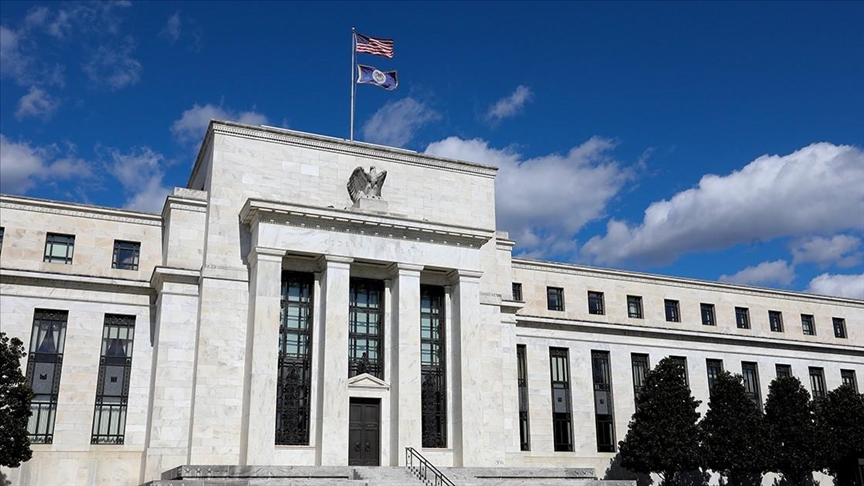
The potential Fed leader’s wealth, which appears to significantly exceed that of Powell, points to a potentially challenging vetting process for legislators.
A hyper-realistic editorial photograph of the Federal Reserve building in Washington D.C. at dusk, with an extreme close-up of a formal government ethics disclosure document in the foreground, the pages fanning open to reveal dense rows of financial figures and asset classifications. Warm amber light from a single desk lamp catches the edges of the pages. Muted navy-and-gold color palette. Reuters/Bloomberg photojournalism aesthetic. No faces. No logos.
The Most Expensive Chair in Federal Reserve History
The Federal Reserve has, for most of its 113-year history, been led by economists, lawyers, and bankers of substantial but unremarkable personal means. Alan Greenspan was comfortable; Ben Bernanke was modestly middle-class by Washington elite standards, submitting disclosures in 2014 that listed assets of at most $2.3 million, mostly parked in retirement funds. Even Jerome Powell — long celebrated as the wealthiest Fed chair in history at the time of his 2018 nomination — disclosed a personal fortune estimated between $19 million and $75 million in his most recent 2025 filing.
Then came Kevin Warsh.
The 69-page financial disclosure submitted Tuesday by President Donald Trump’s nominee to succeed Powell with the U.S. Office of Government Ethics reads less like a government ethics form and more like the portfolio of a quietly formidable private equity dynasty. Kevin Warsh’s financial disclosures reveal personal assets ranging from $131 million to $226 million, with joint assets alongside his wife, cosmetics heiress Jane Lauder, totaling at least $192 million — and almost certainly far more, given the sweeping confidentiality exemptions threaded throughout the document. (Bloomberg, CNBC)
If confirmed, Warsh will not merely be the richest Fed chair in modern history. He will be in a financial category so distant from his predecessors that the comparison strains credulity.
Warsh vs. Powell Wealth: A Chasm, Not a Gap
The contrast between Warsh and Powell wealth figures is worth dwelling on, because it illuminates something important about the changing sociology of American institutional leadership.
Powell entered the Fed chairmanship in 2018 already considered extraordinary for the role — a former investment banker and private equity partner whose wealth was seen as a potential liability, a man of Wall Street being handed the reins of the central bank. His 2025 filing shows assets of between $19.5 million and $75 million, weighted toward conservative instruments: S&P 500 index funds, municipal bond mutual funds, the kind of portfolio a prudent long-term investor assembles. (CBS News)
Warsh’s disclosed portfolio — before one even factors in his wife’s estimated $1.9 billion net worth (Forbes) or the opacity of the Juggernaut Fund’s underlying assets — dwarfs Powell’s holdings by a factor of roughly three to ten, depending on where the true values land within the disclosure ranges. The wealth of Warsh’s spouse, Jane Lauder, whose family holds substantial interests in the Estée Lauder Companies and whose municipal bond holdings alone were simply listed as “over $1 million” in categorical shorthand, is of an entirely different magnitude altogether.
By the numbers:
| Chair | Disclosed Assets (at nomination) |
|---|---|
| Ben Bernanke (2014 exit) | Up to $2.3 million |
| Janet Yellen | Low seven figures |
| Jerome Powell (2025) | $19.5M – $75M |
| Kevin Warsh (2026) | $131M – $226M+ (personal); $192M+ joint |
This is not a story of degree. It is a story of kind.
Inside the Juggernaut Fund LP: $100 Million in the Shadows
The most consequential line in Warsh’s disclosure is also the most opaque. Two separate investments in the Juggernaut Fund LP — a private vehicle connected to the Duquesne Family Office, the investment arm of legendary macro investor Stanley Druckenmiller — are each valued at more than $50 million. Together, they constitute the gravitational center of Warsh’s disclosed wealth.
Here is the problem: the form notes that the underlying assets of these investments “are not disclosed due to pre-existing confidentiality agreements.” (Al Jazeera, NBC News)
What Warsh has promised, however, is unequivocal: “I will divest this asset if confirmed.” The Office of Government Ethics signatory, analyst Heather Jones, has certified that “once the filer divests these assets, he will be in compliance with the Ethics in Government Act.” That legal box is ticked. The political and epistemic problem remains: senators will be asked to confirm a man as the steward of U.S. monetary policy without knowing what, precisely, sits inside his largest investment vehicle.
This is not an exotic situation — Fed ethics rules tightened sharply in 2022 to restrict what officials and their immediate families can hold — but the sheer scale of the holdings subject to confidentiality pledges is remarkable. Kathryn Judge, a professor at Columbia Law School, was characteristically precise: Warsh’s disclosure is “a snapshot into how wealth and connections build greater wealth and connections,” and she noted that the pervasive confidentiality gaps mean “the Senate can and should use the hearings to get the information it needs.” (Al Jazeera)
The Druckenmiller Connection: $10.2 Million in Consulting Fees
Beyond the Warsh Juggernaut Fund holdings, the disclosure reveals that Warsh earned $10.2 million in consulting fees from the investment office of Stanley Druckenmiller over the prior 12-month period — income he has himself, with cheerful self-deprecation, called his “day job.” (CNBC)
Druckenmiller is among the most consequential macro investors alive. The former Duquesne Capital manager and onetime Soros collaborator has spent decades making — and publicly opining on — large-scale bets on currency movements, sovereign debt, and the direction of Federal Reserve policy. He has been an outspoken critic of Powell’s pandemic-era monetary stance and has close ties to Republican circles that shaped Warsh’s nomination.
Warsh, in the filing, commits to resigning his role as financial adviser to Druckenmiller upon confirmation. He will also vacate board seats at shipping giant UPS and South Korean e-commerce leader Coupang, as well as his fellowship at the conservative Hoover Institution at Stanford. His additional income disclosures reveal a lucrative speaker’s circuit: over $780,000 in speaking fees in the first half of 2025 alone from firms including TPG, Warburg Pincus, State Street, Eli Lilly, and Centerview Partners. (CoinDesk)
The question that lingers — and that Senate Banking Committee members will have every right to press — is not whether these relationships were improper. By all available evidence, they were not. The question is structural: can a man whose professional and financial identity has been built within the Druckenmiller orbit credibly disentangle himself from it at the level of institutional perception, not merely legal compliance?
The Crypto Dimension: A Regulator Invested in What He Would Regulate
Buried deeper in the 69-page filing is a disclosure that adds another layer of complexity to the Warsh Fed confirmation vetting process: the nominee holds equity positions, through venture fund structures, in more than a dozen blockchain and digital asset companies spanning decentralized finance, Layer 1 and Layer 2 blockchain networks, prediction markets (including Polymarket), and Bitcoin payments infrastructure. He also holds positions in SpaceX and AI research company Hebbia. (CoinDesk, CBS News)
Individual crypto positions appear modest — most are reported without dollar values, meaning each is worth less than $1,000 under OGE rules, suggesting small venture bets rather than concentrated positions. But the opaque Juggernaut Fund and the THSDFS LLC vehicle — dozens of positions in the latter valued at $1–5 million individually — almost certainly contain additional digital-asset exposure.
The conflict-of-interest landscape here is not theoretical. The Federal Reserve, under Warsh’s potential leadership, will weigh in on stablecoin legislation, bank crypto custody policy, tokenized deposit frameworks, and conceivably Central Bank Digital Currency architecture. Federal ethics rules mandate a standard one-year cooling-off period for matters directly affecting recent financial interests. That is a meaningful structural constraint at precisely the moment when the crypto regulatory architecture of the United States is being contested most aggressively.
Senate Vetting: A Fractured Path to Confirmation
The Warsh Fed confirmation process faces headwinds that go beyond the customary ideological skirmishing of Senate Banking Committee hearings.
Senate Banking Committee Chair Tim Scott (R-S.C.) confirmed Tuesday that a confirmation hearing is scheduled for April 21, the earliest possible date under committee rules requiring five business days’ notice following receipt of ethics paperwork. (Investing.com)
But Senator Thom Tillis (R-N.C.), himself a committee member, has made explicit that he will block Warsh’s final confirmation vote — regardless of how the hearing unfolds — until the Department of Justice concludes its criminal investigation into Jerome Powell related to oversight of renovations at the Fed’s Washington headquarters. A federal judge has already quashed the DOJ’s subpoenas, finding the probe to be a “thinly disguised effort to pressure Powell to lower interest rates or resign.” The DOJ has said it will appeal, likely pushing any resolution past May 15 — the date on which Powell’s term as chair formally expires. (Al Jazeera)
Should Warsh not be confirmed by May 15, Powell has indicated he would continue serving as chair “pro tem” — a constitutionally ambiguous scenario that markets would almost certainly receive with unease. The Fed has never experienced a true leadership vacuum, and the uncertainty could add a premium to already-elevated long-term Treasury yields at a moment when the central bank is navigating a delicate disinflation path.
The key confirmation variables:
- April 21: Senate Banking Committee hearing — Warsh’s first public testimony on monetary policy positions and financial conflicts
- May 15: Powell’s term expires; pro tem scenario activated if full Senate vote hasn’t occurred
- DOJ appeal timeline: Whether the Tillis blockade holds, and for how long
- Divestiture pace: How quickly Warsh can legally unwind ~$100M+ in Juggernaut Fund exposure and related holdings
Why This Matters: The Institutional Stakes Extend Far Beyond One Nominee
“When those disclosures leave questions unanswered, the Senate can and should use the hearings to get the information it needs to make an informed decision.” — Kathryn Judge, Columbia Law School
The Warsh wealth story is, at its most reductive, a Washington compliance drama: nominee discloses assets, pledges to divest, ethics office certifies compliance, Senate confirms or doesn’t. That framing, while procedurally accurate, misses what is actually at stake.
The Federal Reserve is not like other executive appointments. Its chairman exercises more consequential influence over the global economy — through interest rate decisions, bank regulation, and lender-of-last-resort functions — than almost any other single institutional actor on earth. The perception of independence from financial markets is not merely a reputational nicety; it is a functional prerequisite for the institution’s credibility. When the Fed chair speaks, $100 trillion in global bond, equity, and currency markets listen and react within milliseconds. The credibility of those words rests on the belief that they are shaped by macroeconomic judgment, not by the residue of private financial entanglements.
Warsh’s disclosure sits within a broader pattern that should concern observers across the ideological spectrum. His $131M–$226M in personal assets places him in a wealth tier more consistent with Treasury Secretary Scott Bessent and Commerce Secretary Howard Lutnick than with any prior Fed chair. This is not coincidence; it reflects a deliberate Trump administration philosophy of placing high-net-worth operators in institutional roles traditionally occupied by technocrats. The theory is that wealth signals competence and independence from political pressure. The counter-argument — and it is a powerful one — is that concentrated private wealth creates its own gravitational pull, a kind of epistemic capture that no divestiture pledge can fully unwind.
Divestiture is a legal mechanism, not a psychological erasure. A man who has spent 15 years thinking, advising, and earning within the framework of macro hedge fund strategy does not become a neutral arbiter of monetary policy the moment he sells his Juggernaut Fund units. His conceptual vocabulary, his risk intuitions, his implicit model of how markets work and what they need — all of this is formed in the crucible of private wealth management. That is not disqualifying. But it deserves scrutiny that no 69-page government form can substitute for.
Precedent, Context, and the Quiet Revolution in Central Bank Leadership
It is worth remembering that the Fed chair’s salary is set by statute: $226,300 per year for the chair. Warsh, if confirmed, will walk away from a disclosed income stream of roughly $13 million annually — the Druckenmiller consulting fees, speaking circuits, and board compensation combined — to accept that government salary. That is either a genuine act of public service or, for a man of his disclosed means and his wife’s estimated $1.9 billion fortune, a rounding error. Possibly both.
What is undeniable is that the nature of the Federal Reserve chair has changed. From the donnish academic economists of the post-Volcker era through the careful lawyer-banker Powell, the role has been defined by intellectual authority rooted in institutional credibility. Warsh — Harvard Law, Stanford fellow, Druckenmiller partner, well-connected Republican centrist — represents something different: a Fed chair whose primary credential is proximity to private capital at the highest level, rather than decades in academia or government policy.
That may ultimately prove to be an asset. His defenders argue that a chairman who genuinely understands how large investors think — their liquidity pressures, their yield curve anxieties, their systemic risk perceptions — will be a more sophisticated communicator and a more credible counterparty in a crisis. The 2008–2009 financial crisis, after all, was navigated by a Fed that sometimes struggled to understand the plumbing of the very markets it was trying to stabilize.
But the Trump Fed pick financial disclosure now on the public record will ensure that this question — competence born of proximity versus capture born of entanglement — will animate every question at the April 21 hearing, and every vote that follows.
Forward View: What Markets and Historians Should Watch
The Warsh confirmation drama has at least five inflection points that analysts and monetary historians should monitor closely:
- The April 21 hearing testimony — specifically, Warsh’s positions on the neutral rate, QT pace, and Fed independence from executive pressure, the last of which is the most politically charged.
- The divestiture timeline — the Juggernaut Fund positions represent the largest and most opaque component of Warsh’s wealth. How quickly and at what valuations those positions unwind will have implications for market perception of the Fed’s institutional integrity.
- The Tillis variable — whether the DOJ’s appeal of the court ruling quashing the Powell subpoenas proceeds fast enough to create a resolution before, or shortly after, May 15. If Tillis holds and Powell must serve pro tem past his official term end, the legal and institutional ambiguity could become a market event.
- The crypto policy signal — how Warsh addresses his disclosed blockchain holdings during the hearing will signal to the digital-asset industry, Congress, and international regulators what the Fed’s posture toward crypto integration in the banking system will be under his leadership.
- The independence stress test — Trump has been explicit about his desire for lower interest rates. How Warsh publicly frames the relationship between Fed independence and executive branch preferences during his testimony will be among the most consequential hours of monetary policy theater in a generation.
The Federal Reserve was designed to be insulated from precisely the kinds of pressures — political, financial, reputational — that its chair’s wealth and connections can create. Kevin Warsh may be exceptionally well qualified for this role. His 2006–2011 tenure as a Fed governor, his crisis-era experience, and his macro investment literacy are genuine credentials. But the $192 million question is not whether he is qualified. It is whether the institution, and the legislators charged with vetting him, have the rigor and the resolve to establish — in full public view — that his loyalty runs to the mandate, not the market.
That hearing cannot come soon enough.
Discover more from The Economy
Subscribe to get the latest posts sent to your email.



Key Takeaways
- Rolex’s secondary market rose approximately 7.9% year-over-year as of 2026 (per WatchCharts data) — trailing Patek Philippe (+16.2%) and Tudor (+11.4%) but still outperforming Audemars Piguet (+3.4%).
- Rolex raised U.S. retail prices 4–9% in January 2026 (steel models ~5.6%, gold models ~8.7%), narrowing the historical gap between retail and pre-owned pricing.
- Not every model appreciates: steel sports references (Submariner, GMT-Master II, Daytona) have held value far better than two-tone or widely available dress references like the standard Datejust.
- The Lady-Datejust posted the sharpest 2026 gain among tracked collections — up 22.73%, from roughly $9,269 to $11,376 — driven by demand for smaller, “everyday luxury” watches.
- Gold’s rise past $2,400/oz has directly lifted the investment case for Rolex’s precious-metal references (Day-Date, Sky-Dweller, Yacht-Master).
The Model-by-Model Picture
| Category | 2026 Trend |
|---|---|
| Lady-Datejust | +22.73% (strongest performer among tracked collections) |
| Steel sports models (Submariner, GMT-Master II) | Held value well; corrected from 2022 peak but stabilized above retail |
| Daytona | Corrected from highs above $50,000 to the mid-$30,000s; still among the most sought-after references |
| Two-tone/widely available Datejust | Flat to negative — “holds value” is an overstatement for this category |
| Gold references (Day-Date, Sky-Dweller) | Lifted by gold’s rise above $2,400/oz |
Why the “Rolex Always Appreciates” Myth Is Fading
The pandemic-era boom pushed some references — the Daytona above all — to speculative highs disconnected from historical norms. Since the March 2022 peak, steel sports models have compressed meaningfully, and dealers who bought inventory near the top have in some cases faced 20–40% markdowns on liquidation. The lesson for 2026 buyers: Rolex as a category is not a monolith. Value retention depends heavily on specific reference, condition, and whether the piece comes with box and papers (“full set”).
What’s Actually Driving 2026 Strength
- Retail price increases raise the floor. When a new Submariner retails at $10,050 (up from $9,500), a pre-owned example at $11,000–$12,000 suddenly represents a smaller premium — narrowing the gap without secondary prices actually moving.
- Supply discipline remains Rolex’s core lever. The brand has never confirmed production numbers, and secondary-market premiums remain entirely a function of Rolex’s own manufacturing decisions — a risk factor as much as a support.
- Certified Pre-Owned rollout. Rolex’s now fully rolled-out CPO program has changed how buyers transact in the used market, adding a layer of brand-verified legitimacy that supports pricing.
The Case for Rolex as a Portfolio Diversifier
Financial advisors increasingly frame luxury watches not as a replacement for equities or bonds, but as a tangible, historically low-correlation diversifier — one that carries its own risks (illiquidity, condition-dependent pricing, no yield) but has demonstrated multi-decade resilience for specific references.
Is Rolex a good investment in 2026?
It depends heavily on the specific reference. Steel sports models like the Submariner and Daytona have held or grown in value; two-tone and widely available dress models generally have not. Overall, Rolex’s secondary market rose about 7.9% year-over-year in 2026, trailing Patek Philippe but ahead of Audemars Piguet.
Discover more from The Economy
Subscribe to get the latest posts sent to your email.

Navigating Mortgage and Loan Refinancing in a High-Yield Environment
Global public debt crossing critical thresholds has kept central bank policies volatile, resulting in fluctuating US Treasury yields throughout 2026. For homeowners and commercial property holders burdened by previous high-interest borrowing cycles, finding optimal refinance windows has become a high-stakes financial puzzle. Stalled disinflation and stubborn employment numbers mean rate cuts are incremental, requiring borrowers to act with precision.
Timing your mortgage or commercial loan refinance in this environment requires a deep understanding of yield curve movements and lender risk appetites.
Decoding 2026 Refinance Dynamics
The 10-Year Treasury Yield Benchmark
Mortgage rates continue to track closely with the 10-year US Treasury yield. When macroeconomic anxiety spikes debt issuance, yields rise, tightening consumer borrowing capacity. Savvy borrowers monitor weekly Treasury auctions to lock in rates during brief dip windows.
Hybrid ARMs and Alternative Structures
With fixed rates remaining elevated, 7/1 and 10/1 adjustable-rate mortgages (ARMs) have surged in popularity. These products offer lower initial monthly payments, giving borrowers breathing room until central bank easing cycles fully materialize.
| Loan Product | Current Rate Range | Best For | Key Risk Factor |
| 30-Year Fixed Mortgage | 6.2% – 6.8% | Long-term predictability | Higher initial monthly outlay |
| 7/1 Hybrid ARM | 5.5% – 5.9% | Short-term ownership / flipping | Rate reset risk after year 7 |
| Commercial Refinance | 7.0% – 8.2% | Corporate asset restructuring | Strict DSCR lender covenants |
Actionable Steps for Successful Refinancing
To maximize your chances of securing favorable refinance terms in a volatile market, follow a disciplined preparation strategy.
Boost Your Credit Score Immediately: Lenders in 2026 are applying stringent credit tiering; a 20-point increase can drop your APR by a crucial quarter-point.
Shop Regional Credit Unions: Smaller financial institutions often offer portfolio loans with more flexible underwriting than major national banks.
Calculate the Break-Even Point: Ensure your total closing costs are recouped through monthly savings within 24 months of closing.
“Market Strategist View: Refinancing in 2026 is an exercise in opportunistic timing. Borrowers must maintain immaculate financial profiles ready to strike the moment Treasury yields dip.”
Mastering the complexities of today’s debt environment ensures you can successfully lower your debt service costs and protect your long-term financial stability.
Discover more from The Economy
Subscribe to get the latest posts sent to your email.

The days of pulling generic auto insurance quotes based purely on your zip code and age are officially over. In 2026, insurance comparison engines are powered entirely by generative AI and real-time telematics. These platforms digest thousands of live data points—ranging from your driving smoothness via connected vehicle sensors to real-time traffic congestion patterns—to generate hyper-personalized premiums instantly.
For consumers, this evolution represents both a massive opportunity for savings and a hidden trap for penalty pricing. Understanding how AI algorithms evaluate risk is essential for anyone looking to lower their monthly auto insurance premiums.
How AI Comparison Engines Evaluate Your Risk Profile
Behavioral Telematics and Connected Cars
Modern cars stream performance data directly to insurance aggregators. Generative AI models analyze braking sharpness, acceleration curves, cornering G-forces, and phone distraction metrics. Drivers who maintain smooth, defensive habits are rewarded with dynamic rate cuts of up to 40% compared to traditional rating tiers.
Predictive Traffic and Weather Modeling
AI tools now cross-reference your daily commute route with predictive weather and accident probability models. If your standard parking location or driving corridor has a statistically higher incidence of uninsured motorist claims, your quotes will reflect that hyper-local risk assessment.
| Comparison Factor | Traditional Rating Model | 2026 Generative AI Model | Impact on Premium |
| Mileage & Usage | Annual estimated odometer reading | GPS tracking & live trip duration | High (up to 35% savings) |
| Driving Behavior | MVR driving record & accidents | Real-time braking, speed, & G-force | Critical (determines tier) |
| Vehicle Tech | Make, model, and safety rating | ADAS calibration & repair cost data | Moderate |
Strategies to Lower Your AI-Driven Insurance Quote
To outsmart the algorithm and secure the lowest possible premium in 2026, drivers must proactively manage their digital footprint on insurance platforms.
Opt-In for Telematics Trial Periods: Many insurers offer immediate 15% discounts just for installing their driving app; let it track safe habits for 30 days to lock in permanent savings.
Scrub Unverified Public Records: Ensure your motor vehicle report is free of clerical errors that AI risk models misinterpret as reckless behavior.
Compare AI Aggregators: Use platforms that integrate multi-carrier API feeds rather than single-brand comparison sites to find the best risk-adjusted rate.
“Industry Note: AI-driven pricing rewards transparency and precision. Drivers who actively manage their telematics data consistently out-save those relying on legacy quote calculators.”
Embracing AI comparison tools allows savvy policyholders to customize coverage limits precisely to their driving habits, eliminating wasted premium spend while ensuring robust protection.
Discover more from The Economy
Subscribe to get the latest posts sent to your email.

Neocloud Economics in 2026: GPU Debt, Utilization and Power

What Is a Neocloud? How AI GPU Clouds Work and Compare

Lula Re-elected in 2026: What Changes for the Dollar, Brazilian Stocks, and Interest Rates?

Lula Wins Brazil’s 2026 Election: Five Economic Tests for 2027

SSI November 2026 Payment: Why Benefits Arrive October 30

Russia Sanctions Waiver: What Asian Oil Buyers Gain

Asia Markets Weekly: How Oil, US Yields and the Fed Reach Tokyo, Kuala Lumpur and Karachi

Gold Near $4,000: Buy, Hold or Wait? A Pakistan Tola Price Guide

US 10-Year Treasury Yield Near 5%: The Hidden Cost for Pakistani Investors

Fed Meeting on October 28: Hike or Hold—and Why Pakistan Investors Should Care

Can Pakistan Turn US–Iran Mediation Into an Economic Dividend?

Oil Above $100: How Higher Crude Prices Reach Pakistan’s Rupee, Petrol and Imports

SBP Interest Rate at 11.5%: What Will Decide Pakistan’s Next Policy Move?

The Global South: Debt, Climate Finance and Investment in 2026

Crude Oil & Petroleum Market Analysis: OPEC+ Decisions and Price Forecasts

Top US Convenience Store Chains: Store Counts, EV Charging, and Sales Trends

Algorithmic Dogfights: Why the U.S. and China Must Establish Rules of Engagement for Autonomous Air Power

Who Is Shivon Zilis? The Neuralink Executive at the Center of the Musk–OpenAI Trial

Social Security Extra $90 Deposit: Who Qualifies for the October 2026 Medicare Rebate?

Corporate America Faces a New Debt Test as US Borrowing Costs Surge

Gold Price Outlook 2026: The Forces Behind the Forecasts—and What Could Reverse Them

Global Economic Outlook 2026: 7 Forces Reshaping Markets, Trade and Business

Gold Falls 3.7% as Yields Surge: Is Gold Still a Safe Haven in 2026?

Stock Market Crash in 2026? Warning Signs, Scenarios and a Calm Investor Checklist

Anthropic Bans Sustained Abuse of Claude AI Under New Usage Policy Effective November 12, 2026

MAS Allocates S$1.45 Billion to Five Asset Managers in Third EQDP Batch: Total Deployment Reaches S$5.4 Billion

Stock Market Today: Dow, S&P 500, and Nasdaq Retreat as Treasury Yields

Geopolitics and Your Portfolio: How International Affairs Move Global Markets
-

 Markets & Finance10 months ago
Top 15 Stocks for Investment in 2026 in PSX: Your Complete Guide to Pakistan’s Best Investment Opportunities
-

 Analysis8 months ago
Johor’s Investment Boom: The Hidden Costs Behind Malaysia’s Most Ambitious Economic Surge
-

 Analysis8 months ago
Top 10 Stocks for Investment in PSX for Quick Returns in 2026
-

 Banks9 months ago
Best Investments in Pakistan 2026: Top 10 Low-Price Shares and Long-Term Picks for the PSX
-

 Analysis9 months ago
Brazil’s Rare Earth Race: US, EU, and China Compete for Critical Minerals as Tensions Rise
-

 Investment10 months ago
Top 10 Mutual Fund Managers in Pakistan for Investment in 2026: A Comprehensive Guide for Optimal Returns
-

 Global Economy10 months ago
15 Most Lucrative Sectors for Investment in Pakistan: A 2025 Data-Driven Analysis
-

 Global Economy10 months ago
Pakistan’s Export Goldmine: 10 Game-Changing Markets Where Pakistani Businesses Are Winning Big in 2025