
Analysis
Indonesia Eyes Russian Crude as Middle East Tensions Deepen Import Gap and Subsidy Strain

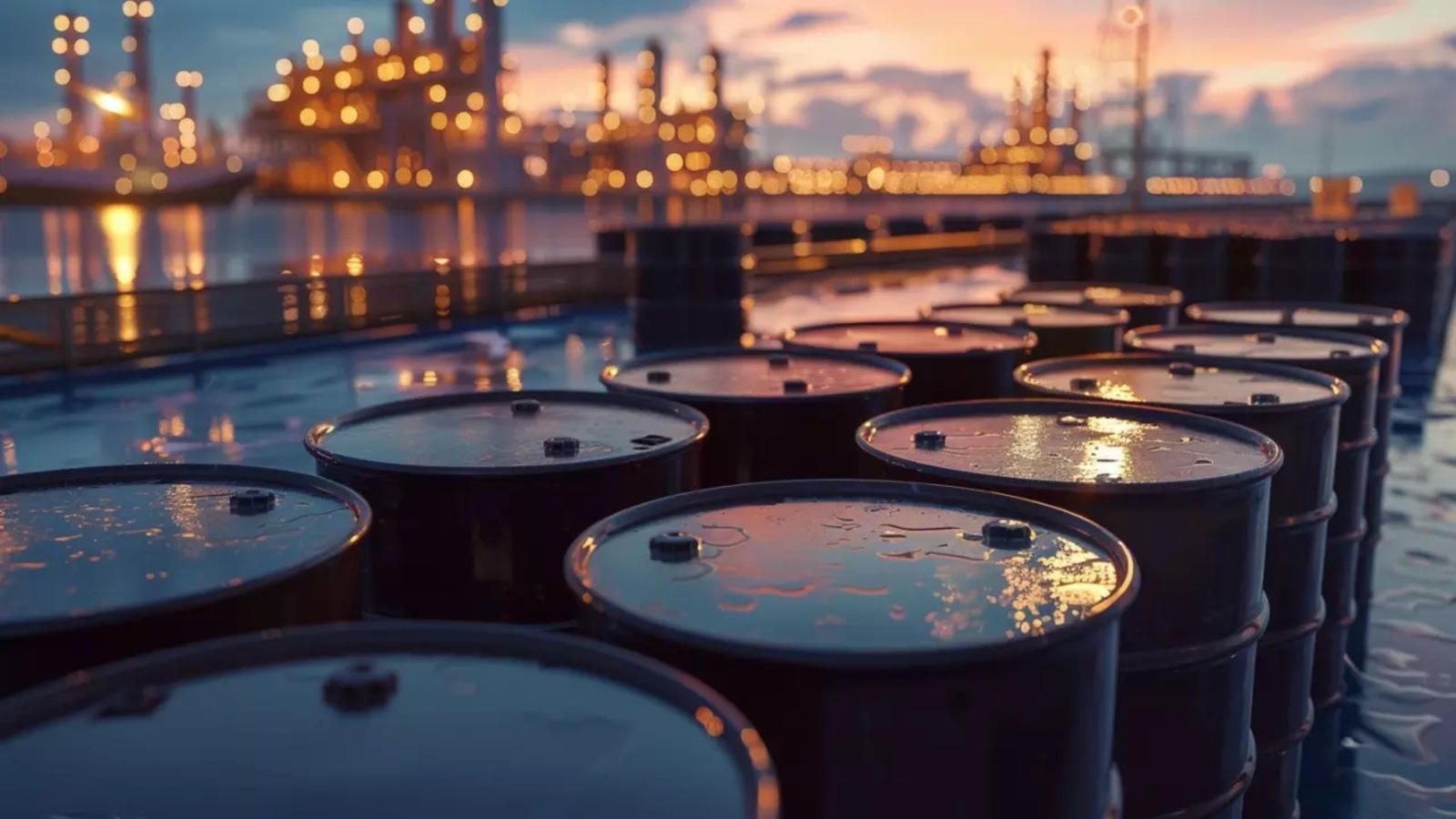
The tanker hasn’t docked yet. But the decision has already been made.
Introduction: A Rerouting That Rewrites the Map
Picture a Pertamina supertanker — laden with nothing, steaming northeast past the Andaman Sea toward a port it has never called before. Not Ras Tanura. Not Ruwais. Vladivostok. Or perhaps Kozmino, Russia’s Pacific export terminal on the Sea of Japan, where Urals-grade crude has been quietly accumulating since the West turned its back on Russian barrels in 2022.
This is no longer a hypothetical. In early April 2026, Indonesian Energy Minister Bahlil Lahadalia sat across the table from Russian counterpart Sergey Tsivilev in what officials described as “exploratory but substantive” bilateral energy talks. The agenda: Indonesian crude import diversification. The subtext: a calculated hedge by Southeast Asia’s largest economy against the compounding shocks of Middle East volatility, Western sanctions complexity, and a domestic fuel subsidy bill that is quietly detonating under the 2026 fiscal framework.
Indonesia’s pivot toward Russian crude is being framed in Jakarta as prudent procurement diversification. Viewed from the right altitude, it is something far more consequential: a sovereign assertion by a 280-million-strong nation that the old architecture of global energy trade — and the geopolitical leverage it carries — is broken beyond repair.
1: The Widening Import Gap — When Domestic Output Meets an Insatiable Appetite
Indonesia’s energy arithmetic has never been comfortable. The country that once exported oil as an OPEC member now struggles to feed its own refineries.
Domestic crude production currently hovers between 600,000 and 605,000 barrels per day, according to the U.S. Energy Information Administration — a figure that has stagnated for years despite Pertamina’s upstream investment pledges and a raft of PSC (Production Sharing Contract) incentives designed to lure back international majors. Meanwhile, national demand has pushed decisively past 1.6–1.7 million barrels per day, a gap of nearly one million barrels that must be sourced from international markets every single day.
That is roughly the daily output of the entire Bakken formation in North Dakota — imported, every day, forever, or until Indonesia’s energy transition delivers something more structurally sustainable.
The Middle East has historically plugged approximately 20–25% of this gap, with crude and LPG flowing primarily through the Strait of Hormuz — that 21-mile-wide chokepoint through which, on a normal day, approximately 20% of all global oil trade passes. There is nothing normal about 2026.
Regional tensions in the Gulf have produced shipping insurance premiums that have spiked to levels not seen since the 2019 tanker attacks, with IEA data showing a material tightening of Asia-bound Middle East crude flows in Q1 2026. For a procurement team at Pertamina managing multi-month cargo scheduling, this is not geopolitics — it is a logistics emergency measured in dollars per barrel and weeks of supply buffer.
The import gap is widening. The traditional supply lane is increasingly hostile. And Jakarta’s energy ministers are looking at maps with fresh eyes.
2: Why Russia Now? Price, Proximity, and a Timely Sanctions Window
The case for Indonesian Russia crude imports is built on three reinforcing pillars: price discount, refinery compatibility, and — crucially — a brief regulatory window that may not stay open long.
The Discount That Makes Accountants Smile
Russian Urals crude has traded at a persistent discount to Brent ever since the G7 price cap mechanism was imposed in December 2022. While the spread has narrowed from its early-2023 lows of $30–35 below Brent, a Bloomberg analysis of Russian crude export pricing into Asian markets through early 2026 suggests Urals continues to clear at $10–15 per barrel below comparable Middle Eastern grades. For a country importing roughly one million barrels per day of crude equivalents, that arithmetic is impossible to ignore: theoretical annual savings of $3.6–5.5 billion, even after accounting for additional freight costs on the longer Eastern route.
Indonesia spends approximately $9–10 billion annually on fuel subsidies — a figure that has ballooned with global price volatility and now sits as one of the most politically radioactive line items in the national budget. A meaningful per-barrel reduction on import costs does not just help Pertamina’s margins. It directly reduces the sovereign subsidy burden.
Urals and Indonesian Refineries: A Technical Fit
Not all crude is interchangeable. Indonesia’s refinery fleet — including the strategically vital Cilacap complex in Central Java and the Balikpapan facility in East Kalimantan — has historically processed a blend of medium-sour crudes from the Middle East alongside lighter domestic barrels. Urals crude, a medium-gravity, medium-sour blend with an API gravity typically around 31–32° and sulfur content near 1.5%, sits within a technically compatible processing window for these refineries, according to Wood Mackenzie’s Asia-Pacific downstream analysis. Some investment in blending logistics would be required, but the engineering case is manageable — a far cry from the expensive refinery retrofits that, say, U.S. Gulf Coast refiners required to process heavy Venezuelan crudes.
The Thirty-Day Window — and What It Signals
Perhaps the most quietly consequential piece of this puzzle: the U.S. Treasury’s issuance of a 30-day sanctions waiver covering stranded Russian oil cargoes created a legal corridor that Jakarta’s procurement strategists observed with intense interest. While the waiver was technically designed to allow specific stranded cargoes to clear, its issuance signaled something important to Southeast Asian energy policymakers: Washington’s sanctions architecture has elastic edges, and the U.S. is not uniformly prepared to punish countries that are not treaty allies for purchasing discounted Russian barrels.
Indonesia has simultaneously signaled outreach to alternative suppliers — the U.S., Nigeria, Angola, and Brunei — a deliberate display of multi-vector diversification that is as much political theater as genuine procurement strategy. It tells Washington: we are not defecting to Moscow, we are managing a portfolio.
3: Subsidy Strain and the Fiscal Tightrope of 2026
Behind every Jakarta press conference about energy security lies a more urgent conversation happening in the offices of the Finance Ministry: how to keep the 2026 budget deficit below the constitutionally mandated 3% of GDP ceiling while global oil prices surge, the rupiah wobbles, and 280 million Indonesians have been politically conditioned to expect cheap fuel.
Indonesia’s fuel subsidy architecture is a legacy institution that successive administrations have reformed at the margins but never fundamentally dismantled. Pertamina acts simultaneously as commercial entity and policy arm of the state, absorbing the spread between global crude prices and the government-regulated retail price of Pertalite (the subsidized 90-octane gasoline that remains the fuel of the Indonesian masses). When oil prices spike, Pertamina hemorrhages cash that the government must eventually backstop.
The IMF’s most recent Article IV consultation on Indonesia flagged subsidy expenditures as a “structural fiscal vulnerability,” noting that every $10 per barrel increase in Brent adds approximately $1.2–1.5 billion to the annual subsidy obligation. With Brent trading above $90 for extended stretches in early 2026 — driven partly by Hormuz tension premiums — the subsidy math has become genuinely alarming for Finance Minister Sri Mulyani’s team, who have built a budget framework premised on a far more modest crude price assumption.
Russian crude at a $10–15 discount is not just a procurement advantage. It is a fiscal lifeline that arrives at precisely the right political moment — ahead of regional elections in which fuel prices are a visceral voter concern.
This is the humanized reality beneath the geopolitical headline: somewhere in a Jakarta housing estate, a motorcycle taxi driver is watching Pertalite prices at the pump with the same focus that hedge fund managers in Singapore watch Brent futures. His vote, and the votes of 50 million Indonesians like him, are shaped by that price. Energy Minister Bahlil understands this with crystalline clarity.
4: The Geopolitical Chessboard — ASEAN, Great Powers, and the Art of Strategic Ambiguity
Indonesia is not making an alliance choice. It is making a market choice — and it is doing so with full awareness of how that choice lands in Washington, Beijing, and Brussels simultaneously.
This is the sophisticated game Jakarta has played with increasing confidence since President Prabowo Subianto took office. Indonesia’s active non-alignment doctrine — a deliberate evolution from the Sukarno-era bebas aktif (free and active) principle — holds that in a fracturing multipolar world, the greatest strategic asset a large middle power possesses is optionality. You do not lock in. You hedge. You extract value from your indispensability to multiple patrons simultaneously.
Washington’s Dilemma
The United States finds itself in an impossible position regarding Indonesian Russia crude negotiations. It cannot credibly threaten secondary sanctions against the world’s fourth-largest country by population, a critical Indo-Pacific partner, the host of G20 rotating presidencies, and a nation Washington desperately needs onside for its China containment architecture. Applying maximum sanctions pressure would collapse the very Southeast Asian coalition that U.S. strategic planners have spent a decade assembling. The Atlantic Council’s Indo-Pacific energy security framework has repeatedly warned that energy-coercive diplomacy toward swing states in ASEAN risks accelerating their drift toward Beijing’s orbit.
Washington will raise concerns quietly. It will not act decisively. Jakarta knows this.
China Watches, Learns, and Benefits
Beijing, meanwhile, observes the Indonesian pivot with something approximating satisfaction. Every barrel of Russian crude that flows to Southeast Asia rather than China tightens global supply slightly, supporting prices that Beijing — as a massive net importer — does not love. But strategically, Indonesia’s willingness to defy Western energy norms creates political cover for China’s own continued Russian crude intake, which has made China Russia’s largest export customer since the war in Ukraine began. China imported approximately 2.1 million barrels per day of Russian crude in early 2026, and Jakarta’s normalization of this trade lane reduces the reputational stigma Beijing has managed at some diplomatic cost.
ASEAN: A Region Quietly Choosing Pragmatism
Indonesia is not alone. India has been the most visible emerging-market buyer of Russian crude, building its share of Urals imports to record levels. Malaysia’s state oil company PETRONAS has quietly expanded exposure to Russian LNG. Thailand has engaged with Rosneft on downstream cooperation. The IEA’s most recent Southeast Asia energy outlook noted with characteristic diplomatic understatement that “the region’s energy procurement patterns increasingly reflect national interest calculations that diverge from IEA member-state policy frameworks.”
In plain language: Asia is buying Russian barrels. The sanctions coalition is a Western phenomenon with limited purchase south of the Himalayas and east of Warsaw.
5: The Risks — Secondary Sanctions, Logistics, and the Reputational Ledger
No analysis of Indonesia’s Russian crude pivot would be complete without a sober accounting of the genuine risks. Jakarta is not sleepwalking into this decision; it is walking in with eyes open to hazards that are real, if manageable.
Secondary Sanctions: The Latent Sword
The most acute risk is secondary sanctions exposure for Indonesian financial institutions and Pertamina itself. American secondary sanctions regulations theoretically allow the U.S. Treasury to penalize any entity that provides “material support” for Russian energy revenues. In practice, enforcement against a sovereign state oil company of Indonesia’s scale would be diplomatically catastrophic — but practice can change with administrations, and a more hawkish U.S. posture post-2026 could revisit these calculations. Pertamina’s legal team is undoubtedly war-gaming scenarios involving dollar-clearing restrictions, and Jakarta would be wise to accelerate rupiah-ruble or yuan-denominated settlement mechanisms as insurance.
The Logistics Premium
Russian Eastern-route crude involves longer voyage times than Middle Eastern supply — approximately 12–14 days from Kozmino to Cilacap versus 7–9 days from Ras Tanura. Additional freight costs erode some of the price discount. And Indonesia would need to develop new cargo infrastructure, insurance relationships, and potentially refinery blending protocols. These are surmountable engineering and logistics challenges, but they carry a real capital cost that must be factored into any honest net-benefit analysis.
The Long Game: Fossil Fuel Dependency as Strategic Vulnerability
Perhaps the most important risk is the one that Russian crude cannot solve: structural dependency on imported fossil fuels as an enduring sovereign liability. Indonesia has extraordinary renewable energy endowment — geothermal resources alone rank among the world’s largest, the archipelago’s solar irradiance is exceptional, and offshore wind potential in strategic corridors is largely untapped. The IEA’s Indonesia Energy Policy Review consistently notes that the country’s energy transition has proceeded below its structural potential, constrained by subsidy-distorted retail markets that make clean energy economics persistently challenging.
Every Russian barrel that arrives in Cilacap is, in a narrow sense, a fiscal success. In the broader strategic calculus, it is another year of delayed transition — another year in which Indonesia’s vulnerability to geopolitical oil price shocks is extended rather than resolved. The smartest version of Jakarta’s strategy uses the Russian crude discount not simply to preserve the status quo, but to fund the capital expenditure that removes import dependency over a 10–15 year horizon.
Conclusion: The Fracturing Order and What Jakarta Knows That Brussels Doesn’t
Here is the uncomfortable truth that Indonesia’s Russian crude negotiations illuminate with uncomfortable clarity: the post-Cold War energy order — in which Western pricing mechanisms, dollar-denominated settlements, and OECD-governed trade norms structured global oil markets — is fracturing at a pace that Western capitals have not fully processed.
Indonesia is not an outlier. It is the archetype of what rational energy governance looks like for a large, developing, non-aligned nation in 2026. Faced with supply shocks from a region it cannot control, a fiscal subsidy architecture it cannot quickly dismantle, and a domestic energy industry that cannot close the production gap, Jakarta is doing exactly what a sophisticated sovereign actor should do: maximizing optionality, extracting value from competing great-power interests, and buying time for a structural transition that — if properly funded and politically protected — could eventually free Indonesia from this entire dilemma.
The Western sanctions architecture was designed to isolate Russia economically and strategically. Instead, it has accelerated the emergence of a parallel energy trade ecosystem across the Global South — one that is increasingly liquid, increasingly normalized, and increasingly beyond the reach of Western enforcement. Indonesia eyes Russian crude not because it loves Moscow’s politics. It eyes Russian crude because the arithmetic is compelling, the alternatives are constrained, and the world that Western policymakers are trying to preserve already looks, from Jakarta, like a fading photograph.
The tanker heading northeast knows exactly where it’s going.
Frequently Asked Questions
Q1: Why is Indonesia considering buying Russian crude oil in 2026? Indonesia faces a structural supply gap of nearly one million barrels per day between domestic production (~600,000 bpd) and national demand (~1.6–1.7 million bpd). Middle East tensions threatening Hormuz transit routes and Russian Urals crude trading at a $10–15 per barrel discount to Brent make Russian oil an economically compelling diversification option, particularly given Indonesia’s multibillion-dollar annual fuel subsidy burden.
Q2: How does Indonesia’s fuel subsidy strain relate to Russia crude imports? Indonesia spends approximately $9–10 billion annually on fuel subsidies. Every $10 per barrel increase in global crude prices adds $1.2–1.5 billion to this obligation. Sourcing Russian crude at a sustained discount meaningfully reduces the sovereign fiscal burden — a critical consideration as Indonesia tries to maintain its 2026 budget deficit below the constitutional 3% of GDP ceiling.
Q3: Does buying Russian oil expose Indonesia to U.S. secondary sanctions? Theoretically, yes — U.S. secondary sanctions regulations could target entities providing material support to Russian energy revenues. In practice, applying enforcement against Indonesia, a critical Indo-Pacific partner and the world’s fourth-largest country by population, would be diplomatically counterproductive for Washington. Jakarta is managing this risk through multi-vector procurement outreach and potential non-dollar settlement arrangements.
Q4: Is Russian Urals crude compatible with Indonesian refineries? Urals crude (API ~31–32°, sulfur ~1.5%) falls within a technically compatible processing range for key Indonesian refineries including Cilacap and Balikpapan, which are configured for medium-sour crudes. Some blending optimization would be required, but no major capital retrofits are anticipated — making the transition logistically manageable.
Q5: What does Indonesia’s Russian crude pivot mean for global energy markets? It signals the accelerating normalization of a parallel oil trade ecosystem across the Global South that operates outside Western sanctions architecture. As India, Indonesia, China, and other large Asian importers collectively absorb discounted Russian barrels, the structural isolation of Russia that the G7 price cap was designed to achieve becomes progressively less effective — with significant long-term implications for both global energy pricing and the geopolitical leverage of Western-controlled financial infrastructure.
Discover more from The Economy
Subscribe to get the latest posts sent to your email.



Key Takeaways
- Rolex’s secondary market rose approximately 7.9% year-over-year as of 2026 (per WatchCharts data) — trailing Patek Philippe (+16.2%) and Tudor (+11.4%) but still outperforming Audemars Piguet (+3.4%).
- Rolex raised U.S. retail prices 4–9% in January 2026 (steel models ~5.6%, gold models ~8.7%), narrowing the historical gap between retail and pre-owned pricing.
- Not every model appreciates: steel sports references (Submariner, GMT-Master II, Daytona) have held value far better than two-tone or widely available dress references like the standard Datejust.
- The Lady-Datejust posted the sharpest 2026 gain among tracked collections — up 22.73%, from roughly $9,269 to $11,376 — driven by demand for smaller, “everyday luxury” watches.
- Gold’s rise past $2,400/oz has directly lifted the investment case for Rolex’s precious-metal references (Day-Date, Sky-Dweller, Yacht-Master).
The Model-by-Model Picture
| Category | 2026 Trend |
|---|---|
| Lady-Datejust | +22.73% (strongest performer among tracked collections) |
| Steel sports models (Submariner, GMT-Master II) | Held value well; corrected from 2022 peak but stabilized above retail |
| Daytona | Corrected from highs above $50,000 to the mid-$30,000s; still among the most sought-after references |
| Two-tone/widely available Datejust | Flat to negative — “holds value” is an overstatement for this category |
| Gold references (Day-Date, Sky-Dweller) | Lifted by gold’s rise above $2,400/oz |
Why the “Rolex Always Appreciates” Myth Is Fading
The pandemic-era boom pushed some references — the Daytona above all — to speculative highs disconnected from historical norms. Since the March 2022 peak, steel sports models have compressed meaningfully, and dealers who bought inventory near the top have in some cases faced 20–40% markdowns on liquidation. The lesson for 2026 buyers: Rolex as a category is not a monolith. Value retention depends heavily on specific reference, condition, and whether the piece comes with box and papers (“full set”).
What’s Actually Driving 2026 Strength
- Retail price increases raise the floor. When a new Submariner retails at $10,050 (up from $9,500), a pre-owned example at $11,000–$12,000 suddenly represents a smaller premium — narrowing the gap without secondary prices actually moving.
- Supply discipline remains Rolex’s core lever. The brand has never confirmed production numbers, and secondary-market premiums remain entirely a function of Rolex’s own manufacturing decisions — a risk factor as much as a support.
- Certified Pre-Owned rollout. Rolex’s now fully rolled-out CPO program has changed how buyers transact in the used market, adding a layer of brand-verified legitimacy that supports pricing.
The Case for Rolex as a Portfolio Diversifier
Financial advisors increasingly frame luxury watches not as a replacement for equities or bonds, but as a tangible, historically low-correlation diversifier — one that carries its own risks (illiquidity, condition-dependent pricing, no yield) but has demonstrated multi-decade resilience for specific references.
Is Rolex a good investment in 2026?
It depends heavily on the specific reference. Steel sports models like the Submariner and Daytona have held or grown in value; two-tone and widely available dress models generally have not. Overall, Rolex’s secondary market rose about 7.9% year-over-year in 2026, trailing Patek Philippe but ahead of Audemars Piguet.
Discover more from The Economy
Subscribe to get the latest posts sent to your email.

Navigating Mortgage and Loan Refinancing in a High-Yield Environment
Global public debt crossing critical thresholds has kept central bank policies volatile, resulting in fluctuating US Treasury yields throughout 2026. For homeowners and commercial property holders burdened by previous high-interest borrowing cycles, finding optimal refinance windows has become a high-stakes financial puzzle. Stalled disinflation and stubborn employment numbers mean rate cuts are incremental, requiring borrowers to act with precision.
Timing your mortgage or commercial loan refinance in this environment requires a deep understanding of yield curve movements and lender risk appetites.
Decoding 2026 Refinance Dynamics
The 10-Year Treasury Yield Benchmark
Mortgage rates continue to track closely with the 10-year US Treasury yield. When macroeconomic anxiety spikes debt issuance, yields rise, tightening consumer borrowing capacity. Savvy borrowers monitor weekly Treasury auctions to lock in rates during brief dip windows.
Hybrid ARMs and Alternative Structures
With fixed rates remaining elevated, 7/1 and 10/1 adjustable-rate mortgages (ARMs) have surged in popularity. These products offer lower initial monthly payments, giving borrowers breathing room until central bank easing cycles fully materialize.
| Loan Product | Current Rate Range | Best For | Key Risk Factor |
| 30-Year Fixed Mortgage | 6.2% – 6.8% | Long-term predictability | Higher initial monthly outlay |
| 7/1 Hybrid ARM | 5.5% – 5.9% | Short-term ownership / flipping | Rate reset risk after year 7 |
| Commercial Refinance | 7.0% – 8.2% | Corporate asset restructuring | Strict DSCR lender covenants |
Actionable Steps for Successful Refinancing
To maximize your chances of securing favorable refinance terms in a volatile market, follow a disciplined preparation strategy.
Boost Your Credit Score Immediately: Lenders in 2026 are applying stringent credit tiering; a 20-point increase can drop your APR by a crucial quarter-point.
Shop Regional Credit Unions: Smaller financial institutions often offer portfolio loans with more flexible underwriting than major national banks.
Calculate the Break-Even Point: Ensure your total closing costs are recouped through monthly savings within 24 months of closing.
“Market Strategist View: Refinancing in 2026 is an exercise in opportunistic timing. Borrowers must maintain immaculate financial profiles ready to strike the moment Treasury yields dip.”
Mastering the complexities of today’s debt environment ensures you can successfully lower your debt service costs and protect your long-term financial stability.
Discover more from The Economy
Subscribe to get the latest posts sent to your email.

The days of pulling generic auto insurance quotes based purely on your zip code and age are officially over. In 2026, insurance comparison engines are powered entirely by generative AI and real-time telematics. These platforms digest thousands of live data points—ranging from your driving smoothness via connected vehicle sensors to real-time traffic congestion patterns—to generate hyper-personalized premiums instantly.
For consumers, this evolution represents both a massive opportunity for savings and a hidden trap for penalty pricing. Understanding how AI algorithms evaluate risk is essential for anyone looking to lower their monthly auto insurance premiums.
How AI Comparison Engines Evaluate Your Risk Profile
Behavioral Telematics and Connected Cars
Modern cars stream performance data directly to insurance aggregators. Generative AI models analyze braking sharpness, acceleration curves, cornering G-forces, and phone distraction metrics. Drivers who maintain smooth, defensive habits are rewarded with dynamic rate cuts of up to 40% compared to traditional rating tiers.
Predictive Traffic and Weather Modeling
AI tools now cross-reference your daily commute route with predictive weather and accident probability models. If your standard parking location or driving corridor has a statistically higher incidence of uninsured motorist claims, your quotes will reflect that hyper-local risk assessment.
| Comparison Factor | Traditional Rating Model | 2026 Generative AI Model | Impact on Premium |
| Mileage & Usage | Annual estimated odometer reading | GPS tracking & live trip duration | High (up to 35% savings) |
| Driving Behavior | MVR driving record & accidents | Real-time braking, speed, & G-force | Critical (determines tier) |
| Vehicle Tech | Make, model, and safety rating | ADAS calibration & repair cost data | Moderate |
Strategies to Lower Your AI-Driven Insurance Quote
To outsmart the algorithm and secure the lowest possible premium in 2026, drivers must proactively manage their digital footprint on insurance platforms.
Opt-In for Telematics Trial Periods: Many insurers offer immediate 15% discounts just for installing their driving app; let it track safe habits for 30 days to lock in permanent savings.
Scrub Unverified Public Records: Ensure your motor vehicle report is free of clerical errors that AI risk models misinterpret as reckless behavior.
Compare AI Aggregators: Use platforms that integrate multi-carrier API feeds rather than single-brand comparison sites to find the best risk-adjusted rate.
“Industry Note: AI-driven pricing rewards transparency and precision. Drivers who actively manage their telematics data consistently out-save those relying on legacy quote calculators.”
Embracing AI comparison tools allows savvy policyholders to customize coverage limits precisely to their driving habits, eliminating wasted premium spend while ensuring robust protection.
Discover more from The Economy
Subscribe to get the latest posts sent to your email.

Neocloud Economics in 2026: GPU Debt, Utilization and Power

What Is a Neocloud? How AI GPU Clouds Work and Compare

Lula Re-elected in 2026: What Changes for the Dollar, Brazilian Stocks, and Interest Rates?

Lula Wins Brazil’s 2026 Election: Five Economic Tests for 2027

SSI November 2026 Payment: Why Benefits Arrive October 30

Russia Sanctions Waiver: What Asian Oil Buyers Gain

Asia Markets Weekly: How Oil, US Yields and the Fed Reach Tokyo, Kuala Lumpur and Karachi

Gold Near $4,000: Buy, Hold or Wait? A Pakistan Tola Price Guide

US 10-Year Treasury Yield Near 5%: The Hidden Cost for Pakistani Investors

Fed Meeting on October 28: Hike or Hold—and Why Pakistan Investors Should Care

Can Pakistan Turn US–Iran Mediation Into an Economic Dividend?

Oil Above $100: How Higher Crude Prices Reach Pakistan’s Rupee, Petrol and Imports

SBP Interest Rate at 11.5%: What Will Decide Pakistan’s Next Policy Move?

The Global South: Debt, Climate Finance and Investment in 2026

Crude Oil & Petroleum Market Analysis: OPEC+ Decisions and Price Forecasts

Top US Convenience Store Chains: Store Counts, EV Charging, and Sales Trends

Algorithmic Dogfights: Why the U.S. and China Must Establish Rules of Engagement for Autonomous Air Power

Who Is Shivon Zilis? The Neuralink Executive at the Center of the Musk–OpenAI Trial

Social Security Extra $90 Deposit: Who Qualifies for the October 2026 Medicare Rebate?

Corporate America Faces a New Debt Test as US Borrowing Costs Surge

Gold Price Outlook 2026: The Forces Behind the Forecasts—and What Could Reverse Them

Global Economic Outlook 2026: 7 Forces Reshaping Markets, Trade and Business

Gold Falls 3.7% as Yields Surge: Is Gold Still a Safe Haven in 2026?

Stock Market Crash in 2026? Warning Signs, Scenarios and a Calm Investor Checklist

MAS Allocates S$1.45 Billion to Five Asset Managers in Third EQDP Batch: Total Deployment Reaches S$5.4 Billion

Anthropic Bans Sustained Abuse of Claude AI Under New Usage Policy Effective November 12, 2026

Stock Market Today: Dow, S&P 500, and Nasdaq Retreat as Treasury Yields

Geopolitics and Your Portfolio: How International Affairs Move Global Markets
-

 Markets & Finance10 months ago
Top 15 Stocks for Investment in 2026 in PSX: Your Complete Guide to Pakistan’s Best Investment Opportunities
-

 Analysis8 months ago
Johor’s Investment Boom: The Hidden Costs Behind Malaysia’s Most Ambitious Economic Surge
-

 Analysis8 months ago
Top 10 Stocks for Investment in PSX for Quick Returns in 2026
-

 Banks9 months ago
Best Investments in Pakistan 2026: Top 10 Low-Price Shares and Long-Term Picks for the PSX
-

 Analysis9 months ago
Brazil’s Rare Earth Race: US, EU, and China Compete for Critical Minerals as Tensions Rise
-

 Investment10 months ago
Top 10 Mutual Fund Managers in Pakistan for Investment in 2026: A Comprehensive Guide for Optimal Returns
-

 Global Economy10 months ago
15 Most Lucrative Sectors for Investment in Pakistan: A 2025 Data-Driven Analysis
-

 Global Economy10 months ago
Pakistan’s Export Goldmine: 10 Game-Changing Markets Where Pakistani Businesses Are Winning Big in 2025