
Analysis
Chaos Has a Price: The Politics-Economy Truce Won’t Last

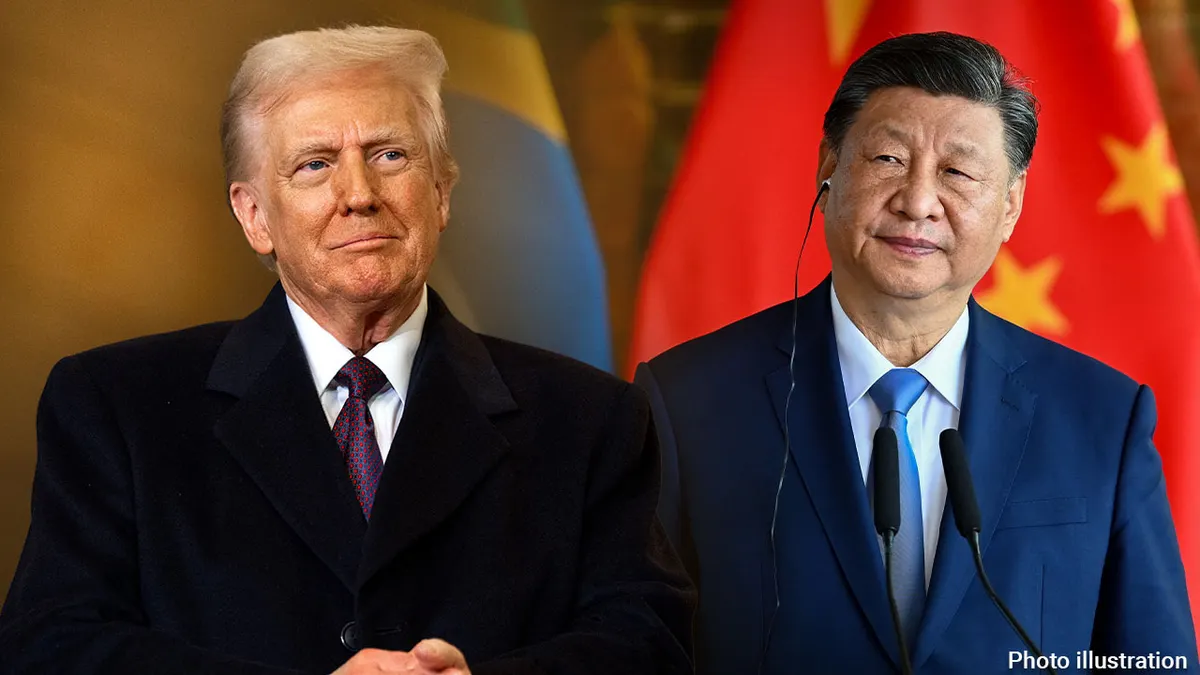
The global economy has repeatedly survived political dysfunction in recent years. But survival is not immunity. With war in the Persian Gulf, a fiscal powder keg in Washington, and political legitimacy fracturing across democracies, the conditions for sustained resilience are exhausted.
Live Context
| Indicator | Value |
|---|---|
| IMF 2026 Growth Forecast (Apr.) | 3.1% |
| Brent Crude / bbl | $102 |
| Global Inflation Forecast | 4.4% |
| VIX (Apr. 13) | 19.1 |
| EPU Above Historical Mean | 8.3σ |
Introduction: The Most Dangerous Illusion in Finance
There is a story that sophisticated investors have been telling themselves for the better part of three years, and it goes roughly like this: politics is noise, fundamentals are signal, and the global economy is simply too large, too adaptive, and too AI-turbocharged to be knocked off course by the theatrics of elected officials.
It is a seductive story. It has also, for long stretches, been correct. Markets climbed while Washington burned through shutdown after shutdown. The S&P 500 recovered from a VIX spike of 52.33 — last seen only during the pandemic — in fewer than 100 trading days. Global GDP expanded by an estimated 3.4 percent in 2025, even as trade policy lurched between Liberation Day tariffs and partial retreats. The decoupling thesis seemed, if not proven, at least defensible.
Then came February 28, 2026.
The day US-Israeli strikes on Iran triggered a retaliatory blockade of the Strait of Hormuz — the chokepoint through which roughly 20 percent of the world’s oil and LNG supplies travel — the decoupling thesis stopped being defensible. Brent crude that opened the year at $66 a barrel peaked at $126 before settling around $102. The IMF, which had been on the verge of upgrading its 2026 global growth forecast to 3.4 percent, instead cut it to 3.1 percent yesterday — and outlined a severe scenario where the global economy grazes 2.0 percent growth, a threshold signalling de facto global recession only four times in modern history.
The truce between chaotic politics and resilient economics is not ending. It has already ended. The question is only how disorderly the reckoning will be.
“We were planning to upgrade growth for 2026 to 3.4 percent — if not for the war.”
— Pierre-Olivier Gourinchas, IMF Chief Economist, April 14 2026
The Uncertainty Tax: Invisible, Cumulative, and Now Very Visible
Before the Middle East crisis crystallized the argument in crude prices and shipping insurance premiums, the damage was already being done through a subtler channel: the uncertainty tax.
In mid-April 2025, the Economic Policy Uncertainty Index reached 8.3 standard deviations above its historical mean — a figure that dwarfed even the pandemic shock. Trade policy uncertainty soared to an astonishing 16 standard deviations above its long-run average. These are not merely academic measurements. Federal Reserve research is unambiguous: EPU and VIX shocks produce sizable, long-lasting drags on investment, because firms delay capital expenditure until the policy environment is legible. When it never becomes legible, the delay becomes permanent forgone investment.
The CSIS has called this dynamic the “uncertainty tax”: firms postpone decisions, consumers defer big purchases, and lenders tighten credit in a feedback loop that reinforces stagnation. The current administration has pursued both industrial policy and foreign policy leverage simultaneously through tariffs — an approach that is inherently conflicting. You cannot credibly threaten and credibly stabilize at the same time.
What made 2025’s resilience possible was that corporations and consumers adapted to uncertainty rather than being destroyed by it. Supply chains rerouted. AI investment continued at pace. Consumer spending proved stickier than models predicted. But adaptation is not immunity. It is a one-time adjustment that consumes the buffer. The next shock arrives into a system with less slack.
The Hormuz Shock: What Structural Fragility Actually Looks Like
The Strait of Hormuz is the world’s most important three-mile-wide argument against the decoupling thesis. When it closes — even partially — the transmission from political chaos to economic damage is neither slow nor indirect. It is immediate, global, and arithmetically punishing.
The IMF’s April 2026 World Economic Outlook laid out the algebra with characteristic precision. Under the “reference” scenario — a relatively short-lived conflict — global growth still falls to 3.1 percent and headline inflation rises to 4.4 percent, up 0.6 percentage points from the January forecast. Under the “adverse” scenario, growth falls to 2.5 percent and inflation hits 5.4 percent — a textbook definition of stagflation. Under the “severe” scenario, the world is at the edge of recession with growth at 2.0 percent and inflation above 6 percent.
IMF Chief Economist Gourinchas made the political point plainly: the fund had been planning to upgrade the 2026 forecast before hostilities erupted. The war cost the world, in expectation value alone, 0.3 percentage points of output in a single quarter. For every $10 sustained increase in oil prices, GDP growth drops by roughly 0.4 percent. Brent has risen $36 from its year-open level. Do the arithmetic.
The eurozone, still dependent on imported energy and already fragile — France struggling with fiscal overhang and turbulent politics; Germany in a confidence-thin recovery — faces a 0.2-point downgrade to 1.1 percent growth. Japan, another energy importer, risks a resurgence of inflation that could revive the carry-trade unwinds that spooked markets in 2024. Asian manufacturing hubs, reliant on LNG, face a direct cost shock precisely when margins are already compressed by trade fragmentation.
The Fiscal Powder Keg Beneath the Growth Numbers
Even before the Hormuz shock, the underlying fiscal arithmetic was deteriorating in ways that political dysfunction made harder, not easier, to address.
In the United States, the “One Big Beautiful Bill Act” — signed in July 2025 — provides a near-term demand stimulus that partially explains American growth exceptionalism heading into 2026. But the Congressional Budget Office estimates it will add $4.1 trillion to the federal deficit over ten years. That stimulus is borrowed time, literally. With US PCE inflation forecast to rise to 3.2 percent in Q4 2026 and the Federal Reserve holding rates at 3.50–3.75 percent, there is no monetary cushion available. The Fed cannot cut into a Hormuz-driven energy shock without risking an inflation re-anchoring failure. It cannot hold rates indefinitely without deepening the already-rising US unemployment rate, now 4.6 percent — the highest in four years.
In France, the diagnosis is starker. CaixaBank Research notes that “fiscal imbalance plus political instability is a recipe that is difficult to digest” — particularly when tax revenues exceed 50 percent of GDP yet the primary deficit remains above 3 percent. French sovereign risk premiums have been repriced to resemble Italy’s more than Germany’s. The eurozone fragmentation-prevention mechanisms — ESM, IPT — were stress-tested once, in 2012, and survived. They have never been tested simultaneously against energy shock, political dysfunction, and fiscal deterioration.
The WEF’s Global Risks Report 2026 identified inequality as the most interconnected global risk for the second consecutive year, warning of “permanently K-shaped economies” — where the top decile experiences asset-price-driven prosperity while the median household faces cost-of-living pressures that no headline GDP figure captures. This is not merely a welfare concern. It is a political economy concern. K-shaped economies produce the disillusionment, the “streets versus elites” narratives, and ultimately the radical political movements that generate the very policy chaos undermining the growth they claim to oppose. The cycle feeds itself.
When History Warned Us and We Chose Not to Listen
This is not the first time markets have decided that political chaos and economic resilience could coexist indefinitely. It is never the last time either.
In the early 1970s, the geopolitical ruptures of the Nixon years — Watergate, the end of Bretton Woods, the oil embargo — seemed for a time to leave the corporate economy intact. They did not. They produced the decade’s stagflation, which required a Volcker shock of near-suicidal severity to resolve. The political and economic crises did not happen in parallel; they were causally linked, in both directions.
In 1998, financial markets dismissed Russian political dysfunction until the government defaulted and LTCM imploded — at which point the “this is a developing-market problem” narrative collapsed in weeks. The 2010 eurozone debt crisis followed a remarkably similar pattern: years of political dysfunction in Athens and Rome that bond markets chose to treat as noise, until they were forced to treat them as signal, and the signal was catastrophic.
What these episodes share is a common structure: a period of apparent decoupling during which political dysfunction accumulates unremedied, followed by a shock that collapses the separation entirely. The longer the decoupling persists, the more unremedied dysfunction accumulates — and the more violent the eventual reconnection.
Three Scenarios for the Remainder of 2026
For central bankers and portfolio managers, the practical question is not whether the truce ends — it has — but how disorderly the unwinding becomes.
Base Case — Muddling Through (45%): The Hormuz conflict is relatively short-lived. Brent settles in the $90–100 range. Global growth lands at 3.1 percent. The Fed holds through mid-year before one reluctant cut. US growth slows toward 2.0 percent by Q4 2026 as fiscal stimulus fades. Markets absorb the repricing with moderate volatility. Political chaos has been costly but not terminal — and policymakers feel vindicated in their passivity.
Adverse Case — Stagflation Returns (35%): Conflict extends through Q3. Oil remains above $100. Headline inflation rises to 5.4 percent globally, and expectations begin to de-anchor in the eurozone and emerging markets. The Fed faces the 1970s dilemma in its modern form: tighten into a supply shock and tip the US into recession, or hold and risk wage-price spiraling. Political dysfunction makes the fiscal response incoherent. This is where the decoupling thesis dies publicly and permanently.
Severe Case — Near-Recession (20%): Energy disruptions extend into 2027. Global growth approaches 2.0 percent. Emerging markets excluding China face a 1.9 percentage-point cut. Debt service in low-income energy-importing economies becomes unserviceable. Capital flows into safe havens; the dollar surges; emerging market currencies collapse in a sequence echoing 1997–98 at higher starting debt levels. Political extremism intensifies in every affected country, generating the next round of policy dysfunction. The loop closes.
The Verdict: Resilience Was Real, But Never Unconditional
The global economy’s resilience over the past three years deserves genuine respect. The adaptation to tariff shocks, the AI-driven productivity gains, the labor market durability — these reflected genuine structural strengths, particularly in the United States and India. UNCTAD put it rightly in February 2026: the headline resilience was “real and meaningful,” but “beneath the headline numbers lies a global economy that is fragile, uneven, and increasingly ill-equipped to deliver sustained and inclusive growth.”
Fragile. Uneven. Ill-equipped. These are not adjectives that survive a second simultaneous shock.
The decoupling thesis asked us to believe that political institutions could degrade indefinitely without extracting an economic price. It was always a claim about timing, not direction. Political entropy — in Washington, in Paris, in the Persian Gulf, in every capital where short-termism has replaced governance — is a tax that accrues silently until it is collected loudly, all at once, in oil prices and credit spreads and shattered supply chains.
For policymakers, the fiscal space to buffer the next shock is narrowing faster than the political will to preserve it is strengthening. Credible medium-term consolidation frameworks — postponed since 2022 across half the eurozone — are not austerity; they are insurance premiums on growth. Unpaying them compounds the eventual cost.
For investors, the portfolio implication is a meaningful increase in the premium on political-risk diversification, energy-transition assets, and inflation protection — not as tail hedges, but as core positions. The VIX at 19.12 as of April 13 is not complacency exactly, but it is not wisdom either. The market has learned that chaos can be survived. It has not priced the probability that this particular sequence of chaos — war, energy shock, fiscal deterioration, monetary constraint — is different in degree, not just kind.
For citizens, the economy and the polity are not separate domains. Governance quality is the variable on which all other variables ultimately depend.
An economy that outperforms its politics for long enough eventually gets the politics it deserves. We are approaching that point faster than anyone’s baseline forecast would suggest.
Key Data · April 2026
| Metric | Value | Note |
|---|---|---|
| IMF Global Growth Forecast | 3.1% | Downgraded from 3.3% in Jan. 2026 |
| Global Headline Inflation | 4.4% | Up 0.6pp from Jan. forecast |
| Brent Crude | $102/bbl | Up from $66 at year-open; peaked at $126 |
| US EPU Index | 8.3σ above mean | Apr. 2025 peak |
| US Unemployment Rate | 4.6% | Highest in four years (Dec. 2025) |
IMF Scenarios · 2026
| Scenario | Probability | Growth | Inflation | Outlook |
|---|---|---|---|---|
| Base Case | 45% | 3.1% | 4.4% | Short conflict. Muddling through. |
| Adverse | 35% | 2.5% | 5.4% | Extended conflict. Stagflation risk. |
| Severe | 20% | <2.0% | >6% | Near-recession. EM debt cascade. |
Sources
- IMF World Economic Outlook, April 2026
- Brookings TIGER, April 2026
- Federal Reserve EPU Note
- WEF Global Risks Report 2026
- UNCTAD Resilience Report
- PIIE Global Outlook
- CSIS: The Uncertainty Tax
Discover more from The Economy
Subscribe to get the latest posts sent to your email.



Navigating Mortgage and Loan Refinancing in a High-Yield Environment
Global public debt crossing critical thresholds has kept central bank policies volatile, resulting in fluctuating US Treasury yields throughout 2026. For homeowners and commercial property holders burdened by previous high-interest borrowing cycles, finding optimal refinance windows has become a high-stakes financial puzzle. Stalled disinflation and stubborn employment numbers mean rate cuts are incremental, requiring borrowers to act with precision.
Timing your mortgage or commercial loan refinance in this environment requires a deep understanding of yield curve movements and lender risk appetites.
Decoding 2026 Refinance Dynamics
The 10-Year Treasury Yield Benchmark
Mortgage rates continue to track closely with the 10-year US Treasury yield. When macroeconomic anxiety spikes debt issuance, yields rise, tightening consumer borrowing capacity. Savvy borrowers monitor weekly Treasury auctions to lock in rates during brief dip windows.
Hybrid ARMs and Alternative Structures
With fixed rates remaining elevated, 7/1 and 10/1 adjustable-rate mortgages (ARMs) have surged in popularity. These products offer lower initial monthly payments, giving borrowers breathing room until central bank easing cycles fully materialize.
| Loan Product | Current Rate Range | Best For | Key Risk Factor |
| 30-Year Fixed Mortgage | 6.2% – 6.8% | Long-term predictability | Higher initial monthly outlay |
| 7/1 Hybrid ARM | 5.5% – 5.9% | Short-term ownership / flipping | Rate reset risk after year 7 |
| Commercial Refinance | 7.0% – 8.2% | Corporate asset restructuring | Strict DSCR lender covenants |
Actionable Steps for Successful Refinancing
To maximize your chances of securing favorable refinance terms in a volatile market, follow a disciplined preparation strategy.
Boost Your Credit Score Immediately: Lenders in 2026 are applying stringent credit tiering; a 20-point increase can drop your APR by a crucial quarter-point.
Shop Regional Credit Unions: Smaller financial institutions often offer portfolio loans with more flexible underwriting than major national banks.
Calculate the Break-Even Point: Ensure your total closing costs are recouped through monthly savings within 24 months of closing.
“Market Strategist View: Refinancing in 2026 is an exercise in opportunistic timing. Borrowers must maintain immaculate financial profiles ready to strike the moment Treasury yields dip.”
Mastering the complexities of today’s debt environment ensures you can successfully lower your debt service costs and protect your long-term financial stability.
Discover more from The Economy
Subscribe to get the latest posts sent to your email.

The days of pulling generic auto insurance quotes based purely on your zip code and age are officially over. In 2026, insurance comparison engines are powered entirely by generative AI and real-time telematics. These platforms digest thousands of live data points—ranging from your driving smoothness via connected vehicle sensors to real-time traffic congestion patterns—to generate hyper-personalized premiums instantly.
For consumers, this evolution represents both a massive opportunity for savings and a hidden trap for penalty pricing. Understanding how AI algorithms evaluate risk is essential for anyone looking to lower their monthly auto insurance premiums.
How AI Comparison Engines Evaluate Your Risk Profile
Behavioral Telematics and Connected Cars
Modern cars stream performance data directly to insurance aggregators. Generative AI models analyze braking sharpness, acceleration curves, cornering G-forces, and phone distraction metrics. Drivers who maintain smooth, defensive habits are rewarded with dynamic rate cuts of up to 40% compared to traditional rating tiers.
Predictive Traffic and Weather Modeling
AI tools now cross-reference your daily commute route with predictive weather and accident probability models. If your standard parking location or driving corridor has a statistically higher incidence of uninsured motorist claims, your quotes will reflect that hyper-local risk assessment.
| Comparison Factor | Traditional Rating Model | 2026 Generative AI Model | Impact on Premium |
| Mileage & Usage | Annual estimated odometer reading | GPS tracking & live trip duration | High (up to 35% savings) |
| Driving Behavior | MVR driving record & accidents | Real-time braking, speed, & G-force | Critical (determines tier) |
| Vehicle Tech | Make, model, and safety rating | ADAS calibration & repair cost data | Moderate |
Strategies to Lower Your AI-Driven Insurance Quote
To outsmart the algorithm and secure the lowest possible premium in 2026, drivers must proactively manage their digital footprint on insurance platforms.
Opt-In for Telematics Trial Periods: Many insurers offer immediate 15% discounts just for installing their driving app; let it track safe habits for 30 days to lock in permanent savings.
Scrub Unverified Public Records: Ensure your motor vehicle report is free of clerical errors that AI risk models misinterpret as reckless behavior.
Compare AI Aggregators: Use platforms that integrate multi-carrier API feeds rather than single-brand comparison sites to find the best risk-adjusted rate.
“Industry Note: AI-driven pricing rewards transparency and precision. Drivers who actively manage their telematics data consistently out-save those relying on legacy quote calculators.”
Embracing AI comparison tools allows savvy policyholders to customize coverage limits precisely to their driving habits, eliminating wasted premium spend while ensuring robust protection.
Discover more from The Economy
Subscribe to get the latest posts sent to your email.

Despite decades of bans and strict handling mandates, asbestos remains a silent killer across legacy manufacturing plants, shipyards, and modern green-energy infrastructure retrofits. In 2026, regulatory changes by the EPA and tightened occupational health standards have triggered a fresh wave of mesothelioma litigation. Manufacturers attempting to fast-track industrial transitions are encountering catastrophic oversight, exposing workers to legacy toxins and opening corporate parent companies to unprecedented liability.
Navigating a mesothelioma claim in 2026 requires understanding how modern industrial supply chains intersect with historical exposure. Trusts established decades ago are being audited under stricter transparency laws, altering payout ratios and accelerating fast-track settlements for terminally ill plaintiffs.
Modern Industrial Exposure Hotspots
Green Retrofitting and Renewable Energy Infrastructure
A primary source of 2026 asbestos exposure occurs during the decommissioning and retrofitting of older industrial facilities for renewable energy production. Workers insulating electrical grids, modernizing HVAC systems, or upgrading manufacturing floors frequently disturb encapsulated asbestos materials that were improperly documented or ignored during facility audits.
Automotive and Aerospace Supply Chains
With advanced manufacturing booming, workers handling specialized friction materials, gaskets, and heat shields face ongoing risks. Supply chain tracing has become more sophisticated, allowing legal teams to pinpoint exact corporate entities responsible for raw material distribution across multinational borders.
| Industry Sector | Primary Exposure Risk | Legal Venue / Trust | Avg. Claim Value Range |
| Green Energy Retrofit | Disturbed insulation, pipe lagging | Federal Tort / Manufacturer Trust | $1.2M – $3.5M |
| Shipbuilding & Marine | Boiler insulation, structural seals | Asbestos Bankruptcy Trusts | $800K – $2.4M |
| Automotive Manufacturing | Brake components, high-heat gaskets | Third-Party Product Liability | $600K – $1.8M |
Securing Maximum Compensation: Steps for Plaintiffs
Time is of the essence in mesothelioma cases. Plaintiffs and their families must act decisively to secure financial recovery before statutes of limitations expire.
Retain Specialized Counsel: Work exclusively with national mesothelioma law firms possessing deep historical databases of asbestos-containing products.
Audit Employment History: Document every job site, supervisor name, and equipment brand encountered throughout your career.
Expedite Medical Filings: Secure a formal pathological diagnosis quickly to qualify for expedited trust fund distribution and priority trial settings.
“Expert Insight: Modern asbestos litigation is no longer just about historical tracking; it is about holding modern corporations accountable for failing to conduct rigorous environmental safety audits before initiating industrial retrofits.”
By combining meticulous work history reconstruction with aggressive multi-trust filings, victims can secure substantial financial relief to cover specialized immunotherapy and family support.
Discover more from The Economy
Subscribe to get the latest posts sent to your email.

Macroeconomic Fallout of Middle Eastern Airspace Restrictions: Why U.S. Carriers Are Abandoning Gulf Hubs Through 2027

High-CPM Finance Niches 2026: Publisher Monetization Blueprint

IMF & World Bank 2026 Global Economic Outlook: Growth, Inflation, Debt

Pork Recall 2026: USDA Guanciale Listeria Recall in 8 States Explained

Zelda: Ocarina of Time Switch 2 Remake — Release Date & Everything Confirmed

Social Security Trust Fund 2032: OASI Depletion Timeline Explained

Oracle (ORCL) Stock Analysis: AI Cloud Growth Ahead of Sept 10 Earnings

2027 Social Security COLA: 3.5% Increase Explained

Non-State Actors and AI 2026: The Push for Global Guardrails

Mandatory Lobbying Registers 2026: Corporate Risk Guide

Beyond $100 Oil: Why the Geopolitical Shock at Hormuz Marks a Structural Turning Point

Digitally Deliverable Services: 56% of Global Trade in 2026

AI Data Center Real Estate 2026: Power & Grid Battle Guide

Smart Glasses Privacy Crisis 2026: Regulation & Compliance

State Farm’s $5B Dividend 2026: Who Qualifies & Payout Dates

US-China Relations in Q3 2026: Trade Tariffs and Supply Chain Risks

Gold’s Wild 2026: From a Record $5,600 Peak to a 24% Crash and Back Toward $4,500

Oil Surges as Strait of Hormuz Traffic Collapses Again

The Rocket That Won’t Quit: Inside SpaceX’s Falcon 9 Launch Machine

Bank of England Set to Hold Rates Through Year-End, Reuters Poll Shows

The 2026 Crypto Regulatory Shift: What It Means for Institutional Investors

SpaceX Starship Flight 14: First Orbital Attempt & Starlink V3 Launch Explained

Retail Earnings Week: What Home Depot, Target & Walmart Reveal

AI-Powered Training: The Next Multi-Billion Dollar Ecosystem in Fitness

AI Chip Stocks 2026: The Best Semiconductor Investments Beyond Marvell

Russia’s Black Sea Oil Exports Fall for a Fifth Straight Week

China’s Economy Has a Structural Problem: Factories Are Winning, Households Are Losing

Global Chip Selloff Deepens: What’s Driving the Aug. 19 Semiconductor Rout
-

 Markets & Finance8 months ago
Top 15 Stocks for Investment in 2026 in PSX: Your Complete Guide to Pakistan’s Best Investment Opportunities
-

 Analysis7 months ago
Johor’s Investment Boom: The Hidden Costs Behind Malaysia’s Most Ambitious Economic Surge
-

 Analysis7 months ago
Top 10 Stocks for Investment in PSX for Quick Returns in 2026
-

 Analysis7 months ago
Brazil’s Rare Earth Race: US, EU, and China Compete for Critical Minerals as Tensions Rise
-

 Banks8 months ago
Best Investments in Pakistan 2026: Top 10 Low-Price Shares and Long-Term Picks for the PSX
-

 Investment8 months ago
Top 10 Mutual Fund Managers in Pakistan for Investment in 2026: A Comprehensive Guide for Optimal Returns
-

 Global Economy9 months ago
15 Most Lucrative Sectors for Investment in Pakistan: A 2025 Data-Driven Analysis
-

 Global Economy9 months ago
Pakistan’s Export Goldmine: 10 Game-Changing Markets Where Pakistani Businesses Are Winning Big in 2025