
Analysis
Unprecedented Accountability: How NAB Pakistan’s Rs6.213 Trillion Recovery in 2025 Signals a Governance Turning Point


The numbers defy precedent: Rs6.213 trillion recovered in a single year by Pakistan’s National Accountability Bureau—a figure that eclipses the institution’s entire haul across its first 23 years of existence. This landmark achievement in 2025 represents not merely an accounting milestone but potentially a fundamental recalibration in Pakistan’s battle against systemic corruption, one that analysts suggest could reshape investor perceptions and fiscal trajectories for the world’s fifth-most populous nation.
Under the leadership of Chairman Lt Gen (retd) Nazir Ahmed Butt, NAB has orchestrated what amounts to a financial earthquake in Pakistan’s anti-corruption landscape. The recovery—equivalent to roughly 1.5% of Pakistan’s projected 2025 GDP of approximately $410 billion—combines direct cash seizures, land reclamations valued at market rates, and victim compensation programs that dwarf previous efforts. Yet the story extends beyond spreadsheets: it speaks to institutional modernization, technological integration, and the perpetual tension between accountability and political autonomy in a nation where governance reforms have historically struggled to outlive their architects.
Reclaiming the Republic: Land Recoveries Reshape National Assets
The centerpiece of NAB’s 2025 performance lies in an astonishing land reclamation operation: 2.98 million acres of state and forest land valued at Rs5.976 trillion. To contextualize the scale, this represents territory roughly equivalent to the entire state of Connecticut recovered from illegal occupation and fraudulent transfers.
Regional offices drove the recovery with striking variation. NAB Sukkur emerged as the leading force, reclaiming 1.63 million acres valued at Rs3.73 trillion—predominantly forest land in Sindh province where timber mafias and land-grabbing cartels have operated with relative impunity for decades. NAB Balochistan followed with 1.02 million acres (Rs1.374 trillion), while NAB Multan secured 330,000 acres (Rs653.97 billion) in Punjab. Even in the capital territory, investigators recovered 51 kanals in the strategically valuable Golra/Sector E-11 area, worth Rs29.41 billion.
The environmental dimensions merit particular scrutiny. Within the total recovery, 2.65 million acres constitute forest land valued at Rs5.104 trillion—ecosystems that provide not only timber resources but critical watershed protection, carbon sequestration, and biodiversity reserves. An additional 344.77 acres from revenue departments (Rs834 billion) and scattered parcels complete the inventory. This represents more than asset recovery; it’s the reclamation of ecological capital that underpins long-term agricultural productivity and climate resilience.
The economic implications ripple across multiple sectors. Real estate markets in affected regions face recalibration as previously privatized state land returns to public ownership. Provincial revenue authorities gain substantial assets that, if properly monetized through transparent auction processes, could inject liquidity into chronically cash-strapped budgets. Agricultural economists note that restoring forest reserves may enhance watershed management for downstream farming communities, though the timeline for such benefits extends across years rather than fiscal quarters.
Restitution at Scale: Victim Relief Mechanisms Restore Public Trust
Beyond land, NAB’s 2025 operations delivered what Deputy Chairman Sohail Nasir characterized as a “citizen-centric transformation”—Rs180 billion disbursed to 115,587 victims of fraudulent housing schemes and Ponzi-style investment scams that have plagued Pakistan’s middle class for decades.
The bureau introduced a groundbreaking mechanism: for the first time in NAB’s 26-year history, Rs2.8 billion flowed directly into bank accounts of 12,892 victims through a digital payment system coordinated with the National Bank of Pakistan. This eliminated the bureaucratic gauntlet that previously required claimants to travel to regional offices, often incurring costs that eroded their compensation. The shift to direct deposits speaks to modernization imperatives that extend beyond anti-corruption work into broader public service delivery.
Equally significant was the creation of Profit-Bearing Accounts (NIDA) to preserve the time value of recovered funds while adjudication proceeds. Rather than allowing seized assets to depreciate through inflation or administrative delays, NAB now places recoveries in interest-generating instruments, ensuring claimants receive maximum restitution when cases conclude. This innovation addresses a longstanding grievance: victims watching their compensation diminish in real terms as legal processes stretched across years.
High-profile case resolutions dominated headlines throughout 2025. The State Life Cooperative Housing Society scam—perhaps the most emblematic of Pakistan’s housing fraud epidemic—saw 6,750 victims receive plots valued at Rs72.23 billion. AAA Associates, which defrauded investors through fabricated real estate opportunities, resulted in Rs8.869 billion distributed to 1,211 claimants. The Al-Bari Group case returned Rs5.4 billion to 1,126 individuals, while Eden Housing refunded Rs4.362 billion to 11,889 people. B4U Global, a scheme that targeted overseas Pakistanis with promises of high-yield property investments, compensated 17,500 victims with Rs3.157 billion.
These disbursements carry implications beyond individual justice. Housing fraud schemes have historically undermined savings culture and discouraged formal investment channels, as middle-class Pakistanis lost faith in institutions meant to protect property rights. By delivering tangible restitution—particularly to the politically influential overseas Pakistani diaspora—NAB potentially rebuilds credibility in formal economic structures. Whether this translates into increased domestic investment or remittance flows remains an empirical question for coming years.
Institutional Modernization: Technology, Transparency, and Declining Complaint Volumes
Perhaps the most telling indicator of NAB’s evolving approach emerges from complaint statistics rather than recovery figures. During 2025, the Operations Division processed 23,411 complaints but, through rigorous verification mechanisms, identified only 367 as cognizable—a filtering ratio that suggests either improved investigative triage or, more optimistically, declining corruption incidence.
The numbers tell a story of institutional maturation. Fresh complaints declined 24% compared to previous years, while complaints against public officials and businessmen dropped 52%—trends that NAB attributes to both improved governance environments and the deterrent effect of high-profile prosecutions. Simultaneously, whistleblower-driven complaints surged 41%, indicating growing public willingness to report malfeasance when credible redress mechanisms exist.
Technology integration underpins these efficiency gains. The newly inaugurated Pakistan Anti-Corruption Academy (PACA) has conducted 42 training courses focused on AI-assisted investigative tools, blockchain analysis for cryptocurrency and digital asset tracking, and advanced forensics capabilities. These aren’t cosmetic upgrades—they represent fundamental shifts in how NAB approaches white-collar crime in an increasingly digitized economy.
The bureau completed 191 inquiries and 65 investigations while closing 152 inquiries and 56 investigations by referring them to specialized agencies or determining insufficient evidence. The 12.4% decline in ongoing inquiries and investigations suggests faster case turnover, though critics note that prosecution success rates—hovering around 72% according to official data—still leave room for improvement.
NAB also operationalized Facilitation Cells tailored to distinct constituencies: parliamentarians and government officials, the business community, and overseas Pakistanis. This segmentation acknowledges political realities—that accountability mechanisms require calibrated approaches when dealing with elected officials versus private sector actors—while attempting to maintain procedural fairness. Skeptics question whether such differentiation risks creating privileged reporting channels; defenders argue it merely adapts processes to different legal frameworks governing each category.
Global Entanglements: The Anti-Money Laundering Quagmire
For all its domestic achievements, NAB confronts stark limitations in cross-border asset recovery—a reality Deputy Chairman Nasir acknowledged with unusual candor when he stated, “Some countries are safe havens for our money.”
Pakistan’s reliance on Mutual Legal Assistance (MLA) treaties for tracing offshore assets has yielded frustratingly slow results. NAB submits formal requests to foreign jurisdictions under international frameworks, but responses, when they arrive at all, often take years. The bureau’s 2025 report notes that despite tracking Rs127 billion in assets across 39 high-profile anti-money laundering cases, repatriation remains largely aspirational.
This isn’t unique to Pakistan. The global anti-money laundering architecture—built on bilateral cooperation and voluntary compliance—struggles when politically connected elites shift assets to jurisdictions with robust banking secrecy, limited enforcement capacity, or geopolitical incentives to shelter foreign capital. Pakistan finds itself in the paradoxical position of being classified as a victim state under international frameworks while simultaneously facing pressure from the Financial Action Task Force (FATF) to strengthen its own controls.
The challenge intersects with sovereignty concerns. Enhanced cooperation with foreign law enforcement requires reciprocal data sharing that some Pakistani security establishments view warily, particularly regarding tax havens in Gulf states where strategic relationships complicate enforcement. NAB signed three new Memoranda of Understanding in 2025—with Malaysia’s MACC, Saudi Arabia’s Nazaha, and Nigeria’s EFCC—expanding its international network, but these agreements remain largely untested in high-stakes asset recovery scenarios.
Recent IMF diagnostics add context: the November 2025 Governance and Corruption Diagnostic Assessment estimated Pakistan loses 5-6.5% of GDP annually to corruption through what it termed “elite capture”—privileged entities distorting markets and public policy. Against this backdrop, NAB’s Rs6.213 trillion recovery, while impressive, represents perhaps one-fifth of annual corruption costs when extrapolated across the economy. The calculus suggests that asset recovery, however vigorous, cannot substitute for systemic prevention.
Economic and Governance Implications: Beyond the Numbers
To properly contextualize NAB’s performance, the recovery must be measured against Pakistan’s broader economic trajectory. With a nominal GDP projected around $410 billion in 2025 and growth rates hovering near 2.7-3.0% according to multilateral forecasts, the Rs6.213 trillion figure (approximately $22 billion at current exchange rates) represents substantial fiscal relief—theoretically equivalent to half the country’s annual budget deficit.
Yet translating asset recovery into budget support proves complex. Much of the Rs5.976 trillion in land valuation reflects paper worth rather than liquid capital. Unless provincial governments strategically monetize these assets through transparent leasing or sale mechanisms—a process fraught with political sensitivities and administrative capacity constraints—the immediate fiscal impact remains limited. The Rs89.68 billion in direct cash recoveries and disbursements to victims represent more tangible flows, but even this constitutes less than 1% of annual government expenditure.
Investor confidence effects may prove more consequential than immediate fiscal impacts. Pakistan’s chronic boom-bust cycles—driven by debt accumulation, current account pressures, and recurring IMF programs—partly stem from governance perceptions that discourage sustained foreign direct investment. If NAB’s reforms demonstrate institutional durability beyond leadership tenures, they could marginally improve Pakistan’s risk premium. However, as recent World Bank analyses note, corruption remains one variable among many—energy sector viability, export competitiveness, and climate resilience equally determine investment climates.
The political economy dimensions warrant scrutiny. Centralized accountability through a federal institution like NAB inherently creates tensions with provincial autonomy under Pakistan’s constitutional framework. When NAB Sukkur reclaims vast forest lands in Sindh or NAB Balochistan recovers state assets, it intervenes in provincial administrative domains where local political economies have evolved around patronage networks. Whether such interventions enhance governance or merely redistribute rent-seeking opportunities depends heavily on what follows recovery—questions of transparent asset management that extend beyond NAB’s investigative mandate.
Comparative regional perspectives add nuance. India’s Central Bureau of Investigation, Bangladesh’s Anti-Corruption Commission, and Indonesia’s Corruption Eradication Commission all grapple with similar institutional challenges: balancing political independence with accountability to democratic structures, managing public expectations amid slow judicial processes, and avoiding mission creep into selective targeting. NAB’s 2025 performance, while statistically impressive, enters a regional landscape where anti-corruption bodies routinely face credibility crises when leadership changes or political winds shift.
Sustainability Questions and the Path Forward
NAB’s achievements in 2025 crystallize enduring questions about anti-corruption architecture in developing democracies: Can institutional reforms survive their reformers? Does asset recovery address corruption’s root causes or merely its symptoms? And critically, how do accountability mechanisms navigate the tension between vigorous enforcement and due process protections?
The data suggest cautious optimism. The 24% decline in fresh complaints and 52% drop in allegations against officials could reflect either improved governance cultures or, more cynically, intimidation effects that deter legitimate reporting. The 41% surge in whistleblower complaints points toward the former interpretation—that protected disclosure mechanisms encourage exposure rather than silence.
Technology integration through PACA and digital forensics capabilities offers potential for sustained capacity building, assuming budget allocations and political will persist beyond current leadership. The shift from reactive investigation to preventive training—evident in the Academy’s 42 courses—suggests institutional learning beyond individual case outcomes.
Yet vulnerabilities remain stark. NAB’s constitutional status makes it susceptible to legislative amendments or executive interference during political transitions. The low conviction rates, despite high recovery figures, indicate persistent challenges in converting investigations into courtroom victories—whether due to judicial backlogs, evidentiary standards, or defense strategies that exploit procedural technicalities.
The international cooperation deficit in money laundering cases underscores jurisdictional limits. Until Pakistan meaningfully participates in global beneficial ownership registries, real-time financial intelligence sharing, and reciprocal enforcement compacts—requiring political capital and reciprocal transparency commitments—offshore asset recovery will remain aspirational.
Looking ahead, NAB’s 2025 benchmark establishes a new threshold against which future performance will be measured. The challenge shifts from demonstrating capacity to maintaining momentum—embedding anti-corruption norms not through spectacular annual recoveries but through consistent, predictable, and apolitical enforcement that transcends electoral cycles.
For Pakistan’s 255 million citizens, the ultimate measure extends beyond trillion-rupee headlines to tangible governance improvements: functioning courts, transparent procurement, meritocratic public service, and economic opportunities untethered from political connections. Whether NAB’s record-breaking year in 2025 marks a genuine inflection point or merely another chapter in cycles of reform and regression will be determined not by what was recovered, but by what comes next—the unglamorous, arduous work of building institutions that endure beyond their founders’ tenures.
The unprecedented scale of NAB’s recovery in 2025 offers Pakistan a moment of cautious hope amid persistent governance challenges. Whether that moment crystallizes into sustained transformation or fades into historical footnote depends on questions no single institution can answer alone: the collective commitment to rule of law, the political courage to maintain reforms when they become inconvenient, and the societal consensus that accountability must apply equally to the powerful and the powerless. In that sense, NAB’s Rs6.213 trillion recovery represents not an endpoint but an invitation—to imagine what Pakistan’s economy and democracy might become if the principles demonstrated in 2025 take root across the entire governance ecosystem.
Discover more from The Economy
Subscribe to get the latest posts sent to your email.


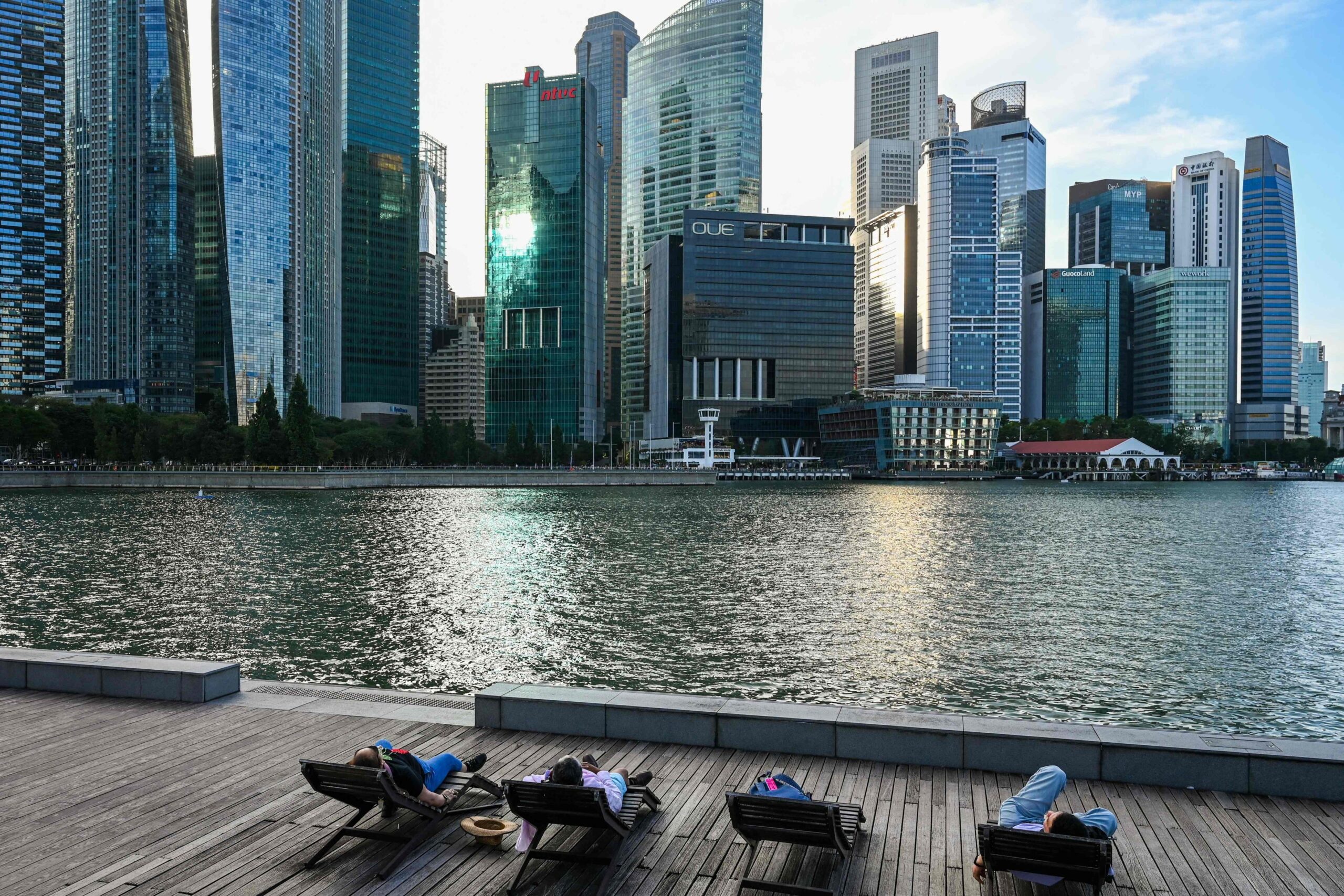
Singapore has spent the past two years becoming one of the primary beneficiaries of the global AI infrastructure buildout, alongside Taiwan’s semiconductor sector. The city-state’s role as a data-center hub allowed it to capture significant capital inflows even as the broader labour-market impact of that investment stayed limited, given how capital-intensive AI infrastructure spending tends to be (J.P. Morgan Private Bank).
Why the AI cycle didn’t stay contained to Singapore
What is changing in 2026 is the geography of that investment. J.P. Morgan’s Asia outlook notes Southeast Asian economies — traditionally anchored in commodities and export manufacturing — are now aligning more closely with the global AI investment cycle by deepening involvement in higher-value areas: infrastructure, hardware and complementary supply chains (J.P. Morgan Private Bank).
Land constraints in Singapore make expansion difficult, which is precisely where the Johor-Singapore Special Economic Zone becomes central to the region’s AI investment thesis rather than a side story.
The Johor SEZ as capacity release valve
Johor has launched a 7,300-acre innovation sandbox as part of the new special economic zone bordering Singapore, explicitly designed to combine Johor’s land and scale with Singapore’s capital and speed, according to the state investment committee’s chair (Fortune). One local official described the ambition bluntly: the zone is meant to be more than “an industrial park with a nicer brochure” (Fortune).
Malaysia’s structural beneficiary position
Malaysia’s electrical and electronics sector already accounts for roughly 40% of the country’s total exports, with semiconductors comprising about 65% of E&E exports — positioning Malaysia as a structural beneficiary of the AI-linked shift in regional trade, according to J.P. Morgan’s Asia analysis (J.P. Morgan Private Bank). Malaysia’s economy minister has framed 2026 explicitly as a year of “execution” for the Anwar administration as it tries to lock in these policy gains (Fortune).
Monetary policy backdrop supports the buildout
Asian central banks spent much of 2025 easing policy and are entering the final stages of that cycle in 2026, shifting more of the growth-support burden to fiscal policy — a backdrop J.P. Morgan expects to support stronger domestic credit growth and consumer demand across the region, reinforcing rather than competing with the AI capital cycle (J.P. Morgan Private Bank).
The regional risk to watch
Most of the region avoided the brunt of 2025’s tariff shock thanks to exemptions on semiconductors, electronics and pharmaceuticals, but that exemption structure remains a policy choice in Washington rather than a permanent feature — meaning the Singapore-Johor AI corridor’s growth case still carries meaningful US trade-policy risk that investors should not discount simply because 2025’s tariffs were absorbed relatively smoothly (J.P. Morgan Private Bank).
Discover more from The Economy
Subscribe to get the latest posts sent to your email.

Dubai’s transformation from oil-adjacent trading post to global capital hub is no longer a talking point — it is a measurable trend. The emirate’s newly launched Economic Survey 2026 shows GDP climbing to $265 billion alongside rising employment, while international family offices are gathering for the Family Office Summit Dubai 2026 as the city cements its position as a family-wealth hub (Gateway Group; Arabian Business).
The non-oil growth engine
The UAE enters 2026 with the World Bank projecting national growth of roughly 5%, well above the global average, driven substantially by 5.3% expansion in the non-oil sector (Barchart). Technology, green energy and healthcare are the top-performing sectors, and 64% of UAE executives expect trade volumes to exceed 2025 levels — confidence underpinned by the country’s expanding network of Comprehensive Economic Partnership Agreements (Barchart). Historically, oil production accounted for half of Dubai’s GDP; today it contributes less than 1% (Wikipedia/Economy of Dubai).
Why family offices specifically are relocating
The Family Office Summit Dubai 2026 is drawing international participants precisely because the emirate has built regulatory infrastructure — inside jurisdictions like the DIFC — designed to attract exactly this category of capital. As one DIFC executive noted, incentives alone are no longer enough to win global finance; institutional credibility and regulatory clarity now matter more, which explains why firms such as Sixth Street have opened Abu Dhabi offices as global investment houses deepen their Middle East presence (Gateway Group).
Infrastructure is compounding the pull
Beyond finance, the UAE’s infrastructure build-out is reinforcing the wealth-hub thesis. Etihad Rail’s Abu Dhabi–Fujairah passenger service and the Madinat Zayed and Liwa station openings, arriving ahead of schedule, signal a state execution model that investors increasingly cite as a differentiator versus regional peers (GCC Business Watch). Dubai has also rolled out a AED 1 billion economic support package aimed at business liquidity and resilience amid regional geopolitical headwinds (GCC Business Watch).
The regional competition for capital
Dubai’s rise is happening alongside — not in isolation from — a broader Gulf capital race. Saudi Arabia’s economy is set for stronger growth per IMF assessments, and Gulf sovereign and corporate capital is increasingly being deployed across sectors from AI infrastructure to green growth commitments, meaning Dubai’s wealth-hub status will need continual reinforcement rather than passive maintenance (GCC Business Watch).
The bottom line for investors
For family offices weighing jurisdiction, Dubai’s pitch in 2026 combines three elements rarely available together: near-zero effective taxation, a non-oil economy growing faster than most G20 peers, and physical and financial infrastructure being built ahead of demand rather than in reaction to it. That combination — not simply low tax rates — is what is now pulling global family wealth toward the emirate.
Discover more from The Economy
Subscribe to get the latest posts sent to your email.
American payrolls contracted by 23,000 in July, a stunning miss against consensus expectations of an 80,000 gain, while the unemployment rate ticked down to 4.1% — a combination that reads less like resilience than like a shrinking labour force (e-Morning Coffee). The labour-force participation rate fell to its lowest level in fifty years outside the pandemic, a structural detail markets have been slower to price than the headline payrolls miss (e-Morning Coffee).
Why bad news was good news for stocks
The market reaction was immediate and largely one-directional: Treasury yields fell across the curve, growth stocks recaptured months of losses in a single session, and rate-hike probability for the September and November FOMC meetings collapsed toward zero (Clearbrook). The S&P 500 posted its best weekly performance since the spring’s Iran-ceasefire rally, gaining 3.59%, with Information Technology leading all sectors at +7.22% — its largest single-week advance of 2026 — powered by the combination of a strong Apple earnings print and the sharp repricing of Fed expectations (Clearbrook).
The rally was notably broad rather than concentrated in mega-cap technology: the equal-weighted S&P 500 advanced 2.43%, Materials gained 5.61%, Industrials rose 3.03%, and the Russell Micro Cap index — which benefits disproportionately from lower rate expectations given its more leveraged constituents — surged 5.77% (Clearbrook). Growth stocks also outperformed value for the week, though value still leads decisively on a year-to-date basis, 23.48% versus growth’s 5.68% (Clearbrook).
The Fed’s dissenters, suddenly exposed
Perhaps the most consequential detail is political rather than statistical: three FOMC members who had dissented in favour of an immediate rate hike just a week before the report was released now find themselves in a significantly weakened position within the committee (Clearbrook). A single data print has shifted the internal balance of the Fed’s policy debate heading into September.
This is the third straight “cruel summer”
What distinguishes 2026 from a one-off shock is the pattern. In each of the last two years, a comparable summer weakening in US employment data has pushed the Federal Reserve into a short cycle of rate cuts — meaning July’s contraction fits a now-recognisable seasonal-plus-structural trend rather than standing as an isolated anomaly (Bloomberg).
What to watch next
Two threads now dominate the September calendar: whether the Fed opts for a standard 25-basis-point cut or moves more aggressively given the depth of the labour miss, and whether the falling participation rate — rather than the unemployment rate — becomes the metric investors and policymakers watch most closely. A shrinking labour force can flatter the headline unemployment number while masking real economic softness, and that distinction will shape how credible the “soft landing” narrative remains through year-end.
Discover more from The Economy
Subscribe to get the latest posts sent to your email.

Singapore’s AI Boom Is Now a Two-Country Story

Why Global Family Offices Are Converging on Dubai in 2026

A Weak Jobs Report Just Rewired the Fed’s Autumn — And Wall Street Cheered

Britain’s Fragile Rebound Meets a Budget Deadline and a Trump Ultimatum

Pakistan’s Economy Grew 3.7% — So Why Doesn’t It Feel Like a Recovery?

Top 15 Financial Stocks for Investment in PSX

Pakistan Exports 2026: Record $35.6B Forecast Masks Trade Deficit Risk

UK’s Jobs Downturn Now Matches the 2008 Financial Crisis — And AI Is Accelerating It

Fed Rate Cut Bets Surge After Shock US Jobs Report Exposes Labor Market Cracks

Pakistan’s Trade Gap Widens to $3.95bn Despite Meeting FY26 Current Account Target

Why Ottawa Is Betting on Dubai: Inside Canada’s Gulf Trade Pivot

UK Wealth Tax Fears Trigger Record £13.9bn Investor Exodus Ahead of October Budget

July Jobs Shock: Why the Fed’s September Rate Decision Just Flipped (2026 Analysis)

Global Growth Forecast 2026: IMF, World Bank Outlooks and the “Slow-Hire, Slow-Fire” Labor Market

Gold Price Forecast 2026: Fed’s July 29 Decision and Record Central Bank Buying Explained

China Politburo July 2026: Stimulus Signals Explained

Pakistan Economy 2026: GDP Grows 3.7% as IMF Completes EFF Review Amid Middle East Risk

Strait of Hormuz Blockade 2026: Oil Prices Surge 9% as US-Iran Conflict Reignites

Down But Not Out: Inside the Slow Sinking of Russia’s War Economy

Apple vs OpenAI Lawsuit: The Economic Story Behind the Headline

Gulf Capital Retreat From Pakistan 2026: UAE Loan Freeze & What It Means

Global Stock Market Selloff 2026: Stagflation Fears Return as Iran Conflict Reignites

Pakistan’s Economic Survey FY26: Inflation Spike Insights

Russia Fuel Shortages 2026: Inside a Cracking War Economy

Strait of Hormuz Crisis 2026: How Trump’s Toll U-Turn Exposes Global Economic Risk

Bank of England Rate Decision Amid Energy Crisis

Russia’s War Economy Model Is Starting to Crack, Think Tank Warns

Pakistan’s Economic Growth: Resilience Amid Challenges
-

 Markets & Finance7 months ago
Top 15 Stocks for Investment in 2026 in PSX: Your Complete Guide to Pakistan’s Best Investment Opportunities
-

 Analysis6 months ago
Johor’s Investment Boom: The Hidden Costs Behind Malaysia’s Most Ambitious Economic Surge
-

 Analysis6 months ago
Top 10 Stocks for Investment in PSX for Quick Returns in 2026
-

 Analysis6 months ago
Brazil’s Rare Earth Race: US, EU, and China Compete for Critical Minerals as Tensions Rise
-

 Banks7 months ago
Best Investments in Pakistan 2026: Top 10 Low-Price Shares and Long-Term Picks for the PSX
-

 Investment7 months ago
Top 10 Mutual Fund Managers in Pakistan for Investment in 2026: A Comprehensive Guide for Optimal Returns
-

 Global Economy8 months ago
15 Most Lucrative Sectors for Investment in Pakistan: A 2025 Data-Driven Analysis
-

 Global Economy8 months ago
Pakistan’s Export Goldmine: 10 Game-Changing Markets Where Pakistani Businesses Are Winning Big in 2025