
Analysis
Unprecedented Accountability: How NAB Pakistan’s Rs6.213 Trillion Recovery in 2025 Signals a Governance Turning Point


The numbers defy precedent: Rs6.213 trillion recovered in a single year by Pakistan’s National Accountability Bureau—a figure that eclipses the institution’s entire haul across its first 23 years of existence. This landmark achievement in 2025 represents not merely an accounting milestone but potentially a fundamental recalibration in Pakistan’s battle against systemic corruption, one that analysts suggest could reshape investor perceptions and fiscal trajectories for the world’s fifth-most populous nation.
Under the leadership of Chairman Lt Gen (retd) Nazir Ahmed Butt, NAB has orchestrated what amounts to a financial earthquake in Pakistan’s anti-corruption landscape. The recovery—equivalent to roughly 1.5% of Pakistan’s projected 2025 GDP of approximately $410 billion—combines direct cash seizures, land reclamations valued at market rates, and victim compensation programs that dwarf previous efforts. Yet the story extends beyond spreadsheets: it speaks to institutional modernization, technological integration, and the perpetual tension between accountability and political autonomy in a nation where governance reforms have historically struggled to outlive their architects.
Reclaiming the Republic: Land Recoveries Reshape National Assets
The centerpiece of NAB’s 2025 performance lies in an astonishing land reclamation operation: 2.98 million acres of state and forest land valued at Rs5.976 trillion. To contextualize the scale, this represents territory roughly equivalent to the entire state of Connecticut recovered from illegal occupation and fraudulent transfers.
Regional offices drove the recovery with striking variation. NAB Sukkur emerged as the leading force, reclaiming 1.63 million acres valued at Rs3.73 trillion—predominantly forest land in Sindh province where timber mafias and land-grabbing cartels have operated with relative impunity for decades. NAB Balochistan followed with 1.02 million acres (Rs1.374 trillion), while NAB Multan secured 330,000 acres (Rs653.97 billion) in Punjab. Even in the capital territory, investigators recovered 51 kanals in the strategically valuable Golra/Sector E-11 area, worth Rs29.41 billion.
The environmental dimensions merit particular scrutiny. Within the total recovery, 2.65 million acres constitute forest land valued at Rs5.104 trillion—ecosystems that provide not only timber resources but critical watershed protection, carbon sequestration, and biodiversity reserves. An additional 344.77 acres from revenue departments (Rs834 billion) and scattered parcels complete the inventory. This represents more than asset recovery; it’s the reclamation of ecological capital that underpins long-term agricultural productivity and climate resilience.
The economic implications ripple across multiple sectors. Real estate markets in affected regions face recalibration as previously privatized state land returns to public ownership. Provincial revenue authorities gain substantial assets that, if properly monetized through transparent auction processes, could inject liquidity into chronically cash-strapped budgets. Agricultural economists note that restoring forest reserves may enhance watershed management for downstream farming communities, though the timeline for such benefits extends across years rather than fiscal quarters.
Restitution at Scale: Victim Relief Mechanisms Restore Public Trust
Beyond land, NAB’s 2025 operations delivered what Deputy Chairman Sohail Nasir characterized as a “citizen-centric transformation”—Rs180 billion disbursed to 115,587 victims of fraudulent housing schemes and Ponzi-style investment scams that have plagued Pakistan’s middle class for decades.
The bureau introduced a groundbreaking mechanism: for the first time in NAB’s 26-year history, Rs2.8 billion flowed directly into bank accounts of 12,892 victims through a digital payment system coordinated with the National Bank of Pakistan. This eliminated the bureaucratic gauntlet that previously required claimants to travel to regional offices, often incurring costs that eroded their compensation. The shift to direct deposits speaks to modernization imperatives that extend beyond anti-corruption work into broader public service delivery.
Equally significant was the creation of Profit-Bearing Accounts (NIDA) to preserve the time value of recovered funds while adjudication proceeds. Rather than allowing seized assets to depreciate through inflation or administrative delays, NAB now places recoveries in interest-generating instruments, ensuring claimants receive maximum restitution when cases conclude. This innovation addresses a longstanding grievance: victims watching their compensation diminish in real terms as legal processes stretched across years.
High-profile case resolutions dominated headlines throughout 2025. The State Life Cooperative Housing Society scam—perhaps the most emblematic of Pakistan’s housing fraud epidemic—saw 6,750 victims receive plots valued at Rs72.23 billion. AAA Associates, which defrauded investors through fabricated real estate opportunities, resulted in Rs8.869 billion distributed to 1,211 claimants. The Al-Bari Group case returned Rs5.4 billion to 1,126 individuals, while Eden Housing refunded Rs4.362 billion to 11,889 people. B4U Global, a scheme that targeted overseas Pakistanis with promises of high-yield property investments, compensated 17,500 victims with Rs3.157 billion.
These disbursements carry implications beyond individual justice. Housing fraud schemes have historically undermined savings culture and discouraged formal investment channels, as middle-class Pakistanis lost faith in institutions meant to protect property rights. By delivering tangible restitution—particularly to the politically influential overseas Pakistani diaspora—NAB potentially rebuilds credibility in formal economic structures. Whether this translates into increased domestic investment or remittance flows remains an empirical question for coming years.
Institutional Modernization: Technology, Transparency, and Declining Complaint Volumes
Perhaps the most telling indicator of NAB’s evolving approach emerges from complaint statistics rather than recovery figures. During 2025, the Operations Division processed 23,411 complaints but, through rigorous verification mechanisms, identified only 367 as cognizable—a filtering ratio that suggests either improved investigative triage or, more optimistically, declining corruption incidence.
The numbers tell a story of institutional maturation. Fresh complaints declined 24% compared to previous years, while complaints against public officials and businessmen dropped 52%—trends that NAB attributes to both improved governance environments and the deterrent effect of high-profile prosecutions. Simultaneously, whistleblower-driven complaints surged 41%, indicating growing public willingness to report malfeasance when credible redress mechanisms exist.
Technology integration underpins these efficiency gains. The newly inaugurated Pakistan Anti-Corruption Academy (PACA) has conducted 42 training courses focused on AI-assisted investigative tools, blockchain analysis for cryptocurrency and digital asset tracking, and advanced forensics capabilities. These aren’t cosmetic upgrades—they represent fundamental shifts in how NAB approaches white-collar crime in an increasingly digitized economy.
The bureau completed 191 inquiries and 65 investigations while closing 152 inquiries and 56 investigations by referring them to specialized agencies or determining insufficient evidence. The 12.4% decline in ongoing inquiries and investigations suggests faster case turnover, though critics note that prosecution success rates—hovering around 72% according to official data—still leave room for improvement.
NAB also operationalized Facilitation Cells tailored to distinct constituencies: parliamentarians and government officials, the business community, and overseas Pakistanis. This segmentation acknowledges political realities—that accountability mechanisms require calibrated approaches when dealing with elected officials versus private sector actors—while attempting to maintain procedural fairness. Skeptics question whether such differentiation risks creating privileged reporting channels; defenders argue it merely adapts processes to different legal frameworks governing each category.
Global Entanglements: The Anti-Money Laundering Quagmire
For all its domestic achievements, NAB confronts stark limitations in cross-border asset recovery—a reality Deputy Chairman Nasir acknowledged with unusual candor when he stated, “Some countries are safe havens for our money.”
Pakistan’s reliance on Mutual Legal Assistance (MLA) treaties for tracing offshore assets has yielded frustratingly slow results. NAB submits formal requests to foreign jurisdictions under international frameworks, but responses, when they arrive at all, often take years. The bureau’s 2025 report notes that despite tracking Rs127 billion in assets across 39 high-profile anti-money laundering cases, repatriation remains largely aspirational.
This isn’t unique to Pakistan. The global anti-money laundering architecture—built on bilateral cooperation and voluntary compliance—struggles when politically connected elites shift assets to jurisdictions with robust banking secrecy, limited enforcement capacity, or geopolitical incentives to shelter foreign capital. Pakistan finds itself in the paradoxical position of being classified as a victim state under international frameworks while simultaneously facing pressure from the Financial Action Task Force (FATF) to strengthen its own controls.
The challenge intersects with sovereignty concerns. Enhanced cooperation with foreign law enforcement requires reciprocal data sharing that some Pakistani security establishments view warily, particularly regarding tax havens in Gulf states where strategic relationships complicate enforcement. NAB signed three new Memoranda of Understanding in 2025—with Malaysia’s MACC, Saudi Arabia’s Nazaha, and Nigeria’s EFCC—expanding its international network, but these agreements remain largely untested in high-stakes asset recovery scenarios.
Recent IMF diagnostics add context: the November 2025 Governance and Corruption Diagnostic Assessment estimated Pakistan loses 5-6.5% of GDP annually to corruption through what it termed “elite capture”—privileged entities distorting markets and public policy. Against this backdrop, NAB’s Rs6.213 trillion recovery, while impressive, represents perhaps one-fifth of annual corruption costs when extrapolated across the economy. The calculus suggests that asset recovery, however vigorous, cannot substitute for systemic prevention.
Economic and Governance Implications: Beyond the Numbers
To properly contextualize NAB’s performance, the recovery must be measured against Pakistan’s broader economic trajectory. With a nominal GDP projected around $410 billion in 2025 and growth rates hovering near 2.7-3.0% according to multilateral forecasts, the Rs6.213 trillion figure (approximately $22 billion at current exchange rates) represents substantial fiscal relief—theoretically equivalent to half the country’s annual budget deficit.
Yet translating asset recovery into budget support proves complex. Much of the Rs5.976 trillion in land valuation reflects paper worth rather than liquid capital. Unless provincial governments strategically monetize these assets through transparent leasing or sale mechanisms—a process fraught with political sensitivities and administrative capacity constraints—the immediate fiscal impact remains limited. The Rs89.68 billion in direct cash recoveries and disbursements to victims represent more tangible flows, but even this constitutes less than 1% of annual government expenditure.
Investor confidence effects may prove more consequential than immediate fiscal impacts. Pakistan’s chronic boom-bust cycles—driven by debt accumulation, current account pressures, and recurring IMF programs—partly stem from governance perceptions that discourage sustained foreign direct investment. If NAB’s reforms demonstrate institutional durability beyond leadership tenures, they could marginally improve Pakistan’s risk premium. However, as recent World Bank analyses note, corruption remains one variable among many—energy sector viability, export competitiveness, and climate resilience equally determine investment climates.
The political economy dimensions warrant scrutiny. Centralized accountability through a federal institution like NAB inherently creates tensions with provincial autonomy under Pakistan’s constitutional framework. When NAB Sukkur reclaims vast forest lands in Sindh or NAB Balochistan recovers state assets, it intervenes in provincial administrative domains where local political economies have evolved around patronage networks. Whether such interventions enhance governance or merely redistribute rent-seeking opportunities depends heavily on what follows recovery—questions of transparent asset management that extend beyond NAB’s investigative mandate.
Comparative regional perspectives add nuance. India’s Central Bureau of Investigation, Bangladesh’s Anti-Corruption Commission, and Indonesia’s Corruption Eradication Commission all grapple with similar institutional challenges: balancing political independence with accountability to democratic structures, managing public expectations amid slow judicial processes, and avoiding mission creep into selective targeting. NAB’s 2025 performance, while statistically impressive, enters a regional landscape where anti-corruption bodies routinely face credibility crises when leadership changes or political winds shift.
Sustainability Questions and the Path Forward
NAB’s achievements in 2025 crystallize enduring questions about anti-corruption architecture in developing democracies: Can institutional reforms survive their reformers? Does asset recovery address corruption’s root causes or merely its symptoms? And critically, how do accountability mechanisms navigate the tension between vigorous enforcement and due process protections?
The data suggest cautious optimism. The 24% decline in fresh complaints and 52% drop in allegations against officials could reflect either improved governance cultures or, more cynically, intimidation effects that deter legitimate reporting. The 41% surge in whistleblower complaints points toward the former interpretation—that protected disclosure mechanisms encourage exposure rather than silence.
Technology integration through PACA and digital forensics capabilities offers potential for sustained capacity building, assuming budget allocations and political will persist beyond current leadership. The shift from reactive investigation to preventive training—evident in the Academy’s 42 courses—suggests institutional learning beyond individual case outcomes.
Yet vulnerabilities remain stark. NAB’s constitutional status makes it susceptible to legislative amendments or executive interference during political transitions. The low conviction rates, despite high recovery figures, indicate persistent challenges in converting investigations into courtroom victories—whether due to judicial backlogs, evidentiary standards, or defense strategies that exploit procedural technicalities.
The international cooperation deficit in money laundering cases underscores jurisdictional limits. Until Pakistan meaningfully participates in global beneficial ownership registries, real-time financial intelligence sharing, and reciprocal enforcement compacts—requiring political capital and reciprocal transparency commitments—offshore asset recovery will remain aspirational.
Looking ahead, NAB’s 2025 benchmark establishes a new threshold against which future performance will be measured. The challenge shifts from demonstrating capacity to maintaining momentum—embedding anti-corruption norms not through spectacular annual recoveries but through consistent, predictable, and apolitical enforcement that transcends electoral cycles.
For Pakistan’s 255 million citizens, the ultimate measure extends beyond trillion-rupee headlines to tangible governance improvements: functioning courts, transparent procurement, meritocratic public service, and economic opportunities untethered from political connections. Whether NAB’s record-breaking year in 2025 marks a genuine inflection point or merely another chapter in cycles of reform and regression will be determined not by what was recovered, but by what comes next—the unglamorous, arduous work of building institutions that endure beyond their founders’ tenures.
The unprecedented scale of NAB’s recovery in 2025 offers Pakistan a moment of cautious hope amid persistent governance challenges. Whether that moment crystallizes into sustained transformation or fades into historical footnote depends on questions no single institution can answer alone: the collective commitment to rule of law, the political courage to maintain reforms when they become inconvenient, and the societal consensus that accountability must apply equally to the powerful and the powerless. In that sense, NAB’s Rs6.213 trillion recovery represents not an endpoint but an invitation—to imagine what Pakistan’s economy and democracy might become if the principles demonstrated in 2025 take root across the entire governance ecosystem.
Discover more from The Economy
Subscribe to get the latest posts sent to your email.



A global memory chip shortage is hitting AI hyperscalers, tanking Nvidia and Apple shares, and triggering a Wall Street rotation. Here’s what the AI sector’s supply crisis means for investors.The artificial intelligence boom that has driven Wall Street’s most extraordinary bull run in a generation is running headlong into a physical constraint: the world cannot produce memory chips fast enough to feed it.
On Friday, June 26, 2026, technology stocks extended a brutal weekly decline even as the broader market stabilized and advancing shares outnumbered declining ones. Nvidia slipped another 1% in early trading and was on pace for an 8% weekly loss—its worst five-day stretch in more than a year. Apple dived after announcing price increases for several iPad and Mac models, citing higher costs from memory chip shortages. Oracle and CoreWeave fell after the New York Times reported that OpenAI was considering delaying its initial public offering to as late as 2027.
What the headlines share is a single underlying cause: the cost of the memory chips that power AI infrastructure is rising faster than even the most aggressive hyperscaler budgets assumed, and the shortage driving that cost increase is not expected to ease before 2028.
The Architecture of the Crisis
Memory chips—specifically the high-bandwidth memory, or HBM, used in AI accelerators—are produced by a small number of manufacturers: SK Hynix, Micron, and Samsung. Demand for HBM has exploded because each new generation of Nvidia’s AI chips requires substantially more of it. As Nvidia pushes its product cycle faster to maintain competitive advantage, each cycle pulls forward enormous new demand for chips that take 18 to 24 months to ramp in production.
Micron reported strong quarterly earnings—its results have been spectacular—but the very strength of those results is the problem for the rest of the tech sector. Micron’s margins are rising because memory is scarce and expensive. The companies buying that memory—Microsoft, Amazon, Alphabet, Meta, and the rest of the hyperscaler complex—are absorbing higher input costs on a scale that is beginning to show up in margin guidance.
Analysts at Charles Schwab noted a “growing wedge” in the technology sector between memory producers like Micron—which is posting massive gains—and the hyperscaler stocks that are watching their AI infrastructure economics deteriorate. The latter group includes names like Microsoft, Amazon, and Alphabet, which are collectively projected to spend between $660 billion and $700 billion on AI infrastructure in 2026, according to research from Fair Observer.
Nvidia’s Problem Is a Market Concentration Problem
Nvidia entered 2026 having crossed a $5 trillion market capitalization—larger by GDP comparison than all but four national economies. That concentration made the stock not merely a bet on AI but a systemic weight in the S&P 500. Nvidia and its mega-cap technology peers now account for roughly 30% of the entire index—the highest concentration in half a century.
When Nvidia corrects, it does not correct in isolation. It reprices the risk premium of every fund manager with an S&P 500 benchmark, which is nearly every institutional investor in the world. The 8% weekly decline in late June—attributed to a combination of rising memory costs, margin anxiety among hyperscaler customers, and a broader rotation away from high-multiple AI stocks—had ripple effects across semiconductor infrastructure names including Lumentum, Marvell Technology, and Corning.
Apple Raises Prices—and Reveals the Exposure
Apple’s announcement of price increases for iPad and Mac models was notable for two reasons. First, Apple’s supply chain is among the most sophisticated on earth; if Apple could not absorb memory cost increases without raising consumer prices, the margin pressure is acute. Second, Apple’s pricing decision revealed an exposure that consumer electronics companies had managed to keep largely invisible through inventory buffers.
Those buffers, built up when memory was cheap, are now depleted. The shortage is forecast to persist through 2027 and potentially into 2028, driven by Nvidia’s accelerated chip release cadence and the insatiable demand of AI data centers for high-bandwidth memory. Analysts at Briefing.com noted that higher memory costs are seen “persisting throughout 2027 and perhaps into 2028, driven by increasing data center demand and Nvidia’s rapid introduction of updated AI chips.”
OpenAI Delays Its IPO—Absorbing the Lesson From SpaceX
The reported delay in OpenAI’s public offering is a direct consequence of two market developments: the broader tech weakness driven by the memory supply crisis, and the troubled IPO debut of SpaceX earlier in June, whose shares suffered heavy losses in the days following listing as global markets repriced risk.
OpenAI executives, who had targeted 2026 for a public offering, are now said to be evaluating a 2027 launch—giving markets time to stabilize and giving the company time to demonstrate that its AI infrastructure economics are sustainable at the scale that a public market valuation would demand.
The Rotation That May Define the Rest of 2026
The most significant market dynamic emerging from the memory chip crisis is not the decline in any single stock but the rotation it is enabling. As the mega-cap AI trade faces margin headwinds, investors are moving into financial and industrial companies, healthcare, and energy—sectors that had been overshadowed for years by the AI growth narrative. The Dow, weighted toward those steadier names, was holding up even as the Nasdaq declined through the final week of June.
That divergence—Dow up, Nasdaq down—is a familiar pattern in sector rotation cycles. It does not necessarily signal a bear market. It may signal the beginning of a more broadly distributed bull market, one less concentrated in five or seven names. The memory supply crisis, in that reading, is not the end of the AI boom—it is the first serious test of whether the boom’s economics are durable enough to survive contact with physical constraints.
Discover more from The Economy
Subscribe to get the latest posts sent to your email.
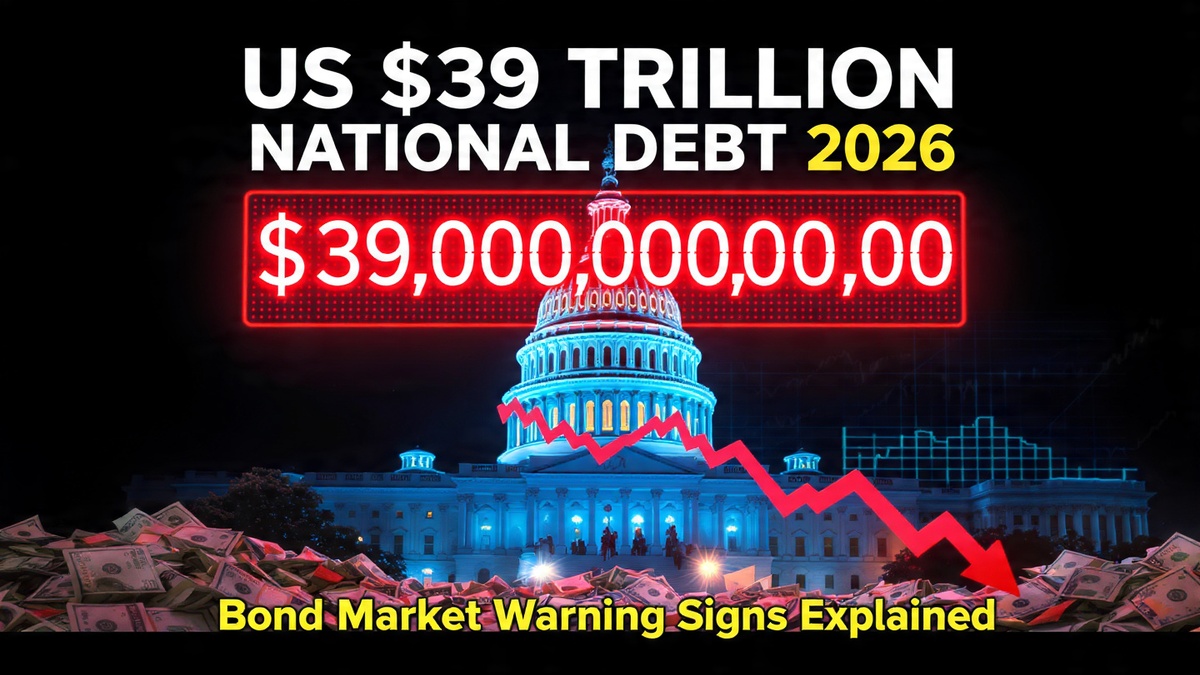
US national debt has crossed $39 trillion, bond yields are spiking, and Treasury auctions are showing soft demand. Here is what the bond market knows that Washington refuses to acknowledge.The United States crossed a number this year that no country in history has ever reached: $39 trillion in total federal debt. Not in inflation-adjusted terms. Not as a percentage of GDP. In raw dollars, the figure that sits on the public ledger of the world’s largest economy grew by $1 trillion in five months and $2 trillion in seven and a half months—and it is not slowing down.
What makes the velocity of that accumulation remarkable is the context in which it occurred. The Iran war added direct military expenditure at a pace that budget analysts said was accelerating. The 2025 tax cuts continued to erode revenue. And rising interest rates—the same rates the Federal Reserve is now signaling it may push higher still—are compounding the cost of servicing all that outstanding debt in a feedback loop that the bond market has quietly begun to price.
What the Auctions Are Saying
The most direct readout of market confidence in U.S. fiscal sustainability is the Treasury auction market, where the government sells new debt every week. Recent auctions have produced signals that bond investors usually describe in muted, technical language—but the direction is consistent.
A recent three-year Treasury auction cleared at 4.192%, well above the 3.965% at the prior auction. Yields rise when demand is soft. Soft demand at U.S. Treasury auctions is not a crisis signal—these are still among the most liquid securities in the world—but the trend line is one that fixed-income analysts at institutions ranging from J.P. Morgan to the Council on Foreign Relations have flagged as requiring close attention.
Foreign investors currently hold just above 30% of the Treasury market. Alarm bells rang briefly after April 2025’s Liberation Day tariffs—when U.S. bonds, equities, and the dollar all sold off together, the rarest of Wall Street trifectas—but subsequent data showed no dramatic reallocation away from Treasuries by foreign holders. That relative stability, however, depends on the continuation of conditions (a strong dollar, a functioning petrodollar system, geopolitical faith in U.S. institutions) that several of those conditions’ own architects now question.
The Interest Payment Problem
Of that $39 trillion, roughly $31.4 trillion is held by the public—the portion traded in financial markets globally. At current yields, the annual interest cost the U.S. government pays is on track to exceed $1 trillion for the first time in the country’s history. That figure is not a forecast. It is an arithmetic consequence of the debt level and the rate environment.
For context: U.S. defense spending in 2026 is approximately $900 billion. The federal government will spend more on interest payments than on the entire military. More than on Medicaid. More than on all discretionary non-defense programs combined. That structural reality constrains fiscal policy in ways that economists at the Deloitte Center for Financial Services have described as the most significant long-term challenge facing the U.S. economy.
“Higher bond yields affect U.S. fiscal dynamics in a number of ways,” analysts at the Council on Foreign Relations noted in their examination of tariff and Treasury interactions. “As interest payments on debt increase and use a greater share of available government funds, policymakers become more constrained around other fiscal priorities. They also can be more challenged when they need to respond to economic shocks.”
Three Credit Downgrades, Zero Course Correction
The United States has now been downgraded by all three major credit ratings agencies: S&P in 2011, Fitch in 2023, and Moody’s in May 2025. Each downgrade arrived with similar language—concerns about fiscal trajectory, political dysfunction over the debt ceiling, and a structural unwillingness to match revenues with spending. Each was followed by a brief market convulsion and then, effectively, nothing. Congress did not respond. The debt continued growing.
That pattern—of consequences being absorbed rather than heeded—is what makes the current moment structurally different from prior debt discussions, according to analysts who study sovereign fiscal crises. In those prior episodes, the U.S. still had room to maneuver: rates were low, the global appetite for dollar-denominated safe assets was rising, and alternative reserve currencies were even less credible than they are today. The margin for error has narrowed on all three dimensions.
The Political Ceiling on Solutions
The challenge is not primarily economic—it is political. Addressing a $39 trillion debt requires some combination of higher revenues, lower spending, or both. In the current Washington environment, tax increases are politically radioactive for one party and spending cuts face equivalent resistance from the other—particularly for the entitlement programs (Social Security, Medicare, Medicaid) that account for the largest share of mandatory outlays.
Markets have not yet priced the national debt as an immediate crisis, as analysts at U.S. Bank noted in their midyear market review: investors continue to watch whether rising debt eventually requires higher interest rates to attract enough Treasury buyers. The passive construction of that sentence—”continue to watch”—captures the market’s posture precisely. It is waiting. It is not yet acting.
The bond market’s message, in the language of Treasury yields and auction results, is being sent in increments rather than in a single shock. Washington is not listening. The question is not whether the message will eventually become impossible to ignore—it is how high rates must rise, and how much growth must slow, before the political system treats the ledger as a constraint rather than an abstraction.
Discover more from The Economy
Subscribe to get the latest posts sent to your email.
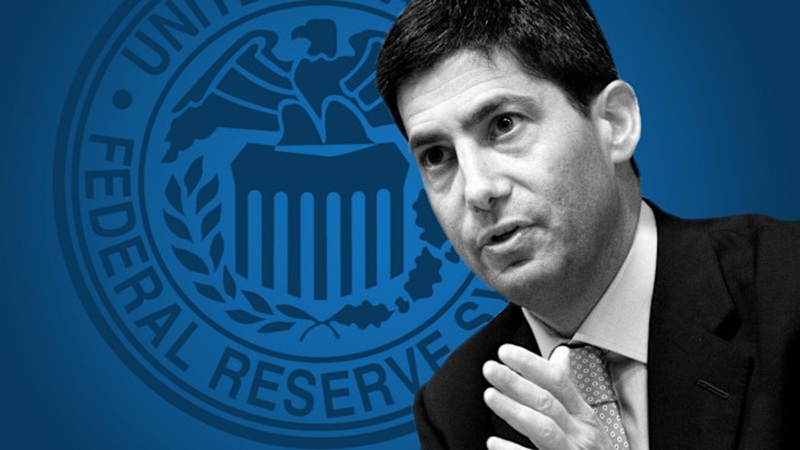
New Fed Chair Kevin Warsh surprised markets with a hawkish stance at his first FOMC press conference. Here’s how his rate-hike signals are rippling through stocks, bonds, mortgages, and gold. The Federal Reserve’s first policy meeting under new Chair Kevin Warsh sent shockwaves through global financial markets on June 17, 2026—not because policymakers moved rates, but because of what nine of them signaled they might do next.
Warsh, appointed by President Trump after months of public attacks on his predecessor Jerome Powell, arrived in Washington carrying expectations of a dovish turn. He had championed rate reductions while angling for the chairmanship, and the White House broadly supported looser monetary conditions. What markets got instead was a coldly hawkish institution that spent the better part of two hours dismantling those assumptions in real time.
The Meeting That Changed the Calculus
The Federal Open Market Committee held the federal funds rate unchanged at its existing range, but nine of 18 committee members penciled in at least one rate hike before year-end in the central bank’s updated Summary of Economic Projections—the dot plot. Six of those nine indicated support for two quarter-point increases. The shift represented a dramatic departure from the March projections, in which no policymaker had envisioned a hike, and the committee as a whole had forecast one cut.
The Dow Jones Industrial Average fell 507 points, or 0.98%, in the session. The S&P 500 lost 1.21% and the Nasdaq Composite dropped 1.34%. Two-year Treasury yields—the instrument most sensitive to near-term rate expectations—jumped 16 basis points to 4.21%, their highest reading in more than a year. Traders scrambled to reprice Fed futures, with CME FedWatch data showing the probability of a September hike jumping to 49% from 27% the previous session.
Warsh’s Statement Was Deliberately Brief—and Deliberately Alarming
The published FOMC statement was unusually short. Warsh stripped language that had previously signaled the Fed’s next move would be a cut and replaced it with a blunt acknowledgment that inflation remains “elevated”—a legacy partly of energy “supply shocks” stemming from the conflict in the Middle East.
“We’ve missed on inflation for five years and we’re going to fix that,” Warsh told reporters. “When we deliver on our price stability objectives—which we will—the American people will feel as though the hardships they’ve been living through are in the rear-view mirror.”
U.S. inflation hit 4.2%—double the Fed’s 2% target and its highest level in three years—leaving the committee little political room to stay passive. Warsh declined to submit a personal rate forecast to the dot plot, an unusual act of institutional reticence that some analysts read as an attempt to preserve maximum flexibility.
Bank of America Changes Its Forecast
Within days, Bank of America overhauled its rate outlook. Analysts at the bank predicted the Fed would raise the benchmark rate by a quarter point three times in 2026, lifting it from the current 3.5%–3.75% range to 4.25%–4.5%. The bank’s prior base case had been for rates to hold steady all year.
“The risk that they might need to raise rates has clearly risen,” said Matthew Luzzetti, chief U.S. economist at Deutsche Bank. BofA analysts acknowledged that Warsh could still be “strategically hawkish”—gaining anti-inflation credibility while actually buying time to cut later—but said the door to that interpretation was closing as incoming data showed persistent price pressure.
The hawkish turn unfolded against an unusual institutional backdrop. Warsh became the first new Fed chairman in more than 70 years to inherit an active predecessor on the governing board. Powell, whose term as chair Warsh replaced, remained as a board governor and voted at the June meeting—a fact that gives every subsequent public utterance from the former chair a level of market weight that Warsh’s team cannot easily ignore.
The Housing Market Reads a New Era
The rate signals carried immediate consequences for American homebuyers. Chen Zhao, head of economics research at Redfin, called it “a new era” and warned that mortgage rates were unlikely to retreat significantly in the near term. Bill Banfield of Rocket Mortgage noted that home sales were responding more to labor market strength than to rate movements and that determined buyers would continue entering the market—though the affordability calculus had shifted.
Vishal Garg, CEO of AI mortgage platform Better, cut to the practical point: “The Fed doesn’t set mortgage rates, but mortgage rates track long-term Treasury yields, which move based on investor expectations for inflation, growth, and the Fed’s next step.”
Warsh has separately announced five internal task forces to examine the Fed’s communication practices, data sources, and inflation-analysis frameworks—a structural reform effort that signals he intends a longer-term overhaul of the institution rather than a cosmetic change of tone.
What Comes Next
The path forward for markets hinges on three variables: whether consumer prices moderate fast enough to make hikes unnecessary, whether the labor market stays strong enough to absorb higher borrowing costs, and whether Warsh can maintain independence from a White House that publicly installed him to cut.
Kristina Hooper, chief market strategist at Man Group, summed up the market’s posture after the meeting: “Markets were holding out hope that Chair Warsh would throw them some kernels of real dovishness that they obviously felt they didn’t get.”
With BofA now projecting a rate corridor that would be the highest since 2007, and with inflation stubbornly running at twice the Fed’s target, the calculation Warsh faces is one no new Fed chair has confronted in a generation: tighten into a White House headwind or validate exactly the critics who warned his appointment was political.
Discover more from The Economy
Subscribe to get the latest posts sent to your email.

Trump Tariffs 2026: Economic Impact, Household Costs & Trade War Outlook

China Economy 2026: Export Boom Masks Property Crisis & Investment Slump

US Inflation 4% May 2026: Is the Worst Over? Fed, Oil Prices

AI Memory Chip Shortage 2026: Nvidia, Apple & What Comes Next

US $39 Trillion National Debt 2026: Bond Market Warning Signs Explained

Ray Dalio US Suez Moment 2026: Dollar Decline, $39 Trillion Debt & Empire’s End

Kevin Warsh Fed Rate Hike 2026: What His Hawkish Pivot Means for Markets

Gold Price 2026: Will Gold Hit $6,000? JPMorgan Forecast, Drivers & Investment Guide

US Recession 2026: Four Key Threats, Warning Signs & How to Protect Your Portfolio

AI Energy Demand 2026: Data Centres, Power Grids & the $725B Infrastructure Boom

AI Semiconductor Selloff 2026: Micron Crash, Nasdaq Pullback & What Comes Next

US Tariffs 2026: How Trump’s 11.7% Effective Rate Is Reshaping Global Trade & Inflation

Global Stock Markets 2026: S&P 500 at Record Highs Amid War, Inflation & Rate Risk

Spain Near 100M Tourists: A Structural Travel Map Shift : Booming Travel Economy

KPMG Australia CEO Resigns After Whistleblower Claims Exposed Investigation Failures

PwC China Partner Payouts Cut Amid Evergrande Audit Fraud

Broadcom Market Value Loss: Revenue Forecast Disappoints

Investors Pile Into Bullish Dollar Bets as ‘US Exceptionalism’ Trade Returns

Here’s How Much It’ll Cost You to Be Part of SpaceX’s Record-Breaking $75 Billion IPO

Nasdaq Tumbles 4% as Chip and Memory Stocks Sink: A $1.2 Trillion Wipeout

How to Fix Pakistan’s Debt Economy: A Structural Blueprint

Smash Capital Leads $200M Funding for Allen Control Systems

Democrats Draw a Red Line Around Military AI — And the Pentagon Is Already Pushing Back

New Investment Super-Cycle: AI, Green Energy & Re-Shoring

Russia Overspends on Putin’s War in Ukraine by $28bn

Xponential Fitness Franchise Lawsuit: The $3.97M Judgment

Middle East Conflict Oil Prices: The $4 Surge Explained

The End of the Chatbot: Why OpenAI is Tearing Up Its Most Successful Product
-

 Markets & Finance6 months ago
Top 15 Stocks for Investment in 2026 in PSX: Your Complete Guide to Pakistan’s Best Investment Opportunities
-

 Analysis4 months ago
Top 10 Stocks for Investment in PSX for Quick Returns in 2026
-

 Analysis5 months ago
Brazil’s Rare Earth Race: US, EU, and China Compete for Critical Minerals as Tensions Rise
-

 Analysis4 months ago
Johor’s Investment Boom: The Hidden Costs Behind Malaysia’s Most Ambitious Economic Surge
-

 Banks5 months ago
Best Investments in Pakistan 2026: Top 10 Low-Price Shares and Long-Term Picks for the PSX
-

 Investment6 months ago
Top 10 Mutual Fund Managers in Pakistan for Investment in 2026: A Comprehensive Guide for Optimal Returns
-

 Global Economy6 months ago
15 Most Lucrative Sectors for Investment in Pakistan: A 2025 Data-Driven Analysis
-

 Global Economy6 months ago
Pakistan’s Export Goldmine: 10 Game-Changing Markets Where Pakistani Businesses Are Winning Big in 2025