
Geopolitics
Global Cooperation in Retreat? Multilateralism Faces Its Toughest Test Yet

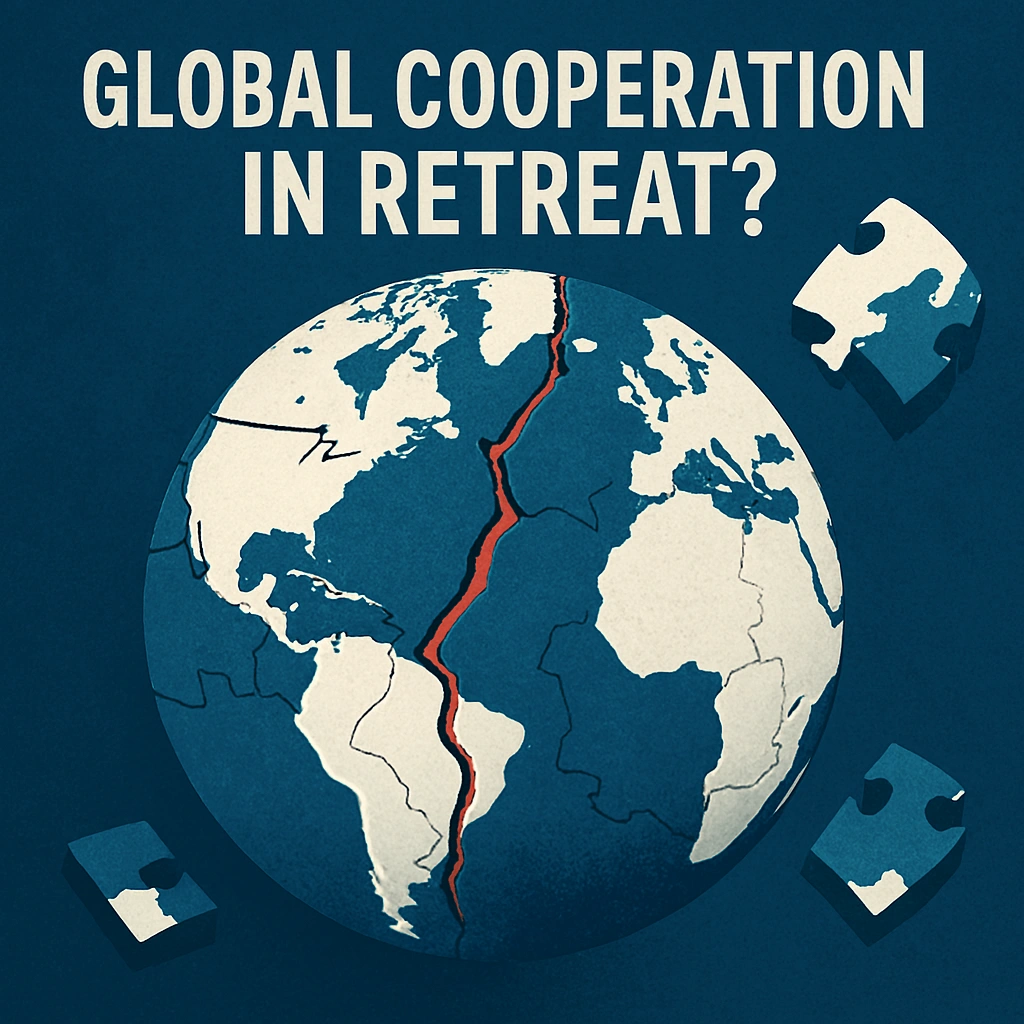
A decade after the SDGs and Paris Agreement peaked, multilateralism confronts financing gaps, climate setbacks, and geopolitical fractures threatening global progress.
Introduction: The Promise of 2015
September 2015 felt like the culmination of humanity’s aspirational instincts. In New York, world leaders adopted the Sustainable Development Goals—17 ambitious targets to end poverty, protect the planet, and ensure prosperity for all by 2030. Weeks later in Paris, 196 parties forged the Paris Agreement, committing to hold global warming well below 2°C. The third pillar, the Addis Ababa Action Agenda on Financing for Development, promised to bankroll this grand vision.
That year represented multilateralism’s apex—a rare moment when geopolitical rivals set aside differences to tackle existential threats collectively. A decade later, that consensus feels like ancient history.
Today, the architecture of global cooperation shows deep fissures. Climate targets drift further from reach, development financing falls catastrophically short, and geopolitical fragmentation undermines collective action. The question isn’t whether multilateralism faces challenges—it’s whether the system can survive its current stress test.
The Golden Age That Wasn’t Built to Last
When Global Unity Seemed Inevitable
The mid-2010s carried an optimism bordering on naïveté. The United Nations SDGs framework promised “no one left behind,” addressing everything from quality education (Goal 4) to climate action (Goal 13). The Paris Agreement’s bottom-up approach—where nations set their own emission reduction targets—seemed politically genius, accommodating diverse economic realities while maintaining collective ambition.
World Bank projections suggested extreme poverty could be eliminated by 2030. Renewable energy costs were plummeting. China’s Belt and Road Initiative promised infrastructure investments across developing nations. The International Monetary Fund reported global growth rebounding from the 2008 financial crisis.
Yet this golden age rested on fragile foundations: stable geopolitics, sustained economic growth, and unwavering political will. Within years, each assumption would crumble.
The Unraveling: Three Crises Converge
1. The Financing Chasm
The numbers tell a brutal story. Developing nations require between $2.5 trillion and $4.5 trillion annually to achieve the SDGs, according to recent UN Conference on Trade and Development estimates. Current financing? A fraction of that figure.
The COVID-19 pandemic obliterated fiscal space across the Global South. Debt servicing now consumes resources meant for hospitals, schools, and climate adaptation. The World Bank reports that 60% of low-income countries face debt distress or high debt vulnerability—up from 30% in 2015.
Promised climate finance remains unfulfilled. Wealthy nations committed $100 billion annually by 2020; they’ve yet to consistently meet that modest target. Meanwhile, actual climate adaptation needs exceed $300 billion yearly by 2030, per Intergovernmental Panel on Climate Change assessments.
2. Climate Targets Slip Away
The Paris Agreement aimed to limit warming to 1.5°C above pre-industrial levels. Current nationally determined contributions place the world on track for approximately 2.8°C of warming by century’s end—a trajectory toward catastrophic climate impacts.
Extreme weather events have intensified: record-breaking heatwaves, devastating floods, and unprecedented wildfires strain national budgets and displace millions. Yet fossil fuel subsidies reached $7 trillion globally in 2022, according to IMF analysis—undermining climate pledges with one hand while making them with the other.
The credibility gap widens. Corporate net-zero commitments often lack interim targets or transparent accounting. Developing nations, contributing least to historical emissions, face adaptation costs spiraling beyond their means while wealthy polluters debate incremental carbon pricing.
3. Geopolitical Fragmentation
The rules-based international order has fractured. US-China strategic competition overshadows cooperative initiatives. Russia’s invasion of Ukraine shattered European security assumptions and redirected resources toward military buildups. Trade wars, technology decoupling, and supply chain nationalism replace the globalization consensus.
Multilateral institutions themselves face paralysis. The UN Security Council, hobbled by veto-wielding permanent members, struggles to address conflicts from Syria to Sudan. The World Trade Organization appellate body remains non-functional since 2019. Even the G20—once the crisis-response mechanism for global challenges—produces communiqués too diluted to drive meaningful action.
The Data Doesn’t Lie: SDGs Progress Report Card
Stark Realities Behind the Targets
A comprehensive UN SDGs progress assessment reveals troubling trends:
- Goal 1 (No Poverty): Progress reversed. Extreme poverty increased for the first time in a generation during the pandemic, affecting 70 million additional people.
- Goal 2 (Zero Hunger): Over 780 million people face chronic hunger—up from 613 million in 2019.
- Goal 13 (Climate Action): Only 15% of tracked targets are on course.
- Goal 17 (Partnerships): Official development assistance as a percentage of donor GNI remains below the 0.7% UN target for most wealthy nations.
The Economist Intelligence Unit projects that at current trajectories, fewer than 30% of SDG targets will be achieved by 2030. The world faces a “polycrisis”—overlapping emergencies that compound rather than offset each other.
Voices From the Fault Lines
What Policy Leaders Are Saying
UN Secretary-General António Guterres recently warned of a “Great Fracture,” where geopolitical rivals build separate technological, economic, and monetary systems. His call for an “SDG Stimulus” of $500 billion annually has gained rhetorical support but little concrete action.
Climate envoys from small island developing states speak bluntly: for nations like Tuvalu or the Maldives, the 1.5°C threshold isn’t symbolic—it’s existential. Rising seas threaten their very existence while multilateral forums offer platitudes.
Development economists point to structural inequities. As World Bank chief economist Indermit Gill notes, today’s international financial architecture reflects 1944’s Bretton Woods priorities, not 2025’s multipolar reality. Reforming institutions designed when many developing nations were still colonies proves politically impossible.
Is Multilateralism Beyond Repair?
Distinguishing Detour From Derailment
The current crisis doesn’t necessarily spell multilateralism’s demise—but it demands urgent reinvention.
Minilateralism offers one path forward: smaller coalitions of willing nations tackling specific challenges. The Beyond Oil and Gas Alliance coordinates fossil fuel phaseouts among committed nations. The International Solar Alliance mobilizes renewable energy deployment across tropical countries. These initiatives bypass the consensus requirements that paralyze larger forums.
Alternative financing mechanisms are emerging. Debt-for-climate swaps, blue bonds, and innovative taxation proposals (digital services, financial transactions, billionaire wealth taxes) could unlock resources without relying solely on traditional development assistance.
Technology transfers accelerate independently of diplomatic channels. Renewable energy deployment in India, electric vehicle adoption in Indonesia, and mobile money systems across Africa demonstrate that development needn’t await global summits.
Yet these piecemeal solutions can’t replace comprehensive cooperation. Climate change, pandemic preparedness, and nuclear proliferation require collective action at scale. The question is whether political leadership exists to rebuild multilateral consensus before crises force more painful adjustments.
The Path Not Yet Taken
What Renewal Requires
Resurrecting effective multilateralism demands acknowledging uncomfortable truths:
- Power has shifted. Institutions must reflect today’s economic and demographic realities, granting emerging economies commensurate voice and representation.
- Trust has eroded. Rebuilding credibility requires wealthy nations fulfilling existing commitments before proposing new ones. Climate finance delivery, debt relief, and vaccine equity matter more than aspirational declarations.
- Urgency has intensified. The 2030 SDG deadline approaches rapidly. Incremental progress won’t suffice—transformative action at wartime speed is necessary.
- Sovereignty concerns are valid. Effective multilateralism respects national circumstances while maintaining collective standards. The Paris Agreement’s bottom-up architecture offers a model; the challenge is enforcement without coercion.
The upcoming UN Summit of the Future and COP30 climate talks in Brazil present opportunities for course correction. Whether leaders seize them depends on domestic politics, economic conditions, and sheer political will.
Conclusion: Retreat or Regroup?
A decade after multilateralism’s zenith, the experiment faces its sternest examination. The SDGs limp toward 2030 with most targets unmet. The Paris Agreement’s 1.5°C ambition slips further from grasp. Financing gaps yawn wider while geopolitical rivalries consume attention and resources.
Yet declaring multilateralism’s death would be premature. The alternative—uncoordinated national responses to global challenges—promises worse outcomes. Climate physics doesn’t negotiate. Pandemics ignore borders. Financial contagion spreads regardless of political preferences.
The infrastructure of cooperation remains intact, however strained. What’s missing is the political imagination to adapt it for a more fractured, multipolar era. The architecture of 2015 won’t suffice for 2025’s challenges—but neither will abandoning the project altogether.
The world stands at a crossroads. One path leads toward fragmented, transactional arrangements where short-term interests trump collective welfare. The other requires reinventing multilateralism for an age of strategic competition, ensuring it delivers tangible benefits quickly enough to maintain legitimacy.
History suggests humans cooperate most effectively when facing existential threats. Climate change, nuclear risks, and pandemic potential certainly qualify. Whether today’s generation of leaders rises to that challenge will determine not just multilateralism’s future, but humanity’s trajectory for decades ahead.
The question isn’t whether we can afford to cooperate. It’s whether we can afford not to.
Sources & Further Reading:
- United Nations Sustainable Development Goals
- IPCC Climate Reports
- World Bank Development Data
- IMF Fiscal Monitor
- The Economist: Global Politics
- Financial Times: Climate Capital
Discover more from The Economy
Subscribe to get the latest posts sent to your email.


Most headlines on Russia’s economy in July 2026 focus on the latest sanctions package or oil price cap negotiation. The more important story is structural: the model Russia has used to fund its war for four years is showing real signs of running out of road.
The core finding
A research brief from the Center for Strategic and International Studies (CSIS) argues Putin is pushing Russia toward an “economic, political, and military abyss,” according to Fortune. While Russia’s economy remains large — roughly $2.6 trillion — growth is slowing and shrinking on a quarterly basis, with 2026 growth projected at just 0.4%, worse than 2025’s 1% growth, which itself narrowly avoided recession.
Analysts describe Russia’s approach as a form of “military Keynesianism” — the state investing heavily in militarizing the economy while extending financial support to households affected by the war. But per Fortune’s reporting, “after more than four years of war, that well is running dry.” Russia’s fiscal reserves are dwindling, and 71% of the country’s gold reserves have been liquidated to sustain spending.
The number that matters most: oil and gas budget share
The most underreported data point here: the share of oil and gas receipts in Russia’s federal budget revenue fell to just 23% in 2025 — the lowest share in two decades — according to the Oxford Institute for Energy Studies, cited by Fortune. To compensate, Russia has turned to expansive taxation, including raising VAT from 20% to 22% — a move that has proven unpopular domestically.
This matters because Russia’s economy has historically been described, correctly, as fossil-fuel dependent — with oil and gas taxation making up 44% of federal revenues in the decade before the Ukraine invasion, and still around 24.5% over the first three quarters of 2025, according to a Brookings Institution analysis. A further slide to 23% signals the sanctions and diversification pressure are compounding, even as Russia continues finding workarounds through its “shadow fleet.”
The Iran-war reprieve was temporary — and it’s over
The Iran war offered Russia a brief lifeline: Brent crude surged more than 55% at its peak, nearing $120 a barrel, after President Trump eased some sanctions on Russian oil, per Fortune. But that chaos also undermined Russia’s own long-term energy and infrastructure projects in the Middle East — two Russian-linked power plants in Iran were put on hold, along with oil and gas exploration and plans to link Russia to India via Iran through new transit routes. Since then, oil prices have normalized as demand softened and the Strait of Hormuz reopened, removing that temporary cushion.
The sanctions escalation now in motion
The pressure is intensifying on multiple fronts simultaneously. US senators unveiled a sweeping bipartisan Russia sanctions bill in mid-July, which would impose mandatory sanctions on Russian political and military leaders including President Putin, and up to a 100% tariff on the top five countries — including China and India — that purchase Russian crude oil and natural gas, according to CNN. Separately, the EU has been racing to avoid an automatic upward revision of its Russian oil price cap, which would otherwise jump from $44.10 to roughly $58 per barrel if a new sanctions package wasn’t agreed by July 15, per Euronews.
Analysis from the Center for European Policy Analysis notes the outcome depends heavily on whether India and China accept the risk of secondary sanctions: “If China stands firm, Moscow’s dependence on Beijing deepens,” per CEPA. If Russian seaborne oil exports were to fall to near-zero, the budget would lose roughly a quarter of its revenue — an extreme but non-trivial scenario given the pace of legislative and diplomatic pressure building in July 2026.
Why this matters beyond Russia
For countries positioned between Western sanctions regimes and continued Russian energy purchases — including India, and by extension trade partners like Pakistan whose remittance and trade flows intersect with Gulf and South Asian energy markets — the trajectory of Russia’s budget dependency and the secondary-sanctions risk attached to its buyers is a live variable, not a settled one. A further deterioration in Russia’s oil-and-gas revenue share would likely accelerate Moscow’s reliance on China specifically, reshaping regional energy-trade alignments well beyond the Russia-Ukraine conflict itself.
FAQ
What percentage of Russia’s federal budget comes from oil and gas? 23% in 2025 — the lowest share in two decades, according to the Oxford Institute for Energy Studies.
What is Russia’s projected GDP growth for 2026? 0.4%, according to CSIS research cited by Fortune — down from 1% growth in 2025.
What is “military Keynesianism” in the context of Russia’s economy? A term analysts use to describe Russia’s strategy of heavy state investment in militarizing the economy alongside financial support for war-affected households, functioning as a form of stimulus that is now showing signs of fiscal strain.
Discover more from The Economy
Subscribe to get the latest posts sent to your email.
Russia‘s two largest, US-sanctioned oil producers have clawed back control of the majority of the country’s crude export trade, restoring their combined share to 57% in the first half of May 2026 after a sharp decline earlier in the year — a recovery that underscores the limits of Western sanctions enforcement even as the Middle East conflict reshapes global energy flows in Moscow’s favor.
According to the Kyiv School of Economics Institute‘s Russian Oil Tracker, sanctioned producers Rosneft, Lukoil, Gazpromneft, and Surgutneftegaz had seen their combined export share collapse to just 4-8% in the January-to-March period, only to rebound sharply as sanctioned “shadow fleet” tankers and previously idle vessels returned to commercial service, according to KSE Institute’s May 2026 tracker. The reversal illustrates a pattern that has recurred throughout the sanctions era: enforcement gaps open, capital and logistics networks adapt, and market share flows back toward sanctioned entities within a matter of months.
The Shadow Fleet’s Growing Dominance
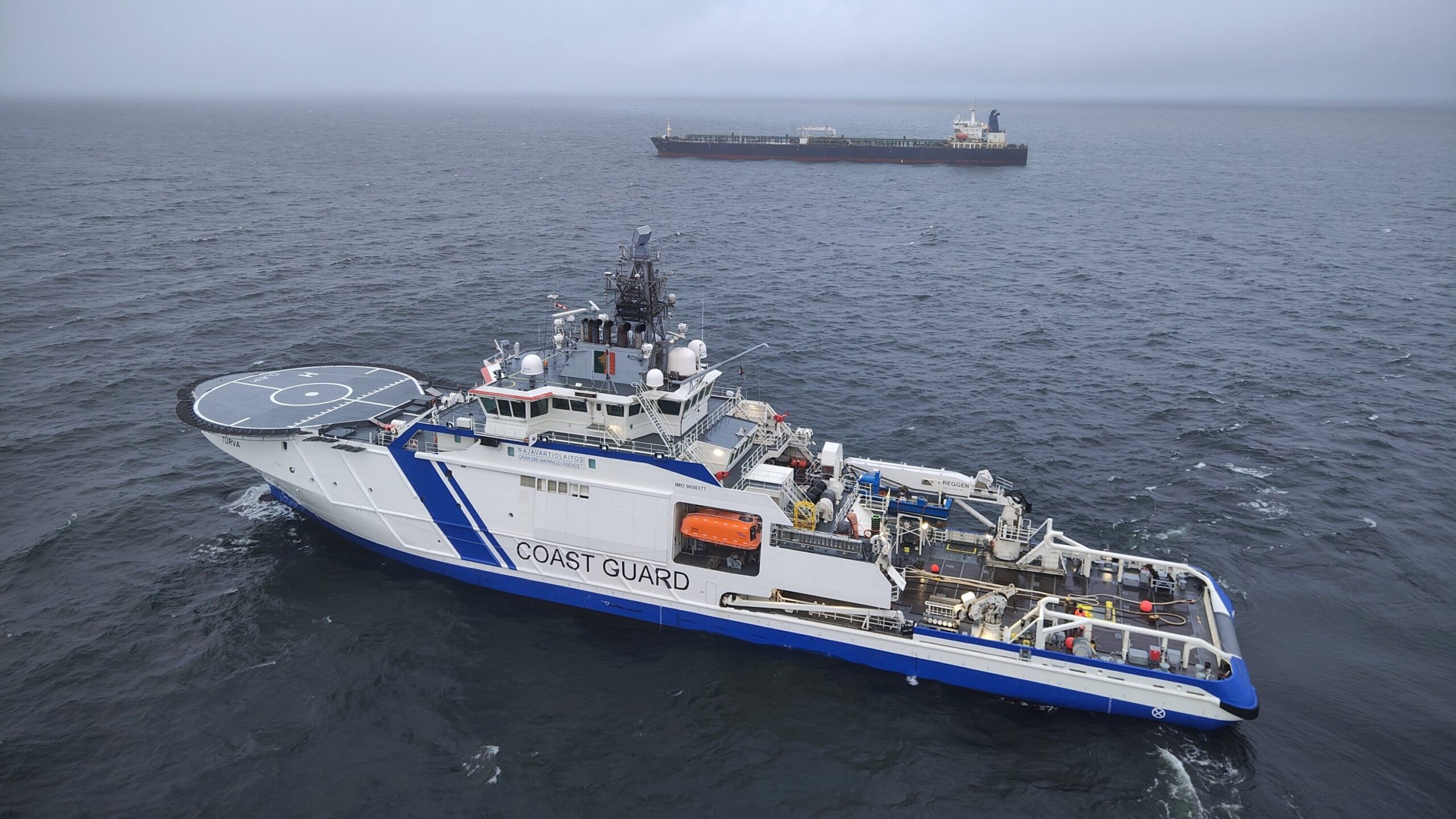
The scale of Russia’s reliance on unconventional shipping infrastructure has reached a new high. KSE Institute estimates that 192 shadow fleet tankers carrying crude and refined products left Russian ports or engaged in ship-to-ship transfers in April 2026 alone, with 92% of those vessels older than 15 years — aging tonnage increasingly steered toward sanctions-evasion routes as newer, compliant vessels avoid the reputational and insurance risk of handling Russian crude.
The share of Russian seaborne oil transported by explicitly sanctioned tankers rose from 15% in July 2025 to 31% by April 2026, according to KSE data, while the corresponding share carried specifically by US-designated vessels reached 26% over the same window — driven, according to the tracker, by previously idle tankers returning to active commercial rotation. As of May 21, six major sanctioning jurisdictions — the US, UK, EU, Australia, Canada, and New Zealand — had jointly designated 651 unique oil tankers, yet the fleet supporting Russian exports has continued to expand around those designations rather than shrink beneath them.
Separately, monthly analysis from the Centre for Research on Energy and Clean Air (CREA) found that in April 2026, over half — 54% — of Russia’s seaborne oil moved via sanctioned shadow tankers, up sharply from 48% in March, with sanctioned vessels responsible for the highest share of Russian fossil fuel exports on record, according to CREA’s April 2026 monthly tracker.
Revenue Keeps Climbing Despite the Sanctions Architecture
The financial consequence of this logistics resilience is a fossil fuel export revenue stream that has continued growing even as enforcement pressure has, on paper, intensified. Russia’s fossil fuel export revenues rose 2% month-on-month to €726 million per day in May 2026, according to CREA’s most recent analysis, despite export volumes remaining broadly flat. Crude oil export revenues specifically grew 1% to €362 million per day, with volumes up 8% — evidence that Russia is finding new efficiencies in its export logistics even as the headline sanctions regime tightens.
KSE Institute’s revenue modeling, updated in light of the Middle East conflict, now projects that Russia’s total oil revenue could climb from $158 billion in 2025 to $208 billion in 2026 under a base-case scenario assuming current price caps and a conflict lasting up to three months. Under an adverse scenario involving weak sanctions enforcement, that figure could reach $214 billion — meaning even the coalition’s most pessimistic enforcement scenario still implies rising, not falling, Russian oil revenue for the year.
Pricing dynamics tell a related story. Russia’s benchmark Urals crude rose 19% month-on-month in April 2026 to $112.30 per barrel — more than double the $44.10 EU and UK price cap that took effect on February 1, 2026 — before easing 12% in May to $82.02 per barrel, still nearly double the cap, according to CREA’s tracking data. The price cap, designed explicitly to constrain Russian per-barrel revenue while keeping global oil supply flowing, has functioned as a floor for insurance and freight compliance rather than an effective revenue ceiling during periods of tight global supply.
Third-Country Refineries Remain a Persistent Loophole
Refineries in India, Türkiye, Brunei, and Georgia running on Russian crude exported €641 million worth of oil products to sanctioning countries in May 2026 alone, according to CREA, including shipments to the EU, Australia, the US, and New Zealand — jurisdictions that have formally banned direct imports of Russian crude but continue receiving refined products derived from that same crude once it has passed through a third-country refinery. Georgia’s Kulevi refinery has run entirely on Russian crude for months without receiving a single shipment of non-Russian oil, despite its operating company publicly stating an intent to diversify — and despite narrowly avoiding inclusion on the EU’s sanctions list in March.
The EU closed one version of this loophole through its 18th sanctions package in January 2026, banning oil products refined from Russian crude in third countries from entering the bloc, according to analysis from the Center for European Policy Analysis (CEPA). Yet the persistence of flows through Kulevi and similar facilities illustrates how quickly new evasion routes emerge once established ones are formally closed — a pattern sanctions researchers describe as a continuous cat-and-mouse dynamic rather than a one-time enforcement fix.
What the Data Means for the Broader Sanctions Debate
Since Russia’s full-scale invasion of Ukraine, sanctions imposed by the UK, US, and EU are estimated to have denied Russia access to more than $450 billion, according to CEPA’s analysis — a substantial figure that nonetheless coexists with the reality that Russia’s oil exports since February 2022 have generated more than $800 billion in revenue through April 2026, according to CREA data cited in the same CEPA report. Those two figures, both accurate, capture the fundamental tension at the heart of Western sanctions policy: meaningful financial damage has been inflicted, but Russia’s core oil revenue engine has continued operating at a scale sufficient to sustain its war economy.
For markets and policymakers tracking global oil supply through the remainder of 2026, the practical implication is that Russian barrels — whether transported via shadow fleet, laundered through third-country refineries, or shipped directly by re-empowered sanctioned majors — remain a structurally embedded part of global crude supply, with enforcement gaps proving durable enough that even renewed sanctions packages have thus far failed to meaningfully compress Russia’s oil-derived war financing.
Discover more from The Economy
Subscribe to get the latest posts sent to your email.
Analysis
Turkey’s Bid for Middle East Leadership: How Ankara Is Filling the Vacuum Left by Iran’s Weakening
When the United States and Israel struck Iran in February 2026, they did not merely launch a war. They created a strategic vacuum. Iran — the dominant non-Arab power in the Middle East and the linchpin of the “Axis of Resistance” — was degraded, isolated, and forced into ceasefire negotiations. The question immediately arising for regional analysts: who fills the space?
The answer, increasingly, is Turkey.
Erdoğan’s Strategic Moment
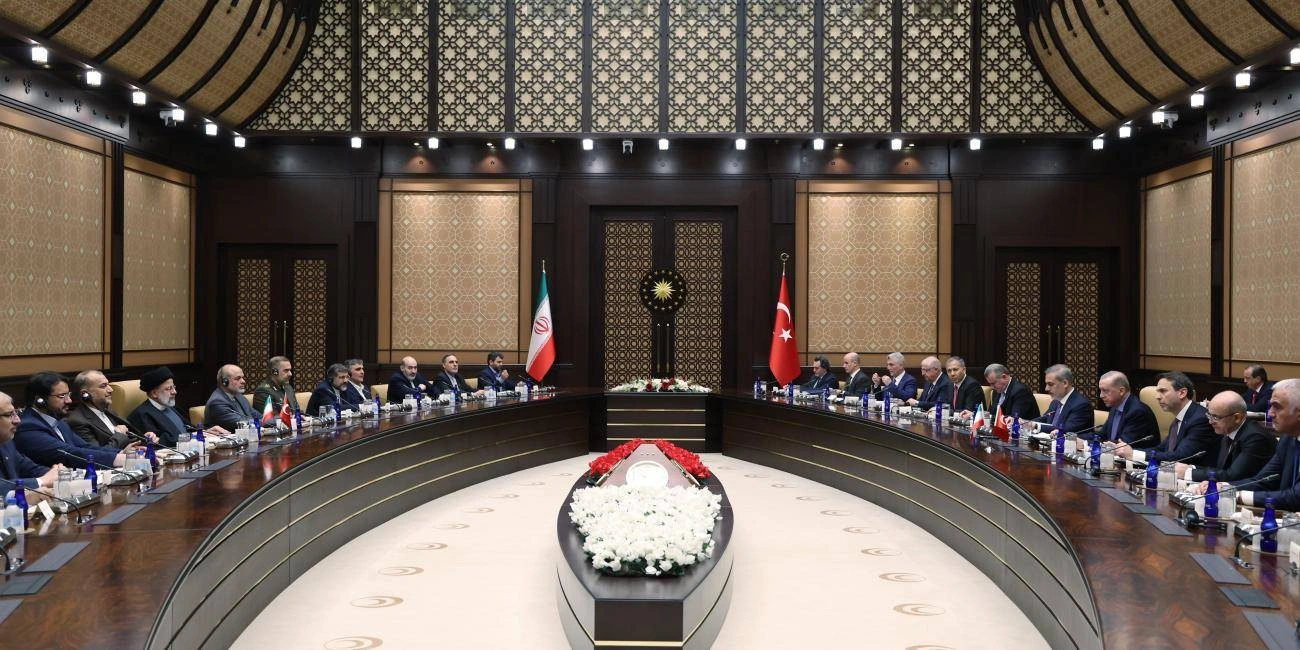
Brookings scholar Aslı Aydıntaşbaş examines Turkey’s evolving role as it searches for influence in a Middle East undergoing fundamental transformation, prompted in equal parts by the Iran war and shifting U.S. commitments.
Turkey enters this moment with unusual strategic assets: it is a NATO member with deep ties to both the West and the Islamic world; it has the second-largest military in the alliance; it has cultivated relationships with Hamas, the Muslim Brotherhood, Qatar, and various Gulf states; and it is the host of the July 2026 NATO summit — placing President Erdoğan at the center of the most consequential alliance gathering in years.
The Islamabad Memorandum and Ankara’s Role
Turkey played a quiet but important role in the Iran ceasefire diplomacy. Pakistan served as the primary mediator — hence “Islamabad Memorandum” — but Turkish diplomatic channels contributed to the broader regional framework. This positioning as a constructive regional broker, distinct from both the U.S.-Israel axis and the Iran-led resistance bloc, is central to Erdoğan’s strategic calculus.
As Hezbollah is weakened and Hamas isolated, as Iran negotiates from a position of damage rather than strength, and as the Gulf states recalibrate toward Washington — Turkey is positioning itself as the indispensable interlocutor between competing regional forces.
The NATO Summit Leverage
Hosting the Ankara summit gives Turkey unusual leverage. The July 7–8 summit in Ankara will focus heavily on allies spending on European and Arctic security, as well as the need to vastly increase defense production.
But the summit’s subtext is about Turkey’s own strategic agenda: sustaining arms purchases outside of U.S. conditionality, maintaining relations with both Ukraine and Russia, and extracting concessions from NATO partners on matters ranging from Kurdish groups to EU accession.
Erdoğan has proven adept at using NATO summits as negotiating platforms. Ankara 2026 will be no different.
The Iran War’s Regional Reordering
The 2026 Iran war has fundamentally altered the regional power balance in ways that benefit Ankara. Hezbollah — Iran’s most powerful proxy — has been severely degraded by Israeli operations. The Houthis have been weakened. Hamas is isolated. Iran itself is in ceasefire negotiations.
The “Axis of Resistance,” as a coherent strategic instrument of Iranian foreign policy, has been severely damaged. The architecture of Iranian regional influence, built over four decades, is being reconstructed — and Turkey intends to ensure its influence grows in the reconstruction phase.
The Limits of Turkish Ambition
Turkey’s regional ambitions face real constraints. Its economy has been strained by years of inflation and currency volatility. Its relationship with the EU remains frozen. Its ties with Egypt, Saudi Arabia, and the UAE — which have normalized in recent years — could fray if Ankara overplays its hand.
Moreover, Turkey must navigate a NATO summit at which Trump is furious with European allies for their Iran stance — yet Turkey itself declined to actively support U.S. operations. Managing that contradiction requires considerable diplomatic dexterity.
The Middle East is undergoing a fundamental transformation, one prompted in equal parts by the Iran war and shifting U.S. commitments — and Turkey is positioning itself to shape that transformation rather than merely react to it.
Conclusion: The Ankara Moment
The 2026 Iran war may ultimately be remembered not only for what it did to Iran, but for what it enabled in Turkey. If Erdoğan manages the NATO summit effectively, deepens Turkey’s regional broker role, and maintains its strategic ambiguity between East and West — Ankara could emerge from 2026 as the most consequential player in the new Middle East order.
That prospect will be welcomed by some, feared by others, and watched closely by all.
Discover more from The Economy
Subscribe to get the latest posts sent to your email.

Canada US Trade War 2026: Inside Carney’s Push to Cut Ties With Trump’s Tariffs

Rachel Reeves’s £25 Billion Problem: What the Autumn Budget Gap Means for Britain

Inside the Fed’s Most Divided Vote in Years: Why Warsh Held the Line on Rates

Pakistan Passed Its Third IMF Review

The Fed Is Fractured — And a New Chair Just Made It Louder, Not Quieter

The UK Economy in 2026 Is Neither Recession Nor Recovery :Stagflaton

Indonesia’s $121 Billion Nickel Bet Is Facing a Battery Chemistry

Why Ultra-Wealthy Families Are Splitting Between Singapore and Dubai inmarkets 2026

China Chose Political Control Over Fixing Its Deflation Trap in 2026

Oil Markets Are Oversupplied and Geopolitically Explosive at the Same Time

Russia’s Budget Deficit Blew Past Its Full-Year Target in Three Months

Malaysia’s Rare Earth Bet: Six Powers Are Negotiating for Kuantan at Once

Gulf Sovereign Capital Bypasses Pakistan Despite Record 2026 Spending Spree

Pakistan’s $10bn US Facility Request: Inside the New Gulf Capital Triangle

Russia Bans Diesel Exports 2026: Global Fuel Market Impact Explained

Gold Price Forecast 2026: Fed’s July 29 Decision and Record Central Bank Buying Explained

Strait of Hormuz Blockade 2026: Oil Prices Surge 9% as US-Iran Conflict Reignites

Strait of Hormuz 2026: Why Markets Still Don’t Trust It’s Open

Down But Not Out: Inside the Slow Sinking of Russia’s War Economy

China Politburo July 2026: Stimulus Signals Explained

Gulf Capital Retreat From Pakistan 2026: UAE Loan Freeze & What It Means

Pakistan Economy 2026: GDP Grows 3.7% as IMF Completes EFF Review Amid Middle East Risk

Apple vs OpenAI Lawsuit: The Economic Story Behind the Headline

Global Stock Market Selloff 2026: Stagflation Fears Return as Iran Conflict Reignites

Indonesia Russian Oil Imports 2026: Why Jakarta Is Diversifying Crude Supply

The Yuan Now Settles 67% of Russian Oil Payments — Quiet De-Dollarization in Action

AI Capex Bubble 2026: The Hidden $662B Debt Nobody Reports

Pakistan’s Economic Survey FY26: Inflation Spike Insights
-

 Markets & Finance7 months ago
Top 15 Stocks for Investment in 2026 in PSX: Your Complete Guide to Pakistan’s Best Investment Opportunities
-

 Analysis5 months ago
Johor’s Investment Boom: The Hidden Costs Behind Malaysia’s Most Ambitious Economic Surge
-

 Analysis6 months ago
Top 10 Stocks for Investment in PSX for Quick Returns in 2026
-

 Analysis6 months ago
Brazil’s Rare Earth Race: US, EU, and China Compete for Critical Minerals as Tensions Rise
-

 Banks7 months ago
Best Investments in Pakistan 2026: Top 10 Low-Price Shares and Long-Term Picks for the PSX
-

 Investment7 months ago
Top 10 Mutual Fund Managers in Pakistan for Investment in 2026: A Comprehensive Guide for Optimal Returns
-

 Global Economy7 months ago
15 Most Lucrative Sectors for Investment in Pakistan: A 2025 Data-Driven Analysis
-

 Global Economy7 months ago
Pakistan’s Export Goldmine: 10 Game-Changing Markets Where Pakistani Businesses Are Winning Big in 2025