
AI
ASEAN AI Cooperation: Five Ways to Compound the Gains

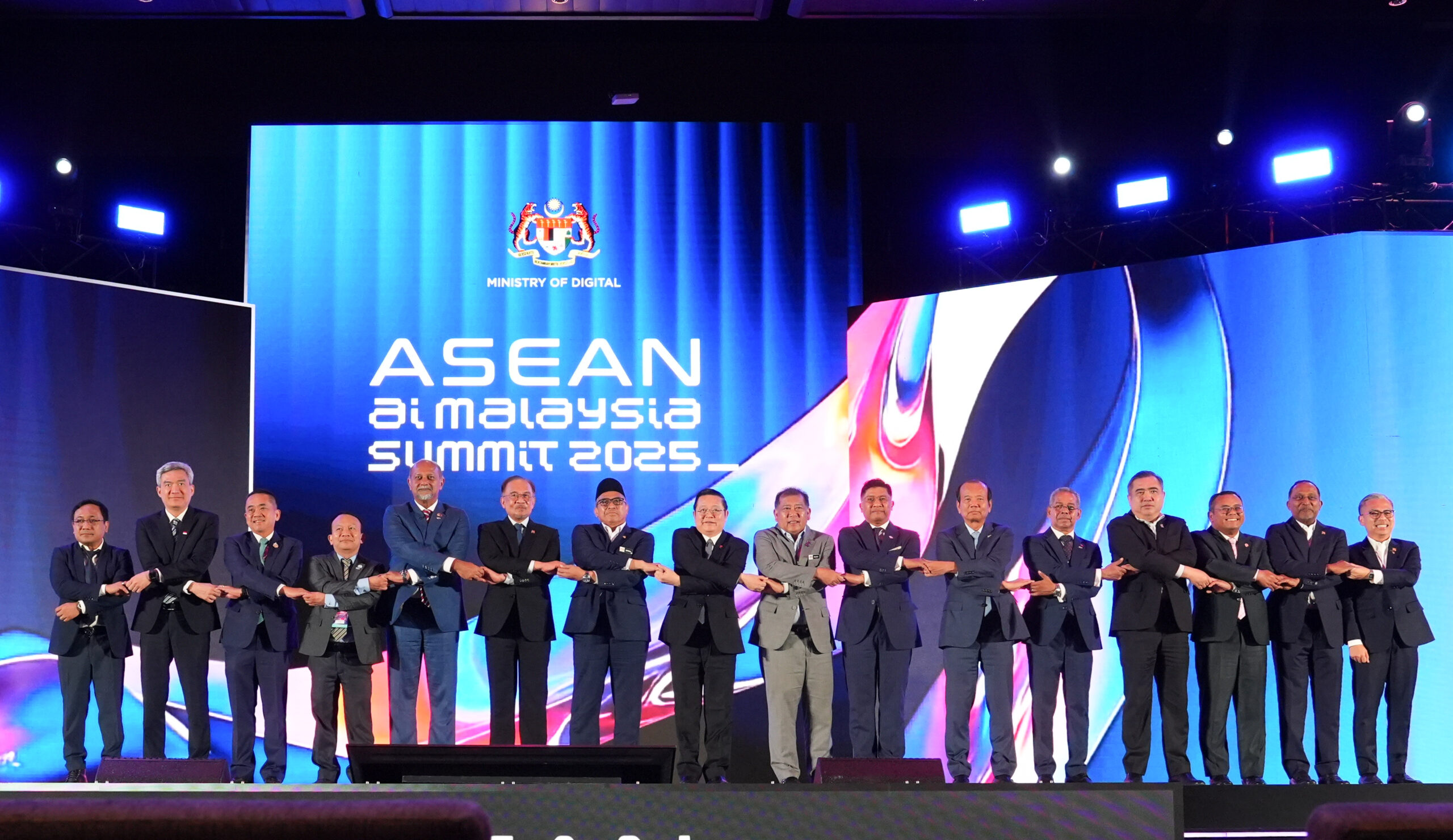
In October 2025, ASEAN finance ministers gathered in Kuala Lumpur and announced that negotiations for the bloc’s landmark Digital Economy Framework Agreement had reached “substantial conclusion” — 73% of core provisions agreed after 14 bruising rounds of talks. The remaining 27%? Cross-border data flows, digital identity, financial services. In other words, everything AI actually runs on. That gap between ambition and architecture is the central tension of South-east Asia’s AI moment: a region capable of producing $1 trillion in incremental GDP by 2030 from artificial intelligence, yet currently organized in ways that will guarantee it captures far less. The five moves that could change that are neither secret nor complicated. The question is whether ten governments have the collective will to execute them together.
The Infrastructure Is Outrunning the Institutions
The macro picture is genuinely dazzling. South-east Asia attracted more than $55 billion in AI infrastructure commitments in 2025, as hyperscalers from Microsoft to Google to Amazon bet heavily on the region’s growth trajectory. The bloc’s digital economy, already worth approximately $300 billion in 2025, could double to $2 trillion by 2030 if the ASEAN Digital Economy Framework Agreement — DEFA — is implemented effectively, according to analysis published by the World Economic Forum. Malaysia is importing compute at a pace that would have seemed improbable two years ago: $6.45 billion worth of GPUs in just the first four months of 2025, more than any other country in the region. Johor, the Malaysian state that borders Singapore, is developing 4.5 times its operational data center capacity — the fastest-growing hub in South-east Asia. Across the bloc, AI is projected to contribute between 10% and 18% of regional GDP by 2030, a figure that covers a wide range precisely because the outcome depends entirely on policy choices not yet made.
Yet hardware alone doesn’t compound. The physical layer is racing ahead of the institutional layer — the governance frameworks, talent pipelines, and data-sharing agreements that would allow ten fragmented national markets to function as a single AI economy. Five structural moves, pursued collectively and with some urgency, could change that.
One: Harmonize Regulation Before Fragmentation Calcifies
The ASEAN AI cooperation agenda crystallized most visibly in January 2026, when Digital Ministers gathered in Hanoi and adopted what became the Hanoi Digital Declaration — a commitment to deepen AI cooperation through policy harmonization and enhanced joint safety efforts. The sixth ASEAN Digital Ministers’ Meeting, held on January 15–16, 2026 under the theme “From Connectivity to Connected Intelligence,” formally endorsed the ASEAN AI Safety Network, established in 2025 and headquartered in Kuala Lumpur, as the region’s platform for regulatory preparedness. Malaysian Digital Minister Gobind Singh Deo announced that his country would host the secretariat. The symbolism was pointed: the region’s fastest-growing data center market staking a claim as the governance hub too.
The problem is that ten countries currently operate ten distinct AI regulatory regimes. Vietnam enacted South-east Asia’s first binding AI law — No. 134/2025 — in late 2025. Indonesia is finalizing mandatory requirements. Malaysia is considering dedicated legislation. Thailand has a draft law. The 2024 ASEAN Guide on AI Governance and Ethics offers shared principles — transparency, fairness, accountability — but remains voluntary. In some parts of ASEAN, before the Guide was even published, six of the ten member states had already formulated their own national AI strategies, each with distinct emphases and risk tolerances.
The gap between voluntary principles and binding rules is where foreign investment stalls and regional AI deployment fractures into national silos. DEFA could close that gap — but only if its AI governance and data protection provisions survive the final round of negotiations intact, with signature expected by end-2026. That is not assured.
Two: Build Shared Compute, Not Competing Fiefdoms
Why ASEAN’s AI gains will compound only at regional scale
The second structural move is a coordinated approach to compute infrastructure. Malaysia’s GPU import numbers and Johor’s data center boom are impressive, but they reflect national rather than regional logic — each government competing for the same scarce pool of hyperscaler investment, power supply, and land. Singapore’s 1.4 gigawatts of data center capacity already operates at 1.4% vacancy, the lowest rate in Asia-Pacific. Data center electricity consumption across the bloc is projected to rise from 9.8 terawatt-hours in 2025 to 22 TWh by 2030, and the energy-climate dilemma is acute: ASEAN’s power mix still leans heavily on fossil fuels, and Johor has already rejected nearly 30% of data center applications on energy efficiency grounds.
A regional approach — coordinating renewable energy procurement, computing capacity allocation, and grid upgrades across borders — would be demonstrably more efficient than each government racing independently for scarce power. The Johor-Singapore Special Economic Zone, which includes a planned 1,000-megawatt solar farm to supply clean energy to cross-border data infrastructure, hints at what bilateral energy cooperation could look like at scale. Scaled to an ASEAN-wide compute compact, that model could materially reduce both costs and the bloc’s carbon exposure from AI.
What is ASEAN’s AI strategy for 2030?
ASEAN’s emerging AI strategy centers on five pillars: regulatory harmonization through DEFA and the ASEAN AI Governance Guide; shared compute and energy infrastructure; a regional talent mobility framework; trusted cross-border data corridors; and collective AI deployment on shared public challenges like climate and health. The overarching goal is to position the bloc as the world’s fourth-largest economy by 2030, with AI contributing between 10% and 18% of regional GDP.
Three: Invest in Scientists, Not Just Users
The third move — and arguably the most urgent — is a serious AI talent strategy. Not the short-course upskilling that generates favorable headlines in ministerial statements, but sustained investment in the AI scientists who can build models rather than merely operate them.
The scale of the workforce challenge is significant. More than 164 million workers — over half of ASEAN’s labour force — are expected to face disruptions from generative AI, with automation reducing some roles while augmenting others requiring complex analytical judgment. The skills required for jobs in South-east Asia are expected to change by 72% between 2016 and 2030 — nearly double the rate of change seen in the prior 14 years. Indonesia alone will need 9 million additional ICT professionals by 2030, a target that looks nearly impossible against the region’s current educational infrastructure. In some parts of ASEAN, over 75% of employers report that fresh graduates are not job-ready for digital roles.
Still, the talent challenge has a structural dimension that job-readiness statistics don’t fully capture. Singapore consistently drains engineers and data scientists from neighboring markets, deepening supply gaps in Malaysia and Thailand. Mutual Recognition Arrangements — the formal mechanisms for cross-border professional mobility — currently benefit only around 1.5% of ASEAN’s labour force. If the region doesn’t expand talent mobility and invest in frontier research capacity, it risks producing a generation of skilled users of American and Chinese AI models rather than scientists who develop ASEAN’s own.
That distinction matters enormously for long-run competitiveness. Malaysia trained more than 734,000 individuals through Microsoft’s AI skilling initiative as of October 2025. The numbers are real. Yet building a regional AI economy on another company’s foundation models is not the same as having scientific depth of your own.
Four and Five: Data Corridors and Collective Deployment
The downstream consequences of compounding — or failing to
The fourth move is unlocking cross-border data flows. AI is only as useful as the data training it, and right now, divergent privacy rules, data localization mandates, and inconsistent consent frameworks leave ASEAN’s data fragmented into national pools too shallow for genuinely powerful applications. The ASEAN AI Safety Network has begun developing the concept of “trusted data corridors” — a mechanism discussed at the January 2026 ministerial that would allow data to move across borders under agreed standards, broadly analogous to the EU’s adequacy decisions that enable transatlantic flows. DEFA’s outstanding provisions on personal data protection and cross-border transfers are precisely the ones that have proved hardest to negotiate, precisely because they touch national sovereignty most directly.
The payoff from getting this right is substantial. DEFA’s successful implementation could double ASEAN’s digital economy from $1 trillion to $2 trillion by 2030 — a differential that reflects largely the value of integrated data flows versus fragmented ones.
The fifth move is arguably the most distinctive ASEAN contribution to the global AI agenda: deploying AI collectively on problems that are inherently regional in scope. Climate change doesn’t respect borders. Neither do infectious diseases. Agricultural supply chains, maritime logistics, and disaster early-warning systems all operate at a scale that single-country AI deployments cannot optimize — but that an integrated bloc of 680 million people, pooling data and co-funding models, absolutely could. The ASEAN Responsible AI Roadmap 2025–2030 gestures toward this logic, but the institutional machinery for genuine joint deployment — shared datasets, co-funded foundation models, regional procurement frameworks — remains thin. The COVID-19 pandemic exposed how badly the region needed coordinated health data infrastructure. An ASEAN health AI compact, building on lessons from that period, would be the most concrete near-term demonstration of what cooperative AI deployment actually looks like in practice.
AI is expected to add $1 trillion to South-east Asia’s GDP by 2030, positioning the bloc as the world’s fourth-largest economy — but that figure represents a ceiling, achievable only if structural barriers to regional AI integration are removed. Companies operating across multiple ASEAN markets would benefit from a single compliance framework rather than ten overlapping ones. Small and medium enterprises, which make up the overwhelming majority of ASEAN’s private sector, would gain access to AI capabilities currently available only to multinationals with the resources to navigate regulatory complexity in every jurisdiction.
The Case Against Regional Ambition
Not everyone finds this vision compelling, and the skeptical case deserves a fair hearing.
ASEAN’s institutional culture — built on consensus, non-interference, and the diplomatic shorthand of “the ASEAN Way” — has always struggled to produce binding commitments on questions touching national sovereignty. Data is sovereign. AI models trained on citizens’ data are, in some national readings, instruments of industrial policy and security as much as economic efficiency. Vietnam’s decision to enact its own binding AI law rather than wait for ASEAN consensus reflects a rational calculation: national control, achieved faster, beats regional harmonization at a slower pace and weaker standard.
There are genuine analytical grounds for that position. The 2024 ASEAN AI Governance Guide produced a framework built on multi-stakeholder models drawing from the OECD AI Principles and UNESCO’s Ethics recommendations — sensible as guidance, but deliberately non-binding to preserve national flexibility. Singapore’s AI governance focus on financial services and the city-state’s role as a regulatory laboratory looks very different from Indonesia’s emphasis on agriculture, healthcare, and equity inclusion. A binding regional framework risks being either too lowest-common-denominator to be useful, or too prescriptive to fit ten very different economies at very different stages of digital development.
The energy constraint adds a harder edge to the skepticism. If ASEAN’s data center power consumption rises from 9 TWh today to 68 TWh by 2030 — as research from the ASEAN Centre for Energy projects — the bloc’s AI ambitions could collide directly with its Paris Agreement commitments. Building shared AI infrastructure is only virtuous if it is also clean, and that constraint may prove more binding than any governance framework.
What Compounding Actually Requires
The honest accounting is this: ASEAN has built the hardware layer of an AI economy with impressive speed. The $55 billion in commitments, the GPU imports, the solar farms and submarine cables — all of it represents genuine structural transformation, not merely ministerial ambition. What the region has not yet built is the institutional layer of trust: the harmonized rules, the open data channels, the talent networks, and the habits of joint deployment that would allow those investments to compound into durable, broadly shared economic gains.
The five moves — regulatory harmonization through DEFA, shared compute and clean energy infrastructure, frontier talent investment and mobility, trusted cross-border data flows, and collective deployment on regional public challenges — are not novel proposals. Every significant ASEAN policy document published since 2024 contains at least three of them. The ASEAN Responsible AI Roadmap 2025–2030, the Hanoi Digital Declaration, the ASEAN AI Guide’s expanded Generative AI edition released in January 2025 — all reflect genuine regional consensus on the direction of travel.
What they do not reflect, yet, is consistent execution.
Compounding, in finance and in policy alike, works only if you stay the course. The region has the assets. It now needs the discipline.
Discover more from The Economy
Subscribe to get the latest posts sent to your email.


An AI neocloud can announce billions of dollars of contracted demand and still face a dangerous financial squeeze. The business typically commits large amounts of capital to graphics processing units, networking hardware, data-center facilities, electricity and financing well before every installed GPU begins generating revenue. If customers use the capacity intensively and pay on time, the model can produce attractive operating leverage. If hardware arrives late, sits idle or loses value quickly, financial costs do not wait for demand to recover.
That tension is the central question in neocloud economics in 2026. An important real-world reference is the second-quarter report by CoreWeave, which disclosed around $104 billion in revenue backlog at June 30, 2026 and rapid expansion in infrastructure spending. A backlog provides visibility but is not cash already received, booked profit or a guarantee that hardware will be deployed on schedule. Investors should follow the money from purchase commitment through installation, utilization, billing, cash collection and debt service.
What an AI neocloud actually sells
A neocloud primarily offers accelerated compute capacity, often optimized for training and serving large AI systems. Customers can rent GPU clusters and the supporting networking, storage, software and operations needed to use them. Some agreements reserve substantial capacity over time; others are more exposed to usage or shorter contract duration. The seller is not necessarily producing proprietary AI models. Its principal economic product may be reliable access to expensive compute.
The model differs from that of the biggest diversified cloud companies. A hyperscaler can spread data-center assets over many services, customers and uses. A specialist may offer a strong technical product while being more concentrated in AI infrastructure and dependent on a smaller set of important customers. Concentration can accelerate growth when large clients sign agreements, but it can also magnify a cancellation, renegotiation or project delay.
Providers vary considerably. A modern dedicated AI cluster with high-speed interconnects is not interchangeable with a small assortment of standalone graphics cards. Training requires systems that exchange large volumes of information efficiently; inference may be optimized differently. Capacity quality, energy availability and networking topology can all affect the price customers are willing to pay.
Follow the life of a GPU, not just the booking headline
There are six economically meaningful stages. First, a neocloud signs a customer commitment or forecasts demand. Second, it orders equipment and secures data-center capacity. Third, facilities and electrical systems become ready. Fourth, GPUs are installed, tested and connected. Fifth, customers actually consume or reserve the service under their contracts. Sixth, the neocloud collects cash while continuing to pay for electricity, people, maintenance, financing and future equipment.
A problem at any handoff can destroy expected margin. A delivery delay keeps the company from billing for some capacity but may not eliminate its facility, interest or operating costs. A data-center power delay can leave valuable hardware waiting. A customer shifting workloads to a different architecture can weaken expected pricing. Even fully installed machines may be subject to planned maintenance, software deployment or other non-billable periods.
The CoreWeave Form 10-Q discusses capital investment, operating risks and business concentration. This is why a careful comparison examines realized utilization and cash-flow generation, not only contracted GPU counts or announced megawatts.
Backlog is visibility, not a bank account
CoreWeave stated that its backlog reached approximately $104 billion at the end of Q2 2026. Its official earnings release separately explained that the disclosed backlog did not include more than $25 billion in net new customer commitments added in early Q3. These figures demonstrate demand and long-term contracting, but treating them as the company’s current revenue would be incorrect.
A contracted backlog must turn into recognized revenue according to delivery and availability requirements. That conversion can span years. Contracts may have conditions, customer concentration or renegotiation and timing risks. Even when the client eventually pays in full, the neocloud might finance new equipment long before the payment is received. The timing of cash is as consequential as its contractual total.
Investors should therefore ask four questions: What share of backlog is expected to be recognized in the next twelve months? What has to be constructed or purchased before billing? How much cash will customers pay upfront or during deployment? And what remedies or flexibility exist if delivery is delayed? Not all disclosures answer each question. Where details are unavailable, valuation should not quietly assume the most favorable response.
An illustrative one-thousand-GPU unit-economics model
Consider a fictional 1,000-GPU deployment. The following assumptions are teaching tools, not a quote from an equipment supplier, a current rental tariff, CoreWeave guidance or a forecast for any listed company. Assume total installed hardware and associated capital cost of $50 million, depreciated economically over four years; a blended realized billable rate of $4.00 per GPU-hour; annualized utilization of 75%; power and site operating cost of $8 million annually; and annual financing cost of $3 million. Ignore taxes, overhead not listed and capital structure complexities for the first pass.
The 1,000 GPUs offer 8.76 million available GPU-hours per year (1,000 × 24 × 365). At 75% utilization, the billable hours are 6.57 million. Multiplied by $4, annual revenue would be $26.28 million. Annual equipment depreciation on a straight-line four-year illustrative basis is $12.5 million.
| Fictional fleet economics | Annual amount |
|---|---|
| Maximum available GPU-hours | 8.76 million |
| Billable hours at 75% utilization | 6.57 million |
| Revenue at $4 per billable hour | $26.28 million |
| Power and site costs | ($8.00 million) |
| Economic equipment depreciation | ($12.50 million) |
| Financing expense | ($3.00 million) |
| Remainder before omitted costs and tax | $2.78 million |
This remainder is not EBITDA, GAAP net income or free cash flow. EBITDA would exclude depreciation and interest; free cash flow must account for actual capital expenditures, debt payments and working capital. The example instead shows how narrow the cushion can be even when revenue looks substantial relative to hourly prices.
The model also assumes every unit has the same billable economic value, which is rarely true across product types, chip generations and contracted discounts. It omits network expansion, insurance, personnel, spare equipment, downtime penalties and refresh investment. The omissions mean actual all-in profitability could be lower under these specific assumptions, not that every neocloud necessarily earns this margin.
Utilization can change everything
Holding the $4 hourly rate and $23.5 million combined modeled annual costs constant, utilization has a powerful effect. At 50%, annual revenue would be $17.52 million, yielding an illustrative $5.98 million shortfall before other costs. At 75%, the modeled remainder is $2.78 million. At 90%, revenue would be $31.54 million, creating roughly $8.04 million before omitted expenses.
| Fictional annual utilization | Revenue | Remainder after modeled costs |
|---|---|---|
| 50% | $17.52m | −$5.98m |
| 75% | $26.28m | +$2.78m |
| 90% | $31.54m | +$8.04m |
These amounts are arithmetic scenarios, not actual reported occupancy or profitability. They also show why the definition of utilization matters. A provider may report time when equipment is committed to a customer, physical computing activity, or billable capacity; those measures can differ significantly. An enterprise paying for a reserved cluster may support revenue even when the GPUs are not running at maximum physical workload intensity. Conversely, a spot market may show intense usage with unpredictable prices.
The quality of demand matters just as much as the reported percentage. Long-term take-or-pay-style agreements can make billing more predictable, subject to exact contract terms, but may lock in pricing at levels that later look unattractive if energy or replacement costs rise. Short-term capacity can capture scarcity premiums, but it is exposed to new supply and workload migration.
Power is a financing problem as well as an engineering problem
GPU operations depend on electricity, cooling, transformers, network links and resilient facility design. Electricity consumption rises with high-power accelerators and associated equipment, but nameplate power is not identical to average billable energy draw. The data-center power usage effectiveness measure can help describe total facility electricity relative to IT equipment electricity, yet it is not a complete proxy for margin.
A company that has obtained equipment but lacks grid interconnection is not free to deploy it anywhere. Interconnection queues, substations and available generation can impose genuine bottlenecks. Local tariffs, electricity contracts and the ability to curtail load during stress affect operations. A seemingly small change in power price becomes material across large capacity blocks.
Some providers build or lease facility infrastructure, others contract through colocation partners. Both structures create obligations. Leasing may transfer certain facility construction risks but does not remove power and availability constraints. Owned infrastructure may offer more control while increasing capital needs. Investors need to distinguish megawatts reserved, megawatts ready and megawatts actively producing revenue.
Why GPU depreciation is unusually contentious
Conventional depreciation allocates equipment cost over an estimated useful life for accounting purposes. Economic obsolescence is different. Accelerators may remain physically operational for years while newer products deliver more compute per watt, improved networking or a lower cost per unit of useful AI work. If customers shift workloads toward newer equipment, an older cluster may require a price discount before its accounting book value has fully depreciated.
The correct useful life depends on technology, workloads, customer demand and resale markets; no universal answer applies to every GPU model. It is therefore dangerous to compare companies solely on adjusted EBITDA, which adds back depreciation. A cash-intensive operator can report high adjusted EBITDA while continuously reinvesting heavily to refresh an increasingly competitive fleet.
An analyst can test a four-year depreciation estimate against more pessimistic three-year replacement economics or a longer six-year life. A three-year model increases annual cost on $50 million of assets from $12.5 million to about $16.7 million, reducing the hypothetical annual remainder by about $4.2 million if all other assumptions remain fixed. That sensitivity is large relative to the model’s $2.78 million cushion at 75% utilization. The point is not that three years must be correct; it is that technology-life assumptions can overwhelm a valuation.
Leverage changes the payoff profile
Infrastructure companies can finance equipment and facilities through secured loans, leasing, convertible notes, equity issuance and customer-backed arrangements. Debt can accelerate expansion while contracts appear attractive, but fixed interest and principal obligations become painful if operating cash arrives late. It also matters whether collateral can be resold easily or whether lenders may require more security when market conditions deteriorate.
CoreWeave’s 2026 SEC filing gives investors original details to analyze, including material debt, contractual obligations and risks. Its scale and financing profile should not be applied automatically to every smaller GPU provider. Some firms may be much less leveraged, while others could be more reliant on a small number of funders or customers.
Excess leverage has a second-order effect: creditors, not only shareholders, can gain influence over capital allocation. A provider might be forced to preserve liquidity, slow a profitable expansion or issue equity at an unfavorable price. In a stress case, a customer could remain willing to rent GPUs while the balance sheet still prevents a company from funding their installation.
Customer concentration is a double-edged sword
Signing a multi-year agreement with a large AI laboratory or hyperscaler can validate a neocloud’s technology and support financing. It can also make financial results heavily dependent on a few customers’ investment priorities. A large client might develop its own capacity, diversify among suppliers, negotiate discounts or modify workloads as new hardware generations arrive.
Revenue recognition can be especially lumpy when a cluster becomes available after a long construction period. A growing backlog may therefore coexist with periods of compressed margins, particularly when multiple facilities ramp at the same time. Compare the company’s actual cash receipts and working-capital movements over several quarters instead of treating a single record backlog figure as evidence that these transitions are riskless.
A helpful due-diligence question is whether new customers broaden the revenue base faster than the largest existing customers increase their spending. Expansion from giant buyers can be profitable, but a diversification claim deserves measurable evidence. Customer anonymity may limit public assessment; in that case the unanswered concentration risk should be acknowledged.
Pricing power can disappear even while AI demand rises
AI demand is not a single market. An older GPU may be suitable for some inference tasks but unattractive for the most demanding model training. Dedicated high-speed clusters can command different prices from loosely connected cards. Prices depend on generation, geographic availability, service reliability, contract length and software support. The rental market may also become more competitive as hyperscalers and specialist providers bring new capacity online.
A company could see total AI compute demand rise while its revenue per older GPU-hour declines. In such a world, a high utilization rate might not rescue the original projected economics. The relevant metric is revenue per unit of total invested capital over the equipment’s actual useful life, after operating and financing costs—not merely GPU-hours sold.
Conversely, a specialized operator may create a premium by offering fast cluster deployment, predictable performance and support for demanding workloads. Those service attributes can distinguish a neocloud from a commodity equipment rental. The advantage must eventually appear in pricing, customer retention or lower operating cost, not just in marketing claims about purpose-built infrastructure.
A framework for comparing public and private providers
A serious assessment should start with contracted revenue, the timing of its recognition, and how much additional capital is necessary to fulfill it. Next come realized pricing and the company’s definition of utilization. The third layer is capital structure: gross debt, interest expense, maturity timing, restricted cash and the ability to finance additional capacity. The fourth is technical: hardware age, network speed, failure rates and the energy economics of facilities. Finally, assess who is buying the capacity and whether their commitments are diversified.
One useful ratio is capital expenditure divided by revenue, though its interpretation varies substantially between a company in initial construction and a mature operator. Another is operating cash flow versus capital expenditure over several years. Neither should be used without explaining leases and financing flows. Growth may justify spending ahead of demand, but investors must establish when cash conversion is expected.
For a startup without SEC filings, diligence is harder. Ask management for cohort utilization, contract coverage by calendar year, true all-in power costs and a capex schedule that includes networking and facilities. If those numbers are unavailable, higher uncertainty is the appropriate conclusion. Assumed precision does not become trustworthy just because it is presented in a spreadsheet.
Questions readers ask
Are AI neoclouds profitable?
Some operations can generate positive economics, but profitability differs by provider, contract structure, equipment cost, power cost and accounting treatment. High revenue growth or adjusted EBITDA is not proof of positive free cash flow. Review audited statements and reconciliations for any specific company.
Is a $100 billion backlog the same as $100 billion in sales?
No. Backlog represents expected future revenue under contractual arrangements and defined assumptions. Recognition and collection occur over time and require delivery. CoreWeave’s cited approximately $104 billion backlog was a company-specific measure as of June 30, 2026, not an industry total or already-collected cash.
What is the biggest risk: electricity or GPU prices?
Both can be significant, but the dominant risk varies. A power-constrained build may fail before it bills a single hour; a fully operating fleet may suffer when rental prices decline or customers favor newer hardware. Debt obligations can amplify either problem.
The central investment question
Neoclouds can be valuable infrastructure providers in an expanding market, but they are not passive beneficiaries of AI enthusiasm. Their returns depend on connecting expensive capital assets to paying workloads quickly, keeping those assets relevant, and surviving the financing gap between construction and cash collection. A disciplined investor should be able to describe how backlog becomes billable capacity, and how billable capacity becomes free cash after debt and replacement equipment. Everything else is an incomplete growth story.
Discover more from The Economy
Subscribe to get the latest posts sent to your email.

A neocloud is a cloud-computing provider built primarily around the demanding infrastructure needs of artificial intelligence, especially high-performance GPU clusters used to train and run large models. Unlike a general-purpose cloud platform that sells thousands of services for almost every kind of business computing, a neocloud often emphasizes accelerator capacity, fast interconnection between GPUs, storage throughput and software designed around AI workloads. The category is a useful description of a business model, not an official technical standard or a guarantee of lower prices.
The distinction has grown more important as AI developers confront an infrastructure bottleneck. Buying top-end accelerators and installing them in data centers requires significant capital, power and operational expertise. Renting capacity can be faster, but customers must evaluate uptime, available hardware, scheduling, data movement and contractual lock-in. For an example of a publicly reporting specialist provider, CoreWeave’s June 2026 SEC filing describes a purpose-built platform combining GPU clusters, networking, storage and orchestration services.
Neocloud versus hyperscaler: the basic comparison
| Question | Specialist neocloud | General-purpose hyperscaler |
|---|---|---|
| Main customer proposition | Accelerated AI compute and related services | Broad mix of compute, databases, analytics, storage and AI services |
| Hardware emphasis | Dense GPU clusters and interconnect | GPUs alongside CPUs and diverse infrastructure |
| Buying pattern | Reservations, contracts, GPU-hour usage or tailored capacity | On-demand, reserved and other service-specific arrangements |
| Potential advantage | Focused capacity, scheduling and AI-optimized stack | Broad ecosystem, regions, integrations and procurement options |
| Potential weakness | Concentration, narrower service set, capacity constraints | Complex pricing, large service surface, variable accelerator availability |
These are tendencies, not definitions enforced by an industry body. A specialist may broaden into more general software services, and a hyperscaler may operate highly specialized accelerator superclusters. The meaningful comparison is therefore at workload and contract level, rather than by company label alone.
Why AI demand produced a specialist cloud category
Early cloud adoption centered on renting CPUs, storage and ordinary web servers rather than building a data center. AI training changes the technical requirements. A model may need thousands of accelerators to exchange intermediate results efficiently, with compute jobs spanning hours or weeks. Network latency, high-bandwidth links, checkpoint storage and failure recovery become essential parts of the service.
If GPUs cannot exchange data fast enough, a well-provisioned model training run can waste expensive accelerator time waiting on communication. Likewise, if storage cannot deliver training data at the necessary rate, the hardware may sit underutilized. Customers therefore purchase an effective computing system, not merely a number of chips.
Specialist providers pursue this market by concentrating capital and engineering resources on performance-sensitive clusters. CoreWeave, for example, describes an infrastructure stack spanning high-speed interconnects, storage optimized for AI and workload management. The filing is a company’s own account of its offerings, so independently testing performance and reliability remains a customer’s responsibility.
There is an economic reason for specialization too. AI hardware is expensive and can become outdated before a long infrastructure lease ends. A provider that keeps GPUs productively occupied may earn attractive revenues; one that fails to fill capacity faces substantial fixed costs. The very capital intensity that creates a competitive opportunity also increases financing and execution risk.
Training workloads: why the network matters as much as the GPU
In training, a model repeatedly processes data and updates internal parameters. A single GPU may be suitable for experiments, but large jobs can involve many devices distributed across servers. Work is coordinated using software frameworks, accelerators and fast communication networks. Some jobs depend critically on synchronized steps, so a slow or failing participant can delay the overall run.
Before renting a cluster, ask whether the quoted GPU count represents devices that are simultaneously accessible under a guaranteed configuration, not just an aggregate fleet capacity. The topology of connections, actual available memory and supported software stack matter. Two offers priced per GPU-hour can deliver quite different outcomes if one forces more time into data movement or recovery from interruptions.
A simple example illustrates the distinction. Suppose a job needs 1,000 units of productive compute. At an efficiency of 80%, the system must supply 1,250 gross compute units. At 50% efficiency, it requires 2,000. Those are hypothetical, dimensionless units illustrating utilization, not benchmarks for a named provider. A nominally cheaper GPU-hour could turn out more expensive per completed training task.
Technical buyers should request a benchmark using their actual framework, batch sizes and representative data. Marketing figures for peak arithmetic operations are not proof of end-to-end model-training throughput. A reproducible pilot can reveal bottlenecks that a glossy accelerator specification does not.
Inference is a different workload and a different cost problem
Inference is the process of using a trained model to answer a prompt, generate content or classify information. It can run on a single device or on large clusters serving enormous traffic. For commercial applications, the customer may care more about latency, tokens per second, response consistency and cost per successful request than about maximum training performance.
A neocloud offering excellent training clusters may not automatically deliver the best inference economics. Small, latency-sensitive requests may be harmed by network distance. Workloads with predictable demand can benefit from dedicated reserved capacity, while volatile demand may require an elastic architecture. Specialized inference accelerators or carefully optimized GPU software may also alter the cost comparison.
One useful measure is total monthly operating cost divided by useful completed requests, with quality and latency constraints defined first. Another is cost per million model tokens, but even that figure can hide differences in output length, batching, caching and service-level agreements. Buyers should resist comparing advertised token costs when the underlying model, throughput and availability requirements differ.
Data residency, encryption, compliance and access controls are equally important. A lower accelerator price is not a bargain if a regulated company cannot lawfully or safely host its data on the chosen platform. The procurement decision should involve security, legal and engineering teams before production deployment.
The pricing structures buyers encounter
There is no universal neocloud tariff. One provider may sell an on-demand GPU instance priced by time. Another may require an extended capacity commitment, a dedicated cluster or prepaid infrastructure terms. A third may bundle managed services, storage and networking. The price unit alone rarely captures total cost of ownership.
Think of the invoice in layers: accelerators; CPU and memory resources; persistent storage; network traffic; software or support; availability guarantees; and any minimum-term commitment. In a large distributed system, failing to model data egress and storage can distort the comparison. A capacity contract may protect access during scarcity, but may also force payment during periods when the customer’s model team is not ready to use all the hardware.
A decision matrix should include maximum tolerated downtime, workload duration, the possibility of moving data out, currency denomination and remedies when capacity cannot be delivered. A strong service-level agreement defines what counts as a failure and what credit or remedy follows. Vague promises of “enterprise-grade” reliability are not a substitute for terms that can actually be enforced.
A practical price comparison example
Assume two entirely hypothetical providers. Provider A charges $3 per GPU-hour but the workload achieves 60% productive utilization. Provider B charges $4 per GPU-hour with 90% utilization under the same task and hardware-equivalent assumptions. Dividing price by utilization gives an illustrative $5 per productive GPU-hour for A and approximately $4.44 for B. Under those assumptions, the nominally more expensive provider is cheaper per unit of useful work.
The example does not incorporate storage, data transfer or engineering time, and no real vendor price is being quoted. Its purpose is to show which denominator belongs in a credible comparison: useful completed computation, not time billed alone.
What the CoreWeave filings reveal about the economics
CoreWeave’s second-quarter 2026 Form 10-Q is instructive because it combines product description with disclosed financial risk. The company identifies high capital requirements, large ongoing infrastructure investments, debt financing, customer concentration and uncertainty around how long demand for centralized AI computing will grow. These are not hypothetical categories imposed on the company by outside critics; they are risks described in the public filing itself.
For buyers, a provider’s debt structure is not usually a feature checklist item, but it may affect long-term service resilience. GPU fleets and data centers can be expensive to replace or expand. If customers are concentrated and one major contract changes, a supplier’s ability to keep investing in newer equipment may come under pressure. That does not mean such a scenario is inevitable, only that diligence must extend beyond short-term performance.
For investors, revenue commitments should not be confused with recognized revenue or free cash flow. CoreWeave’s August 2026 earnings release describes a sizable backlog but also provides financial statements and definitions that need to be examined together. A long-term contract is a commercial signal, not a guarantee that all future revenue will be collected on time and converted into profit.
The broader neocloud sector includes providers with different capital structures, geographic footprints and product mixes. One public filing cannot justify broad claims that all specialists have identical debt burdens or that the entire category operates at the same margins.
Where hyperscalers may remain preferable
Large cloud platforms are attractive when AI is only one component of an application. A business may need databases, identity management, serverless computing, event streaming, monitoring, enterprise support and multiple international regions. Keeping those pieces together can reduce integration complexity even if some accelerator hours cost more.
A general-purpose provider can also be easier for procurement teams that already have negotiated agreements, familiar controls and approved vendor assessments. Moving to a specialist may require security reviews, new networking arrangements and data-transfer plans. Savings on training hardware can disappear if engineering teams spend months rebuilding integrations.
There are cases where a hybrid arrangement makes sense. A company might train a model on a specialized GPU cluster, then deploy latency-sensitive inference closer to customers on another platform. This approach brings its own complexity: moving model weights, securing intellectual property, monitoring versions and controlling egress charges. Hybrid architecture is not automatically superior; it should be justified by measured performance and economics.
A six-part diligence checklist for an AI infrastructure buyer
- Hardware and topology: Which specific GPU model, memory size and interconnect configuration are guaranteed?
- Realistic performance: What does a representative training or inference pilot show after storage and communication overhead?
- Capacity terms: Can the provider deliver the entire cluster when needed, and what happens if promised devices are unavailable?
- Total invoice: What are the costs for storage, networking, support, software and minimum contracted time?
- Security and operations: Are data location, access controls, audit requirements, incident response and backup responsibilities explicit?
- Exit strategy: Can the application and data move to another provider without disproportionate time, fees or technical rewrites?
For a production workload, require written answers and tests rather than relying on a salesperson’s comparison chart. The checklist can also reveal that no currently offered product meets every requirement, in which case dividing workloads or postponing a long contract may be sensible.
Frequently asked questions
Is a neocloud the same as renting an Nvidia GPU?
Renting an Nvidia accelerator can be part of a neocloud service, but a credible provider also supplies the surrounding compute, networking, storage, scheduling, security and support. The term describes a specialist cloud business, not a chip model.
Are neoclouds always cheaper than AWS, Azure or Google Cloud?
No. Effective cost depends on workload efficiency, negotiated rates, data transfer, reliability, support, minimum terms and engineering integration. Price per listed GPU-hour is an incomplete comparison.
Can startups use neocloud providers?
Potentially, yes, but contract minimums, credit conditions, capacity and service levels vary. A startup should measure whether its usage is sufficiently predictable to justify reserved capacity and whether its security requirements can be met.
Is inference the same as AI training?
No. Training updates a model’s parameters using data; inference uses an existing model to generate results. The preferred hardware and performance measures can differ substantially.
Does the category create financial risks for investors?
Yes. Capital intensity, asset obsolescence, demand uncertainty, financing requirements and customer concentration are relevant. Public-company disclosures are the right starting point for assessing a specific issuer.
The bottom line
Neoclouds emerged because building a fast, reliable GPU system for AI is a complex engineering and financing problem. A focused provider can offer real benefits, but specialization does not eliminate capacity risk, contract complexity or debt. The useful question for a buyer is how cheaply and reliably the entire workload can be completed, under realistic operational constraints. That answer comes from benchmarks and contracts, not the label “neocloud.”
Discover more from The Economy
Subscribe to get the latest posts sent to your email.

The crucial economic question about artificial intelligence is no longer whether it can perform useful tasks. It is who captures the savings, who bears the transition costs and whether productivity gains become better wages or merely lower labour demand. In 2026, the evidence points to meaningful changes in tasks and workplace organization, but not to a uniform wave of whole-job replacement.
The International Labour Organization’s 2025 occupational exposure index found that one in four workers globally are in an occupation with some exposure to generative AI; 3.3% of employment was in the highest exposure category. Exposure measures what the technology could affect, not how many workers have lost their jobs. The ILO’s June 2026 review says measured gains are uneven, and reported time savings have not yet consistently appeared as higher aggregate output or earnings.
Key takeaways
- Exposure to AI is not the same as job destruction; many occupations contain tasks that still need human judgment.
- Productivity gains may flow to consumers, owners, skilled workers or employers, depending on competition and bargaining power.
- Entry-level career pathways may be particularly vulnerable if firms automate routine tasks used for training juniors.
- Technical skills matter, but communication, domain expertise, validation and accountability remain economically valuable.
- Pakistan and other South Asian economies need skills systems and service-export strategies built around human-plus-AI work.
Why the job count is the wrong first question
The public debate frequently divides occupations into two categories: those that AI will replace and those it cannot touch. Labour markets are more complicated. A job is a bundle of tasks involving routine work, exceptions, relationships, judgment and responsibility. AI may automate some tasks, improve others and create new obligations for oversight.
Consider an accountant. Software can help classify transactions and draft reports, but reconciliation, control design, auditing standards and professional responsibility remain important. An employer may redesign staffing, prices and workflow rather than dismiss the entire occupational category. The direction of employment depends on whether higher productivity expands demand for the service as well as reduces hours per client.
That is why the ILO’s refined index treats transformation as a more likely broad outcome than total redundancy. The study also finds exposure varies by occupation, sex and country-income group, making a single global job-loss prediction especially unreliable.
Who receives the productivity dividend?
There are at least four potential recipients. Customers may receive lower prices or better service. Owners may receive larger margins. Workers may receive higher wages, shorter hours or more secure employment. And firms may reinvest the gains to expand services and create different jobs.
The distribution depends on competition, regulation, bargaining, training and the scarcity of complementary skills. A monopolistic or highly concentrated market can produce a different wage outcome from a competitive sector with strong demand for skilled labour. Productivity and wage growth are connected over the long run, but there is no mechanical guarantee that each worker receives a proportional raise immediately.
The OECD’s January 2026 study of digital technology diffusion finds firms that adopt advanced technologies tend to be more productive, while human and technological capital help explain part of that advantage. It does not establish that installing an AI application alone causes the full observed productivity difference. Managers who treat adoption as a software purchase without organizational reform may be disappointed.
The entry-level bottleneck
Entry-level workers traditionally learn through simpler tasks: preparing documents, reviewing routine cases, researching first drafts or organizing datasets. If AI absorbs much of this work, firms can gain immediate efficiency while unintentionally weakening the training ladder into senior roles.
The ILO’s June 2026 evidence review identifies the erosion of opportunities for younger workers as a potential risk. The outcome is not predetermined. Firms can preserve junior development by assigning AI-assisted work that still requires explanation, validation, client interaction and progressively harder decisions.
Governments and educators should respond to the training challenge, not assume that all workers can instantly retrain themselves into engineering roles. Apprenticeships, supervised work experience and accessible continuing education may be more useful than generic certificates promising expertise after a short course.
A distributional framework for AI at work
| Change | Who might gain | Who faces risk | Policy or firm response |
|---|---|---|---|
| Faster routine drafting | Consumers, businesses | Junior task specialists | Train verification and client judgment |
| Automated customer support | Firms, customers | Entry-level support staff | Create escalation and complex-case paths |
| AI-assisted coding | Software teams | Workers dependent on simple tasks | Emphasize testing, architecture and security |
| Better scheduling and logistics | Companies, customers | Workers facing closer monitoring | Transparent standards and worker input |
| Data-driven performance scoring | Managers | Workers under opaque evaluation | Explainability, contestability and privacy |
Original framework. Effects vary across sectors, occupations and labour institutions.
The table reveals a larger point: automation can improve consumer service while imposing concentrated transition costs on a smaller workforce. That may increase total economic welfare and still be socially disruptive. Policy needs to address both realities rather than reject useful technology or dismiss affected workers.
Skills that are becoming more valuable
AI literacy is necessary but insufficient. The highest-value professional often understands a real-world domain and can judge whether the model’s answer is correct. In healthcare, finance, engineering and law, mistakes carry consequences; responsibility cannot simply be handed to a chatbot. Data protection, communication, conflict resolution and ethical judgment remain valuable.
For workers entering the market, a useful portfolio should show the outcome of their work: a verified analysis, a functioning application, a documented process improvement or credible client results. Employers have reason to value candidates who can explain how they checked AI-generated outputs, handled uncertainty and recognized limitations.
In practical terms, training should emphasize three layers: foundational numeracy and communication; field-specific expertise; and the ability to supervise and integrate digital tools. Treating prompt-writing alone as a complete career strategy risks leaving workers exposed as interfaces and model capabilities change.
The international wage divide
The technology can make some digital services easier to trade internationally, potentially expanding demand for remote professionals. It can also lower the price of routine outsourced work if many suppliers use the same tools. A country dependent on repetitive low-margin services might face pricing pressure even as total service volumes grow.
The IMF’s October 2026 global outlook describes AI investment as a key economic support in parts of the world, but benefits are uneven. That asymmetry could widen if only countries with strong digital infrastructure, capital and skills capture the higher-value segments of the market.
A policy response should focus on enabling complementary capabilities: language and communication standards, secure cross-border payments, dependable internet, domain-specialized training and professional certification. Subsidizing AI-tool subscriptions without building these foundations is unlikely to deliver sustainable wage growth.
Pakistan’s labour-market opportunity
Pakistan has potential in software, digital services, accounting support, design and specialized remote work. But competitiveness depends on the quality, reliability and accountability of the service delivered. AI tools can improve throughput while also exposing lower-value tasks to international competition.
Education policy should therefore avoid a narrow choice between teaching everyone to code and protecting all existing jobs. Students need mathematics, writing, digital competency and real project work; mid-career workers need flexible retraining; employers need incentives to train juniors rather than merely cut routine roles.
A domestic labour-market strategy should also address access. Workers with unreliable electricity, poor connectivity, limited English proficiency or costly international payments are less likely to capture new opportunities. Improving these foundations can turn a technological change into a broader economic opening instead of a concentrated dividend.
How firms should measure AI productivity honestly
Counting AI users or prompts is not enough. A better evaluation compares quality-adjusted output, cycle time, error rates, customer satisfaction and employee workload before and after introduction, while accounting for the cost of software, training, quality assurance and security. Controlled trials where feasible are stronger evidence than anecdotal success stories.
The ILO’s empirical review cautions that reported time savings do not necessarily translate into higher measured output. Firms must decide what they do with time saved: increase output, improve quality, reduce overtime or reduce staff. These choices shape both productivity numbers and labour relations.
Workers should be involved in workflow design because they often know where automated outputs fail. Transparent accountability can increase adoption by making expectations clearer. Secretive surveillance and opaque performance penalties can undermine trust, even when tools are technically efficient.
Why macro growth is not a promise of job security
The world economy can benefit from AI capital spending before the associated productivity gains reach ordinary workplaces. The WTO’s October 2026 analysis attributes a large contribution to global merchandise-trade growth to AI-enabling goods. That measures orders for equipment moving through international supply chains, not higher wages for employees using AI tools.
The UNCTAD 2026 investment report highlights investment concentrated in strategic sectors. This creates a possible mismatch: capital owners and specialized suppliers can record gains while workforces elsewhere encounter task restructuring and uncertain pay. The issue is not whether investment should proceed, but whether adoption and worker development broaden its benefits.
Market concentration also creates financial risk. The IMF Global Financial Stability Report raises concerns about an AI-related asset correction. If expectations are revised abruptly, firms may cut recruitment or training even while the underlying technology remains useful. Workforce programmes should therefore avoid depending entirely on continuous capital-market optimism.
Policy choices that could improve wage outcomes
The labour-market response should combine high-quality basic education with affordable skills upgrading, rules for worker data and performance monitoring, support for genuine job transitions and stronger competition so the benefits of innovation are not captured only by a few dominant firms.
Publicly funded training should be evaluated by real employment and wage outcomes, not enrolments or certificates issued. Industrial and export policy should reward measurable skills transfer and customer value. Schools and universities should teach students to interrogate machine-generated results rather than treat them as authoritative.
None of this implies that governments can or should guarantee every historical job title. The more realistic objective is to help people retain bargaining power, income opportunities and routes into high-value work as tasks change.
Risks and limits of the evidence
Occupational exposure scores describe technological potential, not realized unemployment. Firm surveys may overstate adoption or time savings, while national productivity data are slower to reflect reorganization. Labour-market outcomes also vary across countries with different regulations and welfare systems. Predictions about the exact number of jobs AI will remove should be treated skeptically unless based on transparent methods and dates.
Frequently asked questions
Will AI replace one in four jobs?
No. The ILO found one in four workers are in occupations with some exposure, not that one in four jobs will disappear.
Does AI always raise wages?
No. Wage outcomes depend on competition, bargaining, demand, skills and whether firms pass productivity gains to employees.
Why might entry-level workers be vulnerable?
Some routine tasks used to train junior workers are easier to automate, potentially narrowing the first steps of a career unless companies redesign training.
Is AI improving productivity in 2026?
Studies show task-level gains, but evidence of widespread measured output and earnings improvements remains uneven.
Which skills should students build?
Foundational reasoning, domain expertise, communication, data literacy, critical verification and responsible tool integration.
How can Pakistan benefit?
By strengthening digital infrastructure, education, international payments and high-quality exportable services that combine AI with human expertise.
Conclusion
The AI labour debate should move beyond dramatic forecasts of mass replacement and equally unhelpful promises of effortless prosperity. Technology changes tasks; institutions determine how many people share the gains. The best economic strategy is to measure genuine productivity, preserve routes into skilled work and strengthen workers’ capacity to negotiate the transition. If those conditions fail, AI can raise measured efficiency while deepening the divide between those who own the systems and those whose labour is reorganized around them.
Discover more from The Economy
Subscribe to get the latest posts sent to your email.

Neocloud Economics in 2026: GPU Debt, Utilization and Power

What Is a Neocloud? How AI GPU Clouds Work and Compare

Lula Re-elected in 2026: What Changes for the Dollar, Brazilian Stocks, and Interest Rates?

Lula Wins Brazil’s 2026 Election: Five Economic Tests for 2027

SSI November 2026 Payment: Why Benefits Arrive October 30

Russia Sanctions Waiver: What Asian Oil Buyers Gain

Asia Markets Weekly: How Oil, US Yields and the Fed Reach Tokyo, Kuala Lumpur and Karachi

Gold Near $4,000: Buy, Hold or Wait? A Pakistan Tola Price Guide

US 10-Year Treasury Yield Near 5%: The Hidden Cost for Pakistani Investors

Fed Meeting on October 28: Hike or Hold—and Why Pakistan Investors Should Care

Can Pakistan Turn US–Iran Mediation Into an Economic Dividend?

Oil Above $100: How Higher Crude Prices Reach Pakistan’s Rupee, Petrol and Imports

SBP Interest Rate at 11.5%: What Will Decide Pakistan’s Next Policy Move?

The Global South: Debt, Climate Finance and Investment in 2026

Crude Oil & Petroleum Market Analysis: OPEC+ Decisions and Price Forecasts

Top US Convenience Store Chains: Store Counts, EV Charging, and Sales Trends

Algorithmic Dogfights: Why the U.S. and China Must Establish Rules of Engagement for Autonomous Air Power

Who Is Shivon Zilis? The Neuralink Executive at the Center of the Musk–OpenAI Trial

Social Security Extra $90 Deposit: Who Qualifies for the October 2026 Medicare Rebate?

Global Economic Outlook 2026: 7 Forces Reshaping Markets, Trade and Business

Corporate America Faces a New Debt Test as US Borrowing Costs Surge

Gold Price Outlook 2026: The Forces Behind the Forecasts—and What Could Reverse Them

Gold Falls 3.7% as Yields Surge: Is Gold Still a Safe Haven in 2026?

Stock Market Today: Dow, S&P 500, and Nasdaq Retreat as Treasury Yields

MAS Allocates S$1.45 Billion to Five Asset Managers in Third EQDP Batch: Total Deployment Reaches S$5.4 Billion

Anthropic Bans Sustained Abuse of Claude AI Under New Usage Policy Effective November 12, 2026

Stock Market Crash in 2026? Warning Signs, Scenarios and a Calm Investor Checklist

Geopolitics and Your Portfolio: How International Affairs Move Global Markets
-

 Markets & Finance10 months ago
Top 15 Stocks for Investment in 2026 in PSX: Your Complete Guide to Pakistan’s Best Investment Opportunities
-

 Analysis8 months ago
Johor’s Investment Boom: The Hidden Costs Behind Malaysia’s Most Ambitious Economic Surge
-

 Analysis8 months ago
Top 10 Stocks for Investment in PSX for Quick Returns in 2026
-

 Banks9 months ago
Best Investments in Pakistan 2026: Top 10 Low-Price Shares and Long-Term Picks for the PSX
-

 Analysis9 months ago
Brazil’s Rare Earth Race: US, EU, and China Compete for Critical Minerals as Tensions Rise
-

 Investment10 months ago
Top 10 Mutual Fund Managers in Pakistan for Investment in 2026: A Comprehensive Guide for Optimal Returns
-

 Global Economy10 months ago
15 Most Lucrative Sectors for Investment in Pakistan: A 2025 Data-Driven Analysis
-

 Global Economy10 months ago
Pakistan’s Export Goldmine: 10 Game-Changing Markets Where Pakistani Businesses Are Winning Big in 2025