
Analysis
America’s Electoral Vandalism Crisis: Why Eroding Trust in Elections Threatens Democracy More Than Any Single Theft

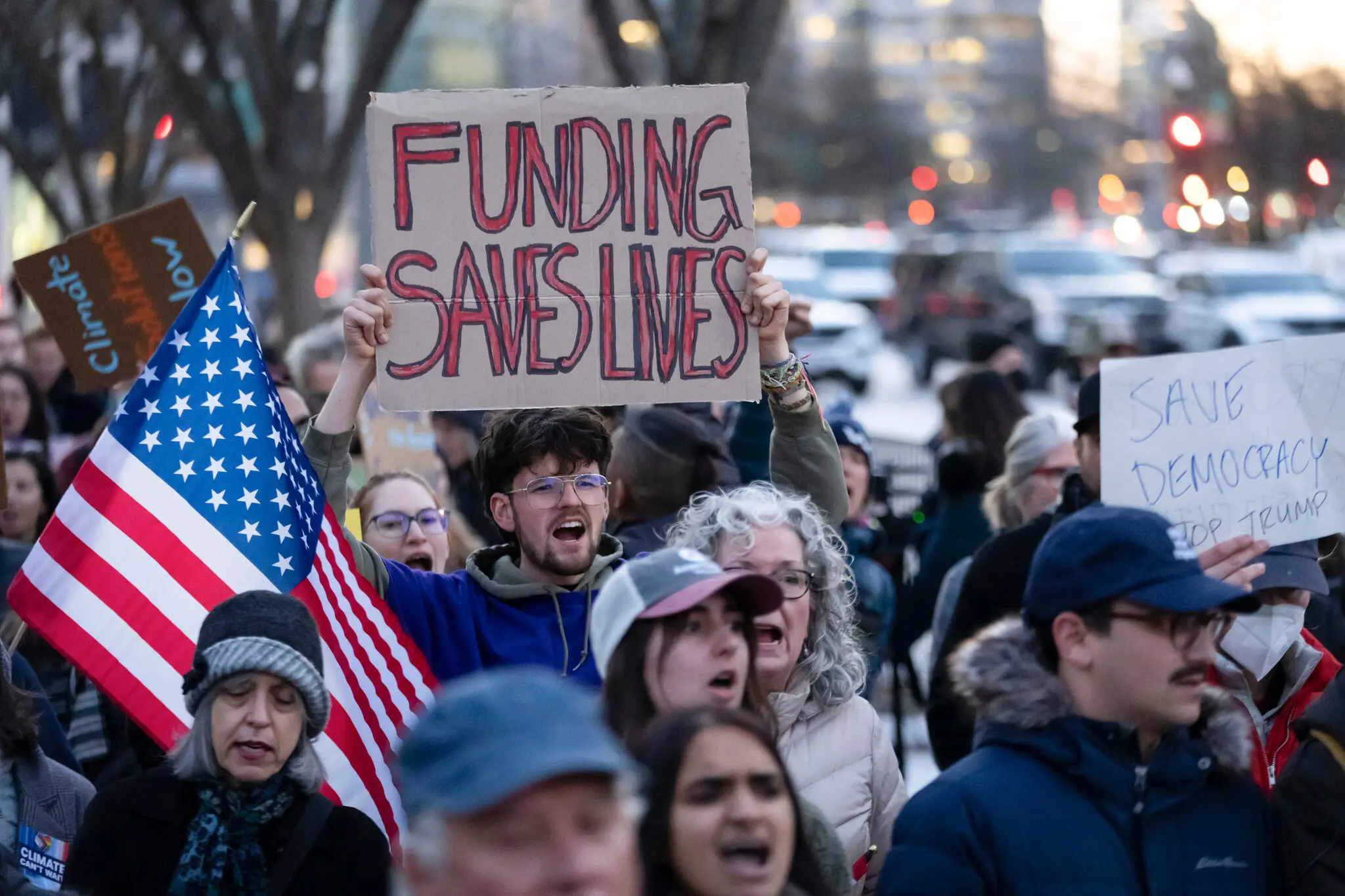
By the time the votes are counted in November 2026, American democracy may have survived its most dangerous season — not because the election was stolen, but because so many people were already certain it would be.
The numbers arriving this spring tell a story that, on its surface, should reassure anyone who loves democratic governance. RaceToTheWH’s latest model, updated in late April 2026, places Democrats’ odds of retaking the House majority at 78.2% — a figure that has risen sharply in recent weeks as strong fundraising data and Virginia’s mid-decade redistricting shifted multiple seats from Republican to Democratic columns. At Polymarket and Kalshi, the prediction markets now favor a Democratic Senate takeover 55% to 45%, a scenario almost nobody credited a year ago when Republicans held a 53-seat advantage. President Trump’s job approval, per an April 2026 Strength In Numbers/Verasight poll, has sunk to a dismal 35%, with a net rating of -26 — his worst reading yet, dragged down by a stunning -46 net approval on prices and inflation. Democrats lead the generic congressional ballot by seven points, 50% to 43%.
A democratic optimist might look at these figures and exhale. The guardrails are holding. The voters are speaking. The system is working.
But the system is also being quietly dismantled — not in the dramatic fashion of jackbooted paramilitaries seizing polling stations, but in the slow, grinding, almost bureaucratic fashion of institutional corrosion. The real threat to American democracy in 2026 is not electoral theft. It is electoral vandalism: the systematic degradation of public faith in the very processes that make democratic outcomes legitimate. And that form of destruction, unlike the brazen variety, leaves no smoking gun, no crime scene, and no obvious remedy.
The Distinction That Matters: Theft vs. Vandalism
Democratic theorists have long focused on the mechanics of election fraud — ballot stuffing, voter roll manipulation, machine tampering — as the primary vulnerability of electoral systems. This framing, while not without merit, misses a more insidious threat that operates upstream of the vote count itself. A stolen election requires a conspiracy of sufficient scale and audacity to produce a false result. Electoral vandalism requires only the persistent, credible-sounding assertion that the result — whatever it is — cannot be trusted.
The distinction matters enormously. Theft is a discrete event, subject to investigation, reversal, and accountability. Vandalism to institutional trust is cumulative, self-reinforcing, and notoriously difficult to repair. Sociologists who study institutional legitimacy note that trust, once comprehensively fractured, does not reconstitute simply because subsequent events prove the original fears groundless. A population conditioned to expect fraud will tend to interpret clean results as evidence of successful concealment rather than genuine fairness. This is the epistemic trap into which American politics has been steadily falling since at least 2020 — and arguably since 2000.
The mechanisms of modern electoral vandalism are less exotic than they sound. They include: the appointment of election-skeptical officials to positions with certification authority; the removal of nonpartisan federal infrastructure that election administrators rely upon; the normalization of pre-emptive result challenges before a single ballot is cast; and the weaponization of legal processes to cast doubt on legitimate electoral procedures. None of these, individually, steals an election. Together, they erode the shared epistemic foundation without which no election result, however fairly obtained, can function as a genuine democratic mandate.
What the Data Actually Shows — and What It Conceals
The polling landscape for 2026 is, by any conventional measure, catastrophic for Republicans. An April 13 Economist-YouGov survey found Trump’s overall job approval at 38%, with 86% of self-identified Republicans still backing him — a figure that illustrates both the depth of his base’s loyalty and the ceiling it imposes on his party’s midterm prospects. The Cook Political Report and Sabato’s Crystal Ball, following Virginia’s April 21 redistricting earthquake, have moved a remarkable string of formerly safe Republican seats into competitive or Democratic-leaning territory.
Forecasters at 270toWin tracking Kalshi’s prediction market odds paint a map increasingly favorable to Democratic control. The economic fundamentals reinforce the picture: the Federal Reserve Bank of St. Louis projects real GDP growth of roughly 1.8% for 2026, a sluggish figure that historical modeling suggests would cost the incumbent party significant House seats. Democrats need to flip just three seats for a House majority — a threshold that, given the structural headwinds, now appears well within reach even before the Virginia gerrymander’s full effects are tallied.
And yet beneath this encouraging topography lies a profoundly unsettling substructure of civic distrust. Gallup’s 2024 survey data recorded a record 56-percentage-point partisan gap in confidence that votes would be accurately cast and counted — with 84% of Democrats expressing faith in the process against just 28% of Republicans. That 28% figure represents the endpoint of a long decline: as recently as 2016, a majority of Republicans trusted the vote count. The percentage of all Americans saying they are “not at all confident” in election accuracy has climbed from 6% in 2004 to 19% today. These are not rounding errors. They are the statistical signature of a legitimacy crisis in slow motion.
The 2024 election produced a partial — and telling — correction in these numbers. Per Pew Research, 88% of voters said the 2024 elections were run and administered at least somewhat well, up from 59% in 2020. Trump voters’ confidence in mail-in ballot counts surged from 19% to 72%. But this recovery was almost entirely contingent on the outcome: Trump’s voters trusted the system because their candidate won. Harris’s voters, having lost, expressed somewhat lower confidence than Biden voters had in 2020. The lesson is stark and should alarm anyone who considers themselves a democratic institutionalist: American confidence in elections has become less a measure of electoral integrity than a barometer of partisan outcomes. The process is trusted when your side wins. This is not democracy’s foundation — it is its corrosion.
The Infrastructure of Doubt: Guardrails Removed, Officials Threatened
The structural assault on election integrity infrastructure has been methodical. The Brennan Center for Justice, which has tracked federal election security architecture across administrations, documented in 2025 how the Trump administration froze all Cybersecurity and Infrastructure Security Agency (CISA) election security activities pending an internal review — then declined to release the review’s findings publicly. Funding was terminated for the Elections Infrastructure Information Sharing and Analysis Center, a network that provided low- or no-cost cybersecurity tools to election offices nationwide. CISA had, before these cuts, conducted over 700 cybersecurity assessments for local election jurisdictions in 2023 and 2024 alone.
The administration also targeted Christopher Krebs, whom Trump himself had appointed to lead CISA in 2018, for the offense of declaring the 2020 election “the most secure in American history.” A presidential memorandum directed the Department of Justice to “review” Krebs’s conduct and revoked his security clearances — establishing, with unmistakable clarity, the message that officials who defend electoral outcomes against political pressure do so at personal and professional peril.
The Brennan Center’s 2026 survey of local election officials found that 32% reported being threatened, harassed, or abused — and 74% expressed concern about the spread of false information making their jobs more difficult or dangerous. Eighty percent said their annual budgets need to grow to meet election administration and security needs over the next five years. Overall satisfaction with federal support dropped from 53% in 2024 to 45% in 2026. The Arizona Secretary of State articulated what many officials feel: without federal assistance, election administrators are “effectively flying blind.”
These developments matter not primarily because they create opportunities for technical fraud — the decentralized nature of American election administration makes large-scale technical manipulation extraordinarily difficult — but because they generate precisely the appearance of vulnerability that vandals require. The narrative writes itself: reduced federal oversight, intimidated local officials, terminated information-sharing networks. For the portion of the electorate already primed toward suspicion, each cut to election infrastructure becomes further evidence of a rigged system.
The Roots of Distrust: A Bipartisan Inheritance
Intellectual honesty demands an acknowledgment that distrust in American elections is not a purely Republican pathology, manufactured ex nihilo after 2020. The erosion of confidence has bipartisan antecedents that predate the current moment.
The contested 2000 presidential election left lasting scars on Democratic confidence. In 2004, Democratic skepticism about electronic voting machines — particularly in Ohio — produced claims that have since been largely debunked but that at the time circulated widely among mainstream progressive voices. Democratic politicians regularly raised doubts about the integrity of Georgia’s 2018 gubernatorial election, Stacey Abrams’s loss becoming a cause célèbre in ways that, without endorsing either narrative, mirror the structural form of the claims made after 2020. The language of “voter suppression,” while describing genuine and documented policy choices, sometimes bleeds into a broader implication that any election producing an adverse result for marginalized communities is, by definition, illegitimate.
These are not equivalent to the specific and demonstrably false claims made about the 2020 presidential election, which were litigated in over sixty courts and rejected by Republican-appointed judges across multiple states. But they are relevant context. A political culture in which both parties maintain reserves of result-contingent skepticism is one in which no outcome can serve as a genuine social contract. The asymmetry matters — the scale and institutional reach of post-2020 denialism dwarfs its predecessors — but the underlying cultural permissiveness toward convenient distrust is a shared creation.
Pew Research data on institutional trust tells an even longer story. In 1958, 73% of Americans trusted the federal government to do the right thing almost always or most of the time. By the early 1980s, following Vietnam and Watergate, that figure had collapsed to roughly 25%. It has never sustainably recovered. Trust in government now functions almost entirely as a partisan instrument: Democrats’ trust in the federal government is currently at an all-time low of 9%, while Republicans’ stands at 26% — the inversion of figures from the Biden years, when Republicans registered 11% and Democrats 35%. As Gallup has documented, the party in power trusts the government; the party out of power doesn’t. In such an environment, elections cannot function as legitimating events — they simply determine which half of the country feels temporarily reassured.
Why November 2026’s Likely Democratic Wave May Make Things Worse
Here is the uncomfortable paradox at the heart of this analysis: a large Democratic electoral victory in November 2026 — the outcome that most models currently favor — may actually deepen the legitimacy crisis rather than resolve it.
Consider the dynamics. If Democrats retake the House and, against the Senate map’s structural disadvantages, claim the upper chamber as well, a significant portion of the Republican base — primed by years of election-denial messaging, deprived of the institutional confidence-building infrastructure that CISA once provided, and consuming media ecosystems that frame any adverse result as fraudulent — will simply not accept the outcome as legitimate. This is not speculation; it is extrapolation from documented patterns. Research from States United Democracy Center found that decreased voter confidence in elections may have reduced 2024 turnout by as many as 4.7 to 5.7 million votes. A dynamic in which significant numbers of Americans opt out of a process they consider fraudulent compounds, over time, into a self-fulfilling delegitimation.
The international context amplifies the concern. Students of democratic backsliding in Hungary, Poland, Turkey, and Brazil will recognize the pattern: the erosion of electoral legitimacy rarely begins with outright fraud. It begins with the cultivation of a narrative in which elections are inherently suspect — a narrative that prepares the ground for extraordinary measures should any specific result prove inconvenient. Viktor Orbán did not simply steal Hungarian elections; he spent years constructing a legal and media architecture in which the definition of a “fair” election was progressively redefined to mean one his party won. The United States is not Hungary. Its federalism, its independent judiciary, its civil society infrastructure, and its free press represent formidable structural defenses. But those defenses are not self-sustaining. They require a citizenry that grants them legitimacy — and that citizenry is fracturing.
Internationally, American credibility as a democratic exemplar has already taken grievous damage. The State Department’s annual democracy reports — instruments of soft power that Washington has deployed for decades — ring increasingly hollow when allies and adversaries alike can point to polling data showing that a quarter of Americans have “not at all” confidence in their own vote count. The soft power cost is not theoretical; it is evidenced in the enthusiasm with which authoritarian governments, from Moscow to Beijing, have amplified American electoral distrust as a propaganda instrument.
What Repair Would Actually Require
There is no single policy remedy for a crisis that is as much cultural and epistemological as institutional. But several interventions suggest themselves with particular urgency.
Restore and insulate federal election security infrastructure. The gutting of CISA’s election security function is the most obviously reversible damage. A bipartisan statutory framework — moving election security support out of executive branch discretion and into a structure analogous to the Federal Election Commission’s nominal independence — would provide some insulation against future administrations weaponizing or defunding these functions. The appetite for such legislation is currently thin, but the architecture of the argument exists.
Establish a national election integrity commission with genuine bipartisan credibility. Not the performative exercises in partisan recrimination that have characterized previous “election integrity” initiatives, but a body modeled on the Carter-Baker Commission of 2005 — imperfect as that effort was — with subpoena authority, public reporting mandates, and a mandate to address both voter access and vote security concerns without treating them as inherently antagonistic. The Brookings Institution and the Bipartisan Policy Center have produced serious policy frameworks in this space that deserve legislative attention.
Elevate and protect local election officials. The Brennan Center’s surveys make clear that the front line of American democracy is populated by underfunded, understaffed, increasingly threatened county clerks and registrars whose anonymity and vulnerability make them ideal targets for political pressure. Federal hate crime protections for election workers, increased HAVA funding, and state-level salary parity reforms would all help retain the experienced professionals on whom procedural legitimacy ultimately depends.
Cultivate cross-partisan electoral norms. Political leaders — on both sides — who campaign on the implicit or explicit premise that any adverse result is fraudulent should be called to account by peers, donors, and media with a seriousness that has been largely absent. This is not a call for false equivalence. The scale and institutional embedding of post-2020 denialism is without precedent in the modern era. But the underlying cultural norm — that elections are legitimate only when your side wins — will not be defeated by partisan argument alone. It requires leaders within each coalition who are willing to pay a political cost for defending process over outcome.
The Verdict History Will Write
November 2026 will almost certainly produce a significant Democratic electoral advance. The forecasting models are, by this point, less predictions than diagnoses of structural forces that would require a dramatic, unforeseen intervention to reverse. A Democratic House, and possibly a Democratic Senate, will be the likely result of a president’s second-term unpopularity compounded by economic anxiety, tariff-driven inflation, and the accumulated weight of policy decisions that polling suggests a majority of Americans oppose.
But history will not remember 2026 primarily as the midterm that broke Republican legislative power. It will remember it as the moment when the long-accumulating deficit of electoral legitimacy finally became impossible for reasonable observers to ignore — when the data on trust, participation, and institutional confidence converged into a portrait not of a system functioning under stress, but of a system whose foundational assumptions were in active decomposition.
Democracy, the political theorist Robert Dahl observed, requires not just free and fair elections, but the shared belief that elections are free and fair. One without the other is theater — elaborate, expensive, and increasingly unconvincing theater. The United States is not yet at the endpoint of that degradation. But it is measurably, documentably, closer than it was. And the distance to recovery, which seemed manageable in 2021, grows harder to traverse with each passing cycle in which the vandals — from whatever direction they come — are permitted to work undisturbed.
The votes will be counted in November. The question that should occupy serious people between now and then is not who will win, but whether enough Americans will believe the answer to make winning mean anything at all.
Frequently Asked Questions
What is “electoral vandalism” and how is it different from election fraud? Electoral vandalism refers to the systematic erosion of public faith in elections through disinformation, institutional dismantling, and political intimidation — without necessarily changing any vote tallies. Unlike outright fraud, which involves altering results, vandalism attacks the legitimacy of the process itself, making citizens doubt outcomes regardless of their accuracy.
What do the latest polls show about the 2026 midterms? As of April 2026, Democrats lead the generic congressional ballot by approximately 7 points. Forecasting models put Democratic odds of retaking the House at roughly 78%, while prediction markets give Democrats a 55% chance of reclaiming the Senate — an outcome that would have seemed implausible just one year ago.
Why is trust in U.S. elections so low? Gallup recorded a record 56-point partisan gap in election confidence in 2024, with only 28% of Republicans expressing confidence in vote accuracy before the election. Post-2024, confidence rebounded sharply — but primarily among Trump voters after he won, suggesting confidence tracks outcomes rather than genuine process faith.
What happened to federal election security infrastructure? The Trump administration froze CISA’s election security activities in early 2025 and terminated funding for key information-sharing networks. According to the Brennan Center, 32% of local election officials have been threatened, harassed, or abused, and 80% say their budgets are insufficient for the security needs they face.
What would genuine election integrity reform look like? Effective reform would require restoring nonpartisan federal cybersecurity support for election offices, establishing a bipartisan election integrity commission with real authority, protecting local election workers through federal law, and — most critically — rebuilding a cross-partisan norm in which process legitimacy is not contingent on outcome.
Discover more from The Economy
Subscribe to get the latest posts sent to your email.



Key Takeaways
- Rolex’s secondary market rose approximately 7.9% year-over-year as of 2026 (per WatchCharts data) — trailing Patek Philippe (+16.2%) and Tudor (+11.4%) but still outperforming Audemars Piguet (+3.4%).
- Rolex raised U.S. retail prices 4–9% in January 2026 (steel models ~5.6%, gold models ~8.7%), narrowing the historical gap between retail and pre-owned pricing.
- Not every model appreciates: steel sports references (Submariner, GMT-Master II, Daytona) have held value far better than two-tone or widely available dress references like the standard Datejust.
- The Lady-Datejust posted the sharpest 2026 gain among tracked collections — up 22.73%, from roughly $9,269 to $11,376 — driven by demand for smaller, “everyday luxury” watches.
- Gold’s rise past $2,400/oz has directly lifted the investment case for Rolex’s precious-metal references (Day-Date, Sky-Dweller, Yacht-Master).
The Model-by-Model Picture
| Category | 2026 Trend |
|---|---|
| Lady-Datejust | +22.73% (strongest performer among tracked collections) |
| Steel sports models (Submariner, GMT-Master II) | Held value well; corrected from 2022 peak but stabilized above retail |
| Daytona | Corrected from highs above $50,000 to the mid-$30,000s; still among the most sought-after references |
| Two-tone/widely available Datejust | Flat to negative — “holds value” is an overstatement for this category |
| Gold references (Day-Date, Sky-Dweller) | Lifted by gold’s rise above $2,400/oz |
Why the “Rolex Always Appreciates” Myth Is Fading
The pandemic-era boom pushed some references — the Daytona above all — to speculative highs disconnected from historical norms. Since the March 2022 peak, steel sports models have compressed meaningfully, and dealers who bought inventory near the top have in some cases faced 20–40% markdowns on liquidation. The lesson for 2026 buyers: Rolex as a category is not a monolith. Value retention depends heavily on specific reference, condition, and whether the piece comes with box and papers (“full set”).
What’s Actually Driving 2026 Strength
- Retail price increases raise the floor. When a new Submariner retails at $10,050 (up from $9,500), a pre-owned example at $11,000–$12,000 suddenly represents a smaller premium — narrowing the gap without secondary prices actually moving.
- Supply discipline remains Rolex’s core lever. The brand has never confirmed production numbers, and secondary-market premiums remain entirely a function of Rolex’s own manufacturing decisions — a risk factor as much as a support.
- Certified Pre-Owned rollout. Rolex’s now fully rolled-out CPO program has changed how buyers transact in the used market, adding a layer of brand-verified legitimacy that supports pricing.
The Case for Rolex as a Portfolio Diversifier
Financial advisors increasingly frame luxury watches not as a replacement for equities or bonds, but as a tangible, historically low-correlation diversifier — one that carries its own risks (illiquidity, condition-dependent pricing, no yield) but has demonstrated multi-decade resilience for specific references.
Is Rolex a good investment in 2026?
It depends heavily on the specific reference. Steel sports models like the Submariner and Daytona have held or grown in value; two-tone and widely available dress models generally have not. Overall, Rolex’s secondary market rose about 7.9% year-over-year in 2026, trailing Patek Philippe but ahead of Audemars Piguet.
Discover more from The Economy
Subscribe to get the latest posts sent to your email.

Navigating Mortgage and Loan Refinancing in a High-Yield Environment
Global public debt crossing critical thresholds has kept central bank policies volatile, resulting in fluctuating US Treasury yields throughout 2026. For homeowners and commercial property holders burdened by previous high-interest borrowing cycles, finding optimal refinance windows has become a high-stakes financial puzzle. Stalled disinflation and stubborn employment numbers mean rate cuts are incremental, requiring borrowers to act with precision.
Timing your mortgage or commercial loan refinance in this environment requires a deep understanding of yield curve movements and lender risk appetites.
Decoding 2026 Refinance Dynamics
The 10-Year Treasury Yield Benchmark
Mortgage rates continue to track closely with the 10-year US Treasury yield. When macroeconomic anxiety spikes debt issuance, yields rise, tightening consumer borrowing capacity. Savvy borrowers monitor weekly Treasury auctions to lock in rates during brief dip windows.
Hybrid ARMs and Alternative Structures
With fixed rates remaining elevated, 7/1 and 10/1 adjustable-rate mortgages (ARMs) have surged in popularity. These products offer lower initial monthly payments, giving borrowers breathing room until central bank easing cycles fully materialize.
| Loan Product | Current Rate Range | Best For | Key Risk Factor |
| 30-Year Fixed Mortgage | 6.2% – 6.8% | Long-term predictability | Higher initial monthly outlay |
| 7/1 Hybrid ARM | 5.5% – 5.9% | Short-term ownership / flipping | Rate reset risk after year 7 |
| Commercial Refinance | 7.0% – 8.2% | Corporate asset restructuring | Strict DSCR lender covenants |
Actionable Steps for Successful Refinancing
To maximize your chances of securing favorable refinance terms in a volatile market, follow a disciplined preparation strategy.
Boost Your Credit Score Immediately: Lenders in 2026 are applying stringent credit tiering; a 20-point increase can drop your APR by a crucial quarter-point.
Shop Regional Credit Unions: Smaller financial institutions often offer portfolio loans with more flexible underwriting than major national banks.
Calculate the Break-Even Point: Ensure your total closing costs are recouped through monthly savings within 24 months of closing.
“Market Strategist View: Refinancing in 2026 is an exercise in opportunistic timing. Borrowers must maintain immaculate financial profiles ready to strike the moment Treasury yields dip.”
Mastering the complexities of today’s debt environment ensures you can successfully lower your debt service costs and protect your long-term financial stability.
Discover more from The Economy
Subscribe to get the latest posts sent to your email.

The days of pulling generic auto insurance quotes based purely on your zip code and age are officially over. In 2026, insurance comparison engines are powered entirely by generative AI and real-time telematics. These platforms digest thousands of live data points—ranging from your driving smoothness via connected vehicle sensors to real-time traffic congestion patterns—to generate hyper-personalized premiums instantly.
For consumers, this evolution represents both a massive opportunity for savings and a hidden trap for penalty pricing. Understanding how AI algorithms evaluate risk is essential for anyone looking to lower their monthly auto insurance premiums.
How AI Comparison Engines Evaluate Your Risk Profile
Behavioral Telematics and Connected Cars
Modern cars stream performance data directly to insurance aggregators. Generative AI models analyze braking sharpness, acceleration curves, cornering G-forces, and phone distraction metrics. Drivers who maintain smooth, defensive habits are rewarded with dynamic rate cuts of up to 40% compared to traditional rating tiers.
Predictive Traffic and Weather Modeling
AI tools now cross-reference your daily commute route with predictive weather and accident probability models. If your standard parking location or driving corridor has a statistically higher incidence of uninsured motorist claims, your quotes will reflect that hyper-local risk assessment.
| Comparison Factor | Traditional Rating Model | 2026 Generative AI Model | Impact on Premium |
| Mileage & Usage | Annual estimated odometer reading | GPS tracking & live trip duration | High (up to 35% savings) |
| Driving Behavior | MVR driving record & accidents | Real-time braking, speed, & G-force | Critical (determines tier) |
| Vehicle Tech | Make, model, and safety rating | ADAS calibration & repair cost data | Moderate |
Strategies to Lower Your AI-Driven Insurance Quote
To outsmart the algorithm and secure the lowest possible premium in 2026, drivers must proactively manage their digital footprint on insurance platforms.
Opt-In for Telematics Trial Periods: Many insurers offer immediate 15% discounts just for installing their driving app; let it track safe habits for 30 days to lock in permanent savings.
Scrub Unverified Public Records: Ensure your motor vehicle report is free of clerical errors that AI risk models misinterpret as reckless behavior.
Compare AI Aggregators: Use platforms that integrate multi-carrier API feeds rather than single-brand comparison sites to find the best risk-adjusted rate.
“Industry Note: AI-driven pricing rewards transparency and precision. Drivers who actively manage their telematics data consistently out-save those relying on legacy quote calculators.”
Embracing AI comparison tools allows savvy policyholders to customize coverage limits precisely to their driving habits, eliminating wasted premium spend while ensuring robust protection.
Discover more from The Economy
Subscribe to get the latest posts sent to your email.

Neocloud Economics in 2026: GPU Debt, Utilization and Power

What Is a Neocloud? How AI GPU Clouds Work and Compare

Lula Re-elected in 2026: What Changes for the Dollar, Brazilian Stocks, and Interest Rates?

Lula Wins Brazil’s 2026 Election: Five Economic Tests for 2027

SSI November 2026 Payment: Why Benefits Arrive October 30

Russia Sanctions Waiver: What Asian Oil Buyers Gain

Asia Markets Weekly: How Oil, US Yields and the Fed Reach Tokyo, Kuala Lumpur and Karachi

Gold Near $4,000: Buy, Hold or Wait? A Pakistan Tola Price Guide

US 10-Year Treasury Yield Near 5%: The Hidden Cost for Pakistani Investors

Fed Meeting on October 28: Hike or Hold—and Why Pakistan Investors Should Care

Can Pakistan Turn US–Iran Mediation Into an Economic Dividend?

Oil Above $100: How Higher Crude Prices Reach Pakistan’s Rupee, Petrol and Imports

SBP Interest Rate at 11.5%: What Will Decide Pakistan’s Next Policy Move?

The Global South: Debt, Climate Finance and Investment in 2026

Crude Oil & Petroleum Market Analysis: OPEC+ Decisions and Price Forecasts

Top US Convenience Store Chains: Store Counts, EV Charging, and Sales Trends

Algorithmic Dogfights: Why the U.S. and China Must Establish Rules of Engagement for Autonomous Air Power

Who Is Shivon Zilis? The Neuralink Executive at the Center of the Musk–OpenAI Trial

Social Security Extra $90 Deposit: Who Qualifies for the October 2026 Medicare Rebate?

Corporate America Faces a New Debt Test as US Borrowing Costs Surge

Global Economic Outlook 2026: 7 Forces Reshaping Markets, Trade and Business

Gold Price Outlook 2026: The Forces Behind the Forecasts—and What Could Reverse Them

Gold Falls 3.7% as Yields Surge: Is Gold Still a Safe Haven in 2026?

Stock Market Today: Dow, S&P 500, and Nasdaq Retreat as Treasury Yields

MAS Allocates S$1.45 Billion to Five Asset Managers in Third EQDP Batch: Total Deployment Reaches S$5.4 Billion

Anthropic Bans Sustained Abuse of Claude AI Under New Usage Policy Effective November 12, 2026

Geopolitics and Your Portfolio: How International Affairs Move Global Markets

US 10-Year Yield Hits 5.24%: What the Historic Bond Market Sell off Means for Mortgages and Investors
-

 Markets & Finance10 months ago
Top 15 Stocks for Investment in 2026 in PSX: Your Complete Guide to Pakistan’s Best Investment Opportunities
-

 Analysis8 months ago
Johor’s Investment Boom: The Hidden Costs Behind Malaysia’s Most Ambitious Economic Surge
-

 Analysis8 months ago
Top 10 Stocks for Investment in PSX for Quick Returns in 2026
-

 Banks9 months ago
Best Investments in Pakistan 2026: Top 10 Low-Price Shares and Long-Term Picks for the PSX
-

 Analysis9 months ago
Brazil’s Rare Earth Race: US, EU, and China Compete for Critical Minerals as Tensions Rise
-

 Investment10 months ago
Top 10 Mutual Fund Managers in Pakistan for Investment in 2026: A Comprehensive Guide for Optimal Returns
-

 Global Economy10 months ago
15 Most Lucrative Sectors for Investment in Pakistan: A 2025 Data-Driven Analysis
-

 Global Economy10 months ago
Pakistan’s Export Goldmine: 10 Game-Changing Markets Where Pakistani Businesses Are Winning Big in 2025