
Economic Costs of Wars
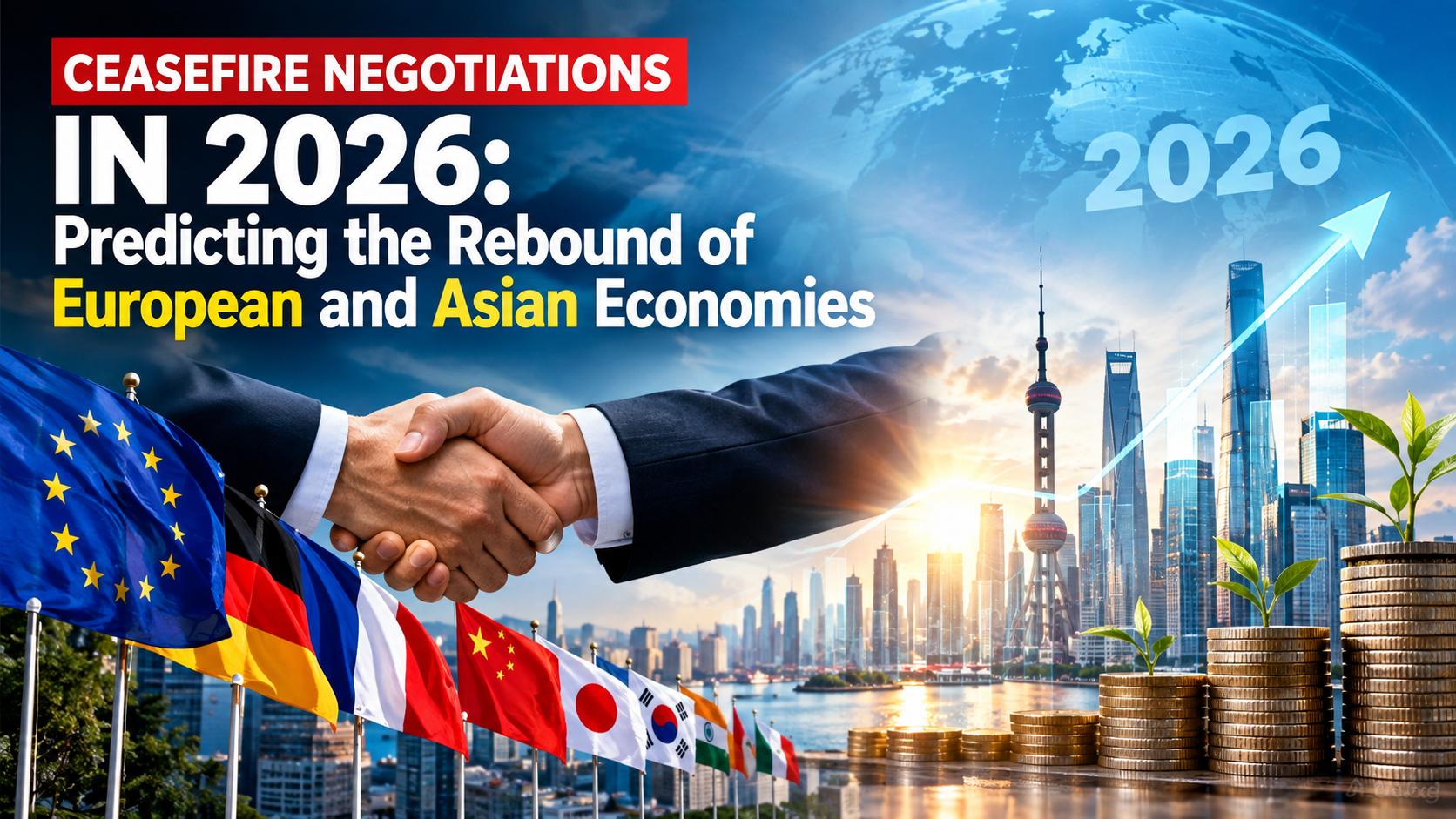
Ceasefire Negotiations in 2026: Predicting the Rebound of European and Asian Economies

Key Takeaways
- The European Commission has already cut its 2026 eurozone growth forecast to 0.9% (from 1.2%) and raised inflation projections to 3.0%, directly citing the Middle East war’s energy shock — with a full rebound contingent on how quickly, and how durably, any ceasefire holds.
- The ECB has laid out an explicit scenario split: its June 2026 baseline assumes gradual de-escalation and sees growth reaching 1.3% in 2027, while an adverse scenario with oil peaking near $180/barrel would roughly halve projected 2026 growth and push inflation 1.1 percentage points higher in 2027.
- Historical ceasefire episodes from earlier in 2026 show Asian markets — Japan’s Nikkei, South Korea’s Kospi — rallying 5%+ in single sessions on de-escalation headlines, only to reverse sharply when agreements broke down within days to weeks.
- As of mid-September 2026, no ceasefire is currently in place — the conflict has escalated rather than eased this month — meaning both the EU’s baseline and adverse scenarios remain live possibilities rather than settled outcomes.
- The World Bank’s April 2026 regional outlook shows the MENAAP region absorbing the sharpest growth downgrade of any global region, while South Asia remains comparatively resilient — illustrating how unevenly any eventual rebound would likely be distributed.
Every economic forecasting body tracking the global economy in 2026 — the European Commission, the ECB, the World Bank — has built its projections around the same fundamental uncertainty: nobody knows exactly when, or how durably, the US-Iran war will end. This piece works through what the major institutions’ own published scenarios say about how European and Asian economies would actually rebound once a ceasefire holds, and how sharply those forecasts diverge from what’s likely if the conflict instead drags on.
Europe’s Baseline vs. Adverse Scenario
The European Commission’s most recent forecast, published in May 2026, cut its eurozone 2026 growth projection to 0.9%, down from an earlier 1.2% estimate, while raising expected inflation to 3.0% — well above the ECB’s 2% target. EU economy chief Valdis Dombrovskis attributed the downgrade directly to the Middle East conflict, which he said “triggered a major energy shock, further testing Europe as it navigates an already volatile geopolitical and trade environment.”
Critically, the Commission built its forecast around two explicit scenarios. The baseline assumes energy prices gradually normalize as the conflict eases — even accounting for a “fragile ceasefire” that was in place at the time of the forecast’s cutoff date (though the Strait of Hormuz remained effectively closed even under that truce). The adverse scenario assumes oil prices continue climbing toward $180 per barrel by year-end; under that path, the Commission estimated inflation would run 0.3 percentage points higher in 2026 and a full 1.1 percentage points higher in 2027, while growth would come in at roughly half the baseline forecast.
The ECB has published its own parallel scenario work. Its June 2026 projections put baseline euro-area growth at 0.9% in 2026, improving to 1.3% in 2027 and 1.4% in 2028 — a “downward revision, especially for 2026,” reflecting what the ECB explicitly called “the global effects of the war on commodity markets, real incomes and confidence.” By September, more recent ECB commentary noted the euro area economy was proving “more resilient than expected” to the shock, supported by domestic demand, a robust labour market, and AI-related investment — suggesting some of the earlier worst-case assumptions may not be fully materializing, even without a durable ceasefire yet in place.
Asia’s Pattern: Sharp Rallies, Sharper Reversals
Asian equity markets have shown a far more volatile, headline-driven relationship with ceasefire news than Europe’s more gradual, forecast-revision-based response. When the US and Iran announced a framework agreement to end hostilities in June 2026, Japan’s Nikkei 225 surged 5.5% in a single morning session, South Korea’s Kospi jumped as much as 5.7%, and Taiwan’s Taiex climbed 2.7%. A separate ceasefire announcement in April 2026 produced a similar pattern: the Nasdaq 100 rose nearly 3% while Japan and Korea posted comparable Asia-Pacific gains.
In both cases, the rallies proved short-lived. The April ceasefire unraveled within roughly two weeks amid mutual accusations of violations, and by early September 2026, fighting had resumed in earnest, with oil prices climbing back above $107 per barrel and diesel approaching a record $6 per gallon in the US. This pattern — sharp, headline-driven Asian equity rallies followed by reversal once agreements prove unstable — has now repeated at least three times in 2026, a track record worth weighing heavily against any future ceasefire headline.
Scenario Comparison Table
| Scenario | Eurozone 2026 Growth | Eurozone Inflation | Asian Equity Pattern |
|---|---|---|---|
| EU baseline (gradual de-escalation) | 0.9% | 3.0% | Gradual stabilization |
| EU adverse (oil to $180/bbl, prolonged conflict) | ~0.4-0.5% (roughly half baseline) | +1.1pp above baseline by 2027 | Continued volatility, no durable rally |
| Historical pattern: ceasefire announcement | N/A (US/Euro-specific) | N/A | Nikkei/Kospi +5%+ single session |
| Historical pattern: ceasefire collapse | N/A | N/A | Reversal within 1-3 weeks |
The Uneven Regional Picture
Not every region would rebound equally even in the optimistic baseline scenario. The World Bank’s April 2026 regional economic update found that, excluding Iran itself, the broader MENAAP region’s growth is expected to slow from 4.0% in 2025 to just 1.8% in 2026 — the sharpest downgrade of any region the Bank tracks. By contrast, the Bank’s July 2026 Global Economic Prospects report identifies South Asia as remaining the fastest-growing region globally despite the conflict, with the Bank explicitly noting that regional impacts differ based on each economy’s energy exposure, strategic reserves, and available policy buffers — meaning net energy importers without deep reserves face a structurally slower rebound path than better-insulated economies even after any ceasefire takes hold.
Why This Matters: Treat Ceasefire Headlines as Scenario Triggers, Not Resolutions
For investors and businesses trying to plan around the global economy’s trajectory, the most useful framework isn’t predicting exactly when a ceasefire arrives — it’s understanding which of the major institutions’ published scenarios that ceasefire would activate. A durable, Hormuz-reopening ceasefire would plausibly validate the EU Commission and ECB’s baseline growth and inflation paths, alongside a genuine (rather than headline-driven) Asian equity rebound. A fragile, easily-reversed truce — the pattern seen three times already in 2026 — would instead simply reset the clock on the adverse scenario, with markets likely repeating the same rally-then-reversal cycle that has defined 2026 so far. Given that no ceasefire is currently in place as of mid-September, and given the specific track record of the last three attempts, the adverse-scenario framework remains the more probable near-term base case.
Frequently Asked Questions
How would a Middle East ceasefire affect European economic growth?
Under the European Commission’s baseline scenario, a durable de-escalation would support eurozone growth around 0.9% in 2026, improving further in 2027. A prolonged conflict instead risks roughly halving that growth figure, per the Commission’s own adverse scenario.
Do Asian stock markets typically rally on ceasefire news?
Yes, historically sharply — Japan’s Nikkei and South Korea’s Kospi have both surged 5%+ in single sessions following prior 2026 ceasefire announcements, but those rallies have reversed within one to three weeks each time the agreements subsequently broke down.
Which regions would benefit most from a durable ceasefire?
The World Bank identifies the MENAAP region (Middle East, North Africa, Afghanistan, Pakistan) as having absorbed the sharpest 2026 growth downgrade, meaning it stands to see the largest relative rebound from a durable ceasefire, while South Asia has remained comparatively resilient throughout the conflict.
Discover more from The Economy
Subscribe to get the latest posts sent to your email.


Economic Costs of Wars
The Economics of Ceasefire Negotiations: Trade Routes, Commodity Stabilization

Ceasefire negotiations are heavily priced into Brent crude benchmarks and maritime insurance premiums. Successful mediation unfreezes shipping chokepoints, reducing ‘war risk’ premiums levied by insurers, lowering freight costs, and easing global consumer inflation, while post-conflict reconstruction offers massive capital expenditure booms.
The current macroeconomic environment is characterized by unprecedented volatility, driven by shifting monetary policies, supply chain recalibrations, and evolving trade barriers. As central banks navigate the delicate balance between curbing inflation and preventing deep recessions, emerging markets face asymmetric risks. Developing economies must rigorously manage their foreign exchange reserves while calibrating import duties and trade frameworks—often leveraging insights from national tariff commissions to protect domestic industries without stifling vital foreign direct investment. This delicate equilibrium directly impacts global liquidity, equity valuations, and sovereign debt yields. The restructuring of global supply chains, initially sparked by geopolitical friction, has now become a structural reality.
Corporations are transitioning from ‘just-in-time’ manufacturing to ‘just-in-case’ inventory management, fundamentally altering capital expenditure cycles. Furthermore, the integration of advanced digital tracking and open-source intelligence is allowing multinational firms to better anticipate supply shocks, although the cost of implementing these technologies creates new barriers to entry for smaller enterprises. Ultimately, the intersection of foreign policy and economic strategy is tighter than ever, with trade tariffs and sanctions acting as primary instruments of geopolitical leverage.
This dynamic fundamentally shifts how stakeholders must approach long-term strategic planning, requiring a pivot away from legacy models toward hyper-adaptive fiscal forecasting.
2. Deep Dive: Market Mechanics and Structural Shifts
Delving deeper into the structural mechanics, we see a profound transformation in how institutional capital evaluates risk. Historically, geographic diversification offered a reliable hedge against localized downturns. Today, however, the rapid transmission of financial shocks across borders—facilitated by highly integrated banking networks and algorithmic trading—means that systemic risk is virtually ubiquitous. Asset managers are heavily scrutinizing cash flow durability, favoring sectors with inelastic demand characteristics. The regulatory environment is also tightening. Heightened scrutiny over data privacy, antitrust concerns in the technology sector, and rigorous ESG (Environmental, Social, and Governance) compliance mandates are forcing companies to overhaul their operational frameworks. These compliance costs are inevitably passed down to the consumer, fueling core inflationary pressures. Concurrently, the labor market is undergoing a structural shift. The automation of routine tasks, coupled with the rising premium on specialized technical and analytical skills, is widening the productivity gap between different segments of the workforce. For policymakers and corporate strategists alike, navigating this landscape requires a nuanced understanding of these intersecting vectors, moving beyond traditional econometric models to incorporate real-time, alternative data sources.
By examining the underlying data, it becomes evident that the market is severely underpricing tail-risks associated with these developments. Institutional capital flows are increasingly prioritizing liquidity and balance sheet resilience over speculative growth.
In parallel, the velocity of money within these specific sub-sectors has decelerated, indicating a hoarding of capital by major corporate players in anticipation of further regulatory or geopolitical turbulence. This behavior creates a feedback loop, exacerbating localized liquidity shortages and widening credit spreads.
3. Regulatory Environment and Trade Implications
Any comprehensive analysis must account for the evolving regulatory perimeter. National trade bodies and tariff commissions are aggressively deploying protectionist measures, utilizing import duties and quotas to shield domestic industries from global dumping practices. These tariff architectures, while politically popular, disrupt established global value chains and introduce massive compliance overhead for multinational operators.
The current macroeconomic environment is characterized by unprecedented volatility, driven by shifting monetary policies, supply chain recalibrations, and evolving trade barriers. As central banks navigate the delicate balance between curbing inflation and preventing deep recessions, emerging markets face asymmetric risks. Developing economies must rigorously manage their foreign exchange reserves while calibrating import duties and trade frameworks—often leveraging insights from national tariff commissions to protect domestic industries without stifling vital foreign direct investment. This delicate equilibrium directly impacts global liquidity, equity valuations, and sovereign debt yields. The restructuring of global supply chains, initially sparked by geopolitical friction, has now become a structural reality. Corporations are transitioning from ‘just-in-time’ manufacturing to ‘just-in-case’ inventory management, fundamentally altering capital expenditure cycles. Furthermore, the integration of advanced digital tracking and open-source intelligence is allowing multinational firms to better anticipate supply shocks, although the cost of implementing these technologies creates new barriers to entry for smaller enterprises. Ultimately, the intersection of foreign policy and economic strategy is tighter than ever, with trade tariffs and sanctions acting as primary instruments of geopolitical leverage.
Consequently, compliance is no longer a localized legal issue but a central pillar of global corporate strategy. Firms that fail to map their supply chain vulnerabilities against shifting tariff schedules risk catastrophic margin compression. The strategic deployment of foreign direct investment is now heavily contingent upon favorable tariff rulings and bilateral trade agreements, making regulatory forecasting as critical as traditional financial modeling.
4. Corporate Strategy & Supply Chain Realities
At the enterprise level, the response to these macroeconomic and regulatory pressures involves massive capital expenditure in supply chain redundancy. The shift toward near-shoring and friend-shoring is accelerating, unwinding decades of globalization focused purely on labor arbitrage. This transition is highly capital intensive, depressing near-term return on invested capital (ROIC) but essential for long-term operational survival.
Delving deeper into the structural mechanics, we see a profound transformation in how institutional capital evaluates risk. Historically, geographic diversification offered a reliable hedge against localized downturns. Today, however, the rapid transmission of financial shocks across borders—facilitated by highly integrated banking networks and algorithmic trading—means that systemic risk is virtually ubiquitous. Asset managers are heavily scrutinizing cash flow durability, favoring sectors with inelastic demand characteristics. The regulatory environment is also tightening. Heightened scrutiny over data privacy, antitrust concerns in the technology sector, and rigorous ESG (Environmental, Social, and Governance) compliance mandates are forcing companies to overhaul their operational frameworks. These compliance costs are inevitably passed down to the consumer, fueling core inflationary pressures. Concurrently, the labor market is undergoing a structural shift. The automation of routine tasks, coupled with the rising premium on specialized technical and analytical skills, is widening the productivity gap between different segments of the workforce. For policymakers and corporate strategists alike, navigating this landscape requires a nuanced understanding of these intersecting vectors, moving beyond traditional econometric models to incorporate real-time, alternative data sources.
Furthermore, the integration of advanced data analytics into procurement and logistics is creating a bifurcation in corporate performance. Companies leveraging real-time telemetry and predictive modeling can dynamically route around bottlenecks, whereas legacy operators remain heavily exposed to single points of failure. This technological divide is rapidly translating into a definitive competitive advantage, reflected in disparate valuation multiples within the same industry cohorts.
5. Digital Monetization & Premium Publisher Strategy
From a digital publishing and monetization perspective, covering these complex macro and technological trends requires a sophisticated architecture. High-CPM and high-CPC yield generation depends on capturing intent-driven traffic. Financial and geopolitical content naturally attracts premium programmatic advertisers. Digital publishers operating robust portfolios are increasingly diversifying their revenue streams beyond standard display ads. By integrating specialized publisher networks, such as Coin.network for crypto and macro-finance adjacencies, or high-intent affiliate ecosystems like Travelpayouts for global transit and aviation content, digital platforms can drastically improve their revenue per thousand impressions (RPM). Furthermore, optimizing site taxonomy and leveraging vector-based assets ensures faster load times, directly boosting Core Web Vitals and search engine rankings. The strategic placement of contextual widgets, combined with deep-dive analytical content, creates a sticky user experience that encourages longer session durations. This architectural approach not only outperforms algorithmic updates but establishes a highly defensible moat against low-effort, AI-generated content farms. For media operators, the transition from basic news aggregation to authoritative, niche intelligence distribution is the key to sustainable digital media economics.
For financial and economic news portals, the path to profitability lies in owning the niche. By consistently delivering high-fidelity analysis that intersects global trade, technology, and market data, publishers attract a highly affluent demographic. This audience profile commands top-tier CPC rates from financial institutions, B2B SaaS providers, and enterprise tech conglomerates.
Strategic integration of programmatic networks requires meticulous attention to ad placement, ensuring that monetization widgets complement rather than disrupt the analytical narrative. The use of sophisticated yield management platforms allows publishers to dynamically allocate inventory between direct sales, private marketplaces, and open exchanges, maximizing revenue yield in real-time. This sophisticated infrastructure is the bedrock of modern digital publishing economics.
6. Future Outlook and Risk Assessment
The current macroeconomic environment is characterized by unprecedented volatility, driven by shifting monetary policies, supply chain recalibrations, and evolving trade barriers. As central banks navigate the delicate balance between curbing inflation and preventing deep recessions, emerging markets face asymmetric risks. Developing economies must rigorously manage their foreign exchange reserves while calibrating import duties and trade frameworks—often leveraging insights from national tariff commissions to protect domestic industries without stifling vital foreign direct investment. This delicate equilibrium directly impacts global liquidity, equity valuations, and sovereign debt yields. The restructuring of global supply chains, initially sparked by geopolitical friction, has now become a structural reality. Corporations are transitioning from ‘just-in-time’ manufacturing to ‘just-in-case’ inventory management, fundamentally altering capital expenditure cycles. Furthermore, the integration of advanced digital tracking and open-source intelligence is allowing multinational firms to better anticipate supply shocks, although the cost of implementing these technologies creates new barriers to entry for smaller enterprises. Ultimately, the intersection of foreign policy and economic strategy is tighter than ever, with trade tariffs and sanctions acting as primary instruments of geopolitical leverage.
Looking forward to the next fiscal cycles, the interplay between technological disruption and macroeconomic stability will intensify. Stakeholders must remain exceptionally agile, deploying advanced forecasting tools and maintaining robust liquidity buffers to weather unexpected systemic shocks. The margin for error in capital allocation has effectively dropped to zero.
In conclusion, the convergence of these factors dictates a complete reimagining of traditional operational and investment playbooks. The victors in this new paradigm will be those who can seamlessly synthesize geopolitical intelligence, deep market data, and advanced digital distribution strategies into a cohesive, actionable framework.
Discover more from The Economy
Subscribe to get the latest posts sent to your email.
Analysis
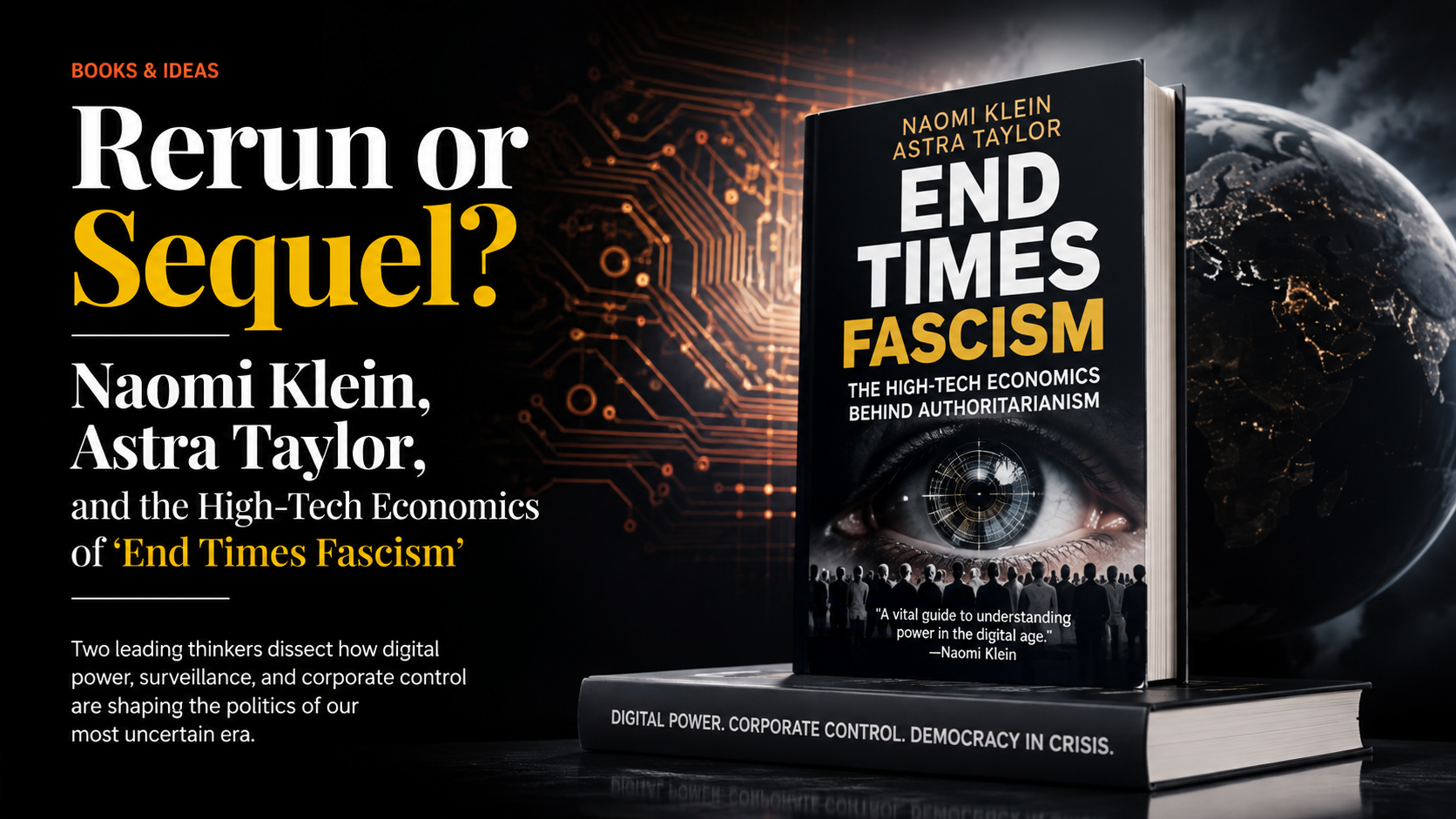
Rerun or Sequel? Naomi Klein, Astra Taylor, and the High-Tech Economics of ‘End Times Fascism’
Across boardrooms, political rallies, and the gated enclaves of Silicon Valley, a powerful narrative is taking hold: ecological collapse, social breakdown, and systemic instability are inevitable. But while the average citizen views this as a crisis to be solved, a new class of ultra-wealthy elites views it as an arbitrage opportunity.
In their searing 2026 book, End Times Fascism and the Fight for the Living World, celebrated authors Naomi Klein and Astra Taylor diagnose a dangerous mutation in global politics. They argue that we are witnessing the rise of an “apocalyptic alliance”—a coalition of religious fundamentalists, ethno-nationalists, and Silicon Valley tech kings. United by the belief that a cleansing cataclysm is approaching, these groups are not trying to prevent the collapse of the biosphere or the social safety net. Instead, they are actively accelerating it, convinced they will be among the saved on the other side.
For investors, policymakers, and technologists, the central question is whether this political shift is simply a “rerun” of 20th-century authoritarianism or a terrifyingly high-tech “sequel.” Understanding the economics behind this movement—from AI deregulation to crypto cities—is crucial for navigating the next decade of geopolitical and financial instability.
The Rerun: Echoes of 20th-Century Disaster Capitalism
At first glance, the mechanics of modern authoritarianism look like a rerun of the 1930s. The political playbook still relies heavily on what Klein previously coined as the “shock doctrine”—the systematic exploitation of crises to consolidate wealth and power.
Whether triggered by a pandemic, soaring inflation, or extreme weather events, public disorientation is consistently used to justify aggressive wealth extraction. In this traditional model of disaster capitalism, the objective is simple: defund the public sector, slash corporate taxes, and channel government subsidies into private equity.
- Market Deregulation: We see the classic hallmarks of 20th-century fascism in the aggressive dismantling of environmental protections and labor rights, designed to maximize short-term corporate profits.
- Scapegoating and Division: The economic anxiety of the working class is redirected toward marginalized groups, a distraction tactic that allows the ultra-wealthy to avoid scrutiny for widening wealth gaps.
- The Merging of State and Corporate Power: Oligarchs increasingly treat the state not as a regulator, but as an enforcement arm for private monopolies.
Yet, to call this movement a mere rerun is to underestimate its technological sophistication. The 20th-century fascist required the state to build a war machine. The 21st-century tech baron wants to render the state obsolete entirely.
The Sequel: AI, Algorithms, and the Silicon Valley Secession
This is where Klein and Taylor’s thesis pivots from a historical critique into a futurist warning. Today’s End Times Fascism is a high-tech sequel driven by algorithms, artificial intelligence, and the Silicon Valley secession movement.
The tech elite are no longer satisfied with lobbying for lower taxes; they are actively seeking to secede from democratic oversight. This is manifesting through the push for “freedom cities,” crypto-fiefdoms, and “seasteading” (building autonomous communities in international waters). These spaces are envisioned as hyper-capitalist havens—gated communities free from democracy, taxes, and regulation, governed entirely by corporate terms of service.
- Regulatory Arbitrage via Crypto: By migrating wealth into decentralized finance (DeFi) and crypto-states, billionaires are insulating their capital from federal taxation and municipal law.
- AI Deregulation: The acceleration of unchecked artificial intelligence serves a dual purpose. First, it acts as a massive wealth-generating engine that replaces human labor. Second, it provides the surveillance and security infrastructure necessary to police these private enclaves without relying on public law enforcement.
- Data Privacy Laws as a Battlefield: As tech monopolies consolidate power, the fight over data privacy becomes a fight for civil liberties. The apocalyptic alliance relies on sweeping data extraction to train AI models that predict, manipulate, and ultimately control public behavior.
This is not the fascism of mass mobilization; it is the fascism of extreme isolation. It is a future where the elite are serviced by AI robots, financed by cryptocurrencies, and protected by private mercenaries.
The Billionaire Bunker Economy: Profiting from the Apocalypse
If the elite believe the end is near, they are investing accordingly. We are currently witnessing the boom of a billionaire bunker real estate market, a hyper-lucrative sector that caters to what Klein and Taylor call “supremacist survivalism”.
This is the ultimate expression of disaster capitalism investing. The most powerful people in the world are preparing for an end they are simultaneously accelerating through carbon emissions and algorithmic polarization.
- High-Net-Worth Real Estate: Developers are transforming abandoned missile silos in Kansas and vast tracts of land in New Zealand into fortified luxury compounds. These properties boast autonomous power grids, hydroponic food systems, and private medical facilities.
- Resource Hoarding: The bunker economy extends beyond real estate into the aggressive monopolization of arable land, fresh water aquifers, and critical minerals required for green energy grids.
- Exclusionary Security: The ideology underlying this economy is inherently violent. These fortressed escape pods are designed to lock out the masses displaced by climate change and economic collapse. It is a belief system that accepts mass casualties as a necessary byproduct of elite survival.
For wealth management firms and private equity, the “apocalypse” has become an asset class. But as Klein and Taylor reveal, these new survivalists are far from impregnable. Their fortresses are entirely dependent on the very supply chains and working-class labor they claim to be independent from.
Breaking the Doom Loop: The Economics of Resistance
End Times Fascism is not a book of despair; it is a blueprint for resistance. If the ultra-wealthy are betting against the future of the planet, the counter-movement must be rooted in what the authors call a “pro-life” politics—one that actually defends the living world.
Fighting this apocalyptic alliance requires shifting capital away from extraction and isolation, and toward collective resilience. The economics of resistance present massive opportunities for forward-thinking investors and communities:
- Sustainable ESG Investing: Despite political backlash from the far-right, genuine Environmental, Social, and Governance (ESG) frameworks remain the most viable tool for directing institutional capital toward climate mitigation rather than climate escape.
- Green Tech & Community-Owned Power: Breaking the monopoly of tech billionaires requires decentralizing power—literally. Investments in community-owned renewable energy grids make local populations resilient to both climate shocks and corporate extortion.
- Reclaiming the Commons: The fight for stringent AI regulation, robust data privacy laws, and anti-trust enforcement is the modern equivalent of the labor movements of the 1930s. It is the necessary friction to stop the Silicon Valley secession.
The fatalism of the tech-bros and the religious fundamentalists is a choice, not an inevitability. The vast majority of humanity does not want to live in a bunker or a managed crypto-fiefdom. They want a livable planet. By exposing the nihilism at the core of the billionaire survivalist fantasy, Klein and Taylor provide the clarity needed to break the doom loop. The future will not be decided by who builds the thickest walls, but by who has the vision to build a world where walls aren’t necessary.
FAQ: Understanding the ‘End Times’ Political Shift
What is “End Times Fascism” according to Naomi Klein?
“End Times Fascism” is a term coined by Naomi Klein and Astra Taylor to describe a modern political alliance of tech billionaires, ethno-nationalists, and religious fundamentalists. Rather than trying to prevent planetary crises like climate change, this group embraces catastrophe, believing they will safely survive the collapse in fortified luxury while the rest of humanity suffers.
How does AI intersect with modern authoritarianism?
In the modern “sequel” to authoritarianism, AI acts as an accelerator for wealth consolidation and surveillance. Tech oligarchs push for AI deregulation to maximize profits and replace human labor, while simultaneously using advanced algorithms to police private enclaves and manipulate democratic discourse without relying on traditional state mechanisms.
What are “freedom cities” and crypto-states?
“Freedom cities” and crypto-states (including concepts like “seasteading”) are privately owned, hyper-capitalist communities proposed by Silicon Valley elites. They are designed to operate outside of government jurisdiction, allowing the ultra-wealthy to avoid federal taxes, bypass democratic regulations, and govern entirely through corporate terms of service and cryptocurrency.
How can individuals resist disaster capitalism?
Individuals can resist disaster capitalism by engaging in collective, “pro-life” politics that defend the living world. Economically, this means supporting sustainable ESG finance, advocating for stringent AI and data privacy regulations, and investing in decentralized, community-owned infrastructure like local renewable energy grids to reduce reliance on tech monopolies.
Discover more from The Economy
Subscribe to get the latest posts sent to your email.
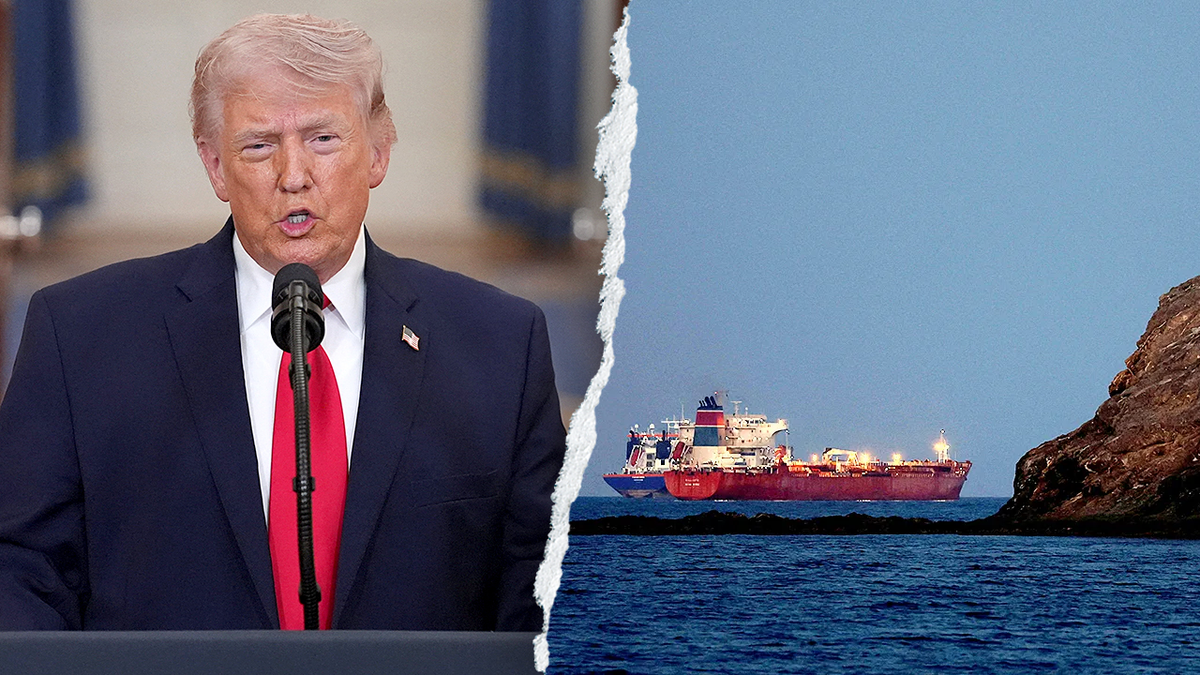
Oil markets spent Tuesday whipsawing between a one-month high and a partial retreat after President Donald Trump first threatened a 20% “reimbursement fee” on all cargo transiting the Strait of Hormuz, then abandoned the levy hours later in favour of bilateral investment pledges from Gulf states. Brent crude settled near $84–85 a barrel, roughly a third below April’s war peak but well above the pre-conflict baseline, as the US Navy reimposed a blockade on Iranian ports and Tehran’s Revolutionary Guard struck tankers with their transponders switched off (CNBC; Washington Post).
What most coverage has missed is that the toll episode, however short-lived, has functioned as a live stress test of exactly how exposed nine very different economies are to a chokepoint that carries roughly a fifth of the world’s oil and gas in peacetime. Vessel traffic through Hormuz collapsed from 37 ships a week earlier to just 14 on the Sunday before Trump’s announcement, according to Kpler tracking data, and the International Energy Agency’s hoped-for return to surplus by year-end now looks conditional on a durable ceasefire that has already broken down twice (CNBC; Al Jazeera).
The Toll That Never Was — But the Precedent That Might Be
The International Maritime Organization rejected the fee outright, calling mandatory transit tolls illegal under international law, while the US Treasury simultaneously warned that any shipper paying Iran for safe passage would be exposed to sanctions (NBC News). Shipping executives, including Chevron’s leadership, warned that a US-imposed toll would set a precedent allowing any country bordering an international strait — the Malacca Strait among them — to demand transit payments, a risk with direct relevance to Malaysia and Singapore’s shipping-dependent economies.
Asia’s Buffer Is Thinner Than Last Time
The South China Morning Post’s Hong Kong desk notes that Asian economies are “better placed to absorb the blow” than during April’s peak, but the buffer has eroded. Analysts at Sparta Commodities in Singapore flagged that strategic reserves drawn down during the earlier phase of the conflict leave less room to smooth a renewed shock (SCMP). For Singapore, whose Q2 growth already decelerated to 5.7% from a stronger prior quarter as AI-driven electronics exports failed to fully offset Middle East uncertainty, the mathematics are unforgiving (Free Malaysia Today).
Pakistan’s Remittance Channel Is the Overlooked Transmission Line
Pakistan receives roughly 9% of GDP in annual remittances, with 55% originating from the Gulf Cooperation Council states, according to the IMF’s most recent country report. A sustained disruption to GCC economies, or a return migration of workers amid regional instability, would strike directly at one of Pakistan’s most important financing sources for consumption and the balance of payments — a risk the Fund flags explicitly alongside compressed capital inflows from GCC banks, Pakistan’s largest source of short-term commercial financing (IMF Country Report 26/101). Islamabad’s current account is projected to worsen by 0.2 percentage points of GDP in FY26 and 0.4 points in FY27 under the Fund’s baseline, with the adverse scenario nearly doubling that hit.
The UK’s Energy Bill Arrives Months Late
British households and industry are only now absorbing the inflationary tail of the spring shock. The Bank of England’s Andrew Bailey has warned that higher energy costs already “in the pipeline” will keep headline inflation elevated into the fourth quarter even as spot oil prices ease, while the House of Commons Library estimates the indirect pass-through could add roughly a third of a percentage point to UK CPI through supply chains alone (UK Finance; Commons Library).
Why This Matters Beyond the Headline Number
The pattern across markets is consistent: the direct oil-price shock is only the first-order effect. The second-order effects — remittance flows, strategic reserve depletion, freight and insurance premiums, and the precedent risk to other global chokepoints — are where the durable economic damage is likely to concentrate, and where most competitor coverage has stopped short.
Discover more from The Economy
Subscribe to get the latest posts sent to your email.

10-Year Treasury Yield Tops 5%: What It Means for Mortgages, Stocks, and the Fed

Ceasefire Negotiations in 2026: Predicting the Rebound of European and Asian Economies

Emerging Markets Update: The Impact of World Bank Policies on PSX Stability

Costco Oil Shortage 2026: Will Prices Double for All Synthetic Motor Oils?

Trump’s $5,000 Promise: The Hidden Tax Implications for Retail Investors

Global Economy Outlook 2026: What Ceasefire Talks Mean for the Tech Sector

China Stocks Today: Are Big Economies in Asia Nearing a Market Bottom?

Stock Market Crash 2026? How the Trump $5,000 Dividend Impacts Global Inflation

Tax-to-GDP Ratio Explained: Global Benchmarks, Fiscal Sovereignty & 2026 Insights

Trade Deficit & Terms of Trade Explained: Global Impact, Real-World Examples, and 2026 Insights

Supply vs Demand Shocks Explained: Market Equilibrium, Inflation Risks & Policy Responses in 2026

Microeconomics vs. Macroeconomics Explained: Key Differences, Interdependence & Global Impact

Devaluation vs Depreciation: Clear Differences, Causes, and Economic Impact

Purchasing Power Parity (PPP) Explained: Global Rankings, Living Standards & Why Nominal Exchange Rates Mislead in 2026

State Farm’s $5B Dividend 2026: Who Qualifies & Payout Dates

US-China Relations in Q3 2026: Trade Tariffs and Supply Chain Risks

Gold’s Wild 2026: From a Record $5,600 Peak to a 24% Crash and Back Toward $4,500

Oil Surges as Strait of Hormuz Traffic Collapses Again

Bank of England Set to Hold Rates Through Year-End, Reuters Poll Shows

SpaceX Starship Flight 14: First Orbital Attempt & Starlink V3 Launch Explained

The 2026 Crypto Regulatory Shift: What It Means for Institutional Investors

Top 30 Stocks for Investment in PSX for Massive ROI in 2026

AI Chip Stocks 2026: The Best Semiconductor Investments Beyond Marvell

AI-Powered Training: The Next Multi-Billion Dollar Ecosystem in Fitness

Tween Back-to-School Trends 2026: What’s Driving the $85B Season

Russia’s Black Sea Oil Exports Fall for a Fifth Straight Week

Global Chip Selloff Deepens: What’s Driving the Aug. 19 Semiconductor Rout

Shein Clothes Quality & Safety in 2026: What Lab Tests Show
-

 Markets & Finance8 months ago
Top 15 Stocks for Investment in 2026 in PSX: Your Complete Guide to Pakistan’s Best Investment Opportunities
-

 Analysis7 months ago
Johor’s Investment Boom: The Hidden Costs Behind Malaysia’s Most Ambitious Economic Surge
-

 Analysis7 months ago
Top 10 Stocks for Investment in PSX for Quick Returns in 2026
-

 Analysis7 months ago
Brazil’s Rare Earth Race: US, EU, and China Compete for Critical Minerals as Tensions Rise
-

 Banks8 months ago
Best Investments in Pakistan 2026: Top 10 Low-Price Shares and Long-Term Picks for the PSX
-

 Investment8 months ago
Top 10 Mutual Fund Managers in Pakistan for Investment in 2026: A Comprehensive Guide for Optimal Returns
-

 Global Economy9 months ago
15 Most Lucrative Sectors for Investment in Pakistan: A 2025 Data-Driven Analysis
-

 Global Economy9 months ago
Pakistan’s Export Goldmine: 10 Game-Changing Markets Where Pakistani Businesses Are Winning Big in 2025