
Banks
The Money Is Drying Up: How US Pressure Is Choking Off Russia-China Payment Channels


The US Treasury Department has moved aggressively against a sanctions-evasion network linking Russia and China, exposing a secret payment channel used to facilitate cross-border transactions for sensitive exports and designating a Kyrgyz Republic-based financial institution accused of helping Moscow evade restrictions, according to the US Treasury’s official press release.
Inside the Evasion Network
The scheme relied on so-called “ruble clearing platforms” that facilitate non-cash mutual settlement for payments tied to sanctioned goods. US-designated Russian financial institutions including Sberbank, Alfa-Bank, Sovcombank, T-Bank, and Bank Tochka were reportedly participants. Treasury identified Russia-based and China-based trading companies acting as counterparties in the network, while also designating Keremet Bank, which Treasury says was purchased specifically to create a new sanctions-evasion hub for Russian import payments and export receipts. Treasury simultaneously re-designated nearly 100 entities under Executive Order 13662, reinforcing risk exposure for any foreign party continuing to work with Russia’s military-industrial base.
China’s Banks Start Saying No
The pressure appears to be working, at least partially. Russian banking sources describe a dramatic slowdown in cross-border payment flows, not only with China but also with Central Asian intermediaries such as Kyrgyzstan and Uzbekistan. A Moscow-based banker quoted by CEPA described the situation bluntly, noting that money has largely stopped flowing and only a narrow set of intermediary countries remain viable, according to CEPA’s analysis of the sanctions squeeze. Chinese banks have reportedly begun refusing payments from Russia and rejecting transactions where Russian names appear anywhere in supporting paperwork — a shift CEPA attributes to a US threat late last year to impose secondary sanctions on Chinese banks, cutting them off from dollar access.
The Scale of China’s Role
China has become indispensable to Russia’s wartime economy. Bilateral trade between the two countries hit a record $237 billion in 2023, up nearly 70% since 2021, and China has supplied more than 90% of Russia’s semiconductor imports since the invasion of Ukraine began, more than half of which were Western-branded or produced, according to CSIS’s research on sanctions and Russia’s economic transformation. China’s imports from Russia rose 60% between 2021 and 2024, according to a Congressional Research Service report.
The Crypto Workaround — And Its Limits
As traditional banking channels tighten, Russian banks are being pushed toward cryptocurrency settlement, though CEPA reports Chinese counterparties treat crypto transactions with Russia as fast but increasingly costly, further raising the effective price of Russian imports. The sanctioned Russian exchange Garantex has been under US sanctions since April 2022, and few jurisdictions remain willing to accept Russian crypto transfers, though Russian bankers reportedly expect the UAE to emerge as a more permissive hub for such flows.
The EU’s Parallel Track
The squeeze is not solely an American project. The European Council voted on June 18–19, 2026, to extend EU economic sanctions against Russia for a further twelve months, through July 2027, while calling for swift adoption of a 21st sanctions package targeting Russia’s shadow fleet, energy revenues, and banking system, according to the Council of the EU’s official statement. For global banks and multinational corporates, the compounding effect of US and EU enforcement means compliance risk tied to any residual Russia exposure — even indirect exposure routed through Chinese or Central Asian intermediaries — is rising sharply heading into the second half of 2026.
Discover more from The Economy
Subscribe to get the latest posts sent to your email.



A savings account’s value comes from accessible, insured cash and transparent net earnings—not simply the largest advertised APY. Research cutoff: October 12, 2026; confirm developing facts before publication.
What is happening and why readers are searching
A high-yield savings account should be judged by what a depositor actually earns and how readily the money can be accessed, not only by a prominent introductory APY. For someone building an emergency fund, deposit insurance, account terms, transfer speed and possible rate changes can be more important than a small advertised advantage. Sources: FDIC Money Smart and Reuters bond market analysis.
The important context competitors can overlook
APY reflects compounding over a year, whereas an account’s stated interest rate may differ. Banks can change variable savings rates. Promotional accounts may have balance limits, direct-deposit requirements or fees that reduce an apparent benefit. FDIC insurance covers eligible deposits at insured banks subject to applicable ownership-category limits; a similar-looking fintech app is not automatically the bank that holds the funds. For primary-source checks and current reporting, see FDIC Money Smart and Investor.gov. The key distinction is evergreen buyer intent with no invented current bank rates.
A practical way to use this information
Calculate expected earnings at the amount you intend to deposit. For example, a hypothetical $10,000 balance at 4.00% APY would earn roughly $400 over one year if the APY stayed constant and there were no intervening transactions. That is arithmetic, not a claim that a particular institution offers 4%. Verify rates on the provider’s own page the day you publish and compare at least three insured options.
What to verify before making a decision
The right next step is to identify the source, timestamp and applicable market or jurisdiction. Check whether a number is a historical observation, official announcement, target, forecast or scenario. If you intend to act financially, legally or commercially, use the relevant provider’s current terms and obtain professional advice where appropriate. The sources cited here establish context; they are not a substitute for live prices, individual eligibility checks or binding agreements.
Reader questions
Are high-yield savings rates fixed? Most are variable and can change.
Should I choose the bank with the largest advertised APY? Also assess insurance, fees, balance rules and withdrawal access.
APY is useful only if you understand how it works
Annual percentage yield estimates how much an account earns over a year when interest is compounded according to the bank’s terms, assuming the rate remains unchanged and other relevant conditions are met. It differs from a simple annual interest rate because it accounts for compounding. Many savings rates are variable, which means today’s advertised APY can change after the account is opened. A bank may also require a certain balance, a qualifying deposit or another relationship to earn its highest advertised tier. Read the conditions before assuming every dollar in the account will earn the headline figure.
Consider $10,000 held for one year at a hypothetical constant APY of 4.0%. The approximate earnings would be $400 before tax. At 3.5%, the corresponding amount would be $350, a $50 difference. If the higher-rate account charges $10 per month in fees, that fee could more than eliminate the apparent advantage. This comparison illustrates why small rate differences should be evaluated alongside minimum balances, fees and the effort of moving money repeatedly.
Deposit protection is not the same as investment safety
A typical U.S. bank savings account may be eligible for FDIC insurance if the bank is insured and the deposits fall within applicable ownership-category limits. Federally insured credit unions operate under a separate NCUA framework. The standard $250,000 limit is not a simple promise that every individual has exactly one $250,000 cap across every account. Coverage depends on the institution, ownership category and how accounts are titled. Readers with large balances should check the official calculators rather than assume a marketing phrase tells the whole story.
A brokerage cash-management product, money-market mutual fund and bank savings account can look similar in an app while carrying different protections. Some sweep arrangements distribute money among partner banks; the exact program terms matter. A money-market mutual fund is not the same as an FDIC-insured bank deposit. Read whether the product is a deposit or an investment, who holds the funds and when coverage begins. Official explanations are available at FDIC and NCUA.
Liquidity: when will the money actually be available?
An emergency fund is valuable because it can be accessed at the moment an emergency occurs. Online savings accounts may support electronic transfers but not immediate cash withdrawal. Moving funds between institutions can involve transfer limits, cutoffs, identity checks or processing delays. If a bank advertises a faster service, verify whether it applies to your linked account and requested amount. A high APY is less useful if a household cannot pay an urgent medical bill or repair invoice when needed.
People keeping a larger emergency reserve can consider a modest amount in an immediately accessible transaction account and the remainder in savings, depending on circumstances. That is a liquidity-management principle, not an endorsement of a particular bank. Avoid oversimplified rules such as “always keep exactly three months.” The appropriate reserve depends on employment stability, housing obligations, dependents and insurance coverage.
How to compare a promotional rate fairly
Create a one-page comparison with offered APY, stated promotional expiration, required actions, fee schedule, insurance status, transfer speed, minimum opening deposit and any cap on the qualifying balance. Record the date because rates and offers can change. If one bank offers an incentive for opening an account, calculate the conditions needed to receive it and whether the benefit offsets lost interest, potential fees or complexity. A high introductory offer can still be worthwhile, but it should be analyzed over the likely holding period rather than the first week.
Do not compare one institution’s APY with another institution’s simple interest rate without adjusting for compounding. Likewise, avoid extrapolating a short-term bonus as though it repeats every year. Rate cuts or increases by the Federal Reserve may influence savings rates but do not require all banks to adjust at the same speed or by the same amount.
A decision checklist before moving savings
Verify the institution’s legal name and insurance status using official tools; compare accounts with the same estimated balance; confirm account access and customer-support options; calculate after-fee returns; test transfer arrangements with a modest amount if appropriate; and keep records of any promotional terms. Be skeptical of an unusually high guaranteed return marketed through social media, especially if it asks you to move money to a personal account or purchase cryptocurrency first.
The best high-yield savings account is not automatically the one with the highest figure on a comparison page. It is the one whose return, protection, accessibility and requirements fit the depositor’s real purpose for holding cash.
Frequently asked savings questions
Is a high-yield account better than a certificate of deposit?
Not universally. A variable-rate savings account often offers convenient access while its APY can change. A certificate of deposit may provide a specified rate for a term, with consequences for early withdrawals. A person saving for an unpredictable medical cost may value flexible access; someone with funds earmarked for a known later date may compare fixed-term options. The comparison should include inflation, withdrawal needs and any penalties.
Do I have to move banks whenever an APY changes?
No. Repeated transfers require time and can create administrative mistakes. Estimate the dollar difference for your actual balance and expected holding period. A quarter-point annual APY difference on $5,000 is only around $12.50 before tax over a full year if rates remain unchanged. That may or may not justify opening and managing a new account.
Can a savings-account rate be guaranteed?
A typical variable savings APY is not fixed for years. Read the product disclosures and distinguish introductory offers from continuing rates. Any claim of exceptional guaranteed yields with no risk deserves careful scrutiny, particularly when advertised outside regulated bank channels. Verify deposit insurance independently and never rely only on a screenshot of a comparison ranking.
Discover more from The Economy
Subscribe to get the latest posts sent to your email.
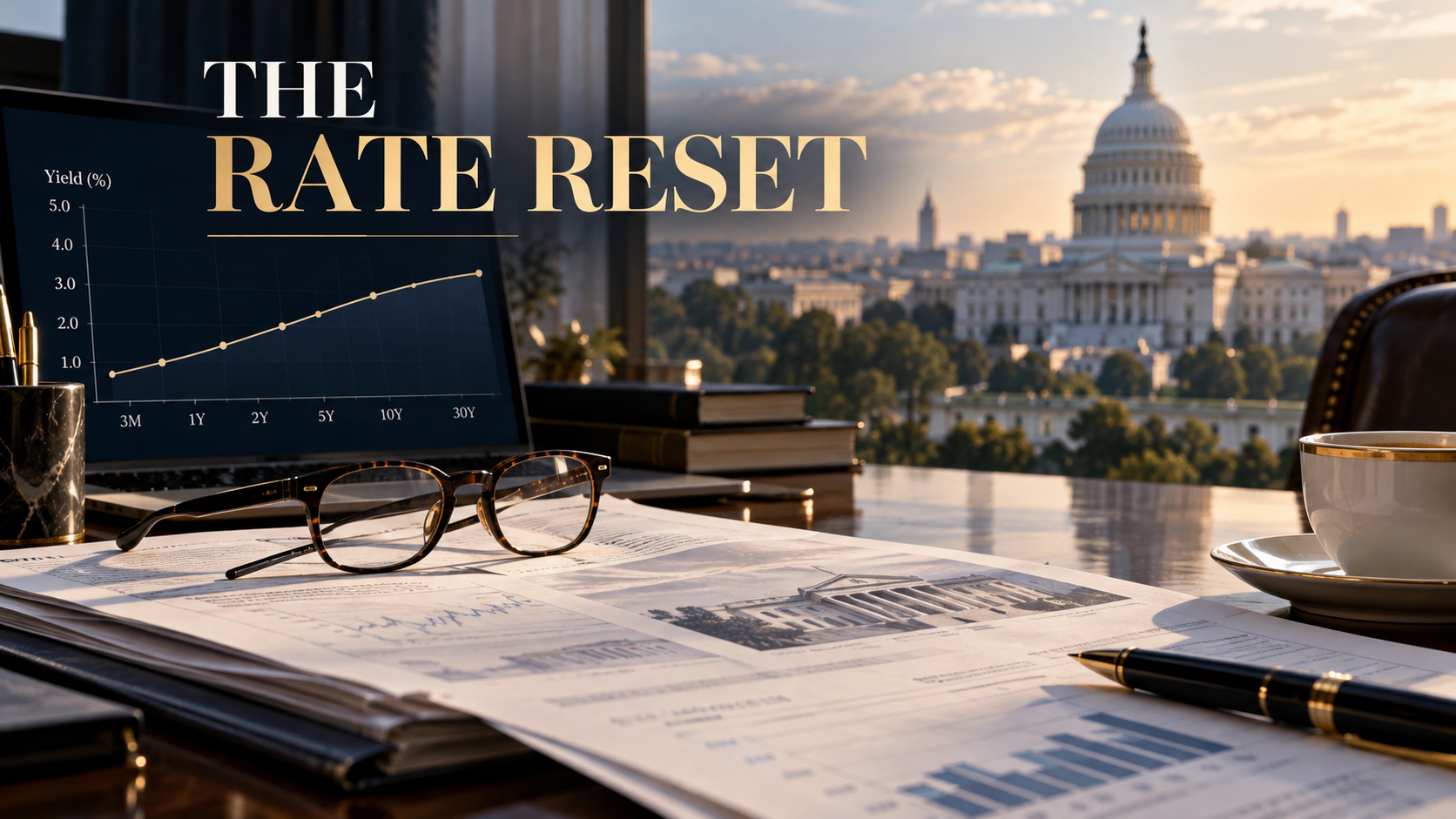
It is tempting to talk about “interest rates” as though there is one number moving the entire U.S. economy. In reality, the short-term policy rate set by the Federal Reserve and the market yield on a 10-year Treasury note can tell different stories. The first is a direct monetary-policy instrument. The second embeds investor expectations for future short-term rates, inflation, bond supply, economic uncertainty and compensation for holding long-duration debt.
In September, the Fed raised its target for the federal funds rate by a quarter percentage point to 3.75%–4.00%. That is a significant factual anchor for the October debate: the central bank was not simply holding policy unchanged. The official statement described resilient domestic activity and inflation that remained elevated. Federal Reserve September 16 statement.
On October 9, reporting placed the 10-year Treasury yield near 5.24% after a volatile week. For readers, the gap between these rates is more informative than either number alone. Associated Press market close.
Why a 10-year yield can exceed the policy rate
A bond yield reflects the price investors demand for a stream of future cash flows. When the price of an existing bond falls, its yield generally rises. Long-term yields may remain high even if investors think the Fed could eventually reduce short-term rates, because long-term inflation uncertainty, federal debt supply or term premiums may still justify additional compensation.
The opposite also happens. A central bank can raise its short-term rate while long-dated yields decline if bond investors believe tighter policy will bring inflation under control or weaken future growth. Therefore “the Fed hiked so all Treasury yields must rise” is an inaccurate shortcut. Market analysts need a time series and an explanation of which component changed.
What the Fed’s official data can—and cannot—say
The Federal Reserve publishes daily selected interest-rate data through its H.15 release. During the October 8 session, the listed 10-year constant-maturity Treasury rate was 5.22%; the later Friday market closing figures cited in news coverage were slightly different, reflecting observation timing and methodology. Federal Reserve H.15.
These values should not be presented as interchangeable real-time quotes. A daily Treasury constant-maturity series, an intraday cash-bond trade and a news-service closing yield can differ. High-quality financial reporting labels the instrument, source and timestamp. A difference of a few basis points can be normal even when all figures are independently correct.
The Fed also publishes economic projections and participant expectations. The September summary included elevated inflation projections, but these are not commitments by the committee or a binding timetable. Federal Reserve September economic projections.
Where SGOV fits into the story
The iShares 0–3 Month Treasury Bond ETF (SGOV) holds a portfolio of very short-dated U.S. Treasury securities. It is often discussed as an alternative to leaving uninvested money in a brokerage account because it seeks to earn short-term Treasury income with limited interest-rate sensitivity. The fund does not behave like a long-duration Treasury ETF, whose price can swing substantially when longer yields move.
As of the October 5 information visible on the issuer’s product page, SGOV displayed a 3.71% 30-day SEC yield and 0.09% expense ratio. These are dated metrics, not a promise of the rate a future investor will receive. Its income distribution changes with short-term market conditions, and the ETF can trade at a small premium or discount to net asset value. iShares SGOV facts.
Low duration is not the same as zero risk
Short-dated Treasury securities generally expose investors to far less interest-rate sensitivity than 10- or 30-year bonds, but several risks remain. ETF shares change price, market spreads exist, distributions fluctuate and inflation can erode the purchasing power of returns. A fund also differs legally from a bank deposit. Investors should not describe an ETF as FDIC-insured cash or assume the absence of a meaningful mark-to-market loss under every conceivable market condition.
Currency matters for international readers as well. A Pakistan-based investor considering a U.S. dollar Treasury product faces exchange-rate movements in addition to the securities’ dollar returns. Taxes, account access, fund structure and local regulation can also alter the practical outcome. A quoted U.S. dollar yield is not equivalent to a guaranteed local-currency gain.
Why different Treasury ETFs can move in opposite directions
Compare short Treasury bills with bonds maturing in 10 or more years. When yields rise, the longer bond’s existing fixed payments become less attractive, and its market price generally declines more because its cash flows are further in the future. This sensitivity is measured by duration, a useful—but approximate—way to compare rate risk.
A fund holding nearly maturing bills repeatedly reinvests at new yields, so changes in short rates can affect future income relatively quickly. A long Treasury fund can experience substantial price moves before the income change becomes visible. This is why an investor discussing “bond yields” should specify maturity and exposure rather than treating all fixed-income products as interchangeable.
The 2026 inflation question behind higher yields
Inflation changes the value of fixed payments in the future. Investors demand compensation when they think price growth will remain elevated or volatile. Energy shocks can reinforce this concern because higher diesel, shipping and manufacturing costs may work through supply chains. Yet not every energy-price move becomes a lasting increase in core inflation; monetary policy depends on broader evidence and expectations.
A September Fed projection showed its participants anticipating inflation remaining above target in the near term. Federal Reserve projections. Readers should not interpret that as an assurance of more rate increases. The future policy path depends on economic developments and FOMC decisions. Market-implied odds, if used, require a verified source and a timestamp.
Why stock investors care about the yield curve
When safer government securities offer competitive yields, investors may require greater potential returns to justify risky assets. Higher discount rates also reduce the present value of distant projected corporate profits. Those effects can be especially relevant for high-growth businesses whose market valuations depend on results many years away. Companies that refinance debt frequently can also feel direct interest expense pressure.
The relationship is not perfectly mechanical. Stocks may rise alongside Treasury yields when both are reacting to stronger expected growth. A central bank may tighten because corporate activity is resilient rather than because the economy is on the verge of recession. To interpret the market, ask whether the yield move reflects optimism about growth, inflation anxiety, government borrowing or a genuine change in policy expectations.
What to monitor in the coming weeks
Watch the next inflation reports, FOMC communications, Treasury auctions, 2-year and 10-year yields, investment-grade credit spreads and market pricing of future policy moves. Pair those signals with earnings releases, business investment and labor-market data. One factor can offset another: stronger earnings may cushion stocks against higher yields, while slowing sales and rising borrowing costs together can create more serious stress.
Readers should also check short-term fund yields directly with issuers because SGOV’s distribution profile can change without the fund’s ticker changing. Avoid stale “best cash yield” headlines. A product’s risk, liquidity, expenses and tax characteristics matter as much as a single yield snapshot.
The central takeaway
The Fed’s September hike and the elevated 10-year yield show that the cost of money remains a defining market issue in October 2026. SGOV illustrates why short-term Treasury products attract attention when yields are meaningful, but the fund cannot reveal a guaranteed future Fed decision. The sound approach is to distinguish policy rates, market yields and investment-product mechanics—then update each using its own official data source.
Frequently asked questions
What is the Fed’s target range in October 2026?
Following the September 16 decision, the target range was 3.75%–4.00% as of this article’s reporting cutoff.
Is the 10-year Treasury yield the Fed rate?
No. The 10-year yield is determined in bond markets and reflects several expectations beyond current policy.
Does SGOV have a fixed guaranteed yield?
No. Its published 30-day SEC yield is a dated standardized measure, not a guarantee of future distributions.
Why do long-term Treasury bonds fall when yields rise?
Existing fixed coupons become less attractive relative to newer higher-yielding securities, so market prices typically decline.
Discover more from The Economy
Subscribe to get the latest posts sent to your email.

For US homebuyers, the mortgage question in 2026 is about more than the direction of the next interest-rate announcement. The practical issue is whether the full cost of a home fits a household’s finances without depending on an uncertain future refinance.
Freddie Mac’s Primary Mortgage Market Survey reported a 7.40% average for a 30-year fixed mortgage on 8 October 2026, compared with 7.28% a week earlier. The 15-year average was 6.73%. These are weekly market benchmarks, not offers available to every applicant. Actual pricing depends on the borrower, property, loan structure and lender.
Earlier forecasts can now look optimistic because they were produced under different conditions. The right response is to compare current evidence with current costs, rather than assume that a predicted decline must eventually arrive on schedule.
Why the Federal Reserve does not set your mortgage rate
The Federal Reserve influences short-term financial conditions, but a long-term fixed mortgage is priced through a broader market. Investors consider expected inflation, future interest rates and the return available from other securities. Lenders also account for operating costs and the characteristics of the loan.
Mortgage rates can therefore move before a central bank announcement. If investors expect a decision, its likely effect may already be reflected in prices. Rates can even rise after an announcement that appears supportive if the accompanying outlook is less reassuring than expected.
Long-term bond yields are useful context, but they are not a complete mortgage calculator. The spread between those yields and mortgage pricing also changes. A borrower should avoid treating one Treasury-market headline as a precise prediction of the next lender quotation.
A forecast is different from an affordable offer
A national rate forecast can help explain the direction of market expectations. It cannot determine an individual applicant’s approved rate. Credit history, down payment, loan size, occupancy and other factors influence the quote.
Comparisons also become misleading when products differ. A low advertised rate may require upfront points. A shorter term may carry a lower rate but a much higher monthly payment. A variable-rate product may begin attractively while exposing the borrower to later changes.
The Consumer Financial Protection Bureau’s homebuying resources provide a useful starting point for understanding the borrowing process and comparing mortgage documents. For a real decision, written terms from lenders matter more than a promotional headline or a general market prediction.
What a one-percentage-point difference means
Consider an illustrative $300,000 loan repaid over 30 years at a fixed rate. At 6%, monthly principal and interest would be approximately $1,799. At 7%, the payment would be about $1,996. At 8%, it would be around $2,201.
These figures are calculated examples, not lender quotes. They exclude property taxes, insurance, mortgage insurance, homeowners’ association charges and maintenance. They nevertheless show why apparently small changes in rates matter to household cash flow.
The comparison also demonstrates the danger of shopping only by house price. Two buyers purchasing the same property at different rates can face substantially different monthly obligations. Conversely, a price reduction may offset part of a rate increase. The useful unit of comparison is the complete payment and cash requirement, not either variable in isolation.
The monthly payment is only the beginning
Ownership creates expenses that a principal-and-interest calculator does not capture. Taxes and insurance can change over time. Repairs arrive irregularly. A roof replacement or plumbing problem may not respect the timing of a household’s savings plan.
Closing costs also affect affordability. A borrower who uses nearly all available cash for the purchase may have a manageable scheduled payment but little room for disruption. That distinction matters when employment or other income is uncertain.
A practical budget should separate predictable monthly expenses from reserves for less frequent costs. It should also include the costs of moving and setting up the home. Furniture, utilities and immediate repairs are easy to overlook because they occur outside the mortgage contract, yet they can materially change the first year’s financial experience.
How to compare points and fees
Mortgage points involve paying an upfront amount in exchange for a particular rate arrangement. Whether that trade makes sense depends on the exact offer and how long the borrower expects to keep the loan.
Suppose two otherwise comparable offers differ by $3,000 in upfront cost and $75 in monthly principal and interest. A simple cash-flow comparison produces a 40-month break-even period. That is only an illustration: a full comparison would consider other fees, balances, tax treatment where relevant and the time value of money.
The main lesson is to connect upfront charges with the intended holding period. Someone expecting to sell or refinance soon faces a different calculation from someone planning to keep the same mortgage for many years. A lower rate is not automatically the least expensive overall offer.
Rate locks reduce one uncertainty
A rate lock can protect specified pricing for a defined period, subject to the agreement’s conditions. The details matter: expiry dates, extension charges and changes to the application can affect the result.
The Wall Street Journal’s recent reporting on rate locks describes borrowers seeking more protection as rates rise. That does not establish that the longest available lock is best for every buyer. Its value depends on the expected closing timeline and cost.
Before choosing, ask what happens if the purchase is delayed, whether any float-down feature exists, and which changes could alter the quoted terms. A clear written explanation is more useful than a verbal assurance that the rate is protected. Locking a rate also does not remove the need to complete underwriting and satisfy other conditions.
Refinancing later is an option, not a guarantee
The idea of buying now and refinancing after rates fall can be appealing. It remains conditional on several things: market rates must become attractive, the borrower must qualify, the property must meet relevant requirements, and the savings must justify the costs.
Income, credit history and home value can change. A lower national rate does not ensure an individual borrower will receive an economical offer. Refinancing can also extend the repayment period, reducing the monthly payment while changing the total interest paid over time.
A stronger affordability test asks whether the initial loan works if refinancing never becomes attractive. Potential future savings can then be treated as an additional benefit rather than the assumption holding the purchase together. This is particularly important for households already stretching their monthly budget.
Buying versus waiting requires more than a rate prediction
Waiting has possible benefits and costs. It may allow more savings, improved credit or a clearer employment outlook. It also means continuing to pay rent and accepting uncertainty about future home prices, supply and borrowing costs.
Buying has its own trade-offs. It can provide stability for someone planning a long stay, but it reduces flexibility and creates transaction costs if plans change. A purchase motivated primarily by fear of missing out may not fit the household’s actual needs.
Compare realistic scenarios rather than one ideal outcome. What if rates remain near current levels? What if the desired home becomes cheaper but financing becomes more expensive? What if a job change requires relocation? A decision that remains workable across several plausible outcomes is less dependent on successful market timing.
What to watch next
The most relevant indicators include inflation data, long-term bond yields, credit conditions and lender competition. Housing supply also matters: lower mortgage rates would not automatically make homes affordable if prices rose enough to offset the financing improvement.
Update comparisons using the same loan amount, term, lock period and fee assumptions. Record the date of each quote because market conditions can change quickly. If one offer appears dramatically cheaper, identify the reason before treating it as an equivalent product.
Mortgage rates in 2026 remain a major affordability constraint, but forecasting them is only part of the decision. The more dependable approach is to compare complete offers, protect a realistic cash reserve and purchase only within a budget that works under the loan’s actual terms. The calculations here are educational examples rather than personalised mortgage advice.
Discover more from The Economy
Subscribe to get the latest posts sent to your email.

Stock Market Crash in 2026? Warning Signs, Scenarios and a Calm Investor Checklist

Peso Mexicano vs Dólar Estadounidense: A Practical USD/MXN Guide for October 2026

Is the Stock Market Open on Columbus Day 2026? NYSE, Nasdaq and Bonds Explained

Concert Ticket Prices in 2026: Dynamic Pricing, Fees and How to Buy Safely

High-Yield Savings Accounts in 2026: How to Compare APY Without Chasing a Headline

EU-China Trade Deal 2026: How Beijing and Brussels Avoided a Trade War—and Who Wins

Social Security 2027 COLA Announcement: Date, Formula and What Retirees Should Check

China’s AI Microdrama Boom: How Beijing Is Reshaping Global Media

Q3 2026 Earnings Preview: Can Record Profit Expectations Keep Wall Street’s Rally Alive?

Russia Diesel Deal 2026: Oil Prices and Inflation Risks

Fed Rates 2026: Treasury Yields, Bonds and SGOV Explained

S&P 500 Market Breadth 2026: Weak Rally or Rotation?

The AI Capex Boom: Data Centers Reshaping Growth

Palantir Stock in 2026: Extraordinary AI Growth

PSX Forecast 2026: KSE-100, IMF Reviews & Geopolitics

Middle East War Economics 2026: Oil Prices & Energy Markets

China Stocks Today: Are Big Economies in Asia Nearing a Market Bottom?

Crypto Daily Outlook: Bitcoin, Altcoins, and the Future of Decentralized Finance

Global Pension Systems Ranked: The World’s Best and Worst Retirement Frameworks

World’s Largest Economies: Ranking the Top Global Powers

Elon Musk’s Next Moves: Disrupting the 2026 Global Economy

Pakistan Economy 2026: Inside the SBP’s Balancing Act

GasBuddy Market Insights: How Crude Price Shifts Impact Local Fuel Cost Averages

World Bank & IMF Reports 2026: Why the “3% Growth” Consensus Is Actually a Debate

Global Equity Market Divergence: US Tech vs. European Dividend Stocks vs. Asian Growth

Crude Oil & Petroleum Market Analysis: OPEC+ Decisions and Price Forecasts

IMF & World Bank Global Economic Outlook: Growth Forecasts Across Europe and Asia

Silver Price Today: Why the Xi-Trump AI Standoff Is Fueling a Safe-Haven Rally
-

 Markets & Finance9 months ago
Top 15 Stocks for Investment in 2026 in PSX: Your Complete Guide to Pakistan’s Best Investment Opportunities
-

 Analysis8 months ago
Johor’s Investment Boom: The Hidden Costs Behind Malaysia’s Most Ambitious Economic Surge
-

 Analysis8 months ago
Top 10 Stocks for Investment in PSX for Quick Returns in 2026
-

 Banks9 months ago
Best Investments in Pakistan 2026: Top 10 Low-Price Shares and Long-Term Picks for the PSX
-

 Analysis8 months ago
Brazil’s Rare Earth Race: US, EU, and China Compete for Critical Minerals as Tensions Rise
-

 Investment9 months ago
Top 10 Mutual Fund Managers in Pakistan for Investment in 2026: A Comprehensive Guide for Optimal Returns
-

 Global Economy10 months ago
15 Most Lucrative Sectors for Investment in Pakistan: A 2025 Data-Driven Analysis
-

 Global Economy10 months ago
Pakistan’s Export Goldmine: 10 Game-Changing Markets Where Pakistani Businesses Are Winning Big in 2025