
Property
China’s Export Miracle Masks a Property Disaster: Growing Without Its People

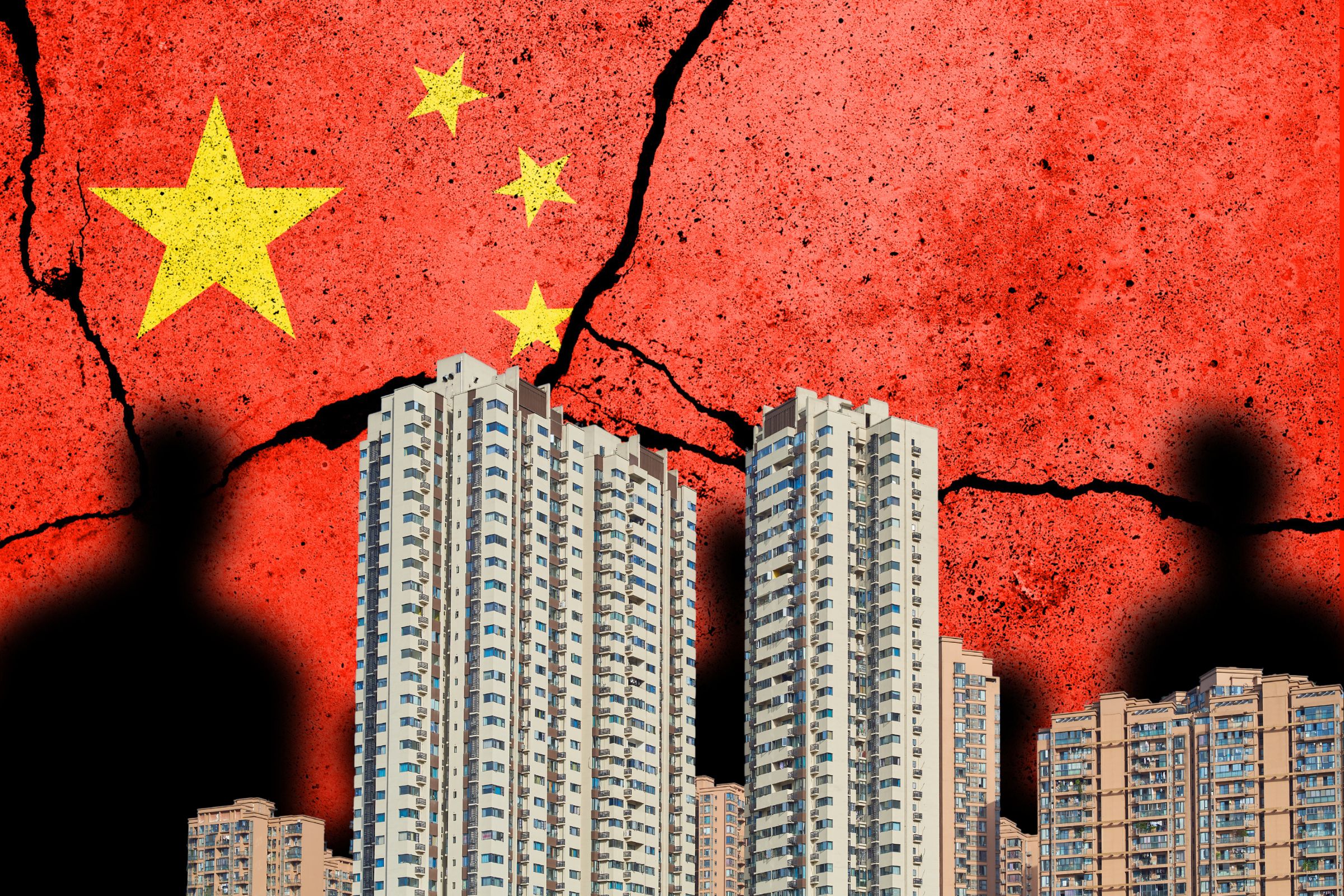
China’s exports surged 19.6% in May 2026, with semiconductor shipments up 110% year over year. But behind the headline growth lies a collapsing property market, falling consumer spending, and a looming Japan-style deflationary trap. Here is the full analysis.
The Paradox at the Heart of China’s Economy
China in 2026 presents one of the most striking paradoxes in modern economic history. On the surface, the data looks impressive: exports were up 19.6% from a year earlier in May 2026 — the second biggest increase since January 2022. Exports of semiconductors soared 110% year over year, while mobile phones rose 44% and automatic data-processing machines jumped 66%. The manufacturing engine is roaring.
Beneath the surface, a different China is visible — one where property values are collapsing, households are saving rather than spending, youth unemployment remains elevated at 16.9%, and consumer price inflation has been near zero for years. China’s GDP stands at $20.8 trillion in 2026, but deflation has persisted for a tenth consecutive quarter and property investment has collapsed 50–80% from peak.
The paradox resolves when you understand the structure: China is growing because of exports and government investment, not because its people are getting richer and spending more. That is an inherently fragile foundation.
The Export Surge: AI Demand Driving China’s Manufacturing Machine
The headline numbers on China’s export performance are extraordinary. Semiconductor exports rising 110% year over year reflect two intersecting forces: booming global AI infrastructure demand sucking in chips and electronics components, and Chinese manufacturers stockpiling inventories ahead of anticipated further disruptions to global supply chains from the Iran conflict.
China holds a dominant position in many semiconductor supply chain stages below the most advanced chips — packaging, substrates, legacy node chips — and these have been in extreme demand from AI data center builders worldwide. The AI economy is, perhaps inadvertently, providing a significant lifeline to China’s export sector at precisely the moment when domestic demand remains depressed.
The Property Collapse: A Crisis Now in Its Fifth Year
While the export engine hums, China’s property sector — for decades the central pillar of household wealth and economic growth — continues its multi-year implosion. Property investment fell 16.2% year over year in the first five months of 2026 — the steepest decline in fixed-asset investment since May 2020.
Secondary home prices have declined for 44 consecutive months, and rents have fallen for 23 months. For a country where residential property constitutes approximately 70% of urban household assets, this sustained decline has had a devastating effect on consumer psychology. Falling housing prices have made people feel poorer. As a result, people choose to spend less and save more. In the past five years, household deposits in Chinese banks have almost doubled.
The property downturn is estimated to have reduced annual real GDP growth by about 2 percentage points per annum in 2024 and 2025, according to Goldman Sachs. Though this drag is expected to narrow, it has fundamentally altered the trajectory of the world’s second-largest economy.
The Japan Comparison: Is China Walking Into a Deflationary Trap?
The comparison that haunts Chinese policymakers — and that has been referenced repeatedly by leading economists including Harvard’s Kenneth Rogoff — is Japan’s “Lost Decade” that followed the burst of its property and equity bubble in 1990.
China’s policymakers are acutely aware of this risk. The PBOC has announced a series of financial sector measures including steps to increase the use of overnight reverse repo operations and support the offshore use of the renminbi. But these measures did not appear to represent a major broad-based monetary stimulus package — suggesting Beijing is still reluctant to unleash the scale of fiscal intervention that might break the deflationary psychology.
The Global Implications
China’s export surge, paradoxically, creates pressure for its trading partners. A country growing primarily through exports necessarily runs trade surpluses — which creates political friction with trade partners, particularly the United States and the European Union, who already face domestic pressure on trade deficits with China.
Meanwhile, China’s weak domestic demand is deflationary for the global goods sector — exporting low prices to the world at a time when services inflation remains stubbornly elevated in most developed economies. This creates a complex environment for central banks: cheap goods from China pushing inflation down, expensive services keeping it up.
For investors, China in 2026 presents an asymmetric opportunity clouded by structural uncertainty. The export machine is delivering, but the domestic recovery remains elusive.
FREQUENTLY ASKED QUESTIONS (FAQs)
Q: Why are China’s semiconductor exports up 110%? AI infrastructure buildout worldwide is driving massive demand for chips and electronic components. China holds significant market share in many semiconductor supply chain stages, and AI data center builders are a major buyer of these products. Additionally, anticipation of further supply chain disruptions is driving inventory stockpiling.
Q: Is China’s economy in a recession? No — GDP growth remains positive, projected around 4–5% in 2026. However, deflation has persisted for over two years, property investment is collapsing, and consumer spending growth is far below historical norms. Economists describe it as “growth without demand.”
Q: How severe is China’s property crisis? Property investment in the first five months of 2026 fell 16.2% year over year, the steepest decline since May 2020. Secondary home prices have fallen for 44 consecutive months. The property sector, which at its peak accounted for nearly 30% of China’s GDP including related industries, has shrunk dramatically.
Discover more from The Economy
Subscribe to get the latest posts sent to your email.



Dubai real estate hit AED286bn in H1 2026 sales, its second-best half ever, even as hotel occupancy collapsed on war-related tourism disruption. Here’s the divergence explained.
Dubai’s economy is telling two very different stories at once, and both are true. Per Khaleej Times, the emirate recorded AED286.43 billion in property sales across 79,229-plus transactions between January and June 2026, reinforcing its position as one of the world’s most active real estate markets. Separately, per Skift’s reporting on a CBRE study, UAE-wide hotel occupancy fell nearly 28 percentage points year-on-year through June, with Dubai recording the sharpest declines of any emirate.
Key Takeaways
- Dubai property sales reached AED286.43 billion ($78 billion) across more than 86,000 transactions in H1 2026 — the second-highest first-half total on record.
- Commercial property sales hit an all-time high of AED19.5 billion, a 183% year-on-year jump, already exceeding all of 2025.
- UAE-wide hotel occupancy fell nearly 28 percentage points year-on-year through June, with Dubai’s decline nearly double Abu Dhabi’s.
- Dubai’s citywide hotel occupancy averaged 56% in H1 2026, down from roughly 80% the prior year, with luxury and upper-upscale hotels hit hardest.
- Full-year hotel occupancy is forecast to recover to 60.4-66.2%, still below 2025’s record levels.
The property numbers, on closer inspection, represent genuine strength rather than a headline exaggeration. A detailed breakdown from Arabian Business shows Dubai real estate generated more than $78 billion in H1 2026, the second-highest first-half performance in the emirate’s history — trailing only H1 2025’s record AED326.6 billion — with total real estate transactions including mortgages reaching AED419.9 billion, per Emirates 24|7. Commercial real estate posted an outright record: per Economy Middle East, commercial transactions hit AED19.5 billion, a 183% year-on-year jump that already exceeded the entirety of 2025’s commercial sales, with W Capital’s chairman describing it as reflecting “real business activity, increasing corporate presence” rather than speculation.
The hospitality picture is the mirror opposite. Per ZAWYA’s coverage of the same CBRE report, Dubai’s occupancy fell to 56.4% in H1 2026 from 81% in H1 2025, while RevPAR across the UAE tumbled 31.8%. A CBRE Mena research head attributed the shift directly to “regional geopolitical developments” weighing on business activity and tourism flows since the conflict escalated in late February. Segment-level data from Breaking Travel News shows luxury and upper-upscale hotels were hit hardest, averaging just 51-52% occupancy, while budget-friendly upper-midscale properties held up best at nearly 66% — a sign that whatever travel demand remained skewed toward value-conscious, likely regional and domestic travelers rather than the high-spending international visitors Dubai’s luxury sector depends on.
The scale of the initial shock is worth putting in context. Earlier in the year, per Skift’s May reporting citing Moody’s Analytics, Dubai hotel occupancy was projected to fall as low as 10% in Q2, down from around 80% in February — described by Moody’s as “an effective shutdown of large parts of the hospitality sector.” That represented a sector contributing about $72 billion, or nearly 13% of UAE GDP, and supporting roughly 925,000 jobs in 2025, per AGBI’s reporting.
Recovery is underway but incomplete. Khaleej Times reports Dubai’s hospitality market is expected to gradually recover in H2 2026, with full-year occupancy forecast at 60.4-66.2%, average daily rates around Dh600-675, and annual passenger traffic of 67.6-79.3 million — still below 2025’s record levels, with Cavendish Maxwell noting momentum should pick up from Q4 as air connectivity improves and winter tourism arrives.
Why It Matters
The divergence is a genuine case study in how a diversified Gulf economy absorbs a regional shock unevenly: capital-intensive, longer-horizon investment (real estate, corporate relocation) has proven far more resilient than short-cycle, confidence-sensitive activity (tourism, hospitality) — a distinction with implications for how other Gulf economies might structure their own diversification bets.
Data and Evidence
- Dubai H1 2026 property sales: AED286.43bn ($78bn), second-highest H1 ever
- Commercial property sales: AED19.5bn, +183% YoY, an all-time high
- UAE-wide hotel occupancy: -27.7 to -28 percentage points YoY through June
- Dubai hotel occupancy: 56.4% (H1 2026) vs. 81% (H1 2025)
- Hospitality sector’s 2025 UAE GDP contribution: ~$72bn (~13%), ~925,000 jobs
Global Impact
Dubai’s resilience in capital markets even amid a regional war offers a data point for global investors assessing Gulf political-risk premiums broadly, while the tourism collapse is a live case study for other regional destinations (including parts of the Levant and broader GCC) on how quickly conflict-adjacent geography can dent visitor confidence independent of a country’s own security situation.
What Happens Next
Watch Q4 2026 occupancy data against the 60.4-66.2% full-year forecast, and whether Strait of Hormuz de-escalation (Article 5) translates into faster airline capacity restoration into Dubai International.
Frequently Asked Questions
Is Dubai’s property market in trouble?
No — H1 2026 was its second-best first half on record, with commercial real estate hitting an all-time high.
Why did Dubai hotel occupancy collapse?
Regional war-related travel disruption and reduced international airline capacity beginning in late February 2026.
Which hotel segment was hit hardest?
Luxury and upper-upscale properties, while budget-friendly upper-midscale hotels held up comparatively well.
When will Dubai tourism fully recover?
Full-year 2026 occupancy is forecast at 60.4-66.2%, still below 2025’s record, with recovery accelerating in Q4.
Why are real estate and tourism diverging so sharply?
Real estate reflects longer-horizon capital and corporate investment decisions; tourism is highly sensitive to short-term traveler confidence and airline capacity.
Discover more from The Economy
Subscribe to get the latest posts sent to your email.
Analysis
Dubai Real Estate 2026: Inside the $5.1 Billion Ultra-Prime Boom and the Cooling Mid-Market
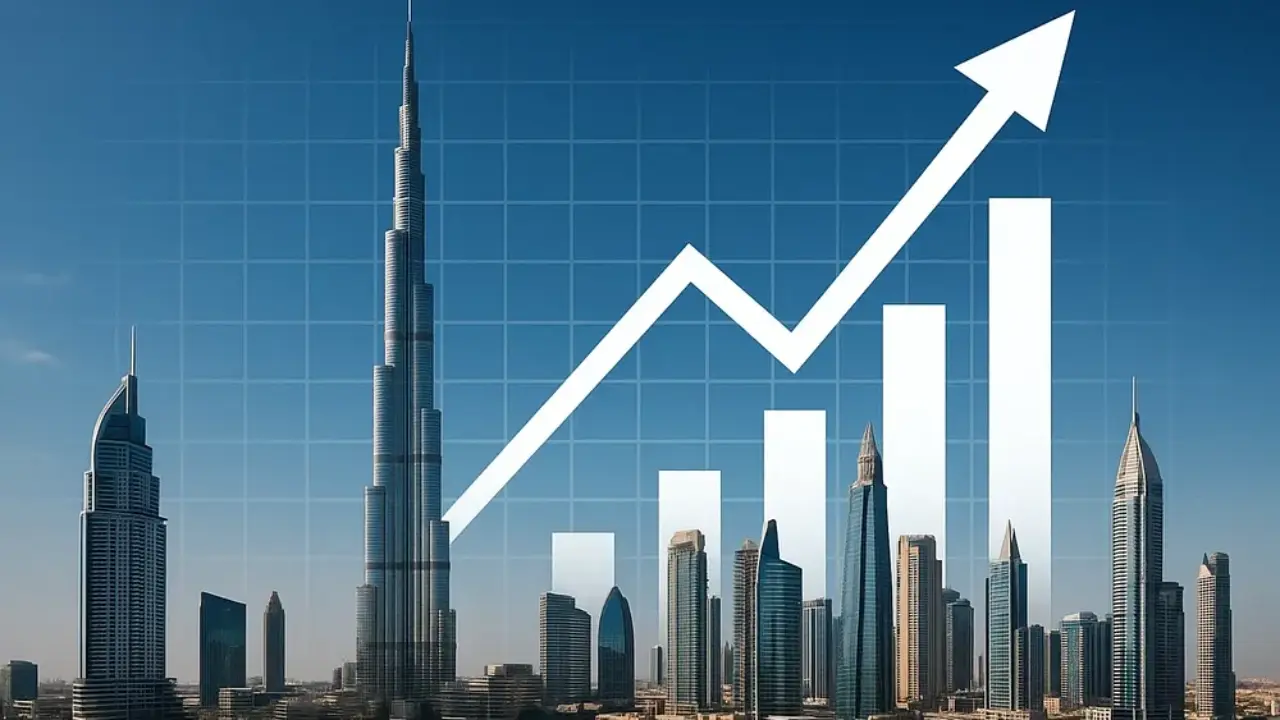
Dubai recorded 296 home sales above $10 million in the first half of 2026 — a record $5.1 billion in ultra-prime transactions, according to Knight Frank data — even as the broader rental and mid-market segment continued to soften, with Abu Dhabi’s rent freeze still in place and over 18,000 units handed over in Dubai in the first five months of the year alone (Mitchell’s Commercial Realty).
The Headline Number vs. the Structural Story
Dubai’s GDP expanded 2.4% year-on-year in Q1 2026 to AED 232 billion, led by non-oil sectors including wholesale, retail, and financial and insurance services — growth that held up through the regional conflict period even as some external commentary predicted it would stall (Edwards & Towers). Total H1 property sales reached $78 billion across more than 86,000 transactions, the second-highest first-half performance on record, though still below 2025’s exceptional run (Arabian Business).
The Angle Most Property Coverage Misses: This Isn’t the 2008 Cycle
A single data point captures why this cycle behaves differently from Dubai’s prior boom-bust pattern: only 4% of homes sold in Dubai last year were resold within 12 months of purchase, compared with 25% during the 2008 cycle, according to market data reported by Edwards & Towers (Edwards & Towers). That shift from short-term flipping toward end-user and long-term investor ownership is the single most important structural difference between today’s market and the speculative excess that preceded the global financial crisis.
Foreign Capital Is Flowing In, Not Out
Foreign investment in Dubai real estate rose 26% to $40.4 billion in the first half of 2026, while luxury real estate investment specifically increased 26% to $23.9 billion (Arabian Business). The UAE’s 2025 foreign direct investment reached a record AED 177.3 billion ($48.3 billion), placing the country among the world’s top ten FDI destinations — a base that is cushioning the property sector’s adjustment even as Q2 saw three consecutive months of price declines in the broader residential segment (Mitchell’s Commercial Realty).
Oil Output Hit a Record, and Technology Access Just Expanded
UAE crude output reached an all-time high of 4.1 million barrels per day in June, even as Dubai’s own growth is now overwhelmingly non-oil in composition. Separately, a US technology access upgrade now places the UAE alongside the UK, India and South Korea in terms of advanced technology availability — a shift with multi-year implications for data-centre, power infrastructure and high-income technical talent demand, rather than an immediate market catalyst (Mitchell’s Commercial Realty).
The Population Story Underpinning Demand
Dubai’s population surpassed 4 million in 2025, with a further 175,000–225,000 residents projected for 2026, driven increasingly by long-term residents and skilled migrants rather than short-term speculative buyers, according to Engel & Völkers’ market review — a demand base the IMF expects to be supported by roughly 5% UAE economic growth in 2026 (Engel & Völkers).
What to Watch for the Rest of 2026
The UAE Central Bank has forecast 9.8% economic growth for 2027, a figure that, if realised, would mark a sharp acceleration from the current cycle’s more moderate pace — and would test whether Dubai’s pipeline of over 100,000 additional announced units can be absorbed without reproducing the oversupply dynamics of prior cycles.
Discover more from The Economy
Subscribe to get the latest posts sent to your email.
Analysis
Southeast Asia Private Equity Confronts 43% Value Decline in 2025: A Turning Point in Regional Capital Markets

The champagne that flowed freely through Singapore’s financial district just a year ago has given way to something more sobering: a recognition that Southeast Asia’s private equity landscape is undergoing its most significant recalibration in a decade. According to EY’s Southeast Asia Private Equity Pulse 2025 year-end report, deal value across the region plummeted 43% year-on-year to US$9.1 billion, spread across 59 transactions—a stark retreat from the US$16 billion deployed across 67 deals in 2024.
This isn’t merely a statistical blip. It represents a fundamental shift in how institutional capital views one of the world’s most dynamic emerging markets, driven by an confluence of geopolitical uncertainty, valuation discipline, and a sobering reassessment of exit pathways that has rippled from Hong Kong boardrooms to Jakarta trading floors.
The Anatomy of a Downturn: Megadeals Disappear, Average Sizes Contract
The most telling indicator lies not in the headline number, but in the composition of deals. Southeast Asia witnessed just four megadeals exceeding US$1 billion in 2025, half the eight recorded in 2024. Consequently, the average deal size contracted to US$267 million from US$356 million—a 25% decline that signals investors’ preference for calculated bets over transformational plays.
Luke Pais, EY-Parthenon Asia-Pacific Private Equity Leader, captured the prevailing sentiment succinctly: “Amid geopolitical and macroeconomic uncertainties, deal activity and exits are expected to slow over the next few quarters.” This caution reflects broader Asia-Pacific trends, where Bain & Company’s 2025 regional analysis indicates that while deal value across the wider region increased modestly, Southeast Asia’s trajectory diverged sharply from India’s double-digit growth and Japan’s steady buyout pipeline.
The narrative becomes more nuanced when examining quarterly fluctuations. Q1 2025 opened with unexpected strength—deal value surging 5.5 times year-on-year to US$2 billion across 14 transactions, primarily driven by two large-ticket investments contributing 77% of total value. Yet this momentum proved fleeting. Q2 witnessed deal value plummet to US$1 billion across 22 deals as megadeals evaporated, while Q3 recovered to US$2.5 billion—again propelled by outsized transactions rather than broad-based activity.
Singapore’s Dominance and Sectoral Realignment
Geography tells its own story. Singapore commandeered approximately 74% of regional deal value in 2025, cementing its position as Southeast Asia’s undisputed private equity hub. This concentration reflects not just the city-state’s regulatory sophistication and connectivity, but also the infrastructure and digital transformation investments that have become magnets for institutional capital.

Sector dynamics reveal where conviction remains strongest. Infrastructure and energy transactions accounted for 53% of investments, as general partners gravitated toward policy-supported, scalable platforms—particularly data centers and telecommunications towers responding to the region’s insatiable digital appetite. According to Deloitte’s Asia Pacific Private Equity 2025 Almanac, consumer goods, technology, media, and telecommunications (TMT), and healthcare remained key drivers, though valuation compression forced investors to recalibrate their underwriting assumptions.
Real estate, once a darling of regional allocators, captured just 11% of deal value—a precipitous fall reflecting both valuation concerns and persistent questions about commercial property fundamentals in a hybrid work environment. Meanwhile, ESG-linked themes continued their ascent, with renewable energy and sustainability-focused platforms attracting capital from investors increasingly mindful of regulatory tailwinds and consumer preference shifts.
The Exit Conundrum: A Market Searching for Liquidity
Perhaps most concerning for limited partners awaiting distributions is the exit landscape. PE-backed exits totaled just US$4.4 billion across 33 deals in 2025, down 47% from the previous year. This liquidity drought mirrors a global phenomenon—KPMG’s Q4 2025 Pulse of Private Equity notes the Asia-Pacific region suffered from a continued mismatch between capital flowing into private markets and money returning to investors, exacerbated by the region’s underdeveloped secondary market infrastructure.
IPO windows remained stubbornly shut across most Southeast Asian exchanges in 2025. Secondary transactions gained traction as sponsors sought alternative monetization routes, with Navis Capital among the firms pivoting toward secondaries driven by rising liquidity requirements. Yet these represented tactical responses rather than systemic solutions, leaving aging portfolios—some dating to 2018-2019 vintages—stuck in limbo.
The median Distribution to Paid-In (DPI) capital for recent fund vintages has declined markedly compared to earlier cohorts, creating what Herbert Smith Freehills Kramer’s fourth-quarter analysis characterizes as “a growing pool of privately held assets accumulating over several vintages.” This dynamic has intensified LP pressure on general partners to demonstrate exit readiness, fundamentally reshaping how deals are underwritten from inception.
Geopolitical Headwinds and the Tariff Shadow
No discussion of Southeast Asia’s private equity market in 2025 is complete without acknowledging the geopolitical elephant in the room. The Trump administration’s “Liberation Day” tariffs, implemented in early 2025, sent shockwaves through export-oriented economies, though exemptions on key categories like semiconductors, electronics, and pharmaceuticals mitigated the worst-case scenarios.
Yet uncertainty itself became a transaction cost. As PineBridge Investments’ 2026 Asia Equity Outlook observes, Liberation Day tariffs unexpectedly singled out certain economies with elevated effective rates, though the impact on Southeast Asia was comparatively muted given beneficiary status under the “China+1” supply chain diversification strategy. Still, the potential for policy volatility—particularly around US-China relations—kept many institutional allocators on the sidelines.
The one-year trade truce between Washington and Beijing announced in late 2025 has injected cautious optimism into 2026 planning, but investors remain acutely aware that structural tensions persist. This has accelerated a pivot toward domestic consumption-oriented assets—healthcare facilities, financial services, education infrastructure—insulated from export dynamics.
The 2026 Inflection Point: Value Creation Trumps Multiple Expansion
Looking forward, industry leaders anticipate a market characterized by operational rigor rather than financial engineering. With interest rates having normalized across most Southeast Asian central banks following aggressive monetary easing in 2025, the easy returns generated by multiple expansion during the zero-rate era have evaporated. According to Partners Group’s Private Markets Outlook 2026, the emphasis has shifted decisively toward control investments that allow sponsors to actively steer companies through uncertainty, complemented by thematic exposure to structural trends like demographic shifts and digital adoption.
Mid-market deals are expected to dominate 2026 activity. The US$100-500 million sweet spot offers sufficient scale for operational transformation while avoiding the valuation friction and competitive intensity that plague billion-dollar auctions. Sector focus will likely crystallize around digital infrastructure (data centers, fiber networks, towers), healthcare (hospitals, diagnostic chains, specialized clinics), and financial inclusion platforms capitalizing on Southeast Asia’s underbanked population.
Fundraising dynamics also merit attention. While 2025 saw only one Southeast Asia-focused fund close during Q3 (raising US$500 million), several vehicles with regional exposure reported interim closures by August. The power balance in fundraising is shifting from Western institutional LPs toward Asian private wealth and family offices, particularly in Singapore, Hong Kong, and Dubai, where advisers report clients lifting PE allocations from low single-digits into the 10-15% range.
Strategic Imperatives for an Uncertain Decade
The private equity firms that will thrive in Southeast Asia’s next chapter are already adapting their playbooks. Portfolio company support has intensified, with general partners helping evaluate tariff exposure, manufacturing footprints, and currency hedges. Due diligence has become more rigorous, with stress-testing across multiple macroeconomic scenarios standard practice.
Notably, multinationals are increasingly partnering with private equity to accelerate growth in regional operations—the recent Starbucks and Burger King joint ventures signal a template that could proliferate in 2026. These hybrid structures offer brands local expertise and patient capital while providing sponsors access to established platforms with proven unit economics.
The bifurcation between top-quartile and median performers is widening. As Bain & Company’s research indicates, investors continue migrating toward quality funds with demonstrated performance, pushing average fund sizes to US$174 million—up 28% year-on-year and 17% above the five-year average. This flight to quality will likely intensify as aging portfolios force some sponsors to crystallize losses or accept suboptimal exit multiples.
The Verdict: Resetting, Not Retreating
Southeast Asia’s 43% private equity value decline in 2025 represents recalibration, not capitulation. The region’s underlying fundamentals—4.7% GDP growth, rising consumption, digital adoption, and supply chain realignment—remain compelling. What’s changed is the market’s appreciation for complexity.
The era of indiscriminate capital deployment fueled by cheap leverage and multiple expansion has ended. What emerges is a more surgical approach: smaller checks, operational focus, domestic orientation, and exit planning embedded from day one. For investors with conviction and operational capabilities, this reset creates opportunities to acquire quality assets at rational valuations—precisely the conditions from which the next vintage of superior returns will emerge.
As February 2026 unfolds, the question isn’t whether Southeast Asia’s private equity market will recover, but rather what shape that recovery will take. Early indicators—stabilizing geopolitical tensions, monetary easing reaching terminal rates, a pipeline of interim fund closures—suggest the building blocks are assembling. Whether 2026 delivers on this cautious optimism will depend on factors both local and global, measurable and unpredictable—the very essence of emerging market investing.
Discover more from The Economy
Subscribe to get the latest posts sent to your email.

US 10-Year Yield Hits 5.24%: What the Historic Bond Market Sell off Means for Mortgages and Investors

Battle for the Farm Belt: How Tariff Pressures and Fuel Costs Are Reshaping Iowa’s 2026 Midterms

Southeast Asia’s Critical Minerals Power Play: Can ASEAN Avoid Choosing Between China and the US?

MAS Allocates S$1.45 Billion to Five Asset Managers in Third EQDP Batch: Total Deployment Reaches S$5.4 Billion

Beyond Singapore’s Borders: How Squeezed SMEs Can Unlock High-Yield Growth Across ASEAN

Bank Jago’s Wealth Management Push:Indonesia’s 31.1 Million Investors boom

Beyond the Four-Year Degree: The $100K+ Trade Careers Young Americans Are Overlooking

SpaceX Starship Achieves First Full Orbit on Historic 10-Hour Test Flight 14

Google’s $15B Finland AI Investment: Data Centers, Nuclear Power & Jobs

Fast Invoice Factoring: Rates, APR Math & Contract Traps

SOC 2 Type II Guide: Cost, Timeline & Compliance Companies

Hong Kong Wages Surge 3.4% in June: Sector Data & Analysis

Silver Price Today: Why the Xi-Trump AI Standoff Is Fueling a Safe-Haven Rally

Citibank & Dólar Estadounidense: Forex Playbook After the Xi-Trump Truce

Top 30 Stocks for Investment in PSX for Massive ROI in 2026

Oil Prices Break $100 in 2026: Middle East Conflict & Energy Markets

BRICS+ Cross-Border Payments 2026: Interoperability Explained

Fidelity Investments Review 2026: SPAXX Yields & Zero-Fee Funds

10-Year Treasury Yield Hits 4.80%: What It Means for Rates & Portfolios

Shein Clothes Quality & Safety in 2026: What Lab Tests Show

IMF & World Bank 2026 Global Economic Outlook: Growth, Inflation, Debt

China’s US$10.8 Billion Trade Shortcut: Why the Pinglu Canal Matters

High-CPM Finance Niches 2026: Publisher Monetization Blueprint

Middle East War Economics 2026: Oil Prices & Energy Markets

China Stocks Today: Are Big Economies in Asia Nearing a Market Bottom?

Social Security Trust Fund 2032: OASI Depletion Timeline Explained

Global Pension Systems Ranked: The World’s Best and Worst Retirement Frameworks

Gavin Baker AI Outlook: Why the Compute Shortage Persists Through 2028
-

 Markets & Finance9 months ago
Top 15 Stocks for Investment in 2026 in PSX: Your Complete Guide to Pakistan’s Best Investment Opportunities
-

 Analysis7 months ago
Johor’s Investment Boom: The Hidden Costs Behind Malaysia’s Most Ambitious Economic Surge
-

 Analysis7 months ago
Top 10 Stocks for Investment in PSX for Quick Returns in 2026
-

 Banks8 months ago
Best Investments in Pakistan 2026: Top 10 Low-Price Shares and Long-Term Picks for the PSX
-

 Analysis8 months ago
Brazil’s Rare Earth Race: US, EU, and China Compete for Critical Minerals as Tensions Rise
-

 Investment9 months ago
Top 10 Mutual Fund Managers in Pakistan for Investment in 2026: A Comprehensive Guide for Optimal Returns
-

 Global Economy9 months ago
15 Most Lucrative Sectors for Investment in Pakistan: A 2025 Data-Driven Analysis
-

 Global Economy9 months ago
Pakistan’s Export Goldmine: 10 Game-Changing Markets Where Pakistani Businesses Are Winning Big in 2025