
Aviation
Why the U.S. Budget Airline Model Is Running Out of Runway

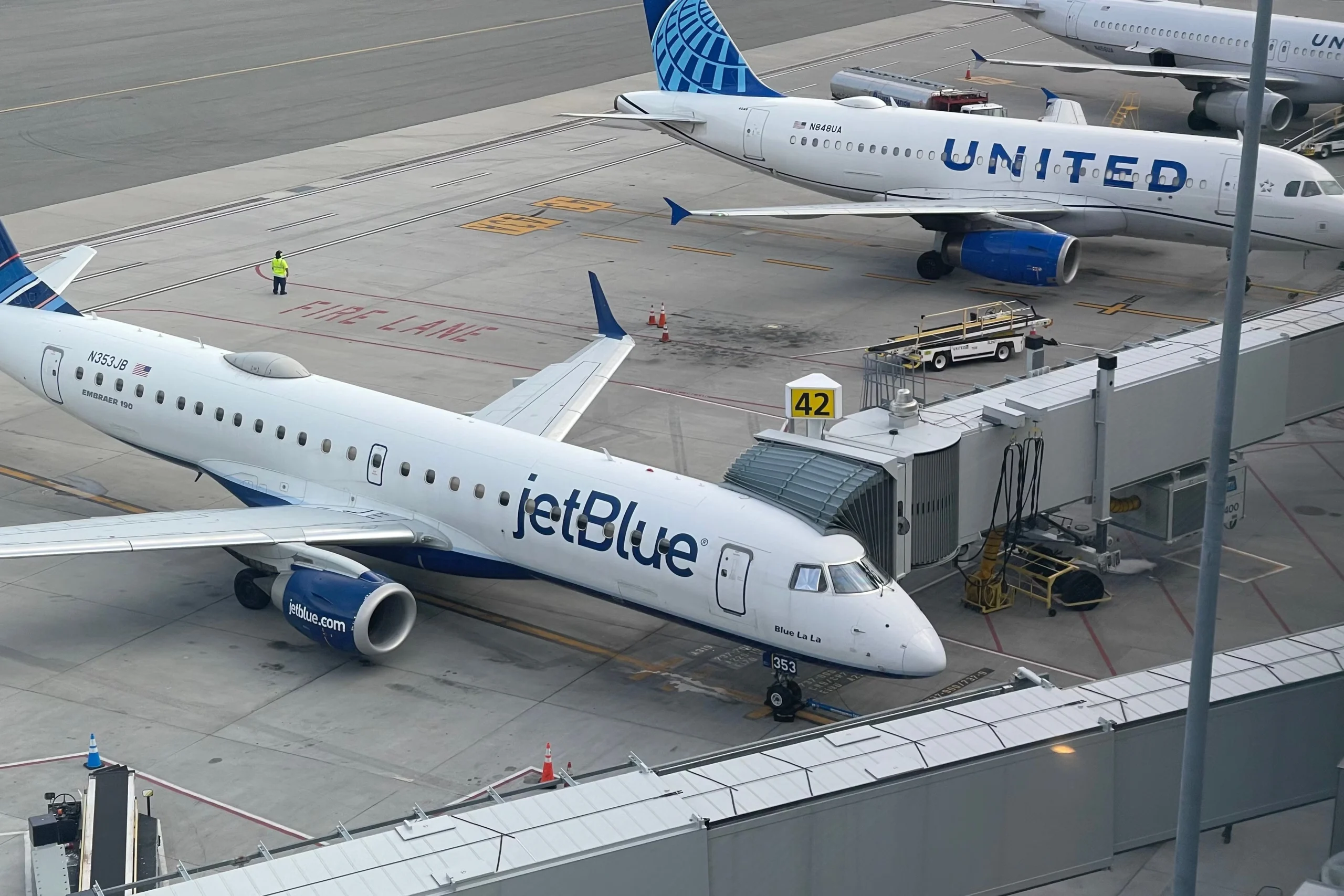
CNBC’s viral analysis argues the U.S. budget airline model is structurally broken. Rising fuel costs, labour pressures, fare compression, and changing traveller behaviour are eroding the low-cost carrier value proposition. Here’s what it means for travellers and investors.
A Model Built on Thin Margins
The U.S. budget airline model is, at its core, a financial engineering achievement as much as an operational one. Carriers like Spirit, Frontier, and Allegiant built viable businesses by stripping the flying experience to its minimum viable product — a seat, a seatbelt, and a destination — and then charging separately for everything else: bags, seat selection, boarding position, snacks, and legroom. The base fare became a marketing tool; the ancillary fee revenue became the actual business.
For roughly two decades, this model worked. Low-cost carriers stimulated demand by making flying accessible to price-sensitive travellers who would not otherwise have purchased a ticket. They pressured legacy carriers to lower fares, benefiting consumers across the market. They flew point-to-point routes that avoided the hub-and-spoke complexity and associated costs of network carriers.
Key Takeaways
- The U.S. budget airline model — built on high-frequency, point-to-point routes with ancillary fee revenue — faces simultaneous pressure from fuel costs, labour, and fare competition
- Spirit Airlines filed for Chapter 11 bankruptcy in late 2024; Frontier and Allegiant face structurally elevated cost bases
- The post-pandemic leisure travel boom that sustained low-cost carriers through 2022–2024 is normalising
- Legacy carriers have closed the fare gap by aggressively expanding basic economy offerings
- Goldman Sachs is simultaneously backing a travel-sector merger as Gulf airline recovery accelerates, suggesting a bifurcated global aviation recovery
Now, according to a widely-read CNBC analysis published June 20, 2026, the model is running out of runway (CNBC, June 20, 2026).
What Went Wrong
Several structural forces have converged to undermine the budget carrier value proposition simultaneously.
Fuel costs are the most immediate and severe. The Iran conflict-driven oil price spike — WTI rising from $57 to $113 over three months — hit budget carriers disproportionately hard. Unlike the legacy majors, which have sophisticated fuel hedging programmes and larger balance sheets to absorb cost volatility, carriers like Frontier and Allegiant operate with limited hedging and thin cash reserves. Jet fuel, which typically represents 25–35% of operating costs, became the decisive variable in earnings projections for the first two quarters of 2026.
Labour costs represent a second, less cyclical challenge. Post-pandemic pilot shortages, accelerated retirements, and the renegotiation of multiple pilot contracts across the industry have permanently raised the cost of flight crews. Unlike fuel costs, which will partially reverse as oil prices normalise, labour costs are sticky. Budget carriers, which historically competed partly by paying below industry-average wages to a workforce that valued the lifestyle and schedule flexibility of low-cost operations, no longer have that cost advantage to the same degree.
The legacy fare response has been arguably the most strategically damaging development. Delta, United, and American have spent the past four years aggressively expanding their basic economy and unbundled fare offerings — effectively creating a product tier that competes directly with budget carriers on price while retaining the network, reliability, and loyalty programme advantages of a full-service carrier. A traveller who would have chosen Spirit for a $99 base fare can now often find a similar price on United’s basic economy with better schedule options, more route combinations, and the ability to earn miles.
The Spirit Collapse as a Warning
Spirit Airlines’ Chapter 11 bankruptcy filing in late 2024 was the clearest signal that the model’s most aggressive practitioners were structurally unviable. Spirit had bet on a hyper-growth strategy that required sustained load factors above 85%, consistent ancillary revenue per passenger, and fuel costs that cooperated. When leisure demand began normalising after the post-pandemic travel boom, load factors fell; when oil prices spiked, the cost side blew out. The result was a carrier with an unsustainable unit cost structure and insufficient pricing power to offset it.
Spirit’s failure should have been a clarifying moment for the broader budget sector. Instead, the remaining carriers largely maintained their growth ambitions and capacity commitments — a bet that proved difficult to sustain as the macroeconomic environment deteriorated in early 2026.
The Ancillary Fee Arms Race
One of the more counterproductive dynamics in the budget carrier model has been the escalating arms race of ancillary fee complexity. What began as simple charges for checked bags has evolved into a labyrinthine system of seat selection fees, carry-on bag fees, priority boarding charges, and in-flight service fees that has progressively alienated the price-sensitive travellers the model was designed to serve.
Consumer research consistently shows that travellers who are surprised by total fare costs — arriving at checkout to find a $99 advertised base fare has become a $180 total transaction — experience significant dissatisfaction and reduce loyalty to the brand. Budget carriers have built businesses that are architecturally dependent on fees that customers resent paying. Legacy carriers, having adopted similar unbundling, have neutralised the price advantage while largely avoiding the customer experience degradation — because their base product is better enough to absorb the irritation.
The Global Contrast: Gulf Aviation’s Recovery
The story of American budget airline distress runs in stark contrast to what is happening in the Gulf aviation market. Goldman Sachs recently placed a bet on a travel sector merger that its analysts believe will drive sharp gains in a specific travel stock, citing the recovery of Gulf carrier operations and the structural growth in premium international travel (CNBC, June 20, 2026).
Emirates, Etihad, and Qatar Airways — carrying passengers who increasingly favour the premium end of the market — are seeing strong demand recovery, particularly for long-haul routes connecting Asia to Europe and North America via Gulf hubs. The post-Hormuz-crisis reopening is already restoring Gulf carrier capacity that was disrupted during the conflict period. That recovery bifurcates global aviation: premium long-haul carriers are thriving while U.S. budget short-haul carriers struggle.
The contrast reflects a deeper shift in post-pandemic travel preferences. Research has consistently shown that travellers who resumed flying after COVID were willing to pay more for comfort, reliability, and flexibility. The budget model, which monetises discomfort and inflexibility, was structurally better suited to a pre-pandemic travel market characterised by price-maximising leisure travellers — a market that has evolved.
Implications for Investors and Travellers
For equity investors, the budget airline sector looks increasingly like a value trap rather than a cyclical recovery opportunity. The structural challenges — permanent labour cost elevation, legacy carrier competition, customer experience erosion, and oil price sensitivity — suggest that the sector’s problems are not simply a function of the current economic cycle. Fuel cost normalisation will provide some near-term relief, but it will not restore the competitive moat that budget carriers once possessed.
For travellers, the medium-term consequence may paradoxically be higher base fares. As capacity is rationalised and weaker carriers are restructured or consolidated, the aggressive price competition that benefited consumers over the past 15 years may moderate. The market is moving toward a structure where three or four large network carriers dominate on most routes, competing on loyalty programmes and premium cabins rather than base price.
That is better news for airline shareholders than for the travellers who built their vacation planning around $79 one-way fares. The era of genuinely cheap flying in the United States may be closer to its end than its beginning.
Discover more from The Economy
Subscribe to get the latest posts sent to your email.


Travelers booking flights in 2026 aren’t imagining the price increases. US airfares are up 26.5% year-on-year as of June 2026, according to Bureau of Labor Statistics data compiled by NerdWallet’s Travel Inflation Report — a sharp acceleration compared with the broader cost-of-living increase over the same period. Zoomed out over a decade, airfares have actually grown more slowly than overall inflation, but the year-on-year spike is real and it is being driven by a specific, identifiable cause.
Summer-specific data confirms the same trend from a different angle: domestic cash fares for travel between June 1 and September 20, 2026 are running roughly 15% higher than the prior year, with domestic points fares up 18% and international cash fares up 12%, according to Points Path’s 2026 summer airfare report.
The root cause: a genuine jet fuel supply problem
Unlike prior periods of airfare inflation driven mainly by demand recovery, 2026’s price increases trace directly to a jet fuel shortage triggered by the Middle East conflict and the Strait of Hormuz disruption, according to Travel And Tour World, citing IATA analysis. Airlines have responded by raising fuel surcharges and adjusting flight schedules — but the more consequential response has been outright capacity cuts.
Airlines are flying fewer planes, not just charging more
The scale of the capacity response has been striking. In April, 19 of the top 20 global airlines — including Lufthansa, Delta, United, and Air France-KLM — slashed flights, with further cuts possible into winter if fuel costs remain elevated, according to J.P. Morgan’s Summer Travel Outlook. Air India cut more than 250 international flights, Singapore Airlines has warned that geopolitical tensions and elevated fuel prices will continue to weigh on earnings, and major Chinese carriers are reporting softening demand as high fuel costs squeeze margins with limited room to raise prices further.
Demand hasn’t cracked — yet
Despite the sharply higher prices, demand has largely held up in the US. Delta Air Lines — the first major US carrier to report Q1 2026 earnings after the Iran conflict escalated — posted record first-quarter revenue of $14.2 billion, more than 9% higher year-on-year, according to Points Path. The report’s broader conclusion is blunt: with demand still running strong, airlines have no financial incentive to lower prices. Planes are still flying full even at elevated fares, giving carriers pricing confidence they have used to push fares higher across the board.
The picture looks different outside the US. A leading European tour operator’s mid-May data showed UK summer 2026 bookings tracking 10% behind the same period last year, compared with a 7% lag across all geographies combined, per the same J.P. Morgan analysis — suggesting European price sensitivity is higher than in the American market, and that low-cost carriers and tour operators there are already using discounting to fill seats as customers hesitate on bookings.
Would a Strait of Hormuz deal bring fares down?
The direct line between the fuel shortage and the Iran-Hormuz conflict means the emerging reopening deal — described by US and regional officials this week as in its “final stage” — is directly relevant to airfare trajectories. Lower crude and jet fuel prices would ease the primary cost pressure airlines have cited for both surcharges and capacity cuts. However, industry analysts caution the relief would not be immediate: fuel hedging programmes shield some carriers from price swings for months at a time, and the capacity cuts already made take time to reverse even once input costs ease.
Key takeaways
- US airfares are up 26.5% year-on-year as of June 2026; summer domestic fares are up roughly 15-18%, international up 12%.
- The primary driver is a jet fuel shortage tied to the Strait of Hormuz disruption, not simply post-pandemic demand recovery.
- 19 of the top 20 global airlines cut flights in April 2026, with further cuts possible if fuel costs stay elevated.
- US demand has remained resilient — Delta posted record Q1 2026 revenue — giving airlines little incentive to cut prices.
- European demand looks softer, with UK summer bookings tracking roughly 10% behind last year, prompting earlier discounting there than in the US.
FAQ
Why are flight prices so high in 2026? Primarily a jet fuel shortage caused by the Strait of Hormuz disruption, which has pushed airlines to raise fuel surcharges and cut capacity, combined with resilient travel demand that gives carriers little incentive to lower fares.
Will airfares come down if the Strait of Hormuz reopens? Potentially, over time — lower fuel costs would ease the core cost pressure, though fuel hedging contracts and the time needed to restore cut capacity mean any relief likely wouldn’t be immediate.
Are flight prices rising everywhere equally? No. US demand and pricing have stayed firmer, while parts of Europe — notably the UK — are seeing softer bookings and earlier discounting from low-cost carriers.
Discover more from The Economy
Subscribe to get the latest posts sent to your email.
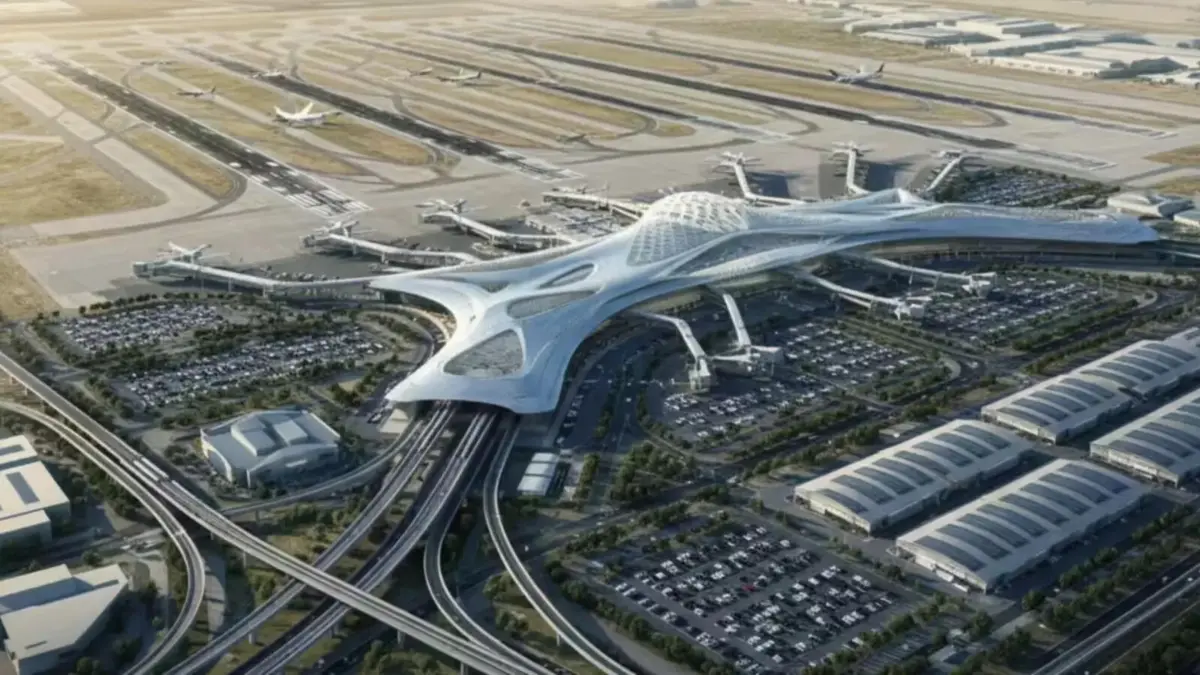
Dubai is in the middle of building what is intended to become the world’s largest airport by capacity — a Dh128 billion ($34.8 billion) expansion of Al Maktoum International Airport at Dubai World Central (DWC), according to Gulf News. When complete, the facility will feature five parallel runways, roughly 400 gates, and the capacity to handle up to 260 million passengers a year — nearly three times the current capacity of Dubai International Airport (DXB), already the world’s second-busiest airport for international traffic, per analysis from K Estates.
Where the project actually stands in 2026
Construction crews have already excavated more than 45 million cubic metres of earth and completed the airport’s second runway, according to MyBayut’s DWC guide. The first phase — a central passenger terminal and four concourses designed to handle 150 million passengers annually — is targeted for completion around 2032, per Khaleej Times. Dubai is set to allocate AED 55 billion worth of expansion contracts by the end of 2026 alone, underscoring the pace at which the project is being financed and built.
The scale of ambition extends beyond aviation infrastructure. DWC is being planned as a self-contained “airport city,” incorporating business, cultural, and residential districts across Dubai South, roughly 35 kilometres from Dubai Marina, according to the same Khaleej Times reporting. All operations currently based at DXB — including Emirates’ long-haul network — are expected to eventually transfer to the new hub.
Part of a much bigger regional aviation build-out
Al Maktoum’s expansion is the largest single project within a broader regional wave of investment: airports across the Middle East, Africa, and South Asia are expected to spend a combined $183 billion on capacity, connectivity, and passenger-experience upgrades, with the UAE and Saudi Arabia leading the push, according to Gulf News. Within the UAE alone, expansion plans extend beyond Dubai to Sharjah and Ras Al Khaimah, with a shared emphasis on AI-enabled operations, IoT systems, and energy-efficient terminal design.
What it means for the region’s real estate and travel markets
The airport build-out is already reshaping property markets nearby. Transactions in Dubai South exceeded AED 15 billion ($4.1 billion) in just the first five months of 2025 — nearly matching the entire AED 16.1 billion recorded across all of 2024 — with analysts forecasting further price appreciation as the airport nears completion, according to K Estates. For travellers and airlines, the eventual payoff is a dramatic increase in regional connectivity capacity at a time when global air travel demand — and airfares — have both been climbing steadily through 2026.
Key takeaways
- Al Maktoum International Airport’s expansion carries a price tag of roughly $34.8 billion (Dh128 billion) and is intended to make it the world’s largest airport by 2050.
- Full build-out capacity: five runways, ~400 gates, up to 260 million passengers annually and 12 million tonnes of cargo.
- Phase one, targeted for around 2032, alone will handle 150 million passengers a year.
- The project has already reshaped Dubai South real estate, with transactions surpassing AED 15 billion in the first five months of 2025.
- It is the anchor project within a broader $183 billion regional airport investment wave across the Middle East, Africa, and South Asia.
FAQ
When will Al Maktoum International Airport be the world’s largest? Full completion is projected around 2050, though the first major phase is targeted for roughly 2032.
How many passengers will Al Maktoum Airport handle? Up to 260 million passengers annually at full capacity, with the first completed phase alone handling 150 million.
Will Emirates move its operations to the new airport? Yes — all Dubai International Airport operations, including Emirates’ long-haul network, are expected to eventually transfer to Al Maktoum International.
Discover more from The Economy
Subscribe to get the latest posts sent to your email.
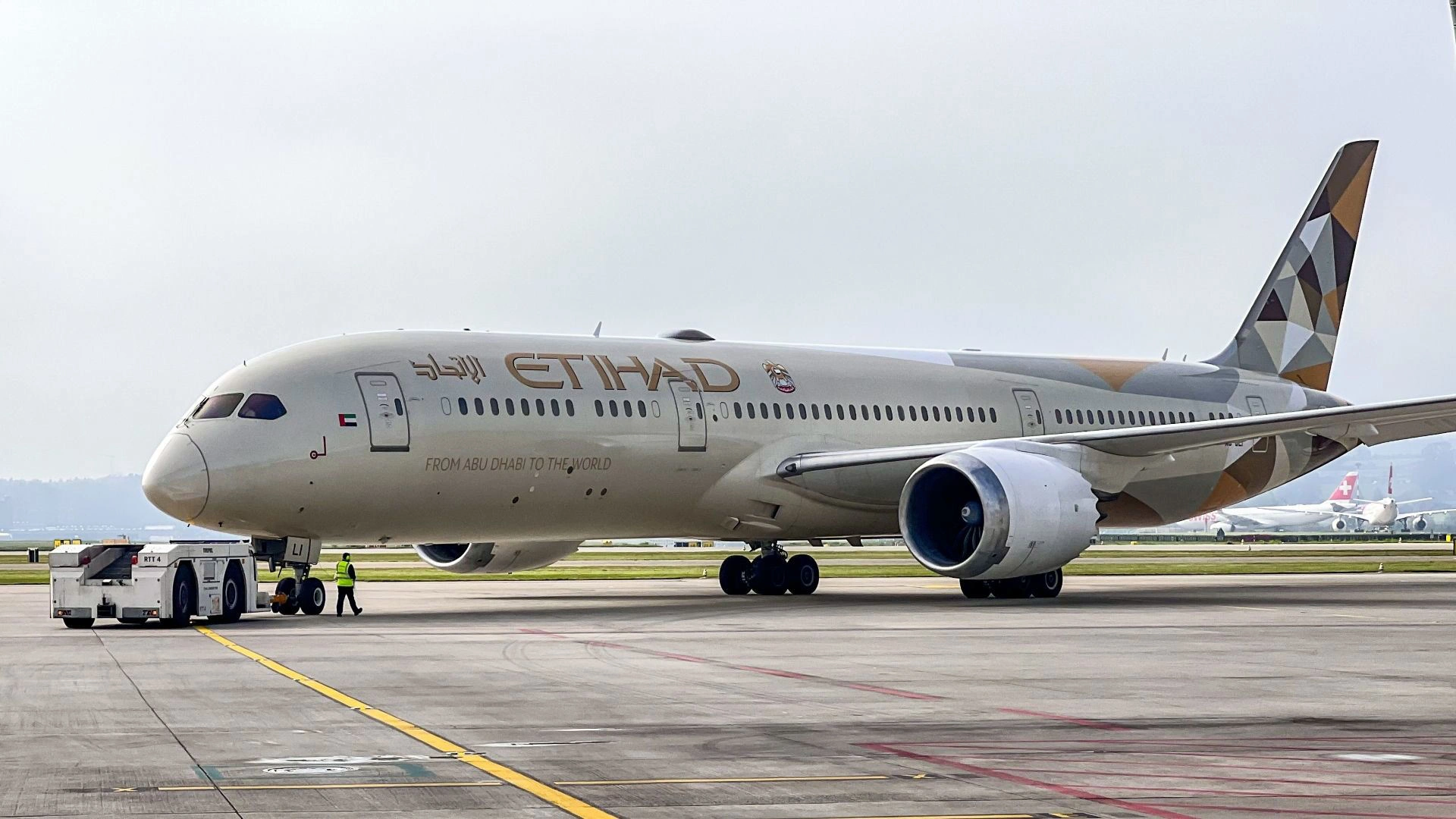
Antonoaldo Neves, Etihad Airways’ chief executive, took the helm with a singular, unsentimental mandate: strip away the vanity and chase the yield. The ghosts of the airline’s disastrous 2010s equity spending spree—a period defined by burning cash on doomed European carriers like Air Berlin and Alitalia—are finally exorcised. Today, from the polished concourses of the newly inaugurated Terminal A at Zayed International Airport, a quieter, deadlier calculus is taking shape. This week’s announcement of an Etihad European expansion—specifically adding Prague and Warsaw to its summer 2025 route map—is not merely about planting flags in foreign capitals. It is a calculated strike in the escalating air war over the global transit passenger.
The aviation landscape of the Arabian Gulf has fundamentally transformed since the pandemic. Abu Dhabi is no longer trying to outspend Dubai or out-fly Doha. Instead, it is playing a game of surgical precision.
Global passenger demand is currently testing the physical limits of airport infrastructure and aircraft leasing markets. According to the International Air Transport Association (IATA), Middle Eastern carriers posted a 10.8% year-on-year increase in international traffic midway through 2024. Yet, growth is bottlenecked by systemic delivery delays from both Boeing and Airbus, forcing airline executives to treat every available aircraft as an ultra-premium asset.
That said, Etihad remains remarkably unbothered by the macro-level chaos. Armed with a leaner fleet and a restructured balance sheet, the carrier is selectively targeting secondary European markets where legacy competitors are retreating or failing to meet surging point-to-point demand.
The Economics of Eastern Europe
Prague and Warsaw are not the glittering long-haul megahubs of London or Frankfurt. They are, however, formidable economic engines in their own right. By deploying Boeing 787 Dreamliners to these cities, Etihad is capturing a highly specific demographic. They are targeting affluent Eastern European tourists heading to Southeast Asia, alongside a rapidly growing cohort of corporate travellers facilitating trade between the Arabian Peninsula and the Visegrád Group.
Etihad new destinations are chosen through ruthless route profitability algorithms, not political prestige.
For years, passengers from Poland and the Czech Republic bound for Thailand, Vietnam, or the Maldives had to transit through Munich, Paris, or Amsterdam. This geographic inefficiency enriched Air France-KLM and the Lufthansa Group. Abu Dhabi is simply cutting out the middleman. By flying directly into these Eastern European capitals, Etihad captures the full fare premium while dramatically reducing the total travel time for the consumer.
The numbers justify the aggression. Passenger footfall between Eastern Europe and the United Arab Emirates has surged, driven by relaxed visa regimes and an influx of foreign direct investment. Reuters market data indicates that European outbound leisure travel has fully eclipsed 2019 levels, with premium cabin yields holding stubbornly high despite lingering inflationary pressures across the eurozone.
This is where the Neves strategy shines. He knows widebody aircraft are precious commodities in a supply-constrained world. You do not park a $250 million jet on the tarmac for nine hours at Heathrow if you can turn it around in two hours at Warsaw Chopin Airport. The asset utilisation rates on these mid-haul, six-hour European sectors are phenomenally efficient. They allow the aircraft to return to Abu Dhabi just in time to catch the midnight departure wave feeding traffic to Mumbai, Bangkok, and Sydney.
Reframing the Abu Dhabi Aviation Strategy
The obvious question requires a direct answer. Why is Etihad expanding its European network? Etihad is expanding its European network to capture underserved point-to-point premium leisure traffic and to feed its highly profitable Southeast Asian transit routes. This strategy bypasses congested Western European hubs while maximising the daily utilisation of its current widebody aircraft fleet.
That 43-word reality dictates every move the airline makes today.
The era of “The Residence”—the hyper-luxurious three-room suite in the sky that once defined the brand under former CEO James Hogan—is fading into aviation history. Today, the Abu Dhabi aviation strategy is defined by load factors, belly-hold cargo revenue, and operating margins.
The picture is more complicated when you look 130 kilometres up the road. Emirates, the colossus of Dubai, operates a fundamentally different model. Tim Clark built a machine designed to move the entire world through a single point using massive, high-density Airbus A380s. Qatar Airways, under the relentless drive of former chief Akbar Al Baker and his successor Badr Mohammed Al Meer, built an obsessive, high-frequency network that blankets the globe.
Etihad is choosing the middle path. It cannot match Emirates on pure volume, and it will not bleed cash to match Qatar on sheer connectivity.
What follows, however, is a masterclass in niche dominance. By targeting cities like Prague and Warsaw, Etihad avoids entering a financial bloodbath over landing slots at London Heathrow or Paris Charles de Gaulle. They are finding uncontested airspace. The Financial Times recently observed that mid-sized network carriers are currently posting the highest operating margins in the industry. They achieve this precisely because they are not forced to dump excess capacity on hyper-competitive trunk routes just to maintain market share.
Supply Chains and Sovereign Ambitions
This expansion ripples far beyond the departure gates of Eastern Europe. Downstream, the implications for European legacy carriers are severe.
Air France-KLM and the Lufthansa Group have historically relied on their Eastern European feeder networks to prop up the profitability of their long-haul Asian operations. When Middle East carriers Europe strategies shift toward these secondary cities, the European incumbents bleed high-yielding transit passengers. A Polish executive travelling to Singapore no longer needs to connect in Frankfurt; they can fly south to Abu Dhabi and connect east, often on newer aircraft and with superior service.
There is also the physical reality of the metal. The global aviation supply chain is severely fractured. Both Boeing and Airbus are missing delivery targets by months, and in some cases, years. Airlines are being forced to extend the leases of older, less fuel-efficient aircraft and cannibalise parts just to maintain their published schedules. Engine durability issues from manufacturers like Pratt & Whitney have grounded dozens of narrowbody jets globally.
In this hostile environment, launching two medium-haul destinations is a flex of operational reliability.
It signals to the market—and to the sovereign wealth funds backing the enterprise—that Etihad has secured the necessary lift to execute its “Journey 2030” growth mandate. The carrier plans to double its fleet to 150 aircraft and triple its passenger numbers to 33 million by the end of the decade. Adding routes is easy; flying them profitably when aircraft are scarce is the true test of management.
Every new European route also serves the broader geopolitical mandate of the UAE. Abu Dhabi is aggressively pivoting away from hydrocarbon dependency. Bloomberg Intelligence estimates that the broader tourism, logistics, and aviation sector now accounts for a rapidly growing percentage of the emirate’s non-oil GDP. Zayed International Airport capacity was built for exactly this moment. The glittering Terminal A, a $3 billion architectural marvel capable of handling 45 million passengers annually, needs humans to justify its existence. Prague and Warsaw are merely the latest tributaries feeding the river.
The Limits of the Desert Hub Model
Still, skepticism remains. The rapid scaling of Gulf carriers has historically triggered fierce protectionist backlash from European regulators and domestic airlines.
Can a region roughly the size of Scotland truly sustain three massive global aviation hubs operating within a 400-kilometre radius? Dissenting voices argue that the current yield environment is an anomaly, artificially inflated by post-pandemic revenge travel and constrained global capacity. Once Airbus and Boeing resolve their supply chain bottlenecks and flood the market with new jets, yields will inevitably soften.
“The Gulf carrier model is heavily reliant on a continuous, uninterrupted flow of global free trade and open borders,” notes a recent structural analysis by CAPA – Centre for Aviation. “As European states become increasingly protective of their environmental targets and domestic carriers, securing bilateral air rights for unlimited expansion will become exponentially more difficult.”
This is a structural vulnerability that cannot be ignored. European governments, spurred by Brussels, are imposing synthetic aviation fuel mandates and aggressive carbon taxes that disproportionately affect long-haul transit carriers. If Poland or the Czech Republic face pressure from the European Union to cap Gulf carrier frequencies on environmental grounds, the economics of these new routes collapse overnight. Lufthansa CEO Carsten Spohr has spent the better part of a decade lobbying for what he terms a “level playing field” against state-backed Gulf carriers.
Etihad’s smaller scale—its very advantage in agility—makes it susceptible to targeted price wars. If Emirates decides to drop a 500-seat A380 into Prague, or if Qatar Airways slashes fares out of Warsaw to protect its market share, Etihad lacks the immense financial shock absorbers of its neighbours to sustain a protracted war of attrition.
Closing the Loop on Legacy
The addition of Prague and Warsaw is a microcosm of modern aviation economics. It is not a story of flag-waving vanity, but of calculated, almost clinical efficiency. Etihad has learned the hardest lesson of the airline industry through bitter experience: prestige does not pay the fuel bill, and equity stakes in failing airlines do not buy loyalty.
By hunting in the geographic gaps left by European incumbents and avoiding the brutal crossfire of its larger Gulf neighbours, the airline is engineering a quiet, highly profitable resurrection. The battle for the global transit passenger is no longer being won solely on the flagship routes between London and Sydney. It is being fought, and won, in the margins.
Discover more from The Economy
Subscribe to get the latest posts sent to your email.

Why Ottawa Is Betting on Dubai: Inside Canada’s Gulf Trade Pivot

UK Wealth Tax Fears Trigger Record £13.9bn Investor Exodus Ahead of October Budget

July Jobs Shock: Why the Fed’s September Rate Decision Just Flipped (2026 Analysis)

Global Growth Forecast 2026: IMF, World Bank Outlooks and the “Slow-Hire, Slow-Fire” Labor Market

Pakistan Agriculture 2026: Sindh’s Cotton Surge vs. Punjab’s Monsoon Decline

Gold Price 2026: Why Bullion Has Fallen 25% From Its January Record High

Airfare Prices 2026: Why Flights Are Up 26.5% and What Could Finally Bring Fares Down

Indonesia Investment 2026: Record Q2 Realization vs. Falling FDI Confidence

Russia Oil Revenue 2026: The Iran War Windfall and What a Hormuz Deal Means for Moscow

China Economy 2026: How AI Exports and a Property Crash Are Splitting Growth in Two

Malaysia GDP 2026: Why Growth Keeps Outperforming Official Forecasts

Singapore GDP Q2 2026: 5.7% Growth Driven by AI-Linked Semiconductor Exports

Al Maktoum International Airport 2026: Dubai’s $35B Plan for the World’s Largest Airport

Pakistan Economy 2026: Why GDP Growth Isn’t Reaching Ordinary Households

Russia Bans Diesel Exports 2026: Global Fuel Market Impact Explained

Gold Price Forecast 2026: Fed’s July 29 Decision and Record Central Bank Buying Explained

Strait of Hormuz 2026: Why Markets Still Don’t Trust It’s Open

Strait of Hormuz Blockade 2026: Oil Prices Surge 9% as US-Iran Conflict Reignites

China Politburo July 2026: Stimulus Signals Explained

Pakistan Economy 2026: GDP Grows 3.7% as IMF Completes EFF Review Amid Middle East Risk

Apple vs OpenAI Lawsuit: The Economic Story Behind the Headline

Down But Not Out: Inside the Slow Sinking of Russia’s War Economy

Gulf Capital Retreat From Pakistan 2026: UAE Loan Freeze & What It Means

Indonesia Russian Oil Imports 2026: Why Jakarta Is Diversifying Crude Supply

AI Capex Bubble 2026: The Hidden $662B Debt Nobody Reports

The Yuan Now Settles 67% of Russian Oil Payments — Quiet De-Dollarization in Action

Global Stock Market Selloff 2026: Stagflation Fears Return as Iran Conflict Reignites

Gulf Sovereign Wealth Funds Hit Record $53.9B in H1 2026 Despite Iran War
-

 Markets & Finance7 months ago
Top 15 Stocks for Investment in 2026 in PSX: Your Complete Guide to Pakistan’s Best Investment Opportunities
-

 Analysis6 months ago
Johor’s Investment Boom: The Hidden Costs Behind Malaysia’s Most Ambitious Economic Surge
-

 Analysis6 months ago
Top 10 Stocks for Investment in PSX for Quick Returns in 2026
-

 Analysis6 months ago
Brazil’s Rare Earth Race: US, EU, and China Compete for Critical Minerals as Tensions Rise
-

 Banks7 months ago
Best Investments in Pakistan 2026: Top 10 Low-Price Shares and Long-Term Picks for the PSX
-

 Investment7 months ago
Top 10 Mutual Fund Managers in Pakistan for Investment in 2026: A Comprehensive Guide for Optimal Returns
-

 Global Economy7 months ago
15 Most Lucrative Sectors for Investment in Pakistan: A 2025 Data-Driven Analysis
-

 Global Economy7 months ago
Pakistan’s Export Goldmine: 10 Game-Changing Markets Where Pakistani Businesses Are Winning Big in 2025