
Analysis
Investors Pile Into Bullish Dollar Bets as ‘US Exceptionalism’ Trade Returns

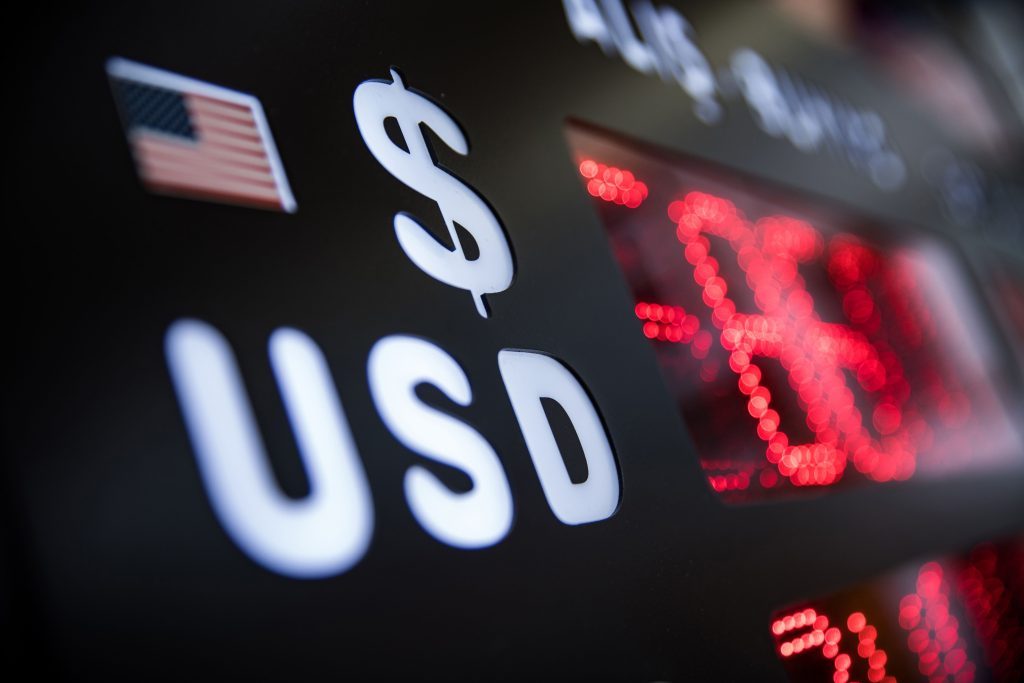
The dollar is staging a comeback nobody priced in back in January. After its worst start to a calendar year in roughly two decades, the greenback has clawed back its footing, and the so-called “US exceptionalism” trade — the wager that America’s economy simply outruns everyone else’s — is fashionable again on trading desks from New York to Singapore. Speculators who were running the most bearish dollar positions in nearly five years back in February have flipped to net long. The pivot lands at an unusually loaded moment: a fragile US-Iran peace framework that could reopen the Strait of Hormuz within days, a Federal Reserve led for the first time by Chair Kevin Warsh, and a transatlantic growth gap that keeps widening.
That reversal followed a brutal slide. The dollar suffered its weakest opening months to a year in two decades, dragged down by fears that Washington’s tariff agenda and ballooning deficits would erode the currency’s appeal. The broad dollar gauge tracked by Bloomberg sank roughly 8% over 2025, its steepest annual drop since 2017, according to Advisor Perspectives. Hedge funds and asset managers piled into short positions through the first quarter, wagering the Fed would keep cutting while Europe’s recovery gathered pace.
By mid-June, the ICE US Dollar Index was trading around 99.5 to 99.7, just above its 15-month low but holding a floor that traders had expected to break, according to data tracked by Trading Economics. The catalysts arrived in quick succession: an unexpected acceleration in US growth, a Federal Reserve under new leadership unwilling to rush toward cuts, and — improbably — a Middle East ceasefire that calmed energy markets just as inflation fears were peaking.
The Comeback Trade: Why Wall Street Is Buying Dollars Again
The clearest evidence of the shift sits in the weekly positioning data the Commodity Futures Trading Commission publishes for currency futures. As recently as mid-February, speculative accounts held their most bearish dollar bets in roughly five years. By May, that net-short book had flipped to net-long — one of the sharper reversals in recent memory — Advisor Perspectives reported, citing Bloomberg-compiled data.
JPMorgan turned outright bullish on the dollar for the first time in a year. Standard Chartered’s head of G-10 foreign-exchange research, Steven Englander, has stuck with his call for further gains, projecting the euro could slip toward $1.12 by year-end as the short-dollar positions built earlier in 2026 get unwound.
Part of that confidence traces back to the AI trade. Advances in artificial-intelligence infrastructure have given US technology earnings a tailwind that simply doesn’t have a European or Japanese equivalent yet, and that gap is now showing up directly in currency positioning rather than just equity flows.
Energy markets supplied the second leg of the story, in an unusual way. Reports that Washington and Tehran had reached a preliminary peace framework — one that would reopen the Strait of Hormuz, lift the US blockade on Iranian oil exports, and unlock roughly $24 billion in frozen Iranian assets — pushed crude to a two-month low and eased an inflation scare that had briefly pushed the odds of a 2026 Fed rate hike above 50%, according to Barchart and CNBC. The agreement, expected to be signed in Switzerland this week, hasn’t resolved the harder questions around sanctions and Iran’s nuclear program. Still, it was enough to pull the safe-haven bid out of the dollar and replace it with something closer to a growth bid.
Equity and bond markets moved in tandem with the currency shift. The 10-year Treasury yield ticked higher on the back of firmer growth data, reinforcing the dollar’s interest-rate advantage over the euro and yen even as stocks rallied on the prospect of de-escalation in the Gulf. That combination — rising yields, rising equities, and a rising dollar all at once — is precisely the signature traders associate with a genuine exceptionalism episode rather than a simple safe-haven bid, since safe-haven dollar strength usually comes with falling, not rising, risk assets.
The third leg arrived from Washington itself. The Senate confirmed Kevin Warsh as Fed chair by a 54-45 vote in May — the closest confirmation margin in the modern era — succeeding Jerome Powell, whose term expired the same week, per NPR. Markets had braced for Warsh, an outspoken advocate of “regime change” at the central bank, to push quickly for cuts.
Instead, his first meeting as chair on June 16-17 was expected to leave the federal funds rate unchanged at 3.50%-3.75%, with futures markets pricing close to zero probability of any move, Al Jazeera reported. A hawkish surprise from a chair installed specifically to ease policy is, in its own way, dollar-supportive.
Decoding the ‘US Exceptionalism’ Trade: Growth Gaps and Fed Policy
Strip away the positioning data, and the story underneath the US exceptionalism trade is fundamentally about growth arithmetic.
What Is the ‘US Exceptionalism’ Trade?
The US exceptionalism trade is a bet that the American economy will keep growing faster than its developed-market peers, attracting capital into US equities, bonds and the dollar even when valuations look stretched, on the assumption that superior growth and innovation — particularly in artificial intelligence — justify the premium.
The numbers back the thesis, for now. The US economy grew at an annualized 1.6%-2.0% pace in the first quarter of 2026, depending on the estimate vintage, while the eurozone limped to just 0.1% quarter-on-quarter growth — a twentyfold gap that left Germany at 0.3% and France flat, according to the European Commission’s statistical office. Business investment in equipment surged at a 17.2% annualized clip in the US even as residential investment fell for a fifth straight quarter, the House of Commons Library noted in its G7 growth comparison.
That divergence is increasingly an artificial-intelligence story rather than a broad-based one. Wall Street pushed 2026 US earnings growth estimates toward 15%, concentrated heavily in technology and AI-adjacent sectors, while European earnings lagged on energy costs and softer domestic demand. Consumer spending in the US, by contrast, decelerated to its slowest pace in a year, a reminder that the exceptionalism story is narrower than the headline growth figures suggest.
Federal Reserve policy reinforces the same thesis from a different angle. Consumer prices accelerated through the spring, with April’s reading rising 0.6% month-on-month after a 0.9% jump in March, and the Federal Open Market Committee’s own minutes show only Governor Stephen Miran dissenting in favor of a quarter-point cut while every other voting member backed holding steady. Goldman Sachs now expects the Fed to delay its next rate cut until 2027, arguing tariff effects, energy costs and a resilient labor market should keep core inflation above 3% through the rest of 2026, according to the bank’s own research note. A central bank that holds rates steady while peers are forced to move is, mechanically, a dollar-supportive central bank.
Implications: What a Stronger Dollar Means for Markets, Policymakers and Borrowers
A dollar that keeps strengthening doesn’t stay contained within currency markets for long. Five major central banks delivered policy decisions inside an eight-day span this month, and the divergence between them shows how unevenly the Hormuz-driven energy shock has landed. The European Central Bank raised its deposit rate a quarter point to 2.25% on June 11 — its first increase since 2023 — specifically citing inflation pressure from the Middle East conflict, according to the ECB’s own policy statement.
The Bank of England held its rate at 4.25% in a split 6-3 vote, with three policymakers pushing for a cut despite inflation running near 3.4%, FXStreet reported. The Fed, by comparison, looks almost stable.
That stability is pulling money back across the Atlantic. Treasury data show net foreign inflows into long-term US securities rebounded to roughly $150.7 billion in March 2026, a sharp recovery from the modest outflow recorded in January, according to the US Department of the Treasury. Foreign investors held just under $20 trillion in US equities and more than $35 trillion in total US securities as of the most recent annual survey, a scale of exposure that effectively turns Wall Street into a global utility.
The practical consequences cut in several directions:
- For multinational exporters, a firmer dollar erodes the translated value of overseas earnings and makes American goods pricier abroad just as global demand is already soft.
- For emerging-market and South Asian borrowers, dollar strength tightens financial conditions, raises the local-currency cost of servicing dollar debt, and complicates central bank efforts to defend currency pegs or manage import bills.
- For oil-importing economies, the silver lining of a Hormuz reopening — cheaper crude — is partly offset by a firmer dollar, since oil is priced in dollars and a stronger greenback raises the local cost of every barrel even as the benchmark price falls.
- For Gulf sovereign issuers, who borrow heavily in dollars to fund diversification programs, the rally lowers the relative cost of new issuance even as it complicates the currency hedging on existing debt.
Policymakers outside the US face an uncomfortable choice: tighten alongside the Fed to defend their currencies and risk choking off already-fragile growth, or hold steady and accept further currency weakness. The ECB chose the former this month. The Bank of Japan, watching the yen test levels that have historically triggered intervention, may not have the luxury of choosing at all.
The Case Against the Comeback
Not every strategist is convinced this is more than a short squeeze. The dollar’s slide through 2025 left so many investors short that even a modest improvement in US data was bound to force a violent unwind, independent of any deeper structural story. Viewed this way, the rally says more about crowded positioning than about a genuine reassessment of America’s long-term advantage.
There’s a credible structural counter-narrative too. The dollar’s share of global trade finance has been quietly eroding: the yuan’s share of SWIFT trade-finance transactions has roughly quadrupled over four years to about 8.3%, alongside Beijing’s effort to build out alternative payment infrastructure, according to an Investing.com analysis of central-bank reserve data. Danish pension funds and asset managers — one of the few public data sets on institutional FX hedging — carried a 72% hedge ratio against dollar exposure at the end of last year, suggesting professional money keeps insuring against further dollar weakness even while it buys the rally.
The foreign-ownership math cuts both ways as well. Nearly $20 trillion of foreign capital sitting inside US equities is a vote of confidence, but it’s also a concentration risk. If the growth-differential story cracks, the same capital that flowed in on the way up has every incentive to leave quickly on the way down — a vulnerability several market strategists have flagged explicitly. The exceptionalism trade, in other words, is a wager that can reinforce itself in either direction.
It’s also worth noting how recently the consensus flipped. As late as December 2025, the prevailing house view across several major banks was that 2026 would be the year the dollar’s structural decline resumed, driven by a narrowing Treasury yield premium and improving global growth outside the US. Forecasters who built that view around a dovish Fed and a calmer geopolitical backdrop have had to tear up their models twice in six months — first when growth and inflation surprised to the upside, and again when the Hormuz conflict scrambled every energy-price assumption underpinning their inflation forecasts. That track record of being wrong in both directions is itself a reason for humility about calling the next move with any confidence.
Conclusion
What’s emerging is a dollar rally built on a genuinely fragile foundation: a peace deal still awaiting signatures, a Fed chair whose hawkish instincts have surprised the administration that appointed him, and a growth gap that depends heavily on whether AI capital expenditure keeps compounding at its current pace. None of those pillars is permanent. Yet for now, each is reinforcing the others, and currency markets reward exactly that kind of alignment, however temporary it proves to be.
The deeper tension is this: America’s exceptionalism has always rested on the rest of the world’s willingness to keep financing it, and that willingness has historically been more emotional than economic. Foreign investors aren’t buying the dollar because the fiscal arithmetic improved. They’re buying it because, for the moment, everywhere else looks worse.
That’s a comeback story, not a guarantee — and comeback stories, in currency markets, tend to be shorter than the people telling them expect.
Discover more from The Economy
Subscribe to get the latest posts sent to your email.



Navigating Mortgage and Loan Refinancing in a High-Yield Environment
Global public debt crossing critical thresholds has kept central bank policies volatile, resulting in fluctuating US Treasury yields throughout 2026. For homeowners and commercial property holders burdened by previous high-interest borrowing cycles, finding optimal refinance windows has become a high-stakes financial puzzle. Stalled disinflation and stubborn employment numbers mean rate cuts are incremental, requiring borrowers to act with precision.
Timing your mortgage or commercial loan refinance in this environment requires a deep understanding of yield curve movements and lender risk appetites.
Decoding 2026 Refinance Dynamics
The 10-Year Treasury Yield Benchmark
Mortgage rates continue to track closely with the 10-year US Treasury yield. When macroeconomic anxiety spikes debt issuance, yields rise, tightening consumer borrowing capacity. Savvy borrowers monitor weekly Treasury auctions to lock in rates during brief dip windows.
Hybrid ARMs and Alternative Structures
With fixed rates remaining elevated, 7/1 and 10/1 adjustable-rate mortgages (ARMs) have surged in popularity. These products offer lower initial monthly payments, giving borrowers breathing room until central bank easing cycles fully materialize.
| Loan Product | Current Rate Range | Best For | Key Risk Factor |
| 30-Year Fixed Mortgage | 6.2% – 6.8% | Long-term predictability | Higher initial monthly outlay |
| 7/1 Hybrid ARM | 5.5% – 5.9% | Short-term ownership / flipping | Rate reset risk after year 7 |
| Commercial Refinance | 7.0% – 8.2% | Corporate asset restructuring | Strict DSCR lender covenants |
Actionable Steps for Successful Refinancing
To maximize your chances of securing favorable refinance terms in a volatile market, follow a disciplined preparation strategy.
Boost Your Credit Score Immediately: Lenders in 2026 are applying stringent credit tiering; a 20-point increase can drop your APR by a crucial quarter-point.
Shop Regional Credit Unions: Smaller financial institutions often offer portfolio loans with more flexible underwriting than major national banks.
Calculate the Break-Even Point: Ensure your total closing costs are recouped through monthly savings within 24 months of closing.
“Market Strategist View: Refinancing in 2026 is an exercise in opportunistic timing. Borrowers must maintain immaculate financial profiles ready to strike the moment Treasury yields dip.”
Mastering the complexities of today’s debt environment ensures you can successfully lower your debt service costs and protect your long-term financial stability.
Discover more from The Economy
Subscribe to get the latest posts sent to your email.

The days of pulling generic auto insurance quotes based purely on your zip code and age are officially over. In 2026, insurance comparison engines are powered entirely by generative AI and real-time telematics. These platforms digest thousands of live data points—ranging from your driving smoothness via connected vehicle sensors to real-time traffic congestion patterns—to generate hyper-personalized premiums instantly.
For consumers, this evolution represents both a massive opportunity for savings and a hidden trap for penalty pricing. Understanding how AI algorithms evaluate risk is essential for anyone looking to lower their monthly auto insurance premiums.
How AI Comparison Engines Evaluate Your Risk Profile
Behavioral Telematics and Connected Cars
Modern cars stream performance data directly to insurance aggregators. Generative AI models analyze braking sharpness, acceleration curves, cornering G-forces, and phone distraction metrics. Drivers who maintain smooth, defensive habits are rewarded with dynamic rate cuts of up to 40% compared to traditional rating tiers.
Predictive Traffic and Weather Modeling
AI tools now cross-reference your daily commute route with predictive weather and accident probability models. If your standard parking location or driving corridor has a statistically higher incidence of uninsured motorist claims, your quotes will reflect that hyper-local risk assessment.
| Comparison Factor | Traditional Rating Model | 2026 Generative AI Model | Impact on Premium |
| Mileage & Usage | Annual estimated odometer reading | GPS tracking & live trip duration | High (up to 35% savings) |
| Driving Behavior | MVR driving record & accidents | Real-time braking, speed, & G-force | Critical (determines tier) |
| Vehicle Tech | Make, model, and safety rating | ADAS calibration & repair cost data | Moderate |
Strategies to Lower Your AI-Driven Insurance Quote
To outsmart the algorithm and secure the lowest possible premium in 2026, drivers must proactively manage their digital footprint on insurance platforms.
Opt-In for Telematics Trial Periods: Many insurers offer immediate 15% discounts just for installing their driving app; let it track safe habits for 30 days to lock in permanent savings.
Scrub Unverified Public Records: Ensure your motor vehicle report is free of clerical errors that AI risk models misinterpret as reckless behavior.
Compare AI Aggregators: Use platforms that integrate multi-carrier API feeds rather than single-brand comparison sites to find the best risk-adjusted rate.
“Industry Note: AI-driven pricing rewards transparency and precision. Drivers who actively manage their telematics data consistently out-save those relying on legacy quote calculators.”
Embracing AI comparison tools allows savvy policyholders to customize coverage limits precisely to their driving habits, eliminating wasted premium spend while ensuring robust protection.
Discover more from The Economy
Subscribe to get the latest posts sent to your email.

Despite decades of bans and strict handling mandates, asbestos remains a silent killer across legacy manufacturing plants, shipyards, and modern green-energy infrastructure retrofits. In 2026, regulatory changes by the EPA and tightened occupational health standards have triggered a fresh wave of mesothelioma litigation. Manufacturers attempting to fast-track industrial transitions are encountering catastrophic oversight, exposing workers to legacy toxins and opening corporate parent companies to unprecedented liability.
Navigating a mesothelioma claim in 2026 requires understanding how modern industrial supply chains intersect with historical exposure. Trusts established decades ago are being audited under stricter transparency laws, altering payout ratios and accelerating fast-track settlements for terminally ill plaintiffs.
Modern Industrial Exposure Hotspots
Green Retrofitting and Renewable Energy Infrastructure
A primary source of 2026 asbestos exposure occurs during the decommissioning and retrofitting of older industrial facilities for renewable energy production. Workers insulating electrical grids, modernizing HVAC systems, or upgrading manufacturing floors frequently disturb encapsulated asbestos materials that were improperly documented or ignored during facility audits.
Automotive and Aerospace Supply Chains
With advanced manufacturing booming, workers handling specialized friction materials, gaskets, and heat shields face ongoing risks. Supply chain tracing has become more sophisticated, allowing legal teams to pinpoint exact corporate entities responsible for raw material distribution across multinational borders.
| Industry Sector | Primary Exposure Risk | Legal Venue / Trust | Avg. Claim Value Range |
| Green Energy Retrofit | Disturbed insulation, pipe lagging | Federal Tort / Manufacturer Trust | $1.2M – $3.5M |
| Shipbuilding & Marine | Boiler insulation, structural seals | Asbestos Bankruptcy Trusts | $800K – $2.4M |
| Automotive Manufacturing | Brake components, high-heat gaskets | Third-Party Product Liability | $600K – $1.8M |
Securing Maximum Compensation: Steps for Plaintiffs
Time is of the essence in mesothelioma cases. Plaintiffs and their families must act decisively to secure financial recovery before statutes of limitations expire.
Retain Specialized Counsel: Work exclusively with national mesothelioma law firms possessing deep historical databases of asbestos-containing products.
Audit Employment History: Document every job site, supervisor name, and equipment brand encountered throughout your career.
Expedite Medical Filings: Secure a formal pathological diagnosis quickly to qualify for expedited trust fund distribution and priority trial settings.
“Expert Insight: Modern asbestos litigation is no longer just about historical tracking; it is about holding modern corporations accountable for failing to conduct rigorous environmental safety audits before initiating industrial retrofits.”
By combining meticulous work history reconstruction with aggressive multi-trust filings, victims can secure substantial financial relief to cover specialized immunotherapy and family support.
Discover more from The Economy
Subscribe to get the latest posts sent to your email.

Beyond Rhetoric: How the EU Is Deploying ‘All Tools’ to Rebalance Its €1 Billion-a-Day Trade Deficit with China

Elon Musk’s Next Moves: Disrupting the 2026 Global Economy

INTC Stock Forecast 2026: Can Intel’s Government-Backed Turnaround Hold?

Bitcoin Price Action in Q4 2026: Safe-Haven Asset or High-Risk Tech Play?

The Target Pokémon x Owala Drop: Everything to Know Before It Sells Out

The U.S. Just Confirmed It Has Weapons in Space — Here’s What It Means for Defense Stocks

IRS 2027 Tax Bracket Projections: How to Get Ahead of Bracket Creep

Dow Jones vs. Middle East Tensions: How Wall Street Is Pricing In a 2026 Conflict Nobody Saw Coming

Bank of England’s September 17 Decision: Will UK Interest Rates Finally Move?

Inflation Is Outpacing Wage Growth Again: What It Means for Your Paycheck

10-Year Treasury Yield Tops 5%: What It Means for Mortgages, Stocks, and the Fed

Ceasefire Negotiations in 2026: Predicting the Rebound of European and Asian Economies

Emerging Markets Update: The Impact of World Bank Policies on PSX Stability

Costco Oil Shortage 2026: Will Prices Double for All Synthetic Motor Oils?

State Farm’s $5B Dividend 2026: Who Qualifies & Payout Dates

US-China Relations in Q3 2026: Trade Tariffs and Supply Chain Risks

Gold’s Wild 2026: From a Record $5,600 Peak to a 24% Crash and Back Toward $4,500

Oil Surges as Strait of Hormuz Traffic Collapses Again

Bank of England Set to Hold Rates Through Year-End, Reuters Poll Shows

SpaceX Starship Flight 14: First Orbital Attempt & Starlink V3 Launch Explained

Top 30 Stocks for Investment in PSX for Massive ROI in 2026

The 2026 Crypto Regulatory Shift: What It Means for Institutional Investors

AI Chip Stocks 2026: The Best Semiconductor Investments Beyond Marvell

AI-Powered Training: The Next Multi-Billion Dollar Ecosystem in Fitness

Tween Back-to-School Trends 2026: What’s Driving the $85B Season

Russia’s Black Sea Oil Exports Fall for a Fifth Straight Week

Global Chip Selloff Deepens: What’s Driving the Aug. 19 Semiconductor Rout

Shein Clothes Quality & Safety in 2026: What Lab Tests Show
-

 Markets & Finance8 months ago
Top 15 Stocks for Investment in 2026 in PSX: Your Complete Guide to Pakistan’s Best Investment Opportunities
-

 Analysis7 months ago
Johor’s Investment Boom: The Hidden Costs Behind Malaysia’s Most Ambitious Economic Surge
-

 Analysis7 months ago
Top 10 Stocks for Investment in PSX for Quick Returns in 2026
-

 Analysis7 months ago
Brazil’s Rare Earth Race: US, EU, and China Compete for Critical Minerals as Tensions Rise
-

 Banks8 months ago
Best Investments in Pakistan 2026: Top 10 Low-Price Shares and Long-Term Picks for the PSX
-

 Investment8 months ago
Top 10 Mutual Fund Managers in Pakistan for Investment in 2026: A Comprehensive Guide for Optimal Returns
-

 Global Economy9 months ago
15 Most Lucrative Sectors for Investment in Pakistan: A 2025 Data-Driven Analysis
-

 Global Economy9 months ago
Pakistan’s Export Goldmine: 10 Game-Changing Markets Where Pakistani Businesses Are Winning Big in 2025