
Analysis
US Economic Resilience: Why the Economy Keeps Defying the Odds

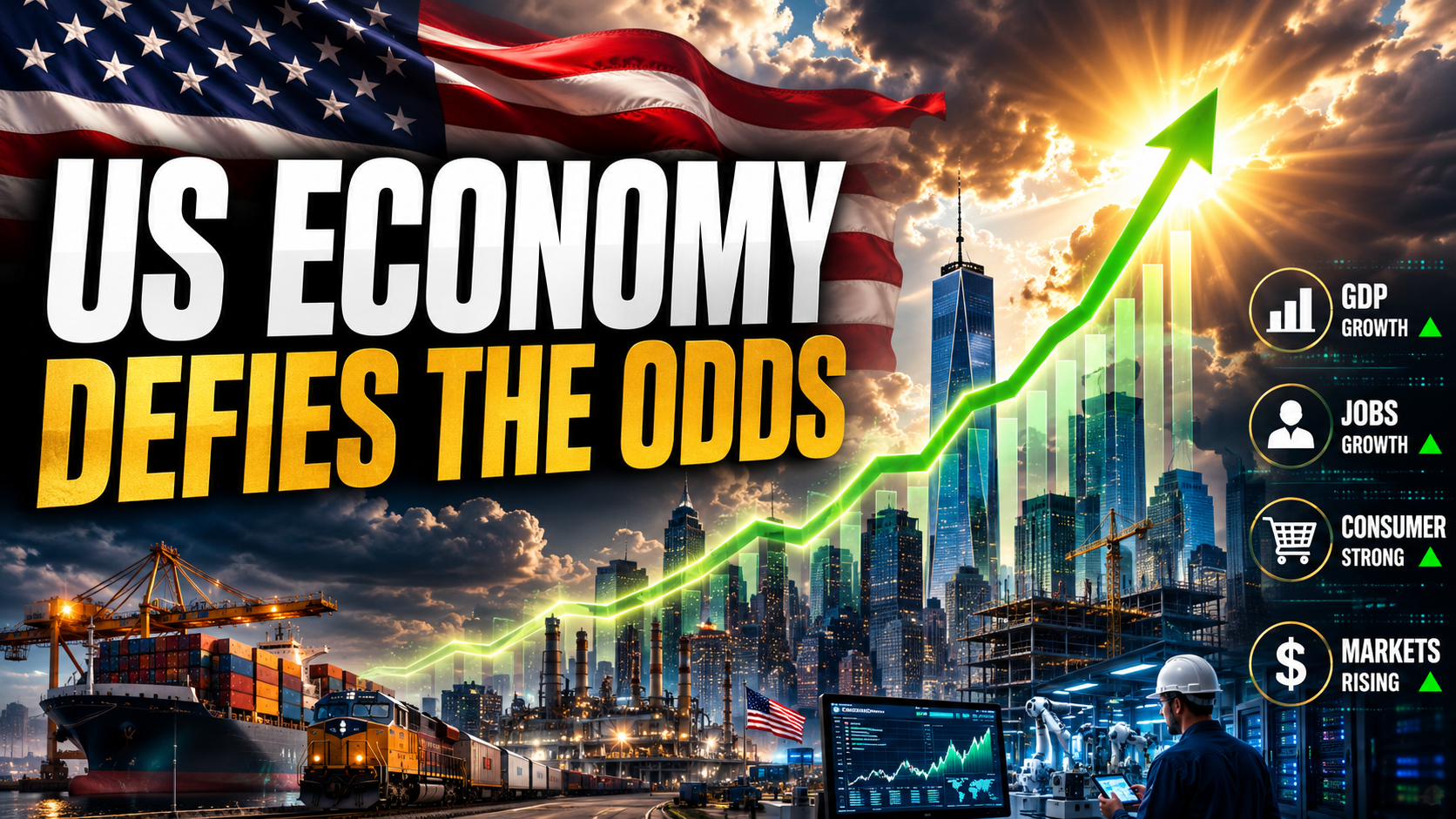
For three years, Wall Street forecasters treated a severe downturn as a mathematical certainty. The yield curve inverted, leading economic indicators flashed crimson, and the Federal Reserve orchestrated the steepest borrowing-cost hikes in a generation. Yet the crash never arrived. Instead, the American economic engine simply shifted gears, leaving global peers trailing in its wake. It’s a reality that has forced central bankers to tear up their standard macroeconomic playbooks. We are witnessing an expansion that refuses to die, powered not by speculative froth, but by deep, structural transformations in how American capital and labor function under pressure.
To understand this anomaly, you have to look past the monthly noise. The broader macro landscape reveals an economy that has effectively insulated itself from the very tools designed to slow it down. When the Federal Reserve pushed rates upward, the traditional transmission mechanisms of monetary policy misfired. Historically, expensive credit strangles corporate investment and chokes off household spending. This time, the timeline fractured. According to the International Monetary Fund’s recent global outlook, American growth has consistently outpaced the rest of the G7, expanding at an annualized rate that makes European stagnation look increasingly permanent.
The question is no longer whether a soft landing is possible, but rather how the mechanics of American capitalism rewired themselves to absorb such a colossal macroeconomic shock.
The Core Driver: The Insulation of the American Consumer
The foundation of this ongoing US economic resilience lies in the peculiar structure of American household debt. When you search for the primary shield protecting the broader economy from the Federal Reserve’s rate hikes, look no further than the 30-year fixed-rate mortgage.
Unlike in the United Kingdom or the Eurozone, where variable-rate mortgages dominate and central bank policy rapidly bites into disposable income, the American homeowner is effectively walled off from short-term interest rate volatility. Millions of households refinanced their debt during the zero-interest-rate era of 2020 and 2021. They locked in housing costs at historic lows. As a result, when the Fed funds rate surged past 5%, the effective interest rate on outstanding US mortgage debt barely twitched. This structural quirk gifted American consumers hundreds of billions of dollars in discretionary spending power that, in any other decade, would have been wiped out by debt servicing costs.
Corporate America played a similar game. Large-cap companies spent the pandemic era extending the duration of their debt. They secured cheap capital for five, seven, or ten years. The interest rate shock primarily hit regional banks, commercial real estate, and private equity—sectors that generate headlines but do not individually dictate the velocity of consumer spending.
This financial insulation allowed the labor market to remain historically tight. Data from the Bureau of Labor Statistics shows that job creation has maintained a steady, if cooling, trajectory, keeping the national unemployment rate comfortably below historic danger zones. When people have jobs and fixed housing costs, they spend. Services, travel, and experiential consumption have filled the gaps left by a slowdown in physical goods manufacturing. It’s a consumer-led expansion, but one fortified by a once-in-a-generation debt restructuring.
Structural Shifts and the Labor Hoarding Phenomenon
Move beyond the immediate debt dynamics, and you encounter the deeper US GDP growth factors that explain this prolonged expansion. The American labor market has fundamentally changed since the pandemic.
Why is the US economy doing so well? The US economy is outperforming expectations because of structural insulation and labor hoarding. Businesses, scarred by the severe worker shortages of 2021 and 2022, have chosen to retain staff even as demand cools, prioritizing long-term operational stability over short-term payroll cuts. Coupled with massive fiscal stimulus in infrastructure, this keeps domestic spending remarkably stable.
This concept of labor hoarding is critical. In previous cycles, the moment profit margins contracted, corporations executed mass layoffs. The spreadsheet logic was brutal and immediate. But the post-pandemic scarcity of skilled labor terrified executives. Finding, hiring, and training new talent proved so costly and chaotic that chief financial officers calculated it was cheaper to carry a slightly bloated payroll through a mild slowdown than to fire workers and attempt to rehire them later.
Simultaneously, the supply side of the economy received a massive, coordinated injection of capital. The Inflation Reduction Act and the CHIPS and Science Act unleashed a wave of domestic manufacturing investment. We are seeing factories rise in Ohio, Arizona, and Texas at a pace unseen since the Cold War. This isn’t just government spending; it’s a catalyst that crowded in private capital. Construction spending on manufacturing facilities has doubled, creating a floor under heavy industry and engineering sectors.
That said, the productivity metrics are what truly validate the expansion. We are seeing early signs that the integration of automation and artificial intelligence into enterprise software is beginning to yield actual efficiency gains. Output per hour worked has ticked upward. When an economy produces more value per unit of labor, it can sustain higher wages without necessarily triggering a wage-price inflation spiral. This is the holy grail for central bankers: disinflationary growth.
Global Divergence and the Dollar’s Dominance
The downstream consequences of this exceptionalism are profound, particularly for global markets. The US economy is no longer just moving at a different speed than Europe and China; it is operating on an entirely different trajectory.
This divergence forces a massive realignment in global capital flows. When American yields remain high because the domestic economy can easily tolerate them, the US dollar becomes an inescapable black hole for global investment. Capital flees the stagnant markets of the Eurozone and the property-burdened economy of China, seeking the safety and yield of US Treasuries and American equities.
For policymakers abroad, this creates an excruciating dilemma. The Bank for International Settlements recently noted that central banks in emerging and developed markets are being forced to keep their own interest rates uncomfortably high just to defend their currencies against the dollar. If the European Central Bank cuts rates too aggressively while the Fed holds steady, the Euro collapses, importing inflation back into the continent.
Furthermore, this economic strength grants Washington unprecedented geopolitical leverage. The sheer scale of the American consumer market remains the ultimate prize for global exporters. As supply chains restructure around “friend-shoring” and domestic resilience, the US is effectively dictating the terms of global trade. Multinational corporations are pivoting their supply chains to align with American industrial policy, prioritizing North American assembly to qualify for federal subsidies and avoid tariffs. The gravity of American demand is pulling the center of the global economy firmly back across the Atlantic.
The Bear Case: The Fiscal Sugar Rush
Yet, any rigorous analysis must confront the fragility hidden within the data. The opposing view—the one traded quietly among fixed-income desks and deficit hawks—argues that this is not a structural miracle, but a massive, debt-fueled sugar rush.
The US government is running peacetime deficits that historically only occur during deep recessions or global conflicts. Spending outpaces revenue by trillions. The Congressional Budget Office reports that federal debt held by the public is on track to surpass 115% of GDP by the end of the decade. This is the steel-man argument against American exceptionalism: anyone can generate top-line growth if they are willing to borrow 6% of their GDP every year to fund it.
Critics argue that the fiscal impulse has masked underlying rot. Small businesses, which do not have access to the 10-year corporate bond market, are choking on double-digit borrowing costs. Delinquency rates on credit cards and auto loans for subprime borrowers have surged past 2019 levels. The lower-income quintile of the American consumer base has exhausted its pandemic savings and is now purely surviving on expensive revolving credit.
If the Treasury is forced to continually issue trillions in new bonds to fund the deficit, it could eventually crowd out private investment. Bond vigilantes, largely dormant for a decade, could return, demanding much higher term premiums to hold US debt. If that happens, the protective walls of fixed-rate mortgages and hoarded labor will not be enough to prevent a structural repricing of American assets.
The Verdict on American Resilience
The picture is more complicated than either the breathless optimists or the apocalyptic bears suggest. The United States has engineered a remarkable escape velocity, utilizing a unique combination of fixed-rate consumer debt, reactive labor markets, and aggressive industrial policy to outrun a tightening cycle that should have triggered a recession.
What follows, however, will be a test of fiscal gravity. The architecture of this expansion is brilliant, but it is expensive to maintain. For now, the American economic engine continues to hum, running on a fuel mix that the rest of the world simply cannot replicate. The odds have been defied, but the bill for this resilience is still in the mail.
Discover more from The Economy
Subscribe to get the latest posts sent to your email.



Navigating Mortgage and Loan Refinancing in a High-Yield Environment
Global public debt crossing critical thresholds has kept central bank policies volatile, resulting in fluctuating US Treasury yields throughout 2026. For homeowners and commercial property holders burdened by previous high-interest borrowing cycles, finding optimal refinance windows has become a high-stakes financial puzzle. Stalled disinflation and stubborn employment numbers mean rate cuts are incremental, requiring borrowers to act with precision.
Timing your mortgage or commercial loan refinance in this environment requires a deep understanding of yield curve movements and lender risk appetites.
Decoding 2026 Refinance Dynamics
The 10-Year Treasury Yield Benchmark
Mortgage rates continue to track closely with the 10-year US Treasury yield. When macroeconomic anxiety spikes debt issuance, yields rise, tightening consumer borrowing capacity. Savvy borrowers monitor weekly Treasury auctions to lock in rates during brief dip windows.
Hybrid ARMs and Alternative Structures
With fixed rates remaining elevated, 7/1 and 10/1 adjustable-rate mortgages (ARMs) have surged in popularity. These products offer lower initial monthly payments, giving borrowers breathing room until central bank easing cycles fully materialize.
| Loan Product | Current Rate Range | Best For | Key Risk Factor |
| 30-Year Fixed Mortgage | 6.2% – 6.8% | Long-term predictability | Higher initial monthly outlay |
| 7/1 Hybrid ARM | 5.5% – 5.9% | Short-term ownership / flipping | Rate reset risk after year 7 |
| Commercial Refinance | 7.0% – 8.2% | Corporate asset restructuring | Strict DSCR lender covenants |
Actionable Steps for Successful Refinancing
To maximize your chances of securing favorable refinance terms in a volatile market, follow a disciplined preparation strategy.
Boost Your Credit Score Immediately: Lenders in 2026 are applying stringent credit tiering; a 20-point increase can drop your APR by a crucial quarter-point.
Shop Regional Credit Unions: Smaller financial institutions often offer portfolio loans with more flexible underwriting than major national banks.
Calculate the Break-Even Point: Ensure your total closing costs are recouped through monthly savings within 24 months of closing.
“Market Strategist View: Refinancing in 2026 is an exercise in opportunistic timing. Borrowers must maintain immaculate financial profiles ready to strike the moment Treasury yields dip.”
Mastering the complexities of today’s debt environment ensures you can successfully lower your debt service costs and protect your long-term financial stability.
Discover more from The Economy
Subscribe to get the latest posts sent to your email.

The days of pulling generic auto insurance quotes based purely on your zip code and age are officially over. In 2026, insurance comparison engines are powered entirely by generative AI and real-time telematics. These platforms digest thousands of live data points—ranging from your driving smoothness via connected vehicle sensors to real-time traffic congestion patterns—to generate hyper-personalized premiums instantly.
For consumers, this evolution represents both a massive opportunity for savings and a hidden trap for penalty pricing. Understanding how AI algorithms evaluate risk is essential for anyone looking to lower their monthly auto insurance premiums.
How AI Comparison Engines Evaluate Your Risk Profile
Behavioral Telematics and Connected Cars
Modern cars stream performance data directly to insurance aggregators. Generative AI models analyze braking sharpness, acceleration curves, cornering G-forces, and phone distraction metrics. Drivers who maintain smooth, defensive habits are rewarded with dynamic rate cuts of up to 40% compared to traditional rating tiers.
Predictive Traffic and Weather Modeling
AI tools now cross-reference your daily commute route with predictive weather and accident probability models. If your standard parking location or driving corridor has a statistically higher incidence of uninsured motorist claims, your quotes will reflect that hyper-local risk assessment.
| Comparison Factor | Traditional Rating Model | 2026 Generative AI Model | Impact on Premium |
| Mileage & Usage | Annual estimated odometer reading | GPS tracking & live trip duration | High (up to 35% savings) |
| Driving Behavior | MVR driving record & accidents | Real-time braking, speed, & G-force | Critical (determines tier) |
| Vehicle Tech | Make, model, and safety rating | ADAS calibration & repair cost data | Moderate |
Strategies to Lower Your AI-Driven Insurance Quote
To outsmart the algorithm and secure the lowest possible premium in 2026, drivers must proactively manage their digital footprint on insurance platforms.
Opt-In for Telematics Trial Periods: Many insurers offer immediate 15% discounts just for installing their driving app; let it track safe habits for 30 days to lock in permanent savings.
Scrub Unverified Public Records: Ensure your motor vehicle report is free of clerical errors that AI risk models misinterpret as reckless behavior.
Compare AI Aggregators: Use platforms that integrate multi-carrier API feeds rather than single-brand comparison sites to find the best risk-adjusted rate.
“Industry Note: AI-driven pricing rewards transparency and precision. Drivers who actively manage their telematics data consistently out-save those relying on legacy quote calculators.”
Embracing AI comparison tools allows savvy policyholders to customize coverage limits precisely to their driving habits, eliminating wasted premium spend while ensuring robust protection.
Discover more from The Economy
Subscribe to get the latest posts sent to your email.

Despite decades of bans and strict handling mandates, asbestos remains a silent killer across legacy manufacturing plants, shipyards, and modern green-energy infrastructure retrofits. In 2026, regulatory changes by the EPA and tightened occupational health standards have triggered a fresh wave of mesothelioma litigation. Manufacturers attempting to fast-track industrial transitions are encountering catastrophic oversight, exposing workers to legacy toxins and opening corporate parent companies to unprecedented liability.
Navigating a mesothelioma claim in 2026 requires understanding how modern industrial supply chains intersect with historical exposure. Trusts established decades ago are being audited under stricter transparency laws, altering payout ratios and accelerating fast-track settlements for terminally ill plaintiffs.
Modern Industrial Exposure Hotspots
Green Retrofitting and Renewable Energy Infrastructure
A primary source of 2026 asbestos exposure occurs during the decommissioning and retrofitting of older industrial facilities for renewable energy production. Workers insulating electrical grids, modernizing HVAC systems, or upgrading manufacturing floors frequently disturb encapsulated asbestos materials that were improperly documented or ignored during facility audits.
Automotive and Aerospace Supply Chains
With advanced manufacturing booming, workers handling specialized friction materials, gaskets, and heat shields face ongoing risks. Supply chain tracing has become more sophisticated, allowing legal teams to pinpoint exact corporate entities responsible for raw material distribution across multinational borders.
| Industry Sector | Primary Exposure Risk | Legal Venue / Trust | Avg. Claim Value Range |
| Green Energy Retrofit | Disturbed insulation, pipe lagging | Federal Tort / Manufacturer Trust | $1.2M – $3.5M |
| Shipbuilding & Marine | Boiler insulation, structural seals | Asbestos Bankruptcy Trusts | $800K – $2.4M |
| Automotive Manufacturing | Brake components, high-heat gaskets | Third-Party Product Liability | $600K – $1.8M |
Securing Maximum Compensation: Steps for Plaintiffs
Time is of the essence in mesothelioma cases. Plaintiffs and their families must act decisively to secure financial recovery before statutes of limitations expire.
Retain Specialized Counsel: Work exclusively with national mesothelioma law firms possessing deep historical databases of asbestos-containing products.
Audit Employment History: Document every job site, supervisor name, and equipment brand encountered throughout your career.
Expedite Medical Filings: Secure a formal pathological diagnosis quickly to qualify for expedited trust fund distribution and priority trial settings.
“Expert Insight: Modern asbestos litigation is no longer just about historical tracking; it is about holding modern corporations accountable for failing to conduct rigorous environmental safety audits before initiating industrial retrofits.”
By combining meticulous work history reconstruction with aggressive multi-trust filings, victims can secure substantial financial relief to cover specialized immunotherapy and family support.
Discover more from The Economy
Subscribe to get the latest posts sent to your email.

Balance of Payments (BOP)

The Falkland Islands Dispute: Sovereign Wealth, Offshore Drilling, and Market Impacts

Gross Domestic Product (GDP): Nominal vs. Real

What is Inflation and the Consumer Price Index (CPI)?

US-China Trade Competition 2026: Supply Chain Relocation Guide

Oil Prices Break $100 in 2026: Middle East Conflict & Energy Markets

South-South Trade Expansion: Digital Integration and Emerging Market Growth

$166B Tariff Refund Tapering Fast: Is Your Business Missing Out?

Stock Market Today: Dow Climbs 500 Points as Markets Shake Off Inflation Jitters

14th WTO Conference 2026: Tariffs & Global Supply Chain Impact

Swish Secures $24M Funding to Disrupt India’s $100B Food Market

Physical AI and Driverless Tech: The Next Trillion-Dollar Industrial Revolution

Enterprise AI Platforms Disrupting B2B SaaS in 2026: Full Analysis

Crypto vs. Safe Haven Assets 2026: Where Institutions Are Hedging

State Farm’s $5B Dividend 2026: Who Qualifies & Payout Dates

US-China Relations in Q3 2026: Trade Tariffs and Supply Chain Risks

Gold’s Wild 2026: From a Record $5,600 Peak to a 24% Crash and Back Toward $4,500

Oil Surges as Strait of Hormuz Traffic Collapses Again

The Rocket That Won’t Quit: Inside SpaceX’s Falcon 9 Launch Machine

Bank of England Set to Hold Rates Through Year-End, Reuters Poll Shows

SpaceX Starship Flight 14: First Orbital Attempt & Starlink V3 Launch Explained

The 2026 Crypto Regulatory Shift: What It Means for Institutional Investors

AI Chip Stocks 2026: The Best Semiconductor Investments Beyond Marvell

Retail Earnings Week: What Home Depot, Target & Walmart Reveal

AI-Powered Training: The Next Multi-Billion Dollar Ecosystem in Fitness

Russia’s Black Sea Oil Exports Fall for a Fifth Straight Week

Top 30 Stocks for Investment in PSX for Massive ROI in 2026

Tween Back-to-School Trends 2026: What’s Driving the $85B Season
-

 Markets & Finance8 months ago
Top 15 Stocks for Investment in 2026 in PSX: Your Complete Guide to Pakistan’s Best Investment Opportunities
-

 Analysis7 months ago
Johor’s Investment Boom: The Hidden Costs Behind Malaysia’s Most Ambitious Economic Surge
-

 Analysis7 months ago
Top 10 Stocks for Investment in PSX for Quick Returns in 2026
-

 Analysis7 months ago
Brazil’s Rare Earth Race: US, EU, and China Compete for Critical Minerals as Tensions Rise
-

 Banks8 months ago
Best Investments in Pakistan 2026: Top 10 Low-Price Shares and Long-Term Picks for the PSX
-

 Investment8 months ago
Top 10 Mutual Fund Managers in Pakistan for Investment in 2026: A Comprehensive Guide for Optimal Returns
-

 Global Economy9 months ago
15 Most Lucrative Sectors for Investment in Pakistan: A 2025 Data-Driven Analysis
-

 Global Economy9 months ago
Pakistan’s Export Goldmine: 10 Game-Changing Markets Where Pakistani Businesses Are Winning Big in 2025