
Analysis
The Dollar’s Icarus Moment: How Trump’s ‘Liberation Day’ Doctrine is Unraveling the Greenback in 2026

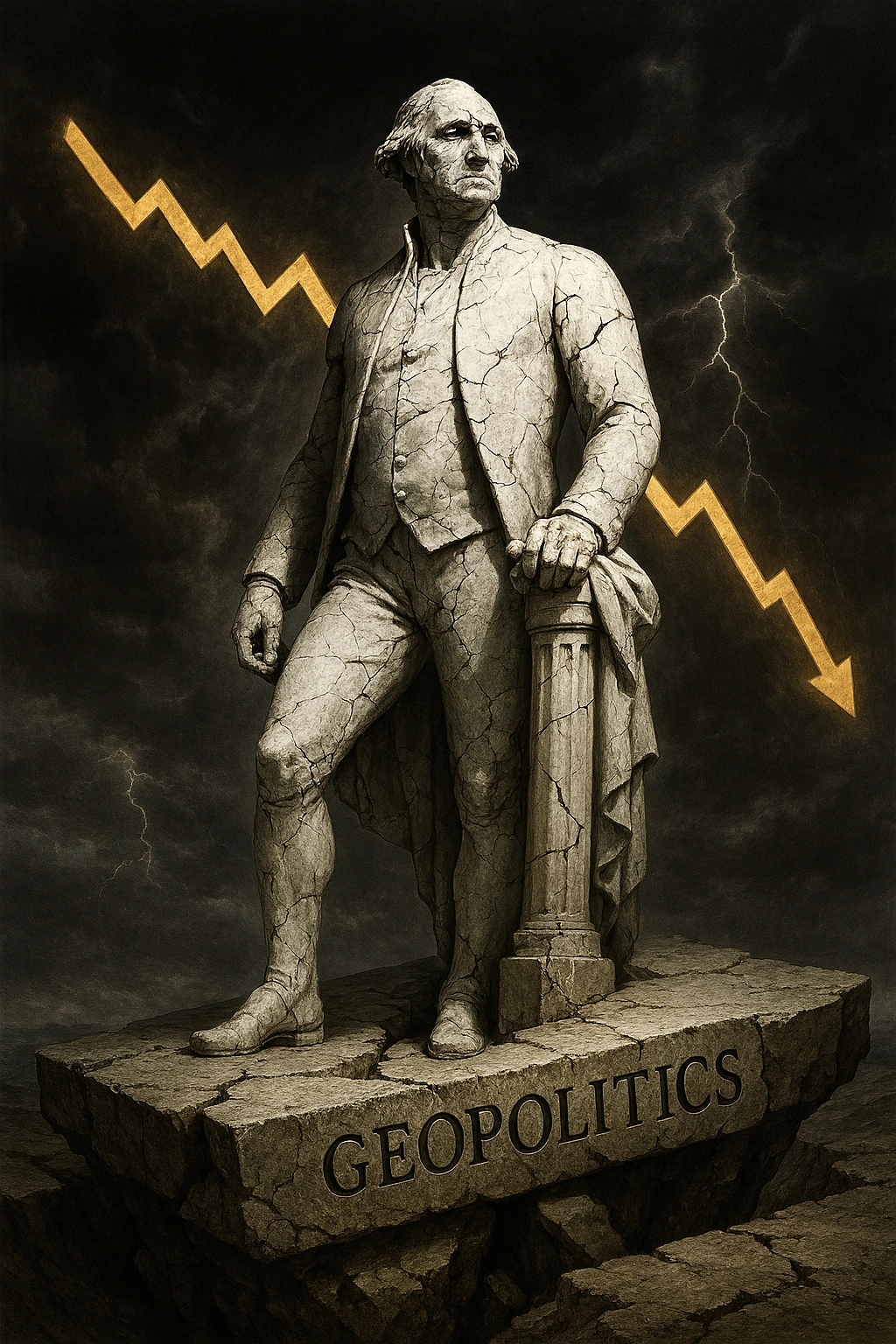
A year after the tariff shockwave, the world’s reserve currency is bleeding credibility—and investors are voting with their feet.
The dollar is dying, not with a bang, but with a slow, bureaucratic whimper punctuated by presidential Twitter tirades and bond market mutinies.
As of late January 2026, the U.S. Dollar Index (DXY) has collapsed more than 9% from its post-election euphoria peak, now hovering perilously near 99—a level last seen during the pandemic’s darkest months. Gold, that ancient barometer of monetary distrust, has shattered every conceivable ceiling, trading north of $4,600 per ounce. Meanwhile, the euro and Swiss franc—once dismissed as the sickly men of global finance—are outperforming with a vigor that would have seemed fantastical eighteen months ago.
What changed? In a word: policy. Or more precisely, the catastrophic intersection of fiscal recklessness, geopolitical adventurism, and institutional sabotage that has come to define the Trump 2.0 economic doctrine.
This is the story of how America’s currency privilege—forged in the crucible of Bretton Woods and sustained through decades of relative fiscal discipline and central bank independence—is being squandered in real time. It’s a cautionary tale about what happens when a reserve currency issuer begins to behave like an emerging market populist, and the market loses faith not in America’s economic fundamentals, but in its political rationality.
The Liberation Day Hangover: When Tariffs Became a Credibility Tax
Let’s rewind to April 2, 2025—what the administration dubbed “Liberation Day.” President Trump unveiled a comprehensive tariff regime that made his first-term trade skirmishes look like diplomatic foreplay. Sweeping levies on European automobiles, targeted duties on French luxury goods, and punitive measures against German industrial exports were announced with the theatrical flourish that has become this presidency’s signature.
The immediate market reaction was telling. The dollar spiked briefly on what traders interpreted as a “strong America” signal. But within weeks, something more sinister began to unfold. Foreign central banks, particularly in the EU and Asia, started quietly diversifying their reserve holdings. The Bank for International Settlements’ quarterly data—often overlooked in the daily noise—showed a measurable uptick in euro and yen allocations at the expense of Treasury securities.
Why? Because “Liberation Day” wasn’t liberation at all. It was an admission that the United States was willing to weaponize the global trading system for domestic political theater, even at the cost of undermining the very stability that makes dollar hegemony possible. When you’re the reserve currency, reliability is everything. Erratic trade policy—particularly against your closest military and economic allies—is a credibility tax that compounds with each presidential decree.
By the time summer 2025 arrived, the structural damage was clear. The dollar’s traditional safe-haven premium during risk-off episodes had noticeably diminished. During the August sovereign debt scare in Italy, capital fled not predominantly to Treasuries but to Swiss bonds and German Bunds. The “exorbitant privilege,” as Valéry Giscard d’Estaing once called it, was beginning to look more like an ordinary privilege—and a declining one at that.
The OBBBA Effect: Stimulus or Poison?
If Liberation Day was the wound, the “One Big Beautiful Bill Act” (OBBBA)—passed with little Republican dissent in late 2025—was the infection that followed.
Marketed as a comprehensive tax reform and infrastructure package, OBBBA was in reality a $2.3 trillion stimulus injection into an economy already running uncomfortably hot. Corporate tax cuts, expanded child credits, and a byzantine web of industrial subsidies were bundled together in legislation that even sympathetic analysts at Morgan Stanley described as “fiscal policy without a theory of change.”
The timing couldn’t have been worse. Core inflation, which had tantalizingly approached the Fed’s 2% target in early 2025, began creeping upward again by year-end. Producer price indices showed persistent cost pressures. And crucially, the bond market—that merciless arbiter of fiscal credibility—began to revolt.
Ten-year Treasury yields, which had stabilized around 4.2% through much of 2025, surged past 4.8% by December. This wasn’t a growth story; it was a risk premium story. International buyers, already spooked by Liberation Day’s institutional uncertainty, started demanding higher compensation for holding dollar-denominated debt. The “twin deficit” anxiety—whereby America’s budget deficit and current account deficit both exceed 5% of GDP—became impossible to ignore.
J.P. Morgan’s Global FX Strategy desk published a damning note in December 2025 titled “The Dollar’s Structural Headwinds,” arguing that OBBBA had effectively frontloaded consumption while backloading fiscal consolidation—a recipe for long-term currency depreciation. When one of Wall Street’s most establishment-friendly banks starts using the word “structural” to describe dollar weakness, you know something fundamental has shifted.
When the Fed Became a Political Piñata
But perhaps nothing has damaged dollar credibility more than the extraordinary public warfare between the White House and the Federal Reserve.
Fed Chair Jerome Powell, reappointed by President Trump in his first term, has found himself in an impossible position. Faced with OBBBA-induced inflationary pressures, the Fed signaled in late 2025 that rate cuts—which markets had priced in aggressively—might need to be postponed or reversed. Powell’s December press conference, where he diplomatically suggested that “fiscal policy coordination would be helpful,” was interpreted by the administration as an act of institutional disloyalty.
What followed was unprecedented. The President, in a series of Truth Social posts throughout January 2026, accused Powell of “sabotaging American workers” and suggested that the Justice Department should “look into” whether the Fed Chair’s actions constituted a prosecutable offense. While legal experts universally dismissed the threat as constitutionally nonsensical, the damage to institutional credibility was immediate and measurable.
Central bank independence isn’t just a good governance principle—it’s a core pillar of reserve currency status. When the executive branch of the world’s largest economy begins threatening criminal prosecution of its central bank leadership for making data-driven policy decisions, international investors take notice. And they act.
The Swiss National Bank’s January 2026 policy statement contained a subtle but telling reference to “maintaining flexibility in reserve composition given evolving global monetary governance standards.” Translation: even the notoriously cautious Swiss are hedging against dollar instability driven by political interference.
The Greenland Gambit and European Estrangement
As if tariffs, fiscal excess, and Fed-bashing weren’t enough, January 2026 brought the “Greenland Gambit”—a renewed presidential fixation on purchasing Denmark’s autonomous territory, complete with thinly veiled threats about NATO commitment if Denmark refused to negotiate.
The geopolitical implications are beyond this article’s scope, but the currency market implications are not. European capitals, already frustrated by Liberation Day tariffs and watching the Fed’s independence erode, began openly discussing “strategic autonomy” in financial matters. French Finance Minister Bruno Le Maire—normally diplomatic to a fault—suggested in a Le Monde interview that Europe should “prepare for a world where dollar stability can no longer be assumed.”
This isn’t just talk. The European Central Bank’s January meeting included discussion of accelerating the “international role of the euro” initiative, which had been languishing since its 2018 launch. Germany’s Bundesbank published research suggesting that euro-denominated trade invoicing could realistically reach 35% of global transactions by 2030 if current U.S. policy trajectories continue.
The dollar’s dominance has always rested on a tripod: deep capital markets, rule of law, and military-backed geopolitical stability. Trump 2.0 policies are systematically undermining each leg. When your closest allies begin treating your currency as an unreliable utility rather than a strategic asset, the network effects that sustain reserve currency status begin to unravel.
Gold’s Testimony: The Market’s Verdict
Let’s talk about gold’s extraordinary rally—because it’s telling a story that Treasury officials desperately wish to ignore.
At $4,600+ per ounce, gold has appreciated roughly 60% from its 2023 lows. This isn’t just inflation hedging or jewelry demand from Asia. This is a profound vote of no confidence in fiat monetary management, particularly dollar-based monetary management.
Central banks—especially in emerging markets and non-Western economies—have become voracious gold buyers. China’s official reserves show consistent monthly accumulation. Poland, Singapore, and India have all substantially increased their bullion holdings. Even historically dollar-centric Gulf states are diversifying into physical gold at rates not seen since the 1970s.
Why gold, and why now? Because gold is the ultimate non-political asset. It can’t be sanctioned, it doesn’t require institutional trust, and it doesn’t care about presidential Twitter feeds. In an environment where the U.S. is simultaneously running massive deficits, threatening its central bank’s independence, alienating allies, and pursuing mercantilist trade policies, gold offers what the dollar increasingly cannot: predictable neutrality.
The De-Dollarization Undercurrent: Trend or Tsunami?
The academic debate about “de-dollarization” has long been contentious. Skeptics correctly note that despite decades of predictions, the dollar still comprises roughly 58% of global foreign exchange reserves and dominates international trade invoicing.
But 2025-2026 may represent an inflection point—not a sudden collapse, but an acceleration of a slow-burning trend. The BRICS nations have expanded their local currency swap arrangements. The Bank for International Settlements’ “Project mBridge,” which facilitates central bank digital currency settlements bypassing SWIFT and dollar intermediation, moved from pilot to operational phase in late 2025.
More tellingly, even traditional American allies are building redundancy. The EU’s INSTEX mechanism—originally designed to circumvent Iranian sanctions—has been quietly expanded into a more general euro-based settlement platform. Japan and South Korea have doubled their bilateral currency swap line, reducing reliance on dollar liquidity.
These are not acts of hostility. They’re acts of prudent risk management by nations watching American institutional stability erode in real time. When the world’s reserve currency issuer behaves unpredictably, the world builds alternatives. Not overnight, but inexorably.
What Comes Next: Three Scenarios
As we move through 2026, three broad scenarios emerge for the dollar:
The Stabilization Scenario: The administration moderates its rhetoric, OBBBA’s inflationary impulse fades, and the Fed regains operational autonomy. The dollar stabilizes in the 98-102 DXY range, and reserve currency status persists, albeit with a slightly diminished market share. Probability: 30%.
The Structural Decline Scenario: Current policy trajectories continue. Europe and Asia accelerate alternative payment systems and reserve diversification. The dollar loses 5-8% of its reserve currency share over the next three years, triggering higher structural yields on U.S. debt and a permanent risk premium. Probability: 50%.
The Crisis Scenario: A unexpected shock—a major U.S. bank failure, a government shutdown during debt ceiling negotiations, or an actual Fed Chair indictment attempt—triggers a sharp, disorderly dollar sell-off. Capital controls become politically discussable. Probability: 20%.
The Icarus Paradox
The dollar’s current predicament echoes the Greek myth of Icarus—flying too close to the sun on wings of wax. American policymakers, intoxicated by decades of “exorbitant privilege,” have forgotten that reserve currency status is earned, not inherited. It requires institutional credibility, policy predictability, and a commitment to the boring but essential work of maintaining trust.
Liberation Day, OBBBA, the Fed attacks, the Greenland threats—these aren’t isolated missteps. They’re symptoms of a broader abandonment of the principles that made dollar hegemony possible in the first place.
The market’s verdict is already in. Gold at record highs, euro outperformance, emerging market central bank diversification—these are not temporary technical factors. They’re structural repositioning for a world where American exceptionalism in currency markets can no longer be assumed.
The dollar won’t collapse tomorrow. Reserve currency transitions take decades, not months. But history suggests they’re also non-linear—periods of apparent stability punctuated by sudden, irreversible shifts. We may be living through one of those shifts right now, watching the wax begin to melt in real time.
Discover more from The Economy
Subscribe to get the latest posts sent to your email.


AI
Algorithmic Dogfights: Why the U.S. and China Must Establish Rules of Engagement for Autonomous Air Power
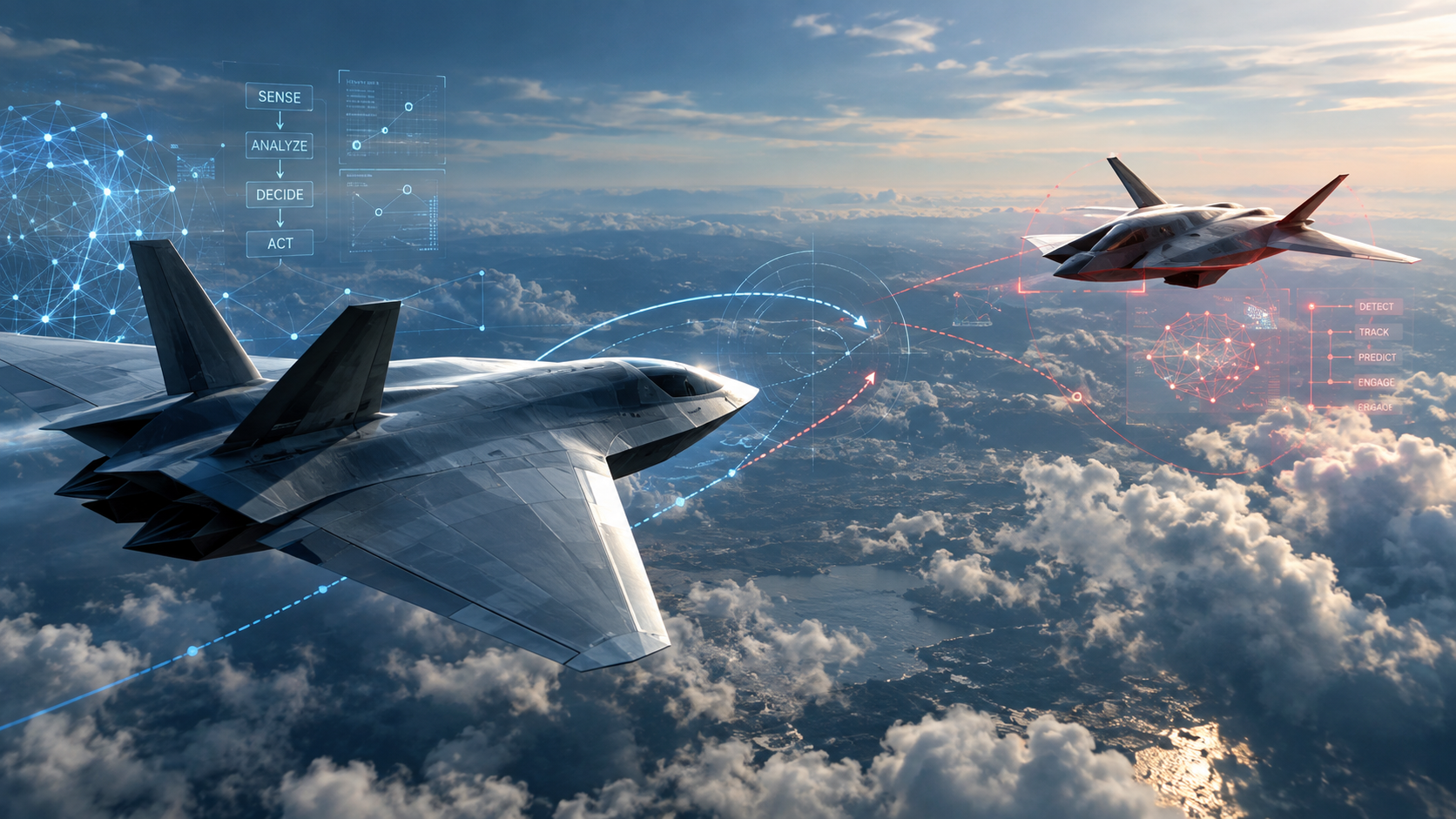
The military balance of power across the Indo-Pacific is undergoing a fundamental transformation. As both the United States and China transition artificial intelligence from simulator environments to front-line fighter jets, the primary threat of accidental military escalation in international airspace is shifting from human pilot miscalculation to machine learning error.
While much of the diplomatic discourse surrounding military AI focuses on nuclear command and strategic autonomy, the most immediate danger lies in tactical air intercepts over contested waters like the South China Sea and the Taiwan Strait. Without clear, bilateral rules of engagement (RoE) specifically tailored for autonomous aircraft, a routine encounter between uncrewed combat air vehicles (UCAVs) could trigger a rapid, unintended escalation ladder that human command structures cannot arrest in time.
The Dawn of Mach-Speed Autonomy
The race to field autonomous combat aircraft is no longer theoretical; it is an operational priority for both Washington and Beijing.
Under the U.S. Air Force’s Collaborative Combat Aircraft (CCA) initiative, the Pentagon plans to field at least 1,000 AI-enabled “loyal wingmen”—uncrewed aircraft designed to fly alongside crewed platforms like the F-35 and Next Generation Air Dominance (NGAD) fighters. Experiments conducted under the DARPA Air Combat Evolution (ACE) program have already demonstrated that AI agents can successfully outmaneuver human pilots in visual-range dogfights, adapting to tactical dynamic shifts at sub-second speeds. Details outlined by the U.S. Department of Defense emphasize the imperative of responsible autonomy, yet tactical real-time execution in contested zones remains a major wild card.
Concurrently, the People’s Liberation Army Air Force (PLAAF) is aggressively pursuing its own uncrewed platforms. Chinese defense contractors have showcased platforms such as the FH-97A and the WZ-8, designed to perform autonomous reconnaissance, electronic warfare, and forward-line air-to-air suppression. Research published by the RAND Corporation indicates that Beijing views military AI integration as a “force multiplier” capable of offsetting traditional U.S. power projection advantages in the First Island Chain.
The Escalation Trap: Why AI Changes Air-to-Air Tactics
In conventional intercept scenarios involving piloted aircraft—such as a Chinese J-16 intercepting a U.S. RC-135—human pilots operate under established visual signals, radio frequencies, and the multilateral Code for Unplanned Encounters at Sea (CUES). When a human pilot assesses intent, they rely on visual cues, physical distance, and tactical behavior to gauge aggression versus standard shadowing.
When two autonomous or semi-autonomous systems intercept one another, these human buffers disappear:
- Compression of the OODA Loop: Machine-learning algorithms operate on microsecond decision cycles. If an autonomous aircraft interprets a standard radar lock, electronic jamming pod, or evasive banking maneuver by an opposing drone as an incoming attack vector, its predictive neural networks may trigger defensive or pre-emptive maneuvers instantly.
- The “Black Box” Problem: Deep neural networks operate via complex pattern matching rather than deterministic logic trees. As noted in security studies by the Center for Strategic and International Studies (CSIS), predicting how an edge-deployed military AI model will respond to unpredictable real-world inputs (such as spoofed GPS or unexpected weather events) remains an unsolved challenge.
- Loss of Signaling Nuance: Human pilots can de-escalate a confrontation by rocking wings, pulling back on throttles, or establishing radio contact. Autonomous systems lack standard mechanisms to convey ambiguous or non-hostile intent to an opposing nation’s algorithmic system.
+-----------------------------------------------------------------------+
|                       THE ACCIDENTAL ESCALATION LOOP                 |
|                                                                       |
|   [U.S. Autonomous CCA]  <--- Sensor Query --->  [PLA Autonomous UCAV]|
|            |                                            |             |
|   Algorithm perceives                               Algorithm perceives|
|   evasive banking as hostile                         radar lock as     |
|   targeting signal                                  pre-emptive strike|
|            |                                            |             |
|            v                                            v             |
|   Automated Countermeasure                       Automated Deficit    |
|   Deployments (Chaff/Jamming)                    Tracking & Target    |
|            |                                     Acquisition          |
|            +-------------------+------------------------+             |
|                                |                                      |
|                                v                                      |
|             HUMAN COMMANDERS NOTIFIED POST-DISCHARGE                  |
|             (Escalation threshold crossed in <3 seconds)             |
+-----------------------------------------------------------------------+
The Existing Governance Vacuum
Multilateral efforts to regulate military AI have made modest progress, but they fall short of addressing tactical air intercepts.
The Responsible AI in the Military Domain (REAIM) summits and the U.S.-led Declaration on Responsible Military Use of Artificial Intelligence and Autonomy offer general principles regarding human oversight, command structure integrity, and rigorous testing. Similarly, diplomatic analysis published by the Brookings Institution highlights that high-level bilateral summits between Washington and Beijing have opened initial dialogues on AI risk reduction.
However, these broad political declarations lack operational mechanics. They do not define:
- What constitutes a hostile act by an autonomous platform in international airspace.
- What standardized electronic signals an uncrewed system must broadcast to declare peaceful transit.
- How machine-to-machine communications should function during an unintended proximity event.
Without concrete, technical protocols embedded directly into aircraft software suites, high-level political commitments will fail the moment silicon meets silicon over the Western Pacific.
A Four-Pillar Blueprint for U.S.-China AI Air Engagement
To mitigate the risk of an unintended confrontation, defense officials and technical experts from the United States and China must establish a dedicated Autonomous Air De-confliction Framework. Analysts writing in Foreign Affairs repeatedly note that arms control in the digital age requires technical solutions co-designed alongside strategic policy.
1. Hard-Coded Strategic Fail-Safes
Both nations should agree to hard-code deterministic “red lines” into autonomous flight control systems that cannot be overridden by machine-learning models. These include hard caps on maximum speed increases during close encounters, mandatory stand-off distances when intercepting uncrewed platforms, and automated weapon system lock-outs unless explicit human authority is transmitted.
2. Standardized Autonomous Identification Friend-or-Foe (A-IFF)
Similar to transponder systems used in commercial aviation, military uncrewed systems operating in international airspace should transmit a standardized, cryptographically signed “Autonomous Platform Intent” signal. This broadcast would inform nearby air units of the flight’s mission state, autonomous level (e.g., tethered to human lead vs. fully autonomous), and non-aggressive flight path vector.
3. Machine-to-Machine De-confliction Hotlines
Traditional voice-based communication links—such as the U.S.-China Defense Telephone Link—are too slow to manage algorithmic interactions. A modern de-confliction protocol requires an automated, low-latency data channel between U.S. Indo-Pacific Command and the PLA Eastern/Southern Theater Commands. This channel would automatically ping human operators the instant two opposing autonomous platforms enter a designated safety perimeter.
4. Joint Synthetic Simulation and Stress-Testing
Before deploying advanced autonomous fighters at scale, defense laboratories from both nations should participate in joint track-sharing and simulated scenario stress-tests. By running algorithmic models against each other in virtual environments, both sides can identify edge cases where neural networks misinterpret opponent maneuvers, allowing software engineers to patch systemic vulnerabilities before they manifest in real air combat.
The Imperative of Algorithmic Restraint
The integration of artificial intelligence into air warfare is an inevitable reality driven by strategic competition and technological momentum. However, autonomy without governance introduces an unacceptable level of operational risk.
If Washington and Beijing fail to establish clear rules of engagement for autonomous combat jets today, they risk allowing computer algorithms to dictate the timing and conditions of a major-power conflict tomorrow. Establishing guardrails for AI air power is not a sign of military weakness—it is a mandatory requirement for strategic stability in the 21st century.
Discover more from The Economy
Subscribe to get the latest posts sent to your email.
A new Reuters poll shows 90% of economists expect the BoE to hold rates at 3.75% for the rest of 2026 — up from 83% last month. Here’s why the consensus hardened.
The Bank of England looks set to sit tight for the rest of 2026, and the consensus behind that view is getting stronger, not weaker. Per Investing.com’s coverage of the Reuters poll, the Bank will leave rates unchanged at 3.75% for the rest of the year according to a strong majority of economists, who have held that view since the war began in late February. Nearly 90% — 56 of 64 respondents — now expect no change through year-end, up from 83% last month, with six expecting a hike and two a cut; no one in the poll, conducted August 13–18, expects a September move.
Key Takeaways
- A Reuters poll of 64 economists (Aug 13–18) shows 56 now expect the BoE to hold Bank Rate at 3.75% through year-end — 90%, up from 83% last month.
- No economist in the poll expects a rate change at the September MPC meeting.
- The consensus has held since the US-Israeli war on Iran began in late February, with little evidence yet of energy-price spillover into the broader economy.
- Markets remain slightly more hawkish than economists, still pricing some chance of a rise by year-end.
- The BoE’s own guidance flags rising Q3/Q4 inflation risk tied specifically to Middle East energy prices.
The consensus is driven less by domestic demand and more by an external variable the Bank has flagged repeatedly. Per the same Reuters poll coverage, the UK economy has stayed mostly resilient since the war began, with little evidence of energy-price spillover into the broader economy — giving the Bank room to stay on the sidelines.
That resilience is fragile by the Bank’s own admission. According to an August 2026 review from Hanbury Wealth, the MPC voted six-to-three at its July 30 meeting to hold at 3.75%, with policymakers signaling rates could rise if Middle East-linked inflationary pressure intensifies; Governor Andrew Bailey said inflation had fallen faster than expected, but the conflict continues to mean high and volatile energy prices that will push inflation back up later in the year. The Bank’s own trajectory reflects this: per the House of Commons Library’s inflation briefing, based on mid-June energy pricing, the Bank projected CPI at “a little under 3%” in Q3 2026 and “a little over 3¼%” in Q4 — a downgrade from its April forecast.
There’s a genuine two-sided risk the poll’s headline framing tends to flatten. On the downside for inflation, the same House of Commons briefing notes that if Middle East energy disruption proves short-lived and oil and gas prices decline, inflation could instead fall from a September 2026 peak toward the Bank’s 2% target by Q2 2027. On the upside risk, HSBC UK economist Elizabeth Martins told Reuters (via Investing.com) that “a big rebound in energy prices would certainly change things.”
Markets aren’t as settled as the economist consensus: per the same poll coverage, financial markets are still pricing in one quarter-point rate rise by year-end — a genuine gap between what economists expect and what traders are hedging against, reported by outlets as two separate data points rather than connected explicitly.
Underlying data support a “resilient but fragile” framing. A KPMG-cited economic overview from Opus Business Advisory Group shows GDP grew 0.7% in the three months to May, slightly down from 0.8% in April, while core inflation fell more than expected in the twelve months to June, reaching its lowest rate since March 2025 — evidence the disinflation trend independent of energy hasn’t reversed. Separately, the House of Commons Library data shows food price inflation eased to 1.7% in June, its lowest since August 2024, reinforcing that the risk is concentrated in energy rather than broad-based prices.
Why It Matters
For borrowers, a prolonged hold at 3.75% keeps mortgage costs elevated relative to sharper-cut scenarios floated earlier in the year. For savers, it sustains relatively attractive cash returns. For the government, Opus’s review notes Prime Minister Andy Burnham has pledged a £2 bus-fare cap and removal of VAT from household electricity bills from October while maintaining existing fiscal rules and avoiding tax rises — a combination that gets harder to fund if borrowing costs stay elevated through year-end.
Data and Evidence
- Bank Rate: held at 3.75% since the July 30 MPC vote (6-3)
- Reuters poll: 56 of 64 economists (90%) expect no change through year-end, up from 83% last month
- BoE inflation forecast: ~3% Q3 2026, ~3.25%+ Q4 2026
- GDP growth: 0.7% in the three months to May 2026
- Food inflation: 1.7% in June 2026, lowest since August 2024
Global Impact
A UK central bank holding firm against energy-driven inflation risk is a data point other energy-importing economies — including Pakistan and much of South and Southeast Asia — are watching as a template for treating Middle East-linked price shocks as transitory.
What Happens Next
The next live decision point is the September MPC meeting, where the poll shows unanimous expectation of no change. The Q3/Q4 inflation prints will show whether the Bank’s own ~3.25% forecast materializes — and whether the hold consensus survives contact with that data.
Frequently Asked Questions
What is the UK’s current interest rate?
3.75%, unchanged since July 30, 2026.
Why isn’t the BoE cutting further?
Concern that Middle East-driven energy prices could push inflation back up in H2 2026.
Will UK mortgage rates change soon?
Based on the current poll, no near-term move is expected.
What would change the outlook?
A significant rebound — or further de-escalation — in Middle East energy prices.
Do markets agree with economists?
Not entirely — traders still price some chance of a year-end rate rise.
Discover more from The Economy
Subscribe to get the latest posts sent to your email.
Pakistan is running two demanding reform programs at once, and they don’t obviously fit together. On one track, the IMF is pressing for stricter fiscal controls, expanded tax collection, and continued tight monetary policy under its Extended Fund Facility. On the other, Pakistan’s own constitution now mandates the removal of “riba” — interest — from the economy entirely, with a deadline set for January 2028, following a constitutional amendment passed in October 2024, according to IMF Country Report 25/109.
The IMF’s side of the ledger
Pakistan’s economic recovery gained real momentum in the first half of FY26, with GDP growth averaging 3.8% year-on-year, driven by the auto, construction, and garment industries, even as flooding in July-August weighed on output, according to IMF staff reporting. Inflation, however, climbed to 7.3% year-on-year in March as higher global commodity prices passed through to domestic energy costs. Foreign reserves have been rebuilding steadily — from $14.5 billion at end-June 2025 to $16 billion by end-December — while the primary fiscal surplus is expected to reach 1.6% of GDP in FY26, in line with IMF targets.
In May 2026, the IMF Executive Board completed the third review of Pakistan’s Extended Fund Facility and second review of its Resilience and Sustainability Facility, unlocking roughly $1.1 billion and $220 million respectively and bringing total disbursements under the two programs to about $4.8 billion, according to the IMF’s official press release. The Fund explicitly credited Pakistan’s “strong implementation” for maintaining stability despite the disruption from the Middle East war.
The parallel Islamic finance transformation
Running alongside that fiscal program is a structural transformation few outside Pakistan are tracking closely: the State Bank of Pakistan is required to develop a full financial sector strategy detailing the legal, regulatory, and strategic path to a riba-free economy, addressing monetary policy implementation, public debt management, and bank supervision — with a strategy deadline the IMF set for end-June 2026, per the same country report. Parliament has already moved on a related front, approving the Virtual Assets Bill in March 2026 and formally establishing the Pakistan Virtual Assets Regulatory Authority.
Why the IMF is watching this transition warily
The IMF’s own language signals concern about execution risk: publishing the riba-free transition plan “will help align the expectations of market participants, investors, and regulators… and mitigate concerns about any possible cliff effect,” according to the country report language. That is diplomatic phrasing for a real structural risk — an abrupt, poorly sequenced transition away from conventional interest-based finance could destabilize a banking sector the IMF has spent years helping stabilize.
The tax reform Pakistan still owes
Beyond monetary policy, Pakistan has committed to finalizing a new audit manual and centralizing taxpayer audit selection by August 2026, accelerating its Retailer Tax Registration Scheme, and making its Tax Policy Office fully operational, according to ProPakistani’s summary of IMF commitments. The Federal Board of Revenue has continued missing collection targets, prompting the IMF to propose making FBR revenue goals a formal Quantitative Performance Criteria — a stricter enforcement mechanism than before.
Why this matters for Gulf and global investors
Pakistan’s dual reform track — IMF-style fiscal orthodoxy alongside a constitutionally mandated Islamic finance transition — is unusual among IMF program countries and is drawing renewed Gulf capital interest, visible in DIFC’s decision to bring its Dubai FinTech Summit to Pakistan for the first time in August 2026 (see our companion report). Investors assessing Pakistan’s banking sector need to model both trajectories simultaneously, not just the more familiar IMF fiscal metrics.
Discover more from The Economy
Subscribe to get the latest posts sent to your email.

Neocloud Economics in 2026: GPU Debt, Utilization and Power

What Is a Neocloud? How AI GPU Clouds Work and Compare

Lula Re-elected in 2026: What Changes for the Dollar, Brazilian Stocks, and Interest Rates?

Lula Wins Brazil’s 2026 Election: Five Economic Tests for 2027

SSI November 2026 Payment: Why Benefits Arrive October 30

Russia Sanctions Waiver: What Asian Oil Buyers Gain

Asia Markets Weekly: How Oil, US Yields and the Fed Reach Tokyo, Kuala Lumpur and Karachi

Gold Near $4,000: Buy, Hold or Wait? A Pakistan Tola Price Guide

US 10-Year Treasury Yield Near 5%: The Hidden Cost for Pakistani Investors

Fed Meeting on October 28: Hike or Hold—and Why Pakistan Investors Should Care

Can Pakistan Turn US–Iran Mediation Into an Economic Dividend?

Oil Above $100: How Higher Crude Prices Reach Pakistan’s Rupee, Petrol and Imports

SBP Interest Rate at 11.5%: What Will Decide Pakistan’s Next Policy Move?

The Global South: Debt, Climate Finance and Investment in 2026

Crude Oil & Petroleum Market Analysis: OPEC+ Decisions and Price Forecasts

Top US Convenience Store Chains: Store Counts, EV Charging, and Sales Trends

Algorithmic Dogfights: Why the U.S. and China Must Establish Rules of Engagement for Autonomous Air Power

Who Is Shivon Zilis? The Neuralink Executive at the Center of the Musk–OpenAI Trial

Social Security Extra $90 Deposit: Who Qualifies for the October 2026 Medicare Rebate?

Corporate America Faces a New Debt Test as US Borrowing Costs Surge

Global Economic Outlook 2026: 7 Forces Reshaping Markets, Trade and Business

Gold Price Outlook 2026: The Forces Behind the Forecasts—and What Could Reverse Them

Gold Falls 3.7% as Yields Surge: Is Gold Still a Safe Haven in 2026?

Stock Market Today: Dow, S&P 500, and Nasdaq Retreat as Treasury Yields

MAS Allocates S$1.45 Billion to Five Asset Managers in Third EQDP Batch: Total Deployment Reaches S$5.4 Billion

Anthropic Bans Sustained Abuse of Claude AI Under New Usage Policy Effective November 12, 2026

Stock Market Crash in 2026? Warning Signs, Scenarios and a Calm Investor Checklist

Geopolitics and Your Portfolio: How International Affairs Move Global Markets
-

 Markets & Finance10 months ago
Top 15 Stocks for Investment in 2026 in PSX: Your Complete Guide to Pakistan’s Best Investment Opportunities
-

 Analysis8 months ago
Johor’s Investment Boom: The Hidden Costs Behind Malaysia’s Most Ambitious Economic Surge
-

 Analysis8 months ago
Top 10 Stocks for Investment in PSX for Quick Returns in 2026
-

 Banks9 months ago
Best Investments in Pakistan 2026: Top 10 Low-Price Shares and Long-Term Picks for the PSX
-

 Analysis9 months ago
Brazil’s Rare Earth Race: US, EU, and China Compete for Critical Minerals as Tensions Rise
-

 Investment10 months ago
Top 10 Mutual Fund Managers in Pakistan for Investment in 2026: A Comprehensive Guide for Optimal Returns
-

 Global Economy10 months ago
15 Most Lucrative Sectors for Investment in Pakistan: A 2025 Data-Driven Analysis
-

 Global Economy10 months ago
Pakistan’s Export Goldmine: 10 Game-Changing Markets Where Pakistani Businesses Are Winning Big in 2025