
Business
Trump Sues JPMorgan and Jamie Dimon for $5 Billion: Inside the Debanking Battle

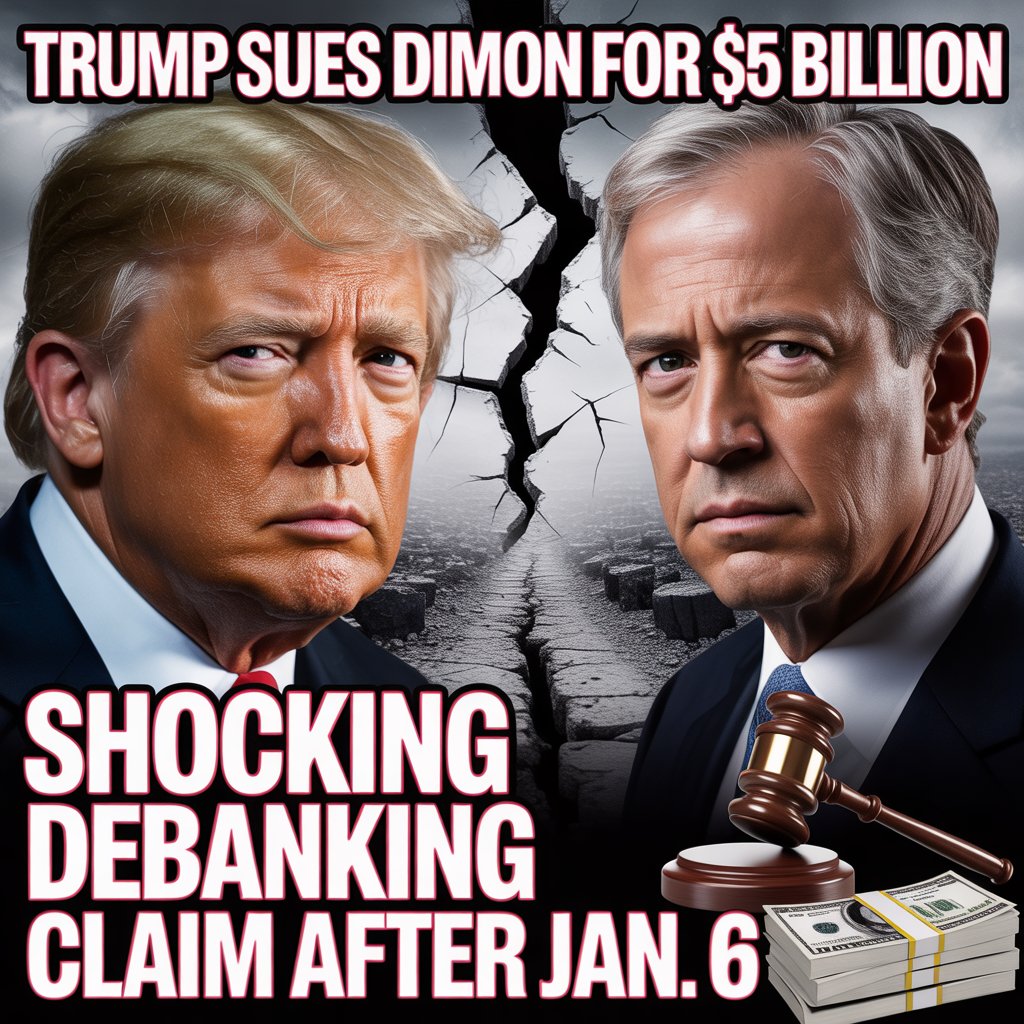
Trump files $5B lawsuit against JPMorgan and CEO Jamie Dimon over alleged political debanking after Jan. 6. Inside the explosive legal battle reshaping Wall Street.
The Lawsuit That Could Redefine Banking’s Political Boundaries
On a crisp January morning in 2026, Donald Trump—now barely two weeks into his second presidency—fired what may prove to be one of the most consequential legal salvos against Wall Street in modern American history. The $5 billion lawsuit, filed in Florida state court on January 22, targets not only JPMorgan Chase, America’s largest bank, but also its formidable CEO Jamie Dimon, alleging “political debanking” in the aftermath of the January 6, 2021 Capitol riot.
The complaint centers on a stark allegation: that JPMorgan, under Dimon’s leadership, closed Trump’s personal and business accounts in February 2021 not for legitimate compliance reasons, but as political retaliation. According to The New York Times, the lawsuit characterizes the bank’s actions as a “coordinated effort to weaponize financial access against political opponents,” invoking Florida’s recently enacted anti-debanking statute to claim unprecedented damages.
The timing is extraordinary. Trump returns to the Oval Office with an ambitious agenda of financial deregulation and tariff restructuring, yet immediately finds himself in open warfare with the very institution that once helped finance his real estate empire. For Jamie Dimon—often described as the most powerful banker in America—the lawsuit represents an uncomfortable collision between his role as a nonpartisan financial steward and the increasingly politicized landscape of corporate America.
This case transcends a dispute between a former president and his banker. It strikes at fundamental questions about the boundaries of corporate power, the role of banks as gatekeepers to the financial system, and whether access to banking can—or should—be conditioned on political considerations. The reverberations will be felt far beyond Palm Beach and Manhattan.

The Fracture: From Business Partners to Courtroom Adversaries
The Pre-2021 Relationship
The relationship between Donald Trump and JPMorgan Chase was never warm, but it was functional. Throughout the 2000s and 2010s, JPMorgan maintained various banking relationships with Trump Organization entities, though the bank had reportedly scaled back its exposure following Trump’s 1990s casino bankruptcies. Unlike Deutsche Bank, which became Trump’s primary lender during years when major Wall Street institutions avoided him, JPMorgan maintained a cautious but present role—managing accounts, processing transactions, facilitating international transfers for his global properties.
Jamie Dimon, for his part, navigated the Trump presidency with characteristic pragmatism. The JPMorgan CEO publicly supported aspects of Trump’s 2017 tax reform, attended White House business councils, and maintained cordial relations even as he occasionally criticized specific policies. It was classic Dimon: engage with power, advocate for business interests, avoid unnecessary confrontation.
The January 6 Turning Point
Then came January 6, 2021. As rioters stormed the Capitol and the nation reeled, corporate America faced a reckoning. According to The Washington Post, JPMorgan’s risk management and compliance teams initiated an urgent review of all Trump-related accounts in the riot’s immediate aftermath. The bank’s concerns reportedly centered on three factors: reputational risk, regulatory scrutiny, and potential exposure to sanctions or legal complications given ongoing investigations into the events of that day.
By February 2021, JPMorgan had made its decision. In a series of terse notifications—described in the lawsuit as “cold and peremptory”—the bank informed Trump and several affiliated entities that their accounts would be closed within 30 days. No detailed explanation was provided beyond boilerplate language about “business decisions” and “risk tolerance.”
Trump, then a private citizen banned from major social media platforms and facing his second impeachment, had few immediate options for recourse. But he evidently did not forget.
Inside the Lawsuit: Claims, Legal Strategy, and the Florida Debanking Law
The Core Allegations
The 87-page complaint, filed in Palm Beach County Circuit Court, makes sweeping allegations of political discrimination and viewpoint-based financial censorship. Bloomberg reports that Trump’s legal team argues JPMorgan violated Florida Statutes Section 542.336, a law enacted in 2023 that prohibits financial institutions operating in the state from denying services based on political views, religious beliefs, or social credit scores.
The lawsuit claims that JPMorgan’s decision was “pretextual and politically motivated,” pointing to several pieces of circumstantial evidence:
- Timing: The account closures came mere weeks after January 6, suggesting a direct causal link.
- Selective application: The complaint alleges other high-profile clients with controversial political profiles or legal troubles maintained their JPMorgan accounts.
- Lack of explanation: JPMorgan allegedly refused to provide substantive justification beyond generic risk management language.
- Public statements: The lawsuit references internal communications and public comments by JPMorgan executives about corporate responsibility and ESG commitments following January 6.
The $5 Billion Question
The astronomical damages figure—$5 billion—is based on claims of reputational harm, business disruption, and punitive damages. Trump’s attorneys argue that being “debanked” by America’s largest financial institution inflicted severe damage on his business empire, complicating transactions, raising costs, and signaling to other institutions that he was an unacceptable client. Forbes notes that the complaint specifically cites lost opportunities, increased borrowing costs, and the “digital scarlet letter” of being rejected by JPMorgan.
Legal experts interviewed by multiple outlets express skepticism about the damages calculation, noting that proving direct financial harm from account closures—particularly for someone with Trump’s access to alternative banking options—will be extraordinarily difficult. Yet the symbolic value of the number is clear: this is warfare, not negotiation.
Jamie Dimon in the Crosshairs: Personal Liability and Corporate Leadership
Why Sue Dimon Personally?
The inclusion of Jamie Dimon as an individual defendant elevates this from a routine corporate dispute to something far more personal. The Financial Times reports that Trump’s complaint alleges Dimon was directly involved in the decision to close the accounts, citing board meeting minutes and internal communications that purportedly show the CEO weighing in on Trump-related risk management decisions in early 2021.
This is unusual. CEOs of major banks typically insulate themselves from individual account decisions through layers of compliance, legal, and risk management infrastructure. Piercing that corporate veil requires demonstrating that Dimon personally directed or ratified the allegedly discriminatory conduct—a high bar in litigation.
Yet Trump’s team appears confident. The complaint portrays Dimon as the architect of a broader corporate strategy to distance JPMorgan from controversial political figures in the post-January 6 environment, allegedly using compliance mechanisms as cover for viewpoint discrimination.
Dimon’s Delicate Position
For Jamie Dimon, the lawsuit creates acute discomfort. He has cultivated an image as a steady hand in turbulent times—someone who can navigate political crosscurrents while keeping JPMorgan above the fray. He maintained working relationships with both the Trump and Biden administrations, advocated for practical business policies regardless of partisan source, and positioned himself as a voice of reason in polarized times.
Now he faces a lawsuit from a sitting president who commands fierce loyalty from roughly half the American electorate and who has never been shy about using his platform to wage public relations warfare. According to Reuters, JPMorgan’s initial response has been measured but firm: the bank denies all allegations and insists the account closures were based solely on “routine risk management protocols unrelated to any client’s political views.”
JPMorgan’s Defense: Risk Management or Political Censorship?
The Bank’s Rationale
JPMorgan has not yet filed a formal response to the lawsuit, but its public statements and background briefings to journalists reveal the contours of its defense. The bank argues that:
- Regulatory compliance: As a globally systemically important bank (G-SIB), JPMorgan faces extraordinary regulatory scrutiny and must maintain rigorous anti-money laundering, sanctions compliance, and risk management protocols.
- Reputational risk: The January 6 events triggered massive reputational risk assessments across corporate America. Banks routinely evaluate whether clients pose unacceptable reputational hazards—a legitimate business consideration.
- Operational independence: Account closure decisions are made by specialized risk and compliance teams using objective criteria, not by the CEO’s office based on political animus.
- Preexisting concerns: CNBC reports that sources close to JPMorgan suggest the bank had been conducting enhanced due diligence on Trump Organization accounts well before January 6, related to longstanding questions about the company’s financial practices.
The Industry Context
JPMorgan’s predicament reflects broader tensions in the banking sector. After January 6, numerous financial institutions severed ties with Trump-affiliated entities or individuals. Payment processors like Stripe stopped processing donations for Trump campaign entities. Banks conducting business with anyone connected to the Capitol riot faced intense public pressure and potential regulatory complications.
Yet this creates a troubling precedent. If banks can effectively de-person individuals from the financial system based on political controversy—however defined—where do the boundaries lie? Conservative activists have documented dozens of cases where individuals and organizations on the right claim they were “debanked” for their political views, from gun rights advocates to anti-abortion activists.
The Debanking Phenomenon: A Growing Flashpoint
What Is Political Debanking?
“Debanking” refers to financial institutions closing or denying accounts to customers based on factors unrelated to traditional banking risk—most controversially, political views or associations. The practice exists in a legal and ethical gray zone. Banks have broad discretion to choose their clients, but that discretion isn’t absolute, particularly when anti-discrimination laws or public utility considerations come into play.
The BBC describes the phenomenon as part of a broader trend in which major corporations use their market power to enforce ideological boundaries—what critics call “corporate cancel culture” and defenders characterize as legitimate risk management and values alignment.
Florida’s Anti-Debanking Law
Florida’s 2023 legislation specifically prohibits financial institutions from discriminating based on political opinions, religious beliefs, or “social credit scores”—a term borrowed from concerns about Chinese-style social monitoring systems. The law allows individuals and businesses to sue for damages if they can prove they were denied financial services for these prohibited reasons.
Trump’s lawsuit is the highest-profile test of this statute. If successful, it could open the floodgates for similar litigation and encourage other Republican-controlled states to enact comparable protections. If it fails, it may establish that banks retain broad discretion to evaluate clients holistically, including reputational and political considerations.
Wall Street’s Trump Dilemma: Navigating the Second Term
The Complicated Courtship
Wall Street’s relationship with Donald Trump has always been transactional and ambivalent. The financial sector enthusiastically supported his 2017 tax cuts and deregulatory agenda, yet many executives were privately appalled by his conduct and rhetoric. Jamie Dimon himself once criticized Trump’s handling of racial tensions, though he later walked back some comments.
Now, with Trump back in the White House pursuing an ambitious agenda that includes further banking deregulation, financial institutions face an uncomfortable calculus. Antagonizing the president risks regulatory retaliation, but appearing to capitulate to political pressure undermines their claims to operational independence.
The lawsuit intensifies this dilemma. If JPMorgan settles quickly or backs down, it may embolden Trump to use similar pressure tactics against other institutions. If the bank fights aggressively, it risks a protracted public battle with a president who thrives on conflict and commands a megaphone unlike any other.
Regulatory and Legislative Implications
The Trump administration’s financial regulatory appointees will be watching this case closely. While the lawsuit is a civil matter in state court—not subject to federal intervention—the broader questions it raises about banking access and political neutrality could inform federal policy.
Congressional Republicans have already signaled interest in federal anti-debanking legislation, modeled on Florida’s law. If Trump’s lawsuit gains traction, it could accelerate those efforts and create a new front in the ongoing culture wars over corporate America’s role in policing political speech and association.
Economic and Market Implications
Short-Term Market Reaction
JPMorgan’s stock barely flinched on news of the lawsuit—testimony to investors’ view that the case poses minimal financial risk to the bank. The $5 billion figure, while eye-catching, represents less than two weeks of JPMorgan’s typical quarterly profit. Legal fees and reputational damage are the more realistic concerns.
Long-Term Structural Questions
The deeper economic question is whether this lawsuit accelerates fragmentation in the financial services industry along political lines. Some conservative entrepreneurs are already building “anti-woke” banking alternatives, positioning themselves as havens for customers who fear political discrimination by mainstream institutions.
If successful, these parallel financial infrastructures could reduce efficiency, increase costs, and fragment liquidity in the banking system. Alternatively, they might introduce healthy competition and discipline for incumbent institutions that have grown complacent about customer service and political neutrality.
The Precedent Problem: Where Does This End?
Slippery Slopes on Both Sides
Both sides in this dispute can point to troubling hypotheticals. If banks cannot consider political factors at all in client selection, can they be forced to serve individuals or entities under sanctions, involved in ongoing criminal investigations, or credibly accused of financial fraud—provided those targets can frame their situation as political persecution?
Conversely, if banks have unlimited discretion to debank based on ideology, couldn’t conservative-led institutions refuse to serve progressive clients? Couldn’t banks in certain regions effectively exclude entire classes of politically disfavored customers?
The lawsuit forces courts to grapple with these questions without clear precedent. Banking law has traditionally granted financial institutions broad discretion in client selection, but those principles were developed in an era when banking and politics occupied more separate spheres.
What Happens Next: Legal Timeline and Likely Outcomes
Procedural Roadmap
JPMorgan will likely move to dismiss the case, arguing that Trump has failed to state a valid legal claim and that the bank’s actions fall within its protected business judgment. Florida’s anti-debanking law remains largely untested in litigation, so courts will have to interpret its scope and application.
If the case survives dismissal, discovery could be explosive. Trump’s attorneys would gain access to JPMorgan’s internal communications, risk assessments, and decision-making processes around the account closures. The bank would similarly probe Trump’s actual financial damages and alternative banking relationships.
Most legal analysts expect the case to settle rather than go to trial, though Trump’s litigious history and Dimon’s institutional resolve make predictions hazardous. A settlement could include no admission of wrongdoing but might involve JPMorgan agreeing to clearer, more transparent account closure policies.
The Political Calculus
Trump appears to view the lawsuit as both a genuine grievance and a useful political narrative. The “debanking” story resonates with his base’s sense that elite institutions weaponize their power against conservatives. Whether the case has legal merit may matter less than its political utility in reinforcing that narrative.
For JPMorgan, the priority will be containing damage—to its reputation, its regulatory standing, and its relationships with both political parties. The bank cannot afford to be seen as capitulating to political pressure, but neither can it afford a years-long public brawl with the President of the United States.
Conclusion: Banking, Power, and the Politics of Access
The Trump-JPMorgan lawsuit crystallizes tensions that extend far beyond one controversial president and one powerful bank. At its heart, this case asks who controls access to the infrastructure of modern capitalism—and on what terms.
Financial institutions occupy a quasi-public role in democratic societies. They are private enterprises with shareholder obligations, yet they also serve as gatekeepers to essential economic participation. When banks exercise that gatekeeping power based on political considerations—whether explicitly or through the malleable language of risk management—they enter contested terrain.
Trump’s lawsuit, whatever its ultimate legal fate, has already succeeded in forcing this question onto the national agenda. It challenges the post-January 6 consensus among corporate leaders that distancing from Trump carried no serious institutional cost. And it previews what may be a defining feature of Trump’s second term: the use of litigation, regulation, and executive power to reshape corporate America’s relationship with political controversy.
Jamie Dimon, who has navigated financial crises, regulatory transformations, and political upheavals with unusual dexterity, now faces perhaps his most delicate challenge. The lawsuit is a reminder that in contemporary America, even the most powerful banker cannot fully insulate his institution from the gravitational pull of politics.
The $5 billion question is ultimately not about damages—it’s about boundaries. Where does legitimate risk management end and political discrimination begin? The answer will reverberate through boardrooms and courtrooms for years to come.
Discover more from The Economy
Subscribe to get the latest posts sent to your email.


The global economic growth is becoming more uneven, capital is increasingly sensitive to financing costs, and investors must distinguish a convincing story from an investable price. This guide focuses on research methods and risks rather than predictions of guaranteed returns. The IMF October 2026 outlook projects 3.1% global growth and 4.7% inflation for 2026, while the IMF financial-stability assessment warns that market resilience coexists with important vulnerabilities.
Key takeaways
- Match each investment decision to its time horizon, currency and ability to withstand losses.
- Separate observable earnings or contractual cash flows from optimistic forecasts.
- Compare diversification, fees, taxes, liquidity and regulatory restrictions before committing capital.
- Track primary institutional evidence and update assumptions when conditions change.
- Readers in Pakistan should consider rupee exposure and availability of regulated investment channels.
Why this matters now
The central question behind gold vs dollar vs bitcoin 2026 is not merely what may happen next. It is which economic mechanisms could change cash flow, purchasing power or risk. The Bank for International Settlements’ 2026 review describes an economy supported by technological investment but constrained by geopolitical and fiscal pressures. A robust financial plan must therefore survive both a favourable and an adverse scenario.
Three assets, three different economic functions
Gold is a scarce physical asset without a contractual cash flow. The dollar is a currency used for transactions, reserve holdings and dollar liabilities; holding dollars is not the same as owning an inflation-protected investment. Bitcoin is a highly volatile digital asset whose long-run response to inflation cannot be assumed stable. The comparison depends on which inflation and which home currency the investor faces. See the primary institutional research.
For practical analysis, separate the baseline, the upside case and the downside case. Document the specific development that would change your assessment. Assess timing: a promising long-term theme may still be inappropriate for cash needed within twelve months.
Why gold has attracted investment demand
The World Gold Council reported resilient investment demand during 2026 and a recovery in central-bank purchasing in the second quarter. That is evidence of demand, not a promise of rising prices. Gold can fall when real interest rates rise, the dollar strengthens or investors liquidate positions. Storage, spreads and insurance matter for physical buyers. See the primary institutional research.
For practical analysis, separate the baseline, the upside case and the downside case. Document the specific development that would change your assessment. Assess timing: a promising long-term theme may still be inappropriate for cash needed within twelve months.
The dollar: liquidity versus purchasing power
Foreign-currency balances may reduce exposure to a depreciation of the investor’s home currency, but US inflation still erodes dollar purchasing power. Cash in a bank has different legal protection and returns from banknotes held privately. A Pakistani household paying future US-dollar tuition has a genuine dollar liability; a household buying groceries in rupees has different currency matching needs.
For practical analysis, separate the baseline, the upside case and the downside case. Document the specific development that would change your assessment. Assess timing: a promising long-term theme may still be inappropriate for cash needed within twelve months.
Bitcoin: upside narratives and drawdown risk
Bitcoin supply rules do not make its market price stable. Liquidity conditions, leverage, custody arrangements, regulatory changes and speculative activity can dominate short-run returns. Investor.gov warns that crypto assets involve substantial loss and fraud risks. Treat any allocation as a speculative risk decision, not a guaranteed inflation hedge. See the primary institutional research.
For practical analysis, separate the baseline, the upside case and the downside case. Document the specific development that would change your assessment. Assess timing: a promising long-term theme may still be inappropriate for cash needed within twelve months.
How to compare hedges in rupees
Measure the purchase price and exit value after exchange rates, fees and taxes. Consider the needed holding period and worst plausible drawdown. Diversification is more credible than trying to select one universally superior asset. The right benchmark is the real purchasing power of the specific future expense, not whichever asset had the best recent performance. See the primary institutional research.
For practical analysis, separate the baseline, the upside case and the downside case. Document the specific development that would change your assessment. Assess timing: a promising long-term theme may still be inappropriate for cash needed within twelve months.
Comparison and decision framework
| Question | Stronger evidence | Warning sign |
|---|---|---|
| What drives returns? | Audited cash flows, clear contract or transparent index | Undefined or projected returns |
| What can go wrong? | Explicit scenario and downside analysis | Claims of guaranteed gains |
| Is it affordable to hold? | Low transparent fees and adequate liquidity | Leverage, costly spreads or lockups |
| Is access legitimate? | Appropriate licensing and clear legal rights | Unverified brokers or custody |
| Is the exposure diversified? | Multiple independent sources of return | One company, sector or currency |
What it means for Pakistani savers and investors
A Pakistani reader faces both international investment risk and local purchasing-power risk. For example, a foreign asset can rise in US-dollar terms while the rupee conversion and transaction costs alter the realized local outcome. The opposite can also occur. Record the starting exchange rate, applicable taxes, custody charges and capital-transfer restrictions, and confirm current requirements with the State Bank of Pakistan and the relevant securities regulator. Overseas access should not be assumed universally available.
An emergency reserve, expensive consumer debt and near-term family obligations deserve attention before any speculative allocation. A portfolio that cannot meet a sudden cash requirement may force sales at the worst moment. The objective is not to remove risk—impossible in markets—but to choose risks that fit the investor’s actual liabilities.
Risks, limitations and uncertainty
Institutional forecasts are conditional and can change after policy decisions, commodity shocks, conflict escalation or unexpectedly weak earnings. Historic correlations are not binding promises about future asset performance. The analysis does not provide live stock prices, current investment product quotes, real-time exchange rates or individualized tax advice. Prices, regulations and product eligibility should be checked on the transaction date.
Frequently asked questions
Is this a guaranteed investment opportunity?
No. Every financial asset or strategy involves uncertainty. The existence of a popular investment theme is not evidence that an individual security is fairly priced.
What should beginners examine first?
Understand the product, the financial loss you could tolerate, fees and liquidity. Verify the provider and decide whether the money may be needed soon.
How do interest rates affect the analysis?
They influence financing costs, discount rates, exchange rates and demand. The effect differs by sector, maturity and business balance sheet.
Can Pakistani residents invest in foreign markets?
Access depends on current foreign-exchange, banking, brokerage, securities and tax rules, and on the investor’s individual circumstances. Check current regulations and regulated providers rather than assuming access.
How often should this analysis be refreshed?
Review institutional economic releases monthly and re-evaluate immediately after material earnings, regulatory or policy changes. Avoid reacting mechanically to every daily market movement.
Is diversification enough to prevent losses?
No. Diversification may reduce company-specific risk but cannot eliminate broad market, currency, inflation or systemic risks.
Conclusion
Sound financial decisions begin with verifiable evidence, reasonable valuation, awareness of uncertainty and a plan that survives adverse outcomes. Readers should compare multiple independent sources and avoid letting a compelling headline substitute for due diligence.
Discover more from The Economy
Subscribe to get the latest posts sent to your email.
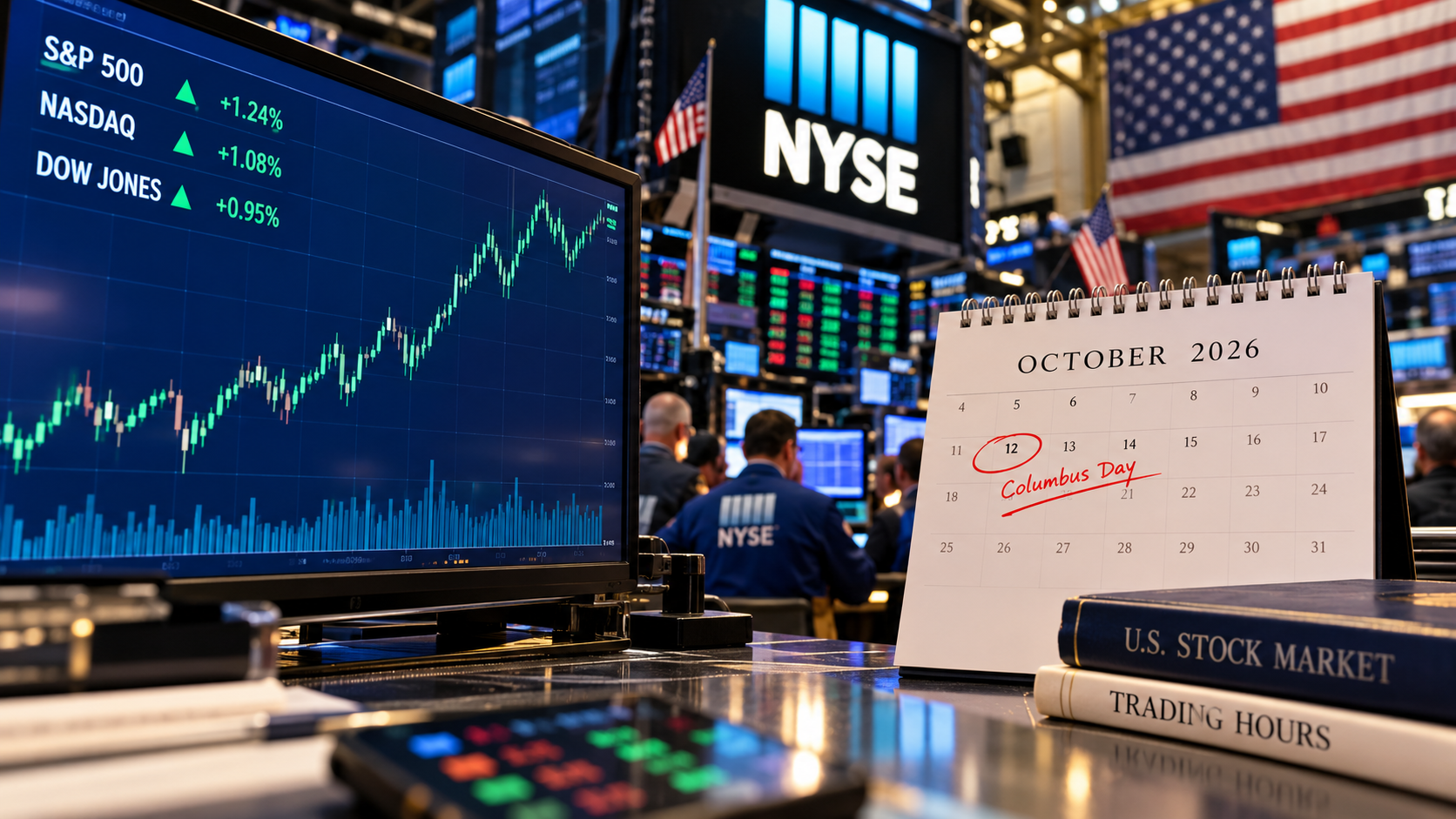
NYSE and Nasdaq are scheduled to trade their regular session on Monday, October 12, 2026, although the U.S. bond-market holiday schedule differs from that for stocks. Research cutoff: October 12, 2026; confirm developing facts before publication.
What is happening and why readers are searching
Yes. Monday, October 12, 2026 is Columbus Day, also observed by many as Indigenous Peoples’ Day, and the New York Stock Exchange and Nasdaq are scheduled to trade during their standard 9:30 a.m.–4 p.m. Eastern session. The bond market follows a different holiday schedule: SIFMA recommends a full closure in U.S. dollar fixed-income trading. Sources: NYSE and SIFMA holiday schedule.
The important context competitors can overlook
This distinction matters for more than trivia. A trader may see stocks move while some bond markets and banks are closed. Brokerage funding, transfer cutoffs and market data from less-liquid products can behave differently from a typical Monday. International exchanges observe their own holidays and may not follow the U.S. calendar. The federal holiday label alone does not tell a reader whether a particular financial instrument trades. For primary-source checks and current reporting, see NYSE and Kiplinger. The key distinction is separate equity, bond, bank and settlement schedules.
A practical way to use this information
Check your brokerage’s trading notice for options, mutual-fund cutoffs, fixed income and account funding. Avoid saying “the market is closed” without naming the asset class. Readers with urgent cash needs should confirm transfer and settlement arrangements directly with their institution. The next scheduled full U.S. stock-market holiday after October 12 is Thanksgiving Day, November 26, according to the exchange holiday calendars.
A holiday-hours comparison worth saving
| Market or service | October 12, 2026 | What to check |
|---|---|---|
| NYSE-listed shares | Regular session scheduled | Your broker and exchange notices |
| Nasdaq-listed shares | Regular session scheduled | Trading hours and order type |
| U.S. dollar bond market | SIFMA recommends closure | Fixed-income trading desk |
| Banks and transfers | Federal holiday may affect services | Your bank’s payment timetable |
NYSE exchange trading hours and the SIFMA holiday recommendation are different types of evidence. Neither establishes that every retail intermediary will offer normal transfer processing.
What to verify before making a decision
The right next step is to identify the source, timestamp and applicable market or jurisdiction. Check whether a number is a historical observation, official announcement, target, forecast or scenario. If you intend to act financially, legally or commercially, use the relevant provider’s current terms and obtain professional advice where appropriate. The sources cited here establish context; they are not a substitute for live prices, individual eligibility checks or binding agreements.
Reader questions
Can I buy U.S. stocks on Columbus Day?
Yes, the regular NYSE and Nasdaq session is scheduled.
Are Treasury bonds trading normally?
SIFMA recommends a U.S. bond-market holiday closure.
What “the market is open” actually means
The NYSE and Nasdaq trading session and the U.S. federal-holiday calendar are separate systems. On Monday, October 12, 2026, their standard core trading hours are scheduled to run from 9:30 a.m. to 4 p.m. Eastern Time. A share of a widely traded U.S. company can therefore change hands while many bank branches and government offices remain closed. But that statement does not tell you whether your brokerage’s customer-service desk is staffed normally, whether a fund values assets at its usual time, or whether a particular bond has a reliable two-sided quote. Those details depend on instrument, venue and broker.
For an investor outside the United States, convert Eastern Time carefully. Some countries move clocks on different dates, while others do not observe daylight saving time. A calendar showing “9:30” without a time zone is insufficient. Use the NYSE official market calendar as the first reference for exchange trading hours and your broker’s order preview for instrument-specific handling.
Stocks, Treasuries, funds and cryptocurrency are not interchangeable
A company’s listed common stock may trade normally even when the recommended U.S. bond-market session is closed. Treasury bonds, municipal bonds and corporate bonds do not operate in exactly the same way as exchange-listed shares. Fixed-income markets are fragmented, and a limited or irregular quoting environment can produce wider bid-ask spreads. Placing a market order in a thinly traded security can be more expensive than expected. Investors considering a bond trade should ask about dealer liquidity, execution timing and whether prices are executable rather than merely indicative.
Mutual funds, exchange-traded funds, stock-index futures and cryptocurrencies each have their own pricing mechanics. An ETF can trade on the stock exchange, but its underlying holdings could include instruments in markets observing a holiday. Mutual funds normally process orders according to their published prospectuses and cutoff policies. Futures venues publish product-specific schedules. Cryptocurrency markets trade around the clock, but uninterrupted availability does not guarantee tight spreads. Checking one “market open” headline is not enough to infer all these schedules.
Order types and settlement around a federal holiday
Imagine an investor who places an order for shares on Monday morning. The exchange may execute it during the ordinary equity session, but settlement and cash-transfer processing can be affected by banking holidays and applicable business-day conventions. A trade confirmation, settled-cash display and withdrawal availability are not the same event. The safest approach is to check the brokerage’s holiday operations notice rather than assuming that an executed trade instantly creates withdrawable cash. Different account types may impose additional restrictions.
For a volatile security, an investor can compare the displayed bid and ask before trading and consider a limit order rather than automatically accepting an uncertain market price. This does not guarantee execution. It does specify the least favorable purchase price or sale price the investor is willing to accept. Orders entered outside the core session may also have distinct participation, duration and execution rules, which a broker should disclose.
The practical Columbus Day checklist
A useful market-hours answer should cover more than the yes-or-no question. Check the exact date and year, the trading venue, the time zone, the security type, your brokerage’s processing calendar and any early-closing notice. For dollar-denominated fixed income, consult the SIFMA holiday schedule. For your specific bank, inspect its branch and electronic-transfer information. Do not assume a bank holiday means cards stop working or electronic trading becomes impossible; these are distinct operations.
Holiday headlines can also expire quickly. A search result from 2025 or 2027 might display the same Columbus Day keywords yet give the wrong weekday or market specifics. Editors should include “Monday, October 12, 2026” near the top and remove any blanket claim that all financial markets are open. If the story is reused next year, the date and all supporting calendars need new verification.
What to do if a trade or transfer is urgent
For an urgent payment, ask the receiving institution about cutoff times and whether it recognizes the holiday as a processing day. For an urgent investment order, verify the specific instrument’s status directly in the broker interface and review the quote rather than trusting a static article. Where timing is not essential, waiting for ordinary liquidity can be more sensible than accepting a large spread. These are general execution considerations, not recommendations to buy or sell any particular security.
The broader lesson is that exchange trading, dealer liquidity and banking settlement are three separate clocks. Columbus Day demonstrates why a short market-hours answer is useful as a starting point but inadequate for every investor’s operational decision.
Discover more from The Economy
Subscribe to get the latest posts sent to your email.

Conagra Brands has stopped producing Celeste frozen pizza, bringing an end to the familiar budget-friendly product line. The company disclosed its decision as part of a wider simplification of its food portfolio during its fiscal first-quarter 2027 earnings cycle. A Conagra representative subsequently confirmed that existing retail inventory can continue to sell, but the company is no longer manufacturing new Celeste pizzas. That means a shopper may still spot a box in a freezer, even though production has ceased. Conagra’s quarterly results and Fox Business’s confirmation from the company establish the basic facts.
Key takeaways:
- The decision is a confirmed discontinuation, not a social-media rumor or temporary nationwide recall.
- Existing products may remain on shelves until inventories run out; availability is local and cannot be guaranteed.
- Conagra’s management presented Celeste as part of a broader effort to simplify underperforming brands and individual product lines.
- A brand’s devoted following does not necessarily make it profitable to produce and distribute nationally.
Did Celeste frozen pizza really stop production?
Yes. During the September 30, 2026 earnings discussion, management identified the exit from Celeste as one example of simplifying Conagra’s assortment. In a statement reported by Fox Business, the company said it had stopped making Celeste and would sell remaining inventory. The same report said Conagra viewed the exit as positive for future margins, despite a small negative contribution to reported quarterly sales.
Two distinctions matter. Production means manufacturing fresh units for shipment. Distribution and retail availability depend on the inventory already in warehouses, on trucks, or in stores. Stopping production does not instantly remove all existing boxes from sale. Nor is there evidence in the reviewed statements of a restart date or replacement product under the same brand.
Shoppers seeking an answer to “Is Celeste discontinued?” should therefore treat the answer as yes, while recognizing that a few locations may continue selling stock for a limited period. Store-listing pages can lag real inventory. Checking a retailer’s stock status or contacting the store is more useful than relying on an old product listing.
Why Conagra made the decision
Conagra is pursuing a leaner mix of products. The company said its fiscal first-quarter reported net sales fell 1.4%, while reported diluted earnings per share rose 5.9% from the year-earlier period. Its earnings announcement also reaffirmed fiscal-year guidance for an organic sales decline of 1% to 3%. Conagra’s September 30 release provides the financial context.
The takeaway is not simply that one pizza sold poorly. Large packaged-food companies face costs across manufacturing capacity, ingredients, packaging, transportation, shelf space and promotional activity. Each different size or variety adds complexity. A low-volume item can consume factory time and distribution attention that might otherwise support a larger brand or faster-growing category.
Industry publication Food Dive described Celeste’s removal as an early sign of a larger portfolio review. Food Processing similarly framed the move as SKU rationalization—industry shorthand for trimming individual products or assortments.
What SKU rationalization means to shoppers
A stock-keeping unit, or SKU, is a specific retail product variation. Cutting SKUs can mean eliminating a flavor, size or entire line. It may improve the manufacturer’s operating efficiency, but it also reduces choice. In Celeste’s case, the reported decision is broader than dropping one variety: the brand’s frozen pizzas are no longer being produced.
This is a trade-off for retailers too. Shelf space is limited; grocers favor products that sell consistently, generate acceptable margins and are easy to replenish. A long-established label can therefore disappear even if a loyal group of customers still buys it.
Celeste’s history explains the reaction
The nostalgic response is not difficult to understand. According to People’s history of the brand, Celeste grew out of the Lizio family’s frozen-pizza business in Illinois in the early 1960s, then gained wider national distribution after its sale to Quaker Oats in 1969. Its single-serving format became part of ordinary freezer routines for generations of customers.
That history has value, but sentimental recognition differs from today’s unit economics. A brand’s cultural footprint captures decades of purchases and memories. A modern annual business review measures recent sales velocity, production costs, distribution economics and likely future performance. Both can be true: consumers can love a product while its owner concludes the business does not justify further investment.
It would be misleading, however, to assign a definitive financial loss to Celeste alone. The public earnings figures reviewed here describe Conagra as a whole and management’s portfolio strategy, not an audited standalone Celeste profit-and-loss statement.
Can customers still buy Celeste pizza?
Possibly, for a limited time. Conagra’s confirmation leaves open the sale of units already produced. Grocery availability can vary across chains, individual stores and locations; stock may disappear at different speeds.
| What a customer sees | What it means |
|---|---|
| Celeste box still in a freezer | Likely remaining inventory; it does not prove production restarted |
| Product displayed on a retailer website | A listing is not a stock guarantee; verify store availability |
| Product shown as out of stock | Could indicate local sell-through; not necessarily a separate recall |
| Social post promising a return | Do not rely on it without a new manufacturer announcement |
| Old coupon or promotion | Terms and actual retailer supply still control |
For any remaining frozen product, follow the labeled storage and preparation instructions. Avoid stockpiling food if storage quality cannot be maintained. Price surges by third-party sellers should not be mistaken for an official recommended retail price.
Does this signal trouble for the wider frozen-pizza market?
Not necessarily. One company’s decision about one brand cannot establish a decline across the entire frozen-pizza category. Portfolio simplification can happen even in categories with viable demand, particularly when individual products fail to justify operational complexity. Conversely, a popular category does not guarantee that every brand or price point performs well.
Conagra’s wider fiscal results show a company navigating sales pressure while trying to maintain profitability. The decision makes sense as part of management’s stated plan. To establish a wider market decline would require independently sourced industry unit sales, dollar sales, pricing and retailer data—none of which should be invented to make a broader headline.
What happens next for Conagra?
Management has signaled a continuing review of its assortment. Investors will watch subsequent quarterly disclosures for signs that lower complexity improves profit margins without causing excessive loss of sales. Customers will watch for further product exits and which remaining brands receive greater shelf presence.
A successful simplification program would ideally improve factory utilization, inventory efficiency and brand investment. But there are risks: removing too many niche products may push loyal customers toward competitors. The outcome is measurable only over future reporting periods.
Frequently asked questions
Is Celeste frozen pizza permanently discontinued?
Conagra has confirmed production stopped and provided no restart plan in the statements reviewed as of October 10, 2026. It is appropriate to describe the product as discontinued; any future return would require a new announcement.
Why did Conagra stop making Celeste?
Conagra presented the exit as part of a strategy to remove smaller, lower-return businesses and simplify its product portfolio. Its earnings materials provide context.
Can I still find Celeste at Walmart or Kroger?
A retailer could still have previously manufactured stock, but availability varies. Check a specific store rather than assuming the product remains nationally stocked.
Was Celeste pizza recalled?
The reporting reviewed here describes a business discontinuation, not a safety recall. If concerned about a specific package, consult the official recall notices and the package details.
Will another company buy or relaunch Celeste?
There is no verified agreement or relaunch timetable in the material reviewed. Speculation about a buyer should not be published as fact.
Who owned Celeste at the end?
Conagra Brands was the manufacturer and brand owner responsible for the discontinuation announcement.
Bottom line
Celeste’s removal illustrates how an iconic grocery brand can be commercially vulnerable in a modern food portfolio. The key consumer fact is straightforward: the manufacturing run has ended, but existing inventory may remain for sale. The larger business story is Conagra’s effort to put resources behind products with stronger expected returns. Readers should look for verified new company disclosures rather than assume the label will return.
Discover more from The Economy
Subscribe to get the latest posts sent to your email.

What Is a Neocloud? How AI GPU Clouds Work and Compare

Lula Re-elected in 2026: What Changes for the Dollar, Brazilian Stocks, and Interest Rates?

Lula Wins Brazil’s 2026 Election: Five Economic Tests for 2027

SSI November 2026 Payment: Why Benefits Arrive October 30

Russia Sanctions Waiver: What Asian Oil Buyers Gain

Asia Markets Weekly: How Oil, US Yields and the Fed Reach Tokyo, Kuala Lumpur and Karachi

Gold Near $4,000: Buy, Hold or Wait? A Pakistan Tola Price Guide

US 10-Year Treasury Yield Near 5%: The Hidden Cost for Pakistani Investors

Fed Meeting on October 28: Hike or Hold—and Why Pakistan Investors Should Care

Can Pakistan Turn US–Iran Mediation Into an Economic Dividend?

Oil Above $100: How Higher Crude Prices Reach Pakistan’s Rupee, Petrol and Imports

SBP Interest Rate at 11.5%: What Will Decide Pakistan’s Next Policy Move?

The Global South: Debt, Climate Finance and Investment in 2026

Energy Security Is the New Economic Security

Crude Oil & Petroleum Market Analysis: OPEC+ Decisions and Price Forecasts

Top US Convenience Store Chains: Store Counts, EV Charging, and Sales Trends

Algorithmic Dogfights: Why the U.S. and China Must Establish Rules of Engagement for Autonomous Air Power

Who Is Shivon Zilis? The Neuralink Executive at the Center of the Musk–OpenAI Trial

Social Security Extra $90 Deposit: Who Qualifies for the October 2026 Medicare Rebate?

Global Economic Outlook 2026: 7 Forces Reshaping Markets, Trade and Business

Corporate America Faces a New Debt Test as US Borrowing Costs Surge

Gold Price Outlook 2026: The Forces Behind the Forecasts—and What Could Reverse Them

Gold Falls 3.7% as Yields Surge: Is Gold Still a Safe Haven in 2026?

Stock Market Today: Dow, S&P 500, and Nasdaq Retreat as Treasury Yields

Anthropic Bans Sustained Abuse of Claude AI Under New Usage Policy Effective November 12, 2026

MAS Allocates S$1.45 Billion to Five Asset Managers in Third EQDP Batch: Total Deployment Reaches S$5.4 Billion

Geopolitics and Your Portfolio: How International Affairs Move Global Markets

US 10-Year Yield Hits 5.24%: What the Historic Bond Market Sell off Means for Mortgages and Investors
-

 Markets & Finance10 months ago
Top 15 Stocks for Investment in 2026 in PSX: Your Complete Guide to Pakistan’s Best Investment Opportunities
-

 Analysis8 months ago
Johor’s Investment Boom: The Hidden Costs Behind Malaysia’s Most Ambitious Economic Surge
-

 Analysis8 months ago
Top 10 Stocks for Investment in PSX for Quick Returns in 2026
-

 Banks9 months ago
Best Investments in Pakistan 2026: Top 10 Low-Price Shares and Long-Term Picks for the PSX
-

 Analysis9 months ago
Brazil’s Rare Earth Race: US, EU, and China Compete for Critical Minerals as Tensions Rise
-

 Investment10 months ago
Top 10 Mutual Fund Managers in Pakistan for Investment in 2026: A Comprehensive Guide for Optimal Returns
-

 Global Economy10 months ago
15 Most Lucrative Sectors for Investment in Pakistan: A 2025 Data-Driven Analysis
-

 Global Economy10 months ago
Pakistan’s Export Goldmine: 10 Game-Changing Markets Where Pakistani Businesses Are Winning Big in 2025