
Banks
The Great Decoupling: Can ‘Anti-Woke’ Banks Survive a Post-ESG Regulatory Era?


The death of reputational risk as a regulatory standard has unleashed something unexpected in American banking: not innovation, but a fundamental identity crisis that pits fortress-grade financial institutions against nimble, mission-driven challengers operating on thinner capital cushions.
The Debanking Reckoning
The numbers tell a stark story. All nine of the nation’s largest banks—JPMorgan Chase, Bank of America, Citibank, Wells Fargo, U.S. Bank, Capital One, PNC, TD Bank, and BMO—maintained policies that the Office of the Comptroller of the Currency found to be inappropriate restrictions on lawful businesses, particularly in digital assets and politically sensitive sectors. This regulatory finding, released in December 2025, confirmed what crypto entrepreneurs and conservative activists had alleged for years: systematic exclusion from basic banking services based on non-financial criteria.
Federal regulators eliminated reputational risk considerations from supervisory guidance following President Trump’s August 2025 executive order on fair banking. The pivot was seismic. For the first time since the 2008 financial crisis, regulators are refocusing examinations on material financial risk rather than governance formalities, with the FDIC and OCC proposing joint rules to define unsafe practices more precisely under Section 8 of the Federal Deposit Insurance Act.
This isn’t regulatory tweaking. It’s a philosophical revolution that collapses the post-crisis consensus around stakeholder capitalism and replaces it with a narrower mandate: safety, soundness, and shareholder primacy.
The De Novo Mirage
Conservative states anticipated this moment. Just four new banks opened in 2025, down from six the previous year, though eighteen bank groups now have conditional charters or applications on file with the FDIC. Florida has emerged as ground zero for this movement—Portrait Bank in Winter Park expects to open first quarter 2026 with capital commitments exceeding initial targets, while similar ventures proliferate across conservative-leaning markets.
Yet the enthusiasm masks structural realities. In 2025, the OCC received fourteen de novo charter applications for limited purpose national trust banks, nearly matching the prior four years combined, with many involving fintech and digital-asset firms. These aren’t traditional community banks. They’re specialized vehicles designed to capture market segments abandoned by major institutions—a niche strategy vulnerable to the same liquidity constraints that devastated regional banks in 2023.

The capital requirements remain punishing. Even with proposed three-year phase-ins for federal capital standards under pending legislation, new institutions face the reality that regulatory openness to novel business models doesn’t translate to profitable operations in a compressed-margin environment where deposit competition remains fierce and loan demand uncertain.
The Strive Paradox
Consider the trajectory of Strive Asset Management, the anti-ESG investment firm that co-founder Vivek Ramaswamy positioned as the vanguard of shareholder capitalism. Strive surpassed one billion dollars in assets after less than one year of launching, propelled by conservative state pension funds seeking alternatives to BlackRock and Vanguard. The firm’s proxy voting strategy—opposing ESG proposals at shareholder meetings—became its primary differentiator, since its passive equity index ETFs offer nothing investors can’t find elsewhere.
But Strive isn’t a bank, and that distinction matters profoundly. Asset managers can stake ideological positions without bearing credit risk or maintaining deposit insurance. Banks cannot. The regulatory decoupling that empowers anti-ESG rhetoric simultaneously exposes institutions to traditional banking risks that have nothing to do with politics: duration mismatches, commercial real estate exposure, operational complexity, and wholesale funding volatility.
The irony runs deeper. Analysis found Strive’s funds aren’t substantially different from those offered by BlackRock, Vanguard, and State Street, with many top holdings in its Growth ETF overwhelmingly supporting Democratic politicians and PACs. Marketing proved more innovative than methodology—a viable strategy for asset management, less so for deposit-taking institutions where balance sheet composition determines survival.
Fortress Versus Mission: The Capital Chasm
Global Systemically Important Banks operate in a different universe. The 2025 G-SIB list maintains twenty-nine institutions, with Bank of America and Industrial and Commercial Bank of China moving to higher capital requirement buckets. These behemoths hold Total Loss-Absorbing Capacity buffers, maintain enhanced supplementary leverage ratios, and undergo stress testing regimes that dwarf anything contemplated for de novo institutions.
JPMorgan Chase, Citigroup, and their peers possess what market participants call fortress balance sheets: robust liquidity reserves, conservative leverage ratios, diversified funding sources, and capital structures engineered to withstand systemic shocks. Such institutions prioritize cash flow, manage debt prudently, and maintain the flexibility to acquire distressed assets when competitors struggle.
Mission-driven conservative banks lack this architecture. They’re smaller, concentrated in specific geographies, often dependent on particular industry exposures, and critically, reliant on retail deposit bases that proved alarmingly mobile during 2023’s regional bank stress. When Silicon Valley Bank collapsed in March 2023, depositors fled not because of ESG considerations but because uninsured deposits exceeded FDIC coverage and alternative options existed one smartphone click away.
The regulatory pivot toward financial risk actually intensifies this vulnerability. Supervisory transparency is likely to be a dominant theme in 2026, with agencies reviewing the CAMELS rating system to align it more closely with financial risk rather than governance formality. For institutions built around opposition to ESG principles rather than superior risk management, this creates a cruel paradox: victory in the culture war coincides with heightened scrutiny of precisely those competencies where specialized, politically-aligned banks may lack comparative advantage.
The Cross-Border Complications
For high-net-worth individuals who view banking as portable infrastructure, the political realignment carries hidden costs. International correspondent banking relationships depend on standardized risk frameworks that facilitate cross-border payments, foreign exchange transactions, and trade finance. Major institutions maintain these networks because their scale and capitalization make them acceptable counterparties to foreign banks operating under different regulatory regimes.
Smaller, mission-driven institutions face systematic disadvantages in this ecosystem. Foreign banks conducting enhanced due diligence on U.S. counterparties evaluate capital adequacy, liquidity management, and operational controls—not political positioning. A conservative bank in Florida seeking to establish euro clearing relationships confronts the same skepticism as any under-capitalized institution, regardless of its proxy voting record on climate proposals.
This matters enormously for internationally mobile wealth. Private banking clients with European business interests, property holdings in multiple jurisdictions, or complex family office structures require seamless integration with global financial infrastructure. Political alignment provides zero utility when transferring funds to Monaco, maintaining Swiss custody accounts, or executing currency hedges through London markets. Fortress balance sheets do.
The lifestyle implications extend beyond mechanics. Travelers discovering their politically-aligned regional bank cannot process payments in Southeast Asia or provide competitive foreign exchange rates confront the gap between cultural affinity and operational capability. Premium credit cards, international wire transfers, and currency exchange services all depend on institutional relationships that smaller banks struggle to maintain economically.
The Liquidity Labyrinth
Changes to bank capital and liquidity rules may impact cost structures, while non-financial risks such as operational resilience, cybersecurity, third-party risk management, financial crime, and AI are expected to remain priorities. This regulatory environment creates a double bind for challenger institutions: they must demonstrate financial robustness while competing against incumbents whose economies of scale spread compliance costs across vastly larger asset bases.
Liquidity management presents the most acute challenge. Conservative banks targeting crypto-adjacent businesses, firearm manufacturers, or energy companies inherit concentrated exposures that amplify funding volatility. When retail depositors perceive risk—whether from negative news cycles, social media panics, or genuine financial stress—the velocity of withdrawals in the digital age overwhelms even well-capitalized institutions lacking access to diverse wholesale funding markets.
The Federal Reserve’s discount window provides emergency liquidity, but borrowing there carries stigma and requires eligible collateral. Commercial real estate loans, crypto custody assets, and specialized industry exposures may not qualify or may haircut severely. G-SIBs maintain standing repo facilities, swap lines, and capital markets access that function as perpetual insurance against liquidity stress. De novo banks enjoy none of these advantages.
The Stablecoin Gambit
The GENIUS Act requires federal banking agencies to adopt a comprehensive regulatory framework for stablecoin issuers by July 18, 2026, with the FDIC issuing proposed rules in December 2025 previewing its supervisory approach. This creates an opening that mission-driven institutions view as transformative: becoming regulated issuers of dollar-backed digital currencies.
The opportunity is real but treacherous. Stablecoin issuance demands reserve management sophistication, cybersecurity infrastructure, and operational controls that exceed traditional banking requirements. Issuers must maintain one-to-one backing for digital tokens while processing redemptions instantaneously, managing cyber threats continuously, and satisfying regulators that reserve assets remain genuinely segregated and liquid.
Fortress institutions like JPMorgan Chase already operate blockchain settlement networks (Onyx, JPM Coin) with institutional-grade controls and balance sheets capable of absorbing operational losses. Conservative challengers proposing stablecoin strategies enter markets where technological complexity intersects with regulatory uncertainty—precisely the environment where under-capitalization proves fatal.
The regulatory framework will determine viability. If capital requirements for stablecoin issuers approach G-SIB standards, de novo institutions cannot compete. If requirements relax substantially, systemic risk migrates from regulated banks to specialized issuers lacking safety nets. Neither outcome favors the mission-driven model.
The Verdict: Survival Requires Scale
The post-ESG regulatory era doesn’t doom conservative banking ventures, but it eliminates the cultural arbitrage they anticipated. When reputational risk governed supervisory decisions, politically disfavored institutions could claim persecution and attract capital from aligned investors willing to accept below-market returns. That premium evaporates when regulators refocus on balance sheet fundamentals.
Three scenarios emerge. First, successful de novo institutions abandon political differentiation and compete as traditional community banks serving local markets—viable but ideologically diluted. Second, they merge rapidly into regional networks achieving economies of scale necessary for modern banking infrastructure—consolidation that replicates industry trends they ostensibly oppose. Third, they persist as undercapitalized niche players serving narrow customer segments until liquidity stress triggers failures that validate regulatory skepticism.
The fortress institutions, meanwhile, benefit twice over. They escape reputational risk criticism while maintaining capital advantages that insulate them from competitive threats. Banking agencies signaled openness to revising capital frameworks in 2026, with initial steps including the November finalization of enhanced supplementary leverage ratio rules for U.S. G-SIBs. Every regulatory concession that lowers barriers for challengers applies equally to incumbents whose existing infrastructure leverages relief more efficiently.
The great decoupling is thus paradoxically a great convergence: all banks, regardless of cultural positioning, confront identical capital requirements, liquidity pressures, and technological demands. Politics may determine marketing strategies, but mathematics determines survival. In that equation, fortress balance sheets trump mission statements every time.
The Geopolitical Factor
Banking sector exposure to geopolitical risks is multifaceted, including direct impacts through correspondent banking and cross-border payments, as well as indirect impacts via client losses and credit impairment and operational impacts through supply chain disruption and talent mobility constraints. For smaller banks with concentrated client bases in specific sectors, these exposures create vulnerabilities that large, diversified institutions can better absorb.
Financial institutions grappling with military conflicts, tariff structures, international diplomatic shifts and trade rule changes face challenges that scale exponentially for under-resourced compliance departments. When European regulators increase scrutiny of correspondent banking relationships or U.S. sanctions designations expand, mission-driven banks must allocate precious capital to compliance infrastructure rather than competitive differentiation.
The financial system rewards resilience, not rhetoric. Conservative banking challengers have won the culture war precisely as the battlefield shifted to terrain where cultural victories provide no competitive advantage whatsoever. That may be the cruelest irony of the post-ESG era: the freedom to operate without reputational constraints arrives simultaneously with the obligation to compete on pure financial merit against institutions engineered for exactly that contest over decades.
For high-net-worth individuals navigating this landscape, the calculus is stark. Political alignment with banking partners offers psychological satisfaction but operational limitations. International mobility, sophisticated wealth management, and crisis resilience all favor institutions whose balance sheets reflect fortress principles rather than ideological commitments. The question isn’t whether mission-driven banks can survive—some will. It’s whether they can deliver services that justify the hidden costs their structural disadvantages impose on clients who discover too late that politics makes poor collateral when liquidity vanishes.
Additional Resources
For deeper analysis of regulatory trends shaping the banking landscape in 2026:
- Deloitte’s 2026 Banking and Capital Markets Regulatory Outlook
- EY Global Financial Services Regulatory Outlook 2026
- Financial Stability Board G-SIB Framework
- OCC Preliminary Findings on Debanking Activities
Discover more from The Economy
Subscribe to get the latest posts sent to your email.


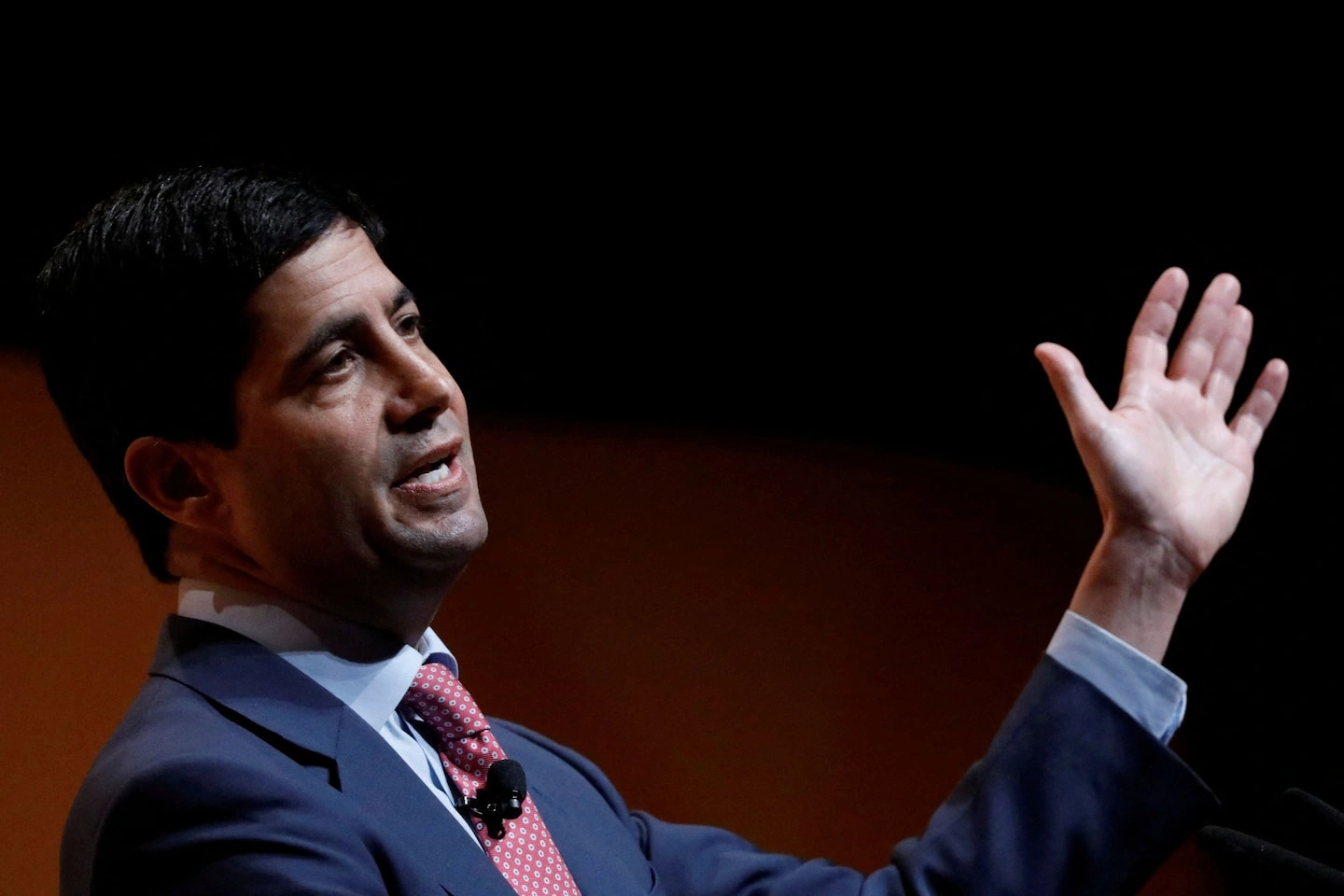
Federal Reserve Chair Kevin Warsh presided over a closely watched two-day policy meeting this week, with markets widely expecting the Federal Open Market Committee to hold interest rates steady even as the Trump administration prepares a new round of tariffs designed to replace the “Liberation Day” duties the Supreme Court struck down as illegal.
A Hawkish Hold, With Dissent in the Room
The FOMC’s July 28–29 meeting — the fifth of eight scheduled gatherings in 2026 — was expected to end with rates unchanged, according to a consensus among Fed watchers reported by U.S. News, though not without disagreement among the twelve committee members. Warsh, who has pledged that the Fed has “no tolerance” for elevated consumer and producer costs, faces a delicate balancing act: a steady labor market and solid GDP arguably justify holding rates, while cooling oil prices — following a pause in US strikes on Iran — have taken some pressure off the inflation outlook, according to TheStreet.
Replacement Tariffs Target 60 Countries
The monetary policy decision lands alongside a parallel fiscal shock. The administration is preparing new import duties of 10% to 12.5% affecting roughly 60 countries and jurisdictions, structured explicitly as replacements for the April 2025 “Liberation Day” tariffs that were ruled illegal by the Supreme Court, according to U.S. News. Independent modelling suggests the stakes are substantial: the Tax Foundation estimates the Trump administration’s tariff programme now represents the largest US tax increase as a share of GDP since 1993, equivalent to roughly $1,500 per household in 2026, while reducing long-run US GDP by an estimated 0.4% before accounting for foreign retaliation.
The Federal Reserve held interest rates steady at its July 28–29, 2026 meeting under new Chair Kevin Warsh, as the Trump administration prepared replacement tariffs of 10–12.5% on roughly 60 countries. The Tax Foundation estimates the tariff programme costs US households about $1,500 in 2026 and cuts long-run GDP by 0.4%.
Research from the Federal Reserve Bank of New York adds a further wrinkle for policymakers: tariff-driven cost increases are still working their way through supply chains, with more pass-through to consumer prices still in the pipeline months after the initial duties took effect — a dynamic that complicates any straightforward reading of near-term inflation data.
Fed Independence Remains an Open Wound
Warsh’s tenure has been shadowed by an unusually public fight over central bank independence. President Trump has publicly needled the Fed’s board, and an active federal court case is weighing whether the administration can remove Fed Governor Lisa Cook, while a separate effort may target Governor Michael Barr, according to Kiplinger’s live coverage of the meeting. Trump has called Warsh “fantastic” while simultaneously criticising the board’s “political” members — a dynamic that leaves the new chair navigating both markets and the administration’s expectations simultaneously.
Markets Weigh Tariffs Against a Cooling Energy Shock
Treasury yields have been volatile heading into the decision: the 10-year yield touched its highest level since January 2025 amid a surge tied to Middle East risk, before easing again as oil prices tumbled on news of a pause in US-Iran hostilities, according to CNBC’s US economy tracker. Import prices, meanwhile, posted a surprise gain in July, with the cost of goods from China reaching its highest level since 2008 — an early signal of the tariff pass-through the New York Fed has flagged.
What Investors Should Watch Next
The immediate market focus shifts to the Fed’s post-meeting statement and Warsh’s press conference for any signal on the committee’s tolerance for tariff-driven price increases layered atop an already-elevated cost environment. The bigger structural question — whether markets can continue to trust the Fed’s independence from the White House amid ongoing governor-removal litigation — is unlikely to be resolved by this meeting alone, and is likely to remain a persistent overhang on long-duration Treasury yields through the rest of 2026.
Discover more from The Economy
Subscribe to get the latest posts sent to your email.

Britain’s government bond market is entering a delicate holding pattern as investors wait for new Prime Minister Andy Burnham to lay out his economic programme, with 10-year gilt yields hovering near 5% and the Bank of England widely expected to keep interest rates unchanged this week.
Gilts Steady as Markets Await Policy Clarity
Ten-year gilt yields eased two basis points to roughly 5.01% in late July, while 30-year yields — the maturity most sensitive to fiscal risk — slipped to around 5.72%, according to Bloomberg. The modest moves came as data showed UK private-sector wage growth slowing to its weakest pace since 2020, tempering expectations for near-term rate hikes even as markets digest the transition to a new premiership.
The yield backdrop remains elevated by historical standards. Earlier in the month, the 10-year gilt yield climbed toward 5.1% — its highest level since May — after outgoing Finance Minister John Healey warned of rising costs of doing business and persistent cost-of-living pressure, according to Trading Economics. The 30-year gilt, a proxy for long-term fiscal credibility, touched its highest level since May 19 in the same window.
Inflation Cools, Giving the Bank of England Room to Hold
Underpinning the relative calm in bond markets is an unexpectedly benign inflation print: annual consumer price growth slowed to a 15-month low of 2.6% in June, below the Bank of England’s own forecasts, per Trading Economics. Delayed pass-through of wholesale energy costs to regulated household bills has helped keep UK inflation below both the US and eurozone, where rate increases are still expected before year-end.
Consumer-facing data has also surprised to the upside. UK retail sales rose 1% in June, confounding forecasts for a 0.3% decline, boosted by warmer weather and a consumer spending lift tied to the football World Cup, while consumer confidence climbed to a six-month high in July.
Why Gilt Yields — Not Bank Rate — Are Driving Mortgage Costs
For households, the more immediate transmission channel runs through the gilt market rather than the Bank of England’s policy rate directly. UK fixed-rate mortgages are priced off swap rates that track gilt yields, meaning the current 10-year yield sits roughly 1.32 percentage points above the Bank of England’s 3.75% base rate, according to mortgage-market analysis from SalaryWise. That spread — near the top of its multi-year range — means fixed mortgage pricing has stayed elevated even as headline inflation has cooled, a disconnect that is likely to dominate the political conversation around the cost of living as Burnham settles into office.
The Burnham Variable
Markets are treating the change in Downing Street as a genuine source of uncertainty rather than a formality. Investors are specifically awaiting fresh policy detail from the new administration on fiscal rules, spending commitments, and its approach to the gilt-issuance programme inherited from its predecessor. Until that detail arrives, strategists expect gilts to trade in a holding pattern, reactive to incoming data — this week’s Bank of England decision chief among them — rather than to political headlines alone.
What to Watch
The Bank of England’s rate decision this week is expected to confirm a hold at 3.75%, but the accompanying minutes and forecasts will be scoured for any signal on how the Monetary Policy Committee is weighing the new government’s early fiscal signals against the growth and inflation outlook. A repeat of the volatility seen during the 2022 mini-budget episode remains the tail risk markets are most keen to avoid.
Discover more from The Economy
Subscribe to get the latest posts sent to your email.
Banks
Pakistan’s Most Reliable Export Is Its People: Remittances Hit $41.6 Billion, Overtaking Total Exports

Introduction
For the first time in the country’s history, money sent home by Pakistan’s overseas workers has exceeded the value of everything Pakistan actually sells abroad. Remittances hit a record $41.6 billion in the fiscal year ending June 30, 2026, according to State Bank of Pakistan data — surpassing total merchandise exports for the same period and cementing a structural shift that economists are increasingly uneasy about (VOI World/State Bank of Pakistan).
The Numbers Behind the Milestone
Remittance inflows rose 8.6% year-on-year in FY26, up from $38.3 billion in FY25 (VOI World). Some reporting puts the full 11-month figure even higher at $38 billion before the final month was tallied, with May 2026 alone contributing $4.25 billion — an amount roughly equal to what the entire country spends on imports in a single month (Express Tribune). A separate Express Tribune report puts the full FY26 total even higher, at $41.58 billion, an increase of nearly $3.29 billion over the prior year, delivered “without structured educational, training or welfare support” for the overseas workforce generating it (Express Tribune — Remittances Without Structured Support).
Saudi Arabia remained the single largest source of remittances in June 2026 at $829.6 million, followed by the UAE ($792.3 million), the United Kingdom ($514.9 million) and the United States ($296.8 million), with Italy and Oman each contributing more than $100 million (VOI World). That geographic concentration matters: a substantial share of Pakistan’s remittance base originates from the Gulf, leaving the country’s external account exposed to labor market reforms, economic cycles and geopolitical developments concentrated in a single, currently volatile region (Business Recorder Editorial).
Exports Have Been Stuck for Years
The remittance surge stands in sharp contrast to Pakistan’s export performance, which has shown little sustained dynamism despite years of concessional financing, preferential tariff regimes and subsidized energy for exporters (Business Recorder Editorial). The textile sector — long considered the backbone of Pakistan’s export economy — has been stuck in a $15–18 billion annual range for years, even as a handful of forward-thinking textile groups have managed to grow exports and diversify product lines under the exact same operating conditions others cite as prohibitive (Express Tribune). Separately reported nine-month data for the fiscal year showed exports contracting 5.8% to $23.3 billion even as imports rose nearly 8% to $46.8 billion, widening the trade gap further (Minute Mirror).
Over the three fiscal years from 2023 to 2025, Pakistan received $95.8 billion in remittances compared with $91 billion in merchandise exports — a gap that reflects, according to Business Recorder analysis, a deliberate policy orientation that has effectively institutionalized remittances as the default tool for stabilizing the current account rather than addressing the underlying export weakness (Business Recorder Opinion).
The Dutch Disease Warning
Independent economists have begun explicitly framing this pattern as a precursor to Dutch disease — the phenomenon where a large, easy source of foreign currency inflow reduces the pressure and incentive to build a competitive tradeable export sector (Business Recorder Opinion). The policy dimension is not incidental: under IMF program conditions, a long-standing subsidy that had encouraged banks to actively mobilize remittance transfers was withdrawn in the 2026 Budget, contributing to a temporary slowdown in inflows during the early months of the fiscal year before the government released Rs30 billion from its contingency fund to help revive momentum (Business Recorder Opinion).
A Business Recorder editorial published in July 2026 was blunt about the implication: Pakistan’s overseas workers have effectively become the country’s “most reliable export,” with its own people functioning as its largest export commodity — a framing the editorial explicitly calls an unsustainable foundation for long-term development strategy (Business Recorder Editorial).
The Silver Linings
The remittance boom has provided genuine macroeconomic stabilization. Total liquid foreign reserves crossed $23.98 billion as of early July 2026, including $18.47 billion held by the State Bank of Pakistan itself, with the rupee holding relatively steady around Rs278 per dollar in the interbank market (Express Tribune — Remittances Without Structured Support). Inflation has also been easing, and large-scale manufacturing showed signs of recovery with 5.9% growth in earlier-reported data, while agricultural lending rose 14.4% during July–February, extending credit access to farmers (Minute Mirror). Separately, Pakistan has reportedly repaid roughly Rs4,722 billion in debt ahead of schedule and posted a historic milestone in IT sector exports, suggesting pockets of genuine structural improvement exist alongside the broader export stagnation (Radio Pakistan).
Why This Matters Beyond Pakistan
Pakistan’s experience is a useful case study for other remittance-dependent emerging economies navigating IMF program conditions. The core tension — using a reliable, low-effort capital inflow to paper over a harder structural problem in the tradeable goods sector — is not unique to Pakistan, but few economies illustrate the scale of the imbalance as starkly as a country where remittances now formally exceed total exports.
Key Takeaways
- Pakistan’s FY26 remittances hit a record $41.6 billion, surpassing total merchandise exports for the first time in the country’s history.
- Saudi Arabia and the UAE remain the largest single sources, concentrating external account risk in the Gulf region.
- Textile exports have been stuck between $15–18 billion annually for years despite sustained government support.
- Economists are increasingly framing the remittance-export imbalance as a Dutch disease risk rather than a stabilization success story.
- Reserves have strengthened to nearly $24 billion and the rupee has stabilized, but the underlying export competitiveness problem remains unresolved.
Sources: VOI World, Express Tribune — Remittances Dwarf Exports, Express Tribune — Remittances Without Structured Support, Business Recorder Opinion, Business Recorder Editorial, Minute Mirror, Radio Pakistan
Discover more from The Economy
Subscribe to get the latest posts sent to your email.

Nvidia’s H200 Chips Are Finally Reaching China — In Numbers Too Small to Matter Yet

Oil Prices Fall as Strait of Hormuz Reopens: 2026 Update

Malaysia GDP Growth vs Stock Market: The 2026 Disconnect

Singapore MAS Tightens Policy as GDP Growth Hits 5.7%

Fed Holds Rates Under Warsh as Trump Rolls Out New Tariffs

Indonesia Financial Hub 2026: Can It Rival Singapore, Dubai?

Russia Fuel Shortages 2026: Inside a Cracking War Economy

China Politburo July 2026: Stimulus Signals Explained

Andy Burnham, UK Gilts and Mortgages: July 2026 Explainer

Pakistan’s 2026 Monsoon Floods Threaten Fragile Economic Recovery as Inflation Nears 9%

Pakistan Gulf Investment Outflows 2026: Peace Deal Stakes Explained

Canada Trade Diversification 2026: China, Indonesia, UAE Deals Explained

US Forced-Labour Tariffs on 60 Countries: The Hidden Trade Shock of 2026

Global Central Banks 2026: Fed, BoE and BoJ Decisions Could Reshape Markets

Carry Trade Unwind 2026: How the Yen’s Snapback Triggered a Global Margin Call

AI Bubble Warning 2026: Why BIS, IMF and Bank of England Fear a Market Crash

BRICS De‑Dollarization Strategy Takes Shape with $15 Billion Local‑Currency Push

The AI Super Bubble Is Ready to Burst

Russia Bans Diesel Exports 2026: Global Fuel Market Impact Explained

Strait of Hormuz Blockade 2026: Oil Prices Surge 9% as US-Iran Conflict Reignites

Private Credit Warning: Most BDCs Turn Unprofitable in 2026, Reuters Finds

Bitcoin $150k Milestone Achieved as US Sovereign Crypto Pivot Looms

IMF Cuts Pakistan Growth Forecast, Raises Inflation to 8.4%

Gold Price Forecast 2026: Fed’s July 29 Decision and Record Central Bank Buying Explained

Gulf Capital Retreat From Pakistan 2026: UAE Loan Freeze & What It Means

India Economic Rise 2026: How the Subcontinent Toppled Japan

Strait of Hormuz 2026: Why Markets Still Don’t Trust It’s Open

China Housing Market Turnaround: White‑List Model Stabilises Prices
-

 Markets & Finance7 months ago
Top 15 Stocks for Investment in 2026 in PSX: Your Complete Guide to Pakistan’s Best Investment Opportunities
-

 Analysis5 months ago
Johor’s Investment Boom: The Hidden Costs Behind Malaysia’s Most Ambitious Economic Surge
-

 Analysis5 months ago
Top 10 Stocks for Investment in PSX for Quick Returns in 2026
-

 Analysis6 months ago
Brazil’s Rare Earth Race: US, EU, and China Compete for Critical Minerals as Tensions Rise
-

 Banks6 months ago
Best Investments in Pakistan 2026: Top 10 Low-Price Shares and Long-Term Picks for the PSX
-

 Investment7 months ago
Top 10 Mutual Fund Managers in Pakistan for Investment in 2026: A Comprehensive Guide for Optimal Returns
-

 Global Economy7 months ago
15 Most Lucrative Sectors for Investment in Pakistan: A 2025 Data-Driven Analysis
-

 Global Economy7 months ago
Pakistan’s Export Goldmine: 10 Game-Changing Markets Where Pakistani Businesses Are Winning Big in 2025