
Business
Trump Sues JPMorgan and Jamie Dimon for $5 Billion: Inside the Debanking Battle

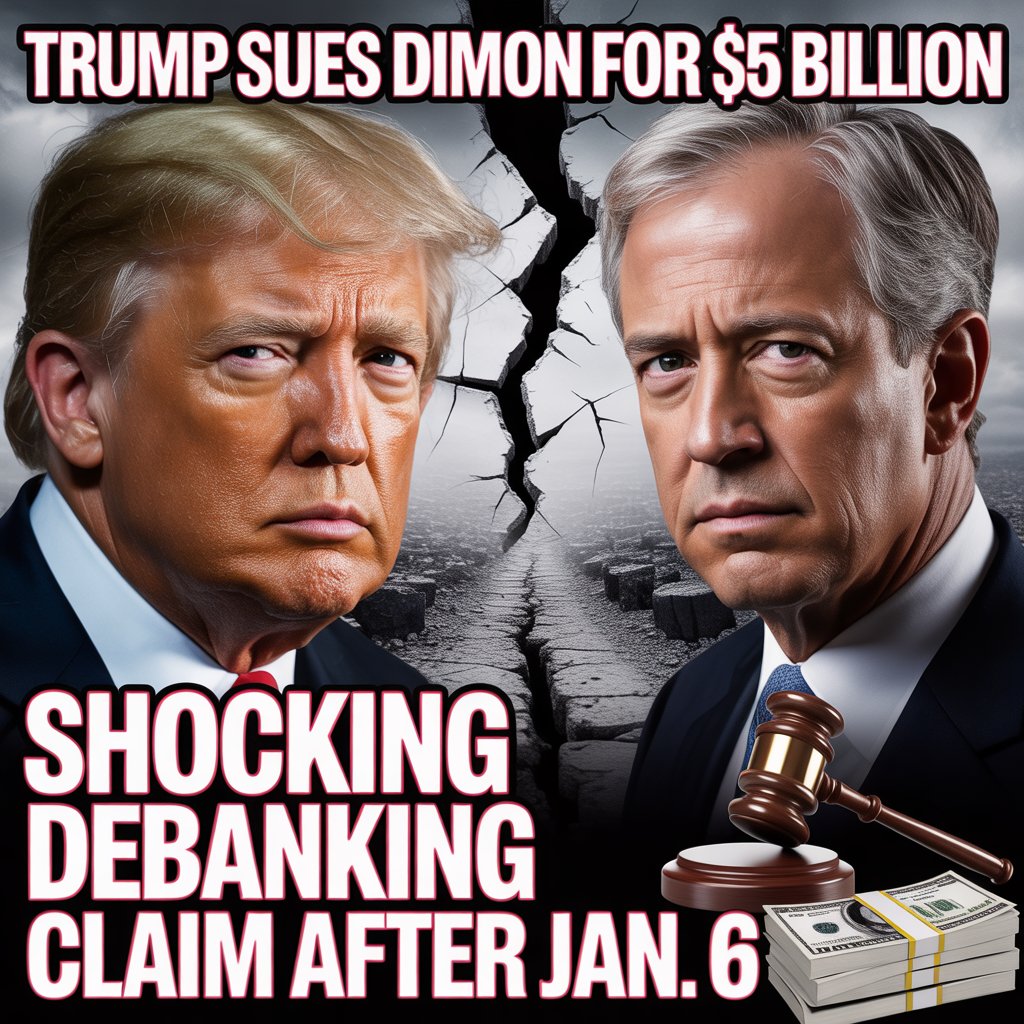
Trump files $5B lawsuit against JPMorgan and CEO Jamie Dimon over alleged political debanking after Jan. 6. Inside the explosive legal battle reshaping Wall Street.
The Lawsuit That Could Redefine Banking’s Political Boundaries
On a crisp January morning in 2026, Donald Trump—now barely two weeks into his second presidency—fired what may prove to be one of the most consequential legal salvos against Wall Street in modern American history. The $5 billion lawsuit, filed in Florida state court on January 22, targets not only JPMorgan Chase, America’s largest bank, but also its formidable CEO Jamie Dimon, alleging “political debanking” in the aftermath of the January 6, 2021 Capitol riot.
The complaint centers on a stark allegation: that JPMorgan, under Dimon’s leadership, closed Trump’s personal and business accounts in February 2021 not for legitimate compliance reasons, but as political retaliation. According to The New York Times, the lawsuit characterizes the bank’s actions as a “coordinated effort to weaponize financial access against political opponents,” invoking Florida’s recently enacted anti-debanking statute to claim unprecedented damages.
The timing is extraordinary. Trump returns to the Oval Office with an ambitious agenda of financial deregulation and tariff restructuring, yet immediately finds himself in open warfare with the very institution that once helped finance his real estate empire. For Jamie Dimon—often described as the most powerful banker in America—the lawsuit represents an uncomfortable collision between his role as a nonpartisan financial steward and the increasingly politicized landscape of corporate America.
This case transcends a dispute between a former president and his banker. It strikes at fundamental questions about the boundaries of corporate power, the role of banks as gatekeepers to the financial system, and whether access to banking can—or should—be conditioned on political considerations. The reverberations will be felt far beyond Palm Beach and Manhattan.

The Fracture: From Business Partners to Courtroom Adversaries
The Pre-2021 Relationship
The relationship between Donald Trump and JPMorgan Chase was never warm, but it was functional. Throughout the 2000s and 2010s, JPMorgan maintained various banking relationships with Trump Organization entities, though the bank had reportedly scaled back its exposure following Trump’s 1990s casino bankruptcies. Unlike Deutsche Bank, which became Trump’s primary lender during years when major Wall Street institutions avoided him, JPMorgan maintained a cautious but present role—managing accounts, processing transactions, facilitating international transfers for his global properties.
Jamie Dimon, for his part, navigated the Trump presidency with characteristic pragmatism. The JPMorgan CEO publicly supported aspects of Trump’s 2017 tax reform, attended White House business councils, and maintained cordial relations even as he occasionally criticized specific policies. It was classic Dimon: engage with power, advocate for business interests, avoid unnecessary confrontation.
The January 6 Turning Point
Then came January 6, 2021. As rioters stormed the Capitol and the nation reeled, corporate America faced a reckoning. According to The Washington Post, JPMorgan’s risk management and compliance teams initiated an urgent review of all Trump-related accounts in the riot’s immediate aftermath. The bank’s concerns reportedly centered on three factors: reputational risk, regulatory scrutiny, and potential exposure to sanctions or legal complications given ongoing investigations into the events of that day.
By February 2021, JPMorgan had made its decision. In a series of terse notifications—described in the lawsuit as “cold and peremptory”—the bank informed Trump and several affiliated entities that their accounts would be closed within 30 days. No detailed explanation was provided beyond boilerplate language about “business decisions” and “risk tolerance.”
Trump, then a private citizen banned from major social media platforms and facing his second impeachment, had few immediate options for recourse. But he evidently did not forget.
Inside the Lawsuit: Claims, Legal Strategy, and the Florida Debanking Law
The Core Allegations
The 87-page complaint, filed in Palm Beach County Circuit Court, makes sweeping allegations of political discrimination and viewpoint-based financial censorship. Bloomberg reports that Trump’s legal team argues JPMorgan violated Florida Statutes Section 542.336, a law enacted in 2023 that prohibits financial institutions operating in the state from denying services based on political views, religious beliefs, or social credit scores.
The lawsuit claims that JPMorgan’s decision was “pretextual and politically motivated,” pointing to several pieces of circumstantial evidence:
- Timing: The account closures came mere weeks after January 6, suggesting a direct causal link.
- Selective application: The complaint alleges other high-profile clients with controversial political profiles or legal troubles maintained their JPMorgan accounts.
- Lack of explanation: JPMorgan allegedly refused to provide substantive justification beyond generic risk management language.
- Public statements: The lawsuit references internal communications and public comments by JPMorgan executives about corporate responsibility and ESG commitments following January 6.
The $5 Billion Question
The astronomical damages figure—$5 billion—is based on claims of reputational harm, business disruption, and punitive damages. Trump’s attorneys argue that being “debanked” by America’s largest financial institution inflicted severe damage on his business empire, complicating transactions, raising costs, and signaling to other institutions that he was an unacceptable client. Forbes notes that the complaint specifically cites lost opportunities, increased borrowing costs, and the “digital scarlet letter” of being rejected by JPMorgan.
Legal experts interviewed by multiple outlets express skepticism about the damages calculation, noting that proving direct financial harm from account closures—particularly for someone with Trump’s access to alternative banking options—will be extraordinarily difficult. Yet the symbolic value of the number is clear: this is warfare, not negotiation.
Jamie Dimon in the Crosshairs: Personal Liability and Corporate Leadership
Why Sue Dimon Personally?
The inclusion of Jamie Dimon as an individual defendant elevates this from a routine corporate dispute to something far more personal. The Financial Times reports that Trump’s complaint alleges Dimon was directly involved in the decision to close the accounts, citing board meeting minutes and internal communications that purportedly show the CEO weighing in on Trump-related risk management decisions in early 2021.
This is unusual. CEOs of major banks typically insulate themselves from individual account decisions through layers of compliance, legal, and risk management infrastructure. Piercing that corporate veil requires demonstrating that Dimon personally directed or ratified the allegedly discriminatory conduct—a high bar in litigation.
Yet Trump’s team appears confident. The complaint portrays Dimon as the architect of a broader corporate strategy to distance JPMorgan from controversial political figures in the post-January 6 environment, allegedly using compliance mechanisms as cover for viewpoint discrimination.
Dimon’s Delicate Position
For Jamie Dimon, the lawsuit creates acute discomfort. He has cultivated an image as a steady hand in turbulent times—someone who can navigate political crosscurrents while keeping JPMorgan above the fray. He maintained working relationships with both the Trump and Biden administrations, advocated for practical business policies regardless of partisan source, and positioned himself as a voice of reason in polarized times.
Now he faces a lawsuit from a sitting president who commands fierce loyalty from roughly half the American electorate and who has never been shy about using his platform to wage public relations warfare. According to Reuters, JPMorgan’s initial response has been measured but firm: the bank denies all allegations and insists the account closures were based solely on “routine risk management protocols unrelated to any client’s political views.”
JPMorgan’s Defense: Risk Management or Political Censorship?
The Bank’s Rationale
JPMorgan has not yet filed a formal response to the lawsuit, but its public statements and background briefings to journalists reveal the contours of its defense. The bank argues that:
- Regulatory compliance: As a globally systemically important bank (G-SIB), JPMorgan faces extraordinary regulatory scrutiny and must maintain rigorous anti-money laundering, sanctions compliance, and risk management protocols.
- Reputational risk: The January 6 events triggered massive reputational risk assessments across corporate America. Banks routinely evaluate whether clients pose unacceptable reputational hazards—a legitimate business consideration.
- Operational independence: Account closure decisions are made by specialized risk and compliance teams using objective criteria, not by the CEO’s office based on political animus.
- Preexisting concerns: CNBC reports that sources close to JPMorgan suggest the bank had been conducting enhanced due diligence on Trump Organization accounts well before January 6, related to longstanding questions about the company’s financial practices.
The Industry Context
JPMorgan’s predicament reflects broader tensions in the banking sector. After January 6, numerous financial institutions severed ties with Trump-affiliated entities or individuals. Payment processors like Stripe stopped processing donations for Trump campaign entities. Banks conducting business with anyone connected to the Capitol riot faced intense public pressure and potential regulatory complications.
Yet this creates a troubling precedent. If banks can effectively de-person individuals from the financial system based on political controversy—however defined—where do the boundaries lie? Conservative activists have documented dozens of cases where individuals and organizations on the right claim they were “debanked” for their political views, from gun rights advocates to anti-abortion activists.
The Debanking Phenomenon: A Growing Flashpoint
What Is Political Debanking?
“Debanking” refers to financial institutions closing or denying accounts to customers based on factors unrelated to traditional banking risk—most controversially, political views or associations. The practice exists in a legal and ethical gray zone. Banks have broad discretion to choose their clients, but that discretion isn’t absolute, particularly when anti-discrimination laws or public utility considerations come into play.
The BBC describes the phenomenon as part of a broader trend in which major corporations use their market power to enforce ideological boundaries—what critics call “corporate cancel culture” and defenders characterize as legitimate risk management and values alignment.
Florida’s Anti-Debanking Law
Florida’s 2023 legislation specifically prohibits financial institutions from discriminating based on political opinions, religious beliefs, or “social credit scores”—a term borrowed from concerns about Chinese-style social monitoring systems. The law allows individuals and businesses to sue for damages if they can prove they were denied financial services for these prohibited reasons.
Trump’s lawsuit is the highest-profile test of this statute. If successful, it could open the floodgates for similar litigation and encourage other Republican-controlled states to enact comparable protections. If it fails, it may establish that banks retain broad discretion to evaluate clients holistically, including reputational and political considerations.
Wall Street’s Trump Dilemma: Navigating the Second Term
The Complicated Courtship
Wall Street’s relationship with Donald Trump has always been transactional and ambivalent. The financial sector enthusiastically supported his 2017 tax cuts and deregulatory agenda, yet many executives were privately appalled by his conduct and rhetoric. Jamie Dimon himself once criticized Trump’s handling of racial tensions, though he later walked back some comments.
Now, with Trump back in the White House pursuing an ambitious agenda that includes further banking deregulation, financial institutions face an uncomfortable calculus. Antagonizing the president risks regulatory retaliation, but appearing to capitulate to political pressure undermines their claims to operational independence.
The lawsuit intensifies this dilemma. If JPMorgan settles quickly or backs down, it may embolden Trump to use similar pressure tactics against other institutions. If the bank fights aggressively, it risks a protracted public battle with a president who thrives on conflict and commands a megaphone unlike any other.
Regulatory and Legislative Implications
The Trump administration’s financial regulatory appointees will be watching this case closely. While the lawsuit is a civil matter in state court—not subject to federal intervention—the broader questions it raises about banking access and political neutrality could inform federal policy.
Congressional Republicans have already signaled interest in federal anti-debanking legislation, modeled on Florida’s law. If Trump’s lawsuit gains traction, it could accelerate those efforts and create a new front in the ongoing culture wars over corporate America’s role in policing political speech and association.
Economic and Market Implications
Short-Term Market Reaction
JPMorgan’s stock barely flinched on news of the lawsuit—testimony to investors’ view that the case poses minimal financial risk to the bank. The $5 billion figure, while eye-catching, represents less than two weeks of JPMorgan’s typical quarterly profit. Legal fees and reputational damage are the more realistic concerns.
Long-Term Structural Questions
The deeper economic question is whether this lawsuit accelerates fragmentation in the financial services industry along political lines. Some conservative entrepreneurs are already building “anti-woke” banking alternatives, positioning themselves as havens for customers who fear political discrimination by mainstream institutions.
If successful, these parallel financial infrastructures could reduce efficiency, increase costs, and fragment liquidity in the banking system. Alternatively, they might introduce healthy competition and discipline for incumbent institutions that have grown complacent about customer service and political neutrality.
The Precedent Problem: Where Does This End?
Slippery Slopes on Both Sides
Both sides in this dispute can point to troubling hypotheticals. If banks cannot consider political factors at all in client selection, can they be forced to serve individuals or entities under sanctions, involved in ongoing criminal investigations, or credibly accused of financial fraud—provided those targets can frame their situation as political persecution?
Conversely, if banks have unlimited discretion to debank based on ideology, couldn’t conservative-led institutions refuse to serve progressive clients? Couldn’t banks in certain regions effectively exclude entire classes of politically disfavored customers?
The lawsuit forces courts to grapple with these questions without clear precedent. Banking law has traditionally granted financial institutions broad discretion in client selection, but those principles were developed in an era when banking and politics occupied more separate spheres.
What Happens Next: Legal Timeline and Likely Outcomes
Procedural Roadmap
JPMorgan will likely move to dismiss the case, arguing that Trump has failed to state a valid legal claim and that the bank’s actions fall within its protected business judgment. Florida’s anti-debanking law remains largely untested in litigation, so courts will have to interpret its scope and application.
If the case survives dismissal, discovery could be explosive. Trump’s attorneys would gain access to JPMorgan’s internal communications, risk assessments, and decision-making processes around the account closures. The bank would similarly probe Trump’s actual financial damages and alternative banking relationships.
Most legal analysts expect the case to settle rather than go to trial, though Trump’s litigious history and Dimon’s institutional resolve make predictions hazardous. A settlement could include no admission of wrongdoing but might involve JPMorgan agreeing to clearer, more transparent account closure policies.
The Political Calculus
Trump appears to view the lawsuit as both a genuine grievance and a useful political narrative. The “debanking” story resonates with his base’s sense that elite institutions weaponize their power against conservatives. Whether the case has legal merit may matter less than its political utility in reinforcing that narrative.
For JPMorgan, the priority will be containing damage—to its reputation, its regulatory standing, and its relationships with both political parties. The bank cannot afford to be seen as capitulating to political pressure, but neither can it afford a years-long public brawl with the President of the United States.
Conclusion: Banking, Power, and the Politics of Access
The Trump-JPMorgan lawsuit crystallizes tensions that extend far beyond one controversial president and one powerful bank. At its heart, this case asks who controls access to the infrastructure of modern capitalism—and on what terms.
Financial institutions occupy a quasi-public role in democratic societies. They are private enterprises with shareholder obligations, yet they also serve as gatekeepers to essential economic participation. When banks exercise that gatekeeping power based on political considerations—whether explicitly or through the malleable language of risk management—they enter contested terrain.
Trump’s lawsuit, whatever its ultimate legal fate, has already succeeded in forcing this question onto the national agenda. It challenges the post-January 6 consensus among corporate leaders that distancing from Trump carried no serious institutional cost. And it previews what may be a defining feature of Trump’s second term: the use of litigation, regulation, and executive power to reshape corporate America’s relationship with political controversy.
Jamie Dimon, who has navigated financial crises, regulatory transformations, and political upheavals with unusual dexterity, now faces perhaps his most delicate challenge. The lawsuit is a reminder that in contemporary America, even the most powerful banker cannot fully insulate his institution from the gravitational pull of politics.
The $5 billion question is ultimately not about damages—it’s about boundaries. Where does legitimate risk management end and political discrimination begin? The answer will reverberate through boardrooms and courtrooms for years to come.
Discover more from The Economy
Subscribe to get the latest posts sent to your email.



CNBC’s viral analysis argues the U.S. budget airline model is structurally broken. Rising fuel costs, labour pressures, fare compression, and changing traveller behaviour are eroding the low-cost carrier value proposition. Here’s what it means for travellers and investors.
A Model Built on Thin Margins
The U.S. budget airline model is, at its core, a financial engineering achievement as much as an operational one. Carriers like Spirit, Frontier, and Allegiant built viable businesses by stripping the flying experience to its minimum viable product — a seat, a seatbelt, and a destination — and then charging separately for everything else: bags, seat selection, boarding position, snacks, and legroom. The base fare became a marketing tool; the ancillary fee revenue became the actual business.
For roughly two decades, this model worked. Low-cost carriers stimulated demand by making flying accessible to price-sensitive travellers who would not otherwise have purchased a ticket. They pressured legacy carriers to lower fares, benefiting consumers across the market. They flew point-to-point routes that avoided the hub-and-spoke complexity and associated costs of network carriers.
Key Takeaways
- The U.S. budget airline model — built on high-frequency, point-to-point routes with ancillary fee revenue — faces simultaneous pressure from fuel costs, labour, and fare competition
- Spirit Airlines filed for Chapter 11 bankruptcy in late 2024; Frontier and Allegiant face structurally elevated cost bases
- The post-pandemic leisure travel boom that sustained low-cost carriers through 2022–2024 is normalising
- Legacy carriers have closed the fare gap by aggressively expanding basic economy offerings
- Goldman Sachs is simultaneously backing a travel-sector merger as Gulf airline recovery accelerates, suggesting a bifurcated global aviation recovery
Now, according to a widely-read CNBC analysis published June 20, 2026, the model is running out of runway (CNBC, June 20, 2026).
What Went Wrong
Several structural forces have converged to undermine the budget carrier value proposition simultaneously.
Fuel costs are the most immediate and severe. The Iran conflict-driven oil price spike — WTI rising from $57 to $113 over three months — hit budget carriers disproportionately hard. Unlike the legacy majors, which have sophisticated fuel hedging programmes and larger balance sheets to absorb cost volatility, carriers like Frontier and Allegiant operate with limited hedging and thin cash reserves. Jet fuel, which typically represents 25–35% of operating costs, became the decisive variable in earnings projections for the first two quarters of 2026.
Labour costs represent a second, less cyclical challenge. Post-pandemic pilot shortages, accelerated retirements, and the renegotiation of multiple pilot contracts across the industry have permanently raised the cost of flight crews. Unlike fuel costs, which will partially reverse as oil prices normalise, labour costs are sticky. Budget carriers, which historically competed partly by paying below industry-average wages to a workforce that valued the lifestyle and schedule flexibility of low-cost operations, no longer have that cost advantage to the same degree.
The legacy fare response has been arguably the most strategically damaging development. Delta, United, and American have spent the past four years aggressively expanding their basic economy and unbundled fare offerings — effectively creating a product tier that competes directly with budget carriers on price while retaining the network, reliability, and loyalty programme advantages of a full-service carrier. A traveller who would have chosen Spirit for a $99 base fare can now often find a similar price on United’s basic economy with better schedule options, more route combinations, and the ability to earn miles.
The Spirit Collapse as a Warning
Spirit Airlines’ Chapter 11 bankruptcy filing in late 2024 was the clearest signal that the model’s most aggressive practitioners were structurally unviable. Spirit had bet on a hyper-growth strategy that required sustained load factors above 85%, consistent ancillary revenue per passenger, and fuel costs that cooperated. When leisure demand began normalising after the post-pandemic travel boom, load factors fell; when oil prices spiked, the cost side blew out. The result was a carrier with an unsustainable unit cost structure and insufficient pricing power to offset it.
Spirit’s failure should have been a clarifying moment for the broader budget sector. Instead, the remaining carriers largely maintained their growth ambitions and capacity commitments — a bet that proved difficult to sustain as the macroeconomic environment deteriorated in early 2026.
The Ancillary Fee Arms Race
One of the more counterproductive dynamics in the budget carrier model has been the escalating arms race of ancillary fee complexity. What began as simple charges for checked bags has evolved into a labyrinthine system of seat selection fees, carry-on bag fees, priority boarding charges, and in-flight service fees that has progressively alienated the price-sensitive travellers the model was designed to serve.
Consumer research consistently shows that travellers who are surprised by total fare costs — arriving at checkout to find a $99 advertised base fare has become a $180 total transaction — experience significant dissatisfaction and reduce loyalty to the brand. Budget carriers have built businesses that are architecturally dependent on fees that customers resent paying. Legacy carriers, having adopted similar unbundling, have neutralised the price advantage while largely avoiding the customer experience degradation — because their base product is better enough to absorb the irritation.
The Global Contrast: Gulf Aviation’s Recovery
The story of American budget airline distress runs in stark contrast to what is happening in the Gulf aviation market. Goldman Sachs recently placed a bet on a travel sector merger that its analysts believe will drive sharp gains in a specific travel stock, citing the recovery of Gulf carrier operations and the structural growth in premium international travel (CNBC, June 20, 2026).
Emirates, Etihad, and Qatar Airways — carrying passengers who increasingly favour the premium end of the market — are seeing strong demand recovery, particularly for long-haul routes connecting Asia to Europe and North America via Gulf hubs. The post-Hormuz-crisis reopening is already restoring Gulf carrier capacity that was disrupted during the conflict period. That recovery bifurcates global aviation: premium long-haul carriers are thriving while U.S. budget short-haul carriers struggle.
The contrast reflects a deeper shift in post-pandemic travel preferences. Research has consistently shown that travellers who resumed flying after COVID were willing to pay more for comfort, reliability, and flexibility. The budget model, which monetises discomfort and inflexibility, was structurally better suited to a pre-pandemic travel market characterised by price-maximising leisure travellers — a market that has evolved.
Implications for Investors and Travellers
For equity investors, the budget airline sector looks increasingly like a value trap rather than a cyclical recovery opportunity. The structural challenges — permanent labour cost elevation, legacy carrier competition, customer experience erosion, and oil price sensitivity — suggest that the sector’s problems are not simply a function of the current economic cycle. Fuel cost normalisation will provide some near-term relief, but it will not restore the competitive moat that budget carriers once possessed.
For travellers, the medium-term consequence may paradoxically be higher base fares. As capacity is rationalised and weaker carriers are restructured or consolidated, the aggressive price competition that benefited consumers over the past 15 years may moderate. The market is moving toward a structure where three or four large network carriers dominate on most routes, competing on loyalty programmes and premium cabins rather than base price.
That is better news for airline shareholders than for the travellers who built their vacation planning around $79 one-way fares. The era of genuinely cheap flying in the United States may be closer to its end than its beginning.
Discover more from The Economy
Subscribe to get the latest posts sent to your email.
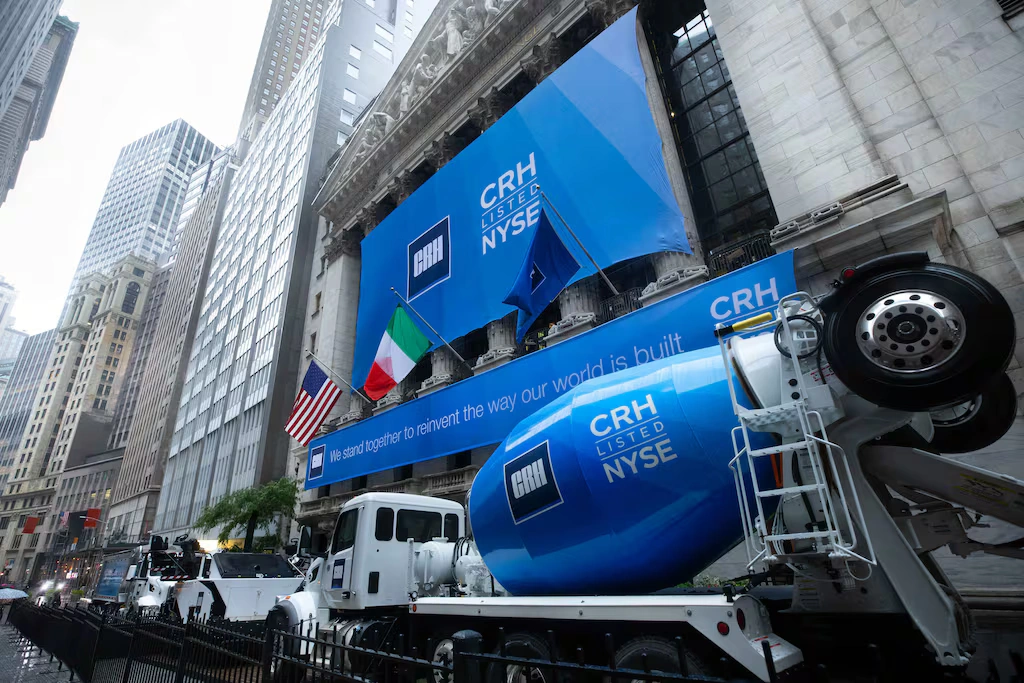
Irish-American building materials giant CRH is nearing its largest-ever acquisition with a deal to buy U.S. infrastructure products company Arcosa. We examine the strategic logic, market dynamics, and what this means for the global construction sector.
Key Takeaways
- CRH is nearing a deal to acquire Arcosa, which would be the company’s largest acquisition ever
- The deal signals continued consolidation in the global building materials and infrastructure products sector
- CRH’s U.S.-centric strategy, accelerated since its Nasdaq relisting in 2023, positions it to capture America’s multi-decade infrastructure investment cycle
- Arcosa operates across construction products, engineered structures, and transportation products — complementing CRH’s aggregates, cement, and building solutions businesses
- The transaction would further entrench CRH’s position as the dominant materials supplier for the U.S. infrastructure buildout
The Deal Taking Shape
According to reports in the Financial Times, first surfaced in Reuters’ June 22 press digest, CRH is nearing a deal to acquire Arcosa in what would be the Irish-American building materials conglomerate’s largest-ever acquisition (FT / Reuters Press Digest, June 22, 2026).
The deal represents the convergence of two significant industrial themes: the ongoing consolidation of the global building materials industry and the long-run investment thesis around American infrastructure renewal. CRH has been among the most aggressive acquirers in the construction materials space for two decades, assembling a portfolio that spans aggregates, cement, asphalt, readymixed concrete, and building products across North America and Europe. Arcosa, spun off from Trinity Industries in 2018, operates across three segments — construction products, engineered structures, and transportation products — with a particularly strong position in infrastructure materials including aggregates, lightweight aggregates, and utility structures for the power and telecommunications sectors.
CRH’s American Pivot
To understand why this deal makes strategic sense for CRH, it is necessary to understand how dramatically the company has reoriented itself since its 2023 primary listing move from London to New York. CRH’s decision to redomicile its primary listing on the Nasdaq — an unusual move for a European industrial company — was an explicit bet on the United States as the world’s most attractive market for construction materials over the next decade.
The rationale centred on a set of structural investment drivers with unusually long time horizons. The Infrastructure Investment and Jobs Act, the Chips and Science Act, and the Inflation Reduction Act collectively committed hundreds of billions of dollars to roads, bridges, semiconductor fabrication plants, data centres, clean energy installations, and grid modernisation. Every dollar of that spending has a significant materials content — aggregates, cement, reinforced concrete, steel structures, and engineered building products.
CRH’s existing U.S. platform gives it meaningful exposure to this pipeline through its Americas Materials segment. An Arcosa acquisition would extend that exposure into infrastructure-specific product lines — utility poles and transmission structures for the energy grid buildout, storage tanks and pressure vessels for industrial customers, and aggregates for the transportation infrastructure market — that are directly in the path of the most durable U.S. government spending commitments.
Why Arcosa Makes Sense as a Target
Arcosa is not a glamorous business. It does not produce cutting-edge technology or generate the kind of narrative that attracts retail investor enthusiasm. What it produces — lightweight aggregates, natural aggregates, construction site support equipment, engineered utility structures, marine transportation equipment — are the unglamorous physical inputs without which large-scale infrastructure projects cannot proceed.
This is precisely what makes it attractive to CRH. Building materials is a scale business where geographic density, distribution network efficiency, and purchasing power over raw material inputs determine margins as much as any technological advantage. An Arcosa acquisition would add significant scale in the U.S. Southeast and Southwest — geographies where population growth, housing construction, and data centre development are driving above-average infrastructure spending.
Arcosa’s construction products segment — which includes aggregates, specialty materials, and trench shields for utility and pipeline projects — fits particularly well with CRH’s existing aggregates portfolio. Aggregates (crushed stone, sand, and gravel) are the highest-volume, most geographically local construction material: they cannot economically be transported more than approximately 50 miles, which means market position is almost entirely a function of quarry ownership and proximity to demand centres. Every quarry acquisition is a permanent, non-replicable competitive advantage.
The Consolidation Logic
The global building materials industry has been consolidating for 25 years, driven by the economics of scale and the logic of quarry aggregation. CRH, LafargeHolcim (now Holcim), HeidelbergCement, and Buzzi Unicem have systematically assembled regional and national scale across North America and Europe. The U.S. market — historically more fragmented than European counterparts — is now at an inflection point where the remaining independent mid-size players represent the last wave of scale-building acquisition opportunities.
Arcosa, with a market capitalisation that was in the $3–4 billion range prior to any deal announcement, represents the kind of bolt-on acquisition that is large enough to be transformative for CRH’s market position but not so large as to create balance sheet distress. CRH’s strong investment-grade credit rating and cash generation capability give it the financial flexibility to execute a transaction of this scale without compromising the rest of its capital return programme.
Ryanair’s Michael O’Leary Also in the FT Headlines
The Financial Times’ June 22 edition carried CRH’s Arcosa deal alongside another significant European business story: Michael O’Leary is reportedly in line for a 150 million euro payout in his latest Ryanair contract (FT / Reuters Press Digest, June 22, 2026). The compensation package — one of the largest in European aviation history — reflects Ryanair’s extraordinary financial performance under O’Leary’s leadership and the board’s determination to retain a chief executive who has delivered shareholders returns that are, by any measure, exceptional.
The juxtaposition of CRH’s infrastructure consolidation story with O’Leary’s compensation headlines captures a broader theme in European business: the premium that global capital markets are placing on executive track records of capital allocation and value creation at a time when European corporate performance has lagged American peers.
What to Watch
The deal has not yet been formally announced, and the terms remain to be disclosed. Key variables to watch include the acquisition price relative to Arcosa’s recent trading levels — the premium will signal how competitive the bidding process was and how strongly CRH’s management believes in the infrastructure spending thesis. Regulatory review in the United States, particularly under the current administration’s scrutiny of industrial consolidation, will also be a consideration, though building materials transactions have historically attracted less antitrust attention than technology or media deals.
If completed, the acquisition would mark CRH’s definitive transition from a broadly diversified European building materials conglomerate into the world’s leading pure-play American infrastructure materials company — a repositioning with profound long-term implications for how the stock is valued, how it is compared to peers, and how much of global infrastructure capital allocates to its shares.
Discover more from The Economy
Subscribe to get the latest posts sent to your email.
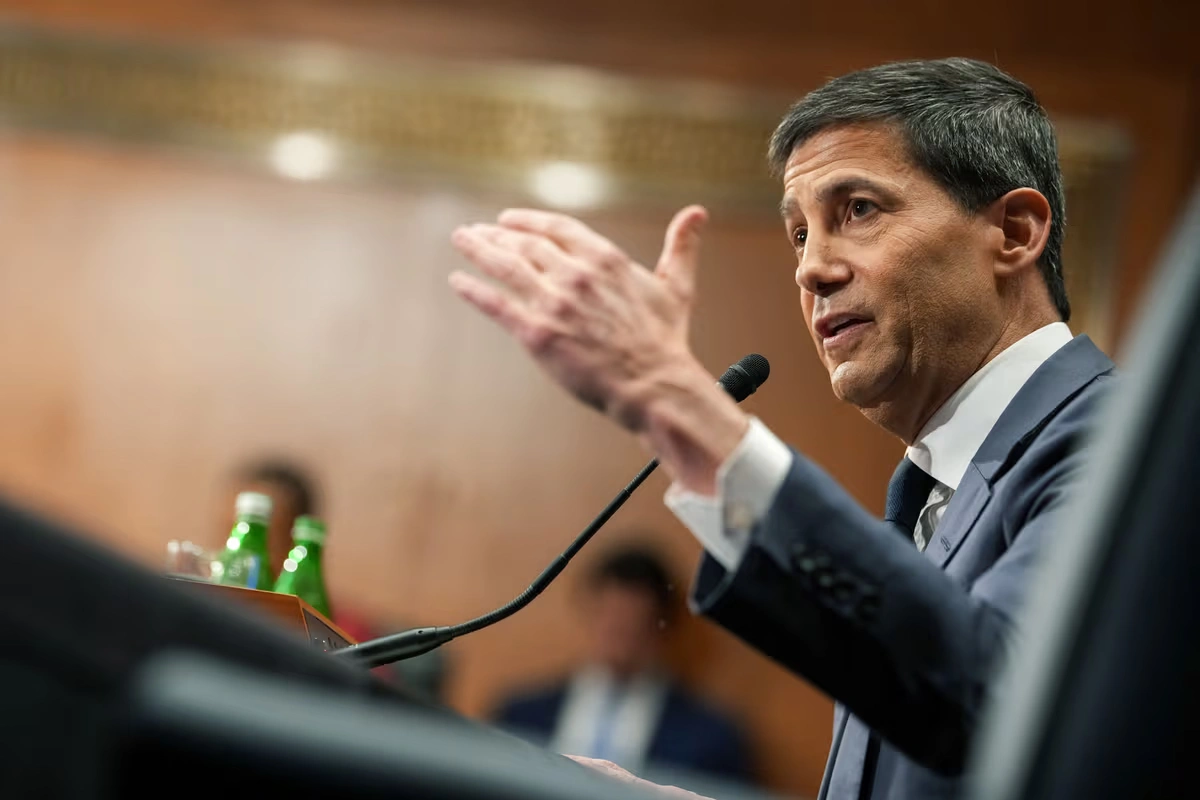
New Federal Reserve Chairman Kevin Warsh held rates steady at 3.50–3.75% at his first FOMC meeting, but signalled rate hikes are possible as inflation hits a three-year high. What this means for markets, mortgages, and the economy.
Key Takeaways
- The Fed unanimously held rates at 3.50–3.75% at Warsh’s first FOMC meeting on June 17–18, 2026
- Nine of 18 committee members now project a rate hike by year-end — a complete reversal from earlier in 2026
- Warsh declined to submit his own dot-plot projection and announced five task forces to reform Fed communications
- U.S. inflation hit 4.2% annually in May, driven primarily by energy prices linked to the Iran conflict
- Markets now price a 49% probability of a September rate hike, up from 27% the day before the meeting
A New Sheriff at the Fed
The Federal Reserve’s June 2026 meeting was always going to be historic. It was the first chaired by Kevin Warsh, confirmed by the Senate on May 13, 2026, and sworn in on May 22 — arriving at the Fed’s helm at arguably the most fraught monetary moment since the post-pandemic inflation surge of 2021–2023 (CBS News, June 2026).
What the market got was a meeting that held no surprises on rates — the FOMC voted 12-0 to keep the benchmark federal funds rate anchored at 3.50%–3.75% — but delivered a seismic shift in tone, communications philosophy, and forward guidance that sent stocks lower, bond yields sharply higher, and traders scrambling to reprice the rate path for the rest of 2026 (Fox Business, June 17, 2026).
What the Dot Plot Revealed
The June Summary of Economic Projections told the real story. The dot plot — which charts individual FOMC members’ rate expectations — showed that all but one participating policymaker believe interest rates will remain where they are or increase by end-2026 (Chase / J.P. Morgan Wealth Management, June 2026). That is a dramatic reversal from March, when the average committee member was projecting at least one rate cut in 2026.
Nine of the 18 voting members specifically indicated a rate hike is needed before year-end, with six of those projecting two 25-basis-point hikes (Fox Business). The committee now sees PCE inflation at 3.6% at year’s end — up from its March projection of 2.7% — and revised GDP growth modestly lower to 2.2%, with unemployment expected at 4.3% (CNBC, June 17, 2026).
Most significantly, there was one dot missing from the chart: Warsh’s own. In an unusually direct signal, the new chairman confirmed at his post-meeting press conference that he had declined to submit a personal rate forecast. “I did not submit a dot for me,” he said. “It’s not helpful in the conduct of policy.” He announced plans for a broad review of Fed communications, including press conferences, dot plots, meeting transcripts, and minutes — signalling a potentially fundamental overhaul of how the world’s most powerful central bank speaks to markets (CNBC).
Why Inflation Has Derailed the Cuts Narrative
The backdrop to Warsh’s debut is an inflation picture dramatically worse than expected at the start of the year. The Consumer Price Index rose 4.2% year-on-year in May — the highest reading since April 2023 — driven almost entirely by the energy price shock that followed the U.S.-Israel military strikes on Iran in late February 2026 (CBS News).
West Texas Intermediate crude futures spiked from approximately $57 per barrel at the start of 2026 to a peak of $113 in April before recently retreating toward $76 as ceasefire talks progressed (U.S. Bank Asset Management, June 2026). The Core PCE Price Index — the Fed’s preferred inflation gauge, which strips out volatile food and energy — remains more contained at 2.9%, offering policymakers some political cover for patience. But headline inflation above 4% is politically toxic and difficult to explain to American households facing elevated energy bills (NPR, June 17, 2026).
Warsh has argued publicly that supply-shock inflation — the kind driven by a geopolitical disruption rather than excess demand — should generally be looked through when formulating monetary policy. That view has its academic supporters. But it becomes harder to defend when a resilient labour market complicates the argument for accommodation: U.S. employers added 172,000 jobs in May, and the unemployment rate has held at 4.3% for a full year (CNBC). A tight labour market alongside 4.2% headline inflation gives hawks ample ammunition.
A Shorter Statement, a Different Philosophy
The most visible immediate change under Warsh was the Fed’s policy statement itself. The June release was dramatically shorter than past statements — stripped of the forward-guidance language that has characterised Powell-era communications and replaced with a simple, declarative commitment: “This committee will deliver price stability.” (Fox Business).
That brevity is a philosophy, not just an aesthetic choice. Warsh has long been a critic of elaborate forward guidance, arguing that explicit rate-path signalling constrains the Fed’s flexibility and can create self-fulfilling market dynamics that complicate, rather than clarify, policy transmission. By stripping the statement down to its essentials and declining to offer his own dot, Warsh is deliberately reintroducing uncertainty into the forward rate path — a radical departure from the communication frameworks that defined the Bernanke, Yellen, and Powell eras (U.S. Bank).
Whether this enhances credibility or simply increases volatility remains to be seen. But the market’s reaction was unambiguous: the Dow fell 507 points (0.98%), the S&P 500 dropped 1.21%, and the Nasdaq Composite declined 1.34% (CNN Business, June 17, 2026). Two-year Treasury yields — the most sensitive market instrument to near-term Fed expectations — jumped 16 basis points to 4.21%, their highest level in over a year. Traders moved quickly to reprice September: the probability of a hike rose from 27% the day before to 49% immediately after the press conference (CNN Business).
The Warsh-Trump Dynamic
President Trump nominated Warsh with an expectation, made clear in public statements, that the new chairman would push for lower interest rates. That calculation has been upended by the Iran war’s inflationary consequences. Warsh faces a structurally awkward position: the president who elevated him wants cheap money; the data he is sworn to follow is demanding the opposite (NPR).
Warsh has vowed publicly that the Fed will remain “strictly independent” in overseeing monetary policy. His June meeting — where he followed through on that pledge despite obvious political headwinds — represents his first credibility test. The five task forces he announced to review Fed operations signal a reformist agenda that could eventually reshape the institution’s structure, independence framework, and public communications in ways that markets have not yet fully priced (CNBC).
Notably, former Chairman Jerome Powell — whose term as chairman expired in May — has elected to remain on the Fed’s governing board for a period, promising to keep a low profile (NPR). His presence provides institutional continuity during a transition period, but also ensures that any significant policy shift by Warsh will be evaluated against a living, present benchmark.
Implications for Borrowers and Investors
The June meeting’s hawkish signal has direct consequences for borrowers, particularly in the housing market. Mortgage rates, which track long-term Treasury yields rather than the Fed’s overnight rate directly, are unlikely to retreat materially in the near future (CNN Business). The combination of elevated inflation, a possible September hike, and rising 2-year yields keeps refinancing incentives weak and new purchase affordability constrained.
For bond investors, the Fed’s revised dot plot means the yield curve steepening trade — which assumed cuts arriving in H2 2026 — is effectively dead for now. The CME FedWatch gauge, ahead of the June meeting, was already pricing no cuts in 2026 and a quarter-point hike by year-end (CNBC). Post-meeting, that baseline has only strengthened.
For equity investors, the picture is more nuanced. Higher-for-longer rates are traditionally a headwind for growth stocks and long-duration assets. But U.S. Bank’s asset management team notes that consumer spending and corporate earnings growth remain resilient, supported by lower corporate and individual taxes and recent tariff rebates — factors that could cushion the earnings impact of tighter monetary conditions (U.S. Bank).
What to Watch Next
The key variable is energy prices. If the U.S.-Iran peace framework holds — and Brent crude continues its retreat from $113 toward the mid-$70s — the inflation impulse could fade naturally, reducing the case for a September hike and giving Warsh room to stay on hold through year-end. If the Hormuz situation deteriorates again, the inflationary pressure resumes, and the hawks on the committee who projected two hikes will find their forecast validated.
Beyond the rate path, Warsh’s five task forces represent the real long-term story. Reviews spanning monetary policy operations, communications, data sources, productivity, and labour markets suggest a chairman who intends to leave a structural mark on the institution — not merely a cyclical one. The outcomes of those reviews, expected by year-end, could reshape how the Fed operates for the next decade.
Discover more from The Economy
Subscribe to get the latest posts sent to your email.

Goldman Sachs: “The Circulatory System Is Not Working”

Why the U.S. Budget Airline Model Is Running Out of Runway

China’s Oil Shock Absorber: How Beijing Kept Crude Prices Half of What Analysts Predicted

CRH Nears Biggest-Ever Deal to Acquire Arcosa

U.S. Inflation at a Three-Year High: How the Iran War Turned an Economic Recovery Into a Stagflation Risk

IPO Summer 2026: Anthropic, OpenAI, and the Race to Price Artificial Intelligence on Public Markets

Strait of Hormuz Crisis 2026: How a Waterway War Broke Global Oil Markets

Kevin Warsh’s Fed Debut: Rate Hikes Now on the Table as U.S. Monetary Policy Enters a New Era

SpaceX IPO 2026: Inside the $85.7 Billion Listing That Made Elon Musk the World’s First Trillionaire

PSX KSE-100 Up 500+ Points: The Geopolitical Impact on Stocks

Did Anthropic Talk Its Way Into an AI Export Ban?

Big Bonuses for South Korea’s Chip Workers Put Central Bank on Inflation Alert

Easing Iran Tensions Push Mortgage Rates Lower — But a Potential Fed Hike Clouds the Outlook

Paramount’s $111 Billion Warner Bros. Discovery Merger Clears DOJ, But Faces New Hurdles

China Overhauls the World’s Biggest Surveillance Network with Advanced AI

SpaceX IPO: Inside the $2 Trillion Market Debut

KPMG Australia CEO Resigns After Whistleblower Claims Exposed Investigation Failures

PwC China Partner Payouts Cut Amid Evergrande Audit Fraud

Broadcom Market Value Loss: Revenue Forecast Disappoints

The Guardrails Are Down: How Meta and Google’s AI Models Fold Under Pressure

Pakistan Budget FY 2026-27: Relief, Prospects, and the Tightrope Walk

Benefitbay Raises $18M to Build the Plumbing for America’s ICHRA Shift

Nasdaq Tumbles 4% as Chip and Memory Stocks Sink: A $1.2 Trillion Wipeout

Here’s How Much It’ll Cost You to Be Part of SpaceX’s Record-Breaking $75 Billion IPO

Japanese Mid-Sized Firms Flock to Southeast Asia for Growth

Singapore Puts a Clock on Wealth: MAS Orders Banks to Halve Account-Opening Times

Can Exxon Build the World’s Biggest Carbon Capture Business?

The Ferrari Luce Is Finally Here — and It’s Already Dividing the Room
-

 Markets & Finance6 months ago
Top 15 Stocks for Investment in 2026 in PSX: Your Complete Guide to Pakistan’s Best Investment Opportunities
-

 Analysis4 months ago
Top 10 Stocks for Investment in PSX for Quick Returns in 2026
-

 Analysis5 months ago
Brazil’s Rare Earth Race: US, EU, and China Compete for Critical Minerals as Tensions Rise
-

 Analysis4 months ago
Johor’s Investment Boom: The Hidden Costs Behind Malaysia’s Most Ambitious Economic Surge
-

 Banks5 months ago
Best Investments in Pakistan 2026: Top 10 Low-Price Shares and Long-Term Picks for the PSX
-

 Investment5 months ago
Top 10 Mutual Fund Managers in Pakistan for Investment in 2026: A Comprehensive Guide for Optimal Returns
-

 Global Economy6 months ago
15 Most Lucrative Sectors for Investment in Pakistan: A 2025 Data-Driven Analysis
-

 Global Economy6 months ago
Pakistan’s Export Goldmine: 10 Game-Changing Markets Where Pakistani Businesses Are Winning Big in 2025