
Markets & Finance
Energy Crisis Action: G7 Agrees to Release 100 Million Barrels of Diesel and Crude

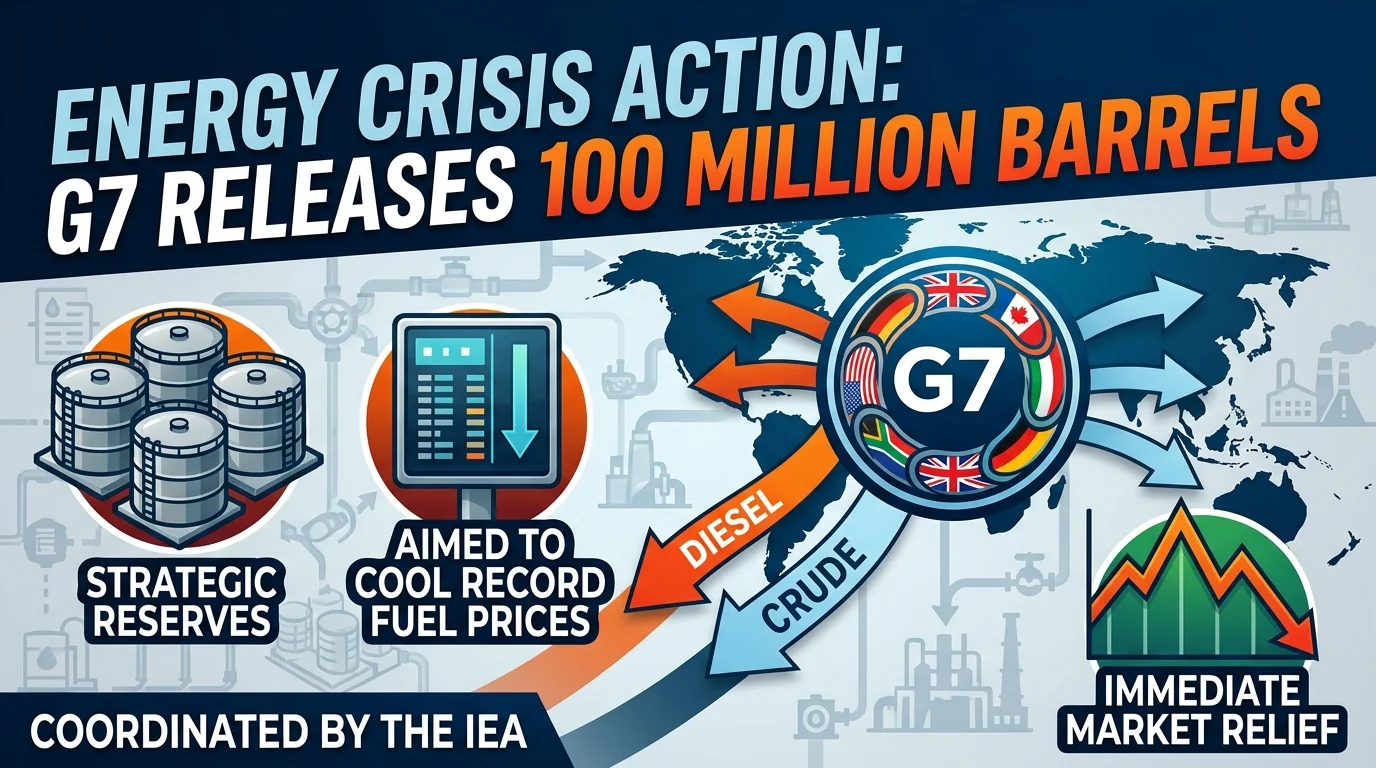
Executive Summary:The G7 nations have committed to releasing 100 million barrels of diesel and crude oil from strategic reserves over the next four months.
- Coordinated by the IEA, the emergency release aims to cool record-high fuel prices driven by geopolitical conflicts in Iran and damaged refinery infrastructure.
- A massive, front-loaded release of diesel is scheduled to hit the market within 20 days.
- Strategic diplomatic agreements successfully averted a US fuel export ban, ensuring a continued flow of energy to heavily dependent European markets.
The G7’s Historic Market Intervention
In a coordinated maneuver to stabilize deeply volatile global energy markets, the Group of Seven (G7) nations—comprising the US, France, Italy, Germany, Japan, Britain, and Canada—have agreed to release 100 million barrels of diesel and crude oil from their strategic stockpiles. The initiative, orchestrated in tandem with the International Energy Agency (IEA), will unfold incrementally over the next four months to act as a vital buffer against soaring global energy costs.
While 100 million barrels roughly equates to a single day of total global oil demand, the structural focus of this release sets it apart. The G7’s immediate priority is refined middle distillates. A “substantial” portion of the release, designated specifically as diesel, will flood the markets within the next 20 days, acting as a rapid-response measure to acute commercial fuel shortages.
Geopolitical Catalysts: Refinery Disruptions and the Middle East
The primary catalyst for this unprecedented market intervention is a severe, global refining bottleneck. Diesel and related fuels account for roughly 28% of global oil demand, according to historical IEA market data. Right now, the capacity to meet that demand is crippled.
Military strikes linked to the escalating war in Iran, combined with the ongoing degradation of energy infrastructure in Russia, have severely damaged critical regional refineries. The global market is not strictly suffering from a lack of unrefined crude; rather, it lacks the operational capacity to convert that crude into the refined fuels required to power supply chains, commercial logistics, and everyday vehicles.
Averting a Transatlantic Trade Crisis: The US Export Ban
The G7 agreement arrives at a politically fraught moment in the United States. With retail diesel prices recently skyrocketing to nearly $6.50 per gallon, US President Donald Trump faced intense domestic pressure to lower fuel costs ahead of the November midterm elections. Initial reports indicated the administration was preparing to impose a strict ban on American diesel exports to artificially lower domestic pump prices.
This proposed protectionist policy drew fierce opposition from domestic oil producers and sparked panic among European allies. Such a restriction would have been devastating for a European energy grid that pivoted heavily to American fuel imports following the 2022 bans on Russian energy. Current logistics indicate that Europe imports approximately 1.5 million barrels of fuel daily, with a full third originating from the United States, according to market tracking by S&P Global Commodity Insights.
Macron’s Diplomatic Push and Europe’s Reliance
French President Emmanuel Macron, the current chair of the G7, played a pivotal role in brokering the stockpile release and walking the US administration back from the export ban. Following a virtual summit of world leaders, Macron confirmed that the US had committed to abandoning the export restrictions, replacing the threat with a unified, multi-nation supply release.
Trump corroborated the shift in strategy via social media, highlighting that European nations had agreed to release a “massive amount of their heavily stocked diesel oil” to help balance the global market.
Analysts note that this unified action marks a significant shift in European strategy. Energy experts at Rapidan Energy Group pointed out that European nations generally prefer to hoard domestic supplies during prolonged geopolitical disruptions to protect against long-term shortages. However, the severity of the current pricing crisis—and the looming threat of losing US imports—forced a coordinated hand.
Immediate Market Reaction and Future Outlook
The immediate market response to the G7 announcement has delivered relief for commercial and retail consumers. US diesel futures plummeted by 8% in early trading immediately following the news, a trend closely monitored by Reuters energy coverage. While retail prices at the pump traditionally lag behind wholesale futures, energy economists anticipate a tangible drop for consumers within the month.
Despite the optimism, the global supply chain remains fragile. With China—another major global diesel supplier—recently reinstating restrictive fuel export quotas, the burden on Western stockpiles remains heavy. Analysts at Washington-based Clearview advised that while sweeping export bans are now highly unlikely, targeted destination constraints cannot be entirely ruled out as the northern hemisphere approaches peak winter demand.
Discover more from The Economy
Subscribe to get the latest posts sent to your email.


Global Economy
Johor Bahru-Singapore RTS Link Passenger Service Delayed to February 2027: Economic and Cross-Border Implications

The commencement of passenger operations for the highly anticipated Johor Bahru-Singapore Rapid Transit System (RTS) Link has been officially postponed to February 2027. Originally slated to launch by the end of 2026, the updated timeline reflects a necessary extension for independent safety certification and final regulatory approvals, shifting the debut past the critical Chinese New Year travel window.
Why the Launch Date Shifted
While physical construction has hit major milestones, the delay is strictly tied to operational safety testing and multi-national regulatory compliance. The project’s operator, RTS Operations (RTSO)—a joint venture between Singapore’s SMRT and Malaysia’s Prasarana—expects all system tests and trial runs to conclude by December 31, 2026.
However, translating completed tests into a live public service requires third-party vetting. According to The Straits Times, passenger service cannot commence until RTSO obtains independent safety certification, which must then be individually reviewed and approved by grantors from both nations: Singapore’s Land Transport Authority (LTA) and Malaysia’s Ministry of Transport (MOT).
Infrastructure and Technical Readiness
Despite the administrative timeline extension, the hard infrastructure on both sides of the Strait remains robustly on track.
- Substantial Completion: Authorities confirmed that civil infrastructure works on the 4-kilometer rail link between Bukit Chagar station in Johor Bahru and Woodlands North station in Singapore are substantially complete.
- Rolling Stock: As detailed by Malay Mail, the light rail system will operate utilizing eight trains manufactured by China Railway Rolling Stock Corporation (CRRC) Zhuzhou Locomotive.
- Border Control: The system will feature co-located customs, immigration, and quarantine (CIQ) facilities, a major legislative hurdle cleared earlier this year, allowing commuters to clear both authorities at their point of departure.
Project Status Overview
| Component | Status / Detail |
| System Tests & Trial Runs | Targeted completion by December 31, 2026 |
| Safety Certification | Pending independent 3rd-party review in early 2027 |
| Rolling Stock | 8 Trains (CRRC Zhuzhou Locomotive) |
| Signalling System | Siemens (Germany) |
| Revised Passenger Launch | February 2027 |
Economic Repercussions for the Johor-Singapore SEZ
The timeline revision is more than just an operational update; it carries notable macroeconomic implications. The RTS Link is heavily relied upon to alleviate chronic congestion on the Causeway and is structurally vital to the success of the upcoming Johor-Singapore Special Economic Zone (SEZ).
Pushing the launch to February 2027 means the rail link is at high risk of missing the peak travel and retail surge leading up to the Lunar New Year. According to coverage by Channel News Asia, this delay impacts cross-border commerce forecasts, extending the wait for businesses banking on enhanced consumer mobility and workforce fluidity between the two nations.
While the delay may temporarily stall the expected retail and real estate momentum in Johor Bahru, the strict adherence to independent safety certification underscores a long-term commitment to a reliable, high-capacity trade and transit corridor.
Discover more from The Economy
Subscribe to get the latest posts sent to your email.
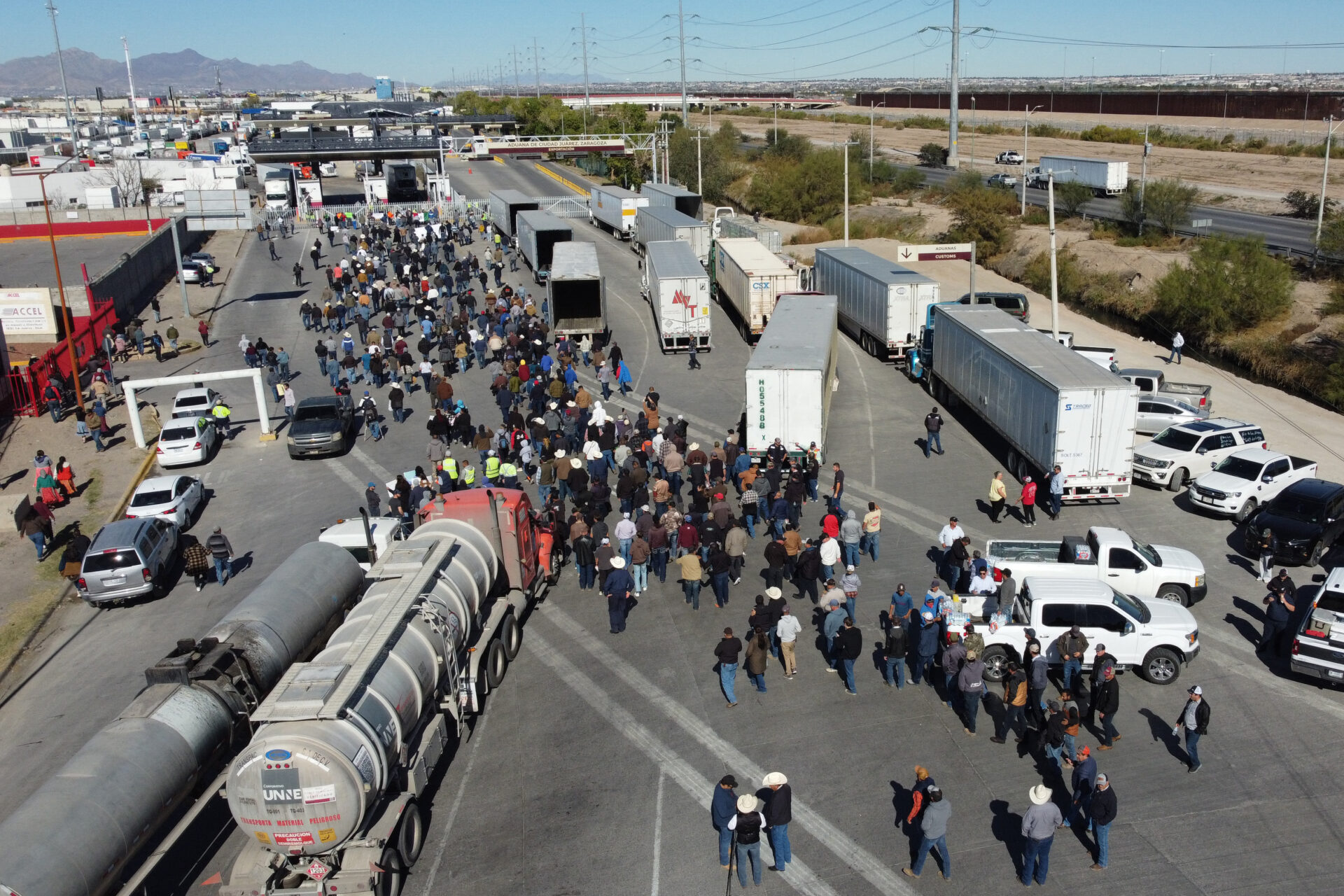
Diesel just crossed $6 a gallon for the first time, and a viral rumor says America’s truckers will park their rigs today. The fuel crisis is real. The strike, so far, is not.
Key Takeaways
- There is no organized nationwide trucker strike. A rumor of an October 1 strike spread from a social media video posted September 15, and fact-checkers found no credible evidence for it; the Owner-Operator Independent Drivers Association (OOIDA) and the Teamsters said they knew of no plans (Yahoo News fact check).
- The pressure behind the rumor is genuine. The national average for on-highway diesel hit $6.285 for the week of September 14, the first time above $6, according to Bluebook, and rose again to $6.529 the week of September 21 after eleven straight weekly gains, per Supply Chain 24/7.
- Any action would likely be small. Reports say a protest would include only independent drivers, because union drivers are restricted by antitrust and boycott laws (News4Jax).
- The real economic risk is cost, not an empty highway. Higher diesel flows into freight rates and shelf prices whether or not a single truck stops.
What Is Actually Happening
In mid-September, videos urged truckers to stop work from October 1 in protest of fuel costs. Some posts claimed the stoppage would last days and trigger food shortages.
The facts on the ground are narrower:
- A Fox 5 Atlanta report noted independent drivers were discussing a strike while Georgia diesel neared $7, but organizers had set no formal date or named leaders (Fox 5 Atlanta).
- A trucking executive told NewsNation on September 27 that a nationwide strike was unrealistic, because carriers depend on reliability and contracts (NewsNation).
- OOIDA has said it does not support truck strikes, and News4Jax reported that no official or organized strike was planned, though individual protests were possible (News4Jax).
| Claim | What the reporting shows |
|---|---|
| “Truckers are striking October 1” | No credible source confirms an organized strike |
| “Union drivers are walking out” | Union drivers are generally not included; legal limits apply |
| “Diesel is at record highs” | Confirmed by federal weekly data |
| “Small carriers are squeezed” | OOIDA says small businesses are over 90% of trucking companies and hit hardest |
Why Diesel Is the Real Story
Diesel at $6.285 was up $2.546 per gallon, or 68%, from a year earlier, and every U.S. region averaged above $6, with the West Coast at $7.25 (Bluebook). Distillate inventories were also falling as refineries entered fall maintenance while harvest demand rose.
Diesel is the fuel of trucking, rail, farming, and construction, so it hits freight costs before it hits consumers. Coverage of the price spike has linked it to the war involving Iran (Al Jazeera).
What If a Strike Did Happen?
Trucks haul the bulk of U.S. freight; industry figures cited by NewsNation put the share near 72% of goods moved. A broad stoppage would therefore ripple fast:
- Grocery and pharmacy restocking is the first visible strain, because those supply chains run on tight, frequent deliveries.
- Ports and warehouses back up when containers cannot move onward.
- Manufacturers that rely on just-in-time parts slow production.
- Prices rise as scarce capacity chases cargo.
- Global links matter because ports, shipping schedules, and export commitments are interconnected.
How bad it gets depends on three variables: how many drivers participate, how long it lasts, and whether shippers can reroute through rail.
The Likelier Economic Impact: Surcharges and Prices
Even without a walkout, carriers are passing costs along. A logistics CEO told NewsNation her firm’s contracts were signed before the fuel spike, and that extra driving hours help but do not solve the margin squeeze (NewsNation).
Expect to see:
- Higher fuel surcharges on freight invoices
- Smaller carriers exiting or reducing routes
- Gradual price increases on goods that travel long distances
What Businesses and Shoppers Should Do
- Shippers: lock in capacity early and review fuel-surcharge clauses.
- Retailers: avoid panic ordering, which creates the shortages people fear.
- Households: there is no need to stockpile based on a rumor; watch official updates from carriers and trade groups.
- Everyone: check claims against OOIDA, Teamsters, or major news outlets before sharing.
Frequently Asked Questions
Is there a truckers’ strike on October 1, 2026?
No organized nationwide strike has been confirmed, per fact checks.
Why are truckers threatening to strike?
Record diesel prices are squeezing small operators.
What is the diesel price now?
The federal weekly average reached $6.529 for the week of September 21 (Supply Chain 24/7).
Would a strike cause food shortages?
A large, prolonged one could strain restocking, but there is no evidence one is coming.
Can truckers legally strike?
Union drivers face legal limits, and independent drivers coordinating prices or boycotts risk antitrust problems, according to News4Jax.
The truck that never leaves the lot would not be the story. The truck that keeps running on $6.50 diesel, and the prices that follow it, already are.
Discover more from The Economy
Subscribe to get the latest posts sent to your email.
TJ Maxx is closing a few stores while opening dozens more, and that is the part most “store closing” headlines leave out.
Key Takeaways
- No company-wide closure plan has been announced. In the quarter ended August 1, 2026, TJX added 23 stores and reached 5,285 locations, per its SEC filing.
- TJ Maxx’s own U.S. count rose from 1,354 to 1,359 in that quarter (same filing).
- The best-known closure is Boston’s Newbury Street flagship. TJX told the state it would lay off 117 employees beginning January 5, 2026, according to NBC Boston.
- Individual stores can still close. Off-price chains routinely trim weak locations while expanding elsewhere.
| TJX store count (U.S. and Canada banners) | Start of Q2 FY27 | End of Q2 FY27 |
|---|---|---|
| TJ Maxx | 1,354 | 1,359 |
| Marshalls | 1,265 | 1,267 |
| HomeGoods | 969 | 973 |
| Sierra | 153 | 156 |
| Homesense | 84 | 86 |
| Winners (Canada) | 319 | 320 |
| TJX total (all banners) | 5,262 | 5,285 |
Source: TJX Q2 FY2027 earnings release on SEC.gov.
Is TJ Maxx Closing Stores in 2026?
Yes, a few. No, not in the way struggling retailers do.
Retail overall is shrinking in places. Business Insider counted more than 1,200 U.S. store closures so far this year, according to a roundup carried by AOL, including Macy’s, which is closing around 150 locations through 2026, and Pizza Hut, which is closing around 250 underperforming restaurants.
TJ Maxx belongs in a different bucket. Its parent is growing the store base, not shrinking it.
The Newbury Street Closure, Explained
The three-story Back Bay store at 360 Newbury Street was the most visible closure. TJX filed a Worker Adjustment and Retraining Notification (WARN) with the state, and layoffs were slated to begin January 5, 2026 (NBC Boston).
TJX has framed such moves as routine real estate decisions rather than distress. That is consistent with the numbers below.
How Is the Business Actually Doing?
| Metric (Q2 FY2027, quarter ended Aug 1, 2026) | Result |
|---|---|
| Net sales | $15.2 billion, up 5% |
| Consolidated comparable sales | Up 4% |
| Diluted EPS | $1.36 vs. $1.10 a year earlier |
| Pre-tax profit margin | 13.3% vs. 11.4% |
| Returned to shareholders | $1.3 billion via buybacks and dividends |
Source: TJX Form 10-Q on SEC.gov.
One soft spot: the U.S. apparel division that includes TJ Maxx and Marshalls (Marmaxx) posted comparable sales growth of only 1%, below management’s expectations, while HomeGoods and the international divisions outperformed (Just Style). A weaker core division is the kind of thing that can lead to pruning individual stores, even in a healthy company.
The Expansion Plan
TJX plans to accelerate store growth to roughly 4% a year starting in fiscal 2028 and raised its long-term global store target by 500 to 7,500 locations (Just Style). Companies planning to add hundreds of stores a year are not winding down.
Are Your Local Stores Safe?
Nobody outside TJX can promise that a specific store will stay open, but you can read the signals:
- Check for WARN notices. Large closures trigger state filings, which local business journals often report.
- Look for lease and mall news. Stores in redeveloped or declining centers are most exposed.
- Watch for relocations. Many “closings” are moves to a better site nearby.
- Use the official store locator. It reflects current status faster than social media rumors.
- Be skeptical of viral lists. Many “closing locations” posts recycle old stories or confuse different chains.
Why Do Rumors Spread?
Search interest spikes whenever a well-known store closes. Because retail headlines are dominated by bankruptcies and mass closures, a single TJ Maxx closure gets read as part of that pattern even when the data says otherwise.
Frequently Asked Questions
Is TJ Maxx going out of business?
No. Sales, profit, and store count were all up in the latest quarter (SEC).
How many TJ Maxx stores are there?
1,359 in the U.S. as of August 1, 2026, and 5,285 stores across all TJX banners (SEC).
Which TJ Maxx store closed in Boston?
The Newbury Street location in Back Bay (NBC Boston).
Is TJX opening more stores?
Yes, with a stated target of 7,500 stores globally (Just Style).
Does a closing mean employees lose their jobs?
Not always. In prior TJX closures, the company said affected workers were offered positions at nearby stores; check the specific notice for details.
In retail, a closing sign on one door often means a bigger door is opening somewhere else.
Discover more from The Economy
Subscribe to get the latest posts sent to your email.

ChatGPT Traffic Rebounds in 2026: Why OpenAI’s AI Giant Is Winning Users Back

U.S.-Ireland Trade Dynamics: Trump’s Investment Push

Energy Crisis Action: G7 Agrees to Release 100 Million Barrels of Diesel and Crude

Johor Bahru-Singapore RTS Link Passenger Service Delayed to February 2027: Economic and Cross-Border Implications

Trump’s $15 Billion Iowa Steel Plant: What’s Confirmed, What’s Not, and Who Wins

iPhone Duo: Apple’s $1,999 Foldable Is Really a Bet on AI

AI vs. the Manhattan Project: Why the Comparison Breaks Down in 2026

U.S. Job Growth Decelerates to 29,000 in September as Unemployment Edges Up to 4.2%

Kai Cenat’s Rise to the Top: The Economics of Modern Streaming

How AI Is Reshaping the Future of Global Business Analytics

NASA Perseverance Rover Discoveries: The Search for Water in Jezero Crater

Trump $500: Understanding the Economic Impact and Policy Breakdown

Trucker Strike Rumors: Would an October 1 Walkout Really Hit the Global Economy?

The Truth About TJ Maxx Store Closings: Are Your Local Stores Safe?

Top 30 Stocks for Investment in PSX for Massive ROI in 2026

Oil Prices Break $100 in 2026: Middle East Conflict & Energy Markets

BRICS+ Cross-Border Payments 2026: Interoperability Explained

IMF & World Bank 2026 Global Economic Outlook: Growth, Inflation, Debt

China’s US$10.8 Billion Trade Shortcut: Why the Pinglu Canal Matters

High-CPM Finance Niches 2026: Publisher Monetization Blueprint

Middle East War Economics 2026: Oil Prices & Energy Markets

China Stocks Today: Are Big Economies in Asia Nearing a Market Bottom?

Global Pension Systems Ranked: The World’s Best and Worst Retirement Frameworks

Enterprise AI Platforms Disrupting B2B SaaS in 2026: Full Analysis

Social Security Trust Fund 2032: OASI Depletion Timeline Explained

Crypto Daily Outlook: Bitcoin, Altcoins, and the Future of Decentralized Finance

Elon Musk’s Next Moves: Disrupting the 2026 Global Economy

Global Equity Market Divergence: US Tech vs. European Dividend Stocks vs. Asian Growth
-

 Markets & Finance9 months ago
Top 15 Stocks for Investment in 2026 in PSX: Your Complete Guide to Pakistan’s Best Investment Opportunities
-

 Analysis7 months ago
Johor’s Investment Boom: The Hidden Costs Behind Malaysia’s Most Ambitious Economic Surge
-

 Analysis8 months ago
Top 10 Stocks for Investment in PSX for Quick Returns in 2026
-

 Banks9 months ago
Best Investments in Pakistan 2026: Top 10 Low-Price Shares and Long-Term Picks for the PSX
-

 Analysis8 months ago
Brazil’s Rare Earth Race: US, EU, and China Compete for Critical Minerals as Tensions Rise
-

 Investment9 months ago
Top 10 Mutual Fund Managers in Pakistan for Investment in 2026: A Comprehensive Guide for Optimal Returns
-

 Global Economy9 months ago
15 Most Lucrative Sectors for Investment in Pakistan: A 2025 Data-Driven Analysis
-

 Global Economy9 months ago
Pakistan’s Export Goldmine: 10 Game-Changing Markets Where Pakistani Businesses Are Winning Big in 2025