
Inflation
Hong Kong Wages Surge 3.4% in June: Sector Data & Analysis

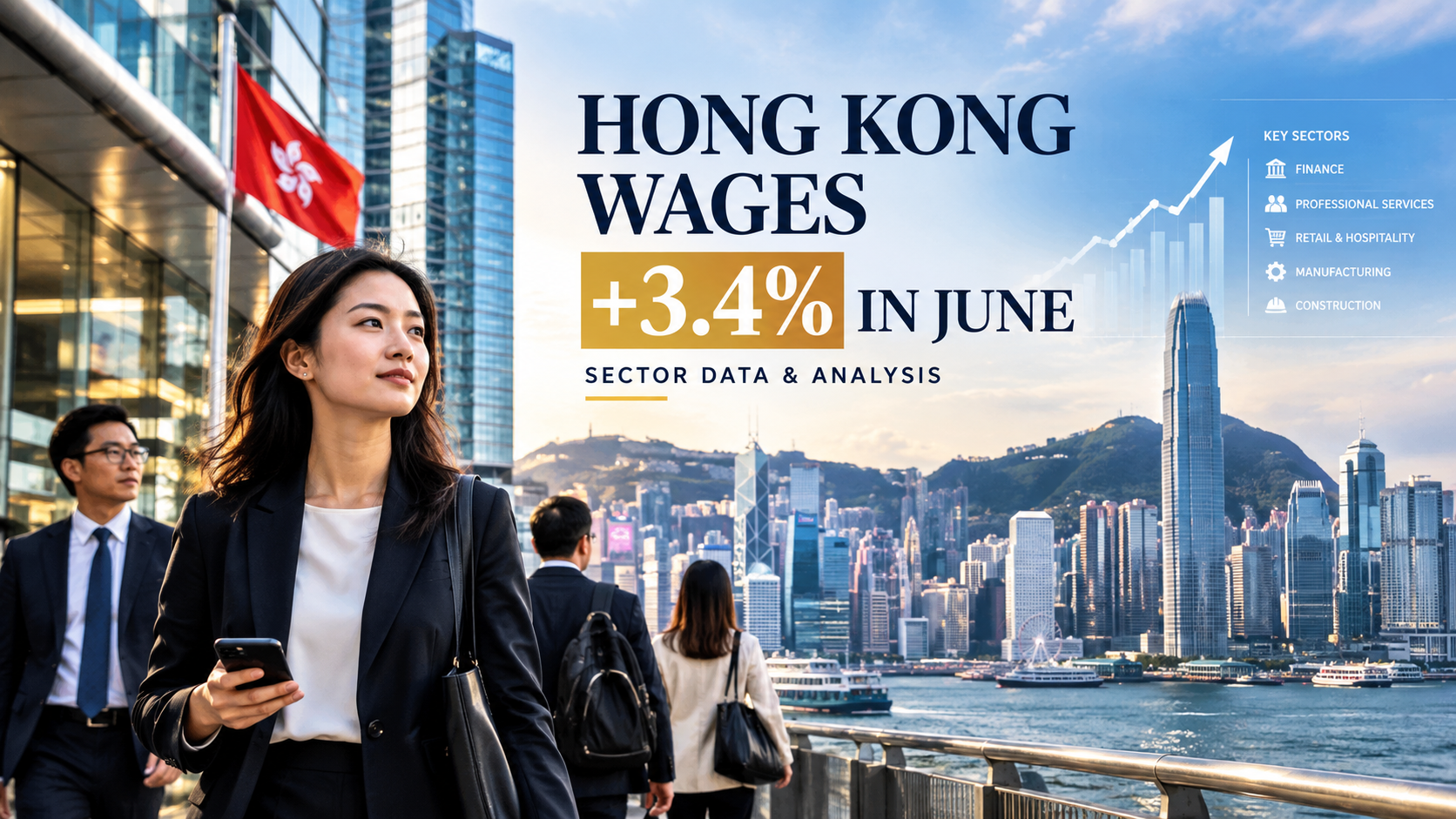
Hong Kong’s average wage rates recorded a 3.4% year-on-year increase in nominal terms, reflecting an enduring tight labor market across key commercial sectors. Data released by the Census and Statistics Department of Hong Kong demonstrates that after accounting for consumer price inflation, wages grew 1.8% in real terms, signaling genuine gains in employee purchasing power across the SAR economy.
The continuous upward movement in wage indices underscores a structural deficit in middle- to upper-tier manpower, further intensified by local economic restructuring and talent retention initiatives.
Key Wage Statistics at a Glance
| Economic Sector | Nominal Wage Growth (YoY) | Real Wage Growth (YoY) | Primary Industry Drivers |
| Financial & Insurance | +4.2% | +2.6% | Wealth management expansion, AI integration, regulatory compliance |
| Professional & Business Services | +3.8% | +2.2% | Legal tech, ESG reporting demand, corporate advisory |
| Transportation & Logistics | +3.5% | +1.9% | Aviation recovery, regional supply chain recalibration |
| Personal Services & Healthcare | +3.2% | +1.6% | Aging demographic demand, private healthcare expansion |
| Retail, Accommodation & Food | +2.6% | +1.0% | Local consumption adjustment, cross-border retail shifts |
Sectorial Performance: Finance and Professional Services Lead the Rally
Growth was not uniformly distributed across the economy. High-value knowledge sectors outstripped consumer-facing operational industries:
1. Financial Services & Wealth Management
The financial sector posted the strongest performance, backed by a rebound in wealth management inflows from mainland China and increased hiring within asset management and private banking. According to policy tracking by the Hong Kong Monetary Authority, institutional demand for risk management and compliance talent boosted salary floors across Tier-1 institutions.
2. Professional, Technical, and Digital Services
Consultancies, legal practices, and tech infrastructure providers recorded robust wage gains. The push toward digital transformation and mandatory sustainability reporting across listed companies created a competitive bidding environment for specialized professionals.
3. Retail, Food Services, and Consumer Travel
While hospitality and food services posted positive nominal gains, their real wage growth lagged behind the citywide average. Retail operators continue to adjust business models in response to altered consumer behavior, including weekend outbound travel by Hong Kong residents to neighboring Guangdong cities.
Real Wages vs. Inflation: Deconstructing Household Purchasing Power
While headline nominal growth stood at 3.4%, the net gain for households relies on the trajectory of the Composite Consumer Price Index (Composite CPI). Official figures from the Hong Kong Government Information Centre indicate underlying consumer inflation remained moderate at approximately 1.6% over the corresponding period.
Nominal Wage Growth (3.4%) − Inflation (1.6%) = Real Wage Growth (1.8%)
This positive differential confirms that worker compensation effectively outpaced baseline living cost increases, supporting private consumption capacity despite broader capital market volatility and elevated interest rates.
Strategic Drivers: Talent Schemes and Structural Shortages
Two major structural forces continue to dictate Hong Kong’s wage dynamic:
- Labor Supply Deficits: Demographic shifts and earlier labor force exits created persistent vacancies across both professional ranks and frontline operational roles.
- Impact of Top Talent Programs: Measures designed to import skilled workforce—such as the Top Talent Pass Scheme—are gradually replenishing senior ranks. However, as noted in economic reviews by the International Monetary Fund, the intake has primarily stabilized mid-to-senior levels while entry-to-mid operational tiers continue to face acute labor tightness, forcing employers to raise entry-level base compensation.
Macro Economic Outlook: What to Expect in Upcoming Quarters
The Hong Kong SAR Government expects further moderate wage increases through the second half of the year. Key factors influencing the trajectory include:
- Monetary Policy Easing: Global interest rate cuts are anticipated to reduce borrowing costs for small and medium-sized enterprises (SMEs), freeing up capital for workforce expansion and salary revisions.
- Cross-Border Integration: Enhanced economic alignment within the Greater Bay Area (GBA) will continue to reshape retail and service-sector wage dynamics, prompting local businesses to optimize efficiency through technology adoption.
- Corporate Cost Management: While talent retention remains a top priority, corporate profit margins are under scrutiny, leading many firms to pivot toward variable performance bonuses rather than permanent base-salary shifts.
Discover more from The Economy
Subscribe to get the latest posts sent to your email.


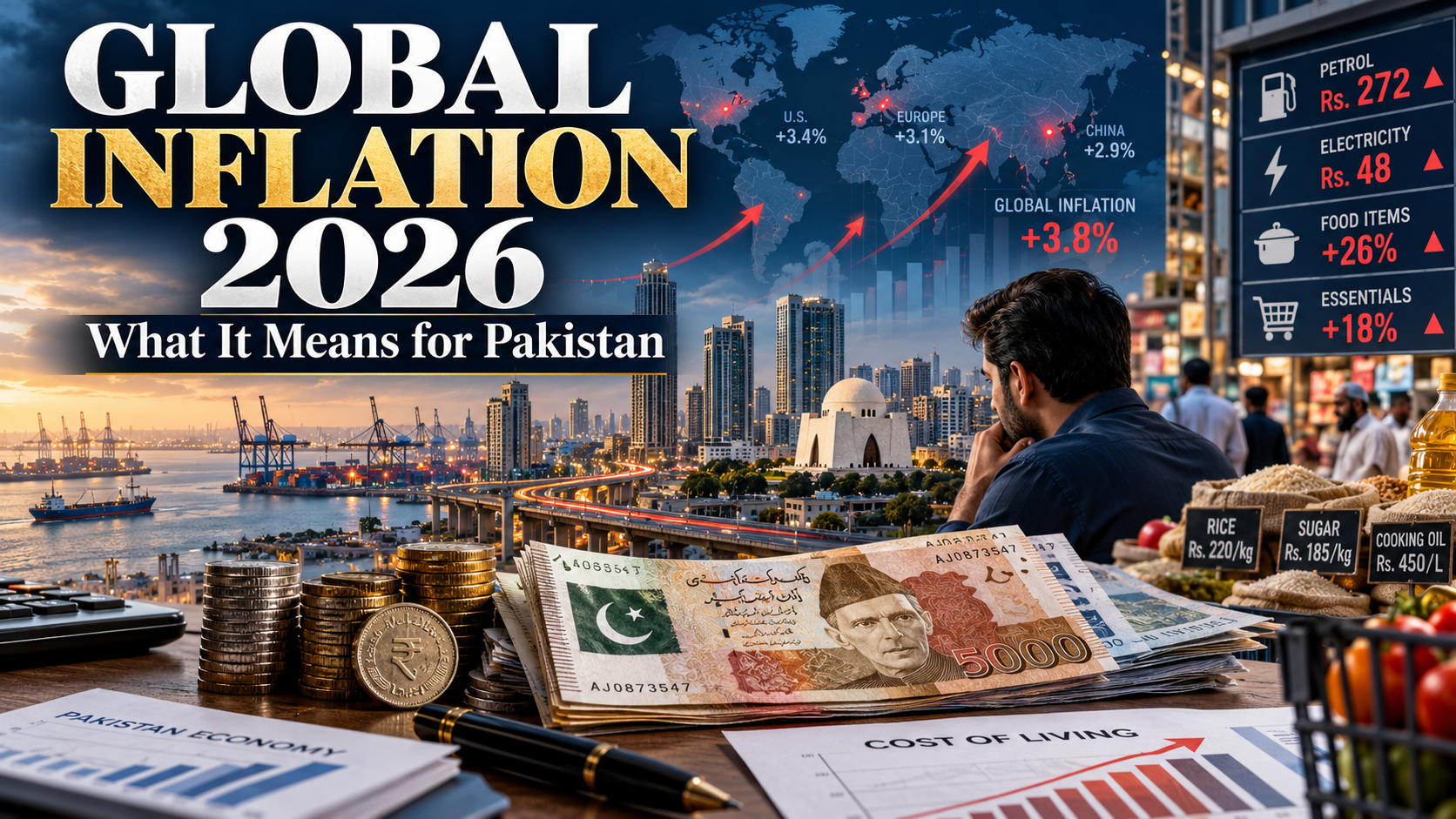
Global inflation is rising again in 2026, and energy is the main cause. The International Monetary Fund expects global headline inflation to climb to 4.7% this year, up from 4.1% in 2025, mainly because of higher energy and food prices (IMF, World Economic Outlook, October 2026). For import-dependent countries such as Pakistan, the shock arrives through fuel pumps, transport fares and the cost of imported goods.
Key Takeaways
- The IMF projects global inflation of 4.7% in 2026, easing to 4.1% in 2027.
- Energy and food prices are the main drivers, linked to the Middle East conflict and supply disruptions.
- Global growth is slowing at the same time, to about 3.1% in 2026, which makes the trade-off harder for central banks.
- Pakistan’s headline inflation was 10.26% year on year in September 2026, well above the State Bank’s 5 to 7% target range.
- Households and businesses should plan for higher transport and import costs, and should not assume a quick return to lower inflation.
The IMF numbers in brief
The IMF sees global growth slowing from 3.5% in 2025 to 3.1% in 2026, before recovering to 3.4% in 2027 (Trend.az, reporting the IMF release). The more worrying signal is that inflation is rising while growth slows. When an economy slows and prices rise together, policymakers have fewer good options.
The IMF has also said the global economy is resilient but increasingly uneven. Countries that benefit from the AI investment boom or favourable terms of trade are doing relatively well. Many energy-importing and low-income countries face much harder conditions (Trend.az).
Why energy is doing the damage
Energy feeds into almost everything: freight, fertiliser, food processing, manufacturing and electricity. One press summary of the IMF analysis reports that energy prices remain roughly a quarter higher than before the shock (Outlook India).
This is why interest rates alone cannot solve the problem. Higher borrowing costs reduce demand, but they do not produce more oil or gas. Central banks can slow second-round effects, where higher fuel costs feed into wages and expectations. They cannot lower the price of a barrel.
Supply shock or demand boom?
Demand-driven inflation comes from too much spending chasing too few goods. Supply-driven inflation comes from higher input costs that squeeze output. The 2026 episode is mostly supply-driven, and that changes the policy answer. Rate rises work well against demand-driven inflation. Against supply-driven inflation, they work more slowly and at a higher cost to growth.
A Pakistani analysis published in April made this point directly: inflation there is no longer driven solely by excess demand, yet policy still relies heavily on high interest rates (Bol News).
Our reading is that global inflation in 2026 is a supply problem that central banks will try to treat with demand tools. A prolonged period of high rates looks more likely than a sharp reversal.
Pakistan: inflation above 10% and the rate dilemma
Headline inflation in September 2026 was 10.26% year on year, and the monthly rise of 1.27% was driven by energy costs (ARY News, citing PBS data). Electricity and fuel offset a sharp slowdown in food prices. Core inflation, which excludes food and energy, ran between 8.1% and 8.6% (The Express Tribune).
The State Bank kept its policy rate at 11.5% in September, by a seven-to-three vote (The Express Tribune). It had raised rates by 100 basis points in April, the first hike in nearly three years (Bol News).
The government has told the IMF that inflation could fall to 7.5% if the Middle East situation normalises and Brent averages $80 a barrel in the current fiscal year. That is a conditional assumption, not a forecast. The IMF has urged Pakistan to adjust both exchange-rate and interest-rate policy to keep inflation and the current account deficit under control (The Express Tribune).
How the shock travels
For a Pakistani household, the chain is short. Petrol and diesel prices move first. Transport fares follow within weeks. Food prices rise through freight and packaging. Imported goods become more expensive as the rupee comes under pressure.
Food complicates the picture. Tomato prices fell about 25% month on month in the September data, and chicken prices fell about 8% (ARY News). Seasonal food swings can hide energy pressure for a month or two, which is why economists watch core inflation alongside headline figures.
What this means for households and businesses
Households: Treat transport and utility costs as fixed for budgeting purposes. If you carry variable-rate debt, remember that the policy rate feeds directly into repayments.
Small businesses and importers: Build fuel and freight surcharges into quotes where possible. Review supplier contracts for currency clauses. Keep working capital buffers, because higher rates raise the cost of bridging cash gaps.
Investors: A prolonged hold at high rates is a different environment from a rapid easing cycle. This is general information, not investment advice.
Risks, limitations and uncertainties
- IMF figures are projections. They will change as conflict and energy prices evolve, and the October outlook flags downside risks.
- The government’s 7.5% assumption depends on Brent averaging $80 a barrel. A sustained spike would push inflation higher.
- Pakistan’s monthly CPI and policy-rate figures are subject to revision.
- Pakistan can diverge from the global average because of the rupee, administered prices and food supply.
This article is for general information and is not personalised financial or economic advice.
FAQ
Will global inflation rise in 2026? The IMF expects global headline inflation to rise to 4.7% in 2026, from 4.1% in 2025 (IMF).
Why is inflation rising again? Energy and food costs are the main drivers, with supply disruptions linked to the Middle East conflict pushing fuel prices up.
Will inflation fall in 2027? The IMF projects global inflation easing to 4.1% in 2027. That could change quickly if energy supply worsens.
Why is Pakistan’s inflation above the global average? Pakistan imports much of its fuel, so energy shocks pass through quickly. Electricity and fuel rose in the latest data, and the rupee adds pressure.
Will the State Bank raise rates again? It has kept rates at 11.5% and has signalled it will tighten further if needed to prevent second-round effects. Future decisions depend on inflation, the exchange rate and energy prices.
Conclusion
Global inflation is rising in 2026 because energy and food costs have jumped, and the IMF expects it to ease only gradually. For Pakistan, the challenge is sharper, with inflation above 10% and limited room to cut rates. Watch oil prices, the State Bank’s next decision and monthly CPI releases. Those signals will show whether the shock is fading or becoming entrenched.
Discover more from The Economy
Subscribe to get the latest posts sent to your email.
Key Takeaways
- The IMF projects inflation of 9.9% for FY2026-27, which means prices are still rising much faster than most households would like.
- Energy import costs, exchange-rate moves, and global oil prices are the main drivers, and the government controls only some of them.
- Stabilisation has stopped the crisis from getting worse, but it has not yet brought prices back to comfortable levels.
- Lower inflation would most help people on fixed incomes, shopkeepers with thin margins, and workers whose wages lag behind food and fuel costs.
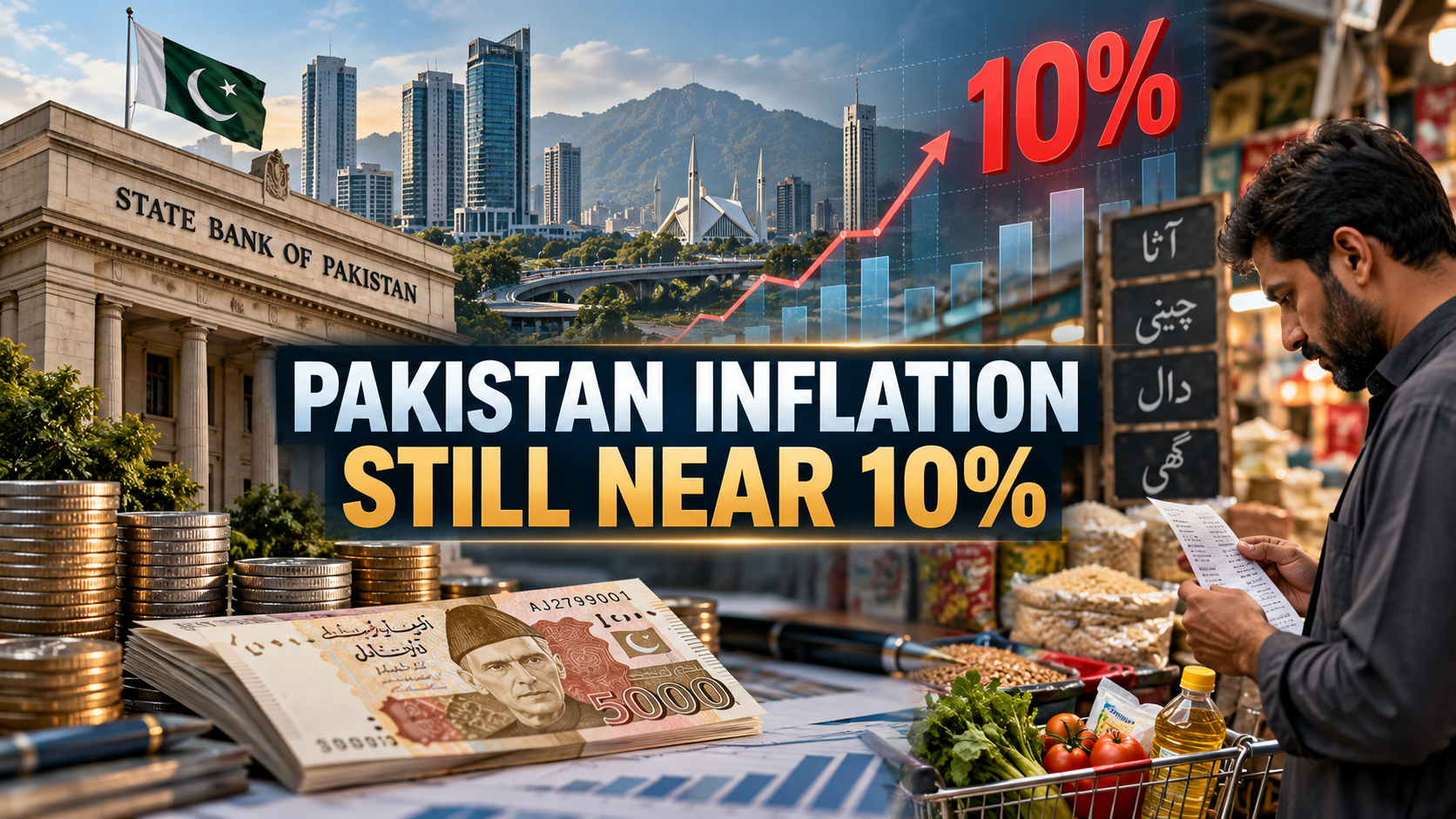
Pakistan’s economy has stopped sliding, but that is not the same as recovering. Inflation is still close to 10%, which means a basket of goods that cost 100 rupees a year ago now costs about 110. The IMF’s latest projection for FY2026-27 is 9.9%, so the state does not expect a sharp drop soon.
The reason is simple to describe and harder to fix. Pakistan imports much of its energy, pays for it in dollars, and passes the cost to households through fuel and electricity prices. When the rupee weakens or global oil rises, prices follow quickly. When they fall, the relief arrives more slowly.
Energy Is the Biggest Lever
Oil and gas make up a large share of Pakistan’s import bill. Each time the price of crude moves in global markets, the cost of petrol, diesel, and power changes at home. Transport costs then ripple through to food, because trucks carry vegetables, flour, and cooking oil across the country.
Think of a bus fare in Lahore. When diesel rises, the operator asks for more per trip. The vegetable seller at the next stop pays more to bring stock to market, so tomato prices climb too. Nobody decided that tomatoes should cost more. The energy bill did the deciding.
The Exchange Rate Problem
A weaker rupee makes imports more expensive in rupee terms. That includes fuel, machinery, medicines, and raw materials for factories. Exporters can benefit from a cheaper currency, but households and importers feel the pain first.
Policy has tried to manage this by holding the rupee within a controlled range. That approach limits sudden shocks, but it can also leave the currency overvalued in some periods, which hurts exporters. The balance between stability and competitiveness is one of the hardest choices facing policymakers.
What the IMF Projects
The IMF’s projection of 9.9% inflation and 3.5% growth for FY2026-27 tells a specific story. The economy is expected to expand modestly while prices stay high. Growth at that pace is not enough to create jobs quickly for a population that keeps growing.
The projection also depends on assumptions about oil prices, exchange rates, and fiscal discipline. If oil stays above current levels, inflation could stay higher for longer. If it falls, the outlook improves, but the government still needs to collect enough revenue to avoid borrowing more.
Where Economists Disagree
Some analysts argue that inflation will fall steadily once the effects of past currency moves pass through. Others warn that energy subsidies, circular debt in the power sector, and tax increases keep pushing prices up. Both views have evidence behind them, and the outcome will depend on which pressure proves stronger.
It is fair to say that inflation expectations matter. If businesses and workers expect prices to keep rising, they set prices and wages higher, which makes inflation harder to bring down.
What This Means for You
If your income rises slowly, focus on the categories where prices move most: food, fuel, and power. Track your own spending for three months to see where your money actually goes. A household budget built on real numbers is more useful than a general rule.
If you run a small shop, watch your supplier costs closely and review prices at least monthly. Passing on costs too late can hurt cash flow, and passing them on too quickly can cost you customers.
What to Watch Next
- Monthly consumer price index releases from the Pakistan Bureau of Statistics.
- State Bank of Pakistan policy rate decisions, which influence borrowing costs and inflation expectations.
- Global oil price movements and any changes to domestic petroleum pricing.
- The next IMF programme review, which will test whether the inflation path matches the projection.
Confirm each date on the official calendars before you plan around it.
Frequently Asked Questions
Why is inflation still high if the economy has stabilised?
Stabilisation means the most acute crisis has eased. It does not mean prices have fallen. Past currency falls and energy costs continue to work their way into shop prices over time.
Does the exchange rate cause inflation? It is one important cause. When the rupee weakens, imported goods and fuel cost more in local currency, and those costs spread across the economy.
Will inflation fall to pre-crisis levels soon?
Not on current projections. The IMF’s FY2026-27 figure of 9.9% suggests prices will stay elevated for some time.
What can households do right now?
Focus on fixed costs such as power and transport, compare prices across suppliers, and review any income-linked support you may qualify for.
Conclusion
Inflation near 10% is the price of a fragile recovery, and it will not disappear with one good month of data. The real test is whether energy, the currency, and public finances move in the same direction for long enough to lower prices. Watch the monthly CPI, and you will see the trend before the headlines do.
Discover more from The Economy
Subscribe to get the latest posts sent to your email.
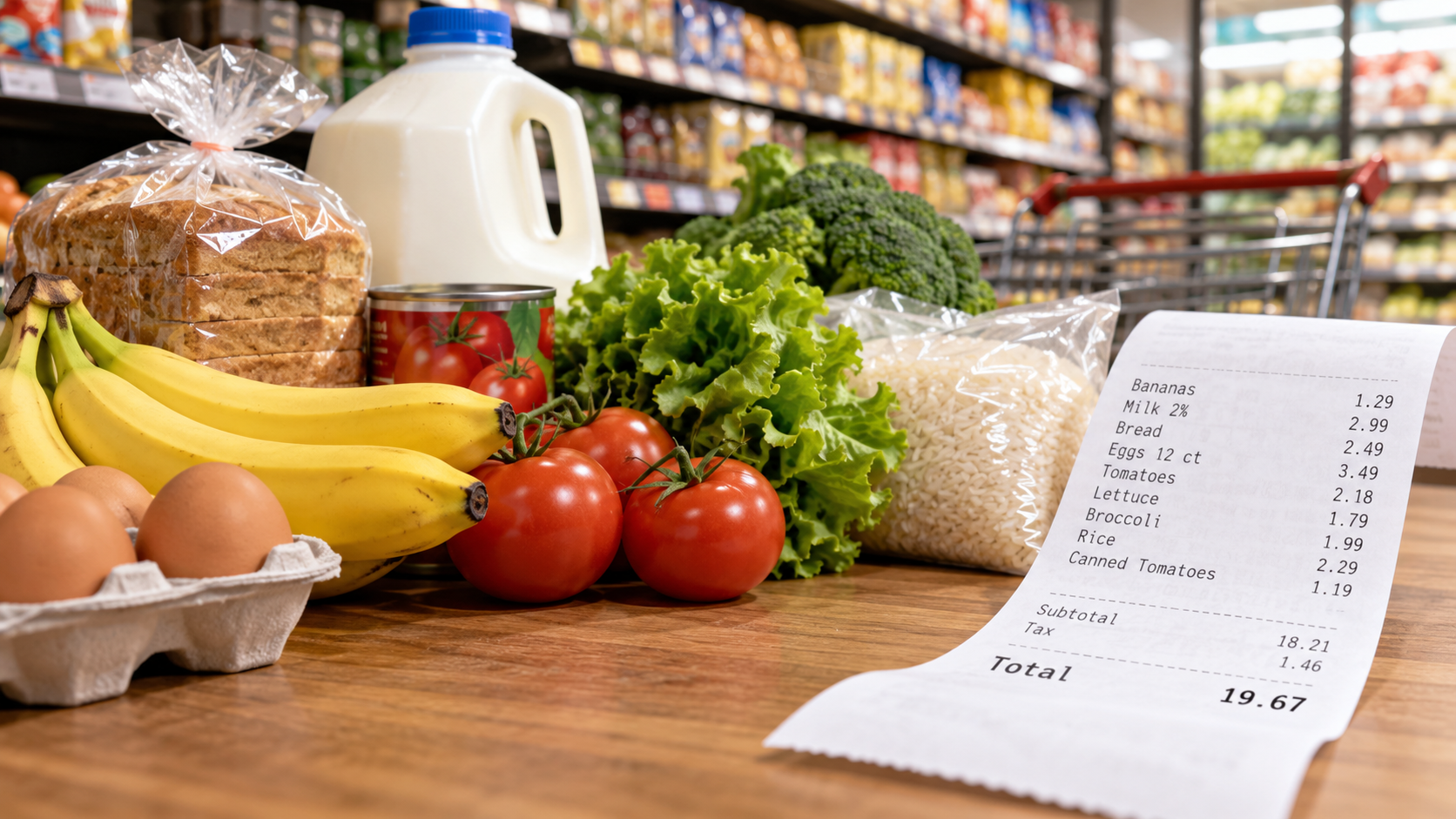
There is a paradox at the supermarket checkout: the latest monthly US grocery inflation reading showed a small decline, yet food producers and retailers are preparing for another wave of cost pressure. Both developments can be accurate because the consumer price index measures what happened to retail prices, not every expense that will influence prices over coming months.
The Bureau of Labor Statistics reported that the food-at-home index fell 0.1% in September 2026 from the previous month, while remaining 1.8% higher than a year earlier. Supermarket News covered that modest decrease. It would be misleading to turn one month’s decline into a claim that the cost-of-living problem has disappeared.
Why prices can pause while costs rise
Retailers do not change every shelf label the instant crude oil, fertilizer or packaging costs move. Many buy through contracts, hold inventories, hedge some inputs and adjust prices selectively. Competing stores may temporarily accept lower margins to maintain customer traffic. This creates a lag between changing supplier conditions and the consumer prices visible in official data.
Reporting by the Financial Times points to diesel, freight and other input costs as renewed sources of concern. That is a plausible channel: food must be produced, processed, refrigerated and transported, sometimes through several distribution centers, before it reaches a shelf.
Not every aisle moves together
A headline grocery index hides distinct markets. September’s BLS release showed declines in beef and dairy prices during the month but increases for some beverages, fruits and vegetables. Seasonal harvests, disease outbreaks, transportation costs and global commodity conditions affect different products on different schedules.
A household that spends heavily on fresh produce may experience a different inflation rate from one buying mostly shelf-stable goods. This is why household budgets often feel disconnected from the national average. Useful service journalism compares a consistent basket over time instead of selecting the most dramatic products after the fact.
Supermarket strategies during inflation
Large chains use private-label products, promotions, loyalty pricing, purchasing scale and supplier negotiations to compete for spending. Discount grocers may emphasize simple store formats and limited assortments. Premium formats may focus on convenience or prepared foods. These strategies do not change the official inflation rate mechanically, but they do affect the price choices consumers face.
Retailers also make trade-offs. Heavy discounts can boost traffic but reduce margins; frequent price changes can confuse shoppers; and private-label expansion can improve value while increasing reliance on a narrower pool of manufacturers.
What households can do without chasing every promotion
Compare unit prices, not only package prices. Plan around a handful of adaptable meals and substitute among comparable ingredients when one category spikes. Check whether a discount requires a loyalty account or bulk purchase that leads to waste. A lower price is not a saving if the product will expire before it is used.
For tracking inflation personally, retain a small set of recurring receipts and calculate the total for identical quantities monthly. Do not compare a holiday basket with a routine basket; the difference may reflect what you bought rather than price increases.
What could change the outlook?
Oil prices, freight costs, farm conditions, tariffs, labor costs and retailer competition will all matter. The 12-month measure can accelerate even if some individual months remain mild. Forecasts should be labelled as forecasts, not as prices already paid.
An effective supermarket news article serves two audiences: investors evaluating margins and families trying to budget. The relevant questions are connected but not identical. Higher selling prices may lift revenue while reducing volumes and worsening customer trust.
How to read the next inflation release
The difference between month-on-month and year-on-year inflation is especially important. A 0.1% monthly fall after earlier increases does not return the price level to where it was before the increases. Likewise, a 12-month inflation rate can ease because last year’s unusually large price rise drops out of the comparison, even if shoppers see no actual cut today. The food-at-home index is a standardized economic measure, while the household’s experience depends on its purchasing mix and store choices. When the next BLS release arrives, compare monthly moves for food at home, food away from home and energy, then assess whether higher freight costs are appearing across multiple categories.
Frequently asked questions
Did grocery prices fall in September 2026?
The US food-at-home index declined 0.1% month on month, but was still up 1.8% over 12 months, according to BLS.
Why do grocers expect pressure later?
Fuel, transportation, packaging and agricultural inputs can take time to show up in retail prices.
Are private-label groceries always cheaper?
Often, but not always. Compare price per unit, quality and the quantity actually needed.
Discover more from The Economy
Subscribe to get the latest posts sent to your email.

Open Banking Trends 2026: What Consumers Should Know

Nvidia After the Selloff: What to Watch Before Earnings

Black Friday 2026 Early Deals: A Data-Driven Shopping Guide

Fed Policy Path 2027: Rate Expectations After the Hold

Asia’s Economic Resilience in 2026: The Strategic Blueprint for Sustaining the Global Growth Engine

Credit Scoring Changes 2026: What Mortgage Buyers Need to Know

10-Year Treasury Yield Outlook for 2027 After the Democratic Sweep

Is the AI Infrastructure Boom Sustainable? A Reality Check

Disability Insurance Demand in 2026: Who’s Buying and Why

What the 2026 Midterms Mean for Treasury Yields and Bond Markets

Payroll Outlook After the Midterms: 2027 Tax Changes, Compliance Risks and AI Trends

Lisa Su: AMD Is Now a “Data Center First Company” – 2027 Outlook

Reasons for Falling US Gas Prices in November 2026: A Seasonal Shift

SoftBank’s $3.7 Billion Turbine Loss: What the AI Power Bet Reveals

Dow Jones Today: Dow Slips 237 Points After the Worst Day Since April 2025

US–Iran Conflict in October 2026: Hormuz, Oil Prices and Diplomacy

Pakistan IMF Programme 2026: Why Bailouts Keep Returning

SSI November 2026 Payment: Why Benefits Arrive October 30

Singapore Stock Market Outlook 2027: The STI’s Bank-and-Yield Test

2027 Federal Tax Brackets: New IRS Rates and Standard Deductions Explained

IMF Global Outlook 2027: The Recovery Is Real, but the Divide Is Growing

World Bank Debt Report 2026: The $9.4 Trillion Burden Behind the Recovery

Stock Market Crash 2026? What the November Rout Actually Tells Us

KSE-100 Index 2026: Is Pakistan’s Stock-Market Recovery Sustainable?

Germany–France ‘Made in Europe’ Deal Could Reshape China’s EV Ambitions

Global Markets Today: The AI Sell-Off Has Become a Test of Liquidity

Zhuhai Airshow 2026: How China’s Stealth Jets, Drones and Missiles Are Redrawing Global Air Power

Democrats Won Congress. Can They Fix the U.S. Economy
-

 Markets & Finance10 months ago
Top 15 Stocks for Investment in 2026 in PSX: Your Complete Guide to Pakistan’s Best Investment Opportunities
-

 Analysis9 months ago
Johor’s Investment Boom: The Hidden Costs Behind Malaysia’s Most Ambitious Economic Surge
-

 Analysis9 months ago
Top 10 Stocks for Investment in PSX for Quick Returns in 2026
-

 Banks10 months ago
Best Investments in Pakistan 2026: Top 10 Low-Price Shares and Long-Term Picks for the PSX
-

 Analysis9 months ago
Brazil’s Rare Earth Race: US, EU, and China Compete for Critical Minerals as Tensions Rise
-

 Investment10 months ago
Top 10 Mutual Fund Managers in Pakistan for Investment in 2026: A Comprehensive Guide for Optimal Returns
-

 Global Economy11 months ago
15 Most Lucrative Sectors for Investment in Pakistan: A 2025 Data-Driven Analysis
-

 Global Economy11 months ago
Pakistan’s Export Goldmine: 10 Game-Changing Markets Where Pakistani Businesses Are Winning Big in 2025