
Global Economy
What the U.S. Attack on Venezuela Could Mean for Oil and Canadian Crude Exports: The Economic Impact

The aggressive U.S. pressure campaign against Venezuela’s oil sector is reshaping North American energy markets in ways few anticipated. The U.S. Treasury Department sanctioned four companies and oil tankers on December 31, 2025, as part of President Trump’s intensifying blockade against the Maduro regime, triggering a domino effect that positions Canada as an unexpected beneficiary in the global crude oil trade.
Here’s what this geopolitical shake-up means for oil prices, supply chains, and the $150 billion Canadian energy sector—and why investors, refiners, and policymakers are watching closely.
Understanding the U.S.-Venezuela Oil Relationship
The Escalating Sanctions Campaign
The Trump administration has sanctioned multiple vessels and companies involved in Venezuela’s shadow fleet operations, disrupting what remains of the country’s oil export capability. This isn’t just diplomatic posturing—it represents a fundamental disruption to hemispheric energy flows that have existed for decades.
Venezuela exports less than 1 million barrels per day, a small fraction of the 106 million barrels per day global oil market, according to analysis from the Center for Strategic and International Studies. Yet the strategic importance of Venezuelan heavy crude far exceeds its volume.
Venezuela’s Diminished Production Capacity
Venezuela’s oil production topped 3 million barrels per day in the early 2000s but has fallen sharply in recent decades due to declining investment and U.S. sanctions. The country once held the world’s largest proven oil reserves, but production infrastructure has deteriorated dramatically under years of economic mismanagement and international isolation.
Rebuilding Venezuela’s oil infrastructure would require investments of more than $100 billion and take at least a decade to lift production to 4 million barrels per day, according to Francisco Monaldi, director of the Latin America energy program at Rice University.
The Immediate Impact on Global Oil Markets
Gulf Coast Refineries Face a Critical Supply Gap
The reality facing U.S. refiners is more complex than simple supply and demand. Gulf Coast refiners favor heavy crude like Mexican Maya, as they typically run medium and heavy oil configurations, according to Wood Mackenzie analysis. Venezuelan heavy crude has historically filled a specific niche—high sulfur content, low API gravity—that perfectly matches the coking capabilities of sophisticated Gulf Coast refineries.
Gulf Coast refinery utilization started 2025 at 93% but has drifted to the mid-80% range as several mid-sized refineries cut runs by 5% to 10%. This decline isn’t entirely about Venezuelan supply disruptions—oversupply of light crude from the Permian Basin and compressed refining margins play significant roles—but the loss of heavy crude optionality constrains operational flexibility.
Price Volatility Remains Muted Despite Geopolitical Tensions
A continuing crackdown could throttle most or all of Venezuela’s exports and associated revenues, yet less than 20 percent of Venezuelan crude exports are transported on shadow tankers—a smaller proportion than Russian and Iranian barrels utilizing the same fleet.
West Texas Intermediate crude fell to $57.32 a barrel in January 2026, down from nearly $80 in January 2025, demonstrating that broader market factors currently outweigh Venezuela-specific disruptions. The International Energy Agency projects the oil market could see a surplus of 3.8 million barrels per day in 2026—the largest glut since the pandemic.
The Diesel Dilemma
There’s one product where Venezuelan supply matters disproportionately: diesel fuel. Venezuela produces a form of crude suitable for making diesel, which is widely used across industries. Removing Venezuela’s oil input from global markets could push up diesel costs in the U.S. and boost inflation, according to Atlantic Council analysis.
This creates an interesting paradox. While overall crude oil supply remains abundant, specific refined product markets could tighten, creating regional price dislocations that sophisticated traders will exploit.
Canada’s Strategic Opportunity in the Energy Landscape
Western Canadian Select Emerges as the Alternative
Enter Canada—and specifically, Western Canadian Select heavy crude. The characteristics that once made WCS a challenging product to market now make it invaluable. With API gravity between 20.5 and 21.5 degrees and sulfur content of 3.0 to 3.5 percent, WCS offers similar processing characteristics to Venezuelan crude.
The WTI-WCS price differential narrowed from $18.65 per barrel in 2023 to $14.73 per barrel in 2024, attributed to the commissioning of the Trans Mountain Pipeline Expansion in May 2024, according to the Alberta Energy Regulator.
The differential has been trading in a tight band between $10.25 and $11.70 under WTI since September 2025, with analysts pointing to strong international buying of Canadian crude off the Pacific coast. Even with seasonal widening, these differentials represent historically favorable pricing for Canadian producers.
Trans Mountain Pipeline: The Game-Changing Infrastructure
The Trans Mountain Pipeline Expansion isn’t just another infrastructure project—it fundamentally rewires North American energy geography. The expansion increased capacity from 300,000 to 890,000 barrels per day, nearly tripling throughput and increasing total western Canadian crude oil export pipeline capacity by 13%.
Within the first 12 months of operation, average pipeline movements of crude oil from Alberta to British Columbia increased more than fivefold, with total crude oil volumes exported through British Columbia surging by more than sixfold, according to Statistics Canada data.
The geographic diversification is remarkable. From May 2024 to April 2025, crude oil shipments to non-U.S. destinations accounted for 48.1% of exports by volume from British Columbia, compared to 100% going to the U.S. in the previous 12-month period.
Production Capacity Ramping Aggressively
Canadian crude oil production rose 9.4% year-over-year to 150 million barrels in January 2025, with exports totaling 129 million barrels, up from 125.5 million barrels a year earlier, according to data from Mansfield Energy citing Statistics Canada.
This production growth trajectory positions Canada as one of the most significant non-OPEC+ crude output growth stories globally. Oil sands producers are capitalizing on improved market access, ramping up production to fill new pipeline capacity.
Economic Implications for North America
U.S. Energy Security Gets More Complex
The U.S. relationship with Canadian crude isn’t simply transactional—it’s deeply integrated through decades of infrastructure investment and refinery optimization. In 2022, 79.2 percent of Canada’s refined oil came from the U.S., with Canadian crude refined in the Midwest and then sold back to Canada and the rest of the world, according to data from the Observatory of Economic Complexity.
This creates a fascinating interdependency. As Venezuela falls further out of the supply picture, U.S. refiners need Canadian heavy crude more than ever. Yet simultaneously, Canadian producers have new leverage through Pacific export options that didn’t exist two years ago.
The U.S. tariff threat that dominated headlines in early 2025 demonstrated this tension. Under the tariff case, the WCS price was expected to be 18% below the base case forecast at $45 per barrel due to a 10% U.S. tariff on Canadian energy products, resulting in a widening WCS-WTI differential.
Canadian Economic Growth Projections Improve
Since the expanded Trans Mountain pipeline came online, non-U.S. oil exports rose from about 2.5 percent of total exports to about 6.5 percent, according to Alberta Central economist Charles St-Arnaud. This diversification reduces Canada’s vulnerability to U.S. market dynamics and policy uncertainty.
The Alberta government expects the average WTI price to be $76.50 US, up $2.50 US per barrel from originally forecast, demonstrating the economic significance of improved market access.
The multiplier effects extend beyond direct oil revenues. Pipeline operations, tanker loading facilities, refinery upgrades, and related services generate substantial employment and tax revenue across Western Canada.
Investment Flows Redirect Northward
Canadian production is averaging five million barrels per day as of July 2025—up from 4.8 million in 2023—and is set to grow further into 2026, according to ATB Financial. This production growth requires billions in capital investment across the oil sands complex.
Energy analyst Rory Johnston projects year-over-year growth of 100,000 to 300,000 barrels per day through 2025, making Canada one of the largest sources of crude output growth globally. In a world where major international oil companies face pressure to constrain capital deployment, Canadian oil sands represent one of the few jurisdictions seeing significant production increases.
Geopolitical Ramifications Beyond North America
China Emerges as Canada’s Largest Pacific Buyer
China has become the top buyer of Canadian oil via the Trans Mountain pipeline at 207,000 barrels per day—a massive increase from an average of 7,000 barrels per day in the decade to 2023, according to Institute for Energy Research data.
This shift carries profound implications. Chinese refiners gain access to reliable heavy crude supplies outside U.S. jurisdictional reach, reducing their dependence on sanctioned sources like Iran and Venezuela. For Canada, Chinese demand provides price support and market optionality that didn’t exist when the U.S. was effectively the only customer.
Chinese oil purchases through the port near Vancouver soared to more than seven million barrels in March 2025 and were on pace to exceed that figure in April, while Chinese imports of U.S. oil dropped to three million barrels a month from 29 million barrels in June 2024.
Regional Stability Questions in Latin America
The U.S. seizure of shadow fleet tankers demonstrates that Washington is willing to physically halt exports of sanctioned oil, potentially throttling most or all of Venezuela’s exports. This aggressive enforcement creates precedents that extend beyond Venezuela.
Russia and China face outsized vulnerabilities in a world of greater sanctions enforcement that may include physical seizures. Washington’s actions could inspire other sanctioning authorities to implement similar operations, particularly in strategic chokepoints like the Danish straits.
OPEC+ Calculations Shift
Venezuela’s production decline removes a historically significant OPEC member from market balancing equations. While current Venezuelan output is modest, the country’s vast reserves and potential production capacity have always factored into long-term OPEC+ strategy.
Canada isn’t an OPEC member and has no production coordination with the cartel. Increased Canadian output essentially represents non-OPEC supply growth that OPEC+ must account for in its own production decisions. This dynamic could contribute to persistent oversupply conditions that depress prices.
Challenges and Risks Ahead
Infrastructure Bottlenecks Remain
Canadian crude exports from the Trans Mountain pipeline fell to 407 thousand barrels per day in June 2025, down 10.5% from May and 23.5% below the March record of 532 thousand barrels per day, according to Kpler data.
Peak seasonal maintenance and wildfire-related production disruptions that began in late May caused the decline, while strong inland U.S. demand from the Midwest and Gulf Coast reduced export availability. These operational realities demonstrate that even with new infrastructure, Canadian exports face constraints.
Enbridge Mainline was apportioned 4% in June 2025, with further apportionment expected in July, as demand from the Midwest and Gulf Coast competes for the same crude pool.
Environmental and Regulatory Headwinds
Canadian oil sands remain among the most carbon-intensive crude sources globally. As climate policies tighten—particularly in key markets like California and the European Union—carbon intensity creates both regulatory risk and reputational challenges.
California’s low-carbon fuel standards explicitly penalize high-carbon crude sources. While Asian buyers currently show less concern about carbon intensity, this could change as climate policies evolve. The $34 billion Trans Mountain expansion faced years of environmental opposition, demonstrating that future infrastructure projects will face significant regulatory hurdles.
Market Volatility Creates Planning Uncertainty
Oil prices fell to $57.32 per barrel in January 2026, dropping roughly 20% in 2025 and extending a decline over the previous two years. This price environment challenges the economics of capital-intensive oil sands development.
Oil sands projects require multi-billion-dollar investments with decades-long payback periods. Price volatility makes financial planning extraordinarily difficult. While improved market access through Trans Mountain helps, it doesn’t eliminate exposure to global price cycles.
Trans Mountain has become one of the most expensive routes for oil shippers due to toll increases necessary to cover construction cost overruns exceeding $34 billion. Higher transportation costs eat into producer netbacks, reducing the competitiveness of Canadian crude.
Expert Predictions and Future Outlook
Growing Asian Demand for Heavy Crude
Market analysts project continued growth in Asian demand for Canadian heavy crude, particularly as refineries complete infrastructure adaptations and develop expertise in processing oil sands products. This represents a fundamental shift in global crude trade flows.
Chinese and Indian refiners have invested billions in coking capacity specifically designed to handle heavy, high-sulfur crudes. As these facilities ramp up, they create structural demand for exactly the type of crude Canada produces in abundance.
Infrastructure Expansion Plans
Trans Mountain Corp is reviewing expansion projects for the line, with goals of increasing exports to Asian markets by adding between 200,000 and 300,000 barrels per day of capacity. Most of this additional capacity would likely target Asian rather than U.S. West Coast markets.
These expansion plans indicate confidence in long-term demand, but they also face the same political and environmental challenges that made the initial Trans Mountain expansion so contentious. Whether Canada can sustain the political will to approve major new energy infrastructure remains uncertain.
Long-Term Supply-Demand Balance Questions
Based on futures markets, the average price for WTI in 2026 is roughly $61 per barrel, down from the 2024 average of $76 per barrel, largely driven by concerns of slowing demand and an escalating global trade war, according to CAPP analysis.
The fundamental challenge facing the oil industry is that supply growth—from the U.S. shale, Canadian oil sands, Brazilian pre-salt, and Guyana—continues outpacing demand growth. Even with Venezuelan production effectively removed from the market, global oversupply persists.
This creates a paradoxical situation: Canadian producers gain market share and improve their strategic position while operating in an environment of depressed prices and margin pressure.
Key Takeaways: What This Means for Stakeholders
For U.S. Refiners: The loss of Venezuelan heavy crude creates dependency on Canadian and Mexican sources. Smart refiners are securing long-term Canadian crude supply contracts while the market remains oversupplied.
For Canadian Producers: The Trans Mountain expansion has created genuine optionality and improved netbacks, but success requires continued production efficiency improvements and market development in Asia.
For Investors: Canadian energy companies with low-cost oil sands operations and strong balance sheets look increasingly attractive. The sector faces headwinds from overall price weakness but structural advantages from improved market access.
For Policymakers: Energy security considerations increasingly favor North American supply chains. The U.S.-Canada energy relationship, despite periodic tensions, represents a strategic asset in an uncertain geopolitical environment.
For Asia’s Energy Buyers: Canadian crude offers reliable supply outside U.S. sanctions risk, though at the cost of higher transportation expenses and carbon intensity concerns.
The Bottom Line
The U.S. pressure campaign against Venezuela is accelerating a transformation already underway in North American energy markets. Canada isn’t simply filling a gap left by Venezuelan supply disruptions—it’s fundamentally repositioning as a globally connected crude exporter with options beyond its traditional U.S.-centric model.
The WTI-WCS price differential is anticipated to average $11 per barrel in 2025 as Trans Mountain enters its first full calendar year of operation. This represents the narrowest differential in years and reflects improved market access.
Yet significant uncertainties remain. Trade policy tensions between the U.S. and Canada could resurface. Global oil demand growth faces headwinds from electric vehicle adoption and efficiency improvements. Climate policies could penalize carbon-intensive crude sources.
What’s clear is that the era of Canadian crude as a captive supply to U.S. refineries has ended. The strategic implications of this shift—for energy security, geopolitics, and market dynamics—will play out over the coming decade.
For now, Canadian producers are capitalizing on a unique moment: Venezuelan production constrained by sanctions, new export infrastructure creating Asian market access, and global refiners seeking reliable heavy crude supplies. Whether this opportunity translates into sustained economic benefits depends on execution, market conditions, and policy developments that remain highly uncertain.
Frequently Asked Questions
Q: What is the impact of US sanctions on Venezuelan oil?
The U.S. has sanctioned multiple companies and vessels in Venezuela’s shadow fleet, disrupting the country’s ability to export crude oil and generating revenue for the Maduro regime. These sanctions effectively cut Venezuela off from most international oil markets, though some exports continue through sanctions evasion.
Q: How will Canadian crude exports benefit from the Venezuela situation?
Canadian crude benefits through five key mechanisms:
- Reduced competition from Venezuelan heavy crude in Gulf Coast refineries
- Trans Mountain Pipeline providing Asian market access
- Narrower price differentials due to improved market access
- Increased production justified by reliable export capacity
- Strategic positioning as a sanctions-free alternative to Venezuelan supply
Q: Why do Gulf Coast refineries need heavy crude oil?
Gulf Coast refineries invested billions in coking and conversion units specifically designed to process heavy, high-sulfur crude into valuable products like gasoline and diesel. These complex refinery configurations achieve higher margins when processing discounted heavy crude rather than more expensive light crude, making heavy crude supplies strategically important to their operations.
Discover more from The Economy
Subscribe to get the latest posts sent to your email.



There was a moment, somewhere in the fog of mid-2025, when the prevailing consensus on Wall Street and in the marble corridors of multilateral institutions was something close to dread. U.S. tariffs had mushroomed into the most aggressive trade barriers since Smoot-Hawley. Shipping lanes were fractured. Geopolitical fault lines — in the Middle East, in the Taiwan Strait, across the ruins of eastern Ukraine — had not so much deepened as multiplied. The prophets of doom were well-provisioned with data. And yet, here we are. The global economy, battered and limping, is still standing — and in certain respects, walking rather faster than feared.
This is not a triumphalist story. The global economy more resilient than feared narrative deserves neither uncritical celebration nor smug vindication. What it demands is honest, clear-eyed examination. Why did the worst not happen? What forces absorbed the blows? And — most critically — does the resilience we are witnessing reflect structural strength, or is it a borrowed grace, a temporary reprieve before deeper reckonings arrive?
The numbers, for now, tell a story of surprising steadiness. The IMF’s January 2026 World Economic Outlook projects global growth at 3.3 percent for 2026 and 3.2 percent for 2027 — a small but meaningful upward revision from October 2025 estimates. IMF Managing Director Kristalina Georgieva, speaking at Davos in January 2026, called this outcome “the biggest surprise” — a remarkable concession from the head of the institution whose job it is, partly, to anticipate exactly this. Meanwhile, the UN Department of Economic and Social Affairs estimated 2025 global growth at 2.8 percent, better than expected given the tariff storm that rolled through international trade. The OECD, for its part, subtitled its December 2025 Economic Outlook “Resilient Growth but with Increasing Fragilities” — a formulation that is, in its cautious way, almost poetic.
The Four Pillars of an Unlikely Resilience
So what happened? Why didn’t it break?
1. The Private Sector Adapted Faster Than Governments Could Fragment
Perhaps the single most underappreciated force in the global economy’s durability is the sheer agility of the private sector. Georgieva at Davos was blunt about it: globally, governments have stepped back from running companies, and the private sector — “more adaptable, more agile” — has filled the void. When tariffs on certain trade corridors spiked, supply chains did not collapse so much as reroute. Manufacturers diversified sourcing from China to Vietnam, Mexico, and India. Companies front-loaded exports ahead of anticipated barriers, producing a short-term trade surge that buffered 2025 GDP figures across multiple economies. The OECD noted that global growth continued at a resilient pace, driven in part by the front-loading of trade in anticipation of higher tariffs earlier in the year, alongside strong AI investment and supportive macroeconomic policies.
This is, of course, a partial answer. Front-loading is not structural growth — it borrows demand from the future. But it bought time, and time, in economics, is often everything.
2. Technology Investment as the New Growth Engine
The second pillar is one that carries both the greatest promise and the most dangerous ambiguity: the relentless surge in artificial intelligence and broader information technology investment. The IMF’s analysis identified continued investment in the technology sector — especially AI — as a key driver of resilience, acting as “a very powerful driver of growth and potentially prosperity”. The OECD’s data underscores the geography of this boom: AI-related trade now accounts for roughly 15.5 percent of total world merchandise trade, with two-thirds of that originating in Asia. Tech exports from Korea and Chinese Taipei continued rising into late 2025. In the United States, the numbers are almost surreal: strip out AI-related investments, and U.S. GDP contracted slightly in the first half of 2025.
This tells you something important. The global economy’s resilience in 2025–26 is, in significant measure, a tech-sector story. It is a story concentrated in a handful of companies, a handful of geographies, and a single technological paradigm. That concentration is both the source of its power and the root of its fragility — a point we will return to.
3. Monetary and Fiscal Policy Did Not Drop the Ball
History will be reasonably kind to the monetary policymakers of this era — not because they were brilliant, but because they did not, on balance, panic. Central banks that had raised rates aggressively through 2022–23 began easing with measured care as inflation declined. Global headline inflation fell from 4.0 percent in 2024 to an estimated 3.4 percent in 2025, with further moderation projected toward 3.1 percent in 2026. This easing in price pressures gave central banks room to cut, which in turn supported financial conditions, credit availability, and investment flows. The IMF noted that “accommodative financial conditions” were among the key offsetting tailwinds to trade disruptions.
Fiscal policy, too, surprised — though not without cost. Governments spent. Defence budgets expanded. Industrial policy packages — from the remnants of U.S. clean energy subsidies to the EU’s Recovery and Resilience Facility — continued channelling public money into capital formation. The bill, of course, is accumulating. But in 2025 and into 2026, fiscal firepower helped absorb shocks that might otherwise have cascaded.
4. Emerging Market Resilience Held the Global Average
The fourth pillar is often underweighted in Western commentary: the developing world, especially in Asia, continued to grow. South Asia is forecast to expand 5.6 percent in 2026, led by India’s 6.6 percent expansion, driven by resilient consumption and substantial public investment. Africa is projected at 4.0 percent. These are not trivial numbers. When commentators in New York or London describe the global economy as “resilient,” they are describing an aggregate that is substantially upheld by hundreds of millions of consumers and workers in economies whose stories rarely make the front page of financial newspapers. The heterogeneity is stark: the OECD bloc muddles along; the emerging world, in many places, runs.
The Data Beneath the Headlines: A Comparative Snapshot
| Institution | 2025 Global Growth | 2026 Forecast | Key Drivers Cited |
|---|---|---|---|
| IMF (Jan 2026) | 3.3% | 3.3% | AI investment, fiscal/monetary support, private sector agility |
| OECD (Dec 2025) | 3.2% | 2.9% | Front-loading, AI trade, macroeconomic policy |
| UN DESA (Jan 2026) | 2.8% | 2.7% | Consumer spending, disinflation, EM domestic demand |
The discrepancies in headline figures reflect genuine methodological differences — purchasing power parity weighting, country coverage, base year choices. But the directional consensus is unmistakable: the world grew more in 2025 than it was expected to when tariff escalation peaked. That is a fact worth sitting with.
Why the Resilience Is Under-Appreciated (and Why That Matters)
Here is an inconvenient truth about economic discourse: bad news travels faster, and fear is more monetisable than optimism. The financial media ecosystem is structurally incentivised to amplify downside scenarios. The think tanks that warned loudest about a tariff-induced recession in 2025 are not, by and large, issuing prominent corrections.
This matters because misread resilience breeds misguided policy. If policymakers believe the economy is weaker than it actually is, they over-stimulate — running up debt, inflating asset prices, postponing necessary reforms. If investors believe fragility is the baseline, they underallocate capital to productive long-term investments in favour of short-term hedging. Getting the diagnosis right is not academic; it shapes behaviour, and behaviour shapes outcomes.
The IMF noted that the trade shock “has not derailed global growth” and that global economic growth “continues to show considerable resilience despite significant trade disruptions caused by the US and heightened uncertainty”. Georgieva’s “biggest surprise” framing is telling: even the IMF, with all its modelling resources, did not anticipate the degree of offset. That should prompt a certain epistemic humility about our collective ability to forecast economic shocks — and perhaps a corresponding caution about declaring the worst inevitable next time.
The Fragilities That Resilience Is Masking
And yet. Here is where intellectual honesty demands a sharp turn.
The IMF warned explicitly that the current resilience “masks underlying fragilities tied to the concentration of investment in the tech sector,” and that “the negative growth effects of trade disruptions are likely to build up over time.” The OECD’s subtitle — “Resilient Growth but with Increasing Fragilities” — deserves to be read in full, not just the first half. There are at least five structural vulnerabilities that the headline growth numbers obscure.
The AI Bubble Risk Is Real and Underpriced
The same technology boom that is holding up the global economy today could become its undoing if expectations are not met. The IMF cautioned explicitly about the risk of a correction in AI-related valuations, warning that if tech firms fail to “deliver earnings commensurate with their lofty valuations,” a correction could trigger lower-than-expected growth and productivity losses. The OECD echoes this: weaker-than-expected returns from net AI investment could trigger widespread risk repricing in financial markets, given stretched asset valuations and optimism about corporate earnings.
Strip out AI investment from U.S. GDP and the economy contracted in early 2025. That is a remarkable statement of concentration risk, and it deserves to be said plainly: a significant portion of what we are calling “global resilience” is a bet on AI productivity gains materialising at scale, on schedule. That bet may be correct. It may also be the largest speculative bubble since the dot-com era, dressed in more sophisticated clothes.
Public Debt Is a Ticking Clock
Governments spent their way through the pandemic, then through the inflation crisis, then through the tariff shock. The fiscal bills are accumulating. The OECD flagged that high public spending pressures from rising defence requirements and population ageing are increasing fiscal risks, while NATO countries plan to raise core military spending to at least 3.5% of GDP by 2035. The IMF maintains that governments still have “important work to do to reduce public debt to safeguard financial stability.” None of this is new, but the accumulation of deferred reckoning is reaching levels where the next shock — a pandemic, a financial crisis, a major military conflict — will find fiscal buffers meaningfully depleted.
Geopolitical Fragmentation Has Not Stabilised
The Strait of Hormuz, through which roughly a fifth of global oil supply normally flows, saw shipping traffic fall 90 percent during a fresh Middle East escalation. The IMF’s Georgieva warned that if the new conflict proves prolonged, it has “clear and obvious potential to affect market sentiment, growth, and inflation”. For Japan alone, close to 60 percent of oil imports transit through the strait. For Asia broadly, the exposure is existential in energy security terms. The tariff wars between the U.S. and China have eased somewhat from their 2025 peaks, but the WTO’s Director-General has warned that a full U.S.-China economic decoupling could reduce global output by 7 percent in the long run — a figure that dwarfs any AI productivity upside currently modelled.
Inequality Is Widening, Not Narrowing
The resilience of the global aggregate conceals a distributional disaster. The UN Secretary-General António Guterres noted that “many developing economies continue to struggle and, as a result, progress towards the Sustainable Development Goals remains distant for much of the world”. High prices continue to erode real incomes for low- and middle-income households across the globe, even as headline inflation falls. AI productivity gains, where they materialise, are accruing disproportionately to capital owners and highly skilled workers in a handful of advanced economies. The Davos consensus on AI-as-equaliser remains aspirational, not empirical.
Supply Chain Concentration Has Not Been Solved
The pandemic briefly sensitised policymakers to the fragility of hyper-concentrated global supply chains. Yet China still accounts for more than 50 percent of all rare earth mining and lithium globally, and more than 90 percent of all magnet manufacturing and graphite. These are not peripheral materials — they are the physical substrate of the AI economy, the clean energy transition, and modern defence systems. A single supply disruption event here would cascade through semiconductors, electric vehicles, wind turbines, and data centres simultaneously. The diversification rhetoric remains largely rhetoric.
What Genuine Resilience Would Actually Look Like
Reading the data carefully, one is struck by the difference between resilience as a condition and resilience as a strategy. What the global economy has demonstrated since 2022 is resilience of the first kind: absorption capacity, improvisational agility, the ability to muddle through. What it has not yet demonstrated is resilience of the second kind: the deliberate construction of buffers, the investment in systemic redundancy, the political willingness to accept short-term costs for long-term stability.
Georgieva’s injunction at Davos — “learn to think of the unthinkable, and then stay calm, adapt” — is good personal advice. As a framework for global economic governance, it is insufficient. Here, then, is what bold, prescription-level thinking demands:
1. A Multilateral AI Investment Framework. The AI boom cannot continue to be managed as a purely national or corporate phenomenon. A framework housed at the WEF or the OECD should establish shared standards for AI investment disclosure, productivity accounting, and systemic risk assessment. If AI is indeed driving 15 percent of world merchandise trade, it deserves the kind of multilateral oversight that financial instruments won — slowly, imperfectly — after 2008.
2. Coordinated Fiscal Consolidation Timelines. The IMF’s calls for debt reduction need to be backed by credible multilateral timelines, not just bilateral conditionality. A G20-level framework that sequences fiscal consolidation against growth indicators — rather than imposing austerity into downturns — would give markets clearer signals while protecting public investment in strategic sectors.
3. Strategic Supply Chain Diversification, Funded Publicly. The World Bank and regional development banks should establish dedicated financing windows for critical minerals diversification and processing capacity outside current concentration zones. This is not protectionism — it is systemic risk management, and it is overdue.
4. A Green and Digital Investment Compact for the Global South. The differential between 6.6 percent growth in India and negative growth in parts of sub-Saharan Africa is not inevitable — it reflects infrastructure deficits and financing gaps that multilateral institutions have the tools, if not always the will, to address. The UN DESA report is explicit: without stronger policy coordination, today’s pressures risk locking the world into a lower-growth path, with developing nations shouldering a disproportionate share of the pain.
5. Central Bank Independence as a Non-Negotiable. The IMF has stressed that central bank independence remains critical for both price stability and credibility. In an era when political leaders are increasingly tempted to subordinate monetary institutions to short-term electoral calculations — particularly around the inflation-tariff nexus — this point deserves repetition, loudly, without apology.
The Verdict: Resilient, But Not Invulnerable
Let us be precise about what the evidence shows. The global economy has absorbed, without breaking, a series of shocks that would have qualified as catastrophic by pre-pandemic standards. It has done so through a combination of technological investment, fiscal and monetary firepower, private sector adaptability, and the sheer demographic and economic weight of emerging economies continuing to grow. This is genuinely impressive. It should not be dismissed.
But resilience in a storm is not the same as being sea-worthy. The hull is holding — for now. The debt levels are high and rising. The geopolitical weather is worsening. The AI boom is either the most transformative force since the industrial revolution or the most dangerous speculative bubble since tulips, and the honest answer is that we do not yet know which. As the IMF’s own blog put it in January 2026, the challenge for policymakers and investors alike is “to balance optimism with prudence, ensuring that today’s tech surge translates into sustainable, inclusive growth rather than another boom-bust cycle.”
Georgieva’s injunction rings true: “We need to not only understand why it is resilient, but nurture this resilience for the future.” That is the work that has not yet been done. The economy has surprised us. The question is whether we are surprised enough to actually change course — or whether, as so often in history, relief becomes complacency, and complacency becomes the seed of the next crisis.
The global economy is more resilient than we feared. It is less resilient than we need it to be. That gap — between the relief of today and the demands of tomorrow — is the most important space in contemporary economic policy. Filling it requires not optimism alone, nor pessimism, but something rarer and more valuable: clarity.
📊 Key Growth Forecasts at a Glance (2025–2027)
| Economy | 2025 (Est.) | 2026 (Forecast) | 2027 (Forecast) |
|---|---|---|---|
| World (IMF) | 3.3% | 3.3% | 3.2% |
| World (UN DESA) | 2.8% | 2.7% | 2.9% |
| World (OECD) | 3.2% | 2.9% | 3.1% |
| United States | ~1.9–2.0% | 2.0–2.4% | 1.9–2.0% |
| China | 5.0% | 4.4–4.5% | 4.3% |
| Euro Area | 1.3% | 1.2–1.3% | 1.4% |
| India | ~6.3% | 6.3–6.6% | 6.5% |
| Japan | 1.1–1.3% | 0.7–0.9% | 0.6–0.9% |
Sources: IMF WEO January 2026; OECD Economic Outlook December 2025; UN DESA WESP 2026
Discover more from The Economy
Subscribe to get the latest posts sent to your email.
Analysis
Iran’s Real Weapon Is the World Economy: How Missiles, Drones, Mines and Selective Maritime Disruption Are Reshaping Global Risk
When the White House quietly confirmed that US President Donald Trump would travel to Beijing on May 14 to 15, rescheduling a summit previously derailed by the sudden outbreak of the Iran war on February 28, it was more than a mere scheduling adjustment. It was a stark geopolitical admission. The delay revealed that this conflict in the Middle East is now structurally vast enough to disrupt the calendars of great powers, distort global markets, and force governments thousands of miles from the Persian Gulf to urgently rethink energy security, inflation, and supply-chain resilience.
For decades, military analysts have war-gamed a clash between Washington and Tehran through the sterile lens of conventional military metrics: ship counts, sortie rates, and air defense batteries. But as the events of the past month have demonstrated with chilling clarity, the central question of this conflict is no longer whether Iran can defeat the United States or Israel conventionally. They cannot, and they know it.
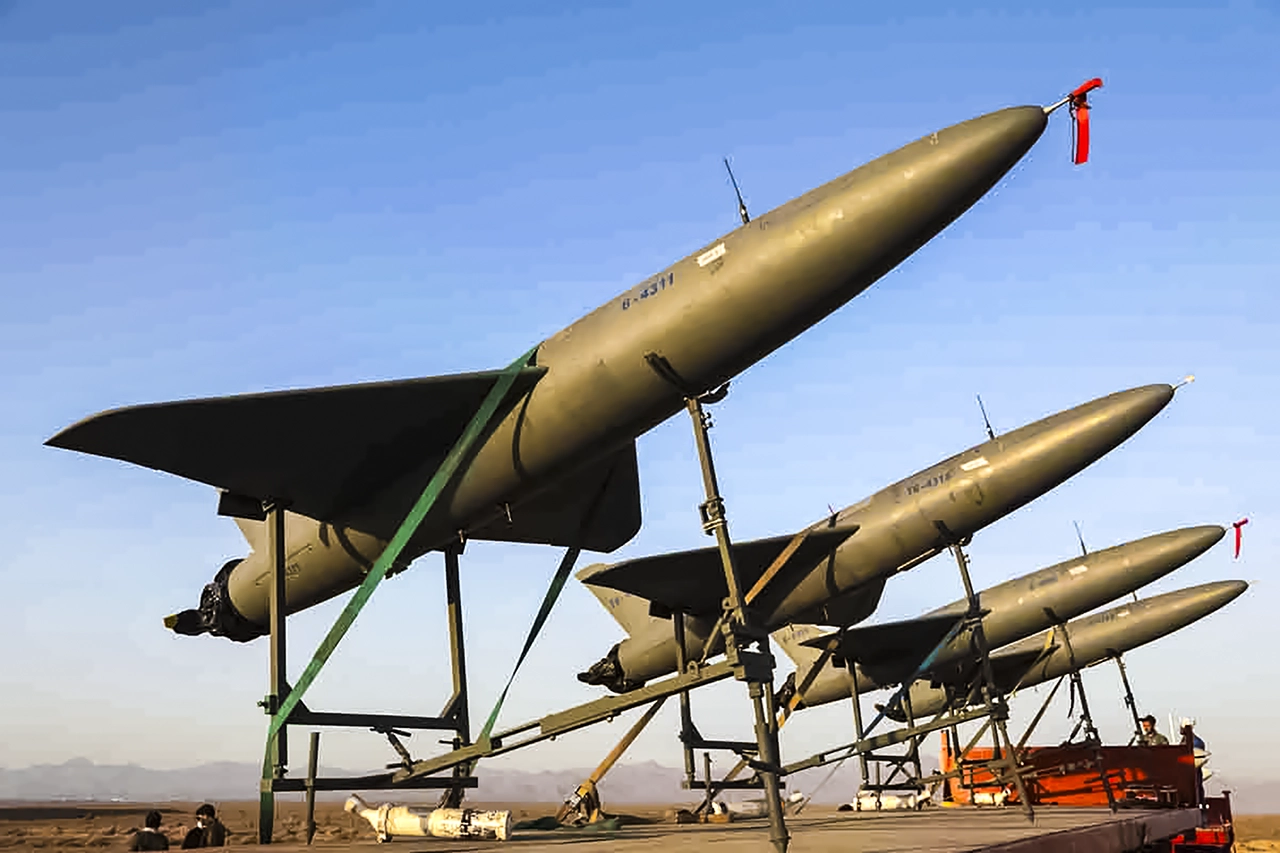
The real question is whether Tehran can make the economic price of continuing the war too high, too global, and too prolonged for the West to ignore. We are witnessing a masterclass in asymmetric warfare where Iran’s real weapon is the world economy. By deploying low-cost, high-impact tools, Tehran is proving that missiles, drones, mining threats and selective maritime disruption can be enough to make insurers, traders, shipowners and governments reprice risk across the entire globalized system.
Iran’s strategy is a meticulously calibrated economic coercion. Tehran is exploiting a rare combination of geography, target concentration and asymmetric tools to hold the global economic recovery hostage. And so far, the financial markets are proving them right.
The New Paradigm: Iran Asymmetric Economic Warfare
To understand the genius—and the terror—of Iran’s current playbook, one must discard the 20th-century notion that wars are won by destroying the enemy’s military formations. In a hyper-connected, hyper-optimized global economy, a nation does not need to sink a fleet to achieve strategic parity; it merely needs to make the cost of transit commercially unviable.
This is the essence of Iran asymmetric economic warfare. By utilizing swarms of cheap loitering munitions, unmanned surface vessels, and the persistent, invisible threat of naval mines, Tehran has fundamentally altered the cost-benefit analysis of navigating the world’s most critical maritime chokepoints. A $20,000 drone does not need to sink a $150 million Very Large Crude Carrier (VLCC) carrying $100 million worth of oil. It only needs to scorch its deck to trigger a systemic panic in the underwriting rooms of London and New York.
Tehran understands the fragility of the maritime arteries that sustain modern capitalism. This is why the recent entrance of Yemen’s Houthis into the broader conflict is so destabilizing. We are no longer looking at an isolated crisis in the Strait of Hormuz; we are facing a dual-chokepoint strangulation encompassing both Hormuz and the Bab el-Mandeb Strait. By targeting commercial vessels selectively—and reportedly floating a mafia-style “$2 million-per-ship fee” for guaranteed safe passage—Iran and its proxies are effectively levying a private tax on global trade.
This is not a traditional blockade. It is a protection racket scaled to the size of the global economy. Through Iran missiles drones mining global supply chains, Tehran is executing a strategy designed not to win a military victory, but to inflict a political and economic pain threshold that forces a diplomatic capitulation.
Repricing the Gulf: Iran Maritime Disruption Insurance
The immediate frontline of this new war is not the flight deck of a US aircraft carrier; it is the actuarial spreadsheets of global maritime insurers. The Strait of Hormuz disruption 2026 is triggering a seismic shift in how risk is priced, bought, and sold.
Prior to February 28, an estimated 20% of global oil consumption—roughly 21 million barrels per day—transited the Strait of Hormuz. Today, that volume has contracted sharply as shipping companies route around the cape or pause voyages entirely. For those that dare the passage, the financial toll is staggering. War-risk insurance premiums have skyrocketed, surging from a fraction of a percent of a vessel’s value to unsustainable single-digit percentages practically overnight.
As the Financial Times notes in its analysis of maritime risk, when Gulf shipping risk insurers repricing occurs at this velocity, the costs are immediately passed down the supply chain. Iran maritime disruption insurance is no longer a niche concern for shipping magnates; it is a direct inflationary tax applied to every commodity, manufactured good, and barrel of oil moving between East and West.
Data Visualization Context: [Chart: Oil Price Trajectory vs. Shipping Volumes Through Hormuz & Bab el-Mandeb Since Feb 28] – A diverging line graph illustrating the inverse relationship between plunging daily vessel transits in the Gulf and the sharp, unbroken ascent of Brent Crude prices crossing the $100 threshold.
This dynamic forces a profound recalibration of what constitutes “risk.” A shipowner looking at a 500% increase in war-risk premiums must decide if the cargo is worth the financial gamble. When the answer is no, vessels sit idle, supply chains freeze, and the global economy chokes. This is precisely what the architects in Tehran intended.
The Macro Shock: Inflation, Oil Trajectories, and Fed Paralysis
The ripple effects of this strategy are already crashing onto the shores of Western central banks. The Iran war oil prices impact has been immediate and violent. With US crude settling above the $100 mark and Brent eyeing a record monthly rise, the specter of the 1970s oil shocks has returned to haunt policymakers. The International Energy Agency (IEA) has already sounded the alarm, warning that we are teetering on the edge of the “largest supply disruption in history” if the conflict broadens to regional oil infrastructure.
This energy shock arrives at the worst possible macroeconomic moment. Just as the US Federal Reserve and the European Central Bank believed they had tamed the post-pandemic inflation dragon, the Gulf crisis has reignited price pressures. Federal Reserve Chair Jerome Powell recently signaled a “wait and see” approach regarding the war’s economic fallout, a subtle admission that the central bank is trapped. Raising interest rates to combat oil-driven inflation risks plunging the global economy into a deep recession; holding them steady risks allowing inflation to become entrenched.
The Economist recently highlighted the resurgence of stagflation fears, pointing out that a prolonged conflict exceeding three months will inevitably lead to deep macroeconomic scarring. By weaponizing the oil markets, Iran has effectively bypassed the Pentagon and launched a direct strike on the Federal Reserve. This is the zenith of Iran calibrated economic coercion 2026: forcing Western leaders into impossible domestic political dilemmas.
Target Concentration: The Outsized Impact on Asian Economies
While the geopolitical theater is fixated on the Washington-Tehran dynamic, the true economic victims of this asymmetric warfare reside in the East. The Strait of Hormuz closure economic impact on Asia cannot be overstated. The economies of China, Japan, India, and South Korea are fundamentally reliant on Middle Eastern crude and liquefied natural gas (LNG).
Tehran’s strategy capitalizes heavily on this “target concentration.” The overwhelming majority of the oil flowing through Hormuz is destined for Asian markets. Consequently, the disruption serves as a blunt instrument of leverage against the very nations that historically maintain neutral or even amicable relations with Iran.
The real-time fallout across the Indo-Pacific is stark. In Singapore, households are already facing immediate electricity tariff hikes for the April-June quarter, with the Energy Market Authority warning of sharper increases to come. Major logistics hubs are feeling the squeeze, with companies like Yeo Hiap Seng cutting headcount and moving operations to navigate the margin crush. Supply chains are fraying; luxury cars destined for Asian markets are stranded in Sri Lankan ports as Japanese shipping companies face paralyzing congestion.
To mitigate the crisis, Asian powers are scrambling for alternatives. Japan is hastily coordinating with Indonesia to secure thermal coal as a fallback for power generation, risking its climate commitments in the name of raw survival. Meanwhile, in a fascinating display of diplomatic fracture, Malaysia recently announced that its tankers would be exempt from Iran’s reported Hormuz toll—a testament to Kuala Lumpur’s pragmatic, long-standing relationship with Tehran.
This selective enforcement is the most insidious aspect of Iran economic coercion. By granting safe passage to some nations while punishing others, Tehran is attempting to divide the international community, making a unified coalition impossible. It forces Beijing and New Delhi to pressure Washington for a rapid de-escalation, effectively turning America’s vital trading partners into unwitting lobbyists for Iranian interests.
The Limits of Conventional Deterrence
The stark reality of 2026 is that traditional naval hegemony is insufficient to guarantee the free flow of global commerce. The US Navy, for all its unparalleled lethality, is designed to destroy state-level navies and project power ashore. It is not inherently designed to play an endless, unwinnable game of Whac-A-Mole against swarms of explosive drones launched from the backs of pickup trucks, or to sweep vast swathes of the Gulf for untethered acoustic mines.
As detailed by Foreign Affairs in their recent evaluation of Gulf security, attempting to solve an asymmetric economic problem with a symmetric military solution is a fool’s errand. Every Tomahawk missile fired at a fifty-dollar drone launch pad is a victory for Tehran’s arithmetic. The sheer cost imbalance heavily favors the instigator.
Furthermore, the secondary knock-on effects are paralyzing corporate strategy. Multinational giants are scaling back; consumer goods titans like Unilever have reportedly imposed global hiring freezes explicitly citing the Middle East war’s macroeconomic drag. Credit ratings agencies are recalibrating the sovereign debt of Gulf nations, with Fitch signaling downgrade risks for regional players due to post-war security environment uncertainties.
When global capital begins to view the entire Middle East as functionally un-investable and physically un-navigable, Iran’s objective is met. They do not need to plant a flag in Washington. They simply need to make the Dow Jones bleed until Washington offers terms.
Conclusion: Navigating a Repriced World
When Presidents Trump and Xi sit down in Beijing this May, the agenda will not merely be about tariffs, semiconductor export controls, or artificial intelligence dominance. The specter at the banquet will be the vulnerability of their shared globalized economy to asymmetric disruption. The Iran war of 2026 has irrevocably proved that the ultimate weapon of mass disruption is not nuclear; it is logistical.
We have entered an era where Iran’s real weapon is the world economy. The success of calibrated economic coercion means that future conflicts will increasingly mirror this blueprint. Rogue states and non-state actors alike have learned that by applying pressure to the delicate, over-optimized nodes of global supply chains, they can punch vastly above their geopolitical weight class.
The West cannot bomb its way out of an insurance crisis. Countering this new reality requires more than just deploying additional carrier strike groups. It demands a total reimagining of global supply-chain resilience, a rapid acceleration toward localized and diversified energy grids, and the painful acceptance that the era of friction-free, perfectly timed global shipping is over.
Until the world economy can insulate itself from the asymmetric leverage of chokepoint disruption, the true balance of power will not be measured in ballistic missiles or stealth fighters. It will be measured in the terrifyingly fragile mathematics of freight rates, risk premiums, and the price of a barrel of crude. The world has been repriced. We are all just paying the toll.
Discover more from The Economy
Subscribe to get the latest posts sent to your email.

There are moments in capital markets that read less like transactions and more like declarations. Singapore’s DBS Group — the largest bank in Southeast Asia — has just made one. Its first-ever equity capital markets mandate in India comes attached to one of the most anticipated healthcare listings in the subcontinent’s history: the roughly $1 billion IPO of Manipal Health Enterprises, filed with SEBI on March 24, 2026. For anyone tracking the DBS India IPO push, or the broader maturation of India ECM 2026, this moment carries weight far beyond the deal ticket.
This is not merely a bank chasing fees. It is a strategic repositioning — DBS signalling, loudly and deliberately, that India’s equity capital markets are no longer a peripheral opportunity to be observed from Singapore. They are, the bank has decided, a home market.
Why the Manipal Health IPO Is the Perfect Debut Vehicle
Manipal Health Enterprises filed draft papers for an initial public offering that could become India’s largest listing by a hospital operator Bloomberg — a distinction that carries both commercial and symbolic gravity. The IPO combines a fresh issue of ₹8,000 crore alongside an offer for sale of up to 43.23 million equity shares by promoters, with proceeds earmarked in part for repayment of outstanding borrowings and for acquiring a minority stake in Sahyadri Hospitals, a subsidiary of Manipal Health Enterprises. Sujatawde
The valuation ambition is striking. At a potential market capitalisation of up to $13 billion, Manipal Health would immediately rank among the most valuable hospital chains on any Asian exchange. As of September 30, 2025, the company operated 38 hospitals — 48 on a pro forma basis — with over 10,700 licensed beds across 14 states and union territories, making it the largest pan-India multispecialty hospital network by bed capacity and the second largest by number of hospitals, according to a CRISIL report cited in the DRHP. Business Standard
The clinical profile is equally compelling. Manipal’s specialisation in what its DRHP calls “CONGO-R” disciplines — cardiac sciences, oncology, neurosciences, gastrosciences, orthopaedics, and renal sciences — positions it squarely at the intersection of India’s two most powerful demographic forces: an ageing middle class and a rapidly expanding demand for tertiary and quaternary care that public hospitals cannot absorb.
This is the deal DBS chose to announce itself. The choice was not accidental.
The Temasek Thread: Strategic Symbiosis at the Heart of the DBS-Manipal Story
To understand DBS’s first ECM mandate India, one must first understand Temasek Holdings — the Singaporean sovereign wealth fund that threads through this transaction like a golden wire.
Temasek Holdings is the largest shareholder in both Manipal Health Enterprises and DBS Group. Bloomberg That single fact transforms what might otherwise appear to be a routine banking mandate into something considerably more strategic. DBS is not merely a hired underwriter here; it is, in a meaningful sense, a co-owner of the asset it is helping to float. The alignment of interests between banker, shareholder, and state investor creates a tri-party dynamic that is unusual even by the standards of Asia’s interconnected capital markets.
Former DBS Chief Executive Piyush Gupta, who retired from the bank last year, now serves as chairman of Temasek International’s Indian operations Medical Buyer — adding a further layer of institutional continuity and personal relationship capital to the Singapore-India corridor. In the world of investment banking, relationships move mandates. The relational architecture here is unusually dense.
DBS has been consistently positive about India’s growth trajectory and demonstrated willingness to commit capital to the market — most notably by taking over Lakshmi Vilas Bank in 2020, the first time Indian authorities turned to a foreign lender to rescue a struggling local rival. Yahoo! That intervention was, in retrospect, the first visible chapter of a longer India strategy. The Manipal mandate is the latest — and most public — expression of it.
DBS Joins India IPO Space: The Mechanics of a New Platform
The book-running lead managers for the Manipal Health IPO are Kotak Mahindra Capital, Axis Capital, Goldman Sachs (India) Securities, Jefferies India, J.P. Morgan India, UBS Securities India, and DBS Bank India Limited. Sujatawde That lineup reads like a who’s-who of global and domestic ECM capability — and DBS earns its place at the table not through legacy relationships in Indian equity markets, but through a combination of institutional credibility, Temasek synergy, and the deliberate construction of a new platform.
A DBS spokesperson confirmed that the bank has expanded into equity capital markets under its merchant banking licence in India and now has a fully operational investment banking platform in the country. Yahoo! The bank holds, in its own words, “strong conviction in the long-term prospects, continuous evolution and global integration of the Indian capital markets,” describing the expansion as a “natural progression” that reinforces its long-term commitment to a market where it already operates corporate, consumer, and wealth banking. Medical Buyer
Crucially, this is not a remote operation. Sanjog Kusumwal, an ECM banker from DBS’s Singapore operations, will relocate to India to lead investment banking and build out the onshore ECM franchise, while also expanding fixed-income origination. Medical Buyer The commitment of human capital — moving people, not just mandates — is the clearest signal that DBS is building for the long term, not harvesting a cyclical boom.
The DBS merchant banking licence India ECM framework also opens doors beyond equity. The bank has signalled plans to offer a comprehensive suite of investment banking services across debt and equity, using its Asian distribution network to connect Indian issuers with institutional capital across the region. In practice, this means Indian corporates eyeing pre-IPO placements, convertible bonds, or cross-border capital will have a new, Singapore-anchored alternative to the established bulge-bracket order.
India IPO Market 2026: From Boom to Structural Ascent
The timing of DBS’s entry is no coincidence. India’s primary markets have undergone a fundamental transformation in recent years — moving from a domestically driven, fee-compressed environment to one that commands global attention and, increasingly, global-grade economics.
India’s fundraising activity surged to more than $22 billion last year, ranking the country as the fourth-largest IPO market globally. Investment banks in India earned a record $417 million in underwriting fees for initial public offerings last year, according to LSEG data. The average fee paid to bankers for IPOs rose to 1.86% of deal value, up from 1.67% a year earlier. Medical Buyer
Those numbers matter enormously. For years, one of the persistent complaints from international banks about India was the fee compression endemic to its ECM — deals priced at margins that made the economics of building a full platform difficult to justify. That dynamic is shifting. As deal sizes grow and issuers become more willing to pay for global distribution, the record India IPO underwriting fees 2025 environment is transforming the competitive calculus for everyone from boutique advisory firms to Singapore’s largest bank.
Proceeds from IPOs in 2026 may reach a record for a third consecutive year, supported by a strong pipeline and robust investor demand, according to investment bankers from Goldman Sachs and JPMorgan. Medical Buyer The pipeline includes marquee names — Jio, NSE, and a growing cohort of healthcare and consumer tech issuers — that would make any ECM franchise salivate. The primary market in early 2026 has been relatively quiet, but the absence of large issues in the ₹5,000–8,000 crore range makes Manipal’s filing all the more significant as a potential catalyst for renewed momentum. News9live
India Healthcare IPO: Why the Sector Is Attracting Global Capital
The India healthcare IPO thesis deserves its own analysis, because it is not simply a story about one company. It is a story about structural demand that no amount of macroeconomic volatility can easily reverse.
India’s demographic dividend — over a billion people, a rapidly expanding middle class, falling infant mortality, and rising chronic disease burden — creates a healthcare demand curve that is, in the language of investors, extremely durable. The country’s private hospital sector has consolidated aggressively over the past decade, with players like Manipal, Apollo, Fortis, and Aster racing to acquire regional chains, build specialty towers, and deploy AI-assisted diagnostic tools that compress cost per procedure while expanding throughput.
Manipal’s acquisition of Sahyadri Hospitals — funded in part by the IPO proceeds — is a textbook example of this consolidation logic. Sahyadri is a well-regarded Maharashtra-based chain with strong positioning in Pune, one of India’s fastest-growing cities. Adding it to Manipal’s network expands the company’s western India footprint and diversifies revenue geography ahead of the public listing — a classic pre-IPO value-creation move that sophisticated institutional investors will price favourably.
The broader sector tailwind is reflected in valuations. Indian hospital stocks have traded at premium multiples relative to regional peers, reflecting both the scarcity of quality listed healthcare assets and the market’s confidence in long-term earnings visibility. A successful Manipal listing — at a potential $13 billion valuation — would reset the sector benchmark and likely accelerate further healthcare listings in 2026 and beyond.
The Singapore-India Financial Corridor: A Bigger Story
Zoom out further, and the Singapore bank enters Indian equity capital markets narrative becomes part of an even larger geopolitical-financial story: the deepening of the Singapore-India corridor as a structural feature of Asian capital flows.
Singapore has long served as India’s most important foreign direct investment gateway. The bilateral investment treaty, the two countries’ shared Commonwealth legal heritage, and Singapore’s role as Asia’s premier financial hub have made it the default routing point for capital entering and exiting India. What has been missing — until now — is a major Singapore-headquartered bank playing a meaningful role in India’s domestic equity markets, not just in offshore financing or private credit.
DBS’s entry changes that. It is, in effect, a Singapore bank entering Indian equity capital markets not as a curiosity or a strategic experiment, but as a fully capitalised, licensed, and staffed market participant. The implications for other Singapore-based institutions — including OCBC and UOB, both of which have India presences but lack DBS’s scale — will be worth monitoring. If DBS demonstrates that the economics of an India ECM franchise can justify the investment, others will follow.
For India, meanwhile, the arrival of another globally networked bank adds depth to its underwriting ecosystem and expands the pool of international investors accessible through bookbuilding. This is not trivial: as Indian IPOs grow in size and ambition, the ability to distribute paper to sovereign wealth funds, European long-only managers, and US institutional investors becomes increasingly important. DBS’s Asian distribution network — with particularly strong reach into Southeast Asian sovereign and institutional capital — fills a gap that neither the domestic brokerages nor the pure-play US bulge brackets fully address.
Risks on the Horizon: What Could Derail the Narrative
No analysis of India’s IPO boom would be complete without a frank accounting of the risks. Three stand out.
Global sentiment volatility. India’s retail investor base has provided extraordinary domestic liquidity support for IPOs over the past three years. But institutional demand — particularly from foreign portfolio investors — remains sensitive to global risk appetite, US Federal Reserve policy, and dollar strength. A sharp global risk-off move could see FPI allocations to India compressed precisely as a large pipeline of issuances hits the market.
Valuation gaps. The $13 billion valuation aspiration for Manipal Health implies multiples that will require a clean, well-executed roadshow and strong early institutional demand to sustain. Healthcare valuations globally have come under pressure as interest rates remained elevated longer than markets anticipated. Indian hospital stocks’ premium to global peers is structurally justified — but not infinitely elastic.
Execution risk for DBS itself. Building an India ECM franchise from scratch while co-managing a $1 billion deal is an ambitious sequencing. The bank’s success in the Manipal transaction will be closely watched by both issuers and regulators as a proof-of-concept for its broader India investment banking ambitions. A stumble here would be costly — reputationally if not financially.
What to Watch
For investors and market watchers, the next 90 days are pivotal:
- SEBI approval timeline: The regulator’s review of the Manipal DRHP will set the clock for the eventual IPO launch. A swift green light from SEBI would signal regulatory confidence in the filing’s quality and the deal structure.
- Pre-IPO placement: A pre-IPO placement of up to ₹1,600 crore is under consideration; if it materialises, the size of the fresh issue will be reduced commensurately News9live — a useful gauge of institutional appetite before the public offering opens.
- DBS’s next India mandate: The bank has signalled a comprehensive platform build. Watch for whether Manipal is a one-off or the first of a rapid sequence of ECM mandates — particularly in sectors where DBS’s corporate banking relationships are deepest, such as infrastructure, renewables, and financial services.
- Competitive response: How do Goldman, JPMorgan, and the domestic heavyweights respond to a newly emboldened DBS competing for mandates? Fee dynamics and the composition of future bookrunner syndicates will be telling.
- India ECM 2026 pipeline: The Manipal filing may well unlock the dam on a series of large healthcare and consumer deals that have been waiting for a market window. Monitor the SEBI DRHP filing tracker through April and May for accelerating activity.
India’s equity capital markets have spent two decades maturing. The arrival of DBS — disciplined, well-capitalised, and strategically motivated — is not just a new entrant in a lucrative league table. It is confirmation that the world’s most sophisticated financial institutions now view India’s primary markets not as emerging-market frontier territory, but as a core global venue. That recognition, more than any single deal, is the real story of March 2026.
Discover more from The Economy
Subscribe to get the latest posts sent to your email.
-

 Markets & Finance3 months ago
Top 15 Stocks for Investment in 2026 in PSX: Your Complete Guide to Pakistan’s Best Investment Opportunities
-

 Analysis2 months ago
Brazil’s Rare Earth Race: US, EU, and China Compete for Critical Minerals as Tensions Rise
-

 Banks3 months ago
Best Investments in Pakistan 2026: Top 10 Low-Price Shares and Long-Term Picks for the PSX
-

 Investment3 months ago
Top 10 Mutual Fund Managers in Pakistan for Investment in 2026: A Comprehensive Guide for Optimal Returns
-

 Analysis2 months ago
Top 10 Stocks for Investment in PSX for Quick Returns in 2026
-

 Asia3 months ago
China’s 50% Domestic Equipment Rule: The Semiconductor Mandate Reshaping Global Tech
-

 Global Economy3 months ago
Pakistan’s Export Goldmine: 10 Game-Changing Markets Where Pakistani Businesses Are Winning Big in 2025
-

 Global Economy3 months ago
15 Most Lucrative Sectors for Investment in Pakistan: A 2025 Data-Driven Analysis