
Analysis
Uncertainty Looms Over Indonesia-US Trade Pact After Legal Blow in Washington

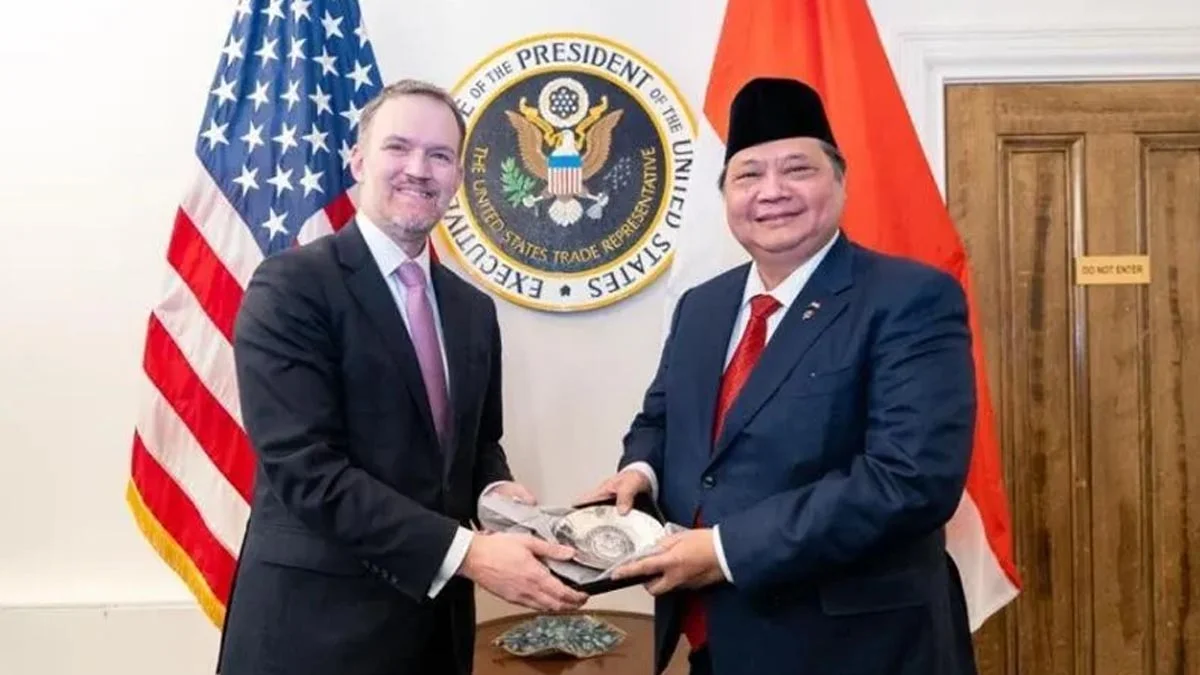
Analysts Say the Supreme Court Ruling Gives Indonesia Room to Reassess Its Commitments — and Perhaps Demand a Better Deal
The ink on the Indonesia-US reciprocal trade agreement had barely dried when the legal architecture underpinning it collapsed. President Prabowo Subianto signed the landmark deal in Washington on February 19, pledging to open Indonesia’s markets to 99% of American exports in exchange for a reduced US tariff rate of 19% — a hard-won concession from the original 32% levied under President Donald Trump’s “Liberation Day” tariff campaign. Then, just 24 hours later, the United States Supreme Court issued a 6-3 ruling that obliterated the legal basis for those very tariffs.
It is one of the more striking pieces of timing in recent economic diplomacy: a country concedes major market access to escape a tariff that the highest court in the land simultaneously declares unlawful. For Jakarta, the question now is not simply what the deal is worth — but whether it needs to be renegotiated entirely.
Background: The Tariff Threat That Brought Indonesia to the Table
To understand the Indonesia US trade pact uncertainty 2026, one must revisit April 2025, when Trump invoked the International Emergency Economic Powers Act (IEEPA) to impose sweeping “reciprocal tariffs” on imports from nearly every country on earth. Indonesia was hit with a 32% rate — a punishing levy on a nation whose exports, from garments and footwear to palm oil and electronics components, flow heavily into the American market.
Bloomberg reported that the two sides had been negotiating for months, with the final deal announced the same day Prabowo attended Trump’s inaugural Board of Peace summit. Under the White House’s own fact sheet, Indonesia agreed to eliminate tariff barriers on more than 99% of American products — spanning agriculture, health goods, seafood, automotive parts, and chemicals — while addressing longstanding non-tariff barriers such as local content requirements and import certification burdens. Indonesian companies also pledged to purchase around $33 billion in US goods, including soybeans, corn, cotton, and up to five million tons of wheat by 2030.
In exchange, Washington agreed to lower its tariff on most Indonesian exports from 32% to 19% — the same rate set for Cambodia and Malaysia. The agreement was signed by US Trade Representative Jamieson Greer and Indonesia’s Coordinating Minister for Economic Affairs Airlangga Hartarto, who hailed it as the beginning of a “new golden age” in bilateral ties.
The question that lingered, even at the signing ceremony, was straightforward: if Trump’s IEEPA tariffs were struck down by the courts, what exactly was Indonesia buying its way out of?
The Supreme Court’s Ruling: A Constitutional Reset Button
On February 20, 2026, Chief Justice John Roberts delivered the answer with characteristic precision. In Learning Resources, Inc. v. Trump, the Supreme Court held — in a 6-3 decision joined by both conservative and liberal justices — that IEEPA does not authorize the President to impose tariffs. As NBC News reported, the ruling invalidated the “reciprocal tariff” edifice that Trump had spent a year constructing.
The majority’s logic was clean. Tariffs are, constitutionally, a branch of the taxing power — a power explicitly assigned to Congress. IEEPA’s grant of authority to “regulate importation” does not mention tariffs or duties; no previous president had ever read it to confer such power; and invoking the court’s “major questions doctrine,” Roberts found no clear congressional authorization for the extraordinary unilateral authority Trump had claimed.
Justices Thomas, Alito, and Kavanaugh dissented, with Kavanaugh notably warning that the refund process for the estimated $160–175 billion in collected IEEPA duties would likely be a “mess” — a statement Trump later quoted approvingly at a White House press conference, calling the justices who voted against him a “disgrace.”
The ruling is best understood as a reset button on trade leverage — not as a return to the pre-2025 status quo. As WilmerHale’s trade analysis noted, the administration moved within hours to impose a new 10% global surcharge under Section 122 of the 1974 Trade Act — later raised to the statutory maximum of 15% — valid for 150 days. Critically, Section 232 national security tariffs on steel and aluminium remain untouched. For Indonesia, this means the threat of US tariffs has not vanished; it has simply changed shape.
Jakarta’s Immediate Response: Affirm the Deal, Reassess the Terms
The immediate Indonesian government position was to hold firm. Airlangga Hartarto confirmed that the agreement remained valid and that Jakarta intended to implement its commitments. Presidential communications echoed the same line. For a government that had invested enormous political capital — including a controversial $1 billion membership fee to join Trump’s Board of Peace — public retreat was not an option on day one.
But beneath the diplomatic composure, the mathematics have shifted considerably. Indonesia negotiated a 19% tariff rate to escape a 32% rate that is now legally void. Under the new Section 122 blanket tariff, Indonesian goods face a 15% rate — four percentage points lower than what Jakarta’s negotiators secured after months of intensive talks. Put differently: Indonesia locked in concessions calibrated to a threat the courts just nullified, while the US has since imposed a lower universal rate through a completely different legal mechanism.
As Jakarta Globe reported, Indonesian economist Faisal acknowledged the ruling as an opportunity to rethink trade strategy, while cautioning that uncertainty remains elevated given the administration’s stated intention to pursue further tariff action through Section 301 investigations and Section 232 reviews. “That means tariffs can still be maintained, even if at lower levels,” Faisal said, stressing that US trade policy remains fluid.
Analyst Perspectives: The Case for Renegotiation — and Its Limits
The impact of the US Supreme Court tariff ruling on Indonesia’s economy is more nuanced than a binary win-or-lose framing suggests. Analysts identify several dimensions worth parsing.
The leverage shift is real, but temporary. As Asia Times reported, the Supreme Court ruling offers ASEAN nations “breathing room — a period in which the asymmetry of bargaining power is somewhat reduced.” Section 122 is capped at 15% for just 150 days. After that, the administration has signaled it will push Section 232 and Section 301 investigations to restore targeted tariff pressure. The window for Indonesia to extract better terms is narrow.
Critical minerals complicate the calculus. A significant element of the February 19 deal was Indonesia’s commitment to lift restrictions on critical mineral exports — particularly nickel, of which Indonesia holds the world’s largest reserves. Washington was explicit that it wants to counter China’s stranglehold on minerals essential for defense manufacturing and the clean energy supply chain. This geostrategic dimension gives Indonesia real leverage that extends beyond any tariff negotiation. But Prabowo’s government has already reaffirmed that it will not reopen raw mineral exports — domestic processing requirements remain a red line — which limits how far any renegotiation can go on that front.
The deal’s non-tariff components may survive intact. Analysts note that Indonesia’s concessions on non-tariff barriers — accepting FDA standards, removing local content requirements for US companies, and addressing IP protections — reflect structural reforms Jakarta had an independent interest in pursuing. These are not hostage to IEEPA’s legal status. A renegotiation, if pursued, would likely focus on the tariff rate and purchase commitments rather than the regulatory framework.
Comparison with India is instructive. India, whose trade negotiators were on their way to Washington when the ruling landed, immediately paused talks and is now weighing options in a lower-tariff environment. The Global Trade Research Institute in New Delhi has explicitly called for a reassessment. Indonesia, having already signed, faces a higher bar — but the precedent from other countries reassessing their positions will not be lost on Jakarta.
Economic Implications: What Indonesian Exporters Actually Face
Indonesia runs a trade surplus with the United States — $17.9 billion in 2024 — and its export profile makes tariff levels acutely sensitive. Garments and footwear, Indonesia’s largest manufactured export categories to the US, face intense price competition and operate on thin margins. A 19% tariff versus a 15% blanket surcharge may seem like a minor variance, but for cost-sensitive supply chains already rerouting away from China, four percentage points can determine whether an order goes to Jakarta or Hanoi.
Textile and apparel producers in particular will be watching the deal’s implementation closely. The agreement included a commitment by the US to establish a mechanism allowing certain textile and apparel goods to receive a 0% tariff rate for a specified volume linked to imports of US cotton and fiber inputs — a provision with significant value for an industry that employs millions of Indonesians. Whether that mechanism survives the current legal uncertainty, or requires fresh congressional action to implement, remains an open question.
More broadly, as the Council on Foreign Relations noted, countries that negotiated IEEPA-based deals face a period of genuine ambiguity: “for US trade partners — including several that negotiated agreements intended to reduce IEEPA tariffs on their exports — the outlook is unclear.”
Broader Global Implications: The End of IEEPA-Era Trade Coercion
The Supreme Court’s decision does more than untangle any single bilateral deal. It closes the chapter on IEEPA as a trade coercion tool — the blunt instrument that drove dozens of countries to Washington’s negotiating table under duress. As Chatham House analysts assessed, the ruling signals “a shift toward slower, more procedurally constrained trade policy.” The administration retains meaningful authorities, but they come with checks: time limits, investigatory requirements, congressional thresholds, and judicial review.
For Southeast Asia as a whole, this recalibration matters. Vietnam is still negotiating. Thailand has not yet concluded an agreement. Both can now do so against a baseline of 15% rather than the threat of 32%–46% IEEPA rates. The competitive dynamic among ASEAN nations in attracting US supply chains — many of which fled China after the first Trump-era tariffs — becomes more level-footed in this new environment, but also more uncertain.
What is certain is that the era of unilateral tariff shock as the primary tool of American trade diplomacy has been judicially constrained. The White House has vowed to reconstruct its leverage through other means. For Indonesia, the coming weeks will determine whether the “new golden age” announced with fanfare on February 19 holds — or whether Jakarta uses the court’s reset button to negotiate terms more befitting a country that no longer faces the tariff it sacrificed so much to escape.
Conclusion: Jakarta’s Strategic Crossroads
The Indonesia-US trade pact, struck with ceremony and high-level symbolism, now enters a period of genuine uncertainty. The deal’s legal validity is not in question — both governments have affirmed its standing — but its economic rationale has been partially undermined by a court ruling that arrived the day after the signatures were affixed.
Indonesia is not without options. Its nickel reserves, its position as Southeast Asia’s largest economy, its role in Trump’s Gaza peace initiative, and the genuine interest of US businesses in accessing its 280-million-strong consumer market all give Jakarta meaningful cards to play. The Supreme Court decision on Trump tariffs and its implications for Indonesia are not necessarily catastrophic — but they do demand a more rigorous accounting of what was given, what was received, and whether the balance still makes sense.
Reassessing Indonesia’s commitments after the Trump tariff blow is not the same as walking away. It may be as simple as opening a quiet conversation with Washington about the zero-tariff textile provisions, or pressing for clarity on critical mineral cooperation terms. Done diplomatically, it is entirely consistent with the spirit of a deal that both sides called a beginning rather than an end.
The real test will come in the weeks ahead, as Trump’s alternative tariff authorities take shape, as refund litigation winds through the courts, and as other ASEAN nations recalibrate their own positions. Jakarta would do well to watch — and act — before that window narrows.
Discover more from The Economy
Subscribe to get the latest posts sent to your email.



Navigating Mortgage and Loan Refinancing in a High-Yield Environment
Global public debt crossing critical thresholds has kept central bank policies volatile, resulting in fluctuating US Treasury yields throughout 2026. For homeowners and commercial property holders burdened by previous high-interest borrowing cycles, finding optimal refinance windows has become a high-stakes financial puzzle. Stalled disinflation and stubborn employment numbers mean rate cuts are incremental, requiring borrowers to act with precision.
Timing your mortgage or commercial loan refinance in this environment requires a deep understanding of yield curve movements and lender risk appetites.
Decoding 2026 Refinance Dynamics
The 10-Year Treasury Yield Benchmark
Mortgage rates continue to track closely with the 10-year US Treasury yield. When macroeconomic anxiety spikes debt issuance, yields rise, tightening consumer borrowing capacity. Savvy borrowers monitor weekly Treasury auctions to lock in rates during brief dip windows.
Hybrid ARMs and Alternative Structures
With fixed rates remaining elevated, 7/1 and 10/1 adjustable-rate mortgages (ARMs) have surged in popularity. These products offer lower initial monthly payments, giving borrowers breathing room until central bank easing cycles fully materialize.
| Loan Product | Current Rate Range | Best For | Key Risk Factor |
| 30-Year Fixed Mortgage | 6.2% – 6.8% | Long-term predictability | Higher initial monthly outlay |
| 7/1 Hybrid ARM | 5.5% – 5.9% | Short-term ownership / flipping | Rate reset risk after year 7 |
| Commercial Refinance | 7.0% – 8.2% | Corporate asset restructuring | Strict DSCR lender covenants |
Actionable Steps for Successful Refinancing
To maximize your chances of securing favorable refinance terms in a volatile market, follow a disciplined preparation strategy.
Boost Your Credit Score Immediately: Lenders in 2026 are applying stringent credit tiering; a 20-point increase can drop your APR by a crucial quarter-point.
Shop Regional Credit Unions: Smaller financial institutions often offer portfolio loans with more flexible underwriting than major national banks.
Calculate the Break-Even Point: Ensure your total closing costs are recouped through monthly savings within 24 months of closing.
“Market Strategist View: Refinancing in 2026 is an exercise in opportunistic timing. Borrowers must maintain immaculate financial profiles ready to strike the moment Treasury yields dip.”
Mastering the complexities of today’s debt environment ensures you can successfully lower your debt service costs and protect your long-term financial stability.
Discover more from The Economy
Subscribe to get the latest posts sent to your email.

The days of pulling generic auto insurance quotes based purely on your zip code and age are officially over. In 2026, insurance comparison engines are powered entirely by generative AI and real-time telematics. These platforms digest thousands of live data points—ranging from your driving smoothness via connected vehicle sensors to real-time traffic congestion patterns—to generate hyper-personalized premiums instantly.
For consumers, this evolution represents both a massive opportunity for savings and a hidden trap for penalty pricing. Understanding how AI algorithms evaluate risk is essential for anyone looking to lower their monthly auto insurance premiums.
How AI Comparison Engines Evaluate Your Risk Profile
Behavioral Telematics and Connected Cars
Modern cars stream performance data directly to insurance aggregators. Generative AI models analyze braking sharpness, acceleration curves, cornering G-forces, and phone distraction metrics. Drivers who maintain smooth, defensive habits are rewarded with dynamic rate cuts of up to 40% compared to traditional rating tiers.
Predictive Traffic and Weather Modeling
AI tools now cross-reference your daily commute route with predictive weather and accident probability models. If your standard parking location or driving corridor has a statistically higher incidence of uninsured motorist claims, your quotes will reflect that hyper-local risk assessment.
| Comparison Factor | Traditional Rating Model | 2026 Generative AI Model | Impact on Premium |
| Mileage & Usage | Annual estimated odometer reading | GPS tracking & live trip duration | High (up to 35% savings) |
| Driving Behavior | MVR driving record & accidents | Real-time braking, speed, & G-force | Critical (determines tier) |
| Vehicle Tech | Make, model, and safety rating | ADAS calibration & repair cost data | Moderate |
Strategies to Lower Your AI-Driven Insurance Quote
To outsmart the algorithm and secure the lowest possible premium in 2026, drivers must proactively manage their digital footprint on insurance platforms.
Opt-In for Telematics Trial Periods: Many insurers offer immediate 15% discounts just for installing their driving app; let it track safe habits for 30 days to lock in permanent savings.
Scrub Unverified Public Records: Ensure your motor vehicle report is free of clerical errors that AI risk models misinterpret as reckless behavior.
Compare AI Aggregators: Use platforms that integrate multi-carrier API feeds rather than single-brand comparison sites to find the best risk-adjusted rate.
“Industry Note: AI-driven pricing rewards transparency and precision. Drivers who actively manage their telematics data consistently out-save those relying on legacy quote calculators.”
Embracing AI comparison tools allows savvy policyholders to customize coverage limits precisely to their driving habits, eliminating wasted premium spend while ensuring robust protection.
Discover more from The Economy
Subscribe to get the latest posts sent to your email.

Despite decades of bans and strict handling mandates, asbestos remains a silent killer across legacy manufacturing plants, shipyards, and modern green-energy infrastructure retrofits. In 2026, regulatory changes by the EPA and tightened occupational health standards have triggered a fresh wave of mesothelioma litigation. Manufacturers attempting to fast-track industrial transitions are encountering catastrophic oversight, exposing workers to legacy toxins and opening corporate parent companies to unprecedented liability.
Navigating a mesothelioma claim in 2026 requires understanding how modern industrial supply chains intersect with historical exposure. Trusts established decades ago are being audited under stricter transparency laws, altering payout ratios and accelerating fast-track settlements for terminally ill plaintiffs.
Modern Industrial Exposure Hotspots
Green Retrofitting and Renewable Energy Infrastructure
A primary source of 2026 asbestos exposure occurs during the decommissioning and retrofitting of older industrial facilities for renewable energy production. Workers insulating electrical grids, modernizing HVAC systems, or upgrading manufacturing floors frequently disturb encapsulated asbestos materials that were improperly documented or ignored during facility audits.
Automotive and Aerospace Supply Chains
With advanced manufacturing booming, workers handling specialized friction materials, gaskets, and heat shields face ongoing risks. Supply chain tracing has become more sophisticated, allowing legal teams to pinpoint exact corporate entities responsible for raw material distribution across multinational borders.
| Industry Sector | Primary Exposure Risk | Legal Venue / Trust | Avg. Claim Value Range |
| Green Energy Retrofit | Disturbed insulation, pipe lagging | Federal Tort / Manufacturer Trust | $1.2M – $3.5M |
| Shipbuilding & Marine | Boiler insulation, structural seals | Asbestos Bankruptcy Trusts | $800K – $2.4M |
| Automotive Manufacturing | Brake components, high-heat gaskets | Third-Party Product Liability | $600K – $1.8M |
Securing Maximum Compensation: Steps for Plaintiffs
Time is of the essence in mesothelioma cases. Plaintiffs and their families must act decisively to secure financial recovery before statutes of limitations expire.
Retain Specialized Counsel: Work exclusively with national mesothelioma law firms possessing deep historical databases of asbestos-containing products.
Audit Employment History: Document every job site, supervisor name, and equipment brand encountered throughout your career.
Expedite Medical Filings: Secure a formal pathological diagnosis quickly to qualify for expedited trust fund distribution and priority trial settings.
“Expert Insight: Modern asbestos litigation is no longer just about historical tracking; it is about holding modern corporations accountable for failing to conduct rigorous environmental safety audits before initiating industrial retrofits.”
By combining meticulous work history reconstruction with aggressive multi-trust filings, victims can secure substantial financial relief to cover specialized immunotherapy and family support.
Discover more from The Economy
Subscribe to get the latest posts sent to your email.

World Bank & IMF Reports 2026: Why the “3% Growth” Consensus Is Actually a Debate

Elon Musk’s Boring Company Hits $23B Valuation After UAE-Led $3 Billion Series D

Middle East War Economics 2026: Oil Prices & Energy Markets

PSX Forecast 2026: KSE-100, IMF Reviews & Geopolitics

Asian Markets Outlook 2026: China, Japan & Singapore Stocks

Global Economy 2026: IMF Growth, Inflation & Private Credit

Current Account Deficit (CAD) : Causes and Impact

Balance of Payments (BOP)

The Falkland Islands Dispute: Sovereign Wealth, Offshore Drilling, and Market Impacts

Gross Domestic Product (GDP): Nominal vs. Real

What is Inflation and the Consumer Price Index (CPI)?

US-China Trade Competition 2026: Supply Chain Relocation Guide

Oil Prices Break $100 in 2026: Middle East Conflict & Energy Markets

South-South Trade Expansion: Digital Integration and Emerging Market Growth

State Farm’s $5B Dividend 2026: Who Qualifies & Payout Dates

US-China Relations in Q3 2026: Trade Tariffs and Supply Chain Risks

Gold’s Wild 2026: From a Record $5,600 Peak to a 24% Crash and Back Toward $4,500

Oil Surges as Strait of Hormuz Traffic Collapses Again

The Rocket That Won’t Quit: Inside SpaceX’s Falcon 9 Launch Machine

Bank of England Set to Hold Rates Through Year-End, Reuters Poll Shows

SpaceX Starship Flight 14: First Orbital Attempt & Starlink V3 Launch Explained

The 2026 Crypto Regulatory Shift: What It Means for Institutional Investors

AI Chip Stocks 2026: The Best Semiconductor Investments Beyond Marvell

Retail Earnings Week: What Home Depot, Target & Walmart Reveal

AI-Powered Training: The Next Multi-Billion Dollar Ecosystem in Fitness

Russia’s Black Sea Oil Exports Fall for a Fifth Straight Week

Tween Back-to-School Trends 2026: What’s Driving the $85B Season

Top 30 Stocks for Investment in PSX for Massive ROI in 2026
-

 Markets & Finance8 months ago
Top 15 Stocks for Investment in 2026 in PSX: Your Complete Guide to Pakistan’s Best Investment Opportunities
-

 Analysis7 months ago
Johor’s Investment Boom: The Hidden Costs Behind Malaysia’s Most Ambitious Economic Surge
-

 Analysis7 months ago
Top 10 Stocks for Investment in PSX for Quick Returns in 2026
-

 Analysis7 months ago
Brazil’s Rare Earth Race: US, EU, and China Compete for Critical Minerals as Tensions Rise
-

 Banks8 months ago
Best Investments in Pakistan 2026: Top 10 Low-Price Shares and Long-Term Picks for the PSX
-

 Investment8 months ago
Top 10 Mutual Fund Managers in Pakistan for Investment in 2026: A Comprehensive Guide for Optimal Returns
-

 Global Economy9 months ago
15 Most Lucrative Sectors for Investment in Pakistan: A 2025 Data-Driven Analysis
-

 Global Economy9 months ago
Pakistan’s Export Goldmine: 10 Game-Changing Markets Where Pakistani Businesses Are Winning Big in 2025