
Analysis
Trump’s Economic Promises Confront Political Reality as Tariffs Drive Up Costs

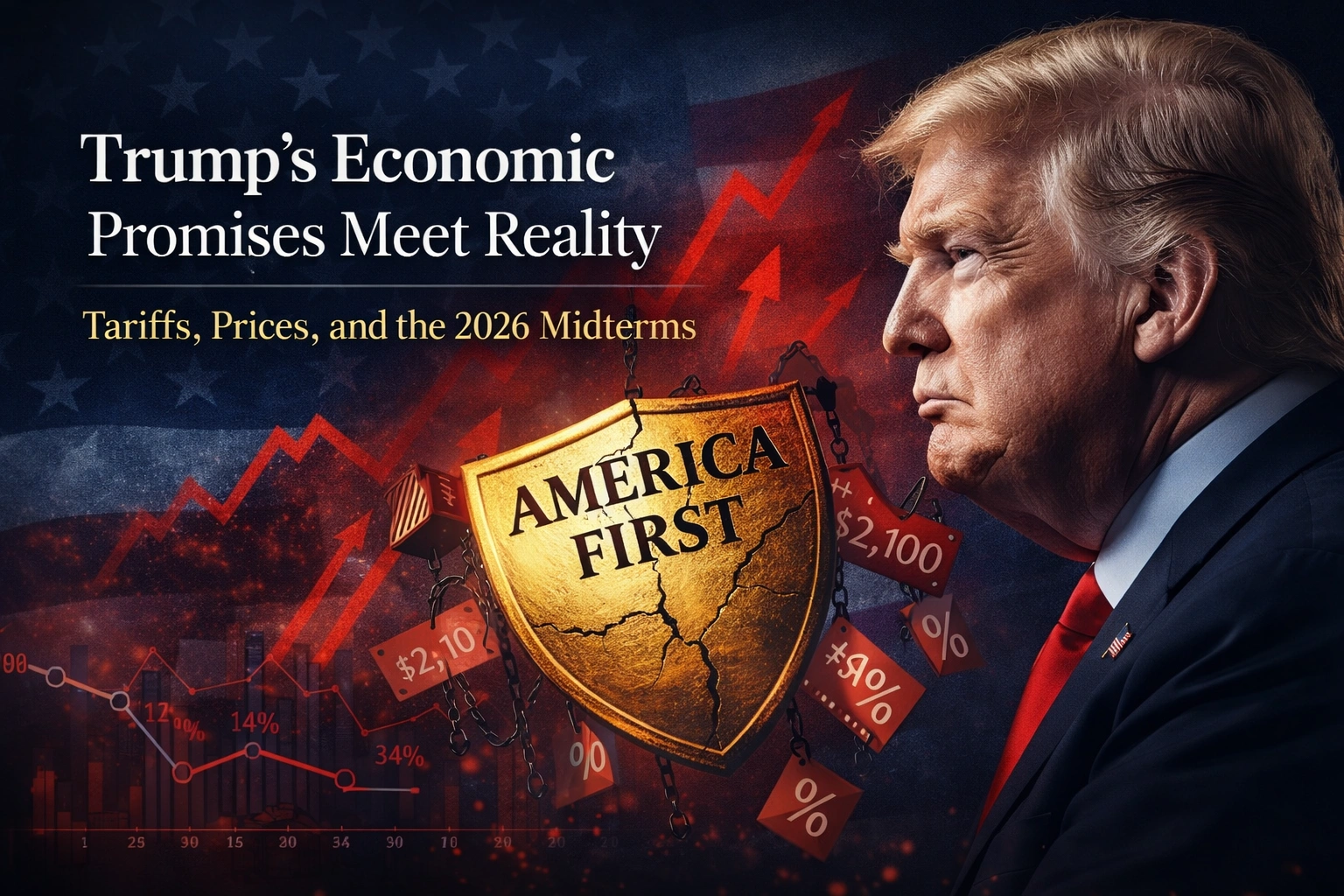
One year into his second term, President Donald Trump faces a paradox that threatens to upend Republican midterm prospects: his signature economic policy has become his most significant political liability.
Despite an unemployment rate hovering near historic lows, Trump’s overall approval rating has plummeted to 39% according to recent polling, with 69% of Americans reporting that his tariffs have increased prices they pay—a figure encompassing majorities across party lines. The disconnect between traditional economic indicators and public sentiment reveals how thoroughly tariff-driven inflation has poisoned what Republicans once considered their most formidable electoral asset.
The crisis crystallizes in stark numbers. The Tax Foundation estimates Trump’s tariffs amount to an average tax increase of $1,300 per U.S. household in 2026, representing the largest tax hike as a percentage of GDP since 1993. These aren’t abstract economic projections—they’re showing up in grocery bills, furniture prices, and construction costs that American families confront daily.
From Economic Strength to Political Vulnerability
The erosion of Trump’s standing on what was once his strongest issue represents a dramatic reversal. His net approval on the economy now stands at -16.5, a metric that would have seemed unthinkable during his first term when economic approval consistently exceeded overall job performance ratings. Only 39% of Americans approve of his presidency overall, with approval among independents at just 29%—numbers that send tremors through Republican strategists eyeing November’s midterm elections.
The polling tells a story of broad-based disillusionment. A Fox News survey found 54% of voters believe America is worse off than a year ago, with most attributing the decline to economic policies. More troubling for the White House, 75% of Americans, including 56% of Republicans, believe tariffs are raising prices. When a president’s signature policy loses majority support within his own party, the political ground has fundamentally shifted.
Manufacturing employment—the sector Trump specifically promised would come “roaring back” due to tariffs—has declined every month since April 2025, according to recent Labor Department data. The disconnect between promise and performance has given Democrats an opening on an issue where Republicans held commanding advantages for years.
The Mechanics of Middle-Class Pain
Understanding why tariffs have proven so politically toxic requires examining their concrete impact on household finances. The Tax Foundation’s comprehensive analysis reveals that Trump’s trade policies have pushed the average effective tariff rate to 10.1%—the highest since 1946. Combined Section 232 and International Emergency Economic Powers Act (IEEPA) tariffs now apply across categories Americans cannot avoid: building materials, consumer electronics, clothing, and food.
The retail reality confirms the macroeconomic projections. Recent research from Harvard economists cited by the Tax Foundation shows retail prices have risen 4.9 percentage points relative to pre-tariff trends, with imported goods up 6% and domestic goods—benefiting from reduced foreign competition—up 4.3%. Categories like apparel, coffee, household textiles, and furniture have experienced even sharper increases.
For the housing market, already strained by supply shortages, tariffs on lumber, steel, aluminum, copper, and cabinet materials add an estimated $17,500 to new home construction costs. The Center for American Progress projects these increased costs will prevent construction of 450,000 homes over the next five years—exacerbating affordability challenges in a sector where voters’ economic anxieties are most acute.
The Tax Policy Center estimates an average burden of approximately $2,100 per household in 2026, with the federal tax rate rising 1.9 percentage points for bottom-quintile households compared to 1.4 points for the top quintile. Tariffs function as regressive taxation, hitting those least able to absorb increased costs.

A Progressive Pivot from a Populist President
Facing eroding support, Trump has reached for an unexpected policy lever: a temporary 10% cap on credit card interest rates. The proposal, announced in early January with implementation targeted for the anniversary of his second inauguration, represents a striking ideological departure.
Credit card rates currently average over 20%, according to Federal Reserve statistics. Americans owe $1.23 trillion in credit card balances—the highest on record—making the burden politically salient. Trump’s proposal echoes legislation previously introduced by Senators Bernie Sanders and Josh Hawley, an unusual bipartisan pairing that underscores the issue’s populist appeal.
The banking industry’s response was immediate and hostile. Trade groups representing major card issuers argued a 10% cap “would reduce credit availability and be devastating for millions of American families and small business owners,” warning of restricted access particularly for higher-risk borrowers. Credit card stocks tumbled on the announcement, with analysts at Goldman Sachs noting the lack of clear enforcement mechanisms absent congressional action.
Trump’s lack of implementation specifics—no executive order has materialized, no legislation endorsed—suggests the proposal functions more as political theater than serious policy. Senator Elizabeth Warren dismissed it as “begging credit card companies to play nice,” while even some Republican allies expressed skepticism about the feasibility.
Yet the very fact that Trump felt compelled to float such a traditionally progressive policy instrument—one that directly interferes with private sector pricing—reveals the administration’s political desperation. When a president whose brand was built on deregulation and business-friendly policies starts proposing price controls, the electoral pressure is severe.
The Midterm Mathematics
Republican strategists confront uncomfortable arithmetic heading into the 2026 midterms. Historically, the president’s party loses an average of 28 House seats in midterm elections. With Republicans holding only narrow majorities in both chambers, even modest losses could flip control.
Polling shows only 30% of Latinos and adults under 35 now approve of Trump’s performance, down from 41% near the start of his term. These demographic groups represent growth constituencies that Republicans cannot afford to hemorrhage if they hope to maintain long-term competitiveness.
The economy’s role as the decisive issue for swing voters amplifies the danger. More voters think the economy will get worse this year rather than better by a 13-point margin (45% worse vs. 32% better), a dramatic shift from a year ago when optimism prevailed. Republican pollster Daron Shaw, who helps conduct Fox News surveys, acknowledged the challenge: “The president faces two difficult obstacles—the virtually unanimous and intractable opposition of Democrats and the stubbornness of high prices.”
Shaw and other GOP operatives are banking on the economic benefits of the recently passed “One Big Beautiful Bill Act”—which made most Tax Cuts and Jobs Act provisions permanent—materializing before November. Yet tax policy changes typically require months to flow through to household finances, while tariff-driven price increases arrive immediately at checkout counters.
Democrats, meanwhile, have found their footing on economic messaging after years of defensive positioning. Recent NBC polling shows the smallest Republican advantage on handling the economy since 2017, while a narrow majority of adults trust Democrats over Republicans on addressing rising prices. This represents a stunning reversal from traditional partisan alignments on economic issues.
The Supreme Court Wild Card
Adding uncertainty to an already volatile political landscape, the Supreme Court is expected to rule soon on challenges to Trump’s legal authority to impose most of his tariffs under the International Emergency Economic Powers Act. Half of Americans expect the Court to uphold Trump’s tariffs, though far fewer want it to.
A ruling striking down IEEPA-based tariffs would eliminate the bulk of Trump’s trade taxes, potentially providing economic relief but forcing a humiliating policy retreat. Conversely, upholding presidential authority might embolden further tariff escalation, risking additional price pressures. Either outcome carries significant political ramifications as campaigns intensify.
Conclusion: Promises vs. Performance
Trump’s predicament illustrates a fundamental challenge of populist economic nationalism: tariffs that sound appealing in theory—protecting American jobs, punishing foreign competitors, generating revenue for domestic priorities—become politically toxic when voters experience their actual effects. The gap between campaign rhetoric about “bringing factories roaring back” and the reality of declining manufacturing employment and elevated consumer prices has created precisely the kind of credibility deficit that transforms midterm elections into referendums on governing competence.
The credit card interest cap proposal, regardless of its substantive merits or implementation prospects, functions as tacit acknowledgment that the administration’s core economic strategy has not delivered for middle-class Americans. When a president must reach for emergency policy interventions a year into his term, the original plan has failed.
As November approaches, Republicans face a choice between defending tariff policies that remain unpopular even within their base, or pivoting away from what Trump has positioned as a signature achievement. Neither option offers easy politics. For Democrats, the opening is clear: run on affordability, emphasize the household cost of Trump’s trade war, and position themselves as the party that will provide relief rather than rhetoric.
The ultimate irony: Trump’s economic promises confronting political reality may determine whether Republicans maintain the congressional majorities needed to implement any economic agenda at all.
Discover more from The Economy
Subscribe to get the latest posts sent to your email.



Singapore’s non-oil domestic exports rose 20.7% year-on-year in June 2026, driven by a 115.4% surge in integrated circuit shipments tied to AI demand, even as a separate and less-covered trade story unfolds next door: Malaysia-Indonesia bilateral trade is projected to grow 10% to US$29.3 billion in 2026, powered by expanding halal-sector cooperation.
The story most coverage is missing
Regional business press has extensively covered Singapore’s semiconductor export boom. What’s had far less coverage is the parallel, non-tech growth engine developing in the halal trade corridor between Malaysia and Indonesia — a structural, policy-driven trade relationship that is scaling steadily even as the AI trade headlines dominate attention.
Singapore: the AI supply chain’s export barometer
Singapore’s June non-oil domestic exports climbed 20.7% year-on-year, with integrated circuit exports jumping 115.4% and disk media products and personal computers rising 170.9% and 95.8% respectively — a direct read on how deeply the AI infrastructure buildout is flowing through the city-state’s electronics trade (VietnamPlus/VNA). Non-electronic exports told a different story, falling 2.9% in June after a 17.7% rise in May, mainly on weaker shipments of non-monetary gold, petrochemicals and food preparations — evidence the export strength is narrowly concentrated in the AI-linked segment rather than broad-based.
Singapore’s economic gravitational pull on its neighbours is intensifying too: a joint study by the Singapore Business Federation, Restaurant Association of Singapore and Singapore Retailers Association found Singaporean consumers are projected to spend an additional S$1.05 billion (roughly US$810 million) annually in Johor Bahru, just across the Malaysian border — a cross-border consumption pattern that is becoming a meaningful line item in regional retail planning (VietnamPlus/VNA).
The halal corridor: a steadier, policy-built growth story
While AI exports grab headlines, Malaysia’s bilateral trade with Indonesia is forecast to grow 10% to US$29.3 billion in 2026, according to Malaysia’s Chargé d’Affaires in Jakarta, Farzamie Sarkawi — up from US$26.61 billion in 2025, itself a 5.3% increase on the year before (BusinessToday Malaysia).
The driver is structural rather than cyclical: a halal Memorandum of Cooperation signed by the two countries in 2023 established mutual recognition of halal certification, easing product movement and market access across sectors. Sarkawi described the arrangement as delivering “positive progress” through knowledge exchange, training and improved market access for businesses in both countries (BusinessToday Malaysia). The ambition extends beyond the bilateral relationship: intra-D-8 trade — spanning the eight-nation Developing 8 bloc of Muslim-majority economies — currently runs between US$150 billion and US$160 billion annually, with a stated target of US$500 billion by 2030.
The macro backdrop: a region growing, unevenly
The Asian Development Bank’s July 2026 outlook shows Indonesia’s growth forecast holding steady at 5.2% for both 2026 and 2027, while Malaysia’s outlook is unchanged at 4.6% for 2026 and 4.5% for 2027 (ADB). Regional growth leadership, per McKinsey’s Q1 2026 review, sits with Indonesia, Singapore and Vietnam, while the Philippines lagged as domestic challenges weighed on activity (McKinsey).
Indonesia’s investment story has particular momentum: foreign direct investment grew for a second consecutive quarter, rising 8.1% to 249.9 trillion rupiah (roughly US$14.5 billion) in the first quarter of 2026, with Singapore remaining Indonesia’s largest single foreign investor at US$4.6 billion, ahead of China, Japan, Hong Kong and the United States (McKinsey). Realised investment for full-year 2025 reached a record Rp1,931.2 trillion (about US$120.7 billion), exceeding the government’s own target, driven by downstream industrial projects outside Java (BERNAMA).
Indonesia’s central bank has flagged currency management as an active watch item, signalling readiness to step up both onshore and offshore FX intervention to curb rupiah weakness and keep inflation within its 2026-2027 target band (McKinsey). Foreign investment in Indonesian government bonds has nonetheless rebounded, with net inflows of 17.7 trillion rupiah following outflows in the first quarter, alongside cumulative foreign holdings of 174 trillion rupiah in Bank Indonesia Rupiah Securities (BERNAMA).
Institutional context: Singapore’s coming ASEAN chairmanship
Adding a governance dimension to the economic picture, Singapore is set to take over the ASEAN chairmanship from the Philippines in 2027, with Prime Minister Lawrence Wong pledging a smooth transition — a leadership handover that will shape how the bloc coordinates trade and investment policy, including the halal-corridor and semiconductor-trade dynamics described above, through the second half of the decade (BERNAMA).
The bottom line
Southeast Asia’s 2026 growth story is not a single narrative but two distinct, converging tracks: a high-velocity, AI-linked export boom concentrated in Singapore’s electronics trade, and a steadier, policy-engineered halal-sector trade corridor between Malaysia and Indonesia that is quietly scaling toward a $500 billion bloc-wide target by 2030. Investors and policymakers tracking only the semiconductor headlines risk missing the second, structurally more durable growth engine sitting right alongside it.
Discover more from The Economy
Subscribe to get the latest posts sent to your email.

China’s National Bureau of Statistics reported second-quarter GDP growth of 4.3%, missing analyst forecasts of 4.5% and falling below Beijing’s own 4.5–5% annual target — the lowest target range the country has set since it began publishing such figures in 1991 (CNN; NPR). It is the weakest quarterly print since the pandemic-disrupted final quarter of 2022, and it lands at the mid-point of a year already reshaped by the Iran war’s oil shock.
Two Economies, One Government
Economists including Natixis’s Alicia Garcia-Herrero describe an increasingly pronounced “two-track economy”: a thriving export engine — car exports topped one million units for the first time in June and semiconductor and computer-part shipments surged — running alongside a domestic consumption base still weighed down by a property slump and cautious households (CNN). Retail sales rose just 1% year-over-year in June, while fixed asset and property investment continued to contract, with property investment down roughly 18% (Reuters via WTAQ).
The Uncovered Angle: A Widening Surplus Meets a Fragile World
China’s trade surplus widened to $125.6 billion in June even as crude oil imports fell to near decade lows — evidence that Beijing is managing the Hormuz-driven energy shock better than most importers, while simultaneously exporting the industrial overcapacity problem to trading partners. That widening surplus is already straining relations with the European Union, and it has direct implications for manufacturing competitors across Southeast Asia and South Asia, including Pakistan’s textile and Malaysia’s electronics sectors, which now compete more directly with subsidised Chinese EV, battery and solar exports flooding third markets (CNN; IndexBox).
What Happens Next: The Politburo’s July Decision
Convera’s APAC strategist Shier Lee Lim frames the miss as strengthening the case for additional stimulus at the July Politburo meeting, potentially through faster special local government bond issuance or new policy financing tools rather than a formal budget revision (WTAQ). The IMF has already nudged its 2026 China growth forecast up slightly to 4.6%, while projecting a further slowdown to 4.1% in 2027 as the AI and robotics-led export boom fails to translate into broad-based job creation (IndexBox).
Why Cross-Border Investors Should Care
For Pakistan, whose CPEC-linked trade and infrastructure financing remains closely tied to Chinese capital flows, and for Malaysia and Singapore, whose electronics and semiconductor sectors sit downstream of Chinese supply chains, the composition of any Beijing stimulus matters more than the headline growth number. A consumption-focused package would support Southeast Asian consumer and tourism exports; an infrastructure-heavy package would deepen the commodity and industrial-goods relationship that already dominates trade with Indonesia and Malaysia.
The Bottom Line
China’s growth model is becoming structurally unbalanced in a way that a single quarter of stimulus cannot fix. Cornell economist Eswar Prasad’s assessment — that heavy state and private investment in frontier technology is running well ahead of job-creating sectors — points to a slow-burn risk for global trade partners that goes well beyond this quarter’s data print (IndexBox).
Discover more from The Economy
Subscribe to get the latest posts sent to your email.
Economic Reforms
$23 Trillion Just Descended on Singapore — What the Capital Reallocation Really Signals
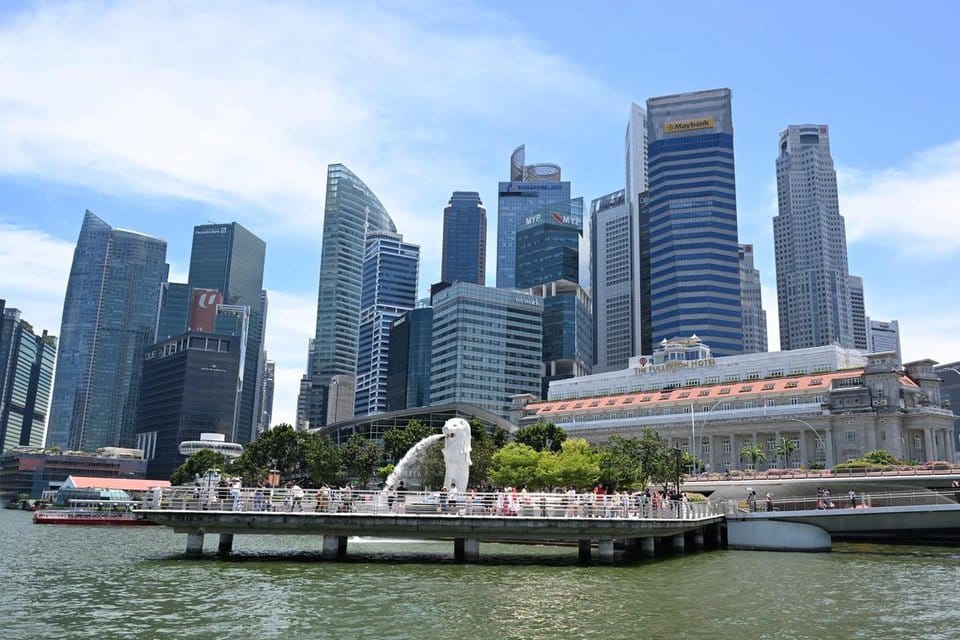
Singapore’s economy delivered a genuine surprise in the first quarter of 2026: GDP growth came in at 6.0% year-on-year, exceeding flash estimates of 4.6% and marking the strongest quarterly growth since Q3 2024, driven by a pickup in construction and a faster-expanding services sector. That number alone would be a solid regional story. What has been far less examined is the scale of institutional capital that used Singapore as a staging ground in the same period — and what that capital is actually positioning for.
The Summit That Underlines the Real Story
The 13th Invest ASEAN conference, held in Singapore, brought together 200 institutional investors managing a combined US$23 trillion in assets, alongside 54 companies with a combined market capitalisation of US$553 billion, drawn from Malaysia, Singapore, Thailand, Indonesia, the Philippines, Vietnam, and India. Maybank IBG’s CEO Michael Oh-Lau noted attendance exceeded expectations, and — more importantly — identified the three themes actually dominating investor conversations: energy transition, supply chain reconfiguration, and AI-led digital transformation.
That framing matters because it tells you this isn’t generic “emerging markets are cheap” capital. It’s a specific bet that Southeast Asia is where global manufacturers and technology supply chains are relocating capacity away from concentrated single-country exposure — a direct legacy of the trade-war and pandemic-era lessons about over-reliance on any one manufacturing hub.
The Numbers That Back the Thesis
Singapore’s own listed companies are showing exactly the kind of structural growth that theme would predict. Semiconductor test-equipment maker AEM Holdings reported Q1 FY2026 revenue of S$116.9 million, up 35.8% year-on-year, with net profit surging 329%, driven by ramp-up from its largest fabless AI/HPC customer. Management has since raised full-year revenue guidance by roughly 20%, to a range of S$550–600 million — implying growth of 38–50% for the year. This is a direct beneficiary of AI infrastructure capital expenditure being routed through Southeast Asian supply chains rather than concentrated purely in Taiwan or the US.
Meanwhile, Singapore’s flagship carrier group posted full-year FY2026 revenue of S$20.5 billion, up 5.0%, beating analyst estimates even as net income fell due to higher costs — a signal that travel and logistics volumes tied to the region’s growing role as a trade and investment hub remain resilient even when margins compress.
Regional Ripple Effects: Malaysia’s Upgrade
The capital reallocation thesis isn’t confined to Singapore itself. Maybank Investment Banking Group used the same summit to sharply upgrade Malaysia’s 2026 GDP growth forecast to 4.9%, from a prior estimate of 4.4%, citing resilient manufacturing output tied to the same energy-transition and AI-driven technology upcycle themes. Maybank maintained its year-end target for Malaysia’s FBM KLCI at 1,750 points, underpinned by 7.5% earnings growth and rising foreign participation.
Why This Should Matter to South Asian Policymakers
For an economy like Pakistan actively courting foreign investment — and, as covered separately, struggling with a slide in regional FDI rankings — the ASEAN capital-reallocation story is a useful diagnostic. The $23 trillion showing up in Singapore isn’t simply chasing yield; it’s chasing specific, demonstrable supply-chain and energy-transition infrastructure readiness. Singapore and Malaysia are winning this capital not because they offer the cheapest labour, but because they’ve built the regulatory, logistics, and semiconductor-adjacent industrial base that lets AI-driven capital expenditure land productively. That is a competitiveness template, not a low-cost template — and it’s the same gap analysts have flagged as holding back large-project FDI elsewhere in the region.
Singapore’s Own Policy Response
Singapore isn’t resting on the inflow. The government has published its Economic Strategy Review Final Report with more detailed proposals for sustaining competitiveness, while Singapore’s Ministry of Trade and Industry has maintained its 2026 GDP growth forecast range at 2.0–4.0% — a deliberately conservative band relative to the blowout Q1 print, suggesting policymakers expect the current pace to be difficult to sustain through the full year without further reform-driven productivity gains.
What to Watch
The clearest signal of whether this capital reallocation is durable rather than a summit-driven headline will be whether AI/HPC-linked order books at companies like AEM continue expanding through the second half of 2026, and whether the Johor-Singapore Special Economic Zone — covered in detail separately — can convert cross-border investor interest into committed, multi-year manufacturing capital rather than portfolio flows that can reverse quickly.
Discover more from The Economy
Subscribe to get the latest posts sent to your email.

Rachel Reeves’s £25 Billion Problem: What the Autumn Budget Gap Means for Britain

Inside the Fed’s Most Divided Vote in Years: Why Warsh Held the Line on Rates

Pakistan Passed Its Third IMF Review

The Fed Is Fractured — And a New Chair Just Made It Louder, Not Quieter

The UK Economy in 2026 Is Neither Recession Nor Recovery :Stagflaton

Indonesia’s $121 Billion Nickel Bet Is Facing a Battery Chemistry

Why Ultra-Wealthy Families Are Splitting Between Singapore and Dubai inmarkets 2026

China Chose Political Control Over Fixing Its Deflation Trap in 2026

Oil Markets Are Oversupplied and Geopolitically Explosive at the Same Time

Russia’s Budget Deficit Blew Past Its Full-Year Target in Three Months

Malaysia’s Rare Earth Bet: Six Powers Are Negotiating for Kuantan at Once

Gulf Sovereign Capital Bypasses Pakistan Despite Record 2026 Spending Spree

Pakistan’s $10bn US Facility Request: Inside the New Gulf Capital Triangle

China Criticizes US Bill Targeting Russian Oil Buyers — Why It Matters

AI Bubble Warning 2026: Why BIS, IMF and Bank of England Fear a Market Crash

Russia Bans Diesel Exports 2026: Global Fuel Market Impact Explained

Gold Price Forecast 2026: Fed’s July 29 Decision and Record Central Bank Buying Explained

Strait of Hormuz Blockade 2026: Oil Prices Surge 9% as US-Iran Conflict Reignites

Strait of Hormuz 2026: Why Markets Still Don’t Trust It’s Open

Down But Not Out: Inside the Slow Sinking of Russia’s War Economy

Gulf Capital Retreat From Pakistan 2026: UAE Loan Freeze & What It Means

China Politburo July 2026: Stimulus Signals Explained

Pakistan IMF Deal 2026: Third Review Cleared, Budget 2026-27 and Inflation Outlook

Pakistan Economy 2026: GDP Grows 3.7% as IMF Completes EFF Review Amid Middle East Risk

Apple vs OpenAI Lawsuit: The Economic Story Behind the Headline

Global Stock Market Selloff 2026: Stagflation Fears Return as Iran Conflict Reignites

The Yuan Now Settles 67% of Russian Oil Payments — Quiet De-Dollarization in Action

Indonesia Russian Oil Imports 2026: Why Jakarta Is Diversifying Crude Supply
-

 Markets & Finance7 months ago
Top 15 Stocks for Investment in 2026 in PSX: Your Complete Guide to Pakistan’s Best Investment Opportunities
-

 Analysis5 months ago
Johor’s Investment Boom: The Hidden Costs Behind Malaysia’s Most Ambitious Economic Surge
-

 Analysis6 months ago
Top 10 Stocks for Investment in PSX for Quick Returns in 2026
-

 Analysis6 months ago
Brazil’s Rare Earth Race: US, EU, and China Compete for Critical Minerals as Tensions Rise
-

 Banks7 months ago
Best Investments in Pakistan 2026: Top 10 Low-Price Shares and Long-Term Picks for the PSX
-

 Investment7 months ago
Top 10 Mutual Fund Managers in Pakistan for Investment in 2026: A Comprehensive Guide for Optimal Returns
-

 Global Economy7 months ago
15 Most Lucrative Sectors for Investment in Pakistan: A 2025 Data-Driven Analysis
-

 Global Economy7 months ago
Pakistan’s Export Goldmine: 10 Game-Changing Markets Where Pakistani Businesses Are Winning Big in 2025