
Geopolitics
Trump Pays $1 Billion to Kill Offshore Wind. The Tab Is Just Getting Started.

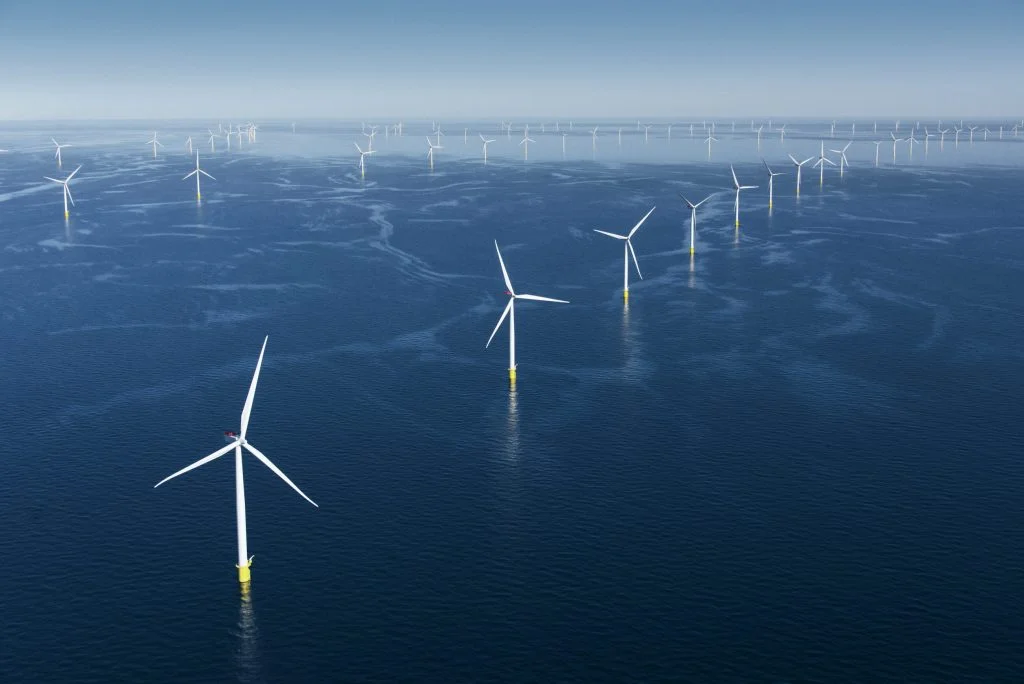
A landmark deal with TotalEnergies marks the first time Washington has paid a company not to build clean energy — and it may be the cheapest item on a much longer bill
The Deal That Rewrote the Rulebook
Houston’s CERAWeek energy conference — the annual rite where oil executives and government officials exchange pleasantries over fossil fuel futures — rarely produces genuine surprises. On the morning of Monday, March 23, 2026, it produced one.
Interior Secretary Doug Burgum and TotalEnergies CEO Patrick Pouyanné shook hands before cameras at the S&P Global gathering and announced what the Department of the Interior called a “landmark agreement”: the United States government would pay the French energy giant approximately $928 million to surrender two Atlantic offshore wind leases and pledge never to build another wind farm in American federal waters. In exchange, TotalEnergies would redirect that capital — dollar for dollar — into oil drilling in the Gulf of Mexico, shale gas production, and the construction of four trains of the Rio Grande LNG export terminal in Texas.
Together, the two cancelled projects — one off the New York-New Jersey coast, one off North Carolina — had the potential to generate more than four gigawatts of electricity, enough to power nearly one million American homes. NPR They will now generate nothing.
It was, depending on one’s vantage point, either a masterstroke of energy realpolitik or the most expensive act of ideological vandalism in the history of American energy policy. Probably, it is both.
How Washington Learned to Pay for Retreat
To understand how the Trump administration arrived at the strategy of paying developers to abandon renewable energy projects, you have to understand a problem it could not solve in court.
The tactical shift comes after federal courts repeatedly thwarted the administration’s efforts to stop offshore wind through executive action. U.S. District Judge Patti Saris vacated Trump’s executive order blocking wind energy projects in December, declaring it unlawful after 17 state attorneys general challenged it. WCAX Late last year, the administration invoked classified national security threats to stop work on five wind farms that were under construction. Developers and states sued, and federal judges allowed all five projects to resume construction. NPR Litigation was not working. So the administration found a new instrument: the checkbook.
Following TotalEnergies’ $928 million in investments in US energy projects, the United States will terminate Lease No. OCS-A 0538, located in the New York Bight area — originally purchased by Attentive Energy LLC in May 2022 for $795 million — and Lease No. OCS-A 0535, located in the Carolina Long Bay area, purchased in June 2022 for $133,333,333. U.S. Department of the Interior The mechanics are structured to appear budget-neutral at the surface: TotalEnergies invests the money first, then receives reimbursement, dollar for dollar, up to the original lease cost. But the fiscal logic collapses under scrutiny — the Justice Department will use nearly $1 billion in taxpayer funds to reimburse the company. CNN The public is absorbing the cost.
TotalEnergies had already paused its two projects after Trump was elected and pledged not to develop any new offshore wind projects in the United States. NPR The leases were, in practical terms, dormant. Washington is paying a billion dollars to kill something that had already stopped moving.
The Numbers Behind the Narrative
The administration’s framing of the deal centers on affordability — specifically, the Interior Department’s claim that offshore wind is “one of the most expensive, unreliable, environmentally disruptive, and subsidy-dependent schemes ever forced on American ratepayers.” Secretary Burgum has repeated this framing with the consistency of a campaign slogan.
The economics are considerably more nuanced. While offshore wind is more expensive than other forms of renewable energy because of its unique supply chain constraints, wind has no fuel costs and states negotiate set power price agreements with developers that don’t fluctuate — unlike natural gas and oil. CNN In an era when the US-Israel military campaign against Iran has fractured global oil markets and tightened shipping through the Strait of Hormuz, price stability carries its own premium.
As fossil fuel prices swing wildly from global shocks and extreme weather, the answer is obvious: we should be building more homegrown clean energy with stable costs. East Coast states are building offshore wind because it boosts affordable electricity supply on the grid, especially during cold snaps, when natural gas prices are sky-high, Environmental Defense Fund said Ted Kelly, Director and Lead Counsel at the Environmental Defense Fund.
The LNG side of the settlement also invites scrutiny. The Interior Department’s announcement says TotalEnergies will invest approximately $1 billion in oil and natural gas, including offshore oil platforms in the Gulf of Mexico and an LNG facility in Texas. But the company is already plowing billions into new offshore platforms, and it made a final investment decision on an expansion of its Texas LNG facility last year. The lease refund would only offset existing investments, not generate new infrastructure the company hadn’t already planned. Grist In other words, the United States may have paid $928 million for a pivot that was already underway.
Pouyanné’s Pragmatism — and Its Limits
Patrick Pouyanné has navigated TotalEnergies through the energy transition with a pragmatism that distinguishes him from the more ideologically committed leaders of rival majors. The French supermajor has aggressively built renewable capacity across Europe, Asia, and Africa; it remains a major offshore wind developer in the North Sea and has material projects in South Korea and Taiwan.
In his statement, Pouyanné said the refunded lease fees would allow TotalEnergies to support the development of US gas production and export. He added: “These investments will contribute to supplying Europe with much-needed LNG from the US and provide gas for US data center development.” CNBC The framing is astute. In the wake of disruptions to Middle Eastern energy supply, Europe’s renewed hunger for American LNG gives TotalEnergies strategic leverage to present its pivot not as retreat from clean energy, but as a geopolitical service.
Yet TotalEnergies’ own global portfolio tells a different story from its American accommodation. The company is simultaneously developing floating offshore wind in the North Sea and partnering with governments across Southeast Asia on solar infrastructure. The renunciation of US wind is a concession to political reality in Washington, not a statement of technological conviction. Pouyanné is settling accounts with one government while expanding his bets on the energy transition everywhere else.
The $5 Billion Question: Who’s Next?
The TotalEnergies deal may be the most consequential not for what it cancels but for the template it establishes.
The leases for several undeveloped offshore wind projects off the Atlantic, Pacific and Gulf coasts total more than $5 billion, and that doesn’t include additional pre-development costs incurred by developers. CNN German renewables company RWE, which paid more than $1.2 billion for three leases off the coasts of New York, California and the Gulf of Mexico, is one of the companies expecting to be reimbursed. CEO Markus Krebber said at a recent press conference: “If we never get the right to build the plants, I assume we’ll get the money we’ve already paid back. And if necessary, through legal action.” CNN
The arithmetic of a full unwind is staggering. If every undeveloped lease follows the TotalEnergies model, the federal government faces a potential liability exceeding $5 billion — paid out of Treasury funds to extinguish energy capacity that American states have already integrated into their grid planning. That money would not go toward grid modernization, transmission buildout, or any form of domestic energy investment. It would effectively be a subsidy for the fossil fuel status quo, laundered through a reimbursement structure.
Senator Chuck Schumer told the Associated Press that the payment “sets a dangerous precedent and is a shortsighted misuse of taxpayer dollars.” WCAX It is difficult to argue with the precedent concern on purely fiscal grounds.
Climate Goals, Grid Reality, and the China Dimension
The cancellation of 4+ gigawatts of planned offshore wind capacity does not occur in a vacuum. It occurs against a backdrop of soaring electricity demand from AI data centers, accelerating electrification of the US economy, and a global offshore wind market that is expanding at extraordinary speed — led, increasingly, by China.
Globally, the offshore wind market is growing, with China leading the world in new installations. NPR While the United States dismantles its pipeline, China is commissioning new offshore wind capacity at a rate that dwarfs anything attempted in the Western hemisphere. The Chinese offshore wind supply chain — turbines, foundations, cables, installation vessels — is becoming globally dominant precisely as American demand for that supply chain evaporates. If and when Washington reverses course, it will find itself dependent on Chinese-manufactured components, having surrendered the industrial learning-curve advantage that early deployment generates.
Energy experts have argued that the ongoing conflict and disruption to shipping in the Strait of Hormuz underscores the need to shift toward renewable energy sources, which are less vulnerable to geopolitical shocks. Canary Media This is not an abstract argument. It is an argument made urgent by the same crisis that TotalEnergies is now being paid to help resolve — by building more LNG terminals.
The grid reliability picture is equally complicated. On Monday, one of the wind farms targeted by the administration, Coastal Virginia Offshore Wind, started delivering power to the grid for Virginia. The developer, Dominion Energy, announced the milestone. NPR The technology works. The question is who benefits from the decision not to build it.
Harrison Sholler, US wind analyst for BloombergNEF, assessed the TotalEnergies deal’s market impact soberly: “Major policy changes and signals under a future administration will be needed if any offshore wind projects are to come online by 2035, in our view. TotalEnergies handing back their leases doesn’t change that, although it slightly reduces the pipeline of projects that could come online if positive policy changes do occur.” Canary Media
The Taxpayer, the Ratepayer, and the Geopolitical Bet
Defenders of the deal make a coherent, if contestable, case. America’s LNG infrastructure is a genuine geopolitical asset. The announcement came as the Iran conflict continued to disrupt global oil and gas supplies, making the US — the largest exporter of liquefied natural gas in the world — an even more critical supplier for markets in Asia and Europe. CNBC Rio Grande LNG, whatever its local environmental costs, will supply European markets that have spent four years scrambling to replace Russian pipeline gas. That is a real strategic value.
The Trump administration’s “energy dominance” framework is internally consistent: maximize hydrocarbon production and export, leverage geopolitical disruption to cement market share, and treat renewable energy as a domestic political liability rather than an economic opportunity. It is a bet that fossil fuel demand will remain structurally elevated through the 2030s, that the energy transition can be deferred without terminal competitive consequence, and that the geopolitical premium on American LNG will continue to subsidize the costs of that deferral.
It is also a bet of extraordinary cost if it proves wrong.
What Comes Next
The TotalEnergies deal is not an isolated transaction. It is the articulation of a doctrine: that the administration will use every available instrument — executive order, permit denial, court-resistant settlement, and now direct financial payment — to prevent offshore wind from establishing roots in American federal waters.
Sam Salustro, senior vice president of policy at Oceantic Network, said: “After failing to shut down offshore wind through strong-arm tactics and litigation losses, the administration is now spending $1 billion in taxpayer dollars to force developers out of the market. This political theater is meant to obscure the fact that offshore wind capacity is being pulled out of the pipeline when energy prices are skyrocketing.” Canary Media
The harder question — one that neither the administration’s cheerleaders nor its critics have fully reckoned with — is what this means for the industrial and investment landscape of the 2030s. Offshore wind projects require a decade of development; the capacity being cancelled today is capacity that would have powered American homes in the mid-2030s. The LNG terminals being funded in its place will take years to construct and are, by definition, fuel-cost dependent in ways that offshore wind is not.
Meanwhile, European energy ministries are watching the Washington drama with a mixture of calculation and alarm. They welcome American LNG as a bridge fuel; they are quietly relieved that TotalEnergies’ LNG commitments will flow their way. But they are also accelerating their own offshore wind programs precisely because they have learned, painfully, what fuel-price dependence costs in a geopolitically unstable world.
The United States, which pioneered modern offshore energy development and once led the global energy transition, has chosen a different path. For $928 million — and counting — it has purchased the right to revisit that choice later, at considerably higher cost, in a market shaped by competitors who did not pause.
Discover more from The Economy
Subscribe to get the latest posts sent to your email.


Fintech & Global Finance
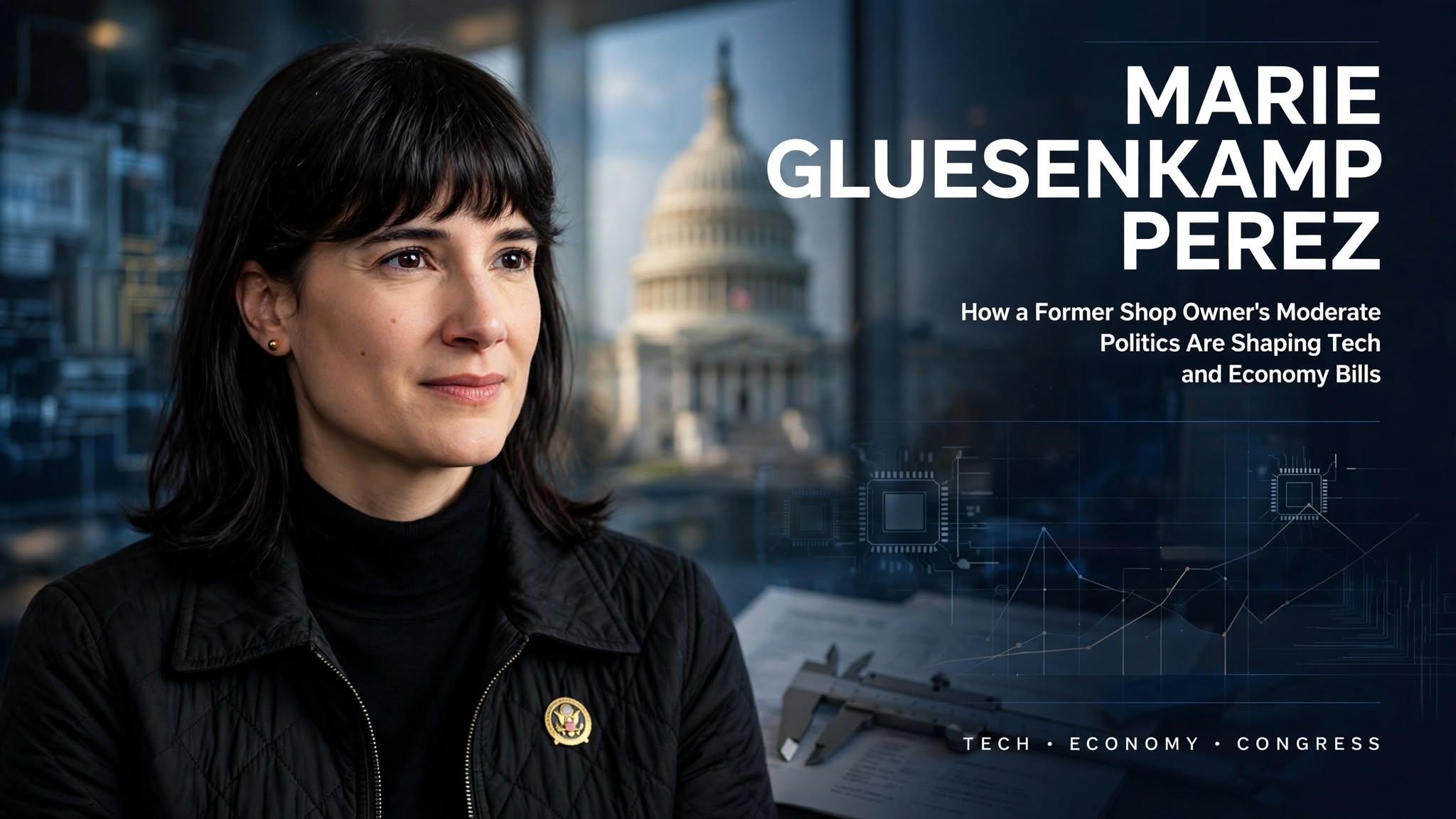
Marie Gluesenkamp Perez: How a Former Shop Owner’s Moderate Politics Are Shaping Tech and Economy Bills
Key Takeaways
- Rep. Marie Gluesenkamp Perez (D-WA-3), a former auto repair shop co-owner, has built a legislative record centered on right-to-repair, trades workforce development, and semiconductor manufacturing funding.
- She helped secure a $105 million federal investment for Analog Devices, including $80 million for Pacific Northwest projects, to modernize domestic semiconductor fabrication — reinforcing Washington’s “Silicon Forest” manufacturing base.
- Described as one of the House’s most centrist Democrats, she sits in the Problem Solvers Caucus, the Blue Dog Coalition, and the Congressional Hispanic Caucus, and serves on the House Appropriations Committee.
- She is seeking a third term in the 2026 midterms against Republican John Braun, the Washington State Senate minority leader.
- Her legislative approach consistently favors practical, trade-oriented policy over ideological framing — a positioning that has made her a notable swing-district data point heading into November.
From Auto Shop to Appropriations Committee
Gluesenkamp Perez co-owned an auto repair and machine shop with her husband before her 2022 upset win over Republican Joe Kent, a race she repeated and won again in 2024. That hands-on business background has directly shaped her legislative priorities: she has pushed bipartisan right-to-repair legislation for agricultural equipment, introduced the Fairness for the Trades Act to expand 529 education savings plans to cover trade-career tools, and worked to ease regulatory burdens on small businesses like the one she used to run.
The Semiconductor Funding Win
In one of her more tangible economy-facing wins, Gluesenkamp Perez — alongside Washington Senators Patty Murray and Maria Cantwell — helped secure $105 million for Analog Devices to modernize domestic chip fabrication, with $80 million specifically benefiting Pacific Northwest facilities, including an expansion in Camas. The investment targets mature-node semiconductors used in automotive, healthcare, aerospace, defense, and consumer electronics — chips that are less headline-grabbing than AI accelerators but arguably more embedded in everyday supply chains (a theme covered in our companion piece on 2026 silicon supply chain risk).
Where She Sits Politically
Caucus memberships tell their own story: Problem Solvers Caucus, Blue Dog Coalition, and Congressional Hispanic Caucus place her firmly in the House’s center-right Democratic lane. She has been publicly described as one of the chamber’s most centrist Democrats, willing to break from party lines on specific votes. Her appropriations work has focused heavily on constituent-level wins — from mobile home energy-efficiency provisions to Secure Rural Schools reauthorization — over broader ideological legislation.
2026 Midterm Context
Gluesenkamp Perez is defending her seat in Washington’s 3rd Congressional District against John Braun, the Washington State Senate’s Republican minority leader — a race widely watched as a bellwether for how centrist Democrats in competitive districts perform in the 2026 midterms.
What is Marie Gluesenkamp Perez known for in Congress?
Rep. Gluesenkamp Perez (D-WA-3) is known for centrist, trades- and small-business-focused legislation, including right-to-repair bills and a $105 million semiconductor manufacturing investment for the Pacific Northwest. She sits on the House Appropriations Committee and is seeking a third term in 2026 against Republican John Braun.
Discover more from The Economy
Subscribe to get the latest posts sent to your email.

Key Takeaways
- The US-China relationship in Q3 2026 is best described as a “tactical truce” — managed friction with both sides avoiding total decoupling, rather than a resolved trade relationship.
- The blended effective US tariff on Chinese imports stood around 33% as of May 2026, stacked across four separate legal layers, with some product categories (EVs, batteries, solar) clearing 145%.
- A Supreme Court ruling on February 20, 2026 found the President cannot use IEEPA to impose tariffs, forcing a pivot to Section 122 and Section 301 authorities — a significant legal constraint reshaping the tariff toolkit.
- Washington’s focus has shifted from tariff escalation toward structural supply chain revamps, including critical-minerals diplomacy with dozens of allied countries.
- US imports from China have fallen to near-2001 levels — the year China joined the WTO — reflecting one of the most significant trade reallocations in a generation.
From Escalation to “Managed Competition”
Q3 2026 finds the US-China relationship in a distinctly different posture than the tariff-escalation cycles of 2025. As of mid-2026, the US-China trade relationship is best described as a “tactical truce” — a state of managed friction where both nations maintain aggressive competitive postures while avoiding total economic decoupling. Unlike the optimistic expectations surrounding the 2020 Phase One agreement, today’s reality reflects a fundamental shift toward “de-risking” and “friend-shoring” strategies reshaping global logistics patterns.
That truce has institutional grounding. President Trump and President Xi Jinping appear to have maintained a fragile truce in the trade war following their May 2026 summit in Beijing, though experts say complete decoupling of the world’s two biggest economies remains unlikely, with high tariffs, rare earth restrictions, and tech export controls remaining major sticking points. The two leaders shared a vision of building “a constructive relationship of strategic stability” to bring enhanced certainty and predictability to the global economy — with the agreed approach to restore stability being “managed trade” through a board of trade to manage bilateral trade in non-sensitive goods, reduced tariff and non-tariff barriers in selective sectors, and Chinese commitments to purchase US aircraft and address US concerns about critical mineral supplies.
The Tariff Stack: Complex, Layered, and Legally Contested
Understanding the actual tariff burden on US-China trade in Q3 2026 requires unpacking a genuinely complex, multi-layered structure. The blended effective US tariff on Chinese imports stood around 33% in May 2026, stacked across four layers: MFN (~3.4%), Section 301 (7.5-25%), IEEPA fentanyl (20%), and the reciprocal tariff (currently 10% during a truce extension) — though some HS codes covering EVs, batteries, and solar clear 145%.
That legal architecture was upended mid-year by the judiciary. On February 20, 2026, the Supreme Court ruled that the President cannot use IEEPA to impose tariffs. President Trump subsequently lifted such tariffs and imposed a 10% global tariff for 150 days under Section 122 of the Trade Act instead. This ruling forced a structural pivot in how the administration constructs its China tariff policy — shifting weight toward Section 301 and Section 122 authorities, which carry different procedural and duration constraints than the IEEPA framework the administration had relied on.
The November 2025 Truce Framework Still Shapes Q3 2026
Under the trade agreement, the US halved the 20% fentanyl-related tariff to 10% and extended Section 301 tariff exclusions through November 2026, while China pledged to suspend retaliatory tariffs on US agricultural and food products. The US also agreed to suspend implementation of the new BIS “Affiliates Rule” for one year until November 9, 2026, and China agreed to “take appropriate measures” to resume semiconductor manufacturing and exports of legacy chips, suspending for one year its October 2025 export control measures on rare earth materials — though the status of its earlier April 2025 controls remains ambiguous.
That November 10, 2026 expiration date is the single most important near-term calendar event for anyone tracking US-China trade risk through Q3 and into Q4 2026 — nearly every major concession in the current truce is time-limited to that date.
The Structural Shift: From Tariffs to Supply Chain Architecture
The most consequential Q3 2026 development is not a new tariff announcement but a change in strategic focus. Washington has been steadily moving to revamp supply chains away from China — after taking US levies on China up past 100% at their peak, the administration’s efforts to reset the economic relationship have lately focused on a different set of tools. In early 2026, the United States convened dozens of countries and hosted two separate ministerial meetings on critical minerals, signalling that the policy centre of gravity has moved from bilateral tariff brinkmanship toward multilateral supply chain realignment.
The scale of the underlying reallocation is historically significant. The recalibration of supply chains has been so profound that US imports from China have returned to near-2001 levels — the year China entered the World Trade Organization — with research showing companies were already positioned to adjust to tariff levels well before the most recent escalations.
Comparative Table: US-China Trade Relationship, Late 2025 vs. Q3 2026
| Dimension | Late 2025 | Q3 2026 |
|---|---|---|
| Overall posture | Active tariff escalation | “Tactical truce” / managed competition |
| Primary tariff legal basis | IEEPA (executive emergency powers) | Section 122 / Section 301 (post-Supreme Court ruling) |
| Blended effective tariff rate | Higher, more volatile | ~33% (as of May 2026), layered across four mechanisms |
| Policy focus | Tariff rate negotiation | Critical-minerals diplomacy, supply chain diversification |
| US imports from China | Declining | Near 2001 (pre-WTO-accession-era) levels |
| Key expiration date to watch | N/A | November 9-10, 2026 (multiple truce provisions expire) |
Why It Matters: Sector-Specific Supply Chain Exposure
The blended tariff figures conceal enormous sector variation, and that variation is where the real corporate risk-management work lies. The technology sector has been hit hardest, with tariffs on components forcing abrupt sourcing shifts and catalysing a wave of investment in domestic fabrication, though dependence on Asian supply chains remains a persistent challenge. Automakers have been compelled to redesign supply routes, absorbing some extra costs via price adjustments while facing longer lead times and increased inventory holding that strain margins. Retailers in consumer goods and apparel have explored new sourcing from Bangladesh, India, and Central America, but price volatility and inconsistent quality control remain problematic.
For investors and supply chain planners, the practical takeaway is that “US-China trade risk” is no longer a single macro variable — it is a sector-specific, product-code-specific exposure that requires granular mapping rather than a single blended-tariff assumption.
What to Do Next
- Calendar the November 9-10, 2026 expiration dates explicitly — the Affiliates Rule suspension, Section 301 exclusions, and reciprocal tariff terms are all time-limited to this window, making it the highest-probability point for renewed volatility.
- Map exposure at the HS-code level, not the country level — with some categories facing 145% effective rates while the blended average sits near 33%, country-level tariff assumptions materially understate risk for EV, battery, and solar-linked supply chains.
- Track critical-minerals diplomacy as a leading indicator of the next phase of US trade strategy — the shift from tariff brinkmanship to allied-country mineral-supply coordination signals a more durable structural approach than tariff negotiation alone.
- Monitor the Supreme Court’s IEEPA ruling’s downstream effects on the administration’s remaining tariff toolkit, since Section 301 and Section 122 authorities carry different procedural constraints than the now-invalidated IEEPA approach.
- Treat “near-2001 levels” of US-China import volume as a durable baseline, not a cyclical dip — the scale of supply chain reallocation documented by Harvard Business School research suggests this is structural rather than temporary.
FAQ
What is the current effective tariff rate on Chinese imports to the US?
The blended effective US tariff on Chinese imports stood around 33% as of May 2026, stacked across four layers — MFN, Section 301, the IEEPA fentanyl tariff, and the reciprocal tariff — though specific categories like EVs, batteries, and solar can face rates as high as 145%.
Did the Supreme Court block Trump’s China tariffs?
Partially. On February 20, 2026, the Supreme Court ruled that the President cannot use the International Emergency Economic Powers Act to impose tariffs, prompting a shift to a 10% global tariff under Section 122 of the Trade Act instead. Section 301 tariffs, which rest on separate legal authority, remain largely intact.
When does the current US-China trade truce expire?
Multiple key provisions expire around the same date. The suspension of the BIS “Affiliates Rule” runs until November 9, 2026, and the suspension of heightened tariffs on Chinese imports is set to run until November 10, 2026 — making that window the most significant near-term risk point for the relationship.
Discover more from The Economy
Subscribe to get the latest posts sent to your email.
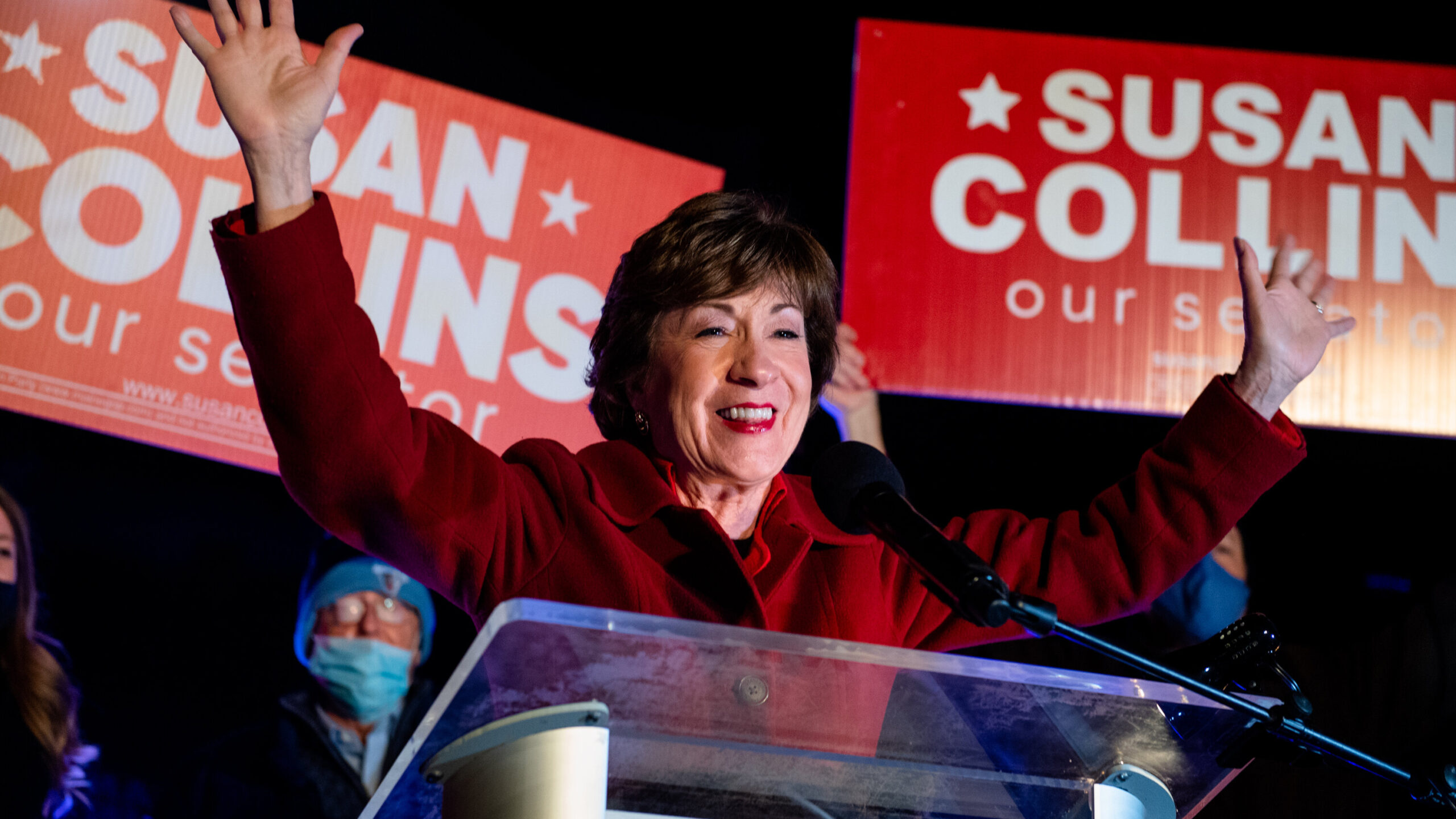
Susan Collins faces her toughest reelection yet against Troy Jackson after a chaotic Democratic candidate swap. Here’s why Maine is a genuine Senate toss-up.
Republican Sen. Susan Collins faces Democrat Troy Jackson, a former Maine Senate president, in a toss-up 2026 general election after Democrats’ original nominee, Graham Platner, was replaced through a special party nomination process. Recent polling shows Jackson with a slight edge.
For a senator who has survived six consecutive campaigns and just cast her 10,000th consecutive Senate vote, Susan Collins now faces what independent analysts are calling a genuine toss-up race — one of the clearest tests of whether Republicans can hold their Senate majority in November.
A Late, Chaotic Democratic Swap
The road to Collins’ current opponent was unusually turbulent. Maine’s Democratic field originally centered on a three-way primary between Gov. Janet Mills, oyster farmer and combat veteran Graham Platner, and former Maryland government official David Costello. Mills dropped out in April, leaving Platner as the grassroots-backed front-runner heading into the June 9 primary — a candidate whose anti-establishment profile and matched fundraising against Collins had national Democrats excited about their odds.
But Platner’s candidacy collapsed amid revelations that included past social media posts and a tattoo resembling a Nazi symbol. With the general election bearing down, the Maine Democratic Party activated an emergency special nomination process — built around county-level delegate meetings rather than a snap primary — to replace him. On July 25, that process produced Troy Jackson, a former Maine Senate president, as the party’s new standard-bearer with roughly 100 days left until Election Day.
Why the Race Is Genuinely Competitive
Despite the compressed timeline, early data suggests Jackson is not merely a placeholder candidate. A Pine Tree Poll conducted by the University of New Hampshire Survey Center showed Jackson with a three-point edge over Collins among likely general-election voters, and Fox News’ inaugural 2026 Power Rankings classify the race as a toss-up — one of roughly a dozen Senate contests that will determine which party controls the chamber.
Collins’ vulnerabilities are structural as much as political. Maine backed the Democratic presidential ticket by seven points in 2024, meaning Collins has long relied on ticket-splitting voters to survive in a state that leans against her party nationally. Democrats are also targeting her more directly than in past cycles, criticizing her comment that she doesn’t regret her 2018 vote to confirm Justice Brett Kavanaugh despite his later vote to overturn Roe v. Wade, and her continued support for Immigration and Customs Enforcement funding following a fatal shooting in Maine involving ICE agents earlier this month.
Collins, who chairs the powerful Senate Appropriations Committee, is leaning on 28 years of relationship-building with industries dependent on federal spending, along with a substantial outside-money advantage. In her campaign launch, Collins argued that “my experience, seniority and independence matter,” while Democrats have countered that “seniority without a backbone is just tenure.”
What It Means for Senate Control
Maine is one of two Senate seats Democrats are defending — or, in Collins’ case, one Republicans are defending — in a state won by the opposing party’s presidential nominee in 2024, making it a marquee Senate battleground alongside Georgia, North Carolina, and Alaska. Democrats need to net four seats nationally to reclaim the majority, and unseating Collins is widely viewed as central to that math given how few genuinely competitive Republican-held seats exist on the 2026 map.
The compressed Jackson campaign timeline is itself a variable worth watching: Collins has now defeated multiple well-funded Democratic challengers over her career, and whether Jackson can build statewide name recognition and a comparable small-dollar fundraising operation in roughly 14 weeks will likely determine whether Maine actually flips or simply stays close.
Discover more from The Economy
Subscribe to get the latest posts sent to your email.

Silver Price Today: Why the Xi-Trump AI Standoff Is Fueling a Safe-Haven Rally

Citibank & Dólar Estadounidense: Forex Playbook After the Xi-Trump Truce

How the Trump-Xi White House Summit Is Reshaping Mortgage Rates Today for Real Estate Investors

Indonesia Navigates Mega-Project Risks as China and Russia Eye the 2,772km Trans-Kalimantan Railway

Trump-Xi 2026 Summit Takeaways: The Trade Truce, Taiwan, and the AI Divide

Solar Panel Installation Cost in 2026: Why the Math Changed Overnight

Business Insurance: What Coverage You Actually Need and What It Costs in 2026

Auto Insurance Quotes: How to Get the Lowest Rate Without Losing Coverage

Huntington Online Banking: Full Features, Fees, and How It Compares in 2026

Apply for a Bank Account Online: What You Need and How Long It Actually Takes

World’s Largest Economies: Ranking the Top Global Powers

Business Loan: A Complete 2026 Guide to Rates, Types, and Qualifying

Fast Invoice Factoring: How to Turn Unpaid Invoices Into Cash Within 24 Hours

Investment Banking Services: What They Cost and How to Choose the Right Firm in 2026

Top 30 Stocks for Investment in PSX for Massive ROI in 2026

SpaceX Starship Flight 14: First Orbital Attempt & Starlink V3 Launch Explained

Oil Prices Break $100 in 2026: Middle East Conflict & Energy Markets

BRICS+ Cross-Border Payments 2026: Interoperability Explained

AI Chip Stocks 2026: The Best Semiconductor Investments Beyond Marvell

Fidelity Investments Review 2026: SPAXX Yields & Zero-Fee Funds

Tween Back-to-School Trends 2026: What’s Driving the $85B Season

10-Year Treasury Yield Hits 4.80%: What It Means for Rates & Portfolios

Shein Clothes Quality & Safety in 2026: What Lab Tests Show

China’s US$10.8 Billion Trade Shortcut: Why the Pinglu Canal Matters

MRVL Earnings 2026: Why Marvell Sank Despite Beating Estimates

IMF & World Bank 2026 Global Economic Outlook: Growth, Inflation, Debt

High-CPM Finance Niches 2026: Publisher Monetization Blueprint

Middle East War Economics 2026: Oil Prices & Energy Markets
-

 Markets & Finance9 months ago
Top 15 Stocks for Investment in 2026 in PSX: Your Complete Guide to Pakistan’s Best Investment Opportunities
-

 Analysis7 months ago
Johor’s Investment Boom: The Hidden Costs Behind Malaysia’s Most Ambitious Economic Surge
-

 Analysis7 months ago
Top 10 Stocks for Investment in PSX for Quick Returns in 2026
-

 Banks8 months ago
Best Investments in Pakistan 2026: Top 10 Low-Price Shares and Long-Term Picks for the PSX
-

 Analysis8 months ago
Brazil’s Rare Earth Race: US, EU, and China Compete for Critical Minerals as Tensions Rise
-

 Investment9 months ago
Top 10 Mutual Fund Managers in Pakistan for Investment in 2026: A Comprehensive Guide for Optimal Returns
-

 Global Economy9 months ago
15 Most Lucrative Sectors for Investment in Pakistan: A 2025 Data-Driven Analysis
-

 Global Economy9 months ago
Pakistan’s Export Goldmine: 10 Game-Changing Markets Where Pakistani Businesses Are Winning Big in 2025