
Geopolitics
Trump Pays $1 Billion to Kill Offshore Wind. The Tab Is Just Getting Started.

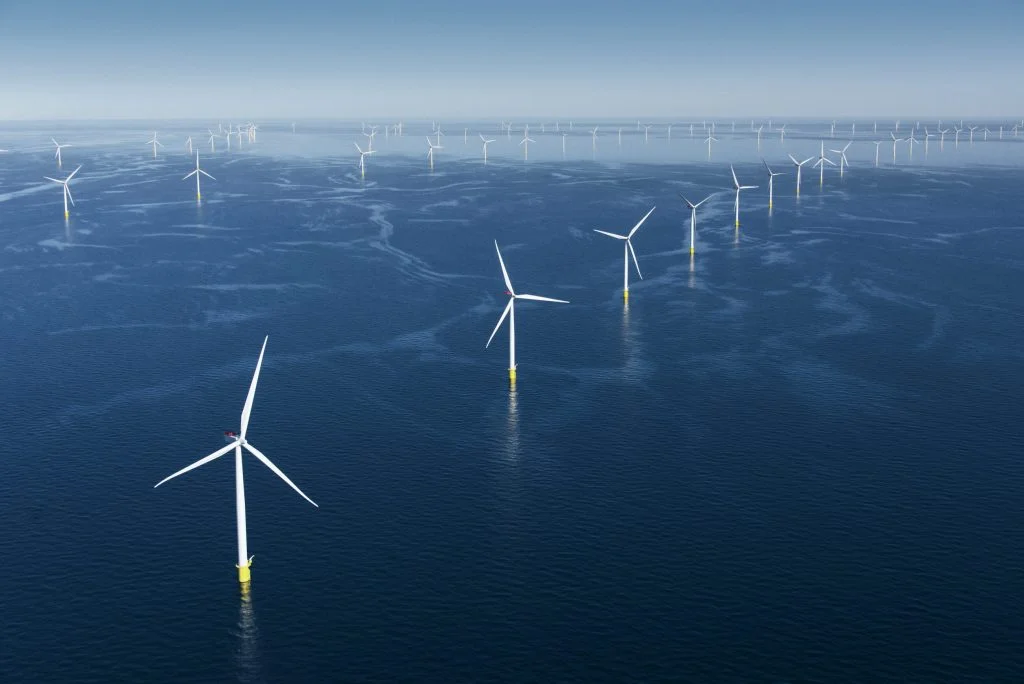
A landmark deal with TotalEnergies marks the first time Washington has paid a company not to build clean energy — and it may be the cheapest item on a much longer bill
The Deal That Rewrote the Rulebook
Houston’s CERAWeek energy conference — the annual rite where oil executives and government officials exchange pleasantries over fossil fuel futures — rarely produces genuine surprises. On the morning of Monday, March 23, 2026, it produced one.
Interior Secretary Doug Burgum and TotalEnergies CEO Patrick Pouyanné shook hands before cameras at the S&P Global gathering and announced what the Department of the Interior called a “landmark agreement”: the United States government would pay the French energy giant approximately $928 million to surrender two Atlantic offshore wind leases and pledge never to build another wind farm in American federal waters. In exchange, TotalEnergies would redirect that capital — dollar for dollar — into oil drilling in the Gulf of Mexico, shale gas production, and the construction of four trains of the Rio Grande LNG export terminal in Texas.
Together, the two cancelled projects — one off the New York-New Jersey coast, one off North Carolina — had the potential to generate more than four gigawatts of electricity, enough to power nearly one million American homes. NPR They will now generate nothing.
It was, depending on one’s vantage point, either a masterstroke of energy realpolitik or the most expensive act of ideological vandalism in the history of American energy policy. Probably, it is both.
How Washington Learned to Pay for Retreat
To understand how the Trump administration arrived at the strategy of paying developers to abandon renewable energy projects, you have to understand a problem it could not solve in court.
The tactical shift comes after federal courts repeatedly thwarted the administration’s efforts to stop offshore wind through executive action. U.S. District Judge Patti Saris vacated Trump’s executive order blocking wind energy projects in December, declaring it unlawful after 17 state attorneys general challenged it. WCAX Late last year, the administration invoked classified national security threats to stop work on five wind farms that were under construction. Developers and states sued, and federal judges allowed all five projects to resume construction. NPR Litigation was not working. So the administration found a new instrument: the checkbook.
Following TotalEnergies’ $928 million in investments in US energy projects, the United States will terminate Lease No. OCS-A 0538, located in the New York Bight area — originally purchased by Attentive Energy LLC in May 2022 for $795 million — and Lease No. OCS-A 0535, located in the Carolina Long Bay area, purchased in June 2022 for $133,333,333. U.S. Department of the Interior The mechanics are structured to appear budget-neutral at the surface: TotalEnergies invests the money first, then receives reimbursement, dollar for dollar, up to the original lease cost. But the fiscal logic collapses under scrutiny — the Justice Department will use nearly $1 billion in taxpayer funds to reimburse the company. CNN The public is absorbing the cost.
TotalEnergies had already paused its two projects after Trump was elected and pledged not to develop any new offshore wind projects in the United States. NPR The leases were, in practical terms, dormant. Washington is paying a billion dollars to kill something that had already stopped moving.
The Numbers Behind the Narrative
The administration’s framing of the deal centers on affordability — specifically, the Interior Department’s claim that offshore wind is “one of the most expensive, unreliable, environmentally disruptive, and subsidy-dependent schemes ever forced on American ratepayers.” Secretary Burgum has repeated this framing with the consistency of a campaign slogan.
The economics are considerably more nuanced. While offshore wind is more expensive than other forms of renewable energy because of its unique supply chain constraints, wind has no fuel costs and states negotiate set power price agreements with developers that don’t fluctuate — unlike natural gas and oil. CNN In an era when the US-Israel military campaign against Iran has fractured global oil markets and tightened shipping through the Strait of Hormuz, price stability carries its own premium.
As fossil fuel prices swing wildly from global shocks and extreme weather, the answer is obvious: we should be building more homegrown clean energy with stable costs. East Coast states are building offshore wind because it boosts affordable electricity supply on the grid, especially during cold snaps, when natural gas prices are sky-high, Environmental Defense Fund said Ted Kelly, Director and Lead Counsel at the Environmental Defense Fund.
The LNG side of the settlement also invites scrutiny. The Interior Department’s announcement says TotalEnergies will invest approximately $1 billion in oil and natural gas, including offshore oil platforms in the Gulf of Mexico and an LNG facility in Texas. But the company is already plowing billions into new offshore platforms, and it made a final investment decision on an expansion of its Texas LNG facility last year. The lease refund would only offset existing investments, not generate new infrastructure the company hadn’t already planned. Grist In other words, the United States may have paid $928 million for a pivot that was already underway.
Pouyanné’s Pragmatism — and Its Limits
Patrick Pouyanné has navigated TotalEnergies through the energy transition with a pragmatism that distinguishes him from the more ideologically committed leaders of rival majors. The French supermajor has aggressively built renewable capacity across Europe, Asia, and Africa; it remains a major offshore wind developer in the North Sea and has material projects in South Korea and Taiwan.
In his statement, Pouyanné said the refunded lease fees would allow TotalEnergies to support the development of US gas production and export. He added: “These investments will contribute to supplying Europe with much-needed LNG from the US and provide gas for US data center development.” CNBC The framing is astute. In the wake of disruptions to Middle Eastern energy supply, Europe’s renewed hunger for American LNG gives TotalEnergies strategic leverage to present its pivot not as retreat from clean energy, but as a geopolitical service.
Yet TotalEnergies’ own global portfolio tells a different story from its American accommodation. The company is simultaneously developing floating offshore wind in the North Sea and partnering with governments across Southeast Asia on solar infrastructure. The renunciation of US wind is a concession to political reality in Washington, not a statement of technological conviction. Pouyanné is settling accounts with one government while expanding his bets on the energy transition everywhere else.
The $5 Billion Question: Who’s Next?
The TotalEnergies deal may be the most consequential not for what it cancels but for the template it establishes.
The leases for several undeveloped offshore wind projects off the Atlantic, Pacific and Gulf coasts total more than $5 billion, and that doesn’t include additional pre-development costs incurred by developers. CNN German renewables company RWE, which paid more than $1.2 billion for three leases off the coasts of New York, California and the Gulf of Mexico, is one of the companies expecting to be reimbursed. CEO Markus Krebber said at a recent press conference: “If we never get the right to build the plants, I assume we’ll get the money we’ve already paid back. And if necessary, through legal action.” CNN
The arithmetic of a full unwind is staggering. If every undeveloped lease follows the TotalEnergies model, the federal government faces a potential liability exceeding $5 billion — paid out of Treasury funds to extinguish energy capacity that American states have already integrated into their grid planning. That money would not go toward grid modernization, transmission buildout, or any form of domestic energy investment. It would effectively be a subsidy for the fossil fuel status quo, laundered through a reimbursement structure.
Senator Chuck Schumer told the Associated Press that the payment “sets a dangerous precedent and is a shortsighted misuse of taxpayer dollars.” WCAX It is difficult to argue with the precedent concern on purely fiscal grounds.
Climate Goals, Grid Reality, and the China Dimension
The cancellation of 4+ gigawatts of planned offshore wind capacity does not occur in a vacuum. It occurs against a backdrop of soaring electricity demand from AI data centers, accelerating electrification of the US economy, and a global offshore wind market that is expanding at extraordinary speed — led, increasingly, by China.
Globally, the offshore wind market is growing, with China leading the world in new installations. NPR While the United States dismantles its pipeline, China is commissioning new offshore wind capacity at a rate that dwarfs anything attempted in the Western hemisphere. The Chinese offshore wind supply chain — turbines, foundations, cables, installation vessels — is becoming globally dominant precisely as American demand for that supply chain evaporates. If and when Washington reverses course, it will find itself dependent on Chinese-manufactured components, having surrendered the industrial learning-curve advantage that early deployment generates.
Energy experts have argued that the ongoing conflict and disruption to shipping in the Strait of Hormuz underscores the need to shift toward renewable energy sources, which are less vulnerable to geopolitical shocks. Canary Media This is not an abstract argument. It is an argument made urgent by the same crisis that TotalEnergies is now being paid to help resolve — by building more LNG terminals.
The grid reliability picture is equally complicated. On Monday, one of the wind farms targeted by the administration, Coastal Virginia Offshore Wind, started delivering power to the grid for Virginia. The developer, Dominion Energy, announced the milestone. NPR The technology works. The question is who benefits from the decision not to build it.
Harrison Sholler, US wind analyst for BloombergNEF, assessed the TotalEnergies deal’s market impact soberly: “Major policy changes and signals under a future administration will be needed if any offshore wind projects are to come online by 2035, in our view. TotalEnergies handing back their leases doesn’t change that, although it slightly reduces the pipeline of projects that could come online if positive policy changes do occur.” Canary Media
The Taxpayer, the Ratepayer, and the Geopolitical Bet
Defenders of the deal make a coherent, if contestable, case. America’s LNG infrastructure is a genuine geopolitical asset. The announcement came as the Iran conflict continued to disrupt global oil and gas supplies, making the US — the largest exporter of liquefied natural gas in the world — an even more critical supplier for markets in Asia and Europe. CNBC Rio Grande LNG, whatever its local environmental costs, will supply European markets that have spent four years scrambling to replace Russian pipeline gas. That is a real strategic value.
The Trump administration’s “energy dominance” framework is internally consistent: maximize hydrocarbon production and export, leverage geopolitical disruption to cement market share, and treat renewable energy as a domestic political liability rather than an economic opportunity. It is a bet that fossil fuel demand will remain structurally elevated through the 2030s, that the energy transition can be deferred without terminal competitive consequence, and that the geopolitical premium on American LNG will continue to subsidize the costs of that deferral.
It is also a bet of extraordinary cost if it proves wrong.
What Comes Next
The TotalEnergies deal is not an isolated transaction. It is the articulation of a doctrine: that the administration will use every available instrument — executive order, permit denial, court-resistant settlement, and now direct financial payment — to prevent offshore wind from establishing roots in American federal waters.
Sam Salustro, senior vice president of policy at Oceantic Network, said: “After failing to shut down offshore wind through strong-arm tactics and litigation losses, the administration is now spending $1 billion in taxpayer dollars to force developers out of the market. This political theater is meant to obscure the fact that offshore wind capacity is being pulled out of the pipeline when energy prices are skyrocketing.” Canary Media
The harder question — one that neither the administration’s cheerleaders nor its critics have fully reckoned with — is what this means for the industrial and investment landscape of the 2030s. Offshore wind projects require a decade of development; the capacity being cancelled today is capacity that would have powered American homes in the mid-2030s. The LNG terminals being funded in its place will take years to construct and are, by definition, fuel-cost dependent in ways that offshore wind is not.
Meanwhile, European energy ministries are watching the Washington drama with a mixture of calculation and alarm. They welcome American LNG as a bridge fuel; they are quietly relieved that TotalEnergies’ LNG commitments will flow their way. But they are also accelerating their own offshore wind programs precisely because they have learned, painfully, what fuel-price dependence costs in a geopolitically unstable world.
The United States, which pioneered modern offshore energy development and once led the global energy transition, has chosen a different path. For $928 million — and counting — it has purchased the right to revisit that choice later, at considerably higher cost, in a market shaped by competitors who did not pause.
Discover more from The Economy
Subscribe to get the latest posts sent to your email.



Most headlines on Russia’s economy in July 2026 focus on the latest sanctions package or oil price cap negotiation. The more important story is structural: the model Russia has used to fund its war for four years is showing real signs of running out of road.
The core finding
A research brief from the Center for Strategic and International Studies (CSIS) argues Putin is pushing Russia toward an “economic, political, and military abyss,” according to Fortune. While Russia’s economy remains large — roughly $2.6 trillion — growth is slowing and shrinking on a quarterly basis, with 2026 growth projected at just 0.4%, worse than 2025’s 1% growth, which itself narrowly avoided recession.
Analysts describe Russia’s approach as a form of “military Keynesianism” — the state investing heavily in militarizing the economy while extending financial support to households affected by the war. But per Fortune’s reporting, “after more than four years of war, that well is running dry.” Russia’s fiscal reserves are dwindling, and 71% of the country’s gold reserves have been liquidated to sustain spending.
The number that matters most: oil and gas budget share
The most underreported data point here: the share of oil and gas receipts in Russia’s federal budget revenue fell to just 23% in 2025 — the lowest share in two decades — according to the Oxford Institute for Energy Studies, cited by Fortune. To compensate, Russia has turned to expansive taxation, including raising VAT from 20% to 22% — a move that has proven unpopular domestically.
This matters because Russia’s economy has historically been described, correctly, as fossil-fuel dependent — with oil and gas taxation making up 44% of federal revenues in the decade before the Ukraine invasion, and still around 24.5% over the first three quarters of 2025, according to a Brookings Institution analysis. A further slide to 23% signals the sanctions and diversification pressure are compounding, even as Russia continues finding workarounds through its “shadow fleet.”
The Iran-war reprieve was temporary — and it’s over
The Iran war offered Russia a brief lifeline: Brent crude surged more than 55% at its peak, nearing $120 a barrel, after President Trump eased some sanctions on Russian oil, per Fortune. But that chaos also undermined Russia’s own long-term energy and infrastructure projects in the Middle East — two Russian-linked power plants in Iran were put on hold, along with oil and gas exploration and plans to link Russia to India via Iran through new transit routes. Since then, oil prices have normalized as demand softened and the Strait of Hormuz reopened, removing that temporary cushion.
The sanctions escalation now in motion
The pressure is intensifying on multiple fronts simultaneously. US senators unveiled a sweeping bipartisan Russia sanctions bill in mid-July, which would impose mandatory sanctions on Russian political and military leaders including President Putin, and up to a 100% tariff on the top five countries — including China and India — that purchase Russian crude oil and natural gas, according to CNN. Separately, the EU has been racing to avoid an automatic upward revision of its Russian oil price cap, which would otherwise jump from $44.10 to roughly $58 per barrel if a new sanctions package wasn’t agreed by July 15, per Euronews.
Analysis from the Center for European Policy Analysis notes the outcome depends heavily on whether India and China accept the risk of secondary sanctions: “If China stands firm, Moscow’s dependence on Beijing deepens,” per CEPA. If Russian seaborne oil exports were to fall to near-zero, the budget would lose roughly a quarter of its revenue — an extreme but non-trivial scenario given the pace of legislative and diplomatic pressure building in July 2026.
Why this matters beyond Russia
For countries positioned between Western sanctions regimes and continued Russian energy purchases — including India, and by extension trade partners like Pakistan whose remittance and trade flows intersect with Gulf and South Asian energy markets — the trajectory of Russia’s budget dependency and the secondary-sanctions risk attached to its buyers is a live variable, not a settled one. A further deterioration in Russia’s oil-and-gas revenue share would likely accelerate Moscow’s reliance on China specifically, reshaping regional energy-trade alignments well beyond the Russia-Ukraine conflict itself.
FAQ
What percentage of Russia’s federal budget comes from oil and gas? 23% in 2025 — the lowest share in two decades, according to the Oxford Institute for Energy Studies.
What is Russia’s projected GDP growth for 2026? 0.4%, according to CSIS research cited by Fortune — down from 1% growth in 2025.
What is “military Keynesianism” in the context of Russia’s economy? A term analysts use to describe Russia’s strategy of heavy state investment in militarizing the economy alongside financial support for war-affected households, functioning as a form of stimulus that is now showing signs of fiscal strain.
Discover more from The Economy
Subscribe to get the latest posts sent to your email.
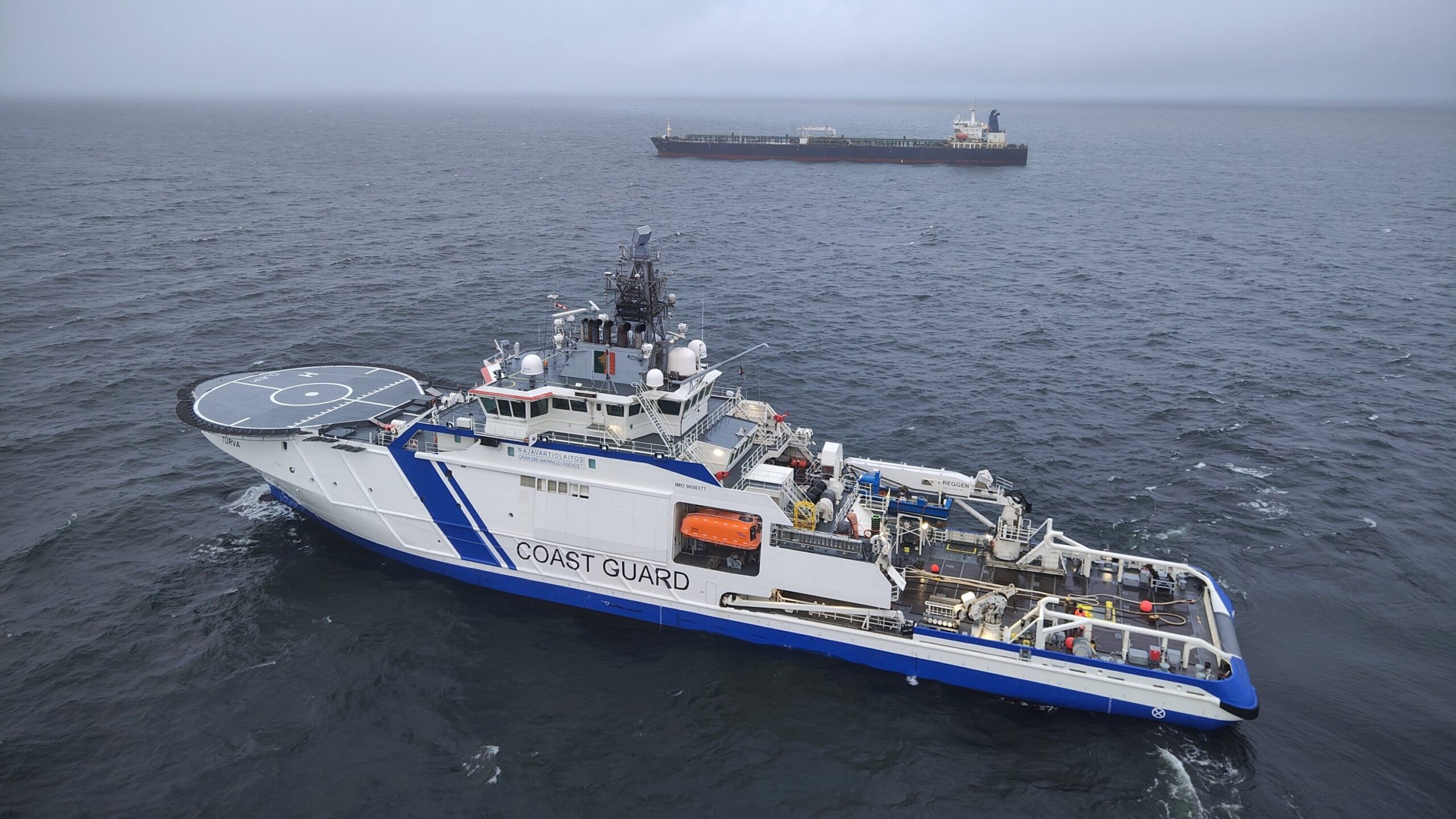
Russia‘s two largest, US-sanctioned oil producers have clawed back control of the majority of the country’s crude export trade, restoring their combined share to 57% in the first half of May 2026 after a sharp decline earlier in the year — a recovery that underscores the limits of Western sanctions enforcement even as the Middle East conflict reshapes global energy flows in Moscow’s favor.
According to the Kyiv School of Economics Institute‘s Russian Oil Tracker, sanctioned producers Rosneft, Lukoil, Gazpromneft, and Surgutneftegaz had seen their combined export share collapse to just 4-8% in the January-to-March period, only to rebound sharply as sanctioned “shadow fleet” tankers and previously idle vessels returned to commercial service, according to KSE Institute’s May 2026 tracker. The reversal illustrates a pattern that has recurred throughout the sanctions era: enforcement gaps open, capital and logistics networks adapt, and market share flows back toward sanctioned entities within a matter of months.
The Shadow Fleet’s Growing Dominance
The scale of Russia’s reliance on unconventional shipping infrastructure has reached a new high. KSE Institute estimates that 192 shadow fleet tankers carrying crude and refined products left Russian ports or engaged in ship-to-ship transfers in April 2026 alone, with 92% of those vessels older than 15 years — aging tonnage increasingly steered toward sanctions-evasion routes as newer, compliant vessels avoid the reputational and insurance risk of handling Russian crude.
The share of Russian seaborne oil transported by explicitly sanctioned tankers rose from 15% in July 2025 to 31% by April 2026, according to KSE data, while the corresponding share carried specifically by US-designated vessels reached 26% over the same window — driven, according to the tracker, by previously idle tankers returning to active commercial rotation. As of May 21, six major sanctioning jurisdictions — the US, UK, EU, Australia, Canada, and New Zealand — had jointly designated 651 unique oil tankers, yet the fleet supporting Russian exports has continued to expand around those designations rather than shrink beneath them.
Separately, monthly analysis from the Centre for Research on Energy and Clean Air (CREA) found that in April 2026, over half — 54% — of Russia’s seaborne oil moved via sanctioned shadow tankers, up sharply from 48% in March, with sanctioned vessels responsible for the highest share of Russian fossil fuel exports on record, according to CREA’s April 2026 monthly tracker.
Revenue Keeps Climbing Despite the Sanctions Architecture
The financial consequence of this logistics resilience is a fossil fuel export revenue stream that has continued growing even as enforcement pressure has, on paper, intensified. Russia’s fossil fuel export revenues rose 2% month-on-month to €726 million per day in May 2026, according to CREA’s most recent analysis, despite export volumes remaining broadly flat. Crude oil export revenues specifically grew 1% to €362 million per day, with volumes up 8% — evidence that Russia is finding new efficiencies in its export logistics even as the headline sanctions regime tightens.
KSE Institute’s revenue modeling, updated in light of the Middle East conflict, now projects that Russia’s total oil revenue could climb from $158 billion in 2025 to $208 billion in 2026 under a base-case scenario assuming current price caps and a conflict lasting up to three months. Under an adverse scenario involving weak sanctions enforcement, that figure could reach $214 billion — meaning even the coalition’s most pessimistic enforcement scenario still implies rising, not falling, Russian oil revenue for the year.
Pricing dynamics tell a related story. Russia’s benchmark Urals crude rose 19% month-on-month in April 2026 to $112.30 per barrel — more than double the $44.10 EU and UK price cap that took effect on February 1, 2026 — before easing 12% in May to $82.02 per barrel, still nearly double the cap, according to CREA’s tracking data. The price cap, designed explicitly to constrain Russian per-barrel revenue while keeping global oil supply flowing, has functioned as a floor for insurance and freight compliance rather than an effective revenue ceiling during periods of tight global supply.
Third-Country Refineries Remain a Persistent Loophole
Refineries in India, Türkiye, Brunei, and Georgia running on Russian crude exported €641 million worth of oil products to sanctioning countries in May 2026 alone, according to CREA, including shipments to the EU, Australia, the US, and New Zealand — jurisdictions that have formally banned direct imports of Russian crude but continue receiving refined products derived from that same crude once it has passed through a third-country refinery. Georgia’s Kulevi refinery has run entirely on Russian crude for months without receiving a single shipment of non-Russian oil, despite its operating company publicly stating an intent to diversify — and despite narrowly avoiding inclusion on the EU’s sanctions list in March.
The EU closed one version of this loophole through its 18th sanctions package in January 2026, banning oil products refined from Russian crude in third countries from entering the bloc, according to analysis from the Center for European Policy Analysis (CEPA). Yet the persistence of flows through Kulevi and similar facilities illustrates how quickly new evasion routes emerge once established ones are formally closed — a pattern sanctions researchers describe as a continuous cat-and-mouse dynamic rather than a one-time enforcement fix.
What the Data Means for the Broader Sanctions Debate
Since Russia’s full-scale invasion of Ukraine, sanctions imposed by the UK, US, and EU are estimated to have denied Russia access to more than $450 billion, according to CEPA’s analysis — a substantial figure that nonetheless coexists with the reality that Russia’s oil exports since February 2022 have generated more than $800 billion in revenue through April 2026, according to CREA data cited in the same CEPA report. Those two figures, both accurate, capture the fundamental tension at the heart of Western sanctions policy: meaningful financial damage has been inflicted, but Russia’s core oil revenue engine has continued operating at a scale sufficient to sustain its war economy.
For markets and policymakers tracking global oil supply through the remainder of 2026, the practical implication is that Russian barrels — whether transported via shadow fleet, laundered through third-country refineries, or shipped directly by re-empowered sanctioned majors — remain a structurally embedded part of global crude supply, with enforcement gaps proving durable enough that even renewed sanctions packages have thus far failed to meaningfully compress Russia’s oil-derived war financing.
Discover more from The Economy
Subscribe to get the latest posts sent to your email.
Analysis
Turkey’s Bid for Middle East Leadership: How Ankara Is Filling the Vacuum Left by Iran’s Weakening
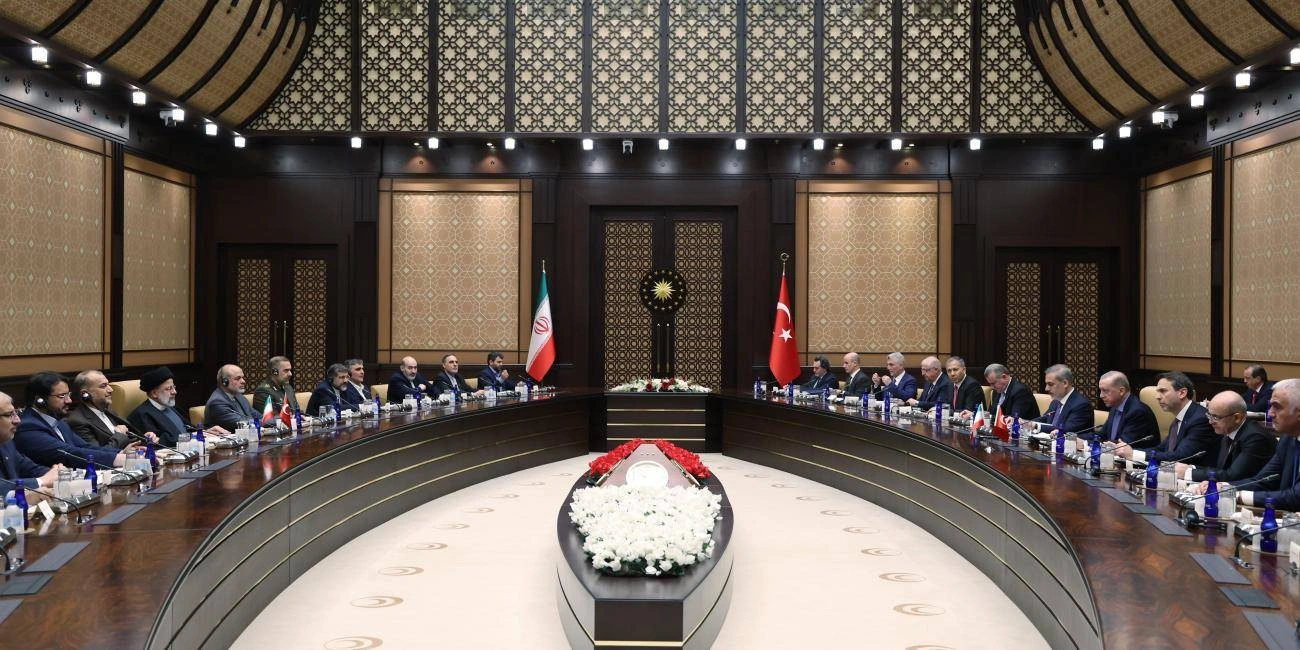
When the United States and Israel struck Iran in February 2026, they did not merely launch a war. They created a strategic vacuum. Iran — the dominant non-Arab power in the Middle East and the linchpin of the “Axis of Resistance” — was degraded, isolated, and forced into ceasefire negotiations. The question immediately arising for regional analysts: who fills the space?
The answer, increasingly, is Turkey.
Erdoğan’s Strategic Moment
Brookings scholar Aslı Aydıntaşbaş examines Turkey’s evolving role as it searches for influence in a Middle East undergoing fundamental transformation, prompted in equal parts by the Iran war and shifting U.S. commitments.
Turkey enters this moment with unusual strategic assets: it is a NATO member with deep ties to both the West and the Islamic world; it has the second-largest military in the alliance; it has cultivated relationships with Hamas, the Muslim Brotherhood, Qatar, and various Gulf states; and it is the host of the July 2026 NATO summit — placing President Erdoğan at the center of the most consequential alliance gathering in years.
The Islamabad Memorandum and Ankara’s Role
Turkey played a quiet but important role in the Iran ceasefire diplomacy. Pakistan served as the primary mediator — hence “Islamabad Memorandum” — but Turkish diplomatic channels contributed to the broader regional framework. This positioning as a constructive regional broker, distinct from both the U.S.-Israel axis and the Iran-led resistance bloc, is central to Erdoğan’s strategic calculus.
As Hezbollah is weakened and Hamas isolated, as Iran negotiates from a position of damage rather than strength, and as the Gulf states recalibrate toward Washington — Turkey is positioning itself as the indispensable interlocutor between competing regional forces.
The NATO Summit Leverage
Hosting the Ankara summit gives Turkey unusual leverage. The July 7–8 summit in Ankara will focus heavily on allies spending on European and Arctic security, as well as the need to vastly increase defense production.
But the summit’s subtext is about Turkey’s own strategic agenda: sustaining arms purchases outside of U.S. conditionality, maintaining relations with both Ukraine and Russia, and extracting concessions from NATO partners on matters ranging from Kurdish groups to EU accession.
Erdoğan has proven adept at using NATO summits as negotiating platforms. Ankara 2026 will be no different.
The Iran War’s Regional Reordering
The 2026 Iran war has fundamentally altered the regional power balance in ways that benefit Ankara. Hezbollah — Iran’s most powerful proxy — has been severely degraded by Israeli operations. The Houthis have been weakened. Hamas is isolated. Iran itself is in ceasefire negotiations.
The “Axis of Resistance,” as a coherent strategic instrument of Iranian foreign policy, has been severely damaged. The architecture of Iranian regional influence, built over four decades, is being reconstructed — and Turkey intends to ensure its influence grows in the reconstruction phase.
The Limits of Turkish Ambition
Turkey’s regional ambitions face real constraints. Its economy has been strained by years of inflation and currency volatility. Its relationship with the EU remains frozen. Its ties with Egypt, Saudi Arabia, and the UAE — which have normalized in recent years — could fray if Ankara overplays its hand.
Moreover, Turkey must navigate a NATO summit at which Trump is furious with European allies for their Iran stance — yet Turkey itself declined to actively support U.S. operations. Managing that contradiction requires considerable diplomatic dexterity.
The Middle East is undergoing a fundamental transformation, one prompted in equal parts by the Iran war and shifting U.S. commitments — and Turkey is positioning itself to shape that transformation rather than merely react to it.
Conclusion: The Ankara Moment
The 2026 Iran war may ultimately be remembered not only for what it did to Iran, but for what it enabled in Turkey. If Erdoğan manages the NATO summit effectively, deepens Turkey’s regional broker role, and maintains its strategic ambiguity between East and West — Ankara could emerge from 2026 as the most consequential player in the new Middle East order.
That prospect will be welcomed by some, feared by others, and watched closely by all.
Discover more from The Economy
Subscribe to get the latest posts sent to your email.

Russia’s War Economy Got a Reprieve From Iran

China’s Economy Has a Structural Problem: Factories Are Winning, Households Are Losing

How Malaysia “Shrugged Off” Trump’s Tariffs — and What Comes Next

Singapore’s AI Boom Is Now a Two-Country Story

Why Global Family Offices Are Converging on Dubai in 2026

A Weak Jobs Report Just Rewired the Fed’s Autumn — And Wall Street Cheered

Britain’s Fragile Rebound Meets a Budget Deadline and a Trump Ultimatum

Pakistan’s Economy Grew 3.7% — So Why Doesn’t It Feel Like a Recovery?

Top 15 Financial Stocks for Investment in PSX

Pakistan Exports 2026: Record $35.6B Forecast Masks Trade Deficit Risk

UK’s Jobs Downturn Now Matches the 2008 Financial Crisis — And AI Is Accelerating It

Fed Rate Cut Bets Surge After Shock US Jobs Report Exposes Labor Market Cracks

Pakistan’s Trade Gap Widens to $3.95bn Despite Meeting FY26 Current Account Target

Why Ottawa Is Betting on Dubai: Inside Canada’s Gulf Trade Pivot

China Politburo July 2026: Stimulus Signals Explained

Down But Not Out: Inside the Slow Sinking of Russia’s War Economy

Gulf Capital Retreat From Pakistan 2026: UAE Loan Freeze & What It Means

Pakistan’s Economic Survey FY26: Inflation Spike Insights

Russia Fuel Shortages 2026: Inside a Cracking War Economy
Top 15 Financial Stocks for Investment in PSX

Strait of Hormuz Crisis 2026: How Trump’s Toll U-Turn Exposes Global Economic Risk

Russia’s War Economy Model Is Starting to Crack, Think Tank Warns

Pakistan’s Economic Growth: Resilience Amid Challenges

Andy Burnham, UK Gilts and Mortgages: July 2026 Explainer

Fed Chair Kevin Warsh’s AI Rate Bet 2026: Inside the FOMC Split on Productivity vs Inflation

Pakistan Economy 2026: IMF Growth Warning vs. a Booming KSE-100

Anthropic’s Trillion-Dollar Race: Inside the Path to an October 2026 IPO

Pakistan Passed Its Third IMF Review
-

 Markets & Finance7 months ago
Top 15 Stocks for Investment in 2026 in PSX: Your Complete Guide to Pakistan’s Best Investment Opportunities
-

 Analysis6 months ago
Johor’s Investment Boom: The Hidden Costs Behind Malaysia’s Most Ambitious Economic Surge
-

 Analysis6 months ago
Top 10 Stocks for Investment in PSX for Quick Returns in 2026
-

 Analysis6 months ago
Brazil’s Rare Earth Race: US, EU, and China Compete for Critical Minerals as Tensions Rise
-

 Banks7 months ago
Best Investments in Pakistan 2026: Top 10 Low-Price Shares and Long-Term Picks for the PSX
-

 Investment7 months ago
Top 10 Mutual Fund Managers in Pakistan for Investment in 2026: A Comprehensive Guide for Optimal Returns
-

 Global Economy8 months ago
15 Most Lucrative Sectors for Investment in Pakistan: A 2025 Data-Driven Analysis
-

 Global Economy8 months ago
Pakistan’s Export Goldmine: 10 Game-Changing Markets Where Pakistani Businesses Are Winning Big in 2025