
Connect with us

Analysis

Trump’s 25% Tariff Hammer on EU Cars: Protectionism That Could Reshape Global Auto Trade — Or Ignite a Costly Backlash?

Published

on

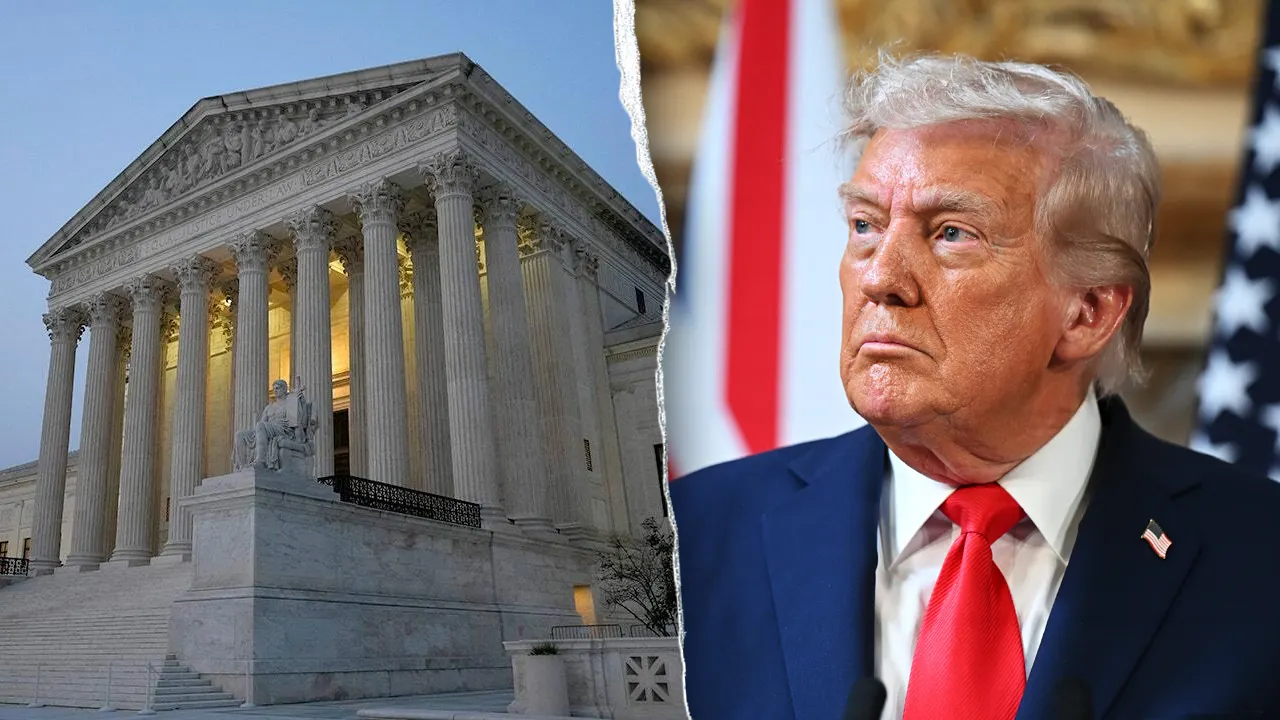
President Trump’s shock announcement raising EU auto tariffs from 15% to 25% — citing Turnberry Agreement violations — threatens to rattle global supply chains, hike sticker prices by up to $15,000, and torch a fragile transatlantic trade peace. Here’s the full analysis.

The Announcement That Shook Stuttgart and Brussels at Once

Picture a Friday afternoon at a Bavarian assembly plant just outside Munich. The line foremen are running their final quality checks on a row of gleaming 5-Series sedans, their destination stickers reading Port of Baltimore. Then, at 7:23 PM Central European Time, a notification pops on every phone on the factory floor. The American president has just posted to Truth Social. By midnight, the implications are reverberating in boardrooms from Wolfsburg to Maranello.

President Donald Trump announced on Friday, May 1, 2026, that he was raising tariffs on cars and trucks imported from the European Union to 25%, claiming the bloc had “failed to fully comply” with a trade agreement the two sides had negotiated. In characteristic fashion, he delivered the news not through a formal White House press briefing, not through the Office of the United States Trade Representative, but through a post on his social media platform. Bloomberg

“Based on the fact the European Union is not complying with our fully agreed to Trade Deal, next week I will be increasing Tariffs charged to the European Union for Cars and Trucks coming into the United States. The Tariff will be increased to 25%,” Trump wrote. ABC News

The announcement landed like a wrench thrown into the gears of one of the world’s most economically significant bilateral trade relationships. It was brazen, it was deliberately vague, and — depending on which economist you ask — it was either a masterstroke of negotiating leverage or an act of reckless self-sabotage. Possibly both.

What Exactly Is the Turnberry Agreement — and Why Does It Matter?

To understand why this escalation is so jarring, you need to understand the delicate architecture of the deal it is now threatening to demolish.

Trump and European Commission President Ursula von der Leyen had agreed to a trade deal last July which set a 15% tariff on most goods — the agreement, dubbed the Turnberry Agreement after Trump’s golf course in Scotland, had already been questioned after the U.S. Supreme Court ruled that Trump lacked the authority to declare a national emergency to justify many of his tariffs. Euronews

The Turnberry Agreement was itself a product of extraordinary geopolitical pressure. It came after months of tense negotiations, with the U.S. seeking to address its $235.6 billion goods trade deficit with the EU in 2024. For Brussels, the deal — however painful — represented a pragmatic climb-down from a far more damaging 27.5% tariff cliff. For European automakers, the 15% rate was a lifeline. For the EU economy at large, it was a fragile but functional truce. Autobypayment

That truce is now in tatters.

The White House said Trump would increase the EU’s tariff levies under Section 232 — the same authority used to justify the original 25% Section 232 tariffs on foreign autos in March 2025, which were then lowered as part of the trade framework with the EU. CNBC

Crucially, neither the White House nor the Trump administration offered a single concrete example of EU non-compliance. Neither EU nor U.S. officials responded to questions about in what specific manner the agreement had been violated — a significant omission that drew immediate fire from European negotiators, who accused the U.S. of “clear unreliability” and “repeatedly breaking its commitments.” Euronews

Scott Lincicome of the Cato Institute’s Center for Trade Policy Studies cut to the chase with brutal clarity. He described Trump’s threats as “just another example of why these trade deals are vapourware. They all rely on handshakes and winks and hopes that Trump doesn’t get mad about something.” France 24

For anyone who has followed U.S. trade policy over the past two years, the sentiment is hard to argue with.

The Industrial Logic: Reshoring, Real or Rhetorical?

To be fair to the White House’s underlying industrial thesis — a thesis that deserves rigorous engagement rather than reflexive dismissal — there is a coherent logic buried beneath the tariff noise.

Trump touted American automobile production capabilities in his Truth Social post, claiming that U.S. manufacturing plants “will be opening soon” and that “over 100 billion dollars” is being invested. He added: “It is fully understood and agreed that, if they produce Cars and Trucks in U.S.A. Plants, there will be NO TARIFF.” ABC News

This is the carrot-and-stick theory of industrial policy in its most naked form. Use tariffs as a punitive nudge — make importing so expensive that foreign brands have no rational choice but to build American. And there is evidence, tentative as it is, that the broader tariff campaign has begun to move the needle. Domestic production rose to 54.4% of all new vehicles sold as automakers like Toyota and Stellantis invested billions in U.S. facilities, responding to the tariff pressure. Digital Dealer

But here is the uncomfortable counterfactual that the administration’s boosters rarely address: factory investment cycles run on decade-long timelines. A BMW plant in South Carolina, a Mercedes assembly line in Alabama — these do not materialize in response to a Friday afternoon Truth Social post. They require geological patience, regulatory certainty, workforce development programs, and — above all else — predictability. The very thing that Trump’s tariff strategy systematically destroys.

The higher costs and limited availability of affordable vehicles have already pushed many buyers toward the used-vehicle market — an outcome that serves neither domestic automakers nor U.S. consumers. Reshoring is a worthy industrial goal. Whipsawing policy is its worst possible instrument. Digital Dealer

The German Gut Punch: VW, BMW, Mercedes, and a €36.8 Billion Exposure

If there is one economy on the planet staring down the barrel of this tariff escalation with cold dread, it is Germany’s.

Germany’s three largest carmakers — Volkswagen, Mercedes-Benz, and BMW — are responsible for around 73% of EU car exports to the United States. In 2024, Germany exported vehicles worth 36.8 billion euros ($42.8 billion) to the United States, while importing just 7.9 billion euros — a trade asymmetry that has long been a source of American frustration. Xinhua

The scale of German exposure to U.S. tariff policy is not merely a balance sheet problem — it is a social and political one. The automotive sector is the backbone of the German Mittelstand, the web of mid-sized suppliers and specialist manufacturers that employ hundreds of thousands of workers and underpin the country’s industrial identity. A recent VDA survey of medium-sized automotive firms showed that 86% expect to be affected by the tariffs — 32% directly and 54% indirectly through supplier and customer networks. Euronews

The market reaction to the May 1 announcement was swift and punishing. European automobile producers were among the hardest hit in Thursday’s trading: Porsche AG plunged 5.4%, Mercedes-Benz fell 4.8%, Ferrari dropped 4.7%, BMW fell 3.7%, and Volkswagen shed 2.9%. Auto parts makers Continental AG and Pirelli each fell around 2%. Euronews

In 2025 alone, BMW, Mercedes, and Volkswagen faced a combined loss of $6 billion due to U.S. tariffs imposed under President Trump’s administration. With the rate now returning to 25%, analysts are already recalibrating those loss projections sharply upward for 2026. Digital Dealer

Italy, too, faces meaningful collateral damage. Oxford Economics estimates that German and Italian automotive exports could decline by 7.1% and 6.6% respectively, with gross value added falling by 5.3% in Germany and 4.7% in Italy. For a country like Italy, where Stellantis already faces structural headwinds and Ferrari’s pricing power may not fully insulate it from demand shock, those numbers represent real vulnerability. Autobypayment

The American Consumer: Buckle Up for Sticker Shock

The argument that tariffs are “paid by foreign exporters” — an assertion the Trump administration has repeated with spectacular disregard for basic economics — receives its most decisive rebuttal at the car dealership.

Goldman Sachs analyst Mark Delaney said in a note that imported car prices could rise between $5,000 and $15,000 depending on the vehicle. Even U.S.-assembled models could see cost increases of $3,000 to $8,000 due to the use of foreign-sourced components. Euronews

Think about what that means in practice. A mid-range BMW 3-Series, currently retailing around $45,000, could carry a tariff-driven surcharge pushing it past $55,000. A Mercedes E-Class could drift uncomfortably close to $75,000. A 25% tariff could increase the cost of a German-made BMW or Mercedes-Benz by over $10,000 in the U.S. market. Tset

And the pain does not stop at the luxury tier. The supply chain reality of modern automobile manufacturing means that virtually no car sold in America is made entirely in America. Components, sensors, transmissions, semiconductors — all flow across borders in highly optimized webs of production. Assuming that roughly 50% of parts in U.S.-made cars are imported, tariffs on auto parts could significantly raise production costs across the board — including for domestic brands. Euronews

Some European manufacturers have attempted heroic feats of cost absorption. Mercedes held relatively firm to its commitment to absorb tariff costs, with 2026 model year increases of only a couple of hundred dollars, while BMW announced price increases of roughly 1% — around $400 to $1,500 — excluding EVs and select models. But at 25%, that strategy of generous absorption becomes financially untenable. At some point, as any industrial economist will tell you, the cost lands on the consumer. The only question is whether it lands softly or with a thud. Dealership Guy

The EU’s Calculated Response: Patience, Then Proportionality

The European Commission’s reaction to the May 1 announcement has been measured — at least publicly. A spokesman for the European Commission rejected the claim that the bloc was somehow not in compliance, saying the Commission “will keep our options open to protect EU interests” if Trump does not honour the pre-existing deal. Al Jazeera

Behind closed doors, the calculus is considerably more fraught. Brussels faces a structural dilemma: retaliate hard and risk a full-scale trade war with its most important security and intelligence partner; capitulate and signal to Washington that unilateral escalation carries no cost. Neither option is attractive. The history of European trade diplomacy suggests a third path — proportional, targeted, legally defensible counter-measures — chosen with surgical care to maximize political pain while minimizing economic blowback.

The EU Parliament is currently negotiating the implementation of the Turnberry Agreement, with MEPs seeking to attach safeguards — including a “sunset clause” under which the deal expires in March 2028 unless both sides agree to extend it, and a “sunrise clause” making tariff preferences conditional on U.S. compliance. These provisions now look prescient. They may also become the legal architecture for a European suspension of its own trade concessions. Euronews

Meanwhile, the political fault lines within Europe are sharpening. Member states are split between those behind France and Spain — who back a tougher stance — and others led by Germany and Italy, who favour preserving the deal as it was originally agreed. Germany’s urgency is obvious: it has the most skin in this particular game. But France’s instinct for economic nationalism and Spain’s grievance politics create a European coalition that Trump may be underestimating. Euronews

The Geopolitical Subtext: Cars as Leverage in a Wider Contest

It would be naive to analyze this tariff announcement purely through an economic lens. The timing and context are telling.

The announcement came a day after Trump renewed criticism of German Chancellor Friedrich Merz, telling him to focus on ending the Ukraine war instead of “interfering” on Iran. He also referred to European allies Spain and Italy as “absolutely horrible” for their refusal to get involved in the Iran war. Euronews

Trade and geopolitics in the Trump era are inseparable. Tariffs are not merely revenue instruments or industrial policy tools — they are signals of displeasure, instruments of political coercion, and leverage mechanisms in negotiations that extend far beyond any single sector. The EU’s reluctance to fall in line on Iran policy, its ongoing tensions with Washington over NATO burden-sharing, its periodic sovereignty assertions on digital regulation — all of these feed into the ambient temperature of the transatlantic relationship that ultimately determines whether the president wakes up inclined toward accommodation or aggression.

In this context, the 25% auto tariff is not simply a response to alleged trade deal non-compliance. It is a message. The question for European capitals is whether they choose to receive it or to challenge it.

Reshoring Reality Check: How Much American Manufacturing Actually Moves?

The White House narrative of tariffs-as-industrial-catalyst deserves a rigorous evidence test. The empirical picture, two years into the broad tariff campaign, is decidedly mixed.

While the tariffs were intended to encourage automakers to shift production to the U.S., the lack of policy consistency has made it challenging for companies to commit to long-term investment. BMW’s South Carolina plant produces excellent cars. Mercedes’ Alabama operations are world-class. But these investments preceded the current tariff regime by decades — they were made in response to long-term market strategy, not presidential social media posts. Digital Dealer

The more honest assessment of tariff-driven reshoring acknowledges a fundamental tension: the investments Trump is demanding require the very predictability and rule-of-law that his governing style corrodes. A board in Stuttgart will not approve a billion-dollar greenfield U.S. facility on the basis of a trade agreement that the president can unilaterally abrogate on a Friday afternoon. The investment calculus requires confidence that 25% today will not become 35% tomorrow — or zero percent if a new deal is struck next quarter.

Experts have said progress towards the reshoring goal has been largely muted, while critics have noted the tariff fees have been footed by U.S. businesses, which then pass the costs to consumers. Al Jazeera

Three Scenarios: Where This Goes From Here

Any honest analysis of Trump’s 25% EU auto tariff must grapple with uncertainty — and offer readers a structured framework for thinking about possible trajectories.

Scenario 1: The Negotiating Gambit (Most Likely Near-Term)

This scenario holds that the 25% announcement is a pressure tactic — a deliberate escalation designed to force the EU back to the negotiating table with accelerated concessions, whether on digital services regulation, defense procurement, agricultural market access, or some combination thereof. In this reading, the tariff is the opening bid in a renewed negotiation, not a permanent policy. Markets have seen this movie before. If the EU blinks — offering concessions on procurement or beef access, perhaps — the tariff may never fully take effect, or may be walked back within weeks.

Scenario 2: Sustained Escalation (Dangerous Middle Path)

Here, Trump’s domestic political incentives — particularly his need to maintain credibility with the manufacturing base he has cultivated — prevent him from backing down quickly. The 25% tariff takes effect, European automakers absorb losses and raise prices, U.S. consumers absorb sticker shock, and the EU responds with targeted counter-measures on American agricultural exports, tech services, or industrial goods. Inflation ticks upward on both sides of the Atlantic. This scenario damages both economies but particularly punishes the German export machine and the American car-buying middle class.

Scenario 3: Full Trade War (Tail Risk, Not Negligible)

The nightmare scenario in which escalation begets retaliation begets counter-retaliation, the Turnberry Agreement collapses entirely, and the global trading system loses one of its most important bilateral frameworks. Given the current geopolitical context — a fragile global economy already absorbing the shock of Middle East instability — this scenario carries real risks to global growth that extend far beyond the auto sector.

The WTO Problem: Rules in a Ruleless Age

Any discussion of this tariff must acknowledge the elephant in the room: the World Trade Organization’s multilateral trading rules, which the current U.S. administration has treated with barely concealed contempt.

The Supreme Court ruled in February that a large part of Trump’s tariff agenda was illegal — finding in a 6-3 majority that the IEEPA “does not authorize the President to impose tariffs.” The administration subsequently pivoted to Section 232 of the Trade Expansion Act of 1962, which allows tariffs on national security grounds. CNBC

Section 232 is a blunt instrument that, in the hands of this administration, has been stretched far beyond its original conceptual boundaries. No credible national security analysis identifies German luxury sedans as a threat to American security. The legal architecture of this tariff is built on foundations that are simultaneously legally contested domestically and internationally non-compliant. The EU has standing WTO cases that it could pursue — and a resurgent appetite for doing so.

The Bottom Line: Leverage with Real Costs

Here is the honest assessment that neither the tariff’s cheerleaders nor its reflexive critics want to fully acknowledge: there are legitimate concerns about trade imbalances, intellectual property, and the vulnerability of U.S. industrial capacity that motivate the broader tariff agenda. Car trade accounts for 60% of the EU’s overall goods trade surplus — a figure that does represent a genuine asymmetry in the bilateral relationship. The desire to reshape that asymmetry is not inherently unreasonable. Rabobank

But the instrument being deployed — a shock tariff hike announced via social media, on the eve of a holiday weekend, citing unspecified non-compliance — is precisely the wrong tool for achieving durable structural change. It maximizes short-term leverage while destroying the long-term institutional trust that sustainable industrial policy requires. It hits U.S. consumers in the wallet while claiming to serve their interests. It undermines American credibility as a reliable partner at the very moment when building durable alliances is a geopolitical imperative.

The German factory worker staring at that Truth Social notification will keep her line running Monday morning. The question is whether she will still be running it for U.S.-bound vehicles by the end of this decade — or whether her company will have quietly pivoted its export strategy toward Asia and the Middle East, recalibrating its American bet as too politically volatile to anchor long-term production commitments around.

That would be the real cost of this tariff. Not the stock market sell-off. Not the quarterly earnings miss. But the slow, irreversible strategic decoupling of the world’s two largest democratic economies — driven not by any deliberate policy vision, but by the accumulation of Friday afternoon social media posts that no one in Stuttgart, Brussels, or Washington can confidently predict or plan around.

Reshoring American manufacturing is a noble goal. It deserves better than this.

FAQ: Trump’s 25% EU Auto Tariffs — What You Need to Know

Q: What exactly did Trump announce on May 1, 2026? President Trump announced via Truth Social that the United States would increase tariffs on cars and trucks imported from the European Union from 15% to 25%, citing the EU’s alleged non-compliance with the Turnberry Agreement trade deal reached in July 2025. The tariff was set to take effect the following week.

Q: What is the Turnberry Agreement? The Turnberry Agreement is the informal name for the U.S.-EU trade deal struck in July 2025 between Trump and European Commission President Ursula von der Leyen. It set a 15% tariff on most EU goods entering the U.S. — lower than the 27.5% previously threatened — in exchange for EU concessions on U.S. exports.

Q: Which European automakers are most affected by the 25% tariff? BMW, Mercedes-Benz, Volkswagen (including Audi and Porsche), Stellantis, and Ferrari face the most significant exposure. German automakers account for approximately 73% of EU car exports to the U.S. and are therefore most directly impacted by any rate increase.

Q: How much could the 25% tariff raise car prices for American consumers? Goldman Sachs analysts estimate that imported EU car prices could rise by $5,000 to $15,000 per vehicle, depending on the model. Even U.S.-assembled vehicles could see price increases of $3,000 to $8,000 due to reliance on imported components.

Q: Are any vehicles exempt from the 25% tariff? Yes. Trump explicitly stated that vehicles produced in U.S. manufacturing plants would face no tariff — the central incentive mechanism designed to encourage European automakers to relocate production to America.

Q: How has the EU responded to the tariff announcement? The European Commission rejected the claim that it was non-compliant with the Turnberry Agreement and stated it would “keep options open” to protect EU interests. Individual MEPs and the VDA (Germany’s auto industry association) called the announcement a violation of existing commitments and urged both sides to resolve the dispute quickly.

Q: What legal authority is Trump using for the 25% tariff? The administration is invoking Section 232 of the Trade Expansion Act of 1962, which allows the president to impose tariffs on national security grounds. This authority was also used for the original 25% auto tariffs imposed in March 2025.


Discover more from The Economy

Subscribe to get the latest posts sent to your email.

Analysis

The Resilient Periphery: What the Singapore-New Zealand Supply Pact Means for Global Trade

Published

on

In the grand theater of global geopolitics, it is easy to fixate exclusively on the tectonic friction between superpowers. We monitor the escalating US-China tech rivalries, parse the rhetoric of calibrated economic coercion, and watch with bated breath as vital maritime arteries choke under geopolitical strain. The ongoing maritime disruptions in the Strait of Hormuz, which have sent cascading shockwaves through global energy routes and downstream petrochemical derivatives, are a stark reminder of our collective fragility.

Yet, while the world’s heavyweights engage in a costly zero-sum game of tariffs and technological containment, a far quieter, vastly more pragmatic revolution is taking place on the periphery. On May 4, 2026, within the air-conditioned calm of a Singapore leadership forum, Singapore Prime Minister Lawrence Wong and New Zealand Prime Minister Christopher Luxon signed a document that, in my view, represents the future of global commerce.

The Agreement on Trade in Essential Supplies (AOTES) is the world’s first legally binding bilateral supply chain resilience pact. In an era defined by weaponized interdependence—where countries routinely hoard vaccines, ban semiconductor exports, and weaponize grain shipments—this agreement is a radical act of mutual trust. It offers a blueprint for how open, trade-dependent economies can pivot from the vulnerabilities of “just-in-time” supply chains to the security of trusted, “just-in-case” networks.

The Anatomy of the AOTES: Institutionalizing Trust

To appreciate the gravity of the AOTES, we must first understand the default reflex of the modern nation-state during a crisis: protectionism. When global supply chains buckle, the immediate political impulse is to shutter borders and halt exports to satisfy domestic anxieties. We saw this during the darkest days of the COVID-19 pandemic, and we are witnessing it again as global food and fuel prices oscillate wildly due to Middle Eastern conflicts.

The AOTES essentially outlaws this panic-induced protectionism between Singapore and New Zealand. As detailed by Singapore’s Ministry of Trade and Industry (MTI), both governments have legally committed not to impose unnecessary export restrictions on a predefined list of critical goods. This is not a vague memorandum of understanding; it is a binding framework integrated into their existing Closer Economic Partnership (ANZSCEP). The list of protected goods is comprehensive, encompassing food, fuel, healthcare products, chemicals, and construction materials.

“We will keep essential goods flowing… We will not shut each other out,” Prime Minister Wong stated with characteristic pragmatism during the signing. “In difficult times, every country will be tempted to look inward. But when that happens, supply chains break down and everyone ends up worse off.”

It takes profound confidence to codify such a promise. If a severe global fuel shortage occurs, Singapore’s domestic populace will undoubtedly demand that local refineries prioritize local pumps. By signing the AOTES, Singapore is tying its own hands to ensure New Zealand is not left stranded. Conversely, New Zealand is guaranteeing that, should a regional crisis sever international food networks, its agricultural bounty will continue to sustain Singaporeans. This is not mere diplomacy; it is the institutionalization of survival.

The Beautiful Symmetry of Food and Fuel

The Singapore-New Zealand relationship is uniquely positioned for this kind of pact because of a striking macroeconomic symmetry. They are two highly developed, profoundly open economies situated at opposite ends of the Indo-Pacific, each possessing exactly what the other lacks.

Consider the energy-agriculture nexus. As Prime Minister Luxon highlighted during the inaugural Annual Leaders’ Meeting, roughly one-third of New Zealand’s fuel is refined in Singapore. The diesel that flows from the refineries of Jurong Island directly underpins the vast farming and freight logistics networks across the New Zealand archipelago. Without Singaporean fuel, New Zealand’s agricultural engine grinds to a halt.

Conversely, Singapore imports over 90 percent of its nutritional needs. The city-state is a financial and technological powerhouse but remains existentially vulnerable to global food shocks. New Zealand, a global heavyweight in agricultural exports, serves as a vital guarantor of Singapore’s food security. Under AOTES, the New Zealand food that Singapore requires to feed its population is harvested and transported using the very diesel Singapore refined and shipped southward.

This reciprocal machinery is the antithesis of the broad, vulnerable, multi-node supply chains that defined globalization in the 2010s. It signals a shift away from efficiency at all costs, moving toward dedicated bilateral corridors that prioritize resilience. If the closure of the Strait of Hormuz limits flows to the broader region, as Prime Minister Wong starkly warned, this Singapore-New Zealand artery is designed to bypass the global arterial blockage.

Small States, Big Ideas: Navigating Geopolitical Fragmentation

The broader significance of the May 4 signing cannot be understood without looking at the Comprehensive Strategic Partnership (CSP) elevated between the two nations in October 2025. The CSP upgraded ties across six pillars, including defense, climate change, and science and technology, essentially aligning the strategic posture of two middle powers operating in an increasingly multipolar and fractured Indo-Pacific.

Both nations are acutely aware of the dangers posed by superpower decoupling. For Washington and Beijing, the restructuring of global trade is viewed through the lens of national security and strategic dominance. For Wellington and Singapore, maintaining open trade lines is quite literally a matter of economic life and death. They do not have the luxury of vast domestic markets or endless natural resources to fall back on if the global trading system collapses into fragmented, protectionist blocs.

Therefore, they have historically punched above their weight in setting global trade rules. It is worth recalling that New Zealand and Singapore, along with Chile and Brunei, were the original architects of the P4 agreement in 2005. That small, seemingly niche pact eventually snowballed into the Trans-Pacific Partnership, and ultimately the CPTPP—one of the world’s most significant trade blocs.

Similarly, they pioneered the Digital Economy Partnership Agreement (DEPA) alongside Chile, setting early global rules for digital trade, cross-border data flows, and AI governance. With the AOTES, they are running the same playbook. They are establishing a high-standard, proof-of-concept framework for supply chain resilience with the explicit hope that it will attract like-minded nations.

As PM Luxon noted in his remarks, they are open to inviting other countries that can “meet the standard” and are prepared to “have each other’s backs.” In a global economy desperate for stability, this plurilateral potential is immensely valuable. It offers a blueprint for middle powers—from Canada to South Korea to Australia—to build an overlapping web of resilient trade corridors that are immune to superpower whims or regional conflicts.

The Next Frontier: AI Deployment and the Green Transition

While the AOTES addresses the immediate, physical requirements of national survival—calories and kilowatts—the deepening Singapore-New Zealand partnership is equally focused on the defining economic transformations of our era: artificial intelligence and the green economy.

In the realm of AI, both nations wisely recognize their structural limitations. Neither Singapore nor New Zealand will win the capital-intensive arms race to build the next trillion-parameter foundational model; that arena is firmly dominated by the US-China tech rivalries and Silicon Valley monoliths. However, the true economic value of the next decade will not solely reside in creating the models, but in the speed and ingenuity of their deployment.

At the Singapore-New Zealand Leadership Forum, PM Wong emphasized synergies for deploying AI in practical, economy-boosting sectors. By establishing joint frameworks for AI governance, healthcare diagnostics, advanced manufacturing, and maritime logistics, these two nations can serve as agile regulatory sandboxes. They can attract capital from global enterprises seeking stable, forward-looking jurisdictions to test and scale AI applications without the regulatory whiplash seen in larger blocs.

Parallel to this digital collaboration is an urgent push toward the green economy. Both nations face distinct challenges in achieving net-zero emissions. Singapore is land-scarce and alternative-energy disadvantaged, relying heavily on imported natural gas. New Zealand, while blessed with renewable hydropower and geothermal energy, grapples with massive agricultural emissions.

Through the elevated CSP, the two are pooling intellectual and financial capital to address these hurdles. There is significant potential for cross-pollination between their sovereign wealth funds and institutional investors—such as Temasek Holdings and the NZ Super Fund—to scale sustainable finance, develop robust carbon markets, and accelerate the commercialization of green hydrogen and sustainable aviation fuels (SAF). It is no coincidence that the CEOs of Singapore Airlines and Air New Zealand are fostering closer ties; decarbonizing long-haul aviation is an existential requirement for both geographically isolated nations.

The Realist’s Caveat: Testing the Ties

Despite the undeniable strategic elegance of the AOTES and the broader partnership, a rigorous analysis must acknowledge the implementation risks. Treaties, no matter how ironclad the legal vernacular, are only as strong as the political will sustaining them during a true crisis.

What happens if a severe geopolitical shock fundamentally severs maritime routes through the South China Sea or the Strait of Malacca, rather than just the Middle East? While the political commitment to supply one another remains, the physical logistics of moving diesel from Jurong Island to Auckland, or dairy from Waikato to Pasir Panjang, could become prohibitively dangerous or expensive. The AOTES establishes a framework for consultations and information sharing during disruptions, but it cannot magically conjure cargo ships out of thin air or guarantee their safe passage through contested waters.

Furthermore, defining what constitutes an “unnecessary” export restriction leaves a sliver of ambiguity that could be exploited under intense domestic political pressure. If domestic fuel reserves in Singapore drop to critical, emergency-service-only levels, political leaders will face an excruciating choice between international legal commitments and domestic stability.

Scaling the AOTES to include other nations also presents a diplomatic hurdle. Bilateral trust between two deeply aligned, non-threatening, complementary economies is relatively easy to foster. Expanding this to a plurilateral agreement involving larger economies with competing domestic industries will require navigating fierce lobbying and protectionist instincts.

A Blueprint for Resilient Globalization

Despite these caveats, the signing of the Agreement on Trade in Essential Supplies on May 4 is a milestone worth celebrating. It is a necessary rebuke to the prevailing narrative of global decoupling.

For the past five years, the global economic discourse has been dominated by fear: fear of dependency, fear of technological espionage, fear of supply shocks. The default policy response from major capitals has been to build higher walls, subsidize domestic industries, and retreat into economic nationalism.

Singapore and New Zealand are offering an alternative. They are proving that the antidote to fragile globalization is not isolationism, but resilient globalization. By codifying mutual reliance, integrating their technological and green ambitions, and refusing to succumb to the sirens of protectionism, they have charted a course through the geopolitical storm.

In an era where large powers are increasingly defining themselves by who they choose to exclude, this partnership between two forward-looking middle powers reminds us of the enduring, stabilizing power of choosing to include. It is a small-state masterclass with profoundly big implications, and the rest of the world would do well to take notes.


Discover more from The Economy

Subscribe to get the latest posts sent to your email.

Continue Reading

Analysis

Why Walmart’s Self-Checkout Retreat Exposes the Hidden Cost of Frictionless Retail

Published

on

Alternative titles: — “Scan It Yourself, Pay for It Later: The True Price of Retail’s Self-Checkout Obsession” — “The Machine That Broke the Store: Inside Walmart’s Self-Checkout Reckoning”

There is a moment, familiar to anyone who has stood in a Walmart self-checkout lane with a bag of produce and a mild sense of dread, when the machine announces — with all the patience of a parking ticket — “unexpected item in bagging area.” You haven’t moved. You haven’t breathed. The item is exactly where it should be. And yet the kiosk, confidently wrong, has frozen your transaction and summoned a frazzled attendant who will wave a card over a sensor and offer a smile that says: I know. I’m sorry. This happens constantly.

That moment — small, mundane, almost comic — turns out to be one of the most consequential design failures in modern retail history.

For nearly two decades, the self-checkout lane was the retail industry’s great productivity promise: fewer cashiers, faster throughput, lower labor costs, happier shareholders. Walmart, the world’s largest retailer by revenue, leaned into this promise harder than almost anyone. At peak deployment, Walmart operated self-checkout kiosks across thousands of its more than 4,700 U.S. stores, and its subsidiary Sam’s Club turned the concept into an evangelical mission. The logic was iron-clad — or so it seemed.

Now, quietly but unmistakably, the reckoning has arrived.

How Walmart’s Self-Checkout Strategy Unraveled — and What It Signals for Retail

The rollback began not with a press release but with a police log. In Shrewsbury, Missouri, the local police department responded to 509 calls from a single Walmart location in the first five months of 2024. Strip out self-checkout lanes, as Walmart subsequently did at that store, and the same period in 2025 produced 183 calls — a 64% decline. Arrests fell from 108 to 49. The local police chief attributed the drop directly to the removal of the automated kiosks, as documented in a May 2026 investigation by Rolling Out.

That is not a footnote. That is a business case.

Walmart has now fully removed self-checkout from at least six known locations — Shrewsbury, Missouri; Cleveland, Ohio; three stores in New Mexico; and one in Los Angeles, California — with an unknown number of additional stores reducing or restricting their use, according to retail industry tracker Kiosk Industry. The company has simultaneously imposed strict 15-item limits on self-checkout users and is enforcing lane monitoring to prevent the full-cart incursions that became a low-grade norm. “We currently have no additional conversions to announce,” a Walmart spokesperson told CX Dive with the careful precision of a company that almost certainly has more conversions to announce. “We believe the changes will improve the in-store shopping experience and give our associates the chance to provide more personalized and efficient service,” the company told Retail Dive.

That is corporate for: the experiment had side effects we didn’t fully price in.

The Shrink Problem: When Convenience Becomes a Liability

Let’s be precise about what is actually happening here, because the media narrative has oscillated between two equally misleading poles: Walmart is abandoning automation and this is just a few stores, calm down. Both miss the structural story.

The structural story is shrink.

In retail, “shrink” refers to inventory that disappears without generating revenue — theft, misplacement, vendor fraud, administrative error. For Walmart and its peers, the self-checkout kiosk transformed this line item from a manageable cost into a genuine crisis. Research cited by NetSuite and drawn from University of Leicester studies found shrink at self-checkout lanes running at 3.5% of sales — compared to just 0.2% at conventional cashier-staffed lanes. That is a 17-fold difference.

The scale of the theft problem became impossible to ignore. The National Retail Federation’s 2025 Impact of Theft & Violence report, based on surveys of retailers representing $1.3 trillion in annual U.S. sales, documented an 18% increase in average shoplifting incidents in 2024 compared to 2023. Threats or acts of violence during theft events rose 17% in the same period. And according to the Appriss Retail 2026 Total Retail Loss Benchmark Report, cited by security analysts at Safe and Sound, U.S. retailers lost an estimated $90 billion to inventory shrink alone in 2025.

These numbers demand context. The NRF figures have attracted legitimate methodological scrutiny — the organization discontinued its 32-year annual shrink survey in 2024 and replaced it with a survey of loss-prevention executives rather than hard inventory data, a change noted critically by analyst Judd Legum in Popular Information. Independent criminologists, including researchers at the Council on Criminal Justice, have noted that FBI property crime data suggests shoplifting rates in 2023 were actually lower than 2019 levels. Retailers and their lobby groups have strong incentives to amplify loss narratives. All of this is worth bearing in mind.

And yet — and this is the operative clause — none of it fully exonerates the self-checkout kiosk. Even if absolute theft levels are contested, the directional evidence that self-checkout generates disproportionately higher shrink than staffed lanes is substantial. The mechanism is obvious: unsupervised scanning creates frictionless opportunities for both deliberate fraud and unconscious non-scanning. A December 2025 LendingTree survey of 2,050 U.S. consumers found that 27% of self-checkout users admitted to intentionally leaving with at least one unscanned item, up from 15% in 2023, with another 36% saying they had accidentally done so — and of those, 61% simply kept the item rather than returning it.

The kiosk did not create dishonesty. But it systematically reduced the social and practical friction that discourages it.

What the Walmart Self-Checkout Changes of 2025–2026 Actually Mean

Walmart’s response to this reckoning has been strategically asymmetric — which is, in fact, the most interesting thing about it.

On one hand, the company is quietly retreating from pure self-checkout in high-theft, high-friction environments. On the other, it is simultaneously investing heavily in what might be called intelligent hybrid automation: AI-enhanced kiosks with computer-vision theft detection, mobile Scan & Go integration for Walmart+ members, digital shelf labels (being rolled out to 2,300 U.S. locations by 2026, per Money Digest), and a partnership with OpenAI to develop “Sparky,” a personalized shopping AI agent embedded in the Walmart app.

The Walmart self-checkout changes of 2025 and 2026, in other words, are not a retreat from technology. They are a recalibration of which technology, deployed where, in what combination with human labor.

Key Walmart self-checkout developments to track:

  • AI surveillance integration: Walmart has deployed AI-powered cameras at self-checkout stations that detect missed scans in real time, generating overhead video replays for staff review. RFID tags and invisible barcodes are expanding to make fraud more technically demanding.
  • 15-item limits and lane restrictions: High-shrink stores are now enforcing item caps, effectively redirecting large-basket shoppers to staffed lanes — where, not coincidentally, theft rates are dramatically lower.
  • Walmart+ fast lanes: Paid membership holders gain access to expedited self-checkout pathways, creating a tiered experience that both rewards loyalty and generates data on high-trust shoppers.
  • Staffing recalibration: New legislation in several states is also accelerating the calculus. States including California, Connecticut, Massachusetts, New York, Ohio, Rhode Island, and Washington are all pursuing laws that would mandate employee-to-kiosk ratios, item limits, or minimum staffed-lane requirements. The proposed 2026 framework in New York City would require at least one employee per three kiosks and cap self-checkout transactions at 15 items — daily fines of up to $100 per violation are the proposed enforcement mechanism.

The regulatory environment is no longer an afterthought. It is becoming a cost variable in the automation equation.

Sam’s Club’s Divergent Bet — and What It Tells Us

If Walmart’s core retail operation represents a strategic retreat from uncritical self-checkout expansion, then its subsidiary Sam’s Club is running an almost perfectly opposite experiment — and watching both simultaneously is the most instructive thing a retail strategist can do right now.

In April 2025, Sam’s Club President and CEO Chris Nicholas announced at Walmart’s Investment Community Meeting plans to phase out traditional checkout lanes entirely across all 600 U.S. locations. The replacement: an upgraded mobile Scan & Go system combined with “Just Go” — an AI-powered computer vision arch at store exits that identifies every item in a departing member’s cart within seconds, verifying payment without human intervention or receipt checks.

The Grapevine, Texas flagship, already operating on this model, is being positioned as the template for the club of the future. Sam’s Club reports a 23% faster exit time and an 11% jump in member satisfaction scores at locations using the exit technology, per Sam’s Club data published via Walmart Global Tech. The system — which the company emphasizes has been built and refined in-house rather than licensed from a third party — now processes millions of cart verification events with continuous AI learning.

“This is one of the fastest, most scalable transformations happening in retail today,” Nicholas declared. It is a remarkable statement, and not an entirely immodest one.

But here is the operative friction point: Sam’s Club’s model works, in significant part, because of who its members are and how they shop. Warehouse club members are higher-income, more tech-comfortable, and frequently motivated by the efficiency of a membership-model experience. They have already agreed to be tracked and verified as a condition of membership. Scan & Go adoption is high because the friction of using the app is lower than the friction of waiting in a warehouse checkout line.

The same logic does not translate cleanly to a Walmart Supercenter in a lower-income urban ZIP code, where smartphone penetration and app literacy are more variable, where basket sizes and product mixes are radically different, and where the social contract between store and shopper is less formalized. As analysts at Kiosk Industry have observed, mandating a phone-centric checkout model shifts accessibility barriers rather than eliminating them — from “can you reach the kiosk” to “do you own, understand, and trust the app.”

This is not a small distinction. Accessibility in retail is not merely a feel-good consideration; it is a market share consideration. Walmart serves roughly 255 million customers weekly across its global footprint. Designing its checkout architecture for the modal tech-comfortable shopper means designing it poorly for a substantial minority who aren’t.


The Competitive Landscape: Target, Costco, Dollar General, and the Checkout Wars

Walmart is not navigating this inflection point alone. The entire sector is conducting simultaneous experiments, arriving at fascinatingly varied conclusions.

Target moved earlier, limiting self-checkout to 10 items or fewer and granting store managers expanded discretion over lane ratios — a decentralization of checkout strategy that tacitly acknowledges no single formula fits every store format or customer demographic.

Dollar General took the most aggressive step. After rolling back self-checkout across thousands of locations and removing it entirely from roughly 300 stores most prone to shoplifting, the discounter reported year-on-year declines in merchandise shrink, with margin benefits expected to continue through 2025 and beyond. The data point is critical: removing self-checkout worked, financially, at Dollar General. The lesson may not transfer at scale to a Walmart, but it illustrates that the industry’s reflexive assumption — that more automation equals more efficiency equals more profit — was simply wrong at certain store formats and customer profiles.

Costco has taken the most contrarian position of all, essentially refusing to deploy meaningful self-checkout and continuing to invest in staffed checkout as a core element of its customer experience model. Its membership satisfaction scores remain among the highest in retail. The choice reflects a brand philosophy in which human interaction is itself a product feature — one that justifies the membership fee and sustains the loyalty that drives Costco’s extraordinary repeat-visit rates.

Three large, successful retailers. Three different answers to the same question. This, more than any individual data point, captures the true complexity of the self-checkout debate.

Customer Psychology and the Invisible Labor Transfer

There is a dimension of the self-checkout conversation that rarely surfaces in earnings calls or loss-prevention reports, and that is the labor it invisibly transfers onto the customer.

When Walmart or any retailer installs a self-checkout kiosk, it is not merely automating a process — it is outsourcing a job. The customer becomes the cashier: scanning, bagging, managing payment, troubleshooting errors, and navigating produce codes for items that have no barcode. This is unpaid labor. Research in consumer psychology has consistently shown that customers who experience friction — unexpected machine errors, weight-sensor failures, age-verification holds, the familiar indignity of waiting for an attendant to clear a flagged transaction — develop measurable negative associations with the retailer. The satisfaction hit from a failed self-checkout attempt is not recoverable with a receipt coupon.

This matters enormously in the context of Walmart’s competitive positioning. The company has, over the past several years, made remarkable strides in attracting higher-income shoppers who have historically preferred Target or specialty grocers. Its investments in store design, private-label quality, and digital integration reflect an understanding that the brand ceiling is not fixed. A dysfunctional self-checkout experience — or worse, a system that implicitly treats every customer as a potential shoplifter through overhead cameras, weight-sensor lockouts, and receipt verification demands — works directly against that repositioning effort.

The dignity question is real. It was articulated bluntly by customer advocates and disability rights organizations when retailers began deploying surveillance-heavy self-checkout enhancements: being required to scan under a camera, have your items visually verified, and prove your exit to an AI archway feels, to many shoppers, less like convenience and more like a checkpoint. The analogy to airport security is not accidental — it is, in fact, exactly how observers have described Walmart’s newer checkout gate designs. Airports do not inspire warmth or loyalty. Grocery stores that feel like airports will not, either.

The Labor Question: Automation, Jobs, and the Political Economy of the Checkout Lane

Any serious analysis of Walmart’s evolving self-checkout strategy must eventually engage the labor dimension — not merely as an ethical sidebar, but as a structural business variable.

Walmart employs approximately 1.6 million people in the United States alone. Self-checkout, as originally deployed, carried an explicit promise to reduce headcount at the front end. That promise was partially delivered. But the hidden costs — in shrink, in customer dissatisfaction, in regulatory exposure, in associate morale — have materially complicated the calculus.

When Dollar General reduced self-checkout, shrink declined. When Walmart removed kiosks from Shrewsbury, police calls dropped by two-thirds. Neither outcome was achieved by technology. Both were achieved by reintroducing human presence. The employee, it turns out, is not merely a cost line to be optimized away. The employee is, in significant contexts, the product: the deterrent, the problem-solver, the face of the brand.

Sam’s Club frames this carefully. “Our 100,000 associates remain central to the company’s momentum,” the company said alongside its Scan & Go announcement. AI, it insists, frees workers from repetitive tasks to focus on “more meaningful and engaging responsibilities.” This is the optimistic version of retail labor’s future, and it may be genuinely sincere. It is also, inevitably, the framing a company uses when it is reducing labor at the front end and needs the remaining workforce not to panic.

The honest answer is that the labor implications of Walmart’s hybrid automation strategy remain unresolved. Fewer cashiers are needed to staff a fleet of AI-monitored kiosks than to run an equivalent number of traditional lanes. The jobs that replace them — app support, tech troubleshooting, loss-prevention response — require different skills and, often, different people.

The Future of Walmart Self-Checkout: What 2026 and Beyond Actually Looks Like

The future of Walmart self-checkout is neither the triumphant frictionless utopia that Silicon Valley adjacent retail-tech optimists promised, nor the simple return to cashier-staffed lanes that populist critics occasionally demand. It is something more interesting and more operationally complex than either.

The emerging model — visible in Walmart’s own pilot programs, Sam’s Club’s architectural bets, and the competitive movements across the sector — looks something like this:

Stratified checkout by basket type. Self-checkout survives, robustly, for small-basket express transactions. The 15-item limit is not a retreat from automation; it is a rationalization of which use cases automation actually serves well. A customer buying toothpaste and a protein bar does not need a cashier. A customer buying a week of groceries for a family of five, including three types of loose produce, two items with security tags, and a baby formula that requires age verification, arguably does.

AI-augmented kiosks with real-time verification. Computer vision systems that flag missed scans, alert attendants to suspicious behavior, and log transactions for loss-prevention review are becoming standard rather than premium. This technology doesn’t eliminate the need for human oversight; it makes human oversight dramatically more scalable.

Mobile-first checkout for high-trust, high-loyalty customers. Scan & Go will expand — but its growth will be fastest in formats where the membership model creates a pre-verified, tech-comfortable customer base. For mainstream Walmart, it will remain an option, not a mandate.

Staffed lanes as a premium service feature. The most counterintuitive development is the reframing of the human cashier from cost liability to competitive differentiator. Retailers that invest in fast, friendly staffed checkout — and design the store experience to make it genuinely faster than the automated alternative — may discover they have a sustainable advantage in customer satisfaction scores that no kiosk upgrade can replicate.

The most important question Walmart and its peers must answer is not “how do we automate checkout?” It is “what does our customer actually want when they arrive at the front of the store, and how do we design for that outcome at the lowest total cost, including shrink, regulatory risk, and customer dissatisfaction?”

That is a more complex optimization problem than it appeared in 2010. Which is why the self-checkout lane — that small, humming monument to retail’s love affair with efficiency — is no longer a settled solution.

It is, once again, an open question.

Conclusion: The Limits of the Frictionless Ideal

Automation in retail is not a mistake. It is, in many contexts, genuinely better — faster, cheaper, more consistent than the human alternative. But the self-checkout experiment at scale has produced something more instructive than either its advocates or critics anticipated: a detailed empirical record of where the frictionless ideal encounters the resistant reality of human behavior.

People steal more when no one is watching. People feel more surveilled when machines treat them as suspects. People choose convenience differently depending on basket size, technology comfort, and what they silently expect from the relationship between a store and its customer. These are not engineering problems. They are behavioral and social ones, and no algorithm — however elegantly trained on exit-arch cart images — fully resolves them.

Walmart’s ongoing Walmart self-checkout changes in 2025 and 2026 are not a failure. They are a maturation: a company large enough to run controlled experiments at civilizational scale, learning, store by store, that the optimal checkout model is not universal. It is contextual. The Shrewsbury data point — 509 police calls reduced to 183 simply by returning a human being to the front of the store — may be the most quietly important retail insight of the decade.

What comes next will be a hybrid architecture: AI-enhanced kiosks where they work, human cashiers where they don’t, mobile checkout where the customer wants it, and staffed express lanes for everything in between. Retailers that treat this as a nuanced design challenge — rather than a cost-reduction mandate dressed up in the language of customer experience — will pull ahead.

The rest will keep getting that “unexpected item in bagging area” error. And this time, they’ll have no one to wave a card and say: I know. I’m sorry. This happens constantly.


Discover more from The Economy

Subscribe to get the latest posts sent to your email.

Continue Reading

Analysis

Apple’s Vibe Coding Crackdown: Protecting Users or Choking the Next Software Revolution?

Published

on

Dhruv Amin thought he had fixed it. For months, the co-founder of Anything—an AI app builder that lets users conjure mobile software from plain English—had been trapped in a bureaucratic purgatory that would make Kafka blush. Apple had blocked his updates since December. Then, on March 26, it pulled the app entirely. A brief, tantalizing reinstatement followed on April 3, only for Cupertino to yank it again, this time with a new edict: stop marketing yourself as an app maker. The whiplash would be almost comical if it weren’t so expensive. Anything, after all, is a company valued at $100 million, backed by serious venture capital, and responsible for helping publish thousands of apps that now live on Apple’s own platform.

Welcome to the Great Vibe Coding Crackdown of 2026—a collision between the democratization of software creation and the most powerful gatekeeper in digital capitalism.

The numbers alone tell you something seismic is happening. In the first quarter of 2026, App Store submissions surged 84% year-over-year to 235,800 new apps, the largest spike in a decade. According to data from Sensor Tower reported by The Information, the flood follows a 30% increase for all of 2025, reversing nearly a decade of declining submission volume. The culprit? “Vibe coding,” a term coined by OpenAI co-founder Andrej Karpathy in early 2025 to describe the practice of building software not by typing syntax, but by conversing with AI—describing what you want, steering the output, and “fully giving in to the vibes”. Tools like Replit, Vibecode, Lovable, and Cursor have turned non-programmers into publishers and turbocharged existing developers, generating a Cambrian explosion of software that has left Apple’s review infrastructure gasping for air.

But here is where the plot thickens. Just as this wave crested, Apple began slamming doors. In mid-March, the company blocked updates to Replit—the $9 billion coding platform—and Vibecode, citing a longstanding rule that might as well be the App Store’s atomic bomb: Guideline 2.5.2. The rule states that apps must be “self-contained” and may not “download, install, or execute code which introduces or changes features or functionality of the app”. On its face, this is a security measure. In practice, it is the regulatory noose that threatens to strangle an entire category of innovation.

The Security Theater—and the Business Reality

Apple’s official position is measured, almost lawyerly. The company insists it is not targeting vibe coding per se. “There are no specific rules against vibe coding,” a spokesperson told MacRumors, “but the apps have to adhere to longstanding guidelines”. The concern, Apple says, is that apps like Anything allow users to generate and execute code dynamically—code that never passed through Apple’s review process, code that could morph an innocent utility into a data-harvesting nightmare without Cupertino ever knowing. It is, in Apple’s telling, a matter of protecting the ecosystem’s integrity.

And let us be fair: they are not wrong about the risks. Apple rejected nearly 1.93 million app submissions in 2024 alone for quality and safety violations. The App Store’s value proposition has always been curation—a walled garden where malware is rare and trust is high. If any app can transform itself post-review via an AI prompt, the review process becomes little more than theater. Approval times have already ballooned from 24 hours to as many as 30 days under the submission crush, though Apple disputes this, claiming 90% of submissions are processed within 48 hours. When review teams are overwhelmed, the temptation to slam the door on dynamic execution is understandable.

Yet the enforcement reeks of selective amnesia. Safari executes JavaScript constantly. Apple’s own Shortcuts app runs arbitrary automation scripts. Swift Playgrounds—literally an Apple product—lets users write and run code on iOS devices. The distinction Apple draws is that vibe coding apps generate new applications, effectively turning one app into a platform for unreviewed software. But is that distinction about user safety, or about platform control?

Consider the timing. Apple has recently integrated AI coding assistants from OpenAI and Anthropic directly into Xcode, its proprietary development environment. It is perfectly happy for AI to help professional developers write code, so long as they remain inside Apple’s toolchain, paying Apple’s fees, and submitting to Apple’s review. But when a third-party app lets a teenager in Mumbai or a marketer in Minneapolis build and preview an iOS app without ever touching a Mac? That, apparently, crosses the line. As Forbes noted, vibe coding tools also facilitate web apps that bypass the App Store entirely—and Apple’s 30% commission along with it. The security rationale is real, but it is doing some very convenient double duty.

The Founders’ Dilemma

If you are a startup betting on the vibe coding revolution, the message from Cupertino is chilling. Replit, one of the most established names in the space, has seen its iOS app frozen since January, slipping from first to third in Apple’s free developer tools rankings because it cannot ship updates. Vibecode, which marketed itself as “the easiest way to create beautiful mobile apps,” has been forced to pivot to building websites and rebrand as a “learning-focused product”. Anything has been booted from the store twice, despite Amin submitting four technical rewrites in an attempt to comply with Apple’s opaque demands.

“I just think vibe coding is going to be so much bigger than Apple even realizes,” Amin told The Information. He is almost certainly correct. Cursor is now valued at $29.3 billion. Lovable raised $330 million at a $6.6 billion valuation after fiftyfold revenue growth in a year. These are not fringe experiments; they are the fastest-growing corners of enterprise software. And they are increasingly mobile-first. When Apple blocks the pipeline, it does not just inconvenience a few indie hackers. It alienates a generation of creators who expect to build on the devices they actually own.

Replit CEO Amjad Masad has been characteristically blunt, arguing that Apple’s guidelines have created an “unworkable position” for developer tools on iOS. The frustration is not merely about one app or one update. It is about the fundamental asymmetry of platform power. Apple writes the rules, interprets the rules, enforces the rules, and profits from the rules—all while competing with the very developers subject to them. In any other industry, we would call this a conflict of interest. In tech, we call it Tuesday.

Platform Power in the Age of Generative Software

This dispute is bigger than App Store submissions. It is a stress test for how incumbent platforms will manage the transition from static software to generative, AI-native applications. For two decades, the App Store operated on a simple premise: a developer writes code, compiles a binary, submits it for review, and ships a finished product. Vibe coding obliterates that linearity. The app is no longer a fixed artifact; it is a conversation, a prompt away from becoming something else entirely. Guideline 2.5.2 was written for a world of CDs and downloads, not for software that births software.

The antitrust implications are impossible to ignore. The European Union’s Digital Markets Act has already forced Apple to allow alternative app marketplaces in Europe, creating the surreal possibility that a vibe coding app blocked in the US could distribute freely in Frankfurt or Paris.

Regulators in Washington, already skeptical of Apple’s 30% “Apple Tax,” are watching closely. As PYMNTS reported, the crackdown “could invite regulatory scrutiny amid increased interest in cases of anticompetitive behavior among Big Tech firms”. When a platform uses vague safety rules to suppress tools that threaten its revenue model, antitrust lawyers tend to reach for their pens.

But the most profound shift may be cultural. Vibe coding represents something Apple should theoretically love: the expansion of creativity to billions of non-technical users. It is the ultimate expression of the “bicycle for the mind” ethos Steve Jobs once championed. Instead, Apple is treating it as a threat to be contained. The result? Innovation is already leaking toward more permissive ecosystems. Android has not applied equivalent restrictions. The open web—accessible through Safari, ironically—offers a complete bypass. If Apple persists, the next great software platform may simply never bother with native iOS at all.

The Wrong Side of History?

So where does this leave us? Is Apple the responsible steward of a secure ecosystem, or a nervous incumbent protecting its moat?

The honest answer is both—and that is what makes this story so vexing.

Apple’s security concerns are not fabricated. AI-generated code is notoriously brittle, riddled with unhandled edge cases, exposed API keys, and performance leaks. An App Store flooded with slapdash, AI-slop apps—many built by users who do not understand what they have created—could degrade trust and stability for everyone. There is a legitimate debate about whether users who “vibe code” a banking app or a health tracker should be allowed to distribute it without meaningful oversight. Platform responsibility is not a fiction invented by Apple’s lawyers; it is a real burden that grows heavier as platforms scale.

Yet Apple’s current approach is the policy equivalent of using a sledgehammer to perform surgery. The guideline is blunt. The enforcement is erratic—Anything’s yo-yo status suggests review teams are making it up as they go along. And the hypocrisy of allowing Xcode’s AI integrations while blocking Replit’s undermines any claim of principled neutrality. If the worry is truly about unreviewed code, why does Shortcuts get a pass? If the concern is malware, why not create a sandboxed tier for generative apps with enhanced telemetry and restricted permissions, rather than an outright ban?

What Apple seems unwilling to accept is that the genie is out of the bottle. You cannot regulate AI-generated software back into the era of floppy disks. The question is not whether vibe coding will transform software development—it already has—but whether Apple will adapt its garden walls to accommodate a new species of plant, or whether it will watch innovation bloom elsewhere.

A Fork in the Road

Looking ahead, I see three possible futures.

First, Apple could clarify and liberalize. It might introduce a new classification for “generative developer tools,” with stricter runtime sandboxing but explicit permission to operate. This would preserve security while acknowledging reality. It is the smart play, but it requires Cupertino to cede a measure of control, something it has historically resisted with religious fervor.

Second, regulation could force the issue. The EU’s alternative app stores are just the beginning. If US lawmakers conclude that Guideline 2.5.2 is being weaponized against competitors, we could see mandates for sideloading or third-party app stores that render Apple’s restrictions moot for a significant portion of the market. The platform would remain lucrative, but its monopoly on distribution would erode.

Third—and this is the one I suspect is most likely in the near term—the web wins by default. Vibe coding tools will increasingly bypass native iOS entirely, delivering sophisticated experiences through progressive web apps that run in Safari. Apple will retain its security blanket, but it will also watch the most exciting software innovation of the decade migrate to an open standard it does not control. That is a pyrrhic victory if ever there was one.

The irony is almost too perfect. Apple, the company that once promised to “think different,” is now clinging to a rulebook written for a different century. Guideline 2.5.2 is not evil; it is simply obsolete. In trying to protect users from the risks of AI-generated software, Apple risks protecting them from the benefits too—from the sheer, anarchic creativity of a world where anyone can build an app before lunch.

Amin and his peers are not asking for anarchy. They are asking for a clear, consistent path to compliance. They are asking Apple to recognize that vibe coding is not a loophole to be closed, but a paradigm to be managed. If Cupertino cannot make that intellectual leap, it will not stop the revolution. It will merely ensure that the revolution happens without it.

And in the platform economy, irrelevance is the only sin that truly cannot be forgiven.


Discover more from The Economy

Subscribe to get the latest posts sent to your email.

Continue Reading

Trending

Copyright © 2025 The Economy, Inc . All rights reserved .

Discover more from The Economy

Subscribe now to keep reading and get access to the full archive.

Continue reading


