
Blockchain
The Institutional Era: A Comprehensive Cryptocurrency Investment Analysis for 2026

Executive Summary
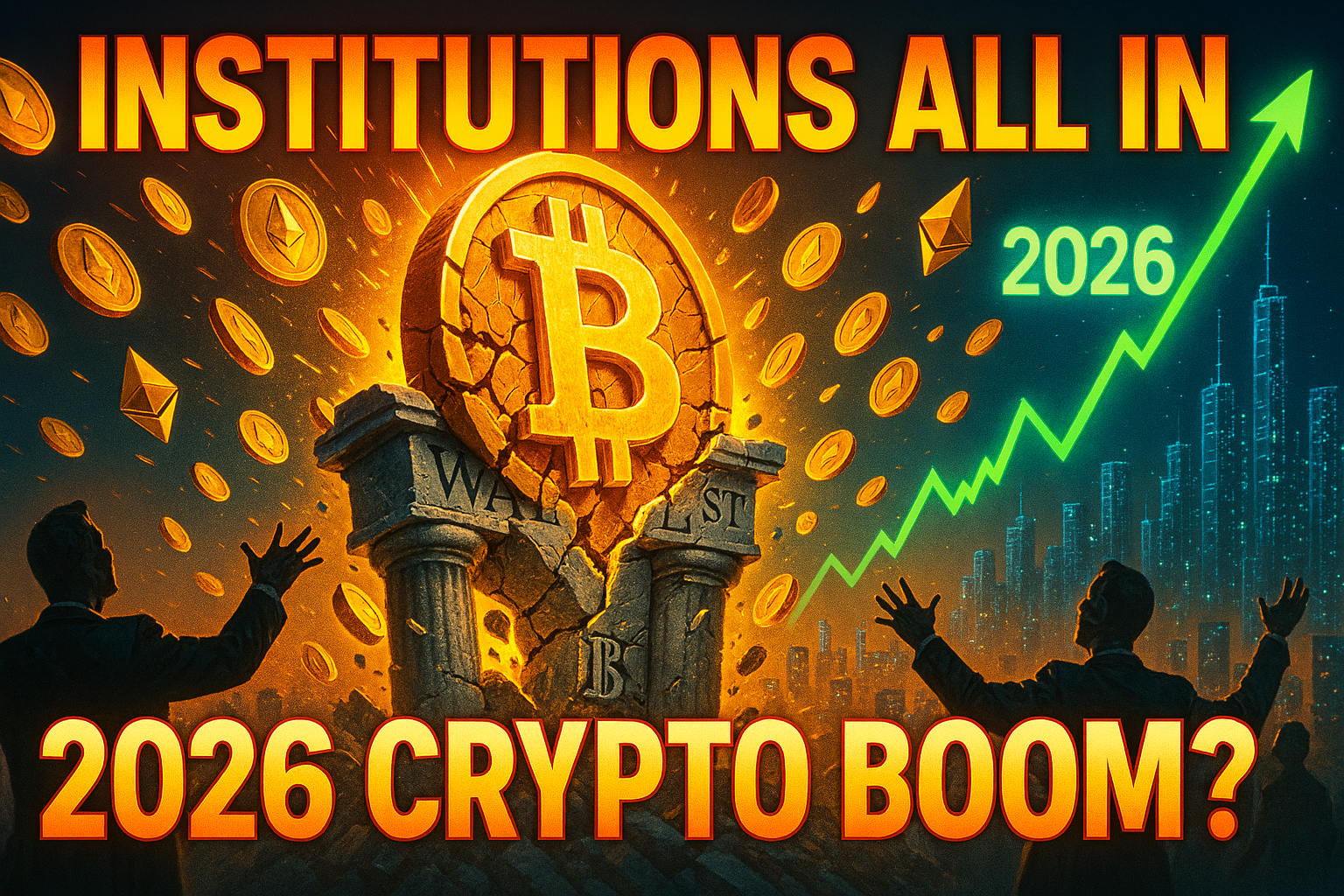
The cryptocurrency market has entered a transformative phase in 2026, marked by unprecedented institutional adoption, regulatory clarity, and the maturation of digital assets into mainstream financial infrastructure. This analysis examines the fundamental drivers reshaping crypto markets, provides evidence-based price projections for major assets, and identifies strategic opportunities for sophisticated investors navigating this pivotal year.
The dawn of the institutional era represents more than a cyclical upturn—it signifies crypto’s evolution from speculative frontier to regulated asset class. With over $23 billion in ETF inflows during 2025 and landmark legislation including the GENIUS Act establishing stablecoin frameworks, 2026 promises to deliver the regulatory foundation and capital infrastructure necessary for sustained market growth.
The Macro Landscape: Structural Forces Driving 2026
Regulatory Clarity as Market Catalyst
The regulatory environment has undergone a seismic shift. Grayscale’s 2026 outlook emphasizes that improved regulatory clarity is driving institutional investment into public blockchain technology. After years of legal uncertainty, the passage of the GENIUS Act in July 2025 created the first comprehensive federal framework for payment stablecoins, requiring 100% reserve backing and establishing clear oversight mechanisms.
The Digital Asset Market Clarity (CLARITY) Act, currently advancing through Congress, aims to delineate regulatory authority between the SEC and CFTC. Industry experts estimate a 50-60% probability of passage before the November 2026 midterms, according to recent legislative analysis. If enacted, Bitcoin and Ethereum would primarily fall under CFTC regulation as commodities, providing the definitional clarity that institutional participants have long demanded.
Fiat Currency Risk and Alternative Monetary Assets
Rising global debt levels and persistent inflation concerns continue driving portfolio demand for alternative stores of value. Grayscale’s analysis highlights that U.S. public debt dynamics raise legitimate questions about long-term fiat currency credibility. Bitcoin and Ethereum, as programmatically scarce digital commodities, offer portfolio diversification against fiat debasement risk—a narrative gaining traction among institutional allocators.
The 20 millionth Bitcoin will be mined in March 2026, a predetermined supply milestone that contrasts sharply with the uncertainty surrounding fiat monetary policy. This supply transparency represents a fundamental advantage for digital assets positioning themselves as monetary alternatives.
Institutional Capital Formation
Coinbase’s 2026 Market Outlook characterizes the current environment as resembling “1996” rather than “1999”—suggesting crypto’s institutional adoption is in early stages rather than approaching euphoric excess. This measured perspective reflects meaningful structural developments:
Seventy-six percent of global investors plan to expand digital asset exposure in 2026, with 60% expecting allocations exceeding 5% of assets under management. Over 172 publicly traded companies held Bitcoin as of Q3 2025, representing approximately 5% of circulating supply—a 40% quarterly increase demonstrating accelerating corporate adoption.
Bitcoin: The Anchor Asset Entering New Territory
Price Outlook and Institutional Forecasts
Bitcoin price projections for 2026 span a wide range, reflecting genuine uncertainty about the pace of institutional adoption and macroeconomic conditions. Institutional forecasts vary considerably:
- JPMorgan: $170,000 target
- Standard Chartered: $150,000 (revised from earlier $300,000 projection)
- Tom Lee (Fundstrat): $150,000-$200,000 by early 2026, potentially $250,000 by year-end
- Galaxy Digital: $250,000 by end of 2027
More conservative perspectives acknowledge downside risks. Bloomberg Intelligence’s bear case envisions $10,000 if liquidity tightens materially, while leaked internal guidance from Fundstrat warns of potential corrections to $60,000 in early 2026—demonstrating that even bullish institutions acknowledge near-term volatility risks.
Options markets currently price roughly equal odds of Bitcoin trading at $70,000 or $130,000 by mid-2026, with year-end scenarios spanning $50,000 to $250,000. This extraordinary volatility band reflects uncertainty regarding Federal Reserve policy, leverage conditions, and the sustainability of ETF demand.
The ETF Revolution and Supply Dynamics
Bitcoin ETF assets under management could reach $180-220 billion by year-end 2026, up from approximately $100-120 billion currently. Bitwise predictions suggest ETFs will purchase more than 100% of new Bitcoin supply in 2026, creating structural buying pressure independent of retail sentiment.
This represents a fundamental shift in market structure. As Galaxy Research analyst Jianing Wu projects, more than 100 crypto-linked ETFs could launch in the U.S. during 2026, with net inflows potentially exceeding $50 billion—more than double 2025 levels. Bloomberg Intelligence’s Eric Balchunas estimates conservative base-case inflows of $15 billion, with favorable conditions potentially driving $40 billion in new institutional capital.
Breaking the Four-Year Cycle
Grayscale argues that 2026 may mark the end of Bitcoin’s traditional four-year cycle. Previous bull markets saw Bitcoin prices increase by over 1,000% annually, whereas the most recent cycle peaked at approximately 240% year-over-year growth. This moderation reflects steadier institutional buying replacing retail momentum chasing—a development that paradoxically suggests more sustainable, if less explosive, appreciation potential.
Bitcoin’s diminishing volatility relative to high-growth equities represents another maturation signal. Bitwise forecasts Bitcoin will exhibit lower volatility than Nvidia stock in 2026, reflecting its transition toward established asset status.
Ethereum: The Settlement Layer for Tokenized Finance
Network Fundamentals and Price Projections
Ethereum faces a critical juncture in 2026. Institutional price targets vary significantly:
- Tom Lee (Fundstrat): $7,000-$9,000 early 2026, potentially $20,000 by year-end
- Arthur Hayes (BitMEX co-founder): $10,000 target
- Standard Chartered: $7,500 for 2026, $25,000 by 2028
- InvestingHaven: $3,125-$6,420 range based on steady network utilization
Analysis indicates more than 30% of ETH supply remains staked, reducing liquid supply and historically supporting price stability during demand expansions. However, some analysts, including Benjamin Cowen, remain bearish, suggesting Ethereum may not achieve new all-time highs given current liquidity conditions and Bitcoin market dynamics.
Layer 2 Scaling and DeFi Evolution
Ethereum’s value proposition increasingly centers on its role as the settlement layer for tokenized finance. Coinbase research highlights the Fusaka Hard Fork and ongoing Layer 2 development as critical infrastructure improvements. These scaling solutions enable faster, lower-cost transactions while maintaining Ethereum’s security guarantees—essential for institutional adoption of decentralized finance applications.
The tokenization narrative extends beyond pure speculation. Real-world asset (RWA) tokenization could represent Ethereum’s most compelling use case, with assets under management in tokenized money market funds holding U.S. Treasuries rising above $8 billion in December 2025.
Competitive Positioning
Ethereum faces intensifying competition from alternative Layer 1 blockchains, particularly Solana. However, its established network effects, developer ecosystem, and regulatory clarity advantage position it favorably. Bitwise predicts Ethereum will set new all-time highs if the CLARITY Act passes, underscoring the importance of regulatory developments to ETH’s trajectory.
Stablecoins: The Trillion-Dollar Payment Infrastructure
The GENIUS Act’s Transformative Impact
Stablecoins represent cryptocurrency’s most mature use case, and 2026 will witness their transition from crypto-native tool to regulated payment infrastructure. The GENIUS Act establishes comprehensive requirements for payment stablecoin issuers:
- One-to-one reserve backing with highly liquid assets
- Monthly public attestations and annual independent audits
- Anti-money laundering and sanctions compliance
- Federal or state regulatory oversight depending on issuance scale
Implementation deadlines loom large. Regulators must promulgate final regulations by July 2026, with full enforcement beginning in January 2027 or 18 months after enactment. The FDIC has already proposed procedures for bank subsidiaries to issue stablecoins, signaling traditional financial institutions’ preparation for entry.
Market Growth and Adoption Projections
Coinbase’s stochastic modeling forecasts total stablecoin market capitalization could reach $1.2 trillion by end of 2028, with 2026 representing a critical acceleration year. 21Shares predicts stablecoins will surpass $1 trillion in circulation by 2026—more than triple current levels.
This growth reflects expanding use cases beyond crypto trading. Cross-border settlement, remittances, and payroll platforms increasingly leverage stablecoins for instant, low-cost transactions. Major payment networks including PayPal, Visa, and Mastercard are actively integrating stablecoin capabilities, while JPMorgan and other traditional banks explore both custody and issuance opportunities.
Geopolitical Implications
BlackRock’s 2026 outlook warns that stablecoins could challenge government control over domestic currencies, particularly in emerging markets. Standard Chartered previously estimated stablecoin adoption could drain over $1 trillion from bank accounts in developing economies—a scenario that underscores stablecoins’ potential to reshape global monetary systems while creating regulatory friction.
The GENIUS Act’s restrictions on foreign-issued stablecoins operating in the U.S. market exemplify this tension. Regulators must determine equivalence standards for foreign issuers, potentially fragmenting the global stablecoin landscape along regulatory jurisdictions.
Alternative Assets: Diversification Beyond Bitcoin and Ethereum
Solana: High-Performance Computing Meets Institutional Grade
Solana’s inclusion in institutional product filings marks its transition from speculative Layer 1 alternative to credible infrastructure platform. Price projections for 2026 span considerable range:
- Bear case: $70-$120 amid risk-off environment or network stability concerns
- Base case: $150-$260 with sustained developer engagement and consumer usage
- Bull case: $280-$420 if high-throughput demand meets institutional access expansion
The upcoming Alpenglow launch represents Solana’s next major technical milestone. Success depends on maintaining network reliability—historically Solana’s Achilles’ heel—while scaling transaction capacity. Analysis suggests Solana’s valuation ultimately hinges on execution credibility rather than speculative momentum.
XRP: Regulatory Clarity Drives Institutional Access
XRP’s positioning centers on cross-border payments and liquidity provision for financial institutions. Forecasts indicate regulatory clarity will remain the primary price driver in 2026. Greater definitional certainty improves accessibility for institutional participants, particularly in payment and settlement applications.
The approval of XRP ETFs in 2025 created regulated exposure vehicles for U.S. investors, though adoption depends on continued regulatory support. XRP’s price trajectory will closely track developments in the CLARITY Act and international payment network integration.
BNB: Exchange Utility Meets Smart Contract Platform
BNB serves dual purposes as Binance exchange utility token and BNB Chain ecosystem currency. Projections suggest a 2026 target of $1,380, extending from a 2025 range of $581-$1,000. This assumes stable exchange activity and continued relevance of BNB Chain decentralized applications.
Market perception of BNB remains heavily influenced by regulatory developments affecting centralized exchanges. Compliance outcomes, licensing progress, and jurisdictional clarity will significantly impact investor confidence. Competition from alternative Layer 1 networks and declining trading volumes represent downside risks.
Investment Themes Defining 2026
Real-World Asset Tokenization
Tokenization has transitioned from theoretical possibility to operational reality. Assets under management for tokenized commodities including gold climbed above $3.5 billion by December 2025, while tokenized Treasury products approach $8 billion. These figures represent early indicators of a broader trend.
Silicon Valley Bank’s analysis identifies RWA tokenization as a primary theme for 2026. Traditional financial institutions will increasingly leverage blockchain settlement for traditional securities, real estate interests, and operating cash flows. The efficiency gains—reduced settlement times, enhanced transparency, automated compliance—justify the technological transition costs for large-scale operations.
Major banks have received conditional approval for digital asset operations. The OCC granted trust charters to BitGo, Circle, Fidelity Digital Assets, Paxos, and Ripple—signaling regulatory comfort with institutional custody infrastructure. These approvals enable banks to accept tokenized securities as collateral equivalent to traditional instruments, fundamentally expanding blockchain’s role in capital markets.
Privacy Technologies and Institutional Adoption
The confluence of institutional participation and privacy requirements creates demand for advanced cryptographic solutions. Coinbase highlights zero-knowledge proofs (ZKPs) and fully homomorphic encryption (FHE) as critical infrastructure for enterprises requiring transaction confidentiality.
Privacy-focused cryptocurrencies including Zcash and Monero experienced renewed attention in late 2025, driven by surveillance concerns and regulatory tightening. Galaxy Digital forecasts privacy-linked tokens could reach $100 billion in aggregate value by end of 2026. This growth reflects recognition that institutional capital requires confidentiality guarantees absent from transparent public blockchains.
Ethereum’s privacy initiatives and Layer 2 privacy solutions will compete with native privacy coins. The regulatory treatment of privacy features remains uncertain, creating both opportunity and compliance risk for investors.
AI and Crypto Convergence
Andreessen Horowitz identifies AI agents as revolutionary for internet payments and banking. Coinbase research frames AI-crypto convergence not as isolated trend but as fundamental technological progress.
Practical applications are emerging. AI agents require autonomous payment capabilities, identity verification, and contractual execution—functions blockchain infrastructure naturally provides. The integration enables machine-to-machine transactions, automated treasury management, and algorithmic trading strategies operating continuously across global markets.
This convergence extends beyond speculative narratives. Identity verification will become critical in AI agent ecosystems, with blockchain providing immutable credential systems. Stablecoins serve as native currency for AI-driven financial operations, avoiding the friction of traditional payment rails.
Digital Asset Treasuries (DATs) and Corporate Adoption
The Saylor/Strategy playbook of aggressive Bitcoin treasury allocation has spawned an entire category. Digital asset treasury companies treat crypto accumulation as core operating strategy rather than sidecar allocation. Analysis suggests DAT formations will consolidate in 2026 after rapid proliferation.
Coinbase anticipates a “DAT 2.0” model emerging, where companies move beyond simple accumulation to specialize in professional trading, storage, and procurement of sovereign block space. Recognizing block space as vital commodity for the digital economy represents a sophisticated evolution of corporate treasury management.
These companies amplify balance sheet risk by tying operating outcomes to price volatility—a double-edged sword that creates both opportunity and danger. Investors must distinguish between companies with sustainable treasury strategies and those pursuing unsustainable leverage.
Risk Factors and Downside Scenarios
Macroeconomic Uncertainty
Coinbase acknowledges the uncertainty band remains wide despite constructive outlook. U.S. economic resilience faces headwinds from slowing headline data, though rising labor productivity provides buffering capacity. The Federal Reserve’s policy trajectory—particularly regarding interest rates and quantitative tightening—directly impacts risk asset valuations including cryptocurrencies.
Tighter monetary conditions could trigger broader crypto contraction. Reduced liquidity, higher discount rates, and declining risk appetite would pressure valuations across the asset class. Leaked Fundstrat guidance warning of potential Bitcoin corrections to $60,000 exemplifies institutional concern about near-term downside.
Regulatory Execution Risk
While regulatory progress is undeniable, implementation challenges remain. The GENIUS Act requires complex rulemaking across multiple agencies by July 2026. Delays, inconsistencies, or unexpectedly restrictive interpretations could dampen institutional enthusiasm. International regulatory fragmentation poses additional complications, as differing standards create compliance burdens for global operations.
The CLARITY Act’s passage remains uncertain. A 50-60% probability of enactment before midterms means substantial risk of legislative failure or significant compromise. Without comprehensive market structure legislation, definitional ambiguity continues plaguing crypto businesses and institutional participants.
Technology and Security Failures
Quantum computing represents a long-term threat to cryptographic security, though Grayscale assesses this issue unlikely to affect 2026 valuations. More immediate concerns include smart contract vulnerabilities, exchange hacks, and protocol failures that could erode confidence.
Network-specific risks vary by platform. Solana’s history of outages creates reliability concerns. Ethereum’s complex Layer 2 ecosystem introduces bridge risks and composability challenges. Bitcoin’s deliberate conservatism limits innovation but enhances security—a tradeoff with varying appeal across investor profiles.
Market Structure Evolution
The transition from retail-dominated to institutional-driven markets changes volatility patterns and liquidity dynamics. CoinGecko’s institutional roundup notes 2026 likely marks the beginning of bifurcated markets, where institutional integration and speculative activity proceed along separate paths.
Investors must understand which market segment they’re participating in. Institutional-grade assets with regulatory clarity and custody infrastructure will trade differently than speculative altcoins. This bifurcation could concentrate liquidity in approved instruments while leaving non-compliant assets illiquid and volatile.
Strategic Investment Framework for 2026
Portfolio Construction Principles
Sophisticated cryptocurrency investing in 2026 requires moving beyond binary maximalism. A balanced approach acknowledges Bitcoin’s monetary premium while recognizing Ethereum’s utility value and stablecoins’ payment functionality. Survey data indicates 60% of institutional investors plan allocations exceeding 5% of AUM to crypto—suggesting digital assets warrant meaningful portfolio weight rather than token exposure.
Core holdings should emphasize assets with regulatory clarity, liquid markets, and established custody solutions. Bitcoin and Ethereum meet these criteria, with Bitcoin offering sovereign-resistant monetary properties and Ethereum providing exposure to decentralized finance and tokenization themes. Stablecoin infrastructure investments—both issuers and supporting technology—offer lower-volatility exposure to crypto adoption.
Satellite positions in high-conviction alternatives like Solana or thematic plays on privacy and AI-crypto convergence can enhance returns but require higher risk tolerance and deeper diligence. These allocations should reflect genuine conviction about specific technological advantages or market positioning rather than momentum chasing.
Risk Management and Position Sizing
The wide price projection ranges for 2026 demand disciplined risk management. Bitcoin scenarios spanning $50,000 to $250,000 by year-end create extraordinary uncertainty. Position sizing should reflect this volatility, with appropriate use of dollar-cost averaging for accumulation and profit-taking on strength to manage downside exposure.
Leverage remains dangerous despite improved market structure. The crypto lending market experienced severe stress during previous downturns, with cascading liquidations amplifying volatility. Conservative leverage ratios—if used at all—and clear liquidation plans are essential for protecting capital during inevitable drawdowns.
Diversification across crypto assets provides limited protection given high correlations during market stress. True diversification requires balanced exposure across asset classes, with crypto as satellite allocation rather than core holding for most investors. The exception includes investors with specific expertise, long time horizons, and high risk tolerance justified by return potential.
Identifying Quality Projects
The maturing crypto market demands more rigorous fundamental analysis. Evaluation criteria should include:
Regulatory Positioning: Does the project have clarity regarding its regulatory status? Are compliance frameworks established? What jurisdictions does it operate in?
Economic Sustainability: Beyond token price appreciation, does the protocol generate actual revenue? Are tokenomics designed for long-term viability or short-term extraction? CoinGecko notes that utility-driven token models have largely failed, with buybacks dominating capital return strategies.
Technical Differentiation: What specific problems does the technology solve? Is the solution genuinely superior to alternatives, or merely incremental? Does the architecture scale appropriately for intended use cases?
Adoption Metrics: Are real users and capital flowing to the platform? Network effects and organic growth indicate sustainable value, whereas incentivized activity often proves ephemeral.
Team and Governance: Track records, technical competence, and governance structures matter enormously. Established teams with successful prior projects warrant higher confidence than anonymous developers or serial entrepreneurs with multiple failures.
Conclusion: Navigating the Institutional Transition
The cryptocurrency market in 2026 represents an inflection point—the transition from speculative frontier to regulated asset class. This transformation creates both opportunity and complexity for investors. The days of uniform beta across all crypto assets are ending, replaced by differentiated outcomes based on regulatory status, technological merit, and real-world utility.
Grayscale’s characterization of 2026 as the “dawn of the institutional era” captures this moment accurately. Steadier capital inflows from pension funds, endowments, and corporate treasuries will likely produce more stable—if less explosive—returns than retail-driven bull markets of the past. The probability of deep, prolonged drawdowns decreases as institutional participation broadens, though short-term volatility remains inevitable.
Success in this environment requires abandoning outdated mental models. The four-year cycle framework, while historically useful, may no longer describe market dynamics as institutional capital flows and regulatory developments replace halving-driven narratives. Coinbase’s “1996 not 1999” framing suggests significant upside potential remains, but delivered through sustained adoption rather than speculative euphoria.
Investors must develop sophisticated frameworks for evaluating crypto assets—distinguishing between genuine innovation and marketing hype, between sustainable business models and extraction schemes, between regulatory clarity and compliance theater. The bifurcated market emerging in 2026 will reward diligence and punish complacency.
The strategic opportunity centers on assets positioned at the intersection of regulatory clarity, technological utility, and institutional infrastructure. Bitcoin’s monetary premium appears increasingly validated by macro uncertainty and institutional adoption. Ethereum’s role as settlement layer for tokenized finance creates genuine utility value beyond speculation. Stablecoins represent the most immediate bridge between traditional finance and blockchain rails.
For sophisticated investors willing to navigate complexity, 2026 offers compelling risk-adjusted return potential. The convergence of regulatory frameworks, institutional capital formation, and maturing technology creates conditions for sustained value creation. However, this opportunity demands active management, continuous monitoring of regulatory developments, and discipline to distinguish signal from noise in an ecosystem still prone to hype cycles.
The institutional era has arrived. How investors adapt to this new reality will determine their success in cryptocurrency markets for years to come.
This analysis is provided for informational purposes only and does not constitute investment advice. Cryptocurrency investments involve substantial risk including potential loss of principal. Past performance does not guarantee future results. Investors should conduct thorough due diligence and consult qualified financial advisors before making investment decisions.
Discover more from The Economy
Subscribe to get the latest posts sent to your email.



If you think your bank isn’t a crypto bank, look closer at your wire transfers. In 2026, every institution is a digital asset institution—whether they want to be or not.
The marriage certificate arrived quietly. No fanfare, no regulatory press conference—just a series of accounting bulletins, cross-border payment upgrades, and custody announcements that, taken together, signaled something profound: traditional finance and digital assets are no longer dating. They’re cohabiting, sharing infrastructure, and—most critically—sharing risk.
For decades, banks treated cryptocurrency as someone else’s problem. A libertarian sideshow. A compliance headache best avoided. Yet by early 2026, the invisible rails connecting Wall Street to Web3 have become impossible to ignore. Tokenized Treasury bills flow through the same clearing systems as sovereign debt. Stablecoin settlements undergird cross-border trade finance. And when a poorly governed Virtual Asset Service Provider (VASP) collapses in Singapore, the contagion doesn’t stay in crypto—it ripples through correspondent banking networks from London to São Paulo.
Welcome to the era of institutional crypto compliance 2026: where prudential risk and digital asset governance are no longer separate disciplines, but two sides of the same regulatory coin.
The Invisible Integration: How Banks Became Crypto Banks
The transformation happened in layers, each one barely perceptible until the whole edifice shifted.
Layer One: The Custody Revolution
When the SEC issued Staff Accounting Bulletin 122 (SAB 122) in late 2023, reversing its earlier SAB 121 guidance, it eliminated a bizarre accounting penalty: banks could finally custody crypto assets without being forced to recognize them as liabilities on their balance sheets. The impact was seismic. Within eighteen months, institutions from BNY Mellon to State Street launched digital asset custody desks. By 2026, custodial crypto holdings at traditional financial institutions exceed $400 billion globally, according to PwC’s Global Crypto Report 2026.
Layer Two: Tokenized Instruments
The second layer arrived through tokenization—not of meme coins, but of mundane financial instruments. BlackRock’s BUIDL fund, launched in 2024, now holds over $1.5 billion in tokenized U.S. Treasuries. Franklin Templeton’s OnChain U.S. Government Money Fund processes settlements on Polygon and Stellar. These aren’t experiments; they’re operational infrastructure. And they’re governed not by DeFi protocols, but by the same prudential frameworks that regulate money market funds—with one crucial difference: the settlement rails involve VASPs.
Layer Three: The Stablecoin Settlement Web
Perhaps most invisibly, stablecoins have become the grease in international trade. A garment manufacturer in Bangladesh receiving payment from a retailer in Texas might never touch USDC directly—but their banks do. Cross-border wire transfers increasingly route through stablecoin rails for speed and cost efficiency, a practice turbocharged by the U.S. GENIUS Act’s regulatory clarity on dollar-backed tokens. The Bank for International Settlements estimates that by Q1 2026, stablecoin-mediated settlements account for 12% of cross-border commercial payments between non-sanctioned jurisdictions.
The implication? Every correspondent bank is now, functionally, exposed to VASP inherent risk assessment questions—even if they’ve never onboarded a single crypto-native client.
From Financial Crime to Prudential Stability: The Risk Paradigm Shift
For years, the regulatory conversation around crypto centered on anti-money laundering (AML) and combating the financing of terrorism (CFT). The Financial Action Task Force’s Travel Rule for VASPs was the regulatory pinnacle: ensure that virtual asset transfers carry the same identifying information as traditional wire transfers.
But 2026 marks a pivot. The new frontier isn’t just crime prevention—it’s prudential risk digital assets introduce to the financial system at large.
Liquidity Risk in Disguise
When a major VASP experiences a bank run—say, due to rumors about reserve adequacy—institutional clients don’t just lose access to crypto. They lose access to fiat liquidity channels. In March 2026, a Tier-2 VASP in the UAE faced withdrawal freezes after a smart contract exploit. Within 48 hours, three European banks flagged delayed settlements on tokenized asset redemptions. The Basel Committee on Banking Supervision is now drafting guidance that treats VASP counterparty exposure with the same capital weighting traditionally reserved for emerging market sovereign debt.
Operational Resilience Concerns
Unlike traditional banks, many VASPs operate on semi-decentralized infrastructure. A compromise in a widely used wallet-as-a-service provider doesn’t just affect retail users—it affects institutional treasuries holding tokenized assets. The European Banking Authority’s 2026 stress-testing framework now includes “VASP operational failure” scenarios alongside traditional market shocks.
Settlement Finality Ambiguity
Here’s the kicker: when does a blockchain transaction achieve legal finality? Six confirmations? Twelve? What if there’s a chain reorganization? Traditional finance has spent centuries perfecting settlement finality through legal frameworks. Digital assets introduce computational finality—and the two don’t always align. This isn’t theoretical. In January 2026, a deep chain reorg on a proof-of-stake network invalidated what institutional traders believed were settled positions, triggering margin calls that propagated through connected prime brokers.
The Regulatory Armory: MiCA, AMLA, and the GENIUS Act
Regulators haven’t been asleep. The twin pillars of Europe’s crypto regulation—the Markets in Crypto-Assets Regulation (MiCA) and the Anti-Money Laundering Authority (AMLA)—reached full implementation by January 2026. MiCA establishes authorization regimes, capital requirements, and investor protections for VASPs operating in the EU. AMLA provides direct supervisory oversight, breaking the previous patchwork of national regulators.
Across the Atlantic, the GENIUS Act (Guiding and Establishing National Innovation for U.S. Stablecoins) brought federal clarity to stablecoin issuance, requiring reserves be held in high-quality liquid assets and subject to monthly attestations. The result? A proliferation of compliant, bank-grade stablecoins—and an extinction event for shadowy offshore issuers.
Yet despite these advances, a governance gap remains. VASP risk assessment frameworks are maturing, but they’re not standardized. A VASP might pass muster under Singapore’s MAS licensing yet fail basic operational resilience tests under EU standards. For banks with global custody operations, this creates a compliance Rubik’s Cube: which jurisdiction’s standards take precedence when a VASP serves clients in twelve countries?
The VASP Governance Frontier: What Best Practice Looks Like
Leading institutions are getting ahead of the curve by treating VASP relationships with the same rigor they apply to critical outsourcing partners.
Tiered Due Diligence
BNY Mellon’s digital asset unit reportedly maintains a three-tier classification for VASP counterparties:
- Tier 1: VASPs with bank-grade governance, external audits, and regulatory licenses in major jurisdictions.
- Tier 2: Emerging VASPs with solid infrastructure but limited regulatory history.
- Tier 3: Prohibited—VASPs operating in high-risk jurisdictions or with opaque ownership structures.
Real-Time Monitoring
JPMorgan’s Onyx division employs blockchain analytics not just for transaction screening, but for monitoring VASP reserves in real-time. If a VASP’s on-chain reserve ratio falls below thresholds, automated alerts trigger relationship reviews. This represents a paradigm shift: from periodic due diligence to continuous risk assessment.
Contractual Innovations
Legal teams are embedding digital-asset-specific terms into custody agreements. What happens if a hard fork creates two competing versions of an asset? Who bears the risk of smart contract failure? Cutting-edge contracts now include “chain-split protocols” and “immutability warranties”—clauses that would have been science fiction in 2020.
Why This Matters Beyond Banking
The convergence of traditional prudential oversight and crypto-native governance isn’t just a banking story—it’s a story about the architecture of 21st-century finance.
Consider supply chain finance. A multinational’s treasury desk tokenizes receivables, making them tradable on secondary markets via a licensed VASP. If that VASP lacks robust operational controls, the multinational’s working capital liquidity becomes hostage to blockchain uptime. If regulators treat this as equivalent to traditional securitization risk, capital requirements shift. If they don’t, systemic vulnerabilities emerge.
Or consider central bank digital currencies (CBDCs). As sovereigns experiment with digital cash, they’re partnering with—you guessed it—VASPs and banks to build distribution infrastructure. The People’s Bank of China’s e-CNY relies on commercial banks as intermediaries. The European Central Bank’s digital euro pilots involve both banks and supervised VASPs. Prudential oversight of these entities isn’t a nice-to-have; it’s foundational to monetary sovereignty.
The Path Forward: Integration, Not Isolation
The lesson of 2026 is clear: institutional crypto compliance isn’t about building moats between traditional finance and digital assets. It’s about building bridges—secure, well-governed, auditable bridges.
Financial institutions that treat VASP relationships as afterthoughts will find themselves exposed to risks they don’t fully understand. Those that embed tokenized asset governance into their enterprise risk frameworks—treating it as seriously as credit risk or market risk—will be positioned to capture the efficiencies digital infrastructure offers without courting catastrophe.
The great convergence is here. The question isn’t whether your institution is a digital asset institution. It’s whether you’re governing it like one.
Discover more from The Economy
Subscribe to get the latest posts sent to your email.
As Bitcoin tumbles beneath a critical psychological threshold and Ether hemorrhages double-digit value, a confluence of regulatory uncertainty and macroeconomic tremors is reshaping the cryptocurrency landscape—and testing investor resolve like never before.
The Weekend That Shook Crypto Markets
I’ve covered financial markets for over a decade, from the 2008 crisis aftermath to the pandemic-era asset bubbles, but the ferocity of this weekend’s cryptocurrency crash still caught me off guard. As of February 1, 2026, Bitcoin is trading at approximately $78,923—a jarring 5.87% decline in just 24 hours, according to CoinMarketCap‘s real-time data. Ether, meanwhile, has suffered an even steeper 11.76% plunge to $2,387, erasing months of painstaking recovery.
The broader crypto market capitalization has evaporated by over $100 billion in a matter of days—a wealth destruction event that’s reverberating from retail investors in Seoul to institutional desks in Manhattan. But unlike previous selloffs driven by exchange collapses or regulatory crackdowns in isolation, this cryptocurrency market decline stems from a more insidious cocktail: liquidity concerns, Federal Reserve leadership uncertainty, and geopolitical volatility.
Kevin Warsh and the Liquidity Time Bomb
The proximate catalyst? President Trump’s nomination of Kevin Warsh as Federal Reserve Chair, a move that’s sent shockwaves through risk assets globally. Warsh, a former Fed governor known for his hawkish monetary stance during the 2008 financial crisis, has publicly advocated for tighter liquidity controls and skepticism toward speculative assets—crypto included.
Forbes reported that Warsh’s nomination signals a potential pivot from the accommodative policies that fueled Bitcoin’s 2024-2025 bull run, when institutional adoption and spot ETF approvals propelled prices past $100,000. During his 2006-2011 Fed tenure, Warsh championed aggressive balance sheet normalization, a philosophy antithetical to the easy-money environment crypto thrives in.
As I’ve observed in my years covering markets, Fed chair appointments are inflection points—not just for interest rates, but for asset class narratives. When Jerome Powell hinted at tightening in late 2021, Bitcoin fell 50% within months. Warsh’s track record suggests he could pursue quantitative tightening 2.0, draining the liquidity that’s kept speculative investments afloat. Bloomberg analysts estimate this could reduce global dollar liquidity by $500 billion annually, a scenario that historically correlates with Bitcoin price drops of 30-40%.
Why Liquidity Matters for Crypto
Cryptocurrency markets are uniquely sensitive to liquidity shifts because:
- Leverage Dependency: Futures and perpetual swap markets amplify gains—and losses. Reduced liquidity triggers margin calls, cascading into forced liquidations (over $300 million liquidated this weekend alone).
- Institutional Flows: Hedge funds and family offices rely on cheap borrowing to fund crypto positions. Tighter Fed policy raises borrowing costs, forcing portfolio rebalancing away from volatile assets.
- Dollar Strength: Warsh’s policies could strengthen the U.S. dollar, making dollar-denominated Bitcoin less attractive to foreign buyers—a dynamic Financial Times highlighted as critical to 2022’s bear market.
Long-Term Holders Break: A Troubling Signal
Perhaps the most alarming indicator isn’t the price itself, but who’s selling. On-chain data reveals that long-term Bitcoin holders—defined as wallets dormant for over 155 days—are offloading coins at the fastest pace since August 2025, per Glassnode analytics. These “diamond hands,” typically immune to short-term volatility, capitulating suggests deeper structural concerns about Bitcoin’s risk-reward profile.
I spoke with a venture capital investor in San Francisco who liquidated 40% of his Bitcoin holdings this week. “It’s not panic,” he told me. “It’s recognition that the macro backdrop has fundamentally changed. If Warsh tightens into a slowing economy, crypto won’t be a hedge—it’ll be a liability.”
This sentiment echoes across forums and social media, where retail investors—many of whom bought Bitcoin above $90,000 in late 2025—are grappling with unrealized losses exceeding 20%. The psychological weight of breaking below $80,000, a level defended since December, cannot be overstated.
Geopolitical Gasoline on the Fire
Compounding crypto’s woes are escalating U.S.-Iran tensions, which erupted over the weekend following drone strikes near the Strait of Hormuz. Reuters confirmed oil prices spiked 7% on supply fears, triggering risk-off sentiment that drained capital from equities and crypto alike.
Historically, Bitcoin advocates have touted it as “digital gold”—a safe haven during geopolitical crises. Yet this weekend’s selloff demolishes that narrative. Instead, Bitcoin behaved like a tech stock: highly correlated with the Nasdaq (which fell 2.1%) and inversely correlated with the VIX volatility index (up 18%). The Economist recently argued that crypto’s correlation with traditional risk assets has reached all-time highs, undermining its diversification case.
What This Means for Investors: Three Scenarios
Based on historical precedent and current fundamentals, I see three plausible paths forward:
1. The Capitulation Scenario (Probability: 40%)
If Warsh is confirmed and implements aggressive tightening, Bitcoin could test $60,000-$65,000—its 2024 cycle lows. This would mirror 2022’s drawdown, when the Fed’s pivot crushed speculative assets. Institutional outflows from spot Bitcoin ETFs (already down 12% week-over-week) would accelerate, forcing further de-leveraging.
2. The Stabilization Scenario (Probability: 35%)
Bitcoin consolidates between $75,000-$85,000 as markets digest Warsh’s policies. If he adopts a gradualist approach—tightening slowly while signaling transparency—crypto could bottom here. Precedent: 2019’s post-bear market recovery, when measured Fed policy allowed Bitcoin to rally 300% over 18 months.
3. The Black Swan Scenario (Probability: 25%)
Geopolitical escalation or a sovereign debt crisis forces central banks to reverse course, reigniting liquidity flows. Bitcoin could surge past $100,000 as a genuine inflation hedge. However, this requires a macro shock—not the base case.
Lessons from Past Fed Transitions
History offers context. When Paul Volcker took the Fed helm in 1979, he crushed inflation by raising rates to 20%—but also triggered a recession. Gold, the safe haven of that era, fell 30% initially before rallying 800% as monetary debasement resumed. Bitcoin today occupies a similar niche: a non-sovereign store of value whose fortunes hinge on central bank credibility.
Kevin Warsh, if confirmed, faces a delicate balancing act: restore Fed authority without breaking markets. His Congressional testimony will be critical. Any hint of Powell-style pragmatism could stabilize crypto; hardline rhetoric could crater it.
The Human Cost of the Crash
Beyond charts and percentages are real people. A graphic designer in Austin emailed me this week, sharing that her retirement savings—70% allocated to Bitcoin via a self-directed IRA—had lost $180,000 in value. “I believed the decentralization story,” she wrote. “Now I’m not sure what to believe.”
Her story reflects a broader reckoning. Cryptocurrency’s promise of financial sovereignty rings hollow when external forces—Fed chairs, geopolitical conflicts—dictate outcomes as powerfully as in traditional markets. This isn’t to dismiss crypto’s innovation, but to acknowledge its immaturity. Regulatory clarity, institutional custody solutions, and macroeconomic resilience remain aspirational.
What I’m Watching Next
As this crypto market crash unfolds, several variables will determine whether we’re witnessing a healthy correction or the onset of a prolonged bear market:
- Warsh’s Confirmation Hearings: Scheduled for late February. Hawkish testimony could accelerate selling; dovish pivots might stabilize prices.
- Spot ETF Flows: Institutional redemptions from Bitcoin ETFs (like BlackRock’s iShares Bitcoin Trust) are a leading indicator. Sustained outflows suggest capitulation.
- On-Chain Metrics: Monitoring exchange inflows/outflows and miner selling behavior for bottoming signals.
- Macro Data: U.S. unemployment, inflation prints, and Treasury yields will shape Fed policy expectations—and by extension, crypto liquidity.
Resilience or Reckoning?
Standing at this crossroads, I’m reminded that every Bitcoin price drop below a key threshold—whether $20,000 in 2022 or $80,000 today—has separated true believers from tourists. The cryptocurrency crash reasons in 2026 are distinct from past cycles: not exchange fraud or regulatory bans, but the sobering realization that decentralized assets remain tethered to centralized monetary policy.
For investors, this is a moment for reflection, not reaction. Ask: Why did I buy Bitcoin? If the answer was “Fed liquidity,” reevaluate. If it was “long-term technological disruption,” consider dollar-cost averaging. And if it was “get rich quick,” perhaps this selloff is the education tuition you needed.
Markets are cyclical. Central bankers, geopolitical conflicts, and liquidity crises come and go. What endures is the question Bitcoin posed 17 years ago: Can we build a financial system beyond institutional control? The answer won’t be found in today’s price—but in whether the network survives this stress test.
As always, the most valuable asset isn’t Bitcoin or Ether—it’s perspective.
Discover more from The Economy
Subscribe to get the latest posts sent to your email.

Bitcoin trades near $90,000 ahead of the Federal Reserve’s January 2026 rate decision, with a weaker dollar and Magnificent Seven earnings driving risk appetite. Explore crypto’s cautious response, Fed pause expectations, and key market catalysts in this in-depth analysis.
On January 28, 2026, Bitcoin has settled into a familiar pattern: modest gains, quiet consolidation, and a stubborn refusal to breach the $90,000 threshold that has loomed large for weeks. As of late afternoon in Karachi—mid-morning in New York—the flagship cryptocurrency traded at approximately $89,250, up fractionally on the day , extending its recent resilience. Across the broader market, major tokens posted small but positive moves, yet the enthusiasm felt restrained, almost tentative.

This muted crypto rally unfolds against a classically risk-on backdrop in traditional markets. The US dollar index (DXY) has slipped to around 95.70, its lowest in years . Yet cryptocurrency, so often the vanguard of speculative exuberance, has played second fiddle—stabilising rather than leading the charge.
The Federal Reserve’s Delicate Balancing Act
Today marks the conclusion of the Federal Open Market Committee’s first meeting of 2026 .
For risk assets, the implications are nuanced. Lower rates would typically benefit non-yielding assets like Bitcoin and gold alike. Yet the dollar’s decline so far has favoured traditional safe havens and industrial commodities over digital assets, underscoring crypto’s evolving identity: neither pure “digital gold” nor uncomplicated risk play.
The Magnificent Seven’s Make-or-Break Moment
This week also brings earnings from four of the Magnificent Seven—Meta Platforms, Microsoft, Tesla, and Apple—companies whose performance has long served as a barometer for broader risk appetite .
The stakes are high. After a stellar 2025 driven by artificial intelligence optimism, investors are looking for evidence that capital expenditures on AI infrastructure will translate into tangible revenue growth. A strong showing could propel the Nasdaq toward fresh records, dragging risk-sensitive assets—including cryptocurrencies—higher in its wake .
A Weaker Dollar, But Crypto Lags Behind
The dollar’s retreat—down more than 7 per cent from its September peak—has provided classic tailwinds for hard assets . Gold’s surge reflects its status as the traditional beneficiary of currency debasement fears. Silver, with its dual role as monetary and industrial metal, has benefited even more. Cryptocurrency, by contrast, has merely stabilised.
Several factors explain the divergence. First, leverage in crypto futures markets has declined markedly from the peaks seen in late 2025. Open interest on major exchanges is down roughly 25 per cent from November highs . Liquidation clusters remain densely packed above $90,000 and below $85,000, levels that could cap near-term momentum or accelerate a reversal.
Second, opportunity cost dynamics persist. Even with rates on hold, real yields on short-dated Treasuries remain positive, offering a low-risk alternative to holding non-yielding Bitcoin .
Why Caution Prevails Despite Tailwinds
| Asset | 24-Hour Change | Weekly Change | Key Driver |
|---|---|---|---|
| Bitcoin (BTC) | +0.8% | +3.2% | Fed pause anticipation, Nasdaq correlation |
| Ether (ETH) | +2.1% | +5.4% | Staking yield appeal, layer-2 momentum |
| Solana (SOL) | +1.9% | +7.1% | DeFi activity recovery |
| Gold | +1.4% | +4.6% | Weaker dollar, safe-haven flows |
| Silver | +2.7% | +8.3% | Industrial + monetary demand |
| Nasdaq 100 | +0.6% (futures) | +2.9% | Mag 7 earnings optimism |
(Source: CoinGecko, Bloomberg – as of January 28, 2026, 16:00 PKT)
The table above illustrates the relative underperformance clearly. While precious metals have captured the dollar’s decline most directly, cryptocurrencies have posted respectable but hardly standout gains. Market participants cite deleveraging aftermath, regulatory caution, and technical resistance near all-time highs as restraining factors .
Outlook: Balancing Catalysts and Risks
The coming days offer a rare confluence of high-impact events. A dovish Fed—signalling cuts as early as March—combined with robust Magnificent Seven earnings could propel Bitcoin convincingly above $90,000, reopening the path toward six figures that many long-term holders still anticipate. The weaker dollar would provide additional support, particularly if it breaches 95 on the DXY.
Yet risks loom symmetrically. Should Powell emphasise lingering inflation risks and push back firmly against early easing, the dollar could stabilise or rebound, pressuring risk assets broadly . Disappointing tech earnings—particularly any hint that AI monetisation is slower than expected—might trigger a risk-off move, exposing crypto’s vulnerability when traditional growth leaders falter.
In this environment, cryptocurrency’s behaviour is instructive. No longer the pure speculative rocket of earlier cycles, it increasingly trades as a macro-sensitive asset—responsive to interest rates, dollar dynamics, and equity sentiment, yet not fully decoupled from its own internal rhythms of leverage and liquidity.
For now, Bitcoin holds near $90,000 not out of indecision, but deliberation. The market awaits clarity from Washington and Silicon Valley before committing to its next decisive leg. Investors, both institutional and individual, would do well to watch not only price action in crypto, but the performance of gold, the dollar, and the tech giants that still set the tone for global risk.
Discover more from The Economy
Subscribe to get the latest posts sent to your email.
-

 Markets & Finance2 months ago
Top 15 Stocks for Investment in 2026 in PSX: Your Complete Guide to Pakistan’s Best Investment Opportunities
-

 Analysis4 weeks ago
Brazil’s Rare Earth Race: US, EU, and China Compete for Critical Minerals as Tensions Rise
-

 Investment2 months ago
Top 10 Mutual Fund Managers in Pakistan for Investment in 2026: A Comprehensive Guide for Optimal Returns
-

 Banks2 months ago
Best Investments in Pakistan 2026: Top 10 Low-Price Shares and Long-Term Picks for the PSX
-

 Asia2 months ago
China’s 50% Domestic Equipment Rule: The Semiconductor Mandate Reshaping Global Tech
-

 Global Economy2 months ago
Pakistan’s Export Goldmine: 10 Game-Changing Markets Where Pakistani Businesses Are Winning Big in 2025
-

 Global Economy2 months ago
What the U.S. Attack on Venezuela Could Mean for Oil and Canadian Crude Exports: The Economic Impact
-

 Global Economy2 months ago
15 Most Lucrative Sectors for Investment in Pakistan: A 2025 Data-Driven Analysis