
IPO
SpaceX IPO 2026: $2 Trillion Valuation, Retail Frenzy, and the Risks

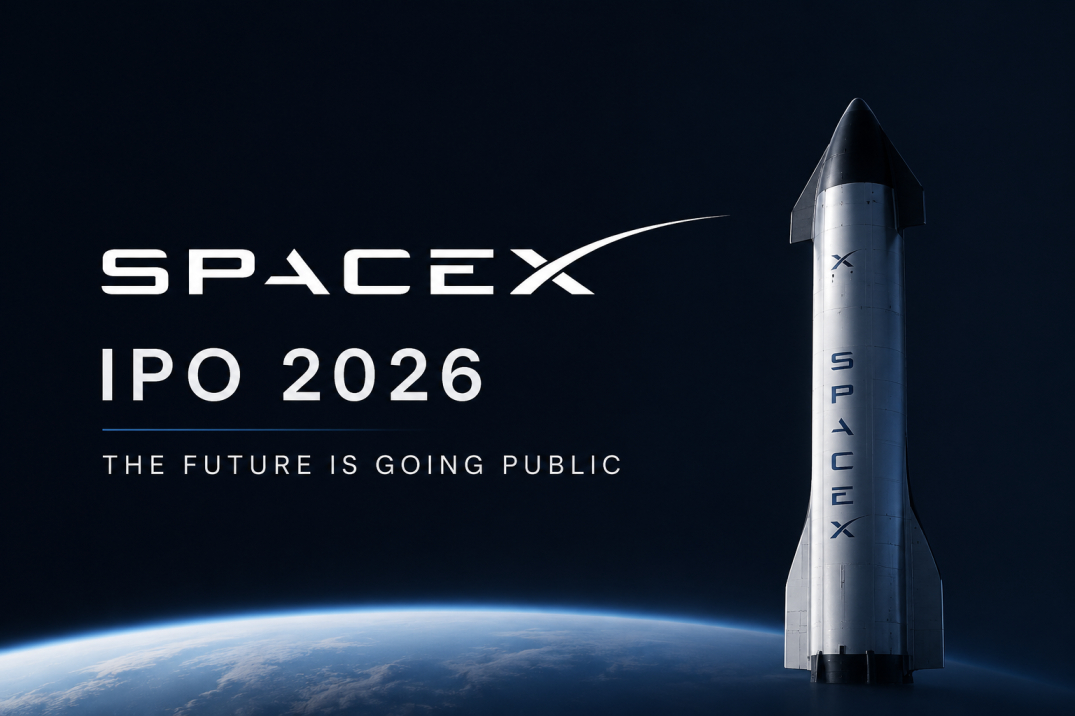
SpaceX priced at $135 per share on June 12, 2026, raising $75 billion and briefly surpassing $2 trillion in market cap. Here’s what the S-1 reveals — and what it conceals.The company priced its shares at $135 each the previous evening, raising approximately $75 billion and giving SpaceX a valuation approaching $1.8 trillion at the IPO price. On the first day of trading, investor demand drove the stock above $150, pushing the market capitalisation past $2 trillion and briefly making Elon Musk the world’s first trillionaire on record. It was the largest initial public offering in history by capital raised — surpassing even the 2019 listing of Saudi Aramco, which held the previous record.
The Business Behind the Spectacle
Strip away the narrative and the financials tell a specific story. Starlink accounted for approximately 61% of total company revenue in 2025, generating $11.4 billion — up roughly 50% from $7.6 billion in 2024. The satellite internet division had surpassed 10.3 million active customers across 160 countries as of March 31, 2026, more than doubling from 4.6 million at end-2024. Total company revenue reached $18.7 billion in 2025, up 33% year-on-year.
The profitability picture is more complicated. SpaceX reported a GAAP net loss of nearly $5 billion in 2025, reflecting capital-intensive investment in the Starship programme, Starlink satellite deployment, and — critically — the xAI data centre buildout. The company’s S-1 disclosed that $12.7 billion of its approximately $21 billion in capital expenditure last year went to building data centres for xAI — more than was spent on rockets or satellites. That integration deepens the operational complexity that investors must price.
The xAI Merger and What It Changes
In February 2026, Elon Musk announced the merger of xAI with SpaceX at a combined valuation of $1.25 trillion, with xAI valued at approximately $80 billion in the transaction. The rationale was vertical integration — SpaceX needed AI infrastructure for Starlink’s autonomous systems, and xAI needed to stop burning cash as a standalone entity. The combined company now comprises three major segments: launch services, satellite communications, and artificial intelligence, with an option to acquire Cursor (the AI coding platform) for up to $60 billion.
The scope of the ambition is matched by the scale of the uncertainty. Morningstar published a pre-IPO analysis placing fair value at approximately $780 billion — roughly 55% below the IPO price — citing a tiny initial float, index-inclusion mechanics inflating near-term demand, and SpaceX‘s unproven profitability. Morningstar’s analysts found xAI’s economic moat “indeterminate” and characterised it as posing a “material threat of value destruction.”
Valuation Arithmetic That Tests Credulity
The numbers at the IPO price require investors to accept some unusual premises. At $135 per share, SpaceX priced at roughly 94 times its 2025 revenue — a multiple with no precedent among the world’s most valuable companies. The S-1’s total addressable market analysis assumed that SpaceX’s revenues could one day approach $22.7 trillion from enterprise applications alone — 30 times the size of the entire existing enterprise software market — and that every household globally would adopt Starlink for broadband.
The governance structure adds another layer of complexity. Musk holds 85% of total voting rights, meaning he effectively cannot be removed without his own consent. The float at IPO was deliberately small, concentrating pricing power among the initial buyers.
Historical patterns are sobering. Analysis of the 15 largest U.S. IPOs since 2006 showed that the average stock declined 50% from its IPO price at some point during the first year and finished that year approximately 33% below the offering price. With the stock trading around $153 in late June — below its intraday peak of $225.64 on June 16 — the post-IPO trajectory is already reflecting some of that historical gravity.
Retail Access and the Meme-Stock Question
One of the defining structural features of the SpaceX offering was its retail allocation. Most mega-cap IPOs direct between 5% and 10% of shares to individual investors. SpaceX allocated as much as 30% to retail participants through Robinhood, Charles Schwab, Fidelity, SoFi, and E*TRADE. The strategic logic is straightforward: Tesla’s retail following helped sustain elevated valuations through multiple cycles, and Musk is replicating that playbook with SpaceX.
SpaceX was the most-bought stock by retail traders on a net basis during its first trading day, and among the most discussed on Reddit’s WallStreetBets in the days preceding the listing. The IPO is expected to mint thousands of new millionaires from early employees and investors, and multiple new billionaires, including several dozen Musk allies who accumulated positions during private tender offers.
The Space Economy Redistribution Effect
The listing had immediate consequences for adjacent names. Redwire and Rocket Lab each fell more than 10% on SpaceX’s debut day as investors rotated out of smaller space names and into the newly public market leader. The Procure Space ETF (UFO) dropped 7%. Goldman Sachs, the lead-left bookrunner, climbed more than 2% — one of the largest gainers in the Invesco KBW Bank ETF.
The comparison Bloomberg drew to the Standard Oil breakup is not accidental: the capital markets impact of SpaceX’s listing — on price discovery, on sector weighting, on pension fund allocations — is expected to reverberate for years. The question is whether the underlying business can grow into a valuation that currently requires perfection.
Discover more from The Economy
Subscribe to get the latest posts sent to your email.


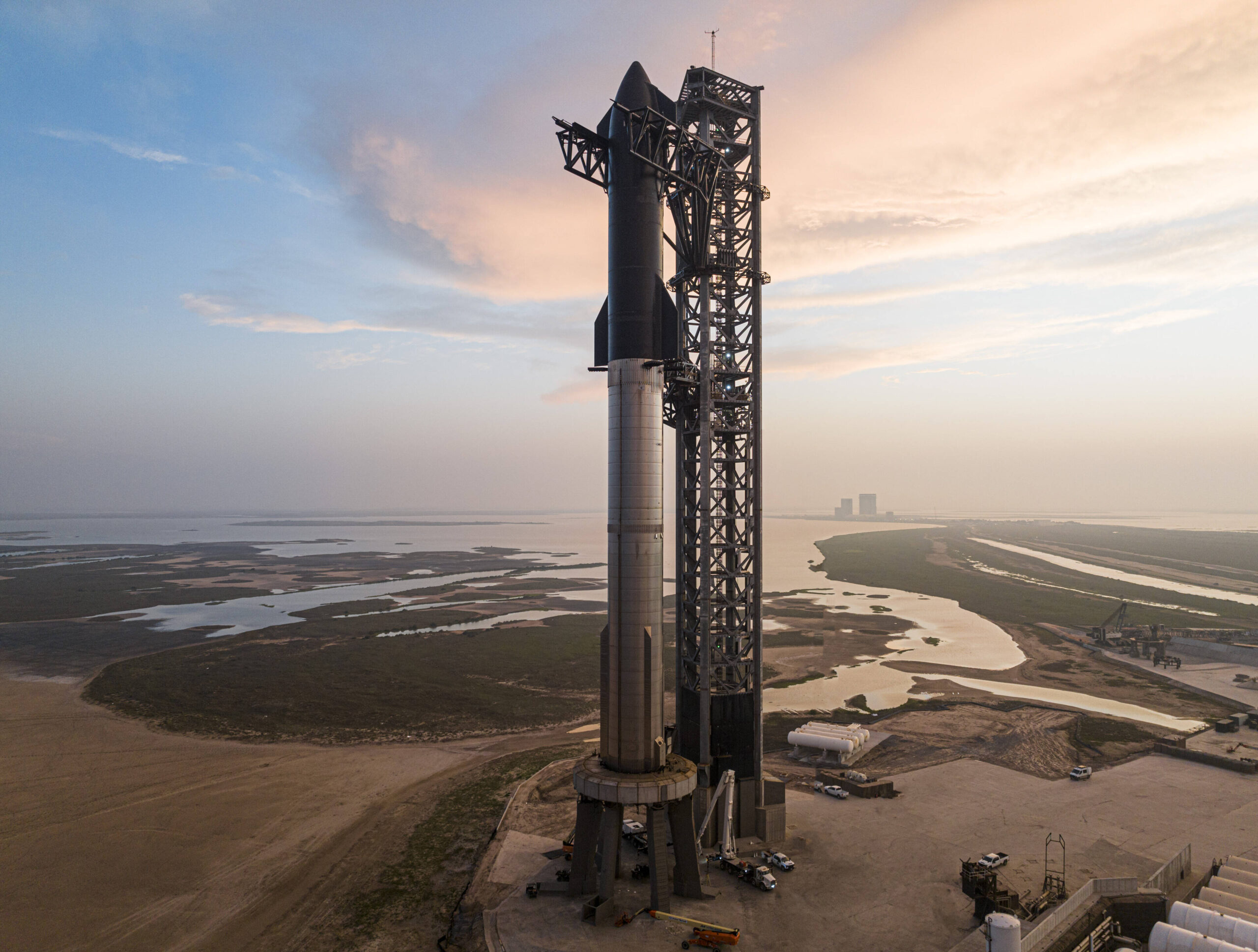
SpaceX’s massive 400-foot Starship vehicle successfully reached Earth orbit during Flight 14, overcoming an early engine anomaly to deploy 26 next-generation Starlink satellites and test critical orbital operations.
STARBASE, Texas — SpaceX has achieved a monumental milestone in aerospace history with the successful launch and orbital insertion of its Starship vehicle during its 14th test flight. Lifting off from the company’s Starbase facility in Boca Chica, Texas, the 407-foot (124-meter) super-heavy lift rocket overcame a brief ascent anomaly to reach a stable Earth orbit, setting the stage for an ambitious 10-hour mission circling the globe six times.
This flight marks Starship’s transition from suborbital splashdown demonstrations to operational orbital maneuvers, bringing SpaceX one step closer to fulfilling its contracts for NASA‘s Artemis lunar program and eventual human missions to Mars.
Overcoming Mid-Flight Engine Anomaly
Liftoff occurred smoothly as all 33 Raptor 3 engines on Super Heavy Booster 21 ignited, pushing the colossal vehicle through Max Q (maximum aerodynamic pressure). At 2 minutes and 34 seconds into flight, Starship executed a flawless hot-staging separation, allowing Ship 41 to continue its powered ascent while the Super Heavy booster completed a controlled boostback and splashdown in the Gulf of Mexico.
Minutes into Ship 41’s burn, telemetry indicated an unexpected premature shutdown of one of its Raptor engines. Flight controllers in Boca Chica spent several tense minutes analyzing engine performance and trajectories before officially issuing a “GO for orbit” signal.
At T+26 minutes, Ship 41 executed a single-engine circularization burn, firing its Raptor engine at an altitude of approximately 170 miles (275 kilometers) above Earth to officially achieve orbit.
“Starship is orbital,” Mission Control announced to roaring cheers across the launch site.
Deployment of Upgraded Starlink V3 Satellites
Unlike previous test flights that carried inert mass simulators or dummy payloads, Flight 14 carries a functional payload of 26 upgraded Version 3 (V3) Starlink satellites.
In addition to expanding global broadband bandwidth for SpaceX’s constellation, three of the deployed Starlink V3 satellites feature specialized high-resolution optical cameras. These satellites are positioned to take unprecedented direct visual imaging of Starship’s thermal protection system (heat shield) while in orbit, offering critical engineering telemetry before Ship 41 attempts re-entry.
According to updates on Space.com, deploying these operational payloads marks a decisive step toward utilizing Starship for commercial satellite deployment missions.
Flight 14 Mission Specifications
| Mission Parameter | Specifications |
| Rocket Configuration | Super Heavy Booster 21 + Ship 41 (Version 3) |
| Launch Site | Starbase, Texas |
| Target Orbit Altitude | ~275 km (~170 miles) |
| Planned Duration | ~10 Hours (6 Earth Orbits) |
| Primary Payload | 26 Starlink V3 Satellites (3 with Heat Shield Inspection Cameras) |
| Target Splashdown Zone | Pacific Ocean (West of Chile) |
Key Mission Timeline Highlights
- T-00:00:00: Liftoff from Starbase launch pad.
- T+00:02:34: Successful hot-staging separation of Booster 21 and Ship 41.
- T+00:06:53: Super Heavy Booster landing burn and soft splashdown in the Gulf of Mexico.
- T+00:26:00: Ship 41 orbital insertion burn complete (~275 km altitude).
- T+00:34:00: Payload bay doors open; deployment of 26 Starlink V3 satellites begins.
- T+09:30:00 (Planned): In-space deorbit burn to initiate atmospheric re-entry.
- T+10:00:00 (Planned): Soft splashdown in the Pacific Ocean off the Chilean coast.
Strategic Significance for NASA Artemis and Mars Exploration
The success of Flight 14 carries massive implications for global space exploration. NASA has selected a customized Starship Human Landing System (HLS) to return American astronauts to the lunar surface as part of the Artemis III and IV missions.
Before landing humans on the Moon, SpaceX must demonstrate rapid orbital refuel capabilities—transferring cryogenic liquid methane and liquid oxygen between Starships in orbit. Reaching orbital stability and executing long-duration coast phases during Flight 14 provides the baseline operational data necessary to perform orbital propellant transfer tests on future flights.
As reported by Reuters, achieving full orbital capability reinforces SpaceX’s position as the dominant launch provider while solidifying Elon Musk’s long-term timeline for uncrewed and crewed missions to Mars.
Discover more from The Economy
Subscribe to get the latest posts sent to your email.

Is SpaceX going public in 2026? SpaceX is actively preparing for a potential initial public offering targeted for mid-to-late 2026, with reported valuation estimates that have climbed dramatically over the course of the year — from around $800 billion in insider share-sale discussions in December 2025, to over $1 trillion by mid-2026, to Bloomberg reports of a $1.5 trillion target more recently, according to reporting compiled by Capital Brief. That trajectory represents an extraordinary escalation from SpaceX’s own late-2023 tender offer valuation of roughly $175 billion — nearly a tenfold increase in under three years.
If completed anywhere near the higher end of reported estimates, this would be the largest initial public offering in history, surpassing Saudi Arabia’s Aramco, which remains the only company ever to reach a trillion-dollar-plus IPO valuation, having listed at $1.7 trillion in 2019.
What’s Actually Confirmed, Versus Speculation
Featured Snippet Target: Elon Musk has effectively confirmed SpaceX is preparing for a 2026 IPO, responding “As usual, Eric is accurate” to a journalist’s analysis of why the company appears ready to go public — but Musk has separately and explicitly disputed specific valuation figures reported by Bloomberg and the Wall Street Journal, meaning the exact valuation, timing, and even whether the full company (versus just Starlink) will be listed all remain genuinely unconfirmed as of September 2026.
That distinction matters for anyone reading SpaceX IPO headlines this year: the company’s intent to go public appears real and has been acknowledged by Musk himself, but nearly every specific number attached to the deal — from the $800 billion figure to the more recent $1.5 trillion reports — has come from unnamed sources cited by financial media rather than official company disclosures, and Musk has pushed back on at least one of those figures directly.
Why SpaceX Is Considering Going Public Now
SpaceX board director Kimbal Musk’s associate and company leadership have framed the potential IPO around a specific financial threshold: Musk has previously stated Starlink specifically would go public once its revenue growth became steady and predictable — a milestone the company appears to have now reached. SpaceX’s overall revenue is projected to reach roughly $15 billion in 2025, climbing to an estimated $22-24 billion in 2026, with Starlink as the primary revenue driver, according to reporting from IDN Financials.
SpaceX’s own internal communications have framed the potential listing explicitly around funding needs rather than simply providing liquidity to existing shareholders. In a December 2025 letter to shareholders, SpaceX indicated plans to channel IPO proceeds toward accelerating the Starship rocket program’s launch cadence, establishing AI-powered data centers in orbit, developing a “Moonbase Alpha” concept, and supporting both robotic and eventual human missions to Mars, according to Outlook Business. That’s a notably broader capital-allocation vision than a typical IPO prospectus, reflecting SpaceX’s unusual position as simultaneously a commercial launch provider, a satellite internet company, and an increasingly central node in U.S. space and defense strategy.
Listing the Whole Company, Not Just Starlink
An important shift in SpaceX’s IPO planning during 2026 has been the move away from spinning off Starlink as a standalone public entity — long considered the most likely path to a public listing — toward preparing to list SpaceX’s core business in its entirety. According to DriveTeslaCanada’s reporting on Bloomberg’s coverage, that shift would bring the full SpaceX operation — rockets, Starlink satellites, a growing defense contracting business, and various off-world infrastructure projects — into a single public entity, rather than carving out only the more straightforwardly valued satellite-internet business.
That distinction matters enormously for how the eventual IPO gets valued. Starlink alone, as a subscription satellite-internet business, would be comparatively simple for public-market analysts to model against comparable telecom and satellite companies. The full SpaceX entity — encompassing an active national-security launch provider handling more than 80% of global payload weight, according to analysis from QZ, alongside a rapidly scaling satellite business and speculative future ventures like orbital data centers and lunar infrastructure — is a fundamentally harder company for public markets to price cleanly.
The Comparison That Keeps Coming Up
Every report on SpaceX’s potential IPO valuation inevitably returns to the same comparison: Saudi Aramco’s 2019 listing, which raised approximately $29 billion at a $1.7 trillion valuation and remains the only trillion-dollar-plus IPO in history. If SpaceX executes even the lower end of its reported fundraising targets — $25-30 billion raised — it would still exceed Aramco’s raise amount while potentially matching or exceeding Aramco’s valuation, depending on which of the widely varying reported figures ultimately proves accurate. Some reports suggest SpaceX could reach a valuation “in the same valuation airspace as Meta or Amazon” — a scale of comparison that, regardless of the exact final number, places SpaceX’s potential public debut among a small handful of the most consequential stock-market listings in history.
The Bottom Line
SpaceX’s 2026 IPO remains genuinely in-progress rather than finalized: Musk has acknowledged the company is preparing for a public listing, but the specific valuation (reported anywhere from $800 billion to $1.5 trillion), timing (mid-to-late 2026, with some reports suggesting a possible slip into 2027), and structure (full company versus Starlink spinoff) all remain unconfirmed by the company itself. What is clear is that any completed listing at even the lower end of reported estimates would represent one of the most significant capital markets events in recent history, both for its sheer scale and for what it would signal about public investors’ appetite for space, satellite, and AI-infrastructure exposure in a single company.
Next step: Investors and space-industry watchers should treat specific SpaceX IPO valuation figures reported by any single outlet with real skepticism until the company files actual registration documents — the reported estimates have nearly doubled within a matter of months this year, and Musk himself has directly disputed at least one widely-cited figure.
Discover more from The Economy
Subscribe to get the latest posts sent to your email.

Records in the IPO market rarely last long during a boom cycle — and 2026 is proving that in dramatic fashion. SpaceX’s June debut set an all-time high for IPO size, raising roughly $75 billion at a valuation near $1.8 trillion. Just months later, Anthropic is reportedly positioning for a listing that could push past that mark entirely, with investors discussing a valuation of $2 trillion or more. Here’s how the two offerings actually compare, and what it would take for Anthropic to claim the record.
Key Takeaways
- SpaceX’s June 12, 2026 IPO priced at $135 per share, raising approximately $75 billion and closing its first day near a $2.1 trillion market cap.
- Anthropic’s reported target valuation of ~$2 trillion would rival or exceed SpaceX’s opening print, and comfortably exceed SpaceX’s settled valuation of roughly $1.5–1.84 trillion.
- U.S. IPOs had raised $160.6 billion through August 19, 2026 — closing in on the 2021 full-year record of $195.2 billion, with months still to go.
- Both companies share a structural quirk that amplifies price moves: an unusually low free float at listing.
- Anthropic’s IPO is reportedly targeted for September or October 2026, which would put the two largest offerings in history within roughly four months of each other.
Setting the Bar: What SpaceX Actually Did
SpaceX’s IPO on June 12, 2026 was, by nearly every measure, historic. The company priced shares at $135, raising approximately $75 billion in the offering — the largest capital raise ever completed in a single IPO. Its market capitalization closed the first trading day near $2.1 trillion before settling into a range closer to $1.5 trillion by late July, and has since stabilized around $140 per share, implying a market cap of roughly $1.84 trillion.
That settling pattern — a dramatic first-day pop followed by a pullback — is common in low-float IPOs, where a small percentage of total shares outstanding are actually available to trade. Early price discovery in these situations tends to overshoot before institutional and retail flows normalize the price closer to fundamental value.
The Anthropic Comparison, Side by Side
| Metric | SpaceX (June 2026) | Anthropic (Reported Target) |
|---|---|---|
| IPO date | June 12, 2026 | September–October 2026 (expected) |
| Offer price | $135/share | Not yet set |
| Capital raised | ~$75 billion | Not yet disclosed |
| First-day peak valuation | ~$2.1 trillion | Unknown |
| Settled valuation | ~$1.5–1.84 trillion | Target: ~$2 trillion |
| Lead underwriters | Morgan Stanley, Goldman Sachs, JPMorgan | Morgan Stanley, Goldman Sachs, JPMorgan (reported) |
| Revenue backing | Aerospace/launch contracts | AI/software, ~$65B run rate |
| Free float at listing | Low | Reportedly low (single-digit %) |
The most important distinction: SpaceX’s valuation is anchored in aerospace infrastructure, satellite internet (Starlink), and government/commercial launch contracts — a capital-intensive but tangible-asset-heavy business. Anthropic’s valuation, by contrast, rests almost entirely on software revenue growth and AI model licensing — an asset-light but computationally expensive business model with a much steeper, more recent growth curve.
Why Anthropic Could Actually Take the Record
- A steeper growth trajectory. Anthropic’s revenue run rate grew roughly sevenfold in about seven months (from $9B to $65B). Few companies of any kind — let alone one preparing a public listing — have shown that rate of acceleration this close to an IPO.
- Two-year forward pricing. Bankers are reportedly using a 2028 revenue projection of $190–200 billion to justify the $2 trillion figure, implying a roughly 10x forward multiple — a framework that gives more room to argue for a higher headline valuation than a purely trailing-revenue approach would.
- A hot IPO market overall. With $160.6 billion already raised across U.S. IPOs through mid-August 2026, nearing the full-year 2021 record of $195.2 billion, market conditions are unusually supportive of large, ambitious offerings.
- Underwriter reuse and confidence. The same lead banks that priced SpaceX’s record deal are reportedly leading Anthropic’s — suggesting they believe the market can support back-to-back trillion-dollar-plus tech listings within the same year.
Why It Might Not Happen
- The $2 trillion figure is unconfirmed. It comes from investors and bankers circling the deal, not from Anthropic’s own guidance. SpaceX’s final valuation, by contrast, was a completed, priced transaction.
- A run rate isn’t revenue. Anthropic’s $65 billion figure is an extrapolation from a short, recent period. If growth decelerates even modestly before pricing, the valuation math could compress.
- Post-listing performance matters more than headline valuation. SpaceX’s first-day peak of ~$2.1 trillion wasn’t sustained — it settled meaningfully lower within weeks. Anthropic could technically “beat” SpaceX’s opening valuation and still underperform it on a settled, weeks-later basis.
- Market conditions can shift quickly. A cooling in the broader 2026 IPO boom between now and Anthropic’s expected September–October window could compress achievable pricing.
What “Largest IPO Ever” Actually Measures
It’s worth being precise about what record is actually being discussed, because there are at least three distinct measures:
- Capital raised — the actual dollar amount sold to investors (SpaceX: ~$75 billion)
- Valuation at pricing — the implied market cap based on the offer price (SpaceX: ~$1.8 trillion)
- First-day peak market cap — the highest valuation reached during initial trading (SpaceX: ~$2.1 trillion)
Anthropic could plausibly set a record on one of these measures without setting a record on all three — for instance, achieving a higher headline valuation target while raising less absolute capital than SpaceX did, depending on how many shares the company decides to sell in the offering.
FAQ
Is Anthropic definitely going to have the largest IPO in history? Not confirmed. Investors and bankers are reportedly targeting a valuation around $2 trillion, which would exceed SpaceX’s settled valuation and rival its first-day peak, but no final valuation, share price, or capital raise amount has been set.
How much did SpaceX raise in its IPO? SpaceX raised approximately $75 billion in its June 12, 2026 IPO, pricing shares at $135 and reaching a first-day market cap near $2.1 trillion.
Why do both SpaceX and Anthropic have such volatile early trading potential? Both companies reportedly have a low free float — a small percentage of total shares available for public trading at listing — which tends to amplify price swings in both directions during early trading.
Could Anthropic’s IPO underperform SpaceX’s despite a higher target valuation? Yes. A higher headline target valuation doesn’t guarantee stronger post-listing performance. SpaceX itself saw its valuation compress from a $2.1 trillion first-day peak to roughly $1.5 trillion within weeks before stabilizing.
Discover more from The Economy
Subscribe to get the latest posts sent to your email.

SpaceX Starship Achieves First Full Orbit on Historic 10-Hour Test Flight 14

Google’s $15B Finland AI Investment: Data Centers, Nuclear Power & Jobs

Fast Invoice Factoring: Rates, APR Math & Contract Traps

SOC 2 Type II Guide: Cost, Timeline & Compliance Companies

Hong Kong Wages Surge 3.4% in June: Sector Data & Analysis

Silver Price Today: Why the Xi-Trump AI Standoff Is Fueling a Safe-Haven Rally

Citibank & Dólar Estadounidense: Forex Playbook After the Xi-Trump Truce

How the Trump-Xi White House Summit Is Reshaping Mortgage Rates Today for Real Estate Investors

Indonesia Navigates Mega-Project Risks as China and Russia Eye the 2,772km Trans-Kalimantan Railway

Trump-Xi 2026 Summit Takeaways: The Trade Truce, Taiwan, and the AI Divide

Solar Panel Installation Cost in 2026: Why the Math Changed Overnight

Business Insurance: What Coverage You Actually Need and What It Costs in 2026

Auto Insurance Quotes: How to Get the Lowest Rate Without Losing Coverage

Huntington Online Banking: Full Features, Fees, and How It Compares in 2026

Top 30 Stocks for Investment in PSX for Massive ROI in 2026

SpaceX Starship Flight 14: First Orbital Attempt & Starlink V3 Launch Explained

Oil Prices Break $100 in 2026: Middle East Conflict & Energy Markets

BRICS+ Cross-Border Payments 2026: Interoperability Explained

Fidelity Investments Review 2026: SPAXX Yields & Zero-Fee Funds

Tween Back-to-School Trends 2026: What’s Driving the $85B Season

10-Year Treasury Yield Hits 4.80%: What It Means for Rates & Portfolios

Shein Clothes Quality & Safety in 2026: What Lab Tests Show

IMF & World Bank 2026 Global Economic Outlook: Growth, Inflation, Debt

China’s US$10.8 Billion Trade Shortcut: Why the Pinglu Canal Matters

High-CPM Finance Niches 2026: Publisher Monetization Blueprint

Middle East War Economics 2026: Oil Prices & Energy Markets

China Stocks Today: Are Big Economies in Asia Nearing a Market Bottom?

Social Security Trust Fund 2032: OASI Depletion Timeline Explained
-

 Markets & Finance9 months ago
Top 15 Stocks for Investment in 2026 in PSX: Your Complete Guide to Pakistan’s Best Investment Opportunities
-

 Analysis7 months ago
Johor’s Investment Boom: The Hidden Costs Behind Malaysia’s Most Ambitious Economic Surge
-

 Analysis7 months ago
Top 10 Stocks for Investment in PSX for Quick Returns in 2026
-

 Banks8 months ago
Best Investments in Pakistan 2026: Top 10 Low-Price Shares and Long-Term Picks for the PSX
-

 Analysis8 months ago
Brazil’s Rare Earth Race: US, EU, and China Compete for Critical Minerals as Tensions Rise
-

 Investment9 months ago
Top 10 Mutual Fund Managers in Pakistan for Investment in 2026: A Comprehensive Guide for Optimal Returns
-

 Global Economy9 months ago
15 Most Lucrative Sectors for Investment in Pakistan: A 2025 Data-Driven Analysis
-

 Global Economy9 months ago
Pakistan’s Export Goldmine: 10 Game-Changing Markets Where Pakistani Businesses Are Winning Big in 2025