
Analysis
Oil Prices in the Driving Seat as Energy Shock Upends Global Markets

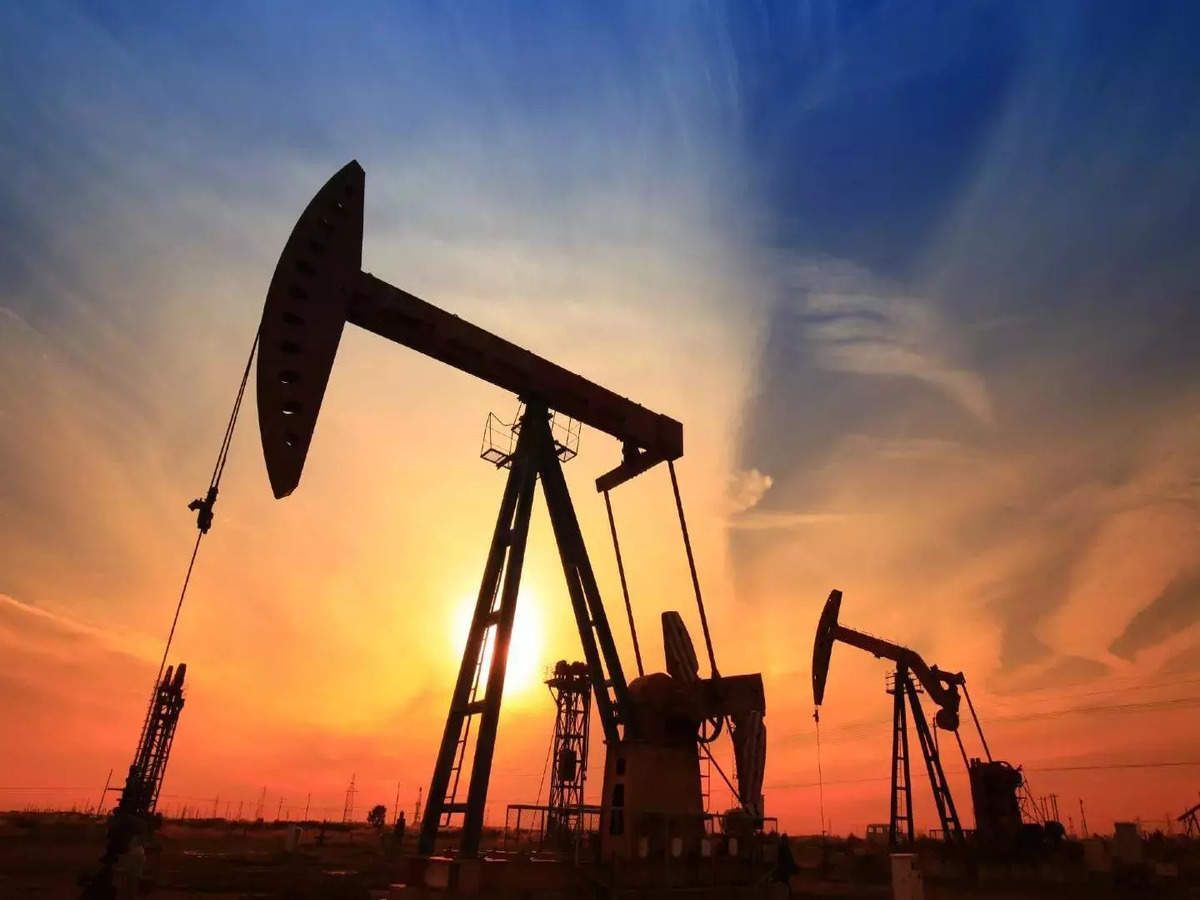
As the Strait of Hormuz remains choked and tankers burn in the Persian Gulf, the oil market is no longer pricing in a geopolitical skirmish. It is pricing in a civilisational disruption.
The spigot that controls 20% of the world’s daily oil trade is now a weapon of war — and the global economy is only beginning to absorb the consequences. When U.S. and Israeli forces launched Operation Epic Fury on February 28, 2026, targeting Iranian leadership and military infrastructure, energy markets registered a tremor. In the fortnight since, that tremor has become a seismic event. Brent crude closed above $103 per barrel on March 13, its highest sustained level since Russia invaded Ukraine in 2022, while WTI has breached $98. The International Energy Agency has declared this the largest supply disruption in the history of the global oil market. Wall Street banks are revising their models with unusual haste — and unusual alarm. The oil prices Iran war 2026 shock is no longer hypothetical. It is underway, accelerating, and may not have found its ceiling.
The Hormuz Reality: How the Strait of Hormuz Oil Shock Is Rewriting Global Supply
A Chokepoint Becomes a Combat Zone
The Strait of Hormuz, a 33-kilometre-wide waterway separating Oman and Iran, is the single most consequential piece of maritime real estate on Earth. Before the war, roughly 20 million barrels per day of crude and refined products — nearly one-fifth of global daily consumption — transited its waters each morning. Today, that flow has collapsed to a trickle. Tankers are refusing passage after Iranian forces attacked multiple vessels; the U.K.’s Maritime Trade Operations logged at least six ship strikes in 48 hours last week alone.
With crude and oil product flows through the Strait of Hormuz plunging from around 20 mb/d before the war to a trickle currently, and limited capacity available to bypass the crucial waterway, Gulf countries have cut total oil production by at least 10 mb/d. IEA The knock-on is brutal: Iraq’s three main southern oilfields have seen production fall 70%, from 4.3 million bpd to just 1.3 million bpd CNBC, while the UAE has begun carefully managing offshore output as onshore storage reaches capacity.
The IEA’s Unprecedented Intervention — and Why It Isn’t Working
In a historic acknowledgement of the crisis’s severity, the IEA convened an emergency collective action: more than 30 nations across Europe, North America and Northeast Asia agreed to release 400 million barrels of oil from strategic stockpiles — the largest action in the agency’s 50-year history — led by a U.S. release of 172 million barrels from its Strategic Petroleum Reserve. CNBC
The markets responded with cold indifference. Crude prices surged more than 17% since the IEA announced the emergency stockpile release. The U.S. will release 172 million barrels over 120 days, implying 1.4 million barrels per day — just 15% of the supply lost due to the Hormuz closure. CNBC
As Tamas Varga of oil broker PVM put it with disarming clarity: “Until transit is reactivated, those kinds of policy announcements are going to have limited impact.” The 400 million barrels would be entirely absorbed in just 26 days at current supply loss rates. The oil bazooka has misfired.
Wall Street’s Bank-by-Bank Warnings on the Iran War Energy Crisis
Goldman Sachs: Extending the Disruption Timeline
Goldman Sachs raised its Brent and WTI crude oil price forecasts for Q4 2026, now assuming 21 days of severely reduced Strait of Hormuz flows — at just 10% of normal levels — followed by a 30-day gradual recovery. Previously, the bank had modelled only a 10-day disruption. BOE Report
Goldman projects prices will average above $100 per barrel in March, $85 per barrel in April, and roughly $70 per barrel later in the year — almost 20% higher than early 2026 levels on average. The Mirror The bank has also explicitly flagged that the oil prices Iran war 2026 shock makes a June Federal Reserve rate cut very difficult to justify, given mounting inflationary pressures. Fewer rate cuts, sustained higher energy costs, stagflationary drag: the macro implications extend well beyond the crude curve.
In an upside risk scenario modelled by Goldman, if Hormuz flows remain severely constrained for additional weeks, Brent could reach $150 per barrel before the end of Q1 — a level not seen since the speculative blowout of 2008.
Barclays: “Investors Are Growing Nervous by the Day”
Barclays’ macro research team has offered some of the most candid assessments. In a note last Friday, Barclays’ Emmanuel Cau warned that investors were becoming increasingly jittery after initially pricing in a short-lived conflict, noting that “the longer the Strait of Hormuz stays closed the more stagflationary markets will turn.” CNBC Barclays has modelled Brent crude testing $120 in a fleshed-out conflict scenario, with a high-end case of $150 before month-end if disruption persists.
Rystad Energy: Scenarios to $135 by June
Consulting firm Rystad Energy has published a scenario matrix that has become something of a benchmark for energy desks globally. Rystad forecasts a two-month war will push Brent to $110 per barrel by April, while a four-month conflict could spike Brent to $135 per barrel by June. CNBC Critically, the firm notes that oil prices could rise to demand-destruction levels before the IEA stockpile release meaningfully reaches the market.
RBC, Deutsche Bank, and the Stagflationary Warning
Deutsche Bank’s head of global macro research Jim Reid wrote that “from a market perspective, the problem is that investors are increasingly pricing in a more protracted conflict that causes extensive economic damage.” CNN RBC Capital Markets, alongside Barclays and Bloomberg, had earlier identified a plausible scenario in which a sustained Hormuz blockade results in triple-digit oil — a scenario that has now materialised.
Key Bank Forecasts at a Glance:
- Goldman Sachs: Brent averaging $98/bbl in March–April; $71/bbl Q4 base case; $150 upside tail risk
- Barclays: $120 near-term; $150 extreme scenario
- Rystad Energy: $110 (2-month war) → $135 (4-month war)
- Bernstein: IEA action will have “limited impact on the trajectory of oil prices”
- ExxonMobil (Tyler Goodspeed, Chief Economist): Probability distribution skewed toward “harder and longer” Hormuz closure
Global Ripple Effects: Inflation, Stocks, and the Developing World
How Iran War Affects Gasoline Prices in 2026
The pump has become the most visceral political battleground. In just the first week after the strikes on Iran, the average price of gasoline in the United States increased 48 cents per gallon. Center for American Progress According to the AAA motor club, the average price of gas hit nearly $3.60 a gallon on March 12, a jump of nearly 35 cents in a week. Time In California, drivers are paying $5.34 per gallon; San Francisco’s Shell stations have logged $6.50. Diesel — the lifeblood of supply chains, trucking and agriculture — has surged 28% since hostilities began, to $4.83 per gallon nationally.
The inflationary arithmetic is unforgiving. One in three dollars of fertiliser cost globally originates in the Gulf. Urea prices have already risen by 35% since February 28. Gulf states produce nearly 49% of global urea exports and 30% of global ammonia exports, with around one-third of the world’s urea transiting the Strait of Hormuz. Time
European Natural Gas: A 75% Surge
Europe’s exposure has been severe. Europe’s benchmark natural gas rose 75% since the war began, as Iran-linked disruptions cut off around 20% of global LNG exports, threatening heating costs and industrial competitiveness across the continent. PBS With memories of the 2022 Russian gas crisis still raw in Brussels and Berlin, the political mood is approaching pre-crisis emergency.
The Global South: Energy Shock as Existential Crisis
For wealthy economies, $100 oil is painful. For the developing world, it may be catastrophic.
Djibouti’s finance minister warned that the fighting would “bring severe economic consequences for developing countries,” with small maritime states at risk of “being pulled into deeper economic uncertainty.” Egypt’s President Abdel Fattah el-Sisi declared his country’s economy in a “state of near-emergency.” Al Jazeera
At least 85 countries have reported increases in petrol prices following the February 28 attacks. Cambodia recorded the highest increase — nearly 68% — while Vietnam saw a 50% rise, Nigeria 35%, and Laos 33%. Japan and South Korea, importing 95% and 70% of their oil from the Gulf respectively, have enacted emergency measures. Al Jazeera Bangladesh closed universities and enacted fuel restrictions; Pakistan implemented a four-day government workweek.
Historical Parallels: 1973, 2008, Russia-Ukraine — and Why This Is Different
Every analyst worth their Bloomberg terminal is reaching for historical comparisons. The parallels are instructive — but also dangerously incomplete.
- 1973 Arab oil embargo: A politically motivated supply cut of roughly 4-5 million bpd produced a 400% price spike and a global recession. The current disruption is already 10 million bpd — more than twice the scale.
- 2008 oil shock: Demand-driven, peaked at $147/bbl, collapsed within months. The current shock is supply-driven and geopolitically sustained, with no demand-destruction valve yet triggered.
- Russia-Ukraine 2022: The fear of losing Russian supply sent Brent to $127. Russia’s exports were ultimately rerouted; there is no rerouting Hormuz. As Wood Mackenzie’s Alan Gelder observed, the parallels are instructive but imperfect: the current disruption involves physical closure of the world’s most critical chokepoint — not sanctions circumvention.
The CEO of British energy firm EnQuest told CNBC that the oil market has “never seen something of this magnitude before.” CNBC He is not given to hyperbole. The IEA’s own language — “the largest supply disruption in the history of the global oil market” — is itself unprecedented.
Scenarios: The Path to $150 Brent — or Resolution
Scenario 1: The Short War (2–4 weeks, Brent $95–$110)
Iran’s new Supreme Leader Mojtaba Khamenei capitulates under military pressure; Hormuz reopens within 30 days. Strategic reserves cover the gap; inflation spikes prove transitory. The most optimistic scenario markets have partially priced in. Requires: credible ceasefire, rapid escort operations, infrastructure intact enough to resume exports.
Scenario 2: The Prolonged Conflict (2–4 months, Brent crude $135–$150 forecast Iran)
Iran’s new supreme leader has vowed to keep the Strait of Hormuz closed as a “tool of pressure,” with continued attacks on commercial vessels deepening the disruption. CNBC Production shut-ins spread from Iraq and Kuwait to the UAE and Saudi Arabia. Strategic reserves are depleted. Global GDP contracts by 1.5–2 percentage points. This is Goldman’s upside risk scenario and Barclays’ high-end case.
Scenario 3: Infrastructure Annihilation (4+ months, $200+)
Iranian military spokesman Ebrahim Zolfaqari issued a blunt warning: “Get ready for oil to be $200 a barrel, because the oil price depends on regional security, which you have destabilised.” CNBC If major Gulf energy infrastructure — Saudi Aramco’s Ras Tanura, Qatar’s LNG facilities, UAE offshore platforms — sustains serious damage, the recovery timeline extends to years, not months. This remains a tail risk, but it is no longer an unthinkable one.
Policy Implications: OPEC+, the SPR, and the Energy Transition
What OPEC+ Can and Cannot Do
Gulf Arab states are cutting production not by strategic choice but because they are running out of storage space, as crude piles up with nowhere to go due to the closure of the Strait. CNBC OPEC+ announced a modest output increase of 206,000 bpd at the war’s outset — a rounding error relative to the 10+ million bpd supply loss. Saudi Arabia is exploring rerouting crude to the Red Sea via overland pipeline, but this covers at most 2 million bpd of its 6.5 million bpd export capacity.
The SPR Dilemma
The U.S. entered this crisis with a Strategic Petroleum Reserve that, by bipartisan consensus, was inadequately stocked. The Trump administration neglected to refill the nation’s Strategic Petroleum Reserve ahead of the war, leaving the economy further exposed to supply shocks. Center for American Progress The 172 million barrels now being released represent 41% of total U.S. SPR holdings — a significant depletion of the last-resort buffer for a crisis that shows no sign of swift resolution.
The Energy Transition Paradox
There is a bitter irony in this crisis for energy transition advocates. High oil prices structurally accelerate the shift to EVs, heat pumps and renewable energy — as demonstrated post-2022. But they simultaneously devastate the fiscal capacity of developing nations needed to finance that transition. The energy crisis Iran conflict could simultaneously hasten clean energy adoption in wealthy economies while locking the Global South into fossil fuel dependency for another decade.
The Road Ahead: Strategic Questions for Governments and Investors
We are now in the third week of the most consequential energy disruption since the 1970s, and the fundamental question has not changed: when, and under what conditions, does the Strait of Hormuz reopen?
As analysed in our earlier piece on Hormuz’s geopolitical history, the strait has been threatened but never functionally closed in the modern era. That precedent has now been broken. The market is being forced to price the unpriced: a sustained, militarily enforced closure of the world’s most critical oil chokepoint, with a belligerent actor who has explicitly stated its intent to keep it shut.
For investors, the calculus is clear: energy equities and commodities remain the hedge of first and last resort. For governments — particularly in Asia, Africa and South Asia — the imperative is emergency demand management, accelerated reserve releases, and diplomatic pressure on Washington to define an exit strategy. For central banks, stagflation is no longer a theoretical risk; it is appearing on the yield curve.
President Trump has described the rise in oil prices as “a very small price to pay” for destroying Iran’s nuclear capability. Markets, at $103 per barrel and rising, are beginning to question the arithmetic. The oil tap that powers 20% of the world’s trade has become a geopolitical spigot — and no one, including the superpower that turned it, appears certain how to turn it back on.
The global markets energy shock from the Strait of Hormuz is not just an energy story. It is a macroeconomic, geopolitical, and humanitarian inflection point — one whose full consequences will be measured not in barrels, but in years.
Discover more from The Economy
Subscribe to get the latest posts sent to your email.



Navigating Mortgage and Loan Refinancing in a High-Yield Environment
Global public debt crossing critical thresholds has kept central bank policies volatile, resulting in fluctuating US Treasury yields throughout 2026. For homeowners and commercial property holders burdened by previous high-interest borrowing cycles, finding optimal refinance windows has become a high-stakes financial puzzle. Stalled disinflation and stubborn employment numbers mean rate cuts are incremental, requiring borrowers to act with precision.
Timing your mortgage or commercial loan refinance in this environment requires a deep understanding of yield curve movements and lender risk appetites.
Decoding 2026 Refinance Dynamics
The 10-Year Treasury Yield Benchmark
Mortgage rates continue to track closely with the 10-year US Treasury yield. When macroeconomic anxiety spikes debt issuance, yields rise, tightening consumer borrowing capacity. Savvy borrowers monitor weekly Treasury auctions to lock in rates during brief dip windows.
Hybrid ARMs and Alternative Structures
With fixed rates remaining elevated, 7/1 and 10/1 adjustable-rate mortgages (ARMs) have surged in popularity. These products offer lower initial monthly payments, giving borrowers breathing room until central bank easing cycles fully materialize.
| Loan Product | Current Rate Range | Best For | Key Risk Factor |
| 30-Year Fixed Mortgage | 6.2% – 6.8% | Long-term predictability | Higher initial monthly outlay |
| 7/1 Hybrid ARM | 5.5% – 5.9% | Short-term ownership / flipping | Rate reset risk after year 7 |
| Commercial Refinance | 7.0% – 8.2% | Corporate asset restructuring | Strict DSCR lender covenants |
Actionable Steps for Successful Refinancing
To maximize your chances of securing favorable refinance terms in a volatile market, follow a disciplined preparation strategy.
Boost Your Credit Score Immediately: Lenders in 2026 are applying stringent credit tiering; a 20-point increase can drop your APR by a crucial quarter-point.
Shop Regional Credit Unions: Smaller financial institutions often offer portfolio loans with more flexible underwriting than major national banks.
Calculate the Break-Even Point: Ensure your total closing costs are recouped through monthly savings within 24 months of closing.
“Market Strategist View: Refinancing in 2026 is an exercise in opportunistic timing. Borrowers must maintain immaculate financial profiles ready to strike the moment Treasury yields dip.”
Mastering the complexities of today’s debt environment ensures you can successfully lower your debt service costs and protect your long-term financial stability.
Discover more from The Economy
Subscribe to get the latest posts sent to your email.

The days of pulling generic auto insurance quotes based purely on your zip code and age are officially over. In 2026, insurance comparison engines are powered entirely by generative AI and real-time telematics. These platforms digest thousands of live data points—ranging from your driving smoothness via connected vehicle sensors to real-time traffic congestion patterns—to generate hyper-personalized premiums instantly.
For consumers, this evolution represents both a massive opportunity for savings and a hidden trap for penalty pricing. Understanding how AI algorithms evaluate risk is essential for anyone looking to lower their monthly auto insurance premiums.
How AI Comparison Engines Evaluate Your Risk Profile
Behavioral Telematics and Connected Cars
Modern cars stream performance data directly to insurance aggregators. Generative AI models analyze braking sharpness, acceleration curves, cornering G-forces, and phone distraction metrics. Drivers who maintain smooth, defensive habits are rewarded with dynamic rate cuts of up to 40% compared to traditional rating tiers.
Predictive Traffic and Weather Modeling
AI tools now cross-reference your daily commute route with predictive weather and accident probability models. If your standard parking location or driving corridor has a statistically higher incidence of uninsured motorist claims, your quotes will reflect that hyper-local risk assessment.
| Comparison Factor | Traditional Rating Model | 2026 Generative AI Model | Impact on Premium |
| Mileage & Usage | Annual estimated odometer reading | GPS tracking & live trip duration | High (up to 35% savings) |
| Driving Behavior | MVR driving record & accidents | Real-time braking, speed, & G-force | Critical (determines tier) |
| Vehicle Tech | Make, model, and safety rating | ADAS calibration & repair cost data | Moderate |
Strategies to Lower Your AI-Driven Insurance Quote
To outsmart the algorithm and secure the lowest possible premium in 2026, drivers must proactively manage their digital footprint on insurance platforms.
Opt-In for Telematics Trial Periods: Many insurers offer immediate 15% discounts just for installing their driving app; let it track safe habits for 30 days to lock in permanent savings.
Scrub Unverified Public Records: Ensure your motor vehicle report is free of clerical errors that AI risk models misinterpret as reckless behavior.
Compare AI Aggregators: Use platforms that integrate multi-carrier API feeds rather than single-brand comparison sites to find the best risk-adjusted rate.
“Industry Note: AI-driven pricing rewards transparency and precision. Drivers who actively manage their telematics data consistently out-save those relying on legacy quote calculators.”
Embracing AI comparison tools allows savvy policyholders to customize coverage limits precisely to their driving habits, eliminating wasted premium spend while ensuring robust protection.
Discover more from The Economy
Subscribe to get the latest posts sent to your email.

Despite decades of bans and strict handling mandates, asbestos remains a silent killer across legacy manufacturing plants, shipyards, and modern green-energy infrastructure retrofits. In 2026, regulatory changes by the EPA and tightened occupational health standards have triggered a fresh wave of mesothelioma litigation. Manufacturers attempting to fast-track industrial transitions are encountering catastrophic oversight, exposing workers to legacy toxins and opening corporate parent companies to unprecedented liability.
Navigating a mesothelioma claim in 2026 requires understanding how modern industrial supply chains intersect with historical exposure. Trusts established decades ago are being audited under stricter transparency laws, altering payout ratios and accelerating fast-track settlements for terminally ill plaintiffs.
Modern Industrial Exposure Hotspots
Green Retrofitting and Renewable Energy Infrastructure
A primary source of 2026 asbestos exposure occurs during the decommissioning and retrofitting of older industrial facilities for renewable energy production. Workers insulating electrical grids, modernizing HVAC systems, or upgrading manufacturing floors frequently disturb encapsulated asbestos materials that were improperly documented or ignored during facility audits.
Automotive and Aerospace Supply Chains
With advanced manufacturing booming, workers handling specialized friction materials, gaskets, and heat shields face ongoing risks. Supply chain tracing has become more sophisticated, allowing legal teams to pinpoint exact corporate entities responsible for raw material distribution across multinational borders.
| Industry Sector | Primary Exposure Risk | Legal Venue / Trust | Avg. Claim Value Range |
| Green Energy Retrofit | Disturbed insulation, pipe lagging | Federal Tort / Manufacturer Trust | $1.2M – $3.5M |
| Shipbuilding & Marine | Boiler insulation, structural seals | Asbestos Bankruptcy Trusts | $800K – $2.4M |
| Automotive Manufacturing | Brake components, high-heat gaskets | Third-Party Product Liability | $600K – $1.8M |
Securing Maximum Compensation: Steps for Plaintiffs
Time is of the essence in mesothelioma cases. Plaintiffs and their families must act decisively to secure financial recovery before statutes of limitations expire.
Retain Specialized Counsel: Work exclusively with national mesothelioma law firms possessing deep historical databases of asbestos-containing products.
Audit Employment History: Document every job site, supervisor name, and equipment brand encountered throughout your career.
Expedite Medical Filings: Secure a formal pathological diagnosis quickly to qualify for expedited trust fund distribution and priority trial settings.
“Expert Insight: Modern asbestos litigation is no longer just about historical tracking; it is about holding modern corporations accountable for failing to conduct rigorous environmental safety audits before initiating industrial retrofits.”
By combining meticulous work history reconstruction with aggressive multi-trust filings, victims can secure substantial financial relief to cover specialized immunotherapy and family support.
Discover more from The Economy
Subscribe to get the latest posts sent to your email.

Balance of Payments (BOP)

The Falkland Islands Dispute: Sovereign Wealth, Offshore Drilling, and Market Impacts

Gross Domestic Product (GDP): Nominal vs. Real

What is Inflation and the Consumer Price Index (CPI)?

US-China Trade Competition 2026: Supply Chain Relocation Guide

Oil Prices Break $100 in 2026: Middle East Conflict & Energy Markets

South-South Trade Expansion: Digital Integration and Emerging Market Growth

$166B Tariff Refund Tapering Fast: Is Your Business Missing Out?

Stock Market Today: Dow Climbs 500 Points as Markets Shake Off Inflation Jitters

14th WTO Conference 2026: Tariffs & Global Supply Chain Impact

Swish Secures $24M Funding to Disrupt India’s $100B Food Market

Physical AI and Driverless Tech: The Next Trillion-Dollar Industrial Revolution

Enterprise AI Platforms Disrupting B2B SaaS in 2026: Full Analysis

Crypto vs. Safe Haven Assets 2026: Where Institutions Are Hedging

State Farm’s $5B Dividend 2026: Who Qualifies & Payout Dates

US-China Relations in Q3 2026: Trade Tariffs and Supply Chain Risks

Gold’s Wild 2026: From a Record $5,600 Peak to a 24% Crash and Back Toward $4,500

Oil Surges as Strait of Hormuz Traffic Collapses Again

The Rocket That Won’t Quit: Inside SpaceX’s Falcon 9 Launch Machine

Bank of England Set to Hold Rates Through Year-End, Reuters Poll Shows

SpaceX Starship Flight 14: First Orbital Attempt & Starlink V3 Launch Explained

The 2026 Crypto Regulatory Shift: What It Means for Institutional Investors

AI Chip Stocks 2026: The Best Semiconductor Investments Beyond Marvell

Retail Earnings Week: What Home Depot, Target & Walmart Reveal

AI-Powered Training: The Next Multi-Billion Dollar Ecosystem in Fitness

Russia’s Black Sea Oil Exports Fall for a Fifth Straight Week

Global Chip Selloff Deepens: What’s Driving the Aug. 19 Semiconductor Rout

Top 30 Stocks for Investment in PSX for Massive ROI in 2026
-

 Markets & Finance8 months ago
Top 15 Stocks for Investment in 2026 in PSX: Your Complete Guide to Pakistan’s Best Investment Opportunities
-

 Analysis7 months ago
Johor’s Investment Boom: The Hidden Costs Behind Malaysia’s Most Ambitious Economic Surge
-

 Analysis7 months ago
Top 10 Stocks for Investment in PSX for Quick Returns in 2026
-

 Analysis7 months ago
Brazil’s Rare Earth Race: US, EU, and China Compete for Critical Minerals as Tensions Rise
-

 Banks8 months ago
Best Investments in Pakistan 2026: Top 10 Low-Price Shares and Long-Term Picks for the PSX
-

 Investment8 months ago
Top 10 Mutual Fund Managers in Pakistan for Investment in 2026: A Comprehensive Guide for Optimal Returns
-

 Global Economy9 months ago
15 Most Lucrative Sectors for Investment in Pakistan: A 2025 Data-Driven Analysis
-

 Global Economy9 months ago
Pakistan’s Export Goldmine: 10 Game-Changing Markets Where Pakistani Businesses Are Winning Big in 2025