
Analysis
Oil Prices in the Driving Seat as Energy Shock Upends Global Markets

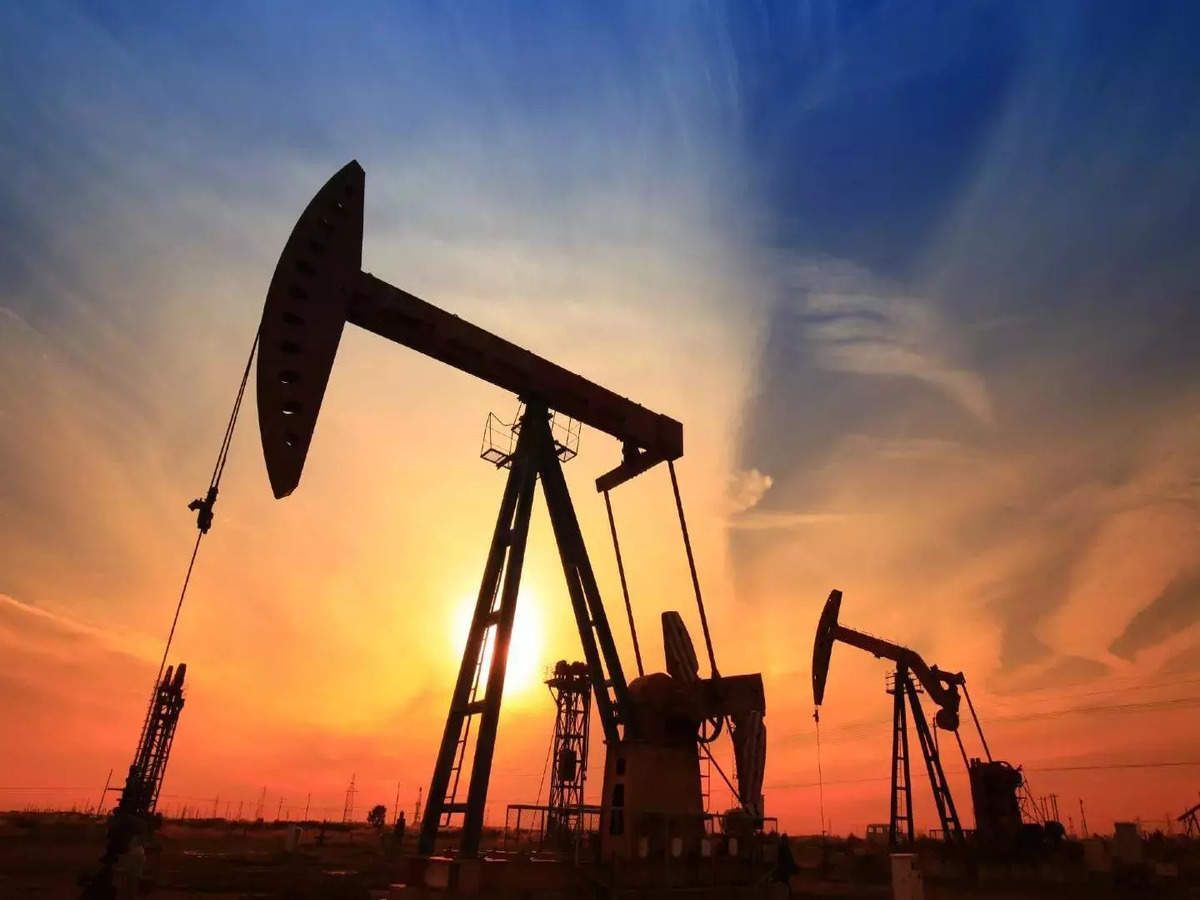
As the Strait of Hormuz remains choked and tankers burn in the Persian Gulf, the oil market is no longer pricing in a geopolitical skirmish. It is pricing in a civilisational disruption.
The spigot that controls 20% of the world’s daily oil trade is now a weapon of war — and the global economy is only beginning to absorb the consequences. When U.S. and Israeli forces launched Operation Epic Fury on February 28, 2026, targeting Iranian leadership and military infrastructure, energy markets registered a tremor. In the fortnight since, that tremor has become a seismic event. Brent crude closed above $103 per barrel on March 13, its highest sustained level since Russia invaded Ukraine in 2022, while WTI has breached $98. The International Energy Agency has declared this the largest supply disruption in the history of the global oil market. Wall Street banks are revising their models with unusual haste — and unusual alarm. The oil prices Iran war 2026 shock is no longer hypothetical. It is underway, accelerating, and may not have found its ceiling.
The Hormuz Reality: How the Strait of Hormuz Oil Shock Is Rewriting Global Supply
A Chokepoint Becomes a Combat Zone
The Strait of Hormuz, a 33-kilometre-wide waterway separating Oman and Iran, is the single most consequential piece of maritime real estate on Earth. Before the war, roughly 20 million barrels per day of crude and refined products — nearly one-fifth of global daily consumption — transited its waters each morning. Today, that flow has collapsed to a trickle. Tankers are refusing passage after Iranian forces attacked multiple vessels; the U.K.’s Maritime Trade Operations logged at least six ship strikes in 48 hours last week alone.
With crude and oil product flows through the Strait of Hormuz plunging from around 20 mb/d before the war to a trickle currently, and limited capacity available to bypass the crucial waterway, Gulf countries have cut total oil production by at least 10 mb/d. IEA The knock-on is brutal: Iraq’s three main southern oilfields have seen production fall 70%, from 4.3 million bpd to just 1.3 million bpd CNBC, while the UAE has begun carefully managing offshore output as onshore storage reaches capacity.
The IEA’s Unprecedented Intervention — and Why It Isn’t Working
In a historic acknowledgement of the crisis’s severity, the IEA convened an emergency collective action: more than 30 nations across Europe, North America and Northeast Asia agreed to release 400 million barrels of oil from strategic stockpiles — the largest action in the agency’s 50-year history — led by a U.S. release of 172 million barrels from its Strategic Petroleum Reserve. CNBC
The markets responded with cold indifference. Crude prices surged more than 17% since the IEA announced the emergency stockpile release. The U.S. will release 172 million barrels over 120 days, implying 1.4 million barrels per day — just 15% of the supply lost due to the Hormuz closure. CNBC
As Tamas Varga of oil broker PVM put it with disarming clarity: “Until transit is reactivated, those kinds of policy announcements are going to have limited impact.” The 400 million barrels would be entirely absorbed in just 26 days at current supply loss rates. The oil bazooka has misfired.
Wall Street’s Bank-by-Bank Warnings on the Iran War Energy Crisis
Goldman Sachs: Extending the Disruption Timeline
Goldman Sachs raised its Brent and WTI crude oil price forecasts for Q4 2026, now assuming 21 days of severely reduced Strait of Hormuz flows — at just 10% of normal levels — followed by a 30-day gradual recovery. Previously, the bank had modelled only a 10-day disruption. BOE Report
Goldman projects prices will average above $100 per barrel in March, $85 per barrel in April, and roughly $70 per barrel later in the year — almost 20% higher than early 2026 levels on average. The Mirror The bank has also explicitly flagged that the oil prices Iran war 2026 shock makes a June Federal Reserve rate cut very difficult to justify, given mounting inflationary pressures. Fewer rate cuts, sustained higher energy costs, stagflationary drag: the macro implications extend well beyond the crude curve.
In an upside risk scenario modelled by Goldman, if Hormuz flows remain severely constrained for additional weeks, Brent could reach $150 per barrel before the end of Q1 — a level not seen since the speculative blowout of 2008.
Barclays: “Investors Are Growing Nervous by the Day”
Barclays’ macro research team has offered some of the most candid assessments. In a note last Friday, Barclays’ Emmanuel Cau warned that investors were becoming increasingly jittery after initially pricing in a short-lived conflict, noting that “the longer the Strait of Hormuz stays closed the more stagflationary markets will turn.” CNBC Barclays has modelled Brent crude testing $120 in a fleshed-out conflict scenario, with a high-end case of $150 before month-end if disruption persists.
Rystad Energy: Scenarios to $135 by June
Consulting firm Rystad Energy has published a scenario matrix that has become something of a benchmark for energy desks globally. Rystad forecasts a two-month war will push Brent to $110 per barrel by April, while a four-month conflict could spike Brent to $135 per barrel by June. CNBC Critically, the firm notes that oil prices could rise to demand-destruction levels before the IEA stockpile release meaningfully reaches the market.
RBC, Deutsche Bank, and the Stagflationary Warning
Deutsche Bank’s head of global macro research Jim Reid wrote that “from a market perspective, the problem is that investors are increasingly pricing in a more protracted conflict that causes extensive economic damage.” CNN RBC Capital Markets, alongside Barclays and Bloomberg, had earlier identified a plausible scenario in which a sustained Hormuz blockade results in triple-digit oil — a scenario that has now materialised.
Key Bank Forecasts at a Glance:
- Goldman Sachs: Brent averaging $98/bbl in March–April; $71/bbl Q4 base case; $150 upside tail risk
- Barclays: $120 near-term; $150 extreme scenario
- Rystad Energy: $110 (2-month war) → $135 (4-month war)
- Bernstein: IEA action will have “limited impact on the trajectory of oil prices”
- ExxonMobil (Tyler Goodspeed, Chief Economist): Probability distribution skewed toward “harder and longer” Hormuz closure
Global Ripple Effects: Inflation, Stocks, and the Developing World
How Iran War Affects Gasoline Prices in 2026
The pump has become the most visceral political battleground. In just the first week after the strikes on Iran, the average price of gasoline in the United States increased 48 cents per gallon. Center for American Progress According to the AAA motor club, the average price of gas hit nearly $3.60 a gallon on March 12, a jump of nearly 35 cents in a week. Time In California, drivers are paying $5.34 per gallon; San Francisco’s Shell stations have logged $6.50. Diesel — the lifeblood of supply chains, trucking and agriculture — has surged 28% since hostilities began, to $4.83 per gallon nationally.
The inflationary arithmetic is unforgiving. One in three dollars of fertiliser cost globally originates in the Gulf. Urea prices have already risen by 35% since February 28. Gulf states produce nearly 49% of global urea exports and 30% of global ammonia exports, with around one-third of the world’s urea transiting the Strait of Hormuz. Time
European Natural Gas: A 75% Surge
Europe’s exposure has been severe. Europe’s benchmark natural gas rose 75% since the war began, as Iran-linked disruptions cut off around 20% of global LNG exports, threatening heating costs and industrial competitiveness across the continent. PBS With memories of the 2022 Russian gas crisis still raw in Brussels and Berlin, the political mood is approaching pre-crisis emergency.
The Global South: Energy Shock as Existential Crisis
For wealthy economies, $100 oil is painful. For the developing world, it may be catastrophic.
Djibouti’s finance minister warned that the fighting would “bring severe economic consequences for developing countries,” with small maritime states at risk of “being pulled into deeper economic uncertainty.” Egypt’s President Abdel Fattah el-Sisi declared his country’s economy in a “state of near-emergency.” Al Jazeera
At least 85 countries have reported increases in petrol prices following the February 28 attacks. Cambodia recorded the highest increase — nearly 68% — while Vietnam saw a 50% rise, Nigeria 35%, and Laos 33%. Japan and South Korea, importing 95% and 70% of their oil from the Gulf respectively, have enacted emergency measures. Al Jazeera Bangladesh closed universities and enacted fuel restrictions; Pakistan implemented a four-day government workweek.
Historical Parallels: 1973, 2008, Russia-Ukraine — and Why This Is Different
Every analyst worth their Bloomberg terminal is reaching for historical comparisons. The parallels are instructive — but also dangerously incomplete.
- 1973 Arab oil embargo: A politically motivated supply cut of roughly 4-5 million bpd produced a 400% price spike and a global recession. The current disruption is already 10 million bpd — more than twice the scale.
- 2008 oil shock: Demand-driven, peaked at $147/bbl, collapsed within months. The current shock is supply-driven and geopolitically sustained, with no demand-destruction valve yet triggered.
- Russia-Ukraine 2022: The fear of losing Russian supply sent Brent to $127. Russia’s exports were ultimately rerouted; there is no rerouting Hormuz. As Wood Mackenzie’s Alan Gelder observed, the parallels are instructive but imperfect: the current disruption involves physical closure of the world’s most critical chokepoint — not sanctions circumvention.
The CEO of British energy firm EnQuest told CNBC that the oil market has “never seen something of this magnitude before.” CNBC He is not given to hyperbole. The IEA’s own language — “the largest supply disruption in the history of the global oil market” — is itself unprecedented.
Scenarios: The Path to $150 Brent — or Resolution
Scenario 1: The Short War (2–4 weeks, Brent $95–$110)
Iran’s new Supreme Leader Mojtaba Khamenei capitulates under military pressure; Hormuz reopens within 30 days. Strategic reserves cover the gap; inflation spikes prove transitory. The most optimistic scenario markets have partially priced in. Requires: credible ceasefire, rapid escort operations, infrastructure intact enough to resume exports.
Scenario 2: The Prolonged Conflict (2–4 months, Brent crude $135–$150 forecast Iran)
Iran’s new supreme leader has vowed to keep the Strait of Hormuz closed as a “tool of pressure,” with continued attacks on commercial vessels deepening the disruption. CNBC Production shut-ins spread from Iraq and Kuwait to the UAE and Saudi Arabia. Strategic reserves are depleted. Global GDP contracts by 1.5–2 percentage points. This is Goldman’s upside risk scenario and Barclays’ high-end case.
Scenario 3: Infrastructure Annihilation (4+ months, $200+)
Iranian military spokesman Ebrahim Zolfaqari issued a blunt warning: “Get ready for oil to be $200 a barrel, because the oil price depends on regional security, which you have destabilised.” CNBC If major Gulf energy infrastructure — Saudi Aramco’s Ras Tanura, Qatar’s LNG facilities, UAE offshore platforms — sustains serious damage, the recovery timeline extends to years, not months. This remains a tail risk, but it is no longer an unthinkable one.
Policy Implications: OPEC+, the SPR, and the Energy Transition
What OPEC+ Can and Cannot Do
Gulf Arab states are cutting production not by strategic choice but because they are running out of storage space, as crude piles up with nowhere to go due to the closure of the Strait. CNBC OPEC+ announced a modest output increase of 206,000 bpd at the war’s outset — a rounding error relative to the 10+ million bpd supply loss. Saudi Arabia is exploring rerouting crude to the Red Sea via overland pipeline, but this covers at most 2 million bpd of its 6.5 million bpd export capacity.
The SPR Dilemma
The U.S. entered this crisis with a Strategic Petroleum Reserve that, by bipartisan consensus, was inadequately stocked. The Trump administration neglected to refill the nation’s Strategic Petroleum Reserve ahead of the war, leaving the economy further exposed to supply shocks. Center for American Progress The 172 million barrels now being released represent 41% of total U.S. SPR holdings — a significant depletion of the last-resort buffer for a crisis that shows no sign of swift resolution.
The Energy Transition Paradox
There is a bitter irony in this crisis for energy transition advocates. High oil prices structurally accelerate the shift to EVs, heat pumps and renewable energy — as demonstrated post-2022. But they simultaneously devastate the fiscal capacity of developing nations needed to finance that transition. The energy crisis Iran conflict could simultaneously hasten clean energy adoption in wealthy economies while locking the Global South into fossil fuel dependency for another decade.
The Road Ahead: Strategic Questions for Governments and Investors
We are now in the third week of the most consequential energy disruption since the 1970s, and the fundamental question has not changed: when, and under what conditions, does the Strait of Hormuz reopen?
As analysed in our earlier piece on Hormuz’s geopolitical history, the strait has been threatened but never functionally closed in the modern era. That precedent has now been broken. The market is being forced to price the unpriced: a sustained, militarily enforced closure of the world’s most critical oil chokepoint, with a belligerent actor who has explicitly stated its intent to keep it shut.
For investors, the calculus is clear: energy equities and commodities remain the hedge of first and last resort. For governments — particularly in Asia, Africa and South Asia — the imperative is emergency demand management, accelerated reserve releases, and diplomatic pressure on Washington to define an exit strategy. For central banks, stagflation is no longer a theoretical risk; it is appearing on the yield curve.
President Trump has described the rise in oil prices as “a very small price to pay” for destroying Iran’s nuclear capability. Markets, at $103 per barrel and rising, are beginning to question the arithmetic. The oil tap that powers 20% of the world’s trade has become a geopolitical spigot — and no one, including the superpower that turned it, appears certain how to turn it back on.
The global markets energy shock from the Strait of Hormuz is not just an energy story. It is a macroeconomic, geopolitical, and humanitarian inflection point — one whose full consequences will be measured not in barrels, but in years.
Discover more from The Economy
Subscribe to get the latest posts sent to your email.


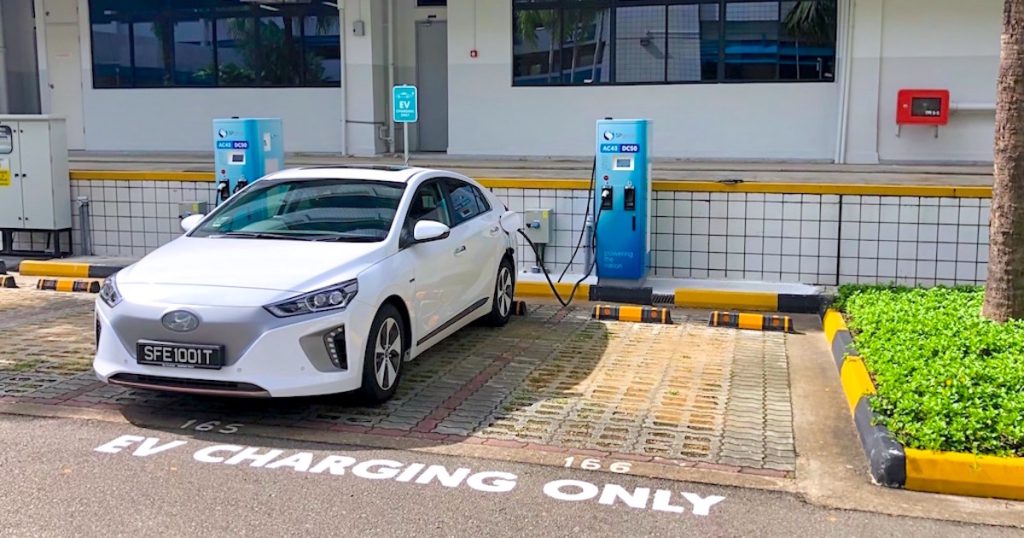
Singapore EV charging prices remain stable despite Middle East tensions, but the Q2 2026 electricity tariff hike—driven by surging LNG costs—signals inevitable increases from April. Here’s what drivers need to know.
There is a curious calm settling over Singapore’s electric vehicle charging networks these days. At HDB carparks in Toa Payoh and private lots in Orchard Road, the rates blinking on charging screens have barely budged—hovering around a median S$0.66/kWh in public estates and S$0.74/kWh in commercial ones . Pump prices, by contrast, have been on a tear: 95-octane petrol climbed 16 percent since mid-February, with diesel surging more than 27 percent as Middle East turmoil rattles oil markets .
For EV drivers, this feels like vindication. Their fuel of choice—electricity—has remained insulated from the geopolitics convulsing the Strait of Hormuz. But if you are one of the 62,000-plus EV owners in Singapore, or contemplating joining their ranks, enjoy the reprieve while it lasts . Because April is coming, and with it, a reckoning.
The mathematics of Singapore’s energy architecture is unforgiving. This city-state generates 95 percent of its electricity from imported natural gas . And natural gas—specifically the liquefied variety priced against the Japan-Korea Marker (JKM) benchmark—has gone parabolic. Asian spot LNG prices now trade roughly 80 percent above pre-conflict levels, touching US$18 per million British thermal units . The only reason EV charging rates haven’t reflected this is timing: Singapore’s regulated electricity tariffs adjust quarterly, using a lagged formula based on average natural gas prices from the preceding two-and-a-half months .
That lag is about to expire.
The April Inflection Point
When the Energy Market Authority (EMA) announces the Q2 2026 regulated tariff later this month, the numbers will not be pretty. The current Q1 rate of 26.71 cents/kWh (before goods and services tax) reflects natural gas prices from October through mid-December 2025—a period before the latest escalation in the Middle East . The next revision will capture the price surge that followed recent disruptions near the Strait of Hormuz, through which a fifth of global LNG trade passes.
A senior manager at one of Singapore’s major charging point operators (CPOs), speaking to The Business Times, put it bluntly: if the electricity tariff increase is modest, operators might absorb some of it. But if the jump is significant—and all signs point that way—charging rates will have to rise .
This is not merely a story about passing through costs. It is a stress test for Singapore’s carefully calibrated green transition.
The Vulnerability Beneath the Stability
Singapore’s electricity pricing mechanism was designed for predictability, not insulation. The quarterly tariff-setting formula, which smooths fuel cost volatility by averaging prices over several months, has served households and businesses well . But it cannot repeal the laws of energy economics. The natural gas that feeds power plants like Senoko and Tuas is largely contracted on oil-indexed terms, and those contracts eventually reflect market reality .
What makes the current moment different is the confluence of structural pressures. LNG import dependence is rising across Southeast Asia; S&P Global Commodity Insights projects regional imports to hit 56 million metric tons by 2030, nearly triple 2023 levels . Singapore, despite its reputation for diversification, remains exposed. Last year, 42.5 percent of its LNG came from Qatar alone . When geopolitical risk spikes in the Gulf, the transmission to Singaporean wallets is nearly direct.
The CPOs caught in the middle face an unenviable choice. Raise prices and risk slowing EV adoption—precisely when the government aims for 60,000 charging points by 2030 and EVs already constitute nearly one-third of new car registrations . Or absorb costs and squeeze margins on infrastructure that remains capital-intensive to deploy and maintain.
What the Hike Looks Like
The exact magnitude of the April increase remains uncertain, but we can sketch plausible contours. If wholesale electricity costs rise 15 to 20 percent—not unreasonable given LNG’s 80 percent spike—public charging rates could climb by 10 to 15 percent, based on analysis by National University of Singapore academics . That would push HDB charging toward S$0.73–0.76/kWh and commercial fast charging past S$0.80/kWh.
For a typical EV driver covering 20,000 kilometers annually, the math shifts meaningfully. Today, charging predominantly at public AC points costs roughly S$1,200–1,400 per year in electricity. A 15 percent increase adds S$180–210—not crippling, but enough to nibble at the total-cost-of-ownership advantage over internal combustion engine vehicles .
The comparison with petrol remains favorable, to be sure. At current pump prices of S$3.35/liter for 95-octane, a comparable petrol sedan costs S$2,600–2,800 annually in fuel . But the gap narrows, and perception matters. Early adopters who bought EVs expecting perpetually cheap electrons may experience sticker shock.
Not All Chargers Are Equal
The coming increase will not land uniformly. Fast DC chargers—those 50kW and above units at malls and petrol stations—already command premiums for convenience. Their operating costs are higher, and they serve a clientele (ride-hailers, commercial fleets, time-pressed drivers) with lower price sensitivity .
AC chargers in HDB estates, by contrast, face different economics. These serve overnight parkers—residents for whom charging is a routine, not a emergency top-up. Price sensitivity here is higher, and CPOs competing for LTA tenders must weigh proposed rates in their bids . The Land Transport Authority’s price-quality framework already weights quality more than price in evaluating operators, but the quality threshold does not exempt operators from market discipline .
There is another wild card: some CPOs have locked in renewable energy contracts that partially insulate them from wholesale price spikes . If you charge on a network backed by solar power purchase agreements, your rates may rise less—or later. This will introduce new differentiation in a market that has, until now, felt relatively commoditized.
The Policy Bind
For the government, the timing is awkward. The EV adoption push is hitting its stride. As of February 2026, electric vehicles account for 6.3 percent of Singapore’s total car population—up from under 1 percent in 2022 . The charging network now exceeds 1,600 HDB carparks, with fast chargers rolling out at commercial and industrial locations to support taxi and fleet electrification .
Yet the very success of this rollout creates exposure. More EVs mean more charging demand, which means more sensitivity to electricity prices. The U-Save rebates and EV early adoption incentives that cushioned the transition were designed for upfront costs, not operating expenses . They do not help when the per-kilowatt-hour rate climbs.
Energy Minister Tan See Leng acknowledged as much recently, noting that while Singapore has diversified gas supplies and buffer stocks, global prices ultimately transmit to local tariffs . It was a careful statement—neither alarmist nor reassuring—and it signals that the government expects households and drivers to share some pain.
The Longer View: Resilience or Relapse?
What does April’s looming hike teach us about Singapore’s energy future? Three things.
First, fuel diversification remains an unfinished project. Solar adoption is scaling, but intermittent. Cross-border power imports from Laos and Malaysia are growing, but slowly. Nuclear and other firm low-carbon sources remain years away. Natural gas, for all its emissions intensity relative to renewables, will anchor the system for another decade .
Second, EV charging economics will increasingly segment. Drivers who can charge at home—landed property owners, condos with installed infrastructure—will enjoy relative insulation, paying retail electricity rates rather than marked-up public charging fees . HDB dwellers, who rely on public infrastructure, face greater pass-through risk. This is not merely an equity issue; it is an adoption constraint. If public charging becomes significantly more expensive than home charging, the profile of EV buyers may skew wealthier, slowing mass-market penetration.
Third, CPO business models must evolve. The early land grab—installing chargers to capture market share—is giving way to a more mature phase where pricing strategy, load management, and ancillary services (battery storage, solar integration, demand response) determine profitability . Operators who simply pass through grid costs will lose customers to those who innovate.
What Drivers Should Do Now
If you own an EV—or plan to—April is a pivot point. Consider these moves:
- Lock in home charging if possible. For landed property residents, installing a charger before the tariff hike captures today’s rates. The EV Common Charger Grant and heavy vehicle charger subsidies remain available .
- Compare CPO apps. Not all operators will raise prices equally or immediately. Some may offer off-peak discounts or bundled subscriptions. Charge+ already promotes time-of-use rates; others may follow .
- Factor electricity risk into EV math. The total-cost-of-ownership advantage over petrol remains intact, but the margin matters. If you drive high mileage, especially on public fast charging, run the numbers with a 10–15 percent buffer.
- Watch the Q2 tariff announcement. Due in late March, the precise increase will set the floor for CPO negotiations. A 10 percent tariff hike does not mandate a 10 percent charging hike—operators decide the pass-through.
Conclusion: The End of Exceptionalism
Singapore’s EV charging market has enjoyed a brief golden age: stable prices through global energy chaos, government-backed rollout, and favorable comparisons to volatile petrol. April 2026 marks the end of that exceptionalism.
The stability was never magic; it was math—a lagged formula and a quarterly cycle that temporarily decoupled local rates from global spikes. That decoupling is reversing. The only questions are how much prices rise and who bears the burden.
For policymakers, the episode underscores the urgency of energy diversification and the need to monitor charging affordability as adoption scales. For CPOs, it demands smarter pricing and better hedging. For drivers, it is a reminder that even electrons have geopolitics.
The green transition does not repeal the laws of supply and demand. It merely changes the fuel. And every fuel, eventually, has its April.
Discover more from The Economy
Subscribe to get the latest posts sent to your email.
Analysis
Nora EV Launches in Pakistan at Rs1.89 Million: The Battery-Swapping Revolution That Could Finally Make Electric Mobility Affordable

The week Pakistan’s fuel crisis hit its sharpest edge yet — petrol spiking to Rs321.17 per litre after an overnight Rs55 hike tied to Middle East tensions — a small startup in Lahore quietly answered back. Nora EV Pakistan price: Rs1.89 million. Not a scooter. Not a Chinese import waiting six months at Port Qasim. A four-seat, air-conditioned, disc-braked urban car — with a trick no other vehicle in the country has ever offered: a battery you can swap at a petrol pump in under three minutes.
The timing is not coincidental. It is structurally inevitable.
Why the Nora EV Pakistan Price Matters Right Now
Pakistan is living through a convergence of crises that makes the Nora EV Pakistan price announcement — confirmed this week across PakWheels, Business Recorder, and the company’s official website — feel less like a product launch and more like a policy intervention dressed in sheet metal.
As of March 7, 2026, petrol costs Rs321.17 per litre, according to OGRA-verified pricing data. The Rs55-per-litre overnight hike — itself driven by Strait of Hormuz tensions and IMF conditionality requiring Pakistan to pass global price swings directly to consumers — has renewed what analysts at the Institute of Energy Economics and Financial Analysis describe as a structural dependency Pakistan simply cannot afford to sustain. Pakistan spent over $16 billion on petroleum imports last year, the single largest line item on a $58.4 billion import bill.
Into this moment arrives the Nora EV — Pakistan’s first battery-swappable electric car, offering an affordable EV under 2 million Pakistan rupees, the cheapest electric car Pakistan 2026 has seen from an organized automotive startup with a real product, a real booking system, and real swap stations already positioned inside Lahore’s petrol pump network.
The Nora EV Pakistan price is not just a number. It is a declaration that the electric transition can happen from below — not from the top down.
Pakistan’s EV Market in 2026: The Field Nora Is Entering
The Pakistan first battery swap electric vehicle arrives into a market that is simultaneously more competitive and more embryonic than it appears.
The top end of Pakistan’s EV segment is dominated by imports that serve a narrow sliver of the population. The MG ZS EV starts at Rs9.69 million. The BYD Atto 3 commands Rs8–10 million. These are fine vehicles for upper-middle-class buyers who can afford the upfront price and have access to a home charger — but they represent perhaps 0.1% of Pakistan’s 30-million-vehicle market.
Then there is BYD’s larger ambition. According to Reuters, BYD plans to roll out the first Pakistan-assembled EV by July or August 2026 from a new $150 million factory near Karachi — a joint venture with Mega Motor Company (part of Hub Power), targeting 25,000 units per year on a double-shift schedule. That plant will initially focus on PHEVs and EVs, and when it achieves scale, local assembly economics should drive prices lower. The BYD Shark 6 PHEV currently costs Rs19.95 million — a premium pickup truck, not a commuter solution.
The Honri VE, a family hatchback with roughly 250 km of claimed range, sits in the Rs3.5–4.5 million range. Changan’s Lumin mini-EV is expected between Rs2.5–3.5 million, though no confirmed Pakistan launch date exists as of March 2026.
That leaves a yawning gap between the motorcycle — which dominates Pakistani mobility with tens of millions of units — and anything resembling an affordable electric car. The Nora EV Pakistan price of Rs1.89 million is the first serious attempt to occupy that gap with a four-wheeled, weather-protected, range-extendable option.
Technical Deep-Dive: Nora EV Range and Features vs. the Competition
Understanding the Nora EV range and features requires accepting what this vehicle is and what it is not. It is not a highway cruiser. It is, precisely and deliberately, an urban commuter — an L7e-class quadricycle built for the 20–40 km daily reality of Karachi, Lahore, Islamabad, and Faisalabad.
Nora EV Variant Pricing and Specifications
| Feature | Eco | Eco+ | EcoX |
|---|---|---|---|
| Price (PKR) | 1,899,000 | 2,099,000 | 2,299,000 |
| Motor | 3,000W | 3,000W | 3,000W |
| Battery | 72V – 120Ah | 72V – 120Ah | 72V – 120Ah |
| Range | 120 km | 120 km | 160 km |
| Range Extender | None | Low-End | High-End (→300 km) |
| Charging Time | 6–8 hours | 6–8 hours | 6–8 hours |
| AC & Heater | Yes | Yes | Yes |
| Alloy Wheels | 12-inch | 12-inch | 12-inch |
| Touchscreen Multimedia | No | No | 7-inch HD |
| Power Mirrors | No | No | Yes |
| Color Options | 3 | 3 | 15 |
| Warranty | 5 Years | 5 Years | 5 Years |
Additional specs confirmed by Business Recorder:
- Top speed: 65 km/h
- Gradeability: 15% slope capability
- Wheels: 12-inch aluminium alloy, 145/70-12 tyres
- Suspension: Front and rear bridge bracket with telescopic damping shock absorption
- Braking: Four-wheel disc brakes
- Camera: 7-inch HD reversing display with Bluetooth multimedia
- Security: Electronic lock, double door central control, touch alarm
- Climate: Air conditioning and heater (all variants)
- Safety: Central door locking, theft prevention
- Warranty: 5 years
Competitive Comparison: Charging vs. Swapping
| Vehicle | Price (PKR) | Range | Charge/Swap Time | Type |
|---|---|---|---|---|
| Nora EV (Eco) | 1.89M | 120 km | 3 min (swap) / 6–8 hr (plug) | Battery-swap BEV |
| Nora EV (EcoX) | 2.29M | 160 km (→300 km w/ extender) | 3 min (swap) | Battery-swap BEV |
| Changan Lumin (expected) | ~2.5–3.5M | 305–405 km | 6–8+ hr | BEV |
| Honri VE | ~3.5–4.5M | ~250 km | 6–8+ hr | BEV |
| MG ZS EV | 9.69M+ | 263 km | 7–8 hr | BEV |
| BYD Atto 3 | ~9M+ | 420 km | 30 min (DC fast) | BEV |
| BYD Shark 6 PHEV | 19.95M | 100 km EV + fuel | Dual mode | PHEV |
The differentiator is not just Nora EV Pakistan price — it is the battery swapping EV Pakistan architecture. Where every competitor requires the driver to wait hours at a charger (and own a private charging point, a luxury most Pakistani renters and apartment dwellers do not have), Nora’s robotic swap station replaces a depleted pack with a fully charged one in under three minutes. The company has positioned these stations inside existing petrol pump premises in Lahore — using infrastructure already trusted and visited daily by millions of commuters.
This is the Pakistan first battery swap electric vehicle proposition: not a new charging paradigm, but a familiar one, rendered electric.
The Macro Picture: Solar, Fuel Pain, and the Economic Logic of Going Electric
The economic case for the Nora EV rests on three structural forces reshaping Pakistan’s energy landscape simultaneously.
First: Solar’s ascent is real and accelerating. According to Wikipedia’s tracking of Pakistan’s energy data, solar became the country’s single largest electricity source by summer 2025, supplying over 25% of total production — nearly double its 14% share in 2024. Pakistan imported 17 GW of solar panels in 2024 alone, more than any other country in the world that year. As the World Resources Institute has documented, this transition has been market-driven rather than policy-led: households and businesses responding to price signals, not government mandates. With renewables now supplying an estimated 53% of Pakistan’s electricity, and a government target of 60% by 2030, the grid that charges Nora EVs — or powers its swap station batteries — is getting cleaner, and cheaper, every quarter.
Second: The fuel crisis is not a blip. As The Economist noted in its landmark analysis of Pakistan’s surprising green transition, this is a country whose energy economics have been fundamentally reordered by market forces. The Rs55 overnight petrol hike of March 2026 is merely the latest expression of a structural reality: Pakistan imports the overwhelming majority of its petroleum, pays for it in weakening rupees, and passes the pain to consumers under IMF conditionality. There is no subsidy buffer left. For a household running a 1,000 cc petrol car in Lahore — spending Rs4,000–6,000 per month on fuel — the Nora EV’s claimed operating cost of roughly 80% cheaper than a petrol vehicle is not marketing language. It is arithmetic.
Third: The IEA’s global EV trajectory is becoming a local opportunity. The IEA’s Global EV Outlook 2025 reported that EV sales in emerging markets across Asia and Latin America surged over 60% in 2024 to nearly 600,000 units — approximately the size of Europe’s entire EV market five years prior. The report projected global EV sales to exceed 20 million units in 2025, representing more than one in four new cars sold worldwide. Critically for Pakistan, the IEA highlighted that policy support and relatively affordable EV under 2 million Pakistan rupees-equivalent models from Chinese manufacturers are the primary driver of emerging-market adoption. The Nora EV Pakistan price at Rs1.89 million sits precisely in that sweet spot.
Pakistan’s Two-Wheeler Problem — and the Nora Solution
Here is the structural argument that Nora EV’s founders, led by CEO Ayub Ghauri, are clearly making, whether they articulate it this bluntly or not:
Pakistan has roughly 30 million registered motorcycles. The majority of urban commuters — not by preference but by economic necessity — ride 70cc or 125cc bikes in rain, smog, and summer heat, without the safety of a cabin, without air conditioning, without the ability to carry a family. The entry price of a new 125cc Honda is approximately Rs200,000–250,000. A used 70cc bike runs Rs80,000–150,000. The gap between that and any four-wheeled enclosed mobility option has, historically, been enormous.
The cheapest electric car Pakistan 2026 closes that gap in a way no Japanese-brand city car has ever been willing to do. A Suzuki Alto 660cc — Pakistan’s “people’s car” — now costs Rs2.2–2.6 million and still burns petrol at Rs321/litre. The Nora Eco variant at Rs1.89 million undercuts it on price and eliminates the fuel bill entirely.
This is not about replacing the MG ZS EV buyer. It is about converting the motorcycle household into a four-wheel EV household — what mobility economists call “leapfrogging.”
Analyst Verdict: Will Nora Scale, or Will Battery-Swap Infrastructure Be Its Undoing?
The honest answer is: it depends on a race between demand momentum and infrastructure build-out, and that race is closer than the bears think.
The Nora EV’s fundamental vulnerability is not the car. The 3,000W motor, 72V-120Ah pack, four-wheel disc brakes, and five-year warranty represent solid engineering for this vehicle class. The Nora EV range and features are appropriate for a market where 85% of daily trips are under 50 km, and the battery swapping EV Pakistan model neatly solves the range-anxiety problem that has haunted every affordable EV pitch in South Asia for a decade.
The vulnerability is the chicken-and-egg of swap infrastructure. A battery-swap network only becomes convenient when stations are densely distributed — every 20–30 km in urban zones, at minimum. Nora has announced stations at petrol pumps in Lahore, which is the right distribution partner (high footfall, existing real estate, trusted brand relationships). But “Lahore only” is not a national product. Karachi, Rawalpindi-Islamabad, Faisalabad, Multan — these cities will need swap coverage before buyers in those markets can commit without anxiety.
The comparison to Nio in China — which took four years to build a swap network dense enough to become a genuine selling point — is instructive. Nio had deep-pocketed investors and a government obsessed with EV infrastructure. Nora has neither at comparable scale.
What Nora does have, however, is timing. The same market dynamics that have made Pakistan the world’s fastest solar adopter — economic necessity, price pressure, and a population that responds pragmatically to cost signals — are precisely the conditions under which an affordable EV under 2 million Pakistan rupees, with a three-minute “refueling” analog, can achieve rapid word-of-mouth adoption in urban centres. If Nora can deploy 30–50 swap stations in Lahore within 12 months and demonstrate reliable unit economics, expansion to other cities becomes commercially self-financing.
The long-term outlook is cautiously optimistic. Pakistan’s solar surplus creates cheap electricity for charging. The government’s 45% tariff cut for EV chargers (effective January 2025) lowers swap station operating costs. BYD’s Karachi assembly plant, expected online by mid-2026 per Reuters, will normalize the idea of affordable Chinese-linked EVs in Pakistani driveways. The market is being educated by wealthier early adopters — and Nora is waiting at exactly the right price point when the next wave of buyers arrives.
The Nora EV Pakistan price of Rs1.89 million is not a compromise. It is a calculated bet that Pakistan’s electric future will be built not in the showrooms of Defence Housing Authority, but on the streets of Gulshan-e-Ravi, Johar Town, and North Nazimabad — where petrol at Rs321 per litre is not an inconvenience but a monthly crisis.
How to Pre-Order the Nora EV
Pre-orders are open now. Visit noraevtech.com to book your Nora EV, download the brochure, or schedule a test drive. The company can also be reached at +92 309 6664423 or info@noraevtech.com.
Discover more from The Economy
Subscribe to get the latest posts sent to your email.
Acquisitions
Pakistan’s Quiet Capital Market Revolution: How a Rs3 Million Sahulat Account Limit Is Reshaping Retail Investing
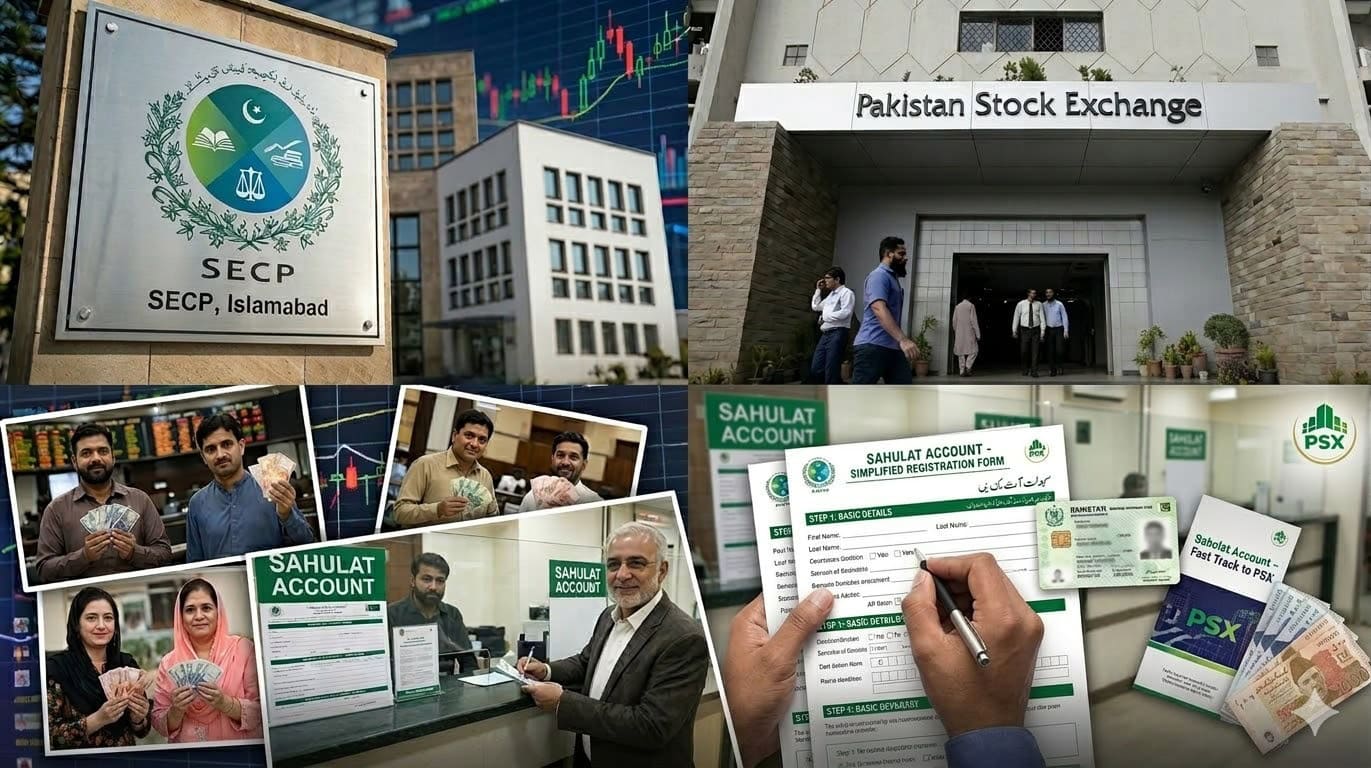
SECP triples Sahulat Account limit to Rs3 million, opening Pakistan’s stock market to a new generation of retail investors. Analysis of the reform’s impact on financial inclusion, regional comparisons with India’s BSDA model, and what it means for PSX liquidity.
There is a quiet revolution underway in Pakistan’s capital markets, and it begins with something deceptively simple: the ability to open a brokerage account using nothing more than your national identity card.
When the Securities and Exchange Commission of Pakistan (SECP) quietly tripled the investment limit for Sahulat Accounts from Rs1 million to Rs3 million on March 14, 2026, it did more than just update a regulatory threshold . It signaled a fundamental shift in how Pakistan’s financial guardians view the retail investor—not as a marginal participant to be tolerated, but as the bedrock upon which deeper, more resilient capital markets are built.
The timing is telling. With 542,748 individual sub-accounts already in the system—including 144,634 classified as Investor Accounts and a growing contingent from the Roshan Digital Account (RDA) framework—the SECP is betting that simplicity can achieve what decades of market development could not: the democratization of equity investing in a country where stock market participation has historically been the preserve of the urban elite .
As an emerging markets analyst who has watched Pakistan’s economy navigate everything from sovereign defaults to IMF bailouts, I can say this with confidence: this reform matters more than most observers realize. It is not just about raising a number from Rs1 million to Rs3 million. It is about whether Pakistan can finally build a domestic investor base deep enough to withstand the capital flight that has long plagued its markets.
The Architecture of Inclusion
The Sahulat Account framework, introduced to lower barriers for first-time and low-risk retail investors, has always been elegantly simple. An individual walks in—or logs on—with only their Computerised National Identity Card (CNIC). No utility bills. No income tax returns. No bank statements stretching back six months. Just a plastic card and a signature .
What the SECP has now done is expand the ceiling on that simplicity. The new Rs3 million limit brings the Sahulat Account into direct competition with conventional banking products and mutual fund thresholds. More importantly, it allows investors to open these accounts with multiple licensed brokers—though only one per broker—creating genuine choice in a brokerage industry long criticized for captive relationships .
“We are seeing interest from demographics that never engaged with the stock market before,” a Karachi-based broker told me last week. “Housewives, students, retirees—people who found the account-opening process for regular trading accounts intimidating. The Sahulat Account is their on-ramp.”
The numbers bear this out. While the SECP has not yet released updated sub-account figures specifically for the post-reform period, the trajectory is clear. The 542,748 figure represents a steady climb from previous years, and brokers report a noticeable uptick in inquiries since the limit increase was announced .
A Regional Perspective: Learning from India’s Playbook
What makes the SECP’s move particularly shrewd is how closely it mirrors successful experiments elsewhere in the region. The comparison with India’s Basic Services Demat Account (BSDA) framework is instructive and, I suspect, entirely intentional.
India’s Securities and Exchange Board (SEBI) introduced the BSDA to achieve exactly what Pakistan now seeks: wider retail participation through reduced costs and simplified procedures. Under the Indian model, investors can maintain securities holdings with reduced annual maintenance charges, provided the total value does not exceed ₹10 lakh (approximately Rs3.2 million at current exchange rates)—a threshold strikingly similar to Pakistan’s new Rs3 million cap .
Both frameworks share DNA:
| Feature | Pakistan – Sahulat Account | India – Basic Services Demat Account |
|---|---|---|
| Regulator | SECP | SEBI |
| Target | Small and first-time investors | Small retail investors |
| Limit | Rs3 million | Up to ₹10 lakh |
| Onboarding | CNIC-based simplified KYC | Aadhaar/e-KYC digital onboarding |
| Purpose | Increase retail participation | Encourage small investor holdings |
The results in India have been impressive. Since the BSDA framework was expanded in 2024, retail demat accounts have surged, with young investors from tier-2 and tier-3 cities entering the market in unprecedented numbers. Pakistan’s securities regulator is clearly hoping for a similar outcome.
But the comparison also highlights where Pakistan still lags. India’s BSDA operates within an ecosystem of deep corporate bond markets, sophisticated derivatives trading, and a startup culture that has produced dozens of fintech unicorns. Pakistan’s capital markets remain thinner, more volatile, and heavily dependent on institutional investors. The Sahulat Account reform is necessary, but it is not sufficient.
Beyond Banking: The China and Bangladesh Context
Expand the regional lens further, and the picture becomes more complex. China, for all its economic challenges, boasts a retail investor base so massive that it often drives market sentiment more than institutional flows. The threshold for entry is minimal—a government ID and a bank account—but the ecosystem includes mandatory investor education and increasingly sophisticated risk disclosures that Pakistan has yet to replicate.
Bangladesh offers a cautionary tale. The Dhaka Stock Exchange has experimented with various retail inclusion measures over the years, but regulatory arbitrage and weak enforcement have sometimes left small investors exposed to market manipulation. The SECP’s emphasis on “low-risk” classification and broker-conducted due diligence suggests an awareness of these pitfalls .
What Pakistan gets right in this reform is the balance between access and guardrails. The Rs3 million limit is generous enough to matter but not so high as to expose unsophisticated investors to catastrophic losses. The prohibition on leverage within Sahulat Accounts—trading is limited to actual funds deposited—creates a natural circuit breaker against the kind of margin-call massacres that have scarred retail investors in more developed markets .
The Youth Dividend and the Crypto Challenge
Perhaps the most intriguing aspect of the SECP’s announcement is its explicit targeting of young investors. The regulator’s statement notes that reforms aim to enable “young investors to confidently participate in Pakistan’s formal capital market rather than experimenting with unregulated and unauthorised foreign investment platforms” .
This is code, and everyone in Pakistan’s financial community understands it. The country’s youth—digitally native, risk-tolerant, and increasingly skeptical of traditional finance—have been flocking to cryptocurrency platforms, forex trading apps, and other unregulated vehicles. Some have made fortunes; many have lost them. The SECP’s message is clear: we offer a regulated alternative, and we’re making it easy to access.
The strategy is sound. Pakistan has one of the world’s youngest populations, with a median age of just 22.8 years. If even a fraction of that demographic can be channeled into formal capital market participation, the long-term implications for PSX liquidity, corporate fundraising, and even fiscal stability are profound.
But the competition is fierce. Crypto platforms offer 24/7 trading, gamified interfaces, and the allure of decentralized finance. The Sahulat Account, by contrast, operates within the confines of traditional market hours and regulatory oversight. To win the youth vote, Pakistan’s brokerages will need to invest heavily in user experience, mobile trading apps, and financial literacy content—areas where they have historically lagged.
The Roshan Digital Overlap
Another dimension worth watching is the intersection with Roshan Digital Accounts (RDAs). The 144,634 Investor Accounts cited by the SECP include RDA investors—primarily overseas Pakistanis who have channeled billions of dollars into Naya Pakistan Certificates and, increasingly, equities .
The Sahulat Account expansion effectively extends simplified market access to this constituency as well. An overseas Pakistani with an RDA can now open a Sahulat Account remotely, using their CNIC and RDA credentials, and invest up to Rs3 million in PSX-listed companies. For a diaspora that has shown strong appetite for Pakistani assets but often found the mechanics of investing frustrating, this is a meaningful improvement.
What Comes Next: The Shariah-Compliant Frontier
The Sahulat Account reform does not exist in isolation. It is part of a broader regulatory agenda that includes ambitious plans to transform Pakistan’s non-banking finance and capital markets into a Riba-free system by 2027 .
The SECP has already tightened Shariah screening criteria for the PSX-KMI All Share Index, lowering the threshold for non-Shariah-compliant debt from 37% to 33% and introducing star ratings for compliant companies . These moves align Pakistan’s Islamic finance framework with international standards and create a foundation for Shariah-compliant Sahulat Accounts—a logical next step given the country’s religious demographics.
Imagine a version of the Sahulat Account that not only simplifies access but also guarantees Shariah compliance, with automatic screening of investments and transparent reporting. That is where this is heading, and it could unlock even deeper retail participation, particularly in smaller cities and rural areas where Islamic sensibilities often deter engagement with conventional finance.
The Verdict: A Necessary Step on a Long Journey
Let me be direct: tripling the Sahulat Account limit to Rs3 million will not, by itself, transform Pakistan’s capital markets. The structural challenges—macroeconomic volatility, corporate governance concerns, limited product diversity, and a savings rate that remains stubbornly low—are too deep for any single reform to overcome.
But this move matters because it signals direction. It tells the market that the SECP understands the psychology of the retail investor: the fear of paperwork, the intimidation of dealing with brokers, the desire for simplicity in a world of complexity. It also tells international observers that Pakistan is serious about benchmarking its regulations against regional best practices—a message that resonates with foreign portfolio investors who have largely sat out the PSX’s recent rally.
The coming months will reveal whether the 542,748 sub-accounts can grow to a million, and whether those accounts translate into sustained trading volume and liquidity. Early indicators are positive. Brokers report that the multiple-account provision is already driving competition on fees and service quality. Online account openings are up. And for the first time in years, young Pakistanis are asking not just about crypto prices, but about P/E ratios and dividend yields.
That is progress. Slow, incomplete, but unmistakable progress. In emerging markets, that is often the best you can hope for.
Discover more from The Economy
Subscribe to get the latest posts sent to your email.
-

 Markets & Finance2 months ago
Top 15 Stocks for Investment in 2026 in PSX: Your Complete Guide to Pakistan’s Best Investment Opportunities
-

 Analysis1 month ago
Brazil’s Rare Earth Race: US, EU, and China Compete for Critical Minerals as Tensions Rise
-

 Banks2 months ago
Best Investments in Pakistan 2026: Top 10 Low-Price Shares and Long-Term Picks for the PSX
-

 Investment2 months ago
Top 10 Mutual Fund Managers in Pakistan for Investment in 2026: A Comprehensive Guide for Optimal Returns
-

 Asia2 months ago
China’s 50% Domestic Equipment Rule: The Semiconductor Mandate Reshaping Global Tech
-

 Global Economy3 months ago
Pakistan’s Export Goldmine: 10 Game-Changing Markets Where Pakistani Businesses Are Winning Big in 2025
-

 Analysis3 weeks ago
Top 10 Stocks for Investment in PSX for Quick Returns in 2026
-

 Global Economy3 months ago
15 Most Lucrative Sectors for Investment in Pakistan: A 2025 Data-Driven Analysis