
FED
IRS 2027 Tax Bracket Projections: How to Get Ahead of Bracket Creep

Key Takeaways
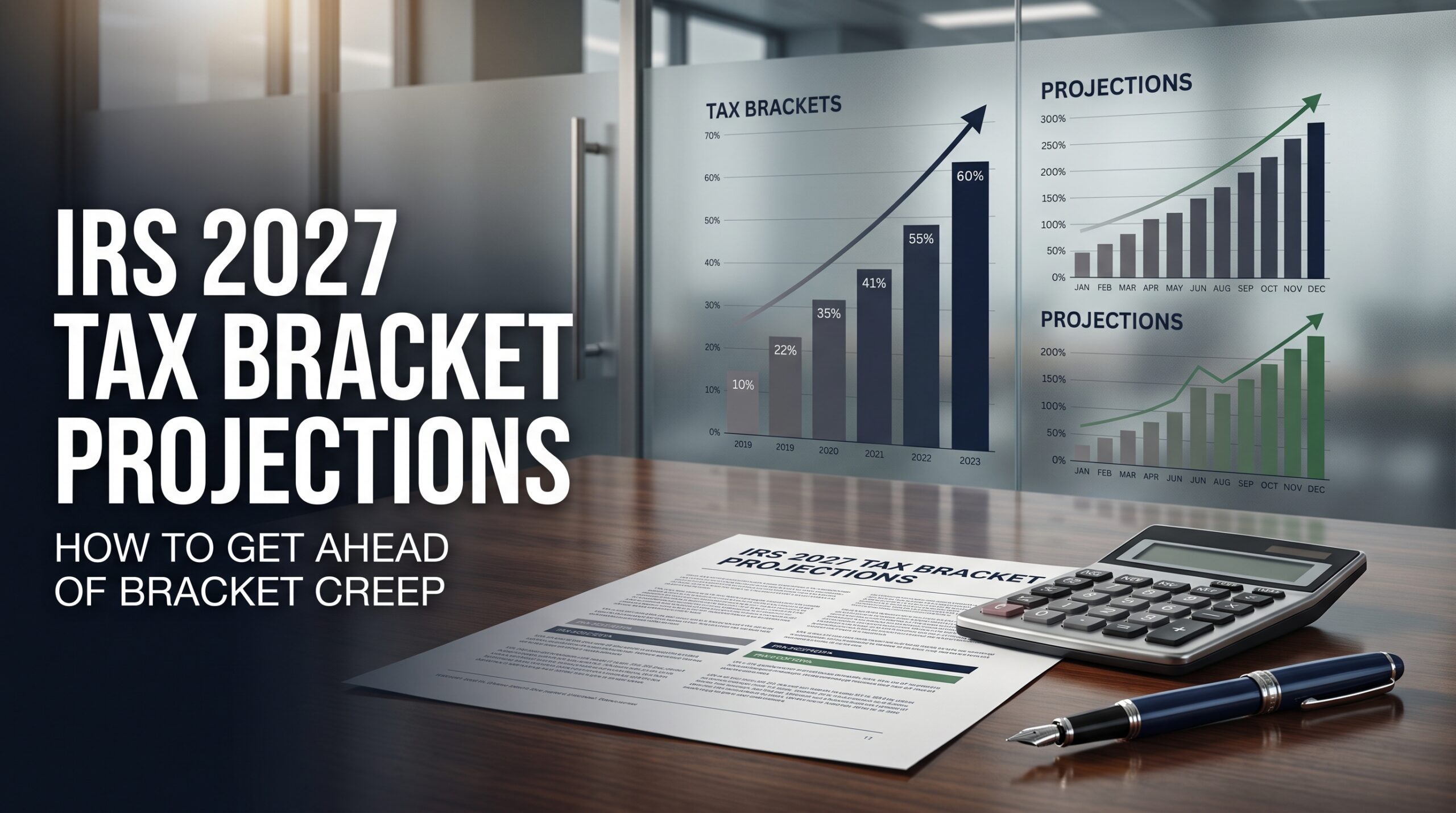
- Bloomberg Tax projects federal income tax brackets will rise 3.2% for 2027 — up from the 2.7% inflation adjustment applied for 2026.
- All seven federal tax tiers are expected to shift upward, meaning taxpayers can earn more before crossing into a higher bracket.
- The IRS has not yet confirmed these figures; an official announcement is typically made in October or November.
- Bracket creep — when income grows faster than the tax thresholds — is the core risk these adjustments are designed to offset.
- Bloomberg Tax’s 2026 projections proved accurate against the IRS’s final figures, lending the 2027 forecast reasonable credibility, though it remains unofficial.
What Is “Bracket Creep” and Why It Matters
Bracket creep happens when a raise or cost-of-living adjustment pushes your income into a higher marginal tax bracket, even though your real purchasing power hasn’t improved. The IRS’s annual inflation adjustment exists specifically to prevent this — recalibrating the income thresholds for each of the seven federal brackets so inflation alone doesn’t quietly raise your tax bill.
Projected 2027 vs. 2026: What’s Changing
| Factor | 2026 (Confirmed) | 2027 (Projected) |
|---|---|---|
| Inflation adjustment | 2.7% | 3.2% (projected) |
| Number of brackets adjusted | 7 | 7 (projected) |
| Filing deadline | April 15, 2026 | April 15, 2027 |
| Source of figures | Official IRS | Bloomberg Tax forecast |
Exact dollar thresholds for each of the seven brackets were not yet published by the IRS at the time of writing and should be sourced directly from irs.gov once released.
Why a 3.2% Increase, and Why It’s Larger Than Last Year
The projected jump from 2.7% to 3.2% reflects a modest reacceleration in the inflation data the IRS uses (chained CPI) through the summer of 2026. A larger adjustment is generally favorable for taxpayers — it means:
- More income taxed at lower marginal rates before hitting the next bracket.
- A modestly larger paycheck in 2027 for many W-2 earners once employers update withholding tables.
- Potential increases to related figures — the standard deduction, retirement contribution limits, and estate tax exemption — though the IRS calculates these separately and on its own timeline.
How to Plan Before the Official Numbers Land
- Don’t restructure your withholding yet. Projections aren’t official; wait for the IRS’s confirmed 2027 figures before making payroll changes.
- Revisit tax-advantaged account contributions. If you’re near a bracket threshold, year-end moves — retirement contributions, HSA funding, charitable giving — can still shift where 2026 income lands.
- Watch for the official release. The IRS historically publishes final brackets in Revenue Procedure form each October or November for the following tax year.
- Talk to a tax professional before making decisions based on projected, not confirmed, figures — this article is informational and not individualized tax advice.
Will 2027 tax brackets change?
Yes — Bloomberg Tax projects a 3.2% inflation adjustment across all seven federal income tax brackets for 2027, up from 2.7% in 2026. The IRS has not yet confirmed these figures; official numbers are expected in October or November 2026.
Discover more from The Economy
Subscribe to get the latest posts sent to your email.


Key Takeaways
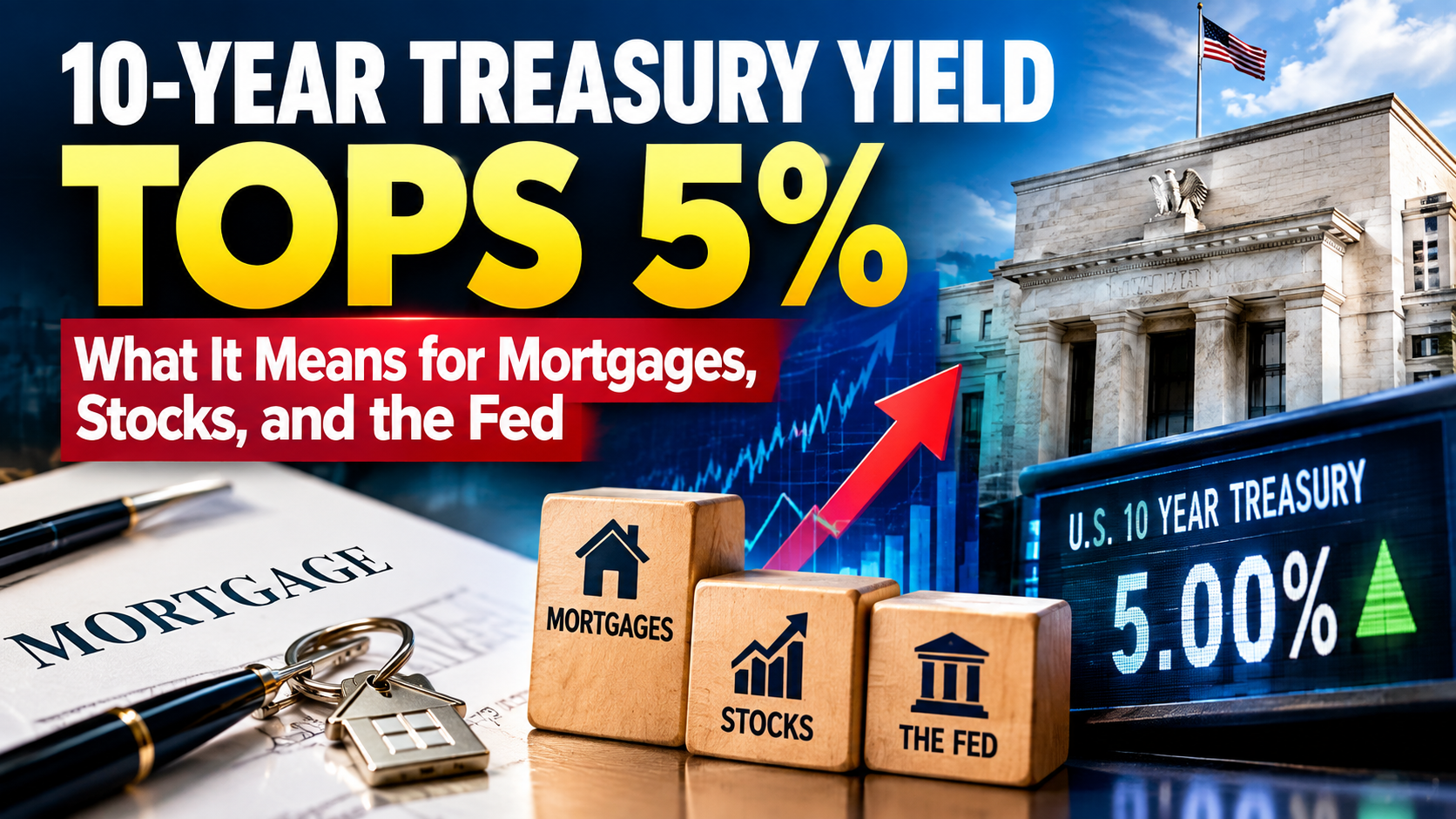
- The benchmark 10-year US Treasury yield briefly touched 5.014% on Monday, September 14, 2026 — its first move above the psychologically important 5% threshold since October 2023, and only its second time above that level since the 2007-2008 financial crisis.
- The move came just two days before the Federal Reserve’s September policy meeting, with markets now pricing roughly a 90% probability of a rate hike rather than a cut, according to CME Group’s FedWatch tool.
- The catalyst combines several forces at once: Brent crude topping $109/barrel, a hotter-than-expected August CPI report, swelling government and corporate borrowing needs, and a possible unwinding of the Japanese yen carry trade as Japanese rates climb.
- The 30-year Treasury yield reached 5.386%, directly affecting mortgage pricing, while 10-year yields in the UK and Australia have also climbed above 5% — signaling this is a global, not purely American, bond-market phenomenon.
- Veteran market strategist Ed Yardeni notes that neither the yield spike nor the global bond selloff has “broken” the stock market’s bull run so far, crediting continued strength in corporate earnings.
For the first time in nearly three years, the interest rate that anchors global borrowing costs — the US 10-year Treasury yield — has crossed the symbolically important 5% threshold. The move, which arrived just 48 hours before the Federal Reserve’s September policy decision, is rippling through mortgage markets, equity valuations, and central bank calculations from Washington to Tokyo. Here’s what actually happened, why, and what it means for anyone watching the stock market today.
What Happened
The 10-year Treasury yield climbed as high as 5.014% intraday on Monday, September 14, 2026, before paring the move back to around 4.94–4.99% by afternoon trading. It marked the first time the yield had crossed 5% during a trading session since October 23, 2023, and — as several outlets noted — only the second time it has traded this high since July 2007, just before the global financial crisis. A close above 5.02% would represent the highest level since that pre-crisis period.
The move wasn’t isolated to the 10-year note. The 2-year Treasury yield, which is more directly sensitive to near-term Fed policy, climbed to 4.679%, surpassing its previous July 2024 high. The 30-year yield — the benchmark most directly tied to fixed mortgage rates — touched 5.386% before paring some of its gains.
Why Yields Are Spiking: Four Forces Converging
1. Oil-driven inflation fears. Brent crude climbed to a session high past $109 a barrel as fighting between the US and Iran escalated, directly feeding into bond investors’ inflation expectations. Rising energy costs erode the fixed returns bondholders receive, pushing yields higher to compensate.
2. A hotter-than-expected inflation print. Friday’s August CPI report showed inflation running hotter than markets had anticipated. Goldman Sachs’ chief economist David Mericle wrote that while the report didn’t change the bank’s underlying inflation view, it pushed market pricing of a Fed rate hike this week to nearly 90% — a striking reversal from earlier-year expectations of continued rate cuts.
3. Swelling government and corporate borrowing. The yield spike is also being driven by basic supply-and-demand dynamics in the bond market: both the federal government and major corporations are issuing substantial new debt to fund spending, adding to the overall supply of bonds competing for investor capital.
4. A potential yen carry-trade unwind. Yardeni Research has floated a more technical explanation with global implications: as Japanese interest rates rise and the yen strengthens (partly on Japan’s own defense-spending and monetary-policy shifts), the long-popular “carry trade” — in which investors borrow cheaply in yen and invest in higher-yielding assets elsewhere — becomes less attractive. Unwinding those positions could be contributing to selling pressure across global bond markets, not just US Treasuries.
Global Context: This Isn’t Just an American Story
The yield surge isn’t confined to the US. Ten-year yields in both Australia and the UK have also climbed above 5%, reinforcing that this is a broader global bond-market repricing rather than a US-specific event. Yardeni’s assessment captures the moment’s tension well: a global yield spike of this magnitude “would normally be enough to break a global bull market in stocks. Neither has so far” — crediting resilient corporate earnings for equities’ relative calm despite the bond turmoil.
Rate Decision Timing: Why This Matters So Much Right Now
The timing amplifies the significance considerably. The yield spike landed just two days ahead of the Federal Reserve’s September policy meeting, transforming what might otherwise be a notable but contained bond-market move into a live variable in the Fed’s own deliberations. According to CME Group’s FedWatch tool, the probability of a rate hike this week has climbed above 90%, while Polymarket bettors have priced the same outcome at around 80%. Some market watchers are also monitoring rising tension between President Trump and Fed Chair Kevin Warsh as a wildcard factor in how the central bank navigates the decision.
Yield Snapshot
| Maturity | Peak Yield (Sept 14, 2026) | Significance |
|---|---|---|
| 2-year Treasury | 4.679% | Highest since July 2024; most Fed-sensitive |
| 10-year Treasury | 5.014% | First above 5% since October 2023 |
| 20-year Treasury | 5.426% | Sensitive to geopolitical risk |
| 30-year Treasury | 5.386% | Benchmark for mortgage rates |
Why This Matters: Mortgages, Portfolios, and the Fed’s Next Move
For everyday borrowers, the 30-year yield’s climb toward 5.4% translates fairly directly into higher fixed mortgage rates, making home purchases and refinancing meaningfully more expensive than earlier in 2026. For equity investors, the key question is whether corporate earnings can continue outrunning the drag from higher borrowing costs — the dynamic Yardeni credits for the stock market’s calm so far. And for the Fed, Wednesday’s decision now carries outsized weight: a hike would validate the bond market’s current pricing, while a hold could trigger further yield volatility if investors interpret it as the central bank falling behind an inflation trend that oil prices and geopolitical tension are actively worsening.
Frequently Asked Questions
Why did the 10-year Treasury yield cross 5% in September 2026?
The move was driven by a combination of surging oil prices tied to the escalating US-Iran conflict, a hotter-than-expected August CPI report, heavy government and corporate bond issuance, and a possible unwinding of the yen carry trade as Japanese rates rise.
How does a 5% Treasury yield affect mortgage rates?
The 30-year Treasury yield, which climbed to 5.386% alongside the 10-year’s move, is the most direct benchmark for 30-year fixed mortgage rates, meaning this yield spike is likely pushing mortgage borrowing costs higher for US homebuyers.
Will the Federal Reserve raise interest rates this week?
As of the yield spike, markets were pricing roughly a 90% probability of a rate hike at the Fed’s September meeting, according to CME Group’s FedWatch tool — a sharp reversal from earlier expectations of rate cuts.
Discover more from The Economy
Subscribe to get the latest posts sent to your email.
Fed Chair Kevin Warsh delivered his first Jackson Hole keynote as inflation sits at 3.4% and September rate-cut odds hang in the balance. Here’s how to position your portfolio.
Key Takeaways
- Fed Chair Kevin Warsh delivered his first Jackson Hole keynote on Friday, August 28, 2026 — just three weeks before the critical September 16 FOMC meeting.
- The 2026 symposium theme is “Financial Innovation: Implications for Payments and Policy,” covering CBDCs, stablecoins, and real-time payment systems — though markets are focused almost entirely on rate signaling.
- Inflation remains stubbornly above target at 3.4%, while growth shows signs of cracking under trade tensions and geopolitical uncertainty.
- Markets were pricing roughly one-in-three odds of a rate move heading into the speech, with elevated Treasury yields near 5.5% reflecting sticky-inflation and fiscal-deficit concerns.
- Warsh has a track record of withholding forward guidance, so investors should prepare for scenarios where the speech offers limited new signal rather than a clear policy pivot.
Why Jackson Hole Still Moves Markets
Since 1978, the Federal Reserve Bank of Kansas City’s Economic Policy Symposium in Jackson Hole, Wyoming has evolved from a niche academic gathering into one of the most consequential events on the global financial calendar. The keynote address — traditionally delivered by the sitting Fed Chair — has historically preceded major monetary policy shifts. Jerome Powell’s 2022 warning that fighting inflation would “bring some pain to households and businesses” wiped 3.37% off the S&P 500 in a single session; his 2024 line that “the time has come for policy to adjust” sent stocks up 1.15% and preceded a rate cut the following month.
This year’s stakes are especially high because it’s Kevin Warsh’s first Jackson Hole address as Fed Chair, having succeeded Jerome Powell in May 2026. Markets are still calibrating his communication style, which adds an extra layer of uncertainty on top of the usual rate-path guessing game.
The Setup: Inflation vs. Growth Tension
Heading into the speech, the macro backdrop was genuinely split:
- Inflation sits at 3.4%, well above the Fed’s 2% target, complicating any case for near-term easing.
- Growth signals are weakening under the combined weight of trade tensions and geopolitical uncertainty.
- The FOMC itself is divided: roughly half the committee penciled in rate hikes for 2026 at Warsh’s first meeting as Chair in June, while three regional Fed presidents dissented in favor of immediate tightening at the July meeting.
- Treasury yields remain elevated near 5.5%, reflecting both sticky inflation expectations and ongoing fiscal-deficit concerns — a combination that keeps pressure on borrowing costs across the economy.
This is an unusually contentious setup. Markets were pricing roughly one-in-three odds of a rate move at the September 16 FOMC meeting heading into Warsh’s remarks, making his choice of language — not any explicit policy announcement — the key event risk for the trading session.

How Traders Decode Fed-Speak
Because Fed chairs rarely commit to explicit forward guidance at Jackson Hole, professional traders parse language patterns for directional signal:
Hawkish phrases to watch for:
- “Restrictive”
- “Vigilant”
- “Inflation remains sticky”
- “Risks are two-sided”
- “Premature to consider rate cuts”
Dovish phrases to watch for:
- “Progress on inflation”
- “Patient approach”
- “Financial conditions restrictive” (used to justify easing)
- “Growth concerns”
- “Labor market cooling”
A related, more subtle signal: which topic gets more airtime. A Chair who dwells on inflation is typically signaling rates stay elevated; a Chair who dwells on labor-market softness is typically laying groundwork for cuts. Historically, expected volatility in major currency pairs (EUR/USD, GBP/USD, USD/JPY) runs 50–150 pips in the two hours following the speech — a useful benchmark for gauging how much the market ultimately reacts.
The Payments & Financial Innovation Angle
Beyond rate signaling, this year’s symposium theme — “Financial Innovation: Implications for Payments and Policy” — points to substantive discussion of:
- Central Bank Digital Currencies (CBDCs) and the Fed’s digital dollar plans
- Stablecoin and crypto regulation, and how fintech innovation affects monetary policy transmission
- Real-time payment systems and the ongoing shift from traditional banking rails to instant settlement
For investors tracking the broader fintech and payments sector — including the PayPal-Stripe deal collapse and semiconductor supply chains powering digital payment infrastructure — Warsh’s framing on CBDCs and stablecoin oversight carries direct read-through for regulatory risk across the payments industry.
What This Means for Your Portfolio
If the Tone Skews Hawkish
- Rate-sensitive sectors (real estate, small-cap growth stocks, long-duration bonds) face continued headwinds.
- Financials and banks may benefit from a higher-for-longer rate environment supporting net interest margins.
- The U.S. dollar typically strengthens on hawkish signaling, pressuring commodity prices and emerging-market assets.
If the Tone Skews Dovish
- Growth and technology stocks typically outperform as discount rates on future cash flows decline.
- Bond prices rise (yields fall), benefiting existing fixed-income holdings.
- Gold and other non-yielding assets often catch a bid as real rates decline.
If Warsh Offers Limited New Guidance (The Likely Base Case)
Given Warsh’s track record of letting economic data speak for itself rather than pre-committing to a path, investors should have a plan for a low-signal outcome — historically, the average Jackson Hole keynote day moves the S&P 500 just -0.12%, with only two of the last eight keynote days producing moves greater than 2%. In other words, dramatic Jackson Hole reactions are the exception, not the rule.
Actionable Takeaways for Investors
- Don’t overweight a single speech in your portfolio construction. History shows most Jackson Hole keynotes are non-events for markets; position for the base case of limited new guidance rather than a dramatic pivot.
- Watch the September 16 FOMC meeting as the more decisive catalyst, particularly given the currently split committee outlook between hawks and doves.
- Maintain portfolio diversification across rate-sensitive and rate-resilient assets — a barbell of duration-sensitive bonds and cash-flow-generative equities can hedge against either a hawkish or dovish surprise.
- Track yield curve movement in the days following the speech as a real-time gauge of how the market is actually pricing the September decision, rather than relying solely on headline commentary.
- Consider real assets (gold, TIPS) as a partial hedge given persistent above-target inflation, regardless of the near-term rate path.
This article is for informational and educational purposes only and does not constitute financial or investment advice. Federal Reserve policy and market conditions change rapidly; consult a licensed financial advisor before making investment decisions.
Frequently Asked Questions
What is the Jackson Hole Symposium and why does it matter for investors? The Jackson Hole Economic Policy Symposium is an annual gathering of central bankers and economists hosted by the Federal Reserve Bank of Kansas City, where the Fed Chair’s keynote address has historically preceded major U.S. monetary policy shifts, making it closely watched by equity, bond, and currency traders each August.
Will the Fed cut interest rates in September 2026? As of the Jackson Hole speech, markets were pricing roughly one-in-three odds of a rate move at the September 16 FOMC meeting, with the committee itself split between members favoring further tightening and those anticipating cuts — the outcome remains genuinely uncertain and will depend on incoming inflation and labor-market data.
How should I position my portfolio around a Fed Chair speech? Most financial professionals recommend against making major portfolio changes based on speculation ahead of a single speech, since historical data shows the average Jackson Hole keynote produces only modest market moves; instead, maintain diversification across rate-sensitive and rate-resilient assets and adjust incrementally as actual policy decisions are confirmed.
Discover more from The Economy
Subscribe to get the latest posts sent to your email.
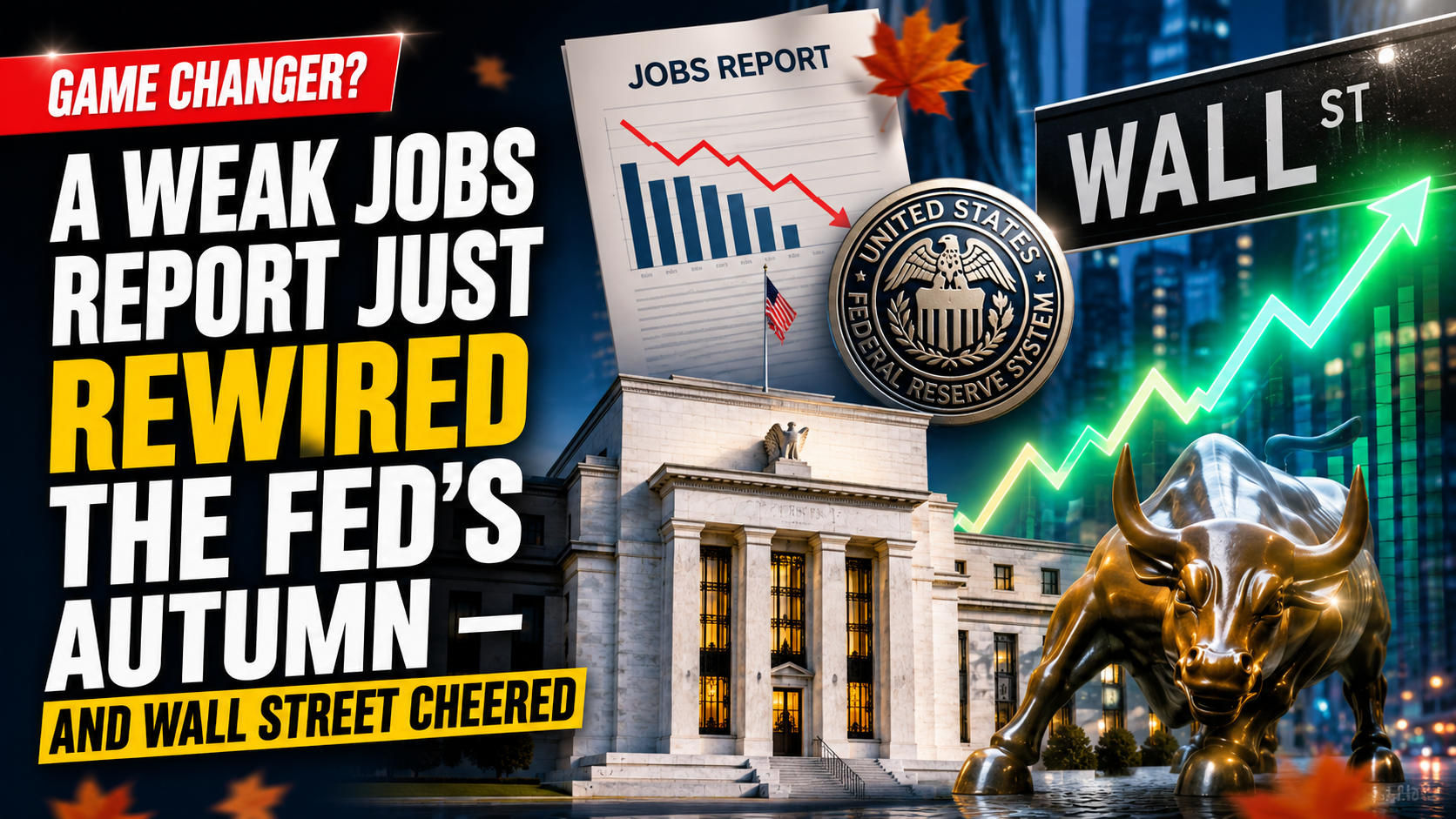
American payrolls contracted by 23,000 in July, a stunning miss against consensus expectations of an 80,000 gain, while the unemployment rate ticked down to 4.1% — a combination that reads less like resilience than like a shrinking labour force (e-Morning Coffee). The labour-force participation rate fell to its lowest level in fifty years outside the pandemic, a structural detail markets have been slower to price than the headline payrolls miss (e-Morning Coffee).
Why bad news was good news for stocks
The market reaction was immediate and largely one-directional: Treasury yields fell across the curve, growth stocks recaptured months of losses in a single session, and rate-hike probability for the September and November FOMC meetings collapsed toward zero (Clearbrook). The S&P 500 posted its best weekly performance since the spring’s Iran-ceasefire rally, gaining 3.59%, with Information Technology leading all sectors at +7.22% — its largest single-week advance of 2026 — powered by the combination of a strong Apple earnings print and the sharp repricing of Fed expectations (Clearbrook).
The rally was notably broad rather than concentrated in mega-cap technology: the equal-weighted S&P 500 advanced 2.43%, Materials gained 5.61%, Industrials rose 3.03%, and the Russell Micro Cap index — which benefits disproportionately from lower rate expectations given its more leveraged constituents — surged 5.77% (Clearbrook). Growth stocks also outperformed value for the week, though value still leads decisively on a year-to-date basis, 23.48% versus growth’s 5.68% (Clearbrook).
The Fed’s dissenters, suddenly exposed
Perhaps the most consequential detail is political rather than statistical: three FOMC members who had dissented in favour of an immediate rate hike just a week before the report was released now find themselves in a significantly weakened position within the committee (Clearbrook). A single data print has shifted the internal balance of the Fed’s policy debate heading into September.
This is the third straight “cruel summer”
What distinguishes 2026 from a one-off shock is the pattern. In each of the last two years, a comparable summer weakening in US employment data has pushed the Federal Reserve into a short cycle of rate cuts — meaning July’s contraction fits a now-recognisable seasonal-plus-structural trend rather than standing as an isolated anomaly (Bloomberg).
What to watch next
Two threads now dominate the September calendar: whether the Fed opts for a standard 25-basis-point cut or moves more aggressively given the depth of the labour miss, and whether the falling participation rate — rather than the unemployment rate — becomes the metric investors and policymakers watch most closely. A shrinking labour force can flatter the headline unemployment number while masking real economic softness, and that distinction will shape how credible the “soft landing” narrative remains through year-end.
Discover more from The Economy
Subscribe to get the latest posts sent to your email.

Beyond Rhetoric: How the EU Is Deploying ‘All Tools’ to Rebalance Its €1 Billion-a-Day Trade Deficit with China

Elon Musk’s Next Moves: Disrupting the 2026 Global Economy

INTC Stock Forecast 2026: Can Intel’s Government-Backed Turnaround Hold?

Bitcoin Price Action in Q4 2026: Safe-Haven Asset or High-Risk Tech Play?

The Target Pokémon x Owala Drop: Everything to Know Before It Sells Out

The U.S. Just Confirmed It Has Weapons in Space — Here’s What It Means for Defense Stocks

IRS 2027 Tax Bracket Projections: How to Get Ahead of Bracket Creep

Dow Jones vs. Middle East Tensions: How Wall Street Is Pricing In a 2026 Conflict Nobody Saw Coming

Bank of England’s September 17 Decision: Will UK Interest Rates Finally Move?

Inflation Is Outpacing Wage Growth Again: What It Means for Your Paycheck

10-Year Treasury Yield Tops 5%: What It Means for Mortgages, Stocks, and the Fed

Ceasefire Negotiations in 2026: Predicting the Rebound of European and Asian Economies

Emerging Markets Update: The Impact of World Bank Policies on PSX Stability

Costco Oil Shortage 2026: Will Prices Double for All Synthetic Motor Oils?

State Farm’s $5B Dividend 2026: Who Qualifies & Payout Dates

US-China Relations in Q3 2026: Trade Tariffs and Supply Chain Risks

Gold’s Wild 2026: From a Record $5,600 Peak to a 24% Crash and Back Toward $4,500

Oil Surges as Strait of Hormuz Traffic Collapses Again

Bank of England Set to Hold Rates Through Year-End, Reuters Poll Shows

SpaceX Starship Flight 14: First Orbital Attempt & Starlink V3 Launch Explained

Top 30 Stocks for Investment in PSX for Massive ROI in 2026

The 2026 Crypto Regulatory Shift: What It Means for Institutional Investors

AI Chip Stocks 2026: The Best Semiconductor Investments Beyond Marvell

AI-Powered Training: The Next Multi-Billion Dollar Ecosystem in Fitness

Tween Back-to-School Trends 2026: What’s Driving the $85B Season

Russia’s Black Sea Oil Exports Fall for a Fifth Straight Week

Global Chip Selloff Deepens: What’s Driving the Aug. 19 Semiconductor Rout

Shein Clothes Quality & Safety in 2026: What Lab Tests Show
-

 Markets & Finance8 months ago
Top 15 Stocks for Investment in 2026 in PSX: Your Complete Guide to Pakistan’s Best Investment Opportunities
-

 Analysis7 months ago
Johor’s Investment Boom: The Hidden Costs Behind Malaysia’s Most Ambitious Economic Surge
-

 Analysis7 months ago
Top 10 Stocks for Investment in PSX for Quick Returns in 2026
-

 Analysis7 months ago
Brazil’s Rare Earth Race: US, EU, and China Compete for Critical Minerals as Tensions Rise
-

 Banks8 months ago
Best Investments in Pakistan 2026: Top 10 Low-Price Shares and Long-Term Picks for the PSX
-

 Investment8 months ago
Top 10 Mutual Fund Managers in Pakistan for Investment in 2026: A Comprehensive Guide for Optimal Returns
-

 Global Economy9 months ago
15 Most Lucrative Sectors for Investment in Pakistan: A 2025 Data-Driven Analysis
-

 Global Economy9 months ago
Pakistan’s Export Goldmine: 10 Game-Changing Markets Where Pakistani Businesses Are Winning Big in 2025