
Analysis
Jeffrey Cheah Sunway Succession: How a Malaysian Billionaire Is Building a 10-Generation Dynasty

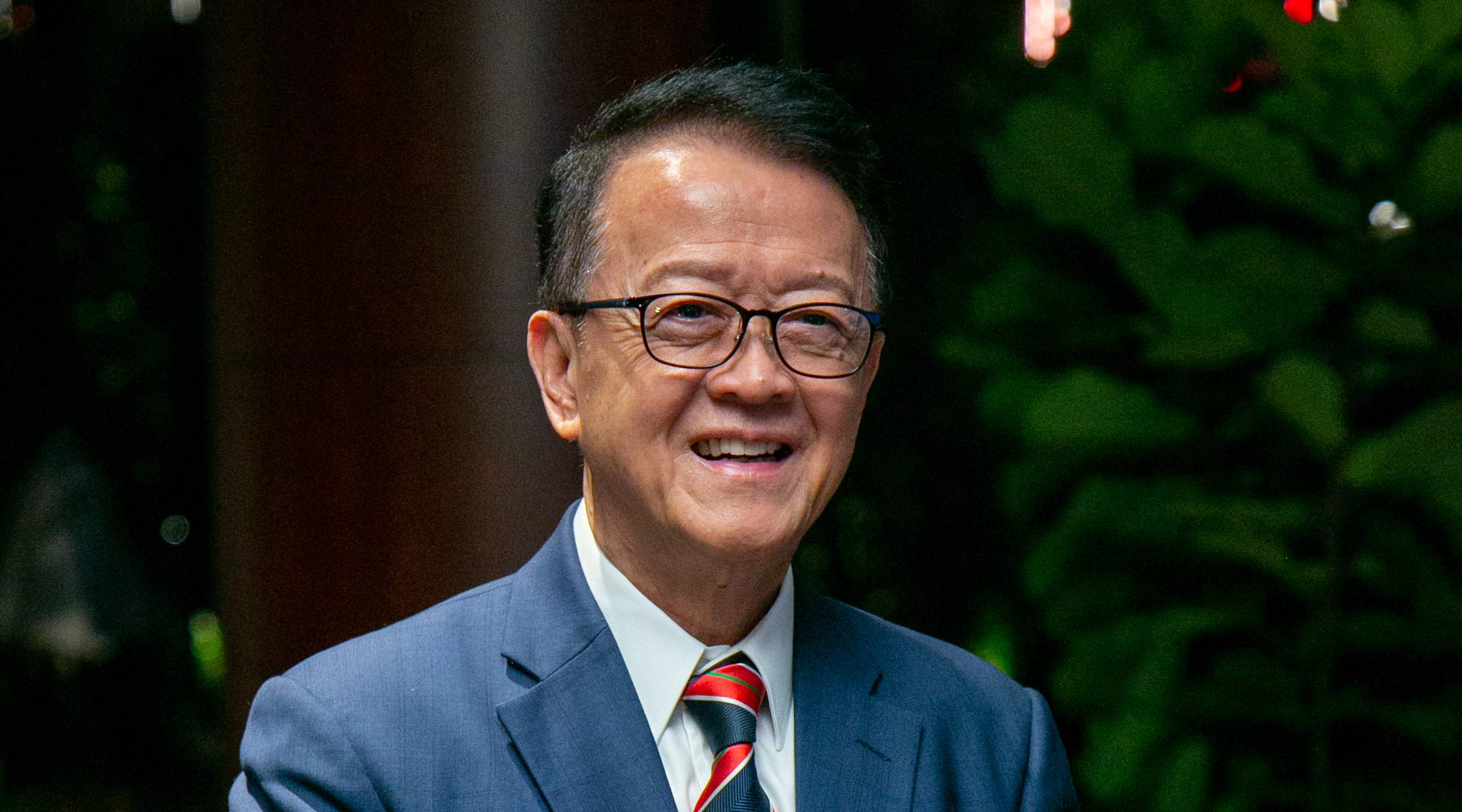
Discover how Jeffrey Cheah, founder of Sunway Group and Malaysia’s eighth-richest man, is using professional management, disciplined succession planning, and values-driven capitalism to build a conglomerate designed to outlast ten generations — and what it means for Asian family businesses globally.
The Moment a Fortune Almost Disappeared
In 1985, a young Malaysian entrepreneur stood at the edge of ruin. The regional economy had cratered. His fledgling construction and property business was buried under debt, client orders had evaporated, and the banks were circling. Jeffrey Cheah, not yet forty, had staked everything on a single audacious bet — that a desolate, waterlogged tin-mining wasteland on the outskirts of Kuala Lumpur could become something worth building.
He survived. Then, just over a decade later, the 1997-98 Asian Financial Crisis arrived with the force of a monsoon, again threatening to sweep the enterprise away. Cheah’s response both times was the same: refuse to panic, renegotiate terms, protect the balance sheet, and keep building.
That biographical arc — from RM100,000 startup capital in 1974 to a diversified conglomerate spanning twelve industries worth tens of billions of ringgit — is, in itself, a remarkable story of Southeast Asian capitalism. But what elevates the Jeffrey Cheah Sunway succession narrative above the standard billionaire biography is the ambition embedded within it: Cheah does not merely want to survive into the next decade. He wants Sunway Group to endure for ten generations.
In a region where family business succession is historically measured in decades rather than centuries, this is either visionary or eccentric. The evidence, examined carefully, suggests the former.
From Tin Mud to Glass Towers: The 50-Year Journey
Jeffrey Cheah Fook Ling was born in Pusing, a modest tin-mining town in Perak, Malaysia, sometime around 1945 or 1946. The town’s very character — defined by extractive industry, environmental degradation, and eventual decline — shaped the philosophy he would later apply to business. He pursued a commerce degree at what is now Victoria University in Melbourne, returned to Malaysia, briefly worked as an accountant in a motor assembly plant, and in 1974 struck out on his own with RM100,000 and a tin-mining licence.
What followed was not a straight line. Cheah acquired a piece of exhausted mining land in Selangor — a scarred, flooded landscape that most developers dismissed as worthless. Where others saw liability, he saw possibility. The 350-hectare site that would become Bandar Sunway, Malaysia’s first fully integrated green township, certified by the Green Building Index, began as an act of environmental imagination as much as commercial calculation.
The Sunway Group’s longevity owes much to how Cheah managed the crises that followed. During the mid-1980s recession, with extreme debt leverage threatening insolvency, he restructured without folding. When the 1997 Asian Financial Crisis crushed regional property values and sent debt-laden conglomerates into receivership, Sunway — chastened by its earlier near-death experience — had already begun reducing gearing. The lesson had been absorbed: in property and construction, balance sheet conservatism is not timidity, it is survival strategy.
Today, Sunway Group operates across property development, construction, healthcare, education, hospitality, retail, industrial, and financial services — twelve distinct verticals — with core revenue of approximately US$1.7 billion reported in 2024. Jeffrey Cheah’s personal fortune, according to the latest tracker data, stands at approximately US$4.9 billion, placing him firmly among Malaysia’s eight wealthiest individuals and confirming decades of patient, compounded wealth creation.
The Shirtsleeves Paradox: What the Data Says About Dynasty
There is a proverb that exists, with eerie consistency, across cultures separated by centuries and oceans. The English say “shirtsleeves to shirtsleeves in three generations.” The Chinese have a nearly identical saying: “wealth does not survive three generations.” The Japanese speak of “rice paddies to rice paddies in three generations.” Spanish-speaking families warn that “the father, a merchant; the son, a gentleman; the grandson, a beggar.”
These are not mere folk wisdom. Academic research on family business succession broadly corroborates the pattern. Studies by the Family Business Institute suggest that only about 30% of family businesses successfully transition to the second generation, roughly 12% to the third, and a mere 3% reach the fourth generation and beyond. Research published in journals like the Family Business Review consistently identifies succession planning failure, governance drift, and inter-generational conflict as primary culprits.
In Asia, the dynamic carries additional weight. Post-war wealth creation in Southeast Asia was concentrated in first-generation immigrant Chinese families — Malaysian-Chinese, Indonesian-Chinese, Thai-Chinese — who built empires through personal relationships, political access, and extraordinary risk tolerance. The question hanging over regional capitalism for decades has been: what happens when that founding generation departs?
The answer has not always been inspiring. The collapse of several Indonesian conglomerates after the 1998 crisis, partly attributable to governance failures and succession ambiguity, demonstrated the fragility of personality-dependent enterprises. Thailand’s own family business landscape has seen notable disintegrations alongside successes. Even in the West, the list of once-great family dynasties that dissipated within three generations would fill a long and sobering ledger.
Jeffrey Cheah, who has spoken explicitly about wanting Sunway to endure for a decade of generations, has essentially declared war on this statistical inevitability. The question is whether his architecture can back up his ambition.
The Professional Management Firewall
The most structurally significant decision in Jeffrey Cheah’s family business succession strategy is one that rarely gets the attention it deserves: the explicit separation of family ownership from professional executive management.
Sunway Group is not run by the founding family alone. Its group president is Tan Sri Dato’ Chew Chee Kin, a professional manager with decades of operational experience. Underneath him sits a corps of executives managing specific verticals. The family — Cheah himself as executive chairman, daughter Sarena as executive deputy chairman, son Evan as deputy president, and youngest child Adrian overseeing business development at Sunway REIT — occupies strategic governance roles rather than micromanaging operational divisions.
This is the institutional model that characterises the world’s most enduring family conglomerates, from Berkshire Hathaway’s governance philosophy to the operational structures of Sweden’s Wallenberg family, whose Investor AB has steered Swedish industrial capital across generations with remarkable discipline. In Asia, it echoes the governance evolution seen at companies like Hong Kong’s Swire Pacific and Singapore’s Fraser and Neave — firms that long ago recognised that family capital and professional management are complements, not substitutes.
The slow-burn succession model Cheah has constructed is worth examining in granular detail. His eldest daughter, Datin Paduka Sarena Cheah, 50, was redesignated as Executive Deputy Chairman with effect from January 2, 2025. She started her career within Sunway in 1995, progressed through corporate finance, internal audit, and business development, served as Managing Director of the Property Development Division from 2015, and earned her seniority through three decades of demonstrated contribution. She holds a Bachelor of Commerce from the University of Western Australia, an MBA from Melbourne Business School, and is a Fellow of the Australian Society of Certified Practising Accountants.
Her brother, Evan Cheah, 45, was simultaneously elevated to Deputy President on the same date. A Chartered Financial Analyst by profession, a member of the Malaysian Institute of Accountants, and a Monash University commerce graduate, Evan has spent more than a decade in roles ranging from CEO of Sunway’s China operations to Group CEO for Digital and Strategic Investments. As Deputy President, he is positioned to accelerate the group’s digital transformation agenda — increasingly critical as artificial intelligence and proptech reshape the industries Sunway inhabits.
The youngest sibling, Adrian Cheah, oversees business development at the listed Sunway REIT, extending the family’s strategic reach into capital markets and real estate investment.
What matters here is not merely that the founder’s children hold senior titles — this is common in family enterprises and often a source of governance weakness rather than strength. What matters is how long they worked their way up, the professional credentials they acquired independently, and the coexistence of an experienced external president who can provide institutional continuity if family dynamics shift.
This is Asian family business succession planning done with unusual rigor.
The Strategic Architecture: Healthcare, Property, Education — A Self-Reinforcing Ecosystem
Sunway’s durability also reflects a business model of distinctive organic coherence. Unlike conglomerates that accumulate unrelated divisions through financial engineering, Sunway’s diversification follows an ecosystem logic: property, education, healthcare, and hospitality are not discrete bets but mutually reinforcing components of an integrated urban proposition.
Bandar Sunway itself exemplifies this. Within a single township, residents live in Sunway-built homes, study at Sunway University (or at the Monash University Malaysia Campus which shares its grounds), receive medical treatment at Sunway Medical Centre, shop at Sunway Pyramid (one of Malaysia’s highest-traffic malls), and stay in Sunway Resort Hotel. The township model creates recurring, captive revenue streams across the entire consumer lifecycle — from education in early adulthood to healthcare in later years — while reducing the marketing and customer acquisition costs that typically afflict standalone businesses.
The Sunway Group healthcare IPO announced in 2025 crystallised this strategic logic into capital markets form. Sunway Healthcare Holdings, controlling one of Malaysia’s fastest-growing private hospital networks, prepared a share offering representing approximately 17% of the unit, with proceeds earmarked for a US$381 million expansion strategy positioning the group as a regional hub for medical tourism. By March 2026, the healthcare listing achieved a market capitalisation of RM16 billion — a substantial validation of the thesis that Southeast Asia’s ageing demographics and expanding middle class will generate decades of private healthcare demand.
Meanwhile, Sunway’s acquisition of MCL Land — Singapore’s homebuilder acquired from Hongkong Land for approximately US$578 million (S$738.7 million) — signalled explicit regional ambition. Singapore’s property market, defined by its rule of law, transparent regulatory environment, and gateway status to Southeast Asia, is a logical adjacency for a Malaysian developer with the balance sheet depth and governance credentials to operate across borders. The MCL Land deal is, in strategic terms, both a revenue diversification move and a brand elevation play.
The failed RM11 billion takeover bid for IJM Corporation, launched in January 2026 and withdrawn in April 2026 after Sunway secured only 33.4% acceptance against the required 50% threshold, deserves contextualisation rather than interpretation as a strategic setback. The bid was politically complex from the outset: IJM’s significant infrastructure concessions and substantial state-fund shareholding attracted nationalist commentary about Bumiputera equity concerns. Valuation disagreements were genuine — independent advisers assessed IJM shares significantly above Sunway’s offer price. The fact that 99.27% of Sunway’s own shareholders voted in favour of the transaction confirms that the strategic rationale was sound; the political and valuation friction was ultimately decisive. Sunway’s measured response — acknowledging the outcome with grace and reaffirming focus on existing strategy — was itself a governance signal worth noting.
The Philanthropy Strategy: Jeffrey Cheah Foundation as Long-Game Investment
There is a tendency in Western financial analysis to treat corporate philanthropy as reputational window-dressing — a tax-efficient public relations exercise. In the context of Jeffrey Cheah’s Sunway legacy, this interpretation misses something fundamental.
The Jeffrey Cheah Foundation, established in 2010, has distributed more than RM745 million in scholarships and educational support as of 2024, funding thousands of Malaysian students’ university education. Cheah has personally been recognised four times on Forbes Asia’s Heroes of Philanthropy list — a distinction only one other individual has matched. In 2023, the British Government awarded him an Honorary Knight Commander of the Order of the British Empire (KBE) for services to higher education, the National Health Service, and philanthropy.
This is not marginal activity. In an era when ESG credentials increasingly determine access to institutional capital and international partnerships, the Foundation serves as a long-term trust-building mechanism — with governments, with communities, with talent. It signals that Sunway’s interests are genuinely aligned with Malaysia’s national development trajectory, which matters enormously for a conglomerate whose property, infrastructure, and healthcare divisions depend heavily on regulatory relationships and public-private partnership frameworks.
Cheah is also a member of the United Nations Sustainable Development Solutions Network (UNSDSN), embedding Sunway within a global framework of sustainable development accountability. For a business building a multi-generational legacy, this positioning is strategically astute: the regulatory and social licence to operate will only become more contingent on demonstrable ESG performance in the decades ahead.
The Global Comparisons: What Enduring Dynasties Actually Have in Common
To evaluate whether Jeffrey Cheah’s ten-generation ambition is realistic, it is instructive to examine what the world’s most durable family enterprises actually share.
Walmart (Walton family, USA) has now passed through three generations with market capitalisation exceeding US$700 billion. Its secret is not sentimental family loyalty but ruthless professional management, governance structures that separate family ownership from operational control, and a relentless focus on the core competency of retail efficiency.
Ford Motor Company survived the explosive internal collapse of its founding family’s direct management only by embracing professional leadership in the 1940s under Ernest Breech and Ernie Ford’s subsequent stewardship. The Fords remain meaningful shareholders but long ago ceded operational authority.
In Asia, Ayala Corporation in the Philippines — dating to 1834 — stands as perhaps the most powerful rebuttal to the three-generation curse in Southeast Asian capitalism. The Zobel de Ayala family has maintained control across nearly two centuries by combining family strategic governance with professional management, a diverse business portfolio anchored in real estate and financial services, and a strong institutional identity tied to Philippine national development.
Indonesia’s Djarum Group and Thailand’s Charoen Pokphand offer more contemporary templates for how Asian family conglomerates can scale beyond the founder generation through disciplined portfolio management and talent meritocracy.
What all these cases share — and what distinguishes them from dynasties that crumbled — is exactly the architecture Cheah has spent the past decade constructing: strong governance frameworks, clear separation between ownership and management, conservative balance sheet discipline, and institutional purpose beyond profit maximisation. Sunway’s model maps onto these characteristics with unusual fidelity.
The Risks That Cannot Be Ignored
Intellectual honesty requires acknowledging the headwinds.
First, succession consensus is rarely durable. Sarena leads property, Evan leads digital and strategy, Adrian holds REIT oversight. This division may produce healthy specialisation or it may, under the wrong circumstances, produce competing fiefdoms. The literature on family business governance is littered with cautionary tales of founders whose carefully designed successions fractured in the third or fourth generation when shared identity dissolved and competing interests crystallised around specific business units.
Second, Malaysia’s political economy introduces uncertainties that no governance framework fully neutralises. The IJM experience demonstrated vividly how Bumiputera equity politics, institutional shareholder activism, and regulatory nationalism can constrain even the most strategically logical corporate moves. For a conglomerate of Sunway’s scale — operating in property, healthcare, and infrastructure — political risk management is a permanent fixture of strategic planning.
Third, the healthcare IPO and MCL Land acquisition represent meaningful capital deployment at a moment when interest rates remain elevated and Southeast Asian property markets face their own demand-supply recalibrations. The success of these moves will significantly influence whether the third generation of Cheahs inherits a platform for growth or a balance sheet requiring repair.
Fourth, and perhaps most philosophically interesting: ten generations is approximately 250 years. No business institution in Malaysia or most of Southeast Asia has survived that long in recognisable form. The ambition is less a forecast than a cultural declaration — a statement about how Cheah conceives of his enterprise’s purpose. That is not nothing. Purpose-driven businesses consistently outperform purely profit-driven competitors in long-run studies of corporate longevity. But the declaration must be operationalised through governance structures that outlast the declarant.
Why This Matters for Asia and the World
The story of Jeffrey Cheah and Sunway carries implications that extend well beyond the borders of Malaysia.
Southeast Asia is entering a generational inflection point. The founding cohort of post-independence Chinese-Malaysian, Chinese-Indonesian, and Chinese-Thai entrepreneurs — the people who built the modern private sectors of these economies from the 1960s onwards — is ageing out. What they leave behind will shape regional capitalism for decades. Some will hand over to children who repeat their parents’ success. Many will not.
The Jeffrey Cheah 10 generations model — with its emphasis on earned executive authority, professional management structures, ESG-anchored institutional legitimacy, and ecosystem business logic — offers a blueprint worth studying. It suggests that family capitalism in Asia need not be the brittle, personality-dependent phenomenon its critics describe. It can be architected for resilience.
For Malaysia family business crisis resilience more broadly, the Sunway case demonstrates that the most important decisions are often made during downturns rather than booms. Cheah’s willingness to restructure aggressively in 1985 and 1997 rather than protect short-term appearances was the foundation of every subsequent success. Balance sheet discipline in adversity is not merely financial prudence — it is the prerequisite for long-term optionality.
For global investors and governance scholars, Sunway’s journey also raises a quietly important question about the relationship between patriarchal intent and institutional design. Cheah’s personal reputation — his philanthropy, his international honours, his decades of relationship capital — is not transferable. What is transferable is the governance architecture, the corporate culture, and the strategic DNA he has spent fifty years embedding. Whether that embedding is deep enough to survive ten generations will be one of the most fascinating long-run experiments in Asian capitalism.
The View From Here
On a clear morning in Petaling Jaya, the skyline of Bandar Sunway tells the story more vividly than any financial disclosure. Where tin-mining operations once left flooded craters and barren earth, towers rise in a township that has won international awards for green urban design. A university educates tens of thousands of students. A hospital treats patients from across the region. A mall, a resort, an amphitheatre. An entire self-contained city built from the determined imagination of one man who started with RM100,000 and a refusal to accept that destroyed land couldn’t be restored.
Jeffrey Cheah is now in his eighties. His children hold the institutional framework he designed. His foundation has seeded a generation of Malaysian talent. His healthcare business is listed, his regional footprint is expanding, and even his failed bid for IJM — a bold, disciplined reach for scale that ultimately met political and valuation resistance — demonstrated that Sunway’s institutional confidence remains undiminished.
Ten generations is, of course, an aspiration. No human being alive today will know whether it succeeds. But in the architecture of that aspiration — the professional governance, the earned succession, the disciplined balance sheet, the ecosystem business model, the philanthropic legitimacy — we can already see the shape of something that could, credibly, outlast its founder by centuries.
In a world increasingly sceptical of concentrated family wealth and the dynasties it produces, Jeffrey Cheah’s Sunway offers a quieter, more principled counterargument: that family capitalism, governed with discipline and purpose, can be a vehicle not merely for private enrichment but for generational value creation. That the three-generation curse is not destiny — it is a governance failure in disguise.
The building continues.
Frequently Asked Questions
What is Jeffrey Cheah’s net worth in 2026?
Jeffrey Cheah’s net worth is estimated at approximately US$4.9 billion as of early 2026, based on tracker data, placing him among Malaysia’s eight wealthiest individuals. His wealth is primarily derived from his founding stake in Sunway Berhad, listed on Bursa Malaysia.
What is Sunway Group’s succession plan?
Sunway Group has implemented a staged, professional succession structure. Jeffrey Cheah’s daughter, Datin Paduka Sarena Cheah, was elevated to Executive Deputy Chairman in January 2025, while son Evan Cheah was appointed Deputy President in the same month. Both work alongside professional group president Tan Sri Dato’ Chew Chee Kin, reflecting a model that separates family governance from operational management.
What is the Jeffrey Cheah Foundation?
The Jeffrey Cheah Foundation, established in 2010, focuses on education and nation-building. As of 2024, it has provided more than RM745 million in scholarships to thousands of Malaysian students. It has also supported global sustainability initiatives through Cheah’s membership of the UN Sustainable Development Solutions Network.
What happened with Sunway’s IJM takeover bid?
Sunway launched a RM11 billion (approximately US$2.5 billion) voluntary takeover offer for IJM Corporation in January 2026, seeking to create Malaysia’s largest property and construction group. The bid lapsed on April 6, 2026, after Sunway secured only 33.43% of IJM shares, falling short of the 50% threshold required. Political sensitivities around Bumiputera equity concerns and disagreements over valuation were key factors in the bid’s failure.
Why does Jeffrey Cheah want Sunway to last 10 generations?
Cheah has spoken publicly about building an enterprise designed to outlast its founder — a commitment to institutional legacy over personal wealth preservation. This philosophy is operationalised through professional management structures, conservative financial discipline, philanthropic legitimacy, and a governance succession model intended to separate family identity from corporate continuity.
Discover more from The Economy
Subscribe to get the latest posts sent to your email.



Canada’s push to deepen commercial ties with the United Arab Emirates is not a peripheral diplomatic exercise — it is a core pillar of one of Ottawa’s most consequential economic strategies of the decade: a deliberate effort to double non-US exports over the next ten years. With the US-Canada trade relationship increasingly unpredictable, the Gulf has emerged as one of the most active fronts in that diversification push.
The Toronto Visit That Signaled Intent
The clearest recent marker came when the UAE’s Minister of Foreign Trade, Dr Thani bin Ahmed Al Zeyoudi, visited Toronto specifically to deepen trade and investment ties with Canada, building on momentum from Canadian Prime Minister Mark Carney’s own prior engagement in the UAE. That visit followed an earlier trip in the opposite direction: Canada’s Minister of International Trade, the Honourable Maninder Sidhu, concluded a Gulf tour in the UAE that produced a concrete slate of commercial announcements rather than mere diplomatic gestures.
Among the outcomes from Sidhu’s visit: a contract between Canadian company Alexa Translations and Al Tamimi & Company to provide AI-powered legal translation services; National Bank of Canada announcing it would open an office in the Dubai International Financial Centre (DIFC); Novisto establishing a new presence in Dubai Silicon Oasis; and Superheat registering a Middle East manufacturing entity in the UAE. Ottawa framed these deals explicitly around Canadian strengths in artificial intelligence, advanced manufacturing, aerospace, energy, financial services, infrastructure, and mining — sectors where Gulf sovereign capital has shown a consistent appetite to co-invest.
Why the UAE, and Why Now
The relationship is not one-directional courtship. Foreign ministers on both sides have kept the diplomatic channel active at a senior level: UAE Deputy Prime Minister and Foreign Minister Sheikh Abdullah bin Zayed Al Nahyan held a direct call with Canada’s Minister of Foreign Affairs, Anita Anand, to discuss bilateral relations and progress on a Comprehensive Economic Partnership Agreement (CEPA) — the same CEPA framework the UAE has used to rapidly expand trade relationships with India, Indonesia, and a growing list of partners since 2022.
For the UAE, Canada represents exactly the kind of partner its CEPA strategy targets: a resource-rich, AI-and-advanced-manufacturing economy actively seeking to reduce dependence on a single trading partner, with deep capital markets and a stable regulatory environment for the sovereign and quasi-sovereign Gulf capital increasingly seeking diversified, dollar-denominated returns outside pure oil-and-gas exposure.
For Canada, the calculation is more urgent. With roughly 150 Canadian companies already maintaining some form of UAE presence and non-oil bilateral trade having grown steadily over the past decade, the UAE offers Ottawa a low-friction entry point into broader Gulf and South Asian trade corridors — the UAE’s re-export economy means goods and services routed through Dubai frequently reach Saudi Arabia, India, and East Africa without additional negotiation.
The DIFC Factor
The choice by National Bank of Canada to establish its Gulf presence specifically within the Dubai International Financial Centre — rather than a mainland UAE license — is itself a signal worth unpacking for finance-sector readers. DIFC’s common-law framework, independent courts, and 100% foreign ownership provisions have made it the default landing zone for North American and European financial institutions seeking Gulf market access without the structuring complexity of mainland UAE entities. National Bank’s move places it alongside a growing roster of North American and European banks that have used DIFC as a bridge into both Gulf sovereign wealth relationships and the broader Middle East, North Africa, and South Asia corridor DIFC is positioning itself to serve.
What Comes Next
CEPA negotiations of this kind typically move through several stages: exploratory scoping talks, formal negotiating rounds, and final ratification — a process that has taken the UAE anywhere from 18 months to several years with other partners, depending on the complexity of the goods and services chapters involved. For Canada, the political incentive to move quickly is significant, given the non-US export doubling target sits on a decade-long clock. For businesses on both sides, the near-term opportunity lies less in waiting for a finalized CEPA text and more in the sector-specific deals — AI, financial services, mining, aerospace — that are already being signed in parallel with the broader negotiation.
The Bottom Line
Canada’s UAE pivot is a case study in how mid-sized, resource-rich economies are responding to a more transactional and unpredictable US trade posture: not by confrontation, but by systematically building alternative capital, trade, and re-export relationships in regions — like the Gulf — that are simultaneously flush with sovereign capital and actively courting exactly this kind of diversified partnership.
Discover more from The Economy
Subscribe to get the latest posts sent to your email.
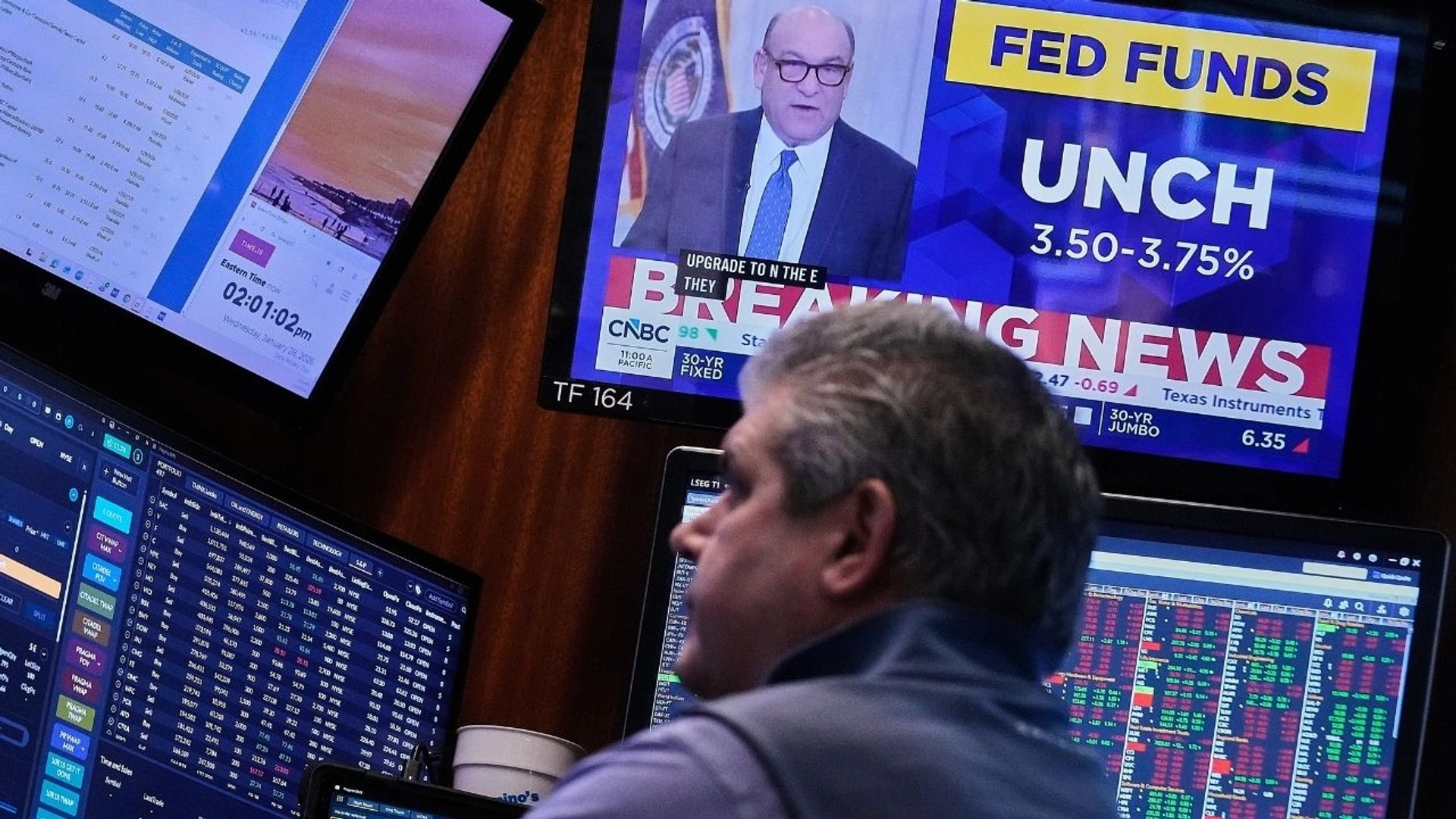
For most of the summer, Wall Street’s working assumption was simple: the US labor market was cooling gently, inflation was easing more slowly than the Fed wanted, and September’s meeting would be a coin-flip between holding steady and one final quarter-point hike. That assumption did not survive contact with the July jobs report.
The Bureau of Labor Statistics reported that US employers cut 23,000 jobs in July — a stark reversal from Wall Street forecasts that had called for a gain of roughly 80,000 positions. It was not an isolated miss. The agency simultaneously slashed its estimates for May and June by a combined 103,000 jobs, meaning the true state of hiring over the past three months is more than a quarter-million jobs weaker than markets believed as recently as Thursday.
The unemployment rate ticked down to 4.1% from 4.2%, but that headline improvement is misleading: it was driven by workers leaving the labor force rather than new hiring, a distinction economists watch closely because it signals discouragement rather than strength.
Why This Report Landed Differently
Soft jobs numbers are not new in 2026 — hiring has been decelerating for months. What makes July’s release different is the scale of the surprise combined with its timing, arriving weeks after the Federal Reserve’s July meeting, where policymakers held rates steady and some officials were still openly discussing the case for a hike given elevated energy costs tied to the ongoing Middle East conflict.
That posture is now obsolete. Within hours of the release, odds on the CME FedWatch tool for the Fed holding rates steady in September jumped sharply, while prediction market Kalshi showed traders assigning roughly a two-thirds probability to a steady-rate outcome — a complete reversal from the near coin-flip odds that prevailed just 24 hours earlier. Separately, Morgan Stanley’s economics team shifted its own call following Fed Chair Jerome Powell’s Jackson Hole remarks, now forecasting a quarter-point cut in September followed by a steady quarterly easing cycle through 2026, targeting a terminal rate near 2.75%–3.00% — down from the current 3.50%–3.75% range.
The reversal wasn’t confined to rates. The 10-year Treasury yield fell as investors priced in a materially weaker growth outlook, while the dollar index came under renewed selling pressure as traders concluded the Fed’s easing runway had just gotten longer, not shorter.
The Sectoral Story: Not All Weakness Is Equal
The composition of the July losses matters as much as the headline. Weakness concentrated in local government education, which cut roughly 50,000 positions, and retail trade, down close to 19,000 — both areas sensitive to seasonal hiring patterns and consumer-facing budget pressure. Healthcare, by contrast, continued adding jobs, extending a multi-year pattern in which medical and social-assistance employment has been the most reliable source of US job growth. Wage growth also missed expectations, with average hourly earnings rising 3.2% year-over-year against a forecast of 3.5% — a sign that whatever residual inflationary pressure exists in the labor market is easing faster than anticipated.
What August 28 and September 4 Mean for Markets
Two dates now sit on every trading desk’s calendar. On August 28, the BLS will release its preliminary annual benchmark revision, using state unemployment insurance tax records to recheck the entire prior year of payroll data — a technical exercise that in past cycles has meaningfully reshaped the market’s understanding of how strong or weak hiring actually was. On September 4, the August jobs report lands just twelve days before the Fed’s September 16 decision, effectively serving as the last major data point policymakers will have in hand.
Richmond Fed President Thomas Barkin offered a measured read following the release, describing the labor market as neither loose nor tight — language that suggests the Fed is not yet panicking, but is clearly recalibrating. Inflation Insights president Omair Sharif cautioned that officials have signaled for months that they view the “breakeven” pace of job growth — the number of jobs the economy needs to add just to keep the unemployment rate flat — as unusually low right now, meaning a soft headline number doesn’t automatically imply outright labor-market distress.
The Global Transmission Channel
For readers outside the US, the mechanics matter more than the headline. A more dovish Fed typically means:
- A softer dollar, which eases imported-inflation pressure for import-heavy economies like the UK and Pakistan but complicates export competitiveness for economies pegged or quasi-pegged to the dollar, including the UAE and much of the Gulf.
- Lower US Treasury yields, which tend to push global capital toward higher-yielding emerging-market and Gulf sovereign debt — a dynamic already visible in DIFC-based fixed-income flows.
- Cheaper dollar-denominated debt servicing for economies like Pakistan and Indonesia that carry significant external, dollar-denominated obligations.
- A complicating factor for the Bank of England and other central banks now weighing their own policy paths against a Fed that appears to be moving faster than expected toward easing, even as UK inflation remains above target.
The Bottom Line
The July jobs report did not just move a single data series — it rewired the market’s central assumption about where US monetary policy is headed into year-end. A Fed that spent mid-2026 debating whether it had room to hike is now managing expectations for a cutting cycle, with September 16 as the first test. For businesses, investors, and policymakers from London to Dubai to Jakarta, the practical question shifts from “will the Fed hike” to “how fast, and how far, will it cut” — and the answer will shape currency, capital-flow, and borrowing-cost decisions well into 2027.
Discover more from The Economy
Subscribe to get the latest posts sent to your email.
Analysis
Global Growth Forecast 2026: IMF, World Bank Outlooks and the “Slow-Hire, Slow-Fire” Labor Market

The IMF’s latest outlook trims global growth to approximately 3.1% for 2026, while modestly upgrading its forecast for Latin America and the Caribbean to 2.3% — a combination that reflects a somewhat better regional narrative sitting inside a tougher external environment overall, according to a Global Economy Briefing compiling recent multilateral forecasts. The World Bank’s own separate projection puts global growth at 2.5% for 2025, down from 2.9% in 2024, explicitly citing the Middle East conflict, inflation, and higher borrowing costs as the key drags on the global economy.
The labor market phrase everyone’s using now
In the United States specifically, labor market data has settled into a pattern economists have taken to calling “slow-hire, slow-fire.” Job growth slowed more than expected in June, yet the unemployment rate actually fell to 4.2%, while weekly jobless claims have continued edging down — a combination that supports the view of a labor market cooling gradually rather than deteriorating sharply, according to Reuters data cited in the Global Economy Briefing. In practice, this means companies are neither hiring aggressively nor laying off at scale — a holding pattern that has become one of the defining features of the 2026 US economy.
Why this equilibrium matters for markets far beyond the US
This dynamic carries global consequences because it directly shapes how quickly the Federal Reserve is willing to cut interest rates — and Fed policy, in turn, drives the dollar and US Treasury yields that constrain monetary policy choices worldwide. For Latin America specifically, a slower-than-hoped Fed easing path keeps US yields and the dollar supportive, which constrains how aggressively central banks like Brazil’s Copom can cut their own policy rates without destabilizing their currencies, per the same briefing. Brazil’s central bank illustrated this tension directly, cutting the Selic rate to 14.00% from 14.25% on August 5 — a fourth consecutive cut, but a cautious one given the external backdrop.
The market backdrop these forecasts are landing in
These growth downgrades and labor-market signals are arriving alongside a genuinely unusual market moment. US equities have been hitting fresh records even amid the softer macro data — the Dow Jones Industrial Average recently closed above 54,000 for the first time — driven substantially by optimism around a potential Strait of Hormuz resolution rather than by underlying growth acceleration. That combination of record equity markets and trimmed global growth forecasts is itself a signal: markets appear to be pricing in relief from a specific geopolitical risk more than they are pricing in a broad-based acceleration in economic activity.
What to watch next
The interplay between these threads — Fed policy responding to a “slow-hire, slow-fire” labor market, global growth forecasts constrained by Middle East-linked energy shocks, and emerging-market central banks navigating a supportive dollar — is likely to remain the dominant macro narrative through the rest of 2026. A resolution to the Strait of Hormuz standoff would remove one major drag simultaneously cited by the World Bank, the IMF, and US labor-market watchers alike, making it one of the few catalysts capable of shifting all three storylines at once.
Key takeaways
- The IMF projects 2026 global growth at approximately 3.1%; the World Bank puts 2025 growth at 2.5%, down from 2.9% in 2024.
- Both institutions cite Middle East conflict, inflation, and higher borrowing costs as primary global growth drags.
- The US labor market has entered a “slow-hire, slow-fire” pattern: June job growth slowed, but unemployment fell to 4.2% and jobless claims kept declining.
- A slower Fed easing path constrains rate-cutting room for emerging-market central banks, including Brazil’s Copom.
- Record US equity markets are currently being driven more by Strait of Hormuz optimism than by underlying growth acceleration.
FAQ
What is the IMF’s global growth forecast for 2026? Approximately 3.1%, according to the IMF’s recent World Economic Outlook update.
What does “slow-hire, slow-fire” mean? A US labor market pattern where companies are neither hiring aggressively nor conducting large-scale layoffs — job growth is slowing, but the unemployment rate has stayed relatively low and stable.
Why does Fed policy matter for other countries’ interest rates? A slower US rate-cutting path tends to keep the dollar and US Treasury yields elevated, which constrains how much room other central banks — particularly in emerging markets — have to cut their own rates without weakening their currencies.
Discover more from The Economy
Subscribe to get the latest posts sent to your email.

Pakistan’s Trade Gap Widens to $3.95bn Despite Meeting FY26 Current Account Target

Why Ottawa Is Betting on Dubai: Inside Canada’s Gulf Trade Pivot

UK Wealth Tax Fears Trigger Record £13.9bn Investor Exodus Ahead of October Budget

July Jobs Shock: Why the Fed’s September Rate Decision Just Flipped (2026 Analysis)

Global Growth Forecast 2026: IMF, World Bank Outlooks and the “Slow-Hire, Slow-Fire” Labor Market

Pakistan Agriculture 2026: Sindh’s Cotton Surge vs. Punjab’s Monsoon Decline

Gold Price 2026: Why Bullion Has Fallen 25% From Its January Record High

Airfare Prices 2026: Why Flights Are Up 26.5% and What Could Finally Bring Fares Down

Indonesia Investment 2026: Record Q2 Realization vs. Falling FDI Confidence

Russia Oil Revenue 2026: The Iran War Windfall and What a Hormuz Deal Means for Moscow

China Economy 2026: How AI Exports and a Property Crash Are Splitting Growth in Two

Malaysia GDP 2026: Why Growth Keeps Outperforming Official Forecasts

Singapore GDP Q2 2026: 5.7% Growth Driven by AI-Linked Semiconductor Exports

Al Maktoum International Airport 2026: Dubai’s $35B Plan for the World’s Largest Airport

Russia Bans Diesel Exports 2026: Global Fuel Market Impact Explained

Gold Price Forecast 2026: Fed’s July 29 Decision and Record Central Bank Buying Explained

Strait of Hormuz 2026: Why Markets Still Don’t Trust It’s Open

Strait of Hormuz Blockade 2026: Oil Prices Surge 9% as US-Iran Conflict Reignites

China Politburo July 2026: Stimulus Signals Explained

Pakistan Economy 2026: GDP Grows 3.7% as IMF Completes EFF Review Amid Middle East Risk

Apple vs OpenAI Lawsuit: The Economic Story Behind the Headline

Down But Not Out: Inside the Slow Sinking of Russia’s War Economy

Gulf Capital Retreat From Pakistan 2026: UAE Loan Freeze & What It Means

Indonesia Russian Oil Imports 2026: Why Jakarta Is Diversifying Crude Supply

AI Capex Bubble 2026: The Hidden $662B Debt Nobody Reports

The Yuan Now Settles 67% of Russian Oil Payments — Quiet De-Dollarization in Action

Global Stock Market Selloff 2026: Stagflation Fears Return as Iran Conflict Reignites

Gulf Sovereign Wealth Funds Hit Record $53.9B in H1 2026 Despite Iran War
-

 Markets & Finance7 months ago
Top 15 Stocks for Investment in 2026 in PSX: Your Complete Guide to Pakistan’s Best Investment Opportunities
-

 Analysis6 months ago
Johor’s Investment Boom: The Hidden Costs Behind Malaysia’s Most Ambitious Economic Surge
-

 Analysis6 months ago
Top 10 Stocks for Investment in PSX for Quick Returns in 2026
-

 Analysis6 months ago
Brazil’s Rare Earth Race: US, EU, and China Compete for Critical Minerals as Tensions Rise
-

 Banks7 months ago
Best Investments in Pakistan 2026: Top 10 Low-Price Shares and Long-Term Picks for the PSX
-

 Investment7 months ago
Top 10 Mutual Fund Managers in Pakistan for Investment in 2026: A Comprehensive Guide for Optimal Returns
-

 Global Economy7 months ago
15 Most Lucrative Sectors for Investment in Pakistan: A 2025 Data-Driven Analysis
-

 Global Economy7 months ago
Pakistan’s Export Goldmine: 10 Game-Changing Markets Where Pakistani Businesses Are Winning Big in 2025