
Analysis
Global Strategic Oil Reserves Depletion: The Empty Vaults

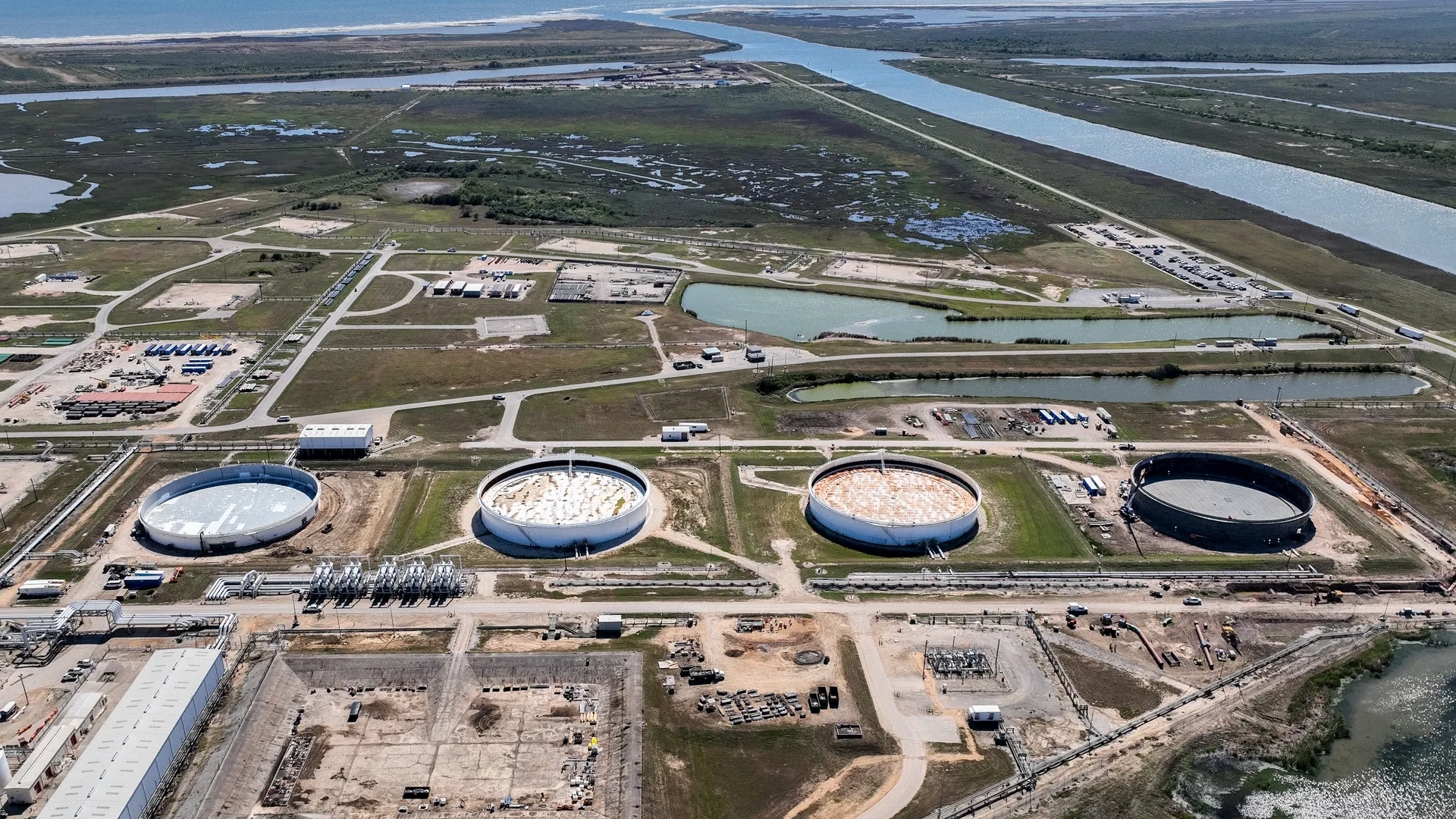
The math of global energy security is quietly breaking. Deep beneath the salt domes of Louisiana and Texas, the safety buffers built to shield the global economy from catastrophe are hollowing out. Decades ago, industrialised nations agreed to hold a collective stockpile of crude oil capable of absorbing a sudden geopolitical shock. Today, those inventories are vaporising. A relentless combination of price-management drawdowns, underfunded replenishment mandates, and shifting OPEC+ dynamics has pushed global strategic oil reserves depletion to levels not seen since the 1980s. When the next supply crisis hits, the world will face it without a shock absorber.
The framework keeping the global oil market stable was born from the trauma of the 1973 Arab oil embargo. The International Energy Agency mandated that its members maintain emergency reserves equivalent to at least 90 days of net oil imports. For half a century, this stockpile acted as the ultimate financial put option for Western economies, a physical guarantee that the lights would stay on even if the Strait of Hormuz closed.
Yet, the architecture is fraying. Governments have increasingly treated these emergency vaults as market-smoothing mechanisms rather than true strategic buffers. Between 2022 and 2025, coordinated releases stripped millions of barrels from the market, ostensibly to curb retail inflation. Replacing that crude has proven financially and politically toxic. According to the U.S. Energy Information Administration (EIA), America’s stockpile remains structurally depressed, hovering near 40-year lows. At the same time, the buffer held by OECD nations has thinned significantly against surging demand in emerging markets. The gap between what the world consumes and what it holds in reserve is widening by the month.
The Core Development
To understand the severity of this structural deficit, look at the physical infrastructure holding it. The United States Strategic Petroleum Reserve (SPR) is the largest emergency supply in the world, housed in a network of underground caverns along the Gulf Coast at sites like Bryan Mound and West Hackberry. In late 2021, it held well over 600 million barrels. By early 2026, those caverns echo with empty space, holding roughly half that capacity.
The initial drawdown was framed as a necessary intervention. When Russian tanks rolled into Ukraine, energy markets panicked. Western governments authorised the largest coordinated release in history, flooding the market with 180 million barrels over six months.
It worked. Prices stabilised. But the bill has come due, and no one wants to pay it.
Replenishing these stockpiles requires buying crude at prices that Treasury departments find unpalatable. The U.S. Department of Energy explicitly targeted a repurchase price of $79 per barrel, yet spot prices have stubbornly ignored bureaucratic wishes, frequently spiking above $85. Consequently, buybacks have advanced at a glacial pace. A recent analysis by Reuters indicated that at the current rate of acquisition, restoring the US SPR to its pre-2022 levels would take over a decade.
Europe faces a mirrored crisis. EU nations rely heavily on commercial inventories to meet their IEA obligations. However, persistently high interest rates have made storing millions of barrels of crude an expensive proposition for private refiners. Bloomberg data reveals that commercial crude inventories across the vital Amsterdam-Rotterdam-Antwerp hub have dropped by 18 percent year-on-year.
The problem is fundamentally mathematical. You cannot simultaneously drain emergency stocks to manage inflation and maintain them to insure against geopolitical collapse.
Compounding this is the physical degradation of the storage infrastructure itself. Salt caverns are not designed to be endlessly cycled. Every massive drawdown and subsequent refill compromises the structural integrity of the caverns, reducing their maximum capacity. Maintenance budgets have simply not kept pace with the wear and tear. We are not just losing the oil; we are losing the containers that hold it. Energy ministers in Paris and Washington are quietly acknowledging the shortfall, but public commitments to aggressive restocking remain entirely absent. The political capital required to buy high-priced oil simply does not exist in an election-heavy cycle.
The Geopolitics of Shrinking IEA Emergency Oil Stocks
The shifting centre of gravity in global oil markets makes this depletion uniquely dangerous. For decades, the West held the dominant share of global reserves, granting it outsized influence over supply stability. That unipolar control is dead.
Why are strategic oil reserves running low? Strategic oil reserves are running low primarily because Western governments have weaponised them to suppress domestic petrol prices during inflationary spikes, while simultaneous high interest rates and physical infrastructure limitations have made rapid restocking financially unviable.
As OECD buffers thin, power is transferring to actors who do not share Western strategic goals. China has spent the better part of a decade quietly amassing the most formidable crude stockpile on the planet. Beijing does not report its inventory levels to the IEA. Still, satellite tracking of storage tank roofs at facilities like Zhenhai indicates their reserves likely exceed 900 million barrels. They bought heavily during the 2020 price crash and have continued to siphon heavily discounted Russian and Iranian crude ever since.
This creates a terrifying asymmetry. If a major supply disruption occurs—say, a blockade in the Red Sea or a massive kinetic strike on Saudi processing facilities—the West will find its shock absorbers flat. China, conversely, holds enough crude to weather a prolonged storm.
This dynamic drastically alters the calculus of OPEC+. In the past, the cartel knew that if they squeezed the market too hard, Washington could unleash the SPR to break the rally. That threat is effectively neutered. With US SPR levels sitting near their operational minimums, OPEC+ holds the pricing reins with virtually no state-level counterweight.
Market participants are already pricing in this vulnerability. The geopolitical risk premium embedded in crude futures has structurally elevated. Traders know the safety net is gone. When the market prices a supply shock today, it assumes a higher ceiling because the traditional mechanism to cap it—the coordinated IEA release—lacks the ammunition to make a meaningful difference. The financialisation of these reserves has left the physical market entirely exposed to the whims of autocrats and the unpredictable nature of Middle Eastern geopolitics. Energy analysts privately model a $30 to $40 per barrel spike in the event of a moderate supply disruption, up from the $15 premium modelled just five years ago.
Implications & Second-Order Effects
The downstream consequences of a structurally depleted global buffer will fundamentally reshape industrial economies. If you remove the shock absorber from a vehicle, every bump in the road shatters an axle.
First, expect a paradigm shift in how central banks model inflation. For the past three years, policymakers have relied on cheap, state-released crude to suppress headline inflation figures. That lever is broken. Future supply shocks will transmit directly into consumer prices with terrifying speed. When crude spikes, the cost of diesel follows, immediately inflating supply chain logistics, agricultural yields, and retail goods. The Bank for International Settlements (BIS) has warned that energy-driven inflation shocks are becoming increasingly asymmetric, hitting advanced economies harder due to their structural reliance on imported middle distillates.
Industrial sectors will face brutal margin compression. European chemical manufacturers, already battered by the loss of cheap Russian pipeline gas, now face a crude market devoid of state safety nets. Companies like BASF and Dow cannot easily hedge against the kind of extreme volatility a zero-buffer market invites. We will likely see a wave of pre-emptive industrial rationing the moment a geopolitical flashpoint threatens major shipping lanes.
Then there is the national security dimension. Modern militaries run on heavy liquid fuels. The Pentagon consumes over 250,000 barrels of oil per day during peacetime. In a protracted conventional conflict, that number multiples rapidly. Operating with constrained domestic reserves places military logistics chains at immediate risk.
To compensate, governments will inevitably force the private sector to hold more inventory. Expect aggressive regulatory mandates requiring domestic refiners and utility companies to maintain higher minimum holding levels. This shifts the financial burden of energy security from the state balance sheet to private balance sheets. Refiners will inevitably pass those increased carrying costs directly to the consumer at the pump.
On May 12, 2026, energy analysts noted that implied volatility in the Brent crude options market reached a structural floor 20 percent higher than historical averages, signalling that traders expect sudden, unmitigated price violence. The era of cheap, stable energy insurance is over. The coming decade will be defined by violent price swings. Those violent swings will destroy demand in emerging markets first, triggering sovereign debt crises in nations entirely reliant on imported fuel to keep their grids online.
Competing Perspectives
Yet, a vocal faction of energy economists argues that obsessing over physical crude inventories is a 20th-century anxiety misapplied to a 21st-century market.
The counterargument rests on the elasticity of modern supply and the accelerating energy transition. The United States is no longer the captive consumer it was in the 1970s; the shale revolution transformed it into the world’s largest swing producer. Proponents of this view assert that American shale operators can ramp up production fast enough to offset sudden international shortages, rendering massive state-held stockpiles obsolete.
The picture is more complicated, but the rapid penetration of electric vehicles and renewable energy grids structurally degrades global oil demand. According to the World Bank, global crude demand growth is projected to plateau by the end of the decade. Why, the argument goes, should governments spend billions stockpiling a dying commodity? Maintaining 90 days of import cover makes little sense when domestic consumption profiles are radically decoupling from fossil fuels.
This perspective is analytically sound on a long enough timeline. What follows, however, severely misjudges the transition gap. Shale production has plateaued; producers are prioritising shareholder returns over aggressive drilling campaigns. An electric vehicle takes zero gasoline, but the heavy machinery mining its lithium, the ships transporting its battery, and the grids powering its charger still rely heavily on fossil fuels. Transitioning away from oil requires an enormous amount of oil. Dismissing the need for strategic reserves today because we might not need them in 2040 is a catastrophic miscalculation of timing.
The Empty Vaults
The evaporation of the world’s emergency oil reserves is not a sudden accident, but a slow-motion policy failure. Western governments traded structural security for short-term political relief, draining their strategic vaults to artificially suppress prices while ignoring the geopolitical realities of a fracturing world.
Now, the market stands naked. The safety mechanisms designed to absorb the shocks of war, blockades, and natural disasters are functionally depleted. Restocking them will require capital and political courage that current administrations seem entirely unwilling to deploy. As power shifts toward nations that have spent the last decade quietly hoarding crude, the West finds itself critically exposed.
We have burned the furniture to heat the house, masking a structural deficit with temporary liquidity. The illusion of perpetual stability has blinded markets to the fragility of the physical supply chain. Until governments acknowledge that energy security cannot be outsourced or financialised away, the global economy remains one errant missile strike away from paralysis. When the next winter of geopolitical crisis truly arrives, there will be nothing left to light.
Discover more from The Economy
Subscribe to get the latest posts sent to your email.



Navigating Mortgage and Loan Refinancing in a High-Yield Environment
Global public debt crossing critical thresholds has kept central bank policies volatile, resulting in fluctuating US Treasury yields throughout 2026. For homeowners and commercial property holders burdened by previous high-interest borrowing cycles, finding optimal refinance windows has become a high-stakes financial puzzle. Stalled disinflation and stubborn employment numbers mean rate cuts are incremental, requiring borrowers to act with precision.
Timing your mortgage or commercial loan refinance in this environment requires a deep understanding of yield curve movements and lender risk appetites.
Decoding 2026 Refinance Dynamics
The 10-Year Treasury Yield Benchmark
Mortgage rates continue to track closely with the 10-year US Treasury yield. When macroeconomic anxiety spikes debt issuance, yields rise, tightening consumer borrowing capacity. Savvy borrowers monitor weekly Treasury auctions to lock in rates during brief dip windows.
Hybrid ARMs and Alternative Structures
With fixed rates remaining elevated, 7/1 and 10/1 adjustable-rate mortgages (ARMs) have surged in popularity. These products offer lower initial monthly payments, giving borrowers breathing room until central bank easing cycles fully materialize.
| Loan Product | Current Rate Range | Best For | Key Risk Factor |
| 30-Year Fixed Mortgage | 6.2% – 6.8% | Long-term predictability | Higher initial monthly outlay |
| 7/1 Hybrid ARM | 5.5% – 5.9% | Short-term ownership / flipping | Rate reset risk after year 7 |
| Commercial Refinance | 7.0% – 8.2% | Corporate asset restructuring | Strict DSCR lender covenants |
Actionable Steps for Successful Refinancing
To maximize your chances of securing favorable refinance terms in a volatile market, follow a disciplined preparation strategy.
Boost Your Credit Score Immediately: Lenders in 2026 are applying stringent credit tiering; a 20-point increase can drop your APR by a crucial quarter-point.
Shop Regional Credit Unions: Smaller financial institutions often offer portfolio loans with more flexible underwriting than major national banks.
Calculate the Break-Even Point: Ensure your total closing costs are recouped through monthly savings within 24 months of closing.
“Market Strategist View: Refinancing in 2026 is an exercise in opportunistic timing. Borrowers must maintain immaculate financial profiles ready to strike the moment Treasury yields dip.”
Mastering the complexities of today’s debt environment ensures you can successfully lower your debt service costs and protect your long-term financial stability.
Discover more from The Economy
Subscribe to get the latest posts sent to your email.

The days of pulling generic auto insurance quotes based purely on your zip code and age are officially over. In 2026, insurance comparison engines are powered entirely by generative AI and real-time telematics. These platforms digest thousands of live data points—ranging from your driving smoothness via connected vehicle sensors to real-time traffic congestion patterns—to generate hyper-personalized premiums instantly.
For consumers, this evolution represents both a massive opportunity for savings and a hidden trap for penalty pricing. Understanding how AI algorithms evaluate risk is essential for anyone looking to lower their monthly auto insurance premiums.
How AI Comparison Engines Evaluate Your Risk Profile
Behavioral Telematics and Connected Cars
Modern cars stream performance data directly to insurance aggregators. Generative AI models analyze braking sharpness, acceleration curves, cornering G-forces, and phone distraction metrics. Drivers who maintain smooth, defensive habits are rewarded with dynamic rate cuts of up to 40% compared to traditional rating tiers.
Predictive Traffic and Weather Modeling
AI tools now cross-reference your daily commute route with predictive weather and accident probability models. If your standard parking location or driving corridor has a statistically higher incidence of uninsured motorist claims, your quotes will reflect that hyper-local risk assessment.
| Comparison Factor | Traditional Rating Model | 2026 Generative AI Model | Impact on Premium |
| Mileage & Usage | Annual estimated odometer reading | GPS tracking & live trip duration | High (up to 35% savings) |
| Driving Behavior | MVR driving record & accidents | Real-time braking, speed, & G-force | Critical (determines tier) |
| Vehicle Tech | Make, model, and safety rating | ADAS calibration & repair cost data | Moderate |
Strategies to Lower Your AI-Driven Insurance Quote
To outsmart the algorithm and secure the lowest possible premium in 2026, drivers must proactively manage their digital footprint on insurance platforms.
Opt-In for Telematics Trial Periods: Many insurers offer immediate 15% discounts just for installing their driving app; let it track safe habits for 30 days to lock in permanent savings.
Scrub Unverified Public Records: Ensure your motor vehicle report is free of clerical errors that AI risk models misinterpret as reckless behavior.
Compare AI Aggregators: Use platforms that integrate multi-carrier API feeds rather than single-brand comparison sites to find the best risk-adjusted rate.
“Industry Note: AI-driven pricing rewards transparency and precision. Drivers who actively manage their telematics data consistently out-save those relying on legacy quote calculators.”
Embracing AI comparison tools allows savvy policyholders to customize coverage limits precisely to their driving habits, eliminating wasted premium spend while ensuring robust protection.
Discover more from The Economy
Subscribe to get the latest posts sent to your email.

Despite decades of bans and strict handling mandates, asbestos remains a silent killer across legacy manufacturing plants, shipyards, and modern green-energy infrastructure retrofits. In 2026, regulatory changes by the EPA and tightened occupational health standards have triggered a fresh wave of mesothelioma litigation. Manufacturers attempting to fast-track industrial transitions are encountering catastrophic oversight, exposing workers to legacy toxins and opening corporate parent companies to unprecedented liability.
Navigating a mesothelioma claim in 2026 requires understanding how modern industrial supply chains intersect with historical exposure. Trusts established decades ago are being audited under stricter transparency laws, altering payout ratios and accelerating fast-track settlements for terminally ill plaintiffs.
Modern Industrial Exposure Hotspots
Green Retrofitting and Renewable Energy Infrastructure
A primary source of 2026 asbestos exposure occurs during the decommissioning and retrofitting of older industrial facilities for renewable energy production. Workers insulating electrical grids, modernizing HVAC systems, or upgrading manufacturing floors frequently disturb encapsulated asbestos materials that were improperly documented or ignored during facility audits.
Automotive and Aerospace Supply Chains
With advanced manufacturing booming, workers handling specialized friction materials, gaskets, and heat shields face ongoing risks. Supply chain tracing has become more sophisticated, allowing legal teams to pinpoint exact corporate entities responsible for raw material distribution across multinational borders.
| Industry Sector | Primary Exposure Risk | Legal Venue / Trust | Avg. Claim Value Range |
| Green Energy Retrofit | Disturbed insulation, pipe lagging | Federal Tort / Manufacturer Trust | $1.2M – $3.5M |
| Shipbuilding & Marine | Boiler insulation, structural seals | Asbestos Bankruptcy Trusts | $800K – $2.4M |
| Automotive Manufacturing | Brake components, high-heat gaskets | Third-Party Product Liability | $600K – $1.8M |
Securing Maximum Compensation: Steps for Plaintiffs
Time is of the essence in mesothelioma cases. Plaintiffs and their families must act decisively to secure financial recovery before statutes of limitations expire.
Retain Specialized Counsel: Work exclusively with national mesothelioma law firms possessing deep historical databases of asbestos-containing products.
Audit Employment History: Document every job site, supervisor name, and equipment brand encountered throughout your career.
Expedite Medical Filings: Secure a formal pathological diagnosis quickly to qualify for expedited trust fund distribution and priority trial settings.
“Expert Insight: Modern asbestos litigation is no longer just about historical tracking; it is about holding modern corporations accountable for failing to conduct rigorous environmental safety audits before initiating industrial retrofits.”
By combining meticulous work history reconstruction with aggressive multi-trust filings, victims can secure substantial financial relief to cover specialized immunotherapy and family support.
Discover more from The Economy
Subscribe to get the latest posts sent to your email.

Balance of Payments (BOP)

The Falkland Islands Dispute: Sovereign Wealth, Offshore Drilling, and Market Impacts

Gross Domestic Product (GDP): Nominal vs. Real

What is Inflation and the Consumer Price Index (CPI)?

US-China Trade Competition 2026: Supply Chain Relocation Guide

Oil Prices Break $100 in 2026: Middle East Conflict & Energy Markets

South-South Trade Expansion: Digital Integration and Emerging Market Growth

$166B Tariff Refund Tapering Fast: Is Your Business Missing Out?

Stock Market Today: Dow Climbs 500 Points as Markets Shake Off Inflation Jitters

14th WTO Conference 2026: Tariffs & Global Supply Chain Impact

Swish Secures $24M Funding to Disrupt India’s $100B Food Market

Physical AI and Driverless Tech: The Next Trillion-Dollar Industrial Revolution

Enterprise AI Platforms Disrupting B2B SaaS in 2026: Full Analysis

Crypto vs. Safe Haven Assets 2026: Where Institutions Are Hedging

State Farm’s $5B Dividend 2026: Who Qualifies & Payout Dates

US-China Relations in Q3 2026: Trade Tariffs and Supply Chain Risks

Gold’s Wild 2026: From a Record $5,600 Peak to a 24% Crash and Back Toward $4,500

Oil Surges as Strait of Hormuz Traffic Collapses Again

The Rocket That Won’t Quit: Inside SpaceX’s Falcon 9 Launch Machine

Bank of England Set to Hold Rates Through Year-End, Reuters Poll Shows

SpaceX Starship Flight 14: First Orbital Attempt & Starlink V3 Launch Explained

The 2026 Crypto Regulatory Shift: What It Means for Institutional Investors

AI Chip Stocks 2026: The Best Semiconductor Investments Beyond Marvell

Retail Earnings Week: What Home Depot, Target & Walmart Reveal

AI-Powered Training: The Next Multi-Billion Dollar Ecosystem in Fitness

Russia’s Black Sea Oil Exports Fall for a Fifth Straight Week

Top 30 Stocks for Investment in PSX for Massive ROI in 2026

Tween Back-to-School Trends 2026: What’s Driving the $85B Season
-

 Markets & Finance8 months ago
Top 15 Stocks for Investment in 2026 in PSX: Your Complete Guide to Pakistan’s Best Investment Opportunities
-

 Analysis7 months ago
Johor’s Investment Boom: The Hidden Costs Behind Malaysia’s Most Ambitious Economic Surge
-

 Analysis7 months ago
Top 10 Stocks for Investment in PSX for Quick Returns in 2026
-

 Analysis7 months ago
Brazil’s Rare Earth Race: US, EU, and China Compete for Critical Minerals as Tensions Rise
-

 Banks8 months ago
Best Investments in Pakistan 2026: Top 10 Low-Price Shares and Long-Term Picks for the PSX
-

 Investment8 months ago
Top 10 Mutual Fund Managers in Pakistan for Investment in 2026: A Comprehensive Guide for Optimal Returns
-

 Global Economy9 months ago
15 Most Lucrative Sectors for Investment in Pakistan: A 2025 Data-Driven Analysis
-

 Global Economy9 months ago
Pakistan’s Export Goldmine: 10 Game-Changing Markets Where Pakistani Businesses Are Winning Big in 2025