Connect with us

Analysis

Global Chokepoint: The Dual Blockade of the Strait of Hormuz and the Approaching Macroeconomic Storm

Published

on

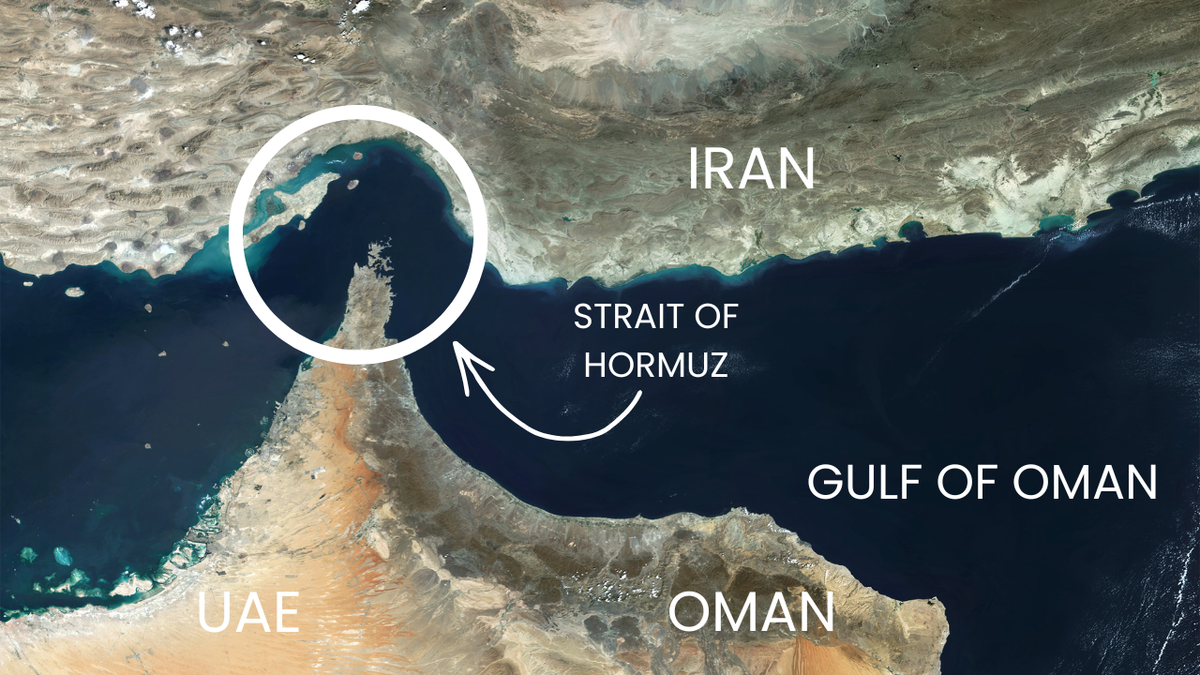
The global economy is currently navigating its most severe energy supply disruption since the 1970s. As the US-Iran war escalates into a protracted war of economic attrition, the fallout is rewriting the macroeconomic playbook. Crude oil has surged past $126 per barrel, reaching a four-year high as a standoff over the world’s most vital maritime chokepoint strangles international trade.

With Iran effectively shuttering commercial shipping through the Strait of Hormuz—an artery that historically carries roughly 20% of global petroleum liquids—and US President Donald Trump ordering an extended naval blockade of Iranian ports, the conflict has hardened into a “dual blockade.” The resulting energy shock is fueling runaway inflation, fracturing supply chains, and threatening to tip fragile emerging markets into sovereign debt crises.

The Dual Blockade and Market Paralysis

The immediate catalyst for the current oil rally is the vanishing optimism for a swift diplomatic resolution. Following the collapse of the early-April peace talks mediated in Islamabad, both Washington and Tehran have dug in.

President Trump has made it clear that the US Navy’s blockade of Iranian ports will continue indefinitely until Tehran agrees to broader concessions, reportedly telling aides that he is prepared to maintain the pressure campaign for months. The strategy is designed to force Iran to cap its oil wells as domestic storage capacities max out.

In retaliation, Iran has maintained its chokehold on the Strait of Hormuz. The paralysis of this waterway has trapped millions of barrels of oil, liquefied natural gas (LNG), and critical industrial feedstocks like aluminum and petrochemicals inside the Persian Gulf. For traders and market observers, the initial hope that the economic pain would force a quick ceasefire has evaporated, replaced by the grim reality of a long-term supply deficit.

The Macroeconomic Shockwave: Inflation and Stagflation Risks

The cascading effects of this bottleneck are hitting global markets with brutal speed. Fuel costs in major western economies are skyrocketing, threatening to unleash a secondary wave of inflation just as central banks were attempting to stabilize benchmark interest rates.

The bond market is already signaling deep distress. Yields on long-term government bonds have spiked as investors bet on lasting inflationary pressures. Financial institutions are now openly warning of an extended stagflationary shock—a toxic combination of stagnant economic growth and high consumer prices. According to recent UN development projections, a prolonged disruption could plunge upwards of 32 million people into poverty globally, driven by a “triple shock” of energy shortages, food insecurity, and paralyzing transport costs.

Emerging Markets in the Crosshairs

While western economies brace for recession, the blockade represents an existential threat to emerging markets across Asia and the Global South.

Regional economies are bearing the immediate brunt of the fallout. Nations like Pakistan, which rely heavily on imported energy, are witnessing a historic and devastating surge in their oil import bills. This sudden ballooning of energy costs threatens to derail fragile fiscal recoveries, severely complicating ongoing IMF debt management programs and rapidly depleting foreign exchange reserves.

As imported inflation soars, central banks in these developing nations face an impossible mandate: they must attempt to tame skyrocketing consumer prices and defend their currencies without triggering a complete domestic economic collapse.

What Comes Next?

With both sides entrenched in a test of wills, the global economy remains hostage to geopolitics. Unless a sudden diplomatic breakthrough occurs to restore Gulf energy flows, energy analysts warn that crude could continue its march toward all-time highs.

For international trade, the Strait of Hormuz crisis is no longer just a regional security issue; it is the single most disruptive force in the global economy today, permanently altering the risk calculus for global supply chains and sovereign debt markets alike.


Discover more from The Economy

Subscribe to get the latest posts sent to your email.

Analysis

Apple iPhone 17: Most Popular Lineup Drives Record $57B Quarter

Published

on

Apple’s iPhone 17 family powered a record $57B March quarter and 17% revenue growth to $111.2B. What the boom reveals about China, AI memory costs, and Apple’s future under John Ternus.

There is a category of corporate achievement that barely registers as remarkable anymore — Apple posting record revenue. The company has done it so often, across so many geographies and product lines, that any given quarter’s superlatives slide past with the effortlessness of a well-rehearsed chorus. But strip away the habituation, and Apple’s fiscal second quarter of 2026 demands genuine attention. Not merely because of the numbers — though $111.2 billion in revenue, growing at 17% year-on-year, is extraordinary for a company of this scale — but because of what those numbers disclose about where premium consumer technology is heading, and under whose stewardship Apple will navigate the journey.

The headline driver was the iPhone 17 lineup, which Tim Cook — in the characteristically understated fashion of a man who has presided over the most profitable consumer electronics run in history — called simply “the most popular lineup in our history.” Cook and CFO Kevan Parekh had cause for satisfaction: iPhone revenue climbed 22% year-on-year to $57 billion, a March-quarter record. The broader question is whether this represents a cyclical high-water mark or a structural inflection point in how consumers — particularly the world’s billion-odd iPhone faithful — think about upgrading.

The Numbers Behind the Boom

MetricQ2 FY2026Change
Total Revenue$111.2B+17% YoY · Best March Quarter Ever
iPhone Revenue$57.0B+22% YoY · March-Quarter Record
Greater China Revenue$20.5B+28% YoY
Services Revenue$30.98B+16% YoY · All-Time High
Net Income$29.6B+19% YoY
Diluted EPS$2.01vs. $1.65 year prior
Gross Margin49.3%Up from 46.6% year prior
R&D Expenditure$11.4B+33% YoY

To understand the iPhone 17 effect, consider the full architecture of Apple’s Q2 performance. Net income rose to $29.6 billion, or $2.01 per diluted share — up from $1.65 a year earlier — while gross margin expanded to a formidable 49.3%, a figure most mature hardware companies would regard as science fiction. Every geographic segment posted double-digit growth. Analysts had expected a solid quarter; they received an exceptional one.

Importantly, Cook acknowledged that revenue beat the company’s own guidance “despite supply constraints.” The A19 and A19 Pro chips powering the iPhone 17 family are manufactured by TSMC on its 3-nanometre process — the same advanced node that the semiconductor industry is straining to direct toward AI accelerators. Had Apple been able to fulfil all demand, the numbers would have been larger still. That is not a complaint one often hears from technology executives with genuine credibility. In this case, the underlying data supports it.

“The iPhone 17 family is now the most popular lineup in our history… we believe we gained market share during the quarter.”

— Kevan Parekh, Apple CFO · Q2 FY2026 Earnings Call, April 30, 2026


What Makes the iPhone 17 “Most Popular” in History

The question worth pressing is not whether Apple sold a lot of iPhones — it manifestly did — but why this particular generation broke historic records. The answer is layered. At one level, the iPhone 17 lineup benefited from a broadened family: the addition of the iPhone 17e, a competitively priced entry point, expanded the addressable market meaningfully without compromising the margins that investors have come to expect. Apple has long understood that the most durable moat in consumer technology is the one that admits new entrants at the low end while extracting extraordinary value at the high end.

At another level, the upgrade cycle dynamics were unusually favorable. A significant cohort of iPhone 12 and iPhone 13 users — devices released in 2020–21 — had accumulated four or five years of deferred replacement decisions. The iPhone 17 Pro Max, with its refined camera system, enhanced AI processing capabilities baked into the A19 Pro chip, and display improvements at 120Hz ProMotion across the entire lineup, gave those users a compelling reason to finally act. Cook noted strong demand from both upgraders and customers choosing iPhone for the first time — a dual engine that is relatively rare in mature markets.

The AI Premium Paradox

Here is the productive tension at the heart of Apple’s current moment: the iPhone 17’s outperformance is occurring in a period when Apple Intelligence — the company’s suite of on-device AI features — remains, by most honest assessments, behind the headline capabilities of Google’s Gemini and OpenAI’s GPT family. And yet consumers are buying in record numbers. This tells us something important: the primary driver of iPhone purchases in 2026 remains quality, ecosystem integration, and trust — not raw AI benchmarks.

Apple’s strategic gamble, which involves processing AI computationally on-device rather than surrendering data to cloud inference, appears to resonate with a privacy-conscious consumer base more than many observers anticipated. The recently announced partnership with Google to integrate Gemini capabilities into Siri is a pragmatic acknowledgment that Apple need not build everything — it need only assemble the best experience.

China’s Surprising Comeback

If the iPhone 17’s domestic momentum was expected, the performance in Greater China was genuinely striking. Greater China revenue jumped 28% year-on-year to $20.5 billion — a region that, as recently as 2023, appeared to be entering structural decline for Apple amid Huawei’s resurgence, rising nationalist consumption preferences, and Beijing’s directives encouraging domestic technology procurement in government and state enterprise settings.

What changed? Counterpoint Research data from the first nine weeks of 2026 shows iPhone sales in China surging approximately 23% year-on-year, in a broader smartphone market that contracted by roughly 4%. The divergence is significant. Three forces appear to be operating simultaneously:

  1. Government subsidies. China’s consumer electronics subsidy programme positioned the iPhone 17 within eligible price bands, stimulating upgrade demand among middle-class consumers sitting on older handsets.
  2. Supply chain foresight. Apple’s reportedly pre-secured, long-term memory supply agreements with partners like Samsung allowed it to avoid price increases that burdened rival manufacturers.
  3. Huawei’s ceiling. Despite the technical accomplishment of its Kirin-powered Mate series, Huawei remains constrained in its ability to scale the most advanced silicon domestically.

None of this is a guarantee of durability. The geopolitical environment remains brittle; US–China technology relations have an almost gravitational tendency toward periodic deterioration. Apple’s dependence on China — both as a manufacturing base and as a market representing roughly 18% of revenue — remains the company’s most structurally exposed position. Cook has acknowledged this privately for years; the earnings numbers do not eliminate the risk, they merely defer its salience.

Supply Constraints in the Age of AI: A New Structural Headwind

For most of the past decade, Apple’s primary supply-side challenge was assembling enough final units to meet launch-week demand — a problem of logistics, not components. The current era introduces a categorically different constraint. Cook was explicit on the earnings call: “We expect significantly higher memory costs” in Q3, with the impact of memory inflation likely to “drive an increasing impact on our business” beyond that. The culprit is the global artificial intelligence buildout — the insatiable appetite of data centre operators for high-bandwidth memory has cascaded through the supply chain, creating tightness in the DRAM and NAND markets that consumer device makers now compete within.

This represents a fascinating structural irony. Apple’s devices increasingly market themselves on AI capability — Apple Intelligence, on-device processing, the neural engine improvements in successive chip generations. But the very AI enthusiasm driving those marketing narratives is simultaneously inflating the cost of the memory those devices require. R&D expenditure grew 33% to $11.4 billion in Q2 alone, reflecting accelerating investment in AI infrastructure. Apple is both victim and beneficiary of the AI supercycle.

CFO Parekh noted that Apple faces supply constraints on iPhones and Macs simultaneously, with the MacBook Neo — an apparent instant hit — selling out entirely. Supply constraints on the Mac Mini and Mac Studio may extend “for several months,” Cook said. For investors accustomed to Apple executing flawlessly on supply chains, this is worth monitoring — not because the situation is critical, but because it signals that the company is entering a period where input costs are partially beyond its direct control.


The Services Flywheel Keeps Spinning

Amid the iPhone drama, Apple’s Services division quietly posted yet another all-time revenue record: $30.98 billion, up 16.3%, comfortably beating analyst expectations of $30.4 billion. The significance of this figure compounds annually. Services — Apple TV+, iCloud, the App Store, Apple Pay, Apple Music, and the expanding family of subscription offerings — generates margins that dwarf those of hardware. Every iPhone sold is a gateway into this ecosystem; every year a user remains converts into recurring, high-margin revenue that is largely insulated from component cost volatility.

This is the part of Apple’s business that its most sophisticated investors have spent the past half-decade learning to appreciate. The installed base of active Apple devices now exceeds two billion globally — a captive audience for services monetisation that no competitor can easily replicate. Samsung makes excellent hardware; no one pays monthly for the Samsung ecosystem. This asymmetry is durable, and it explains why Apple’s valuation multiple has proved surprisingly resilient through periods of hardware stress.

The Post-Cook Era: Discipline, AI, and What John Ternus Inherits

This earnings call carried unusual historical weight. It was the first time Apple faced Wall Street since announcing that Tim Cook would step down as CEO, with John Ternus — currently SVP of Hardware Engineering — set to assume the role on September 1, 2026. Ternus is not a household name outside Apple’s own circles, which is, arguably, a point in his favour. He is a product engineer by formation, not a supply chain operator or a financier — the sensibility he brings is that of someone who cares, with genuine depth, about how the things Apple makes actually work.

Cook’s fifteen-year tenure transformed Apple from a premium hardware maker with exceptional margins into a platform business with hardware as its on-ramp. Ternus inherits an extraordinarily strong hand — the most popular iPhone lineup in history, a services business printing cash, a gross margin at near-record levels, and a $100 billion share repurchase authorization freshly renewed by the board. What he also inherits is a set of genuinely difficult problems:

  • The AI capability gap relative to pure-software competitors
  • The memory cost headwind expected to worsen through 2026
  • The China geopolitical exposure that no earnings quarter can fully immunise
  • The question of what the next major product platform beyond the iPhone will be

The company that Ternus inherits is not merely the most profitable consumer technology business ever assembled — it is one facing a genuine inflection point in how intelligence, rather than silicon, defines a device’s value.

The signals from the earnings call were instructive. Ternus, in his brief public remarks, struck a note of what might be called calibrated ambition — emphasising the strength of the product roadmap without overclaiming. That restraint is appropriate. Apple has lost credibility in the AI narrative by making promises that Siri has not reliably kept. The Gemini integration partnership — pragmatic, slightly humbling for a company that has historically insisted on vertical integration — suggests that Ternus’s Apple will prioritise experience over ideology. That is the right instinct.

The Broader Premium Smartphone Market: Apple as Gravity Well

Zoom out from Apple’s specific results, and the picture for the broader premium smartphone market is one of continued stratification. Samsung’s Galaxy S25 series performed credibly but could not match iPhone 17’s upgrade momentum. Chinese manufacturers — Xiaomi, OPPO, Vivo — continue to produce technically impressive devices at aggressive price points but remain largely constrained outside their home markets by geopolitical friction and brand trust deficits. Huawei’s recovery narrative remains compelling in China but is circumscribed everywhere else by the consequences of US export controls.

The result is an increasingly bifurcated global smartphone market: Apple dominant above $800, a contested middle ground, and Chinese manufacturers competing intensely in emerging markets. This structure suits Apple well — the premium segment is where the margin lives, and Apple’s ability to raise effective selling prices through a mix of pro-tier innovation and financing options has proved remarkably durable across economic cycles. The iPhone 17 cycle did not merely sustain this position; it deepened it.


Cyclical Win or Structural Dominance? A Measured Verdict

The honest answer is: both, with caveats. The iPhone 17 benefited from a favourable alignment of pent-up upgrade demand, a genuinely compelling product iteration, a broadly stable global consumer environment, and a China market experiencing government-stimulated electronics consumption. Some of those tailwinds will fade. The deferred-upgrade cohort will be substantially exhausted by year-end. Chinese subsidy programmes have defined timeframes. Memory costs will pressure margins in ways that quarters of record iPhone revenue cannot entirely absorb.

And yet the structural case for Apple remains among the most robust in global technology. The ecosystem lock-in is real and deepening. The services revenue base is compounding. The brand carries a form of cultural gravity — particularly among younger consumers — that is extraordinarily difficult to build and stubbornly resistant to erosion. The iPhone 17 being the most popular lineup in history is not an accident: it is the outcome of a decades-long, systematically executed strategy of making the device that people trust most with the most intimate moments of their lives.

Whether John Ternus can sustain that trust while navigating the AI transition — the genuine next frontier of what a smartphone does and means — is the question that will define the next chapter of the company’s history. The Q2 FY2026 earnings are a resounding vindication of what Tim Cook built. They are also the most consequential set of results that Ternus will never have to personally explain. From September, the story is his to write.


Discover more from The Economy

Subscribe to get the latest posts sent to your email.

Continue Reading

Analysis

Exxon and Chevron Defy Trump Pressure to Boost Oil Production

Published

on

When the White House calls and Wall Street watches, America’s oil giants have chosen an uncomfortable answer—and they may be right to do so.

IndicatorFigure
Brent crude peak (April 30, 2026)$126/barrel
US average gasoline price (AAA)$4.30/gallon
Global oil supply through Hormuz~20%
ExxonMobil shareholder returns, 2025$37.2 billion
Brent surge since Iran war began55%+

At a videoconference convened on April 16, Interior Secretary Doug Burgum and Energy Secretary Chris Wright delivered what amounted to a national security appeal to roughly a dozen of America’s most powerful oil executives: produce more crude, now, and help us contain the political catastrophe unfolding at the pump. Representatives of ExxonMobil, Chevron and Continental Resources were among those on the call. The message from Washington was as urgent as it was blunt.

The supermajors listened politely. Then they went back to their spreadsheets.

With Brent crude briefly touching $126 a barrel on April 30—its highest level in four years, driven by the de facto closure of the Strait of Hormuz following the US-Iran war—and the national average gasoline price hitting $4.30 a gallon according to the latest AAA reading, the temptation to cast America’s oil giants as unpatriotic rent-seekers is understandable and already bipartisan. But this reading is wrong, and dangerously so. What ExxonMobil and Chevron are practising is not dereliction. It is discipline—a hard-won corporate virtue that took two decades of boom-bust disasters to instil, and one that would take far less time to destroy.

The Geopolitical Backdrop: A Supply Shock Unlike Any Other

The scale of the current disruption demands context. Since the conflict with Iran began in late February, daily tanker transits through the Strait of Hormuz—ordinarily a conduit for around 20 percent of the world’s seaborne oil and liquefied natural gas—have plunged to single digits. The International Energy Agency, not an institution given to hyperbole, has characterised this as the “largest supply disruption in the history of the global oil market.” Brent crude surged more than 55 percent from its pre-war level of roughly $72 a barrel to a peak approaching $120, with March 2026 marking one of the largest one-month oil price surges on record.

Even after a fragile ceasefire was announced on April 8, traffic through the strait remained far below pre-conflict norms. Iran re-imposed tighter controls within hours of a brief reopening; the US Navy seized an Iranian-flagged vessel in the Gulf of Oman. Analysts at Commodity Context estimate that any genuine reopening of the strait would trigger an immediate $10-to-$20 drop in crude prices from speculative unwinding, but warn that supply chain bottlenecks and infrastructure damage would keep Brent anchored in the $80-to-$90 range thereafter—well above the pre-war equilibrium.

For American motorists, the arithmetic has been brutal. Gasoline prices briefly exceeded $4 a gallon in late March and have continued to climb; in Los Angeles, prices exceeding $8 a gallon were photographed at Chevron stations. Economists warn that if the disruption extends into the second half of the year, it risks triggering a global recession. The political stakes for the Trump administration ahead of November’s midterm elections could hardly be higher.

“The crux of the issue is that even if the government is willing, companies may not be able to respond promptly. The oil industry is inherently capital-intensive and long-cycle.”

— TradingKey Energy Analysis, April 2026

Why Supermajors Are Not Drilling Their Way Out of a Geopolitical Crisis

Here is the problem that Washington’s energy team appears unwilling to fully confront: every stage of oil production—from permitting to drilling to first oil—takes time. Even in the technically mature shale basins of West Texas and New Mexico, where infrastructure is relatively well-developed and regulatory friction has been substantially reduced under the Trump administration’s executive orders, bringing meaningful new production online typically takes six months at minimum. The Strait of Hormuz crisis, by contrast, is being priced in real-time. No volume of incremental Permian output can substitute for twenty percent of global seaborne supply on a quarterly timeframe.

This is not a technocratic caveat. It is the central flaw in the White House’s production-acceleration thesis. The administration is, in effect, asking ExxonMobil and Chevron to commit multi-year capital at politically-induced price peaks in order to address a geopolitical disruption that may partially or fully resolve itself—as ceasefire negotiations in Islamabad suggest is possible—within months. If that resolution comes, and crude falls precipitously, those capital commitments become stranded liabilities borne by shareholders, not taxpayers.

The Lessons of the Shale Cycle

The supermajors have been through this before, and they did not emerge from the experience unscathed. During the shale boom of 2011–2014, under sustained triple-digit oil prices, the US industry drilled aggressively, accumulated debt, and in many cases destroyed substantial value. When OPEC flooded the market in 2014 and Brent collapsed from $115 to $27, hundreds of smaller operators went bankrupt and even the majors were forced into painful restructurings. A second cycle followed in 2021–2022, as pandemic-era shutdowns gave way to a post-Covid demand surge and then the Russia-Ukraine war price spike—which ultimately corrected sharply as OPEC+ discipline frayed and demand growth disappointed.

The institutional memory of those cycles is now encoded in the financial frameworks that govern ExxonMobil and Chevron. Both companies have explicitly committed to spending and production decisions based on long-run price assumptions—typically in the $60-to-$70 per barrel range—rather than spot market euphoria. This is not timidity. It is the discipline that preserved their balance sheets through multiple downturns and enabled the shareholder distributions that fund American pension funds, endowments, and retail investors alike.

The Numbers Behind the Discipline

The financial data from both companies’ most recent reporting periods illustrates the point with unusual clarity. ExxonMobil’s full-year 2025 results, released in January, showed the company achieving its highest upstream production in more than four decades—while simultaneously distributing $37.2 billion to shareholders, including $17.2 billion in dividends (the second-largest dividend payment among S&P 500 companies) and $20 billion in share repurchases. The company has committed to continuing $20 billion in repurchases through 2026 and has grown its annual dividend per share for 43 consecutive years.

Chevron, meanwhile, reported record worldwide production of 3,723 thousand barrels of oil equivalent per day in 2025, driven by the integration of its $48 billion acquisition of Hess Corporation, new output from the Tengiz field in Kazakhstan, and expanding volumes from Guyana. The company returned $27.1 billion to shareholders during the year. For Q1 2026, Chevron raised its quarterly dividend payout by 4 percent to $1.78 per share, marking 39 consecutive years of annual dividend increases.

Why Supermajors Are Holding the Line: Five Strategic Rationales

  1. Cycle-disciplined capital allocation. Both companies use long-run price decks far below current spot prices. Committing capital at $120 Brent for projects that require $70 to be viable is a path to destruction tested twice in the last decade.
  2. Shareholder primacy and fiduciary duty. ExxonMobil and Chevron collectively returned over $64 billion to shareholders in 2025. Destabilising that commitment with politically motivated capex would trigger a shareholder revolt and potentially activist pressure.
  3. Portfolio optionality abroad. Both companies are expanding through international assets—Guyana (Exxon’s Stabroek block), Kazakhstan (Chevron’s Tengiz), and potential Venezuelan re-entry—that offer better long-term returns than marginal US shale at inflated capital costs.
  4. Permian growth already underway, on their own terms. Neither company has stopped growing Permian production. They simply refuse to accelerate beyond what their own engineers and economists determine is capital-efficient.
  5. Geopolitical uncertainty cuts both ways. A diplomatic resolution to the Hormuz crisis—which ceasefire negotiations suggest is possible—would crash prices within weeks. Drilling commitments made today would mature into an oversupplied market.

The Permian Basin Is Not a Spigot

One of the more persistent misconceptions in Washington’s energy discourse is that the Permian Basin—the prolific shale formation spanning west Texas and southeast New Mexico—can be turned up or down like a tap in response to political need. The reality is considerably more textured. Chevron has guided 2026 capital expenditure at the low end of its long-term range, at $18–$19 billion—a deliberate signal that the company is optimising for cash flow durability rather than volume maximisation. Exxon, with its $29 billion capex in 2025, has been more ambitious but equally clear that growth must earn returns above its cost of capital across cycles.

The operational constraints are equally real. Drilling and completion crews cannot be conjured instantly; supply chains for steel, proppant, and specialised equipment take months to scale; and the sweet spots of the Permian’s core acreage are, by definition, finite. The shale wells that would deliver meaningful incremental production in a compressed timeframe are increasingly in the inventory’s lower tiers—more expensive, faster-declining, and more sensitive to the capital cost environment that has risen sharply as the Fed has maintained restrictive monetary policy.

The International Chessboard: Where the Real Growth Lies

While the political debate fixates on American soil, both ExxonMobil and Chevron have been quietly executing a more sophisticated international strategy that may ultimately contribute more to global supply stability than any domestic drilling surge. Both companies are expanding production in nations tied to OPEC, including geopolitically complex environments where Trump’s assertive foreign policy has helped open previously closed doors.

Exxon’s Stabroek block in Guyana—a deepwater asset that has become one of the highest-return upstream developments in the industry—continues to ramp up output. Chevron’s $48 billion absorption of Hess brought with it a significant Stabroek stake as well as expanded production from Kazakhstan’s Tengiz field, one of the world’s largest. The company expects further production growth this year, primarily from Guyana and the Eastern Mediterranean. These are not hypothetical prospects; they are operating assets delivering first oil or expanding existing production trains.

The Venezuelan dimension adds another layer. Major US drillers face growing pressure to assist in the Trump administration’s aspiration to revive the Venezuelan oil sector following the ouster of Nicolás Maduro. If that materialises, it would represent a more durable supply increment than any shale acceleration—and one that contributes to OPEC-adjacent production balances rather than simply shifting market share within the non-OPEC universe.

The Political Economy of “Drill, Baby, Drill”

There is something almost theatrical about the Trump administration’s production appeal. The phrase “drill, baby, drill” has served as a reliable piece of campaign rhetoric since the 2008 election cycle—a confident invocation of American resource abundance as the solution to whatever energy problem the moment presents. But corporate chief executives are not voters, and they are certainly not campaigners. They answer to boards, investors, and—ultimately—long-run economics.

The uncomfortable truth is that the oil price spike of 2026 is, in structural terms, not primarily a supply story. It is a transit story: the physical inability to move roughly twenty percent of global crude and LNG exports through a narrow maritime chokepoint. No volume of new Permian output can substitute for Hormuz tanker access. The crude must still be shipped, refined, and distributed—and if the strait remains effectively closed, the downstream infrastructure to convert incremental US barrels into pump-price relief simply does not exist at the scale required.

What the administration is really seeking is a political signal: proof that it is doing something in the face of $4.30 gasoline. The supermajors, to their credit, have declined to be props in that performance. Some smaller executives on the April 16 call indicated they were responding to price signals—as one would expect rational producers to do—but the strategic discipline of the largest players has held.

“Chevron’s upstream breakeven remains below $50 per barrel, reinforcing its ability to remain cash-flow positive across cycles—a key advantage in any volatile environment.”

— Yahoo Finance / Nasdaq Analysis, December 2025

Capital Discipline as Energy Security

It is worth stepping back to consider what “energy security” actually requires in a world of persistent geopolitical volatility. The conventional answer—produce more, build more, drill more—contains an important partial truth. US domestic production has been a genuine buffer against OPEC pricing power for fifteen years, and it will remain one. But energy security also requires solvent producers: companies with strong balance sheets, diversified portfolios, and the financial resilience to sustain investment through the inevitable downturns that follow every spike.

A supermajor that drills recklessly at $120 Brent, overleverages its balance sheet, and then faces collapse when prices normalise is not a contribution to energy security. It is a liability. The boom-bust cycles of 2014 and 2020 temporarily crippled US production capacity precisely because operators had not maintained the financial discipline to survive the downturns. ExxonMobil’s industry-leading debt-to-capital ratio of 14 percent and its uninterrupted 43-year dividend growth record exist because the company has, in prior moments of political enthusiasm, refused to subordinate financial logic to short-term optics.

The supermajors’ discipline, in other words, is not a failure of patriotism. It is the accumulated institutional wisdom of companies that have learned—at considerable cost—that the market always gets the last word. In the meantime, as negotiations between Washington and Tehran continue in Islamabad, the surest path to lower gasoline prices runs through a reopened strait, not a new well pad in the Delaware Basin. The White House would do well to direct its urgency accordingly.


Discover more from The Economy

Subscribe to get the latest posts sent to your email.

Continue Reading

Analysis

Lazard’s $575 Million Bet on Campbell Lutyens Is a Declaration of War in Private Capital Advisory

Published

on

When Lazard wrote a cheque for the largest independent private capital adviser, it wasn’t just buying a business. It was buying the future architecture of global finance.

There is a particular moment in every industry’s evolution when consolidation stops being a trend and becomes a verdict. When the largest, most credentialed players stop merely expanding and start to restructure the competitive landscape around themselves. In global finance, that moment arrived on April 30, 2026, with the announcement that Lazard — the storied 178-year-old advisory house — has agreed to acquire Campbell Lutyens for approximately $575 million, with up to an additional $85 million in performance-contingent consideration.

The combined entity will be branded Lazard CL, elevated to Lazard’s third global business line alongside its flagship M&A advisory and asset management divisions. It is, by any serious measure, the most consequential deal in private capital advisory in a generation.

But numbers, however impressive, rarely tell the whole story. The deeper question is architectural: What does this deal reveal about where global capital markets are heading, and why is Lazard — historically a sovereign M&A and restructuring powerhouse — making such an aggressive bet on private markets advisory right now?

The answer, I will argue, is that Lazard has read the map correctly. The convergence of traditional investment banking with the explosive, still-maturing private capital ecosystem is not a cyclical phenomenon. It is a structural reorganisation of how capital is raised, recycled, and deployed globally — and the institutions that build the infrastructure to serve both sides of that equation will define the next era of finance.

The Deal in Detail: What Lazard Is Actually Buying

Let us be precise about what $575 million buys.

Campbell Lutyens, founded in London in 1988 by John Campbell, Richard Lutyens, and Bill Dacombe, has spent 35 years becoming the most formidable independent private capital advisory franchise in the world. The firm is not simply a fund placement agent — a characterisation that would be reductive to the point of inaccuracy. Over its history, Campbell Lutyens has raised or advised on more than $713 billion in capital across fund placements, secondary transactions, and GP capital advisory mandates. It operates from 15 offices across three continents, with particular strength in private equity, private credit, infrastructure, and real assets.

Its secondary advisory practice is, in the industry’s quiet consensus, among the very best in the world. The firm has pioneered the advisory model for GP-led secondary transactions — continuation funds, strip sales, preferred equity solutions — at precisely the moment when the secondary market has become indispensable to the global private equity ecosystem.

The combined Lazard CL platform, as disclosed in the announcement, will encompass:

  • More than 280 advisory professionals across 18 global offices
  • A dedicated institutional distribution team of over 60 professionals
  • More than 230 fee-paying mandates in the past two years
  • Over $100 billion in GP and LP secondary transaction volume handled in the same period
  • Combined capital raised for clients exceeding $190 billion over two years
  • A projected combined revenue run-rate of approximately $500 million in 2027

The leadership structure is equally deliberate. Holcombe Green, Lazard’s existing Global Head of Private Capital Advisory, and Gordon Bajnai, Campbell Lutyens’ CEO, will co-lead Lazard CL, reporting directly to Lazard CEO and Chairman Peter Orszag. Andrew Sealey, Campbell Lutyens’ Chairman, takes the non-executive Chair of the combined unit. The retention of the full senior leadership cohort from both firms is itself a signal: Lazard is not buying a book of business. It is buying a culture of execution, a network of relationships, and an institutional knowledge-base that took three decades to accumulate.

Why Now? The Macro Forces Driving the Convergence

To understand the urgency behind this deal, you must first understand the macroeconomic environment in which private capital now operates.

The post-2022 rate environment fundamentally altered the private equity ecosystem. Higher-for-longer interest rates compressed exit multiples, extended holding periods, and created a liquidity drought for limited partners who found themselves over-allocated to illiquid alternatives. The IPO window remained largely shut. Strategic M&A was constrained by elevated financing costs and regulatory friction. Sponsors who raised vintage 2019 and 2020 funds found themselves holding assets they could not exit through traditional channels.

The response was a surge in secondary market activity and GP-led liquidity solutions — continuation funds, NAV-backed financing, preferred equity structures — that allowed GPs to either crystallise carry on select assets or provide LPs with liquidity without forcing a full fund wind-down. According to industry data tracked by major advisory firms, secondary market transaction volumes have grown substantially, crossing $233 billion globally in recent estimates, as both LP portfolio sales and GP-led transactions have accelerated.

This is not a temporary valve release. It is a permanent expansion of the secondary market’s structural role in private capital. Continuation funds, in particular, have evolved from a niche tool of last resort into a mainstream capital management instrument embraced by premier franchise managers. The market for secondary advisory — advising both GPs engineering these structures and LPs navigating the fairness questions on the other side — has become one of the highest-value-added activities in all of advisory finance.

Simultaneously, private credit has continued its inexorable rise. As banks retreated from leveraged lending under Basel III endgame pressures, private credit funds filled the vacuum. Those funds need to be raised, their GP economics need to be refinanced, and their secondary market for LP interests needs to be serviced. Campbell Lutyens has been at the centre of all three activities.

Dry powder among global private equity and private credit managers remains near record levels, with sovereign wealth funds from the Gulf, Singapore, and Norway continuing to deploy capital into private markets at scale. The fundraising and advisory infrastructure required to intermediate these capital flows is not a boutique operation — it demands global reach, institutional credibility, data-driven analytics, and the ability to run complex, multi-jurisdictional transactions simultaneously. This is what Campbell Lutyens provides. It is also, critically, what Lazard now needs.

The Strategic Logic: Why Lazard, and Why This Works

Lazard’s entry into private capital advisory was not improvised. Holcombe Green has built Lazard’s PCA practice systematically over several years, establishing credibility in fundraising advisory, secondary transactions, and GP capital solutions as standalone capabilities. The Campbell Lutyens acquisition is not a pivot — it is an acceleration.

The synergies between Lazard’s existing business lines and Lazard CL are specific and substantial:

M&A and Restructuring Referrals. Lazard’s M&A advisory franchise works with sponsor-backed companies at every stage of their corporate lifecycle. When a private equity-owned company is considering a sale process, recapitalisation, or merger, the same GP’s fund-level liquidity needs are directly adjacent. A continuation fund advisory assignment and a sale-side M&A mandate can now be coordinated within one firm — an integrated offering that neither Campbell Lutyens alone nor Lazard’s PCA team alone could provide at full scale.

GP Capital Solutions and M&A Connectivity. Campbell Lutyens’ GP capital advisory practice advises asset managers on management company financing, GP minority stake sales, and strategic consolidation — a market that has seen significant activity from consolidators like Blue Owl, Petershill, and Dyal Capital. Lazard’s M&A advisory capability adds a powerful deal-execution dimension to Campbell Lutyens’ advisory relationships with mid-size and large GP firms.

Sovereign Wealth Fund and Institutional LP Relationships. Lazard has deep relationships with sovereign wealth funds through its geopolitical and M&A advisory work — relationships that translate directly into capital raising for private funds seeking marquee LP anchors. Conversely, Campbell Lutyens’ 300-professional global network brings Lazard relationships with over a thousand institutional LPs and GP franchises that Lazard’s M&A team can engage as corporate advisory clients.

The Data Advantage. Campbell Lutyens has built what it describes as a data-led advisory approach, combining market intelligence with execution capability. Combined with Lazard’s cross-asset analytical infrastructure, Lazard CL’s ability to benchmark fund terms, model secondary pricing, and advise on optimal transaction timing becomes considerably more sophisticated than what either firm could offer independently.

The Competitive Implications: A New Hierarchy in Private Capital Advisory

The market will be reconfigured by this transaction. Let us be direct about who is affected and how.

The independent boutiques — Evercore’s private funds group, PJT Partners’ Park Hill business, and Moelis’ comparable practices — have been the dominant forces in private capital advisory alongside Campbell Lutyens. They will now face a competitor with meaningfully greater scale, a global M&A and restructuring franchise to cross-sell from, and the institutional credibility of a 178-year-old brand name. The pressure on boutiques to differentiate on specialisation, speed, and relationship depth will intensify considerably.

The bulge brackets — JPMorgan, Goldman Sachs, Bank of America — have been quietly building and expanding their own private capital advisory capabilities. JPMorgan notably established a strategic collaboration with Campbell Lutyens in 2023 for GP-led continuation fund transactions — a partnership that will now presumably be reconsidered given that Campbell Lutyens is becoming a direct competitor within Lazard’s integrated advisory platform. The bulge brackets have balance sheet. Lazard CL will have independence and M&A credibility. These are different but formidable value propositions, and the market is large enough for both — for now.

The league tables will shift. Private capital advisory is one of the few corners of advisory finance where the traditional investment banking league tables are largely irrelevant. Revenue, mandate count, and secondary volume advised are the currencies of reputation. On all three metrics, Lazard CL launches immediately into the upper tier of global providers.

Risks and Reservations: A Sober Assessment

No serious analysis of this transaction can ignore its risks. There are three that merit attention.

Integration risk is real. Campbell Lutyens has been wholly owned by its professionals — a structure that, as its own website acknowledges, provides alignment that external ownership cannot easily replicate. The firm’s culture is European in temperament, independent in character, and has operated for 35 years without the overhead and politics of a large institutional parent. Lazard’s culture, while more entrepreneurial than bulge bracket competitors, is still an institutional employer with compliance infrastructure, compensation politics, and reporting hierarchies. Retaining the senior partners of Campbell Lutyens — the individuals who carry the client relationships — is the central integration challenge, and the performance consideration structure (up to $85 million over multiple years) reflects Lazard’s awareness of this risk.

Conflict management is non-trivial. A firm advising GPs on their fund economics while also advising on the M&A of the same GP’s portfolio companies must manage information barriers with rigour. The advisory world has navigated these tensions before, but the broader and more integrated the platform, the more complex the conflict management architecture must be.

Sponsor concentration risk. Private capital advisory revenue is highly relationship-driven, and relationships with sponsors can be cyclical. If a period of prolonged GP fundraising difficulty — a downturn in LP appetite, a sustained period of high benchmark rates — were to compress the fundraising market, Lazard CL’s revenue base would feel pressure at precisely the moment Lazard needs it to deliver on accretion targets. The diversification of revenue across fund placement, secondary advisory, and GP capital solutions mitigates this, but does not eliminate it.

The Broader Signal: What This Means for the Industry

Step back from the transaction specifics and the picture that emerges is both coherent and consequential.

We are witnessing the institutionalisation of private capital advisory — its transition from a cottage industry of independent specialists into an integrated service line within diversified global advisory firms. This mirrors what happened to M&A advisory in the 1990s, when boutique expertise was progressively absorbed into or challenged by increasingly capable bulge bracket teams.

The “democratisation” narrative that accompanied the rise of private markets — the idea that fragmentation and independence would be preserved as alternative assets became mainstream — is yielding to a more familiar logic: scale, integration, and brand name matter in advisory, and clients seeking coverage across fund placement, secondaries, GP capital, M&A, and restructuring will gravitate toward platforms that can provide it all.

This has implications for GPs themselves. A large manager working with Lazard CL on its Fund VI fundraise can now also access Lazard’s M&A advisory for its portfolio companies, its restructuring expertise for distressed holdings, and its sovereign relationships for LP development — all within a single banking relationship. The efficiency and relationship depth this creates for GPs will be attractive, and it will pressure mid-size advisory firms to either specialise more narrowly or seek consolidation of their own.

Lazard CEO Peter Orszag’s Lazard 2030 vision — building a more productive, resilient, and growth-oriented firm — is now considerably clearer in its architecture. Private capital advisory was identified as a core growth pillar. With Lazard CL generating a projected $500 million in combined revenues by 2027 against Lazard’s current total revenue base of approximately $3.1 billion, the private markets division will represent a meaningful share of the firm’s top line. The deal is, at 13% of Lazard’s market capitalisation, a bold commitment of capital. It is also expected to be accretive to 2027 earnings, suggesting management is confident in the revenue outlook.

Looking Forward: The Questions 2027 Will Have to Answer

No acquisition of this scale is consummated without open questions, and candour demands we name them.

Will the Campbell Lutyens partners stay? The first two years of any professional services acquisition are the most vulnerable. If senior advisers depart — taking relationships with GPs and LPs built over decades — the strategic rationale erodes quickly. Lazard must prioritise culture preservation and compensation parity with the urgency the situation demands.

Will the JPMorgan collaboration be renegotiated or terminated? The 2023 joint advisory arrangement between Campbell Lutyens and JPMorgan for GP-led continuation funds was innovative and market-leading. Lazard will need to determine whether that collaboration continues — a delicate negotiation — or whether Lazard CL absorbs that execution capability internally.

Will secondary market volumes sustain? The current boom in secondary market transactions is real, but it has also been partially driven by the specific macro conditions of the past three years. If rate cuts materialise more aggressively than anticipated in 2026–27, traditional exit markets may reopen, reducing pressure on GPs to pursue secondaries-led liquidity. This would not be catastrophic for Lazard CL — secondary markets are now structural, not merely cyclical — but it would affect revenue growth trajectories.

And finally: Who is next? If Lazard’s move validates the integration thesis for private capital advisory, the pressure on competitors to respond will be acute. Evercore, PJT, and Moelis may find themselves fielding calls from acquirers. The second and third moves in this consolidation game will define whether Lazard CL’s head start becomes a durable advantage or simply the opening bid in a broader restructuring of the advisory landscape.

Conclusion: The Bridge Has Been Built

Private capital advisory has, for two decades, been a business built on the tension between independence and scale. The argument for independence — alignment, absence of conflict, boutique agility — has been compelling and commercially successful. Campbell Lutyens is the proof case.

But the argument for scale — global reach, M&A integration, data infrastructure, institutional credibility — has grown stronger as private markets themselves have grown larger, more complex, and more deeply intertwined with public market M&A activity, corporate restructuring, and sovereign capital deployment.

Lazard, with this acquisition, has built the bridge between those two worlds. Lazard CL will not be a boutique. It will not be a bulge bracket. It will be something new: a private capital-native advisory powerhouse embedded within a globally credentialed M&A and advisory institution. Whether that formulation proves more than the sum of its parts will depend on leadership, culture, and execution — factors that cannot be quantified in a press release.

What can be said with confidence today is that the private capital advisory market will not look the same after Lazard CL. The question for everyone else in the industry is not whether to respond, but how quic


Discover more from The Economy

Subscribe to get the latest posts sent to your email.

Continue Reading

Trending

Copyright © 2025 The Economy, Inc . All rights reserved .

Discover more from The Economy

Subscribe now to keep reading and get access to the full archive.

Continue reading