Analysis
Global Chokepoint: The Dual Blockade of the Strait of Hormuz and the Approaching Macroeconomic Storm
The global economy is currently navigating its most severe energy supply disruption since the 1970s. As the US-Iran war escalates into a protracted war of economic attrition, the fallout is rewriting the macroeconomic playbook. Crude oil has surged past $126 per barrel, reaching a four-year high as a standoff over the world’s most vital maritime chokepoint strangles international trade.
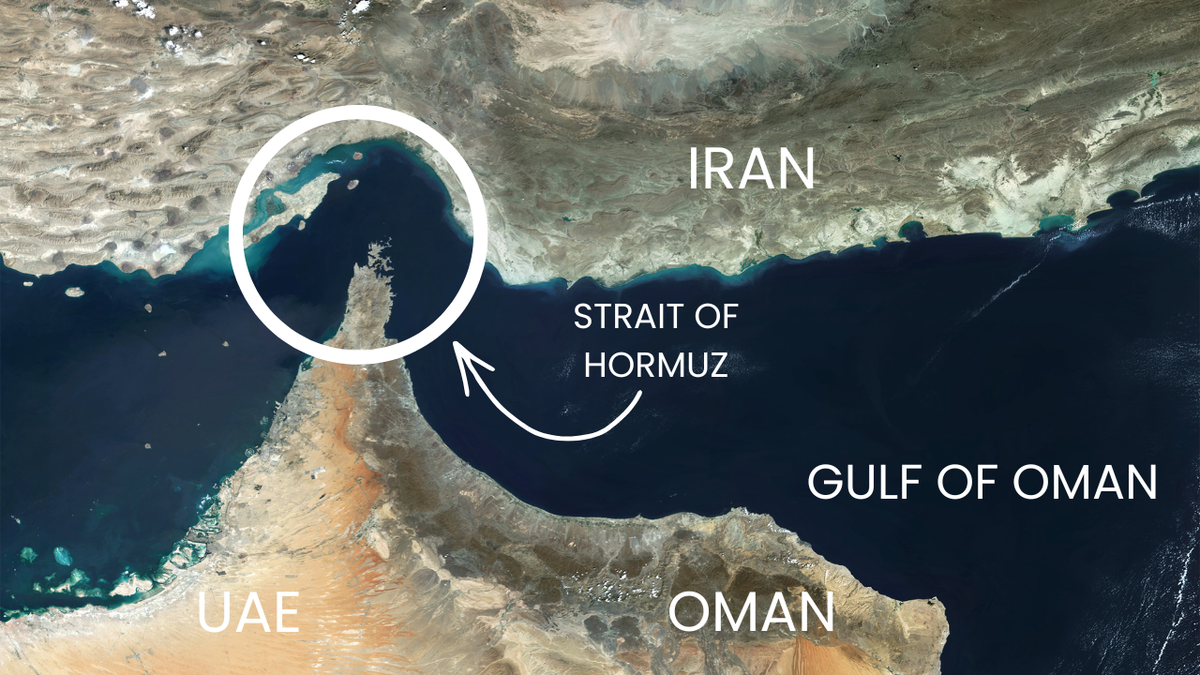
With Iran effectively shuttering commercial shipping through the Strait of Hormuz—an artery that historically carries roughly 20% of global petroleum liquids—and US President Donald Trump ordering an extended naval blockade of Iranian ports, the conflict has hardened into a “dual blockade.” The resulting energy shock is fueling runaway inflation, fracturing supply chains, and threatening to tip fragile emerging markets into sovereign debt crises.
The Dual Blockade and Market Paralysis
The immediate catalyst for the current oil rally is the vanishing optimism for a swift diplomatic resolution. Following the collapse of the early-April peace talks mediated in Islamabad, both Washington and Tehran have dug in.
President Trump has made it clear that the US Navy’s blockade of Iranian ports will continue indefinitely until Tehran agrees to broader concessions, reportedly telling aides that he is prepared to maintain the pressure campaign for months. The strategy is designed to force Iran to cap its oil wells as domestic storage capacities max out.
In retaliation, Iran has maintained its chokehold on the Strait of Hormuz. The paralysis of this waterway has trapped millions of barrels of oil, liquefied natural gas (LNG), and critical industrial feedstocks like aluminum and petrochemicals inside the Persian Gulf. For traders and market observers, the initial hope that the economic pain would force a quick ceasefire has evaporated, replaced by the grim reality of a long-term supply deficit.
The Macroeconomic Shockwave: Inflation and Stagflation Risks
The cascading effects of this bottleneck are hitting global markets with brutal speed. Fuel costs in major western economies are skyrocketing, threatening to unleash a secondary wave of inflation just as central banks were attempting to stabilize benchmark interest rates.
The bond market is already signaling deep distress. Yields on long-term government bonds have spiked as investors bet on lasting inflationary pressures. Financial institutions are now openly warning of an extended stagflationary shock—a toxic combination of stagnant economic growth and high consumer prices. According to recent UN development projections, a prolonged disruption could plunge upwards of 32 million people into poverty globally, driven by a “triple shock” of energy shortages, food insecurity, and paralyzing transport costs.
Emerging Markets in the Crosshairs
While western economies brace for recession, the blockade represents an existential threat to emerging markets across Asia and the Global South.
Regional economies are bearing the immediate brunt of the fallout. Nations like Pakistan, which rely heavily on imported energy, are witnessing a historic and devastating surge in their oil import bills. This sudden ballooning of energy costs threatens to derail fragile fiscal recoveries, severely complicating ongoing IMF debt management programs and rapidly depleting foreign exchange reserves.
As imported inflation soars, central banks in these developing nations face an impossible mandate: they must attempt to tame skyrocketing consumer prices and defend their currencies without triggering a complete domestic economic collapse.
What Comes Next?
With both sides entrenched in a test of wills, the global economy remains hostage to geopolitics. Unless a sudden diplomatic breakthrough occurs to restore Gulf energy flows, energy analysts warn that crude could continue its march toward all-time highs.
For international trade, the Strait of Hormuz crisis is no longer just a regional security issue; it is the single most disruptive force in the global economy today, permanently altering the risk calculus for global supply chains and sovereign debt markets alike.
Discover more from The Economy
Subscribe to get the latest posts sent to your email.
Analysis
The Architecture of Fiscal Strain: Global Debt and the Middle East Crisis
The collision of accelerating regional instability and overextended sovereign balance sheets has created a structural inflection point. As escalating geopolitical friction disrupts critical shipping corridors, the global debt Middle East conflict dynamic has mutated from a localized market risk into a systemic fiscal crisis. Governments already wrestling with post-pandemic liabilities now face a compounding reality: the cost of carrying public debt is permanently rising. The era of cheap capital has not merely paused; it has been systematically dismantled by the fiscal demands of an increasingly volatile multipolar landscape.
The picture is more complicated than a mere temporary spike in market anxiety. According to comprehensive data tracking from the International Monetary Fund, aggregate global public debt has crested past 93 percent of global Gross Domestic Product, approaching an unprecedented $100 trillion threshold. This expansion arrives at a highly sensitive structural moment. Ongoing friction across the Bab el-Mandeb strait and the wider Levant has forced a structural reallocation of state resources. Instead of executing necessary fiscal consolidation, advanced and emerging economies are absorbing severe supply-side shocks.
The World Bank notes that prolonged shipping diversions around the Cape of Good Hope have driven a 12 percent baseline increase in global maritime freight costs. For import-dependent nations, this transport premium operates as an unlegislated tax, widening fiscal deficits as governments intervene to subsidize food and fuel. Still, the deeper threat lies not in temporary trade blockages, but in how these disruptions alter the long-term trajectory of global bond markets.
The Structural Transmission: Global Debt Middle East Conflict Mechanics
The transmission mechanism through which regional violence transforms into global debt accumulation is both direct and multi-layered. On March 12, 2026, Brent crude futures surged to $94.20 per barrel following localized drone strikes on energy infrastructure, demonstrating how rapidly geopolitical anxiety materializes in real-world prices. This cyclical volatility translates directly into structural debt distress. When energy prices climb, nations face an acute balance-of-payments crisis. To prevent domestic unrest, energy-importing emerging markets choose to pile on external debt rather than allow local prices to adjust naturally.
A clear example can be observed in the Middle East itself, where non-oil producing regional economies are buckling under the strain. The Financial Times reported that external financing requirements for North African and Levantine economies have widened by an estimated $24 billion over the past fiscal year alone. Spreading credit default swap (CDS) premiums reflect this vulnerability. As risk perceptions intensify, investors demand a significant geopolitical risk premium to hold sovereign paper.
[Geopolitical Shock] ──> [Commodity Price Spikes] ──> [Sticky Structural Inflation]
│
▼
[Sovereign Debt Surge] <── [Fiscal Deficit Expansion] <── [Higher Central Bank Rates]
This dynamic creates an aggressive feedback loop. Higher yields mean that an increasing share of national tax revenues must be diverted toward debt servicing rather than productive domestic investment. Analysis by the Organization for Economic Co-operation and Development indicates that for every 100 basis point rise in sovereign yields, heavily indebted middle-income countries lose approximately 0.8 percent of fiscal headroom within twelve months. The structural cost of capital has fundamentally reset, driven by a regional conflict that acts as a magnifying glass for existing balance-sheet vulnerabilities.
When the Federal Reserve maintains a restrictive stance to counter imported energy inflation, the yields on US 10-year Treasury bonds rise, touching 4.65 percent in early April 2026. Because US debt benchmarks serve as the global risk-free rate, this upward shift mechanically prices out weaker borrowers across Latin America and Sub-Saharan Africa. Emerging markets are forced to choose between sharp currency depreciation or domestic recession, all while their dollar-denominated obligations grow more expensive to service.
The Structural Reset of Global Bond Yields
How does the Middle East conflict affect global debt levels?
The Middle East conflict escalates global debt by triggering commodity price shocks that fuel structural inflation, forcing central banks to maintain elevated interest rates. Concurrently, governments expand fiscal deficits through surging defense spending and energy subsidies, drastically raising borrowing costs and compounding the sovereign debt burden worldwide.
The structural damage from this geopolitical friction manifests primarily through a forced fiscal deficit expansion across major economies. Historically, regional conflicts were viewed as temporary shocks that could be managed via short-term borrowing. Yet, the current environment is defined by a permanent pivot toward militarized industrial policy and strategic reshoring. European nations, already struggling to meet NATO spending targets, are now accelerating defense procurement programs. This shift is structurally transforming national balance sheets.
Sovereign Fiscal Stress Index (G7 vs. Emerging Markets)
─────────────────────────────────────────────────────────────
G7 Debt-to-GDP Average: ███████████████████ 118%
Emerging Market Average: ████████████ 74%
Interest-to-Revenue Ratio (G7): ████ 12%
Interest-to-Revenue Ratio (EM): ████████ 22%
─────────────────────────────────────────────────────────────
This structural conversion of private liabilities into public debt is occurring alongside a silent retrenchment of global liquidity. When sovereign debt yields adjust upward to reflect a riskier world, capital flees the periphery and concentrates in safe-haven centers. This flight to safety does not lower borrowing costs for the issuer of the safe-haven asset; instead, the massive supply of new US and European debt required to fund these defensive posture changes drives yields even higher. The global financial system is discovering that the fiscal buffer zones built over decades of low inflation have vanished.
The picture is more complicated when examining the interaction between domestic credit expansion and sovereign risk. In past crises, domestic banking systems could absorb excess government bond issuance. Today, those banks are already saturated with sovereign paper, meaning that further government borrowing directly crowds out the private sector credit required to sustain economic growth. Corporate credit markets show early signs of systemic exhaustion as a result.
- Crowding Out Effect: Government paper absorbs domestic institutional liquidity, raising commercial loan rates.
- Duration Risk Accumulation: Banks holding long-term sovereign bonds face unrealized mark-to-market losses as yields climb.
- Currency Depreciation Strains: Capital flight weakens local currencies, increasing the local-currency cost of servicing foreign debt.
Why do sovereign bond yields rise during geopolitical crises?
The expansion of the geopolitical risk premium alters investor behavior fundamentally. When conflict escalates in a primary energy-producing region, market participants price in the probability of future commodity price shocks. This expectation makes long-term, fixed-income assets less attractive because inflation erodes their real return. Consequently, investors sell off long-duration bonds, causing prices to fall and yields to rise.
Investor Flight Path During Crises
───────────────────────────────────────────────────────────────────
[Periphery Assets] ──> [Liquid Corporate Credit] ──> [US Treasuries/Gold]
│ │ │
High Capital Selective Absolute Safe
Withdrawal Retrenchment Haven Flow
───────────────────────────────────────────────────────────────────
Furthermore, monetary policy tightening regimes become stickier when supply-side disruptions threaten to unanchor inflation expectations. Central banks cannot easily look through energy shocks when underlying core inflation is already elevated. The necessity of maintaining higher terminal interest rates means that governments must roll over maturing debt at significantly higher coupons. This rolling debt shock represents a structural transfer of wealth from state treasuries to bondholders, draining resources that would otherwise support infrastructure or productivity gains.
Downstream Consequences: The Corporate and SME Squeeze
The downstream consequences of this fiscal strain extend far beyond treasury departments and central bank boardrooms. As national governments capture a larger share of available domestic capital to fund their expanding liabilities, small and medium-sized enterprises (SMEs) face an unprecedented credit crunch. Commercial banks, seeking to derisk their balance sheets amid heightened macro uncertainty, are tightening lending standards and matching the ascent of benchmark yields. For an enterprise in Birmingham or Lyon, this translates directly to a prohibitive cost of capital, stalling capital expenditure and limiting employment growth.
Policymakers are caught in a classic trilemma, balancing financial stability, fiscal sustainability, and national security. According to a research brief from the Federal Reserve Bank of New York, the transmission of geopolitical risk into domestic corporate borrowing channels happens with a lag of roughly six months. This structural delay implies that the economic drag from current Middle Eastern tensions will manifest deeply throughout the latter half of 2026.
Corporate Default Probability Projections (Next 12 Months)
─────────────────────────────────────────────────────────────
Investment Grade Baseline: █ 1.2%
Investment Grade Shock Scenario: ██ 2.1%
High-Yield Baseline: ██████ 6.4%
High-Yield Shock Scenario: ███████████ 11.8%
─────────────────────────────────────────────────────────────
Forward-looking market indicators suggest that the corporate default rate among speculative-grade borrowers will climb toward 5.4 percent by winter, a direct consequence of refinanced debt colliding with elevated terminal rates. Still, the most acute pain will be concentrated in developing states that rely on bilateral lending. These countries are increasingly frozen out of international capital markets, facing a scenario where debt amortization demands exceed total foreign exchange reserves. The resulting wave of uncoordinated restructurings will likely test the limits of international cooperation, showing how localized security breakdowns can systematically unravel global financial cohesion.
What are the long-term fiscal consequences of regional energy shocks?
The Structural Reality of Strategic Reserves and Subsidies
A counter-narrative exists among some market analysts who argue that the global financial system possesses sufficient shock absorbers to decouple from the crisis. This perspective posits that the structural transition toward renewable energy has diluted the historic link between Middle Eastern energy disruptions and global inflationary impulses. Furthermore, proponents of this view emphasize the role of petrodollar recycling. Higher oil revenues accumulated by Gulf Cooperation Council sovereign wealth funds are being redeployed into Western capital markets, theoretically providing an anchor of liquidity that prevents an unmitigated spike in global yields.
Writing for the Peterson Institute for International Economics, research analysts noted in a late 2025 assessment that modern supply chains are significantly more adaptable than those of previous decades. This view holds that localized trade diversions represent a manageable frictional cost rather than a systemic catalyst for a global insolvency crisis. The expansion of domestic energy production in the Western Hemisphere is seen as a vital buffer that prevents regional security premium spikes from translating into permanent structural inflation.
Yet, this optimistic interpretation overlooks the political economy of debt stabilization. While advanced economies can temporarily absorb higher borrowing costs, the structural persistence of conflict forces governments to maintain expensive strategic reserves and consumer energy subsidies. These expenditures do not generate long-term economic returns; they merely prevent immediate contraction. The accumulation of non-productive public debt degrades sovereign creditworthiness over time, leaving nations highly vulnerable to the next systemic shock.
The Unyielding Arithmetic of Geopolitical Risk
The ultimate test for the global economy is whether its mountain of public liabilities can survive an era of permanent geopolitical friction. For years, cross-border integration and rock-bottom interest rates acted as a dual buffer, allowing states to accumulate unprecedented debt with minimal immediate penalty. That insulation has disintegrated. The current crisis demonstrates that sovereign balance sheets are no longer insulated from the physical realities of supply lines, regional choke points, and territorial ambitions.
The central tension is no longer between fiscal hawks and doves, but between political reality and unyielding arithmetic. Governments cannot indefinitely borrow to fund both structural safety nets and emergency defense expansions without triggering a fundamental reassessment of sovereign worth within modern macroeconomic risk management systems. As capital markets adjust to this permanent risk premium, the line separating fiscal sovereignty from systemic insolvency will grow dangerously thin. The true cost of regional instability is finally being tallied, and it will be paid in the unyielding currency of higher interest rates for a generation to come.
Discover more from The Economy
Subscribe to get the latest posts sent to your email.
Analysis
Import Price Shock: May’s 0.8% Rise Exposes Sticky Inflation Risk
US import prices rose 0.8% in May, accelerating sharply from a revised 0.3% gain in April and easily outpacing the 0.5% consensus forecast, the Bureau of Labor Statistics reported on 12 June. The month-on-month jump, the fastest since January, was propelled by a 3.2% leap in fuel prices, but the real surprise lurked beneath the surface: nonfuel import prices climbed 0.4%, their strongest monthly advance in nine months. For a Federal Reserve straining to read every inflation tea leaf, the print landed like a cold splash of water.
The numbers scramble the narrative that imported disinflation is reliably washing through American supply chains. Instead, they revive a question that had been shelved too early: what if the last mile of the inflation fight is imported, not homemade? This article dissects the data, maps the structural forces at work, and traces the second-order effects spilling into corporate boardrooms, the bond market, and the central bank’s next move.
What drove the May import price surprise?
The headline increase was no aberration. Behind the 0.8% number sits a constellation of price pressures that global logistics and procurement desks have been battling all spring. Imported fuel prices, pushed higher by a 3.7% rise in petroleum, grabbed the spotlight, but the more persistent story is found in the nonfuel index. Capital goods prices edged up 0.3%, automotive vehicles rose 0.2%, and consumer goods excluding autos added 0.1%—modest alone, yet telling when stacked together. The import price index for industrial supplies and materials, a bellwether for factory input costs, climbed 2.1% in the month, its largest jump since mid-2024.
Beneath these aggregates, specific trade channels tell a sharper tale. Import prices from China, after months of deflationary contribution, rose 0.3% in May, the first back-to-back increase in nearly two years. The cost of machinery and transport equipment sourced from the European Union climbed 0.6%, reflecting a weaker dollar earlier in the quarter and sticky producer prices in the euro area. Even goods from Mexico, a lynchpin of nearshoring strategies, ticked up 0.4%, the Bureau of Labor Statistics data show. The geography of import inflation is broadening, and that broadening matters more than a single volatile fuel swing.
A regional lens sharpens the picture. Anecdotal evidence from the Federal Reserve’s June Beige Book noted that logistics firms in the Dallas and Richmond districts “continued to report rising input costs, with some passing them through to customers for the first time in six months.” Meanwhile, a purchasing manager for a Midwest auto-parts supplier, whom this columnist spoke to on background, described negotiations with Asian steel mills as “the toughest since 2022—every shipment comes with a new surcharge.” That human detail puts a pulse on the raw numbers: the import price index isn’t just a macro abstraction; it’s rewriting the calculus for John Deere, whose imported steel and component costs for a single combine harvester have now risen an estimated $14,000 year-on-year.
The Fed’s import price conundrum
For a central bank that hopes to declare victory over inflation, import prices present a specific headache. Unlike domestically generated price pressures, which monetary policy can squash by cooling demand, import prices often trace global supply dynamics, currency movements, and geopolitical fault lines that a blunt interest-rate tool cannot reach.
How did import prices affect inflation expectations in May 2026?
The 0.8% surge in import prices pushed the year-over-year decline in the import price index to just 0.2%, the shallowest since the series flipped negative in early 2025. Paired with sticky services inflation, it risks unanchoring the Fed’s preferred core PCE metric by feeding into goods prices that had previously been a disinflationary anchor.
The transmission mechanism is no longer a quiet academic footnote. When nonfuel import prices rise consistently, the effect leaks into core consumer prices with a lag of roughly six to nine months, according to a 2025 Federal Reserve Bank of New York staff study. Already, the May consumer price index showed core goods deflation stalling at zero, snapping a nine-month streak of outright price declines. It’s a fragile juncture: if import prices continue to climb through the summer, the “goods disinflation” buffer that offset stubborn shelter and services costs evaporates just as the Fed debates its first rate cut since 2024.
Currency dynamics add a layer of complication. The trade-weighted dollar weakened 1.4% in April and early May against a basket of major currencies, making foreign-produced goods more expensive for US buyers. But the greenback has since clawed back some ground, and that lagged effect may temper import costs later in the quarter. The picture is more complicated than a simple pass-through model suggests, because Chinese exporters, faced with excess capacity, have been absorbing some tariff and currency costs into their margins rather than passing them on. The 0.3% rise in Chinese import prices is small, but it breaks a powerful trend, and that inflection is what has desks at Goldman Sachs and Morgan Stanley recalculating their inflation forecasts.
The bond market sniffed the risk early. Following the release, two-year Treasury yields climbed 7 basis points, and breakeven inflation rates on five-year TIPS widened to their highest since March. That’s not a panic—yet—but it is a repricing that suggests fixed-income traders see a non-zero chance that the import price print morphs into a more stubborn core inflation story over the next two quarters.
The immediate pain point is corporate margin compression. Import prices act as a tax on businesses that cannot swiftly pass costs to consumers, and in an economy where consumer price sensitivity is rising, pricing power is no longer boundless. A mid-May survey by the National Federation of Independent Business found that a net 28% of small firms plan to raise selling prices in the next three months, the highest share since late 2024, with many explicitly citing “higher input costs from abroad.” For large multinationals, the squeeze is more surgical: Procter & Gamble’s quarterly filing noted a 140-basis-point headwind from imported raw materials, and Caterpillar flagged “steel and logistics cost inflation” in its latest earnings call, though neither company linked it directly to a single month’s data. Still, the aggregate signal is hard to ignore.
For consumers, the pass-through will be uneven. Imported consumer goods excluding autos account for roughly 12% of the typical household basket, and much of that is concentrated in electronics, apparel, and furniture—categories where retailers are still sitting on elevated inventory. That inventory overhang buys time: Walmart and Target can absorb a few months of higher import costs before shelf prices move. But a sustained climb in import prices into the autumn would almost certainly bleed into holiday-season retail pricing, exactly the kind of second-round effect that keeps Fed governor Lisa Cook awake at night. In a 10 June speech in New York, Cook cautioned that “if imported goods prices stop falling, the last leg of disinflation becomes substantially harder, because services inflation alone cannot carry the 2% target without a recession.”
There’s a fiscal dimension too. The US administration’s tariff architecture, which as of May 2026 imposes an average 8.7% duty on imported goods, amplifies even small underlying price increases. When a shipment of European machinery that was already subject to a 10% tariff rises 0.6% in dollar terms, the landed cost jumps more sharply than the import price index alone captures. That multiplier effect is starting to show up in the producer price index, where input costs for manufacturers rose at their fastest pace in four months. The OECD Economic Outlook released on 3 June flagged precisely this risk, projecting that US import price increases would shave 0.2 percentage points off GDP growth in the second half of 2026 if sustained.
Why some analysts are shrugging it off
Not everyone is sounding an alarm. A sizeable camp of economists and strategists argues that May’s import price surge is a noisy, one-off data point exaggerated by the timing of the BLS survey and a temporary spike in shipping costs. Ian Shepherdson, chief economist at Pantheon Macroeconomics, wrote in a client note that “the fuel-driven surge obscures a still-benign underlying trend; strip out petroleum, and the three-month annualised rate of nonfuel import prices is still just 1.1%—hardly a threat.” Shepherdson points to the Baltic Dry Index, which retreated 12% in the second half of May after a sharp early-month rally, suggesting that the bulk of the shipping-cost impulse is already fading.
Others highlight the dollar’s late-May recovery. Because the BLS collects import prices in the first half of the month, the May index missed the currency’s firming against the yen and euro in the third week. “If the dollar holds these levels, June import prices could easily print flat or even negative,” said Michael Feroli, chief US economist at JPMorgan, in a podcast on the day of the release. Feroli also noted that seasonal adjustment factors in May are notoriously tricky, given the vagaries of post-Lunar New Year Asian factory restarts, and that the unadjusted data showed a smaller 0.4% increase—more noise than signal.
The competing view is credible, and it aligns with the Fed’s own rhetoric that it will look through “transitory” supply-side blips. Chair Powell, in his last press conference, reiterated that “one month’s data does not make a trend.” Yet the burden of proof has shifted. After two years of forecasting a steady disinflationary glidepath, forecasters have been humbled repeatedly. Dismissing the import price print as a one-off requires trusting that a fragile truce in global shipping, a stable dollar, and Chinese willingness to continue absorbing costs will all hold simultaneously. That’s a fragile bet in an era of fracturing supply chains, geopolitical risk, and stubbornly high producer prices from Stuttgart to Shenzhen.
The realignment nobody wanted
The May import price numbers are not a catastrophe. They are something more unsettling: a quiet realignment. They imply that the era of imported disinflation, which helped the Fed engineer a historically soft landing, may be ending not with a bang but with a series of small, cumulative price increases that gradually change the inflation arithmetic. This isn’t the 1970s oil shock replay; it’s a slow-motion recalibration in which the global cost of making and moving physical goods edges persistently higher, and central banks must decide whether to accommodate it or fight it.
That tension—between a supply-side problem and a demand-side toolkit—has no easy resolution. For now, the smart money is hedging: options on SOFR futures show a growing tail risk priced in for a rate hike by December, a scenario that was laughable just three months ago. It may remain laughable, but in a world where import prices can jump 0.8% in a single month, no one is laughing.
Discover more from The Economy
Subscribe to get the latest posts sent to your email.
Analysis
Amex Buys Tripadvisor Restaurant Booking Unit in $700M Deal
the global corporate battle for high-earning consumer loyalty shifted decisively toward European dining tables. In an all-cash corporate maneuver, American Express entered into a definitive put-option agreement to acquire TheFork, the premier European online dining platform, from Tripadvisor. The strategic move marks a massive escalation in the battle for premium consumer ecosystems. This structural acquisition demonstrates why American Express to buy Tripadvisor’s restaurant booking unit represents far more than a simple corporate expansion. By committing $700 million to control the reservation layer across 11 European countries, the financial giant is erecting an unassailable defensive moat around its core corporate billing apparatus.
The deal arrives amidst profound shifts in the post-pandemic corporate travel and luxury hospitality sectors, where experience-driven spending has outpaced traditional material acquisitions. According to recent market data published by the Quartz Business Analysis, TheFork generated $232 million in revenue and $28 million in adjusted EBITDA for the twelve months ended March 31, 2026. This performance reflects a significant 25% year-over-year revenue expansion, signaling that consumer appetite for premium, organized dining encounters remains exceptionally strong despite broader structural macroeconomic headcurrents. Still, the global payment architecture faces intense cross-winds. Traditional card issuers are encountering tightening international regulatory margins on credit interchange fees, pushing dominant firms to source yield from non-financial, software-driven merchant services. The European Union’s statutory caps on payment interchange fees have long constrained top-line payment growth across the continent. By directly capturing the digital platform where affluent spenders decide where to eat, corporate issuers insulate themselves from the commoditization of pure transaction processing.
Anatomy of a $700 Million Carve-Out
To appreciate the corporate mechanics of this transaction, one must analyze the divergent pressures facing both enterprises. For Tripadvisor, headquartered in Needham, Massachusetts, the disposition represents a deliberate retreat to core operations following months of internal disruption. As confirmed by official disclosures on PR Newswire, the travel conglomerate announced in February 2026 that it would explore Tripadvisor strategic alternatives for its dining business. The transaction follows structural shifts across the travel ecosystem. Activist investor pressures and evolving direct-to-consumer funnels forced the travel group’s board to reevaluate their corporate holdings. The company’s legacy hotel metasearch engines have suffered structural deterioration, leaving its experiences platform, Viator, as the primary driver of corporate shareholder expansion. Chief Executive Officer Matt Goldberg stated that the divestiture permits the company to focus entirely on its high-margin Experiences strategy, freeing up liquidity for aggressive capital return programs.
The acquisition structure utilizes a specialized European put-option framework. Under this arrangement, American Express extends a formal, binding purchase obligation while Tripadvisor initiates mandatory employee works-council consultations across multiple jurisdictions, including France and Portugal. Once these statutory labor reviews conclude, the formal equity purchase agreement will be executed. Financial advisers at Goldman Sachs orchestrated the transaction, ensuring that Tripadvisor minimizes its corporate tax liability, with net corporate cash proceeds expected to almost entirely mirror the gross transaction value.
For American Express, this is the third major brick laid in its global hospitality infrastructure. It follows the corporate purchases of:
- Resy in 2019, establishing a critical foothold in US premium reservation markets;
- Tock from Squarespace earlier in 2026, capturing high-end ticketed dining experiences;
- TheFork from Tripadvisor, consolidating its grip across continental Europe.
By absorbing TheFork, the company swallows a network of 50,000 digital restaurant partners across major metropolises like Paris, Madrid, and Lisbon. This instantly expands the total European dining reservation network under the credit giant’s control, bringing its global bookable inventory to an astonishing 75,000 individual venues.
The Proprietary Closed-Loop and Data Monopolization
Optimizing the Restaurant Reservation Platform Market
The institutional genius of this acquisition lies within the concept of the closed-loop payments network. Unlike traditional banking systems that rely on detached merchant acquirers, card networks, and issuing institutions, American Express operates as both the issuer and the network manager. This structural model thrives exclusively on consumer and merchant transaction data density. Traditional commercial banks look at billing statements post-facto; they notice a transaction only after a cardholder completes their purchase. In contrast, ownership of a booking platform provides real-time visibility into consumer discovery and forward intent.
Why did American Express buy TheFork?
American Express acquired TheFork for $700 million to expand its European digital dining footprint, adding 50,000 restaurants across 11 countries. This transaction integrates with Resy and Tock, creating a unified global network of 75,000 venues designed to maximize high-spending cardholder loyalty and capture valuable merchant transactional data.
The transaction provides a structural shield against merchant attrition. In the current restaurant reservation platform market, individual establishments have grown weary of paying steep per-cover reservation fees to tech intermediaries while simultaneously surrendering 2% to 3% in transaction interchange fees to credit card networks. By owning the reservation architecture, American Express can offer an integrated business solution. They’ve gained the leverage to subsidize reservation software costs for premium restaurants in exchange for exclusive payment terminal processing or targeted promotional access.
Furthermore, the acquisition functions as an essential customer acquisition engine. Premium cardmembers paying high annual fees demand differentiated access, such as early table releases, exclusive chef tables, and last-minute weekend allocations. When a cardmember opens the mobile application to book a bistro in Milan, American Express captures the entire consumer journey: the discovery phase, the reservation intent, the final dining payment, and the post-dining loyalty credit. Chairman and CEO Stephen Squeri recognizes that this holistic visibility yields unparalleled predictive behavioral data, allowing the firm to deploy highly personalized corporate marketing campaigns that standard banking entities cannot replicate.
Re-engineering the European Merchant Landscape
The downstream consequences of this consolidation will reverberate through European small-and-medium enterprises (SMEs) and competing digital payment networks. Across Europe, independent culinary businesses are confronting severe operational pressures from inflation and labor shortages. The arrival of a well-capitalized American financial titan could accelerate the digitization of the continent’s fragmented restaurant backend software space. TheFork provides operators with sophisticated guest data analytics, automated seating algorithms, and customer relationship software. With the backing of a major financial institution, these systems will likely receive major capital infusions, forcing regional point-of-sale providers to consolidate or risk irrelevance.
Yet, the macro picture is more complicated for European competition. By centralizing 50,000 prime dining venues under a US-centric payments ecosystem, American Express builds a formidable barrier against competitive consumer applications. Rivals like JPMorgan Chase, which acquired the luxury dining portal The Infatuation to bolster its own premium card offerings, will find themselves structurally locked out of primary inventory across Europe. Capital One’s acquisition of Velocity Black similarly reflects this industry-wide scramble to monopolize lifestyle touchpoints. As these financial monoliths secure exclusive digital real estate, the broader market fragments into walled gardens where consumer access depends entirely on card membership level.
Independent operators may also express quiet anxiety regarding network dependency. If a premier restaurant depends on the Amex acquisition of TheFork to secure 40% of its high-margin international weekend tourist traffic, that restaurant loses the ability to protest high card-processing fees. The platform becomes an inescapable tollbooth. This concentration of market power will undoubtedly attract close observation from regulatory bodies. The European Commission and the UK Competition and Markets Authority have shown a consistent willingness to review acquisitions where a dominant financial enterprise absorbs a critical digital gateway, meaning the scheduled late-2026 closing date could face regulatory hurdles.
The Strategic Vulnerability of Over-Indexed Premium Moats
A rigorous counter-analysis suggests that this acquisition carries significant execution hazards. Skeptics point out that the purchase price of $700 million represents roughly three times the $232 million revenue base generated by TheFork over the trailing twelve months. Paying such a premium for a regional booking intermediary assumes that affluent consumer spending will remain impervious to long-term macroeconomic slowdowns. Integration costs could also balloon if the proprietary customer management systems of Resy, Tock, and TheFork resist quick technical unification across distinct regional frameworks. If European economic output stagnates through the latter half of 2026, the anticipated transactional volume might fail to materialize, turning a high-priced loyalty play into an expensive operational drag.
Furthermore, some institutional market analysts question whether Tripadvisor has shortchanged its own long-term valuation. As noted by industry analyst Jake Fuller at BTIG Research, using the entire cash windfall to fund continuing internal investments in the experiences sector could spark investor resistance if it signals an abandonment of a complete corporate sale. Activist investment fund Starboard Value, which accumulated a 9% equity stake in Tripadvisor in July 2025, originally agitated for a comprehensive overhaul or an outright sale of the entire travel group. By selling off its most profitable, EBITDA-positive growth engine, Tripadvisor risks leaving its remaining legacy business exposed to further public market devaluation if the volatile tours and activities sector experiences a cyclical downturn.
Ultimately, the transaction illuminates the changing nature of modern consumer banking, where the ownership of proprietary software interfaces matters far more than the provision of raw credit lines. The ultimate victory belongs to the enterprise that controls the consumer’s lifestyle gateway before they ever pull a plastic or digital card from their wallet. By absorbing a dominant European dining network, American Express isn’t merely purchasing a software platform; they’ve acquired a structural monopoly on the premium moments that define modern affluent leisure. The picture is clear: in the modern financial ecosystem, you must own the venue to truly own the transaction.
Discover more from The Economy
Subscribe to get the latest posts sent to your email.
-
Markets & Finance5 months agoTop 15 Stocks for Investment in 2026 in PSX: Your Complete Guide to Pakistan’s Best Investment Opportunities
-
Analysis4 months agoTop 10 Stocks for Investment in PSX for Quick Returns in 2026
-
Analysis4 months agoBrazil’s Rare Earth Race: US, EU, and China Compete for Critical Minerals as Tensions Rise
-
Banks5 months agoBest Investments in Pakistan 2026: Top 10 Low-Price Shares and Long-Term Picks for the PSX
-
Investment5 months agoTop 10 Mutual Fund Managers in Pakistan for Investment in 2026: A Comprehensive Guide for Optimal Returns
-
Analysis4 months agoJohor’s Investment Boom: The Hidden Costs Behind Malaysia’s Most Ambitious Economic Surge
-
Global Economy6 months ago15 Most Lucrative Sectors for Investment in Pakistan: A 2025 Data-Driven Analysis
-
Global Economy6 months agoPakistan’s Export Goldmine: 10 Game-Changing Markets Where Pakistani Businesses Are Winning Big in 2025