
Asia
G7 to Release Emergency Oil Reserves as Middle East War Triggers Worst Crude Shock Since 2022

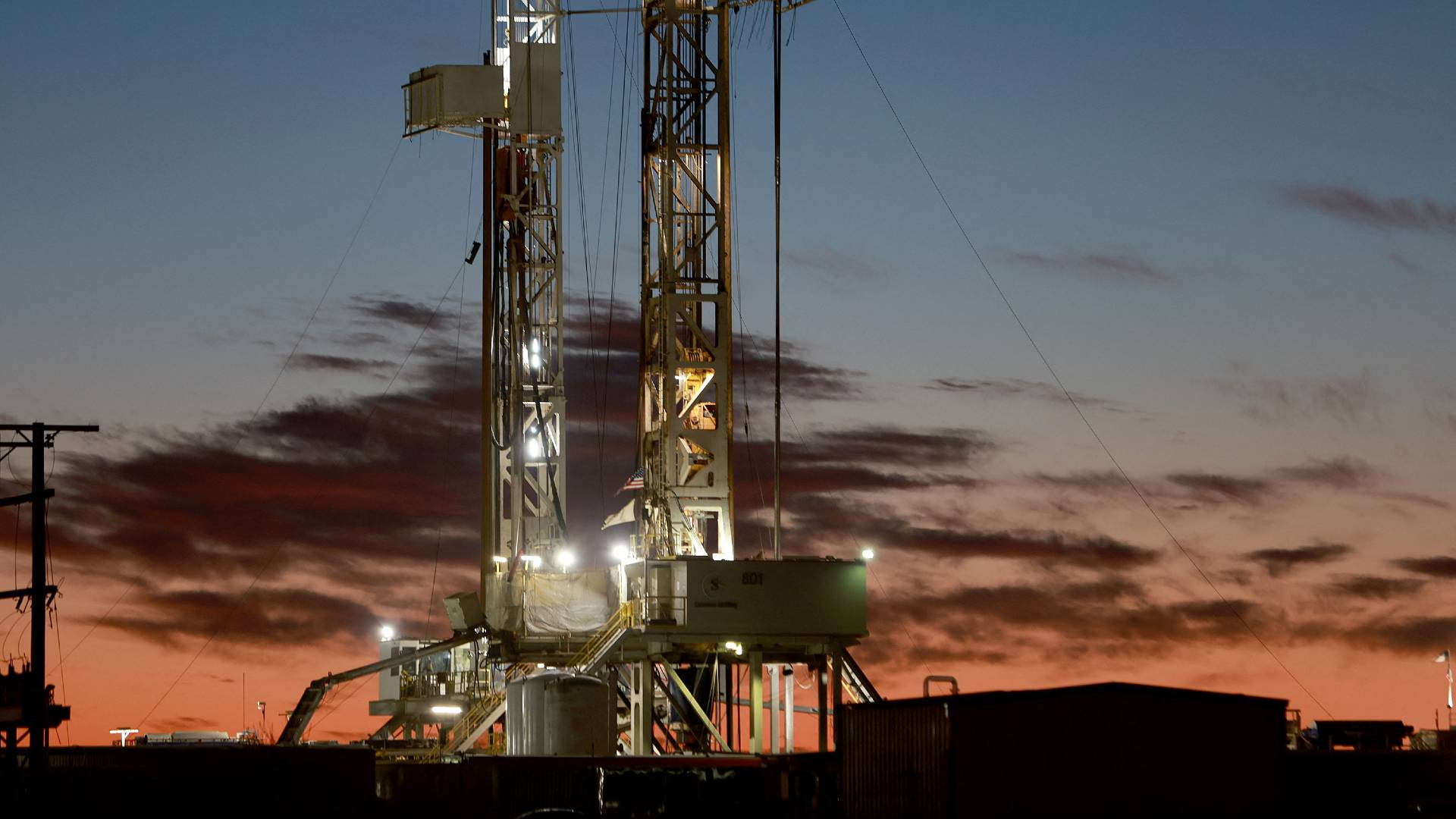
Brent crude surges to a four-year high of $119.50 before retreating. G7 finance ministers convene an emergency call. The Strait of Hormuz, the world’s most critical oil artery, is effectively closed. For the global economy, the clock is ticking.
In the clearest sign yet that the world’s wealthiest democracies are alarmed by the speed and severity of the current oil shock, G7 finance ministers held an emergency meeting Monday to discuss a possible joint release of petroleum from strategic reserves coordinated by the International Energy Agency, as oil prices surged following the conflict in the Gulf. Investing.com
The call — scheduled for around 1:30 p.m. CET and initiated by France, which currently holds the G7 presidency Bloomberg — represents the most consequential coordinated energy-market intervention discussed by Western governments since Russia’s invasion of Ukraine in 2022. Three G7 countries, including the United States, have so far expressed support for the idea, according to the Financial Times, which first reported the talks. U.S. News & World Report
The urgency is unmistakable. Oil prices surged to their highest since 2022, crossing $119 a barrel on Monday before pulling back toward $100, paring a nearly 30 percent spike as the International Energy Agency convened an extraordinary meeting of member governments. Energy Connects
The Anatomy of a Price Shock: What Happened and Why
To understand why governments are reaching for their deepest emergency tools, it helps to trace what has unfolded since the night of February 28.
West Texas Intermediate crude futures surpassed $100 per barrel for the first time since mid-2022 — when Russia’s invasion of Ukraine jolted global energy markets — with WTI rising as high as $119 a barrel overnight. CNBC The trigger: a sustained, widening conflict involving the United States, Israel, and Iran that has choked one of the most strategically vital waterways on Earth.
The Iran war has disrupted 20% of global oil supply for nine days and counting, more than double the previous record set during the Suez Crisis of 1956–57, which disrupted just under 10%, according to Rapidan Energy Group. Axios
The chokepoint is the Strait of Hormuz. Ships carrying roughly 20 million barrels of oil a day have been left stranded in the Persian Gulf, unable to safely pass through the narrow mouth of the Gulf bordered on its north side by Iran. PBS The numbers downstream are staggering: output in Iraq, the second-biggest OPEC producer, has effectively collapsed, with production from its three main southern oilfields falling 70% to 1.3 million barrels per day. CNBC Kuwait has begun precautionary production cuts. The UAE is under pressure.
Qatar’s energy minister, Saad al-Kaabi, told the Financial Times that Gulf exporters would halt production in days if tankers cannot pass the Strait of Hormuz — a scenario he warned could spike oil prices to $150 a barrel and “bring down the economies of the world.” CNBC
What the G7 Is Actually Proposing
The mechanics of any coordinated release matter enormously. Some US officials believe a joint release in the range of 300 million to 400 million barrels would be appropriate. Investing.com
According to the FT, G7 governments are considering a coordinated release of 300 to 400 million barrels from their stockpiles. The IEA’s 32 member governments hold strategic reserves as part of a collective emergency system designed precisely for oil price crises like this one. Energy Connects
Current G7 oil reserves sit at approximately 1.2 billion barrels, meaning the proposed release would represent a substantial share of their collective holdings. KAOHOON INTERNATIONAL For context, the United States Strategic Petroleum Reserve — the world’s largest — has an authorized storage capacity of 714 million barrels, stored in huge underground salt caverns along the Gulf of America coastline. Energy Connects
French President Emmanuel Macron confirmed the deliberation publicly. Oil prices moderated after Macron confirmed that “the use of strategic reserves is an envisaged option,” though Brent remained above $100 per barrel. Fortune
The precedent for such action exists. In 2022, the IEA coordinated the largest-ever release of strategic reserves — some 182 million barrels — in response to the Russia-Ukraine war. The G7 reserve release, if it materializes, would be the most significant coordinated intervention in oil markets since that episode. CoinDesk
The Macroeconomic Stakes: Inflation, Growth, and the Central Bank Dilemma
The speed and scale of this oil shock puts central banks in an extraordinarily difficult position. After years of effort to bring post-pandemic inflation back toward 2% targets, a persistent energy price surge threatens to reignite price pressures just as the disinflation battle appeared won.
IMF Managing Director Kristalina Georgieva warned that “every 10% increase in oil prices — if persistent through most of this year — results in a 40 basis point increase in global headline inflation and a 0.1 to 0.2% fall in global output.” IOL With oil prices up more than 30% from pre-war levels, the arithmetic is sobering: the current shock, if sustained, could add more than a full percentage point to global headline inflation while meaningfully slowing growth.
The IMF currently forecasts world growth of 3.3% in 2026 and 3.2% in 2027, but Georgieva warned that this resilience is being tested by the latest conflict as shipping through the Strait of Hormuz has dropped by about 90%. IOL
The IMF is already in discussions with the most vulnerable energy-importing economies to potentially assist them financially if energy prices and market uncertainty spike further. OilPrice.com Emerging markets with high energy import dependence — particularly across South and Southeast Asia — face currency pressures, widening current-account deficits, and fiscal strain simultaneously.
For the United States, the political arithmetic is equally uncomfortable. Average gasoline prices reached $3.45 a gallon Sunday, up 16% from the week prior, according to AAA. A prolonged spike in oil and gas prices could exacerbate America’s struggles with affordability, putting Trump and Republicans in a precarious political position ahead of midterm elections. CNN
Key Data Snapshot: Oil Market Crisis at a Glance (March 9, 2026)
| Indicator | Value | Change |
|---|---|---|
| Brent Crude (intraday high) | $119.50/bbl | +30% from pre-war level |
| Brent Crude (current) | ~$104/bbl | +12% on day |
| WTI Crude (current) | ~$102/bbl | +12% on day |
| Iraq oil output | 1.3M bbl/day | -70% |
| Strait of Hormuz traffic | ~10% of normal | -90% |
| US gasoline (avg) | $3.45/gallon | +16% week-on-week |
| Jet fuel (US) | $3.95/gallon | +56% vs. pre-war |
| G7 proposed SPR release | 300–400M barrels | — |
| Total G7 SPR holdings | ~1.2B barrels | — |
Sources: Reuters, CNBC, Bloomberg, IEA
Asia on the Frontline of the Energy Crisis
No region outside the Gulf itself is more exposed to this shock than Asia. Many of Asia’s largest energy consumers — including China, Japan, South Korea, and India — depend heavily on crude oil and LNG shipments from the Middle East transported through the Strait of Hormuz. Economy Post
Asian equity markets slumped as energy prices spiked, with Japan’s Nikkei down more than 6% and South Korea’s KOSPI falling similarly. The National These are not merely stock-market gyrations. For Japan — which imports nearly all of its oil — a sustained $30-per-barrel increase in crude translates directly into higher manufacturing costs, a weaker yen, and imported inflation on everything from food to transport.
China, which holds the world’s second-largest strategic petroleum reserve at approximately 400 million barrels, faces competing pressures: as a major energy importer, it absorbs higher costs; as a geopolitical actor, it observes Western reserve deployments closely and may choose strategic inaction.
The SPR Calculus: Can 400 Million Barrels Turn the Tide?
Strategic petroleum reserve releases are a blunt instrument. They buy time — they do not resolve underlying supply disruptions. The 2022 IEA coordinated release helped cool prices temporarily, but Brent ultimately remained elevated for months as the Ukraine war dragged on.
The current scenario is both more acute and more uncertain. Unlike 2022, where Russian export flows — though reduced — continued, the Strait of Hormuz closure represents a near-total blockade of the world’s most concentrated oil export corridor. Whether 300 to 400 million barrels of reserve releases can substitute for the 9 to 14 million barrels per day that have effectively gone offline is deeply uncertain.
The more powerful signal may be psychological. A coordinated G7 release — particularly one that includes Japan and Europe alongside the United States — communicates resolve, limits speculative overshoot, and buys diplomatic time for ceasefire efforts. That signal alone moved markets Monday: Brent fell from $119.50 to around $104 on the news of the talks, a $15 drop in hours.
How This Oil Shock Hits Travelers and the Aviation Industry
Airfares, Cancellations, and the $4,000 Flight
For ordinary travelers, the consequences of this oil shock are already landing in their inboxes — and their wallets.
Jet fuel, which accounts for about one-fifth of airlines’ operating expenses, cost $3.95 a gallon Thursday — up 56% from $2.50 in late February, one day before the joint US-Israel attack on Iran. CBS News That cost trajectory is not sustainable for carriers already operating on thin margins.
More than 37,000 flights to and from the Middle East have been cancelled since the conflict began on February 28. A Seoul-to-London flight on Korean Air jumped from $564 to $4,359 in just one week, according to Google Flights data. OilPrice.com
Diesel prices doubled in Europe, and jet fuel prices rose by close to 200% in Asia, according to Claudio Galimberti, chief economist at Rystad Energy. PBS Airlines in the region are rerouting through longer corridors — around the Arabian Peninsula rather than over it — burning additional fuel on already strained operations.
Airline stocks tumbled across global markets Monday. In Asia, Korean Air fell 8.6%, Air New Zealand dropped 7.8%, and Cathay Pacific lost 5%, while European carriers including Air France-KLM, IAG, and Lufthansa slid between 4% and 6%. OilPrice.com
Tourism, Hospitality, and the Consumer Spending Squeeze
The travel industry’s pain extends well beyond the airlines. Hotels, cruise lines, and tour operators serving the Gulf have seen mass cancellations. Gulf-based carriers — Emirates, Qatar Airways, and Etihad — which normally handle roughly a third of Europe-to-Asia passenger traffic — face operational paralysis as long as regional airspace remains closed.
More broadly, higher fuel costs ripple through to every energy-intensive economic sector. Shipping surcharges lift the price of imported goods. Petrochemical feedstocks — the building blocks of plastics, packaging, and fertilizers — track crude oil prices. For consumers already strained by years of post-pandemic inflation, the cumulative effect threatens to suppress discretionary spending on travel, dining, and durable goods precisely as central banks were beginning to ease.
What Comes Next: Three Scenarios
Scenario 1 — Short conflict, rapid reopening. If the Strait of Hormuz reopens within two to three weeks and Gulf producers resume normal output, the reserve release buys critical breathing room. Oil retreats toward $80 to $90 per barrel by late March. The inflation impact is transitory; central banks hold steady.
Scenario 2 — Prolonged closure, sustained elevated prices. If the conflict drags into April or May, the structural supply deficit deepens. Even a full release of 400 million barrels covers roughly 40 to 45 days of the disrupted supply. Oil could test $130 to $150. Stagflation risk rises materially across import-dependent economies.
Scenario 3 — Escalation to Gulf infrastructure. The most dangerous scenario remains an Iranian strike on Saudi Arabia’s East-West Pipeline or Aramco processing facilities. That scenario — with 9 to 14 million additional barrels per day at risk — would overwhelm any SPR response and potentially take Brent past $150 or higher.
What It Means for You
For households, the most immediate consequence of this oil shock is visible at the pump and, soon, at check-in. Fuel surcharges on international flights are already rising. If current dynamics persist through the spring, round-trip transatlantic fares could climb 20% to 30% above pre-war levels, and long-haul Asia-Europe routes will be the hardest hit. Travelers with existing bookings should review their itineraries, check fuel surcharge provisions in their ticket contracts, and consider travel insurance that covers fuel-related disruptions — a category most standard policies exclude.
For investors and businesses, the more consequential question is duration. Oil shocks that resolve within a quarter tend to leave only modest marks on corporate earnings and macroeconomic trajectories. Shocks that persist for two or more quarters — as in 1973 and 2022 — fundamentally reset inflation expectations, force central bank tightening, and compress equity valuations across energy-intensive sectors. The SPR announcement has bought time. What policymakers — and military planners — do with that time will determine which scenario unfolds.
For policymakers themselves, Monday’s G7 emergency call is a reminder that energy security has never truly left the top of the agenda. The world has spent the past four years diversifying away from fossil fuel dependence, investing in renewables, and reshoring critical supply chains. Yet a single chokepoint — 21 miles wide at its narrowest — retains the power to send the global economy into crisis within days. The most durable policy lesson of the Iran war crisis may ultimately be the same one written by every energy shock since 1973: strategic reserves stabilize markets, but they do not substitute for structural resilience.
FAQ: G7 Emergency Oil Reserves and the Middle East Crisis
What are strategic petroleum reserves (SPRs)? Strategic petroleum reserves are sovereign stockpiles of crude oil held by governments as an emergency buffer against supply disruptions. The United States holds the world’s largest SPR — with authorized capacity of 714 million barrels stored in underground salt caverns along the Gulf Coast.
Why are G7 countries considering a joint oil reserve release? The Iran war, which began February 28, 2026, has effectively closed the Strait of Hormuz to tanker traffic, cutting off roughly 20% of global seaborne oil supply. Brent crude surged more than 30% to nearly $120 a barrel before G7 talks prompted a partial retreat. A coordinated release is intended to stabilize markets and limit inflationary damage to the global economy.
How much oil is the G7 considering releasing? Reports suggest a coordinated release of 300 to 400 million barrels, coordinated through the International Energy Agency. Total G7 reserves stand at approximately 1.2 billion barrels, so the proposed release would be the largest in history.
How will the oil price surge affect airline tickets? Jet fuel has already risen 56% in the United States and nearly 200% in Asia since the conflict began. United Airlines CEO Scott Kirby warned that higher fuel costs will have a “meaningful” impact on ticket prices “probably starting quick.” Travelers should expect surcharges on international routes, particularly trans-Pacific and Europe-Asia itineraries.
What is the IMF saying about the impact on the global economy? IMF Managing Director Kristalina Georgieva stated that every 10% increase in oil prices sustained for a year adds 40 basis points to global inflation and reduces global output by 0.1% to 0.2%. With oil prices currently up more than 30%, the risk to the disinflation progress made in 2024 and 2025 is significant.
Discover more from The Economy
Subscribe to get the latest posts sent to your email.



With the S&P 500 yielding a historically thin 1.2% and trading at a P/E above 31 following its 2025 rally, income-focused investors have been forced to look further afield. Europe and Asia’s blue-chip dividend payers are filling that gap — offering yields two to five times the U.S. benchmark, backed in many cases by decades of uninterrupted payout growth. Here is where the highest-quality income is actually sitting in 2026, and where headline yield is masking real risk.
Why U.S. Yields No Longer Cut It
The math is straightforward. As Sure Dividend notes, the S&P 500 closed out 2025 with a year-to-date total return of nearly 19%, pushing its price-to-earnings ratio above 31 and compressing yields across the board. Even reliable U.S. dividend growers now offer modest current income: NextEra Energy yields just 2.7% (though it is growing its payout at a 6% compound annual rate through 2028), Coca-Cola yields about 2.7%, and Mastercard — despite raising its dividend more than 9,500% since its first payment — yields a mere 0.7%, according to The Motley Fool. For investors who need current income rather than pure growth, that combination of high valuations and low yields has made the U.S. market a difficult place to build an income portfolio in 2026.
Europe: Insurance and Compounders Lead on Yield
European blue chips have emerged as the highest-conviction income allocation for 2026, according to screening data from Dividend Talk, which evaluates stocks on dividend safety, valuation, and long-term growth rather than headline yield alone.
Top European dividend stocks (verified June 17, 2026):
| Stock | Yield | Sector |
|---|---|---|
| Munich Re | 5.17% | Reinsurance |
| ASR Nederland | 5.15% | Insurance |
| Wolters Kluwer | 4.21% | Information services |
| Novo Nordisk | 4.10% | Pharmaceuticals |
| Fuchs Petrolub | — | Specialty lubricants |
| London Stock Exchange Group | — | Financial market infrastructure |
| Halma | — | Safety/health technology |
| RELX | — | Information/analytics |
| SAP | — | Enterprise software |
The critical distinction Dividend Talk draws is between yield and dividend safety. Munich Re, ASR Nederland, Wolters Kluwer, and Novo Nordisk all carry both an above-3.8% yield and a “Safe” or “Very Safe” internal safety rating, alongside multi-decade dividend records — meaning the yield is backed by durable free cash flow rather than a depressed share price masquerading as a bargain. That distinction matters most in the insurance names: Munich Re and ASR Nederland benefit structurally from higher reinsurance pricing following a run of costly global catastrophe years, giving their payouts unusually strong underlying support heading into 2026.
Asia: Banking and Semiconductor Leadership, With a Payout Caveat
Asian dividend stocks offer a different risk-reward profile, combining higher headline yields with more variable payout coverage. According to Analytics Insight’s 2026 Asia screen, DBS Group Holdings stands out with an estimated dividend yield of 5.4% to 6.1% — among the highest of any large-cap regional bank globally — supported by its wealth-management franchise, deep Southeast Asian deposit base, and digital banking scale.
Top Asian dividend stocks for 2026:
| Stock | Yield | Note |
|---|---|---|
| DBS Group Holdings | 5.4%–6.1% | Deep deposit base, wealth management scale |
| TSMC | Lower, growth-oriented | Semiconductor leadership, diversified cash flow |
| ITC | Moderate | Diversified conglomerate, business visibility |
| Anhui Heli | 3.3%–4.47% | Track payout coverage closely |
| Shibusawa Logistics | 3.3%–4.47% | Track payout coverage closely |
| Rheon | 3.3%–4.47% | Track payout coverage closely |
| Japan market payer (top-quartile yield) | ~4.0% | JPY 31/share; payout ratio 40.1% |
The caution flag in Asia sits with the smaller-cap names. Analytics Insight specifically flags that while stocks like Anhui Heli, Shibusawa Logistics, and Rheon offer attractive 3.3%–4.47% yields, investors need to verify free cash flow coverage before committing capital. One unnamed top-quartile Japanese dividend payer illustrates the risk clearly: its payout ratio of 40.1% suggests the dividend is covered by earnings but not comfortably by free cash flow, and its dividend history has been volatile over the past decade — a pattern that can quietly erode a portfolio’s income reliability even when the trailing yield looks attractive on a screener.
Building a 2026 Income Allocation: The Framework
The right approach for 2026 income investors is to treat yield as a starting filter, not a selection criterion. Analytics Insight’s own guidance is explicit: “investors should also consider key metrics such as payout ratio, free cash flow coverage, market position, and dividend consistency before investing” — a standard that immediately separates DBS, TSMC, and ITC (dependable large-cap options with strong business visibility) from the higher-yielding but less-established smaller names.
A practical due-diligence checklist before buying any high-yield stock in 2026:
- Payout ratio relative to earnings AND free cash flow — a dividend covered by earnings but not FCF is a warning sign, not a green light
- Dividend growth streak length — a multi-decade record (Novo Nordisk, RELX, SAP) filters out cyclical one-off high yields
- Sector tailwinds — European insurers are riding a hard reinsurance pricing cycle; Asian banks like DBS benefit from elevated regional rates and wealth inflows
- Currency exposure — unhedged EUR, SGD, and JPY dividend income introduces FX volatility that can offset or amplify the yield advantage over USD alternatives
Final Verdict
For income-focused investors priced out of a 1.2%-yielding, 31x-earnings S&P 500, Europe’s insurance and compounder names — led by Munich Re, ASR Nederland, Wolters Kluwer, and Novo Nordisk — currently offer the best combination of yield and safety available in developed markets. In Asia, DBS Group is the standout large-cap income name, while TSMC and ITC offer lower yields with stronger long-term visibility. The smaller Asian dividend payers can supplement a portfolio’s income but demand active monitoring of payout ratios rather than a buy-and-forget approach. The overarching 2026 lesson: geographic diversification into non-U.S. blue chips isn’t just a currency or growth play anymore — for income investors, it has become close to a necessity.
Discover more from The Economy
Subscribe to get the latest posts sent to your email.
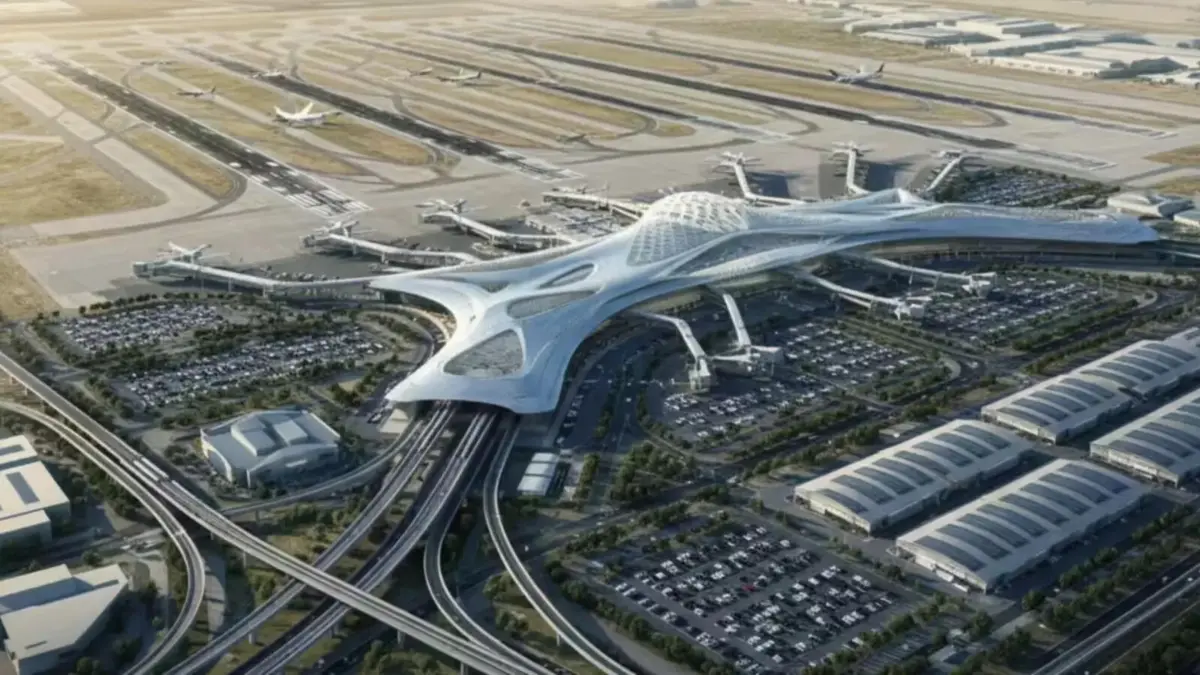
Dubai is in the middle of building what is intended to become the world’s largest airport by capacity — a Dh128 billion ($34.8 billion) expansion of Al Maktoum International Airport at Dubai World Central (DWC), according to Gulf News. When complete, the facility will feature five parallel runways, roughly 400 gates, and the capacity to handle up to 260 million passengers a year — nearly three times the current capacity of Dubai International Airport (DXB), already the world’s second-busiest airport for international traffic, per analysis from K Estates.
Where the project actually stands in 2026
Construction crews have already excavated more than 45 million cubic metres of earth and completed the airport’s second runway, according to MyBayut’s DWC guide. The first phase — a central passenger terminal and four concourses designed to handle 150 million passengers annually — is targeted for completion around 2032, per Khaleej Times. Dubai is set to allocate AED 55 billion worth of expansion contracts by the end of 2026 alone, underscoring the pace at which the project is being financed and built.
The scale of ambition extends beyond aviation infrastructure. DWC is being planned as a self-contained “airport city,” incorporating business, cultural, and residential districts across Dubai South, roughly 35 kilometres from Dubai Marina, according to the same Khaleej Times reporting. All operations currently based at DXB — including Emirates’ long-haul network — are expected to eventually transfer to the new hub.
Part of a much bigger regional aviation build-out
Al Maktoum’s expansion is the largest single project within a broader regional wave of investment: airports across the Middle East, Africa, and South Asia are expected to spend a combined $183 billion on capacity, connectivity, and passenger-experience upgrades, with the UAE and Saudi Arabia leading the push, according to Gulf News. Within the UAE alone, expansion plans extend beyond Dubai to Sharjah and Ras Al Khaimah, with a shared emphasis on AI-enabled operations, IoT systems, and energy-efficient terminal design.
What it means for the region’s real estate and travel markets
The airport build-out is already reshaping property markets nearby. Transactions in Dubai South exceeded AED 15 billion ($4.1 billion) in just the first five months of 2025 — nearly matching the entire AED 16.1 billion recorded across all of 2024 — with analysts forecasting further price appreciation as the airport nears completion, according to K Estates. For travellers and airlines, the eventual payoff is a dramatic increase in regional connectivity capacity at a time when global air travel demand — and airfares — have both been climbing steadily through 2026.
Key takeaways
- Al Maktoum International Airport’s expansion carries a price tag of roughly $34.8 billion (Dh128 billion) and is intended to make it the world’s largest airport by 2050.
- Full build-out capacity: five runways, ~400 gates, up to 260 million passengers annually and 12 million tonnes of cargo.
- Phase one, targeted for around 2032, alone will handle 150 million passengers a year.
- The project has already reshaped Dubai South real estate, with transactions surpassing AED 15 billion in the first five months of 2025.
- It is the anchor project within a broader $183 billion regional airport investment wave across the Middle East, Africa, and South Asia.
FAQ
When will Al Maktoum International Airport be the world’s largest? Full completion is projected around 2050, though the first major phase is targeted for roughly 2032.
How many passengers will Al Maktoum Airport handle? Up to 260 million passengers annually at full capacity, with the first completed phase alone handling 150 million.
Will Emirates move its operations to the new airport? Yes — all Dubai International Airport operations, including Emirates’ long-haul network, are expected to eventually transfer to Al Maktoum International.
Discover more from The Economy
Subscribe to get the latest posts sent to your email.
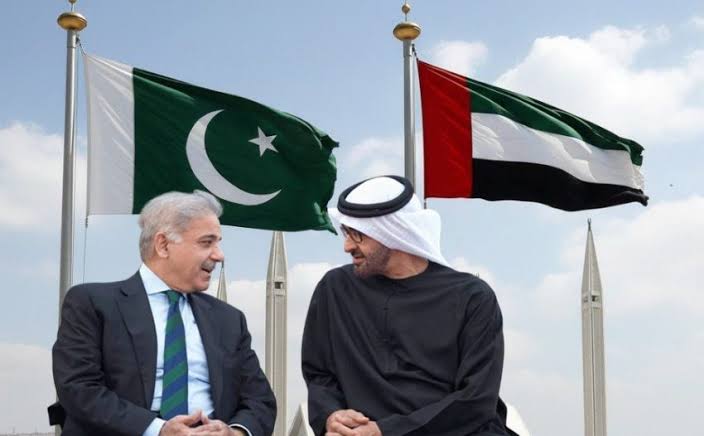
What happened: In early 2026, the United Arab Emirates declined to roll over a $3 billion loan to Pakistan — the first such refusal in seven years. The repayment equalled roughly 18% of Pakistan’s foreign currency reserves, arriving as Islamabad also faced a $1.3 billion bond payment and was waiting on the next IMF tranche.
Why it matters: It’s the clearest sign yet that Gulf sovereign patience with Pakistan’s balance-of-payments cycle is thinning, even as Gulf states simultaneously court China, Saudi Arabia, and each other for capital in a tightening regional liquidity environment.
The Story Nobody’s Connecting
Most coverage of Pakistan’s 2026 external account stress treats the UAE’s loan decision as an isolated liquidity event — a “routine financial transaction,” in the words of Pakistan’s own Ministry of Foreign Affairs. That framing misses the bigger pattern. The same weeks that Abu Dhabi called in its $3 billion, unusual delays began appearing in bank transfers from Saudi Arabia to the UAE itself — friction between the Gulf’s two largest economies, at a moment when both are also managing their own post-war oil price adjustment. (Pakistan & Gulf Economist)
Put those two data points together and a different story emerges: this isn’t just about Pakistan’s creditworthiness. It’s about Gulf capital becoming more selective, more transactional, and less willing to extend informal grace periods across the board — with Pakistan simply the most exposed borrower in the queue.
The Numbers Behind the Pressure
Pakistan’s State Bank held $16.4 billion in reserves as of late March 2026 — enough to cover roughly three months of imports, a threshold economists generally treat as a comfort floor, not a cushion. (Mettis Global News) The UAE’s declined rollover landed at the same time as a looming $1.3 billion international bond payment and dependence on the next $1.2 billion IMF disbursement — a convergence of obligations that left the State Bank with limited room to maneuver beyond import restrictions, rate hikes, or fresh commercial borrowing.
The backdrop matters too. The rupee had been trading in a comparatively narrow 278–282 band before the escalation of the Iran conflict pushed global oil prices higher, squeezing Pakistan’s import bill precisely when its Gulf safety net began to wobble. The KSE-100 benchmark, meanwhile, had already shed around 15% amid the broader pressure. (Mettis Global News)
This is not Pakistan’s first Gulf-dependency cycle. The IMF’s own record shows a now-familiar pattern: staff-level agreements reached in Dubai, UAE pledges of multibillion-dollar investment arriving alongside IMF tranches, and Gulf bridge financing used to stave off sovereign default in periods when reserves cover shrinks toward zero. (Business Standard) What’s different in 2026 is that the bridge itself is showing cracks.
Islamabad’s Official Line vs. the Structural Reality
Pakistan’s government has leaned into a “stability to sustainable growth” narrative around its FY2026–27 federal budget, with the finance minister framing the transition as export-driven rather than reserve-dependent. Business groups have broadly welcomed the budget, and the current account posted a $459 million surplus in May 2026, an improvement attributed to strong remittance inflows. (Business Recorder) The Monetary Policy Committee has held rates steady rather than reaching for emergency tightening, which is itself a signal that the central bank does not yet see the UAE episode as a systemic trigger.
But a current account surplus built substantially on remittances is different from one built on export competitiveness or durable FDI. Pakistan’s trade structure still leans heavily on a narrow set of partners: China supplies over a quarter of its imports and a meaningful share of its exports, the UAE is both a top export destination and its second-largest import source, and Gulf states collectively remain the primary channel for both remittances and emergency liquidity. (Wikipedia — Economy of Pakistan) That concentration is precisely what makes a single Gulf lender’s changed appetite so consequential.
Why the Oil Backdrop Compounds the Risk
None of this is happening in a vacuum. The IMF’s own July 2026 commentary noted that global oil markets “absorbed the war shock” from the Iran conflict, but cautioned that buffers — spare production capacity, strategic reserves, shipping insurance capacity — are running low. (IMF Blog) For an oil-importing, reserve-constrained economy like Pakistan, a second energy price shock without deeper buffers would land directly on the same reserves the UAE loan was meant to protect.
What to Watch Next
- Whether Saudi Arabia steps in as an alternative bridge lender, or whether the Riyadh–Abu Dhabi transfer friction signals a broader Gulf liquidity tightening that limits everyone’s appetite to backstop Pakistan.
- The pace and size of the next IMF tranche, and whether Fund conditionality shifts to demand deeper reserve buffers given the UAE precedent.
- Whether China increases its role as lender of last resort, deepening Pakistan’s dependency in exactly the direction Gulf financing was historically meant to offset.
Discover more from The Economy
Subscribe to get the latest posts sent to your email.

Crypto Daily Outlook: Bitcoin, Altcoins, and the Future of Decentralized Finance

Anthony Scaramucci’s Crypto Prediction: Why MicroStrategy’s Move Is Bitcoin’s “iPhone Moment”

Best Dividend Stocks 2026: European & Asian Blue Chips

World Bank & IMF Reports 2026: Why the “3% Growth” Consensus Is Actually a Debate

Elon Musk’s Boring Company Hits $23B Valuation After UAE-Led $3 Billion Series D

Middle East War Economics 2026: Oil Prices & Energy Markets

PSX Forecast 2026: KSE-100, IMF Reviews & Geopolitics

Asian Markets Outlook 2026: China, Japan & Singapore Stocks

Global Economy 2026: IMF Growth, Inflation & Private Credit

Current Account Deficit (CAD) : Causes and Impact

Balance of Payments (BOP)

The Falkland Islands Dispute: Sovereign Wealth, Offshore Drilling, and Market Impacts

Gross Domestic Product (GDP): Nominal vs. Real

What is Inflation and the Consumer Price Index (CPI)?

State Farm’s $5B Dividend 2026: Who Qualifies & Payout Dates

US-China Relations in Q3 2026: Trade Tariffs and Supply Chain Risks

Gold’s Wild 2026: From a Record $5,600 Peak to a 24% Crash and Back Toward $4,500

Oil Surges as Strait of Hormuz Traffic Collapses Again

The Rocket That Won’t Quit: Inside SpaceX’s Falcon 9 Launch Machine

Bank of England Set to Hold Rates Through Year-End, Reuters Poll Shows

SpaceX Starship Flight 14: First Orbital Attempt & Starlink V3 Launch Explained

The 2026 Crypto Regulatory Shift: What It Means for Institutional Investors

AI Chip Stocks 2026: The Best Semiconductor Investments Beyond Marvell

Retail Earnings Week: What Home Depot, Target & Walmart Reveal

Top 30 Stocks for Investment in PSX for Massive ROI in 2026

AI-Powered Training: The Next Multi-Billion Dollar Ecosystem in Fitness

Russia’s Black Sea Oil Exports Fall for a Fifth Straight Week

Tween Back-to-School Trends 2026: What’s Driving the $85B Season
-

 Markets & Finance8 months ago
Top 15 Stocks for Investment in 2026 in PSX: Your Complete Guide to Pakistan’s Best Investment Opportunities
-

 Analysis7 months ago
Johor’s Investment Boom: The Hidden Costs Behind Malaysia’s Most Ambitious Economic Surge
-

 Analysis7 months ago
Top 10 Stocks for Investment in PSX for Quick Returns in 2026
-

 Analysis7 months ago
Brazil’s Rare Earth Race: US, EU, and China Compete for Critical Minerals as Tensions Rise
-

 Banks8 months ago
Best Investments in Pakistan 2026: Top 10 Low-Price Shares and Long-Term Picks for the PSX
-

 Investment8 months ago
Top 10 Mutual Fund Managers in Pakistan for Investment in 2026: A Comprehensive Guide for Optimal Returns
-

 Global Economy9 months ago
15 Most Lucrative Sectors for Investment in Pakistan: A 2025 Data-Driven Analysis
-

 Global Economy9 months ago
Pakistan’s Export Goldmine: 10 Game-Changing Markets Where Pakistani Businesses Are Winning Big in 2025