
Business
Fintech Stocks 2026: PayPal’s Collapse & the Next Takeover Targets


PayPal’s failed buyout is just one chapter in a fintech consolidation wave. See which payments and BNPL stocks are positioned as the next takeover targets — and how to build a diversified fintech portfolio.
Key Takeaways
- PayPal’s collapsed buyout is a symptom, not the whole story — fintech consolidation pressure has been building across the payments sector throughout 2026.
- Stripe and Advent’s $50B+ bid died after months of negotiation, sending PYPL down roughly 15% and resetting the sector’s takeover narrative.
- Other names carry real M&A optionality, including Remitly (RELY), whose leadership change and institutional exits mirror pre-sale patterns, and Affirm (AFRM), whose BNPL dominance draws interest from banks and card networks.
- Robinhood (HOOD) has emerged as a potential consolidator rather than a target, using its scale to acquire smaller fintech platforms.
- Portfolio strategy matters more than stock-picking single deals — event-driven fintech investing carries binary risk that’s best managed through diversification.
The Fintech Consolidation Wave: Bigger Than One Deal
The abrupt collapse of Stripe and Advent’s takeover bid for PayPal dominated headlines, but zooming out reveals a sector-wide pattern that’s been building for most of 2026. Legacy payments companies — squeezed between Big Tech’s expanding wallet ecosystems and newer stablecoin-based settlement rails — are increasingly viewed as consolidation candidates rather than standalone growth stories.
PayPal itself is a case study in how this pressure builds. After a “transition year” strategy under former CEO Alex Chriss failed to reignite branded checkout growth, PayPal’s stock had fallen roughly in half from its highs, inviting takeover interest from multiple parties before Stripe and Advent emerged as the lead bidder at $60.50 per share. When that deal collapsed, PayPal shares fell back toward levels close to the withdrawn offer — a reminder that M&A premiums can evaporate as quickly as they appear.
Why This Matters for Investors Beyond PYPL
The PayPal saga illustrates a broader thesis: scale and vertical specialization now matter more than growth-at-all-costs in fintech. Investors navigating this environment need a framework for identifying which companies are positioned as targets, which are positioned as acquirers, and which face the highest execution risk regardless of deal speculation.
Which Fintech Stocks Could Be Next?
1. Remitly (RELY) — The Classic “Digestible” Target
Remitly trades at a market cap in the single-digit billions, making it a size that larger payments platforms can realistically absorb. Several signals point toward heightened strategic-review speculation:
- Leadership transition: Co-founder and CEO Matt Oppenheimer stepped down in early 2026, replaced by an outside hire — a move analysts often read as a precursor to a sale process.
- Institutional share sales: A major shareholder disposed of a significant block of shares, dropping below the 10% ownership threshold.
- Fundamentals remain solid: Revenue growth in the low-to-mid 20% range, expanding EBITDA margins, and rising send volumes.
- Obvious strategic fits: Western Union’s parent, MoneyGram, PayPal, Block, Visa Direct, and Wise all have credible strategic rationale for acquiring a pure-play cross-border remittance platform.
2. Affirm (AFRM) — The BNPL Prize With a Complicated Cap Table
Affirm’s dominant position in buy-now-pay-later, combined with strong revenue growth, makes it an attractive target for banks and card networks looking to bolt on point-of-sale lending capability. However, deal logic is complicated by:
- A founder-CEO (Max Levchin) who may be reluctant to sell
- A premium valuation multiple, which raises the bar for any acquirer’s return math
- Recent momentum from record profitability, which strengthens Affirm’s negotiating position if approached
3. Robinhood (HOOD) — Consolidator, Not Target
Unlike Remitly or Affirm, Robinhood’s larger market capitalization positions it as a potential acquirer in the current environment, using its balance sheet to add complementary fintech capabilities rather than waiting to be acquired itself.
Building a Diversified Fintech Portfolio Around M&A Uncertainty
Chasing individual takeover rumors is a high-risk strategy — as PayPal shareholders just learned, a deal that seems all but certain can collapse overnight, erasing weeks of premium in a single session. A more durable approach for retail and institutional investors alike involves:
- Diversifying across the value chain: payments processors, BNPL platforms, remittance specialists, and card-network-adjacent players each carry different M&A dynamics and regulatory exposure.
- Weighting fundamentals over speculation: prioritize companies with expanding margins, strong TPV growth, and defensible market share — deal premium should be viewed as optionality, not a base case.
- Tracking regulatory posture: large fintech-on-fintech combinations (like the proposed PayPal deal) draw antitrust scrutiny, which can delay or kill transactions even when commercial logic is sound.
- Using ETF exposure for sector-wide participation: fintech- and payments-focused ETFs offer exposure to the consolidation theme without single-stock binary risk.
- Monitoring leadership changes and institutional ownership shifts — as with Remitly, executive turnover paired with large shareholder exits is a recurring precursor pattern worth watching across the sector.
Actionable Takeaways
- Don’t anchor a fintech thesis on deal completion. Build positions around companies you’d be comfortable holding with or without a takeover premium.
- Watch for antitrust commentary on any large fintech combination — regulatory risk is a persistent overhang across this consolidation cycle.
- Consider a barbell approach: pair established, cash-generative names (PayPal, Visa, Mastercard) with smaller, potential-target names (Remitly) for balanced portfolio diversification.
- Reassess position sizing after binary events, as the PayPal deal collapse demonstrates how quickly sentiment — and share price — can reverse.
This article is for informational and educational purposes only and does not constitute financial or investment advice. M&A speculation is inherently uncertain; consult a licensed financial advisor before making investment decisions.
Frequently Asked Questions
What fintech companies could be acquisition targets after the PayPal deal fell through? Analysts point to Remitly, given its recent CEO transition and institutional share sales, and Affirm, given its dominant buy-now-pay-later position, as companies carrying elevated takeover speculation, though no confirmed bids have been reported for either as of this writing.
Is fintech consolidation a long-term trend or a one-off event? Industry commentary throughout 2026 points to sustained consolidation pressure as legacy payments firms face competition from both Big Tech wallets and stablecoin-based settlement infrastructure, suggesting the PayPal situation is part of a broader, ongoing sector trend rather than an isolated event.
How should I invest in fintech stocks given the M&A uncertainty? Financial professionals generally recommend prioritizing companies with strong standalone fundamentals and diversifying across multiple fintech sub-sectors or via sector ETFs, rather than concentrating capital in a single stock based primarily on takeover speculation.
Discover more from The Economy
Subscribe to get the latest posts sent to your email.



The boutique fitness studio segment is valued at $51.6 billion and growing at approximately 7.6% annually, according to 2026 Fitness Industry Insights — a segment growing faster than the broader $270 billion global fitness market it sits within, and doing so specifically by selling the personalized, community-focused, lower-intensity experience that large commercial gyms structurally cannot replicate. For enterprise investors and premium wellness operators, boutique low-impact training has evolved from a niche urban trend into a defined, monetizable segment with a specific and expanding customer base.
The Demographic Engine Driving Boutique Growth
Two distinct demographic cohorts are converging to drive boutique fitness demand, and understanding both is essential to monetization strategy. Millennials and Gen Z remain the primary volume drivers — 79% of millennials prioritize health and wellness spending, according to 2026 Fitness Industry Insights. But the more commercially significant signal for luxury wellness specifically is the 45+ age group, identified as one of the fastest-growing gym-membership segments and representing a significant, still largely untapped opportunity, per the same source.
This 45+ cohort is precisely the demographic for whom low-impact training — a positioning built around joint-friendly, recovery-oriented, sustainable-intensity programming rather than high-intensity commercial-gym models — carries genuine product-market fit, not just marketing framing.
Gyms and Health Clubs Remain the Volume Leader, But Boutique Commands the Growth Premium
Gyms and health clubs remain the largest single fitness-market segment, accounting for 40% of the global fitness market and an estimated $110.4 billion in 2026, according to 2026 Fitness Industry Insights. But scale and growth rate are different questions — the boutique segment’s 7.6% annual growth reflects consumers actively selecting personalized, community-focused experiences over undifferentiated commercial-gym access, even at a premium price point.
The survival strategy for large commercial operators is instructive by contrast: hybrid models combining in-person membership with digital access, allowing members to train both at the facility and at home, according to 2026 Fitness Industry Insights — an implicit acknowledgment that pure commercial-gym positioning alone is losing ground to more differentiated models.
The AI-Personalization Layer as a Boutique Monetization Tool
Boutique and luxury wellness operators are increasingly deploying the same AI-personalization infrastructure reshaping mass-market fitness — but applied to premium retention and upsell rather than volume acquisition. Gym operators using AI-powered churn-prediction tools have reported check-ins rising 8% year-over-year and new member joins jumping 27%, with Gen Z driving much of that growth, according to Glofox. For boutique operators specifically, AI churn-prediction functions as a high-leverage retention tool given that boutique studios’ unit economics depend far more heavily on member lifetime value than high-volume commercial gyms.
Monetization Model Comparison: Commercial Gym vs. Boutique Low-Impact Studio
| Dimension | Commercial Gym | Boutique Low-Impact Studio |
|---|---|---|
| 2026 market size | $110.4B (40% of global market) | $51.6B |
| Growth rate | Slower, hybrid-model-dependent | 7.6% annually |
| Primary monetization | Volume membership, low per-member ARPU | Premium per-session/membership, high per-member ARPU |
| Key demographic | Broad, price-sensitive | Millennials (79% prioritize wellness) + fast-growing 45+ cohort |
| Retention lever | Facility access breadth, hybrid digital add-ons | Community, personalization, AI-driven churn prediction |
| Differentiation strategy | Scale, convenience, price | Positioning, low-impact/recovery focus, curated experience |
Sources: 2026 Fitness Industry Insights (Fabglassandmirror), Glofox — see citations above.
The Broader Wellness-Tech Infrastructure Boutique Operators Are Riding
Boutique low-impact studios are not monetizing in isolation — they sit within a rapidly scaling AI-and-wellness technology ecosystem. The AI-in-fitness-and-wellness market specifically is valued at $10.68 billion in 2025, projected to reach $57.8 billion by 2035 at a 19.3% CAGR, according to InsightAce Analytic. The virtual fitness market — the hybrid digital layer boutique studios increasingly bundle with in-person sessions — is projected to grow from $43.78 billion in 2026 to $311.91 billion by 2034, a 27.82% CAGR, according to Fortune Business Insights.
Consumer adoption data confirms this infrastructure has genuine pull-through demand: 49% of consumers use AI-powered fitness and wellness apps daily, and 61% of active fitness consumers use AI fitness-tracking apps, per Glofox — meaning boutique operators layering AI-driven personalization into premium low-impact programming are meeting genuine, already-established consumer technology expectations rather than introducing novel friction.
A Monetization Framework for Premium Wellness Operators
- Price for personalization, not access. Boutique unit economics depend on premium per-session or membership pricing justified by curated, low-impact programming — commodity gym-access pricing models undermine the segment’s core value proposition.
- Build explicit 45+ programming and marketing tracks, distinct from the millennial/Gen Z acquisition funnel — this is the fastest-growing, least-saturated membership segment and responds to distinctly different positioning (recovery, longevity, joint health) than younger-cohort messaging.
- Deploy AI churn-prediction as a retention-economics tool, not just an operational nicety — given boutique studios’ high per-member lifetime-value dependency, the documented 8% check-in and 27% new-member-join improvements from AI tooling translate disproportionately into premium-segment revenue protection.
- Bundle hybrid digital access without diluting in-person premium positioning. The virtual fitness market’s 27.82% CAGR signals genuine consumer demand for digital-physical hybrid models — but boutique operators should structure this as a premium-tier extension, not a discount substitute, to preserve the segment’s pricing power.
- Treat community and curation as the defensible moat. Unlike commercial gyms competing on facility breadth and price, boutique studios’ structural advantage — community-focused, personalized experience — is precisely what large operators’ hybrid pivot cannot fully replicate, and should anchor both product design and premium pricing justification.
The Bottom Line
Luxury wellness and boutique low-impact training have moved beyond lifestyle-trend status into a quantifiable $51.6 billion segment growing faster than the broader fitness market, powered by a genuine demographic tailwind — the underserved, fast-growing 45+ cohort — and increasingly monetized through AI-driven personalization and retention tooling rather than facility scale. For premium wellness investors and operators, the highest-conviction opportunity is explicit 45+-focused programming layered with AI-driven retention economics, positioned and priced as a differentiated experience rather than a discount alternative to commercial gym access.
Discover more from The Economy
Subscribe to get the latest posts sent to your email.
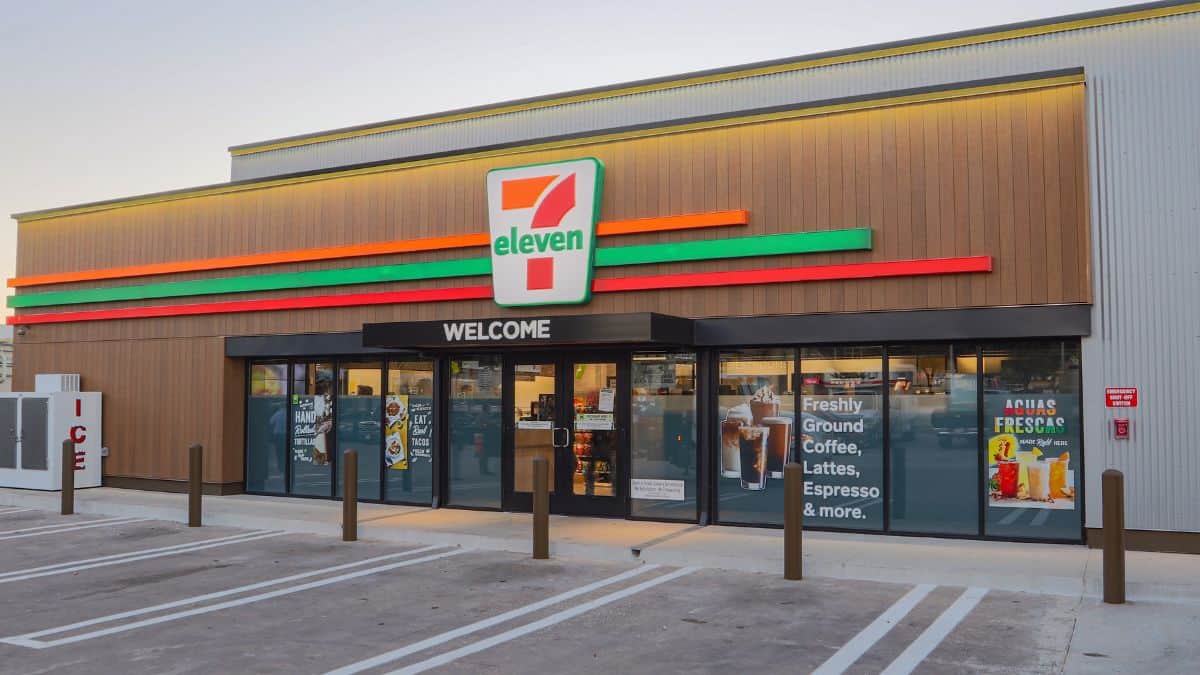
Major U.S. retailers are closing over 1,100 stores in 2026, with 7-Eleven, GameStop, and Grocery Outlet leading the restructuring charge—here’s what it means for commercial real estate investors.
The U.S. retail landscape is undergoing a dramatic contraction in 2026 as major chains shutter underperforming locations to stabilize balance sheets and improve cash flow. 7-Eleven plans to close 645 convenience stores across North America during fiscal year 2026, while GameStop has confirmed 470 store closures, and Grocery Outlet is shutting approximately 36 locations as part of a broader “Optimization Plan.”
Combined with closures from Advance Auto Parts, Foot Locker, Dollar Tree, and Denny’s, the total number of confirmed U.S. retail shutdowns in 2026 now exceeds 2,000 locations, signaling a profound shift in brick-and-mortar strategy.
Why Are These Retailers Closing Stores?
Each chain faces distinct operational pressures, but the underlying theme is identical: cutting losses to protect enterprise value.
- 7-Eleven is pruning underperforming company-owned sites ahead of a delayed 2027 IPO, converting some locations to wholesale fuel operations to reduce overhead while retaining fuel revenue.
- GameStop continues its years-long digital pivot, shedding physical retail footprint as it reallocates capital toward e-commerce and collectibles logistics.
- Grocery Outlet CEO Jason Potter acknowledged the chain “expanded too quickly,” particularly in Eastern states where 24 of the 36 closures are concentrated. The move follows a nearly $235 million operating loss in Q4.
The Business Logic Behind Retail Consolidation
Mass store closures are not merely a reaction to weak consumer demand—they represent strategic portfolio optimization. By exiting low-margin markets and reinvesting in high-performing locations or digital infrastructure, retailers aim to:
- Improve same-store sales metrics by eliminating drag from underperforming units
- Reduce lease liabilities and renegotiate favorable terms with commercial landlords
- Unlock working capital for technology upgrades, supply chain automation, and AI-driven inventory management
- Streamline operational complexity across smaller, more profitable geographic footprints
Impact on Commercial Real Estate and Retail Investing
The 2026 closure wave carries significant implications for commercial real estate investment trusts (REITs), private equity firms, and institutional investors holding retail property debt.
- Vacancy rates in secondary markets are expected to rise, particularly for Class B and C strip mall anchors, putting downward pressure on net operating income (NOI).
- Tenant mix diversification is becoming critical. Landlords dependent on single-tenant convenience or discount grocery concepts face heightened rollover risk.
- Opportunistic acquisitions may emerge. Distressed retail assets in prime locations could trade at cap rate premiums, attracting value-add investors willing to execute repositioning strategies—converting vacant big-box spaces into last-mile distribution hubs, medical offices, or mixed-use developments.
- Credit risk in commercial mortgage-backed securities (CMBS) pools with high retail exposure warrants renewed scrutiny as cash flow coverage ratios tighten.
For retail sector investors, the contraction validates a barbell strategy: overweight exposure to dominant omnichannel players with fortress balance sheets, while selectively targeting experiential retail and essential service tenants (healthcare, grocery, logistics) that are insulated from e-commerce displacement.
People Also Ask: 2026 Retail Store Closures
How many 7-Eleven stores are closing in 2026? 7-Eleven plans to close approximately 645 stores in North America during fiscal year 2026, which runs from March 1, 2026, to February 28, 2027.
Is GameStop going out of business? No. While GameStop is closing 470 stores in 2026, the company is restructuring to focus on digital sales and profitability, not liquidating entirely.
Why is Grocery Outlet closing stores? Grocery Outlet is closing approximately 36 underperforming locations—about 30% of its Eastern U.S. footprint—after acknowledging overly rapid expansion in markets that failed to achieve sustained profitability.
Discover more from The Economy
Subscribe to get the latest posts sent to your email.

State Farm is distributing a historic $5 billion auto insurance dividend to 2025 policyholders, averaging $100 per vehicle—here’s who qualifies and how to maximize your savings.
State Farm Mutual Automobile Insurance Company has begun issuing the largest dividend payout in its 100-plus-year history, mailing $5 billion in cash-back checks to qualifying auto insurance customers across more than 49 million vehicles.
The one-time distribution, announced in February 2026 and now rolling out in waves, returns an average of $100 per vehicle to policyholders who maintained active coverage throughout 2025.
Payments vary by state—ranging from 4% to 10% of the premium paid in 2025—and are being delivered via paper check or direct deposit based on customer preference.
Qualifying policyholders will receive notification by email or postal mail, and funds can also be tracked through the State Farm mobile app or online account portal.
Who Qualifies for the State Farm Dividend?
Eligibility is straightforward but strictly defined:
- Auto policies must have been active between January 1, 2025, and December 31, 2025
- Only personal auto insurance policies underwritten by State Farm Mutual are included
- The dividend is retrospective and does not affect future premium calculations or auto rates
- Commercial auto policies, renters, and homeowners policies are excluded from this specific dividend
The distribution timeline spans several months due to the sheer volume of vehicles covered. Customers with questions can contact the dedicated Dividend Customer Contact Center at 1-888-808-9532 or visit sfdividend.com.
Why State Farm Is Returning $5 Billion Now
State Farm’s unprecedented dividend stems from stronger-than-expected underwriting performance in 2025, driven by lower auto repair costs and a reduced frequency of collisions industry-wide. As a mutual insurance company—owned by policyholders rather than shareholders—State Farm is uniquely positioned to return surplus capital directly to customers.
The dividend comes on top of recent auto insurance rate reductions in 40 states, which are already saving customers an estimated $4.6 billion annually.
How to Maximize Your Auto Insurance Savings in 2026
Receiving a dividend check is an ideal moment to audit your entire auto insurance portfolio. Here’s how to stretch those savings further:
- Compare car insurance rates from multiple carriers. Even if State Farm reduced your rates, market competition may offer lower premiums for the same coverage limits.
- Bundle your policies. Combining auto, home, and life insurance under one carrier often unlocks multi-policy discounts exceeding 20%.
- Ask about safe driver discounts. Telematics programs that monitor braking, acceleration, and mileage can reduce premiums by up to 30% for low-risk drivers.
- Raise your deductible cautiously. Increasing your collision deductible from $500 to $1,000 can lower monthly premiums, but ensure you have sufficient emergency savings to cover the gap.
- Review coverage annually. Dropping unnecessary add-ons like rental reimbursement or roadside assistance—if already covered elsewhere—can trim costs without exposing you to liability risks.
People Also Ask: State Farm Dividend 2026
How much is the State Farm dividend per vehicle? The average payout is approximately $100 per vehicle, though actual amounts range from 4% to 10% of 2025 premiums paid, varying by state.
When will I receive my State Farm dividend check? Distribution began in summer 2026 and will continue for several months due to the volume of 49 million vehicles. Check your State Farm app or mail for notification.
Does the State Farm dividend affect my future premiums? No. The dividend is retrospective and will not impact future auto insurance rates, which are based on expected future costs and individual risk profiles.
Discover more from The Economy
Subscribe to get the latest posts sent to your email.

Jackson Hole 2026: Warsh’s Speech and What It Means for Your Portfolio

AI Chip Stocks 2026: The Best Semiconductor Investments Beyond Marvell

Fintech Stocks 2026: PayPal’s Collapse & the Next Takeover Targets

MRVL Earnings 2026: Why Marvell Sank Despite Beating Estimates

PYPL Stock Crash 2026: Why the Stripe Deal Collapsed

Luxury Wellness: The Monetization and Expansion of Boutique Low-Impact Training

Leveraging Viral AI & Climate Hashtags for Brand Growth on X

The Medicaid Churn: Front-End Revenue Cycle Risks for Enterprise Hospitals

The 2026 Crypto Regulatory Shift: What It Means for Institutional Investors

AI-Powered Training: The Next Multi-Billion Dollar Ecosystem in Fitness

BRICS Summit 2026: Economic Implications of the India-China Diplomatic Thaw

Emerging Market Debt: The Ripple Effect of China’s Sovereign Refinancing Role

Dropping Oil & Surging Gold: Navigating Safe-Haven Investments in Q3

2026 AI Stock Frenzy: How to Position Your Portfolio

State Farm’s $5B Dividend 2026: Who Qualifies & Payout Dates

Top 15 Financial Stocks for Investment in PSX

Pakistan Passed Its Third IMF Review

Pakistan IMF Program 2026: Inside the Push Toward an Interest-Free Economy

SpaceX Stock Lockup Expiration Explained: Why $123B in Shares Could Hit the Market

Gold Price 2026: Why Bullion Has Fallen 25% From Its January Record High

Russia Oil Revenue 2026: How Sanctions on Rosneft and Lukoil Are Draining the War Chest

Russia Oil Revenue 2026: The Iran War Windfall and What a Hormuz Deal Means for Moscow

Russia’s Budget Deficit Blew Past Its Full-Year Target in Three Months

Gold’s Wild 2026: From a Record $5,600 Peak to a 24% Crash and Back Toward $4,500

Oil Surges as Strait of Hormuz Traffic Collapses Again

Canada US Trade War 2026: Inside Carney’s Push to Cut Ties With Trump’s Tariffs

The Rocket That Won’t Quit: Inside SpaceX’s Falcon 9 Launch Machine

US-China Relations in Q3 2026: Trade Tariffs and Supply Chain Risks
-

 Markets & Finance8 months ago
Top 15 Stocks for Investment in 2026 in PSX: Your Complete Guide to Pakistan’s Best Investment Opportunities
-

 Analysis6 months ago
Johor’s Investment Boom: The Hidden Costs Behind Malaysia’s Most Ambitious Economic Surge
-

 Analysis6 months ago
Top 10 Stocks for Investment in PSX for Quick Returns in 2026
-

 Analysis7 months ago
Brazil’s Rare Earth Race: US, EU, and China Compete for Critical Minerals as Tensions Rise
-

 Banks7 months ago
Best Investments in Pakistan 2026: Top 10 Low-Price Shares and Long-Term Picks for the PSX
-

 Investment8 months ago
Top 10 Mutual Fund Managers in Pakistan for Investment in 2026: A Comprehensive Guide for Optimal Returns
-

 Global Economy8 months ago
15 Most Lucrative Sectors for Investment in Pakistan: A 2025 Data-Driven Analysis
-

 Global Economy8 months ago
Pakistan’s Export Goldmine: 10 Game-Changing Markets Where Pakistani Businesses Are Winning Big in 2025