
Analysis
Did the US Economy Show Cracks in Q4 2025? A Deep Dive into GDP, Jobs, and Future Risks

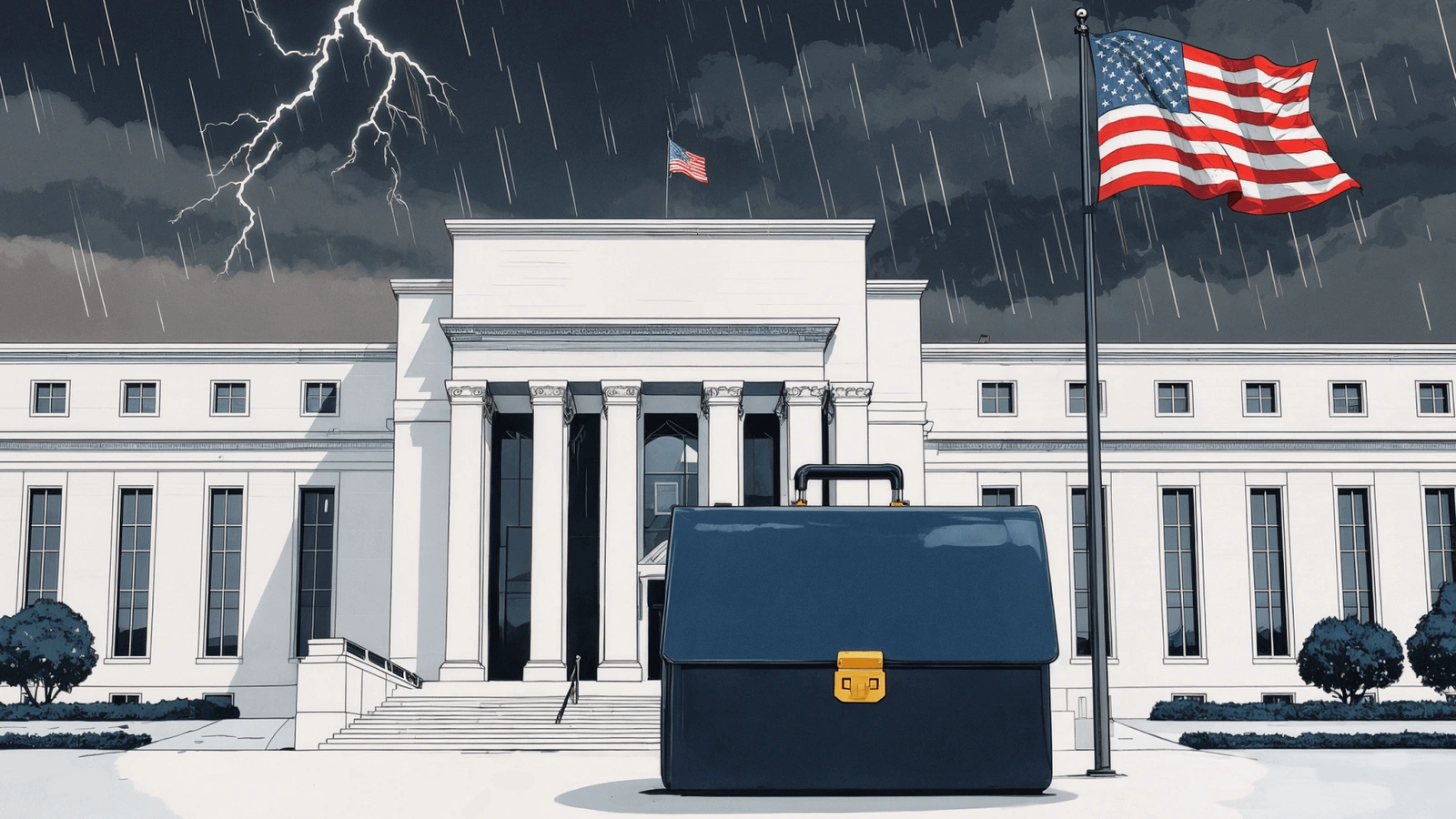
The American economy closed out 2025 with a paradox that has left economists scratching their heads: robust GDP projections colliding with a labor market that delivered the weakest job growth since the Great Recession. While the Atlanta Federal Reserve’s GDPNow model initially projected fourth-quarter growth surging to 5.4%, a closer examination reveals hairline fractures beneath the surface—cracks that could widen into fissures in 2026.
This isn’t a story of imminent collapse, but rather of an economy navigating a treacherous path between resilience and vulnerability. The question investors, policymakers, and everyday Americans must confront is whether the US economy Q4 2025 cracks represent temporary growing pains or the early warning signs of something more systemic.
The GDP Growth Puzzle: Resilience or Mirage?
The headline numbers for GDP fourth quarter slowdown tell a tale of two economies. The Bureau of Economic Analysis confirmed that Q3 2025 GDP expanded at a robust 4.4% annualized rate—the strongest performance in two years. Looking ahead to Q4, the Atlanta Fed’s real-time tracking suggested growth could accelerate further to 5.4%, a figure that would represent the economy firing on all cylinders.
But appearances can deceive. Multiple economic analysts have raised red flags about this seemingly supercharged growth. A Haver Analytics report noted a troubling disconnect: “GDP growth is occurring at, at best, half the rate” suggested by GDPNow when compared against actual manufacturing output, housing starts, and employment data. Manufacturing output through November showed minimal growth compared to Q3, while housing starts plummeted and job creation crawled at a glacial pace.
EY’s economic analysis projects more conservative Q4 GDP growth of 3.2%, while forecasting full-year 2025 growth at 2.3%—respectable but hardly the blockbuster suggested by early nowcasts. The Survey of Professional Forecasters projects even more modest annual GDP growth of just 1.9% for 2025 and 1.8% for 2026, underscoring the wide variance in expert opinions about the economy’s true velocity.
What explains this gulf between competing GDP estimates? Part of the answer lies in consumer spending resilience and strong exports that boosted Q3 performance. AI-related investments have created pockets of exceptional strength, particularly in information processing equipment and software spending. The US consumer spending Q4 trends showed personal consumption expenditures growing at approximately 3.0% according to revised Atlanta Fed data, driven largely by upper-income households who have benefited from surging stock portfolios and accumulated wealth.
Yet this strength masks concerning imbalances. As Deloitte’s economic forecast highlights, consumer spending growth is projected to decelerate sharply to just 1.6% in 2026, down from 2.6% in 2025. The signs of US economic weakness 2025 become clearer when examining who’s actually spending: the top 20% of earners now account for approximately 57% of all consumer outlays, according to Dallas Federal Reserve data.
Labor Market Cracks Emerge: A “Hiring Recession”
If GDP growth represents one side of the economic ledger, employment tells a starkly different story—and it’s here that the most significant US job market cooling Q4 becomes apparent.
December’s employment report delivered a gut punch: just 50,000 jobs added, according to the Bureau of Labor Statistics. This capped off what NBC News characterized as “the worst year for hiring since 2020,” with total 2025 job gains of only 584,000—a fraction of the 2 million-plus additions in 2024 and the lowest figure outside of recession years since 2009.
The unemployment rate, meanwhile, painted a deceptively rosy picture. It ticked down to 4.4% in December from a revised 4.5% in November, which had marked the highest level since October 2021. However, this decline came with a critical caveat: labor force participation edged lower to 62.4%, meaning some of the improvement reflected people exiting the workforce rather than robust hiring.
Indeed Hiring Lab’s analysis cut to the chase: “It’s fair to say that 2025 was a hiring recession in the United States.” The firm noted that average monthly job gains slumped from 82,833 in the first half of 2025 to just 14,500 in the second half—a precipitous decline that underscores growing employer caution.
Sectoral patterns reveal the economy’s uneven footing. Healthcare and social assistance added 713,000 jobs throughout 2025, while business and professional services and manufacturing shed 97,000 and 68,000 positions respectively. The government sector, buffeted by Department of Government Efficiency cuts, contributed minimal job growth.
Perhaps most concerning: the number of long-term unemployed—those jobless for 27 weeks or more—surged by nearly 400,000 in 2025, now representing 26% of all unemployed workers. Average unemployment duration stretched to 24.4 weeks in December, the longest since August 2025. These statistics suggest that when Americans lose jobs, they’re finding it increasingly difficult to land new ones—a hallmark of a deteriorating labor market.
US Inflation Moderation 2025: Progress With Persistent Pressures
On the inflation front, 2025 delivered incremental progress but stubborn resistance to the Federal Reserve’s 2% target. The Consumer Price Index held steady at 2.7% year-over-year in December, matching November’s rate and marking only modest improvement from January 2025’s 3.0% reading. Core CPI, which excludes volatile food and energy prices, registered 2.6%—the lowest since 2021 but still above the Fed’s comfort zone.
Monthly inflation dynamics told a more nuanced story. Headline CPI rose 0.3% in December after several months at 0.2%, driven by rebounding shelter costs (up 0.4%), accelerating food prices (up 0.7% monthly, 3.1% annually), and higher energy prices. The KPMG economic analysis highlighted that hotel rates surged 3.5% in December alone, reflecting labor shortages in leisure and hospitality as immigration flows slowed.
However, methodological challenges cloud the inflation picture. The government shutdown that stretched over 40 days disrupted October data collection entirely and compressed November’s survey into the back half of the month—precisely when Black Friday promotions suppress measured prices. This likely introduced downward bias into inflation readings that will take months to fully unwind.
Looking ahead to 2026, inflation forecasts span a wide range. The Federal Reserve projects core PCE inflation of 2.4% by year-end 2026, down from current levels of approximately 2.8%. Yet these projections assume tariff impacts moderate and immigration policy stabilizes—both uncertain propositions. Goldman Sachs estimates current tariffs will add roughly 1 percentage point to inflation between late 2025 and mid-2026, offsetting some of the progress achieved through monetary tightening.
The “super core” services measure—which excludes shelter and energy—accelerated slightly to 2.8% in December from 2.7% in November, suggesting underlying price pressures remain embedded in the economy. Medical care costs jumped 0.4% monthly, and health insurance premiums are poised to surge at the fastest pace in 15 years at the start of 2026, a development that will strain household budgets.
Navigating US Recession Risks 2026: Scenario Analysis
So what does this complex tapestry of data mean for recession risks in 2026? The consensus view among forecasters has coalesced around “growth, not recession”—but with important caveats and narrowing margin for error.
RSM’s economic outlook projects 2.2% GDP growth for 2026 with recession probability falling to 30% from a previous 40% estimate. The Congressional Budget Office similarly forecasts modest expansion, projecting unemployment to peak at 4.6% before declining to 4.2% by 2032. Fidelity’s analysis maintains that “the US economy is still in an expansion; we don’t see signs of an imminent recession.”
Yet scratch beneath the surface, and vulnerabilities abound. Moody’s Analytics pegs 2026 recession risk at approximately 42%—nearly three times the normal peacetime baseline of 15%. Chief economist Mark Zandi warns that “nothing else can go wrong. We’re pretty much on the edge.”
Four pillars support the current expansion, any of which could crack under pressure:
1. Consumer Spending Concentration Risk: With the top 10% of households generating nearly half of all consumer spending, the economy has become perilously dependent on affluent consumers maintaining their largesse. Stock market volatility or an AI investment bubble deflating could rapidly curtail spending by this critical cohort.
2. Labor Market Fragility: While unemployment remains historically low, the hiring freeze and rising long-term unemployment suggest the jobs market is one shock away from deteriorating rapidly. Morgan Stanley’s analysis notes “the labor market is no longer working in favor of jobseekers.”
3. Policy Uncertainty: Tariff levels, immigration restrictions, and potential government shutdowns create an environment where businesses hesitate to invest and hire. The Yale Budget Lab estimates tariffs reduced 2025 GDP growth by 0.5 percentage points and increased unemployment by 0.3 percentage points—drags that will persist into 2026.
4. AI Investment Sustainability: Much of the economic optimism hinges on continued robust AI-related capital spending. Deloitte’s downside scenario contemplates AI investment becoming “overdone,” leading to a sharp pullback in business spending in 2027 as companies reassess demand.
The Road Ahead: Threading the Needle
The US economy enters 2026 performing a high-wire act. Strong Q3 GDP growth, moderating inflation, and resilient consumer spending by affluent households provide genuine tailwinds. The Federal Reserve’s three quarter-point rate cuts in late 2025 have lowered borrowing costs modestly, and the central bank has signaled it stands ready to ease further if the labor market deteriorates materially.
At the same time, the narrowing job market, consumption inequality, elevated inflation relative to target, and policy uncertainties create meaningful headwinds. The economy’s margin for error has shrunk considerably—there’s simply less slack to absorb shocks.
For investors and businesses, this environment demands vigilance without panic. The GDP data suggests underlying economic activity remains positive, even if not quite as robust as early Q4 estimates implied. Inflation has moderated from 2022’s peaks, though the final mile to 2% will prove challenging. And while job growth has slowed dramatically, mass layoffs haven’t materialized—employers appear reluctant to fire even as they’re hesitant to hire.
The most likely path for 2026 is neither boom nor bust, but rather what economists term “stagflation lite”: modest growth in the 1.8-2.3% range, inflation stuck modestly above target at 2.4-2.7%, and an unemployment rate drifting higher to perhaps 4.5-4.6%. Not a recession, but not exactly robust either—a continuation of the two-speed economy where AI-driven sectors and affluent consumers power ahead while middle and lower-income households struggle with stagnant wage growth and elevated prices.
The cracks visible in Q4 2025 data are real, not imaginary. But cracks need not become chasms. Whether they do depends on policy choices around trade, immigration, and fiscal stimulus; on how quickly productivity gains from AI materialize; and on whether the Federal Reserve can successfully navigate between supporting employment and controlling inflation.
What’s clear is that the easy optimism of recent years—the sense that the economy could shrug off any challenge—has given way to a more precarious balance. The data demands we watch closely, not panic prematurely. Because in an economy running this close to the edge, the difference between continued expansion and recession may come down to one or two variables tipping the wrong direction at the wrong time.
Discover more from The Economy
Subscribe to get the latest posts sent to your email.



Navigating Mortgage and Loan Refinancing in a High-Yield Environment
Global public debt crossing critical thresholds has kept central bank policies volatile, resulting in fluctuating US Treasury yields throughout 2026. For homeowners and commercial property holders burdened by previous high-interest borrowing cycles, finding optimal refinance windows has become a high-stakes financial puzzle. Stalled disinflation and stubborn employment numbers mean rate cuts are incremental, requiring borrowers to act with precision.
Timing your mortgage or commercial loan refinance in this environment requires a deep understanding of yield curve movements and lender risk appetites.
Decoding 2026 Refinance Dynamics
The 10-Year Treasury Yield Benchmark
Mortgage rates continue to track closely with the 10-year US Treasury yield. When macroeconomic anxiety spikes debt issuance, yields rise, tightening consumer borrowing capacity. Savvy borrowers monitor weekly Treasury auctions to lock in rates during brief dip windows.
Hybrid ARMs and Alternative Structures
With fixed rates remaining elevated, 7/1 and 10/1 adjustable-rate mortgages (ARMs) have surged in popularity. These products offer lower initial monthly payments, giving borrowers breathing room until central bank easing cycles fully materialize.
| Loan Product | Current Rate Range | Best For | Key Risk Factor |
| 30-Year Fixed Mortgage | 6.2% – 6.8% | Long-term predictability | Higher initial monthly outlay |
| 7/1 Hybrid ARM | 5.5% – 5.9% | Short-term ownership / flipping | Rate reset risk after year 7 |
| Commercial Refinance | 7.0% – 8.2% | Corporate asset restructuring | Strict DSCR lender covenants |
Actionable Steps for Successful Refinancing
To maximize your chances of securing favorable refinance terms in a volatile market, follow a disciplined preparation strategy.
Boost Your Credit Score Immediately: Lenders in 2026 are applying stringent credit tiering; a 20-point increase can drop your APR by a crucial quarter-point.
Shop Regional Credit Unions: Smaller financial institutions often offer portfolio loans with more flexible underwriting than major national banks.
Calculate the Break-Even Point: Ensure your total closing costs are recouped through monthly savings within 24 months of closing.
“Market Strategist View: Refinancing in 2026 is an exercise in opportunistic timing. Borrowers must maintain immaculate financial profiles ready to strike the moment Treasury yields dip.”
Mastering the complexities of today’s debt environment ensures you can successfully lower your debt service costs and protect your long-term financial stability.
Discover more from The Economy
Subscribe to get the latest posts sent to your email.

The days of pulling generic auto insurance quotes based purely on your zip code and age are officially over. In 2026, insurance comparison engines are powered entirely by generative AI and real-time telematics. These platforms digest thousands of live data points—ranging from your driving smoothness via connected vehicle sensors to real-time traffic congestion patterns—to generate hyper-personalized premiums instantly.
For consumers, this evolution represents both a massive opportunity for savings and a hidden trap for penalty pricing. Understanding how AI algorithms evaluate risk is essential for anyone looking to lower their monthly auto insurance premiums.
How AI Comparison Engines Evaluate Your Risk Profile
Behavioral Telematics and Connected Cars
Modern cars stream performance data directly to insurance aggregators. Generative AI models analyze braking sharpness, acceleration curves, cornering G-forces, and phone distraction metrics. Drivers who maintain smooth, defensive habits are rewarded with dynamic rate cuts of up to 40% compared to traditional rating tiers.
Predictive Traffic and Weather Modeling
AI tools now cross-reference your daily commute route with predictive weather and accident probability models. If your standard parking location or driving corridor has a statistically higher incidence of uninsured motorist claims, your quotes will reflect that hyper-local risk assessment.
| Comparison Factor | Traditional Rating Model | 2026 Generative AI Model | Impact on Premium |
| Mileage & Usage | Annual estimated odometer reading | GPS tracking & live trip duration | High (up to 35% savings) |
| Driving Behavior | MVR driving record & accidents | Real-time braking, speed, & G-force | Critical (determines tier) |
| Vehicle Tech | Make, model, and safety rating | ADAS calibration & repair cost data | Moderate |
Strategies to Lower Your AI-Driven Insurance Quote
To outsmart the algorithm and secure the lowest possible premium in 2026, drivers must proactively manage their digital footprint on insurance platforms.
Opt-In for Telematics Trial Periods: Many insurers offer immediate 15% discounts just for installing their driving app; let it track safe habits for 30 days to lock in permanent savings.
Scrub Unverified Public Records: Ensure your motor vehicle report is free of clerical errors that AI risk models misinterpret as reckless behavior.
Compare AI Aggregators: Use platforms that integrate multi-carrier API feeds rather than single-brand comparison sites to find the best risk-adjusted rate.
“Industry Note: AI-driven pricing rewards transparency and precision. Drivers who actively manage their telematics data consistently out-save those relying on legacy quote calculators.”
Embracing AI comparison tools allows savvy policyholders to customize coverage limits precisely to their driving habits, eliminating wasted premium spend while ensuring robust protection.
Discover more from The Economy
Subscribe to get the latest posts sent to your email.

Despite decades of bans and strict handling mandates, asbestos remains a silent killer across legacy manufacturing plants, shipyards, and modern green-energy infrastructure retrofits. In 2026, regulatory changes by the EPA and tightened occupational health standards have triggered a fresh wave of mesothelioma litigation. Manufacturers attempting to fast-track industrial transitions are encountering catastrophic oversight, exposing workers to legacy toxins and opening corporate parent companies to unprecedented liability.
Navigating a mesothelioma claim in 2026 requires understanding how modern industrial supply chains intersect with historical exposure. Trusts established decades ago are being audited under stricter transparency laws, altering payout ratios and accelerating fast-track settlements for terminally ill plaintiffs.
Modern Industrial Exposure Hotspots
Green Retrofitting and Renewable Energy Infrastructure
A primary source of 2026 asbestos exposure occurs during the decommissioning and retrofitting of older industrial facilities for renewable energy production. Workers insulating electrical grids, modernizing HVAC systems, or upgrading manufacturing floors frequently disturb encapsulated asbestos materials that were improperly documented or ignored during facility audits.
Automotive and Aerospace Supply Chains
With advanced manufacturing booming, workers handling specialized friction materials, gaskets, and heat shields face ongoing risks. Supply chain tracing has become more sophisticated, allowing legal teams to pinpoint exact corporate entities responsible for raw material distribution across multinational borders.
| Industry Sector | Primary Exposure Risk | Legal Venue / Trust | Avg. Claim Value Range |
| Green Energy Retrofit | Disturbed insulation, pipe lagging | Federal Tort / Manufacturer Trust | $1.2M – $3.5M |
| Shipbuilding & Marine | Boiler insulation, structural seals | Asbestos Bankruptcy Trusts | $800K – $2.4M |
| Automotive Manufacturing | Brake components, high-heat gaskets | Third-Party Product Liability | $600K – $1.8M |
Securing Maximum Compensation: Steps for Plaintiffs
Time is of the essence in mesothelioma cases. Plaintiffs and their families must act decisively to secure financial recovery before statutes of limitations expire.
Retain Specialized Counsel: Work exclusively with national mesothelioma law firms possessing deep historical databases of asbestos-containing products.
Audit Employment History: Document every job site, supervisor name, and equipment brand encountered throughout your career.
Expedite Medical Filings: Secure a formal pathological diagnosis quickly to qualify for expedited trust fund distribution and priority trial settings.
“Expert Insight: Modern asbestos litigation is no longer just about historical tracking; it is about holding modern corporations accountable for failing to conduct rigorous environmental safety audits before initiating industrial retrofits.”
By combining meticulous work history reconstruction with aggressive multi-trust filings, victims can secure substantial financial relief to cover specialized immunotherapy and family support.
Discover more from The Economy
Subscribe to get the latest posts sent to your email.

Crypto Daily Outlook: Bitcoin, Altcoins, and the Future of Decentralized Finance

Anthony Scaramucci’s Crypto Prediction: Why MicroStrategy’s Move Is Bitcoin’s “iPhone Moment”

Best Dividend Stocks 2026: European & Asian Blue Chips

World Bank & IMF Reports 2026: Why the “3% Growth” Consensus Is Actually a Debate

Elon Musk’s Boring Company Hits $23B Valuation After UAE-Led $3 Billion Series D

Middle East War Economics 2026: Oil Prices & Energy Markets

PSX Forecast 2026: KSE-100, IMF Reviews & Geopolitics

Asian Markets Outlook 2026: China, Japan & Singapore Stocks

Global Economy 2026: IMF Growth, Inflation & Private Credit

Current Account Deficit (CAD) : Causes and Impact

Balance of Payments (BOP)

The Falkland Islands Dispute: Sovereign Wealth, Offshore Drilling, and Market Impacts

Gross Domestic Product (GDP): Nominal vs. Real

What is Inflation and the Consumer Price Index (CPI)?

State Farm’s $5B Dividend 2026: Who Qualifies & Payout Dates

US-China Relations in Q3 2026: Trade Tariffs and Supply Chain Risks

Gold’s Wild 2026: From a Record $5,600 Peak to a 24% Crash and Back Toward $4,500

Oil Surges as Strait of Hormuz Traffic Collapses Again

The Rocket That Won’t Quit: Inside SpaceX’s Falcon 9 Launch Machine

Bank of England Set to Hold Rates Through Year-End, Reuters Poll Shows

SpaceX Starship Flight 14: First Orbital Attempt & Starlink V3 Launch Explained

The 2026 Crypto Regulatory Shift: What It Means for Institutional Investors

AI Chip Stocks 2026: The Best Semiconductor Investments Beyond Marvell

Retail Earnings Week: What Home Depot, Target & Walmart Reveal

Top 30 Stocks for Investment in PSX for Massive ROI in 2026

AI-Powered Training: The Next Multi-Billion Dollar Ecosystem in Fitness

Tween Back-to-School Trends 2026: What’s Driving the $85B Season

Russia’s Black Sea Oil Exports Fall for a Fifth Straight Week
-

 Markets & Finance8 months ago
Top 15 Stocks for Investment in 2026 in PSX: Your Complete Guide to Pakistan’s Best Investment Opportunities
-

 Analysis7 months ago
Johor’s Investment Boom: The Hidden Costs Behind Malaysia’s Most Ambitious Economic Surge
-

 Analysis7 months ago
Top 10 Stocks for Investment in PSX for Quick Returns in 2026
-

 Analysis7 months ago
Brazil’s Rare Earth Race: US, EU, and China Compete for Critical Minerals as Tensions Rise
-

 Banks8 months ago
Best Investments in Pakistan 2026: Top 10 Low-Price Shares and Long-Term Picks for the PSX
-

 Investment8 months ago
Top 10 Mutual Fund Managers in Pakistan for Investment in 2026: A Comprehensive Guide for Optimal Returns
-

 Global Economy9 months ago
15 Most Lucrative Sectors for Investment in Pakistan: A 2025 Data-Driven Analysis
-

 Global Economy9 months ago
Pakistan’s Export Goldmine: 10 Game-Changing Markets Where Pakistani Businesses Are Winning Big in 2025