
Asia
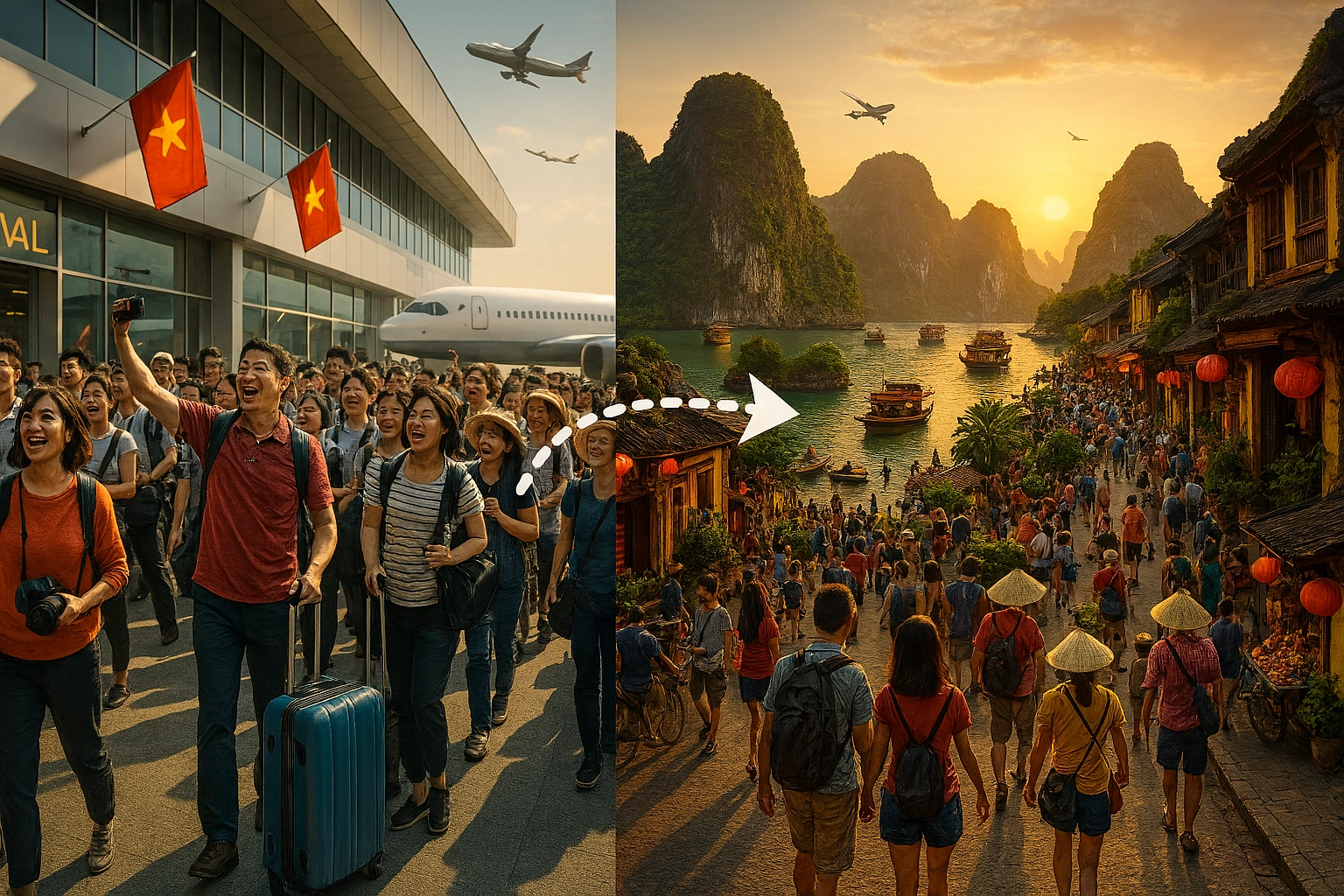
China’s Travellers Pivot to Vietnam: Southeast Asia’s Tourism Realignment

How a Strategic Shift is Reshaping the Multi-Billion-Dollar Regional Travel Industry
A quiet transformation is reshaping Southeast Asia’s tourism landscape. While Thailand has long dominated the region’s visitor statistics, Vietnam emerged in 2024 as the unexpected star, capturing record numbers of Chinese tourists and fundamentally altering competitive dynamics across a market worth tens of billions of dollars annually.
Vietnam welcomed 17.5 million international visitors in 2024, achieving a 39.5% increase compared to 2023, positioning the country at 98% of pre-pandemic levels. More significantly, China delivered approximately 3.74 million arrivals to Vietnam in 2024, representing a remarkable 114.4% increase from 2023. This surge represents far more than statistical achievement—it signals a strategic realignment in how Asian travelers are choosing their destinations.
Why are Chinese tourists choosing Vietnam over Thailand?
Chinese tourists are choosing Vietnam due to five key factors: visa-free entry for 45 days, 30-40% lower costs compared to Thailand, improved flight connectivity with 200+ weekly direct routes, cultural familiarity with shared heritage, and post-pandemic travel diversification strategies encouraged by Beijing’s outbound tourism policies.
The Numbers Behind Vietnam’s Meteoric Rise
Vietnam’s tourism recovery stands as Southeast Asia’s fastest-recovering tourism market, outpacing regional peers like Singapore at 86% and Thailand at 87.5%. The momentum began building in early 2024 when China regained its leading position in the Vietnamese tourism market with nearly 357,200 visitors in May, up over 140% compared to the same month the previous year.
By mid-2024, the trend solidified. International visitor arrivals to Vietnam grew by 58.4% year-on-year to more than 8.8 million in the first six months of 2024, including almost 2 million from China. November 2024 brought additional validation when international arrivals rose by 15.6% year-on-year to 1.98 million, with China leading growth at 27.5%.
These aren’t merely impressive statistics—they represent a fundamental redistribution of tourism dollars. Vietnam’s tourism revenue is projected to generate $32 billion in 2024, placing it firmly in competition with established powerhouses like Thailand and Malaysia.
Top Benefits for Chinese Travelers to Vietnam:
- Visa-free entry for up to 45 days (compared to visa requirements for Thailand)
- Lower travel costs: Hotels 40% cheaper, dining 35% less expensive
- Direct flights from 25+ Chinese cities with 3-hour average flight time
- WeChat Pay and Alipay widely accepted in tourist areas
- Cultural similarity with Chinese language signage in major destinations
- Safety ranking: Vietnam scored 8.2/10 for Chinese tourist security
- Diverse attractions from beaches to mountains within compact geography
Why Chinese Travellers Are Choosing Vietnam: Five Strategic Advantages
1. Simplified Entry: The Visa Revolution
Vietnam’s visa policy overhaul has eliminated a traditional friction point for Chinese travelers. While not offering complete visa-free access for Chinese nationals, Vietnam implemented an expanded e-visa system in August 2023 that transformed entry procedures. The country now offers 90-day e-visas for single or multiple entries to citizens of all countries, dramatically simplifying what was once a cumbersome process.
This contrasts sharply with some regional competitors where visa procedures remain more complex. Thailand, despite its tourism prowess, requires Chinese travelers to obtain visas on arrival or apply in advance, adding administrative burden. Vietnam’s streamlined digital system allows Chinese tourists to secure authorization quickly through an online platform, reducing planning friction and encouraging spontaneous travel decisions.
For European visitors, Vietnam’s open visa policy allows citizens to stay temporarily for up to 45 days, effective from August 15, 2023, demonstrating the country’s commitment to facilitating international travel across multiple source markets.
“Vietnam has emerged as the unexpected winner in Southeast Asia’s tourism resurgence, capturing market share with a precision that surprised industry veterans.”
2. Economic Value: More Bang for the Yuan
Vietnam’s cost competitiveness represents perhaps its most compelling advantage for Chinese middle-class travelers. Accommodation, dining, and activities consistently cost 30-40% less than comparable experiences in Thailand or Indonesia. A four-star hotel room in Hanoi or Ho Chi Minh City averages $60-80 per night, while equivalent accommodations in Bangkok or Bali command $95-150.
Beyond basic costs, Vietnam’s integration of Chinese digital payment systems has eliminated currency exchange friction. WeChat Pay and Alipay acceptance has expanded rapidly across tourist zones, allowing Chinese visitors to transact as seamlessly as they would domestically. This technological integration, combined with favorable exchange rates, makes Vietnam particularly attractive to cost-conscious travelers who can stretch their budgets significantly further than in traditional destinations.
3. Geographic Proximity and Cultural Resonance
Vietnam shares a 1,450-kilometer border with China, creating natural connectivity advantages. Direct flight routes have proliferated, with more than 200 weekly connections linking Chinese cities to Vietnamese destinations. Flight times from major Chinese hubs to Hanoi or Ho Chi Minh City average just three hours, making Vietnam accessible for long weekends and short breaks.
Cultural familiarity enhances Vietnam’s appeal. Historical connections, shared culinary traditions, and linguistic similarities create comfort for Chinese tourists. Unlike more culturally distant destinations, Vietnam offers recognizable elements—from food ingredients to architectural styles—that reduce travel anxiety while still providing exotic appeal.
4. Infrastructure Investment and Modern Connectivity
Vietnam has committed substantial resources to tourism infrastructure development. The Vietnamese government’s overall infrastructure investment target for 2024 and beyond is around $36 billion, covering transport networks, airports, seaports, and utilities, which indirectly supports tourism growth.
Airport expansions have transformed accessibility. Major infrastructure projects, including airport expansions and metro completions, are on track in both Hanoi and Ho Chi Minh City, potentially boosting the hospitality sector further. These improvements directly benefit international visitors by reducing connection times, improving transportation options, and enhancing overall travel experiences.
The aviation sector specifically shows remarkable growth potential. The Vietnam Airport Construction and Modernization Market is projected to grow from US$72.4 billion in 2025 to US$125.6 billion by 2031, at a compound annual growth rate of 9.5 percent, according to Vietnam Briefing, demonstrating sustained commitment to connectivity infrastructure.
5. Strategic Timing and Market Positioning
Vietnam’s tourism surge coincides with China’s evolving outbound travel policies. Post-pandemic, Chinese authorities have gradually reopened international travel while encouraging diversification beyond traditional mass-market destinations. Vietnam positioned itself perfectly to capture this trend, offering familiar Asian experiences without the overcrowding that now characterizes places like Thailand’s Phuket or Bali during peak seasons.
The country has also benefited from regional competitors’ challenges. Thailand’s tourism infrastructure, despite high arrival numbers, shows signs of strain with environmental concerns and occasional service quality issues. Vietnam enters as a fresh alternative offering unspoiled beaches, emerging resort destinations, and enthusiastic hospitality without the jaded service culture sometimes found in over-touristed locations.
The Broader Southeast Asian Tourism Realignment
Vietnam’s success reflects wider shifts across Southeast Asia’s tourism ecosystem. In 2024, the combined arrivals to Thailand, Malaysia, Singapore, Indonesia, Vietnam, and the Philippines reached approximately 114 million visitors, representing about 89 percent of the 2019 total of 127 million.
This regional recovery masks significant variations. Vietnam led the region in year-over-year growth, achieving 39.5% increase in arrivals in 2024 compared to 2023, allowing Vietnam to surpass Singapore and secure third place in total arrivals, according to The Outbox Company.
Thailand, while maintaining leadership with 35.5 million visitors, faces growth challenges. Recent data suggests Thailand is currently on pace to see fewer tourists than it did in 2024, with arrivals as of June 2025 approximately 5 percent lower than the same period the previous year, as reported by The Diplomat.
Malaysia demonstrates steady progress with 25 million arrivals in 2024, approaching but not quite matching its 2019 peak of 26 million. Singapore and Indonesia show modest recoveries, while the Philippines lags significantly at just 5.9 million visitors—well below its modest 2019 benchmark.
Economic Implications: A Multi-Billion-Dollar Redistribution
The tourism realignment carries substantial economic consequences. The Southeast Asia Tourism Market is expected to reach USD 35.52 billion in 2025 and grow at a CAGR of 11.43% to reach USD 61.02 billion by 2030, according to market research from Mordor Intelligence.
Within this expanding market, Vietnam is positioned for disproportionate gains. Vietnam is projected to log the fastest 13.75% CAGR through 2030, suggesting the country will capture an increasing share of regional tourism revenue.
The hospitality sector specifically shows explosive growth. The Vietnam hospitality market was valued at USD 7.0 Billion in 2024 and is projected to reach USD 20.7 Billion by 2033, growing at a CAGR of 12.20%, as reported in hospitality market analysis.
Foreign direct investment reflects this optimism. In January 2025, new FDI in accommodation and food services reached US$13.63 million across seven projects, with global hotel chains including Marriott, Accor, and Hilton expanding their portfolios in Vietnam, according to Vietnam Briefing.
Vietnam’s Strategic Infrastructure Push
Vietnam’s tourism success isn’t accidental—it results from deliberate policy choices and sustained infrastructure investment. As of 2023, Vietnam has over 20,000 registered hotels, providing diverse accommodation options from budget guesthouses to luxury resorts.
The accommodation sector continues expanding rapidly. Tourism infrastructure continues to receive investment, with approximately 40,000 accommodation establishments and 800,000 rooms nationwide, as noted by Vietnam’s tourism authorities. This supply growth matches demand increases while maintaining competitive pricing.
Coastal development represents a particular focus area. In 2024, the average absorption rate for coastal hotels and resorts reached 57%, doubling that of 2023, according to the Vietnam Association of Real Estate Brokers, indicating robust demand for beachfront properties. The analysis from The Investor suggests this trend will accelerate.
Premium developments signal investor confidence. The Trump Organization announced a US$1.5 billion project near Hanoi featuring luxury hotels, two 54-hole golf courses, and residential areas, as reported by ASEAN Briefing. Such large-scale commitments validate Vietnam’s tourism trajectory and attract additional capital.
Emerging Destinations Beyond Traditional Hubs
Vietnam’s tourism growth extends beyond Hanoi, Ho Chi Minh City, and Ha Long Bay. Places such as Ninh Binh, Binh Dinh, Quang Ngai, Phu Yen, and Ninh Thuan have experienced remarkable increase in total tourist arrivals over the past three years, according to hospitality analysis. These secondary destinations offer authentic experiences without overwhelming tourist crowds, appealing particularly to experienced travelers seeking undiscovered locations.
Provincial diversification spreads economic benefits more evenly while reducing environmental pressure on popular sites. As major cities reach maturity, investor interest is pivoting to provinces like Ninh Binh, Vung Tau, and Ha Giang, gaining visibility through government promotion, new roads, and community-led tourism, creating opportunities for boutique hotels, eco-resorts, and cultural tourism ventures.
Challenges Ahead: Can Vietnam Sustain This Momentum?
Vietnam’s rapid tourism growth brings inevitable challenges. Infrastructure, while improving, still struggles in some areas. While air travel infrastructure has improved significantly with more direct flight routes, regional and inter-provincial road networks still lack effective connectivity, potentially hampering accessibility during peak seasons.
Environmental sustainability concerns mount as visitor numbers surge. Destinations like Ha Long Bay face overtourism risks that threaten the natural beauty attracting visitors initially. Balancing growth with conservation remains an ongoing challenge requiring careful management.
Workforce development presents another constraint. The percentage of trained workers has reached approximately 67%, approaching the set target, although there are still limitations in terms of high-quality labor and specialized skills. Rapid expansion strains available talent pools, potentially affecting service quality if not addressed proactively.
Legal and regulatory frameworks require modernization. Vietnam’s 2017 Tourism Law is considered outdated as it leaves gaps in business regulation and constraints on funding and workforce development, according to industry analysis from Vietnam Briefing. New accommodation formats like capsule hotels and farm stays lack standardized regulations, creating uncertainty for investors.
What This Means for Travelers, Businesses, and Competitors
For Chinese Travelers
Vietnam offers exceptional value combined with convenient access and familiar cultural elements. The best times to visit remain shoulder seasons—April to May and September to November—when weather conditions optimize and crowds thin. Beyond major cities, destinations like Hoi An, Nha Trang, and emerging spots like Ninh Binh provide diverse experiences from ancient architecture to pristine beaches.
Savvy travelers should note that rapid development means destinations change quickly. Places considered “undiscovered” this year may be substantially more developed next year. Early visits to emerging destinations offer authentic experiences before mass tourism arrives.
For Tourism Industry Businesses
Vietnam presents compelling investment opportunities across multiple segments. The hotel sector, particularly in secondary cities and coastal areas, shows strong fundamentals with rising occupancy rates and improving average daily rates. Both Hanoi and Ho Chi Minh City recorded higher than historical average daily rates as of June 2024, according to hospitality consultancy CBRE Vietnam.
Technology-enabled tourism services represent another growth area. According to Vietnam’s Tourism System Master Plan for 2021-2030, the highest-priority investment projects are those in digital transformation, including software and mobile applications for tourists, as outlined by Global Angle.
Sustainable tourism ventures align with government priorities. Policies now require tourism establishments to eliminate single-use plastics by 2030, creating demand for eco-friendly operations and green technology providers.
For Regional Competitors
Vietnam’s success provides instructive lessons. The country’s combination of streamlined visa processes, competitive pricing, aggressive infrastructure investment, and strategic marketing created powerful momentum. Competitors observing market share erosion should examine these elements.
Thailand, despite maintaining leadership, must innovate to prevent further declines. Its proposals to legalize casinos represent one attempt to differentiate and attract new visitor segments. Malaysia’s “Visit Malaysia 2026” campaign signals recognition of competitive pressures.
The broader lesson: complacency invites disruption. Established destinations assuming historical dominance will continue indefinitely risk losing ground to more agile competitors willing to invest and adapt.
The Future: 2025-2027 Forecasts and Scenarios
Vietnam’s government has set ambitious targets reflecting confidence in continued momentum. Vietnam is forecast to welcome more than 22 million travelers in 2025, far eclipsing the pre-pandemic record.
Market analysts project continued robust performance. With Chinese tourism recovery still incomplete—Vietnam’s 3.74 million Chinese arrivals in 2024 remain significantly lower than the 5.8 million visitors recorded in 2019—substantial upside exists if pre-pandemic ratios return.
Several scenarios could unfold through 2027:
Optimistic Scenario: China’s outbound travel fully normalizes, Vietnam captures 25-30% of Southeast Asian Chinese tourist flows, and annual arrivals reach 28-30 million by 2027. This scenario requires sustained infrastructure investment, maintained price competitiveness, and successful environmental management.
Base Case Scenario: Vietnam maintains current growth trajectory with 20-23 million annual arrivals by 2027, representing steady but unspectacular progress. Chinese tourism continues growing but faces competition from Thailand’s renewed efforts and new destinations entering the market.
Challenging Scenario: Infrastructure constraints, environmental degradation, or regional competitors’ aggressive responses slow Vietnam’s momentum. Arrivals plateau at 18-20 million, still representing recovery but falling short of transformative potential.
The most likely path combines elements of the base case with selective achievements from the optimistic scenario. Vietnam’s trajectory appears sustainable given fundamentals, though execution risks remain substantial.
Southeast Asian Tourism’s New Era
The tourism realignment underway across Southeast Asia represents more than temporary post-pandemic adjustment—it signals lasting structural change in how travelers choose destinations and how countries compete for valuable tourism revenue.
Vietnam’s emergence challenges established hierarchies and demonstrates that strategic positioning, policy reforms, and infrastructure investment can rapidly reshape competitive dynamics. For a country that welcomed just 4.2 million international visitors in 2008, reaching 17.6 million in 2024 with clear momentum for further growth represents remarkable achievement.
Chinese tourists’ pivot to Vietnam drives this transformation but reflects broader patterns. Travelers increasingly seek value, convenience, and authentic experiences over traditional status destinations. Countries offering these attributes while maintaining competitive pricing and streamlined access position themselves for sustained success.
The multi-billion-dollar redistribution of Southeast Asian tourism spending will continue reshaping regional economies, employment patterns, and development priorities. Vietnam currently rides this wave most successfully, but the dynamic nature of tourism suggests continued evolution ahead.
For travelers, this creates opportunities to explore an improving destination before it becomes as crowded and commercialized as some alternatives. For businesses, it offers investment prospects in a high-growth market with favorable fundamentals. For competing destinations, it serves as both warning and inspiration—adapt and invest, or watch market share erode to more agile competitors.
Southeast Asia’s tourism map is being redrawn. Vietnam holds the pen at present, but the final picture remains unfinished.
Discover more from The Economy
Subscribe to get the latest posts sent to your email.



With the S&P 500 yielding a historically thin 1.2% and trading at a P/E above 31 following its 2025 rally, income-focused investors have been forced to look further afield. Europe and Asia’s blue-chip dividend payers are filling that gap — offering yields two to five times the U.S. benchmark, backed in many cases by decades of uninterrupted payout growth. Here is where the highest-quality income is actually sitting in 2026, and where headline yield is masking real risk.
Why U.S. Yields No Longer Cut It
The math is straightforward. As Sure Dividend notes, the S&P 500 closed out 2025 with a year-to-date total return of nearly 19%, pushing its price-to-earnings ratio above 31 and compressing yields across the board. Even reliable U.S. dividend growers now offer modest current income: NextEra Energy yields just 2.7% (though it is growing its payout at a 6% compound annual rate through 2028), Coca-Cola yields about 2.7%, and Mastercard — despite raising its dividend more than 9,500% since its first payment — yields a mere 0.7%, according to The Motley Fool. For investors who need current income rather than pure growth, that combination of high valuations and low yields has made the U.S. market a difficult place to build an income portfolio in 2026.
Europe: Insurance and Compounders Lead on Yield
European blue chips have emerged as the highest-conviction income allocation for 2026, according to screening data from Dividend Talk, which evaluates stocks on dividend safety, valuation, and long-term growth rather than headline yield alone.
Top European dividend stocks (verified June 17, 2026):
| Stock | Yield | Sector |
|---|---|---|
| Munich Re | 5.17% | Reinsurance |
| ASR Nederland | 5.15% | Insurance |
| Wolters Kluwer | 4.21% | Information services |
| Novo Nordisk | 4.10% | Pharmaceuticals |
| Fuchs Petrolub | — | Specialty lubricants |
| London Stock Exchange Group | — | Financial market infrastructure |
| Halma | — | Safety/health technology |
| RELX | — | Information/analytics |
| SAP | — | Enterprise software |
The critical distinction Dividend Talk draws is between yield and dividend safety. Munich Re, ASR Nederland, Wolters Kluwer, and Novo Nordisk all carry both an above-3.8% yield and a “Safe” or “Very Safe” internal safety rating, alongside multi-decade dividend records — meaning the yield is backed by durable free cash flow rather than a depressed share price masquerading as a bargain. That distinction matters most in the insurance names: Munich Re and ASR Nederland benefit structurally from higher reinsurance pricing following a run of costly global catastrophe years, giving their payouts unusually strong underlying support heading into 2026.
Asia: Banking and Semiconductor Leadership, With a Payout Caveat
Asian dividend stocks offer a different risk-reward profile, combining higher headline yields with more variable payout coverage. According to Analytics Insight’s 2026 Asia screen, DBS Group Holdings stands out with an estimated dividend yield of 5.4% to 6.1% — among the highest of any large-cap regional bank globally — supported by its wealth-management franchise, deep Southeast Asian deposit base, and digital banking scale.
Top Asian dividend stocks for 2026:
| Stock | Yield | Note |
|---|---|---|
| DBS Group Holdings | 5.4%–6.1% | Deep deposit base, wealth management scale |
| TSMC | Lower, growth-oriented | Semiconductor leadership, diversified cash flow |
| ITC | Moderate | Diversified conglomerate, business visibility |
| Anhui Heli | 3.3%–4.47% | Track payout coverage closely |
| Shibusawa Logistics | 3.3%–4.47% | Track payout coverage closely |
| Rheon | 3.3%–4.47% | Track payout coverage closely |
| Japan market payer (top-quartile yield) | ~4.0% | JPY 31/share; payout ratio 40.1% |
The caution flag in Asia sits with the smaller-cap names. Analytics Insight specifically flags that while stocks like Anhui Heli, Shibusawa Logistics, and Rheon offer attractive 3.3%–4.47% yields, investors need to verify free cash flow coverage before committing capital. One unnamed top-quartile Japanese dividend payer illustrates the risk clearly: its payout ratio of 40.1% suggests the dividend is covered by earnings but not comfortably by free cash flow, and its dividend history has been volatile over the past decade — a pattern that can quietly erode a portfolio’s income reliability even when the trailing yield looks attractive on a screener.
Building a 2026 Income Allocation: The Framework
The right approach for 2026 income investors is to treat yield as a starting filter, not a selection criterion. Analytics Insight’s own guidance is explicit: “investors should also consider key metrics such as payout ratio, free cash flow coverage, market position, and dividend consistency before investing” — a standard that immediately separates DBS, TSMC, and ITC (dependable large-cap options with strong business visibility) from the higher-yielding but less-established smaller names.
A practical due-diligence checklist before buying any high-yield stock in 2026:
- Payout ratio relative to earnings AND free cash flow — a dividend covered by earnings but not FCF is a warning sign, not a green light
- Dividend growth streak length — a multi-decade record (Novo Nordisk, RELX, SAP) filters out cyclical one-off high yields
- Sector tailwinds — European insurers are riding a hard reinsurance pricing cycle; Asian banks like DBS benefit from elevated regional rates and wealth inflows
- Currency exposure — unhedged EUR, SGD, and JPY dividend income introduces FX volatility that can offset or amplify the yield advantage over USD alternatives
Final Verdict
For income-focused investors priced out of a 1.2%-yielding, 31x-earnings S&P 500, Europe’s insurance and compounder names — led by Munich Re, ASR Nederland, Wolters Kluwer, and Novo Nordisk — currently offer the best combination of yield and safety available in developed markets. In Asia, DBS Group is the standout large-cap income name, while TSMC and ITC offer lower yields with stronger long-term visibility. The smaller Asian dividend payers can supplement a portfolio’s income but demand active monitoring of payout ratios rather than a buy-and-forget approach. The overarching 2026 lesson: geographic diversification into non-U.S. blue chips isn’t just a currency or growth play anymore — for income investors, it has become close to a necessity.
Discover more from The Economy
Subscribe to get the latest posts sent to your email.

Dubai is in the middle of building what is intended to become the world’s largest airport by capacity — a Dh128 billion ($34.8 billion) expansion of Al Maktoum International Airport at Dubai World Central (DWC), according to Gulf News. When complete, the facility will feature five parallel runways, roughly 400 gates, and the capacity to handle up to 260 million passengers a year — nearly three times the current capacity of Dubai International Airport (DXB), already the world’s second-busiest airport for international traffic, per analysis from K Estates.
Where the project actually stands in 2026
Construction crews have already excavated more than 45 million cubic metres of earth and completed the airport’s second runway, according to MyBayut’s DWC guide. The first phase — a central passenger terminal and four concourses designed to handle 150 million passengers annually — is targeted for completion around 2032, per Khaleej Times. Dubai is set to allocate AED 55 billion worth of expansion contracts by the end of 2026 alone, underscoring the pace at which the project is being financed and built.
The scale of ambition extends beyond aviation infrastructure. DWC is being planned as a self-contained “airport city,” incorporating business, cultural, and residential districts across Dubai South, roughly 35 kilometres from Dubai Marina, according to the same Khaleej Times reporting. All operations currently based at DXB — including Emirates’ long-haul network — are expected to eventually transfer to the new hub.
Part of a much bigger regional aviation build-out
Al Maktoum’s expansion is the largest single project within a broader regional wave of investment: airports across the Middle East, Africa, and South Asia are expected to spend a combined $183 billion on capacity, connectivity, and passenger-experience upgrades, with the UAE and Saudi Arabia leading the push, according to Gulf News. Within the UAE alone, expansion plans extend beyond Dubai to Sharjah and Ras Al Khaimah, with a shared emphasis on AI-enabled operations, IoT systems, and energy-efficient terminal design.
What it means for the region’s real estate and travel markets
The airport build-out is already reshaping property markets nearby. Transactions in Dubai South exceeded AED 15 billion ($4.1 billion) in just the first five months of 2025 — nearly matching the entire AED 16.1 billion recorded across all of 2024 — with analysts forecasting further price appreciation as the airport nears completion, according to K Estates. For travellers and airlines, the eventual payoff is a dramatic increase in regional connectivity capacity at a time when global air travel demand — and airfares — have both been climbing steadily through 2026.
Key takeaways
- Al Maktoum International Airport’s expansion carries a price tag of roughly $34.8 billion (Dh128 billion) and is intended to make it the world’s largest airport by 2050.
- Full build-out capacity: five runways, ~400 gates, up to 260 million passengers annually and 12 million tonnes of cargo.
- Phase one, targeted for around 2032, alone will handle 150 million passengers a year.
- The project has already reshaped Dubai South real estate, with transactions surpassing AED 15 billion in the first five months of 2025.
- It is the anchor project within a broader $183 billion regional airport investment wave across the Middle East, Africa, and South Asia.
FAQ
When will Al Maktoum International Airport be the world’s largest? Full completion is projected around 2050, though the first major phase is targeted for roughly 2032.
How many passengers will Al Maktoum Airport handle? Up to 260 million passengers annually at full capacity, with the first completed phase alone handling 150 million.
Will Emirates move its operations to the new airport? Yes — all Dubai International Airport operations, including Emirates’ long-haul network, are expected to eventually transfer to Al Maktoum International.
Discover more from The Economy
Subscribe to get the latest posts sent to your email.
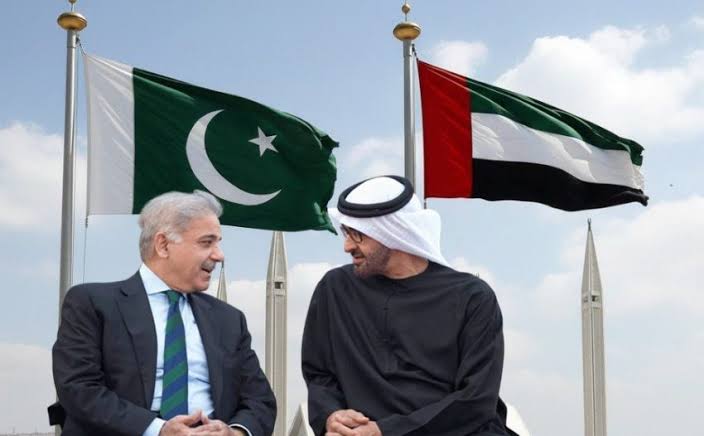
What happened: In early 2026, the United Arab Emirates declined to roll over a $3 billion loan to Pakistan — the first such refusal in seven years. The repayment equalled roughly 18% of Pakistan’s foreign currency reserves, arriving as Islamabad also faced a $1.3 billion bond payment and was waiting on the next IMF tranche.
Why it matters: It’s the clearest sign yet that Gulf sovereign patience with Pakistan’s balance-of-payments cycle is thinning, even as Gulf states simultaneously court China, Saudi Arabia, and each other for capital in a tightening regional liquidity environment.
The Story Nobody’s Connecting
Most coverage of Pakistan’s 2026 external account stress treats the UAE’s loan decision as an isolated liquidity event — a “routine financial transaction,” in the words of Pakistan’s own Ministry of Foreign Affairs. That framing misses the bigger pattern. The same weeks that Abu Dhabi called in its $3 billion, unusual delays began appearing in bank transfers from Saudi Arabia to the UAE itself — friction between the Gulf’s two largest economies, at a moment when both are also managing their own post-war oil price adjustment. (Pakistan & Gulf Economist)
Put those two data points together and a different story emerges: this isn’t just about Pakistan’s creditworthiness. It’s about Gulf capital becoming more selective, more transactional, and less willing to extend informal grace periods across the board — with Pakistan simply the most exposed borrower in the queue.
The Numbers Behind the Pressure
Pakistan’s State Bank held $16.4 billion in reserves as of late March 2026 — enough to cover roughly three months of imports, a threshold economists generally treat as a comfort floor, not a cushion. (Mettis Global News) The UAE’s declined rollover landed at the same time as a looming $1.3 billion international bond payment and dependence on the next $1.2 billion IMF disbursement — a convergence of obligations that left the State Bank with limited room to maneuver beyond import restrictions, rate hikes, or fresh commercial borrowing.
The backdrop matters too. The rupee had been trading in a comparatively narrow 278–282 band before the escalation of the Iran conflict pushed global oil prices higher, squeezing Pakistan’s import bill precisely when its Gulf safety net began to wobble. The KSE-100 benchmark, meanwhile, had already shed around 15% amid the broader pressure. (Mettis Global News)
This is not Pakistan’s first Gulf-dependency cycle. The IMF’s own record shows a now-familiar pattern: staff-level agreements reached in Dubai, UAE pledges of multibillion-dollar investment arriving alongside IMF tranches, and Gulf bridge financing used to stave off sovereign default in periods when reserves cover shrinks toward zero. (Business Standard) What’s different in 2026 is that the bridge itself is showing cracks.
Islamabad’s Official Line vs. the Structural Reality
Pakistan’s government has leaned into a “stability to sustainable growth” narrative around its FY2026–27 federal budget, with the finance minister framing the transition as export-driven rather than reserve-dependent. Business groups have broadly welcomed the budget, and the current account posted a $459 million surplus in May 2026, an improvement attributed to strong remittance inflows. (Business Recorder) The Monetary Policy Committee has held rates steady rather than reaching for emergency tightening, which is itself a signal that the central bank does not yet see the UAE episode as a systemic trigger.
But a current account surplus built substantially on remittances is different from one built on export competitiveness or durable FDI. Pakistan’s trade structure still leans heavily on a narrow set of partners: China supplies over a quarter of its imports and a meaningful share of its exports, the UAE is both a top export destination and its second-largest import source, and Gulf states collectively remain the primary channel for both remittances and emergency liquidity. (Wikipedia — Economy of Pakistan) That concentration is precisely what makes a single Gulf lender’s changed appetite so consequential.
Why the Oil Backdrop Compounds the Risk
None of this is happening in a vacuum. The IMF’s own July 2026 commentary noted that global oil markets “absorbed the war shock” from the Iran conflict, but cautioned that buffers — spare production capacity, strategic reserves, shipping insurance capacity — are running low. (IMF Blog) For an oil-importing, reserve-constrained economy like Pakistan, a second energy price shock without deeper buffers would land directly on the same reserves the UAE loan was meant to protect.
What to Watch Next
- Whether Saudi Arabia steps in as an alternative bridge lender, or whether the Riyadh–Abu Dhabi transfer friction signals a broader Gulf liquidity tightening that limits everyone’s appetite to backstop Pakistan.
- The pace and size of the next IMF tranche, and whether Fund conditionality shifts to demand deeper reserve buffers given the UAE precedent.
- Whether China increases its role as lender of last resort, deepening Pakistan’s dependency in exactly the direction Gulf financing was historically meant to offset.
Discover more from The Economy
Subscribe to get the latest posts sent to your email.

Crypto Daily Outlook: Bitcoin, Altcoins, and the Future of Decentralized Finance

Anthony Scaramucci’s Crypto Prediction: Why MicroStrategy’s Move Is Bitcoin’s “iPhone Moment”

Best Dividend Stocks 2026: European & Asian Blue Chips

World Bank & IMF Reports 2026: Why the “3% Growth” Consensus Is Actually a Debate

Elon Musk’s Boring Company Hits $23B Valuation After UAE-Led $3 Billion Series D

Middle East War Economics 2026: Oil Prices & Energy Markets

PSX Forecast 2026: KSE-100, IMF Reviews & Geopolitics

Asian Markets Outlook 2026: China, Japan & Singapore Stocks

Global Economy 2026: IMF Growth, Inflation & Private Credit

Current Account Deficit (CAD) : Causes and Impact

Balance of Payments (BOP)

The Falkland Islands Dispute: Sovereign Wealth, Offshore Drilling, and Market Impacts

Gross Domestic Product (GDP): Nominal vs. Real

What is Inflation and the Consumer Price Index (CPI)?

State Farm’s $5B Dividend 2026: Who Qualifies & Payout Dates

US-China Relations in Q3 2026: Trade Tariffs and Supply Chain Risks

Gold’s Wild 2026: From a Record $5,600 Peak to a 24% Crash and Back Toward $4,500

Oil Surges as Strait of Hormuz Traffic Collapses Again

The Rocket That Won’t Quit: Inside SpaceX’s Falcon 9 Launch Machine

Bank of England Set to Hold Rates Through Year-End, Reuters Poll Shows

SpaceX Starship Flight 14: First Orbital Attempt & Starlink V3 Launch Explained

The 2026 Crypto Regulatory Shift: What It Means for Institutional Investors

AI Chip Stocks 2026: The Best Semiconductor Investments Beyond Marvell

Retail Earnings Week: What Home Depot, Target & Walmart Reveal

AI-Powered Training: The Next Multi-Billion Dollar Ecosystem in Fitness

Top 30 Stocks for Investment in PSX for Massive ROI in 2026

Russia’s Black Sea Oil Exports Fall for a Fifth Straight Week

Tween Back-to-School Trends 2026: What’s Driving the $85B Season
-

 Markets & Finance8 months ago
Top 15 Stocks for Investment in 2026 in PSX: Your Complete Guide to Pakistan’s Best Investment Opportunities
-

 Analysis7 months ago
Johor’s Investment Boom: The Hidden Costs Behind Malaysia’s Most Ambitious Economic Surge
-

 Analysis7 months ago
Top 10 Stocks for Investment in PSX for Quick Returns in 2026
-

 Analysis7 months ago
Brazil’s Rare Earth Race: US, EU, and China Compete for Critical Minerals as Tensions Rise
-

 Banks8 months ago
Best Investments in Pakistan 2026: Top 10 Low-Price Shares and Long-Term Picks for the PSX
-

 Investment8 months ago
Top 10 Mutual Fund Managers in Pakistan for Investment in 2026: A Comprehensive Guide for Optimal Returns
-

 Global Economy9 months ago
15 Most Lucrative Sectors for Investment in Pakistan: A 2025 Data-Driven Analysis
-

 Global Economy9 months ago
Pakistan’s Export Goldmine: 10 Game-Changing Markets Where Pakistani Businesses Are Winning Big in 2025