
Opinion
Boeing’s 500-Jet China Deal: Trump-Xi Summit’s $50B Game-Changer

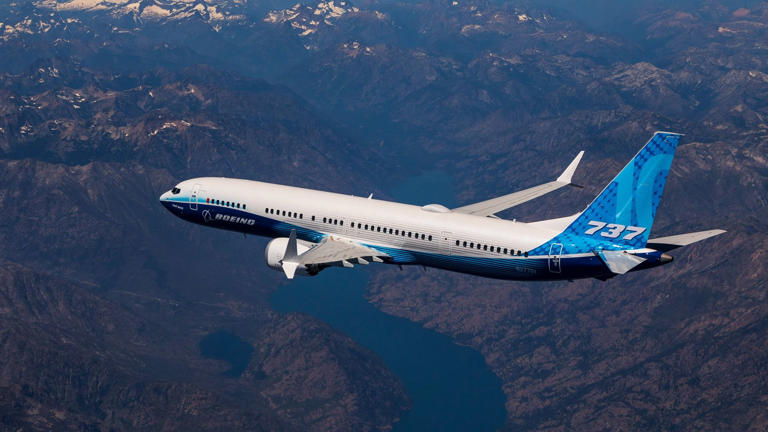
On a Friday afternoon in early March, Boeing’s stock did something it hadn’t done in months: it surged. Shares of the aerospace giant jumped as much as 4 percent — the best performance on the Dow Jones Industrial Average that day — after Bloomberg reported that the company is closing in on one of the largest aircraft sales in its 109-year history. The prize: a 500-aircraft order for 737 Max jets from China, to be unveiled when President Donald Trump makes his first state visit to Beijing since 2017 — scheduled for March 31 to April 2.
If confirmed, the deal would represent nothing less than Boeing’s formal re-entry into the world’s second-largest aviation market after years of diplomatic cold-shouldering, safety-related groundings, and trade-war turbulence. It would also cement a pattern that has quietly defined Trump’s second term: the systematic use of America’s largest exporter as a diplomatic sweetener in geopolitical negotiations.
The Numbers Behind the Boeing 737 Max China Deal
Let’s be precise about what is reportedly on the table. According to people familiar with the negotiations cited by Bloomberg, the headline figure is 500 Boeing 737 Max jets — narrowbody, single-aisle workhorses that form the backbone of Chinese domestic aviation. Separately, the two sides are in advanced discussions over a widebody package of approximately 100 Boeing 787 Dreamliners and 777X jets, though that portion of the deal is expected to be announced at a later date and would not feature in the Trump-Xi summit communiqué.
At current list prices — the 737 Max 8 carries a sticker price of roughly $101 million per aircraft — the narrowbody package alone would approach $50 billion in nominal terms before the standard deep discounts that large airline orders attract. Factor in the widebody tranche, and the full package could eventually represent the single largest bilateral aviation deal ever struck between the United States and China.
Boeing itself declined to comment. China’s Ministry of Commerce did not respond to requests outside regular hours. The White House offered no immediate statement. But the market spoke clearly enough.
A Decade of Order Drought — and Why China Needs Boeing Now
To appreciate the magnitude of this potential agreement, consider the context. China once made up roughly 25 percent of Boeing’s order book. Today, Boeing holds only 133 confirmed orders from Chinese airlines — approximately 2 percent of its total book. Investing.com That collapse in Chinese demand was not accidental. It was the deliberate consequence of a cascade of crises: the global grounding of the 737 Max following two fatal crashes in 2018 and 2019, the trade tensions of Trump’s first term, and the pandemic-era freeze on civil aviation procurement.
Yet Chinese airlines have been quietly suffocating under constrained fleet capacity. Aviation analysts and industry sources say China needs at least 1,000 imported planes to maintain growth and replace older aircraft. WKZO The country’s carriers — Air China, China Eastern, China Southern — are operating aging fleets while passenger demand has rebounded sharply. The arithmetic of Chinese aviation is unforgiving: a country of 1.4 billion people, a rapidly expanding middle class, and a domestic network that still relies heavily on Western-certified jet technology cannot simply wait indefinitely for political stars to align.
Beijing has also been hedging. China is simultaneously in talks for another 500-jet order with Airbus that would be in addition to any Boeing deal — negotiations that have been in on-off discussions since at least 2024. WKZO But Airbus has its own capacity constraints and delivery backlogs. The reality is that both European and American planemakers are needed to feed China’s aviation appetite, which gives Boeing considerable strategic leverage — if it can navigate the politics.
Trump’s Boeing Diplomacy: A Playbook Refined
There is a recognizable pattern here, and it is worth naming explicitly. Trump has used Boeing as a tool to sweeten accords with other governments Yahoo Finance, and the China deal fits squarely within that framework. Earlier in his second term, large Boeing orders from Gulf carriers and Southeast Asian airlines followed Trump diplomatic visits — deals that generated political headlines and tangible employment commitments in American manufacturing states.
The Beijing summit, however, would be the most significant deployment of this strategy yet. US-China trade tensions have been acute in early 2026. Trump threatened to impose export controls on Boeing plane parts in Washington’s response to Chinese export limits on rare earth minerals. Yahoo Finance During earlier trade clashes, Beijing ordered Chinese airlines to temporarily stop taking deliveries of new Boeing jets — before resuming later that spring. WKZO
That on-off pattern illustrates the extraordinary vulnerability of commercial aviation to geopolitical temperature. Unlike soybeans or semiconductors, a Boeing 737 Max is not a fungible commodity. It requires years of certified maintenance infrastructure, pilot training, and regulatory framework built around American aviation standards. Both sides know this, which is precisely why aircraft orders have become such potent bargaining chips.
The planned summit structure — Trump in Beijing from March 31 to April 2, followed by Xi visiting Washington later in the year — also suggests a two-stage negotiation architecture. The 737 Max order would serve as a confidence-building gesture at the first meeting; the widebody 787 and 777X tranche would follow as trust is consolidated.
Boeing’s Recovery Trajectory: Why Timing Matters
For Boeing CEO Kelly Ortberg, the timing of a China breakthrough could scarcely be more critical. Boeing’s total company backlog grew to a record $682 billion in 2025, primarily reflecting 1,173 commercial aircraft net orders for the year, with all three segments at record levels. Boeing Yet the Chinese market has remained conspicuously absent from that recovery story.
Boeing has achieved FAA approval to increase 737 Max production to 42 jets per month, a significant step toward restoring manufacturing capacity, and the company plans to raise 787 Dreamliner output to 10 aircraft per month during 2026. Investing.com In short, for the first time in several years, Boeing actually has the industrial capacity to absorb a massive new order. Management has targeted approximately 500 737 deliveries in 2026 and 787 deliveries of roughly 90–100 aircraft, while targeting positive free cash flow of $1–3 billion for the year. TipRanks
A confirmed China order of this scale would not merely boost the backlog — it would validate the entire recovery narrative. It would signal to Wall Street that the 737 Max safety rebound is complete, that Chinese regulators have definitively recertified the aircraft, and that geopolitical risk has sufficiently receded to justify multi-year procurement commitments. As Reuters reported, Boeing’s share price rose 3.7 percent on the news — but analysts caution that several sticking points remain unresolved, and a deal is not yet assured.
Aviation Ripple Effects: What a China Mega-Deal Means for Global Travelers
The significance of a Boeing 737 Max China order in 2026 extends well beyond corporate balance sheets. Chinese carriers operating newer, more fuel-efficient 737 Max jets would dramatically expand route networks — both domestically and internationally. The 737 Max 10, capable of flying roughly 3,300 nautical miles at maximum range, opens trans-regional routes that older Chinese narrowbody fleets cannot economically serve.
For the global travel industry — and for the Expedia-era traveler booking multi-stop itineraries across Asia — this translates into more competitive airfares, denser flight schedules out of Chinese hub airports, and expanded connectivity between Chinese secondary cities and international destinations. Tourism economists estimate that each percentage point increase in seat capacity on a major international corridor correlates with a 0.6 to 0.8 percent increase in inbound tourist arrivals. A Chinese aviation expansion of this magnitude, fuelled by 500 new-generation jets, would register meaningfully in global travel demand forecasts through the late 2020s.
The geopolitical calculus cuts the other way too. Should talks collapse — perhaps due to escalation over Taiwan, renewed rare-earth export controls, or a postponement of the Trump visit, which Bloomberg noted could occur if the ongoing US-Iran situation deteriorates — Boeing’s China exposure remains an open wound rather than a healed scar.
Historical Context: The Ghosts of Boeing-China Deals Past
This would not be the first time a US presidential visit to China generated a headline Boeing order. In 2015, during Barack Obama’s final engagement with Xi Jinping, Chinese carriers placed orders for over 300 Boeing jets — a deal that at the time was celebrated as a pillar of the bilateral commercial relationship. It took less than four years for that relationship to unravel under the dual pressures of the MAX crisis and Trump’s first-term tariffs.
The lesson is not that such deals are illusory. It is that they are fragile by design — deeply dependent on the political weather. A Boeing 500-plane order tied to Trump’s Beijing summit is, in that sense, simultaneously a genuine commercial transaction and a diplomatic performance. Its durability will depend less on what is signed in Beijing in April than on what is negotiated, month by month, in the trade relationship that follows.
Forward Outlook: Promise, Risk, and the Long Game
Boeing’s aircraft stand to feature prominently in whatever trade framework emerges from the Trump-Xi summit. But seasoned observers of US-China commercial aviation will note that a similar mega-deal euphoria surrounded Airbus last year — and ultimately failed to materialize. Given the fraught geopolitical backdrop, Boeing’s order bonanza is not assured, and two people familiar with the talks have specifically cautioned that deal completion remains uncertain. Yahoo Finance
What is certain is this: the structural demand is real, the production capacity is finally in place, and the political incentive on both sides has rarely been stronger. For Boeing, recapturing even a fraction of what was once a market that constituted a quarter of its order book would represent a transformation of its strategic position. For China’s airlines, new Boeing jets mean competitive fleets, lower operating costs, and the capacity to serve a travelling public that has never stopped wanting to fly.
The planes, as ever, are ready. The question is whether the politics will let them take off.
Discover more from The Economy
Subscribe to get the latest posts sent to your email.



When a former employee quietly began extracting data from Coupang’s servers on June 24, 2025, the act looked, on its face, like a textbook insider-threat case—disgruntled, technically savvy, geographically mobile. What nobody in Seoul or Seattle anticipated was that the Coupang data breach would, within six months, detonate inside one of the most consequential bilateral trade relationships in the Asia-Pacific.
By early 2026, the episode had dragged in the White House, the U.S. Trade Representative, a bipartisan congressional hearing, five American hedge funds, and a potential tariff hike that rattled South Korea’s fragile currency. The Coupang South Korea data breach exposed not merely the personal information of 33.7 million customers—nearly two-thirds of the country’s entire population—but a structural fault line in how democratic allies govern data, enforce privacy law, and resolve disputes when corporate accountability crosses national borders.
That fault line, it turns out, is deep enough to swallow a trade relationship.
The Anatomy of a Breach: Five Months of Silence, One Smashed MacBook
The intrusion, as reconstructed by South Korean government investigators and third-party forensic firms Mandiant and Palo Alto Networks, was neither sophisticated nor spectacular. A former Coupang engineer—later identified as a Chinese national who had worked on the company’s authentication systems—used unrevoked access credentials to connect to customer data repositories through overseas servers. The breach continued, undetected, from late June to November 8, 2025: approximately 137 days of unauthorized access to names, phone numbers, email addresses, delivery addresses, and partial order histories belonging to 33.7 million Korean accounts.
The discovery came not from Coupang’s own security monitoring but because the perpetrator sent threatening, anonymous emails to the company and individual users. Only then did internal teams identify the compromise—initially estimating just 4,500 affected accounts. The true scale, confirmed via forensic investigation, was roughly 7,500 times larger.
Key Timeline of Events
| Date | Event |
|---|---|
| June 24, 2025 | Unauthorized access begins via overseas servers |
| November 6, 2025 | Coupang detects unusual access at 6:38 PM KST |
| November 8, 2025 | Last date of unauthorized access |
| November 18, 2025 | Full identification; KISA, PIPC, and National Police Agency notified—53+ hours after internal detection, violating the 24-hour reporting rule |
| November 29, 2025 | Coupang publicly discloses the breach |
| December 15, 2025 | Coupang files SEC 8-K; former CEO Park Dae-jun resigns |
| December 29, 2025 | Company announces 1.685 trillion won ($1.17B) compensation plan |
| January 13, 2026 | U.S. House Ways and Means Trade Subcommittee holds bipartisan hearing |
| January 23, 2026 | Greenoaks and Altimeter file ISDS notice with South Korea’s Ministry of Justice |
| January 26, 2026 | Trump administration raises tariffs on South Korea from 15% to 25% |
| February 12, 2026 | Three more U.S. investors—Abrams Capital, Durable Capital, Foxhaven—join ISDS action |
The cover-up attempt was equally cinematic: authorities recovered a MacBook Air the perpetrator had submerged in a canvas bag weighted with bricks. Forensic analysis of the retrieved device confirmed that while data from over 33 million accounts had been accessed, only approximately 3,000 records were retained, none of which appear to have circulated on the dark web. That distinction—between access and retention—would become one of the most contested technical arguments in the ensuing international dispute.
Management Failure, Not Sophisticated Attack: Seoul’s Damning Verdict
South Korean regulators delivered a judgment that was unsparing in its directness. The Coupang management failure data breach finding, published in a government-led investigation in February 2026, concluded that the breach was not the product of a nation-state cyberattack or advanced persistent threat. It was, in the investigators’ framing, an organizational failure: a company that had not properly revoked authentication credentials upon an employee’s departure, had failed to encrypt non-payment customer data despite having the capacity to do so, and had not fully implemented a data preservation order issued upon breach disclosure—resulting in the deletion of critical web and app access logs before outside parties could examine them.
The Personal Information Protection Commission (PIPC), South Korea’s principal privacy watchdog, further demanded that Coupang correct its public communications: the company had described the incident as data “exposure,” a characterization regulators rejected in favor of “leak”—a distinction laden with legal consequence under the country’s information network law.
For a company that had spent years presenting itself as the crown jewel of Korean e-commerce—an Amazon-equivalent with $34.5 billion in 2025 revenue and a NYSE listing that generated euphoric headlines in 2021—the regulatory verdict was stinging. South Korean President Lee Jae-myung publicly called for heavy penalties, describing personal data protection as “a key asset in the age of AI and digitalization” during a cabinet meeting. One Democratic Party lawmaker floated the possibility of punitive fines through special parliamentary legislation, an idea the PIPC endorsed publicly.
Under existing law, penalties are capped at 3% of annual revenue—a figure that, for a company of Coupang’s scale, could exceed $800 million. Some lawmakers were seeking to raise that ceiling to 10%.
Why the Coupang Breach Became an International Trade Issue
The escalation from domestic regulatory matter to international flashpoint followed a logic that, in retrospect, looks almost inevitable—though it required a specific convergence of corporate structure, investor geography, and geopolitical temperature.
Coupang’s corporate identity is inherently binational. Although the company operates as South Korea’s largest e-commerce platform—employing 95,000 people and serving consumers through its celebrated “Rocket Delivery” logistics network—its global headquarters sits in Seattle, Washington. It trades on the NYSE. Its largest shareholders are American. When South Korean regulators moved against the company, they were, from the investors’ perspective, effectively moving against a U.S.-headquartered enterprise operating in a foreign market.
U.S. investors activated treaty mechanisms that Seoul had not anticipated. On January 23, 2026, investment firms Greenoaks and Altimeter—together holding approximately $1.5 billion in Coupang stock—filed a formal notice of intent with South Korea’s Ministry of Justice, invoking the investor-state dispute settlement (ISDS) provisions of the U.S.-Korea Free Trade Agreement (KORUS FTA). Their central claim: that the Korean government’s response to the Coupang data breach was disproportionate, discriminatory, and designed to benefit domestic and Chinese competitors at the expense of an American company. By February 12, 2026, three additional U.S. investors—Abrams Capital, Durable Capital Partners, and Foxhaven Asset Management—had joined the action, according to a report by TechCrunch.
ISDS arbitration, for the uninitiated, is a provision embedded in most modern trade agreements that allows foreign investors to sue sovereign governments before international arbitral tribunals—bypassing domestic courts entirely. The mechanism was designed to protect cross-border investment from arbitrary government interference. In the Coupang case, the investors are alleging that South Korea violated the treaty’s guarantees of fair and equitable treatment, most-favored-nation status, and protection against expropriation. If the mandatory 90-day consultation period fails to produce resolution, the dispute proceeds to formal arbitration, with damages potentially running into billions of dollars charged against Seoul’s government.
Washington amplified the pressure through multiple channels. The U.S. investors also petitioned the U.S. Trade Representative to investigate under Section 301 of the Trade Act of 1974, requesting that “appropriate trade remedies”—including tariffs—be applied if Korea’s conduct was found to constitute discriminatory enforcement. The Korea Herald reported that U.S. Vice President J.D. Vance personally warned South Korean Prime Minister Kim Min-seok that the investigation appeared discriminatory. At a January 13 House Ways and Means Trade Subcommittee hearing, Republican Chair Adrian Smith characterized Korean regulators as pursuing “legislative efforts explicitly targeting U.S. companies,” with fellow lawmaker Rep. Scott Fitzgerald describing the government’s conduct as a “politically motivated witch hunt.”
On January 26, 2026, the Trump administration announced a tariff increase on South Korean goods from 15% to 25%—officially attributed to Seoul’s slow ratification of the bilateral trade deal reached the previous year. But the timing was precise enough that the official House Judiciary Committee account posted on X: “This is what happens when you unfairly target American companies like Coupang.” The Diplomat’s analysis concluded that while Trump’s tariff calculus encompasses broader investment commitments, the Coupang episode had provided political and rhetorical scaffolding for the escalation.
The Discrimination Argument: A Contested Ledger
The investors’ discrimination claim hinges on comparative enforcement: they argue that Korean and Chinese companies involved in comparable data incidents faced significantly lighter regulatory responses. This contention deserves scrutiny rather than uncritical acceptance, because the record is genuinely mixed.
CPO Magazine documented that South Korea’s largest mobile carrier, SK Telecom, received a record ₩134.5 billion ($97 million) fine following a breach of USIM identity data for approximately 27 million subscribers—a penalty that regulators imposed only after finding that SK Telecom “did not even implement basic access controls.” The SK Telecom enforcement, then, was itself unprecedented for a Korean incumbent. The Coupang investors counter that the scope of regulatory intervention—including executive travel restrictions, operational suspension threats, and parliamentary summons—far exceeded what any domestic Korean company had faced for equivalent or larger breaches.
There is no clean answer here. Regulatory severity is shaped by political context, media coverage, the identity of the company, and the temperament of individual legislators. What is demonstrably true is that Coupang’s delayed reporting (53-plus hours against a 24-hour requirement), its failure to implement the data preservation order, and the sheer demographic scale of the breach (affecting 65% of the national population) would have attracted intense scrutiny in any jurisdiction operating under modern data protection law.
The Data Governance Gap: Comparing South Korea to Its Peers
The Coupang episode has crystallized a conversation that South Korean policymakers have deferred for years: their data protection framework, while nominally robust, contains structural gaps that both enabled the breach and complicated the regulatory response.
Comparative Data Governance Frameworks
| Jurisdiction | Law | Max Penalty | Encryption Mandate | Breach Notification |
|---|---|---|---|---|
| European Union | GDPR (2018) | 4% of global revenue | Risk-based requirement | 72 hours to authority |
| China | PIPL (2021) | ¥50 million / 5% revenue | Mandatory for sensitive data | Immediate notification |
| California, USA | CPRA (2020) | $7,500 per intentional violation | Required for sensitive data | “Expedient” notification |
| South Korea | PIPA (2011, amended) | 3% of revenue | Required for financial data only | 24 hours |
The gap is instructive: South Korea does not mandate encryption for non-payment personal data. Had Coupang been operating under GDPR, the absence of encryption for names, addresses, and order histories would have constituted an aggravating factor attracting enhanced penalties—and a legal requirement, not merely a best-practice recommendation. The PIPC’s investigation explicitly cited this absence as a contributing factor to the breach’s impact.
The South Korea data privacy law reform after Coupang is now a live legislative debate. President Lee’s call for stronger penalties, the PIPC’s support for punitive fines, and the 3%-to-10% penalty ceiling proposal all represent pressure for alignment with international norms. But the investors’ ISDS action complicates that reform: any retroactive application of harsher penalties would, in the investors’ view, compound the treaty violation rather than resolve it.
Coupang’s Washington Wager
The company’s political footprint in Washington has added a dimension that South Korean civic groups find troubling—and that American trade lawyers find legally consequential. Since its 2021 NYSE listing, Coupang has reportedly spent more than $10.75 million on federal lobbying, targeting agencies across the executive branch and Congress. Following Donald Trump’s reelection in November 2024, the company donated $1 million to the Trump-Vance inaugural committee and positioned itself as a conduit for American export interests through a partnership with the Commerce Department’s International Trade Administration.
Coupang has publicly stated it has no connection to the investors’ ISDS filings, insisting it has been “fully complying with the Korean government’s requests.” Yet the political infrastructure built over five years has, at minimum, created the architecture through which investor grievances could be amplified into government-level intervention. Whether this constitutes sophisticated stakeholder management or a structural conflict of interest for a company operating under Korean regulatory jurisdiction is a question Seoul’s policymakers are beginning to ask with increasing urgency.
Financial Fallout: A $8 Billion Market Cap Erasure
The breach’s financial consequences have been severe. Following public disclosure in late November 2025, Coupang’s stock (NYSE: CPNG) fell sharply, erasing more than $8 billion in market capitalization, with shares declining roughly 50% from their pre-breach highs. The company swung from a Q4 2024 net income of $156 million to a Q4 2025 net loss of $26 million, missing analyst consensus estimates, as active customers slipped and December growth decelerated to approximately 4% in constant currency terms—down from 16% in the prior three months.
The 1.685 trillion won ($1.17 billion) compensation package—issued as 50,000-won platform-use vouchers to all 33.7 million affected users—has been criticized by lawmakers as a mechanism that recirculates money within Coupang’s own ecosystem rather than providing genuine restitution. It is, simultaneously, the largest corporate data breach compensation in South Korean history. Coupang’s full-year 2025 revenue nonetheless reached $34.5 billion, and the company retains over $7 billion in cash—a balance sheet that provides resilience, if not immunity, from the regulatory and legal storm surrounding it.
In Taiwan, where Coupang has been aggressively expanding, the forensic investigation confirmed that one user account was accessed—though earlier reports suggested a spillover affecting approximately 200,000 Taiwanese accounts, a figure Coupang has disputed.
What Reform Looks Like: A Policy Agenda for Seoul and Beyond
The Coupang case offers several policy imperatives that extend beyond Korea’s borders:
First, South Korea must close the encryption gap. The absence of a mandatory encryption standard for non-financial personal data is an anachronism in a country that hosts some of the world’s most sophisticated digital infrastructure. Alignment with GDPR-equivalent standards is not merely a trade relations gesture—it is an essential infrastructure investment in the age of AI data dependency.
Second, ISDS provisions must be examined for fitness-of-purpose in the digital economy context. The original ISDS architecture was designed to protect physical-asset investments—factories, mines, infrastructure—from expropriation by host governments. Applying that framework to data enforcement actions against technology companies creates perverse incentives: it effectively allows investors to convert regulatory pressure into trade litigation, circumventing the very domestic accountability mechanisms that consumers require. The KORUS FTA’s digital trade provisions were cited in both investor filings and congressional testimony; renegotiating their scope deserves attention from both trade ministries.
Third, breach notification timelines must have teeth. Coupang reported the breach to authorities more than 53 hours after internal identification—more than double the 24-hour requirement. That delay destroyed evidentiary logs. Any reformed framework should mandate automated, cryptographically verifiable notification to regulators at the moment of internal breach confirmation, not at the company’s discretion.
Fourth, the distinction between “access” and “harm” requires legislative clarity. The central factual dispute in the Coupang case—33.7 million accounts accessed versus approximately 3,000 records retained—has no clean resolution under current Korean law. A mature data governance framework would define the spectrum between these poles and prescribe proportionate enforcement accordingly, reducing both regulatory overreach and corporate minimization.
The Broader Geopolitical Resonance
The Coupang episode is not an isolated incident. It belongs to a wider pattern in which digital companies—structurally transnational but operationally concentrated in single markets—are caught between the sovereign enforcement prerogatives of their host nations and the financial interests of their investor base, which is increasingly cross-border, treaty-protected, and politically connected.
South Korea is not alone in navigating this terrain. France has faced analogous tensions over GDPR enforcement against American platforms. India’s data localization rules have generated investor concern under its bilateral investment treaties. China’s PIPL, despite its severity on paper, has been selectively enforced in ways that draw diplomatic complaints. The Coupang data governance reform South Korea conversation is, at its core, a version of a global argument: in a world where data is the primary asset of the digital economy, whose law governs it, who enforces that law, and what recourse exists when the answers conflict?
Seoul has a specific reason to resolve this question urgently. Its status as a trusted partner for foreign investment—particularly American capital—depends on the perception of consistent, proportionate, and non-discriminatory enforcement. President Lee’s calls for heavy penalties may play well in domestic politics. But if they are perceived internationally as retroactive, targeted, or politically motivated, the reputational cost will be measured not only in arbitration awards but in the long-term trajectory of foreign direct investment into one of Asia’s most dynamic economies.
Conclusion: The Governance Dividend
The Coupang case will likely be resolved through negotiation—the 90-day consultation period, political back-channels, and the mutual interest both governments have in de-escalation suggest that formal ISDS arbitration, with its multi-year timeline and uncertain outcomes, is a last resort rather than a destination. The tariff issue is governed by economics larger than any single company. Trade ministers on both sides have urged restraint.
But resolution of the immediate dispute should not be confused with resolution of the underlying problem. South Korea has a data governance framework that is partially adequate for the digital economy it has built. It lacks mandatory encryption standards for the most commonly collected personal data. It has penalty caps that, paradoxically, invite both regulatory maximalism and investor challenges. It has notification timelines that exist on paper and evaporate under corporate pressure.
The citizens whose data was accessed—not sold, perhaps, but accessed without consent, for 137 days, by someone who then submerged a laptop in a river to escape accountability—did not generate this geopolitical drama. They were its precondition. Any reform that emerges from the Coupang episode owes its first obligation to them: not to Washington, not to Seoul’s trade ministry, and certainly not to the shareholders whose portfolio values informed the language of “expropriation.”
Data governance, in the end, is not a trade issue. It is a social contract. South Korea, one of the world’s most digitally sophisticated societies, has the institutional capacity to write that contract properly. The Coupang breach made the cost of delay unmistakably visible.
Discover more from The Economy
Subscribe to get the latest posts sent to your email.
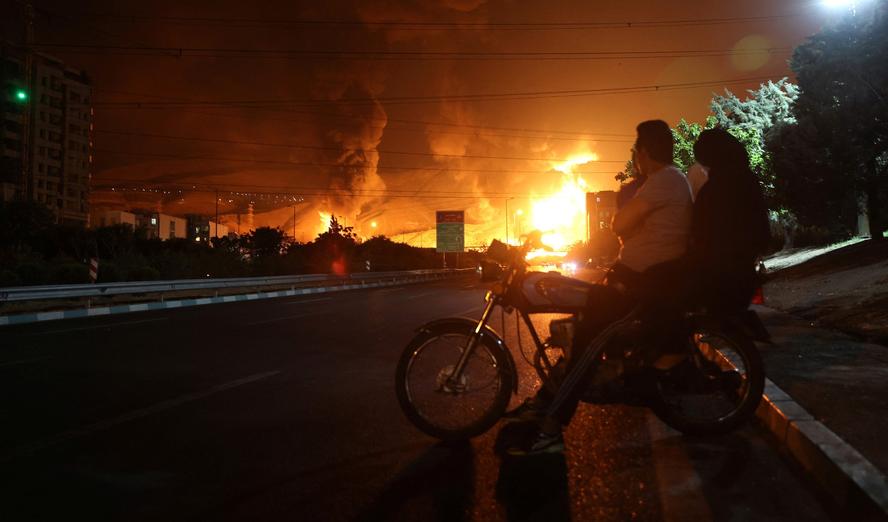
In a cramped apartment block in Sharjah — the budget emirate that houses more Pakistani migrant workers than any other Gulf city — Mohammed Irfan does the same thing every morning now: he checks his phone before he even stands up. Not for messages from home. For the oil price. He works in construction logistics, and he knows what a sustained spike above $90 means better than most analysts in Karachi ever will. It means contracts freeze. It means his employer stops hiring. It means the $800 he wires home every month to his mother and three sisters in Rahim Yar Khan could become $400. Or nothing.
That calculus — multiplied across nine million Indians, five million Pakistanis, and three million Bangladeshis scattered across Gulf labour markets — is the part of the U.S.-Israel war on Iran that no prime-time bulletin, no matter how well-produced, will ever quite capture. Since Operation Epic Fury launched on February 28, 2026, the world’s attention has been trained on the fireball skies above Tehran, the killing of Supreme Leader Ayatollah Ali Khamenei, and the daily missile exchanges between the Islamic Revolutionary Guard Corps and the combined air power of two of the world’s most technologically advanced militaries. But the aftershocks are travelling south and east with a velocity that deserves far more analytical attention than it has received.
South Asia is not a party to this war. It has not chosen sides. And yet, across the span of one week, it has been subjected to an energy shock, a remittance crisis in formation, a sectarian eruption in the streets of Karachi and Skardu, and a diplomatic tightrope walk that tests the strategic autonomy of the world’s most populous nation. The Iran conflict is South Asia’s war whether it wants it or not.
Energy Security Shock: South Asia’s Hormuz Dependency Is Staggering
The Strait of Hormuz is 21 miles wide at its narrowest point, flanked by Iran on one side and Oman on the other. Through that gap, roughly 20 percent of the world’s daily oil consumption normally flows — approximately 13 to 15 million barrels per day. Since March 2, when an IRGC commander formally declared the strait closed and threatened to set ablaze any vessel attempting passage, that flow has effectively dropped to near zero. Tanker transits fell from an average of 24 per day in January to just four on March 1, according to energy intelligence firm Vortexa, and three of those four flew Iranian flags.
The consequences for South Asia are not theoretical; they are arithmetic. India imports nearly 85 percent of its crude oil, and the Middle East — most of it transiting Hormuz — supplies approximately 55 percent of total crude requirements, according to data from Jefferies. Pakistan, smaller in absolute terms but no less exposed in structural ones, relies on the Gulf for the lion’s share of its hydrocarbons. India’s strategic petroleum reserves, government officials confirmed this week, extend the nation’s buffer to roughly 74 days. But replacement cargoes from the Atlantic Basin take weeks to route, not days.
Markets have responded with historic speed. Brent crude, which traded near $66 a barrel in late January, surged past $92 by the end of the first week of the conflict — its biggest weekly gain since April 2020, according to data from CNBC Markets. WTI posted a 35.6 percent weekly gain, the largest in the history of the futures contract dating back to 1983. Barclays analysts warned clients as early as March 1 that Brent could reach $100 if disruptions persisted, a threshold Goldman Sachs subsequently attached to a scenario of five weeks of constrained Hormuz traffic. Qatar’s energy minister, Saad al-Kaabi, went further still, telling the Financial Times that if tankers could not pass, Gulf exporters might halt production entirely — potentially driving Brent toward $150 and, in his words, threatening to “bring down the economies of the world.”
For India, the energy math is unforgiving. The country’s annual crude import bill, already substantial at elevated prices, balloons by approximately $12 billion for every $10 per barrel increase in Brent sustained over a full year — a rough internal estimate consistent with RBI modelling frameworks. At $90 Brent, sustained through the second quarter of 2026, India’s current account deficit widens materially, the rupee faces depreciation pressure, and inflation — already a persistent political headache — reignites in an economy where petrol, diesel, and LPG subsidies carry enormous political weight. India currently has 21 days of LPG supply, according to government sources cited this week, a buffer that looked comfortable in February and appears far less so today.
Pakistan’s exposure is even more acute, for a country that has spent the past two years clawing its way back from the brink of a sovereign debt crisis with IMF support. Higher oil prices translate directly into a larger energy import bill priced in dollars the State Bank of Pakistan barely has to spare. Analysis published this week by the Times of Islamabad estimates that elevated freight costs alone — war-risk insurance premiums have risen by 15 to 25 percent for vessels transiting Gulf waters — could add $50 to $100 million per month to Pakistan’s trade-related costs.
The alternative supply routes are real but imperfect. India has quietly accelerated purchases of Russian crude under long-term discounted arrangements negotiated since 2022, and Russian oil now accounts for roughly 35 percent of Indian refinery intake — a geopolitical hedge that has drawn quiet American displeasure but delivered real price relief. The question is whether Russian pipeline and port capacity can scale fast enough to meaningfully compensate for a sustained Hormuz closure. The honest answer, from most energy analysts, is: not quickly, and not fully.
Remittance Economies on the Brink: $200 Billion at Risk
If the energy shock is the visible wound, the remittance disruption is the internal bleeding that could prove harder to staunch.
Consider the scale. India received a record $135.46 billion in inward remittances in fiscal year 2024-25, the highest of any country in the world, according to Reserve Bank of India data. Of that total, approximately 38 percent — some $51.4 billion — originated in the Gulf states, per analysis by Citi published this week. The UAE alone accounts for nearly half of Gulf-origin inflows. To put this in political-economic context: India’s entire trade surplus with the United States — frequently the subject of high-stakes diplomatic negotiation — was $58.2 billion in 2025. Gulf remittances are, by this measure, almost as economically significant as America.
Pakistan’s dependency is if anything more structurally acute. The country receives more than $30 billion annually in workers’ remittances, of which over half — $15 to $18 billion — originates in the Gulf, according to State Bank of Pakistan data. A 30 to 40 percent disruption in those flows, the scenario now under active consideration by Islamabad’s finance ministry, would translate into a monthly shortfall of $500 to $700 million. A worst-case scenario involving economic paralysis in Gulf host economies could push monthly losses toward $1.5 billion, according to an analysis published this week. Combined with export disruptions, higher energy costs, and aviation losses, Pakistan’s total monthly economic exposure from the conflict could approach $3 billion — an extraordinary number for a country whose entire IMF programme is calibrated around much smaller liquidity margins.
Bangladesh, Nepal, and Sri Lanka face structurally similar vulnerabilities, though at smaller absolute scales. Bangladesh has over five million citizens in the Gulf, whose remittances account for nearly six percent of GDP. Nepal’s remittance dependency exceeds 25 percent of GDP, one of the highest ratios in the world, with Gulf construction sites representing the primary employment base. In both countries, a contraction in Gulf labour markets would not register primarily as a macroeconomic statistic — it would arrive first as a domestic crisis of livelihoods, debt repayment and household food security.
The channels of disruption are multiple. In the immediate term, the concern is not that Gulf remittance flows have collapsed — they have not, and for now, hawala networks and digital transfer platforms continue to function. The Citi note published this week identifies a counterintuitive near-term dynamic: risk aversion among migrants may accelerate repatriation of existing savings, producing a temporary increase in flows. But the medium-term trajectory is concerning. Gulf economies — particularly those that have been struck by Iranian missiles — are already contracting. Construction activity is the first sector to freeze in uncertainty. Indian workers, the Washington Times reported this week, are particularly concentrated in oil services, construction, hospitality and retail: the exact sectors most vulnerable to Gulf economic disruption. Kerala alone receives approximately 20 percent of India’s total national remittance inflows, making it a one-state stress test for what systemic Gulf income disruption looks like.
“A sharp decline in remittance inflows — particularly if combined with higher oil prices — would worsen India’s external position and could put pressure on the rupee,” an analyst from Citi told CNBC this week. S&P’s Deepa Kumar added the critical time dimension: if the conflict lasts beyond six months, the impact on the Indian economy becomes material in ways that a shorter disruption would not trigger.
Sectarian Equilibrium Tested: The View From Karachi and Skardu
The killing of Ali Khamenei — not simply a head of state but the supreme religious authority of the global Shia community — detonated a reaction across South Asia that carried a charge quite unlike ordinary anti-war protest.
Within hours of the confirmed assassination on February 28, demonstrations erupted across Pakistan. By the following day, at least 22 people were dead. Ten were killed in Karachi, where crowds stormed the U.S. Consulate, smashing windows and attempting to set the building ablaze before police responded with tear gas, batons and gunfire. In Skardu, in the heavily Shia Gilgit-Baltistan region, protesters burned the offices of the UN Military Observer Group, UNDP, and even the Aga Khan Rural Support Programme. Army deployments and a three-day curfew followed. At least eight people died there. In Islamabad, crowds marched toward the U.S. Embassy dressed in black.
Pakistan is home to between 37 and 50 million Shia Muslims — 15 to 20 percent of a population of 250 million — representing one of the largest Shia concentrations outside Iran. That community looks to Tehran for religious authority, shrine pilgrimage, and in some cases, direct political and institutional support. The Zainabiyoun Brigade, a Pakistan-origin Shia militia trained, funded and commanded by the IRGC, has recruited thousands of fighters from Pakistan’s Kurram district over the past decade. In late 2024, sectarian violence in Kurram alone killed more than 130 people in the final weeks of the year. In February 2026, the Islamic State of Khorasan Province struck a Shia mosque in Islamabad, killing 36 worshippers. The conflict has arrived in a country already carrying the weight of an unhealed sectarian wound.
The security analyst Amir Rana of the Pak Institute of Peace Studies told Al Jazeera this week that Iran holds “significant influence over Shia organisations in Pakistan” and that the Balochistan-Iran border — a 900-kilometre frontier already porous with separatist activity — represents a potential flashpoint that cannot be ignored. Dawn’s Zia ur-Rehman, in perhaps the most lucid analysis published in Pakistan this week, sketched three plausible trajectories: contained grief and political protest; a sustained period of sectarian tension that revives militant recruitment and strains Islamabad’s relations with both Riyadh and Washington; and, in the most destabilising scenario, Iranian state fragmentation producing simultaneous instability on Pakistan’s two western fronts — Iran and Taliban-led Afghanistan.
What is most analytically striking, however, is what has not happened: a clean Shia-Sunni split. The war has, at least temporarily, reconfigured South Asian Muslim politics along an anti-imperialist axis that cuts across sect. In Bangladesh — over 90 percent Sunni, with no significant Shia population — the Bangladesh Jamaat-e-Islami staged a mass rally at the Baitul Mukarram National Mosque in Dhaka, with leaders denouncing what they called a “heinous attack” on Iran.
In Jammu and Kashmir, Sunni leader Mirwaiz Umar Farooq condemned Khamenei’s killing. Left parties across India — from the CPI(M) in Kerala to the CPI(ML) Liberation in Jharkhand — organised protests. The Indian National Congress called the strikes “a disturbing revival of regime change doctrines.” Samuel Huntington’s clash of civilizations framework offers one explanatory lens: when the perceived aggressor is a U.S.-Israeli military coalition, a cross-sectarian Muslim solidarity can congeal, at least temporarily, against a common external adversary. For Islamabad’s security planners, this cross-sectarian mobilisation is in some ways harder to manage than a purely Shia reaction — because it does not have established institutional interlocutors.
Geopolitical Ripple Effects: Delhi Hedges, Islamabad Walks a Tightrope
India’s diplomatic response has been characteristic: studied, careful, and almost entirely substance-free in public. External Affairs Minister S. Jaishankar spoke with Gulf counterparts over the weekend — calls focused on protecting Indian nationals rather than expressing any political position. Official Delhi has not condemned the strikes. It has not condemned Iranian retaliation. It has called for dialogue, de-escalation, and the safety of Indian citizens. This is not evasion; it is a deliberate strategic choice by a country that has spent fifteen years building equidistant relationships with Washington, Riyadh, Abu Dhabi, Tehran, and Moscow simultaneously — and intends to preserve all of them.
That balancing act has real economic stakes. India’s decade-long investment in Iran’s Chabahar port — a strategic gateway to Afghanistan and Central Asia that bypasses Pakistan — is now formally in limbo. Washington granted New Delhi a conditional six-month waiver allowing continued terminal operations until April 26, 2026, but the war has rendered any serious commercial engagement at Chabahar politically impossible for now. More broadly, the Middle East accounts for 17 percent of India’s exports, according to Jefferies, meaning the conflict reaches into trade, not just energy and remittances.
For Pakistan, the diplomatic calculus is even more nakedly constrained. Islamabad has condemned the strikes on Iran, but has also criticised Iran’s retaliatory attacks on Gulf states where millions of Pakistani workers are employed. Prime Minister Shehbaz Sharif’s government is simultaneously aligned with Washington via the IMF programme and dependent on Saudi Arabia for both financial support and as a primary employer of its diaspora. The military establishment, which retains ultimate strategic authority in Pakistan, has cultivated ties with the Gulf monarchies for decades and has no appetite whatsoever for a confrontation that would jeopardise those relationships. “Saudi Arabia does not want to be in this war and is getting dragged into it. Pakistan will also certainly not want to be dragged into somebody else’s war,” an Islamabad-based analyst told Al Jazeera this week. The problem is that geography, demographic composition, and financial dependency ensure Pakistan cannot simply watch from a distance.
China, for its part, is navigating the crisis with characteristic discipline. Limited tanker traffic through Hormuz in the early days of the conflict included Chinese-flagged vessels, suggesting Beijing was quietly testing Iranian goodwill while maintaining supply chains. China holds substantial on-land and floating oil storage buffers that blunt the immediate energy shock. For Beijing, a prolonged conflict that weakens U.S. credibility in the region, exhausts American military and financial resources, and raises energy costs disproportionately for economic rivals in South and East Asia is not an unambiguous negative — a geopolitical calculus that shapes its studied neutrality.
Scenarios to 2027: Three Paths, One Uncomfortable Certainty
The economic and security consequences of the Iran war for South Asia will diverge sharply depending on the conflict’s duration and geographic scope. Three scenarios capture the distribution of plausible outcomes.
Scenario One: Rapid De-escalation (Base Case, 35% Probability)
A negotiated ceasefire or Iranian capitulation within four to six weeks allows Hormuz traffic to normalise by mid-April. Brent crude settles in the $75 to $85 range through the remainder of 2026. Gulf economies sustain limited damage; remittance flows from South Asia’s diaspora dip by 10 to 15 percent in Q1 but recover by Q3. India’s current account deficit widens by approximately $20 to $25 billion on an annualised basis, manageable within current reserve buffers. Pakistan requires an emergency IMF disbursement adjustment but avoids a balance of payments crisis. Sectarian tensions in Pakistan remain elevated but subside without systemic escalation. India’s GDP growth moderates by approximately 0.4 percentage points in FY2026-27.
Scenario Two: Protracted Conflict With Partial Hormuz Disruption (Most Likely, 45% Probability)
The war extends through the second quarter. Hormuz remains effectively closed for six to eight weeks, with intermittent Iranian drone and missile attacks deterring commercial traffic even after partial military normality. Goldman Sachs’ $100 Brent scenario materialises. India’s annual energy import bill rises by $50 to $60 billion, fiscal consolidation stalls, and the rupee depreciates toward 90 to 95 against the dollar. Gulf remittances to India decline by 20 to 25 percent on an annualised basis — a reduction of approximately $10 to $12 billion. Pakistan faces a monthly remittance shortfall of $500 to $700 million, triggering emergency talks with Riyadh and the IMF. Bangladesh’s central bank burns through foreign reserves defending the taka. In Pakistan, sustained street mobilisation produces at least two to three high-casualty sectarian incidents, straining civil-military relations and absorbing security force capacity already committed on the Afghan frontier.
Scenario Three: Regional Escalation and Gulf Infrastructure Targeting (Tail Risk, 20% Probability)
Iranian strikes succeed in meaningfully damaging Saudi Arabia’s Ras Tanura or Abqaiq facilities — the world’s single most consequential piece of oil infrastructure. Qatar’s energy minister’s $150 Brent warning materialises. Production cuts approach 6 million barrels per day. UBS analysts have already flagged the possibility of Brent above $120 if material disruption occurs. For India, this is a genuine macroeconomic emergency: the current account deficit becomes unfinanceable without emergency external borrowing, the rupee enters a disorderly depreciation, and inflation surges past 8 percent. For Pakistan, the IMF programme collapses and the economy requires a full restructuring. Gulf labour markets freeze, triggering mass repatriation of South Asian workers and remittance flows dry up almost entirely — a GDP hit of 2 to 3 percentage points for Bangladesh and Nepal within two quarters. Sectarian violence in Pakistan escalates to the levels of the early 2000s. The Balochistan-Iran border becomes a live security threat.
The one certainty cutting across all three scenarios is this: South Asia’s vulnerabilities — energy dependency, remittance exposure, sectarian fragility — were structural before February 28. The Iran war has not created them. It has revealed them with a clarity that should concentrate minds in Delhi, Islamabad, Dhaka, and Kathmandu in equal measure.
Conclusion: South Asia’s War, Whether It Wants One or Not
Mohammed Irfan in Sharjah checks the oil price again as this article is being written. Brent is at $92.69. He has not been told his contract is at risk. Not yet. But he knows the mechanics. He has seen this before, though never quite like this.
The U.S.-Israel war on Iran is, in its architects’ conception, a war about nuclear proliferation, regional hegemony, and the strategic architecture of the Middle East. South Asia was not consulted. It does not have a seat at the table where the terms of conflict or ceasefire will eventually be negotiated. And yet it bears, through the remorseless logic of economic integration and geographic proximity, a disproportionate share of the costs.
India’s exposure across energy, remittances, trade and diplomacy is wider than any single administration talking point about strategic autonomy can comfortably absorb. Pakistan is operating without a margin for error on any of the three dimensions — economic, security and sectarian — that this conflict is simultaneously stressing. Bangladesh and Nepal have no strategic hedges whatsoever. Their exposure is pure and their policy toolkit is thin.
The appropriate response is not panic, but it is not complacency either. It is the kind of strategic foresight — diversified energy sourcing, formalised remittance corridors, pre-positioned IMF credit lines, coordinated South Asian diplomatic signalling — that the region’s governments have historically deferred until crisis made deferral impossible.
That moment may have arrived. The fires above Tehran are visible from very far away.
Discover more from The Economy
Subscribe to get the latest posts sent to your email.

A quiet automotive arbitrage is reshaping the weekend habits of Singapore’s affluent — and spawning an entirely new service economy across the Causeway.
On weekday mornings, Iylia Kwan looks like any other 36-year-old Singaporean navigating the commute from Yishun in a sensible Toyota Corolla Altis. But on Friday evenings, something shifts. He drives across the Woodlands Checkpoint, walks into a modern, air-conditioned facility in Skudai, and slides into the cream leather seat of a secondhand Porsche Cayenne — a 2009 model he bought for a price that would barely cover one month’s parking in Orchard Road: RM50,000, or roughly S$15,000. He recently added a Mercedes-Benz E-Class, personalised number plate included, as what he described to The Straits Times as “a fated birthday gift to himself.”
Kwan is not an outlier. He is a data point in a trend accelerating with the inexorability of a turbocharged flat-six on an open Malaysian highway.
Across Singapore, a growing cohort of car enthusiasts — ranging from engineers and entrepreneurs to finance professionals and serial hobbyists — have found an elegant loophole in one of the world’s most expensive automotive regimes: buy your dream car in Malaysia, store it just across the border, and drive it whenever you please on roads that don’t end at a customs checkpoint.
The economics are, frankly, staggering.
The COE Wall: Singapore’s Structural Barrier to Automotive Joy
To understand the Malaysian arbitrage, one must first appreciate the full, almost theatrical expensiveness of car ownership in Singapore. The Certificate of Entitlement (COE), administered by the Land Transport Authority, is a quota-based bidding system designed to control the number of vehicles on the island’s finite road network. It is, in essence, a government-issued permission slip to own a car — and it expires after ten years.
In the first bidding exercise of March 2026, Category B COEs — covering cars above 1,600cc or 97kW, the bracket that ensnares virtually every performance or luxury vehicle — closed at S$114,002, up nearly nine percent from the previous round. Category A, for smaller cars, sat at S$108,220. Category E, the open category used as a benchmark, cleared S$114,890.
To put those numbers in human terms: before a buyer in Singapore spends a single dollar on the car itself, they have already paid more than S$114,000 for the temporary right to own it. That right dissolves in a decade.
A new Porsche Macan — Porsche’s entry-level SUV — retails in Singapore at approximately S$430,000 with COE included. The same vehicle sits on showroom floors in Malaysia at RM433,154, or roughly S$130,000 at current exchange rates. A 2025 Porsche 911 starts at RM1.43 million in Malaysia — not inexpensive by any regional standard, but compared to the Singapore equivalent, where the same car commands upward of S$600,000 with COE, it represents a discount that approaches the philosophical.
The Toyota GR Yaris — the turbocharged hot hatch that has become the talisman of a generation of track-day enthusiasts — illustrates the gap with particular clarity. In Malaysia, the GR Yaris is available at around RM254,000 new, or under S$78,000. In Singapore, the same car requires a Category A COE of over S$108,000 on top of the base vehicle price, pushing the all-in cost above S$175,000. For buyers who want to drive hard on weekends without the anxiety of watching a six-figure certificate depreciate, Malaysia offers a rational alternative.
Comparative Price Snapshot (March 2026)
Model Malaysia Price (RM) ≈ SGD Equiv. Singapore Price (incl. COE) Savings Porsche Cayenne (used, 2009) RM 50,000 ~S$15,000 S$150,000–200,000 ~90% Porsche Macan (new) RM 433,000 ~S$130,000 ~S$430,000 ~70% Porsche 911 (base, new) RM 1,430,000 ~S$430,000 ~S$600,000+ ~25–30% Toyota GR Yaris (new) RM 254,000 ~S$77,000 ~S$175,000+ ~56% BMW 3 Series (new) RM 270,000 ~S$82,000 ~S$250,000+ ~67%
Exchange rate approximate at SGD 1 = MYR 3.30. All prices indicative; subject to optional extras, taxes, and market conditions.
An Inconvenient Legal Clarity
The arrangement is entirely legal — with one firm caveat. Under current regulations, Singapore’s Land Transport Authority prohibits citizens, permanent residents, and long-term pass holders from driving foreign-registered vehicles within Singapore. Malaysia’s Road Transport Department (JPJ) permits foreigners, including Singaporeans, to register vehicles under their own name as long as those vehicles remain in Malaysia. Registration requires a passport and thumbprint verification at any JPJ counter; for used vehicles, a mandatory roadworthiness inspection precedes the transfer of ownership.
The result is a legal structure that neatly bifurcates the automotive life of its participants: a practical, quotidian car for Singapore, and a fantasy machine for the weekend, stored and maintained across the Causeway.
“In Singapore, you don’t actually permanently own a car,” observed Heeraj Sharma, co-founder of Carlogy Malaysia, in an interview with Malay Mail. “All registered vehicles come with a COE that ends after the usual ten-year tenure expires. In Malaysia, registered cars offer owners permanent ownership of the vehicle — there’s no expiry date here.”
The Business of Cross-Border Motoring
Where demand concentrates, enterprise follows. The most visible new player in the cross-border automotive ecosystem is Carlogy Malaysia Sdn Bhd, a 24,000 square-foot vehicle storage and lifestyle hub established in Skudai, Johor Baru — positioned, with deliberate geographic logic, at the midpoint between the Woodlands Checkpoint and the Tuas Second Link.
Co-founded by Sharma and fellow Singaporean Regis Tia, Carlogy offers a service proposition that would feel at home in a premium Swiss watch vault: air-conditioned storage at RM1,000 per month, standard covered storage at RM700 monthly, 24/7 security, remote CCTV monitoring accessible from the owner’s phone, weekly engine warming to prevent battery degradation, monthly washes, detailing, paint protection film, performance tuning, and a concierge service to deliver vehicles within Johor Baru — all wrapped in an industrial-chic space adjacent to a specialty café that has become a weekend gathering point for the region’s car community.
By mid-2025, Carlogy had already accumulated over 80 clients, the majority of them Singaporean.
“We want to show our customers that car ownership, especially luxury and performance marques, can still be affordable,” Sharma told Malay Mail. The facility also offers sourcing concierge services — helping clients identify and acquire specific models including Porsche, BMW, and reconditioned sports cars through Malaysia’s well-established parallel import and used car ecosystem, where decades of collector activity have produced a depth of inventory unavailable in Singapore’s constricted market.
Carlogy is not alone in sensing the opportunity. Across Johor Baru, informal networks of condominium parking spaces — rented for RM200 to RM400 per month — have long served as the budget tier of this ecosystem. Friends’ driveways, trusted dealers with storage arrangements, and specialist workshops offering seasonal car-sitting packages have all responded to the same fundamental demand signal: Singaporeans who want to own cars they cannot, or simply will not, afford at home.
Three Archetypes of the Cross-Border Car Enthusiast
The phenomenon aggregates a surprisingly diverse range of motivations and life circumstances. Three broad archetypes capture most of the market.
The Weekend Track Devotee. Motoring enthusiasts like Kelvin Kok and Afeeq Anwar, cited in reporting by The Straits Times, use their Malaysian-registered vehicles primarily for motorsport events — track days at Sepang International Circuit, spirited runs along the coastal roads of Johor, hill climbs in the Cameron Highlands. For these buyers, the Malaysian car is a dedicated performance tool, never intended for the traffic-calmed streets of Singapore, and the COE arbitrage is simply a prerequisite for participation in the sport they love. Some within this community have maintained Malaysian performance cars for nearly two decades.
The Aspirational Collector. This archetype is less about performance than possession. The Singapore car market’s structural constraints — 10-year COE cycles, spiralling depreciation, scarcity of rare variants that bypassed parallel import channels — mean that certain models are simply unavailable or economically irrational to own locally. A low-mileage Japanese domestic market special, a lightly used European estate wagon from a pre-facelift generation, a specific AMG Black Series: these are cars that exist in Malaysian classifieds and don’t in Singapore’s, or exist at prices that make the math absurd. Collectors who would otherwise be priced out of their obsession find Malaysia a reasonable solution.
The Early-FIRE Professional. A third cohort consists of Singaporeans who have achieved financial independence relatively young, spend extended time working or living across the Causeway under arrangements enabled by the Johor-Singapore Special Economic Zone, and have effectively merged their automotive lives with their professional geography. For these individuals, the Malaysian car is not an exotic weekend indulgence but a sensible component of a life being lived partly outside Singapore’s cost architecture. Kwan himself exemplifies this: he rents a semi-detached house in Pasir Gudang, maintains a practical vehicle in Singapore for family obligations, and treats his Porsche and Mercedes as the natural perquisites of a bicultural lifestyle.
The Macroeconomic Tailwind: The JS-SEZ Factor
The timing of this automotive trend is not incidental to a much larger structural shift reshaping the southern Malaysian-Singaporean corridor. The Johor-Singapore Special Economic Zone (JS-SEZ), formally established on January 8, 2025, has catalysed what analysts describe as the most significant bilateral economic integration effort in the history of the two countries.
Spanning 3,288 square kilometres across nine flagship zones — roughly five times the landmass of Singapore — the JS-SEZ targets eleven priority sectors and has attracted staggering early investment momentum. Johor emerged as the top Malaysian state for approved investment in the first nine months of 2025, garnering RM91.1 billion, with the JS-SEZ accounting for 74.6 percent of that total at RM68 billion. Singapore was the largest investor at RM28.5 billion.
The Johor Bahru–Singapore Rapid Transit System (RTS) Link, slated to move 10,000 passengers per hour, is expected to commence commercial service in late 2026, cutting the crossing to a five-minute train journey and dramatically reducing friction for the growing number of Singaporeans maintaining professional and personal lives on both sides.
For the automotive arbitrage community, the JS-SEZ matters beyond symbolism. As more Singaporeans establish genuine residential or professional presences in Johor — whether through the zone’s favourable 15 percent knowledge-worker income tax rate, its accelerated manufacturing licences, or simply the widening availability of quality housing and infrastructure — the question of maintaining a performance car locally resolves itself without the need for weekend pilgrimages. The car doesn’t need to be a weekend hobby when the weekend and the workweek share the same geography.
Malaysia’s ringgit, meanwhile, has remained competitive against the Singapore dollar across the post-pandemic period, reinforcing the purchasing-power advantage that makes Malaysian car prices so compelling to Singapore-based buyers. A strengthening ringgit would erode the arbitrage; the current macroeconomic environment has, if anything, sustained it.
The Risks: What the Glossy Stories Leave Out
Platinum journalism requires honesty about the rough edges. The cross-border car ownership model carries genuine risks that deserve articulation beyond the weekend-drive romance.
Insurance complexity. Comprehensive insurance for a Malaysian-registered vehicle driven by a Singaporean resident demands careful navigation. Standard Malaysian motor policies may contain clauses that affect coverage when the named driver’s primary residence is across the border, or that create ambiguity in the event of an accident on Malaysian roads. Buyers are advised to work with insurance brokers familiar with cross-border ownership structures and to read policy wordings carefully — a recommendation that applies with special force for high-value exotics.
Maintenance and depreciation. Luxury and performance vehicles require regular use to maintain mechanical health. A Porsche 911 left dormant for two or three weeks in a humid climate risks battery discharge, tyre flat-spotting, brake disc corrosion, and deterioration of rubber seals. Facilities like Carlogy have emerged partly to address this reality, but owners who rely on informal storage arrangements bear full responsibility for maintaining vehicles that will decline faster than their Singapore counterparts might expect.
Regulatory uncertainty. Singapore’s rules on foreign-registered vehicle usage are clear and enforced. But both LTA’s and JPJ’s policies are subject to revision. A future regulatory change that restricted Singaporean ownership of Malaysian vehicles, or that tightened cross-border ownership documentation requirements, could strand a cohort of owners with illiquid assets. The model is built on regulatory arbitrage; regulatory convergence is its existential risk.
Resale liquidity. The Malaysian market for premium and exotic cars is thinner than Singapore’s was at comparable price points. Selling a high-value Malaysian-registered vehicle quickly and at fair value can be challenging, particularly for models that were imported through reconditioned channels and whose provenance documentation may be incomplete.
Looking Forward: A Market at Inflection
The businesses serving cross-border car enthusiasts are, for now, operating in a niche that the mainstream automotive and financial industries have not yet fully addressed. Car financing for Malaysian vehicles purchased by Singaporean buyers remains awkward; insurance products are underserved; and the secondary market infrastructure — valuations, certified inspections, warranty programmes — lags years behind Singapore’s mature ecosystem.
That gap represents opportunity. As the JS-SEZ deepens cross-border integration and the RTS Link reduces friction to the level of a short MRT ride, the number of Singaporeans with genuine dual-geography lives will grow. The automotive implications are significant: a Singaporean who spends three days a week in Johor Baru is not the same creature as one who crosses over on Sunday mornings for dim sum and a drive. The former has a car problem to solve. The latter has a lifestyle.
Carlogy’s founders are betting that their timing is right. “With the Johor-Singapore Special Economic Zone in the works,” reads their pitch to potential clients, “Carlogy’s timing is impeccable.”
The data does not obviously contradict them. When COE Category B premiums have spent the better part of two years oscillating between S$110,000 and S$141,000, and when a 2009 Porsche Cayenne can be purchased in Johor for the price of a Singapore kitchen renovation, the economics do a considerable amount of the marketing work on their own.
For a certain kind of Singaporean — success achieved, weekends reclaimed, the Causeway no longer a border but a commute — the arrangement offers something the COE system structurally cannot: a car you actually own. Permanently. In perpetuity. Without an expiry date, without a renewal auction, without the grinding arithmetic of depreciation accelerated by bureaucratic design.
There is, in that, a small and precise kind of freedom. And freedom, it turns out, smells remarkably like a Porsche flat-six warming up on a Saturday morning in Skudai.
Frequently Asked Questions
Can Singaporeans legally own cars in Malaysia? Yes. Under JPJ regulations, foreigners including Singaporeans may register and own Malaysian vehicles. The sole restriction is that such vehicles may not be driven into Singapore by Singapore citizens, permanent residents, or long-term pass holders under LTA rules.
How do Singaporeans register a car in Malaysia? Buyers visit any JPJ counter in Malaysia with their passport and complete a thumbprint verification. For used vehicles, a mandatory inspection (known locally as a “puspakom” check) must be completed before ownership is transferred.
What does car storage in Johor Baru cost? Rates vary by provider. Carlogy Malaysia charges RM700/month for standard covered storage and RM1,000/month for air-conditioned parking. Informal condominium parking spaces range from RM200–400/month.
Does the price advantage apply to new or used cars? Both, but the savings are proportionally larger for used vehicles. A secondhand 2009 Porsche Cayenne can be sourced in Malaysia for RM50,000–80,000; an equivalent vehicle in Singapore would carry COE costs alone exceeding S$100,000. For new cars, the gap is significant but narrower in percentage terms.
What are the main risks of cross-border car ownership? Insurance coverage complexity, mechanical maintenance requirements for infrequently driven luxury vehicles, regulatory risk from potential policy changes in either country, and reduced resale liquidity compared to the Singapore market.
How does the Johor-Singapore SEZ affect this trend? The JS-SEZ is deepening the economic integration of the corridor and encouraging more Singaporeans to live and work partly in Johor. As cross-border lives become more common, so does the logic of maintaining a vehicle on the Malaysian side. The RTS Link, expected to open in late 2026, will further reduce the friction of crossing.
Discover more from The Economy
Subscribe to get the latest posts sent to your email.
-

 Markets & Finance2 months ago
Top 15 Stocks for Investment in 2026 in PSX: Your Complete Guide to Pakistan’s Best Investment Opportunities
-

 Analysis4 weeks ago
Brazil’s Rare Earth Race: US, EU, and China Compete for Critical Minerals as Tensions Rise
-

 Banks2 months ago
Best Investments in Pakistan 2026: Top 10 Low-Price Shares and Long-Term Picks for the PSX
-

 Investment2 months ago
Top 10 Mutual Fund Managers in Pakistan for Investment in 2026: A Comprehensive Guide for Optimal Returns
-

 Asia2 months ago
China’s 50% Domestic Equipment Rule: The Semiconductor Mandate Reshaping Global Tech
-

 Global Economy2 months ago
Pakistan’s Export Goldmine: 10 Game-Changing Markets Where Pakistani Businesses Are Winning Big in 2025
-

 Global Economy2 months ago
What the U.S. Attack on Venezuela Could Mean for Oil and Canadian Crude Exports: The Economic Impact
-

 Global Economy2 months ago
15 Most Lucrative Sectors for Investment in Pakistan: A 2025 Data-Driven Analysis