
Analysis
Coupang’s Data Breach: From Seoul’s Courtrooms to Washington’s Trade War

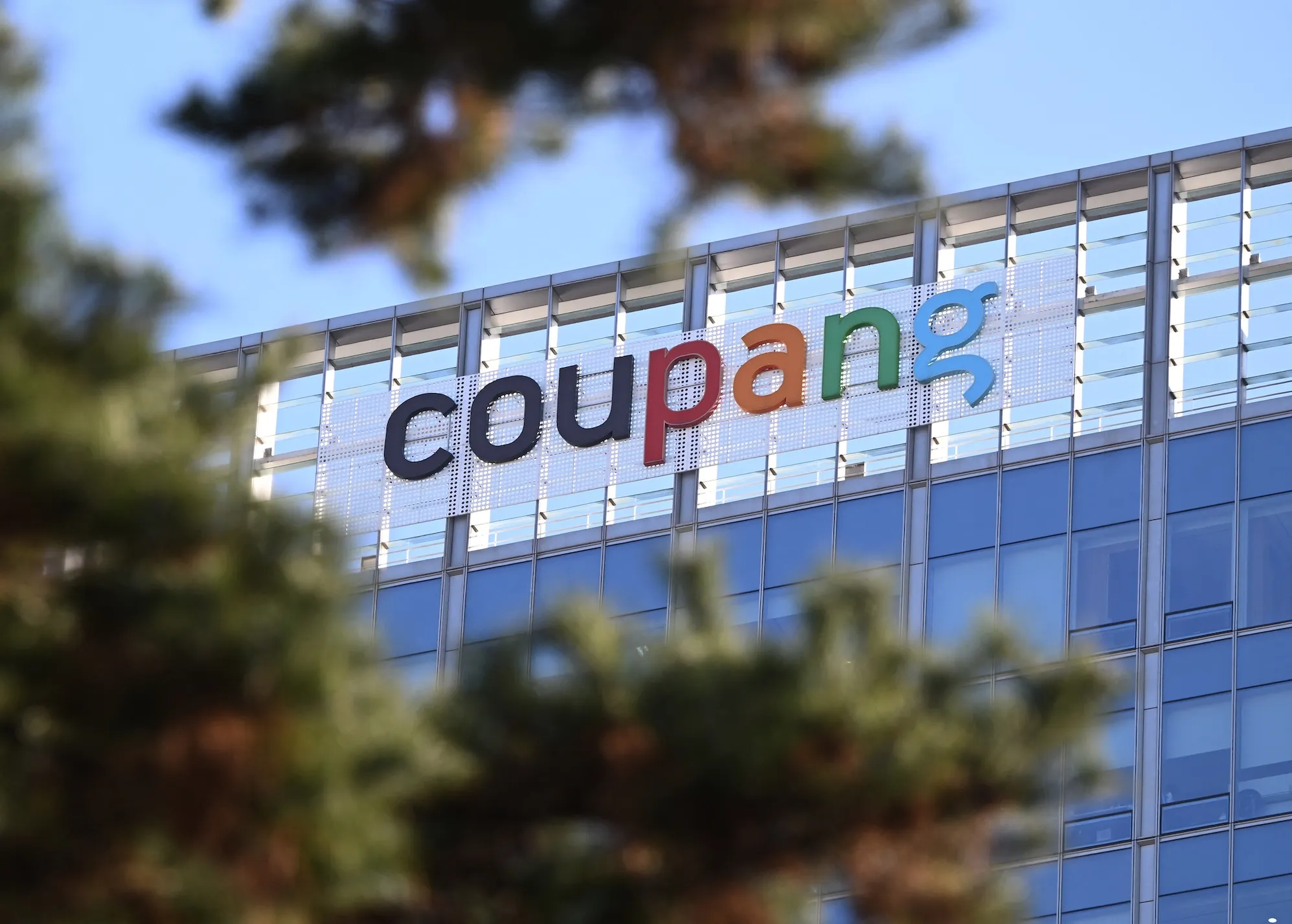
When a former employee quietly began extracting data from Coupang’s servers on June 24, 2025, the act looked, on its face, like a textbook insider-threat case—disgruntled, technically savvy, geographically mobile. What nobody in Seoul or Seattle anticipated was that the Coupang data breach would, within six months, detonate inside one of the most consequential bilateral trade relationships in the Asia-Pacific.
By early 2026, the episode had dragged in the White House, the U.S. Trade Representative, a bipartisan congressional hearing, five American hedge funds, and a potential tariff hike that rattled South Korea’s fragile currency. The Coupang South Korea data breach exposed not merely the personal information of 33.7 million customers—nearly two-thirds of the country’s entire population—but a structural fault line in how democratic allies govern data, enforce privacy law, and resolve disputes when corporate accountability crosses national borders.
That fault line, it turns out, is deep enough to swallow a trade relationship.
The Anatomy of a Breach: Five Months of Silence, One Smashed MacBook
The intrusion, as reconstructed by South Korean government investigators and third-party forensic firms Mandiant and Palo Alto Networks, was neither sophisticated nor spectacular. A former Coupang engineer—later identified as a Chinese national who had worked on the company’s authentication systems—used unrevoked access credentials to connect to customer data repositories through overseas servers. The breach continued, undetected, from late June to November 8, 2025: approximately 137 days of unauthorized access to names, phone numbers, email addresses, delivery addresses, and partial order histories belonging to 33.7 million Korean accounts.
The discovery came not from Coupang’s own security monitoring but because the perpetrator sent threatening, anonymous emails to the company and individual users. Only then did internal teams identify the compromise—initially estimating just 4,500 affected accounts. The true scale, confirmed via forensic investigation, was roughly 7,500 times larger.
Key Timeline of Events
| Date | Event |
|---|---|
| June 24, 2025 | Unauthorized access begins via overseas servers |
| November 6, 2025 | Coupang detects unusual access at 6:38 PM KST |
| November 8, 2025 | Last date of unauthorized access |
| November 18, 2025 | Full identification; KISA, PIPC, and National Police Agency notified—53+ hours after internal detection, violating the 24-hour reporting rule |
| November 29, 2025 | Coupang publicly discloses the breach |
| December 15, 2025 | Coupang files SEC 8-K; former CEO Park Dae-jun resigns |
| December 29, 2025 | Company announces 1.685 trillion won ($1.17B) compensation plan |
| January 13, 2026 | U.S. House Ways and Means Trade Subcommittee holds bipartisan hearing |
| January 23, 2026 | Greenoaks and Altimeter file ISDS notice with South Korea’s Ministry of Justice |
| January 26, 2026 | Trump administration raises tariffs on South Korea from 15% to 25% |
| February 12, 2026 | Three more U.S. investors—Abrams Capital, Durable Capital, Foxhaven—join ISDS action |
The cover-up attempt was equally cinematic: authorities recovered a MacBook Air the perpetrator had submerged in a canvas bag weighted with bricks. Forensic analysis of the retrieved device confirmed that while data from over 33 million accounts had been accessed, only approximately 3,000 records were retained, none of which appear to have circulated on the dark web. That distinction—between access and retention—would become one of the most contested technical arguments in the ensuing international dispute.
Management Failure, Not Sophisticated Attack: Seoul’s Damning Verdict
South Korean regulators delivered a judgment that was unsparing in its directness. The Coupang management failure data breach finding, published in a government-led investigation in February 2026, concluded that the breach was not the product of a nation-state cyberattack or advanced persistent threat. It was, in the investigators’ framing, an organizational failure: a company that had not properly revoked authentication credentials upon an employee’s departure, had failed to encrypt non-payment customer data despite having the capacity to do so, and had not fully implemented a data preservation order issued upon breach disclosure—resulting in the deletion of critical web and app access logs before outside parties could examine them.
The Personal Information Protection Commission (PIPC), South Korea’s principal privacy watchdog, further demanded that Coupang correct its public communications: the company had described the incident as data “exposure,” a characterization regulators rejected in favor of “leak”—a distinction laden with legal consequence under the country’s information network law.
For a company that had spent years presenting itself as the crown jewel of Korean e-commerce—an Amazon-equivalent with $34.5 billion in 2025 revenue and a NYSE listing that generated euphoric headlines in 2021—the regulatory verdict was stinging. South Korean President Lee Jae-myung publicly called for heavy penalties, describing personal data protection as “a key asset in the age of AI and digitalization” during a cabinet meeting. One Democratic Party lawmaker floated the possibility of punitive fines through special parliamentary legislation, an idea the PIPC endorsed publicly.
Under existing law, penalties are capped at 3% of annual revenue—a figure that, for a company of Coupang’s scale, could exceed $800 million. Some lawmakers were seeking to raise that ceiling to 10%.
Why the Coupang Breach Became an International Trade Issue
The escalation from domestic regulatory matter to international flashpoint followed a logic that, in retrospect, looks almost inevitable—though it required a specific convergence of corporate structure, investor geography, and geopolitical temperature.
Coupang’s corporate identity is inherently binational. Although the company operates as South Korea’s largest e-commerce platform—employing 95,000 people and serving consumers through its celebrated “Rocket Delivery” logistics network—its global headquarters sits in Seattle, Washington. It trades on the NYSE. Its largest shareholders are American. When South Korean regulators moved against the company, they were, from the investors’ perspective, effectively moving against a U.S.-headquartered enterprise operating in a foreign market.
U.S. investors activated treaty mechanisms that Seoul had not anticipated. On January 23, 2026, investment firms Greenoaks and Altimeter—together holding approximately $1.5 billion in Coupang stock—filed a formal notice of intent with South Korea’s Ministry of Justice, invoking the investor-state dispute settlement (ISDS) provisions of the U.S.-Korea Free Trade Agreement (KORUS FTA). Their central claim: that the Korean government’s response to the Coupang data breach was disproportionate, discriminatory, and designed to benefit domestic and Chinese competitors at the expense of an American company. By February 12, 2026, three additional U.S. investors—Abrams Capital, Durable Capital Partners, and Foxhaven Asset Management—had joined the action, according to a report by TechCrunch.
ISDS arbitration, for the uninitiated, is a provision embedded in most modern trade agreements that allows foreign investors to sue sovereign governments before international arbitral tribunals—bypassing domestic courts entirely. The mechanism was designed to protect cross-border investment from arbitrary government interference. In the Coupang case, the investors are alleging that South Korea violated the treaty’s guarantees of fair and equitable treatment, most-favored-nation status, and protection against expropriation. If the mandatory 90-day consultation period fails to produce resolution, the dispute proceeds to formal arbitration, with damages potentially running into billions of dollars charged against Seoul’s government.
Washington amplified the pressure through multiple channels. The U.S. investors also petitioned the U.S. Trade Representative to investigate under Section 301 of the Trade Act of 1974, requesting that “appropriate trade remedies”—including tariffs—be applied if Korea’s conduct was found to constitute discriminatory enforcement. The Korea Herald reported that U.S. Vice President J.D. Vance personally warned South Korean Prime Minister Kim Min-seok that the investigation appeared discriminatory. At a January 13 House Ways and Means Trade Subcommittee hearing, Republican Chair Adrian Smith characterized Korean regulators as pursuing “legislative efforts explicitly targeting U.S. companies,” with fellow lawmaker Rep. Scott Fitzgerald describing the government’s conduct as a “politically motivated witch hunt.”
On January 26, 2026, the Trump administration announced a tariff increase on South Korean goods from 15% to 25%—officially attributed to Seoul’s slow ratification of the bilateral trade deal reached the previous year. But the timing was precise enough that the official House Judiciary Committee account posted on X: “This is what happens when you unfairly target American companies like Coupang.” The Diplomat’s analysis concluded that while Trump’s tariff calculus encompasses broader investment commitments, the Coupang episode had provided political and rhetorical scaffolding for the escalation.
The Discrimination Argument: A Contested Ledger
The investors’ discrimination claim hinges on comparative enforcement: they argue that Korean and Chinese companies involved in comparable data incidents faced significantly lighter regulatory responses. This contention deserves scrutiny rather than uncritical acceptance, because the record is genuinely mixed.
CPO Magazine documented that South Korea’s largest mobile carrier, SK Telecom, received a record ₩134.5 billion ($97 million) fine following a breach of USIM identity data for approximately 27 million subscribers—a penalty that regulators imposed only after finding that SK Telecom “did not even implement basic access controls.” The SK Telecom enforcement, then, was itself unprecedented for a Korean incumbent. The Coupang investors counter that the scope of regulatory intervention—including executive travel restrictions, operational suspension threats, and parliamentary summons—far exceeded what any domestic Korean company had faced for equivalent or larger breaches.
There is no clean answer here. Regulatory severity is shaped by political context, media coverage, the identity of the company, and the temperament of individual legislators. What is demonstrably true is that Coupang’s delayed reporting (53-plus hours against a 24-hour requirement), its failure to implement the data preservation order, and the sheer demographic scale of the breach (affecting 65% of the national population) would have attracted intense scrutiny in any jurisdiction operating under modern data protection law.
The Data Governance Gap: Comparing South Korea to Its Peers
The Coupang episode has crystallized a conversation that South Korean policymakers have deferred for years: their data protection framework, while nominally robust, contains structural gaps that both enabled the breach and complicated the regulatory response.
Comparative Data Governance Frameworks
| Jurisdiction | Law | Max Penalty | Encryption Mandate | Breach Notification |
|---|---|---|---|---|
| European Union | GDPR (2018) | 4% of global revenue | Risk-based requirement | 72 hours to authority |
| China | PIPL (2021) | ¥50 million / 5% revenue | Mandatory for sensitive data | Immediate notification |
| California, USA | CPRA (2020) | $7,500 per intentional violation | Required for sensitive data | “Expedient” notification |
| South Korea | PIPA (2011, amended) | 3% of revenue | Required for financial data only | 24 hours |
The gap is instructive: South Korea does not mandate encryption for non-payment personal data. Had Coupang been operating under GDPR, the absence of encryption for names, addresses, and order histories would have constituted an aggravating factor attracting enhanced penalties—and a legal requirement, not merely a best-practice recommendation. The PIPC’s investigation explicitly cited this absence as a contributing factor to the breach’s impact.
The South Korea data privacy law reform after Coupang is now a live legislative debate. President Lee’s call for stronger penalties, the PIPC’s support for punitive fines, and the 3%-to-10% penalty ceiling proposal all represent pressure for alignment with international norms. But the investors’ ISDS action complicates that reform: any retroactive application of harsher penalties would, in the investors’ view, compound the treaty violation rather than resolve it.
Coupang’s Washington Wager
The company’s political footprint in Washington has added a dimension that South Korean civic groups find troubling—and that American trade lawyers find legally consequential. Since its 2021 NYSE listing, Coupang has reportedly spent more than $10.75 million on federal lobbying, targeting agencies across the executive branch and Congress. Following Donald Trump’s reelection in November 2024, the company donated $1 million to the Trump-Vance inaugural committee and positioned itself as a conduit for American export interests through a partnership with the Commerce Department’s International Trade Administration.
Coupang has publicly stated it has no connection to the investors’ ISDS filings, insisting it has been “fully complying with the Korean government’s requests.” Yet the political infrastructure built over five years has, at minimum, created the architecture through which investor grievances could be amplified into government-level intervention. Whether this constitutes sophisticated stakeholder management or a structural conflict of interest for a company operating under Korean regulatory jurisdiction is a question Seoul’s policymakers are beginning to ask with increasing urgency.
Financial Fallout: A $8 Billion Market Cap Erasure
The breach’s financial consequences have been severe. Following public disclosure in late November 2025, Coupang’s stock (NYSE: CPNG) fell sharply, erasing more than $8 billion in market capitalization, with shares declining roughly 50% from their pre-breach highs. The company swung from a Q4 2024 net income of $156 million to a Q4 2025 net loss of $26 million, missing analyst consensus estimates, as active customers slipped and December growth decelerated to approximately 4% in constant currency terms—down from 16% in the prior three months.
The 1.685 trillion won ($1.17 billion) compensation package—issued as 50,000-won platform-use vouchers to all 33.7 million affected users—has been criticized by lawmakers as a mechanism that recirculates money within Coupang’s own ecosystem rather than providing genuine restitution. It is, simultaneously, the largest corporate data breach compensation in South Korean history. Coupang’s full-year 2025 revenue nonetheless reached $34.5 billion, and the company retains over $7 billion in cash—a balance sheet that provides resilience, if not immunity, from the regulatory and legal storm surrounding it.
In Taiwan, where Coupang has been aggressively expanding, the forensic investigation confirmed that one user account was accessed—though earlier reports suggested a spillover affecting approximately 200,000 Taiwanese accounts, a figure Coupang has disputed.
What Reform Looks Like: A Policy Agenda for Seoul and Beyond
The Coupang case offers several policy imperatives that extend beyond Korea’s borders:
First, South Korea must close the encryption gap. The absence of a mandatory encryption standard for non-financial personal data is an anachronism in a country that hosts some of the world’s most sophisticated digital infrastructure. Alignment with GDPR-equivalent standards is not merely a trade relations gesture—it is an essential infrastructure investment in the age of AI data dependency.
Second, ISDS provisions must be examined for fitness-of-purpose in the digital economy context. The original ISDS architecture was designed to protect physical-asset investments—factories, mines, infrastructure—from expropriation by host governments. Applying that framework to data enforcement actions against technology companies creates perverse incentives: it effectively allows investors to convert regulatory pressure into trade litigation, circumventing the very domestic accountability mechanisms that consumers require. The KORUS FTA’s digital trade provisions were cited in both investor filings and congressional testimony; renegotiating their scope deserves attention from both trade ministries.
Third, breach notification timelines must have teeth. Coupang reported the breach to authorities more than 53 hours after internal identification—more than double the 24-hour requirement. That delay destroyed evidentiary logs. Any reformed framework should mandate automated, cryptographically verifiable notification to regulators at the moment of internal breach confirmation, not at the company’s discretion.
Fourth, the distinction between “access” and “harm” requires legislative clarity. The central factual dispute in the Coupang case—33.7 million accounts accessed versus approximately 3,000 records retained—has no clean resolution under current Korean law. A mature data governance framework would define the spectrum between these poles and prescribe proportionate enforcement accordingly, reducing both regulatory overreach and corporate minimization.
The Broader Geopolitical Resonance
The Coupang episode is not an isolated incident. It belongs to a wider pattern in which digital companies—structurally transnational but operationally concentrated in single markets—are caught between the sovereign enforcement prerogatives of their host nations and the financial interests of their investor base, which is increasingly cross-border, treaty-protected, and politically connected.
South Korea is not alone in navigating this terrain. France has faced analogous tensions over GDPR enforcement against American platforms. India’s data localization rules have generated investor concern under its bilateral investment treaties. China’s PIPL, despite its severity on paper, has been selectively enforced in ways that draw diplomatic complaints. The Coupang data governance reform South Korea conversation is, at its core, a version of a global argument: in a world where data is the primary asset of the digital economy, whose law governs it, who enforces that law, and what recourse exists when the answers conflict?
Seoul has a specific reason to resolve this question urgently. Its status as a trusted partner for foreign investment—particularly American capital—depends on the perception of consistent, proportionate, and non-discriminatory enforcement. President Lee’s calls for heavy penalties may play well in domestic politics. But if they are perceived internationally as retroactive, targeted, or politically motivated, the reputational cost will be measured not only in arbitration awards but in the long-term trajectory of foreign direct investment into one of Asia’s most dynamic economies.
Conclusion: The Governance Dividend
The Coupang case will likely be resolved through negotiation—the 90-day consultation period, political back-channels, and the mutual interest both governments have in de-escalation suggest that formal ISDS arbitration, with its multi-year timeline and uncertain outcomes, is a last resort rather than a destination. The tariff issue is governed by economics larger than any single company. Trade ministers on both sides have urged restraint.
But resolution of the immediate dispute should not be confused with resolution of the underlying problem. South Korea has a data governance framework that is partially adequate for the digital economy it has built. It lacks mandatory encryption standards for the most commonly collected personal data. It has penalty caps that, paradoxically, invite both regulatory maximalism and investor challenges. It has notification timelines that exist on paper and evaporate under corporate pressure.
The citizens whose data was accessed—not sold, perhaps, but accessed without consent, for 137 days, by someone who then submerged a laptop in a river to escape accountability—did not generate this geopolitical drama. They were its precondition. Any reform that emerges from the Coupang episode owes its first obligation to them: not to Washington, not to Seoul’s trade ministry, and certainly not to the shareholders whose portfolio values informed the language of “expropriation.”
Data governance, in the end, is not a trade issue. It is a social contract. South Korea, one of the world’s most digitally sophisticated societies, has the institutional capacity to write that contract properly. The Coupang breach made the cost of delay unmistakably visible.
Discover more from The Economy
Subscribe to get the latest posts sent to your email.



Key Takeaways
- Rolex’s secondary market rose approximately 7.9% year-over-year as of 2026 (per WatchCharts data) — trailing Patek Philippe (+16.2%) and Tudor (+11.4%) but still outperforming Audemars Piguet (+3.4%).
- Rolex raised U.S. retail prices 4–9% in January 2026 (steel models ~5.6%, gold models ~8.7%), narrowing the historical gap between retail and pre-owned pricing.
- Not every model appreciates: steel sports references (Submariner, GMT-Master II, Daytona) have held value far better than two-tone or widely available dress references like the standard Datejust.
- The Lady-Datejust posted the sharpest 2026 gain among tracked collections — up 22.73%, from roughly $9,269 to $11,376 — driven by demand for smaller, “everyday luxury” watches.
- Gold’s rise past $2,400/oz has directly lifted the investment case for Rolex’s precious-metal references (Day-Date, Sky-Dweller, Yacht-Master).
The Model-by-Model Picture
| Category | 2026 Trend |
|---|---|
| Lady-Datejust | +22.73% (strongest performer among tracked collections) |
| Steel sports models (Submariner, GMT-Master II) | Held value well; corrected from 2022 peak but stabilized above retail |
| Daytona | Corrected from highs above $50,000 to the mid-$30,000s; still among the most sought-after references |
| Two-tone/widely available Datejust | Flat to negative — “holds value” is an overstatement for this category |
| Gold references (Day-Date, Sky-Dweller) | Lifted by gold’s rise above $2,400/oz |
Why the “Rolex Always Appreciates” Myth Is Fading
The pandemic-era boom pushed some references — the Daytona above all — to speculative highs disconnected from historical norms. Since the March 2022 peak, steel sports models have compressed meaningfully, and dealers who bought inventory near the top have in some cases faced 20–40% markdowns on liquidation. The lesson for 2026 buyers: Rolex as a category is not a monolith. Value retention depends heavily on specific reference, condition, and whether the piece comes with box and papers (“full set”).
What’s Actually Driving 2026 Strength
- Retail price increases raise the floor. When a new Submariner retails at $10,050 (up from $9,500), a pre-owned example at $11,000–$12,000 suddenly represents a smaller premium — narrowing the gap without secondary prices actually moving.
- Supply discipline remains Rolex’s core lever. The brand has never confirmed production numbers, and secondary-market premiums remain entirely a function of Rolex’s own manufacturing decisions — a risk factor as much as a support.
- Certified Pre-Owned rollout. Rolex’s now fully rolled-out CPO program has changed how buyers transact in the used market, adding a layer of brand-verified legitimacy that supports pricing.
The Case for Rolex as a Portfolio Diversifier
Financial advisors increasingly frame luxury watches not as a replacement for equities or bonds, but as a tangible, historically low-correlation diversifier — one that carries its own risks (illiquidity, condition-dependent pricing, no yield) but has demonstrated multi-decade resilience for specific references.
Is Rolex a good investment in 2026?
It depends heavily on the specific reference. Steel sports models like the Submariner and Daytona have held or grown in value; two-tone and widely available dress models generally have not. Overall, Rolex’s secondary market rose about 7.9% year-over-year in 2026, trailing Patek Philippe but ahead of Audemars Piguet.
Discover more from The Economy
Subscribe to get the latest posts sent to your email.

Navigating Mortgage and Loan Refinancing in a High-Yield Environment
Global public debt crossing critical thresholds has kept central bank policies volatile, resulting in fluctuating US Treasury yields throughout 2026. For homeowners and commercial property holders burdened by previous high-interest borrowing cycles, finding optimal refinance windows has become a high-stakes financial puzzle. Stalled disinflation and stubborn employment numbers mean rate cuts are incremental, requiring borrowers to act with precision.
Timing your mortgage or commercial loan refinance in this environment requires a deep understanding of yield curve movements and lender risk appetites.
Decoding 2026 Refinance Dynamics
The 10-Year Treasury Yield Benchmark
Mortgage rates continue to track closely with the 10-year US Treasury yield. When macroeconomic anxiety spikes debt issuance, yields rise, tightening consumer borrowing capacity. Savvy borrowers monitor weekly Treasury auctions to lock in rates during brief dip windows.
Hybrid ARMs and Alternative Structures
With fixed rates remaining elevated, 7/1 and 10/1 adjustable-rate mortgages (ARMs) have surged in popularity. These products offer lower initial monthly payments, giving borrowers breathing room until central bank easing cycles fully materialize.
| Loan Product | Current Rate Range | Best For | Key Risk Factor |
| 30-Year Fixed Mortgage | 6.2% – 6.8% | Long-term predictability | Higher initial monthly outlay |
| 7/1 Hybrid ARM | 5.5% – 5.9% | Short-term ownership / flipping | Rate reset risk after year 7 |
| Commercial Refinance | 7.0% – 8.2% | Corporate asset restructuring | Strict DSCR lender covenants |
Actionable Steps for Successful Refinancing
To maximize your chances of securing favorable refinance terms in a volatile market, follow a disciplined preparation strategy.
Boost Your Credit Score Immediately: Lenders in 2026 are applying stringent credit tiering; a 20-point increase can drop your APR by a crucial quarter-point.
Shop Regional Credit Unions: Smaller financial institutions often offer portfolio loans with more flexible underwriting than major national banks.
Calculate the Break-Even Point: Ensure your total closing costs are recouped through monthly savings within 24 months of closing.
“Market Strategist View: Refinancing in 2026 is an exercise in opportunistic timing. Borrowers must maintain immaculate financial profiles ready to strike the moment Treasury yields dip.”
Mastering the complexities of today’s debt environment ensures you can successfully lower your debt service costs and protect your long-term financial stability.
Discover more from The Economy
Subscribe to get the latest posts sent to your email.

The days of pulling generic auto insurance quotes based purely on your zip code and age are officially over. In 2026, insurance comparison engines are powered entirely by generative AI and real-time telematics. These platforms digest thousands of live data points—ranging from your driving smoothness via connected vehicle sensors to real-time traffic congestion patterns—to generate hyper-personalized premiums instantly.
For consumers, this evolution represents both a massive opportunity for savings and a hidden trap for penalty pricing. Understanding how AI algorithms evaluate risk is essential for anyone looking to lower their monthly auto insurance premiums.
How AI Comparison Engines Evaluate Your Risk Profile
Behavioral Telematics and Connected Cars
Modern cars stream performance data directly to insurance aggregators. Generative AI models analyze braking sharpness, acceleration curves, cornering G-forces, and phone distraction metrics. Drivers who maintain smooth, defensive habits are rewarded with dynamic rate cuts of up to 40% compared to traditional rating tiers.
Predictive Traffic and Weather Modeling
AI tools now cross-reference your daily commute route with predictive weather and accident probability models. If your standard parking location or driving corridor has a statistically higher incidence of uninsured motorist claims, your quotes will reflect that hyper-local risk assessment.
| Comparison Factor | Traditional Rating Model | 2026 Generative AI Model | Impact on Premium |
| Mileage & Usage | Annual estimated odometer reading | GPS tracking & live trip duration | High (up to 35% savings) |
| Driving Behavior | MVR driving record & accidents | Real-time braking, speed, & G-force | Critical (determines tier) |
| Vehicle Tech | Make, model, and safety rating | ADAS calibration & repair cost data | Moderate |
Strategies to Lower Your AI-Driven Insurance Quote
To outsmart the algorithm and secure the lowest possible premium in 2026, drivers must proactively manage their digital footprint on insurance platforms.
Opt-In for Telematics Trial Periods: Many insurers offer immediate 15% discounts just for installing their driving app; let it track safe habits for 30 days to lock in permanent savings.
Scrub Unverified Public Records: Ensure your motor vehicle report is free of clerical errors that AI risk models misinterpret as reckless behavior.
Compare AI Aggregators: Use platforms that integrate multi-carrier API feeds rather than single-brand comparison sites to find the best risk-adjusted rate.
“Industry Note: AI-driven pricing rewards transparency and precision. Drivers who actively manage their telematics data consistently out-save those relying on legacy quote calculators.”
Embracing AI comparison tools allows savvy policyholders to customize coverage limits precisely to their driving habits, eliminating wasted premium spend while ensuring robust protection.
Discover more from The Economy
Subscribe to get the latest posts sent to your email.

Neocloud Economics in 2026: GPU Debt, Utilization and Power

What Is a Neocloud? How AI GPU Clouds Work and Compare

Lula Re-elected in 2026: What Changes for the Dollar, Brazilian Stocks, and Interest Rates?

Lula Wins Brazil’s 2026 Election: Five Economic Tests for 2027

SSI November 2026 Payment: Why Benefits Arrive October 30

Russia Sanctions Waiver: What Asian Oil Buyers Gain

Asia Markets Weekly: How Oil, US Yields and the Fed Reach Tokyo, Kuala Lumpur and Karachi

Gold Near $4,000: Buy, Hold or Wait? A Pakistan Tola Price Guide

US 10-Year Treasury Yield Near 5%: The Hidden Cost for Pakistani Investors

Fed Meeting on October 28: Hike or Hold—and Why Pakistan Investors Should Care

Can Pakistan Turn US–Iran Mediation Into an Economic Dividend?

Oil Above $100: How Higher Crude Prices Reach Pakistan’s Rupee, Petrol and Imports

SBP Interest Rate at 11.5%: What Will Decide Pakistan’s Next Policy Move?

The Global South: Debt, Climate Finance and Investment in 2026

Crude Oil & Petroleum Market Analysis: OPEC+ Decisions and Price Forecasts

Top US Convenience Store Chains: Store Counts, EV Charging, and Sales Trends

Algorithmic Dogfights: Why the U.S. and China Must Establish Rules of Engagement for Autonomous Air Power

Who Is Shivon Zilis? The Neuralink Executive at the Center of the Musk–OpenAI Trial

Social Security Extra $90 Deposit: Who Qualifies for the October 2026 Medicare Rebate?

Corporate America Faces a New Debt Test as US Borrowing Costs Surge

Gold Price Outlook 2026: The Forces Behind the Forecasts—and What Could Reverse Them

Global Economic Outlook 2026: 7 Forces Reshaping Markets, Trade and Business

Gold Falls 3.7% as Yields Surge: Is Gold Still a Safe Haven in 2026?

Stock Market Crash in 2026? Warning Signs, Scenarios and a Calm Investor Checklist

Anthropic Bans Sustained Abuse of Claude AI Under New Usage Policy Effective November 12, 2026

MAS Allocates S$1.45 Billion to Five Asset Managers in Third EQDP Batch: Total Deployment Reaches S$5.4 Billion

Stock Market Today: Dow, S&P 500, and Nasdaq Retreat as Treasury Yields

Geopolitics and Your Portfolio: How International Affairs Move Global Markets
-

 Markets & Finance10 months ago
Top 15 Stocks for Investment in 2026 in PSX: Your Complete Guide to Pakistan’s Best Investment Opportunities
-

 Analysis8 months ago
Johor’s Investment Boom: The Hidden Costs Behind Malaysia’s Most Ambitious Economic Surge
-

 Analysis8 months ago
Top 10 Stocks for Investment in PSX for Quick Returns in 2026
-

 Banks9 months ago
Best Investments in Pakistan 2026: Top 10 Low-Price Shares and Long-Term Picks for the PSX
-

 Analysis9 months ago
Brazil’s Rare Earth Race: US, EU, and China Compete for Critical Minerals as Tensions Rise
-

 Investment10 months ago
Top 10 Mutual Fund Managers in Pakistan for Investment in 2026: A Comprehensive Guide for Optimal Returns
-

 Global Economy10 months ago
15 Most Lucrative Sectors for Investment in Pakistan: A 2025 Data-Driven Analysis
-

 Global Economy10 months ago
Pakistan’s Export Goldmine: 10 Game-Changing Markets Where Pakistani Businesses Are Winning Big in 2025