
Markets & Finance
The Falkland Islands Dispute: Sovereign Wealth, Offshore Drilling, and Market Impacts

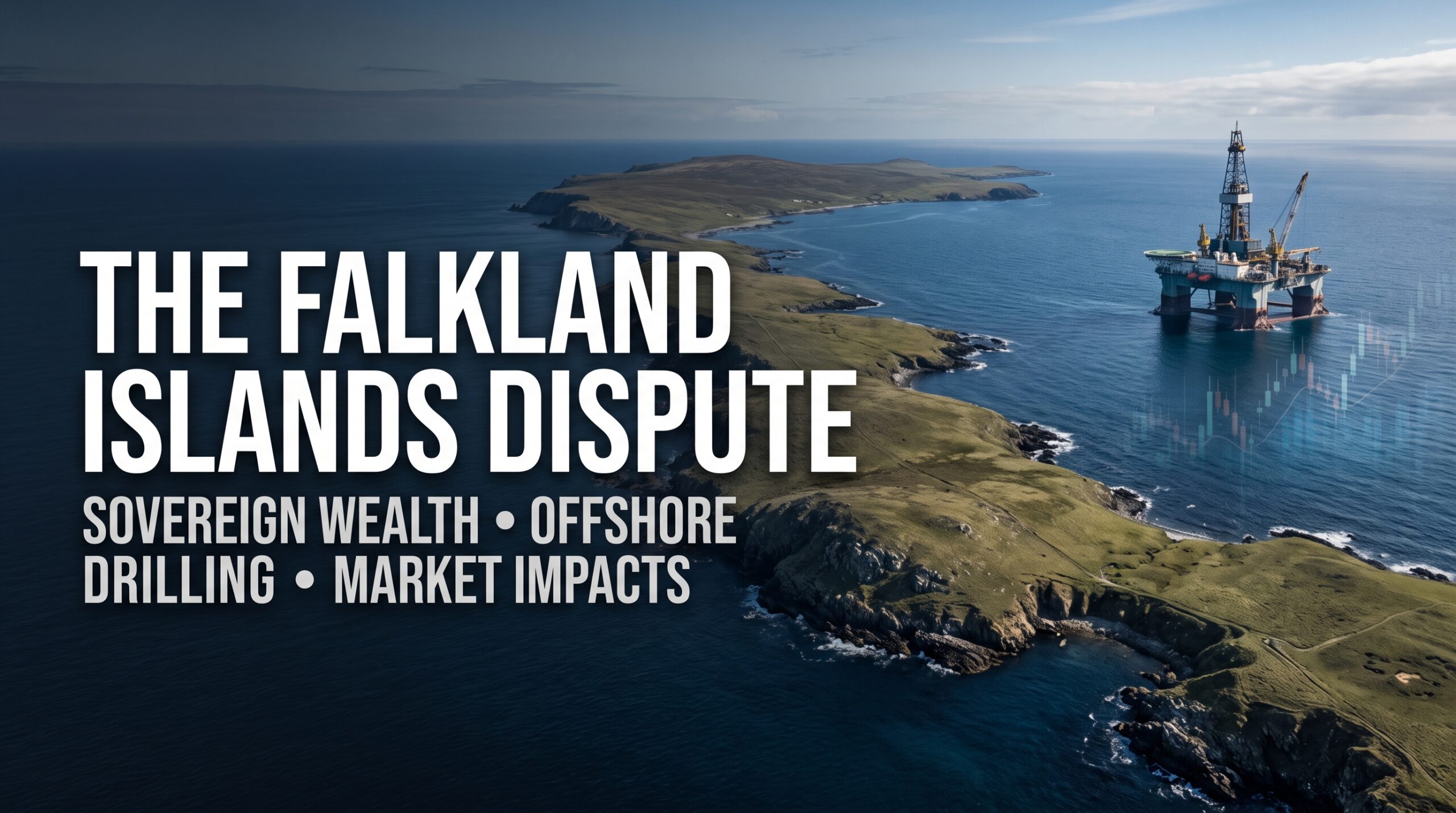
A sovereignty dispute that has simmered largely unresolved since the 1982 Falklands War has erupted into its sharpest confrontation in decades this September, driven not by military posturing but by offshore oil drilling economics. Argentine President Javier Milei announced sweeping new sanctions on September 3, 2026, targeting companies, directors, shareholders, and suppliers involved in the Sea Lion oil project near the Falkland Islands (Islas Malvinas) — escalating dramatically after U.S. President Trump publicly stated Washington’s decades-long neutral stance on the islands’ sovereignty was “under review.” With first oil from Sea Lion targeted for 2028 and Navitas Petroleum and Rockhopper Exploration having already taken final investment decisions in December 2025, this dispute has moved from historical grievance to live geopolitical risk assessment territory for any investor with exposure to South Atlantic energy or shipping.
Key Takeaways
- Argentina announced new sanctions on September 3, 2026 against foreign firms, directors, and suppliers connected to offshore oil and gas extraction near the Falklands without Argentine authorization — with penalties potentially extending to companies’ ability to operate or sign contracts within Argentina itself.
- The escalation was directly triggered by President Trump’s September 2026 comment that the U.S. position on Falklands sovereignty was “under review” — a break from decades of formal U.S. neutrality on the issue.
- Sea Lion, operated by U.K.-based Rockhopper Exploration and Israel’s Navitas Petroleum, took final investment decisions in December 2025, with first oil currently planned for 2028, located roughly 136 miles north of the Falklands on the Argentine continental shelf.
- A lawsuit filed September 1, 2026 by Argentine environmental groups and Falklands War veterans seeks a federal court injunction to halt the Sea Lion development entirely, citing both environmental and sovereignty concerns.
- Milei has simultaneously pledged increased military spending for a new naval base in Tierra del Fuego and telecommunications upgrades in the South Atlantic — even while pursuing an otherwise aggressive austerity program — signaling the dispute’s rising domestic political salience in Argentina.
From Historical Grievance to Live Resource Conflict
The Falkland Islands sovereignty dispute has a well-documented, largely static legal history: Argentina bases its claim on inheritance from Spain, geographic proximity, and its 19th-century position on the islands, while the United Kingdom relies on continuous administration since 1833 and the principle that the roughly 3,000 Falkland Islanders should determine their own political future. The 1982 war ended with restored British administration but never resolved the underlying sovereignty question — and UN General Assembly Resolutions from 1965 and 1976 explicitly declined to determine territorial title, endorse either state’s claim, or establish any binding resolution mechanism.
What has fundamentally changed in 2026 is the economic stakes. As one legal analysis put it: petroleum activity around the islands has brought “a long-running sovereignty dispute into direct conflict with the planned extraction of a finite offshore resource” — converting an abstract historical argument into an immediate, quantifiable commercial conflict.
| Sea Lion Project Milestone | Date/Status |
|---|---|
| Final investment decision (Navitas Petroleum, Rockhopper) | December 2025 |
| Planned first oil | 2028 |
| Location | ~136 miles north of Falklands, on Argentine continental shelf |
| Argentine legal challenge filed | September 1, 2026 |
| Argentine sanctions announced | September 3, 2026 |
| UK government response | September 4, 2026 (reaffirmed sovereignty position) |
The Trump Factor: A Genuine Break From Decades of U.S. Neutrality
The single most consequential development in this dispute’s 2026 escalation is not Argentine domestic politics — it’s President Trump’s public statement that the U.S. position on Falklands sovereignty was “under review.” For a dispute where Washington has maintained formal neutrality for over four decades (even during the 1982 war, when the U.S. ultimately provided intelligence and material support to Britain while officially neutral), any signal of reconsidering that posture carries outsized diplomatic weight. Milei explicitly credited Trump’s comments as the catalyst for his own escalation, using the moment to reassert Argentina’s claim publicly and frame the dispute in explicitly nationalist terms: “The Falkland Islands are Argentinian, historically and legally.”
Argentina’s Sanctions Mechanism: How Far Does It Reach?
Milei’s September 3 measures are notable for their extraterritorial ambition. Rather than simply barring Argentine entities from involvement, the proposed sanctions target:
- Companies directly involved in offshore extraction without Argentine approval
- Directors and executives of those companies personally
- Suppliers providing goods or services to the projects
- Shareholders with financial stakes in involved companies
- Potential exclusion from operating or signing contracts within Argentina for any tied entity
Argentina’s government has already begun actively enforcing this scrutiny — Bloomberg reported on September 7 that Milei’s press office circulated statements from major oilfield service firms Halliburton, SLB, and Baker Hughes explicitly confirming they have no involvement in Falklands-area oil activities, an unusual public disclosure pattern suggesting real commercial pressure is already being applied to the broader oilfield services industry, not just the direct project operators.
Legal Challenge: Domestic Litigation Adds a Second Front
Beyond executive-branch sanctions, the dispute now has a parallel domestic legal track. On September 1, 2026, Falklands War veterans and environmental lawyers filed suit in Argentine federal court, seeking an injunction to halt the Sea Lion development on both environmental (marine ecosystem protection) and sovereignty grounds. This dual-track approach — executive sanctions plus judicial injunction — gives Argentina multiple simultaneous pressure points against the project, even though Argentine courts have no jurisdiction to actually halt British-licensed extraction occurring under Falkland Islands Government authority.
The Local Investment Angle: Elsztain’s Complicated Position
An underappreciated wrinkle in the dispute involves Argentine businessman Eduardo Elsztain, CEO of real estate firm IRSA, who has previously sought to acquire a majority interest in the Falkland Islands Company (though British authorities declined to allow an Argentine investor to take control). Elsztain has publicly defended continued economic engagement with the islands, invoking his grandfather’s view that deeper Argentine economic involvement throughout the 20th century might have prevented the 1982 war entirely — a notably dissenting voice within Argentina’s business community against Milei’s confrontational approach, illustrating that Argentine opinion on strategy (if not on the underlying sovereignty claim) is not monolithic.
What This Means for Sovereign Wealth Funds and Geopolitical Risk Assessment
For sovereign wealth funds and institutional investors managing exposure to South Atlantic energy assets, shipping routes, or UK/Argentine sovereign risk, several structural factors are worth tracking as part of ongoing geopolitical risk assessment frameworks:
| Risk Factor | Assessment |
|---|---|
| Direct expropriation risk to Sea Lion | Low — project operates under UK/Falklands jurisdiction, outside direct Argentine legal reach |
| Reputational/compliance risk to project suppliers | Rising — Argentina’s sanctions threaten to extend to any entity with commercial ties, creating real due-diligence burden |
| Broader UK-Argentina bilateral relationship risk | Elevated — diplomatic relations likely to cool further regardless of project outcome |
| U.S. policy shift risk | Genuinely uncertain — Trump’s comments represent the first real crack in 40+ years of formal neutrality |
| Regional diplomatic alignment risk | Moderate — Latin American nations have historically backed Argentina’s sovereignty claim at forums like the Rio Group, and could do so again |
Broadly, 2026 sovereign wealth fund research (from IFSWF’s Annual Review and related industry analysis) confirms that funds are increasingly applying multidisciplinary risk assessment frameworks that explicitly weight geopolitics, alongside ESG, climate, and technology, when evaluating portfolio company and direct investment risk — the Falklands dispute is a clean, contained case study of exactly this kind of geopolitically-entangled resource risk that such frameworks are now designed to catch.
A Practical Framework for Investors and Corporate Risk Teams
- Distinguish legal jurisdiction from commercial pressure risk. Argentina cannot legally halt Sea Lion, but its sanctions regime can meaningfully complicate supplier relationships, financing, and insurance for any company with Argentine commercial exposure elsewhere.
- Monitor U.S. policy statements closely as the primary escalation variable. Trump’s “under review” comment is the single development most likely to shape whether this dispute remains a contained bilateral irritant or escalates toward a genuine diplomatic crisis.
- Watch for supplier/oilfield-services company disclosure patterns. The Halliburton/SLB/Baker Hughes public disclaimers suggest a template other companies with any Argentina exposure may need to follow proactively.
- Track the domestic Argentine legal case as a secondary signal. While unlikely to succeed in halting the UK-licensed project, its outcome will be a useful gauge of how much domestic legal and political pressure Milei can sustain around the issue.
- Factor regional diplomatic alignment into broader Latin America risk models. Historical precedent (Rio Group, UNASUR) shows Latin American nations readily back Argentina’s sovereignty claim at multilateral forums, which could complicate unrelated UK commercial interests across the region if the dispute escalates further.
FAQ
Why has the Falklands dispute escalated so sharply in September 2026?
The immediate trigger was President Trump’s public comment that the U.S. position on Falklands sovereignty was “under review” — breaking decades of formal U.S. neutrality — which Argentine President Milei used as justification to announce sweeping new sanctions against companies involved in offshore oil extraction near the islands.
Can Argentina legally stop the Sea Lion oil project?
No — Sea Lion operates under UK and Falkland Islands Government jurisdiction, outside direct Argentine legal authority. Argentina’s sanctions instead target the commercial relationships of involved companies, their directors, shareholders, and suppliers, creating compliance and reputational pressure rather than direct legal authority to halt the project.
When is Sea Lion expected to begin producing oil?
First oil from the Sea Lion project, operated by Rockhopper Exploration and Navitas Petroleum, is currently planned for 2028, following a final investment decision taken in December 2025.
What is the biggest risk this dispute poses to companies with unrelated Argentina exposure? Argentina’s proposed sanctions could extend to barring any company connected to Falklands oil extraction — including their suppliers and shareholders — from operating or signing contracts within Argentina, creating due-diligence and compliance risk well beyond the direct project participants.
Discover more from The Economy
Subscribe to get the latest posts sent to your email.


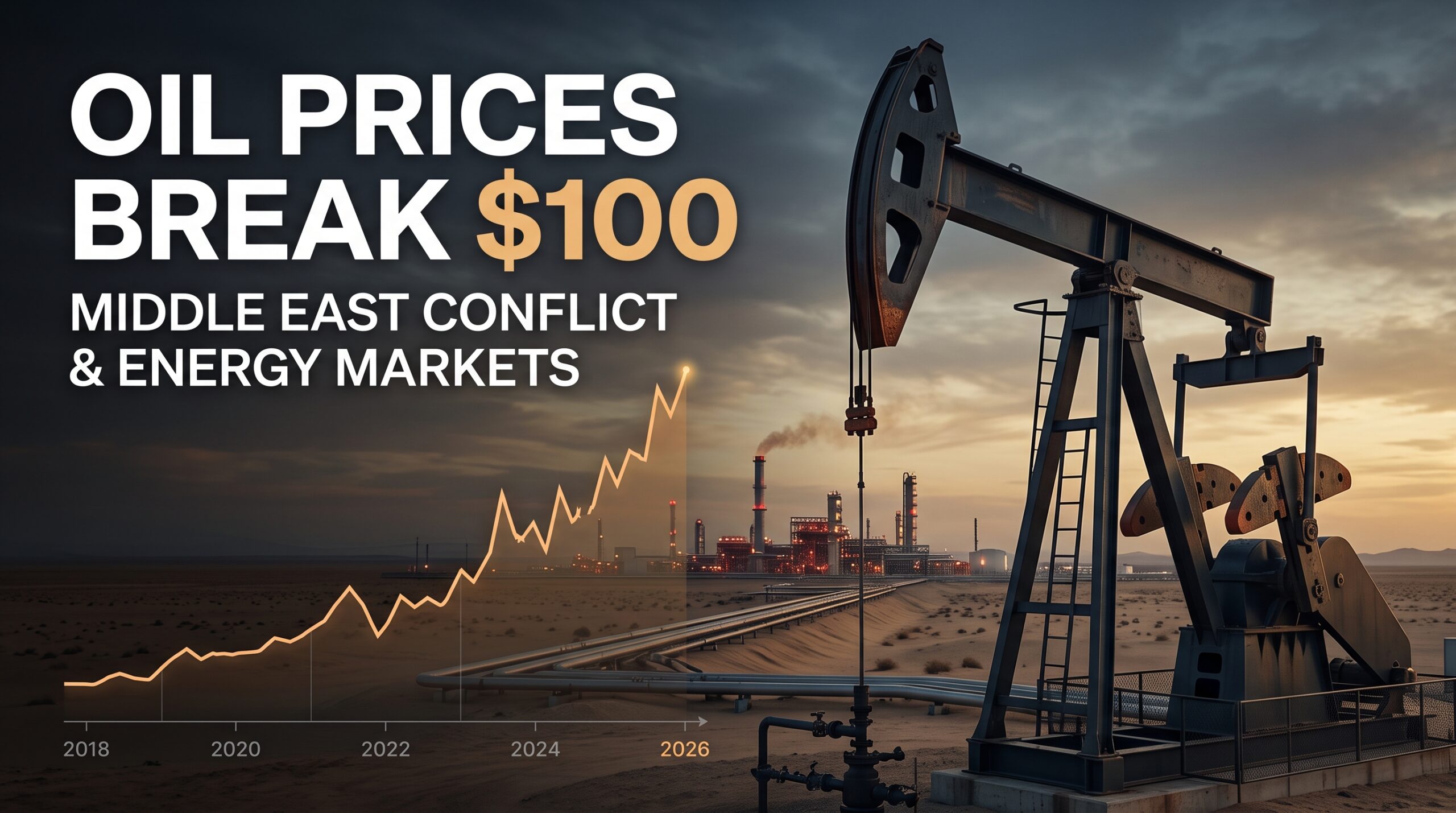
Brent crude oil price action in September 2026 tells the story of a global energy market that has been living through sustained crisis conditions for the better part of a year. Brent hit $108 a barrel on September 10 — its highest level since May 19 — as fighting between the U.S., Israel, and Iran intensified over the preceding two weeks, with Iranian missile strikes on U.S. warships and tankers in the Persian Gulf and Houthi attacks on Saudi energy facilities broadening the conflict’s footprint. This is not an isolated spike: Brent has traded above $100 a barrel repeatedly throughout 2026, touching $110 in March and $91 in early March during earlier escalation phases, in what has become the most sustained oil-supply crisis since the 2022 Russia-Ukraine shock.
Key Takeaways
- Brent crude reached $108/barrel on September 10, 2026, its highest close since May, driven by U.S. strikes on Iranian oil tankers and Houthi attacks on Saudi Arabia.
- Saudi Arabia’s crude oil production fell by approximately 1.9 million barrels per day in August 2026 as conflict-related disruptions intensified.
- The EIA’s September 2026 Short-Term Energy Outlook forecasts Brent averaging around $90/barrel in the second half of 2026 — $8/barrel higher than the previous month’s forecast — before easing to approximately $77/barrel by Q2 2027 as Middle East exports normalize.
- Global oil inventories have fallen by roughly 400 million barrels in 2026, with continued drawdowns of 3.0 million barrels/day forecast for Q3 and 1.7 million barrels/day for Q4.
- U.S. gasoline prices hit $4.22/gallon in early September, the highest since June, with the single-day increase on September 9 (+7.3 cents) the largest since May.
- Renewable energy stocks have outperformed oil and gas equities on a risk-adjusted basis during multiple 2026 volatility spikes, as investors treat the energy transition as a genuine hedge against Middle East supply-shock risk rather than a purely long-term thematic bet.
The 2026 Oil Price Timeline: A Year of Escalation and Partial De-Escalation
Unlike a single geopolitical shock, 2026’s oil market has moved through multiple distinct phases tied directly to the trajectory of the Iran conflict, which began with U.S. and Israeli strikes on February 28, 2026.
| Date | Brent Price | Context |
|---|---|---|
| Late Feb 2026 | Pre-conflict baseline | Conflict begins Feb 28 |
| March 6, 2026 | ~$91–94/barrel | Strait of Hormuz shipping nearly halted; 7–11 million bpd estimated missing from market |
| March 20, 2026 | $110+/barrel | Iraq declares force majeure on oilfields; drone strikes hit Kuwaiti refineries |
| Late June 2026 | ~$72.68/barrel | Initial accord reduces tensions; Strait of Hormuz traffic resumes |
| August 2026 | $91/barrel average | Renewed escalation; Middle East export constraints intensify again |
| September 9, 2026 | $101.21/barrel | US strikes Iranian tankers; Houthi attack on Saudi Arabia |
| September 10, 2026 | $108/barrel | Highest close since May 19; fighting broadens to US warships |
This whipsaw pattern — from crisis to relief and back to crisis within a single year — is itself the central lesson for energy sector investing in 2026: point-in-time price levels are far less informative than the trajectory of the underlying conflict, and investors who treated the June de-escalation as a durable resolution were caught flat-footed by September’s renewed spike.
The Strait of Hormuz Remains the Single Most Important Chokepoint in Global Energy
The Strait of Hormuz normally carries roughly 20 million barrels of oil and petroleum products per day — nearly a third of global seaborne oil trade. Every major price movement in 2026 has been directly tied to the strait’s operational status: the March spike coincided with shipping through the strait “nearly stopping” due to security threats, insurance complications, and mine-clearing operations, while the June price relief followed U.S. Energy Secretary Chris Wright’s confirmation that flows through the strait had returned close to pre-war levels, with at least 20 million barrels having exited in a single 24-hour period.
September 2026: Why This Escalation Is Different
Several elements distinguish the current September escalation from earlier 2026 flare-ups:
- Direct U.S.-Iran military exchanges, including U.S. strikes on 10 Iranian tankers and Iranian missile strikes on U.S. warships and tankers — a direct combatant engagement rather than proxy conflict alone.
- Geographic broadening: Houthi strikes on Saudi Arabian energy facilities mark an expansion beyond the core Iran-Israel-U.S. triangle into wider Gulf infrastructure.
- Duration concerns at the highest levels: top U.S. officials have reportedly warned President Trump that the conflict could continue through the remainder of his term (ending January 2029), while Iranian leadership is reportedly determined to continue fighting despite mounting economic costs, viewing the conflict as existential.
- Tanker rate spikes to record highs, reflecting insurance and shipping-risk premiums that persist independent of the spot price of crude itself.
The EIA’s Official Forecast: Elevated But Not Indefinite
The U.S. Energy Information Administration’s September 2026 Short-Term Energy Outlook (released September 9, forecast completed September 3) provides the most authoritative near-term price framework available:
| EIA Forecast Metric | Figure |
|---|---|
| August 2026 Brent average | $91/barrel (+$7 from July) |
| 2H26 Brent forecast | ~$90/barrel (+$8 vs. prior month’s forecast) |
| Q2 2027 Brent forecast | ~$77/barrel |
| 2026 global inventory drawdown (estimated) | ~400 million barrels |
| Q3 2026 inventory drawdown forecast | 3.0 million bpd average |
| Q4 2026 inventory drawdown forecast | 1.7 million bpd average |
| Middle East production recovery timeline | Below pre-conflict averages until 2Q27 |
The EIA’s own framing is instructive: prices are expected to remain elevated until global oil flows return to normal and inventories can be replenished — not because of a structural supply shortage, but because of a persistent drawdown pattern that has already removed roughly 400 million barrels from global inventories this year alone. Critically, the EIA assumes some Gulf producers will not return to pre-conflict production averages even within the forecast period, implying a degree of permanent capacity impairment from the conflict rather than a simple pause-and-resume dynamic.
Renewable Energy Stocks: The Structural Beneficiary of Sustained Oil Volatility
Renewable energy stocks have benefited from a dynamic distinct from simple oil-price correlation: investors are increasingly treating clean energy allocations as a genuine volatility hedge against Middle East supply-shock risk, not merely a long-term decarbonization bet. The TSX Composite index, for example, has shown renewable energy stocks outperforming traditional oil and gas equities in risk-adjusted terms during multiple 2026 volatility spikes tied to US-Iran-Israel tensions.
| Investment Category | 2026 Dynamic |
|---|---|
| Integrated oil majors (Exxon, Chevron) | Benefiting from elevated prices; Chevron increased dividend for 39th consecutive year, planning $10-20B annual buybacks |
| Pure-play E&P companies | Higher beta to oil price moves than integrated majors |
| Renewable/utility hybrids (NextEra, Brookfield Renewable) | Positioned at intersection of AI-driven electricity demand and clean energy dividend growth |
| Clean energy ETFs | Acting as stabilizing force during oil volatility per NerdWallet’s September 2026 analysis |
Morningstar’s assessment captures the core investment tension well: energy stocks broadly outperformed the larger market through the first half of 2026 on Iran-war-driven price increases, but returns have been volatile since, with no clear end to the conflict in sight — meaning continued high exposure to energy-sector volatility, in either direction, remains the base case rather than a tail risk.
A Risk Framework for Energy-Exposed Portfolios and Operations
- Model conflict duration scenarios explicitly, not just price levels. Given reported internal U.S. government assessments that the conflict could persist through January 2029, treating current elevated prices as a temporary aberration likely understates genuine multi-year risk.
- Track Strait of Hormuz flow data as the highest-frequency leading indicator. Every major 2026 price inflection has been directly tied to strait throughput — more informative in real time than headline conflict news itself.
- Balance integrated-major exposure with renewable/utility positions. The demonstrated risk-adjusted outperformance of clean energy equities during 2026’s volatility spikes suggests a barbell approach captures both elevated-price upside and volatility-hedge benefits.
- Watch inventory drawdown data, not just spot prices. The EIA’s estimated 400 million barrel 2026 drawdown is arguably a more reliable signal of underlying supply-demand tightness than day-to-day price swings driven by headline conflict news.
FAQ
Why did Brent crude oil prices break $100 again in September 2026?
Prices surged past $100, reaching $108/barrel, after the U.S. struck Iranian oil tankers and Houthi forces attacked Saudi Arabian energy facilities, broadening a conflict that had already caused Saudi crude production to fall by roughly 1.9 million barrels per day in August.
How long are oil prices expected to remain elevated?
The EIA’s September 2026 forecast projects Brent averaging around $90/barrel through the second half of 2026, gradually easing to approximately $77/barrel by the second quarter of 2027 as Middle East exports and shut-in production gradually normalize.
Are renewable energy stocks a good hedge against oil price volatility in 2026? Multiple 2026 analyses show renewable energy and utility-focused equities outperforming traditional oil and gas stocks on a risk-adjusted basis during volatility spikes, suggesting they function as a genuine diversification tool rather than simply a long-term thematic bet.
What is the Strait of Hormuz’s role in the 2026 oil price story?
The Strait of Hormuz normally carries about 20 million barrels of oil per day, roughly a third of global seaborne trade, and nearly every major 2026 price movement has been directly tied to whether shipping through the strait was flowing normally or severely disrupted by the conflict.
Discover more from The Economy
Subscribe to get the latest posts sent to your email.

U.S. stocks mounted a robust comeback on Friday, September 11, 2026, snapping a brutal four-day losing streak. The major indices rallied as falling intraday oil prices provided investors enough relief to look past a slightly warmer-than-expected core inflation report.
Market Snapshot
Buyers stepped in across large-cap value and technology names alike, suggesting broad participation rather than an isolated sector bounce. Even with Friday’s powerful rally, however, the major indices still finished the week modestly lower.
| Index | Closing Value | Point Change | Percentage Change |
| Dow Jones Industrial Average | 52,573.29 | +509.19 | +0.98% |
| Nasdaq Composite | 26,333.04 | +251.31 | +0.96% |
| S&P 500 | 7,656.98 | +65.28 | +0.86% |
| Russell 2000 | 2,903.94 | +13.00 | +0.45% |
Explore how these major indices track against one another over different timeframes using the dashboard below.

What Drove the Market?
1. The Inflation Report and Fed Rate Hike Odds
Before the opening bell, the Bureau of Labor Statistics reported that the Consumer Price Index (CPI) rose a seasonally adjusted 0.4% in August, bringing the 12-month headline inflation rate to 3.4%—in line with consensus estimates.
However, Core CPI (excluding volatile food and energy sectors) rose 0.3% for the month, putting the annual rate at 2.4%. This slightly hotter-than-expected core reading reinforced the notion that underlying price pressures are proving stubborn.
Following the data release, traders quickly ramped up their expectations for the Federal Reserve. According to CME’s FedWatch Tool, the market-implied probability of an interest rate hike at the upcoming September 16 policy meeting surged past 82%. Paradoxically, equities rallied—investors signaled they prefer a decisive, credible Fed response to inflation over the lingering uncertainty of unanchored prices.
2. Oil Prices Cool Off
Much of the recent market anxiety stemmed from a multi-day surge in energy prices, driven by escalating tensions in the Middle East and disruptions around the Strait of Hormuz. On Thursday, Brent crude spiked over 6% to settle at a multi-month high of $107.63.
On Friday, oil retreated intraday. This pullback was the primary catalyst for the stock market’s risk-on sentiment. Easing crude prices immediately relieve input pressure on businesses and reduce the risk of secondary inflation spirals.
3. Treasury Yields and Gold
Rising borrowing costs continue to cast a shadow over equity valuations. The 10-year Treasury yield hovered near 4.96%, its highest mark in nearly three years, making government bonds an increasingly competitive alternative to stocks. Meanwhile, spot gold saw aggressive dip-buying throughout the day, trading in a volatile range before settling near $4,347 per ounce.
Sector & Stock Movers
Technology stocks reclaimed ground after taking a beating earlier in the week due to rising yields.
- NVIDIA (NVDA) and IBM (IBM), both of which suffered pullbacks of over 2% on Thursday, participated strongly in Friday’s recovery.
- Real Estate & Homebuilders: Navigated mixed signals after the National Association of Realtors reported existing home sales for August came in at 3.98 million units, indicating a slightly cooling housing market amid rate pressures.
Looking Ahead
The rally brings a much-needed sigh of relief, but Wall Street isn’t out of the woods. The ultimate test arrives this coming Wednesday when the Federal Reserve officially announces its interest-rate decision. The subsequent press conference will be heavily scrutinized for clues about where U.S. monetary policy is headed for the remainder of 2026.
Discover more from The Economy
Subscribe to get the latest posts sent to your email.

India’s quick-commerce revolution has mastered delivering groceries in 10 minutes. Now, a Bengaluru-based startup is betting it can do the exact same thing with freshly cooked food.
Swish, a rapidly growing food delivery platform, just secured $24 million in a fresh funding round led by Bertelsmann India Investments (BII). Heavyweight existing investors, including Accel, Bain Capital Ventures, and Hara Global, also doubled down on the round, signaling massive confidence in a model that attempts to solve the oldest problem in food delivery: the trade-off between speed and quality.
The Problem: The “Aggregator” Bottleneck
Currently, the Indian food delivery market is dominated by aggregators who act purely as middlemen. They take your order, send it to an independent restaurant, and dispatch a gig worker to pick it up.
The result? Unpredictable wait times, high platform fees, and food that often arrives cold after spending 40 minutes in transit.
“An average Indian consumer consumes food 90–100 times a month, but orders online only 4 times out of it,” explained Aniket Shah, Co-founder and CEO of Swish. Shah, along with co-founders Ujjwal Sukheja and Saran S., realized that to fix food delivery, they couldn’t just build a better app—they had to own the entire process.
The Swish Solution: Full-Stack Ownership
Instead of relying on third-party restaurants, Swish operates a tightly integrated network of neighborhood cloud kitchens. Each kitchen serves a hyper-local radius of just about one kilometer.
Because Swish controls the ingredients, cooks the food, and manages its own fleet of delivery riders, they eliminate the friction of the middleman. The results over the last six months have been staggering:
- Lightning Speed: Over 80% of Swish orders are delivered in under 15 minutes.
- Explosive Growth: The platform’s monthly order volume has tripled since March, crossing the 1 million mark.
- Vast Variety: Their menu has expanded to over 250 SKUs across 20+ food categories.
How Swish Compares to Traditional Delivery
| Feature | Traditional Aggregators | The Swish Model |
| Kitchen Operations | Third-party restaurants | 100% Owned “Neighborhood Kitchens” |
| Delivery Time | 30–55 minutes | 10–15 minutes |
| Supply Chain | Fragmented | Vertically integrated |
| Service Radius | 5–10 kilometers | Hyper-local (~1 kilometer) |
What’s Next for Swish?
With $24 million in fresh capital, Swish isn’t just staying in Bengaluru. The company has already expanded operations into the Delhi NCR region—including Gurugram, Noida, and Ghaziabad—and plans to use the funds to aggressively densify its kitchen network and upgrade its supply chain infrastructure.
Pankaj Makkar, Managing Director at Bertelsmann India Investments, perfectly summarized the investor thesis behind the massive check: “The country’s largest consumer businesses will be built by founders willing to own the entire problem rather than a convenient slice of it… Everyday food is the biggest under-served category in Indian consumption, and it has remained that way because no one has managed freshness, affordability, and convenience at the same time.”
As competition in India’s quick-commerce sector reaches a boiling point, Swish is proving that when you control the kitchen, you control the clock.
Discover more from The Economy
Subscribe to get the latest posts sent to your email.

Balance of Payments (BOP)

The Falkland Islands Dispute: Sovereign Wealth, Offshore Drilling, and Market Impacts

Gross Domestic Product (GDP): Nominal vs. Real

What is Inflation and the Consumer Price Index (CPI)?

US-China Trade Competition 2026: Supply Chain Relocation Guide

Oil Prices Break $100 in 2026: Middle East Conflict & Energy Markets

South-South Trade Expansion: Digital Integration and Emerging Market Growth

$166B Tariff Refund Tapering Fast: Is Your Business Missing Out?

Stock Market Today: Dow Climbs 500 Points as Markets Shake Off Inflation Jitters

14th WTO Conference 2026: Tariffs & Global Supply Chain Impact

Swish Secures $24M Funding to Disrupt India’s $100B Food Market

Physical AI and Driverless Tech: The Next Trillion-Dollar Industrial Revolution

Enterprise AI Platforms Disrupting B2B SaaS in 2026: Full Analysis

Crypto vs. Safe Haven Assets 2026: Where Institutions Are Hedging

State Farm’s $5B Dividend 2026: Who Qualifies & Payout Dates

US-China Relations in Q3 2026: Trade Tariffs and Supply Chain Risks

Gold’s Wild 2026: From a Record $5,600 Peak to a 24% Crash and Back Toward $4,500

Oil Surges as Strait of Hormuz Traffic Collapses Again

The Rocket That Won’t Quit: Inside SpaceX’s Falcon 9 Launch Machine

Bank of England Set to Hold Rates Through Year-End, Reuters Poll Shows

SpaceX Starship Flight 14: First Orbital Attempt & Starlink V3 Launch Explained

The 2026 Crypto Regulatory Shift: What It Means for Institutional Investors

AI Chip Stocks 2026: The Best Semiconductor Investments Beyond Marvell

Retail Earnings Week: What Home Depot, Target & Walmart Reveal

AI-Powered Training: The Next Multi-Billion Dollar Ecosystem in Fitness

Russia’s Black Sea Oil Exports Fall for a Fifth Straight Week

Global Chip Selloff Deepens: What’s Driving the Aug. 19 Semiconductor Rout

Tween Back-to-School Trends 2026: What’s Driving the $85B Season
-

 Markets & Finance8 months ago
Top 15 Stocks for Investment in 2026 in PSX: Your Complete Guide to Pakistan’s Best Investment Opportunities
-

 Analysis7 months ago
Johor’s Investment Boom: The Hidden Costs Behind Malaysia’s Most Ambitious Economic Surge
-

 Analysis7 months ago
Top 10 Stocks for Investment in PSX for Quick Returns in 2026
-

 Analysis7 months ago
Brazil’s Rare Earth Race: US, EU, and China Compete for Critical Minerals as Tensions Rise
-

 Banks8 months ago
Best Investments in Pakistan 2026: Top 10 Low-Price Shares and Long-Term Picks for the PSX
-

 Investment8 months ago
Top 10 Mutual Fund Managers in Pakistan for Investment in 2026: A Comprehensive Guide for Optimal Returns
-

 Global Economy9 months ago
15 Most Lucrative Sectors for Investment in Pakistan: A 2025 Data-Driven Analysis
-

 Global Economy9 months ago
Pakistan’s Export Goldmine: 10 Game-Changing Markets Where Pakistani Businesses Are Winning Big in 2025