
Connect with us

Analysis

Iran’s Real Weapon Is the World Economy: How Missiles, Drones, Mines and Selective Maritime Disruption Are Reshaping Global Risk

Published

on

When the White House quietly confirmed that US President Donald Trump would travel to Beijing on May 14 to 15, rescheduling a summit previously derailed by the sudden outbreak of the Iran war on February 28, it was more than a mere scheduling adjustment. It was a stark geopolitical admission. The delay revealed that this conflict in the Middle East is now structurally vast enough to disrupt the calendars of great powers, distort global markets, and force governments thousands of miles from the Persian Gulf to urgently rethink energy security, inflation, and supply-chain resilience.

For decades, military analysts have war-gamed a clash between Washington and Tehran through the sterile lens of conventional military metrics: ship counts, sortie rates, and air defense batteries. But as the events of the past month have demonstrated with chilling clarity, the central question of this conflict is no longer whether Iran can defeat the United States or Israel conventionally. They cannot, and they know it.

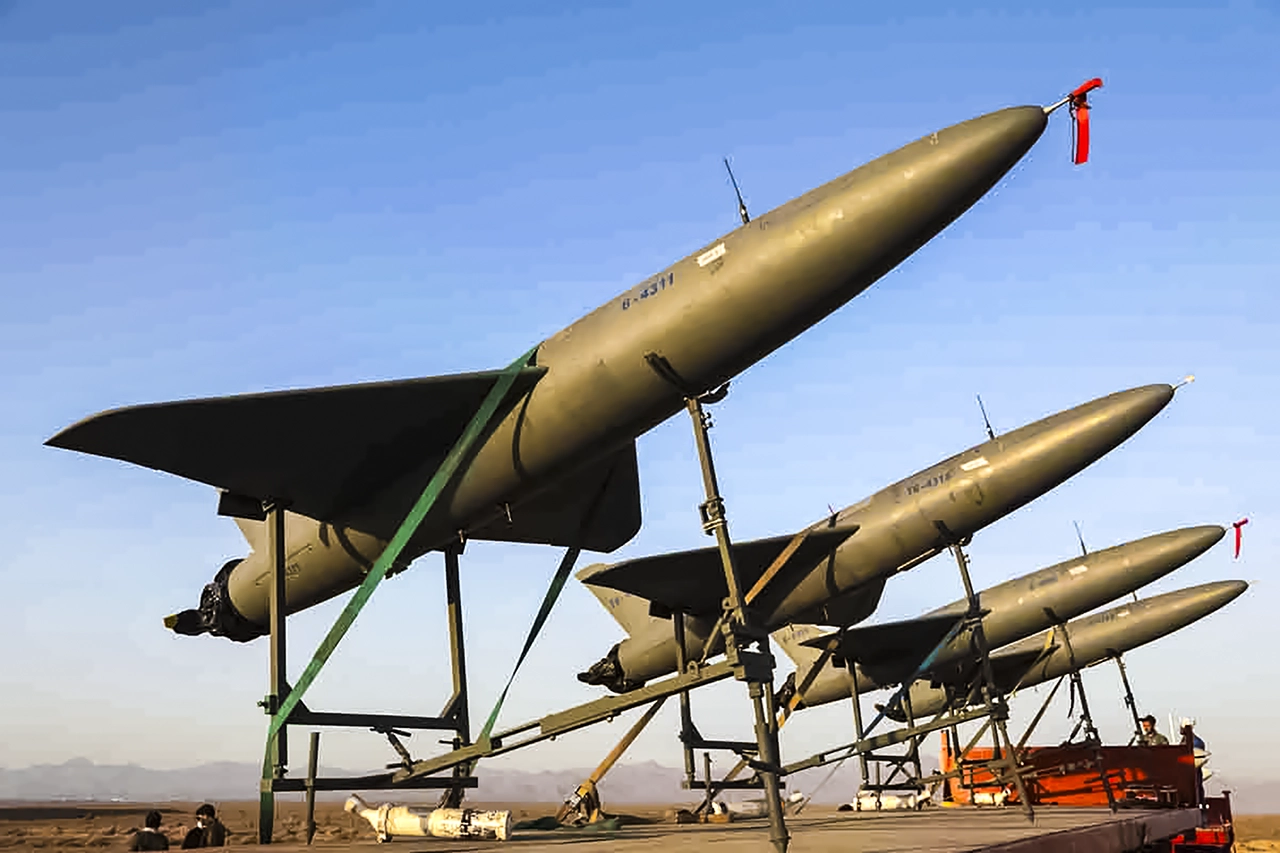
The real question is whether Tehran can make the economic price of continuing the war too high, too global, and too prolonged for the West to ignore. We are witnessing a masterclass in asymmetric warfare where Iran’s real weapon is the world economy. By deploying low-cost, high-impact tools, Tehran is proving that missiles, drones, mining threats and selective maritime disruption can be enough to make insurers, traders, shipowners and governments reprice risk across the entire globalized system.

Iran’s strategy is a meticulously calibrated economic coercion. Tehran is exploiting a rare combination of geography, target concentration and asymmetric tools to hold the global economic recovery hostage. And so far, the financial markets are proving them right.

The New Paradigm: Iran Asymmetric Economic Warfare

To understand the genius—and the terror—of Iran’s current playbook, one must discard the 20th-century notion that wars are won by destroying the enemy’s military formations. In a hyper-connected, hyper-optimized global economy, a nation does not need to sink a fleet to achieve strategic parity; it merely needs to make the cost of transit commercially unviable.

This is the essence of Iran asymmetric economic warfare. By utilizing swarms of cheap loitering munitions, unmanned surface vessels, and the persistent, invisible threat of naval mines, Tehran has fundamentally altered the cost-benefit analysis of navigating the world’s most critical maritime chokepoints. A $20,000 drone does not need to sink a $150 million Very Large Crude Carrier (VLCC) carrying $100 million worth of oil. It only needs to scorch its deck to trigger a systemic panic in the underwriting rooms of London and New York.

Tehran understands the fragility of the maritime arteries that sustain modern capitalism. This is why the recent entrance of Yemen’s Houthis into the broader conflict is so destabilizing. We are no longer looking at an isolated crisis in the Strait of Hormuz; we are facing a dual-chokepoint strangulation encompassing both Hormuz and the Bab el-Mandeb Strait. By targeting commercial vessels selectively—and reportedly floating a mafia-style “$2 million-per-ship fee” for guaranteed safe passage—Iran and its proxies are effectively levying a private tax on global trade.

This is not a traditional blockade. It is a protection racket scaled to the size of the global economy. Through Iran missiles drones mining global supply chains, Tehran is executing a strategy designed not to win a military victory, but to inflict a political and economic pain threshold that forces a diplomatic capitulation.

Repricing the Gulf: Iran Maritime Disruption Insurance

The immediate frontline of this new war is not the flight deck of a US aircraft carrier; it is the actuarial spreadsheets of global maritime insurers. The Strait of Hormuz disruption 2026 is triggering a seismic shift in how risk is priced, bought, and sold.

Prior to February 28, an estimated 20% of global oil consumption—roughly 21 million barrels per day—transited the Strait of Hormuz. Today, that volume has contracted sharply as shipping companies route around the cape or pause voyages entirely. For those that dare the passage, the financial toll is staggering. War-risk insurance premiums have skyrocketed, surging from a fraction of a percent of a vessel’s value to unsustainable single-digit percentages practically overnight.

As the Financial Times notes in its analysis of maritime risk, when Gulf shipping risk insurers repricing occurs at this velocity, the costs are immediately passed down the supply chain. Iran maritime disruption insurance is no longer a niche concern for shipping magnates; it is a direct inflationary tax applied to every commodity, manufactured good, and barrel of oil moving between East and West.

Data Visualization Context: [Chart: Oil Price Trajectory vs. Shipping Volumes Through Hormuz & Bab el-Mandeb Since Feb 28] – A diverging line graph illustrating the inverse relationship between plunging daily vessel transits in the Gulf and the sharp, unbroken ascent of Brent Crude prices crossing the $100 threshold.

This dynamic forces a profound recalibration of what constitutes “risk.” A shipowner looking at a 500% increase in war-risk premiums must decide if the cargo is worth the financial gamble. When the answer is no, vessels sit idle, supply chains freeze, and the global economy chokes. This is precisely what the architects in Tehran intended.

The Macro Shock: Inflation, Oil Trajectories, and Fed Paralysis

The ripple effects of this strategy are already crashing onto the shores of Western central banks. The Iran war oil prices impact has been immediate and violent. With US crude settling above the $100 mark and Brent eyeing a record monthly rise, the specter of the 1970s oil shocks has returned to haunt policymakers. The International Energy Agency (IEA) has already sounded the alarm, warning that we are teetering on the edge of the “largest supply disruption in history” if the conflict broadens to regional oil infrastructure.

This energy shock arrives at the worst possible macroeconomic moment. Just as the US Federal Reserve and the European Central Bank believed they had tamed the post-pandemic inflation dragon, the Gulf crisis has reignited price pressures. Federal Reserve Chair Jerome Powell recently signaled a “wait and see” approach regarding the war’s economic fallout, a subtle admission that the central bank is trapped. Raising interest rates to combat oil-driven inflation risks plunging the global economy into a deep recession; holding them steady risks allowing inflation to become entrenched.

The Economist recently highlighted the resurgence of stagflation fears, pointing out that a prolonged conflict exceeding three months will inevitably lead to deep macroeconomic scarring. By weaponizing the oil markets, Iran has effectively bypassed the Pentagon and launched a direct strike on the Federal Reserve. This is the zenith of Iran calibrated economic coercion 2026: forcing Western leaders into impossible domestic political dilemmas.

Target Concentration: The Outsized Impact on Asian Economies

While the geopolitical theater is fixated on the Washington-Tehran dynamic, the true economic victims of this asymmetric warfare reside in the East. The Strait of Hormuz closure economic impact on Asia cannot be overstated. The economies of China, Japan, India, and South Korea are fundamentally reliant on Middle Eastern crude and liquefied natural gas (LNG).

Tehran’s strategy capitalizes heavily on this “target concentration.” The overwhelming majority of the oil flowing through Hormuz is destined for Asian markets. Consequently, the disruption serves as a blunt instrument of leverage against the very nations that historically maintain neutral or even amicable relations with Iran.

The real-time fallout across the Indo-Pacific is stark. In Singapore, households are already facing immediate electricity tariff hikes for the April-June quarter, with the Energy Market Authority warning of sharper increases to come. Major logistics hubs are feeling the squeeze, with companies like Yeo Hiap Seng cutting headcount and moving operations to navigate the margin crush. Supply chains are fraying; luxury cars destined for Asian markets are stranded in Sri Lankan ports as Japanese shipping companies face paralyzing congestion.

To mitigate the crisis, Asian powers are scrambling for alternatives. Japan is hastily coordinating with Indonesia to secure thermal coal as a fallback for power generation, risking its climate commitments in the name of raw survival. Meanwhile, in a fascinating display of diplomatic fracture, Malaysia recently announced that its tankers would be exempt from Iran’s reported Hormuz toll—a testament to Kuala Lumpur’s pragmatic, long-standing relationship with Tehran.

This selective enforcement is the most insidious aspect of Iran economic coercion. By granting safe passage to some nations while punishing others, Tehran is attempting to divide the international community, making a unified coalition impossible. It forces Beijing and New Delhi to pressure Washington for a rapid de-escalation, effectively turning America’s vital trading partners into unwitting lobbyists for Iranian interests.

The Limits of Conventional Deterrence

The stark reality of 2026 is that traditional naval hegemony is insufficient to guarantee the free flow of global commerce. The US Navy, for all its unparalleled lethality, is designed to destroy state-level navies and project power ashore. It is not inherently designed to play an endless, unwinnable game of Whac-A-Mole against swarms of explosive drones launched from the backs of pickup trucks, or to sweep vast swathes of the Gulf for untethered acoustic mines.

As detailed by Foreign Affairs in their recent evaluation of Gulf security, attempting to solve an asymmetric economic problem with a symmetric military solution is a fool’s errand. Every Tomahawk missile fired at a fifty-dollar drone launch pad is a victory for Tehran’s arithmetic. The sheer cost imbalance heavily favors the instigator.

Furthermore, the secondary knock-on effects are paralyzing corporate strategy. Multinational giants are scaling back; consumer goods titans like Unilever have reportedly imposed global hiring freezes explicitly citing the Middle East war’s macroeconomic drag. Credit ratings agencies are recalibrating the sovereign debt of Gulf nations, with Fitch signaling downgrade risks for regional players due to post-war security environment uncertainties.

When global capital begins to view the entire Middle East as functionally un-investable and physically un-navigable, Iran’s objective is met. They do not need to plant a flag in Washington. They simply need to make the Dow Jones bleed until Washington offers terms.

Conclusion: Navigating a Repriced World

When Presidents Trump and Xi sit down in Beijing this May, the agenda will not merely be about tariffs, semiconductor export controls, or artificial intelligence dominance. The specter at the banquet will be the vulnerability of their shared globalized economy to asymmetric disruption. The Iran war of 2026 has irrevocably proved that the ultimate weapon of mass disruption is not nuclear; it is logistical.

We have entered an era where Iran’s real weapon is the world economy. The success of calibrated economic coercion means that future conflicts will increasingly mirror this blueprint. Rogue states and non-state actors alike have learned that by applying pressure to the delicate, over-optimized nodes of global supply chains, they can punch vastly above their geopolitical weight class.

The West cannot bomb its way out of an insurance crisis. Countering this new reality requires more than just deploying additional carrier strike groups. It demands a total reimagining of global supply-chain resilience, a rapid acceleration toward localized and diversified energy grids, and the painful acceptance that the era of friction-free, perfectly timed global shipping is over.

Until the world economy can insulate itself from the asymmetric leverage of chokepoint disruption, the true balance of power will not be measured in ballistic missiles or stealth fighters. It will be measured in the terrifyingly fragile mathematics of freight rates, risk premiums, and the price of a barrel of crude. The world has been repriced. We are all just paying the toll.


Discover more from The Economy

Subscribe to get the latest posts sent to your email.

Analysis

Foreign Central Banks Are Dumping US Treasuries in the Wake of the Iran War

Published

on

The $82 billion exodus from America’s debt market signals more than wartime liquidity stress — it may mark the beginning of a structural reckoning for the dollar’s exorbitant privilege.

As oil prices pierced $110 a barrel and Iran’s blockade of the Strait of Hormuz choked the arteries of global energy trade, something quieter — and potentially more consequential — was unfolding in the marble-floored corridors of the New York Federal Reserve. Foreign central banks were liquidating American debt at the fastest pace in more than a decade.

Federal Reserve custody data shows that holdings of US Treasuries by foreign official institutions at the New York Fed have plunged by $82 billion since February 25, collapsing to $2.7 trillion — the lowest level since 2012. All-Weather Media The timing is not coincidental. The sell-off began almost precisely as the first missiles fell on Iranian soil, and it has accelerated with every week of conflict that grinds on. What began as a wartime liquidity scramble now carries the contours of a deeper structural shift — one that has economists in Frankfurt, Washington, and Beijing quietly updating their long-term models.

This is not merely a story about bond markets under pressure. It is a story about the foundations of American financial power.

The Mechanics of a Wartime Sell-Off

To understand why central banks are selling Treasuries into a crisis that would historically have driven buying, one must follow the energy channel rather than the geopolitical headline.

After Iran blocked the Strait of Hormuz, global oil prices soared, and oil-importing countries were hit hardest. Foreign exchange reserves shrank passively, combined with the need to intervene in currency markets, prompting central banks in many countries to accelerate the liquidation of US Treasuries. All-Weather Media

The logic is grimly circular. An oil-importing nation — say, India or Thailand — suddenly faces a surging import bill denominated entirely in dollars. Its currency weakens under the pressure of that trade shock. To defend the exchange rate and prevent a domestic inflationary spiral, the central bank must sell dollar assets to buy its own currency. The most liquid, deep dollar asset most central banks hold? US Treasuries. Brad Setser, senior fellow at the Council on Foreign Relations, pointed out that Turkey, India, Thailand, and other oil-importing countries are likely the main participants in this round of selling, because these countries must pay higher oil prices in dollars. All-Weather Media

Meghan Swiber, US rate strategist at Bank of America, confirmed the dynamic bluntly: “Foreign official institutions are selling US Treasuries.” All-Weather Media

The distinction that animates debate among market participants is whether this selling is passive — a mechanical consequence of reserve depletion — or active, reflecting a more deliberate choice to reduce dollar exposure. Stephen Jones, Chief Investment Officer at Aegon Asset Management, described the selling as countries “raising war funds,” saying, “They are drawing on emergency reserves.” All-Weather Media In practice, it is likely both, and the combination is what makes the current episode remarkable.

The Scale of It: A Data Table in Words

The numbers are stark and merit clear articulation.

Official data shows that since February 27 — the day before Iran was attacked — the Turkish central bank alone has sold $22 billion in foreign government bonds from its foreign reserves. All-Weather Media Turkey, battling a persistently weak lira and an energy import dependency that leaves it acutely exposed to oil shocks, has been the most aggressive seller. But it is hardly alone.

Independent data from the central banks of Thailand and India also show that both countries’ foreign exchange reserves have declined after the outbreak of the conflict. All-Weather Media Whether the drawdown came from Treasuries specifically or dollar deposits held elsewhere remains partially unclear, but the directional signal is unambiguous: oil importers across Asia and the emerging world are under intense balance-of-payments stress.

At the other end of the oil equation, Gulf exporters face a different calculus. Saudi Arabia held $149.5 billion in US Treasuries as of December 2025. The Gulf states collectively maintain over $2 trillion in dollar-denominated assets. Saudi Arabia, the UAE, Kuwait, Qatar, and Bahrain all peg their currencies to the US dollar, requiring them to keep vast amounts of dollars to support that peg and, in doing so, help sustain Treasury demand. Middle East Eye Their behavior in the weeks ahead — whether they hold, or quietly reduce — will be among the most consequential signals to watch in global bond markets.

Yields Surge: America’s Borrowing Costs Bite Back

The sell-off is not happening in a vacuum. It is coinciding with — and amplifying — a broader repricing of US government debt that has unsettled investors and policymakers alike.

The 10-year US Treasury yield has risen from around 3.9% to a peak of 4.4%, while the 2-year yield climbed from 3.35% to above 4% — both hitting eight-month highs. Euronews That may not sound catastrophic in isolation, but it arrives against a backdrop of acute fiscal vulnerability. The US national debt crossed $39 trillion on March 18, 2026 — a milestone reached just weeks into the war in Iran — with interest costs projected to become the fastest-growing line item in the federal budget, after credit downgrades from all three major ratings agencies. Fortune

RSM Chief Economist Joseph Brusuelas captured the market’s collective anxiety: “The US Treasury bond market has finally responded to the Mideast war, giving its assessment of the energy shock’s severity and the war’s effect on US fiscal imbalance and inflation.” The MOVE index, which tracks volatility in the Treasury market, has spiked to levels consistent with price instability and policy dysfunction. Fortune

BCA Research’s Chief Fixed Income Strategist Robert Timper has characterized the pattern as “aggressive bear flattening of yield curves,” reflecting a hawkish monetary policy repricing in response to inflation fears stemming from the Iran war. Euronews On a conventional reading, this is stagflationary: energy-driven inflation pushes short-term rates higher even as growth expectations deteriorate. The Fed, caught between an oil shock and a slowing labor market, finds itself precisely where it least wants to be — with no clean policy option.

Central banks are concerned that another inflation shock, even if caused by a temporary spike in oil, might convince consumers and businesses that inflation is going to be high for a long time. Marketplace The confidence channel, in other words, may matter as much as the oil price level itself.

The Petrodollar’s Perfect Storm

Here is where the analysis shifts from cyclical to structural — and where the Iran conflict becomes geopolitically transformative rather than merely disruptive.

Deutsche Bank FX strategist Mallika Sachdeva has argued that the conflict could be remembered as a key catalyst for “erosion in petrodollar dominance, and the beginnings of the petroyuan.” CNBC That is a remarkable sentence to see in a research note from a major Western bank, and it demands unpacking.

The petrodollar system — born from a secret 1974 agreement between the US and Saudi Arabia — is elegantly simple in its design. Riyadh agreed to price its oil exports in dollars and invest its petroleum windfalls into US Treasuries; in return, Washington provided military protection and security guarantees for Gulf infrastructure. Other OPEC members followed, locking the dollar in as the indispensable currency of the modern world. Fortune That recycling loop allowed Washington to borrow cheaply, run persistent deficits, and still command the world’s reserve currency — what the French famously called America’s “exorbitant privilege.”

The Iran war has directly challenged every pillar of that arrangement. US military assets and bases in the Gulf have come under attack. Oil infrastructure in the Gulf has been hit. And the US ability to provide maritime security to ensure the global flow of oil has been challenged by the closure of Hormuz. The US security umbrella has been fundamentally tested. The Canary

Deutsche Bank’s Sachdeva wrote that the conflict “may expose further fault lines, by challenging the US security umbrella for Gulf infrastructure and maritime security for global trade in oil,” adding that “damage to Gulf economies could encourage an unwind in their foreign asset savings held largely in dollars.” Middle East Eye

The most concrete manifestation of this risk is already visible. Reports from multiple outlets confirm that Iran has been negotiating tanker passage through the Strait of Hormuz only when transactions are settled in yuan — a policy Deutsche Bank flags as a potential watershed moment. Bitcoin News At least 11.7 million barrels have moved through Chinese-linked tankers since late February, with many vessels going dark to avoid tracking. Discussions with at least eight non-Middle Eastern countries on yuan-based oil trade for safe transit have also been reported. Bitcoin News

This is not yet the petroyuan. But it is its audition.

Dedollarization: Accelerant, Not Origin

It would be analytically sloppy to present the Iran war as the singular cause of dedollarization. The trend predates the current conflict by years — accelerated by US sanctions on Russia in 2022, the rise of BRICS payment alternatives, and China’s persistent push to internationalize the renminbi through mechanisms like the mBridge central bank digital currency project.

Even before the Iran war, hypotheses about the petrodollar’s erosion had been building. US sanctions on Russian and Iranian oil had already created illicit trade routes settled in yuan and roubles. Saudi Arabia had joined mBridge, taking a seat in China’s alternative payment infrastructure. Fortune

What the Iran war has done is compress the timeline. Structural shifts that might have taken a decade now have a geopolitical accelerant behind them. And critically, this wave of selling reflects a deeper trend: global reserve management institutions have been diversifying dollar asset allocations for years, and the status of US Treasuries as the primary global reserve asset is being increasingly eroded. All-Weather Media

That said, the dollar doomsayers deserve scrutiny alongside the dollar optimists. The offshore dollar credit market stood at $2.5 trillion in 2000 and has hit $14.2 trillion more recently — evidence of structural resilience that should temper apocalyptic narratives. Fortune The dollar index is on track to gain around 3% in March, with energy-driven stagflation risks supporting the greenback in the near term, according to OCBC strategists. CNBC Crises, paradoxically, often strengthen the dollar even when they degrade its long-term foundations.

The distinction — between short-term safe-haven demand for the currency and long-term diversification away from the asset — is exactly what makes this moment so analytically treacherous. Central banks may be buying dollars even as they sell Treasuries. As Wells Fargo’s Brendan McKenna noted, investors who want dollar safety have plenty of options beyond Treasuries — money market funds, savings accounts, corporate bonds — all dollar-denominated, none of which require holding sovereign debt. Marketplace

What Comes Next: The Fed’s Dilemma and the Gold Trade

The Federal Reserve finds itself boxed in on multiple fronts. Prediction markets now price only a 23.5% probability of a Fed rate hike in 2026, and only 37% probability of zero cuts — meaning the majority of investors still expect the Fed to remain relatively more dovish compared to major central banks like the ECB, which markets now give an 85% probability of hiking. Benzinga

That divergence matters for Treasury markets. If the Fed stays patient while inflation creeps higher, the risk premium on longer-dated Treasuries will widen further. If it hikes preemptively, it risks tipping a slowing economy into recession — and potentially triggering exactly the kind of demand destruction that would crash oil prices and resolve the inflationary shock anyway. Neither path is comfortable.

Meanwhile, the private investment alternatives are multiplying. Gold — the original reserve asset, abandoned by Bretton Woods but never fully forgotten — has surged as central banks globally have accelerated purchases. For emerging market central banks now questioning the sanctity of US sovereign debt, gold offers something Treasuries currently cannot: an asset without geopolitical counterparty risk.

The deeper implication, the one that keeps Treasury officials awake, is about the fiscal term premium — the extra yield investors demand to hold long-duration US debt given fiscal and policy uncertainty. Brusuelas warned that if uncertainty continues, it could trigger broader funding stress in debt markets already under pressure from concerns about private credit — with total investment-grade supply coming to market in 2026 estimated at around $14 trillion. Fortune The competition for global capital has never been fiercer, and the US no longer bids from a position of unquestioned supremacy.

The Long View: A Privilege Under Audit

The $82 billion drop in foreign official Treasury holdings is, in isolation, manageable. The US Treasury market is the deepest and most liquid in the world; $82 billion is noise in a $28 trillion market. What is not manageable — if it continues — is the structural message embedded in the data.

For fifty years, the petrodollar system functioned as a self-reinforcing cycle: oil exported in dollars, dollars recycled into Treasuries, cheap US borrowing reinforcing dollar dominance, dollar dominance reinforcing oil pricing. The Iran war has not broken that cycle. But it has introduced friction into every link of the chain simultaneously — energy shock, currency stress, reserve drawdown, yield surge, and a nascent yuan-for-oil experiment at the world’s most critical chokepoint.

Policymakers in Washington should be paying close attention not just to where Treasury yields are today, but to where foreign central bank buying will be in six, twelve, and twenty-four months. The exorbitant privilege was never guaranteed. It was maintained by confidence — in American institutions, American security commitments, and American fiscal restraint. The Iran war is testing all three at once.

For now, the dollar holds. The question is whether it holds the same thing it did before the war began.


Discover more from The Economy

Subscribe to get the latest posts sent to your email.

Continue Reading

Analysis

Singapore Leads Trade-Dependent Economies in Push for Open and Resilient Supply Chains Amid Strait of Hormuz Crisis

Published

on

As the Strait of Hormuz closure enters its second month, eleven small and medium-sized economies have issued a defiant call for supply chain coordination—positioning Singapore’s FIT Partnership as a counterweight to protectionist drift and energy-market chaos.

The Gathering Storm: Why Small Economies Are Forging a Supply Chain Alliance

On Tuesday, 31 March 2026, eleven members of the Future of Investment and Trade (FIT) Partnership—Costa Rica, Iceland, Liechtenstein, New Zealand, Norway, Panama, Rwanda, Singapore, Switzerland, the United Arab Emirates, and Uruguay—issued a joint statement that reads as both a diplomatic signal and an economic survival manifesto . The timing was deliberate: the Strait of Hormuz, through which roughly 20% of global oil consumption and up to 30% of internationally traded fertilizers normally transit, has been effectively closed to commercial shipping since late February following the outbreak of military conflict between the United States, Israel, and Iran.

The statement explicitly recognizes the “severe risk of disruption to global supply chains, particularly in relation to oil, gas and petrochemical products as well as essential goods and critical downstream derivatives such as fertilizers”. But this is not merely reactive crisis management. The eleven nations reaffirmed their commitment to the November 2025 Singapore Declaration on Supply Chain Resilience, pledging to coordinate information-sharing, identify alternatives, and work with other trade partners to keep commerce “unimpeded” while maintaining open, diversified, transparent, competitive, and resilient supply chains.

Singapore, as the current Coordinating Chair of the FIT Partnership, has positioned itself at the center of this emerging coalition. New Zealand will succeed it in this role, hosting the next ministerial meeting in Auckland in July 2026—a symbolic passing of the torch between two of Asia-Pacific’s most trade-dependent economies.

The Hormuz Crisis: A Multi-Layered Supply Shock

To understand why this coalition matters, one must first grasp the severity of the disruption. The Strait of Hormuz is not merely an oil chokepoint; it is the arterial junction of the global energy and agricultural input systems. When tanker traffic through the strait collapsed by more than 90% within days of the February 28 escalation, the shock rippled far beyond crude markets.

Energy markets have experienced the most immediate repricing. Brent crude, trading near $106.73 per barrel as of March 31, has risen 37% over the past month and 43% year-on-year. At its peak in mid-March, Brent touched $126—the highest level since 2022 and a price surge faster than during any other recent conflict, including Russia’s invasion of Ukraine. The Dallas Fed estimates that a three-quarter closure could push prices as high as $132 per barrel by year-end, with global real GDP growth reduced by an annualized 2.9 percentage points in the second quarter alone.

Fertilizer markets—often overlooked in energy-focused coverage—are experiencing equally severe dislocations. The Gulf region accounts for 8.7% of global fertilizer production and 33-50% of global urea trade. Benchmark urea prices have surged from $350 per metric ton to over $600, approaching the spike seen after the 2022 Ukraine invasion. Middle East granular urea prices jumped 19% in the first week of March, while Egyptian urea surged 28%. Nearly a million metric tons of fertilizer cargo are physically stranded in the Gulf, with major producers including Industries Qatar and SABIC Agri-Nutrients declaring force majeure.

Shipping costs are following the same trajectory seen during the 2023 Red Sea crisis. Container freight rates on the Shanghai-Rotterdam route climbed 19% in a single week to $2,443 per forty-foot container by mid-March, with carriers announcing general rate increases targeting $4,000. War-risk insurance premiums have exploded from 0.25% to as high as 10% of vessel value, with coverage resetting every seven days.

The FAO Chief Economist has warned that this is “not only an energy shock. It is a systematic shock affecting agrifood systems globally”. With nitrogen fertilizer production dependent on natural gas feedstock, and sulfur supplies—critical for phosphate fertilizer processing—also disrupted, the crisis threatens to cascade from energy into food security.

The FIT Partnership: A New Architecture for Small Economy Resilience

The FIT Partnership represents an intriguing diplomatic innovation. Launched in September 2025 and comprising 16 small and medium-sized trade-dependent economies, it provides what Singapore’s Deputy Prime Minister Gan Kim Yong has called “a vital platform to connect with like-minded partners committed to strengthening the rules-based trading system”.

Why small economies? The answer lies in vulnerability asymmetry. Singapore’s trade-to-GDP ratio exceeds 300%. For New Zealand, Panama, and the UAE, trade is similarly existential. These nations cannot absorb supply shocks through domestic market substitution; they must navigate disruptions through coordination, diversification, and rapid information exchange.

The November 2025 Singapore Declaration established a framework for precisely this coordination. It created “supply chain national contact points” for real-time information sharing, committed members to refrain from export restrictions and unnecessary tariffs during crises, and established best practices for expediting essential goods through ports. The March 31 joint statement operationalizes this framework in response to the Hormuz crisis, with members affirming their intent to “work together and with other trade partners to ensure that trade continues to flow unimpeded”.

This is supply chain resilience as diplomatic practice—a recognition that in an era of overlapping crises, the ability to maintain open supply chains is itself a competitive advantage and a strategic imperative.

Geopolitical Context: Navigating Trump 2.0 and De-risking Pressures

The FIT Partnership’s emergence must be understood against the backdrop of 2025-2026’s broader trade architecture. The Trump administration’s tariff policies—ruled illegal by the Supreme Court in February 2026 but replaced by new Section 122 and Section 301 measures—have created an environment of persistent uncertainty. Steel and aluminum tariffs at 50%, threats of 100-250% tariffs on pharmaceuticals and semiconductors, and a 10% baseline tariff on most imports have fractured the post-war trade order.

For small, open economies, this presents a dual challenge. They face traditional supply disruptions like the Hormuz closure while simultaneously navigating protectionist headwinds from major trading partners. The FIT Partnership’s emphasis on “refraining from the imposition of trade-restrictive measures” reads, in part, as a gentle counter-narrative to the tariff escalation dominating headlines.

The coalition also reflects the “de-risking” trend that has characterized supply chain strategy since 2022—but with a multilateral twist. Rather than purely national reshoring or friend-shoring initiatives, these economies are pursuing collective risk distribution. By coordinating on alternative supply routes, sharing intelligence on disruptions, and maintaining open port access, they aim to reduce individual vulnerability through collective action.

The Singapore Model: Why City-States Are Leading

Singapore’s central role in this coalition is no accident. As a city-state with no natural resources and a population of under six million, Singapore has spent decades perfecting the art of supply chain intermediation. Its port handles roughly one-fifth of global shipping containers. Its trading houses connect Asian production with global markets. Its government has invested heavily in strategic petroleum reserves, supply chain digitization, and trade facilitation infrastructure.

This expertise is now being institutionalized through the FIT Partnership. Singapore’s approach combines:

  • Information superiority: Real-time tracking of shipping disruptions and alternative routing options
  • Diplomatic agility: The ability to convene diverse economies—from Rwanda to Switzerland to Panama—around shared interests
  • Institutional innovation: Creating contact points and coordination mechanisms that can activate during crises

The March 31 statement’s emphasis on “supply chain alternatives” and the restoration of “temporarily disrupted supply chains” reflects Singapore’s operational mindset. This is not abstract trade theory; it is logistics management at the highest diplomatic level.

Forward-Looking: Implications for Business and Investment

For executives and investors, the FIT Partnership’s Hormuz response signals several important trends:

1. Supply chain resilience is becoming institutionalized. The era of ad-hoc crisis management is giving way to structured coordination mechanisms. Companies should expect more formalized information sharing between governments during disruptions—and potentially more coordinated policy responses.

2. Alternative routing will command premium value. As the Hormuz crisis demonstrates, chokepoint vulnerability remains the single greatest risk to global supply chains. Investment in alternative logistics infrastructure—whether around Africa’s Cape of Good Hope, through expanded Panama Canal capacity, or via emerging Arctic routes—will accelerate.

3. Fertilizer and agricultural input security is emerging as a sovereign priority. The 2022-2023 food price crisis taught policymakers that fertilizer access is national security. The Hormuz disruption, by simultaneously affecting energy and fertilizer flows, reinforces this linkage. Expect increased strategic stockpiling and diversification of fertilizer sourcing.

4. Small economy coalitions may reshape trade governance. The WTO’s struggles to address contemporary trade challenges have created space for alternative architectures. The FIT Partnership’s focus on “strengthening the rules-based trading system” while pursuing practical coordination suggests a pathfinder role—demonstrating mechanisms that larger institutions might later adopt.

Conclusion: The New Geometry of Trade Resilience

The FIT Partnership’s Hormuz statement represents more than a diplomatic press release. It signals the emergence of a new geometry in global trade governance—one where small, vulnerable economies band together to manage risks that larger powers either cannot or will not address collectively.

Singapore’s leadership role reflects both its institutional capabilities and its existential stake in open trade flows. As the world confronts what the Dallas Fed has called the largest energy supply disruption since the 1970s, these eleven nations are betting that coordination, transparency, and collective commitment to open supply chains offer better protection than isolation or protectionist retreat.

For businesses navigating this landscape, the message is clear: supply chain resilience is no longer a purely operational concern. It is becoming a diplomatic and geopolitical variable, shaped by coalitions like the FIT Partnership that are rewriting the rules of trade survival in an era of perpetual disruption.

FAQ: What the FIT Partnership Hormuz Statement Means for Global Trade

Q: What is the FIT Partnership and why was it formed? A: The Future of Investment and Trade (FIT) Partnership is a coalition of 16 small and medium-sized trade-dependent economies launched in September 2025. It provides a platform for countries facing similar vulnerabilities in global value chains to coordinate responses to protectionism, supply disruptions, and trade system challenges.

Q: How does the March 31, 2026 joint statement differ from the November 2025 Singapore Declaration? A: The November 2025 Declaration established general principles for supply chain resilience. The March 31 statement specifically activates these principles in response to the Hormuz crisis, with eleven members committing to coordinated information sharing, alternative supply route identification, and maintaining open trade lines for energy and essential goods.

Q: Why are small economies leading this initiative rather than major powers? A: Small, trade-dependent economies experience supply disruptions most acutely. Singapore’s trade-to-GDP ratio exceeds 300%; for these nations, supply chain resilience is existential. Major powers have more domestic buffer capacity and competing strategic priorities. The FIT Partnership allows smaller states to amplify their collective voice.

Q: What specific mechanisms does the FIT Partnership use for supply chain coordination? A: The framework includes designated national contact points for real-time information sharing, commitments to refrain from export restrictions during crises, expedited customs procedures for essential goods, and joint response planning for major disruptions.

Q: How long is the Strait of Hormuz expected to remain closed? A: As of late March 2026, there is no clear timeline for reopening. The IRGC has announced the strait is closed to vessels traveling to and from US, Israeli, and allied ports. Military operations to secure passage are ongoing, but analysts warn that even with de-escalation, normal shipping conditions may take months to resume due to insurance market dislocations.


Discover more from The Economy

Subscribe to get the latest posts sent to your email.

Continue Reading

Analysis

Oil Prices Fall as WSJ Reports Trump Ready to End Iran Campaign — Even With Hormuz Closed

Published

on

Oil prices dropped 1% after a WSJ report said Trump is willing to end the Iran military campaign even if the Strait of Hormuz stays closed. Here’s what it means for Brent crude, energy markets, and your portfolio in 2026.

Introduction: A 1% Drop That Carries the Weight of History

In the compressed, volatile lexicon of wartime oil markets, a 1% move can be either a tremor or a turning point. On Tuesday morning, as Asia’s trading desks absorbed the latest leak from Washington’s corridors of power, Brent crude futures for May delivery slipped $1.22 — down 1.08% — not because the war in Iran had ended, not because a single tanker had safely transited the Strait of Hormuz, but because of something far more intangible: the reported willingness of one man to walk away from the most disruptive energy conflict in half a century, even if the world’s most critical oil chokepoint remains largely shut.

The Wall Street Journal, citing unnamed administration officials, reported late Monday that President Donald Trump has told aides he is prepared to end the U.S. military campaign against Iran without first securing the reopening of the Strait of Hormuz — a strategic reversal that, if confirmed, would fundamentally reshape the calculus of every energy trader, central bank governor, and petroleum minister on earth. The signal was enough to trim the geopolitical risk premium baked into crude. Whether it marks a genuine diplomatic inflection or merely the latest act in a month of whiplash messaging is the question that will define energy markets — and global economic stability — for the remainder of 2026.

Market Reaction & Technicals: Reading the Price Signal

The immediate market reaction was instructive in its restraint. Brent crude futures erased earlier gains and turned negative, settling around $111 per barrel — a far cry from the near-$120 spike seen just eight days ago, on March 23, but still roughly 50% above the pre-war levels that prevailed before the U.S. and Israel launched strikes on Iran on February 28.

Bloomberg reported that equity-index futures simultaneously climbed — S&P 500 futures rose 0.8%, European shares edged 0.3% higher — in a classic risk-asset rotation that told its own story: some investors believe an end to the conflict is approaching. But the MSCI Asia Pacific Index fell 1% and was on track for its worst month since October 2008, a sobering counterpoint that reflects just how durable the structural damage to energy supply chains has become.

The 1% Brent decline should be viewed through the lens of what it didn’t do. It did not break below $110. It did not approach the psychological floor of $100 that briefly appeared in late March. The war premium in crude is not deflating — it is being partially trimmed, like a balloon with a small leak, by speculation that active hostilities might soon cease. Until the Hormuz question is resolved — either diplomatically or physically — the market’s floor will remain elevated.

Key data point: West Texas Intermediate (WTI) futures for May delivery also declined, dropping 0.72% to approximately $102 per barrel as of early Tuesday trading, according to CNBC.


The Trump Pivot: What the WSJ Report Really Means

The Wall Street Journal report, published late Monday evening, is among the most consequential strategic leaks of the Iran war. Its core revelation — confirmed to the Journal by administration officials — is that Trump and his inner circle have reached a pivotal internal assessment: forcing the Strait of Hormuz back open through military force would push the conflict well beyond the four-to-six-week timeline the President has discussed privately and publicly.

According to reporting compiled across multiple outlets, the strategic logic runs as follows: the U.S. has achieved its primary military objectives — dismantling Iran’s naval capacity and degrading its missile stockpiles. The mission, as now defined by the White House, is complete enough to declare victory and wind down direct hostilities. Reopening the strait, by contrast, would require a fundamentally different and far more complex military operation, one with no guaranteed timeline and with serious escalation risks.

Trump’s fallback positions, as outlined in the leak, have a distinctly diplomatic character:

  • Option one: Negotiate a ceasefire with Tehran that includes an Iranian commitment to reopen the waterway.
  • Option two: Pressure Gulf State allies and NATO partners to lead any military or logistical effort to reopen Hormuz.
  • Option three: Use diplomacy and economic leverage to compel Iran to open the strait over time.

Israeli Prime Minister Benjamin Netanyahu has separately floated an infrastructure-based alternative, suggesting that Gulf pipelines could be rerouted westward through Saudi Arabia to the Red Sea and Mediterranean, bypassing the Hormuz chokepoint entirely. The proposal underscores a growing regional consensus that a durable solution may require reinventing the Middle East’s energy architecture rather than simply restoring the status quo ante.

Why Markets Are Skeptical: The Hormuz Paradox

Here is the paradox at the center of Tuesday’s 1% oil move: the very condition Trump appears willing to accept — a largely closed Strait of Hormuz — is also the primary reason oil prices remain catastrophically elevated in the first place.

The Strait of Hormuz is not merely a shipping lane. It is, as Goldman Sachs co-head of global commodities research Daan Struyven noted in a media briefing, the site of the largest oil supply shock in decades as a measured share of global output. The waterway typically carries approximately one-fifth of the world’s oil and liquefied natural gas (LNG) — a volume so large that even a partial disruption reverberates through every refinery, power plant, and gas pump on the planet.

Iran has not merely threatened to keep the strait closed. It has demonstrated the will and capacity to enforce that closure through mines, missile strikes on tankers, and coordinated harassment of commercial shipping. As recently as Tuesday, Kuwait Petroleum Corporation reported that a fully loaded Kuwaiti crude tanker, the Al Salmi, was struck and set ablaze while anchored at Dubai’s port — evidence that the maritime threat is operational, not theoretical.

Iran’s own signals have been characteristically contradictory. Tehran’s mission to the United Nations indicated that “non-hostile vessels” might pass through the strait if coordinated with Iranian authorities — a formulation that implies continued Iranian veto power over global energy flows. Meanwhile, Iran’s state media has flatly rejected U.S. ceasefire proposals, and an Iranian military spokesperson publicly mocked Washington’s 15-point ceasefire plan, even as Pakistan has offered to host indirect talks.

The result is what Matt Gertken, chief geopolitical strategist at BCA Research, described on CNBC as “a more asymmetric game, with the U.S. leaning toward exit and Iran still incentivized to impose cost.” In energy market terms, that asymmetry means the risk premium will not fully deflate until the physical reality at the strait changes — regardless of what is said in Washington or Tehran.

Global Ripple Effects: From Asian Refineries to American Gas Pumps

The human and economic cost of five weeks of disrupted Hormuz transit is no longer abstract. It is being measured in percentage points of GDP, in inflation data, and in the rising anger of consumers across three continents.

For the United States, the IEA has noted that at least 44 energy assets across nine countries in the region have been severely damaged since the conflict began. American gas prices rose for the 23rd consecutive day as of late March, reaching a national average of $3.96 per gallon — a month-on-month gain of 34%, exceeding the post-Hurricane Katrina spike of 2005 and rivaling the Ukraine-era surge that eventually took prices to a record $5.02 a gallon.

For Europe, the energy shock compounds an already fragile inflation picture. As Euronews reported, the Bank of England’s rate expectations have been overhauled in recent weeks as markets brace for an inflationary shock. The eurozone, still working through the structural energy transition that followed Russia’s 2022 invasion of Ukraine, now faces a second consecutive supply crisis — one that has pushed gold to $4,557 per ounce and forced gold’s worst weekly drop since 1983 as investors rotated to hedge against war-driven inflation.

For Asia, the pain is acute and immediate. Japan, South Korea, and India collectively import the majority of their crude through the Strait of Hormuz. The MSCI Asia Pacific Index’s trajectory toward its worst monthly performance since October 2008 reflects not just equity selling, but a deep structural anxiety about the reliability of energy supply chains that have underpinned Asian industrial growth for decades.

For OPEC and the Gulf States, the calculus is the most complex. Saudi Arabia and the UAE are simultaneously benefiting from elevated prices, being pressured by Washington to increase output, and privately urging the Trump administration — according to Haaretz — to continue fighting until Iran is “decisively defeated.” Riyadh’s pipelines could, in theory, help bypass Hormuz, but diverting the volume typically transiting the strait would require years of infrastructure investment, not weeks.

Historical Parallels and Forward Scenarios: What 2026 Holds

The energy market disruptions of 2026 have already surpassed those of the twin oil shocks of 1973 and 1979, at least by the metric of supply lost as a share of global output — a judgment rendered not by alarmists but by IEA Executive Director Fatih Birol, who noted that the loss of natural gas supply also exceeds the 2022 crisis triggered by Russia’s invasion of Ukraine.

The most instructive historical parallel may be the 1988 “Tanker War” phase of the Iran-Iraq conflict, when U.S. naval escorts — Operation Earnest Will — were required to shepherd Kuwaiti tankers through Hormuz under Iranian fire. That episode lasted 14 months and ultimately required direct U.S. military engagement with Iranian naval forces. The current disruption is orders of magnitude larger, and the political appetite in Washington for a sustained naval campaign to reopen the strait — as the WSJ report makes clear — is limited.

Three forward scenarios define the credible range for oil prices through the remainder of 2026:

  1. Diplomatic ceasefire with partial Hormuz reopening (base case, ~40% probability): Trump ends major combat operations; Iran agrees to allow commercial shipping under a monitoring regime, similar to the UN’s protocols used in the Black Sea during the Ukraine conflict. Brent crude falls toward $85–$95. U.S. gas prices ease back below $3.50 by Q3 2026.
  2. Military exit without Hormuz resolution (emerging case, ~35% probability): The WSJ scenario materializes. Trump declares victory and withdraws, but Hormuz remains effectively closed or severely restricted. Crude settles in the $105–$120 range. Global inflation remains elevated; recession risk in Europe and parts of Asia increases materially.
  3. Escalation or breakdown (tail risk, ~25% probability): Talks collapse; Iran attacks Gulf State infrastructure or a major tanker incident triggers a new escalation cycle. Brent spikes above $130; the IEA triggers a second mass strategic reserve release; G7 emergency economic coordination intensifies. Global recession probability rises sharply.

Investor and Policy Implications: What Sophisticated Markets Must Watch

For investors, the WSJ report introduces a new variable that has not been fully priced: the risk that Hormuz remains impaired even after hostilities end. Markets have been pricing the conflict as a binary — war on, prices high; war off, prices normalize. The leak suggests a more complex endgame in which the geopolitical risk premium does not fully dissipate with a ceasefire, because the structural impediment to oil flows — a belligerent Iran with continued influence over the strait — persists.

Several indicators deserve close monitoring in the days ahead:

  • The 15-point ceasefire proposal: The New York Times reported that Washington transmitted this framework to Tehran via Pakistan. Any Iranian counter-proposal or partial acknowledgment would be a significant de-escalation signal.
  • Strait of Hormuz transit data: Real-time AIS tracking of commercial vessel movements through the strait, published by platforms like S&P Global Commodity Insights and Kpler, will provide the earliest ground-truth signal on whether the diplomatic temperature is translating into physical oil flows.
  • IEA strategic reserve decisions: The IEA has already authorized the release of 400 million barrels from member-country strategic stockpiles — a record. A second release would signal that energy ministers believe the disruption is prolonged, not transient.
  • Saudi and Gulf pipeline capacity: Any acceleration of pipeline infrastructure investment — particularly the expansion of the East-West Pipeline through Saudi Arabia — would represent a structural hedge against Hormuz dependence, suppressing the long-term risk premium.
  • Federal Reserve posture: The sustained oil price spike has effectively killed expectations of a Fed rate cut in H1 2026. A durable ceasefire that brings Brent below $95 would rapidly reprice rate-cut odds, triggering a significant equity rally and USD depreciation.

Conclusion: The Exit Ramp Is Visible — But the Road Beyond It Is Not

Tuesday’s 1% decline in Brent crude is a measure of hope, not resolution. It reflects the market’s rational response to credible evidence that the Trump administration is looking for an exit from a war it entered with insufficient consideration of how to end it. That the exit ramp now apparently does not require the immediate reopening of Hormuz is, in one sense, reassuring — it makes a ceasefire more achievable in the near term. In another sense, it is deeply unsettling, because it means the world’s most important oil transit corridor could remain contested, mined, and dangerous well into 2027.

The harder geopolitical truth is this: the Strait of Hormuz has never been merely a geographical fact. It is a statement of Iranian power, and no administration in Tehran — battered as the current one is — will surrender that leverage cheaply or quickly. The question is not whether Trump can end the war. The question is whether ending the war, on these terms, ends the energy crisis. Based on everything the market knows today, the answer is: not entirely, not immediately, and perhaps not for a very long time.

What is certain is that the age of cheap, abundant, geopolitically stable oil — already eroding for a decade — has suffered another foundational blow. How investors, policymakers, and consumers adapt to that reality is the defining energy story not just of 2026, but of the decade beyond it.


Discover more from The Economy

Subscribe to get the latest posts sent to your email.

Continue Reading

Trending

Copyright © 2025 The Economy, Inc . All rights reserved .

Discover more from The Economy

Subscribe now to keep reading and get access to the full archive.

Continue reading


