
Analysis
US-Iran Conflict: Economic Shockwaves Reshaping Regional Powers in 2026

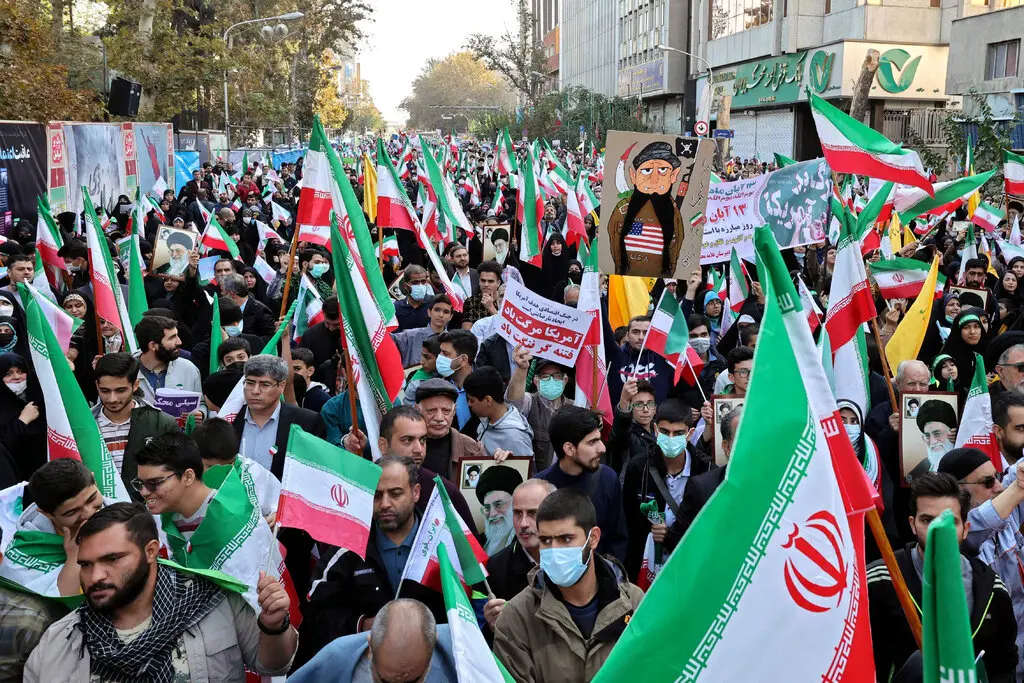
The war that began at dawn on February 28 is rewriting the economic fortunes of every nation between the Bosphorus and the Strait of Hormuz.
The tanker sat motionless in the blue-grey waters off Fujairah, its hull riding high and its captain’s radio silent. Nearby, 149 other vessels — laden with crude oil, liquefied natural gas, and refined products worth tens of billions of dollars — floated in identical limbo. The Strait of Hormuz, the narrow throat through which roughly one-fifth of the world’s daily oil supply must pass, had effectively ceased to function. It was March 3, 2026. The US-Israel war on Iran was five days old, and the global economy was already beginning to haemorrhage.
The joint US-Israeli operation codenamed “Operation Epic Fury” struck Iranian military installations, nuclear sites, and the Islamic Republic’s Supreme Leader Ali Khamenei on February 28 — a decapitation strike that killed him within hours. Iran’s retaliation was immediate and sweeping: missile and drone barrages struck Israeli cities, US military bases across the Gulf, and critical infrastructure in the UAE, Saudi Arabia, Qatar, Bahrain, and Kuwait. NPR The Islamic Revolutionary Guard Corps broadcast on international distress frequencies that no ship was permitted to pass the Strait of Hormuz. Within 24 hours, the world’s most critical energy chokepoint had become a war zone.
The economic consequences — already severe and still unfolding — are being distributed with brutal unevenness across the region. What follows is the first comprehensive accounting of those consequences, country by country, sector by sector.

The Strait of Hormuz: A $500 Billion Artery Under Fire
Before cataloguing the damage, it helps to understand the anatomy of the wound. According to the US Energy Information Administration, about 20 million barrels of oil worth roughly $500 billion in annual global energy trade transited through the Strait of Hormuz each day in 2024. Al Jazeera The waterway, just 21 miles wide at its narrowest point, is the sole maritime exit for the combined oil and gas exports of Iran, Iraq, Kuwait, Qatar, Saudi Arabia, and the UAE.
Iran declared the strait closed on March 3, which led to an immediate halt in tanker traffic. By that date, tanker traffic had dropped by approximately 70% from pre-conflict levels, with over 150 ships anchoring outside the strait to avoid risks. Wikipedia Insurance underwriters quickly withdrew coverage, making transit commercially unviable for most operators even before Iran fired on vessels. Michelle Bockmann, a senior maritime intelligence analyst at Windward, confirmed that traffic was down at least 80% and that the shipping industry had already experienced a “huge spike” in freight costs for routes out of the Middle East and the Gulf. Al Jazeera
The numbers convey scale; the human stakes require context. As of Tuesday, March 3, Brent crude oil prices had risen by around 7% since the conflict began, reaching as high as $83 per barrel. European natural gas futures jumped by around 30% following strikes on Qatar, a major exporter of the commodity. Daily freight rates for LNG tankers jumped more than 40% on Monday after Qatar halted operations. Time By March 7, Brent had surged above $90 per barrel — its highest level since September 2023.
| Commodity/Indicator | Pre-Conflict (Feb 27) | Post-Conflict Peak (Mar 7) | % Change |
|---|---|---|---|
| Brent Crude ($/bbl) | ~$70 | $90+ | +28% |
| European Gas Futures (TTF) | Baseline | +30% | +30% |
| LNG Tanker Freight Rates | Baseline | +40% | +40% |
| War-Risk Ship Insurance | 0.125% | 0.2–0.4% | +60–220% |
| Dow Jones Industrial Average | Baseline | -400+ points | Negative |
Sources: Kpler, TIME, Al Jazeera
Iran: An Economy in Free Fall Before the First Missile Landed
To understand Iran’s economic catastrophe, one must understand that the war found the country already on its knees. The World Bank projected in October 2025 that Iran’s economy would shrink in both 2025 and 2026, with annual inflation rising toward 60%. House of Commons Library Protests had been burning across all 31 provinces since December 28, 2025, ignited by currency collapse and soaring living costs. The rial had entered free fall months before a single American stealth aircraft crossed into Iranian airspace.
The US maximum-pressure sanctions campaign, re-imposed aggressively under the second Trump administration, had targeted Iran’s lifeblood. The US State Department issued multiple rounds of sanctions through February 2026, targeting Iranian oil networks, shadow fleet vessels, weapons procurement networks, and individuals involved in suppressing protests. U.S. Department of State Iran had reportedly lost tens of millions of dollars in capital flight, with senior leaders moving personal fortunes abroad — a detail US Treasury Secretary Scott Bessent publicly confirmed, describing it as officials “abandoning ship.”
Now, with infrastructure strikes destroying 4,000 civilian buildings by March 6, oil export revenue evaporating, and humanitarian corridors severed, Iran’s GDP trajectory is catastrophic. Based on the documented impact of wars elsewhere, Iran’s GDP is likely to fall by more than 10%, though Iran itself last published official GDP data in 2024. Chatham House The Iranian rial, already in collapse, has become functionally worthless in external markets.
Saudi Arabia: Caught Between Windfall and Warfare
Saudi Arabia occupies the most paradoxical position of any regional power. Higher oil prices — a direct consequence of this conflict — represent the kingdom’s primary revenue stream. Yet the kingdom’s oil infrastructure has become a target, its Ras Tanura refinery suspending production after strikes, and the Iranian drone campaign making a sustained windfall deeply uncertain.
Saudi Arabia maintains the most robust alternative infrastructure among Gulf producers through its East-West Pipeline system, capable of handling 5 million barrels per day to Red Sea terminals at Yanbu. Discovery Alert This has allowed Riyadh to demonstrate some resilience — pre-loading crude shipments before the crisis and redirecting flows away from the Strait — but pipeline capacity covers only a fraction of typical exports. Combined bypass capacity from all Gulf producers totals only around 2.6 million barrels per day, a fraction of the 20 million that normally transit Hormuz. Iraq, Kuwait, and Qatar have no comparable alternatives. Atlasinstitute
The tourism dimension of Saudi Arabia’s economic transformation — Vision 2030’s crown jewel — has suffered an immediate and potentially lasting shock. International flights were suspended, hotel bookings across NEOM and Red Sea Project sites collapsed, and the kingdom’s diversification ambitions have been abruptly deferred. Iran’s indiscriminate missile and drone strikes across the UAE, Saudi Arabia, Bahrain, Qatar, and Kuwait have introduced new investment risks, with attacks hitting military bases, airports, hotels, apartments, and financial centers. Allspring Global Investments
UAE and Qatar: Two Models, One Disaster
The UAE had spent years building itself into the world’s premier risk-off refuge — a gleaming monument to stability in a perpetually unstable neighbourhood. That brand proposition has been severely tested. When Dubai International Airport was damaged by drone strikes on March 1, it temporarily halted all flights and reopened only in limited capacity a few days later. Encyclopedia Britannica The UAE’s carefully curated image as a safe transit hub — one of the world’s busiest aviation networks, a gateway for 21 million annual tourists, home to the region’s deepest financial markets — absorbed a direct hit.
Qatar’s situation is arguably more acute. As the world’s largest LNG exporter, the Gulf emirate had long structured its entire economy around the secure passage of gas tankers through Hormuz. Qatar’s state-owned energy firm confirmed it would be stopping LNG production at its two main facilities after attacks on QatarEnergy’s operating facilities in Ras Laffan Industrial City and Mesaieed Industrial City. Time Qatari Energy Minister Saad Sherida al-Kaabi warned that if the war continues, other Gulf energy producers may be forced to halt exports and declare force majeure, and that “this will bring down economies of the world.”
Satellite imagery analysis suggested Ras Laffan — the crown of Qatar’s gas empire — had not suffered the structural damage initially feared, but the reputational damage and the export halt itself were enough to send European natural gas futures surging 30% in a single session.
Iraq and Kuwait: The Most Exposed Producers
Of all the regional economies, Iraq and Kuwait face the starkest immediate danger from the Strait of Hormuz closure. Iraq produces the second-highest volume of crude oil in OPEC behind Saudi Arabia, and while it can export some oil to the north via a pipeline through Turkey, the vast majority of crude moves through its southern port in Basra. Iraq relies entirely on Hormuz — if there is complete disruption, there is no other outlet for Basra’s crude. Time
On March 3, Bloomberg reported that Iraq had started shutting down operations at the Rumaila oil field due to lack of storage space, as tankers were unable to leave the strait. Wikipedia For a nation whose government budget depends on oil revenues for roughly 90% of its income, the arithmetic is punishing.
Kuwait faces the earliest shutdown risk of any Gulf producer due to its 100% Hormuz dependency and limited onshore storage capacity. Discovery Alert Unlike Saudi Arabia and the UAE, Muscat has no bypass pipeline. Should the effective closure persist beyond three to four weeks, Kuwait’s sovereign revenues could face a structural gap that its sovereign wealth fund — the Kuwait Investment Authority, one of the world’s oldest — would be required to partially bridge.
Turkey: $14 Billion in Reserves and a Disinflation Dream Deferred
Turkey’s position in this conflict is defined by a painful irony: Ankara is neither a belligerent nor a beneficiary, yet it is absorbing serious economic collateral damage almost in real time. President Erdoğan, who had long cultivated Iran as a strategic partner and energy supplier, now watches his central bank bleed reserves to defend the lira.
Although Turkey is not directly involved in the conflict, the financial spillovers have already cost the country roughly $14 billion in foreign-exchange reserves, highlighting the broader economic impact of the regional crisis. PA TURKEY
The structural vulnerability runs deep. A surge in energy import costs would push Turkey’s current account deficit toward 4% of GDP, well above the 2.3% forecast for 2026 and far higher than the 1.3% target in the government’s Medium-Term Programme. Higher energy prices feed directly into transportation expenses, industrial production costs, and food prices — in an environment where inflation is already elevated, another surge could derail the ongoing disinflation process. PA TURKEY
According to a Central Bank of Turkey study, a $10 increase in Brent crude oil prices would result in a $4–5 billion rise in the current account deficit. ING revised Turkey’s 2026 current account deficit forecast to $32 billion. ING THINK Turkey’s two-year government bond yield rose from 36.2% to 37.6% in a single week. Tourism — which generated over $60 billion for Turkey in 2025 — is already being threatened as the Eastern Mediterranean is perceived as an “unstable zone.”
Secondary Casualties: Jordan, Egypt, Lebanon
The conflict’s economic blast radius extends well beyond direct combatants. Jordan, which imports nearly all its energy and whose economy depends heavily on Gulf remittances and transit trade, faces immediate inflationary pressure from fuel prices. Egypt, already grappling with a sovereign debt crisis and a sharply devalued pound, confronts disruption to Suez Canal revenues — already wounded by the Houthi campaign — and a collapse in Red Sea tourism bookings. Lebanon, perpetually on the edge of a formal fiscal collapse, sees its tenuous economic stabilization at risk of unravelling.
In countries where energy subsidies remain extensive and government finances are already shaky, higher energy prices could unsettle bond markets. Chatham House Jordan and Egypt fit that description precisely.
Aviation and Hospitality: The Tourism Sector’s Vanishing Act
The economic impact of the US-Iran conflict on economy of regional powers extends far beyond oil terminals and currency desks — it reaches into hotels, airports, and the entire ecosystem of Gulf hospitality that has been painstakingly assembled over two decades.
Airspace closures in the UAE, Qatar, Kuwait, and other Gulf states led to the grounding of thousands of flights, affecting major carriers like Emirates Airlines and causing significant losses in tourism revenue. Wikipedia Emirates, the world’s largest long-haul carrier by passenger volume, suspended operations to multiple Middle Eastern destinations. Booking.com and Expedia data tracked near-total cancellations for March hotel arrivals across the Gulf. Cruise lines reduced Persian Gulf operations, with at least 15,000 passengers stranded across six major cruise ships.
The economic fallout US-Iran conflict brings to UAE, Qatar, and Kuwait’s tourism sectors cannot be easily quantified, but early modelling by regional hospitality groups suggests a full cancellation of the spring travel season — historically one of the region’s strongest booking periods — with projections of 40–60% revenue declines for Q1 2026.
The Global Dimension: BRICS, De-dollarisation, and Shifting Alliances
The conflict is materially improving Russia’s competitive position in crude oil markets. With Middle Eastern barrels facing logistical disruption, both India and China face strong incentives to deepen reliance on Russian supply. Kpler This accelerates a structural realignment that predates the current conflict: the gradual BRICS de-dollarisation of energy trade, the growth of yuan-denominated oil settlements, and the quiet expansion of Russia’s shadow fleet infrastructure.
Iran’s oil, already routed through a sophisticated sanctions-busting shadow fleet, had China and Iran’s primary trading partner as almost the only vessels still transiting the Strait in the conflict’s early days. CNBC If the conflict reshapes global energy trade routes — pushing Asian buyers deeper into Russian and Central Asian supply chains — the geopolitical consequences will outlast any ceasefire by years.
Three Scenarios for the Next 12 Months
Base Case (Probability: 55%): A conflict lasting two to four weeks, ending in a partial ceasefire brokered through Omani or Qatari mediation. Oxford Economics projects the conflict will likely last one to three weeks, at most two months. Oxford Economics Brent stabilises between $75–$85 per barrel. The Strait reopens to commercial traffic. Gulf economies absorb a Q1 revenue shock but recover partially by mid-year. Iran’s GDP falls 10–15%. Turkey’s current account deficit widens to $30–32 billion. Saudi Vision 2030 experiences a six-to-twelve-month delay in major non-oil projects.
Best Case (Probability: 20%): Rapid de-escalation within ten days, driven by coercive diplomacy. Oil prices retreat to $72–75 per barrel. Hormuz reopens fully by mid-March. Gulf tourism rebounds strongly in Q2. Turkey’s disinflation trajectory resumes by April. Iran remains in economic contraction but avoids a full humanitarian crisis. Regional sovereign wealth funds absorb short-term shocks without structural damage.
Worst Case (Probability: 25%): The conflict extends beyond six weeks, with sustained attacks on Gulf energy infrastructure and a de facto long-term Hormuz closure. If oil prices climb toward $100 per barrel and remain elevated throughout the year, accompanied by a comparable rise in natural gas prices, inflation might be roughly one percentage point higher globally and GDP growth perhaps 0.25–0.4 percentage points lower. Chatham House Iran sanctions oil price volatility reaches historic extremes. Turkey faces a full balance-of-payments crisis. Gulf states invoke force majeure on sovereign contracts. A regional recession becomes probable. The Qatari Energy Minister’s warning that prolonged disruption “will bring down economies of the world” shifts from rhetoric to a credible risk scenario. Wikipedia
Conclusion: The Chokepoint as a Mirror
The Strait of Hormuz crisis reveals something that decades of geopolitical risk modelling consistently underestimated: the global economy’s dependence on a single waterway 21 miles wide. Every barrel stranded off Fujairah, every LNG tanker anchored in the Gulf of Oman, every hotel room emptied in Dubai or Doha, is a data point in a lesson the world is learning at enormous cost.
The US-Iran conflict’s impact on Saudi Arabia’s economy 2026, on Turkey’s GDP and tourism, on the economic fallout across UAE, Qatar, and Kuwait — these are not peripheral aftershocks. They are the primary economic signal of a geopolitical era defined by concentrated chokepoints, sanctions as strategic weapons, and the lethal intersection of energy geography and great-power rivalry.
The tankers will eventually move again. But the trade routes, the alliances, and the economic order they carry will look different when they do.
Key Sources:
- US EIA: Strait of Hormuz Fact Sheet
- Kpler: US-Iran Conflict Reshapes Global Oil Markets
- Chatham House: How Will the Iran War Affect the Global Economy?
- Oxford Economics: The 2026 Iran War – An Initial Take
- Al Jazeera: Shutdown of Hormuz Strait Raises Fears of Soaring Oil Prices
- CNBC: Strait of Hormuz Closure – Which Countries Will Be Hit Most
- NPR: Trump Warns Iran ‘Will Be Hit Very Hard’
- ING Think: Monitoring Turkey – Geopolitical Shock Increases Risks
- P.A. Turkey: A $14 Billion Reserve Hit for Türkiye
- P.A. Turkey: What the Iran War Means for Türkiye
- Allspring Global: Market Impacts: Iran Conflict
- Atlas Institute: The Strait That Moves the Market
- Wikipedia: Economic Impact of the 2026 Iran War
- Wikipedia: 2026 Strait of Hormuz Crisis
- Britannica: 2026 Iran Conflict
- House of Commons Library: Iran – Challenges in 2026
- TIME: Strait of Hormuz Global Oil and Gas Trade Disrupted
Discover more from The Economy
Subscribe to get the latest posts sent to your email.



The X algorithm changed significantly in late 2025 and has continued evolving through 2026 — and the single most important shift for brand marketers is this: replies are now weighted 27 times more heavily than likes, according to Teract.ai’s 2026 algorithm analysis. A tweet with 50 thoughtful replies now outperforms one with 500 likes. For brands building AI and climate content strategies on X in 2026, this single mechanical change invalidates most of the hashtag-volume advice still circulating from pre-2025 playbooks.
The Hashtag Myth Correction Every Brand Marketer Needs
Perhaps the most consequential — and least understood — shift is that X’s algorithm no longer relies on hashtags to determine what a post is about. The algorithm reads a post’s actual text content to categorize it topically, whether or not a hashtag is attached, according to Teract.ai. A tweet discussing “AI tools for founders” gets correctly categorized whether or not it includes #AI or #Founders.
After xAI open-sourced its Grok-based recommendation algorithm in 2026, independent code analysis confirmed hashtags now function as neutral-to-negative signals rather than reach amplifiers, according to Postory. The system scores posts on direct engagement and content quality — replies, reposts, and bookmarks carry far more algorithmic weight than likes, while negative signals (blocks, mutes, “show less” actions) carry heavy penalties.
The Actual Hashtag Data for 2026
Despite the algorithm no longer using hashtags as a categorization tool, empirical engagement data still shows a measurable — but narrow — effect:
| Hashtag Count | Engagement Effect vs. Zero Hashtags |
|---|---|
| 0 hashtags | Baseline (not optimal for accounts under 500K followers) |
| 1–2 hashtags | +21% engagement (the sweet spot) |
| 3 hashtags | -17% engagement |
| 5+ hashtags | -40% engagement |
Source: Hashtagtools.io 2026 research report.
The “zero hashtags is a viral hack” narrative circulating in some marketing content is a correlation-causation error — it comes from observing mega-accounts like Elon Musk’s, whose reach comes from built-in audience size, not hashtag abstinence, per Hashtagtools.io. For accounts under 500,000 followers — the overwhelming majority of enterprise brand accounts — 1–2 well-chosen hashtags integrated naturally into post text still outperform zero hashtags by roughly 21%.
Why AI and Climate Content Specifically Benefit From This Shift
AI and climate change are named among X’s core evergreen topical hashtag categories in 2026, alongside crypto, sports, and entertainment, according to SocialRails’ hashtag generator data. Both categories share a structural advantage under the reply-weighted algorithm: they are inherently debate-generating topics that naturally produce the conversation-quality signals (thoughtful replies) the 2026 algorithm now prioritizes over passive engagement (likes).
Hashtag Placement Mechanics That Actually Move Engagement
Mid-tweet hashtag placement performs best for engagement — for example, embedding a hashtag naturally within a results-oriented sentence (“This strategy boosted our #ClimateFinance conversions by 37%”) consistently outperforms hashtags front-loaded at the start of a post, according to ContentStudio. Starting a tweet with a hashtag is specifically flagged as an underperforming pattern.
A Three-Category Hashtag Framework for Brand Strategy
Effective 2026 hashtag strategy separates into three distinct categories that should not be mixed indiscriminately, per Hashtagtools.io:
- Trending (real-time moments): High reach, short window — appropriate for brands commenting on breaking AI policy news or climate summit outcomes in real time.
- Evergreen topical (industry tags): Moderate, steady reach — #AI, #ClimateChange, #Sustainability-category tags appropriate for always-on brand content.
- Branded (campaign-specific): Built for tracking and community-building rather than discovery — appropriate for proprietary campaign hashtags tied to specific initiatives.
The recommended combination for news-cycle-adjacent content (e.g., a brand responding to a climate summit or AI regulation announcement): one trending + one evergreen topical hashtag, reserving pure branded tags for owned-campaign content rather than reactive posts.
Content Strategy Implications for Enterprise Brands
Given the 27x reply-weighting, brand content strategy for AI and climate topics should shift measurably toward content designed to generate substantive replies rather than passive approval:
- Publish defensible, specific claims (with data, not vague sentiment) on AI capability or climate commitments — specific claims generate substantive disagreement or validation replies; vague statements generate likes without replies.
- Engineer the first-30-minutes window deliberately. Engagement velocity in the first 30 minutes determines whether a post gets amplified — 10+ engagements in that window triggers broader algorithmic amplification, according to Teract.ai. Brands should coordinate initial-response teams or stakeholder networks to seed early replies on strategically important posts.
- Avoid spam-trigger patterns explicitly flagged by the 2026 algorithm: excessive hashtags, repetitive content, external links in the first tweet of a thread, and engagement-bait phrasing, per Teract.ai.
What Brands Should Avoid in 2026
- Hijacking unrelated trending hashtags to attach an AI or climate message to unrelated viral moments — explicitly flagged as a shadowban risk factor by SocialRails.
- Hashtag stuffing on climate or AI announcement posts — 5+ hashtags produces a documented 40% engagement penalty, directly counterproductive for high-stakes brand announcements.
- Treating hashtag strategy as a substitute for content quality. Per AutoTweet’s 2026 guide, a post with the perfect hashtag but poor content won’t go anywhere — hashtags open the door, but reply-generating content quality is what keeps it open.
The Bottom Line
The brands winning AI and climate visibility on X in 2026 are not the ones deploying the most hashtags — they’re the ones building specific, defensible content that generates substantive reply threads, using 1–2 well-placed evergreen or trending hashtags as a modest discovery boost rather than a primary growth lever. Any brand strategy still built around hashtag volume or front-loaded hashtag placement is optimizing for an algorithm that no longer exists.
Discover more from The Economy
Subscribe to get the latest posts sent to your email.
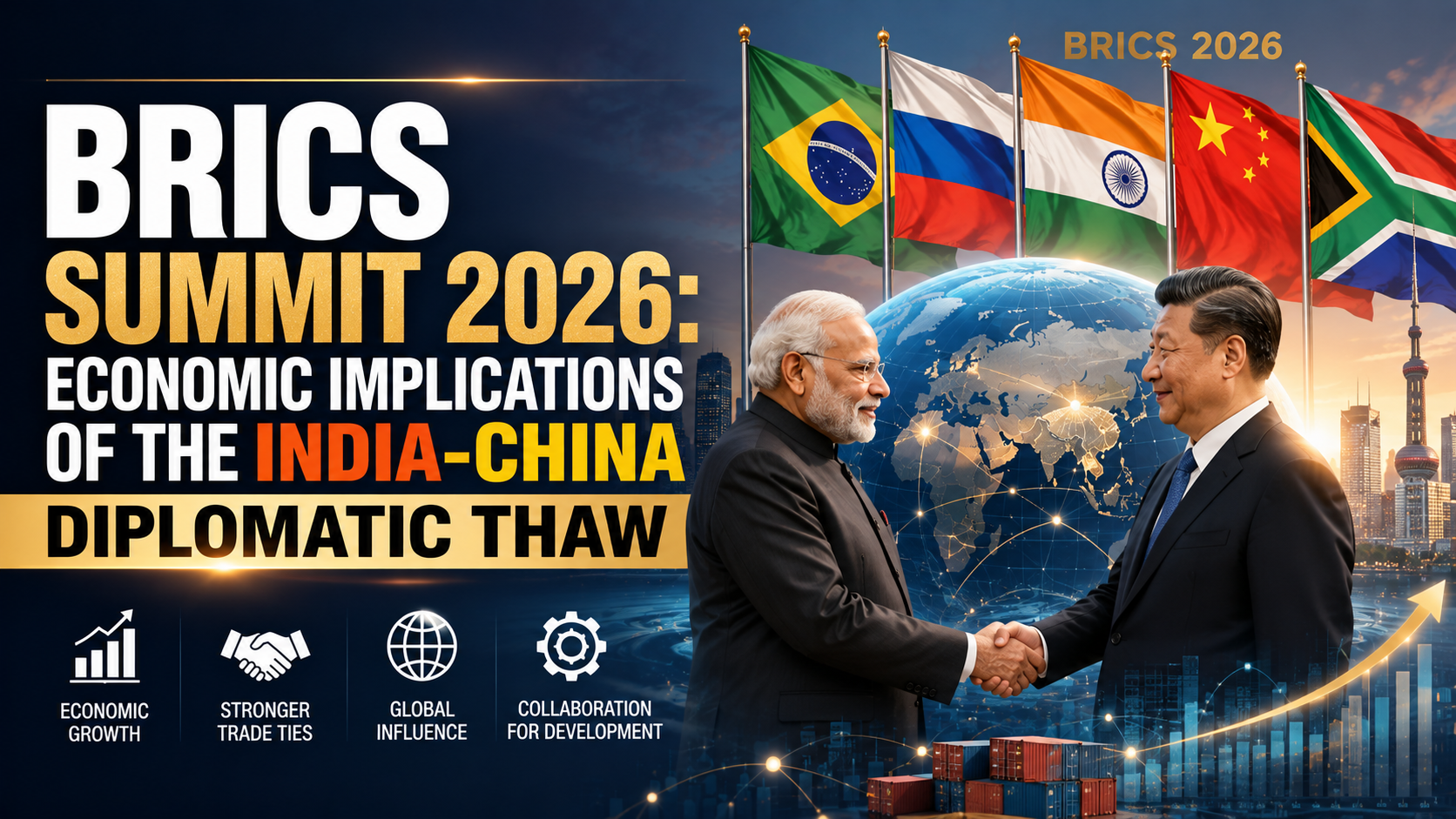
Chinese President Xi Jinping is expected to travel to New Delhi on September 12–13, 2026, for the 18th BRICS Summit — his first visit to India in six years, and the clearest signal yet that Beijing and New Delhi are prepared to move past the 2020 Galwan Valley border clash, according to Indian Defence News. For enterprise strategists and investors positioned across South Asian and Chinese supply chains, this is not a symbolic handshake — it is a signal event with direct implications for trade flows, tariff exposure, and capital competition across the Global South.
From Galwan to Kazan to New Delhi: The Timeline
The normalization process has moved in deliberate stages, not a single reset:
- October 2024 — Kazan, Russia: Modi and Xi meet on the sidelines of the BRICS summit, the first formal meeting since 2019, following a border disengagement agreement, according to The Diplomat.
- 2025 — Resumption of high-level visits: India’s defense and external affairs ministers visited Beijing; China’s Foreign Minister Wang Yi visited New Delhi, producing several bilateral agreements, per The Diplomat.
- August 2025 — Tianjin SCO Summit: Modi and Xi met again, described as the culmination of the resumed high-level engagement.
- May 2025 — India-Pakistan conflict stress test: The thaw survived Beijing providing military and political support to Islamabad against India during a brief conflict — evidence the normalization is now resilient to shocks, per The Diplomat.
- September 12–13, 2026 — New Delhi BRICS Summit: India chairs BRICS for a fourth time, hosting Xi for the first time since 2019, per Indian Defence News.
Why Now: The Strategic Logic on Both Sides
For Beijing, sustaining a frozen conflict with a rising economic power while simultaneously managing friction with Washington over the South China Sea and Taiwan Strait has become strategically costly, per Indian Defence News. For New Delhi, hosting Xi under the multilateral BRICS umbrella allows Modi to project global statesmanship while engaging Beijing without appearing to unilaterally concede on unresolved border issues.
Crucially, analysts at the China-Global South Project note the 2026 dynamic is being shaped primarily by regional realities and a deliberate decoupling of economic cooperation from security disputes — not by U.S. trade pressure, even though Trump-era tariff policy has often been cited as a contributing factor.
Where the Economic Exposure Sits
Import Dependency: India’s Structural Vulnerability
India’s supply chains remain heavily dependent on Chinese intermediate goods, particularly in pharmaceuticals and electronics, according to Indian Defence News. Any further normalization of technology-investment restrictions — India banned a range of Chinese tech applications and tightened border-nation investment rules after Galwan — would be the single highest-impact policy shift for enterprise B2B supply chain planners in the region.
The BRICS Bloc Itself: Expanded and More Consequential
The 2026 summit occurs against a materially expanded BRICS bloc. Since the original five-member group, Egypt, Ethiopia, Iran, Saudi Arabia, and the UAE joined in 2024, and Indonesia joined in 2025, per the official BRICS 2026 site — with ten additional partner countries (Belarus, Bolivia, Cuba, Kazakhstan, Malaysia, Nigeria, Thailand, Uganda, Uzbekistan, Vietnam) joining in 2025. The bloc’s prior Rio summit produced a Leaders’ Framework Declaration proposing to mobilize $300 billion annually by 2035 for climate finance, according to Business Standard.
Trade & Investment Exposure Matrix
| Sector | Pre-Thaw Position (2020–2024) | Post-Thaw Trajectory (2025–2026) | Enterprise Risk/Opportunity |
|---|---|---|---|
| Pharmaceuticals (API imports) | Heavy Indian dependency on Chinese active pharmaceutical ingredients | Potential easing of investment friction | Opportunity: supply diversification talks; Risk: continued single-source dependency |
| Electronics/consumer tech | Chinese app bans, investment screening for border-sharing nations | Selective, cautious relaxation possible | Watch for FDI rule changes ahead of/after the summit |
| Border trade | Suspended since 2020 | Partial resumption of trade at three border outposts | Direct logistics opportunity for regional trade B2B services |
| Africa infrastructure/capital | Parallel, competing Chinese BRI and Indian maritime/digital investment | Continued competition, not cooperation | Africa remains contested capital-deployment theatre, per Indian Defence News |
| AI governance | No joint framework | BRICS Leaders’ Statement on Global AI Governance (Rio) | Multilateral framework emphasizing Global South inclusion, UN-led process |
Sources: Indian Defence News, The Diplomat, Business Standard — see citations above.
What to Watch at the September Summit
- Border trade mechanics: Whether the Working Mechanism for Consultation and Coordination produces concrete friction-point resolutions in eastern Ladakh ahead of the summit, per Indian Defence News.
- Investment-screening rule changes: Any signal India will ease its border-nation FDI restrictions would be the most direct enterprise-relevant outcome.
- Africa positioning: Whether joint statements address, rather than paper over, competing Chinese BRI and Indian maritime-security/digital-investment strategies across the continent.
- AI governance follow-through: Concrete mechanisms building on the Rio AI governance statement, relevant to any enterprise operating AI infrastructure across BRICS-aligned markets.
The Caveat: This Is a Thaw, Not a Resolution
Independent policy analysis from the ISAS Brief is explicit that the Kazan-era thaw has not resolved bilateral mistrust or delivered progress on sensitive issues — it has stabilized the border and eased some economic restrictions without addressing the underlying territorial dispute. The China-Global South Project similarly notes India continues to treat Beijing with caution in the security domain even as it normalizes economic engagement. Investors should read the September summit as confirmation of a durable, deliberate de-escalation track — not as a signal that structural India-China rivalry has been resolved.
The Bottom Line
The India-China thaw formalized at the New Delhi BRICS Summit represents a genuine, multi-year, deliberately sequenced de-politicization of economic relations between two of the world’s largest economies — but one that leaves core security and territorial disputes unresolved. For enterprise and investment strategists, the actionable signal is narrower than “US-China rapprochement” headlines suggest: watch FDI screening rules, pharmaceutical/electronics supply-chain diversification announcements, and border-trade resumption specifics, not broad geopolitical sentiment.
Discover more from The Economy
Subscribe to get the latest posts sent to your email.
Emerging and developing economies face refinancing needs of more than $9 trillion in 2026, according to the Institute of International Finance’s Global Debt Monitor — the largest wall of maturing sovereign and corporate debt these markets have ever faced simultaneously. At the center of that system sits China, now the single largest issuer of emerging-market sovereign debt and, increasingly, the largest bilateral lender of last resort when smaller economies can’t refinance on their own. For institutional investors and foreign-policy-adjacent business strategists, understanding China’s dual role — dominant issuer and dominant creditor — is now a prerequisite for pricing emerging-market risk correctly.
Editorial note on sourcing: a specific figure describing a discrete “$1.3 billion” China sovereign refinancing transaction could not be independently verified against primary reporting at the time of writing. This article instead builds its analysis on verified, dated figures from the OECD, IIF, Moody’s, and peer-reviewed research, and any deal-level claim should be confirmed against primary sources (finance ministry statements, rating-agency releases) before publication or citation.
China’s Dual Role: Issuer and Creditor of Last Resort
China accounted for 45% of total EMDE sovereign bond issuance in 2024, up sharply from just 17% in the 2007–2014 period, according to the OECD’s Global Debt Report 2025. By 2025, China remained the top borrower among a concentrated group — China, India, Brazil, Egypt, and Argentina together represented 78% of EMDE central-government borrowing, per the OECD’s Global Debt Report 2026.
Domestically, Beijing has simultaneously executed one of the largest local-government debt refinancing programs in history: a 6 trillion yuan (roughly $839 billion) swap of “hidden” local-government debt into standardized bonds, approved in late 2024 and implemented through 2026, according to VOA News. By mid-2026, Chinese provinces had used nearly 94% of that swap allowance, according to Bloomberg.
Internationally, China has also re-entered dollar sovereign bond markets at scale — its 2026 international offering was reported as its largest ever, oversubscribed well beyond target, according to Business Standard/Reuters reporting on the prior comparable issuance. This dual positioning — massive domestic refinancing plus expanding international issuance — gives China outsized influence over EM bond-market liquidity and pricing benchmarks that smaller sovereigns then reference for their own issuance.
The $9 Trillion Wall: Why 2026 Is Different
The scale of what’s coming due matters more than any single deal. Key figures from the IIF’s Global Debt Monitor and OECD’s 2026 report:
- Gross EMDE central-government borrowing crossed $4 trillion in 2025, up from roughly $3 trillion in 2024.
- Around 36% of outstanding EMDE bond stock matures within three years.
- Low-income countries face the sharpest cliff: 52% of their outstanding bonds mature by 2028, with 29% due by the end of 2026 alone.
- Secondary-market yields on maturing debt now exceed 10% for non-investment-grade sovereigns, meaning refinancing at current rates locks in materially higher debt-service costs than the original issuance.
Refinancing Cost Comparison: Then vs. Now
| Issuer Tier | Original Issuance Yield (illustrative range) | 2026 Refinancing Yield | Refinancing Risk |
|---|---|---|---|
| Investment-grade EMDEs (e.g., select Gulf, Southeast Asia sovereigns) | 3–5% | 5–7% | Moderate — absorbable within fiscal space |
| Non-investment-grade EMDEs | 6–8% | 10%+ | High — debt-service costs rising faster than revenue growth |
| Low-income issuers (heavy China bilateral exposure) | Concessional/below-market | Market-rate or restructured terms | Severe — 29% of debt stock matures by end of 2026 |
Source: OECD Global Debt Report 2025/2026 (see citations above); ranges are illustrative of documented tier-level trends, not specific bond issues.
The Restructuring Precedent: What Happens When Refinancing Fails
China’s response to sovereign distress has evolved into a distinct pattern that investors increasingly price into risk premiums. Research published via the National Bureau of Economic Research documents a rising trend of “re-structurings” — repeated restructurings of the same debt with the same creditor — echoing the drawn-out resolution patterns of prior global debt crises. Angola, Ecuador, Seychelles, Sri Lanka, and Venezuela have each undergone two or more restructurings with Chinese state creditors.
Sri Lanka’s case is illustrative of the mechanics: China Development Bank extended a $500 million financing facility in 2020, and a subsequent equity-linked arrangement brought in $1.12 billion in cash that Colombo used to repay non-Chinese creditors, according to Oxford Academic’s International Affairs journal. These bilateral bridge arrangements illustrate how China’s rescue lending functions as a parallel track to traditional Paris Club-style restructuring — often faster to arrange, but less transparent to third-party bondholders pricing the same sovereign’s risk.
Regional Ripple Effects: Where Investors Should Watch Closely
Direct Exposure Zones
- Sub-Saharan Africa: Heaviest concentration of low-income issuers facing near-term maturity walls and prior China restructuring history (Angola, Zambia).
- South Asia: Sri Lanka’s precedent shapes how markets price Pakistan and Bangladesh refinancing risk.
- Latin America: Ecuador and Venezuela carry documented repeat-restructuring histories; Argentina remains among the top-five EMDE borrowers by volume.
Indirect / Second-Order Exposure
- Gulf and Southeast Asian investment-grade sovereigns face rising benchmark yields even without direct restructuring risk, simply because China’s issuance volume moves the EM bond-pricing benchmark broadly.
- Enterprise B2B lenders and trade-finance providers operating in these corridors should treat sovereign-refinancing stress as a leading indicator of counterparty and currency risk, not a lagging one.
An Investor Risk-Monitoring Framework
- Track maturity-wall concentration, not headline debt-to-GDP. A country with moderate debt-to-GDP but a heavy 2026–2028 maturity cliff carries more near-term risk than a higher-leverage country with a smoothed maturity profile.
- Distinguish China’s domestic refinancing (yuan-denominated, largely contained) from its role as an external EM creditor (dollar/foreign-currency exposure, higher spillover risk).
- Watch for repeat-restructuring signals. Countries with a prior China restructuring are statistically more likely to require another, per the NBER research above — treat this as a standing risk flag, not a one-time resolved event.
- Monitor secondary-market yield spreads on maturing debt versus issuance-year yields as the clearest real-time signal of refinancing stress building in a specific sovereign.
The Bottom Line
China’s simultaneous role as the largest domestic debt-refinancer in EM history and the most influential external creditor to distressed sovereigns makes it the single most important variable in the 2026 emerging-market debt outlook. The $9 trillion refinancing wall isn’t a uniform risk — it’s concentrated in low-income issuers with the heaviest prior China bilateral exposure, and that concentration is exactly where enterprise investors, trade-finance providers, and sovereign-risk analysts should be focusing due diligence through the remainder of 2026.
Discover more from The Economy
Subscribe to get the latest posts sent to your email.

Luxury Wellness: The Monetization and Expansion of Boutique Low-Impact Training

Leveraging Viral AI & Climate Hashtags for Brand Growth on X

The Medicaid Churn: Front-End Revenue Cycle Risks for Enterprise Hospitals

The 2026 Crypto Regulatory Shift: What It Means for Institutional Investors

AI-Powered Training: The Next Multi-Billion Dollar Ecosystem in Fitness

BRICS Summit 2026: Economic Implications of the India-China Diplomatic Thaw

Emerging Market Debt: The Ripple Effect of China’s Sovereign Refinancing Role

Dropping Oil & Surging Gold: Navigating Safe-Haven Investments in Q3

2026 AI Stock Frenzy: How to Position Your Portfolio

The AI Disruption in Financial Risk Management: Moving Beyond Record Banking Profits

The Rise of Green Aviation: Balancing High Fuel Prices with Sustainable Infrastructure

US-China Relations in Q3 2026: Trade Tariffs and Supply Chain Risks

Emerging Markets Rebound: Top Stock Strategies for the Gulf and South Asia

Tackling the 2026 Global Food Crisis: Policy Shifts and Market Speculation

China Politburo July 2026: Stimulus Signals Explained

Russia Fuel Shortages 2026: Inside a Cracking War Economy

State Farm’s $5B Dividend 2026: Who Qualifies & Payout Dates

Top 15 Financial Stocks for Investment in PSX

Pakistan Passed Its Third IMF Review

SpaceX Stock Lockup Expiration Explained: Why $123B in Shares Could Hit the Market

Pakistan IMF Program 2026: Inside the Push Toward an Interest-Free Economy

Russia Oil Revenue 2026: How Sanctions on Rosneft and Lukoil Are Draining the War Chest

Andy Burnham, UK Gilts and Mortgages: July 2026 Explainer

Gold Price 2026: Why Bullion Has Fallen 25% From Its January Record High

Pakistan’s 2026 Monsoon Floods Threaten Fragile Economic Recovery as Inflation Nears 9%

Russia Oil Revenue 2026: The Iran War Windfall and What a Hormuz Deal Means for Moscow

Russia’s Budget Deficit Blew Past Its Full-Year Target in Three Months

Canada US Trade War 2026: Inside Carney’s Push to Cut Ties With Trump’s Tariffs
-

 Markets & Finance8 months ago
Top 15 Stocks for Investment in 2026 in PSX: Your Complete Guide to Pakistan’s Best Investment Opportunities
-

 Analysis6 months ago
Johor’s Investment Boom: The Hidden Costs Behind Malaysia’s Most Ambitious Economic Surge
-

 Analysis6 months ago
Top 10 Stocks for Investment in PSX for Quick Returns in 2026
-

 Analysis7 months ago
Brazil’s Rare Earth Race: US, EU, and China Compete for Critical Minerals as Tensions Rise
-

 Banks7 months ago
Best Investments in Pakistan 2026: Top 10 Low-Price Shares and Long-Term Picks for the PSX
-

 Investment8 months ago
Top 10 Mutual Fund Managers in Pakistan for Investment in 2026: A Comprehensive Guide for Optimal Returns
-

 Global Economy8 months ago
15 Most Lucrative Sectors for Investment in Pakistan: A 2025 Data-Driven Analysis
-

 Global Economy8 months ago
Pakistan’s Export Goldmine: 10 Game-Changing Markets Where Pakistani Businesses Are Winning Big in 2025