
Analysis
China Confirms Talks on Trump Visit as US-China Trade Truce Extension Looms in 2026

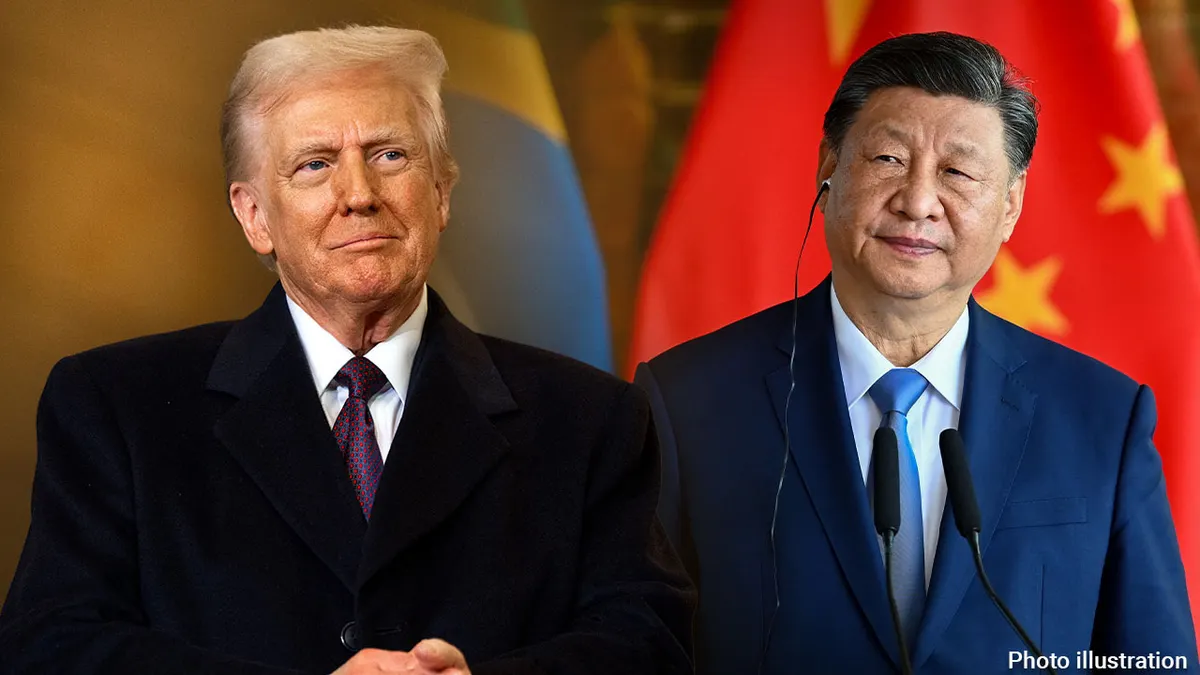
As Xi Jinping and Donald Trump reaffirm personal diplomacy, a one-year extension of the US-China trade truce sets the stage for a high-stakes Beijing summit in April — and reshapes the global economic order.
| KEY FACTS AT A GLANCE | |
| Phone Call Date | February 4, 2026 — Xi Jinping & Donald Trump |
| April Summit | First week of April, Beijing (Trump China visit 2026) |
| Truce Duration | Up to 1-year extension expected at April summit |
| US Tariff Status | Heightened reciprocal tariffs suspended until Nov. 10, 2026 |
| China Tariff Status | 24% retaliatory tariff suspended; 10% base rate retained |
| Peak Escalation | US peak at ~145%; China peak at ~125% (pre-truce) |
| Critical Minerals | China suspends rare earth export controls for 1 year |
| Soybean Pledge | 25 MMT/year committed by China for 2026–2028 |
| Project Vault | $12 billion US critical minerals reserve announced |
A Diplomatic Thaw at 9 a.m. Washington Time
The phone rang in Washington at 9 a.m. on February 4, 2026. On the other end was Xi Jinping, the most powerful Chinese leader in a generation, and waiting to answer was Donald Trump, the most transactional American president in modern history. What followed, according to Trump’s own account, was a conversation that was “long and thorough” — and excellent.” The understatement of the year in geopolitics was already under way.
Within hours, the architecture of global commerce in 2026 began to clarify. Sources close to both governments confirmed what markets had been pricing in for weeks: when Trump arrives in Beijing in early April — reaffirming an invitation Xi personally extended on the call — the two leaders are expected to formally extend the US-China trade truce by up to a full year, according to exclusive reporting from the South China Morning Post. For a bilateral relationship that spent much of 2025 in a white-hot tariff inferno — with US duties on Chinese goods touching a peak of 145% and Beijing’s retaliatory levies approaching 125% — the pendulum has swung with remarkable speed.
What the Trade Truce Extension Means for Global Markets
To understand why financial markets from Shanghai to Wall Street are watching the April summit with near-feverish attention, it helps to rewind to October 30, 2025, when Trump and Xi shook hands in Busan, South Korea, and set in motion the most consequential bilateral trade reset since the original Phase One deal of 2020.
The White House Fact Sheet that followed was sweeping: the US pledged to suspend its heightened reciprocal tariffs until November 10, 2026, while China reversed the 24% retaliatory levy it had imposed earlier in the year, retaining only a 10% base tariff on American imports. Beijing also agreed to purchase at least 25 million metric tons of US soybeans annually through 2028, resume purchases of sorghum and logs, and critically — suspend a sweeping set of export controls on rare earth materials and other strategic minerals. The CNBC deep-dive on the rare earths suspension described it as a significant, albeit temporary, easing of restrictions that had shaken global supply chains.
What the April extension would lock in — if sources are accurate — is not merely a continuation of those terms. It signals a shift in diplomatic logic: from crisis management to structured co-existence.
| “The positive tone in both readouts is consistent, boding well for the relationship beyond 2026. — Neo Wang, Lead China Macro Analyst, Evercore ISI” |
Trump China Visit 2026: What’s at Stake in Beijing
When Donald Trump touches down in Beijing — the first visit by a sitting US president to the Chinese capital in years — the optics will be as important as the substance. For Xi Jinping, hosting Trump in Zhongnanhai is a carefully choreographed signal to the world: China can shape the terms of the relationship, not merely react to them.
According to Politico Pro reporting, the summit is tentatively set for the first week of April, and could be the first of as many as four leader-level meetings in 2026 — a cadence of high-level diplomacy not seen between the two powers since the pre-pandemic era. Senior officials are working to anchor the summit around “short-term economic wins”: fresh Chinese purchase commitments, further tariff rollback discussions, and potentially new frameworks for technology governance.
The agenda, as currently understood, spans a daunting breadth:
- Tariff rollback progression: Whether the US reciprocal tariff rate, currently at 10%, will be further adjusted — and whether China’s residual 10% levy on US goods will follow.
- Critical minerals alliance architecture: With 50 nations represented at the February 4 Critical Minerals Ministerial in Washington — co-hosted by Secretary of State Marco Rubio and VP JD Vance — Washington is building a “buyers club” designed to reduce reliance on Beijing’s rare earth dominance. How China responds will shape the summit’s tone.
- Electric vehicle and industrial policy: European concerns about Chinese EV overcapacity have found an echo in Washington. Any framework for US-China manufacturing trade will need to address these frictions directly.
- Taiwan: Xi used the February 4 call to once again frame Taiwan as, in the words of Chinese state media, “the most important issue” in bilateral relations, warning the US to handle arms sales to Taipei — a $11.15 billion package approved in December — “with prudence.” The Taiwan question will hover over every handshake in Beijing.
- Venezuela and Iran: With Venezuelan oil shipments to China dropping to zero in January under a US naval crackdown, and Trump pressing Beijing to isolate Tehran, geopolitical flashpoints threaten to complicate an otherwise commerce-driven agenda.
The Critical Minerals Chessboard: Washington’s “Project Vault”
Perhaps no single issue better illustrates the structural fault lines beneath the diplomatic détente than critical minerals. When China weaponized its near-monopoly on rare earths, gallium, germanium, and antimony during the 2025 tariff war, the effect was immediate and visceral: Ford shuttered its Chicago Explorer plant for a week; Nissan and Suzuki reported production disruptions; European auto suppliers warned of shutdowns. The message was unmistakable — and Washington heard it.
Trump’s response on February 9 was to announce “Project Vault”: a $12 billion emergency stockpiling program designed to pre-purchase and warehouse critical minerals. Simultaneously, the January 15 executive order on critical minerals — analyzed in depth by CSIS — directed the Commerce Department to negotiate supply agreements with allied nations, with the implicit threat of tariffs on countries that fail to cooperate. The US is fully import-dependent on 12 critical minerals and partially dependent on 29 others.
This is the critical paradox of the tariff rollback: even as Washington and Beijing perform the choreography of a trade truce, the structural competition for mineral supply chains, semiconductor ecosystems, and EV manufacturing supremacy is accelerating — not pausing. The truce buys time; it does not buy trust.
Xi Jinping’s Calculated Warmth — and Its Limits
There is something revealing in the contrast between the two leaders’ post-call statements. Trump was effusive: “The relationship with China, and my personal relationship with President Xi, is an extremely good one.” Xi, per Xinhua, was measured and strategic — he “greatly values US-China relations” and is willing to “accomplish more great and significant things” together this year. Experts reading the tea leaves noted the asymmetry immediately.
As Al Jazeera reported, Beijing has paused some critical mineral restrictions since the October truce, but experts caution that China’s dominance over processing capacity — controlling an estimated 40–90% of global processing for lithium, cobalt, and copper, despite producing only about 10% of their raw supply — remains a strategic card held close.
The phrase “win-win” has been a fixture of Chinese diplomatic language since the Deng Xiaoping era. But in 2026, the definition of mutual benefit is being renegotiated in real time — on trade tables, in semiconductor boardrooms, and, soon, in the gilded halls of Zhongnanhai.
| “Xi’s emphasis on Taiwan may reflect displeasure with recent US arms sales, but it doesn’t appear this issue will derail the ongoing bilateral truce. — Geopolitical Intelligence Source, cited in Bloomberg” |
What US-China Relations 2026 Mean for Businesses and Investors
For the C-suite executives, supply chain strategists, and portfolio managers who spent much of 2025 managing the whiplash of triple-digit tariffs, the emerging landscape offers guarded optimism — with non-trivial tail risks.
The practical implications of a confirmed truce extension fall broadly into four categories:
- Agricultural and commodity markets: China’s commitment to 25 MMT of US soybeans annually through 2028 provides a structural floor for American agricultural exporters. The soy futures market has already priced in initial optimism, though fulfillment remains a monitoring risk.
- Technology and semiconductor supply chains: The suspension of China’s rare earth export controls through late 2026 offers breathing room — but not permanence — for US chipmakers, automakers, and defense suppliers who came perilously close to operational shutdowns in mid-2025.
- Logistics and shipping: The mutual suspension of port fees on vessels and the removal of US companies from China’s “unreliable entities list” have reduced friction for trans-Pacific shipping corridors. The Morrison Foerster legal analysis provides detailed guidance on the compliance implications.
- EV and clean energy sectors: US concerns about Chinese electric vehicle overcapacity — and Beijing’s dominance in battery manufacturing — remain unresolved. The April summit may yield preliminary frameworks, but a comprehensive EV trade architecture is likely a 2027 project at earliest.
The Fracture Risks That Could Derail the April Summit
Optimism, in US-China diplomacy, has a habit of arriving on borrowed time. Three specific fault lines bear watching before Air Force One lands in Beijing.
Taiwan Arms Sales. Washington’s $11.15 billion arms package to Taiwan — medium-range missiles, howitzers, and drones — drew sharp Chinese condemnation. Xi’s decision to raise Taiwan explicitly on a business-oriented phone call was not accidental. Any new military announcement, congressional action, or high-level US official visit to Taipei before April could inject significant instability.
The Critical Minerals Ally Coalition. Trump’s Critical Minerals Ministerial was attended by 50 nations — but as Politico has reported, fracture risks are already evident, with Germany and Finland hesitating over potential Chinese retaliation, and some partners quietly asking whether siding with Washington against Beijing is worth the economic risk.
Venezuela and Iran. The US naval crackdown on Venezuelan oil bound for China, and Trump’s push for Beijing to pressure Tehran, represent two pressure points where geopolitical interests diverge sharply. An escalation in either theater before April could complicate the summit’s economic narrative.
Forward Look: The “Subscription Diplomacy” Model for US-China Relations
What may be most structurally significant about the 2025–2026 US-China arrangement is not any single tariff number, but its architecture: an annual review mechanism that trade experts at China Briefing have called a “subscription diplomacy” model. Rather than a comprehensive trade deal — which would require congressional approval and years of negotiation — both sides are agreeing, year by year, to keep the relationship within manageable bounds.
This is, arguably, the most realistic operating model for the world’s most consequential bilateral relationship in a fragmented global order. It does not resolve the deep structural competition over technology, critical minerals, and regional security. It does not address the long-term question of whether China’s economic model and America’s can sustainably coexist. But it creates the space — the diplomatic oxygen — for businesses, markets, and governments to plan, invest, and adapt.
The April summit in Beijing will be watched not merely as a diplomatic photo opportunity, but as a test of whether two rival superpowers, both convinced of their own rightness and strategic superiority, can construct a working architecture for cohabitation in a multipolar world. The phone call of February 4 suggests, at minimum, that both men believe it is worth trying.
Works Cited
“China Suspends Some Critical Mineral Export Curbs to the US as Trade Truce Takes Hold.” CNBC, 10 Nov. 2025, www.cnbc.com/2025/11/10/china-suspends-some-critical-mineral-export-curbs-to-the-us-as-trade-truce-takes-hold.html.
“China’s Xi Reasserts Taiwan Stance in Call with Trump.” CNBC, 5 Feb. 2026, www.cnbc.com/2026/02/05/chinas-xi-taiwan-trump-trade-talks-iran-russia.html.
“Fact Sheet: President Donald J. Trump Strikes Deal on Economic and Trade Relations with China.” The White House, 13 Nov. 2025, www.whitehouse.gov/fact-sheets/2025/11/fact-sheet-president-donald-j-trump-strikes-deal-on-economic-and-trade-relations-with-china/.
“Just How ‘Excellent’ Was Trump and Xi Jinping’s Phone Call, Really?” Al Jazeera, 6 Feb. 2026, www.aljazeera.com/news/2026/2/6/just-how-excellent-was-trump-and-xi-jinpings-phone-call-really.
“New Executive Order Ties US Critical Minerals Security to Global Partnerships.” Center for Strategic and International Studies, 2026, www.csis.org/analysis/new-executive-order-ties-us-critical-minerals-security-global-partnerships.
“Trump Strikes Deal to Restore Rare Earths Access.” Center for Strategic and International Studies, 2025, www.csis.org/analysis/trump-strikes-deal-restore-rare-earths-access.
“Trump, Xi Discuss Taiwan and Trade Ahead of Planned Summit.” Bloomberg, 4 Feb. 2026, www.bloomberg.com/news/articles/2026-02-04/xi-holds-phone-call-with-trump-xinhua-reports.
“Trump-Xi Summit Set for First Week of April.” Politico Pro, 2026, subscriber.politicopro.com/article/2026/02/trump-xi-summit-set-for-first-week-of-april-00771590.
“Trump and Xi Expected to Extend Trade Truce at Beijing Summit.” South China Morning Post, 2026, www.scmp.com/news/china/diplomacy/article/3343240/trump-and-xi-expected-extend-trade-truce-beijing-summit.
“US-China Relations in the Trump 2.0 Era: Implications.” China Briefing, 2026, www.china-briefing.com/news/us-china-relations-in-the-trump-2-0-implications/.
“United States and China Reach Trade Agreement: Export Controls Analysis.” Morrison Foerster, 13 Nov. 2025, www.mofo.com/resources/insights/251113-united-states-and-china-reach-trade-agreement.
Discover more from The Economy
Subscribe to get the latest posts sent to your email.



Key Takeaways
- Rolex’s secondary market rose approximately 7.9% year-over-year as of 2026 (per WatchCharts data) — trailing Patek Philippe (+16.2%) and Tudor (+11.4%) but still outperforming Audemars Piguet (+3.4%).
- Rolex raised U.S. retail prices 4–9% in January 2026 (steel models ~5.6%, gold models ~8.7%), narrowing the historical gap between retail and pre-owned pricing.
- Not every model appreciates: steel sports references (Submariner, GMT-Master II, Daytona) have held value far better than two-tone or widely available dress references like the standard Datejust.
- The Lady-Datejust posted the sharpest 2026 gain among tracked collections — up 22.73%, from roughly $9,269 to $11,376 — driven by demand for smaller, “everyday luxury” watches.
- Gold’s rise past $2,400/oz has directly lifted the investment case for Rolex’s precious-metal references (Day-Date, Sky-Dweller, Yacht-Master).
The Model-by-Model Picture
| Category | 2026 Trend |
|---|---|
| Lady-Datejust | +22.73% (strongest performer among tracked collections) |
| Steel sports models (Submariner, GMT-Master II) | Held value well; corrected from 2022 peak but stabilized above retail |
| Daytona | Corrected from highs above $50,000 to the mid-$30,000s; still among the most sought-after references |
| Two-tone/widely available Datejust | Flat to negative — “holds value” is an overstatement for this category |
| Gold references (Day-Date, Sky-Dweller) | Lifted by gold’s rise above $2,400/oz |
Why the “Rolex Always Appreciates” Myth Is Fading
The pandemic-era boom pushed some references — the Daytona above all — to speculative highs disconnected from historical norms. Since the March 2022 peak, steel sports models have compressed meaningfully, and dealers who bought inventory near the top have in some cases faced 20–40% markdowns on liquidation. The lesson for 2026 buyers: Rolex as a category is not a monolith. Value retention depends heavily on specific reference, condition, and whether the piece comes with box and papers (“full set”).
What’s Actually Driving 2026 Strength
- Retail price increases raise the floor. When a new Submariner retails at $10,050 (up from $9,500), a pre-owned example at $11,000–$12,000 suddenly represents a smaller premium — narrowing the gap without secondary prices actually moving.
- Supply discipline remains Rolex’s core lever. The brand has never confirmed production numbers, and secondary-market premiums remain entirely a function of Rolex’s own manufacturing decisions — a risk factor as much as a support.
- Certified Pre-Owned rollout. Rolex’s now fully rolled-out CPO program has changed how buyers transact in the used market, adding a layer of brand-verified legitimacy that supports pricing.
The Case for Rolex as a Portfolio Diversifier
Financial advisors increasingly frame luxury watches not as a replacement for equities or bonds, but as a tangible, historically low-correlation diversifier — one that carries its own risks (illiquidity, condition-dependent pricing, no yield) but has demonstrated multi-decade resilience for specific references.
Is Rolex a good investment in 2026?
It depends heavily on the specific reference. Steel sports models like the Submariner and Daytona have held or grown in value; two-tone and widely available dress models generally have not. Overall, Rolex’s secondary market rose about 7.9% year-over-year in 2026, trailing Patek Philippe but ahead of Audemars Piguet.
Discover more from The Economy
Subscribe to get the latest posts sent to your email.

Navigating Mortgage and Loan Refinancing in a High-Yield Environment
Global public debt crossing critical thresholds has kept central bank policies volatile, resulting in fluctuating US Treasury yields throughout 2026. For homeowners and commercial property holders burdened by previous high-interest borrowing cycles, finding optimal refinance windows has become a high-stakes financial puzzle. Stalled disinflation and stubborn employment numbers mean rate cuts are incremental, requiring borrowers to act with precision.
Timing your mortgage or commercial loan refinance in this environment requires a deep understanding of yield curve movements and lender risk appetites.
Decoding 2026 Refinance Dynamics
The 10-Year Treasury Yield Benchmark
Mortgage rates continue to track closely with the 10-year US Treasury yield. When macroeconomic anxiety spikes debt issuance, yields rise, tightening consumer borrowing capacity. Savvy borrowers monitor weekly Treasury auctions to lock in rates during brief dip windows.
Hybrid ARMs and Alternative Structures
With fixed rates remaining elevated, 7/1 and 10/1 adjustable-rate mortgages (ARMs) have surged in popularity. These products offer lower initial monthly payments, giving borrowers breathing room until central bank easing cycles fully materialize.
| Loan Product | Current Rate Range | Best For | Key Risk Factor |
| 30-Year Fixed Mortgage | 6.2% – 6.8% | Long-term predictability | Higher initial monthly outlay |
| 7/1 Hybrid ARM | 5.5% – 5.9% | Short-term ownership / flipping | Rate reset risk after year 7 |
| Commercial Refinance | 7.0% – 8.2% | Corporate asset restructuring | Strict DSCR lender covenants |
Actionable Steps for Successful Refinancing
To maximize your chances of securing favorable refinance terms in a volatile market, follow a disciplined preparation strategy.
Boost Your Credit Score Immediately: Lenders in 2026 are applying stringent credit tiering; a 20-point increase can drop your APR by a crucial quarter-point.
Shop Regional Credit Unions: Smaller financial institutions often offer portfolio loans with more flexible underwriting than major national banks.
Calculate the Break-Even Point: Ensure your total closing costs are recouped through monthly savings within 24 months of closing.
“Market Strategist View: Refinancing in 2026 is an exercise in opportunistic timing. Borrowers must maintain immaculate financial profiles ready to strike the moment Treasury yields dip.”
Mastering the complexities of today’s debt environment ensures you can successfully lower your debt service costs and protect your long-term financial stability.
Discover more from The Economy
Subscribe to get the latest posts sent to your email.

The days of pulling generic auto insurance quotes based purely on your zip code and age are officially over. In 2026, insurance comparison engines are powered entirely by generative AI and real-time telematics. These platforms digest thousands of live data points—ranging from your driving smoothness via connected vehicle sensors to real-time traffic congestion patterns—to generate hyper-personalized premiums instantly.
For consumers, this evolution represents both a massive opportunity for savings and a hidden trap for penalty pricing. Understanding how AI algorithms evaluate risk is essential for anyone looking to lower their monthly auto insurance premiums.
How AI Comparison Engines Evaluate Your Risk Profile
Behavioral Telematics and Connected Cars
Modern cars stream performance data directly to insurance aggregators. Generative AI models analyze braking sharpness, acceleration curves, cornering G-forces, and phone distraction metrics. Drivers who maintain smooth, defensive habits are rewarded with dynamic rate cuts of up to 40% compared to traditional rating tiers.
Predictive Traffic and Weather Modeling
AI tools now cross-reference your daily commute route with predictive weather and accident probability models. If your standard parking location or driving corridor has a statistically higher incidence of uninsured motorist claims, your quotes will reflect that hyper-local risk assessment.
| Comparison Factor | Traditional Rating Model | 2026 Generative AI Model | Impact on Premium |
| Mileage & Usage | Annual estimated odometer reading | GPS tracking & live trip duration | High (up to 35% savings) |
| Driving Behavior | MVR driving record & accidents | Real-time braking, speed, & G-force | Critical (determines tier) |
| Vehicle Tech | Make, model, and safety rating | ADAS calibration & repair cost data | Moderate |
Strategies to Lower Your AI-Driven Insurance Quote
To outsmart the algorithm and secure the lowest possible premium in 2026, drivers must proactively manage their digital footprint on insurance platforms.
Opt-In for Telematics Trial Periods: Many insurers offer immediate 15% discounts just for installing their driving app; let it track safe habits for 30 days to lock in permanent savings.
Scrub Unverified Public Records: Ensure your motor vehicle report is free of clerical errors that AI risk models misinterpret as reckless behavior.
Compare AI Aggregators: Use platforms that integrate multi-carrier API feeds rather than single-brand comparison sites to find the best risk-adjusted rate.
“Industry Note: AI-driven pricing rewards transparency and precision. Drivers who actively manage their telematics data consistently out-save those relying on legacy quote calculators.”
Embracing AI comparison tools allows savvy policyholders to customize coverage limits precisely to their driving habits, eliminating wasted premium spend while ensuring robust protection.
Discover more from The Economy
Subscribe to get the latest posts sent to your email.

SpaceX IPO 2026: History’s Biggest Stock Debut?

Pakistan Economy 2026: Inside the SBP’s Balancing Act

Is AI a Stock Bubble in 2026? What the Data Shows

Oil Prices 2026: Inside the Hormuz Crisis That Won’t End

Gold Price 2026: Inside the Wildest Rally in Decades

Federal Reserve 2026: Inside Kevin Warsh’s First Year

Fox Corp 2026: Record Revenue, Tubi Growth & Roku Deal

Wendy’s Stock 2026: Inside the Turnaround Plan

Technology News 2026: Inside the $1.3T AI Chip Boom

UK Stocks 2026: Inside the FTSE 100’s Record Run

Asian Stock Markets 2026: Japan, China, Pakistan & More

Mortgage Rates Today 2026: Full Rate Guide & Forecast

Beyond Paper Wealth: Unpacking Donald Trump’s Multibillion-Dollar Liquidity and Legal Crisis

Bitcoin & XRP 2026: Inside Crypto’s Institutional Era

Top 30 Stocks for Investment in PSX for Massive ROI in 2026

SpaceX Starship Flight 14: First Orbital Attempt & Starlink V3 Launch Explained

AI Chip Stocks 2026: The Best Semiconductor Investments Beyond Marvell

Oil Prices Break $100 in 2026: Middle East Conflict & Energy Markets

Fidelity Investments Review 2026: SPAXX Yields & Zero-Fee Funds

The 2026 Crypto Regulatory Shift: What It Means for Institutional Investors

Tween Back-to-School Trends 2026: What’s Driving the $85B Season

BRICS+ Cross-Border Payments 2026: Interoperability Explained

AI-Powered Training: The Next Multi-Billion Dollar Ecosystem in Fitness

10-Year Treasury Yield Hits 4.80%: What It Means for Rates & Portfolios

Shein Clothes Quality & Safety in 2026: What Lab Tests Show

China’s US$10.8 Billion Trade Shortcut: Why the Pinglu Canal Matters

MRVL Earnings 2026: Why Marvell Sank Despite Beating Estimates

Leveraging Viral AI & Climate Hashtags for Brand Growth on X
-

 Markets & Finance9 months ago
Top 15 Stocks for Investment in 2026 in PSX: Your Complete Guide to Pakistan’s Best Investment Opportunities
-

 Analysis7 months ago
Johor’s Investment Boom: The Hidden Costs Behind Malaysia’s Most Ambitious Economic Surge
-

 Analysis7 months ago
Top 10 Stocks for Investment in PSX for Quick Returns in 2026
-

 Banks8 months ago
Best Investments in Pakistan 2026: Top 10 Low-Price Shares and Long-Term Picks for the PSX
-

 Analysis8 months ago
Brazil’s Rare Earth Race: US, EU, and China Compete for Critical Minerals as Tensions Rise
-

 Investment9 months ago
Top 10 Mutual Fund Managers in Pakistan for Investment in 2026: A Comprehensive Guide for Optimal Returns
-

 Global Economy9 months ago
15 Most Lucrative Sectors for Investment in Pakistan: A 2025 Data-Driven Analysis
-

 Global Economy9 months ago
Pakistan’s Export Goldmine: 10 Game-Changing Markets Where Pakistani Businesses Are Winning Big in 2025