
Investment
Pakistan Stock Surge: KSE-100 Hits Record 188,000+ on Rate Cut Bets

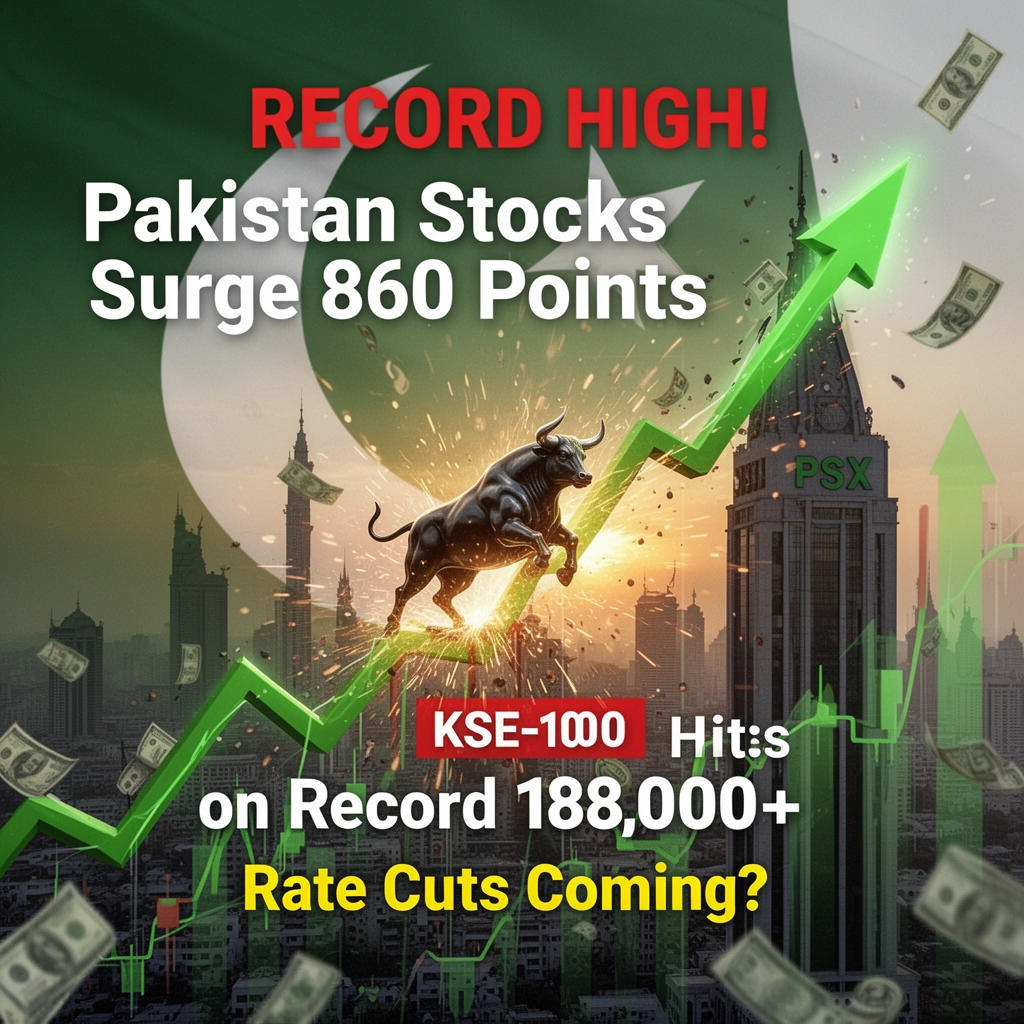
KSE-100 index soars past 188,621 points amid Pakistan stock market rally fueled by SBP rate cut expectations. Analysis of drivers, risks, and global emerging market context for January 2026.
A Frontier Market’s Unexpected Ascent
The trading floor at the Pakistan Stock Exchange opened Tuesday morning with the nervous energy that has become characteristic of frontier markets in early 2026. By midday, the benchmark KSE-100 index had tumbled to an intraday low of 187,192 points, triggering familiar anxieties among investors who remember Pakistan’s volatility all too well. Yet what followed was a dramatic reversal that encapsulates the peculiar momentum gripping this South Asian economy.
The KSE-100 surged 860 points to close at a record 188,621.78, marking not just another milestone but a continuation of what has become one of the most compelling—and confounding—bull runs in emerging markets. For investors watching from afar, Pakistan’s bourse suddenly looks less like a frontier gamble and more like an opportunity that demands serious consideration.
The rally extends a remarkable streak. Over the past month alone, the index has climbed 10.20 percent, and stands up 63.99 percent compared to the same period last year, according to data from Trading Economics. This isn’t the ephemeral bounce of speculative fervor; it’s a sustained ascent driven by fundamentals that are quietly reshaping Pakistan’s investment narrative.
The January 20 Session: Volatility Gives Way to Conviction
Tuesday’s trading session offered a microcosm of Pakistan’s current market dynamics. The index swung between an intraday high of 188,958.38 and its morning low of 187,192.02, a range reflecting both persistent uncertainty and growing confidence. The volatility wasn’t surprising—frontier markets rarely move in straight lines—but the decisive close above 188,600 points signaled something more substantial than mere momentum.

Volume remained robust, with market participants noting sustained buying interest across heavyweight sectors. According to analysis from KTrade Securities, all-share traded volumes rose 2.3 percent day-over-day to 1,226 million shares, suggesting broad participation rather than narrow speculation. The breadth of the rally—spanning energy, financials, and fertilizers—indicates institutional conviction rather than retail exuberance.
Heavy stocks drove the gains. Engro Holdings, Pakistan Petroleum, Sazgar Engineering, Oil and Gas Development Company, and Pakistan State Oil collectively added 661 points to the index, underscoring how Pakistan’s largest companies are benefiting from improving macroeconomic conditions and sector-specific tailwinds.
The Rate Cut Catalyst: Monetary Easing in Focus
At the heart of Tuesday’s rally—and indeed, much of the recent bullishness—lies a simple calculation: investors are betting heavily that the State Bank of Pakistan will announce a rate cut at its Monetary Policy Committee meeting scheduled for January 26. The conviction behind this bet is remarkably strong.
Survey data indicates that approximately 80 percent of market participants expect the SBP to reduce interest rates, with 56 percent predicting a 50 basis point cut and 15 percent foreseeing a full percentage point reduction. These aren’t idle expectations. They’re grounded in a macroeconomic reality that has shifted dramatically over the past several months.
The central bank surprised markets in December by cutting rates 50 basis points to 10.5 percent, even as many analysts had forecast rates would remain on hold. The move followed the IMF’s approval of a $1.2 billion disbursement, which bolstered foreign exchange reserves to over $15.8 billion, according to Trading Economics data. That cut signaled the SBP’s confidence that inflation was being durably tamed without requiring the punishingly high real interest rates that had characterized much of 2024 and early 2025.
Market pricing now reflects expectations of further easing. Looking ahead, nearly 49 percent of survey participants believe the policy rate will remain at 10 percent until June 2026, while 46 percent expect it to fall below 10 percent. If realized, such cuts would represent a remarkable pivot from the 22 percent peak reached during Pakistan’s acute inflation crisis.
The broader context matters enormously. Pakistan’s real interest rate—the policy rate minus inflation—currently stands at approximately 450 basis points, well above the historical average of 200-300 basis points for the country. This substantial buffer provides the SBP meaningful room to ease without risking inflation expectations becoming unanchored.
Inflation’s Cooling Trajectory
The foundation for monetary easing rests on Pakistan’s remarkable inflation performance. After experiencing devastating price pressures that saw annual inflation surge above 30 percent in 2023, the country has achieved a disinflation that would have seemed implausible just 18 months ago.
Pakistan’s annual inflation eased to 5.6 percent in December 2025 from 6.1 percent in November, marking the lowest reading since August. More critically, this deceleration appears broad-based rather than driven by volatile components. Food and non-alcoholic beverage inflation decelerated significantly to 3.2 percent from 5.5 percent in November, with perishable food prices declining 17.8 percent, according to Trading Economics.
For a country where food comprises a substantial portion of household consumption baskets, this moderation provides genuine relief to ordinary Pakistanis while simultaneously creating space for the central bank to support growth through lower rates. The combination of falling inflation and a still-elevated policy rate creates what economists term “real policy easing”—even if nominal rates are unchanged, declining inflation makes monetary conditions more accommodative.
The inflation trajectory looks sustainable. Core inflation, which strips out volatile food and energy prices, has also moderated, though it remains somewhat sticky. The central bank’s target range of 5-7 percent appears achievable for the foreseeable future, barring external shocks.
The IMF Anchor: Credibility Through Commitment
Pakistan’s relationship with the International Monetary Fund has been tumultuous over decades—a pattern of crisis lending, temporary stabilization, and eventual backsliding that eroded investor confidence. The current program, however, appears different in execution if not always in rhetoric.
The successful completion of recent IMF reviews and the subsequent $1.2 billion disbursement represents more than just liquidity provision. It signals external validation of Pakistan’s fiscal and monetary policy trajectory, providing a credibility anchor that domestic institutions often struggle to establish independently.
The Monetary Policy Committee noted that despite sizable ongoing debt repayments, SBP’s foreign exchange reserves continued to increase, reaching above $15.8 billion, according to the December policy statement. Moreover, with the realization of planned official inflows, SBP’s reserves are projected to strengthen to $17.8 billion by June 2026.
These aren’t trivial numbers for Pakistan. Reserve adequacy has historically been a vulnerability—periods when reserves dipped below three months of import cover triggered currency crises and capital flight. The current trajectory, if sustained, would represent the strongest reserve position in recent memory, providing a crucial buffer against external shocks.
The fiscal side shows improvement as well, though challenges persist. Led by sizable SBP profit transfer, the overall and primary fiscal balances recorded surpluses during the first quarter of fiscal year 2026. However, tax collection remains a persistent weakness, with revenue growth lagging targets and necessitating potentially painful adjustments in coming months.
Economic Activity: Green Shoots Amid Caution
Beyond monetary and fiscal metrics, Pakistan’s real economy is showing signs of life that contrast with the torpor of recent years. High-frequency indicators point to continued momentum in industry and agriculture, with large-scale manufacturing up 4.1 percent year-over-year in the first quarter of fiscal year 2026, according to central bank data.
This manufacturing recovery is particularly notable given the sector’s struggles during the acute phase of Pakistan’s economic crisis. Industries ranging from textiles to automobiles are benefiting from improved power supply reliability, moderating input costs, and gradually recovering domestic demand.
The remittance story remains crucial. Worker remittances rose 17 percent year-over-year to $3.6 billion in December 2025, taking cumulative inflows in the first half of fiscal year 2026 to $19.7 billion, up 11 percent year-over-year. For an economy chronically short of foreign exchange, these inflows provide vital breathing room, supporting both the balance of payments and domestic consumption through transfers to households.
Yet headwinds persist. The State Bank reported a current account deficit of $244 million in December 2025, compared with surpluses of $454 million in December 2024 and $98 million in November 2025. While the deficit remains manageable within the projected 0-1 percent of GDP range, its reemergence after months of surplus warrants monitoring.
Sector Leadership: Banks, Energy, and Discovery
The composition of Pakistan’s equity rally reveals where investors see the most compelling opportunities. Banking stocks have been consistent leaders, benefiting from the prospect of lower funding costs, improving asset quality as the economy stabilizes, and the potential for credit growth resumption after years of contraction.
The energy sector, particularly oil and gas exploration companies, received a boost from recent discoveries. Hydrocarbon reserves were discovered in the TAL block, with expected production of 1.37 million cubic feet per day of gas. While not transformative in scale, such discoveries provide psychological lift to a sector that has long underperformed due to pricing disputes and regulatory uncertainty.
Pakistan Petroleum (PPL), Oil and Gas Development Company (OGDC), and Pakistan State Oil (PSO) have all participated in the rally, though for differing reasons. Exploration companies benefit from discovery potential and improving cash flows, while marketing companies like PSO gain from normalizing economic activity and reduced circular debt accumulation.
The fertilizer sector represents another area of strength, supported by government efforts to support agricultural production and moderating input costs, particularly natural gas pricing. Given agriculture’s central role in Pakistan’s economy and food security, policy support for this sector tends to be bipartisan and sustained.
The Historical Context: Unprecedented Territory
To fully appreciate the current rally’s magnitude, consider the historical perspective. The KSE-100 has previously reached all-time highs, with the index touching 170,719 points in earlier sessions. The current level of 188,621 represents a substantial advance beyond those previous peaks, taking the index into genuinely unprecedented territory.
The year-to-date performance is particularly striking. From January 5 to 9, the KSE-100 surged from 179,035 to 184,410, adding 5,375 points in a single week, according to Arif Habib Limited analysis. Such concentrated gains reflect both improving fundamentals and technical factors, including short-covering and momentum-based buying.
What distinguishes this rally from previous episodes is its foundation. Past bull markets in Pakistan often rested on fragile bases—temporary commodity windfalls, unsustainable fiscal expansions, or purely speculative fervor. The current advance, while certainly benefiting from momentum, appears anchored in more durable improvements: disinflation, external sector stability, and the resumption of economic activity after a brutal contraction.
Global Comparison: Pakistan’s Place in the Emerging Market Constellation
Pakistan’s equity performance becomes even more remarkable when viewed against the broader emerging market landscape. The year 2025 has been exceptional for emerging markets generally, with the MSCI Emerging Markets Index posting strong gains and outperforming developed markets.
The MSCI Emerging Markets Index has surged around 30 percent since the beginning of the year, outperforming all three major Wall Street averages. Within this cohort, certain markets have excelled. Greece’s Athens Composite has surged nearly 44 percent over the year and will be upgraded to developed market status in September 2026, while Chile and the Czech Republic’s benchmark indexes are both up around 50.8 percent year-to-date.
Pakistan’s 64 percent annual gain positions it among the top performers globally, though its frontier market classification and smaller free float mean it attracts less attention than larger emerging markets like India or Vietnam.
India, the regional giant, presents an interesting comparison. After a multi-year period of outperformance, Indian equities diverged from broader emerging market trends in 2025, entering a phase of consolidation. The Indian market’s valuation premium to other emerging markets had become stretched, prompting profit-taking even as the economic fundamentals remained solid.
Vietnam tells a different story. FTSE Russell announced in October 2025 that Vietnam will be upgraded from Frontier to Secondary Emerging Market status from September 21, 2026. The VN-Index rose from 1,100 points in April 2025 to nearly 1,700 points by October 2025, a 50 percent jump and a 33 percent year-to-date gain, making Vietnam the best-performing market in Southeast Asia.
Pakistan’s challenge is securing a similar reclassification. While its market has performed admirably, concerns about liquidity, governance, and regulatory predictability continue to keep it in the frontier category. Progress on these structural issues could unlock substantial passive inflows should international index providers upgrade Pakistan’s status.
The Dollar Dynamic: Currency as Catalyst
A crucial but often overlooked driver of emerging market performance in 2025-2026 has been the weakening U.S. dollar. One of the key catalysts for the continued strengthening of emerging market currencies and assets—U.S. dollar weakness—appears set to persist into the new year, according to VIG Asset Management analysis.
For Pakistan specifically, the Pakistani rupee strengthened slightly against the U.S. dollar, closing at 280.02 per dollar, up 0.03 percent week-over-week. While the magnitude of appreciation has been modest compared to some peers, the stabilization itself represents progress after years of serial devaluations that eroded purchasing power and investor confidence.
Currency stability creates multiple benefits for equity investors. It reduces the hedging costs for foreign investors, improves the predictability of earnings for companies with dollar-denominated debt, and signals macroeconomic competence to international audiences. For a country that has experienced repeated balance-of-payments crises, even modest currency strength carries outsize psychological weight.
Risks on the Horizon: What Could Derail the Rally
Prudent analysis demands acknowledging risks, and Pakistan’s rally faces several potential headwinds. The most immediate concerns fiscal slippage. Federal Board of Revenue collection slowed considerably to 10.2 percent year-over-year during July-November fiscal year 2026, implying significant acceleration required to achieve the budgeted tax collection target in the remaining seven months.
Tax revenue shortfalls create a familiar dilemma for Pakistani policymakers: either slash expenditures, potentially derailing growth, or accept higher deficits that risk triggering IMF concerns and currency pressure. The government’s ability to square this circle will be tested in coming months.
Foreign direct investment tells a sobering story. Net FDI stood at $808 million in the first six months of fiscal year 2025-26, down 43 percent year-over-year compared to $1,425 million in the same period last year. The country’s net FDI in December 2025 reported outflows of $135 million, with the largest outflow from Norway of $376 million in the IT sector due to Telenor’s exit from Pakistan following the sale of its assets to PTCL.
The FDI weakness reflects deeper structural issues: regulatory uncertainty, governance concerns, and the exit of multinational corporations that have concluded Pakistan’s market doesn’t justify the operational complexity. While portfolio inflows into equities have been strong, the absence of greenfield FDI limits Pakistan’s long-term growth potential and technological upgrading.
Geopolitical risks remain ever-present. Regional tensions, domestic political instability, and the perennial risk of security incidents all pose threats to investor confidence. Pakistan’s location in a volatile neighborhood means external shocks—from conflict escalation to border closures—can materialize with little warning.
Global factors matter as well. The global environment remains challenging, particularly for exports, which may have some implications for the macroeconomic outlook, the SBP noted. A global slowdown, particularly in key markets like China and the Gulf countries that absorb Pakistani exports, could undermine the current account trajectory.
The Valuation Question: Expensive or Just Getting Started?
For equity investors, the perennial question becomes whether Pakistan’s rally has run ahead of fundamentals or represents genuine value recognition. The KSE-100 currently trades at a price-to-earnings ratio of 9.2 times and offers a dividend yield of approximately 5.4 percent, according to analyst estimates.
These multiples appear modest relative to regional peers and global emerging markets, particularly given the earnings growth prospects. Yet valuations alone don’t determine market direction—sentiment, liquidity, and momentum frequently dominate in the short term.
The composition of buyers matters. Buying from local mutual funds, as reflected in recent flow data, played a key role in supporting the market’s upward trend. Domestic institutional participation provides a more stable foundation than purely retail-driven rallies, though it also means foreign investor participation remains limited relative to Pakistan’s market size.
For international investors, Pakistan presents a classic frontier market trade-off: exceptional returns potential balanced against liquidity constraints, governance uncertainty, and episodic volatility. The country lacks the institutional infrastructure and market depth of larger emerging markets, meaning position sizing must remain modest and exit liquidity cannot be taken for granted.
Forward Outlook: Momentum Versus Mean Reversion
As the January 26 Monetary Policy Committee meeting approaches, market attention will focus intensely on the magnitude of any rate cut and the accompanying forward guidance. A 50 basis point reduction is largely priced in; anything less could trigger profit-taking, while a larger cut might fuel further gains.
Beyond the immediate catalyst, Pakistan’s market trajectory depends on execution across multiple dimensions. Can the government close its fiscal gap without derailing growth? Will the current account remain manageable as imports recover? Can political stability be maintained through an election cycle? These questions will determine whether 2026 proves to be a continuation of 2025’s success or a return to familiar volatility.
The international context provides some tailwinds. Emerging market equities are positioned for robust performance in 2026, boosted by lower local interest rates, higher earnings growth, attractive valuations, ongoing improvements in corporate governance, healthier fiscal balance sheets and resilient global growth, according to J.P. Morgan Global Research.
For Pakistan to capture its share of emerging market flows, however, it must continue demonstrating policy credibility. The IMF program provides a framework, but sustained implementation matters more than announced intentions. Investors have heard promising narratives from Pakistani policymakers before; what distinguishes this cycle is the actual delivery on inflation reduction, reserve accumulation, and fiscal discipline.
Implications for Investors and Policymakers
For portfolio managers evaluating Pakistan, the opportunity set has clearly improved relative to the acute crisis years. The risk-reward proposition, while still tilted toward higher risk than established emerging markets, no longer appears as asymmetrically unfavorable as it did when reserves were perilously low and inflation was raging.
Tactical traders will focus on near-term catalysts: the January 26 rate decision, upcoming corporate earnings, and technical chart levels. Strategic investors might view Pakistan as a potential multi-year recovery play, betting that continued policy discipline could unlock a re-rating toward regional peer valuations.
For policymakers, the market’s strength creates both opportunities and responsibilities. Strong equity markets improve sentiment, facilitate capital raising for corporations, and can support wealth effects that boost consumption. Yet they also risk complacency—allowing market euphoria to substitute for the hard structural reforms that Pakistan desperately needs.
The agenda remains daunting: tax base expansion, energy sector reform, privatization of loss-making state enterprises, governance improvements in institutions ranging from power distribution to ports. These challenges won’t be solved by monetary easing or IMF programs alone. They require sustained political will, technical capacity, and societal consensus that have often proven elusive.
Conclusion: A Rally Grounded in Reality, Shadowed by Risks
Pakistan’s stock market surge past 188,600 points represents more than statistical milestone. It reflects a fundamental shift in the country’s macroeconomic trajectory—from crisis management to tentative normalization. The confluence of moderating inflation, improving reserves, and the prospect of further monetary easing has created conditions for equity appreciation that would have seemed implausible during the darkest days of 2023-2024.
Yet as Tuesday’s intraday volatility demonstrated, this remains a market where conviction and anxiety coexist. The path from frontier gamble to reliable emerging market investment requires more than favorable momentum—it demands institutional development, governance improvements, and sustained policy credibility that take years to build.
For now, Pakistan’s bourse continues to defy skeptics, posting returns that place it among the world’s top-performing markets. Whether this represents a durable re-rating or an ephemeral rally will be determined by execution on the structural challenges that have constrained Pakistan’s potential for decades. The central bank’s January 26 decision will provide the next chapter in this unfolding story.
Sources :
- Pakistan Stock Exchange Market Summary – Official PSX data and statistics
- KSE-100 Index Bloomberg Quote – Real-time index tracking
- State Bank of Pakistan Official Site – Monetary policy statements and economic data
- Trading Economics Pakistan Indicators – Comprehensive economic metrics
- MSCI Emerging Markets Analysis – Global EM context and comparisons
Discover more from The Economy
Subscribe to get the latest posts sent to your email.


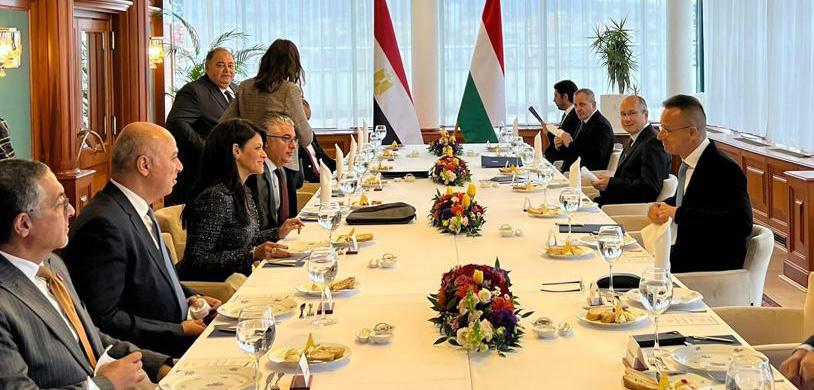
Following Péter Magyar’s historic landslide, Hungarian stocks, bonds, and the forint are surging. Here’s why global capital is pivoting to Central Europe’s most dramatic turnaround story of 2026 — and what the risks still are.
Market Snapshot — April 13, 2026
| Indicator | Level | Move |
|---|---|---|
| BUX Index | 137,260 pts | ▲ +3.1% — All-Time High |
| EUR/HUF Rate | 363.98 | ▲ Forint at 4-Year High |
| 10yr Bond Yield | 6.31% | ▼ –51bps post-vote |
| OTP Bank (MTD) | +17% | ▲ BUX’s largest constituent |
| Frozen EU Funds | €17B+ | ≈ 8% of Hungary’s annual GDP |
At 8:14 a.m. on Monday, April 13, the Budapest Stock Exchange’s BUX index crossed 137,000 points for the first time in its history. On the trading floor — and in the Zoom rooms of every emerging-markets desk from London to Singapore — the reaction was the same: a collective, quiet exhale, six years in the making.
Péter Magyar had done it. His centre-right Tisza party had secured 53.6 percent of the vote, delivering a two-thirds supermajority that ended Viktor Orbán’s 16-year grip on Hungary and, with it, the most sustained standoff between a member state and the European Union in the bloc’s history. By the time Frankfurt opened, the forint had surged to a four-year high of 363.98 per euro — a move of nearly four percent in a matter of days, one of the currency’s most violent short-term rallies since the pandemic. International bonds maturing in 2050 and 2052 had added more than two cents on the dollar overnight. Morgan Stanley’s emerging markets team was already out with a note: the landslide “leaves room for assets to rise even further.”
This was not ordinary post-election repositioning. This was a repricing of a country.
The Trade That Waited a Decade
To understand the ferocity of Monday’s rally, you have to understand how deeply cheap Hungarian assets had become — and why. Since Orbán consolidated power after his 2010 supermajority, Hungary accumulated a unique political risk premium: frozen EU funds, rule-of-law proceedings under Article 7, a judiciary stripped of independence, and a media landscape systematically captured by loyalists. By early 2026, Budapest’s 10-year government bond yields were trading more than 400 basis points above German equivalents — the second-highest spread in the entire European Union, a number that spoke not only to fiscal anxiety but to something more existential: the market’s judgment that Hungary had become, in institutional terms, a semi-detached member of the European project.
Investors had priced in isolation. Now they were pricing in reintegration.
“The market is reacting to a combination of uncertainty dissipating — there was a real concern of election results being contested — and renewed optimism for policy changes that should align Europe.”
— Timothy Ash, Senior EM Strategist, RBC Global Asset Management
The structural logic of the trade was simple, even if its execution required nerves of steel. For years, the EU had withheld approximately €17 billion in cohesion and Recovery and Resilience Facility (RRF) funds from Budapest, citing backsliding on judicial independence, press freedom, and anti-corruption standards. That sum represents roughly eight percent of Hungary’s annual GDP — a staggering figure for an economy that recorded near-zero growth in 2025. Unlock it, and the growth arithmetic changes instantly. Morgan Stanley estimates the disbursement alone could add between 1.0 and 1.5 percentage points to Hungarian GDP growth. For an economy forecast to grow at just 1.9 percent in 2026, that would be transformative.
Aberdeen and Allianz had been quietly accumulating Hungarian government paper for weeks as Tisza’s poll leads widened. Others followed the same pre-positioning logic. When the result came in — not just a win, but the largest electoral mandate of any party in Hungary’s 37 years of post-communist democracy — those trades paid. Those who had held back scrambled to get in.
Magyar’s ‘New Deal’ — and What the Market Is Actually Buying
What precisely are investors buying? Not simply a change of personality in the Prime Minister’s office on Kossuth Square. They are buying a credible institutional reset, delivered through a supermajority powerful enough to undo constitutional amendments that took years to embed.
Magyar has outlined what he calls a “Hungarian New Deal” — a programme built around three pillars:
- Judicial and institutional restoration — joining the European Public Prosecutor’s Office, reversing structural changes to the Constitutional Court, and introducing a two-term limit for prime ministers.
- Anti-corruption reform — ending the crony procurement networks that enriched Orbán allies and reorienting public contracts toward competitive tender.
- Foreign investment predictability — abolishing the sector-specific windfall taxes on banks, energy companies, and retailers that had made Hungary’s business environment increasingly hostile since 2022.
For the equity market, it is that third pillar that drove Monday’s sector rotation most viscerally. OTP Bank, Hungary’s dominant lender and the BUX’s largest single constituent, surged more than 17 percent over the pre-election and post-election period. MOL, the oil and gas giant, rose sharply. Richter Gedeon, the pharmaceuticals group with genuine international reach, outperformed. Meanwhile, firms with close ties to Orbán’s NER system — his National System of Cooperation — plummeted as investors processed what the end of protected oligarchic networks would mean for their order books.
“Magyar will need better relations with the EU. There are lots of structural funds that will probably get released, and the market knows the economic policy team well.”
— Timothy Ash, RBC Global Asset Management
The likely appointment of András Kármán as Finance Minister has done as much as any single signal to anchor investor confidence. A former board member at the European Bank for Reconstruction and Development with an orthodox economics pedigree, Kármán was Tisza’s economic adviser throughout the campaign. His emergence as the probable guardian of the public finances offers markets precisely what they needed: a credible fiscal anchor, someone Brussels and the bond market can speak to in the same language.
The EU Equation — Timeline, Mechanics, and the Urgency of August
The market’s immediate question is not whether the EU funds will flow — few serious analysts doubt that they will, eventually — but when. And here, the calendar creates genuine complexity.
The mid-year deadline for Budapest to access the EU’s post-COVID RRF funds looks extremely tight, even under the most optimistic scenario. EU bureaucracy does not move at the speed of equity markets. Milestones must be assessed, legal processes followed, Commission staff deployed. Yet JPMorgan, in a research note circulated after the result, argues that “extraordinary circumstances will call for exceptional flexibility” from Brussels — and the early signals from the Commission have been anything but cold. Ursula von der Leyen welcomed Magyar’s victory as “a victory for fundamental freedoms,” declaring that “Hungary has chosen Europe” and pledging to work “intensively” with the new government to implement the reforms required to release funding.
Capital Economics’ Liam Peach, in a note that cut closer to the bone than most sell-side commentary, put the challenge plainly: “The durability of any positive market reaction will now depend on how quickly Tisza moves to rebuild relations with the EU, secure EU fund disbursements, and signal a credible medium-term fiscal anchor.” In other words: the rally is real, but it must be earned. The August 2026 deadline that the incoming government has set for securing fund access is ambitious. Investors are watching it closely.
Key Reform Milestones the Market Is Tracking
| Milestone | Timeline | Market Impact | Risk Level |
|---|---|---|---|
| EU Commission rule-of-law dialogue opens | May–Jun 2026 | Bond spread compression | Low |
| Windfall tax repeal legislation | Q2 2026 | OTP/banking sector upside | Low |
| RRF milestone assessment submission | By Aug 2026 | Forint rally extension | Medium |
| Judicial independence reforms enacted | Q3–Q4 2026 | Sovereign rating revision | Medium |
| First EU cohesion fund disbursement | Late 2026 | GDP growth uplift 1–1.5ppt | Medium |
| Euro adoption roadmap published | 2027–2028 | Long-run convergence trade | High |
The Risks Markets Are Choosing to Overlook — For Now
Every great emerging-market trade has a shadow side, and Hungary’s is no different. The euphoria of a regime change can be a more powerful market force than the messy reality that follows. Investors buying the narrative of post-Orbán Hungary in April 2026 are making a series of downstream assumptions that deserve scrutiny.
Begin with the fiscal inheritance. Hungary enters the Magyar era with one of the EU’s largest budget deficits — above five percent of GDP — a debt-to-GDP ratio north of 70 percent and climbing, and a sovereign credit rating from S&P Global that sits just one notch above junk. For all the optimism about EU fund inflows, those funds do not arrive without reform conditionality attached, and delivering reform while consolidating the public finances simultaneously is one of the hardest things any new government can attempt.
Then there is the institutional depth problem. Commerzbank analyst Tatha Ghose, one of the more sober voices amid the post-election commentary, noted that “Tisza inherits a state apparatus deeply shaped by Fidesz over the past decade and a half, with key institutions, administrative structures, and policy frameworks still populated by Fidesz loyalists.” A parliamentary supermajority gives Magyar the constitutional tools. It does not give him the bureaucratic machinery to use them at speed.
PGIM’s head of emerging market macro research, Magdalena Polan, added another wrinkle: a sudden disbursement of EU funding before reforms are fully cemented “could leave Brussels open to legal challenges from other potentially unhappy member countries.” Speed and legal robustness may pull in opposite directions.
On economics, Deutsche Bank’s analysts noted that Hungary’s “fiscal and debt dynamics remain incompatible with Maastricht criteria at the moment” — a polite way of saying that Magyar’s aspiration for euro adoption, however politically appealing, will require years of fiscal surgery that markets should not expect to feel quickly. And Magyar’s proposed shift from Hungary’s flat 15 percent income tax to a three-tier progressive system, while popular with Brussels, will unsettle segments of the business community that are currently cheering his arrival.
Finally — and this is the geopolitical variable that no Budapest bond model can fully capture — Hungary’s foreign policy reset comes at a moment of acute European security stress. Orbán’s exit deprives Vladimir Putin of his most reliable EU interlocutor, but it also removes a complicated brake on EU-wide decisions on Ukraine aid. How Magyar navigates the Russia relationship, energy dependencies, and US relations in a MAGA-inflected Washington will matter enormously for Hungary’s standing in Brussels — and therefore for the pace of fund releases.
The Broader CEE Convergence Thesis
Step back from the Budapest trading floors for a moment, and something larger comes into view. Hungary’s inflection is not an isolated event. It is the most dramatic data point yet in a broader Central and Eastern European repricing that has been underway since 2022.
Poland’s own democratic restoration under Donald Tusk’s coalition government, which began reversing the Law and Justice party’s judicial changes from late 2023 onward, offered investors the proof of concept: institutional reform in a CEE country can drive durable asset outperformance. The zloty’s relative resilience, Warsaw’s equity market premium over Budapest in the post-2022 period, and the gradual compression of Polish sovereign spreads all told the same story. Investors in the CEE convergence trade — the thesis that Central European economies will gradually close the gap with Western European income and governance standards, driving sustained capital appreciation — had been waiting for Hungary to join that narrative. On April 12, it did.
If Magyar delivers even a partial reform agenda over the next 18 months, the country-risk premium that has kept foreign direct investment subdued, deterred long-term institutional capital, and inflated borrowing costs could compress meaningfully. The €17 billion in EU funds is the immediate prize. The longer-term prize is Hungary’s re-emergence as a credible investment destination for the kind of patient capital — infrastructure funds, private equity, real estate — that rewards institutional stability over the long run.
“It’s a new chapter for Hungary and it’s a great opportunity. To move the economy will not take much because sentiment and rule of law are such an important part of the economic set of factors that impact growth.”
— Magdalena Polan, Head of EM Macro Research, PGIM
What Comes Next
The first 100 days of the Magyar government will be watched with the intensity usually reserved for a new Federal Reserve chair. Markets have front-loaded a great deal of good news. The BUX at all-time highs, a forint below 370 to the euro, and bond yields at their lowest since late 2024 all reflect an optimistic scenario in which reforms move swiftly, EU dialogue opens constructively, and the fiscal position stabilises.
That scenario is achievable. It is not guaranteed. Hungarian Conservative analysts warn that “much of the political shift has already been priced in” and that further forint appreciation beyond the 363–370 range “is likely to remain limited” without concrete reform delivery. On a longer horizon, the sustainability of sub-370 levels depends on fiscal fundamentals that remain, for now, challenging.
For investors, the tactical trade may already be mostly done. The structural trade — the multi-year bet on Hungary’s institutional rehabilitation, EU fund absorption, and eventual convergence — is just beginning. Those are different instruments with different time horizons. Confusing them, as emerging-market history demonstrates with tiresome regularity, tends to be expensive.
But this much is clear: something has shifted in Central Europe. A country that spent 16 years drifting toward the European periphery — geographically, institutionally, and in terms of capital flows — has pivoted with extraordinary speed. The market noticed before the political commentators caught up. Now the question is whether a nation of ten million people, led by a 43-year-old former Fidesz insider turned democratic reformer, can convert the most dramatic electoral mandate in its post-communist history into the institutional transformation that the markets — and Brussels — are betting their money on.
In Budapest this week, the Danube still runs between two cities that reunified only 150 years ago. History here moves in long arcs. Investors are betting that this time, the arc bends faster.
Bottom Line for Investors
The post-election rally in Hungarian stocks, bonds, and the forint reflects a legitimate structural repricing — not mere sentiment. With €17 billion in frozen EU funds, a credible finance minister, and a two-thirds supermajority enabling swift legislative change, the fundamental case is real. But the market has already priced an optimistic scenario. Durable outperformance depends on reform delivery pace, fiscal consolidation credibility, and Brussels’ willingness to move fast. Position sizing should reflect the asymmetry: the upside is large, the timeline is uncertain, and the institutional obstacles are underappreciated.
Frequently Asked Questions
How much in EU funds could Hungary unlock after Péter Magyar’s election? Approximately €17–19 billion in frozen RRF and cohesion funds — roughly 8% of Hungary’s annual GDP — could be released if Magyar’s government delivers on EU rule-of-law and anti-corruption milestones. Morgan Stanley estimates this alone could add 1.0–1.5 percentage points to annual GDP growth.
How did Hungarian assets perform after the April 2026 election? The BUX index hit an all-time high of 137,260 points, the forint surged to a four-year high of 363.98 per euro (a ~4% move in days), and 10-year government bond yields fell roughly 51 basis points to their lowest since late 2024. OTP Bank rose close to 17% in the month leading up to and following the election.
What is Péter Magyar’s economic reform plan for Hungary? Magyar’s “Hungarian New Deal” centres on abolishing Orbán-era windfall taxes on banks and retailers, restoring judicial independence to unlock EU funds, joining the European Public Prosecutor’s Office, and creating a more predictable, corruption-free environment for foreign direct investment.
What are the main risks to the Hungarian asset rally? Hungary’s budget deficit exceeds 5% of GDP, its debt-to-GDP ratio is above 70%, and S&P Global rates it just one notch above junk. Institutional inertia — a state apparatus stacked with Fidesz loyalists — could slow reforms. EU fund disbursement timelines are also uncertain and legally complex.
Is Hungary on a path to euro adoption? Magyar has expressed intent to put Hungary on a euro adoption roadmap, but Deutsche Bank notes current fiscal and debt dynamics remain “incompatible with Maastricht criteria.” Meaningful convergence toward sub-3% deficits and sub-60% debt ratios would likely take several years of sustained fiscal discipline.
Discover more from The Economy
Subscribe to get the latest posts sent to your email.

The Quiet Outperformer in a Noisy World
While markets gyrate on every Federal Reserve whisper and geopolitical tremor from Taipei to Tehran, a quieter, more durable story has been compounding beneath the surface of Southeast Asian finance. Singapore’s Straits Times Index has demonstrated a resilience that confounds the casual observer—not because Singapore has somehow insulated itself from global volatility, but because its domestic capex cycle is so deep, so structural, and so government-anchored that it functions almost like a sovereign bond with equity-like upside.
The thesis is not complicated, but its implications are profound: Singapore is simultaneously running two of the most compelling domestic investment supercycles in Asia. The first is a construction and infrastructure boom of historic proportions, projected to sustain demand of between S$47 billion and S$53 billion in 2026 alone, according to the Building and Construction Authority. The second is a defence upcycle driven not by ideology but by cold strategic arithmetic—Singapore’s FY2026 defence budget has risen 6.4% to S$24.9 billion, the largest single allocation in the city-state’s history. Together, these twin engines are forging what may be the most underappreciated domestic growth story in global markets today.
For the sophisticated investor, the question is not whether to pay attention. It is how quickly to act.
The Architecture of a S$100 Billion Construction Boom
To understand why Singapore’s construction sector 2026 outlook is so structurally compelling, you must first appreciate the government’s almost Victorian confidence in long-range planning. Unlike the speculative infrastructure cycles that have periodically ravaged emerging markets from Jakarta to Ankara, Singapore’s construction pipeline is anchored by sovereign balance sheet commitments that span decades.
The headline project is, of course, Changi Airport Terminal 5—a S$15 billion-plus undertaking that, when complete, will make Changi one of the largest airport complexes on the planet, capable of handling an additional 50 million passengers annually. Construction mobilisation is accelerating, with land reclamation and enabling works already underway at Changi East. The ripple effects on contractors, materials suppliers, and specialist engineers are only beginning to register in earnings.
Alongside Changi, the Cross Island Line Phase 2—linking Turf City to Bright Hill and eventually to the eastern corridor—adds another multi-billion-dollar spine to an already formidable rail network. The Land Transport Authority has positioned this as foundational infrastructure for Singapore’s next-generation urban mobility. Construction timelines extend through the early 2030s, providing a long runway for sector earnings visibility.
Then there is the HDB public housing programme—perhaps the least glamorous but most structurally certain component of the boom. Singapore’s Housing and Development Board has committed to building 100,000 new flats between 2021 and 2025, with demand for subsequent tranches remaining elevated as the city’s population and household formation dynamics continue to evolve. These are not speculative builds awaiting buyers. These are politically mandated, fully financed housing units for which demand is structurally guaranteed.
The cumulative effect? Approximately S$100 billion in construction demand projected through 2030 and beyond, according to sector analysts—a figure that represents not a single boom-bust cycle but a sustained, multi-phase expansion with government backstop at every stage.
What the Analysts Are Saying—and Why It Matters
The analyst community has been unusually aligned on this theme. Thilan Wickramasinghe of Maybank Securities has argued forcefully that Singapore’s construction sector is enjoying a “structural demand floor” that is unlikely to recede before 2029 at the earliest. This is not standard sell-side optimism. It is a data-driven observation grounded in the project pipeline’s physical characteristics: these are not ribbon-cuttings awaiting funding approval. They are cranes in the ground, contracts signed, and milestone payments flowing.
Shekhar Jaiswal of RHB has echoed similar conviction, pointing to the tight interplay between public-sector infrastructure commitments and private-sector demand—particularly from the data centre construction wave now rolling across Singapore’s industrial landmass. Hyperscaler demand for purpose-built facilities from the likes of Google, Microsoft, and ByteDance subsidiaries has added an entirely new stratum of construction activity to an already saturated order book.
OCBC and UOB Kay Hian analysts have focused their attention on specific SGX-listed beneficiaries: Seatrium (offshore and marine engineering), Wee Hur Holdings (construction and workers’ accommodation), Tiong Seng Holdings, and the larger integrated players like Sembcorp Industries, whose energy infrastructure pivot dovetails neatly with the broader construction narrative. The common thread is margin recovery—after years of pandemic-era cost disruption, Singapore’s leading contractors are now embedded in projects with cost-escalation clauses and more sophisticated risk-sharing frameworks, which means that even if materials costs rise, earnings visibility is meaningfully improved.
The Defence Upcycle: Not a Trend, a Structural Shift
If the construction boom is the known unknown of Singapore’s equity story, the defence sector is the unknown unknown—underappreciated, underanalysed, and consequentially under-owned.
Singapore’s FY2026 defence budget of S$24.9 billion—up 6.4% year-on-year—needs to be contextualised properly. This is not a government responding to domestic political pressure or an election cycle. Singapore has no serious opposition defence constituency to satisfy. This is a city-state of 5.9 million people, sitting at the confluence of the South China Sea, the Malacca Strait, and the Indian Ocean, that has made a sober-eyed strategic calculation that the post-Cold War peace dividend is over.
The geopolitical calculus is not subtle. US-China strategic competition has moved from trade tariffs to semiconductor export controls to naval posturing in the Taiwan Strait, with no credible de-escalation pathway in view. The Middle East conflict, far from remaining regionally contained, has introduced new fragility into global shipping lanes, energy supply chains, and rare materials pricing—all of which matter acutely to Singapore’s import-dependent economy. And the South China Sea, where Singapore maintains scrupulous diplomatic neutrality while quietly acknowledging the risks, remains a theatre of escalating jurisdictional assertion.
Against this backdrop, Singapore’s defence spending is not an anomaly. It is part of a broader Asia-Pacific rearmament that includes Australia’s AUKUS submarine programme, Japan’s historic doubling of its defence budget to 2% of GDP, and South Korea’s accelerated weapons modernisation. The difference is that Singapore, as a city-state, cannot afford strategic ambiguity. Every dollar of defence spending is a genuine operational commitment.
For investors, the opportunity lies in the domestic supply chain. ST Engineering—Singapore’s defence and engineering conglomerate—remains the most direct beneficiary, with its defence systems, aerospace, and smart city divisions all feeding into either the domestic programme or allied nation contracts. ST Engineering’s order book has expanded materially, and its defence electronics segment is particularly positioned for multi-year contract extensions as the Singapore Armed Forces modernise their digital battlefield capabilities.
Beyond ST Engineering, the defence ecosystem extends into Sembcorp Marine (now Seatrium) for naval vessel sustainment, specialised SMEs in precision engineering and electronics, and the broader aerospace MRO cluster at Seletar and Changi that services both military and commercial aviation demand.
Singapore as Asia’s Geopolitical Hedge: The “Switzerland of Asia” Premium
There is a deeper, more structural argument that sophisticated international investors have begun to price—though not yet fully. Singapore’s unique positioning as Asia’s neutral financial hub, legal jurisdiction, and logistics nerve centre means that its domestic capex cycle functions as a partial hedge against the very geopolitical risks that threaten broader Asian exposure.
When US-China tensions spike, capital does not simply evaporate. It relocates—and Singapore is the most natural beneficiary in Southeast Asia. Family offices, private equity vehicles, and corporate treasury functions have been migrating to Singapore at an accelerating pace, bringing with them demand for premium office space, data infrastructure, financial services, and—critically—the physical construction that houses all of it.
This creates a feedback loop that is underappreciated in most macro models: geopolitical tension, rather than being a pure negative for Singapore, actually reinforces the investment case by accelerating the city-state’s role as a regional sanctuary. BlackRock’s 2024 Asia Outlook and similar institutional frameworks have acknowledged this dynamic, even if mainstream commentary has been slow to internalise it.
The BCA construction demand forecast of S$47–53 billion for 2026 needs to be read through this lens. This is not just an infrastructure pipeline number. It is a measure of Singapore’s strategic confidence in its own future as the undisputed hub of a fractured Asia.
The Risk Register: What Could Go Wrong
A platinum-standard analysis demands honest accounting of the downside. Three risks deserve genuine investor attention.
First, cost and labour pressures. Singapore’s construction industry remains heavily dependent on foreign labour, and any tightening of the foreign worker levy regime or supply-side disruption—whether from regional competition for migrant labour or policy shifts in source countries—could compress contractor margins. The more sophisticated players have hedged through escalation clauses and project phasing, but smaller subcontractors remain exposed.
Second, prolonged Middle East conflict and materials pricing. Steel, cement, and specialised construction inputs remain vulnerable to supply-chain disruption originating far from Singapore. A broadening of the Middle East conflict that affects Suez Canal traffic or Gulf petrochemical output could translate into meaningful materials cost inflation. Analysts at DBS have flagged this as a key variable in their sector models for 2026.
Third, the REIT overhang. Singapore’s once-celebrated S-REIT sector remains under pressure from an extended higher-rate environment. While the construction boom benefits developers and contractors, the REIT vehicles that typically hold completed assets face a more challenging refinancing environment and yield compression dynamic. Investors should distinguish sharply between the construction/engineering beneficiaries—where the opportunity is structural and near-term—and the REIT space, where patience and selectivity remain the watchwords. Mixed views from analysts across OCBC, UOB Kay Hian, and Maybank reflect this nuance.
Actionable Investor Takeaways
For the sophisticated investor seeking to position for this supercycle, the following framework applies:
- Overweight Singapore construction and engineering equities with direct exposure to the Changi T5, Cross Island Line, and HDB pipeline—specifically contractors with government-dominated order books and embedded escalation protections.
- ST Engineering remains the single most compelling defence play on the SGX, combining domestic budget tailwinds with a growing international defence electronics export business. Its diversification across defence, aerospace, and smart infrastructure makes it uniquely resilient.
- Data centre construction plays deserve attention as a secular growth overlay—the hyperscaler buildout in Singapore is additive to, not substitutive for, the public infrastructure cycle.
- Be selective on S-REITs. Industrial and logistics REITs with long-lease, institutional-grade tenants are better positioned than retail or office-heavy vehicles in the current rate environment.
- Monitor the BCA’s mid-year construction demand update (typically released mid-2026) as a key catalyst for sentiment re-rating in the sector.
The Fortress That Keeps Building
There is a phrase that circulates quietly among Singapore’s policymakers: “We build, therefore we are.” It captures something essential about a city-state that has never had the luxury of assuming its own survival—and has converted that existential urgency into one of the most disciplined, forward-planned construction and defence investment programmes in the world.
In a global environment defined by fragmentation, supply-chain anxiety, and strategic hedging, Singapore’s domestic capex story is not merely a local equity theme. It is a window into how a small, brilliant state is building its way into relevance for the next quarter-century—crane by crane, frigate by frigate, terminal by terminal.
The investors who recognise this earliest will own the supercycle. The rest will read about it when it is already priced.
Discover more from The Economy
Subscribe to get the latest posts sent to your email.

The Alabama startup boom is not an accident. It is not a fluke of geography, a windfall from a single anchor tenant, or the kind of frothy exuberance that tends to inflate and collapse in coastal corridors. It is, instead, the deliberate consequence of a deceptively simple idea: that founders, not capital, should sit at the center of an innovation ecosystem—and that when a state wraps itself around its entrepreneurs rather than the other way around, extraordinary things happen.
In two decades covering regional innovation from Tel Aviv to Tallinn and from Nairobi to Nashville, I have rarely encountered a model as coherent—or as replicable—as the one quietly assembling itself across Alabama. As U.S. venture capital continues its uneven recovery (the Q4 2025 PitchBook-NVCA Venture Monitor describes a market where “deal counts rose, multiple high-profile IPOs dominated headlines, and AI attracted a record amount of capital,” yet half of all venture dollars flowed into just 0.05% of deals), the geography of opportunity is shifting in ways most investors have not yet fully priced. Alabama is ahead of that curve.
1. Why a Founder-First Ecosystem Is Alabama’s Secret Weapon
The phrase “founder-first” is overused in startup circles. It tends to mean little beyond a firm’s marketing deck. In Alabama, it describes operational reality.
The Economic Development Partnership of Alabama (EDPA) anchors this philosophy through Alabama Launchpad, a program that has invested more than $6 million in early-stage companies—a portfolio now valued collectively at $1 billion. That’s a return profile that would turn heads in any fund memo. But the numbers alone miss the point. What Alabama Launchpad offers that Sand Hill Road cannot is proximity—a white-glove approach to connecting founders with the right resource at the right inflection point, rather than a transactional relationship governed by ownership percentages.
“We want to offer our founders white-glove service when it comes to connecting you with the resources that are right for you and your team at that time,” said Audrey Hodges, director of communications and talent at the EDPA, at the 2025 Inc. 5000 Conference & Gala in Phoenix.
This sounds simple. It is, in fact, quite rare. The Kauffman Foundation has long documented the friction that kills promising startups—not market failure, but navigational failure: the inability to find the right mentor, the right loan program, the right workforce development partner at the critical moment. Alabama has engineered its ecosystem explicitly to eliminate that friction.
The result is a startup environment that punches well above its weight class. Birmingham’s Innovation Depot, the Southeast’s largest tech incubator, provides the physical and institutional scaffolding. Auburn University’s New Venture Accelerator has launched more than 50 businesses that have attracted over $47 million in venture investment and created more than 370 jobs. The University of Alabama’s EDGE incubator anchors Tuscaloosa. And HudsonAlpha Institute for Biotechnology in Huntsville is spinning out life-science ventures at a pace that would surprise most biotech observers outside the Southeast.
Together, these nodes form what urban economists call a “distributed innovation geography”—a web of hubs rather than a single megalopolis. It is, not coincidentally, exactly the structure that the Brookings Institution has advocated as the most resilient model for regional innovation growth.
2. How Alabama Is Closing the Capital Gap—and Making It Stick
Identifying the problem is easy. Alabama’s startup funding landscape faced a structural deficit that is common to nearly every non-coastal state: a shallow pool of local venture capital, reluctant institutional investors, and the persistent gravitational pull of San Francisco and New York on promising founders and their companies.
The solution Alabama chose is, I would argue, one of the most architecturally sophisticated public-private capital strategies in the United States today.
At its core sits Innovate Alabama—the state’s first public-private partnership expressly focused on growing the innovation economy. Funded through a U.S. Department of the Treasury award of up to $98 million via the State Small Business Credit Initiative (SSBCI), Innovate Alabama has constructed a multi-layered capital stack: the LendAL program extends credit to small businesses through private-lending partnerships; InvestAL provides high-match equity investments both directly into startups and through trusted local venture funds; and a network of supplemental grants, tax incentives, and accelerator partnerships rounds out the toolkit.
What makes this architecture genuinely distinctive is not the instruments themselves—development finance has existed for decades—but the conditions attached to the capital. Charlie Pond, executive director of Alabama SSBCI at Innovate Alabama, is explicit: “We built that into our agreement with Halogen Ventures and other funds—that the money has to go to Alabama companies.” The vision, he adds, is generational: “This isn’t a one-time $98 million into the ecosystem and then we’re done. We want this to be around for a long time.”
This structural insistence that returns stay in Alabama—recycling capital back into the ecosystem rather than flowing to coastal LPs—is precisely the mechanism that differentiates Alabama’s model from the well-intentioned but often extractive pattern of outside capital flowing briefly through secondary markets before departing.
Innovate Alabama has already made 17 direct investments under the InvestAL program, with companies ranging from biotech and life sciences to AgTech and professional services. Through partnerships with gener8tor Alabama and Measured Capital—two VC firms with deep local roots and a mandate to reinvest in-state—the program is deploying a fund-of-funds strategy designed to build durable capital density. To date, 179 Alabama startups have graduated from gener8tor programs, securing nearly $80 million in follow-on funding.
In June 2025, Innovate Alabama went further still: it launched the Venture Studio and Fund in partnership with Harmony Venture Labs, a Birmingham-based company that supports new enterprises. The studio begins not with capital but with problems—industry challenges identified through deep fieldwork, then matched with founders and early investment. The Innovate Alabama Venture Studio and Fund aims to launch 10 new companies and attract $10 million in venture capital by 2028 and hopes to generate millions in economic impact across the state.
Compare this to what the NVCA’s 2025 Yearbook documents at the national level: median fund size outside California, New York, and Massachusetts was just $10 million—less than half the overall U.S. median of $21.3 million. Despite the substantial dry powder available, with $307.8 billion in capital ready to be deployed, investors have been holding off due to market uncertainty. Alabama is not waiting for that capital to find its way south on its own. It is building the infrastructure to attract, generate, and retain it locally.
3. The SmartWiz Test: Why Alabama Founders Are Choosing to Stay
No story captures the Alabama startup model more vividly—or more movingly—than SmartWiz.
Five Auburn University students, bonded through fraternity life and a shared frustration with the misery of tax preparation, spent years building a platform that compresses a four-hour tax return process into roughly 20 minutes. They are Tevin Harrell, Olumuyiwa Aladebumoye, Jordan Ward, Justin Robinson, and Bria Johnson—a team of tech entrepreneurs and tax professionals who founded SmartWiz in 2021 in Birmingham and have quickly emerged as one of only 16 IRS-approved tax software providers worldwide.
Their journey through Alabama’s ecosystem reads like a case study in coordinated public-private support: $50,000 in early seed funding through the Alabama Launchpad program; $500,000 from Innovate Alabama’s SSBCI; and additional investments from Techstars Los Angeles, Google, and entertainer Pharrell Williams.
Then came the test. The company’s commitment to Birmingham was tested when it was offered the opportunity to relocate to Los Angeles with $3 million in funding for its latest investment round, but SmartWiz chose to remain and expand in Alabama.
“We respectfully turned down that $3 million and came back to Alabama,” COO Aladebumoye said at the Inc. 5000 panel. “That’s where we ran into the SSBCI grant.” The grant helped close the seed round on Alabama’s terms.
The decision was not sentimental. It was strategic. Alabama’s workforce development agency AIDT is providing services valued at $780,000 to support SmartWiz’s expansion, and the City of Birmingham and Jefferson County are providing local job-creation incentives totaling a combined $231,000. SmartWiz plans to create 66 new jobs over the next five years, with an average annual salary of $81,136, and the growth project is projected to have an economic impact of $9.6 million over the next 20 years.
Harrell’s framing of this choice cuts to the heart of Alabama’s competitive proposition: “As a business owner, people are your biggest investment.” What Alabama offers, in his telling, is not just cheaper real estate or lower burn rates—though both matter—but a community of support that a relocated startup in Los Angeles could not replicate at any price.
This is what I would call the SmartWiz Test: when a founder turns down three times their current raise to stay in your ecosystem, you have built something real.
4. Talent, Training, and the Infrastructure of Retention
Founder retention is the Achilles heel of every emerging startup ecosystem. Build a great company in Memphis or Montgomery and the conventional wisdom says that as soon as you raise a serious round, you will relocate to be near your investors, your acqui-hire targets, and your talent pool. Alabama is systematically dismantling that logic.
The Alabama Industrial Development Training (AIDT) program—operating through the Department of Commerce—offers startup founders customized recruitment and training support tied directly to job-creation milestones. Unlike generic workforce programs, AIDT works with each company to identify the specific skill sets its workforce will need as it scales. It is, in effect, a bespoke talent pipeline that adjusts to the startup’s roadmap rather than forcing the startup to adjust to the market.
Innovate Alabama’s Talent Pilot Program extends this model by funding bold, scalable solutions to Alabama’s broader workforce challenge—paid internships, STEM acceleration, and work-based learning programs designed to keep the state’s best graduates in-state.
The effects are measurable. Birmingham was designated one of 31 federal Tech Hubs—the only city in the Southeast to receive the distinction—positioning it for substantial federal investment in innovation infrastructure. HudsonAlpha has made Huntsville a nationally recognized node in the biotech talent network. Auburn and the University of Alabama together generate a pipeline of engineering and business graduates increasingly likely, because of programs like Alabama Launchpad, to start companies at home rather than migrate to coastal markets.
The Brookings Institution’s research on growth centers makes this point with precision: talent retention is not primarily a question of amenities or wages. It is a question of opportunity density—the number of high-quality, high-growth companies and institutions concentrated in a geography. Alabama is deliberately thickening that density.
5. A Global Blueprint: What Alabama Can Teach the World
In covering innovation ecosystems across four continents, I keep returning to a structural insight that Alabama is proving with empirical force: the most resilient startup ecosystems are not the largest or the best-capitalized. They are the most coherent—the ones where state policy, private capital, university research, incubation infrastructure, and founder community all pull in the same direction at the same time.
Israel’s famed startup ecosystem—often held up as the gold standard for a small geography punching above its weight—succeeded not because Israeli venture capital was particularly sophisticated in the early years, but because of deliberate public-private coordination, military-derived talent pipelines, and a cultural insistence that founders stay and build at home. The Yozma program, launched in 1993, used a government fund-of-funds to catalyze private VC—exactly the structural logic behind Alabama’s InvestAL. Alabama is, in important respects, attempting something analogous: using public capital not to replace private investment but to de-risk and attract it.
Estonia’s digital transformation—a country of 1.3 million people that became a global model for e-governance and startup density—succeeded through the same coordinated coherence, not through the sheer volume of capital. Rwanda’s innovation push in Kigali, East Africa’s most deliberate attempt to build a technology economy from the top down, draws the same lesson: intentionality and ecosystem design matter more than proximity to existing capital pools.
What Alabama has that many of these comparators lacked in their early stages is something harder to engineer: community. The panel at the Inc. 5000 conference kept returning to this word, and it deserves examination. Community, in the Alabama startup context, means something specific: a network of founders, investors, educators, and state officials who know each other, refer to each other, and take responsibility for each other’s success. It is the opposite of the anonymous, transaction-driven culture of Silicon Valley at scale.
“The barrier to entry to succeed in Alabama,” as one panelist put it at the Inc. 5000 conference, “is just your willingness to hustle.” That framing deserves to be taken seriously. In San Francisco, the barrier to entry is, increasingly, a warm introduction to a partner at a top-decile firm, a Stanford pedigree, and the financial runway to survive eighteen months without a paycheck. Alabama’s model—meritocratic, community-anchored, and deliberately inclusive—is not only more equitable. It may, over time, prove more durable.
SmartWiz was founded by five Black entrepreneurs from Auburn. They were backed by Pharrell Williams’ Black Ambition Prize, the Google for Startups Black Founders Fund, and a state ecosystem that met them where they were rather than requiring them to relocate to access capital. That is not incidental to Alabama’s model. It is central to it.
6. The 2026 Moment: Why Now Matters
U.S. venture capital is at a genuine inflection point. As 2026 begins, optimism is cautiously returning—the IPO window has begun to open, secondaries have gained acceptance as a critical liquidity outlet, and early-stage investing is regaining strength. The concentration problem that has plagued the market—half of all venture dollars went into just 0.05% of deals in 2025—creates a structural opening for ecosystems that have been building patiently, without depending on the mega-rounds that define and distort coastal markets.
Alabama has been building exactly that. Its $98 million SSBCI deployment is not finished. Its Venture Studio has barely begun. Its pipeline of university-trained founders is expanding. And critically, its brand as a founder-friendly ecosystem is gaining the kind of national visibility—through the Inc. 5000 stage, through SmartWiz’s headline-making story, through Innovate Alabama’s increasingly sophisticated capital architecture—that attracts the next wave of entrepreneurs and investors.
The Innovate Alabama Venture Studio’s goal of launching 10 new companies and attracting $10 million in venture capital by 2028 is modest by coastal standards. It is transformative by the standards of what secondary markets have historically been able to achieve. And if Innovate Alabama’s track record holds—if the $6 million invested through Alabama Launchpad continues to compound toward and beyond its current $1 billion portfolio valuation—the returns will be impossible to ignore.
There is a moment in the development of every successful regional ecosystem when it tips from “interesting experiment” to “self-reinforcing flywheel.” The exits create the angels. The angels fund the next cohort. The wins attract talent. The talent attracts the next round of capital. Observers who watched Austin in 2010 or Miami in 2019 know this pattern well. Alabama, in 2026, looks poised for exactly that transition.
Opinion: Alabama Is Writing the Next Chapter of American Innovation
The coastal consensus in American venture capital holds, implicitly if not always explicitly, that innovation is a product of density—of the accidental collisions that happen when enough smart, ambitious people are crammed into San Francisco or Manhattan. There is truth in this. There is also, increasingly, evidence that it is incomplete.
Density without coherence produces exclusion. It produces the housing crisis that is bleeding talent out of San Francisco. It produces the founder burnout that has come to define the “move fast and break things” generation. It produces ecosystems that are brilliant at the top and fragile everywhere else.
Alabama is demonstrating an alternative. Not a rejection of density, but a designed coherence—a deliberate alignment of capital, community, training, policy, and founder support that creates the conditions for high-growth companies to start, scale, and stay. The fact that Alabama can offer this while also offering a cost structure that extends a startup’s runway by twelve to eighteen months compared to the Bay Area is not a side benefit. It is a competitive advantage of the first order.
For policymakers in secondary markets from the American Midwest to Southeast Asia, Alabama’s model contains a clear set of replicable principles: anchor public capital to local returns; build incubation infrastructure before trying to attract outside investors; treat founders as the customer of the ecosystem rather than as the raw material; invest relentlessly in talent retention; and understand that community is not a soft amenity—it is the operating system on which everything else runs.
The future of American innovation does not belong exclusively to Silicon Valley. It belongs to the places that figure out, as Alabama is figuring out, that the best investment a region can make is not in a single unicorn but in the conditions that make unicorns possible—and that make founders choose to stay and build them at home.
The magic of Alabama, ultimately, is not in the dollar amounts or the portfolio valuations, impressive as they are. It is in a group of five Auburn graduates turning down a $3 million check to fly back home to Birmingham, walk into Innovation Depot, and build something the world has not seen before.
That is what a real startup ecosystem looks like. And the rest of the country—and the world—should be paying attention.
Discover more from The Economy
Subscribe to get the latest posts sent to your email.
-

 Markets & Finance4 months ago
Top 15 Stocks for Investment in 2026 in PSX: Your Complete Guide to Pakistan’s Best Investment Opportunities
-

 Analysis2 months ago
Brazil’s Rare Earth Race: US, EU, and China Compete for Critical Minerals as Tensions Rise
-

 Analysis2 months ago
Top 10 Stocks for Investment in PSX for Quick Returns in 2026
-

 Banks3 months ago
Best Investments in Pakistan 2026: Top 10 Low-Price Shares and Long-Term Picks for the PSX
-

 Investment3 months ago
Top 10 Mutual Fund Managers in Pakistan for Investment in 2026: A Comprehensive Guide for Optimal Returns
-

 Global Economy4 months ago
Pakistan’s Export Goldmine: 10 Game-Changing Markets Where Pakistani Businesses Are Winning Big in 2025
-

 Global Economy4 months ago
15 Most Lucrative Sectors for Investment in Pakistan: A 2025 Data-Driven Analysis
-

 Asia4 months ago
China’s 50% Domestic Equipment Rule: The Semiconductor Mandate Reshaping Global Tech