
Analysis
How Singapore’s Global Investor Programme Attracted 450 High-Net-Worth Investors and S$930 Million from 2015–2025

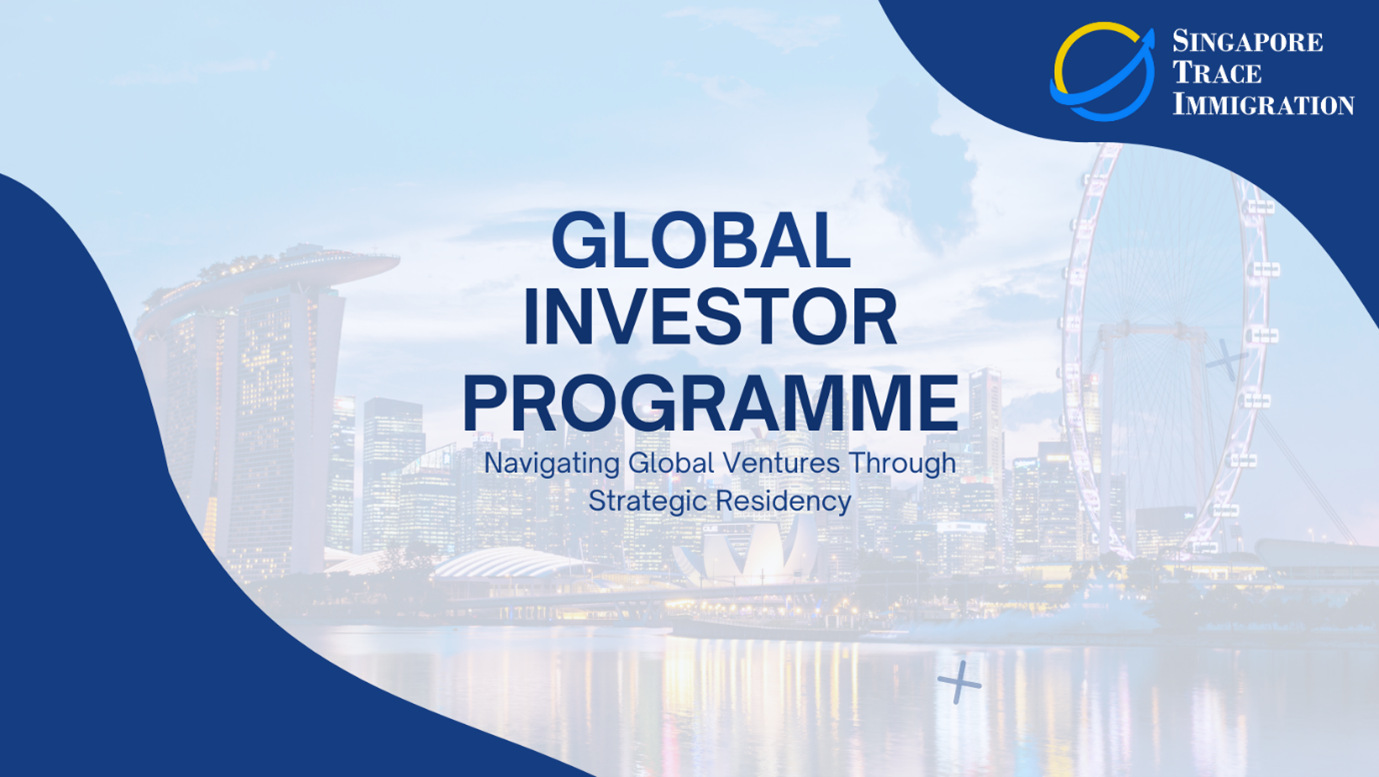
Imagine you are a founder who has spent two decades building a logistics technology company across Southeast Asia. Your business is profitable, your networks span a dozen countries, and you are quietly contemplating where to plant your family’s permanent roots. Hong Kong’s political climate gives you pause. Dubai is compelling but feels transactional. Then Singapore enters the conversation — not as a tax haven or a geographical convenience, but as a node where capital, talent, and institutional stability converge with remarkable precision. Within eighteen months, you have secured permanent residency through the Global Investor Programme, your holding company is registered in one-north, and you are attending Economic Development Board (EDB) roundtables alongside engineers, venture capitalists, and government ministers who actually return emails.
This is not a hypothetical unique to one entrepreneur. It is a pattern that has played out, in varying forms, roughly 450 times over the past decade.
The Numbers Behind Singapore’s Quiet Wealth Migration
As disclosed in Parliament on February 27, 2026, Minister of State for Trade and Industry Gan Siow Huang confirmed that approximately 450 high-net-worth investors were granted permanent residency under Singapore’s Global Investor Programme (GIP) between 2015 and 2025. Their combined capital deployment reached S$930 million — S$500 million invested directly into Singapore-based businesses, and another S$430 million channelled through GIP-select funds targeting local companies.
The disclosure came in response to a parliamentary question from Workers’ Party MP Fadli Fawzi, and while the numbers may appear modest against Singapore’s trillion-dollar financial ecosystem, their sectoral concentration tells a more consequential story. More than half of the direct investments flowed into professional services, info-communications, and financial services — precisely the knowledge-intensive sectors Singapore has prioritised in its successive economic restructuring blueprints.
The Straits Times noted the EDB’s broader framing: GIP investors contribute not merely capital, but market networks and operational know-how — the connective tissue that formal investment metrics rarely capture.
The Economic Ripple Effects of GIP Investments
The headline figure that warrants the most scrutiny is jobs. According to Minister Gan, GIP investors created over 30,000 positions in Singapore between 2010 and 2025, concentrated in engineering, research, and consulting roles within the same high-value sub-sectors that absorbed most direct investment.
Thirty thousand jobs across fifteen years averages to 2,000 annually — a figure that sounds incremental until one considers the quality dimension. These are not warehouse or hospitality roles. They are the kind of positions that anchor Singapore’s ambition to remain a centre of gravity for Asia-Pacific’s knowledge economy. For a city-state of 5.9 million, the multiplier effects of high-density, skills-intensive employment are disproportionate.
Business Times contextualised this within Singapore’s broader effort to attract substantive business activity rather than passive wealth parking — a distinction that has sharpened considerably in the programme’s post-2023 iteration.
Breaking Down the GIP Qualification Paths
The GIP is not a single instrument. It offers three distinct pathways, each calibrated to attract a different profile of investor:
- Direct Business Investment: Invest at least S$10 million into a new or existing Singapore-incorporated company.
- GIP-Select Fund: Place at least S$25 million in an approved fund that invests in Singapore-based businesses.
- Single Family Office: Establish a family office with a minimum of S$200 million in assets under management, with at least S$50 million deployed in EDB-specified investment categories.
The family office route deserves particular attention. Singapore now hosts over 1,100 single family offices — a number that has grown dramatically since 2020 — and the GIP’s S$200 million AUM threshold positions the programme squarely at the intersection of wealth management and productive investment. The S$50 million deployment requirement is the mechanism by which Singapore ensures these structures generate genuine economic activity rather than functioning as sophisticated tax minimisation vehicles.
Forbes Business Council has described Singapore’s framework as among the most rigorously structured investor residency pathways in Asia, noting that the combination of institutional transparency, rule of law, and targeted sector focus differentiates it meaningfully from competing regional programmes.
Singapore vs. the Global Field: How Does GIP Compare?
Investor residency programmes have proliferated globally, yet few have managed the balance between capital attraction and economic substance with Singapore’s consistency.
The United States EB-5 programme — the best-known benchmark — has been plagued by backlogs, fraud controversies, and legislative reforms that stretch processing times to a decade or more for certain nationalities. The minimum investment threshold sits at US$1.05 million for targeted employment areas, lower than Singapore’s equivalent entry points, but the programme’s structural dysfunctions have eroded its comparative advantage for Asian applicants.
Portugal’s Golden Visa, once a European favourite, effectively closed its real estate route in 2023 under pressure from housing affordability concerns. The UK’s Tier 1 Investor Visa was scrapped entirely in 2022 amid national security reviews. Hong Kong’s Capital Investment Entrant Scheme was relaunched in 2024 with a HK$30 million threshold, but the city’s shifting institutional landscape continues to weigh on its appeal to investors seeking long-term stability.
Singapore, by contrast, has raised its thresholds rather than retreating. The 2023 GIP revisions significantly increased investment minimums and tightened eligibility criteria — a counterintuitive move that has, if anything, reinforced the programme’s premium positioning. As one regional economist observed privately: “Singapore is not competing for volume. It is competing for the top decile of the top decile.”
IMI Daily noted that while 450 approvals over a decade appears selective compared to programmes in the Middle East or Caribbean that process thousands annually, Singapore’s preference for depth over breadth reflects a deliberate policy philosophy — one that prioritises integration into the productive economy over residency-as-a-service.
The Challenges: Selectivity, Scrutiny, and the S$3 Billion Shadow
Singapore’s GIP operates in the long shadow of the 2023 money laundering scandal, in which S$3 billion in assets were seized from a network of foreign nationals — some of whom had obtained residency through investment pathways. The episode prompted a sweeping review of anti-money laundering frameworks across the financial sector and accelerated due diligence requirements for investor residency applications.
The EDB has been emphatic that GIP applicants undergo rigorous background checks and that the programme’s business track record requirement — investors must demonstrate an established entrepreneurial history, not merely liquid wealth — provides a structural filter absent in many competing schemes. Nevertheless, the reputational dimension lingers, and Singapore’s authorities have had to balance openness to global capital with heightened vigilance about its provenance.
The revised 2023 criteria, which raised thresholds and introduced stricter sector requirements, can be read partly as a response to these concerns. Fewer approvals, higher quality, greater scrutiny: the architecture of a programme recalibrating its risk-reward calculus in real time.
Looking Forward: GIP’s Role in Singapore’s 2026 Economic Landscape
The geopolitical environment of 2026 is, in many respects, the ideal backdrop for Singapore’s value proposition. US-China technological decoupling has intensified corporate restructuring across Asia, with multinationals seeking neutral jurisdictions for regional headquarters, intellectual property holding structures, and treasury functions. The ASEAN economic corridor is attracting renewed attention from European and American firms diversifying supply chains. Singapore sits at the intersection of all these flows.
Channel NewsAsia’s coverage of Minister Gan’s parliamentary statement emphasised the forward-looking framing: GIP is not simply a residency programme but a mechanism for curating a cohort of investors whose businesses and networks actively deepen Singapore’s economic connective tissue.
The data supports cautious optimism. S$930 million in a decade is not a transformative sum for an economy of Singapore’s scale, but its concentration in strategic sectors — and the 30,000 jobs that accompanied it — suggests that the programme’s design is functioning broadly as intended. The question for the next decade is whether Singapore can sustain this selectivity while remaining genuinely competitive as rivals sharpen their own offerings and as ultra-high-net-worth individuals become increasingly sophisticated in comparing jurisdictions.
A Hub Built on More Than Tax Efficiency
What Singapore has constructed through the GIP is not merely an investor residency programme. It is a carefully engineered signal to the global wealth community: that permanent residency here is earned through substantive economic contribution, confers genuine institutional stability, and places the recipient inside one of the world’s most effective small-state economic ecosystems.
For the logistics entrepreneur who arrived eighteen months ago, the value is not the red passport booklet. It is the EDB roundtable, the talent pipeline from NUS and NTU, the contract enforceability, and the quiet confidence that the rules will not change arbitrarily by Tuesday morning.
That proposition — boring in the best possible way — may prove to be Singapore’s most durable competitive advantage in a world where predictability has become the scarcest luxury of all.
Discover more from The Economy
Subscribe to get the latest posts sent to your email.



Key Takeaways
- Rolex’s secondary market rose approximately 7.9% year-over-year as of 2026 (per WatchCharts data) — trailing Patek Philippe (+16.2%) and Tudor (+11.4%) but still outperforming Audemars Piguet (+3.4%).
- Rolex raised U.S. retail prices 4–9% in January 2026 (steel models ~5.6%, gold models ~8.7%), narrowing the historical gap between retail and pre-owned pricing.
- Not every model appreciates: steel sports references (Submariner, GMT-Master II, Daytona) have held value far better than two-tone or widely available dress references like the standard Datejust.
- The Lady-Datejust posted the sharpest 2026 gain among tracked collections — up 22.73%, from roughly $9,269 to $11,376 — driven by demand for smaller, “everyday luxury” watches.
- Gold’s rise past $2,400/oz has directly lifted the investment case for Rolex’s precious-metal references (Day-Date, Sky-Dweller, Yacht-Master).
The Model-by-Model Picture
| Category | 2026 Trend |
|---|---|
| Lady-Datejust | +22.73% (strongest performer among tracked collections) |
| Steel sports models (Submariner, GMT-Master II) | Held value well; corrected from 2022 peak but stabilized above retail |
| Daytona | Corrected from highs above $50,000 to the mid-$30,000s; still among the most sought-after references |
| Two-tone/widely available Datejust | Flat to negative — “holds value” is an overstatement for this category |
| Gold references (Day-Date, Sky-Dweller) | Lifted by gold’s rise above $2,400/oz |
Why the “Rolex Always Appreciates” Myth Is Fading
The pandemic-era boom pushed some references — the Daytona above all — to speculative highs disconnected from historical norms. Since the March 2022 peak, steel sports models have compressed meaningfully, and dealers who bought inventory near the top have in some cases faced 20–40% markdowns on liquidation. The lesson for 2026 buyers: Rolex as a category is not a monolith. Value retention depends heavily on specific reference, condition, and whether the piece comes with box and papers (“full set”).
What’s Actually Driving 2026 Strength
- Retail price increases raise the floor. When a new Submariner retails at $10,050 (up from $9,500), a pre-owned example at $11,000–$12,000 suddenly represents a smaller premium — narrowing the gap without secondary prices actually moving.
- Supply discipline remains Rolex’s core lever. The brand has never confirmed production numbers, and secondary-market premiums remain entirely a function of Rolex’s own manufacturing decisions — a risk factor as much as a support.
- Certified Pre-Owned rollout. Rolex’s now fully rolled-out CPO program has changed how buyers transact in the used market, adding a layer of brand-verified legitimacy that supports pricing.
The Case for Rolex as a Portfolio Diversifier
Financial advisors increasingly frame luxury watches not as a replacement for equities or bonds, but as a tangible, historically low-correlation diversifier — one that carries its own risks (illiquidity, condition-dependent pricing, no yield) but has demonstrated multi-decade resilience for specific references.
Is Rolex a good investment in 2026?
It depends heavily on the specific reference. Steel sports models like the Submariner and Daytona have held or grown in value; two-tone and widely available dress models generally have not. Overall, Rolex’s secondary market rose about 7.9% year-over-year in 2026, trailing Patek Philippe but ahead of Audemars Piguet.
Discover more from The Economy
Subscribe to get the latest posts sent to your email.

Navigating Mortgage and Loan Refinancing in a High-Yield Environment
Global public debt crossing critical thresholds has kept central bank policies volatile, resulting in fluctuating US Treasury yields throughout 2026. For homeowners and commercial property holders burdened by previous high-interest borrowing cycles, finding optimal refinance windows has become a high-stakes financial puzzle. Stalled disinflation and stubborn employment numbers mean rate cuts are incremental, requiring borrowers to act with precision.
Timing your mortgage or commercial loan refinance in this environment requires a deep understanding of yield curve movements and lender risk appetites.
Decoding 2026 Refinance Dynamics
The 10-Year Treasury Yield Benchmark
Mortgage rates continue to track closely with the 10-year US Treasury yield. When macroeconomic anxiety spikes debt issuance, yields rise, tightening consumer borrowing capacity. Savvy borrowers monitor weekly Treasury auctions to lock in rates during brief dip windows.
Hybrid ARMs and Alternative Structures
With fixed rates remaining elevated, 7/1 and 10/1 adjustable-rate mortgages (ARMs) have surged in popularity. These products offer lower initial monthly payments, giving borrowers breathing room until central bank easing cycles fully materialize.
| Loan Product | Current Rate Range | Best For | Key Risk Factor |
| 30-Year Fixed Mortgage | 6.2% – 6.8% | Long-term predictability | Higher initial monthly outlay |
| 7/1 Hybrid ARM | 5.5% – 5.9% | Short-term ownership / flipping | Rate reset risk after year 7 |
| Commercial Refinance | 7.0% – 8.2% | Corporate asset restructuring | Strict DSCR lender covenants |
Actionable Steps for Successful Refinancing
To maximize your chances of securing favorable refinance terms in a volatile market, follow a disciplined preparation strategy.
Boost Your Credit Score Immediately: Lenders in 2026 are applying stringent credit tiering; a 20-point increase can drop your APR by a crucial quarter-point.
Shop Regional Credit Unions: Smaller financial institutions often offer portfolio loans with more flexible underwriting than major national banks.
Calculate the Break-Even Point: Ensure your total closing costs are recouped through monthly savings within 24 months of closing.
“Market Strategist View: Refinancing in 2026 is an exercise in opportunistic timing. Borrowers must maintain immaculate financial profiles ready to strike the moment Treasury yields dip.”
Mastering the complexities of today’s debt environment ensures you can successfully lower your debt service costs and protect your long-term financial stability.
Discover more from The Economy
Subscribe to get the latest posts sent to your email.

The days of pulling generic auto insurance quotes based purely on your zip code and age are officially over. In 2026, insurance comparison engines are powered entirely by generative AI and real-time telematics. These platforms digest thousands of live data points—ranging from your driving smoothness via connected vehicle sensors to real-time traffic congestion patterns—to generate hyper-personalized premiums instantly.
For consumers, this evolution represents both a massive opportunity for savings and a hidden trap for penalty pricing. Understanding how AI algorithms evaluate risk is essential for anyone looking to lower their monthly auto insurance premiums.
How AI Comparison Engines Evaluate Your Risk Profile
Behavioral Telematics and Connected Cars
Modern cars stream performance data directly to insurance aggregators. Generative AI models analyze braking sharpness, acceleration curves, cornering G-forces, and phone distraction metrics. Drivers who maintain smooth, defensive habits are rewarded with dynamic rate cuts of up to 40% compared to traditional rating tiers.
Predictive Traffic and Weather Modeling
AI tools now cross-reference your daily commute route with predictive weather and accident probability models. If your standard parking location or driving corridor has a statistically higher incidence of uninsured motorist claims, your quotes will reflect that hyper-local risk assessment.
| Comparison Factor | Traditional Rating Model | 2026 Generative AI Model | Impact on Premium |
| Mileage & Usage | Annual estimated odometer reading | GPS tracking & live trip duration | High (up to 35% savings) |
| Driving Behavior | MVR driving record & accidents | Real-time braking, speed, & G-force | Critical (determines tier) |
| Vehicle Tech | Make, model, and safety rating | ADAS calibration & repair cost data | Moderate |
Strategies to Lower Your AI-Driven Insurance Quote
To outsmart the algorithm and secure the lowest possible premium in 2026, drivers must proactively manage their digital footprint on insurance platforms.
Opt-In for Telematics Trial Periods: Many insurers offer immediate 15% discounts just for installing their driving app; let it track safe habits for 30 days to lock in permanent savings.
Scrub Unverified Public Records: Ensure your motor vehicle report is free of clerical errors that AI risk models misinterpret as reckless behavior.
Compare AI Aggregators: Use platforms that integrate multi-carrier API feeds rather than single-brand comparison sites to find the best risk-adjusted rate.
“Industry Note: AI-driven pricing rewards transparency and precision. Drivers who actively manage their telematics data consistently out-save those relying on legacy quote calculators.”
Embracing AI comparison tools allows savvy policyholders to customize coverage limits precisely to their driving habits, eliminating wasted premium spend while ensuring robust protection.
Discover more from The Economy
Subscribe to get the latest posts sent to your email.

Bitcoin & XRP 2026: Inside Crypto’s Institutional Era

Global Economy 2026: IMF Growth, AI Stocks & Market Risk

China’s Local Debt Race Against Time: Why Economists Demand Central Action Before the Deflation Window Closes

Money News: How to Protect Your Portfolio From Global Inflation

World Bank Projections: Emerging vs. Big Economies of Asia

IMF Reports 2026: What the Latest Data Means for the Global Economy

Singapore Stocks Outlook: A Safe Haven in the Asian Market?

China Stocks vs. Japan Stocks: Where Should You Invest in Late 2026?

VIX Index Explained: How to Trade Wall Street’s Fear Gauge Today

Commercial vs Residential Real Estate: Which Wins in 2026?

Presidential Stock Market Performance: How Trump’s Second Term Compares to History

2026 Real Estate Market News: Are We Heading for a Correction?

Bitcoin Price Forecast 2026–2027: Will the 4-Year Cycle Hold?

Fidelity Crypto vs. Traditional Brokerages: A Guide for Modern Investors

US-China Relations in Q3 2026: Trade Tariffs and Supply Chain Risks

Top 30 Stocks for Investment in PSX for Massive ROI in 2026

SpaceX Starship Flight 14: First Orbital Attempt & Starlink V3 Launch Explained

AI Chip Stocks 2026: The Best Semiconductor Investments Beyond Marvell

The 2026 Crypto Regulatory Shift: What It Means for Institutional Investors

Tween Back-to-School Trends 2026: What’s Driving the $85B Season

Oil Prices Break $100 in 2026: Middle East Conflict & Energy Markets

AI-Powered Training: The Next Multi-Billion Dollar Ecosystem in Fitness

10-Year Treasury Yield Hits 4.80%: What It Means for Rates & Portfolios

Fidelity Investments Review 2026: SPAXX Yields & Zero-Fee Funds

BRICS+ Cross-Border Payments 2026: Interoperability Explained

Shein Clothes Quality & Safety in 2026: What Lab Tests Show

MRVL Earnings 2026: Why Marvell Sank Despite Beating Estimates

China’s US$10.8 Billion Trade Shortcut: Why the Pinglu Canal Matters
-

 Markets & Finance9 months ago
Top 15 Stocks for Investment in 2026 in PSX: Your Complete Guide to Pakistan’s Best Investment Opportunities
-

 Analysis7 months ago
Johor’s Investment Boom: The Hidden Costs Behind Malaysia’s Most Ambitious Economic Surge
-

 Analysis7 months ago
Top 10 Stocks for Investment in PSX for Quick Returns in 2026
-

 Analysis8 months ago
Brazil’s Rare Earth Race: US, EU, and China Compete for Critical Minerals as Tensions Rise
-

 Banks8 months ago
Best Investments in Pakistan 2026: Top 10 Low-Price Shares and Long-Term Picks for the PSX
-

 Investment8 months ago
Top 10 Mutual Fund Managers in Pakistan for Investment in 2026: A Comprehensive Guide for Optimal Returns
-

 Global Economy9 months ago
15 Most Lucrative Sectors for Investment in Pakistan: A 2025 Data-Driven Analysis
-

 Global Economy9 months ago
Pakistan’s Export Goldmine: 10 Game-Changing Markets Where Pakistani Businesses Are Winning Big in 2025